JIM LEHRER: Good evening. I'm Jim Lehrer. On the NewsHour tonight, the news of this Tuesday; then, an overview look at the 2,000 American military personnel who have died in the Iraq war; the official results on the Iraq constitution vote, as seen by the U.S. Ambassador to Iraq; the latest on aftermaths of Hurricane Wilma; a 30th anniversary return report on an Alabama broom factory; and the story of Rosa Parks, the woman of history who wouldn't give up her seat.
JIM LEHRER: U.S. deaths in Iraq passed the 2,000 mark today. The military announced two U.S. Marines were killed last week, and a soldier died of his wounds. That made a total of 2,000 Americans killed since the war began, according to the Associated Press. Figures from the Pentagon showed more than 15,000 have been wounded. Earlier in the day President Bush addressed military wives in Washington, and he warned the fight is far from over.
PRESIDENT GEORGE W. BUSH: We've got more work to do. And it involves great risk for Iraqis and for American and coalition forces. A time of war is a time for sacrifice. No one should underestimate the difficulties ahead, nor should they overlook the advantages we bring to this fight. Some observers look at the job ahead and adopt a self-defeating pessimism. It's not justified.
JIM LEHRER: In Baghdad, the chief spokesman for the U.S.-led forces insisted real milestones in Iraq are "rarely covered or discussed." About the 2,000 deaths, he said, "It is an artificial mark on the wall set by individuals or groups with specific agendas or ulterior motives." But opponents of the war said in fact it shows the president's policy has failed.
In the Senate, Democrat Patrick Leahy of Vermont charged the situation has gotten worse, not better.
SEN. PATRICK LEAHY: Despite the same old light at the end of the tunnel assertions and clich(c)s by the White House and top officials in the Pentagon, the sad but inescapable truth which the president either does not see or refuses to believe or admit that the Iraqi insurgency has steadily grown, in part, because -- not in spite of, but because of our presence there.
JIM LEHRER: Republicans and Democrats alike praised the sacrifice of American troops in Iraq, and they joined in a tribute to the dead.
SEN. BILL FRIST: At this point, I would ask the Senate now proceed to a moment of silence in honor of our fallen soldiers.
JIM LEHRER: We'll have more on the American war dead right after this News Summary.
Nearly 20 Iraqis were also killed today in separate attacks. Estimates of Iraqi dead since the war began range from thirty thousand to one hundred thousand.
Iraqi election officials formally announced today the new constitution has been ratified. Nearly ten million Iraqis cast ballots on Oct. 15. Final results showed 78 percent voted yes, 21 percent voted no. Sunnis opposed the charter. But they fell short of getting the votes in at least three provinces to block it. The Election Commission said there was no significant fraud but Sunni leaders called the election a farce. We'll have more on this story with the U.S. Ambassador to Iraq, right after this News Summary.
The cleanup began today in south Florida, a day after Hurricane Wilma. The storm knocked out power to six million people, shut down major airports, and caused billions of dollars in damage. It was also blamed for at least five deaths. We'll have more on this story later in the program.
The hurricane's remnants joined with another storm today to lash the Northeast. Twenty-foot waves hit beaches in Massachusetts and New Jersey, and winds up to 70 miles an hour knocked down trees and power lines. The system also brought heavy rain and even snow in some places.
A top U.N. investigator called for Syria today to do its own investigation of a political killing in Lebanon. A U.N. probe has linked top Syrian officials to the murder of Rafik Hariri, a former Lebanese prime minister. The Syrians rejected those findings. But today, the U.N. Security Council opened talks on the issue. U.S. Ambassador John Bolton pressed for a resolution demanding action from Damascus.
JOHN BOLTON: We want a very strong signal from the Council to the government of Syria that its obstructionism has to cease and cease immediately, and we want substantive cooperation in the investigation from Syria. We want witnesses made available. We want documents produced. We want real cooperation, not simply the appearance of cooperation.
JIM LEHRER: The Council could vote on the resolution later this week. The CIA leak case took a new turn today. At issue is who leaked the name of an operative whose husband criticized U.S. intelligence on Iraq.
The New York Times reported the vice president's chief of staff, Lewis Libby, first heard of the officer from Vice President Cheney himself. Libby had told the grand jury he got the information from journalists. A White House spokesman would not comment directly but he warned against speculating. Some kind of official action by a special prosecutor in the case is expected this week.
In economic news, consumer confidence fell in October. The Conference Board, a business research group, reported that today. It said rising gasoline prices were a key factor. On Wall Street today, the Dow Jones Industrial Average lost seven points to close below 10,378. The NASDAQ fell six points to close at 2109.
Civil rights pioneer Rosa Parks died last night at her home in Detroit. In December of 1955, she refused to give up her bus seat to a white man in Montgomery, Alabama. That triggered a year-long boycott and marked the start of the civil rights movement. Rosa Parks was 92 years old. We'll have more on her at the end of tonight's program tonight.
Between now and then: the Iraq 2,000; Ambassador Khalilzad; a Hurricane Wilma update; and a 30th return to a broom factory.
JIM LEHRER: The 2,000th U.S. military death in the Iraq war was registered today. Who are these Americans who have died in Iraq?
Well, Tobias Naegele is editor-in-chief of the Military Times Media Group, which publishes weekly newspapers for every branch of the U.S. military. Welcome.
TOBIAS NAEGELE: Thank you.
JIM LEHRER: All right, the 2,000, let's go through just some basic facts about them, you have got some notes and whatever. How many were regular army?
TOBIAS NAEGELE: Regular army is the biggest piece; it's 960, so it's almost half our active-duty army.
JIM LEHRER: All right. National Guard Reserve.
TOBIAS NAEGELE: Guard and Reserve is about a quarter of the overall total, about 500.
JIM LEHRER: About 500. How many were U.S. Marines?
TOBIAS NAEGELE: Marines are the large portion. They're about 500, so disproportional to the size of the Marine Corps --
JIM LEHRER: That's roughly one-fourth of the 2,000 who died. How about Air Force and Navy?
TOBIAS NAEGELE: Very small. Air Force about 16, Navy 28.
JIM LEHRER: And as a practical matter, there are very few Air Force personnel, Navy personnel involved in this combat, right?
TOBIAS NAEGELE: Well, there are Navy people, Navy corps men go with the Marines. There are Air Force people driving convoys so there are quite a few airmen doing ground work on -- throughout Iraq.
JIM LEHRER: All right, gender, of the 2,000, how many are women?
TOBIAS NAEGELE: Just about 42.
JIM LEHRER: Forty-two out of the two thousand.
And of course we need to put that in context. Women are technically forbidden from participating in combat. These women, none of them, had combat jobs. They just got caught in a bad situation, right?
TOBIAS NAEGELE: Well, defining what is a combat job today is not so easy. There are a lot of women who are military police, and they are doing ground work patrols, leading patrols, and taking fire. So they really are doing combat jobs.
JIM LEHRER: Right. And how many -- percentage-wise, or whatever -- are African American?
TOBIAS NAEGELE: Only a couple of hundred. Percentage-wise, 17 percent of the military force is black. But only about 10, 11 percent of those who have been killed have been black.
JIM LEHRER: What about African American -- I mean Hispanic?
TOBIAS NAEGELE: Hispanics about the same number. But what's different there is that the Hispanics are more likely to be in combat jobs. They're more likely to take a combat job, and more likely to be in the Marine Corps. So they, as a proportion of the service, are greater than their numbers. About 9 percent of the military services are Marines, but about 11 percent, 10 percent or 11 percent are the casualties for Marines.
JIM LEHRER: I see. And a large percentage ever those are Hispanic?
TOBIAS NAEGELE: I'm sorry, 11 percent of the casualties are Hispanics.
JIM LEHRER: I see, 11 percent of the casualties. Got you. Okay. All right now. Officers and enlisted, how does that break down?
TOBIAS NAEGELE: 90 percent enlisted.
JIM LEHRER: Is that where it normally through history--
TOBIAS NAEGELE: That's who you would expect. They are the ones doing the fighting out on the front line.
JIM LEHRER: How about married?
TOBIAS NAEGELE: I don't have that.
JIM LEHRER: I saw somewhere that roughly 40 percent were married. Does that ring true to you?
TOBIAS NAEGELE: The military is a highly married force. Today's military is a professional force, and it's a retention force, so these guys are going to stay, primarily, and they do have families.
JIM LEHRER: And I read also about 30 percent of them have children, at least one child.
TOBIAS NAEGELE: That's right.
JIM LEHRER: What about their ages? Give us some feel for that.
TOBIAS NAEGELE: Well, you're talking about a group of people who are mostly those who died are seventeen to twenty-four, more than half.
JIM LEHRER: Seventeen to twenty-four.
TOBIAS NAEGELE: Yes, more than half.
JIM LEHRER: So when you talk about the young, it's true in this case.
TOBIAS NAEGELE: Absolutely. But a third of them are twenty-five to thirty-five. So, you know, a third are the age where you really would expect them to be married, to have kids, and so on.
JIM LEHRER: And these are probably the higher ranked noncoms, right?
TOBIAS NAEGELE: That's right.
JIM LEHRER: Noncommissioned officers, whether Army, Reserve, National Guard, or Marine, correct?
TOBIAS NAEGELE: Absolutely. And that's where you'd expect at least a portion of your officers to be.
JIM LEHRER: Yeah, exactly. Now, is there any breakdown about where these kids-- kids, some are kids, 50 percent are kids, just the word flows that way -- of the American dead in terms of what part of the country they came from?
TOBIAS NAEGELE: Well, they come from all over.
TOBIAS NAEGELE: In terms of numbers, the most come from California, but those -- the numbers that we're working with here are a little deceptive because people will -- we're talking about their homes of record, and homes of record, as opposed to where they actually came from, may not be the same.
JIM LEHRER: Because professional soldiers, Marines, or whatever, put their home of record, and they may be -- it may be a military base.
TOBIAS NAEGELE: That's right. Particularly if they've been based in Florida or Texas, where their income tax rules may make it preferable to put down roots there.
JIM LEHRER: Right. And, of course, in the case of the Marine Corps, a lot of the Marines came from Camp Pendleton, and Marine bases in California.
TOBIAS NAEGELE: Camp Pendleton as a base suffered the most casualties.
JIM LEHRER: Is that right?
TOBIAS NAEGELE: I think about 240.
JIM LEHRER: Two hundred and forty from that one Marine base in California. What about urban-rural, is there a breakdown there? Everybody says, well, most of these deaths are among people who come from small-town America. Do the figures back that up?
TOBIAS NAEGELE: You know, you see quite a few people coming from the New York area, so I would say that's probably not entirely the case. Today's military draws from a wide swath of the country, and I think a lot of them do come from small-town America, looking for someplace to go, and probably more likely to come from the South than from the North, and so on.
But if you were to plot it out on a map, you'd see some significant concentrations around Washington, significant concentrations around New York.
JIM LEHRER: And these 2,000, have they been plotted on a map that way?
TOBIAS NAEGELE: We have done that.
JIM LEHRER: And it does follow what you just said?
TOBIAS NAEGELE: There's not a state that has not been touched. If you were to do it by per capita, you know, then you get some kind of strange numbers, like American Samoa and Vermont are way up at the top of the list.
JIM LEHRER: Sure, just because they have a smaller population. What about education level and income?
TOBIAS NAEGELE: Well, again, we don't have statistics from where these guys came from, but we're talking about -- these are young soldiers, young Marines, are making twenty/twenty-five thousand dollar range. They're not making a whole lot of money for their service.
But if you were to compare them to their peers who have, you know, the same educational background, most of these enlisted guys don't have a college degree, although some do -- then you'd find that, you know, they're probably doing okay.
JIM LEHRER: Finally, how many of the 2,000 died since major combat ended, since the fall of Saddam Hussein's regime?
TOBIAS NAEGELE: All but about 180.
JIM LEHRER: Only 180 had died up until the end of major combat, and so roughly 1800 have died since in the insurgency?
TOBIAS NAEGELE: That's correct.
JIM LEHRER: All right, Mr. Naegele, thank you very much.
TOBIAS NAEGELE: Thank you.
JIM LEHRER: Iraq, now that the new constitution has been officially approved by the voters. Gwen Ifill talks to the U.S. Ambassador to Iraq.
GWEN IFILL: Ambassador Zalmay Khalilzad was a central figure in the last-minute attempts to broker support for the constitutional referendum adopted by Iraqi voters. A final official tally today showed many minority Sunni voters remained unpersuaded. But only three provinces voted no, and only two of those by the two thirds vote needed to reject the charter. President Bush, citing increased Sunni participation and decreased election day violence, today called the result "inspiring progress."
PRESIDENT GEORGE W. BUSH: By any standard or precedent of history, Iraq has made incredible political progress from tyranny, to liberation, to national elections, to the ratification of a constitution in the space of two and a half years.
GWEN IFILL: Now, with the U.S. death toll officially at the 2,000 mark as of today, and as violence continues unabated, Iraq is preparing for a new round of parliamentary elections in December.
GWEN IFILL: Joining us for an update on the situation there is U.S. Ambassador Khalilzad.
ZALMAY KHALILZAD: It's nice to be with you in person.
GWEN IFILL: Yes, it is. Good to see you. President Bush we heard today talked about the progress in Iraq, as he put it, roughly from tyranny to national elections, now to a constitution. Is the move -- is what awaits next going to be smoother or more rocky?
ZALMAY KHALILZAD: Well, it is going to be smoother in the sense that more Iraqis are likely to participate in the elections than they did in the last election. The participation in the vote, with regard to the constitution, was very good. Iraqis from all communities participated; in the previous election, the Sunnis did not participate in significant numbers.
Now they tell that they will participate in the next elections, and that will be very good because the next assembly will have to be representative, the next government will have to be representative of all of all communities, and that would be very much a step in the right direction.
As far as security environment is concerned, I think the terrorists and the insurgents remain strong, and they are in a position to create problems. They failed to do something significant on the day of the referendum, but their potential to disrupt, to attack remains, so I'm not predicting an easy security environment going towards the election, but I think in terms of participation, it will be positive.
GWEN IFILL: We're always looking for turning points in the U.S. involvement in Iraq, whether it was the capture of Saddam Hussein, the elections last January, the ratification of this constitution. Does this represent the turning point that you're looking for?
ZALMAY KHALILZAD: Well, I don't like that -- the word "turning point." I think it's a step, and only in retrospect will we be able to tell which step of the various steps that have been taken or will be taken would have been the decisive one.
It's hard when you have been in the middle of a lot of things going on to characterize one as being decisive. This will have to be a retrospective judgment some years down road. But I think this was positive. It was a good thing that the agreement was made in the last minute that allows for possible changes to the constitution within the first six months of the next assembly.
That requirement, that flexibility I think will encourage Sunnis to participate in the elections as well because they will have another opportunity, those who voted against the draft, to push for additional changes, and we will encourage others to listen to them, to -- if there are reasonable requests for changes, to be responsive to those requests.
GWEN IFILL: You talk about the level of Sunni participation, which was greater than it was last time, but still not where you would probably like it to be.
I would like to read some of your words back to you from an interview you gave last week to Arab Television. You said, Iraq cannot succeed if a majority community decides that it doesn't want to participate or is against the emerging system.'
By your own definition, is Iraq succeeding?
ZALMAY KHALILZAD: Well, Iraq is succeeding but it's a process. It has taken a positive step. I'm not saying Iraq has succeeded. Iraq is making progress, and we have a long way to go. It will be a difficult road ahead.
I think the constitution, the fact that people participated indicated that they have developed confidence in the process, their participation indicated that. And that was a good thing because in January, when the elections took place, they did not participate.
The Sunnis did not participate in sufficient numbers, and it indicated at that time that they did not have enough confidence in the process. So compared to the January election and the referendum was a positive step, and, therefore, it should be regarded positively.
GWEN IFILL: Generals on the ground have said they expect an up-tick in violence, spikes of violence in the wake of the outcome, and of course the insurgency, as you alluded to, continues in many respects unabated.
How do you accommodate insurgency at the same time -- this kind of unpredictable insurgency -- at the same time that you're trying to make progress on the political track?
ZALMAY KHALILZAD: We cannot succeed by military means alone. In order to win the war, to establish an Iraq that can stand on its own feet, you -- we have to win the people away from two types of insurgents in particular: The terrorists and the Jihadists that come from outside; and, two, those who want Saddam Hussein to come back. To isolate these two groups from the population and the rest and for that, the political process is important.
They have to see -- the population has to see itself, the Sunni population where the insurgency and the terrorism is, that they have a stake in the new system, and for them to cooperate with us and with the Iraqi security forces against these folks. And I think we're making progress in that direction.
We need the help of also Arab countries beyond Iraq who have relations with the Sunni Arabs, and we've been engaging them.
GWEN IFILL: And Secretary Rice suggested to Congress last week that you might be given the flexibility to engage, in particular with Iran. Is that something you plan to do?
ZALMAY KHALILZAD: Well, I've been given that flexibility, and we are working the modalities off that and we
ZALMAY KHALILZAD: -- normal relations --
GWEN IFILL: What does that mean?
ZALMAY KHALILZAD: How to set it up -- who will be the -- timetable where the meeting will take place. All of that is being worked out.
GWEN IFILL: Let's talk about withdrawal. Secretary Rice has talked about that this should be a results-based decision, not a timing-based decision, which means no timetable will be set.
How do you quantify what it takes to begin to it will Americans that we will be in a position to draw down our forces?
ZALMAY KHALILZAD: Well, the current size of our force, 138,000, and the composition of the force, and the mission of the force are not ends in themselves for us; they should not be.
The end is for the Iraqis to be able to take care of Iraqi security, and, therefore, as Iraqi capability is increased, as we make progress in terms of winning the Sunni population, as we isolate the insurgents, we can adapt the size of the force -- meaning to reduce -- we can change the mission of the force from great emphasis on fighting to helping Iraqis.
We can also change the composition of the force as the mission changes. So I believe that we are on the right track to start significant reductions in the coming year.
GWEN IFILL: In the coming year.
GWEN IFILL: When you talk to members of Congress who have gotten increasingly critical about this idea, the open-ended nature of the assignment, do they accept that?
ZALMAY KHALILZAD: Well, I have not had a conversation yet. I will have in my visit, meetings with them. I think the problem is that there is a crisis of confidence that I see out there in whether we know what we're doing, whether we have the right plan, whether we will succeed in Iraq.
GWEN IFILL: Whose crisis of confidence?
ZALMAY KHALILZAD: On the part of the American people, I think is reflected in the comments of some of our congressional representatives and senators.
I think we are -- we do have the beginning of adjustments that I think puts us on the right path to succeeding in Iraq.
This election that's coming will be very important. If the Sunnis participate, if we have a government that is truly representative, the next government that represents Shiites as well as Sunni Arabs, as well as Kurds, and if we develop cooperative arrangements, as we are trying with Arab states beyond Iraq to help with the outreach effort that we are making towards the Sunnis, and also to make sure that Syria changes its policies, and I think the pressure on Syria is increasing to bring about that change, and the engagement that you alluded to with regard to Iran, I think with these adaptations, we can begin to move in the right direction.
On the military track, I have to add that besides going after the insurgents, besides training Iraqis, besides securing the borders, we are also adding -- securing areas to the mix and I think that was a necessary adaptation to make progress against the insurgency.
GWEN IFILL: The president in his remarks today also said that without -- I think he said there would be no peace without victory, or no victory without peace.
How do you it will Americans -- how should Americans be gauging defining what victory is?
ZALMAY KHALILZAD: Well, victory is when Iraq can stand on its own feet, when the Iraqi security forces can take care of this, the security needs of Iraq, when you have a democratic process coming to fruition, having a representative government, representative institutions, when you have checks and balances, when we have human rights of reaction being respected and where Iraq, rather than being a place of dictatorship, allied with countries that are hostile to the United States, Iraq helps the model to help reshape this region.
GWEN IFILL: It sounds like a lot to happen in 12 months.
ZALMAY KHALILZAD: Well, I did not say that Iraq as we define success, that we can achieve that in 12 months. Within 12 months, one can begin to adjust by reducing forces, but still there will be needs in Iraq that will necessitate U.S. support and involvement, including some military presence beyond 12 months.
But I believe within 12 months, Iraq will be well on its way towards success, will have made significant progress from where we are today.
GWEN IFILL: U.S. Ambassador Zalmay Khalilzad, thank you so much for joining us.
ZALMAY KHALILZAD: Well, thank you.
JIM LEHRER: Now Hurricane Wilma's impact on Florida. Kwame Holman narrates our report.
KWAME HOLMAN: Floridians got to work today cleaning up after Wilma's unwelcome visit, moving tree limbs, bull dozing mounds of sand, and wielding chainsaws.
In Key West, National Guardsmen delivered water and food to residents who weathered the storm.
Almost half of this mobile home park in East Naples was destroyed. It was just 20 miles from where the eye wall made landfall.
WOMAN: I got up and we was losing everything. The roof was coming off the house; the carport was gone. Power poles went down. It was terrible. We was watching people's houses come right by.
KWAME HOLMAN: Neighborhoods near the Everglades were underwater. The six million people without electricity in Florida was two million more than those who lost power during Katrina. Utility companies warned it could be weeks before power is restored fully.
GOV. JEB BUSH: Power makes the world go around. Without power, small businesses go out of business and people lose their jobs. Without power, it's difficult to get the schools open. So there are real challenges, and the first thing we do is pledge supported to Florida Power and Light to encourage their efforts.
KWAME HOLMAN: The power outages meant long lines at the few stores that were open for business. The east side of the state was hit hard, too; in Miami, destruction was widespread, from downtown buildings with their windows blown out to homes completely destroyed.
WOMAN: We didn't expect it. I didn't expect it. I don't think anybody else did. We thought it was just going to go by.
KWAME HOLMAN: It was throw slow going on Miami streets today as cars navigated through standing floodwaters. Miami-Dade County was under a curfew. All three of south Florida's major airports were closed to commercial traffic, and small planes were flipped upside down on the tarmac. At least 2,000 flights were canceled.
SPOKESMAN: That's main lobby, and it's a beautiful facility.
KWAME HOLMAN: One airport terminal was shredded. A chunk of the Jumbotron at the stadium where the Miami Dolphins play was missing. At the marina in Sunny Isle Beach near Miami, a steel dry dock intended to protect boats crumpled under Wilma's high winds, destroying hundreds of boats. And in Coconut Grove, just south of Miami, boats were tossed on their side by the storm.
Wilma did move briskly away from the U.S. today, but it was expected to contribute to other weather systems and create stormy weather up and down the East Coast from Maryland's eastern shore, which was smacked with relentless wind and surf, to Massachusetts, which was lashed with rain.
JIM LEHRER: Now, the second of our reports marking our 30th anniversary. This week we're revisiting some of the stories we've covered over the years to see what's changed.
Tonight NewsHour's economics correspondent, Paul Solman of WGBH-Boston, returns to Autaugaville, Alabama, where local residents feared the impact of a big trade agreement.
SPOKESMAN: Across America, people going from factories to farms to offices know NAFTA means jobs going south.
PAUL SOLMAN: A dozen years ago, as a vote in Congress neared on NAFTA, the North American Free Trade Agreement, we visited Autaugaville, Alabama, where local families had earned a living for decades at Crystal Lake Manufacturing.
This was just the kind of place doomed by NAFTA, critics warned, since it made tariff-protected corn brooms, tariffs to be phased out under the free-trade agreement.
EDWARD PEARSON: There are about 100 people in this town of 1,000 people who will stand to lose their jobs within two years.
PAUL SOLMAN: According to then- vice president Edward Pearson, there'd be no joy in Autaugaville if NAFTA were to pass. So, 12 years later, what happened? Well, the allegedly happy population of Autaugaville has increased by a hundred, according to its town sign.
But as Ed Pearson, now the broom factory's president, had predicted, there are that many fewer workers at Crystal Lake.
ED PEARSON: When you were here in 1993, we had 238 employees working here. Now we have right around 100 employees. That's a devastating impact on a community, even though it happened over a period of time.
PAUL SOLMAN: Before any further updates, however, a few remembrances of things past. The broom factory was founded in the 1930s by the town's top family, the Pearsons, to provide jobs for their tenant farmers, displaced by mechanization. Sixty years later, the founders' grandchildren still ran the plant, still employed the sharecroppers' descendents.
ED PEARSON: We'll see some people who have been here 50 years. And you probably have got 50 percent that have been here ten years or more.
PAUL SOLMAN: The fear was that their jobs might be slurped up by cheap-wage Mexico, as H. Ross Perot had been warning at the time.
ROSS PEROT: You implement that NAFTA, the Mexican trade agreement, and you're going to hear a giant sucking sound of jobs being pulled out of this country.
PAUL SOLMAN: "Pulled out" by Mexicans making something like a buck an hour. Could broom maker Granger Palmer, making $9 an hour, compete?
GRANGER PALMER: Not with the kind of wages that the Mexicans are earning. You know, a dollar -- I can't live off a dollar an hour.
PAUL SOLMAN: Technically, this was unskilled labor. But it took me eight minutes to do what the average worker does in one --
PAUL SOLMAN: And I'm basically hitting myself on the index finger at this point. No, that was the thumb -- getting hit -- getting hit.
PAUL SOLMAN: Back then, it took a year to master this skill, useless anywhere else. Today...
ED PEARSON: If you can screw in a light bulb, you can make a broom.
PAUL SOLMAN: Progress has come to Crystal Lake, in the form of pre-manufactured imported parts.
That's Granger Palmer, who's down to part-time and a less challenging job.
GRANGER PALMER: It takes away a sense of pride, you know what I'm saying?
PAUL SOLMAN: Because anybody could do this.
GRANGER PALMER: Anybody can do that.
PAUL SOLMAN: Meanwhile, not only pride, but two-thirds of the broom jobs are gone. And though mop-making survives, the waning of another industry, textiles, is tightening the knot since it's cut off Crystal Lake's chief local source of mop yarn: The sweepings from cotton mill floors. No mills also means no market for local cotton. Farmer Harold Gaines:
HAROLD GAINES: Cotton producers have got to have someone to sell the cotton to. All the meals have left our countries for foreign countries.
PAUL SOLMAN: Meanwhile, Ed Pearson is buying mop yarn from Pakistan, broom parts from China.
ED PEARSON: Ironically, the Chinese are saving jobs in this factory from Mexico.
PAUL SOLMAN: Ironically says Pearson, because it's cheaper to buy broom heads made in China, handles from Honduras, and assemble them here in the U.S. than to import whole brooms, which come a dozen to a box.
ED PEARSON: You've got six run one way, six run this way. Each end of that box is full. 75 percent of the box is air and empty, just where those handles happen to be in the middle. With the cost of fuel today, you can't afford to haul air across the Pacific.
PAUL SOLMAN: But because of trade deals like NAFTA, we get the benefit of cheap brooms, right? Theresa Pearson Dunn is Ed's sister, Crystal Lake's chairwoman.
THERESA PEARSON DUNN: The goods may be cheaper, but at what expense is it costing us as citizens of the United States?
PAUL SOLMAN: Among the costs, a slight rise in local crime a few years ago.
But is this the devastation folks were warning of if NAFTA passed?
Shelby Broadneck still makes brooms as he did in 1993, for custom orders.
Does he know of any former broom winders who haven't found a job?
SHELBY BROADNECK: No, I don't.
PAUL SOLMAN: So everybody here who lost their job did find another job?
SHELBY BROADNECK: As far as I know, yeah.
PAUL SOLMAN: So what about the prophecy of doom?
SHELBY BROADNECK: I'd just say it was a false alarm, I think it would be.
PAUL SOLMAN: Meanwhile the workers here, especially the fastest ones, like Sylvia Woods, are doing just fine because of piecework.
SYLVIA WOODS: I make as much as I want to make.
PAUL SOLMAN: Are you paid in part on the basis of how productive you are?
SYLVIA WOODS: Yes. Maybe like $112 a day.
Not bad money around here. And if mop making, too, goes to China?
SYLVIA WOODS: I don't know, I'll have to find something else to do then.
PAUL SOLMAN: Would it be painful for Woods to switch jobs? Yes. Longer, more expensive commute? Almost certainly. Roadblocks by the bureaucrats in charge of government programs to retrain her? Perhaps. But this is nothing new.
Alabama lured jobs like these from the North generations ago with cheaper labor just as Mexico and China are luring them now. And Alabama is still luring jobs from the North, many of them a result of free trade.
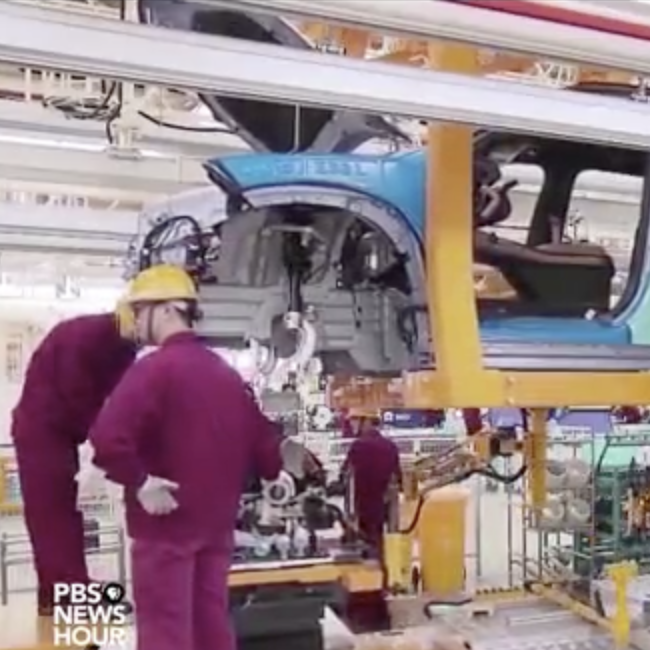
Foreign automakers-- Mercedes, Toyota, Honda, and Hyundai-- have all built plants in Alabama in the last dozen years, enticed by generous tax breaks, worker training programs, and a younger work force than in the unionized Midwest, all of which makes doing business here cheaper.
Chuck Hearn, a veteran of three textile plant closings at age 35, maintains high-tech machinery at Hyundai in Montgomery.
CHUCK HEARN: Free trade, I think, has cost a lot of people their jobs, such as textiles moving south and moving west. But it's also bringing in the auto industry. I think the auto industry itself coming from overseas to here has given us, especially the southeastern part of the United States, a much more stable work environment.
PAUL SOLMAN: Making some $25 an hour, plus overtime, Hearn calls this job a "blessing." But he's one of only 2,500 workers from a pool of more than 20,000 applicants. We asked what distinguishes those who got the jobs.
JEREMY COLE: I'm real good with my hands. I'm a hard worker. I mean, I never stay out of work, and I got a good work record, real good work record.
LATONA HARDNETT: When they taught me how to do things, I just picked up on it and knew what to do. I've got a good eye for defects.
PAUL SOLMAN: A good eye for defects.
PATRICK PURTER: They check your speed and your strength and all... any kind of things like that.
PAUL SOLMAN: So being in good shape helped you with this job.
PATRICK PURTER: Oh, yeah, oh, yeah, being in good shape would help you go a long ways, yeah.
PAUL SOLMAN: Though not as long a ways as the robots here, a whole building's worth of them at $50,000 each who look ready to take over the earth, and remind that you automation eliminates jobs at least as quickly as free trade does, since even a human at a buck an hour is barely cost competitive with one of these guys over its lifetime.
So Alabama has become more productive since NAFTA -- in the factory, down on the farms from which it's even begun to export peanuts to Canada, beef to Mexico. Add the growth in health care and education, and you've got state unemployment well below the national average.
SPOKESMAN: Americans want to expand trade, but not by trading away their jobs. NAFTA --
PAUL SOLMAN: So why such opposition to free trade back in 1993? Auburn University economist Phil Gregorowicz.
PHIL GREGOROWICZ: Generally the person who gets a job because we're more efficient, more productive, or have export markets won't say, "I got this job because of free trade," right? So the losers are always concentrated, and the losers tend to be vocal and the winners tend to be dispersed in the population.
PAUL SOLMAN: On the other hand, a dozen years after the tumult and the shouting over NAFTA, there does remain a class of real losers: Those who have dropped out of the work force entirely and they're no longer are even counted among the unemployed, and those who can't get a new job anywhere near as good as this one.
Union Vice President Henry Jenkins:
HENRY JENKINS: A lot of employers, they just won't hire you after you get a certain age. And they have to get part-time jobs or work with a lot of these contractors, cleaning services, things of that nature, which is not even compatible to what they had.
PAUL SOLMAN: Some in Alabama, that is, now have jobs without benefits or have simply dropped out of the picture entirely, which leads observers like Harold Gaines to a grimmer view of what's happened since 1993, even in a state with only 3 percent unemployment.
HAROLD GAINES: The richer are getting richer and the poorer are getting poorer. And I really do think our country is going toward the direction of our lower class, our poverty people, virtually not having the opportunity to provide for themselves. New Orleans is a great example.
PAUL SOLMAN: A great example but questions a key justification for key trade and even automation for that matter. But the economic growth they foster makes the pie so larger, so much larger that there's enough left over to compensate the losers. The question then is: Are the losers being served?
ED PEARSON: Corporate America is taking the biggest slice of the import pie. The foreign companies are taking the other big slice. American workers get a little bit of it in the local economy, yet, there are a lot of people that get none of it.
PAUL SOLMAN: Or very little of it. Since NAFTA passed, economic inequality has continued to grow in America.
PAUL SOLMAN: Wait a second, let's try this again.
PAUL SOLMAN: Jobs like this still require more manual dexterity than many of us are blessed with.
PAUL SOLMAN: How come mine doesn't break? Break, damn it!
PAUL SOLMAN: But wages for those who do them, wages for most Americans, in fact, haven't budged in the past dozen years, meaning the Alabama broom job of 1993 might have been the best gig many of Autaugaville's workers will have ever had.
JIM LEHRER: Tomorrow, NewsHour correspondent Jeffrey Kaye puts a human face on the immigration story, revisiting a Mexican-American family in Los Angeles.
JIM LEHRER: Finally tonight, remembering Rosa Parks, and to Jeffrey Brown.
JEFFREY BROWN: It was, in a way, the most simple act imaginable: Sitting down on a bus. But when Rosa Parks refused to stand to make room for a white man in Montgomery, Alabama, in December, 1955, the act and the woman became part of American history and a symbol of racial justice worldwide.
In the 1987 PBS documentary "Eyes on the Prize," Parks described what happened when the bus driver asked her to move:
ROSA PARKS: He said, "Y'all make it light on yourself and let me have those seats."
And when the policeman approached me, one of them spoke and asked me if the driver had asked me to stand, and I said yes. He said, "Why don't you stand up?" I said, "I don't think I should have to stand up." And I asked him, I said, "Why do you push us around?" He said, "I do not know, but the law is the law, and you're under arrest."
JEFFREY BROWN: Parks, then a 42-year-old seamstress, was convicted of violating segregation laws. The incident sparked a 381-day boycott of the Montgomery buses. It also helped launch the civil rights movement, and the work of a then-little-known 26-year-old Baptist minister, the Reverend Martin Luther King, Jr.
MARTIN LUTHER KING, JR.: For several weeks now, we, the negro citizens of Montgomery have been involved in a nonviolent protest against the injustices which we have experienced on the buses for a number of years.
JEFFREY BROWN: Parks' arrest was appealed all the way to the supreme court, which in 1956 overturned Alabama's segregation laws.
Rosa Lee McCauley was born in Tuskegee, Alabama, in 1913. A child of the Jim Crow South, she recalled watching her grandfather on guard against the Ku Klux Klan.
ROSA PARKS: I'd sit on the floor while he'd sit in his rocking chair with his gun in his hand, just in case they came in.
JEFFREY BROWN: At 19, she married Raymond Parks, and the couple settled in Montgomery in 1933. She worked as a volunteer for the NAACP, and by the age of 40, was a well-known activist in the community.
ROSA PARKS: I am expected to be a first-class citizen. I want to be one. I have struggled hard.
JEFFREY BROWN: Even after her victory in the bussing case, parks faced the loss of her job and continued death threats. She and her husband moved from Montgomery to Detroit in 1957.
ROSA PARKS: I would like to be remembered as a person who wanted to be free and wanted other people to be also free.
JEFFREY BROWN: As a symbol of the civil rights movement, she traveled and spoke often, including at the Million Man March in October 1995.
ROSA PARKS: And I will always work for human rights for all people.
JEFFREY BROWN: Rosa Parks was awarded the Presidential Medal of Freedom and the Congressional Gold Medal of Honor, the nation's highest civilian award.
Rosa Parks died last night in her sleep at her home in Detroit. She was 92 years old.
JEFFREY BROWN: We're joined now by two people who knew Rosa Parks and worked in the civil rights movement. Reverend Joseph Lowery helped found the Southern Christian Leadership Conference with Martin Luther King in 1957 and led the organization for 20 years. Congresswoman Eleanor Holmes Norton is the elected delegate for the District of Columbia. In the 1960s, she was a member of the Student Non-Violent Coordinating Committee, a leading civil rights organization made up of students and young people. Welcome to both of you.
Starting with you, Rev. Lowery, Montgomery, 1955, to help us understand the courage behind her act, what was life like for Rosa Parks and other black residents?
REV. JOSEPH LOWERY: Well, it was strict segregation. The buses were particularly vicious in their policies. Black people would get on the front of the bus and if they were crowded, even if it was raining, they had to get back off the bus, go around to the back door, and get in, get wet, and it was especially humiliating to all the citizen of Montgomery.
So when Rosa Parks took the stand she did, she spoke for and acted for every citizen of Montgomery who had rid the bus or had a relative who rode the bus. It was segregation at its very worse.
JEFFREY BROWN: Congresswoman Norton, you were a young student at the time. What was it about this woman and this act that served as a catalyst for so much that came later?
DEL. ELEANOR HOLMES NORTON: Well, for those of us who were young and foolish, it seemed a quiet revolutionary act. We thought of it no less than that.
You will notice that it took students, though, another five years to get up the courage that Rosa Parks exhibited that day when she sat down. And yet, no one who participated in the civil right movement will tell you anything but that there's a straight line from Rosa Parks to what students later did.
I think of her I am indebted to her, because I believe that this one act of courage is important in the history of the civil rights movement, because up until that time, the civil rights struggle was known more for famous men at the top -- lawyers and others. After Rosa Parks, we saw the first mass movement for civil rights; we saw the first grassroots movement for civil rights, and that's what was particularly intriguing to young people at the time.
JEFFREY BROWN: Well, Rev. Lowery, she was not the first person, I read today, who was arrested for deifying the segregation laws, but she became the' test case. So you knew her at the time. What made her the right person for that moment in history?
REV. JOSEPH LOWERY: Well, I think there are two reasons. One, I believe God chose Rosa Parks for this particular role in history. And, secondly, she was probably the most unlikely person.
When Martin called me, I was in Mobile at the time, pastoring a church and leading the movement there. And I was called and said the boycott was on, and it had been triggered by Rosa Parks.
And I said, You mean Miss Parks who works with the NAACP?' And they said yes. She was such a quiet person. She was a gentle spirit that let loose a powerful force against racial injustice, and I think that factor alone inspired the people of Montgomery who nevertheless felt personally involved in the discrimination of the bus.
She was an unlikely person, but she became an instrument of the people's will in that community who were tired. They said she was tired from working and perhaps she was -- but she herself said later that she was spiritually tired and weary of being humiliated by being asked to move back so that a white person could occupy her seat.
It triggered the greatest revolution in American history in terms of nonviolent protest against civil right -- against segregation and discrimination. And she became the symbol, the queen mother, of that movement.
JEFFREY BROWN: And, Rev. Lowery, I read a quote today I found interesting by Rev. Ralph Abernathy, another one of the chief organizers at the time of the boycott and he said, "We thought the boycott would last four days. We only wanted improved segregation. The people wanted it all." So it somehow exploded.
REV. JOSEPH LOWERY: When they called me -- when I read in the paper in Mobile that what they asked for at the beginning was to begin at the back and fill it up and not have to get up, and whites could begin at the front, fill it up, and not have to get up, we already had that in no Mobile.
And I said to Martin why don't you ask first come, first served. He said don't worry, they're going to reject this simple offer, and it will help us mushroom the movement to demand an end to segregation. He was right.
And it sparked and triggered a self-determination movement. I think the Montgomery bus boycott initiated an era of self-determination, removed from that to Birmingham, where we no longer would accept segregation in public accommodations to Selma, where we asked Mr. Johnson, after the '64 vote -- Public Accommodation Act to deal with voting. He said, "Well, we just got through with one, we can't."
So we went to Selma, and in an act of self-determination, marched from Selma to Montgomery wrote the Voting Rights Act, carried it back to the president and said please sign it. And he did on national television and proclaimed we shall overcome, all triggered by the act of this woman, this gentle spirit that released a tornado against racial injustice.
JEFFREY BROWN: So Congresswoman Norton, you had met her in later years. How did she handle this fame? Was it a burden on her? Did she feel a responsibility to keep fighting?
DEL. ELEANOR HOLMES NORTON: Well, amazingly, she's the same person that she was -- she was the same person that Rev. Lowery described, private person.
You know, in an era of peacock leaders, here was a woman who remained a little bird. I think of her as the bird that ruffled her feathers and started a revolution.
But that's not what we're accustomed to seeing. She was -- she was, if you see the clips, she remained that way. For many of us, the priceless thing she gave us was the sense that you can free yourself.
JEFFREY BROWN: You as an individual, as part of a larger community.
DEL. ELEANOR HOLMES NORTON: You as an individual, understand, here was I, on my way to law school, to be a civil rights lawyer like the great civil rights lawyers, and all of a sudden, here comes another message, that the average person can free themselves, and you know what, Eleanor; lawyers can't free you. You've got to free yourself the way this woman did. And that has resonated with black America ever since.
JEFFREY BROWN: Rev. Lowery, we just have a minute, but I wanted to ask you, did she know how important she was?
REV. JOSEPH LOWERY: Listen, it didn't bother her. It didn't faze her. She was totally undisturbed by it. Let me share this story quickly, that my youngest daughter, married some 20 some years ago, Mrs. Parks gave her a $25 check for a wedding gift.
A year later, she ran into Mrs. Parks somewhere, and Mrs. Parks fussed at her. She said, Daddy, you called her a gentle spirit but she wasn't gentle.' She said to me, "Young lady, why don't you cash that check? I can't get my bank account straight." And my daughter said to her, Mrs. Parks, I will never cash that check. It's a treasure to me to have this from you.' Mrs. Parks didn't understand it because she didn't recognize her own place in history, and she left my daughter fussing, "Young lady, cash that check." That was the humility that hallmarked the life and ministry of Rosa Parks.
JEFFREY BROWN: All right, Rev. Joseph Lowery and Eleanor Holmes Norton, thank you both so much.
JIM LEHRER: Again, the other major developments of this day: U.S. deaths in Iraq passed the 2,000 mark and Iraqi officials announced a new constitution had been ratified.
On the NewsHour the American ambassador to Iraq said the U.S. is on the right track for significant troop reductions next year.
We'll see you online and again here tomorrow evening. I'm Jim Lehrer. Thank you and good night.
 Postwar Optimism about the Economic Benefits of International Trade (1965)
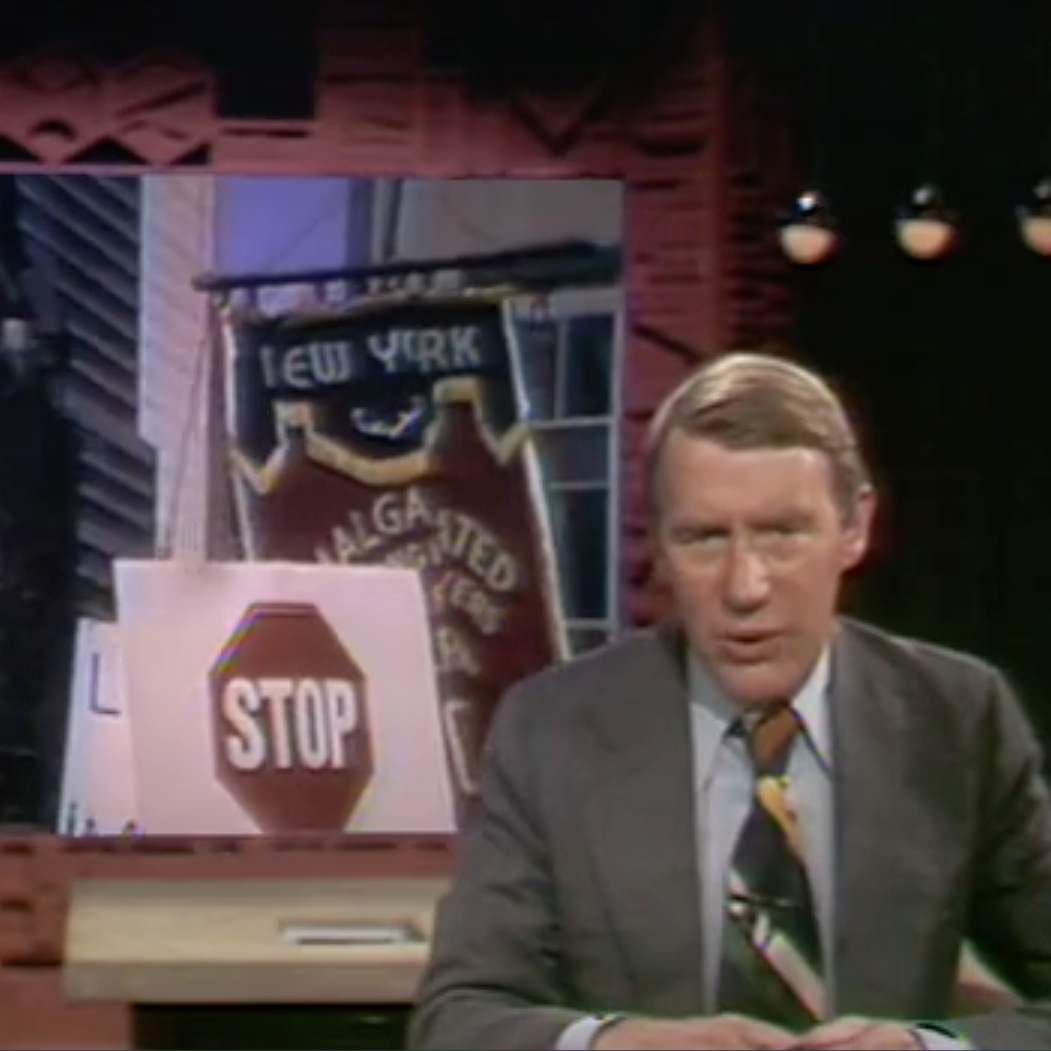 The Growing “Threat” of Imported Goods in the 1970s (1977)
 NAFTA Promotes U.S. Trade with Mexico and Canada (1995)
 Ocean Trade and the Explosion of Global Commerce (1994)
 Walmart, Sweatshops, and the Price of Cheap Clothes (2004)
 Organized Labor’s Critique of Globalization and Free Trade (1999)
 Defending Free Trade Against its Critics (2004)
 The Lessons of the “Elephant Chart” (2017)
 Debating Global Trade in the Age of Trump (2017)
 Trump’s Trade Policy and Criticism of China (2018)
 The Biden Administration’s Combative Stance with China (2024)