Realidades; 107; Neruda / La Migra (aka “Immigration”) / La Cosecha
- Transcript
We left immigration headquarters by 8 a.m., though very often the same unit will be on the streets as early as 6.30. Just in time to encounter workers getting off of night jobs as janitors, and at the same time early enough to spot others just leaving for work. This particular morning, they spotted a man standing in a bus stop. We quickly circled the block, and within seconds he was under arrest. This nation has seen it throughout much of the world as a land of freedom and opportunity. The quest for that freedom and opportunity is particularly hazardous for Latinos who do not recognize political borders. For many of us, the way that freedom and opportunity is administered and protected is determined by how we look. There was one man's birthday, so I don't think they would give it up.
You know what I mean? Yes, they said they let you change your mind, and they gave you money. I'm going to take care of it. I'm going to take care of it. Yes, I'm going to take care of it. Good afternoon. Can you come out for a little while so you can get up? Even if they suspect that person of being illegally in the United States. I have to be sure, sir.
Yes. You can come out for a while. Okay. Is everything okay? Yes. I'm happy. I'm happy when they come out. We are going to take a walk. We are going to take a walk. We are going to take a walk. Where are we going? To the left. To the left. Okay. We are going to take a walk. Yes. Come out. Yes. This family will not be taken in with the others. Since one of their children was born in this country, they will ask a judge of the immigration service for an extension of time. The status of the child will permit them to waive the usual labor certificate, which is normally a prerequisite before applying for an immigrant visa.
If they are given extra time, they must then register with the U.S. Consul in Mexico. I'm doing it clean up. He's packing his clothes. I'm preparing to do my back in Mexico. Do you have anything with you? We always allow people we arrest to pack up their belongings up to about 35 pounds. How did you know that the person that was spotted on the street was going to be nullified? We didn't know 100%, about 90%. We ran about 90% accuracy on this. We just simply had the look. That's all. There was something about him, which is indefinable, but he needed to check out and it turned out to be correct.
He was illegally in the country. You're on him, Aru. Commissioner Leonard Chapman, head of the United States Immigration and Naturalization Service, has said that over 1 million valuable jobs are occupied by illegal aliens. Yet, how ironic that U.S. business continues to hire unregistered workers. And what is especially surprising is that many illegals who are picked up in urban areas very often belong to local labor unions. It seems that whether to hire or fire an illegal alien has little to do with patriotism. There should be one more up there claiming to have an alien registration card at his home. We'll be taking him down in a few minutes. You guys will clear the top? Yeah, I wouldn't clear up the top.
The elevator stops are about six floors and you have to walk up to about ten. More and more, workers are coming from Mexico's rapidly expanding urban centers where work is often scarce. These workers have acquired the necessary skills of an industrial economy and are not likely to search for work in agriculture. They have made the transition from Camposina to city-wise worker. I'm in the middle of the city. Can you bring me the clothes? Yes. How do we look at the street? San Son. 630 San Son. Yes, I'm San Son.
I'm here for San Son. During a three month period, the San Francisco Office arrested 640 illegals. And of this number, 530 were earning between $250 and $4 per hour. Only $24 of these 640 were earning over $6 an hour. That's it. Very clearly, the great majority arrested are Mexican nationals who are generally working at jobs which earn them less than $100 per week. We're going to Mandarle, Mexico, Voluntaria, Bajo Salvo Guardi and Nuestra Comviennian, Locatee, Zs. Immigration law permits an arrested alien, and I quote, to voluntarily deport himself out of the country. His reward for compliance is that the arrest is not held against him
and he may apply for a visa at any time in the future. But the waiting list is long, nearly two years. It's simply much easier to jump the border. If he's caught, there is no penalty. There's no limit to how many times he may be arrested. Last month we moved to 7,531 out of the Livermore sector. So far this month we've moved 991. And today we will move approximately 250 or so. They will be going to El Centro all between six and seven o'clock tonight when the bus arrives here.
We'll just back them and all the traffic. Few of these people have eaten since breakfast. The only food they will eat before reaching Mexico is a hamburger and a cart of milk. This bus has now been traveling for 13 hours. In another 20 miles, this long journey will end at Calexico where everyone will then cross the border into Mexico.
Only to begin yet another struggle to survive in modest defensive. The bus has now been going to El Centro all between six and seven o'clock.
The bus has now been going to El Centro all between six and seven o'clock. The bus has now been going to El Centro all between six and seven o'clock. The bus has now been going to El Centro all between six and seven o'clock. The bus has now been going to El Centro all between six and seven o'clock. I think it's better to stay in Mexico here. I don't think it's better to go back to the United States. Why not? The bus has now been going to El Centro all between six and seven o'clock. The bus has now been going to El Centro all between six and seven o'clock.
I don't have plans for the future, I have plans that I have for the future, I have them in Mexico, that's all. The political borders affect us all. However, there are lives that transcend any political border. Talking about Pablo Neruda is talking about the spirit of the peoples of our America, the same as Bolivar, Vaniti, Alvisu and Che, Pablo Neruda belongs to all of us. Ah, you don't want to scare the poor. I don't want to talk about the broken paths of the market and return with the old dress.
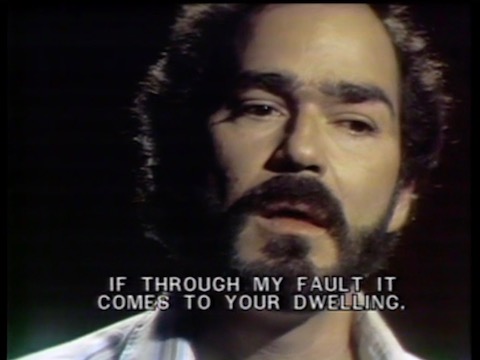
Love, we don't love like the rich, the miseries. We are extirpating it, as a blinding servant who has now died of the heart of the man, but I don't want it to be the subject. If you come to my hideous heart, if the poor exposes your golden shoes, if you don't expel your laughter, which is the bread of my life, if you can't pay the rent, go to work with a proud pass and think of love, that I am looking at you, and that we are together, the greatest wealth that has ever united over the land. If suddenly there is no one, if suddenly you don't live,
I will continue living. I don't dare. I don't dare to write it down. If you die, I will continue living. Because where there is no man, there is my voice. Where the blacks are attacked, I can't be dead. And when I enter the prison of my brothers, I will enter with them. When the victory, not my victory, but the great victory, I will continue, even if I have to speak.
I will come to see him, even if he is blind. No. Forgive me. If you don't live, I want to die. If you die, all the eyes will fall on my chest. I will see my soul and day. The snow will burn my heart. I will go with cold, fire, death and snow. My feet will burn to where you sleep. But I will continue living.
Because you wanted me on all the indomitable things and love. Because you know that I am not just a man, but all men. Because you know that I am not just a man, but all men. The Universality of Pablo Neruda, makes me focus on one of the stars of this man. The cosecha. Pinchikali is a wheat. Every morning I get up before the sun, drag this heavy canvas sack on my back and go.
How do I do it? The rancher, how do I do it? Yes, I am a man. Come on, come on, come on. Come on, come on, come on. I don't know how to wait for us. But this is it, isn't it? No more peace for this chicken. I'm going to grab a good jolly in the pool. Here's the pure melonisa. Look at many children. I have worked for 40 years and I don't have anything. And I follow the cross.
But I hope God that my grandchildren can go to school so that they don't have to work like this old man. Me espoules jefitos burning out their lives under the sun. Ajía... I am from hand to hand since I came from tejas following the recommendations. I always leave my family behind
Tras y los extraño mucho, con razón trabajamos tanto a veces hasta 20 horas derechas aquí en el valle las carreteras se ponen muy obscuras de noche los rancheros nos respetan las necesidades del trabajador y con cada carga de melón que llevamos se hacen más ricos y ellos con el dinero y nosotros con el trabajo que vida pero ni modo una cervecita es voy a sentir mejor incluyendo a los bocados y también a los braceros los chicanos, los chicanos, los chicanos, los ricos por sus trabajos, los chicanos
año tras año volvemos a este viejo campo y gofíos le llaman yo me preocupo por mis chiquitos solitos con guadalupe la pobrecita apenas tiene 12 años pero ya tiene que comportarse como una mujer yo necesito llevar a los bebés al doctor pero si dejo de trabajar tan siquiera por una sola vez otra persona ocuparía mi lugar en estas casas no tenemos excusados o regaderas las ventanas están todas rotas tenemos que quemar la basura porque no hay quien venga recogerla pero mañana después de que nos paguen el ranchero mandará uno de sus hombres a que colecte la renta y tendremos que pagarles 100 dólares
este verano hemos trabajado muy fuerte tenemos que trabajar siete días a la semana pero ahora no trabajamos que estamos celebrando la cosecha del melón y nos sentimos muy contentos de estar descansando en compañía de nuestras familias así es que festejaremos esta noche siempre hemos celebrado la cosecha en este valle los desfiles y que meses son nuevos para nosotros antes nos reuníamos en nuestras comunidades para
celebrar entre nuestras familias y amistades y por las tardes teníamos bailes en la calle los niños corrían y jugaban hasta caer cansados nuestros hombres se sentaban bajo los árboles platicaban y tomaban cerveza presumiéndose manera especial pero ahora la ciudad nos proybe bailar en la calle ahora dice que tenemos que ir al parque municipal donde ellos pueden sacar beneficios de nuestra celebración pero el espíritu y ánimo del día todavía es nuestro para gozar mañana regresaremos a los campos los hombres tendrán que trabajar en los viñedos de guba y yo tendré que regresar a mi trabajo en los tanto santos detonados .
. . . . . . . . . .
. . . . . . . . . . . . .
. . . . . . . . . . . . .
. . . . . .
- Series
- Realidades
- Episode Number
- 107
- Producing Organization
- WNET (Television station : New York, N.Y.)
- Contributing Organization
- Library of Congress (Washington, District of Columbia)
- AAPB ID
- cpb-aacip-eec704c5c48
If you have more information about this item than what is given here, or if you have concerns about this record, we want to know! Contact us, indicating the AAPB ID (cpb-aacip-eec704c5c48).
- Description
- Episode Description
- A review of the life and work of the late Chilean poet Pablo Neruda, winner of the 1971 Nobel Prize for Literature, with a recital of his “Versos del Capitan”; plus a look at the relationship between the Latino community and the U.S. Immigration and Naturalization service. In La Cosecha, Chicano farmworkers celebrate harvest time. Norberto Lopez produced Neruda; Ricardo Soto produced La Migra and La Cosecha with Ricardo Duran.
- Broadcast Date
- 1975-11-24
- Asset type
- Episode
- Genres
- Documentary
- Topics
- Agriculture
- Literature
- Social Issues
- Media type
- Moving Image
- Duration
- 00:29:21.771
- Credits
-
-
Producing Organization:
WNET (Television station : New York, N.Y.)
- AAPB Contributor Holdings
-
Library of Congress
Identifier: cpb-aacip-adb62fe7f5a (Filename)
Format: Film
-
Thirteen WNET
Identifier: cpb-aacip-9383b5db5ad (Filename)
Format: Film
If you have a copy of this asset and would like us to add it to our catalog, please contact us.
- Citations
- Chicago: “Realidades; 107; Neruda / La Migra (aka “Immigration”) / La Cosecha,” 1975-11-24, Library of Congress, American Archive of Public Broadcasting (GBH and the Library of Congress), Boston, MA and Washington, DC, accessed June 21, 2026, http://americanarchive.org/catalog/cpb-aacip-eec704c5c48.
- MLA: “Realidades; 107; Neruda / La Migra (aka “Immigration”) / La Cosecha.” 1975-11-24. Library of Congress, American Archive of Public Broadcasting (GBH and the Library of Congress), Boston, MA and Washington, DC. Web. June 21, 2026. <http://americanarchive.org/catalog/cpb-aacip-eec704c5c48>.
- APA: Realidades; 107; Neruda / La Migra (aka “Immigration”) / La Cosecha. Boston, MA: Library of Congress, American Archive of Public Broadcasting (GBH and the Library of Congress), Boston, MA and Washington, DC. Retrieved from http://americanarchive.org/catalog/cpb-aacip-eec704c5c48