NAACP convention 1980; Part 3
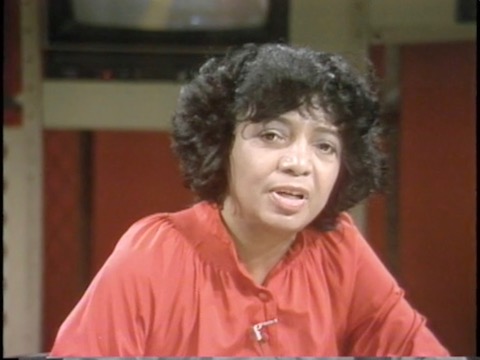
- Transcript
<v Narrator>Ma- funding was provided by this station and other public television stations. <v Narrator>Additional funding was provided by the Quaker Oats company. <v Narrator>[Intro Music] Live from Miami Beach. Continuing coverage of the 71st Annual <v Narrator>Convention of the National Association for the Advancement of Colored People. <v Narrator>Now here is host and commentator Carl Rowan. <v Carl Rowan>Good afternoon. In a few hours, President Carter will speak at the Freedom <v Carl Rowan>Fund Banquet of this NAACP convention. <v Carl Rowan>While the reception is likely to be polite, even cordial, Carter probably will <v Carl Rowan>see and hear some things that he will not like. <v Carl Rowan>Even before he enters the banquet hall of the Fontainebleau Hotel, he may <v Carl Rowan>well see two protest demonstrations underway. <v Carl Rowan>One will blame him for unemployment and other economic woes of blacks here <v Carl Rowan>and in other large cities.
<v Carl Rowan>The second demonstration will criticize the president for what the protesters believe <v Carl Rowan>is discriminatory treatment by the federal government against Haitian <v Carl Rowan>refugees. As I reported yesterday in a Miami new <v Carl Rowan>survey, shows that a majority of the delegates here probably will vote for <v Carl Rowan>the reelection of Jimmy Carter. <v Carl Rowan>But a small majority, compared with a 92 percent of blacks who <v Carl Rowan>gave Mr. Carter their ballots in 1976. <v Carl Rowan>Very clearly, President Carter is speaking here because he knows that <v Carl Rowan>if blacks remain so disenchanted with his policies, that substantial <v Carl Rowan>numbers refuse to vote or decide to vote for the Independent John <v Carl Rowan>Anderson, then Mr. Carter cannot win reelection. <v Carl Rowan>Ronald Reagan, the almost certain Republican nominee, apparently <v Carl Rowan>has been convinced that it is important for him to try to woo black <v Carl Rowan>voters away from Carter. <v Carl Rowan>Reagan's headquarters announced yesterday that the former California governor will
<v Carl Rowan>address a meeting of the National Urban League in New York on August 5th. <v Carl Rowan>A few days before the Democrats hold their national convention in that city, <v Carl Rowan>Reagan was sharply criticized, even ridiculed by officials and delegates <v Carl Rowan>here when he declined an invitation to speak at this NAACP <v Carl Rowan>gathering. The executive director of the NAACP, Ben Hooks, <v Carl Rowan>suggested that Reagan was writing off the black vote. <v Carl Rowan>Reagan sent Hooke's a telegram assuring him that this was not the case. <v Carl Rowan>Now, I want to let you in here on a little exclusive. <v Carl Rowan>The NAACP says it does not endorse presidential candidates, <v Carl Rowan>but in 1964, the NAACP <v Carl Rowan>was so frightened of Barry Goldwater that it did urge blacks <v Carl Rowan>not to vote for Goldwater in the board meeting yesterday, and <v Carl Rowan>in other places here, the leaders of this organization are saying that in 1980,
<v Carl Rowan>the NAACP may once again have to come out with a statement <v Carl Rowan>saying don't vote for someone and that someone would <v Carl Rowan>be Ronald Reagan. <v Carl Rowan>Reagan's failure to appear here opened him up to sharp criticism by independent <v Carl Rowan>candidate John Anderson and Democratic challenger Ted Kennedy, both <v Carl Rowan>of whom asserted that Reagan stands for programs that are unacceptable <v Carl Rowan>to blacks. <v John Anderson>I haven't seen any evidence to date that either Ronald Reagan has done so <v John Anderson>or that President Carter, who's had three and a half years to prove that he was going to <v John Anderson>do something uh he hasn't certainly accomplish the goal of reducing the rate of black <v John Anderson>unemployment from being double that of white unemployment in this country or a <v John Anderson>teenage jobless rates among minority youth ranging as high as 50 or 55 <v John Anderson>percent. <v Ted Kennedy>The president was worried about what to put in his speech here. <v Ted Kennedy>But I have a solution for him. He can make the same promises he did
<v Ted Kennedy>in 1976 [Laughter] because none of them have been used up yet. <v Carl Rowan>President Carter's task is to convince black leaders here that his programs <v Carl Rowan>are not inimical to the interests of America's minorities. <v Carl Rowan>Kennedy has campaigned on the consistent theme that Carter's economic <v Carl Rowan>policies impact cruelly upon the nation's minorities, its poor <v Carl Rowan>and its aged. He's stirred the delegates here. <v Carl Rowan>Kennedy that that is with this pointed attack on Mr. <v Carl Rowan>Carter's policies <v Ted Kennedy>And the Democratic Party must also stand against budget cuts that take <v Ted Kennedy>the most from those who have the least. <v Ted Kennedy>Instead of postponing social progress, let us close the tax <v Ted Kennedy>loopholes through which 5 billion dollars a year pour out into the swollen <v Ted Kennedy>treasuries of the major oil and gas companies. <v Ted Kennedy>There are suggestions from the tribunals of the status quo that
<v Ted Kennedy>it is time to retreat from this effort and from traditional democratic <v Ted Kennedy>principles to take refuge behind a convenient facade of party <v Ted Kennedy>unity. There are even those who say that we can win regardless of <v Ted Kennedy>our policies that we can win, and we can take <v Ted Kennedy>black votes for granted because we can scare Americans about the Republican <v Ted Kennedy>candidate. They surely is a right wing threat. <v Ted Kennedy>But I'm convinced that we will not defeat it by tilting <v Ted Kennedy>toward it. [Applause] <v Ted Kennedy>Rosa Parks did not win her victory <v Ted Kennedy>for justice by moving to the middle of the bus. <v Carl Rowan>President Carter has said repeatedly that Kennedy misrepresents and distorts <v Carl Rowan>his programs. Let's take a look at what the president himself has said
<v Carl Rowan>about the issues that are most important to this convention. <v Carl Rowan>There is the matter of the budget. <v Carl Rowan>He said we are going to balance the '81 budget. <v Carl Rowan>It will be done in a very sensitive way to minimize the adverse effect <v Carl Rowan>on people who need federal programs most. <v Carl Rowan>This is what has gotten Mr. Carter into the greatest of trouble with blacks. <v Carl Rowan>They believe that there is no sensitive way to balance the budget at this <v Carl Rowan>time so that he does not have to wound the people who need help <v Carl Rowan>most. Inflation is another big issue. <v Carl Rowan>This is what he said. I might point out that controlling inflation is extremely <v Carl Rowan>important to the people who are the poorest, who suffer from discrimination <v Carl Rowan>or who live on fixed incomes. <v Carl Rowan>They are the ones that cannot survive a 20 percent inflation <v Carl Rowan>rate. Mr. Carter is arguably correct,
<v Carl Rowan>but he is running against the tide of a democratic tradition of hating joblessness <v Carl Rowan>more than inflation. <v Carl Rowan>He said this about the cities. <v Carl Rowan>My opinion is that the best way to ensure that the cities will continue <v Carl Rowan>to improve is to orient not just special programs designed <v Carl Rowan>for the cities, but all programs in transportation, education, <v Carl Rowan>health and environmental quality, jobs, housing to orient <v Carl Rowan>those toward the deteriorating areas of our country as a <v Carl Rowan>top priority. <v Carl Rowan>That was in his speech to the League of Women Voters. <v Carl Rowan>Let me say a word about the need for special programs. <v Carl Rowan>During an earlier recession, I asked former President Ford <v Carl Rowan>if he intended to prepare any special programs to help blacks and others <v Carl Rowan>who were heavily hit by unemployment. <v Carl Rowan>No, Mr. Ford said, my policy is to lift the entire economy. <v Carl Rowan>When I do that, all groups will be better off
<v Carl Rowan>now. That's the old all ships rise with the tired idea <v Carl Rowan>that has turned out not to be true where blacks are involved. <v Carl Rowan>Since World War 2, even when the good times rolled, <v Carl Rowan>black unemployment never dropped below 8 percent and consistently <v Carl Rowan>remained double that for white Americans. <v Carl Rowan>Mr. Carter will find that these delegates want specially targeted programs. <v Carl Rowan>President Carter's words suggests that he believes he has initiated <v Carl Rowan>more special programs than the public understands. <v Carl Rowan>Here's what he said about employment. In <v Carl Rowan>3 years, working together, we have created in this country a <v Carl Rowan>record setting 9 million new jobs, 9 million more people <v Carl Rowan>at work than were 3 years ago. <v Carl Rowan>A million more construction workers at work because of our mutual <v Carl Rowan>commitment to jobs.
<v Carl Rowan>I would like to point out to you that between 1977 <v Carl Rowan>and the projected budget of 1983, we will have committed <v Carl Rowan>several hundred million dollars, probably in the neighborhood of a half <v Carl Rowan>a trillion dollars to programs that directly put people to work <v Carl Rowan>by building new facilities and providing vital services. <v Carl Rowan>And he said this about this advantaged citizens. <v Carl Rowan>We have had a very successful first 3 years in increased sensitivity <v Carl Rowan>to the needs of the disadvantaged people in our country, including minority groups. <v Carl Rowan>We have had an unprecedented increase in jobs. <v Carl Rowan>We have had an unprecedented commitment to the urban areas of our country inhabited <v Carl Rowan>by the poor and quite often by minority groups. <v Carl Rowan>And he continued to speak favorably of himself on the issues of housing. <v Carl Rowan>This is what he said. My recommendations in some areas are quite
<v Carl Rowan>liberal. As a matter of fact, my first recommendation to Congress <v Carl Rowan>when we put forward a balanced budget was to increase federally assisted <v Carl Rowan>homes. We've now asked the Congress to expand the 235 program <v Carl Rowan>with government subsidized interest rates to add another hundred thousand <v Carl Rowan>homes that will be federally assisted. <v Carl Rowan>This gathering surely realizes that President Carter personally <v Carl Rowan>has taken a forceful stand in urging Congress to strengthen the fair <v Carl Rowan>housing law by approving amendments which he considers the most <v Carl Rowan>important piece of civil rights legislation in a decade. <v Carl Rowan>Mr. Carter also believes that he has been a good president for the disadvantaged when <v Carl Rowan>it comes to education. <v Carl Rowan>This is what he said about the Head Start program. <v Carl Rowan>Head Start is a program that works. <v Carl Rowan>It's a program that makes poor children healthier.
<v Carl Rowan>It's a program that helps young people grow more self-confident. <v Carl Rowan>And it's a program that lets students make their parents better as well. <v Carl Rowan>Because one thing we often forget is how much education those <v Carl Rowan>5 year old children brought home to a parent who may not <v Carl Rowan>ever have been blessed with a chance to read a good book. <v Carl Rowan>One thing that the delegates here, the media and most assuredly <v Carl Rowan>the other presidential contenders will be watching tonight is the extent <v Carl Rowan>to which Mr. Carter's rhetoric on the great issues changes from his <v Carl Rowan>words of the recent past. <v Carl Rowan>Now, there's been a lot of pro and con about whether the NAACP should have brought its <v Carl Rowan>convention to Miami Beach. <v Carl Rowan>And a lot of discussion about the impact of this convention. <v Carl Rowan>Let's get a report on this from Sharon Stevens. <v Sharon Stevens>More than a million people live in Miami and blacks comprise 15 percent of the <v Sharon Stevens>population. They are the smallest minority in this southern Florida community.
<v Sharon Stevens>The NAACP is one of only a handful of groups which represents minority <v Sharon Stevens>interests. Opinions on the viability of the 5 chapters here <v Sharon Stevens>include a variety of descriptions from laudatory to charges that they have been <v Sharon Stevens>ineffective. Some blacks have never even heard of the NAACP. <v Sharon Stevens>A sampling of opinion in downtown Miami produced the following responses. <v Speaker 1>I think that is um a very good organization and they're doing a fine job. <v Gail Boles>Well one thing I am upset about is that uh on their membership row, they do have Janet <v Gail Boles>Reno as a card carrying member. <v Gail Boles>And I think they should ask for that card back uh as a result of the recent McDuffie <v Gail Boles>issues and so forth. The leadership for the NAACP comes <v Gail Boles>more on the national, you know, on the national level with Benjamin Hooks on down <v Gail Boles>when it gets down to the local level it sort of like peters out. <v Regina Benhibeban>It keeps the community together and it everyone progressing. <v Regina Benhibeban>I mean, that's what it's for. It's just like organizations like the Jewish organizations
<v Regina Benhibeban>and you know, it's just like any other one. <v Bob Mark>I don't really know too much about the organization. <v Bob Mark>I- I know, there's a big convention going on now. <v Bob Mark>And I know it's been an organization active for a number of years from protecting <v Bob Mark>the rights of black citizens. <v Jill Nixon>Well I think it's an important organization and one that I would like to see people get <v Jill Nixon>more involved in. Both black and white people think they've won an amazing number of <v Jill Nixon>legal victories over the years that couldn't have been done without them. <v Jill Nixon>A lot of people have given their time and I hope that does continue. <v Sharon Stevens>Are you a member yourself? <v Jill Nixon>No, I'm not. In fact, I don't even know how you go about becoming a member and I'd be <v Jill Nixon>interested. <v Sharon Stevens>Would you would you like to join? <v Jill Nixon>I don't know that I ever knew that anybody who wasn't black could join, and I would be <v Jill Nixon>interested if it's true that you can otherwise. <v Sharon Stevens>As a young person, is it the kind of organization that you would look up to? <v Clavel Ford>Kind of, yes. <v Sharon Stevens>While a number of observers and residents here view the greater Miami chapters as weaker <v Sharon Stevens>links in the chain. Chapter leaders believe they are doing their job. <v Sharon Stevens>The emotional rebuilding of Liberty City and the NAACP involvement in that
<v Sharon Stevens>process may well be the key to the viability of this organization in <v Sharon Stevens>this area. From the Miami Beach Convention Center, this is Sharon Stevens reporting. <v Carl Rowan>Now let's go live to Sharon Stevens at the Convention Center for a report <v Carl Rowan>on today's plenary session. <v Sharon Stevens>Carl, the most talked about resolution this year does not involve traditional human or <v Sharon Stevens>civil rights issues, but goes straight to the heart of the NAACP's internal structure its <v Sharon Stevens>constitution. Today, delegates debated on whether to limit the length of service <v Sharon Stevens>for nationally elected and appointed representatives on the national board. <v Sharon Stevens>And here's what some of those delegates had to say. <v Speaker 2>As a long time member of this association from youth days <v Speaker 2>up, I have done my share of helping to elect people <v Speaker 2>to the board. I've also had an opportunity to see the board <v Speaker 2>in operation both from the outside and as a member of the staff
<v Speaker 2>inside and now as a member of the board. <v Speaker 2>The democratic process will be best served by <v Speaker 2>making it possible for the rank and file to filter <v Speaker 2>in to the present board. <v Speaker 2>And if you read these resolutions, especially the majority report, you will see <v Speaker 2>that there really is no effective date. <v Speaker 2>We still have to depend upon that board to mend that constitution. <v Speaker 2>And unless this body says unequivocally to the board <v Speaker 2>that you want that constitution amended, it will ignore <v Speaker 2>even the wishes of the democratic body. <v Speaker 2>I have served in the Methodist Church on boards that limited your membership <v Speaker 2>to 8 years. You knew then when your 8 years were up, <v Speaker 2>you would come off when you have a limitation or tenure on <v Speaker 2>service. You allow new people to come and serve
<v Speaker 2>and give their expertise. <v Speaker 2>I hope that you [Applause] will not be deluded by this minority <v Speaker 2>report. It's a feeling that you're getting something which you are not. <v Speaker 2>We took a step forward yesterday, but we must take another step <v Speaker 2>today. I call on you to reject and do it overwhelmingly the <v Speaker 2>minority report and support the majority report. <v Speaker 2>[Applause] <v Speaker 3>I believe in NAACP and [Someone else talking] I believe in its members and their right to <v Speaker 3>choose and elect who they want to serve them. <v Speaker 3>I firmly believe that we have not become the largest and oldest civil rights <v Speaker 3>organization in the world by placing limitations on the amount of service <v Speaker 3>our members can give, [Applause] but by people recognizing and <v Speaker 3>believe in the strength of our leaders in the democratic process by which they are <v Speaker 3>elected. Secondly, I remember what most of us know it's the Mississippi <v Speaker 3>crisis. And I assure you that all the overwhelming support we received in dealing
<v Speaker 3>with that crisis was to a large degree based on the record and strength of <v Speaker 3>our leadership and their ability to negotiate. <v Speaker 3>I believe that young people, all people, your region, my region should be represented <v Speaker 3>on the board. But I also believe in my right to vote and decide if I want <v Speaker 3>to send someone to represent me for 12 years or 24 years. <v Speaker 3>We have got to stop being emotional and we've got to be realistic ?inaudible? <v Speaker 3>support and the minority report. Thank you. <v Speaker 3>[Applause] <v Announcer>All right. <v Speaker 4>No one lives forever, I'm reminded, in 1963, <v Speaker 4>the day of the funeral of John F. Kennedy. <v Speaker 4>The Houston paper said: "A Grieving Nation Moves On. <v Speaker 4>JFK is Laid to Rest." This organization should be above <v Speaker 4>one person, one group of persons, or one age group. <v Speaker 4>We are talking about in this nation, ?inaudible? <v Speaker 4>our country and the democratic process within the Democratic and Republican parties
<v Speaker 4>to all people. What we have aboard today is not representative <v Speaker 4>of the grass roots. It is representative of certain people. <v Speaker 4>We have a certain board members elected by the board that their name ?and our? <v Speaker 4>local communities is about as famous as a man with a penny trynna buy a lunch. <v Speaker 4>It won't do much. And they're carrying no weight. <v Speaker 4>We see him at no con- no local board meetings. <v Speaker 4>We know nothing about him. And they've been here hitchhikers. <v Speaker 4>And the personal agenda has been more important than the NAACP agenda because we <v Speaker 4>are a grass roots organization. <v Speaker 4>The survival of the NAACP or any other organization is dependent <v Speaker 4>upon new ideas, new people and new <v Speaker 4>projects and new strategies. <v Speaker 4>What we have today is basically a New Deal board. <v Speaker 4>A board that past its time in many ways. <v Speaker 4>We need another generation. <v Speaker 4>We're not sayin' throwin' the present board members out we're sayin' integrate the board <v Speaker 4>members and give everybody a chance to serve.
<v Speaker 4>Mr. Chairman, we ought to remember what happened in Iran. <v Speaker 4>We ought to remember what happened in Nicaragua. <v Speaker 4>We ought to remember what happened in Korea today when repressive and non <v Speaker 4>democratic regimes fall, in many cases the organization will fall. <v Speaker 4>And for many of us, we've struggled too long to see a democratic organization <v Speaker 4>far across the repressive board of governance. <v Announcer>All those in favor please signify by showing your cards fine <v Announcer>in favors, all thank you. <v Announcer>All those opposed, please show your cards. <v Announcer>[Crowd booing] Okay. <v Announcer>We're very, very much in doubt. <v Announcer>[Crowd booing] <v Sharon Stevens>Well, eventually, the resolution to limit national officers to four consecutive terms at <v Sharon Stevens>12 years was overwhelmingly approved. <v Sharon Stevens>The tenure provision was at least 6 years in the making.
<v Sharon Stevens>And one of those at the forefront is national board member Reverend Gloster Current, whom <v Sharon Stevens>you saw just a minute ago. <v Sharon Stevens>Why did you support it? [Announcer speaking over PA] <v Gloster Current>[Announcer speaking over PA] I supported it because the national board of directors needs <v Gloster Current>to have fresh blood, new blood, an opportunity for the <v Gloster Current>younger uh members of the association to have a chance <v Gloster Current>to come aboard. Without tenure, uh we continue to reelect <v Gloster Current>board members who are good. But it does not give the democratic process <v Gloster Current>a change. The fundamental principles of NAACP uh <v Gloster Current>will remain the same. <v Gloster Current>You might have a little more vigor in terms of trying to carry out that program, <v Gloster Current>but there will be no fundamental changes in the approaches and their work. <v Sharon Stevens>What if any impact do you think this resolution would have <v Sharon Stevens>on the position of Chairman Wilson? <v Gloster Current>Well now, that's interesting.
<v Gloster Current>I cannot foresee any great change in her influence <v Gloster Current>as new persons are filtered in, it might. <v Gloster Current>Keep in mind that the board chairman is elected by the board itself. <v Gloster Current>If new people come on the board and it'll be a gradual process, should <v Gloster Current>she desire to remain, there might be some new persons <v Gloster Current>arise who would challenge her position. <v Gloster Current>NAACP has not had a tradition of summarily dismissing Chairman <v Gloster Current>Louis Wright, Dr. Louis Wright was chairman a long time uh Rob- Robert Weaver <v Gloster Current>was chairman long time. Stephen Gill Spottswood. <v Gloster Current>So I don't see any great change in attitude toward the present chairman. <v Sharon Stevens>The work on this resolution is not over yet. <v Sharon Stevens>And my colleague Rodney Ward has more. <v Rodney Ward>Sharing the resolution to limit the number of terms a board member can serve must now be <v Rodney Ward>debated by the full board. The board meets this fall to review all of the resolutions
<v Rodney Ward>adopted during the convention. <v Rodney Ward>Delegates left the hall this afternoon unsure of whether the resolution to limit <v Rodney Ward>board member terms would, in fact, result in an amendment to the NAACP constitution. <v Rodney Ward>Delegates asked whether the board is required to follow the will of the convention <v Rodney Ward>delegates. I posed that question to NAACP executive director Benjamin Hooks. <v Benjamin Hooks>[Announcer speaking over PA] There's two kinds of resolutions that the delegates passed, <v Benjamin Hooks>the Bl- the Blue book, which is our constitution ?inaudible? <v Benjamin Hooks>That every revolution is passed by the convention must be ?concurred in? <v Benjamin Hooks>by the board of directors b- be- before it becomes effective. <v Benjamin Hooks>That gives the board the oppurtunity to lift its resolutions in a more <v Benjamin Hooks>calm uh light rather than maybe be the upset ?fervor? <v Benjamin Hooks>of a convention floor. If they do not concur <v Benjamin Hooks>with the resolutions passed by the convention, in that event <v Benjamin Hooks>they must be sent to the branches for ratification either the convention action <v Benjamin Hooks>or the floor act- or the board action.
<v Benjamin Hooks>But when it comes to constitutional amendment, the board of the final makes the final <v Benjamin Hooks>decision so that the resolution adopted today will go before the board. <v Benjamin Hooks>If the board concurs and then they will change and adhere to what this convention passed. <v Benjamin Hooks>If they do not concur, that would be the end of it. <v Benjamin Hooks>In other words, what this amounts to is more of an advisory <v Benjamin Hooks>than a directive. <v Rodney Ward>Sure but will that be seen as a sign that the <v Rodney Ward>board is not interested in what the majority of the delegates at the convention are <v Rodney Ward>interested in? <v Benjamin Hooks>Oh I'm not predicting at all what the board would do, I was simply explaining the law. <v Benjamin Hooks>You know, I'm the executive director, but I don't have to be a member of the board. <v Benjamin Hooks>I serve as a secretary of the board, but I'm not a member. <v Benjamin Hooks>And I would not dare speculate because I don't know what the relative mer- merits <v Benjamin Hooks>of the issue are. Nor do I know, Nor have I examined administrative ?resignation?. <v Benjamin Hooks>Nor do I know what the board just ?thinking?. <v Rodney Ward>OK, sir. But if the board were not to go along <v Rodney Ward>with this resolution, would that then constitute a major division?
<v Rodney Ward>Wo- wo- Would that be a message from the board to the people, the <v Rodney Ward>delegates that the board is not interested? <v Rodney Ward>And what the people want? [Hooks interjects] <v Benjamin Hooks>Well, I will not speculate on what the board will do and won't do. <v Benjamin Hooks>I have no idea, and I think any speculation of that would be a waste of my time at this <v Benjamin Hooks>point. <v Rodney Ward>[Announcer speaking over PA] There was some suggestion by people in the- the delegates <v Rodney Ward>that this uh action would have a negative effect on the NAACP, <v Rodney Ward>that limiting the terms would have a negative effect on the operation of the NAACP. <v Rodney Ward>Uh, do you have any thoughts, sir, at this point? <v Benjamin Hooks>The question of tenure, has always been, in my judgment, a basic policy matter <v Benjamin Hooks>for the council convention to decide. <v Benjamin Hooks>And I have never expressed an opinion on it before this convention. <v Benjamin Hooks>I was ?inaudible region meeting? I was on the state conference because that is strictly <v Benjamin Hooks>something that I should not be involved in. <v Benjamin Hooks>I will obviously look at it now from an administrative viewpoint. <v Benjamin Hooks>And if I feel called upon to make some report on it, I will at this <v Benjamin Hooks>point, I've given no particular thought to it.
<v Sharon Stevens>Well that's about it from the floor. Back to you, Carl. <v Carl Rowan>Thank you very much, Sharon. We'll be back to you in just a little while. <v Carl Rowan>And to Rodney Ward. <v Carl Rowan>I think I should mention that one event has overshadowed this convention. <v Carl Rowan>I refer to the mid-May riots in the Liberty City section of Miami, which raised <v Carl Rowan>the fear of another summer of violence such as we had in 1967. <v Carl Rowan>At that time, President Johnson became so concerned that he named a National <v Carl Rowan>Advisory Commission on Civil Disorders, which made a celebrated report. <v Carl Rowan>Well, I have with me today a longtime worker in the civil rights field and an old friend, <v Carl Rowan>Ruth Bates Harris from Washington. <v Carl Rowan>She has raised the question whether bad history is repeating itself <v Carl Rowan>because we learn little or nothing from our past. <v Carl Rowan>Ruth, you hear these people talking about the riots <v Carl Rowan>here. <v Ruth Bates Harris>Yes. <v Carl Rowan>Did we learn anything from that national commission that President Johnson named? <v Ruth Bates Harris>I don't think we've learned enough, Carl, because the report is is a very vivid
<v Ruth Bates Harris>portrayal of the riots, the summer of unrest of 1967. <v Ruth Bates Harris>It first started with the horror of Watts and discuss the problems <v Ruth Bates Harris>that we had in Newark and Detroit and and cities across the nation. <v Ruth Bates Harris>And it's interesting that this particular commission was composed of governors <v Ruth Bates Harris>and members of both houses of Congress, various political <v Ruth Bates Harris>persuasions. It included an ambassador. <v Ruth Bates Harris>It included various corporate executives. <v Ruth Bates Harris>And I think that the recommendations that they made were rather revealing, <v Carl Rowan>So what you're saying to me is that in 67, we had the people who <v Carl Rowan>run this country sitting there saying, we've got to do something. <v Carl Rowan>Republicans, Democrats, <v Ruth Bates Harris>Yes <v Carl Rowan>The power structure, <v Ruth Bates Harris>Yes, <v Carl Rowan>Saying to the nation, this is what we have to do. <v Ruth Bates Harris>Yes <v Carl Rowan>Now, what'd they tell us? <v Ruth Bates Harris>Now this is interesting because a report warned us then that we were moving to a two <v Ruth Bates Harris>separate societies, one black and one white.
<v Ruth Bates Harris>But both societies unequal. <v Ruth Bates Harris>And also it warned us that certain things had to be done. <v Ruth Bates Harris>In fact, it didn't look at any one factor as a cause of the rise, but a combination <v Ruth Bates Harris>of several, such as housing discrimination, educational <v Ruth Bates Harris>opportunities, employment, unemployment, health and welfare <v Ruth Bates Harris>services, communications, generally speaking of police <v Ruth Bates Harris>practices, as well as news media reporting. <v Ruth Bates Harris>So it covered a gamut of areas and it certainly mentioned exploitation of the ghetto. <v Ruth Bates Harris>And the recommendations, I think are still very vivid in my mind because it talked <v Ruth Bates Harris>about opening up housing and employment and education to all <v Ruth Bates Harris>persons. It also talked about the frustrations of powerlessness <v Ruth Bates Harris>and and the anguish of the cities and said that this could be corrected by giving people <v Ruth Bates Harris>a stake in the community, let that them participate in those factors
<v Ruth Bates Harris>affecting their own lives. And then it said we should also correct the stereotypes <v Ruth Bates Harris>and so forth. And that's is relevant to me today. <v Carl Rowan>Well, so uh you could sit in this convention and listen to people talk <v Carl Rowan>and say what's new? [Harris laughs] I mean, you could be sitting in 1967. <v Ruth Bates Harris>Yes <v Carl Rowan>And I wanted to talk to you for one reason, because I talk <v Carl Rowan>to, you know, the so-called big shots at the convention and we know what they think. <v Carl Rowan>But you've been moving among the so-called little people at this convention. <v Ruth Bates Harris>Yes, yes I have. <v Carl Rowan>What are they saying? Do they think anything is being achieved? <v Ruth Bates Harris>Well, I had a chance to really to visit Liberty City, <v Ruth Bates Harris>and I met with many people here at the convention. <v Ruth Bates Harris>I must I must congratulate the NAACP though, for having <v Ruth Bates Harris>the foresight to have a special session on implementation <v Ruth Bates Harris>of this report. The uh, uh National Advisory Commission on Civil Disorders, they did <v Ruth Bates Harris>that. They had a whole session. But when I visited among the various people in
<v Ruth Bates Harris>Liberty City and other places, I was concerned that there's still that kind of anguish <v Ruth Bates Harris>and the feeling of powerlessness. <v Ruth Bates Harris>And I think that there's something we can do about it. <v Carl Rowan>Well, let me say, Ruth, I'm delighted that you would come in to talk to me about it. <v Carl Rowan>And let us just pray that 13 years from now, we aren't still <v Carl Rowan>sitting around asking when are they going to implement the Kerner Commission. <v Carl Rowan>I thank you so much. <v Ruth Bates Harris>Thank you so much. <v Carl Rowan>A touching moment occurred on the floor today when Althea Semmens proposed a tribute <v Carl Rowan>to Dick Gregory. <v Althea Semmens>Let's take a look. Dick Gregory has been for more than two decades, one <v Althea Semmens>of the strongest supporters of the NAACP, whereas <v Althea Semmens>Dick Gregory has made countless speeches and appearances on behalf <v Althea Semmens>of units of the NAACP and whereas <v Althea Semmens>Dick Gregory has participated in our demonstrations, public assemblies <v Althea Semmens>whenever called upon and has often responded with his own initiative.
<v Althea Semmens>And whereas Dick Gregory has come to the NAACP's conventions <v Althea Semmens>without honorarium. <v Althea Semmens>And whereas Dick Gregory has manifested his interest in the civil <v Althea Semmens>rights struggle by speaking out more than 20 years ago <v Althea Semmens>when it was not popular so to do. <v Althea Semmens>And whereas Dick Gregory's outspoken commitment to civil rights <v Althea Semmens>caused him to be barred from many places where he had performed. <v Althea Semmens>Notwithstanding that, he was one of the nation's premier comedians. <v Althea Semmens>And whereas Dick Gregory refused to bowed his head or lower <v Althea Semmens>his dignity, even though it caused him to lose his career. <v Althea Semmens>And whereas Dick Gregory is not Iran on a fast <v Althea Semmens>as he attempts to intercede for American hostages still held <v Althea Semmens>in that country.
<v Althea Semmens>And whereas Dick Gregory sojourned has endangered his health and has caused <v Althea Semmens>economic hardship for his family, now, therefore, be it resolved <v Althea Semmens>that this the 71st Annual Convention of the NAACP <v Althea Semmens>go on record lauding the unselfish contribution of Dick Gregory <v Althea Semmens>and his family to the struggle for human and civil rights <v Althea Semmens>and upon his units and administrations to assist the Gregory family <v Althea Semmens>in any manner possible. <v Announcer>Has properly moved and supported. <v Announcer>There's no question, no reason for debate on such a great American. <v Announcer>All those in favor of the resolution please signify by saying I. <v Announcer>[Crowd yells "I"] I'm not asking for any opposition. <v Announcer>Thank you very much. The resolution unanimously adopted. <v Carl Rowan>One of the ongoing debates in America relates to the state of our military.
<v Carl Rowan>One argument in favor of reinstituting the draft is that it would strengthen our <v Carl Rowan>army, an army that has too many blacks in it, as some people <v Carl Rowan>put it. One of the nation's most distinguished black military men spoke <v Carl Rowan>to the convention today. Admiral Samuel Gravely, director of <v Carl Rowan>the Defense Communications Agency. <v Carl Rowan>Let's listen to what Admiral Gravely had to say. <v Samuel Gravely>All that in 1941 when Japan attacked Pearl Harbor, lines <v Samuel Gravely>formed at every recruiting station in the country as Americans <v Samuel Gravely>of every hue volunteered to help defend their country. <v Samuel Gravely>But the black man who volunteered for the Navy found that he was acceptable only <v Samuel Gravely>as a steward or servant, if you please. <v Samuel Gravely>The national office of the NAACP sent a letter to the secretary of the Navy <v Samuel Gravely>asking whether the Navy would then because of the increased need for recruits <v Samuel Gravely>except blacks from other than the steward rate.
<v Samuel Gravely>The answer came back no change as contemplated. <v Samuel Gravely>The NAACP then, wrote President Roosevelt. <v Samuel Gravely>After numerous discussions and many committees meetings later, <v Samuel Gravely>the president made a decision beginning 1 June 1942, blacks <v Samuel Gravely>could enlist in the Navy for general service as well as in the steward rating. <v Samuel Gravely>Thus, in June of 1942, the U.S. <v Samuel Gravely>Navy began to recruit black seamen for the first time in about 20 years. <v Samuel Gravely>The complexion of the Navy has changed considerably since the early 1940s, when I was <v Samuel Gravely>but one of a handful of black officers. <v Samuel Gravely>I'm proud and pleased when I look at the changes that have taken place in our Navy since <v Samuel Gravely>then. Needless to say, there is no racial segregation in our Navy <v Samuel Gravely>today. And please do not confuse racial segregation <v Samuel Gravely>with racial discrimination. <v Samuel Gravely>Housing and service club problems were solved many years ago.
<v Samuel Gravely>There is no problem with going to see, as a matter of fact, despite the fact that I <v Samuel Gravely>could not be assigned to see duty. When I joined in 1942, <v Samuel Gravely>I can boast of almost 10 years in command of seagoing units and a total of 17 <v Samuel Gravely>years of sea duty since 1949. <v Samuel Gravely>13 black officers were originally commissioned in April of 1944. <v Samuel Gravely>Twelve ensigns and one warrant by the end of World War 2 this number <v Samuel Gravely>was 60. The senior being a lieutenant commander in the Civil Engineering Corps, <v Samuel Gravely>a senior line officer was a lieutenant junior grade and I was an ensign. <v Samuel Gravely>There were two female line officers. <v Samuel Gravely>There were no regular Navy black officers. <v Samuel Gravely>All were reserves. <v Samuel Gravely>There was one midshipman at the Naval Academy. <v Samuel Gravely>There are now 1476 black officers on active duty. <v Samuel Gravely>Of which 195 are women. <v Samuel Gravely>To date, the results achieved under the Affirmative Action Plan <v Samuel Gravely>include an increase in min- in Navy minority population.
<v Samuel Gravely>An intensified effort to increase minority officer personnel and <v Samuel Gravely>increase in upward mobility. <v Samuel Gravely>Increased participation by Navy representatives in minority functions, conventions, <v Samuel Gravely>meetings, continued training of Navy men and women, and equal opportunity <v Samuel Gravely>in race relations. And the continua- continued moderating <v Samuel Gravely>of discrimination complaints reflected over my thirty eight years in the Nav and <v Samuel Gravely>I must tell you that here at the threshold of my retirement, I've done a lot of <v Samuel Gravely>reflecting and reminiscing. <v Samuel Gravely>I cannot say that the U.S. Navy has finally eliminated all traces of discrimination <v Samuel Gravely>within the organization, but I truly believe we are as close to <v Samuel Gravely>this goal as any other organization in our country. <v Carl Rowan>Considerable concern was expressed here about the plight of black veterans, especially <v Carl Rowan>those who fought in Vietnam and came home with less than honorable discharges. <v Carl Rowan>Sharon Stephens has this report.
<v Sharon Stevens>Statistics are sketchy, but it's estimated that the number of blacks who have received <v Sharon Stevens>less than honorable discharges outnumber their white counterparts by more than four <v Sharon Stevens>to one. In Washington, D.C., alone. <v Sharon Stevens>It's been reported that since World War 2, approximately 10,000 black <v Sharon Stevens>veterans have received what they call bad paper. <v Sharon Stevens>According to Donald Shelton of the National Black Veterans Organization. <v Sharon Stevens>An unfavorable service record means the loss of V.A. <v Sharon Stevens>benefits and often results in hard economic times for the black vet. <v Donald Shelton>So their chances of finding any kind of meaningful employment <v Donald Shelton>have been reduced considerably. <v Donald Shelton>And as long as these things continue to happen, I think it's going to we're going to see <v Donald Shelton>a revolving door type effect. <v Donald Shelton>We are somewhat successful in placing a number <v Donald Shelton>of people in employment, but it appears that it's only temporary <v Donald Shelton>employment and that the type jobs that we're successful in placing a man <v Donald Shelton>or a security guards in these type jobs and they are a very short duration, the
<v Donald Shelton>guy who comes frustrated and returns to the unemployment ranks <v Donald Shelton>in seeking unemployment again <v Sharon Stevens>Because the economic impact can be so devastating, some black veterans are seeking to <v Sharon Stevens>upgrade their discharge status. <v Sharon Stevens>But Colonel D.R. Butler of the Army Discharge Review Board says it's difficult to <v Sharon Stevens>convince young blacks that they will get a fair hearing. <v D.R. Butler>In 1978, when I was in Chicago doing a big snowstorm, <v D.R. Butler>we had 80 percent show rate. <v D.R. Butler>I'll tell you why I had the Veterans Assistance <v D.R. Butler>Program, which is run by a guy named Johnny Summers and Lorenzo Harbin in Chicago. <v D.R. Butler>They went out one Saturday morning and drug a guy out of bed and brought him before the <v D.R. Butler>bullet. And the guy had a good case and he was upgraded and he went back and <v D.R. Butler>spread the word. Next thing you know, and with all that snow, we had 80 percent of people <v D.R. Butler>coming in there. That's the name of the game, is to try to convince <v D.R. Butler>the individual that he's going to get a fair shake.
<v Sharon Stevens>Donald Shelton contends that racism does exist in the military, and he says the federal <v Sharon Stevens>government has been insensitive to the needs of black vets, even though the feds have <v Sharon Stevens>provided aid by way of the ?Siedah? program. <v Sharon Stevens>He adds It's time for state and local governments to play a larger role <v Donald Shelton>I think that uh that not only the federal government, but local <v Donald Shelton>and municipal governments are going to have to become more <v Donald Shelton>sensitive to the needs of the black veterans. <v Donald Shelton>And they they're going to have to provide an opportunity for him to help <v Donald Shelton>himself. And uh this opportunity has been <v Donald Shelton>uh- has not been forthcoming. <v Sharon Stevens>This is Sharon Stevens reporting. <v Carl Rowan>That sounded like a mighty lively plenary session down there. <v Carl Rowan>And I tell you the truth, I'm a little confused. <v Carl Rowan>I don't know exactly who's doing what to whom. <v Carl Rowan>So I want to go back down where Sharon Stevens is standing by and see if <v Carl Rowan>I can find out in what ways the NAACP may have been changed today. <v Carl Rowan>Sharon, did we have our Young Turks movement, a bunch of young rebels
<v Carl Rowan>who shook things up or what? <v Sharon Stevens>Yes, there was definitely a youth movement here. <v Sharon Stevens>And it wasn't just a young by uh run by people who were just young and in age. <v Sharon Stevens>As you could tell by uh my interview with the Gloster Current, who's been with the NAACP <v Sharon Stevens>for 35 years and who has for many years now wanted to see <v Sharon Stevens>a change on the board, and that's exactly what you have happening here. <v Sharon Stevens>It was kind of a quiet movement in that there was no outward rebellion or <v Sharon Stevens>nasty words or anything. There was strong debate on this resolution to <v Sharon Stevens>limit the terms of the national board members. <v Sharon Stevens>And it had been coming for some years. They tried last year to get this past the <v Sharon Stevens>supporters. It was a four hour debate. <v Sharon Stevens>They lost this year. They came back. <v Sharon Stevens>They had the numbers. There were enough people who said, we think there ought to be some <v Sharon Stevens>fresh blood on the board. We think there ought to be more women. <v Sharon Stevens>And we think that there should be more representatives from the younger generation. <v Sharon Stevens>So that's basically what was happening. There was definitely a Young Turk movement here.
<v Carl Rowan>Now, you know, I've heard the reports that there were people on the board <v Carl Rowan>who were old timey in like to say colored or Negro, didn't want <v Carl Rowan>to use the word black, certainly didn't want any militancy. <v Carl Rowan>And that this was causing the NAACP some problems with those kids out <v Carl Rowan>there in the ghettos and the barrios who said the NAACP <v Carl Rowan>isn't militant enough. Is there any reason to believe that what happened today <v Carl Rowan>will make the NAACP more militant? <v Sharon Stevens>Not necessarily. Although I think it's it's worth <v Sharon Stevens>watching [Off-screen talking] on all of our parts to see what new directions they move <v Sharon Stevens>in. I don't think we're going to see anything right away. <v Sharon Stevens>No radical changes, but for a number of years, I think, in the late <v Sharon Stevens>60s and early 70s. <v Sharon Stevens>I was hearing complaints that the NAACP was was just lethargic. <v Sharon Stevens>Some chapters even close down shop for a while or they'd close and open <v Sharon Stevens>up again. And it was basically because their membership was was dwindling and they didn't
<v Sharon Stevens>have that infusion of young people that they needed to keep going. <v Sharon Stevens>So I think it'll be a little while before we see some changes. <v Sharon Stevens>But I think it's clear that it's coming. <v Carl Rowan>Rodney Ward's there, too. <v Carl Rowan>Rodney, I sat at breakfast yesterday morning that one of the delegates <v Carl Rowan>said to me, what does it all mean? <v Carl Rowan>What are we achieving here? Are we really changing anything? <v Carl Rowan>Do you find other delegates asking that kind of question? <v Carl Rowan>What is the convention really all about? <v Rodney Ward>Yes. A number of delegates have posed that question, but they seem <v Rodney Ward>to think that out of this convention comes something a new battle <v Rodney Ward>cry for for black America, they seem to be now more aware <v Rodney Ward>that racism exists in this country, that racism is rampant in this country, and <v Rodney Ward>they're willing now to take that message back and begin to deal with it. <v Rodney Ward>They're also more aware of the economic situation here in America. <v Rodney Ward>And they're they're willing to fight. They want to do something about the way the blacks <v Rodney Ward>or the low people on the totem pole in general when it comes to economics.
<v Rodney Ward>And also when it comes to politics. <v Rodney Ward>Going back to your question on a new militancy, talking to some of the <v Rodney Ward>people on the floor or talking to some of the board members, I think there is going to be <v Rodney Ward>a more vocal NAACP, a more militant NAACP <v Rodney Ward>in terms of directing its activities, not only throughout the course, <v Rodney Ward>but going out and making people much more aware of the problems that exist <v Rodney Ward>in this country. I don't think the organization is going to be as quiet as it has been in <v Rodney Ward>the past. <v Carl Rowan>Well, let me ask you this, have they come up with <v Carl Rowan>any framework you've seen? I haven't been able to sit in those workshops. <v Carl Rowan>You haven't seen them all. But how do you translate this feeling <v Carl Rowan>into action? Have those workshops produce some techniques for <v Carl Rowan>going back to Birmingham or going back to Chattanooga and saying <v Carl Rowan>this is how we're going to change things? <v Rodney Ward>Well, unfortunately, those workshops, I don't believe have developed <v Rodney Ward>those kinds of agendas. But I think what they have accomplished is that they've gotten
<v Rodney Ward>people talking, they've gotten people aware of the problems out there that are facing <v Rodney Ward>them. So at least now the people are talking. <v Carl Rowan>Sharon, you're sitting there with a group of people are you've just talked to a group of <v Carl Rowan>people waiting for President Carter. <v Carl Rowan>What are they saying about the president? What are they expecting when he gets here <v Carl Rowan>tonight? <v Sharon Stevens>Well, they're saying that they're looking forward to hearing from him. <v Sharon Stevens>But that doesn't necessarily mean they're going to vote for him. <v Sharon Stevens>There are a lot of Carter supporters here. <v Sharon Stevens>And I think that his delegation are people who support him are the dominant <v Sharon Stevens>group. But what I've noticed is a lack of real enthusiasm and excitement. <v Sharon Stevens>They want to hear what he has to say. But it's almost as if they're not too hopeful. <v Sharon Stevens>So we'll we'll find out later tonight what they're really thinking after he gives his <v Sharon Stevens>speech. <v Carl Rowan>Do you find that the delegates are basically pleased <v Carl Rowan>that they've come to Miami and that particularly they've had a convention where <v Carl Rowan>the presence of this threat to American cities was was always
<v Carl Rowan>there? <v Sharon Stevens>Yes. I think most of the ones that I've talked to are glad. <v Sharon Stevens>For a lot of them, this is their first convention. <v Sharon Stevens>I noticed that there were a lot of younger people here in positions <v Sharon Stevens>the- they're president of their local chapter. <v Sharon Stevens>They have important regional positions. <v Sharon Stevens>It's their first time here. And those are the kind of people that I did a lot of talking <v Sharon Stevens>with. And the kinds of things they were saying was, I see in NAACP that <v Sharon Stevens>is the one that I heard about when I was growing up moving forward and speaking out <v Sharon Stevens>on behalf of black America. And they think that this is starting <v Sharon Stevens>to happen again, perhaps slowly, but they see a move towards that. <v Sharon Stevens>And so therefore, I think they assess that it was good for them to be here. <v Carl Rowan>Rodney, you did a rather moving piece the other night on Black Despair. <v Carl Rowan>Has anything happened here at this convention that you think will diminish that despair <v Carl Rowan>before the NAACP meets next year? <v Rodney Ward>No, I don't think there's anything that happened here at this convention that's going to <v Rodney Ward>diminish that despair. As a matter of fact, I believe, again, that if anything,
<v Rodney Ward>this convention serves to show people and to tell people that <v Rodney Ward>there are conditions out there that exist, that have existed <v Rodney Ward>and that will continue to exist, but that they've got to fight now and they've got to <v Rodney Ward>fight a lot harder, maybe not taking to the streets necessarily. <v Rodney Ward>They've got to go to the ballot box. They've got to wield some economic power. <v Rodney Ward>As one speaker said, it's time for black folk in America to get down to the nitty gritty, <v Rodney Ward>so to speak. I want to go back to a point that we were talking about in terms of <v Rodney Ward>the terms of office for the board of directors. <v Rodney Ward>There's gonna be an interesting battle that's gonna come up and it's going to come up on <v Rodney Ward>that board of directors meets in the fall because they are the people who are going to <v Rodney Ward>decide whether or not they're going to follow the will of the delegates of this <v Rodney Ward>convention and actually limit their own terms. <v Rodney Ward>So it should be interesting to see what happens in the fall when the board of directors <v Rodney Ward>must meet to make a decision on the resolution that was passed here today on <v Rodney Ward>one of their terms of offices should be limited. <v Carl Rowan>Thank you, Rodney. Thank you, Sharon.
<v Carl Rowan>Rodney, you've just brought up a point that's very important. <v Carl Rowan>And I want our viewers to know that we may get a pretty quick answer, because I've got <v Carl Rowan>some men here who can tell us something about it. <v Carl Rowan>I've got the Reverend Charles H. Smith, who's the deputy executive director of the NAACP. <v Carl Rowan>The man next to Ben Hooks. And I've got the legal man here, Thomas I. <v Carl Rowan>Atkins, the general counsel of the NAACP. <v Carl Rowan>Gentlemen, welcome. And answer Rodney's question. <v Carl Rowan>Is the board going to live up to what the delegates asked them to do today? <v Thomas Atkins>Carl, let me let me address the subject. I think it's important to note that <v Thomas Atkins>the NAACP board created the NAACP convention, <v Thomas Atkins>not the other way around. And it did that years and years ago <v Thomas Atkins>precisely because this is an organization that reaches out into the communities of this <v Thomas Atkins>country. It knows the importance of maintaining contact. <v Thomas Atkins>It understands the sensitivity many of our delegates have to changing
<v Thomas Atkins>times. Neither I nor Reverend Smith could any more than been <v Thomas Atkins>in his earlier comments, predict what the board will do. <v Thomas Atkins>But I am confident that when the board takes his subject up, it will do so within <v Thomas Atkins>the context of what is best for the NAACP specifically. <v Thomas Atkins>And what is best generally for black people across the country because that's what our <v Thomas Atkins>mission is and I'm certain it's going to get sensitive consideration. <v Carl Rowan>What's you're feeling Reverend Smith? <v Rev. Charles Smith>Well, I basically concur. Having served on that board for nine years, <v Rev. Charles Smith>I'm confident that the message was telegraphed <v Rev. Charles Smith>today and they're intelligent enough to read it real well <v Rev. Charles Smith>and deal with it by conviction. <v Carl Rowan>Well, that sounds as though there will be some changes made in the board. <v Carl Rowan>I think surely the people on the board know as you do that that was <v Carl Rowan>some pretty strong language out there today when they start talking about repressive <v Carl Rowan>and non-democratic regimes falling in Iran and Nicaragua.
<v Carl Rowan>I think that that's got to say something very important to people who've been on that <v Carl Rowan>board half of forever. <v Thomas Atkins>Well, most of the board members were present today during the session. <v Thomas Atkins>So it's not a message that is going to have to be delivered in a sealed envelope to them. <v Thomas Atkins>They were there. They heard they felt the conviction that was being expressed. <v Thomas Atkins>And I think that convention dealt with a number of other issues, which <v Thomas Atkins>is of which of crucial, crucial importance to the NAACP and the work <v Thomas Atkins>we're doing across the country. [Rowan interjects] <v Carl Rowan>I want to ask you about two or three. [Others talking] I had one of the things we <v Carl Rowan>haven't talked a lot about on this program is education, a field <v Carl Rowan>where the NAACP has had a preeminent role for years. <v Carl Rowan>And while we've had some remarkable progress over the last several years, I <v Carl Rowan>note that a third of the schoolchildren in this country are still in <v Carl Rowan>segregated Jim Crow schools. <v Carl Rowan>Is it that there are no legal ways that you can do anything about that, really?
<v Thomas Atkins>Carl, I've been very deeply involved in the association's <v Thomas Atkins>fight in the courts to un segregate those children. <v Thomas Atkins>And the reality is that the NAACP has not only been on the cutting <v Thomas Atkins>edge, we have frequently been the only thing out there working to do this. <v Thomas Atkins>Working to to unchain our children from the ravages <v Thomas Atkins>of segregation. The federal government has done something. <v Thomas Atkins>It has not done enough. We had to sue the ?HAW? <v Thomas Atkins>in all 50 states because of its failure to investigate the problems the <v Thomas Atkins>NAACP with all the resources that we would bring to this fight <v Thomas Atkins>does not have enough resources by itself quickly to eliminate <v Thomas Atkins>this problem. Change is being made, but I have to tell you that when <v Thomas Atkins>I go into a city like Cleveland or Columbus or Dallas, San Francisco <v Thomas Atkins>and I see the the extent to which our children still cannot read <v Thomas Atkins>because of the attitudes of teachers who label them unteachable,
<v Thomas Atkins>it tears me up inside. <v Thomas Atkins>We have not quit and we will not quit. <v Thomas Atkins>We are putting more resources into this fight. <v Carl Rowan>All right. Let me ask you this, Reverend Smith. <v Carl Rowan>Isn't it a fact that we have probably lost the battle using <v Carl Rowan>the we as black people, that black people have lost the propaganda battle <v Carl Rowan>in one big area of the school fight and that regards to busing, <v Carl Rowan>that's in regard to busing. <v Carl Rowan>I mean, the public just won't accept busing now. <v Carl Rowan>Will it? <v Rev. Charles Smith>I think one of the problems we have had, institutional and administrative wise, <v Rev. Charles Smith>we have not developed the proper kind of public relations of public image <v Rev. Charles Smith>in order to sell and to educate the populace. <v Rev. Charles Smith>And one of the things we should be doing administratively is to update our <v Rev. Charles Smith>ministry of internal operation to gear <v Rev. Charles Smith>up in a very professional way to sell the
<v Rev. Charles Smith>commodity in such a way that even our own people understand the issues <v Rev. Charles Smith>that are involved. We are lacking in this particular area. <v Rev. Charles Smith>And I think we've had problems in that particular area. <v Rev. Charles Smith>But I think the problem is not with the substance is our ability to really communicate <v Rev. Charles Smith>and to project a proper image and information. <v Carl Rowan>Let me mention something that's been on my mind as I've listened to all these <v Carl Rowan>deliberations. I sat here with the findings of a recent <v Carl Rowan>ABC Harris survey running through my head, showing that a majority <v Carl Rowan>of Americans want to cut welfare. <v Carl Rowan>They want to cut the federal jobs program. <v Carl Rowan>They want to cut federal aid to cities. <v Carl Rowan>They want to cut revenue sharing for the cities. <v Carl Rowan>It seems that a majority of Americans out there want exactly <v Carl Rowan>what this convention doesn't want. <v Carl Rowan>Now, how can the NAACP make any promises to the people out there in the <v Carl Rowan>ghetto when it's running against the tide of American opinion?
<v Thomas Atkins>I think I think that a couple of things need to be said. <v Thomas Atkins>Number one, lest I forget it, I want to, on behalf of the association, <v Thomas Atkins>commend PBS for the extraordinary job this week of <v Thomas Atkins>covering this convention, we think that it has been very well done. <v Thomas Atkins>We think that what you have done here has been to help us answer the question <v Thomas Atkins>you just asked because part of the is let <v Thomas Atkins>people in the country know that while some are well off, many <v Thomas Atkins>are without. And the NAACP focuses on those who are still without. <v Thomas Atkins>And yes, we are facing where we're going in the face of a tide <v Thomas Atkins>that's running in the other direction in many areas. <v Thomas Atkins>We will tell the president tonight when he comes that we expect him <v Thomas Atkins>to have a budget that does not penalize people for being poor, that we <v Thomas Atkins>expect him to have programs in his country that does not penalize children for <v Thomas Atkins>being born black. We will be putting that pressure on the president.
<v Thomas Atkins>We will be putting that pressure on the Congress. <v Thomas Atkins>And we will continue to swim upstream where we have to. <v Thomas Atkins>We're not going to pack up shop because the going is getting rough. <v Carl Rowan>Reverend Smith, he says the going is getting rough. <v Carl Rowan>How rough can it be? There are people who say that this country is <v Carl Rowan>drifting rightward so rapidly that it makes people <v Carl Rowan>worry about a repetition of Germany in the '30s. <v Carl Rowan>Is it that severe? <v Rev. Charles Smith>There are indications that it is going toward the right and <v Rev. Charles Smith>I think toward a police state, as many have said. <v Rev. Charles Smith>And I think this is the backlash of the 60s. <v Rev. Charles Smith>But I feel pretty comfortable that it's reached his worst point. <v Rev. Charles Smith>And I think the role that we shall play in the 80s, <v Rev. Charles Smith>we'll turn it around. I feel very comfortable as a recent question <v Rev. Charles Smith>was asked, is that from this convention? <v Rev. Charles Smith>Where do you start? We believe that we can start internally designing the new techniques <v Rev. Charles Smith>and the programs, and we have been given the mandate as far as Dafter is concerned in
<v Rev. Charles Smith>order to get it started right now. We're putting together the top professional <v Rev. Charles Smith>team in the country. The board has given us not only the team, but <v Rev. Charles Smith>the membership has given us some money to do it. <v Rev. Charles Smith>And we feel that by this time next year you'll find that's been a tremendous change <v Rev. Charles Smith>in NAACP. <v Carl Rowan>Just give me a little short answer here. <v Carl Rowan>Is it possible that you're going to have to become a lot more political than you've been <v Carl Rowan>in the past and start calling a spade a spade, as they put it? <v Carl Rowan>When you deal with these guys who want to be president and senator and so forth? <v Rev. Charles Smith>I think we've already started that. We are launching a program as of the end of this <v Rev. Charles Smith>convention and we're going to bring 50 young people in. <v Rev. Charles Smith>And we will come up with a laundry list and a report card, and we're going to start <v Rev. Charles Smith>calling a spade a spade. I think you'll find it by November, maybe not necessarily <v Rev. Charles Smith>militant, but maybe a new approach, a direct approach that will be <v Rev. Charles Smith>use across this country. <v Carl Rowan>Thank you very much, Reverend Smith. <v Carl Rowan>Mr. Atkins. That's all the time we've got ladies and gentlemen. <v Carl Rowan>But stick around, because we'll be back tonight with a report on President Carter's
<v Carl Rowan>speech. I'm Carl Rowan and saying thank you. <v Carl Rowan>[Song: The Black National Anthem] <v Narrator>Major funding for this program was provided by this station and other public <v Narrator>television stations. Additional funding was provided by the Quaker <v Narrator>Oats company.
- Program
- NAACP convention 1980
- Segment
- Part 3
- Producing Organization
- Public Broadcasting Service (U.S.)
- WPBT-TV (Television station : Miami, Fla.)
- Contributing Organization
- The Walter J. Brown Media Archives & Peabody Awards Collection at the University of Georgia (Athens, Georgia)
- AAPB ID
- cpb-aacip-526-qf8jd4qx02
If you have more information about this item than what is given here, or if you have concerns about this record, we want to know! Contact us, indicating the AAPB ID (cpb-aacip-526-qf8jd4qx02).
- Description
- Program Description
- "Live and videotape coverage for PBS of the 1980 Convention of the National Association for the Advancement of Colored People, held in Miami Beach, Florida, June 30th to July 4th, 1980. The coverage included live broadcasts from the convention floor as well as videotape reports from locations throughout Miami. Analysis and interpretation of the convention was provided by award-winning nationally syndicated Chicago Sun-Times correspondent, Carl Rowan. The series included a live hour each afternoon, a half-hour of highlights each evening, and a one-hour summary of the week's events. "The 1980 NAACP Convention occurred shortly after the devastating racially oriented riots in the Liberty City area of Miami and during the developing Presidential campaign. Issues ranging from inflation and unemployment to equal opportunity in education and employment predominated on the national scene. It was the intent of the broadcasts to report and interpret the convention events within a broad context to give viewers perspective on how the issues dealt with by the delegates affected the concerns, not only of black Americans but all Americans. In short, convention coverage was designed to reach as diverse an audience as possible, relating the events to their own interests and concerns, with an emphasis on interpretation and analysis. The specific audience was a wide group who might not ordinarily have been interested in the specific activities of the NAACP but who would watch if those activities were related to important national issues and the developing presidential campaign. Measured in terms of letters and phone calls, the response to the broadcast, especially the one-hour final report and overview, was exceptionally positive and definitely seemed to reach beyond those who had a special interest in the NAACP to those who found the programs enlightening for their general content."--1980 Peabody Awards entry form. The coverage of this convention, reported by Carl Rowan, includes exclusive interviews with Congressman John Anderson, educator Marzell Smith, sociologist Marvin Dunn, Police Foundation President Patrick Murphy, and US Department of Labor secretary Ernest Green. Reports from Sharon Stevens and Rodney Ward give audiences an inside look at the convention including interviews with NAACP executive directors Gloster Current and Benjamin Hooks as well as with some of the protestors in the 1980 Miami riots. At the studio, Rowan himself hosts a few guests such as activist Ruth Bates Harris, NAACP council member Thomas Atkins, and Reverend Charles Smith. The program also includes footage of speeches from NAACP board members such as Dr. Michael Meyers, attorney Althea Semmons, Margaret Bush Wilson, Rayford Logan as well as other leaders in other important organizations such as the director of the Defense Communications Agency Samuel Gravely, Donald Shelton of the National Black Veterans Organization, Colonel D. R. Butler of the Army Discharge Review Board, and Ernest Green of the US Department of Labor. Because it is an election year, the convention importantly hosts speeches from presidential candidates including former President Jimmy Carter, Ted Kennedy, and John Anderson that concern their policies and ideas on black issues in America.
- Broadcast Date
- 1980
- Asset type
- Program
- Media type
- Moving Image
- Duration
- 00:58:29.951
- Credits
-
-
Stevens, Sharon
Ward, Rodney
Rowan, Carl
Director: Carpenter, Richard
Executive Producer: Morgan, Shep
Producer: McIntosh, Clarence
Producing Organization: Public Broadcasting Service (U.S.)
Producing Organization: WPBT-TV (Television station : Miami, Fla.)
Writer: Rowan, Carl
- AAPB Contributor Holdings
-
The Walter J. Brown Media Archives & Peabody Awards Collection at the
University of Georgia
Identifier: cpb-aacip-ca8380537ce (Filename)
Format: U-matic
Duration: 4:00:00
If you have a copy of this asset and would like us to add it to our catalog, please contact us.
- Citations
- Chicago: “NAACP convention 1980; Part 3,” 1980, The Walter J. Brown Media Archives & Peabody Awards Collection at the University of Georgia, American Archive of Public Broadcasting (GBH and the Library of Congress), Boston, MA and Washington, DC, accessed May 30, 2026, http://americanarchive.org/catalog/cpb-aacip-526-qf8jd4qx02.
- MLA: “NAACP convention 1980; Part 3.” 1980. The Walter J. Brown Media Archives & Peabody Awards Collection at the University of Georgia, American Archive of Public Broadcasting (GBH and the Library of Congress), Boston, MA and Washington, DC. Web. May 30, 2026. <http://americanarchive.org/catalog/cpb-aacip-526-qf8jd4qx02>.
- APA: NAACP convention 1980; Part 3. Boston, MA: The Walter J. Brown Media Archives & Peabody Awards Collection at the University of Georgia, American Archive of Public Broadcasting (GBH and the Library of Congress), Boston, MA and Washington, DC. Retrieved from http://americanarchive.org/catalog/cpb-aacip-526-qf8jd4qx02