How Do You Like the World; Part 2
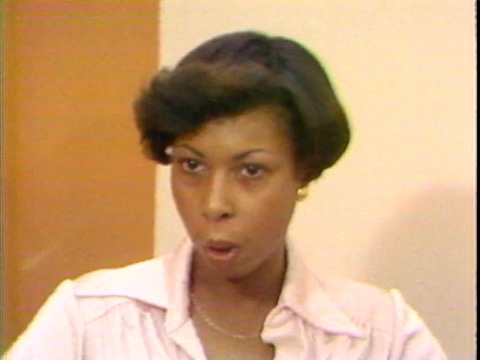
- Transcript
<v Announcer>A welfare mother does not have any choice about working. <v Announcer>Once her youngest child is six years old. <v Katherine Gruber>Hello, my name's Katherine Gruber and I'm a counselor with the WIN program. <v Katherine Gruber>I want to welcome me to the orientation today. <v Katherine Gruber>Basically, the WIN program is for people who are on welfare. <v Katherine Gruber>It's for people who are on aid to families with dependent children. <v Katherine Gruber>And the purpose of it is to find you a job. <v Katherine Gruber>Now, there are different classifications. <v Katherine Gruber>We have people who are called mandatory WIN registrants. <v Katherine Gruber>Those are people who don't have any small children at home. <v Katherine Gruber>They're obliged to work. The government says that you have to get a job. <v Katherine Gruber>Your counselor is going to set up appointments for you. <v Katherine Gruber>We expect you to come to those otherwise. <v Janice>If I don't, then they call my welfare worker <v Janice>down at the welfare office and they tell her I'm not, <v Janice>you know, doing what I should be doing.
<v Janice>And then she sends me a letter, you know, and you have to go to this hearing <v Janice>to determine why you're not doing this and why you're not doing that. <v Janice>And then if they go against you at the hearing, then you're automatically <v Janice>shut off of welfare. <v Susan Lyle Kinney>Completely. <v Janice>Well, I don't think they can do it completely, but they can cut me <v Janice>off. But I don't think they can cut my children off. <v Katherine Gruber>If you missed two appointments in a row without contacting us, <v Katherine Gruber>then we get concerned and may start some action that would jeopardize your welfare <v Katherine Gruber>check, because we do expect you to to keep in touch with us. <v Katherine Gruber>Things like that. Another thing is, once you get a job, we're <v Katherine Gruber>still going to be involved. We're still gonna be your WIN counselors. <v Katherine Gruber>Now if you should be having any problems on the job. <v Katherine Gruber>We'd like you to contact us and perhaps we can straighten them out. <v Katherine Gruber>One thing that you're not supposed to do is quit the job without contacting us. <v Janice>Because if I stay home and watch my children, then I
<v Janice>don't get welfare anymore. <v Janice>And that's just what it boils down to. <v Janice>You know? And I can not work if my children aren't taken <v Janice>care of. Because if my children weren't <v Janice>taken care of, then I would have, you know, the welfare down on <v Janice>me again saying, hey, you're leaving your kids at home, lady. <v Janice>We're gonna take your kids away from you. <v Janice>See see, you know, it's a losing battle. <v Katherine Gruber>But like, sometimes we have people who have wh- well <v Katherine Gruber>really unrealistic expectations. <v Katherine Gruber>They may not want to go out on any jobs unless they pay five or six dollars an hour. <v Katherine Gruber>And, you know, that's just entirely not feasible. <v Katherine Gruber>Say they've never worked or anything like that. <v Katherine Gruber>So you WIN councelor may put some demands on you like. <v Katherine Gruber>These are the types of jobs we're going to be looking for that seem to suit you. <v Katherine Gruber>And these are what they want you to go out and find.
<v Kathy>At one time, I went to the window. <v Kathy>I said, well, I'll go to WIN. <v Kathy>You know, they're gonna really help me get training for a job. <v Kathy>Give me a good job. <v Katherine Gruber>Some of your questions might be about training. <v Katherine Gruber>Now, right now, with the WIN program, we have very little funds <v Katherine Gruber>for schooling. <v Kathy>And you go to orientation, then you get to really, really talk to you about applying <v Kathy>for jobs in jobs. <v Kathy>We're training on the job training and everything. <v Kathy>And then they set you up in this little machine and you start looking through this thing <v Kathy>for jobs. <v Katherine Gruber>Another thing that we have is what we call on the job training contracts. <v Katherine Gruber>That's where you or we will find an employer who <v Katherine Gruber>wants to train you. You'll be getting full salary along with all the other employees. <v Katherine Gruber>The thing is, we will be reimbursing him for a percentage of that until you're trained. <v Katherine Gruber>In exchange for him having the patience to to train you. <v Katherine Gruber>Now, that, too, is available at times.
<v Katherine Gruber>Right now, we're getting toward the end of the fiscal year and there isn't <v Katherine Gruber>very much available there. <v Kathy>Now, the only problem is if you don't have any training <v Kathy>and you don't have any experience, there's not too many jobs that pay very <v Kathy>well that you can find. <v Susan Lyle Kinney>Well, now, wait. I mean, are there any jobs that don't pay very well that you can find? <v Kathy>Yeah, but not too many of those either. <v Susan Lyle Kinney>All right. <v Kathy>You know, because the job situation is tight. <v Katherine Gruber>Dotty Dykeman is going to be in in a few minutes. <v Katherine Gruber>She's going to give the presentation on what the social worker does <v Katherine Gruber>and what you can expect from from him or her. <v Dotty Dykeman>Hi, my name is Dotty Dykeman and I'm with the Welfare Department. <v Dotty Dykeman>I'm going to tell you about the Denver Department of Social Services' <v Dotty Dykeman>role in the WIN program. Now that you've heard all about employment services part, <v Dotty Dykeman>everyone in here is on a public assistance grant of some type. <v Dotty Dykeman>The one thing that is affected when you go to WIN, probably
<v Dotty Dykeman>the one Klinker in the Hole WIN program is the loss of Medicaid because <v Dotty Dykeman>it is a big loss and there's just no way to get around that. <v Dotty Dykeman>When you finally do go off of your public assistance grant, you <v Dotty Dykeman>will lose your Medicaid. <v Rodney Stanton>?unintelligible? <v Kathy>They make it so hard for me. Like if I did a regular job and I want to work instead <v Kathy>of letting me keep my welfare benefits for a couple of months enough to get me <v Kathy>really going on my feet so I could just completely get off of welfare, <v Kathy>you know, instead, as soon as you get to work, get a job, <v Kathy>they cut your welfare check immediately if you're taking everything you're working with <v Kathy>and using it just to put food in your house and pay the rent and, you <v Kathy>know, pay the utility bills. <v Kathy>Then it's the same, you know, plus you don't have the benefits, like you don't get food <v Kathy>stamps, so you don't have Medicaid. <v Kathy>So therefore, you've got to pay for your food and you've got to pay for your doctor.
<v Dotty Dykeman>For every parent, a single parent who is on the WIN program, we provide <v Dotty Dykeman>child care money. What we do is give you a list of people who are licensed day-care <v Dotty Dykeman>people in your area of town so that you can contact the people <v Dotty Dykeman>on the list and decide who you want to babysit for you. <v Janice>All right. I've called maybe 90 of those 100 names out <v Janice>of there. OK. Not one of them will take four children. <v Janice>Now, I'm responsible to get my children there <v Janice>and pick them up, but how am I going to get my children there, <v Janice>get 'em, to school to get them home from school to the babysitter <v Janice>and still work? <v Dotty Dykeman>OK, I'm through talking. Does anybody have a question before we go? <v Dotty Dykeman>OK. I wish all of you good luck with WIN. <v Paul Lundberg>Again, we just we need to stay in regular contact and we need to know that you're making <v Paul Lundberg>some kind of sincere effort towards finding work. <v Paul Lundberg>I think that's the essence of WIN. If you're having some problems, which we should be
<v Paul Lundberg>aware of, you know, let us know. <v Paul Lundberg>Let me know. Let Perry know so we can work around, you know, if we hear nothing from you. <v Paul Lundberg>Then we have to assume that, you know, you're not cooperating with WIN and that you don't <v Paul Lundberg>intend to. <v Paul Lundberg>In general, people are here because they don't have any real job <v Paul Lundberg>skills, any marketable job skills. <v Paul Lundberg>They can't go out and find the kind of job to take care of themselves and earn enough <v Paul Lundberg>money to do so. Irene, for instance, youngest child, is now <v Paul Lundberg>six years old and she's had roughly eight months of work experience. <v Susan Lyle Kinney>In her life? <v Paul Lundberg>She's 30 years old. <v Paul Lundberg>In many ways, you know, she's essentially a new a new person to the new entrant into <v Paul Lundberg>today's labor market. <v Susan Lyle Kinney>So what can she make minimum wage more? <v Paul Lundberg>Well, probably to start, you know, 2.65. <v Susan Lyle Kinney>Still under the poverty line for a family of four. <v Paul Lundberg>Yeah, I mean, in Iren'es case a family of five. Yeah. <v Susan Lyle Kinney>Do many people on welfare who come in here to register with you have a lot of other <v Susan Lyle Kinney>problems in their life that might prevent their working.
<v Paul Lundberg>Sure. <v Susan Lyle Kinney>What sorts of things do you see? <v Paul Lundberg>Oh. Like in Irene's case, everything from housing, child care, maybe medical problems, <v Paul Lundberg>problems with the police problems with schools problems run <v Paul Lundberg>the full gamut. That uh, we have to take into account. <v Irene>They have really been considerate you know, they know that I'm nervous and the <v Irene>problems I'm going through and they've been real patient with me. <v Irene>It's just that I can't I can't handle <v Irene>it. <v Susan Lyle Kinney>Can't handle what? <v Irene>I can't handle going through the WIN and I can't handle- right now I'm waiting for some <v Irene>checks. I went to court and they were supposed to give me two or three back pay-checks <v Irene>from the welfare and I won it. <v Irene>You know, I went to court and they said that I would be getting it and I still haven't <v Irene>received those checks. Now I'm going to have to go to court again. <v Irene>And, you know, I'm just tired of it, already. <v Susan Lyle Kinney>What did you do the whole time you were getting no welfare checks? <v Susan Lyle Kinney>How do you eat? <v Irene>Oh, I was getting emergency food stamps. <v Susan Lyle Kinney>How'd you pay the rent? <v Irene>I didn't. I was. I was going to court then too every month.
<v Irene>I had an eviction notice on my door. <v Susan Lyle Kinney>Did they ever evict you? <v Irene>Well, no, they didn't while I went to court two or three times for eviction notice, <v Irene>but they never did evict me. <v Susan Lyle Kinney>Living on welfare then is not a real secure life, is it? <v Irene>No, it isn't. I can't handle it. <v Susan Lyle Kinney>What are you going to do about it? <v Irene>I don't know. I- I would like to work, but I want to do it on my <v Irene>own. I don't want I don't want to hastle with the welfare anymore. So. <v Irene>Well, I've gone through too many changes and <v Irene>then having to be here, you know, with my kids and everything. <v Irene>It's it's hard on me. It's hard on them. <v Irene>I've already had to go down to the schools. <v Irene>Who haven't even been on for a week, two weeks, I have to go down and talk to the teacher <v Irene>with my son about my son. <v Susan Lyle Kinney>What's the problem with your son? <v Irene>He just I don't know. I guess he doesn't have any faith in adults. <v Irene>He just doesn't believe them or something. He's always trying them. <v Susan Lyle Kinney>Well, how do you get out of these problems? You're too nervous to work, right.
<v Susan Lyle Kinney>And staying on welfare is one of the things that makes you so nervous. <v Susan Lyle Kinney>So what do you do? <v Irene>Nothing. I haven't done nothing. But like I said, I haven't been to the WIN, you know, so <v Irene>automatically I'll probably. Well, you know, they'll drop me off welfare. <v Irene>First thing I would like to do is move, find a job. <v Irene>And maybe then my kids would straighten up and I wouldn't have to worry about them so <v Irene>much then, but I don't know. <v Susan Lyle Kinney>Is that what you think will happen? <v Irene>I hope so. <v Susan Lyle Kinney>But what do you really think? <v Irene>I don't know. <v Irene>I don't know what to think anymore. <v Susan Lyle Kinney>Do you expect to get out of this? <v Irene>I'll try. <v Announcer>Most welfare mothers come to WIN because the law requires them to work with <v Announcer>WIN toward finding a job when their youngest child is six years old. <v Announcer>When is experimenting with the idea of persuading mothers with children younger than
<v Announcer>six to find work and get off the welfare rolls. <v Susan Lyle Kinney>Is the idea to save the government money? <v Susan Lyle Kinney>Welfare money? <v Delia Council>Hopefully we will be able to get women into occupations that pay enough <v Delia Council>to move them off of welfare. <v Delia Council>Oh yes, the idea is to save the government money. <v Susan Lyle Kinney>What is the cost of daycare here? <v Delia Council>I don't know. <v Announcer>The cost of daycare varies from state to state. <v Announcer>But if a woman is earning minimum wage, which is probably the case with welfare mothers, <v Announcer>and if she has just two children. <v Announcer>The government could conceivably pay more for daycare for her children than she could <v Announcer>earn. So the government would not say welfare money. <v Announcer>It would just pay someone other than the child's mother to care for it. <v Susan Lyle Kinney>Who decides if the kid is better off with his mother out working? <v Delia Council>The mother decides. <v Susan Lyle Kinney>OK, and this program is an effort to persuade her to do just that, <v Susan Lyle Kinney>right?
<v Delia Council>This program will have um- this program <v Delia Council>will expose her to what what her choices are. <v Susan Lyle Kinney>But you said it to try and get her to do that. <v Delia Council>To try and get her to to- <v Susan Lyle Kinney>To become employed before she's required to. <v Delia Council>Right one of the things that this program will be doing will be changing the orientation <v Delia Council>that that is currently offered at the local <v Delia Council>WIN office. One of the sessions will be geared towards the children and we'll <v Delia Council>speak about mothers going to work what that will mean for you it will mean that your <v Delia Council>mother is separated from you, but she'll be at work every day, <v Delia Council>though the local WIN team here is very much in the process of designing that film <v Delia Council>to try to remove the shock <v Delia Council>from the child. If the mother is out there and she's going to be out there every day. <v Susan Lyle Kinney>To try to convince the child that it's good for the child. <v Delia Council>To try and remove the shock from from the child, that the mother will be out of
<v Delia Council>the home so much. <v Susan Lyle Kinney>What do you mean remove the shock? <v Delia Council>If if the mother goes to work and she has been a mother that has been at home <v Delia Council>with her children all the time. <v Delia Council>It's a crisis for a child. And her mother leaves the home and goes to work. <v Delia Council>It's a role change for the mother. It's a role change for the child. <v Delia Council>And in order to try and <v Delia Council>and reduce reduce the trauma, if you will, <v Delia Council>that can can occur from a from a mother leaving <v Delia Council>the home. <v Susan Lyle Kinney>Why create the trauma in the first place? <v Delia Council>Because- once <v Delia Council>again, here we're talking about moving people off of the welfare rolls, <v Delia Council>moving them into employment, making them self-sufficient.
<v Delia Council>That that's why. <v Kathy>Everybody hollers about people on welfare they just sit back, they're lazy, <v Kathy>they're no good. They don't want to work, you know. <v Kathy>All they want to do is sit at home and have babies. <v Kathy>You know, myself, I have one child. <v Kathy>I was 21 when I had it. <v Kathy>I've lived totally on welfare for maybe <v Kathy>two and a half years of the time I've had it. <v Kathy>If I had my choice, I'd rather work. <v Dr. Irwin Garfinkle>The economists, they're right. They say people <v Dr. Irwin Garfinkle>are not working because there's more welfare going into the <v Dr. Irwin Garfinkle>ghetto. It's not a nice thing to talk about, but it's true. <v Dr. Irwin Garfinkle>Sure, it's got to be true. <v Dr. Irwin Garfinkle>If the amount they get through welfare is high relative to what they can get legally <v Dr. Irwin Garfinkle>from earning, they're not going to work that much. <v Dr. Irwin Garfinkle>Why should they? So we have- now, you can do one of two things.
<v Dr. Irwin Garfinkle>You say we should reduce the welfare. <v Dr. Irwin Garfinkle>But that's not the main thing to do and it won't help us in the long run. <v Dr. Irwin Garfinkle>The thing to do is raise how much they can get from work. <v Dr. Irwin Garfinkle>And that'll get them back to work mighty fast. <v Dr. Irwin Garfinkle>Mighty fast. <v Announcer>Very few families headed by a white man are poor. <v Announcer>But one in every three families headed by a woman is poor. <v Announcer>This woman raised eleven children with a little help from welfare after her <v Announcer>second husband died. <v Estelle>I made the effort to strive just a little bit harder because I had to survive. <v Estelle>It left me. <v Estelle>I didn't feel bad. <v Estelle>I felt that I had had someone to be depended upon and it was no longer there. <v Estelle>It had been taken away from me. And that's that's a minor thing that you have to work <v Estelle>with it. You can kind of get in a rut if you choose to. <v Estelle>And I knew my kids needed me. I knew they depended upon me. <v Estelle>And I knew my responsibility.
<v Susan Lyle Kinney>I still give me an idea, if you can, what the life of living on welfare, <v Susan Lyle Kinney>of being very poor is like. <v Estelle>One thing about me, I knew I wasn't gonna ever remain on welfare. <v Estelle>So I had a choice in my mind. <v Estelle>Either I accept what welfare was doing for me and my family until <v Estelle>I could do better. Then I would branch out. <v Estelle>The welfare can make you feel like some time that you are not important. <v Estelle>You just don't have enough money. It just won't go no- it. <v Estelle>Money is a funny thing. You got a little bit of money and you just can't stretch it <v Estelle>any further. It's a different kind of life. <v Estelle>Uh, you're treated a little bit different. Uh they- more or less some people think <v Estelle>because you're on welfare, you're lazy. <v Estelle>You don't want nothing no better in life. <v Estelle>And it's you don't want to be put in a bag like that. <v Estelle>Nobody should. <v Dr. Irwin Garfinkle>Once you become a single parent. <v Dr. Irwin Garfinkle>Particularly if you're female. <v Dr. Irwin Garfinkle>So it's a female, what we call a female headed family.
<v Dr. Irwin Garfinkle>It's almost inevitable that you'll be poor for two reasons. <v Dr. Irwin Garfinkle>One is that women in our society were raised <v Dr. Irwin Garfinkle>not to expect to have to support a family so that they were not encouraged <v Dr. Irwin Garfinkle>to get education. Certainly not to get vocational education. <v Dr. Irwin Garfinkle>God forbid they should do that. <v Dr. Irwin Garfinkle>So as a consequence of that. Women don't earn as much in the market. <v Dr. Irwin Garfinkle>So that would make them poorer uh than say a male-headed household. <v Dr. Irwin Garfinkle>But the other thing is that when you only have one adult rather <v Dr. Irwin Garfinkle>than two adults in a family that makes a family of the same <v Dr. Irwin Garfinkle>size poor because you only have one adult who can <v Dr. Irwin Garfinkle>go out and earn rather than two adults who could go out and earn. <v Dr. Irwin Garfinkle>Is- the best statistics that I've seen show about only 20 percent <v Dr. Irwin Garfinkle>of women with children who were divorced or separated. <v Dr. Irwin Garfinkle>Only 20 percent of women in those categories get any child
<v Dr. Irwin Garfinkle>support. <v Susan Lyle Kinney>So 80 percent of the women left with children have no child support. <v Dr. Irwin Garfinkle>You've got it. <v Susan Lyle Kinney>And that's why they're poor. <v Dr. Irwin Garfinkle>You've got a huge portion of female-headed families do <v Dr. Irwin Garfinkle>not work full time, full year, although quite a large <v Dr. Irwin Garfinkle>proportion do work part of the year in the market. <v Dr. Irwin Garfinkle>But they all did another kind of work, which is very important, and that is raising <v Dr. Irwin Garfinkle>children. <v Dr. Irwin Garfinkle>And the question is, how much do we want them to specialize in that kind <v Dr. Irwin Garfinkle>of work? <v Announcer>Astelle's youngest child was still a baby when she went to work 13 years ago at a <v Announcer>neighborhood health center as a nurse's aide. <v Announcer>Today, she is director of outpatient admissions. <v Estelle>That was kinda hard for me because I didn't know whether I should be at home permanent. <v Estelle>Just keep on working and try to do the best I could. <v Estelle>So I was torn between what I was doing was I really given enough time to <v Estelle>my family.
<v Susan Lyle Kinney>You said you had some really low times. <v Estelle>I was in a hospital stay in a hospital like six days, and I was really sick and I was <v Estelle>very low. And the reason I was low because I figured, where do I <v Estelle>go now? You know, I didn't have enough time on my job to keep <v Estelle>checks rolling in. So that meant I had to go back to to where I fell again, <v Estelle>OK? And that hurts because I'm <v Estelle>a bet, you know, because people look at you and they say, well, <v Estelle>can't you survive for another two months? <v Estelle>Didn't you save some money? <v Estelle>Well how can you save money if you don't have money? <v Estelle>The money that I was making, I think my gross income then was like four hundred dollars a <v Estelle>month. So four hundred dollars a month for eleven kids. <v Estelle>So what do you have? <v Susan Lyle Kinney>Why did you have so many children? I mean 11 is really a lot, don't you think. <v Estelle>Yes. <v Susan Lyle Kinney>Many people think one or two is enough. <v Estelle>It's not because I planned it that way. <v Estelle>Well, was it because you didn't plan? <v Estelle>Well, and there was a lot of things that I didn't know about.
<v Estelle>OK. By the time I found out about family planning and what you <v Estelle>do and all these nice things. <v Estelle>Well, I had five kids. <v Estelle>OK. So then I remarried again, <v Estelle>and he wanted family, so how do you deny? <v Estelle>You know, I felt that was a woman and I was a mother and I was a wife. <v Estelle>And he was a husband. So that's how I began to- to <v Estelle>have eleven kids, I don't regret having eleven kids. <v Estelle>It's it's been a problem in some areas. <v Estelle>I've enjoyed it, I've laughed at it, I've cried with it. <v Estelle>I've done a lot of things, but I've survived. <v Susan Lyle Kinney>Estelle, I want to know how you did it. I wanna know- you say you're over there working <v Susan Lyle Kinney>with people who are poor people and you were in that situation. <v Susan Lyle Kinney>I want to know how you got out.
<v Estelle>This program in a line of giving me a job to do what I really <v Estelle>want to do, which is to work with people to to help them. <v Estelle>I think this is the reason I escaped because it made me realize, hey, <v Estelle>everybody, somewhere some time needs to be understood. <v Estelle>Someone needs to care about 'em. And might be a lot of people that want to do things <v Estelle>but not know how to do it. <v Estelle>And I think that's what happened to me. <v Estelle>The doors was open for me. <v Estelle>I took the advantage and I used it and I used it wisely. <v Susan Lyle Kinney>Is that what it is in you that got you up off welfare <v Susan Lyle Kinney>is pride? <v Estelle>One thing my father mother taught me was self pride and self respect. <v Estelle>You know, if you don't think nothing of yourself, then nobody else will. <v Estelle>And I think that goes way back to my childhood. <v Estelle>We was very poor, but we was always taught that you are important. <v Estelle>You are somebody.. Always remember that.
<v Estelle>You are important. And I came up with that. <v Susan Lyle Kinney>You came up with it and you gave it to your children. <v Estelle>Right. I tried to. I really did. <v Estelle>I tried to. It's important. <v Estelle>It's important to like yourself. <v Estelle>It's important to understand you. <v Estelle>It's important to respect yourself. <v Estelle>And in that, you can easily give that to somebody else. <v Susan Lyle Kinney>Can ya? <v Estelle>Yes. If they'll accept it. <v Estelle>It's easier for you to talk to people because you're not you're not judging <v Estelle>you're not looking down at them. <v Estelle>You're not trying to criticize them. <v Estelle>You're trying to understand them. <v Estelle>So it's easy for you because you are trying to say, I don't want anyone to do <v Estelle>this to me, respect me for what I am. <v Dr. Irwin Garfinkle>Part of the problem is that the job isn't always <v Dr. Irwin Garfinkle>out there. And then you mentioned one other problem, <v Dr. Irwin Garfinkle>and this is very important and touches on the issue. <v Dr. Irwin Garfinkle>It's very sensitive. Americans don't like to talk about it, but it's a real one.
<v Dr. Irwin Garfinkle>That's inequality. That's not to say that phenomenally <v Dr. Irwin Garfinkle>talented blacks who come from the ghetto <v Dr. Irwin Garfinkle>can't escape. They can. But supposing they're just average. <v Dr. Irwin Garfinkle>Like most of us just average. <v Dr. Irwin Garfinkle>What's the chances they can get the average job that you and I get. <v Dr. Irwin Garfinkle>It isn't high. <v Susan Lyle Kinney>You mean because they're black? <v Dr. Irwin Garfinkle>That's right. Now, that's changing-. <v Susan Lyle Kinney>Or because they're a woman? <v Dr. Irwin Garfinkle>Or because they're a woman. That's right. Now, that's changing. <v Dr. Irwin Garfinkle>And we ought to be real proud that that's changing. <v Dr. Irwin Garfinkle>But it's not changing rapidly enough. <v Dr. Irwin Garfinkle>And many, many, many, many people at the bottom are equally able to <v Dr. Irwin Garfinkle>people at the very top female heads are an excellent example. <v Dr. Irwin Garfinkle>Excellent example. <v Susan Lyle Kinney>Well, then why are they poor? <v Dr. Irwin Garfinkle>You're an excellent example. Why are they poor? <v Dr. Irwin Garfinkle>They, uh, they made a wrong decision. <v Dr. Irwin Garfinkle>It's true. They they may have married a bummer. <v Dr. Irwin Garfinkle>Maybe they made a mistake in their marriage or maybe they had an illegitimate
<v Dr. Irwin Garfinkle>child. So they made a mistake. They if you can if you want to get in biblical <v Dr. Irwin Garfinkle>terms, maybe they had a sin and sin in their life. <v Susan Lyle Kinney>And the child pays for that. <v Dr. Irwin Garfinkle>The child pays for it. Yes. <v Dr. Irwin Garfinkle>The. But there are no- you know, those of us- lots of us have <v Dr. Irwin Garfinkle>sinned and never got caught. <v Susan Lyle Kinney>You said a while ago we all have an interest in seeing that children do not live at too <v Susan Lyle Kinney>low a level. <v Dr. Irwin Garfinkle>Yes. If we allow children to grow up <v Dr. Irwin Garfinkle>in poverty with no and no hope of escaping it, <v Dr. Irwin Garfinkle>then we ask for trouble. We ask for crime. <v Dr. Irwin Garfinkle>We ask for alienation. <v Dr. Irwin Garfinkle>If this country is a democracy and democracy is one of the most wonderful inventions <v Dr. Irwin Garfinkle>that people in all of history <v Dr. Irwin Garfinkle>have. It's a terrific institution, but it's hard to keep. <v Dr. Irwin Garfinkle>You know, there aren't democracies in most of the world. <v Dr. Irwin Garfinkle>One of the things you have to do to keepat democracy is make sure that all the
<v Dr. Irwin Garfinkle>people in that country have a stake in it. <v Dr. Irwin Garfinkle>You know, 50 percent of the American people regularly don't vote. <v Dr. Irwin Garfinkle>They don't vote because they think it doesn't matter to them. <v Dr. Irwin Garfinkle>They have no stake. That's dangerous. <v Dr. Irwin Garfinkle>That's very dangerous. If you believe in freedom, you want to make sure <v Dr. Irwin Garfinkle>that everybody has a stake. <v Dr. Irwin Garfinkle>And it's good for us not just because we believe in freedom and because that's going to <v Dr. Irwin Garfinkle>preserve our freedom, but because we like to walk down the streets and <v Dr. Irwin Garfinkle>be safe. <v Adult>Remember what I told you? If you don't mind me I'm not gonna do anything for you. <v Child>I mind you. <v Adult>No you're not. <v Child>Sometimes. <v Caption>[Caption: One in every six children is groWINg up in poverty in America.] <v Kathy>There's a lot more to life than just trying to figure out how you can afford the <v Kathy>necessities. <v Kathy>And someday I'm gonna make it. <v Nathan>People have to learn to be together.
<v Nathan>And then we all make it. <v David>I don't wanna, no, I just don't want my kids come up, and go through the, hell I went <v David>through. <v Janice>When you know, there's just you and six children, you do <v Janice>you'll do almost anything to make sure that those six children have a roof <v Janice>over their head and food in their stomach and clothes on their back. <v Irene>I don't know what to think anymore. <v Susan Lyle Kinney>Do you expect to get out of this? <v Irene>I'll try. <v Speaker 1>If America is so beautiful, let's change some of this stuff here. <v Estelle>Respect me for what I am. <v Adult>Goodnight.
- Program
- How Do You Like the World
- Segment
- Part 2
- Producing Organization
- KRMA-TV (Television station : Denver, Colo.)
- Contributing Organization
- The Walter J. Brown Media Archives & Peabody Awards Collection at the University of Georgia (Athens, Georgia)
- AAPB ID
- cpb-aacip-526-f18sb3z083
If you have more information about this item than what is given here, or if you have concerns about this record, we want to know! Contact us, indicating the AAPB ID (cpb-aacip-526-f18sb3z083).
- Description
- Program Description
- "HOW DO YOU LIKE THE WORLD, an eighty-eight minute documentary on the effects of poverty on children, traces what is necessary for optimal development of a human being through the developmental stages of childhood and documents what is lacking for the children of poverty. It shows how the world we are born into shapes each of us and why the children of poverty are destined to inherit the life of their parents."--1978 Peabody Awards entry form. The documentary begins with footage of children in poverty playing, and several people talk about being raised in poverty, raising their own children in poverty, and being on Welfare. Experts discuss how the world a child is born into shapes their mental and physical development. The program goes through each stage of development of human life and the differences at each stage between those in poverty and those who are wealthy. It starts with effects of malnutrition during pregnancy, effects of separation of babies from parents during the first days of life, and effects of toys and attention on the language development of babies and toddlers. The director of a program giving resources to impoverished parents talks about her work, and several black parents talk about their children and their own parents. A mother on welfare talks about being on welfare. An expert talks about pre-school as a solution to closing the gap of poverty, the strengths of impoverished children, like self-reliance, and his dislike for the current education system. A member of the Department of Health, Education, and Welfare discusses the work of the agency and the Head Start Program, and the Chairman of the American Pediatric Society talks about public opinion of Welfare and issues like poverty. The program follows a woman as she applies for welfare and obtains food stamps, and other women talk about their experiences with the WIN program, which places mothers with dependent children on welfare in jobs. Day care programs are also available for the children of mothers on welfare pursuing employment. Women talk about the perceptions of Welfare and the effects being on Welfare has on their state of mind, and an expert talks about why such a large portion of female-headed families are poor.
- Broadcast Date
- 1978-12-14
- Asset type
- Program
- Media type
- Moving Image
- Duration
- 00:29:03.828
- Credits
-
-
Interviewee:
Garfinkle, Irwin
Interviewee: Aldrich, Robert
Interviewee: Lundberg, Paul
Interviewee: Council, Delia
Interviewee: Cardens, Blandina
Interviewee: Caldwell, Bettye
Interviewee: Kispert, Dorothy
Interviewee: Weikart, David
Interviewee: Rose, Richard
Interviewee: Winick, Myron
Interviewee: Kennell, John
Interviewer: Kinney, Susan Lyle
Narrator: Basehart, Richard
Producer: Kinney, Susan Lyle
Producing Organization: KRMA-TV (Television station : Denver, Colo.)
Writer: Kinney, Susan Lyle
- AAPB Contributor Holdings
-
The Walter J. Brown Media Archives & Peabody Awards Collection at the
University of Georgia
Identifier: cpb-aacip-e4a58bad448 (Filename)
Format: U-matic
Duration: 1:33:18
If you have a copy of this asset and would like us to add it to our catalog, please contact us.
- Citations
- Chicago: “How Do You Like the World; Part 2,” 1978-12-14, The Walter J. Brown Media Archives & Peabody Awards Collection at the University of Georgia, American Archive of Public Broadcasting (GBH and the Library of Congress), Boston, MA and Washington, DC, accessed May 5, 2026, http://americanarchive.org/catalog/cpb-aacip-526-f18sb3z083.
- MLA: “How Do You Like the World; Part 2.” 1978-12-14. The Walter J. Brown Media Archives & Peabody Awards Collection at the University of Georgia, American Archive of Public Broadcasting (GBH and the Library of Congress), Boston, MA and Washington, DC. Web. May 5, 2026. <http://americanarchive.org/catalog/cpb-aacip-526-f18sb3z083>.
- APA: How Do You Like the World; Part 2. Boston, MA: The Walter J. Brown Media Archives & Peabody Awards Collection at the University of Georgia, American Archive of Public Broadcasting (GBH and the Library of Congress), Boston, MA and Washington, DC. Retrieved from http://americanarchive.org/catalog/cpb-aacip-526-f18sb3z083