The Heavens; Interview with Michael Zeilik; Part 1
- Transcript
You want your money to do research, you know, it just doesn't, it's not that way it works, you know, you have to let minds do what they do, and then from that, use it as you will, to kind of address some of those issues to them about pure research. And then that ought to cover it here. So if we can just do it like a normal conversation, I'll use it as a bed, and then bring in other voices elsewhere, and with pictures, and see G's trying. I'm seeing now I think it'll be better as a, it's not just a colores, but kind of as a bit of a teaching tool, you know, explain some things in form, and also, you know, be entertaining and fascinating to look at. The technology has just got me all jazzed. Well, I mean, between the VLA and the solar observatory, I mean, those are, how do you do this to me? Yeah, amazing. And you have to see that the product of people's color.
You know, look at the camera with you. It just talked to me. That's it, it leaves you to cut and add it together. If you can't, give me a sense of the role astronomy has played in the lives of people down through the centuries. Well, if you look very carefully at cultures for which we have records, which go back thousands of years in some cases, it's clear that astronomy was central in their lives. Whether it was an agricultural society, primarily, or a hunting society, primarily, the people paid attention to the heavens. They tried to live a life and harmony with the stars. We know that for the problem of the US Southwestern is probably true. They're ancestors, they're in a zozing. We know that they were tied into the cycles of the sky. The seasonal calendar told by the sun, the monthly calendar marked by the moon. And even the pattern of stars in the sky were used to time ritual events. And in fact, one of the central themes of probable life is that astronomy is the core of observations around which the ritual lives
and their agricultural lives, and so their daily lives revolve. Now, it's very different than the sense that we have today. In today's culture, we tend to think of astronomers as a bunch of weirdos who look through telescopes, it's strange things in the sky. They're all by themselves, and they make these wonderful observations, and it's highly romanticized about being at a telescope on a cold dark night freezing away, which I can tell you is not very romantic. But today we tend to see astronomers as a specialist who do highly exotic and highly esoteric kinds of observations or calculations, and it doesn't affect our daily lives. I mean, the calendar is computed by the US Naval Observatory every year, and people look at the calendar as out today's, the winter solstice, and a lot of people have no meaning of the sense of that word, deep inside themselves.
The Prudlow Society, in contrast, has kept that mean, and so what's happened is that European Society, Western European Society, has divorced astronomy from the dead-day lives, whereas in Prudlow Society, in the southwest, astronomy is right there at the very heart of what they do. Is the Mikeywood in the shot there? I mean, I had a real tight shot. Okay, let's start with some of the ancient astronomers in their techniques for observation. What's with you this way? Oh, are you in front of the light? Yes, I'm here to get out of the light. Could come a little bit more. That's why it says, oh, it doesn't look good. Okay, how did the first astronomers observe stellar and planetary phenomena? Well, we don't have records of what the real early astronomers did, but it's pretty clear that if you go out of a city away from the lights
into a dark spot in New Mexico, that you can see the stars really nicely, and they really strike you with awe. And I think it's that sense of awe and wonder that makes people begin to think about astronomy, a formal sense of the word or in the sense of studying astronomy, but just say, there's something out there in the heavens that must mean something to me because it strikes me as so fascinating. And so I think that early on people look at the sky, they look at the stars, they saw patterns, which the mind tends to impose upon any distribution of objects that you see. They told stories, and they saw that some of the stars out there were not the same as some of the others. That some of the stars in the sky actually moved, compared to the other stars, and changed in brightness, and there were strange events like meteors that occasionally would flash for the sky. In fact, on a dark night sky in New Mexico, you can see about 10 meteors an hour, even without a meteor shower.
And I think that that square astronomy started, and astronomy is truly the oldest science. It's just started from the wonder and fascination of the night sky. What we've done with modern astronomy is go deeper and deeper into that night sky, and as we go deeper into the sky and further away from the Earth, we go back in time, and we begin to see, we begin to probe the history of the universe, and we begin to see the history of the universe, because it's all out there in light. In that light, when we gather it here on the Earth, it tells us about what it was like in the past and the universe. In fact, what the universe was like, just a little bit after creation. Now, Kirk and I went up to Bandelier because of the camera we couldn't get, and it couldn't, of course, we didn't know where the markers were anyway, but we did see shadows rising and falling along the cliff face, at least. Can you say something about those two kinds of that artwork that you gave those two kinds of ancient means of observing? Okay.
It turns out that, again, if we use the Pueblo people as an example of the appropriate use of astronomy and the essential use of astronomy in a society that's non-technological in a sense, but it is, actually, but not technological in a sense that we think of it today. There are really two methods that we use to make serious astronomical observations. One is to see where the sun rose at different points along the horizon to keep track of the seasons of the year. The other technique would be to take that same sunlight and have it go through a special opening or an aperture in a room or maybe outside to shine the light against an opposite wall or perhaps against a rock face, a special petroglyphs and to watch the seasonal or the daily motion of that sunlight against the wall or against the rock face. In that way, an astronomer say a sun priest among the Pueblo Indians could keep track of the seasonal year and keep track
of when special rituals would occur. And of course, the other way at night is to watch the faces of the moon about every month, moon. You get the moon going through its cycle of phases and that cycle of phases and another way to track time ensure intervals than the time of the whole seasonal year. And these are the essential astronomical observations. The Egyptians and other peoples had a third one and that was watching where along the horizon certain stars would rise. For the Egyptians, it was the rising of Sirius and the flooding of the Nile River Valley. For the Aztecs, for example, in probably the Maya, it was the rising of the Pleiades along the horizon that was very important to them. So by using the horizon as a fundamental reference and by looking at the sun and the moon and the stars, people could catch a sense of the most important cosmic cycles that you can get in the sky. And you don't need a telescope to do this. You don't need high technology. You don't to spend millions of dollars.
You just have to have a lot of patience and look very carefully. Now, how do we go from that to naming Jupiter as a king of the gods and all that? Where does that projecting on constellations and on planets is a certain act of deification? Well, you have to understand that every culture had its own names for the planets, the stars and the constellations and we're of the Western European tradition. And so when we talk about a planet Jupiter or the planet Saturn or the constellation of Orion, we're talking about a tradition that started essentially in Mesopotamia came through us by the Babylonians who kept very good astronomical records on clay tablets and then through the Mediterranean through the Greek and the Roman cultures through the Persia and then through Spain and up into the Western part of Europe. And so those traditional names, some of which come from Roman times,
some of which come from Greek times, some of which come from Babylonian times, are really a part of that cultural tradition that's our Western heritage. The Pueblo Indians, of course, have different names for the stars and different kinds of constellations so do the plains Indians, the people of the Aztec time and the people of the Mayas had their own names. We do not know for sure what those names were because we haven't decided how to live. So that's a different cultural tradition. If you look at the Oriental Cultural tradition, the Chinese, again, had different names for the planets, different names for the stars and different names for the constellations. So what we see is a particular line of history in the naming of the planets and the naming of the stars, the naming of the constellations, but it's not the only line of history that is named stars and constellations in histories among humankind on the planet. When did Western civilizations and astronomers begin departing from the rest of the world's astronomers and their traditional techniques?
Well, the traditional observational techniques naked eye observations, if you did like the Babylonians, kept records of the observations for long periods of time, could discover really subtle cycles in the heavens. Again, you make up for having an expensive precision telescope by having a lot of patience. Pacing patience will give you precision if you're persistent. And the Babylonian records are quite amazing and the Chinese records, which are just becoming translated now, I think, are also going to be quite amazing because they also go back for thousands of years. I think Western cultural tradition, Western science really changed in the Renaissance. When we started developing models of the universe that were begun to be taken for reality, prior to that, people's models of the universe, their mental images of how the universe were put together, which were mainly geometrical configurations, if you follow the Greek tradition.
Those pictures were not in some sense considered real. They were considered as tools to understand reality, even in Copernicus' great book. In the preface, it says, astronomers never deal with reality. Basically, of course, Copernicus didn't write the preface somebody else did. But I think when people started taking the models of the universe as being models of reality, and not simply analogies are not simply a different type of a poetry. The science is a poetry. Science deals in metaphors. Science deals in analogies, just like poetry does. I think the split came when science in the Western tradition started thinking of its models as being directly connected with reality rather than having some vague poetic relationship with reality. Then tell me what technically a telescope is and about the role it's played in Western astronomy through the years.
Well, a telescope is a fairly new device. They really weren't invented until about the 17th century. What's a telescope? Well, it's really a light bucket. It just catches as much light as possible, coming from the very distant and faint objects out there in space. So in a telescope, bigger is in fact better. The bigger the telescope is, the more light it catches, and that's essentially what astronomers want to do is to look at that light that they can catch through telescopes and analyze it and understand the great realm of the universe. There are two kinds of telescopes. Well, maybe all lenses and one may primarily with the mirror to catch the light. The second thing a telescope does is take that light and bring it to a focus. So it makes an image. So for example, if you're looking at Jupiter, you see the planet Jupiter. You see an image, actually, or the planet Jupiter. It's brighter than you could see with your eye. And then the telescope can also magnify the image to make it bigger. But another thing a telescope does, which is very, very important,
is it shows fine details in astronomical objects that are far away. If you look at Jupiter, if you are at your eye, you can't even see that it's a disc. When you look at it with the even binoculars, you can tell it's a disc. When you look at it with the telescope, you can see there is bands and the upper atmosphere and there's the great red spot and other atmospheric features. So really, a telescope does two things for astronomers. It catches that light, that's maybe trial for billions of years until it's reached this planet and got down on the tube of the telescope for an astronomer to see. And the second thing it does is it allows us to see fine detail in very distant astronomical objects. So we can see and we can perceive at the same time, and that's the power of a telescope. Okay. Let's see here. Well then, I'll see if that question. It's remarkable to me that the basic technology of the telescope hasn't changed that much while our understanding of physics and astronomy and technology has changed tremendously.
Can you say something about that shape? Those kind of parallel, but not so parallel actions. Yeah, it seems sort of ironic that the way telescopes work today or basically the way telescopes work in the first or invented. Here's the difference though. What the technology has allowed us to do is to look at different kinds of light. The first telescopes just look at visible light. The light you can see with your eye and the human eye over the evolution of human beings on this planet Earth can see a certain narrow band of light and that turns out to be the band of light where our sun puts out a lot of its energy in which comes from our atmosphere. That makes a lot of sense. However, there's a lot of bands of light that we cannot see with your eye. For example, infrared radiation, which most people would call heat. You stand in front of a fire, you put your hand out, it feels warm. Your eye is kind of a dull fire, dull red. Your hand is sensing the infrared. It turns out your skin is lousy,
but adequate infrared detector tells us when things are hot so we don't get burned. Technology now allows us to see in the infrared in the same way that we can see in visible light. Technology today allows us to see at radio wavelengths with radio telescopes in a sense in the same way that we can see light. There's a lot of computer processing in between, but still that's essentially what we've been able to do. We've broadened the spectrum of what we can see. Technology has allowed us to do that. How it tells us about functions is still basically the same as it was 300 years ago. And so then that kind of takes the possibilities for interpreting the information in a much wider scale. Well, you see, here's the real problem the astronomer has, except for some moon rocks or meteorites that hit the earth from outer space. You have nothing to play around with, but the light from celestial objects. And so you can't experiment. I mean, it's not like a chemist. A chemist can set up a lab or a physicist can set up a lab
and experiment with objects in control, certain parts of the experiment so that here she can come to certain conclusions. We can't do that kind of experimentation astronomy. The only way we can do that kind of experimentation is to look over the broadest range of the spectrum of light that we can and see the object at visible light. See it at infrared light. See it at radio light. See it in x-ray light. See it in as many different forms of light as we're able to sense with the technology today. By doing that, we're essentially experimenting with the object. Not the object itself. With the light that comes from the object. Different types of light give us different information about astronomical objects. Now, the other way that astronomers experiment and that technology has helped us with a lot is by the use of computers. We can make up computer models of astronomical objects or systems and play with them in the computer and try and match them to the observations that we have. That's a kind of invisible way. I think most people don't realize this. That's kind of invisible way that technology
has helped astronomers experiment and understand the object that they say. Alrighty, so does current astronomy and physics hold? What then does current astronomy and physics hold to be the generally accepted view of how the universe started? Is it the Big Bang or is that now being somewhat called in the air? Well, it'd be nice to shoot down the Big Bang. That makes sense. But all the observational evidence that we have today fall very strongly in favor of the Big Bang. So the basic picture is that the universe wasn't always here. That about 15 or 20 billion years ago, the universe began. And it began in an enormously hot, dense, rapidly expanding state that has gotten the name Big Bang, which is not a bad metaphor if you're talking about the whole universe. It's the biggest bang that you possibly think about. And that universe has been expanding ever since
and we can see the expansion of the universe now. But actually, even more direct evidence for the Big Bang comes from radio observations that were made accidentally in the 1960s of the radiation that's left over from the Big Bang. So the Big Bang was everywhere. A lot of people think that the Big Bang took place at a point in space. It didn't. There was no space before the universe began. So the Big Bang took place everywhere. And as the universe is expanded, it's just gotten bigger. But everywhere is still there. And if you look everywhere with the radio telescope, you can pick up the faint kiss of the remnant radio waves from the originally violent gamma rays that were in the Big Bang and the everywhere. And the observations by the cosmic explorer satellite actually shows us what the Big Bang looked like about 300,000 years after the universe began after time zero occurred. And so we can see that far back in the past.
And there's a possibility with other kinds of telescopes if we could see neutrinos. We could look even further back in the past and even investigate and probe more deeply into the Big Bang. Right now we're at a limit. We're at a wall at about 300,000 years. The universe becomes opaque. And we can't see through it. And if we have the right telescopes with the right detectors, we can eventually see through that and look further into the Big Bang. So let's, we started with this program with this change in Massachusetts too.
- Program
- The Heavens
- Raw Footage
- Interview with Michael Zeilik
- Segment
- Part 1
- Producing Organization
- KNME-TV (Television station : Albuquerque, N.M.)
- Contributing Organization
- New Mexico PBS (Albuquerque, New Mexico)
- AAPB ID
- cpb-aacip-191-278sfbcf
If you have more information about this item than what is given here, or if you have concerns about this record, we want to know! Contact us, indicating the AAPB ID (cpb-aacip-191-278sfbcf).
- Description
- Program Description
- Raw footage shot for "The Heavens." New Mexico is linked to the stars by the “observatories” of the ancient peoples at Chaco Canyon and Bandelier National Monument, and by the present day Very Large Array near Socorro, as well as the National Solar Observatory at Cloudcroft. This film explores the overwhelming sense of awe New Mexicans have about the wonders of the heavens from the earliest days to the present.
- Raw Footage Description
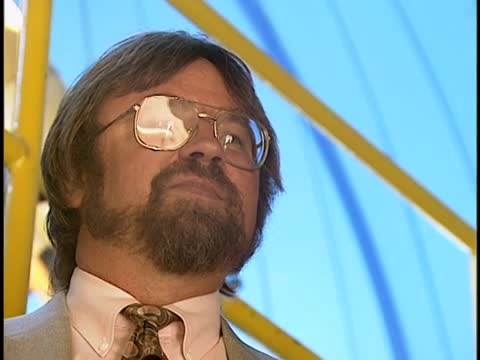
- This file contains raw footage of an interview with Dr. Michael Zeilik at the National Solar Observatory at Sacramento Peak in Sunspot, New Mexico. Dr. Zeilik discusses the importance of astronomy to Pueblo societies.
- Created Date
- 1993
- Asset type
- Raw Footage
- Genres
- Unedited
- Media type
- Moving Image
- Duration
- 00:20:26.993
- Credits
-
-
Interviewee: Zeilik, Michael
Producer: Sneddon, Matthew
Producing Organization: KNME-TV (Television station : Albuquerque, N.M.)
- AAPB Contributor Holdings
-
KNME
Identifier: cpb-aacip-e241eace8bf (Filename)
Format: Betacam
Generation: Original
Duration: 00:30:00
If you have a copy of this asset and would like us to add it to our catalog, please contact us.
- Citations
- Chicago: “The Heavens; Interview with Michael Zeilik; Part 1,” 1993, New Mexico PBS, American Archive of Public Broadcasting (GBH and the Library of Congress), Boston, MA and Washington, DC, accessed April 2, 2026, http://americanarchive.org/catalog/cpb-aacip-191-278sfbcf.
- MLA: “The Heavens; Interview with Michael Zeilik; Part 1.” 1993. New Mexico PBS, American Archive of Public Broadcasting (GBH and the Library of Congress), Boston, MA and Washington, DC. Web. April 2, 2026. <http://americanarchive.org/catalog/cpb-aacip-191-278sfbcf>.
- APA: The Heavens; Interview with Michael Zeilik; Part 1. Boston, MA: New Mexico PBS, American Archive of Public Broadcasting (GBH and the Library of Congress), Boston, MA and Washington, DC. Retrieved from http://americanarchive.org/catalog/cpb-aacip-191-278sfbcf