Conversations; 102; Thalia Mara and Janet Baker-Carr
- Transcript
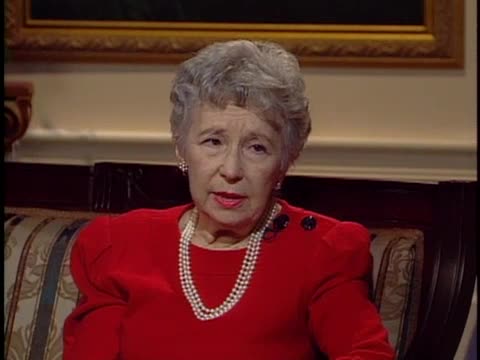
Ooh. Ooh ooh ooh. Ooh. Oh oh. Oh. Oh oh oh. Good evening I'm Janet make a card welcome to conversations. This evening we have a conversation with your Mara one of Mississippi's great ladies of the arts and we'll be talking about arts education for young people. And her organization Arts International Foundation. Thank you for value for being here this evening it's a great pleasure. You've been teaching the arts for many many years in New York before you came to Mississippi then with ballet Mississippi and the IBC. Yes it's been a long time. And when did it become a really white heat passion for you. Since I was nine years old you know what happened. Well I was taken to see how the problem of bats. Yes. And it left me kind of
speechless for about three days. And I knew that that's what I wanted to do. Yeah. So it's been ever since it's a him a kind of well it's it's been rife. But the teaching part of it the teaching came really before I stopped dancing quite a long time before I stopped dancing because my husband decided that he was a dancer too and we decided that if we were going to have a company we should train them ourselves and so he thought we ought to start teaching and I was really ready to do that. We did do it and what I found was that when you start teaching you have no time for yourself if you're really interested and serious about your teaching. It all goes to your students and as a performer your whole interest has to be on yourself so that's been ever since. And you taught it Jacob's Pillow in Massachusetts yes. In fact we were on the staff of Jacob's Pillow for beginning with 41 until 47 47 We directed Jacob's.
Tell me about your Arts Foundation. Well it's very I think it's very important because I'm so interested in what's happening to our young people. They're under the influence of so much that ugly and so much that. Violent and the arts are so important to symbolise people and especially young people growing up and I'm so concerned that if we don't teach our young people to love symphonic music and good theater and ballet that will lose them. And there won't be any audiences for them then they'll have to just die out. So I'm very concerned with that and the foundation I really started a foundation to try to to bring the arts into the lives of young people. And what have you been doing recently I remember the Suzuki thing that was that was a Mesa Yamaha. Yeah. Sorry I was just as so excited about that. Because these young kids they're not you know gung ho to be
musicians or just ordinary children and they so. To see them is very exciting because they thought they can. They have learned to speak well they have learned to conduct themselves well they're just they're wonderful little people. And what Yamaha teaches them is not only to play music well but because they play beautifully but to compose and to see a nine year old sit down with the piano players own composition which is really beautiful and to hear him speak is just wonderful. You said just a minute ago these are ordinary children. Is there such a thing as an ordinary child. Well by that I mean they're not just they're not little prodigy that are just voting their lives to music. They're kids who whose parents put them into young school and they're growing up loving music they will make wonderful audience people those who don't actually go into music themselves. And they they play ball and they do gymnastics and they roller skate and all the things every kid does. But but that other side is so developed and it's just beautiful.
Now what plans do you have now for your foundation. Well I'm hoping to do when I was in China in 1980 I was very. Really intrigued and interested and excited about what I saw but what they are doing with children in education. They have what they call children's palaces and the children go there weekends and after school and they learn languages and they learn all of the art some in there and music they learn instruments if they're to dance or have dance classes. And it's sort of an adjunct to education. And I would like to do that here. What about other countries because you visited a lot in your adjudicating competitions and things. What do you see. Well of course Europe is so different from America and Europe. Children grow up with the arts every little town has an opera house or theater in Germany and Russia and England too. And they grow up with a knowledge of the
some with a love for the Arts which is not what's happening in America where our children are just exposed to the pop arts and pop acts are OK but they don't take the place of classical arts. I was very impressed with the young students. How seriously they took their compositions I remember one of the boys was saying that he composed in August and then he spent the rest of the air. Polishing it. That's a certain kind of a discipline that doesn't necessarily come from the arts. But was put upon that I think it does because you can't be a dancer you can't be a musician without a lot of self discipline. It's very I mean that's basic. And of course the thing that happens I think is that from discipline comes freedom when you are disciplined then when you're able to discipline your thinking and your habits and everything comes easier if you're just. Well at it's chaotic
that's you know one of the problems I think facing America today is that what they call Freedom is not freedom because freedom has responsibilities and this is license and license is chaotic. So as a person. If you have discipline your life is not chaotic it becomes easy to do things because for example in dance because I am a dancer and to be able to express yourself artistically you have to have tremendous self-discipline to to gain the technique because you're turning your body into a dance and a musician can buy a piano our violin but a dancer has to make the instrument. And you can't do that without disciplining your mind and your will and your everything has to be under this very strict discipline. But it's wonderful because it frees you for everything. I wish parents would understand that.
Well let's go back to when you were 9 years old in us when you saw Pavlo you knew that that's what you wanted to do. Did you know how you were going to be able to get there. Well the funny part of it was when I was I was again I guess it was about eight and the kindergarten teacher in my school had studied for about six months and decided she was ready to teach. She opened some classes in the kindergarten and some of my friends and rolled and so I wanted to do that too and my mother said OK so I started with her and it was just horrible. I didn't know what. And then I went to another teacher who had had three years of training. So beginning was kind of but then when I saw the problem I realized that there was more to it than I had been. What was she dancing. Never forget it. There was a ballet called Oh I forgot she was a gypsy girl and she was it was very exciting very
beautiful she was. She was forced to dance because her Gypsy husband while I was bidding on that starts with an A and I can't remember the name but it was a beautiful ballet and then she danced the Dying Swan Of course. And she did have a gun with her partner and. It was just very overwhelming for me. But the Jew knew that you could do that while I was hoping I could. Just. My mother then found out that I really shit when we were dancing somewhere my teacher had us out dancing somewhere. And there were four of us that she thought were quite talented so she made a little act for us. We performed I think saluting vaudeville on weekends. And somebody saw us and said to my mother your little girl is talented she should have a better teacher. And so at that time it off who had been one of the great stars of the Russian ballet had a school in
Chicago and mother took me there and that's what my real education started and then you went to New York and those were difficult times that was during the Depression I think it was and I didn't go to Tejada until after Europe I went from Chicago to Europe. I went to France to study. I had wanted to go to Italy to study with John Kerry but. When things turned out my mother wasn't able to go and so I decided mother said we couldn't go because things were getting bad for my father's business and so I said well I was so disappointed and I carried on and said Well if you want to go you have to go by yourself and I said I'll go. And you were how old. Sixteen. So she knew because she herself had come to the United States when she was 18. You know she had a younger brother she brought whether from where Russia and so she had the confidence in me to let me do that and I went with a letter to my teacher probers answer. And so I spent about three years there and then when I came
back I made New York my headquarters. But that was during the deep depression. And what was that like the depression being in New York and the depression. Well it was OK for me because I got to I came back from Europe a ballerina but there was no place to practice because there were no companies and it was only Broadway. And so I was fortunate enough to get a job at the Capitol Theater at $60 a week which was a very good salary for those days. I was the only one working I was supporting my friends. But it was very difficult. I felt very sorry for the man. There were long lines soup kitchen lines in Times Square and men selling apples on the corner and just I mean it was a very difficult time. They were living in shanties down at the bank of the Hudson River. And. I was just grateful that I had a job and what kind of dancing were you doing everything
from so on that you did ballet and we did tap then we climbed up stepladders and danced up and down the step ladder is everything you're going to do. Roller skates we did the whole thing I roller skates. You had to be versatile and that stood you in good stead later in your life I'm sure. Yes of course it has you know. Yeah and you also danced at Rockefeller Center. Yes I danced at Radio City. In fact I opened that house when I opened I think it was 1932 and I remember it well because a cat had kittens in my lap. Before I did it was still I'm such a cat lover. Yes it was that that was not as much fun as a Capitol Theatre because we did just ballet but it was met with interest. Well there are names that you the people that you knew in the Capitol Theatre and Radio City who went on to do exciting things.
Yes Norah K.. And. Patricia Baum and. Number of other people who were. That was I mean there was nothing else to do You had to do that if you wanted to work. And when did you meet Michael for King. I'm not faulting the shortly after. Well actually in Paris because he was when I joined the opera. I went to South America with it's called the opera operated at Perry and he was the ballet master he did and he staged a number of things far so I met him there and then when I went to New York back when I got back to New York he was in New York. And so renewed that was in them. And he was a great influence in your life. Oh very much so because he was really to me he was the great genius of dance for the 20th century because he changed everything changed the whole way ballet has danced. How did he do that. Well for one thing dancers have always worn the tutu was an avid I mean you want for
everything he wore a corset top and a tutu. And no matter what you dance that's what you wore. Fucking frayed the body he took that all out the way he did costumes of the period in which you were dancing. So if it was supposed to be a turn it was a tunic and and he brought into the ballet natural movement that is based on breathing. And so that your body moved you didn't just stand still and move your arms and legs. You actually worked with your body. And that came from full King and you see that today and it's and it's so beautiful when you see dancers who have that kind of movement in themselves it's musical and it is it's very. To me it's the essence of dance. He had that himself when he would mark something for us it was more beautiful than watching somebody else dance because it was so great. But yeah and then he brought into it also all the elements of a character. I mean things like Prince of women dance that
he said that was one of his crazy work. I think he was very prolific in his imagination that and his ability to develop new things. He didn't he also have something to do with the change of the use of music. So. Yes he started using good music and not just music that was written for the ballet measure by measure but good car and good composers and all the other great Russians blink and I can't remember names. I'm sorry. It's one of those things that's happened. But he did. He has ballots were done to very good music and that was not the case before his dad he was extremely musical and was a great painter. You know the last competition we had I was able to get his his daughter in law and his granddaughter to come and bring his original paintings that
he had done that were used to hang in his house and a lot of memorabilia. KING Did you see I did it was most impressive and I was also impressed. I'm very tall but I was very impressed how small he was. His costumes were one I didn't seem small to me. I was 5 2 and I was considered average sized. I was a midget. Oh let's get back to the arts and children now. What is it that we can do. Well what we can do is stop depriving them of their of the arts I mean the first thing educators do is take the arts out of education. And as far as I'm concerned the arts are the basics of education and that's what that was the old Greek idea. If you recall in history the arts were very important and they are very important because of the self discipline because of the new kind of thinking that emerges when you're in the arts of a sense
of beauty because of the quality of your thinking. Very important. And I think educators are totally missing the boat. When I was in New York the last well almost the last 10 years of my life I had started a school like that in New York where the arts were totally integrated to the academic curriculum. With history as the core and it was wonderful to see what happened with the children and how they developed and how they blossomed and how the kids who were not interested in reading learned how to read because they got involved and interested in what they were doing. And so I know what the arts can do in education for children and that when I came here I was hoping that my school was a private school and and trying to keep up with the cost of the faculty because that we started with fourth grade and we went through high school to 12th grade. And so the the little ones
had to be they had to have their own grade teacher. And then you had to be a departmental ised in the junior high and high school and then you had to have the Arts faculty. And I spent 10 years on my knees praying. I'm serious reading that Barrow was just horrendous and I finally after 10 years we did have something going it was. We were raising money and Sal here Iraq was ahead of that hour but we ran out of cash flow and it just became impossible to continue and I was told to close for a year while I knew what that meant and who kept close and open. And so that's what happened to that. But I was hoping when I came here that I would be able to start a school here that would be state supported. And then I went to see the superintendent of education in Jackson the separate school district Fortenberry and he was very enthusiastic and he said I'll give you the building and I'll give you the academic faculty I'll maintain it. And I said what about the arts he said well I can't do that.
So then I went to. Cliff French had just been elected governor. And I went to the. Banker who was his cause out of cultural advisor and he was very gung ho he just thought it was great he wanted it or this is just what the governor needs. Well it turned out that the Jackson severed school district and the state could not for some legal reason cooperate so that's out of left us in the middle of a pack em out of that ultimately. But that's why I feel now that it would be good to do these other these I wouldn't call them palaces or call them pavilions. And so I hope we can do that. I hope we get the support to be able to do that. And the support comes from foundations from businesses. Yeah Viggiano would say today I think it's going to have to be individuals and corporations more than anything else I've mentioned and
the foundations are there off on their own thing and can you tell me a little bit briefly about your mission statement of the foundation. Well in the mission statement I can't quote it exactly because I know my memory is not that great anymore. But it's to nurture and sponsor the arts and all their forms including language language arts and music and painting and dance and theater. That's our mission. And you do that wherever you can. Yes. Back in the 70 70 back in I was appointed to do a homecoming for the state of Mississippi and that was the first thing that foundation did. It was quite an undertaking. But with that and then the second important thing we've done besides give a few a small grants was a Yamaha concert. So now I hope that we can really I was tied up with the IBC and I'm able to give all
my full attention to the foundation but now that I'm not with the IBC. That's what I'm planning to do. It's a busy schedule for you. It is but I I can't stand to be I long I have to be working I can't stand not to be working. And I've got all these ideas before I go if I leave this earth I want to achieve these things that I'm dreaming about and that. If I can it'll be quite a thing when I can't think of anyone who's done more for the Arts in Mississippi than you have and you need to remember that. Well. The thing that impressed me about when they asked me to come down here and look the situation over and see if I wanted to come the thing that impressed me was that people wanted it. Yes and that's very funny because when I came I think I've told you this I met about a hundred people at a party that they had a reception again and they were all enthusiastic about ballet and I thought I was coming to a real ballet
town and I got here. It was really only hunter. Everybody else was involved with football. So I just had to cope with that. If you have got an audience you can't build a company that but you did to do do you do. Well I did that through the IBC. Yes that was the whole point of the I was seen as an amazing thing. What I what's amazing to me at cars is that when I came the men in this town would not be caught dead at a ballet. That was not something they would ever go to. And now they fight to buy tickets to go to the ballet and everywhere they go in the world they go to the ballet isn't that wonderful. If so it's not just children that you're educated. Well I remember in 79 the first competition I heard overheard someone say in the lobby if I didn't know it was like this I had to come before.
Are you involved in any way in the IBC That's coming up. Not at all not a lot of that make you sad or really does in a way. But they've got to get off on their own that's what I want to do and that's of the Got To Do It comes a time when they're like oh that's right that's right. And you've seen a great change in the in the the years between each of them of how the dance has changed. I really have I mean I think from 79 to the last one in 94 was amazing to me how the man. I could not believe I mean then I jump they soar they fly they do down. And they spin like ice skaters. That Japanese boy. Yes. I mean you couldn't see me was a blurry did about 11 turns is pure what we call them. I knew he was a blur. And they were all I mean they've all I've read so much technically but unfortunately the part has gone to a certain extent that I don't find that. Palatable.
Because ballet as an art form it's not a gym. I mean otherwise your gymnastic or that has to do the teaching doesn't it. Yeah. Well I think it has to do with the mindset today because everything is mechanical today that very little attention to. To the artistic side of anything you did it all in all of the arts and in life everything has become mechanical. We're not we're not people anymore we're Cobbs. So while it's true we go by number I mean your Social Security numbers your identity and you. Everything has become impersonal. It's not human anymore. I want to go back to being human being. Involved with what it takes to be a person. And people need things to care about. Absolutely. Yes. Well they care about the wrong things. I mean
to me. This whole thing sex is such an obsession and I think I'm skewed in that they call adult it's not adult it's adolescent because I mean sex has been around for a while and has indeed and we've never been obsessed with it like they are today. I find that particularly sad for the youngsters because they're not allowed to be children anymore. They're old people before they get into their teens. One last question how does it feel to have that big building with a fountain in front of it named for you. Is it. I haven't gotten over the shock of that. Let's have a shot. What was it was it was completely unexpected and I never thought it would happen to have even then they told me they were planning that I think that whatever happened so. It's it's been an every day to me about a year and I have to get accustomed to hearing my name constantly when they advertise something I don't get the paper
kind of thing. But it's it's a great honor and I'm very grateful for this lovely to know that that building is there filled with the arts when they are here that they are there for you. Thank you so much for being with us today you and a great pleasure. I enjoyed it. Thank you and good and good.
- Series
- Conversations
- Episode Number
- 102
- Episode
- Thalia Mara and Janet Baker-Carr
- Contributing Organization
- Mississippi Public Broadcasting (Jackson, Mississippi)
- AAPB ID
- cpb-aacip/60-80ht7fj1
If you have more information about this item than what is given here, or if you have concerns about this record, we want to know! Contact us, indicating the AAPB ID (cpb-aacip/60-80ht7fj1).
- Description
- Credits
-
- AAPB Contributor Holdings
-
Mississippi Public Broadcasting
Identifier: MPB 197 (MPB)
Format: Digital Betacam
Generation: Dub
Duration: 0:27:10
If you have a copy of this asset and would like us to add it to our catalog, please contact us.
- Citations
- Chicago: “Conversations; 102; Thalia Mara and Janet Baker-Carr,” Mississippi Public Broadcasting, American Archive of Public Broadcasting (GBH and the Library of Congress), Boston, MA and Washington, DC, accessed May 13, 2026, http://americanarchive.org/catalog/cpb-aacip-60-80ht7fj1.
- MLA: “Conversations; 102; Thalia Mara and Janet Baker-Carr.” Mississippi Public Broadcasting, American Archive of Public Broadcasting (GBH and the Library of Congress), Boston, MA and Washington, DC. Web. May 13, 2026. <http://americanarchive.org/catalog/cpb-aacip-60-80ht7fj1>.
- APA: Conversations; 102; Thalia Mara and Janet Baker-Carr. Boston, MA: Mississippi Public Broadcasting, American Archive of Public Broadcasting (GBH and the Library of Congress), Boston, MA and Washington, DC. Retrieved from http://americanarchive.org/catalog/cpb-aacip-60-80ht7fj1