The NewsHour with Jim Lehrer
- Transcript
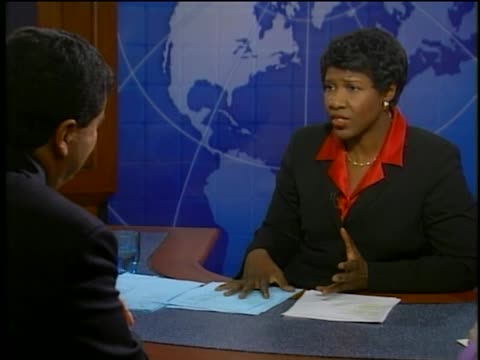
GWEN IFILL: Good evening. I'm Gwen Ifill. Jim Lehrer is on vacation. On the NewsHour tonight: Our summary of the news; then, today's deadly explosion at a U.S. Base in Mosul; an Illinois town mourns the deaths of its National guardsmen; even more concerns about the safety of pain-killing drugs; new details about the abuse of prisoners in U.S. custody; and Roger Rosenblatt on New York's first free spirits.
NEWS SUMMARY
GWEN IFILL: A powerful explosion killed more than 20 people today at a military base in Iraq, including 19 U.S. soldiers. Nearly 60 others were wounded. The attack was the single deadliest strike attack against American forces since the war began. It happened near Mosul at a forward-operating base that's used by U.S. and Iraqi forces. The explosion blasted a mess tent where troops and contractors had gathered for lunch. The U.S. commander in Mosul praised their bravery in a recorded statement.
BRIG. GEN. CARTER HAM: It was a heartwarming experience to see wounded soldiers caring for those who were more severely wounded. And in that chaos that followed that attack, there was no differentiation by nationality. Whether one wore a uniform or civilian clothes, they were all brothers in arms taking care of one another. And I think that's something that all Americans, and indeed all Iraqis, can be very proud of.
GWEN IFILL: It was unclear if the attackers fired mortar rounds or set off a bomb, but a Sunni Muslim group claimed responsibility. It called the explosion a "martyrdom operation,"a phrase used to describe suicide attacks. We'll have more on this story right after this News Summary. Elsewhere in Iraq today, a car bomb wounded five U.S. soldiers in a town 150 miles north of Baghdad and insurgents attacked a major oil pipeline near Bayjee. It was just the latest disruption in oil exports from northern Iraq. Shipments from the south are running at near capacity. Amid the attacks across Iraq, British Prime Minister Blair made a surprise visit to Baghdad today. We have a report from Sara Smith of Independent Television News.
SARA SMITH: Apache attack helicopters are needed here to provide the toughest security, even for the most secretive of visits. The prime minister's sudden appearance in Iraq, meant as a display of confidence, also shows just how dangerous the situation now is. Choppers, not cars, are needed to take him from the airport to the relative safety of the secure green zone -- meeting here another prime minister who desperately needs these elections to succeed; both determined that the worst violence in months will not delay them. But they know these coalition- trained Iraqi security forces cannot prevent the increasing attacks aimed at disrupting that vote. "Your Vote, Your Future," the sign says. "And we will make sure that vote happens on time," Tony Blair told the head of the electoral commission in Iraq. One hundred political parties are standing, but most election officials would not show their faces on television-- three of them murdered in broad daylight here on Sunday. Behind the scenes, Blair told them they were the heroes of the new Iraq.
TONY BLAIR: Whatever people felt about the original conflict, we, the British, aren't nation of quitters. What's very obvious to me is that the Iraqi people here, they're not going to quit on this task, either. They're going to see it through, and just imagine the difference that a stable and democratic Iraq would make, not just to people in Iraq, but throughout the whole of the region and the world. Now, when I see that, yes, I believe we did the right thing.
SARA SMITH: As the prime minister thanked the soldiers protecting him on this visit, their commanding officers told him just how difficult a challenge they face in the weeks to come.
GWEN IFILL: Britain has more than 8,000 troops in Iraq. The government of Sudan and rebels in the Darfur region suspended peace talks today. The African Union urged both sides to halt the latest new wave of fighting to allow the negotiations to continue next year. Separately, the relief group Save the Children announced it is pulling out of Darfur because of the violence. The group's 350 staffers have been providing aid to a quarter of a million people. Several hundred United Nations peacekeepers moved today to halt new fighting in eastern Congo. Battles between government soldiers and rebels broke out earlier this month. The U.N. forces hope to set up a buffer zone between them. The violence threatens an agreement that ended a five-year civil war in 2002. At least three million people died in that conflict. The Bush administration today backed a full investigation into alleged prisoner abuse at Guantanamo Bay naval base in Cuba. That's after the American Civil Liberties Union obtained and released internal e-mails from the FBI. They said some military interrogators posed as FBI agents to avoid being held accountable. They also said some prisoners were shackled in the fetal position for up to 24 hours and others were beaten, choked or burned with cigarettes. White House spokesman Scott McClellan was asked about the charges today.
SCOTT McCLELLAN: The president expects that if there are allegations of abuse, that those allegations need to be taken seriously. They need to be fully investigated, people need to be held accountable and brought to justice if they're involved in wrongdoing, and that preventive measures and corrective measures are put in place to prevent it from happening again.
GWEN IFILL: The prison at Guantanamo houses 550 inmates, mostly captured during the war in Afghanistan. The Food and Drug Administration said today it's not ready to ban the painkillers Aleve and Celebrex. Researchers have now found both drugs can increase the risk of heart attack in higher doses for longer periods. Today, FDA Acting Commissioner Lester Crawford told NBC News: "Any drug taken long enough and at high enough dosage can cause some difficulty." But he said the FDA needs more data on the drugs. We'll have more on this story later in the program tonight. An administration taskforce today recommended against letting Americans buy cheaper medicine abroad. It said individuals could not be sure the drugs are safe. The taskforce also said that might be feasible on a commercial scale, but only if the FDA gets greatly increased funding for oversight. The Federal Aviation Administration will hire more than 12,000 traffic controllers over the next ten years. The agency now has 15,000 controllers. It expects half of them to retire in the next few years. Many were hired after President Reagan replaced striking controllers in 1981. On Wall Street today, the Dow Jones Industrial Average gained more than 97 points to close at 10,759, its best finish since June 2001. The NASDAQ rose 23 points to close at nearly 2,151. That's it for the News Summary tonight. Now it's on to: A deadly blast in Iraq; dangerous duty for Illinois Guardsmen; the risks of painkillers; new details about the abuse of detainees; and an essay on New York's Dutch roots.
FOCUS - DEADLY DAY
GWEN IFILL: Now, the attack in Mosul: President Bush had words of sympathy for the families of those killed today. He spoke briefly to reporters after he and Mrs. Bush visited wounded troops at a hospital in Washington.
PRESIDENT GEORGE W. BUSH: We send our heartfelt condolences to the loved ones who suffered today. We just want them to know that the mission... it's a vital mission for peace. The idea of a democracy taking hold and what was a place of tyranny and hatred and destruction is such a hopeful moment in the history of the world. And I want to thank the soldiers who are there. I want to thank those who have sacrificed and the families who are worried about them during this Christmas season for their sacrifice.
GWEN IFILL: For more on the Mosul attack, we get a report from Baghdad, from Edmund Sanders of the Los Angeles Times. Ray Suarez talked with him earlier this evening.
RAY SUAREZ: Edmund Sanders, Welcome. Have American officials in Iraq been any better able to determine in the last few hours how this attack was carried out?
EDMUND SANDERS: I think they're still investigating that, but the indications that we have at this point are that it was a rocket attack. Based on certainly the hole in the tent, that might been just some sort of a projectile. But the terrorist group who is taking responsibility described it as a martyrdom attack and a martyrdom operation. That usually indicates a suicide attack. I've been talking to some people up on the base, and they have said that there is talk of that up there right now. So they're looking at both very closely, I think.
RAY SUAREZ: Tell me more about Ansar al-Suna. Is this a group that had been well-known to the Americans already?
EDMUND SANDERS: They became well-known this year in February, after the suicide attacks in Irbil at a Kurdish celebration where men wearing explosive-laden vests penetrated some celebrations and killed around I think around 66 people. They've been linked to other attacks: The beheadings of some Nepalese workers earlier this year. They are believed to be an offshoot of Ansar al-Islam, which is a group up in the Kurdish North that was linked to al-Qaida, had links to Zarqawi, and have been taking credit and responsibility for several of the attacks in Iraq this year.
RAY SUAREZ: Over the last year and a half, since the invasion of Iraq, Mosul has often been portrayed as a pretty quiet and orderly place, but has it been that way in the last few weeks?
EDMUND SANDERS: It hasn't certainly in the last few weeks, and it's having its ups and downs throughout the year. But as you said, it's been relatively quiet compared to the rest of the country. All that really changed in November last month after the U.S. invaded Fallujah. According to all reports by U.S. intelligence and also by the Iraqi government, the insurgents and the foreign terrorists that were believed to be operating in Fallujah simply moved to Mosul. There were even some reports that Zarqawi might be in Mosul operating there. And ever since then, the city has been in really a state of chaos. Police stations have been attacked and ransacked. I think more than 100 bodies have been found-- policemen, security officers, some of them mutilated or beheaded. There was a particularly brutal attack there just a few days ago, in which a carload of Turkish policemen driving through town was ambushed. The men were dragged out of the car and one of them was actually beheaded in the middle of the street, so really a sense of lawlessness up there right now. And that's exactly the word that Prime Minister Allawi this week, just yesterday in fact, during a briefing, described it as a mixture of lawlessness in Mosul.
RAY SUAREZ: Well, this attack took place... this attack was against the American forward- operating base Marez, near Mosul. Is this place where it might be assumed that American soldiers could let down their guard a little bit, maybe take off some of their body armor, put aside their helmets at lunchtime?
EDMUND SANDERS: Well, I haven't been up there in the last few weeks, so I don't know what their practice has been. But in the past, certainly Mosul has been one of those places where soldiers had been more relaxed. And actually, the dining hall, or the chow hall, as they refer to it, is one of the most vulnerable places for soldiers. It's typically made of soft-skin fabric, thick fabric, but not often made of wood or metal because they're so large. They're the size of a football field in many cases. Soldiers inside almost always wear their... do not wear their flap jackets and their helmets. I don't think I've ever seen that in a year here. They put their guns down; they rest them at their side. It's a place where they relax and let their guard down. So this is really a soft spot. And whether the attackers targeted this or hit it by accident, they really zeroed in on a vulnerability of the military.
RAY SUAREZ: Well, are rockets, mortars often being lobbed in the direction of American forces? Could this be a case where there are actually often attacks like this, but this time they hit their mark?
EDMUND SANDERS: That could be. Rocket attacks and mortar attacks are a daily occurrence here, literally. At most every base experiences them routinely. And the vast majority of the time they land without hurting anyone, without causing very much damage. They're very inaccurate. Rockets, in particular, are hard to aim. So they become routine. If you're on a base, typically you hear something like this happen, you might tense up for a few seconds and then you just go about your business. People become used to them. If this... this could have been an accident, as one military officer said. You know, even enemy forces get lucky sometimes. If they actually were targeting at this facility, then that's even more worrisome because it suggests that a deadly accuracy that insurgents here have really never shown that they have. So this could suggest a new level of skill if they were actually targeting this facility.
RAY SUAREZ: What's the latest information available on the number of dead and wounded, and what the mix is between American forces and other kind of personnel who might have been on the base?
EDMUND SANDERS: That information is still coming out. We believe that at least 24 people were killed and around 60 were wounded. The latest information that I have is that as many as eighteen or nineteen of those might be U.S. soldiers or Americans. And it's just a little bit unclear at this hour. But it's very possible that this will end up being the deadliest single attack since the U.S. invasion last year, and it is certainly the deadliest attack against a military installation in Iraq.
RAY SUAREZ: Edmund Sanders of the Los Angeles Times joining us from Baghdad. Thanks a lot.
EDMUND SANDERS: Thank you.
FOCUS - SMALL TOWN SORROW
GWEN IFILL: The holiday season will now also be a time of mourning in the home towns of the soldiers lost today in Mosul. But in communities like Paris, Illinois, the Iraq War has already exacted a heavy toll. Elizabeth Brackett of Chicago Public Station WTTW reports. (Applause)
ELIZABETH BRACKETT: The 1544th, an Army National Guard unit, has a long history with the small town of Paris, Illinois. The unit's armory is in Paris, but the identification goes deeper than that. The 1544th is a part of the fabric of this Midwestern town of 9,000 that sits amidst the rich farmlands of central Illinois. The Guard members' names went up on the town's light poles when the unit was sent to Iraq last February. Now, holiday decorations mix with a show of support on front lawns and in the windows of storefronts all over town. The 1544th is a 170 member transportation unit that draws from a four-state area: Missouri, Kentucky, Indiana and Illinois. The troops all train in the Paris armory, and it was there where they got the word last year of their deployment to Iraq. Then most thought the assignment would not put the unit in terribly dangerous areas. Paris Mayor Craig Smith:
MAYOR CRAIG SMITH: People weren't worried. When the Guard left, we thought here's a transportation unit. A lot of them were women; a lot of them were children who went to school with my children, 18-, 19-, 20-year-olds. We were thinking it was a supply group going... taking things from Point "A" to Point "B." So probably the impact was "Yeah, they're going, they're going to serve the country, and they're going to come right back."
ELIZABETH BRACKETT: But it hasn't turned out that way. Transporting troops and materials over Iraq's unsecured roads has become one of the most dangerous jobs in Iraq. Five soldiers of the 1544th have been killed in Iraq, more than any other National Guard unit in the country; twenty-four have been seriously injured. Even the 1544th's compound situated just outside of Baghdad is not safe. Sgt. Ivory Phipps died less than 24 hours after the unit's arrival in Iraq, killed by a mortar shell lobbed into the compound.
MAYOR CRAIG SMITH: As the deaths kept coming, the town... you could feel the thickness in the air. I mean, you could just cut the first death, then the second death, then there were some wounded. All of a sudden, you're really in a war zone. It's not make-believe anymore. You're in Paris, Illinois, but you feel it every day because every day I see somebody who has a child over there -- every day in this town.
ELIZABETH BRACKETT: Many of the kids in the 1544th went into the Guard right out of high school, looking for a way to pay for college. Paris High School football players wear the 1544th logo on their helmets. At least four former Paris players are now in Iraq. Allan Morrison walks by the high school bulletin board filled with stars, one for each former student serving overseas. His sister Shawna's star is surrounded by a heart. The 26-year-old woman was killed in Iraq Sept. 5.
CINDY MORRISON: Oh, well. This is all her clothes.
RICK MORRISON: Clothes, a few shoes.
ELIZABETH BRACKETT: Her parents, Rick and Cindy Morrison, had received their daughter's personal belongings from Iraq the day we spoke to them. They had already purchased a display case for their daughter's combat medals and certificates. A smaller case held the flag that had draped her coffin. The Morrisons had moved to Paris 15 years ago, after losing their factory jobs in Detroit. Both said they have been overwhelmed by the support from the community.
CINDY MORRISON: We heard about it at about 9:10 Sunday night. The very next morning our next- door neighbor here was over with stuff, you know, offering his condolences. It got around Paris really fast. People were calling us offering to sit... you know, "What can we do to help?"
ELIZABETH BRACKETT: Sgt. Shawna Morrison handled satellite and computer communications for the 1544th. She lost her life when mortars again hit the compound, believed to be fired from a nearby mosque. 23-year-old Spec. Charles Lamb was also killed in the attack. The deaths left the Morrisons with questions about the war.
RICK MORRISON: I don't think we should have been over there. I feel real sad about what has happened. I think it's going to be a long time before we really make the kind of change that they thought was going to be so easy.
CINDY MORRISON: I just hope it made a difference, and when this is all said and done it wasn't just a lot of senseless casualties.
ELIZABETH BRACKETT: The question of whether the soldiers of the 1544th lost their lives in vain is one that is rarely asked publicly here. People worry that the question might be mistaken for a lack of support for the troops. Among those who gather every morning for coffee at the Max and Diane Cafe, the support for the troops and the war is solid.
BOB COLVIN: I was for the war effort, I am still for the war effort. If it was my son that had lost his life over there, I don't know that that would change my opinion. I would hope it would not.
ELIZABETH BRACKETT: And is there any bitterness or anger about these deaths?
MAN: No.
MAN: No.
MAN: Maybe sorrow.
MEN IN CAFE: Sorrow.
ELIZABETH BRACKETT: The sorrow was evident at the memorial service the town held for the five soldiers of the 1544th who lost their lives in Iraq. "The 1544th had given enough," says the mayor.
MAYOR CRAIG SMITH: I think it's time for them to come home. I think it's time for our kids to come home. I want them to be safe. And I don't think they're safe.
ELIZABETH BRACKETT: Aaron Wernz has already come home, back to the farm that has been in this family for three generations. He's on medical leave after nearly losing his life in the same mortar attack that killed Shawna Morrison and Charles Lamb. He still carries multiple pieces of shrapnel in his body.
SPC. AARON WERNZ: They say that there's a piece of shrapnel that's in my heart wall.
ELIZABETH BRACKETT: Despite his serious injuries, he says he would return to the 1544th in Iraq if he could.
SPC. AARON WERNZ: I'm proud of what we've done, what they're still doing over there. I think, you know, we're fighting for the protection of the American people and, you know, the freedom of the people of Iraq. I think that's an honorable thing to fight for.
ELIZABETH BRACKETT: Sgt. Scott Johnson, also home on medical leave, was providing security for a private contractor hired to deliver mail to the troops when the convoy was hit by a roadside bomb. The unarmored truck was destroyed. Johnson survived after an emergency roadside tracheotomy. Seven months later, the scars are still vivid. Spec. Jeremy Ridlen of the 1544th died in the attack. In October, the 1544th lost Sgt. Jessica Cawvey when a roadside bomb hit her armored convoy truck. Cawvey left a six-year-old daughter. Even with all the deaths Johnson does not question the U.S. mission. Though when asked to describe the U.S. mission, he does not go beyond the role of the 1544th.
SGT. SCOTT JOHNSON: We're given several missions. We're to support other units there and do what we need to do as a transportation unit. We need to support other companies and other units there. So we're given a series of several missions, and each mission in itself that's accomplished, you know, that's a success.
ELIZABETH BRACKETT: A family support group headed by Jim Cooper tried to make the 1544th's missions safer by providing CB radios and armor for the soldiers' vehicles.
JIM COOPER: When our trucks went over and we didn't have enough steel, the American Legion, the VFW, and other support groups around here went right immediately together to raise money and buy our steel ourselves and ship over there. And the military put a stop to us, but we... the community was going to do it. They wanted these kids safe.
ELIZABETH BRACKETT: Cooper says the Army tells him the majority of the 1544th's trucks are now armored.
JIM COOPER (on phone): Well, you never know, that's true.
ELIZABETH BRACKETT: Cooper also spends hours on the phone as part of a telephone tree set up to quickly get the latest information out to worried relatives and friends. His 21-year-old son, matt, is with the 1544th.
JIM COOPER: You don't get any sleep. Every night you worry. You just... you're on edge all the time.
ELIZABETH BRACKETT: As difficult as the holiday season is here without the soldiers of the 1544th, the bigger worry is whether or not they will come home when their one year tour of duty in Iraq ends in February.
JIM COOPER: Yeah. End of February, 1st of March, a lot of men telling everybody. It's either that or the government better get me a plane, because I'll be over there. ( Laughs )
ELIZABETH BRACKETT: But the 1544th's stateside commander, Lt. Col. Robert Mayberry, isn't so sure of the return date.
LT. COL. ROBERT MAYBERRY: The Army works in strange ways. Nothing is solid until you see your soldier. I've told the family readiness group that it's not over until your son or daughter is sitting in your living room talking to you. Then it's over.
ELIZABETH BRACKETT: How often do these families ask you that question?
LT. COL. ROBERT MAYBERRY: Every chance they get. (Laughs) And I would, too.
ELIZABETH BRACKETT: So for now, the town of Paris, Illinois, watches its hometown unit operate in a distant war that hits very close to home.
GWEN IFILL: Still to come on the NewsHour tonight: The safety of pain pills; new memos detailing prisoner abuse; and Roger Rosenblatt on what New York inherited from the Dutch.
FOCUS - PAINKILLER PROBLEMS
GWEN IFILL: Now, new concerns about an old drug. This time, the warnings target an over-the-counter medication, naproxen, marketed heavily under the brand name Aleve. Federal officials have suspended a trial studying the drug's role in preventing Alzheimer's Disease, after early results linked naproxen to an increased risk of heart attack and stroke. What more do consumers need to know about this and other warnings? For that we turn to: Susan Dentzer, our health correspondent; and Dr. Elias Zerhouni, the director of the National Institutes of Health. NIH sponsored the naproxen trial.
Susan Dentzer, how... take us back through this. How was this discovered? We were just talking about sell Celebrex last week. Now another one.
SUSAN DENTZER: For years, Gwen, there has been a supposition that people who took the old-fashioned kind of non-steroidal, anti-inflammatory drugs like Aleve, like ibuprofen had a lower risk of developing Alzheimer's Disease. So people decided to test that and scientists formed a large clinical trial funded by the National Institute on Aging to test that question and see whether it was proven out in fact. So about 2500 patients were assembled -- people 70 and older at high risk of developing Alzheimer's because they have a family history of it, and they were divided into groups, about 1,100 of those patients got dummy pills. The rest were split between patients who were taking Celebrex and patients who were taking Aleve. Then what happened was this: Just this past week, we know we got the results of the one National Cancer Institute trial that seemed to suggest that Celebrex had a much higher risk of heart attack and stroke. What happened was the patients in this Alzheimer's trial, many of whom were of course on Celebrex but didn't know it, it's what we call a blinded trial, they didn't know if they were on dummy pills or Celebrex, they essentially went on a pill strike and started calling up the centers they were enrolled in and saying, look, I'm not going to take these pills anymore. I think they're dangerous. So, that coupled with the fact that some early data was, in fact, showing that in the group that was on Aleve, there was a 50 percent higher rate of heart attacks and strokes, even though it was early data, a high enough rate that the sponsors of the trial said, you know what, we have to cut this act of faith now. They told all the patients to stop taking their pills. They'll continue the trial going forward to see if it really does lead to any prevention of Alzheimer's, but in fact the active phase of the trial is now over.
GWEN IFILL: If we hadn't just heard what we heard recently about Celebrex and VIOXX, would this have happened, do you think, the same kind of findings that have been found about Aleve?
SUSAN DENTZER: Well, it was very -- particularly the findings about VIOXX and the fact that VIOXX was pulled off the market that prompted everybody to go back one more time and look at the data on cardiovascular risks and say, are we really seeing increases in heart attacks and strokes and so forth, so because of those events, now people are scrutinizing all of this much more closely and finding that there does seem to be this association.
GWEN IFILL: You said there was a 50 percent higher risk of heart attack or stroke using naproxen than people who I guess were on placebos. Is this statistically significant?
SUSAN DENTZER: Well, the investigators are stopping short of calling this what we would call statistically significant because these are early results. And it's also important to say these numbers are still small. Out of 2,500 patients in the trial, there were only 70 overall heart attack and stroke events, so small numbers. But they think that it's a real effect. They're going to go back and look at the data one more time, count them. The numbers may change a bit. They think there is a real effect. They certainly believe that there was enough of a risk that the active phase of the trial should be stopped.
GWEN IFILL: It doesn't sound like they think it's enough of a risk at this stage to actually pull the drug from the market.
SUSAN DENTZER: No, clearly not because much of the other evidence around Aleve, around naproxen points the other direction. There's even been some supposition that it protects the heart. So on the strength of one study, which of course is not a completed study yet, it's preliminary information, there's not enough information yet to act one way or another.
GWEN IFILL: Dr. Zerhouni, what is NIH'S role in studies and trials like this?
DR. ELIAS ZERHOUNI: Well, our role is really to look at all potentials for drugs, in particular when we have a drug that is already approved, like Aleve or Celebrex, what we also try to do is to expand and find uses of the drug that could be of great benefit to other patients, for example, in cancer, we know that anti-inflammatories such as Celebrex could slow down or prevent the occurrence of colon cancer. We have over 40 trials right now looking at the role of anti-inflammatory agents in preventing cancer or lowering the incidents of cancer. So we look at new uses, in particular the prevention area, where these drugs are going to be used not for the normal indications, but for daily, longer-term applications to try to prevent, for example, in this case, Alzheimer's Disease.
GWEN IFILL: One of the big difference here is naproxen isn't a brand-new drug. This isn't a wonder drug we've just discovered. It's been around since, what, 1976?
DR. ELIAS ZERHOUNI: That's correct.
GWEN IFILL: Why are we just discovering these problems now?
DR. ELIAS ZERHOUNI: Well, I think it's two-fold. One is we're extending really the indications for these drugs. We're giving them to patients for longer periods of time at different dosages than those recommended in clinical practice. And we're trying to find if, in fact, these drugs, which have been very safe, can be used for longer-term daily use for preventing diseases. The other effect is that we have better science. More and more I think people get surprised. You know, they hear about VIOXX; they hear about Celebrex. They say, what's going on. Well, what's going on is that the good news is we have better ways of detecting even small amounts of risk. The bad news is that people then say, well, I'm confused and I really need to understand what to make of it.
GWEN IFILL: I want to ask you about risk in just a moment, but first I want to go back to something else you just said, which is that it's a matter of taking these drugs over longer periods of time, which are exposing the problems. So when the doctors say, as long as you don't take it longer than ten day, are you pretty much covered?
DR. ELIAS ZERHOUNI: Yes, I think it's pretty clear that if you take drugs as recommended by the FDA with the appropriate dosage for ten days or less, and if you want to use it for longer than that, you really have to have a significant benefit. When we do research, as you know, in an Alzheimer's trial, what we're thinking is that there may be a potential benefit. So then when we take a decision to stop the trial, we're taking it because there is no known benefit. A patient, on the other hand, has pain, arthritis or a significant condition for which they need the drug, so our recommendation is always, don't overreact when you hear news like this. First thing you should do is use the drug as it's known uses are indicated. Don't take more than you need. Don't take it for longer than you need. And if you need to take it for longer, you really need to make sure that the benefit that you draw from it is worth the risk.
GWEN IFILL: Doctor, how does a layperson like myself measure benefit against the risk?
DR. ELIAS ZERHOUNI: Right. If t best way to do it is, if you are dealing with an over-the-counter drug, follow the instructions. Don't go beyond the instructions. The second is if you, on the other hand, need the drug because it has created a benefit for you, then you really need the talk to your physician and schedule tests so that any side effect can be measured and can be detected ahead of time.
GWEN IFILL: What are the other risks we should be on the lookout for? You talk about non-inflammatory drugs. I think about ibuprofen and Advil and Motrin that a lot of people take probably every day.
DR. ELIAS ZERHOUNI: Well, that's the first thing that I think we need to understand. The chronic utilization of drugs is in itself a benefit but it also contains risk. There is no drug that doesn't have both a risk and a benefit to it. So that when we are looking at this data that now is coming to the front, we need to truly have a full analysis of all of the trials that are now available. Remember, I think Susan was right when she said that VIOXX is what triggered NIH to look very carefully at the cardiovascular effects of all of these drugs. That's what we're doing. And we're accumulating that information, sharing with it FDA, but people need to understand this is complex. And when we talk about Alzheimer's, we're talking about 70-year-old patients. How does that apply to a 30-year-old or 50-year-old? So we need to collate all of that information and really come to a conclusion.
GWEN IFILL: There are studies under way which involve long-term risk of taking ibuprofen as well?
DR. ELIAS ZERHOUNI: Exactly. And there have been studies also that have been published, as Susan mentioned, some of them don't show an increased risk for ibuprofen or naproxen. So we have to really understand all of that. But in the meantime, the public should know that overreaction is not the right thing to do. Withdrawing a drug from the market willy-nilly is not the right thing to do. The FDA is doing a good job putting all of that information together, both from NIH, the science agency, and from the industry, and within a matter of weeks, I think we should come up with an understanding, a better understanding of what these drugs do.
GWEN IFILL: But also in the meantime, someone said to me if you are an arthritis sufferer, this has not been a good week for you. What does someone who is suffering who needs that kind of support, that needs that kind of pain relief over the long term do?
DR. ELIAS ZERHOUNI: Don't change your treatment right now on the basis of us, NIH, stopping the trial for Alzheimer's Disease. We're doing it for research purposes, not for the normal uses of the drug. But if you've been using it at high doses for a very long time, it's time to go talk to your physician and say, well, what do we need to do since it's such a great benefit for me to minimize my risk. What's my cardiovascular risk? What is it that I may be susceptible to as a patient? Have that conversation because as a physician, I can tell you no patients is equal to the next patient. You have to assess the risk-benefit for each individual.
GWEN IFILL: Susan, let's talk about policy implications. As we heard in the News Summary, there is an acting head of the Food and Drug Administration. These drug safety questions seem to come up every few days. Is there something that when Congress comes back they're going to find right on their plate?
SUSAN DENTZER: One thing in particular is there will be a drive to look broadly at our current drug approval and drug post-marketing surveillance process; once drugs are on the market, how carefully do we watch them for side effects and ask whether what we have now is the system that we need going forward. And the answer pretty clearly for most people is no. What we have to do probably, many in Congress are arguing now, is adapt the system so that it takes into account the increasing complexity that we now understand to be the case from the science that Dr. Zerhouni talked about, the complex interactions that drugs have on the body and our new data collection capabilities -- all these other ways now we can capture information about what's going on as a consequence of long-term chronic drug use that we need to know in order to keep ... decide whether to keep drugs on the market or pull them off. So Congress I think is going to look very seriously at that, whether it moves forward with an actual reform remains to be seen.
DR. ELIAS ZERHOUNI: I would actually echo what Susan says. We have work to do, especially now that we have chronic diseases where people take drugs daily for a long period of time. And it is not enough to have a trial that is a few weeks long or a year long to then conclude that everything is very safe, especially with the new science that we have. So I think we're going to have to have a wide discussion about how do we make it possible for the FDA, for NIH, for doctors to have the information on time as we provide the medication to the population.
GWEN IFILL: Susan, the FDA also announced today some changes or at least... it wasn't the FDA. It was a taskforce that was investigating this whole idea of drug importation. Did they come up with anything new?
SUSAN DENTZER: What they said, Gwen, was that personal importation of individuals going over the Internet, ordering drugs up that are from Canada or maybe say they're from Canada but actually from Southeast Asia is really not safe and not a good idea and there's no way to make it safe. But commercial importation of drugs, wholesale importation of drugs from Canada that was done through, for example, a large wholesaler, very clear controls over the drug supply chain probably could be made safe if, in fact, the FDA was given a lot more resources to monitor it. And this, in fact, puts the challenge squarely in Congress's lap. As we look at that kind of question, as over and against whether we want it to pump more money into the FDA to do better post-marketing surveillance, we're going to have some policy choices now to face as a country. Do we want to make sure our drugs are safe or do we want to perhaps complicate things by bringing in drugs from other countries; that will be the issue.
GWEN IFILL: Susan Dentzer, Elias Zerhouni, thank you both very much.
SUSAN DENTZER: Thanks, Gwen.
DR. ELIAS ZERHOUNI: Thank you.
FOCUS - PRISONER ABUSE
GWEN IFILL: The allegations of abuse in Iraq and at Guantanamo, and to Terence Smith.
TERENCE SMITH: The new FBI memos released by the American Civil Liberties Union show that FBI Agents have lodged repeated reports about the physical and mental mistreatment of prisoners held in Iraq and Cuba. The abuses reportedly took place during the last two years and as recently as this past June. For more on the story, we're joined by Neil Lewis of the New York Times.
Neil, welcome.
NEIL LEWIS: Thank you.
TERENCE SMITH: These FBI memos were from agents who were sent down to supervise or observe in any event the interrogations carried out by military interrogators?
NEIL LEWIS: Well, in some cases, the FBI was tasked themselves with doing this. The FBI, for its own interests, had agents both at Guantanamo Bay, Cuba, and in Iraq, observing and sometimes participating in interrogations.
TERENCE SMITH: And to whom did they send these memos back reporting on what they saw and heard?
NEIL LEWIS: All of these memorandums were sent to their superiors in Washington to inform them of what they had either witnessed directly or understood was going on.
TERENCE SMITH: And one, in fact, went to the director of the FBI?
NEIL LEWIS: One, indeed, about apparent abuses in Iraq. That went to the director of the FBI, Robert Mueller.
TERENCE SMITH: Right. So at least the director of the FBI and perhaps other senior officials in Washington had direct reporting on what was going on?
NEIL LEWIS: Surely so.
TERENCE SMITH: All right. Give us a little sense of what abuses, if that's the right word, are described in these memorandums.
NEIL LEWIS: Sure. I think that's an indisputably fair word. The memorandums can be divided into two sections. One is about things that were observed in Iraq. Let me start with that. Agents there said that they had understood that detainees were beaten, strangled -- choked, I guess would be a better word -- and had lighted cigarettes placed in their ears by interrogators. In Guantanamo, the abuses recorded by agents who witnessed them accord very neatly with earlier reports but provide fuller detail. And particularly a practice that we had known about in Guantanamo, there are more details here about shackling inmates chained in uncomfortable positions. Some of these memos describe inmates chained in the fetal position for as long as 24 hours, forced to defecate and urinate on themselves, and, in one case, a particularly horrific account, one agent says that he saw a pile of hair next to one of the detainees, and the MP said, you know, he had apparently pulled his hair out during the night.
TERENCE SMITH: What does this add... since we've had reports in the past, obviously, about abusive treatment of detainees, what do these memos add to our knowledge of this?
NEIL LEWIS: You're quite right. We have had some sense of all this from various ways, other reports. They provide great detail and because they are written under the auspices of the FBI, They're a very powerful corroboration of what went on. And in the larger sense, I would say, in addition to the details in the memos, they do tell us that I think we can be fairly confident now that what was occurring in at least Guantanamo was systematic, intentional, done with the consent of the senior authorities, that there was a real intent to have a system of prolonged psychological and physical coercion in the interrogation process-- which is different, I might add, very importantly, from the story that the military had put out early on and held to fairly consistently that it was a more or less gentle interrogation process, building rapport with the detainees.
TERENCE SMITH: Does anything in the memos or in the reporting that you've done around your conversations with military interrogators and sources give you any sense of the motivation of the interrogators? Did they believe they were about serious business here through which they could achieve significant intelligence?
NEIL LEWIS: I think so. And I think it's important. I mean, these are not people that were, I don't think, engaging in sadistic impulses. They believed it was an appropriate and proper mission; that it was awful work but it had a great purpose. I think it's important to note that. Last month, after we reported in the Times that the International Committee of the Red Cross said that what was occurring at Guantanamo was tantamount to torture, the chairman of the Joint Chiefs of staff responded, I thought, very tellingly in a speech he gave the next day, where he said, "let's not forget these are people without any moral values down there." Privately, when people talk to me about this, who were involved and generally approve of it in the government, one refrain is always, "Let's not forget the emotion and anger we felt in the immediate aftermath of Sept. 11." In other words, they're doing good work and important work that has to be done. So I think that's the pervasive belief of the people who are involved with this. It's obviously not the view of outsiders, and it's not the view of many FBI people who thought it wasn't even effective in getting information.
TERENCE SMITH: It's not reflected in what the White House had to say today. They said, "We're going to look into it."
NEIL LEWIS: Yes. They have shied away from any suggestion that President Bush has had any direct role in approving these harsh techniques.
TERENCE SMITH: Right. Is there anything in the memos or around them that reveals what the FBI agents who observed all this, what they thought of what they were seeing?
NEIL LEWIS: Yes. It's very fascinating. There are a whole bunch of themes. Some of the agents were appalled and expressed that. Some were professionally offended, saying it's not producing anything and it's just a wrong way to go about it. Some were very bureaucratic in the classic old-time FBI way, "protect the Bureau." Some of the things that caused the greatest friction were the reports that the agents sent back that some of these military interrogators are posing as FBI agents when they're employing these coercive tactics and we're going to get stuck holding the bag if this ever gets out. So that was a source of great offense.
TERENCE SMITH: The interrogators, the military interrogators would identify themselves as FBI investigators?
NEIL LEWIS: Apparently so; this was a subject of great concern and colloquy between the military and FBI; it was never fully resolved, it appears.
TERENCE SMITH: Finally and briefly, where does this go from here? We've had these investigations. There are more, apparently. They're under way. What does it lead to?
NEIL LEWIS: It's hard to say. There are certainly many calls in Congress, as there usually are, for some probe of this. There are a whole bunch of legal proceedings against detainees, some of which are suspended now. And I suppose we'll just have to see. I don't know.
TERENCE SMITH: We'll have to wait and see. Neil Lewis, thanks for bringing us up to date.
NEIL LEWIS: Thank you, Terry.
ESSAY - NEW WORLD RENAISSANCE
GWEN IFILL: Finally tonight, essayist Roger Rosenblatt considers the legacy of New York's creators.
ROGER ROSENBLATT: The Dutch are cursed with cuteness. Their wooden shoes are cute. Their windmills are cute. Their tulips, hats, canals and-- I assume-- their treats are cute. Even the name, while not exactly cute, is neither here nor there: The Netherlands. And in 1609, when they sailed over to create America-- specifically New York-- all that, in hindsight, has been regarded as cute, as well. Cute Peter Stuyvesant with his peg of a leg, though his bigotries certainly were not cute. Cute Knickerbocker Holiday with Walter Houston sadly singing "September Song." Cute $24 for the sale of Manhattan. All in all, an astonishingly significant history mired in cuteness, down to the Knickerbocker pants we used to wear and the New York Knicks, who, while hardly cute, steadfastly have remained insignificant. The truth, as exhibited in the museum of the city of New York, is that the Dutch, cute or not cute, happened to transport an entire civilization from one continent to another when they created New Amsterdam. And they also transported the two main features that created America: Pluralism and the very free spirit. Last spring, a book came out that goes a long way toward explaining how this happened. The book is "The Island at the Center of the World" by Russell Shorto, based on the research of Charles Gehring. In a way, it tells of a portable renaissance. New Amsterdam was both a world in itself and a world to come. The Africans, Norwegians, Italians, Germans, Jews and others who populated the settlement became the Dominicans, Haitians, Koreans, Russians and others of today. A whole mess of people found safety and encouragement principally in being a whole mess of people. 350 years ago, in 1654, the last governor of New Amsterdam, Peter Stuyvesant, buried right here at the church of St. Marks in the bowery, sought to block Jews from living in New Amsterdam. But a man named Adrian Van Der Donck opposed him, and the Dutch colonial administration did, too. This island, said the Dutch, was to be for everyone-- tolerant, liberal, hopeful, multicultural and upwardly mobile. Sound familiar? More unusual was that feeling of belonging to a renaissance, a rollicking time of creative rebirth. At the time that a motley crew of pirates, smugglers, prostitutes and explorers were roving around this island, Europe was ablaze with the likes of Shakespeare, Galileo, Descartes, not to mention the Dutch's own Rembrandt. In the crude, faraway land of mudflats, waterfalls and cormorants, a new world renaissance was driving pilings. What the Dutch created, created us. When I was a kid in this neighborhood, they told us that one could hear the ghost of peg- leg Peter Stuyvesant stomping around the church at night. It was all that a Jewish kid needed, an anti-Semitic ghost. But in a way the ghost was real if one thinks of the stomping as the incessant beat, sometimes rhapsodic, sometimes just loud, of the city. Henry Hudson and company brought over the renaissance, not the arid plains of the far west, not the dry, high-starched collars of Puritan New England. The Dutch brought and protected art, noise, life. This is how America got started, lusty as a New York street. The first Manhattanites shipped over the spirit that the latest Manhattanites gladly inherit, a spirit shown in the recent renaissance at the site of the World Trade Center, and shown perpetually in the undying relentless renaissance of the citizens. America is insistently various, open, grand in its vision if not always in execution, sloppily and beautifully alive. People outside this city sometimes say that America is not New York. They're right. It's New Amsterdam. I'm Roger Rosenblatt.
RECAP
GWEN IFILL: Again, the major developments of the day. An explosion on a military base in Iraq killed more than 20 people, including 19 American soldiers. The Food and Drug Administration said it needs more data to decide whether to ban painkillers Aleve and Celebrex. And late today, Reuters reported the mortgage lending giant Fannie Mae has dismissed chief executive Franklin Raines and chief financial officer Timothy Howard. The company has been rocked by an accounting investigation.
GWEN IFILL: And again to our honor roll of American service personnel killed in Iraq. We add them as their deaths are made official and photographs become available. Here, in silence, are six more.
GWEN IFILL: We'll see you online, and again here tomorrow evening. I'm Gwen Ifill. Thank you and good night.
- Series
- The NewsHour with Jim Lehrer
- Producing Organization
- NewsHour Productions
- Contributing Organization
- NewsHour Productions (Washington, District of Columbia)
- AAPB ID
- cpb-aacip/507-wm13n21b5w
If you have more information about this item than what is given here, or if you have concerns about this record, we want to know! Contact us, indicating the AAPB ID (cpb-aacip/507-wm13n21b5w).
- Description
- Episode Description
- This episode's headline: Deadly Day; Small Town Sorrow; Painkiller Problems; Prisoner Abuse; New World Renaissance. ANCHOR: JIM LEHRER; GUESTS: EDMUND SANDERS; SUSAN DENTZER; DR. ELIAS ZERHOUNI; NEIL LEWIS; CORRESPONDENTS: KWAME HOLMAN; RAY SUAREZ; SPENCER MICHELS; MARGARET WARNER; GWEN IFILL; TERENCE SMITH; KWAME HOLMAN
- Description
- The recording of this episode is incomplete, and most likely the beginning and/or the end is missing.
- Date
- 2004-12-21
- Asset type
- Episode
- Topics
- War and Conflict
- Energy
- Religion
- Transportation
- Military Forces and Armaments
- Politics and Government
- Rights
- Copyright NewsHour Productions, LLC. Licensed under a Creative Commons Attribution-NonCommercial-NoDerivatives 4.0 International Public License (https://creativecommons.org/licenses/by-nc-nd/4.0/legalcode)
- Media type
- Moving Image
- Duration
- 01:03:55
- Credits
-
-
Producing Organization: NewsHour Productions
- AAPB Contributor Holdings
-
NewsHour Productions
Identifier: NH-8124 (NH Show Code)
Format: Betacam: SP
Generation: Preservation
Duration: 01:00:00;00
If you have a copy of this asset and would like us to add it to our catalog, please contact us.
- Citations
- Chicago: “The NewsHour with Jim Lehrer,” 2004-12-21, NewsHour Productions, American Archive of Public Broadcasting (GBH and the Library of Congress), Boston, MA and Washington, DC, accessed April 5, 2026, http://americanarchive.org/catalog/cpb-aacip-507-wm13n21b5w.
- MLA: “The NewsHour with Jim Lehrer.” 2004-12-21. NewsHour Productions, American Archive of Public Broadcasting (GBH and the Library of Congress), Boston, MA and Washington, DC. Web. April 5, 2026. <http://americanarchive.org/catalog/cpb-aacip-507-wm13n21b5w>.
- APA: The NewsHour with Jim Lehrer. Boston, MA: NewsHour Productions, American Archive of Public Broadcasting (GBH and the Library of Congress), Boston, MA and Washington, DC. Retrieved from http://americanarchive.org/catalog/cpb-aacip-507-wm13n21b5w