The MacNeil/Lehrer NewsHour
- Transcript
Good evening, I'm Jim Lara in Washington, and I'm Roger Mud in New York. After the news summary, we take an extended look at the president's budget package. We hear from the Democratic Chairman of the Conference Committee, Senator Daniel Moynihan of New York, Representative Dan Rostenkowski of Illinois. And then we hear from four members of the Congress who will be casting their votes later this week, and we will update the flood story with a report on some survivors. New York life is proud to provide funding for the McNeil-Lera news hour, yet another example of New York life's wise investment philosophy. Funding has also been provided by PepsiCo, and by the Archer Daniels Midland Company, ADM, supermarket to the world. And by the corporation for public broadcasting, and by the annual financial support from viewers like you.
President Clinton appealed directly to the American people tonight to help get his budget plan through the Congress. A short while ago, he addressed the nation from the Oval Office. Mr. Clinton said it was time to make the government work for the people who pay the bills. He called the deficit to cutting plan the nation's most urgent priority. The package, which was made final by House and Senate Confries yesterday, would cut the deficit by nearly $500 billion over five years. It includes steeper taxes for wealthy Americans and big corporations, and some breaks for the working poor. It would also slash defense spending and make some cuts in domestic programs, including Medicare. The package includes a 4.3-cent a gallon increase in the gas tax. In his speech, the President attacked his Republican opponents in the Congress, who have steadfastly opposed the plan. For five months, our critics had the chance to offer alternatives, and all the major plans came up with the same time. Less deficit reduction are more paying for older Americans are both. Protections for the wealthy from paying their fair share of the taxes, and no
new incentives for business to create jobs or investments in the American people. And every one of these alternatives was soundly rejected in the Congress. Now there are only two choices. Our plan are no plan. Our opponents want to bring the plan down. The guardians of gridlock will do anything to preserve the status quo, to serve special interests, and to drag this thing out. They've practiced partisanship when we need progress. They call for delay when we've been waiting for 12 years and working on this project for months. They talk and talk about what to do instead of doing what must be done. A few moments after the President spoke, Senate Minority Leader Robert Dole laid out four reasons to oppose the plan. He spoke from his office in the Capitol. Now you've listened to a lot of talking tonight, and if you don't remember anything else, remember the answers to the four questions I discussed. Remember first that the President's plan is the largest tax increase in the history of the world, affecting millions of Americans.
Number two, remember the President's plan does not really cut government spending. It only slows its growth. Number three, remember the President's plan does not create jobs, and finally, remember that the President's plan does not solve the deficit problem. Rather than national debt, he didn't tell you this, would increase by a trillion dollars during President Clinton's current term. So my fellow Americans contrary to what some may be saying, the world will not end if this bill is defeated. In fact, defeating this bill will mark not an end, but a new beginning. The House will vote on the bill Thursday, the Senate on Friday, and it will have more on the story right after the new summary. The Senate today approved the President's National Service legislation, the vote 58 to 41. It ended a long and partisan battle over the bill to allow college students to earn tuition grants by performing community service work. The President proposed a five-year, 9.5 billion dollar program, but by filibustering, the Republicans got its scale back to three years and 1.5 billion. The bill must now
be squared with the House version, which more closely matches the President's request. Jim? Jim? On Bosnia today, Bosnia's Muslim President, Boycott, and peace talks in Geneva because of the fighting back in his country. And the leader of Bosnia's Serbs said the new NATO airstrike agreement could ruin the Geneva negotiations. The NATO allies warned they would begin airstrikes unless Serbs in their siege of Sarajevo. Fighting around the city continued, the Muslim President said Serbs advanced on four towns just outside its borders. The NATO allies set no deadline for the Serbs to end the siege, but they ordered military strategists to urgently draw up a list of options for the airstrikes. They also promised to coordinate any action with the United Nations. President Clinton talked about the NATO agreement at the White House this morning. The message is, first of all, that the allies were determined to protect the United Nations forces there, determined to secure the humanitarian relief program, and the other
message is that we would very much all of us like to see a successful agreement and a fair peace agreement that can then be enforced. We'd like to see an end of the fighting. There should be an end of the shelling of Sarajevo, an end of the misery before we go through another winter with great, great difficulties ahead. And I hope the message will be there. I feel very good about what happened yesterday, and I appreciate the support of the allies for the United States position. NATO officials plan to meet again Monday to review the military recommendations. A federal appeals court in Cincinnati ruled today, John D. Yanyak must be allowed back into the United States. The former Cleveland auto worker was recently acquitted by Israel's Supreme Court of being a brutal Nazi death camp guard during World War II. Today's U.S. court ruling bars the government from keeping him out of the United States while it
investigates his extradition to Israel. All that remains is Tuesday's swearing in for Judge Ruth Bader Ginsburg to take her seat as the second woman on the Supreme Court. The Senate voted 96-3 to confirm her nomination today. The three were Republicans' helms of North Carolina, Nichols of Oklahoma, Smith of New Hampshire. Judge Ginsburg will replace the retired Justice Byron White. And the Senate Judiciary Committee today unanimously approved the nomination of Judge Lewis Free to be the director of the FBI. Judge Free was nominated last month when the president fired former director William Sessions for alleged ethical misconduct. The full Senate is expected to vote on Free by Friday. Levy breaks up and down the Mississippi caused the river to drop further near St. Louis today, whether forecasters predict the Mississippi and Missouri Rivers will continue to recede as skies remain clear throughout the week. A levy near Prairie Durocher, Illinois, was deliberately breached today to save the historic French town from the waters of the Mississippi. The flood waters will be diverted to 58,000
acres of farmland. Most of the town's 850 residents have already been evacuated. We'll have an update on the flood situation later in the program. The Commerce Department reported today that the index of leading economic indicators edged up one-tenth of a percent in June. This follows a decline in May of four-tenth of a percent. The index is an indicator of the economy over the next six to nine months. And internal revenue service investigation released today found at least 350 employees had illegally browsed through tax records of friends, relatives, and celebrities. The IRS said the abuses which occurred in its Atlanta division also involved creating fraudulent refunds. The agency said it took disciplinary steps in 154 cases, including a number of firings, forced retirements, and two criminal indictments. That's it for the new summary, just ahead on the new's hour, selling the budget deal and surviving the flood. The budget deal is our major business tonight, earlier this evening, before the President
's speech, we talked with many of the principal players in the Washington drama. We'll hear from them right after this setup report by Kwame Holman. Mr. Cole. I. Mr. Loudenberg. Mr. Loudenberg. I. Only in his wildest dreams could President Clinton imagine a vote like this on his deficit reduction plan, one senator after another Democrat and Republican alike rising to vote aye. But this was the vote to confirm Judge Ruth Bader Ginsburg to the Supreme Court, and it was nearly unanimous. President Clinton will be more than satisfied if his economic package survives the Senate by a margin of one. We're going to pass this bill. I've said that all along. Senate Majority Leader George Mitchell was among a group of Democratic leaders who emerged from a House Senate Conference Committee this afternoon confident they had produced a version of the President's deficit reduction package that Congress would approve Senate Budget Chairman Jim Sasser. Just let me say that this is the largest deficit reduction plan in
the history of the country. Indeed, I suppose the largest deficit reduction plan in history anywhere. Many of the details of the package had been released previously. The top income tax rate jumps from 32 to 36 percent for individuals with taxable incomes above 115,000 dollars and for couples with incomes above 140,000. A 10 percent surtax is added on incomes above 250,000 dollars. A last-minute change in the bill makes the new income tax rates retroactive to January 1st of this year. The conference plan also increases the portion of Social Security benefits subject to tax from 50 to 85 percent for individuals with incomes above 34,000 dollars and for couples with incomes above 44,000. Those income ceilings might have been lower, but Arizona Senator Dennis DeConcini,
who represents many senior citizens and is up for reelection next year, threatened to vote no if the ceilings weren't lifted. The plan increases the federal gasoline tax, 4.3 cents a gallon beginning October 1st. The gas tax might have been higher, but Senators Herbert Cole of Wisconsin, also up for reelection next year, and Max Boccas of Montana, also threatened to vote no. The top corporate tax rate is increased 1 percent to 35 percent. That too is retroactive to the 1st of this year, but small businesses will be allowed to write off $17,500 in equipment purchases, again retroactive to January 1st. Benefits for the working poor include a nearly $21 billion increase in the earned income tax credit. There's $2.5 billion more for food stamps, and $3.5 billion for nine so-called empowerment zones, offering tax breaks for investments in depressed communities.
Those provisions were added mainly because 39 members of the Congressional Black Caucus threatened to vote no if they weren't. House and Senate conferees say their plan almost meets the $500 billion deficit reduction target mandated by the President. They say it does so through $241 billion in new taxes and $255 billion in spending cuts. We're doing more in this bill to reduce the deficit, and it's ever been done before. And those who say that the problem is so great that this answer isn't far goes far enough, I think border on hypocrisy. The vote in the House is expected to be closed, but the deficit reduction plan has a better chance of passing there than it does in the Senate. Vice President Al Gore had to cast the tie-breaking vote when the Senate first considered the plan. With Oklahoma's David Boren now pledging to vote no, Democratic leaders need at least
one of the previous defectors to change his vote. Many hands and minds went into the final product that emerged from the conference committee, but no hands, no minds went more into it than those of Senator Daniel Patrick Monahan, Democrat of New York, Chairman of the Senate Finance Committee, and Congressman Dan Rostenkowski, Democrat of Illinois, Chairman of the House Ways and Means Committee. They chaired the conference, and they are with us now from Capitol Hill. Senator, is the end result something you're proud of? I'm sure I am proud of it, it is the largest deficit reduction we have seen since this became an issue in our national life, a real one, about a decade ago. Question was, would we face up to it? The question was put by Dan and Rostenkowski in the simplest plaintiffs terms, can we govern? And the answer is we can and have and are, and by Friday, I think you will have reason
to be proud of this institution. Congressman Rostenkowski, Senator Dole, says that what this essentially is, is the largest tax increase bill in the history of the world. Well, that's not true, actually the Tefra legislation that we passed was larger than this. The What legislation? Tefra. The Bill of 1987-8888, actually, what's happened here is the stumbling blocks that have been laid out by the Republican Party have been obvious. There was always the question of whether Pat Moynihan, the chairman of the conference, and I could get a long question of whether or not we could work with the administration. These are different times, both for Senator Moynihan and Danny Rostenkowski, we have an administration now. And the question that I put to pose right in the beginning was, can we govern?
And I think that the members of the Democratic Party are going to prove in the next week that we've got a strong president, a president that's willing to take risks, really, because this is a broad-based legislation. And I think that on Friday this week, the American people are going to be satisfied that we've come here to work at our jobs and to do something about deficit in order for us to continue to be competitive throughout the world. Senator Moynihan, why did you decide to make the income tax increases retroactive to January the 1st? Because we needed the money, why not? What else? And this issue has been made about retroactivity. The president proposed this bill in February, and the House measure began in this calendar year, which is the way taxes normally take place. This is a pattern of the legislation that goes right back to the beginning of the income tax.
The Revenue Act of 1917, if you want to know, was passed in October 23, I believe, and it took effect January 1 previous. No big deal then, Congressman Ross and Gaskin. No, actually, there's always a difference of opinion as to when you put into effect legislation that's been gathered. We introduced the legislation, and it's not that it's different than in the conference. Our date was January 1, and what Senator Moynihan pointed out, though we looked for money in order for us to satisfy some of the demands of the programs that we're going to initiate. We had to go back to January 1. Congressman Ross and Gaskin, you had detailed that it get, and that conference committee, in terms of trying to accommodate the objections of individual members and both houses or groups, for instance, did you set out specifically to accommodate the objections of the black caucus? Well, I don't know that I've done that.
I'm an urban area congressman. Some of the problems that the black caucus, so to speak, has are problems that I have. When we talk about enterprise zones or empowerment zones, those affect people in my congressional district as well, and in any urban area. So when you talk about setting your targets to satisfy groups, yeah, but I think you're more concerned about urban area and rural area, then you are about a contingent of membership. But let me tell you, you know, the closer the vote, the more the pressure, the more members become primidanas, the more romance, the more massage. And when you get into this exercise, everybody is important. Yeah. So to my hand, to get down, for instance, to Senator DeConcini, you've made, you accommodated him on Social Security, specifically, to try to win his vote? No, we sure did, and a lot of others like it, but we also accommodated Americans. Jim, may I point out, and Rossdie will agree, we have taken in this bill the earned income
tax credit. The dumb title, I know, but it's a family allowance, basically, for families with children up to $27,000 in income, that's almost to the median income, and we are ranging for it to phase in for families without children. The people in the lower street, up to $27,000 in this country, they're going to get a fact that the tax cut, the tax increase, is on the top 1.2% of the population, and there is no, sorry, Senator Domenici, there is no tax on small business, none, there is a tax that persons who are in, make their income from small businesses, but pay an ordinary income tax, they are affected just like anyone else, but wouldn't come to $140,000 or more. But the corporate income tax increase would affect small business, just like if they have a
small corporation. You'd have to be very small to be affected by that tax, it's $50 million. Congressman Rasten Kasky, what about the conservative wing of your party? You both of you have talked about the Democratic Party and the Democratic Party as well as is ready to govern, but the conservatives for the most part, the moderate to conservatives, those are the people that are opposing this bill. The Jewall, for instance, Senator Boren, his objection was, there were not enough cuts in here. There were too many tax increases and not enough budget cuts. Did you all specifically talk about that and try to accommodate the conservative wing? Well, I think the conservative wing is concerned about whether or not we can put caps on entitlement programs. After all, you have to understand, Jim, we did cut spending larger than we raised revenues, and this is a concern that I have as well, but in a presidential election, your candidate makes certain commitments to people and likes to fulfill those commitments.
And so what there was is a balancing act. But I think that the president, who I understand, is going to issue an executive order about caps on entitlements, is moving in the right direction, and I like to see that. So I think that if that's a concession, members in the conservative wing of this party are going to be somewhat satisfied with this. Now, I don't, I hasten to say that they're not going to get all that they want, but then, again, liberals didn't get all that they want. So if it's a package that somebody or all of us are uncomfortable with, I think it's a good package. Senator Moynihan, speaking of presidential candidates, Ross Perot, who was an independent candidate for president, has said in the last few days that this whole thing should be rejected, thrown away, and you all should start all over again. What do you think of that idea? I think you ought to get elected to the United States Congress, and see what he does up here. I misspoke on one item, Jim, the new corporate rate applies to corporations with taxable incomes of over $10 million.
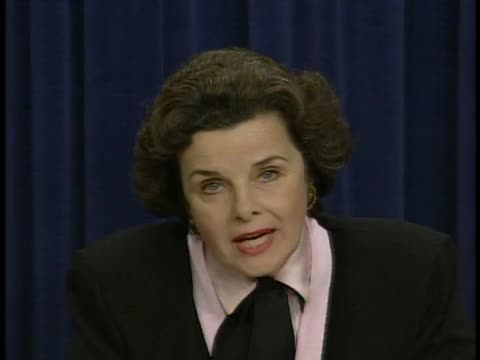
That's not a small business, we have to say. So a small business is not going to be affected by that. No, sir. Not at all. So what do you think, Senator, to manage he was talking about? Well, I think he was making a case. We all do that once in a while. He's a good friend, and we'll be working together on things like we've always done. 17 years, we've been together. No hard feelings. We've got to pass this bill Friday and get on to health care. We'll not be a good idea. Okay, well, we're going to get on to four other members of Congress and then come back to you all. So don't go away. Thank you both very much, Roger. We turned out four people who have to vote this week on the budget proposal, three of them are Democrats, Representative Quesi Umfume of Maryland, seventh district, Baltimore is also chairman of the Congressional Black Caucus. Congressman Timothy Penny is from the first district of Minnesota, which is the southeast corner of the state. Senator Dianne Feinstein is from California and from among the Republicans as Senator John Chaffee of Rhode Island. Senator Chaffee, would you give the Democrats a break and just tell them that you're going
to vote with them on Friday so they don't have to hustle around for another vote? I'm certainly I'm not. You're not. I certainly am not. And let me just say this, that I think they've raised the question wrong. They said the question is, can they govern? The question isn't, can they govern? The question is, can they govern well? And I think the answer is clearly they have not governed well and this bill they brought forward. This bill is a job killer and I like to differ with my friend Pat Moynihan whom I've served with for 17 years here when he says this doesn't affect small business. No, the corporate rates don't affect small business but the personal income rate going from 31 to the neighborhood of 44 percent, 44 percent of every dollar earned, that's going to affect the unincorporated businesses, the sub chapter S businesses of which there are multitude across our country and these are the job creators in our nation. And these job creating small businesses are going to be terribly affected by this bill and indeed it's retroactive, can you imagine any small business owner unincorporated, sub chapter
S, which is typical of a small business, planning to add employees when he's got the scurry around and come up with increased taxes that go right back to January 1st with this tremendous increase from 31 percent to 44 percent. So if the bill is to pass the Senate on Friday, it will not be with any help from the Republicans. I can't speak from all the Republicans but just, I don't think that I have ever seen and Danny Ross and Kowski's been around here longer than I have. I don't think I've ever seen a bill where every single Republican in both branches is voted against it and that isn't because there's some party line on this. It's that the Republicans think this is just bad for the nation. Mr. Mfume, when the budget came through the House of Representatives back in May, the circumstances the atmosphere was different with the black caucus in the White House because the landing when air nomination had been pulled down by the White House has the atmosphere cleared now
as you approach a vote in the House on this budget bill. Well what has cleared has been a better understanding I think both between the White House and the Congressional White Caucus on a number of issues that deal with the principal and how we tend to operate. What clearly was interesting during that first period was an opportunity, the first opportunity in a long time, for myself as Chairman of the Caucus and many of our members to work with conservative members of our party, to sit down and to start talking about how we do something collectively while recognizing and keeping quite frankly our own set of principles. It was amazing how we were able to fashion a package in that first version that went through the House and for me as I think back on those days, that was the most significant thing. But with respect to the White House, I think as I said over and over again, wounds take time to heal, that healing process is affirmative, it's continuing. We want very much for this package to succeed. We've signed on to it, we believe it's the right thing to do. People want action in this town and throughout this nation and we can't sit here now and
point fingers as many Republicans are doing to talk about why it will not work. So among the 40 members of the Caucus, is that the right number 40? Well, there are 40 members of the Caucus 39 in the House, 37 of Democrats and 38 of Democrats and 37 have voting privileges, so pick the number that you want. So what's the percentage of the support that the bill will get from your Caucus? We, of the 37 voting members, 34 have signed on to the package, the other three are undecided. We expect, however, that we will have a unanimous show of support, democratic support, to give to this President with regard to passage of this bill. Senator Feinstein, what accounts for your reluctance? You've been described as a reluctant supporter. Are you still reluctant and if you are, why? Well, let me tell you, first of all, this is not an easy bill for anyone. To come from a very large economy, where one and a half million people are unemployed. It's one thing to take a major bite of the deficit and this bill does it.
What the President envisioned was that it would also have incentives to create investment back into the economy. And originally, some of these incentives that I felt were important for California were left out, for example. I'm one that believes that capital gains taxes should be lowered to create patient capital for startup and expansion of business. I want to thank the Chairman of the Finance Committee because I have importuned him several times on this, the leader, the President in the Congressional Record and in writing. The surcharge was removed and targeted capital gains were introduced in the Conference Committee. Another thing, very important, research and development tax credits. Why? Because if they're there for sure, high technology, biotechnology, biomed will be inclined to hire behind the tax credits.
They have funded them one year retroactively and it is my understanding 18 months for the future. That's the second thing. Two years. Excellent. Excellent. Does this mean you're there? Why do the difference it'll make? One company says this means we will hire 100 scientists, enterprise zones for blighted inner city areas. We're very important to me. That was my third concern. Does this mean then, Senator, that you are no longer reluctant, but you are having braced the bill? Well, now we tried to get the whole bill as of two o'clock this afternoon. We're not able to get it and see it. But if these incentives are in it, this goes a long way to satisfy my concern. The power of its own, you voted at 3.5 billion, Diane, you arrived at the hard bargain. Well this is for South Central Los Angeles, where we need this kind of economic activity very badly. Let me ask Congressman Penny from Minnesota.
You were reluctant to remember on the bill that went through it in May. Are you still, how are you going to vote on the Thursday? By the way, I haven't made a commitment yet. Frankly, I have decided yet one of the elements that was so important to our group of moderate conservative Democrats was this budget enforcement scheme to make sure that the deficit reduction is accomplished in the out years. We're still trying to nail that down. Well you heard perhaps Mr. Rosten Kowsky say that he understood the president was going to issue an executive order that would enforce caps on in tight ends. Well let's satisfy you. That commits the president to this process and we're very encouraged that the White House has been going out of their way to try and deal with this entitlement enforcement through other means because we had problems in the Senate getting that accepted. We also are working with the House leadership to put in the House rules a way to enforce those entitlement spending limits and that will be helpful but we haven't seen the language on either the rule or the White House executive order yet.
So you always see the language we can't make any commitments. So your decision as to whether you vote up or A or A depends on the fine print then that you'll see in the next 24 hours? Well I expected it'll be forthcoming. The White House may reference that executive order in tonight's speech. We expect it may be signed tomorrow. We'll certainly have the language and we're working with the House leadership now to nail down the details of this House rule. Senator Chafee, if the Republicans had from the beginning participated in the process, would this bill be any different? It would be totally different, Roger, there would be far less taxes. These taxes are mammoth and to impose these taxes on a struggling economy just doesn't make any sense. I'm for some taxes, it's true that some Republicans against all taxes, that's not me and that's not the great bulk of the Republicans in the Senate. They are for some taxes but not to this degree and there would be much greater reductions in spending.
It's really too bad that for some powers that be, I don't know who it was, decided that the Democrats were just going alone. And certainly Chairman Ross and Kausky, Pat Moynihan, all of us remember that in 1986 when we fashioned the great big tax measure, tax reform measure, we worked together on it, Republicans and Democrats and what that does, it makes possible that you can have tough decisions, when only one party's doing it, particularly when they're on the shaky ground that the Democrats were in the Senate, they can't take tough decisions. Mr. President, that's unfortunate for the country. Congressman Ummfume, do you think the middle class will regard this tax gasoline tax increase as a broken promise by President Clinton that he would not in fact tax the middle class? I don't at all because the bulk of taxes in this bill are going for persons who are in way up in the upper-income brackets and people who know that and say otherwise of being disingenuous and I would challenge them to look at where the real taxation in this bill
is. But the 4 cents on a gallon of 4.3 as the Senate would have it, I don't think people look at that as a broken promise. What they are looking at, I think more than anything else, are the earned income tax credit 21 billion for that, the family preservation side of this, the childhood immunizations, the Mickey Leeland Hunger Act, the small business tax credits, as providing a cushion for the working poor and for the middle class in this country. This is a very, very large deficit reduction bill, but it is also a major set of initiatives that are pro-family and anti-poverty. The largest set of initiatives we've seen in a long, long time. I think that's what has the attention of a lot of people, wondering how they will be cushioned to deal with these enormous hits and cuts that we're asking them to take over the next five years. Senator Roger? Yes, Senator. Senator J.V. I can't say anything about Maryland, I don't know. All I know in my state, the people with a lot rather have jobs than they would summon palm and zones or whatever you want to call it. Well, Senator, they'd much rather have jobs in my state too. I don't think Maryland's any different from where you come from, but people are tired
of inaction. We can talk about jobs until a hell of freeze is over. We've got to do something about it, and this at least is a step in that direction. Well, I don't see how there's any step in that direction as far as job creation. You've listed yourself at the expansion of the Mickey Leeland Act and so forth and so on. One of that has anything to do with jobs. You ask somebody now just a minute, when you go out and ask them to close to the working before I post it. When I post it, they appreciate those kind of initiatives. Go ask them of them. I'd appreciate it if you permit me to finish, which is that when you impose these very, very heavy taxes on the major job creation entities in our country, namely small business and these are taxes on small business and don't dismiss it, the major creation of jobs or the sub-chapter-esque corporations, the unincorporated businesses in our society, and this hits them very, very hard, and there's no way around that. Let me ask you, let me just say that you were there for 12 years of cuts that hit these same people that they are still trying to recover from, and they remember those cuts as much as they remember any promises for new jobs.
They want action, sir. And I'll let me have, let me give the last word to Senator Feinstein before we move on. Did you, I understood you had something you wanted to add? I was just going to say, one of the things that has puzzled me about the Republican reaction to this is they've submitted a plan without one single cut beyond that which the president submitted. I've looked at the plan. There was no there there, and yet none of them will vote for this plan. I think it's very easy to sit out there and carp and criticize. It's another thing to be part of the solution rather than the problem, and it's not an easy decision for anyone, but I'm convinced that if all of discretionary spending were ended at this time the Republican still wouldn't be for the bill, they'd find some reason not to. Senator, if you would permit me, stay where you are, and Jim Lara is going to carry on, and you can continue to mix it up now for another few minutes, Jim. You bet.
We want to put back into the mix. The two key makers of this conference committee report, Senate Finance Committee Chairman Pat Moynihan, House Ways and Means Committee, Chairman Dan Rosten, but go ahead, Senator Chaffee, you wanted to respond to Senator Feinstein. Well, she criticized the Republicans for not contributing to the cuts. When you're not in on the take-off, and right from the very beginning, the Republicans have been totally excluded from this process, and when you're not in on the take-off, you're not very anxious to be in on the landing, and we've had experience, as I mentioned before, going way back in 1986 and before, with working closely with Democrats to try and forge good programs, that was not the approach that was used here regrettably. Let me ask Senator Moynihan, and Congressman Rasten Kasky, because Senator Doles, Senator Domenicie, all the Republican leadership have said exactly what Senator Chaffee just said, that you all cut them out from the very beginning, you'd never gave them a role in this. You're the last ones in the world now to complain about they're not voting for. Senator Moynihan.
Well, I refer to my colleagues, Senator Feinstein, who quoted Gertrude Stein on Oakland. There's no there there. Now, we offered the Republicans the opportunity to join. They said, not this time around. Who said that, Senator? Who actually said that to you? Bob Bakwood. And they're going to be with us the next time around. We're working on trade together now. Now he's the right now. He's the ranking member of the United Finance Committee. And you said, you want to do what to be in on this, thinking that they did not, knowing they did not, and he said not this time around. And clearly, we're going to get the health care where we'll be back on a bipartisan basis. Senator Chaffee, how do you respond to that? That Senator Moynihan invited Senator Bakwood to your party's ranking member to participate. But participate and he said no thanks. Well, I think Pat knows very well that there's more senators and more Republican senators on the committee than Senator Bakwood. I don't know the conversation between them, but I do know that speaking for myself and
Senator Danforth, and Dernberg, or others who have served on that committee for many, many years, that in the immortal words of Sam Goldwin, we were included out. And that's the way it was from the right from the when the bill came to the committee. And indeed in the conference, we're not. We've been, it's an isolation. Congressman Rasten Kasky, what's your recollection of the history from your point of view, from the House point of view? You know, from 81 to 86, we had a Republican-controlled Senate. The House of Representatives is met with Ronald Reagan and talked to him about what he wanted to accomplish. And we were the first to initiate legislation that I thought we amalgamated with the thought of the minority. Today, if you're going to discuss any legislation with the minority, and you suggest that you're going to have an amendment agreed to, you ultimately want to find out if the amendments were agreed to, are they going to support the legislation?
They never admitted that they would support the legislation, regardless of how they tried to improve it. So I mean, this is old hat, as far as I'm concerned. But the fact of the matter is, we have to stamp out legislation in a scheduled period of time, and I just don't like to see people slow us down. And that was one of the problems that we had when we were marking up the Bill of the Ways and Means Committee. Congressman Penney, you come from the moderate to conservative wing of your party, and a lot of your views coincide with those views held by Republicans. What you're feeling about, whether or not the Republicans were given a bad deal on this. Well, nobody invited them in from the start. And I do hold the view that we're stuck with a bill that's the best we can do with Democratic votes alone. And frankly, you have to go back to day one in order to develop a different kind of bill. And that required the president to essentially say at the start of the year that I just got to town.
I didn't create this mess. I inherited these deficits from my predecessors. No single party is totally responsible. I'm challenging both political parties to join with me in a responsible process to clean up this mess. Had he done that in a high-profile way, we had a totally different scenario for this year. And a better bill do you talk about? I think it would have been a better bill. I think we would have relied more on spending restraint and less on tax increases. But that isn't what happened. We're now stuck with this situation. And we have to make this bill as good as it can be with the Democratic votes that are necessary. Senator Feinstein, does that recollection of history jive with yours? Well, I'm not part of the leadership. It's hard for me to know. I do know there's sensitivity on the Republican side that they have not been consulted adequately. However, I also know that when people are putting together serious alternatives, they come to you and they approach you and they say, look, do you think you can support this? That certainly didn't happen with me from anyone from the Republican side with anything that was really positive and there was enough knowledge that I've been undecided.
Let me make the final point. I think the question before the Congress is, what happens to the nation if we fail to pass a bill? What happens to the leading growth indicators? What happens to the fiscal mark of the financial markets? What happens to unemployment? And in talking with economists, it seems to me that the point they've made with me, these are economists outside of the administration, is the important thing is to take action and show that we're serious about the deficit because not to do so is really to jeopardize the future of this nation. Senator Moynihan, just as a practical matter, if the House and Door Senate only takes one of them, turn this thing down on Thursday or Friday. What does happen? Well, first of all, we're not going to, but if we were, we're going to stay right into session through August and right through September and right up to New Year's Eve to do what has to be done, Senator Feinstein is absolutely right.
The world is watching us. The world looked at President Clinton and Tokyo and said, my God, there's a president who's heading a government that can get agreement by partisan agreement. I'm going to hasten to say, Senator Chaffee, very much involved to continue the New York Y around, the GATT negotiations. He's got a budget deficit reduction and they're getting hold of their affairs. They can talk to us as people who are showing the world how to be, how to govern itself. And it was a wonderful thing for this country. And what's an issue? It's not Republican or Democrat. It's United States and America in the aftermath of the Cold War showing it can, instead of falling the pieces the way the Soviet Union did, we can get ourselves together for a new world and do it well. Senator Chaffee, you don't see it that way. I certainly don't. I think the best thing that could happen for the country is for this bill to be killed, not passed. Go back to square one, tackle the entitlements, do something about the spending, do something
with increased taxes? Yes. And come up with something that is going to be a job creation bill, Senator Feinstein mentioned the capital gains. No question, but what a reduction in the capital gains would help in increasing jobs in our nation. The best thing that can happen is have this thing defeated, not passed, and as I say, start over with a cooperation between the Republicans and the Democrats. And I'm absolutely certain that we come out, we could come out with a measure rather quickly far superior to this one this before us. Congressman Fume, what is your reading, what the consequences would be of the failure of the House and Senate to pass this this week? Well, I agree with Senator Moynihan, we're going to pass it, but if the event should occur where we did not, it just means staying here until we get something done. But let me say this, we all are sent here by different constituencies to represent different interests. I would hope that we would concede tonight that nobody really loves everything in this bill, but that we all love America.
And loving America means, in some instances, I think, taking a step back from what you want in this bill in order to take two steps forward toward what we need. And what we need is a real and honest and sincere effort to reduce the deficit. If we fail, then at least we are failing while trying, but to have no activity, no action and no foresight, I think is a greater failure. You agree, Congressman Penney? Well, I think we'll get this wrapped up and that it is important. Frankly, I think that moderate conservative Democrats would like us scenario under which we could come up with a plan with the higher spending cuts and the larger deficit reduction. I'm not sure how you construct that process at this stage of the game. And so I think we're kind of stuck negotiating around the dimensions of this plan, getting some of the budget enforcement provisions in here. If we were to reject this, my guess is it comes back in a couple of days without the gas tax, no spending cuts to replace the gas tax, and we then end up with a smaller deficit reduction plan. And I don't see how that's better than what we're dealing with now, even though most
of us are not very excited about this program. Congressman Rosden Kasky is chairman of the House Ways and Means Committee. What would be your desired course that this thing has turned down? Well, I'm certainly not anticipating loss on the Thursday of next week. But I think that it would be a tragedy that markets as Senator Feinstein has pointed out would fall, interest rates would skyrocket. Similarly, people would become disenchanted with government. Gridlock would become another adjective in our discussions. I think it's not an easy bill to pass, it's not an easy bill. But I have to admire President Clinton for having laid this out, because he is raising taxes, he is creating employment. If you look at the business investments, target of jobs credits, low-income housing, small-issue IDBs, mortgage revenue bonds. These are all things in the small business community that people will invest in and create
jobs outside of government. I think that it would be a tragedy if we lost this bill this week. And I think the American people would act very negatively toward us. Senator Tafey, you think the country would cheer? I'm not sure that, I'm not sure. I haven't taken a poll, but I think the important thing is to do have a job creating measure and, unfortunately, this is not it. And even with the most optimistic predictions that are embodied in this legislation, the debt of the nation goes up a trillion dollars in the next four years. And I hardly think that's much of an accomplishment. Senator Moynihan, Senator Chafey's major attack on this, and the other Republicans have said the same thing, is that this bill, he called it a job killer bill and he laid out why, is the taxes on small business, the people who do most of the hiring, and the most of the creation of new jobs, those people are going to get hit. They're going to be unable to create the new jobs.
What is your response to that basic charge? First of all, 4% of the 7 million chapter S companies will be involved with the new rates, and their half of them are big law firms. This is a bill to get hold of our future, to tell the markets that we can pay our way. We are right now borrowing money to pay interest. Is there any small business in this country that thinks they could get away with that? They can't, neither can we. We've not arguing about how we got here. There, and we could have that argument. But now, we're looking to the future, John Chaffee is absolutely right. The jobs are what is at issue. We feel that low interest and economic stimulus of the kind that Diane Feinstein has so very ably advocated will bring us there, but more than anything else, the site of us doing what has to be done, and America knows that the world is watching.
So Senator Chaffee, I think Senator Moynihan is saying the details are less important than the fact that the Congress of the United States and the President are doing something. You just disagree with that. Well, I think we're in a tough situation when the model of the day is do something. I think we want to do something right, not just do something, but governments can always thrash around and come up with something bad. So I said, I'm a big fan of Pat Moynihans. As I say, we've been associated in all kinds of different committees, John Chaffee. For 17 years, but I'm not sure that was happily phrased, that to just do something. Frankly, you've seen articles that say, Wall Street dismissed this bill anyway. And the idea that interest rates are going to skyrocket across the country, just dismisses the fact that interest rates are based not solely on what happens in this nation, they're based on what happens all over the world now. So I, again, think we can do far better than this.
And I would hope Representative Ross and Kowski and Senator Moynihan and I all went through the 86 bill. And we worked hard and we worked together and we came out with a very, very fine measure. We can do the same thing. Senator Chaffee, do you just completely dismiss the fact that this, or the claim that this is a deficit reduction package? Well, Jim, that is one of those fancy words. People think that you're reducing what we're spending. No, no, we're not doing that. We're reducing from what we otherwise would have spent. So they know cuts and spending in this program. There are cuts from what we otherwise would have spent. And there are many ways of getting there. One of the ways is to increase taxes. That's what the administration is doing. And this bill does. The other way is some increase in taxes, but far greater cuts in spending. In the interesting thing, in both the gentlemen who are chairman of the respective committees will admit that the savings in this program don't kick in until three years from now.
And the taxes go back to January 1st. Congressman Ross and Kowski, will you admit that? Well, I recognize that the savings are going to be in the out years, but at least we're making moves on trying our best to cut the deficit. I've never seen in any other administration that experience, and I've been chairman of the Committee on Ways and Means since 1981, I think that it's a step in the right direction. But it's very difficult to get enough votes 219 in the House and 51 in the Senate. That satisfies every demand. And I think what we've done here is we put together a package that's worthwhile. All right. Senator Feinstein, gentlemen, thank you all very much for being with us. We turn now to an update on the Midwest flooding. As the weather clears and the flood waters recede, we're tempted to say that the worst
is over. But such words don't sound quite right in the St. Louis area as Betty Ann Bowser reports. Here at Winfield, about 60 miles north of St. Louis, these men, women, and children have been living in a makeshift red cross shelter for a month. No walls, no privacy, nowhere else to go, and at times, no hope. Danny Noac, his wife Linda and their three children, have been living in the Winfield High School gymnasium since flood waters consumed their trailer home about five miles north of town. Where do you sleep? Okay. Our bedding area is right here in the middle of the cafeteria. This is yours in Linda's. Right. My name is Linda's. Is this the master bedroom? Yeah. This is our dining room right there. We have a game table also. And then we have the youngest bedroom is over, right there just for the white sheets are.
Where are the big white sheets? Right. And that's Mindy's room. Right, Mandy. Mm-hmm. And then it was Angela and Sissy, two Chinese girls. Right. And then we have Jason, the big boy, right over here. All this close living means family discord and stress. I mean, they feel that the displacement and they're basically feeling like they're scrapping over whatever little space they can fight over. And this, what we've got here, you know. You're laughing about it. You're making jokes about this as the master bedrooms. That's how you get by with it. That's how you cope with it, that's how I cope with it. All right, come on guys, get in. Let's go. Early this morning, Denny and Linda loaded their kids in a couple of cousins into the family's only remaining possession, an aging red pickup truck. It's become an almost daily obsession looking for a new home. 50 miles downstream, the Army Corps of Engineers was also doing something new about the flooding.
In a bold move, they purposely broke through a levee, sacrificing thousands of acres of lush farmland in order to save the town of Prairie, Derocia, where another 700 people hope they will not have to join the ranks of the no act. They drove up and down back roads and aren't underwater to pick up Marion High, Linda's 63-year-old mother. She's been staying with friends, and like the rest of the family, she's lost everything too. I can't go back. I was floating 73 and 79, 82, 83, I just can't do it because of my age and I can't fight this every year. This morning, for the first time in weeks, they have a lead. They've heard about a trailer park where there might be something for rent. She's got the underpinning to put up which we have in, and they'll be over in a little
bit. They work on it all day. Isn't it nice trailer in the side though? That's dirty too. It's nice. Trailer court owner Shirley Lindeman shows them a used double wide. It's dirty, the carpet is torn, the roof leaks, but it's available. What kind of a difference will this make for you? Having lived there for a month. Big. It's just to be in a bed. It's a meal. Yeah. Oh, you don't know how much it's going to be. I can't make it. I hope she says yes. Now it's this like night and day, I mean you're living with a group of people who aren't your family, but yet you get to interact like a family, and now we finally get a chance after over a month to get back to being like a family. On Saturday, Jenny and his family will move in.
On Monday, he hopes to go back to a construction job, but they will never go back to live here in Foley along the Mississippi, somewhere out there under all of that water is their old home. They're leaving it and life along the river for good. This time, they're moving to higher ground. Again the major story of this Tuesday, the president went directly to the American people tonight to push for congressional passage of his budget plan. The package would reduce the deficit by nearly $500 billion over five years through tax increases and spending cuts. In an Oval Office speech, Mr. Clinton said the plan was the nation's highest priority and called its Republican opponents Guardians of Gridlock. Senate Minority Leader Bob Dole followed the president and said the plan included the largest tax increase in history. He said it would cost jobs and fail in the long run to cut the deficit.
That's the news hour. We'll be back tomorrow night with more analysis of the budget plan. I'm Roger Mudd. Thank you and good night. Major funding for the McNeil-Lera news hour has been provided by PepsiCo. PepsiCo. And by the Archer Daniels Midland Company, ADM Supermarket to the world. And by New York Life, yet another example of New York Life's wise investment philosophy. And by the Corporation for Public Broadcasting and by the annual financial support from viewers like you. Focus sets of the McNeil-Lera news hour are available from PBS Video, call 1-800-328-PBS-1.
Let's do it again.
- Series
- The MacNeil/Lehrer NewsHour
- Producing Organization
- NewsHour Productions
- Contributing Organization
- NewsHour Productions (Washington, District of Columbia)
- AAPB ID
- cpb-aacip/507-k649p2wz7p
If you have more information about this item than what is given here, or if you have concerns about this record, we want to know! Contact us, indicating the AAPB ID (cpb-aacip/507-k649p2wz7p).
- Description
- Episode Description
- This episode's headline: Winning Deal?; Swept Away. The guests include SEN. DANIEL PATRICK MOYNIHAN, [D] New York; REP. DAN ROSTENKOWSKI, [D] Illinois; SEN. JOHN CHAFEE, [R] Rhode Island; REP. KWEISI MFUME, [D] Maryland; SEN. DIANNE FEINSTEIN, [D] California; REP. TIMOTHY PENNY, [D] Minnesota; CORRESPONDENT: BETTY ANN BOWSER. Byline: In New York: ROGER MUDD; In Washington: JAMES LEHRER
- Description
- 9PM
- Date
- 1993-08-03
- Asset type
- Episode
- Rights
- Copyright NewsHour Productions, LLC. Licensed under a Creative Commons Attribution-NonCommercial-NoDerivatives 4.0 International Public License (https://creativecommons.org/licenses/by-nc-nd/4.0/legalcode)
- Media type
- Moving Image
- Duration
- 00:58:48
- Credits
-
-
Producing Organization:
NewsHour Productions
- AAPB Contributor Holdings
-
NewsHour Productions
Identifier: NH-2594-9P (NH Show Code)
Format: 1 inch videotape
Generation: Master
Duration: 01:00:00;00
If you have a copy of this asset and would like us to add it to our catalog, please contact us.
- Citations
- Chicago: “The MacNeil/Lehrer NewsHour,” 1993-08-03, NewsHour Productions, American Archive of Public Broadcasting (GBH and the Library of Congress), Boston, MA and Washington, DC, accessed June 18, 2026, http://americanarchive.org/catalog/cpb-aacip-507-k649p2wz7p.
- MLA: “The MacNeil/Lehrer NewsHour.” 1993-08-03. NewsHour Productions, American Archive of Public Broadcasting (GBH and the Library of Congress), Boston, MA and Washington, DC. Web. June 18, 2026. <http://americanarchive.org/catalog/cpb-aacip-507-k649p2wz7p>.
- APA: The MacNeil/Lehrer NewsHour. Boston, MA: NewsHour Productions, American Archive of Public Broadcasting (GBH and the Library of Congress), Boston, MA and Washington, DC. Retrieved from http://americanarchive.org/catalog/cpb-aacip-507-k649p2wz7p