The NewsHour with Jim Lehrer
- Transcript
ELIZABETH FARNSWORTH: Good evening. I'm Elizabeth Farnsworth. Jim Lehrer is off this holiday week. On the NewsHour tonight Charles Krause find out whether Christmas sales boosted the economy, Charlayne Hunter-Gault interviews African leader Julius Nyerere in part three of our series on Central Africa, Mark Shields & Paul Gigot review the week's politics, and we close with another look at Betty Ann Bowser's report on the national symphony orchestra on tour in Montana. It all follows our summary of the news this Friday. NEWS SUMMARY
ELIZABETH FARNSWORTH: This was the 10th day of the hostage standoff in Lima, Peru, where leftist rebels are holding 103 people in the Japanese ambassador's resident. President Fujimori placed Lima and a nearby port city under a state of emergency for 60 days. He suspended some constitutional rights and gave greater powers to police and the army to "preserve security and tranquility." Japan today sent two defense ministry officials to Lima to advise their Peruvian counterparts and gather information. And Japan's foreign minister endorsed a call for cooperation by the group of seven industrialized nations to help end the crisis. Peruvian President Fujimori has refused to negotiate directly with the rebels unless they lay down their weapons and free all hostages. In South Korea today trade unions called for extending a 24-hour strike that has paralyzed parts of the country. We have more in this report from Simon Israel of Independent Television News.
SIMON ISRAEL, ITN: The mass protest is gathering pace. Today unions staged demonstrations in the center of South Korea's capital, Seoul. Car plants and shipyards, the backbone of the country's economy, have been brought to a standstill. Hospitals have been left with only emergency cover, as thousands of nursing staff supported the call to strike. Wards had to be closed. What's brought this country to the verge of its first general strike and the return of riot police to the streets are new government labor laws ending the nation's job security system. The new laws are so contentious that the opposition woke up to find that the ruling NewKorea Party had sneaked into the national assembly building before dawn to pass the legislation. A nationwide strike could seriously threaten an already-ailing economy with a $20 billion trade deficit. South Korea's stock market ended 1996 at its lowest level for three years. There have been efforts to temper the mood with promises of future prosperity. But at the same time the government has warned it would not tolerate illegal strikes, and activists have been threatened with the rest.
ELIZABETH FARNSWORTH: In the Serbia protest story the head of the Organization of Security and Cooperation in Europe today urged President Milosevic to accept opposition election victories in 13 Serb towns. OSCE Chairman Filipe Gonzales looked into complaints Milosevic illegally annulled many November municipal election results. Gonzales said the victories of opposition candidates reflected the wishes of local electorates. Today was the 38th consecutive day of protests against the election annulments. Some 60,000 demonstrators defied heavily armed riot police and an official ban against protests to march in the streets of Belgrade. Police dispersed the marchers and later arrested some of them. In Russia today a new political party was formed by the former security chief fired by President Yeltsin in October. Alexander Lebed, a former general, presided over the opening session of the Russian Popular Republican Party. He described it as a centrist organization aimed at uniting Communists and Democrats. Lebed said in an interview published today that Yeltsin is to ill to govern and should resign the presidency. Lebed is credited for negotiating an end to Russia's war with Chechnya. Back in this country a Commerce Department report said orders to U.S. factories for durable goods fell 1.6 percent in November. It was the first decline in three months. Lower demand for electronic equipment was blamed for the drop. We'll have more on the economy later in the program. The Democratic Party faced more questions about donations today. An Asian-American business consultant gave $85,000 to the Democratic National Committee after visiting the White House. Pauline Kanchanalak brought five Thai executives to meet the President on June 18th. The DNC reported her contribution the next day, along with that of another Thai businessman who was not there for $50,000. A spokeswoman for the DNC said the timing of the visit and the checks was a coincidence. Fund-raising inside the White House is illegal. In St. Petersburg, Florida, today some 55 vehicles collided in chain-reaction accidents on the Skyway Bridge in a dense morning fog. One person was killed, and at least twenty- six were reported injured. Dozens of other vehicles were trapped on the bridge by the wreckage. The span across the mouth of Tampa Bay was closed in both directions. A powerful winter storm continued to lash the Northwest today. Snow and freezing rain fell for the second day in Washington and Oregon. Icy conditions closed roads and airports, leaving holiday travelers stranded. More than 140,000 residents were without electricity in the Seattle-Tacoma area after it received up to six inches of snow. Sixty thousand people remain without power in the Portland area. And that's it for the News Summary tonight. Now it's on to Christmas sales tally, African leader Julius Nyerere, Shields & Gigot, and music in Montana. FOCUS - HOLIDAY SHOPPING
ELIZABETH FARNSWORTH: First tonight a look at what Christmas sales did for the economy. Charles Krause has that.
CHARLES KRAUSE: It's only been two days sinceChristmas, but retailers around the country are already looking at their sales figures to see if this was a successful season. Department stores and other retailers typically do 25 to 30 percent of their business between Thanksgiving and Christmas. Joining us now to look at how the season turned out are David Wyss, an economist with DRI McGraw- Hill, an economic consulting firm in Boston, and Rick Gallagher, vice president of the National Retail Federation of America. Mr. Gallagher's trade group represents many of the country's biggest retail stores and catalogues. Gentlemen, thank you for joining us. Mr. Gallagher, tell me, there was a lot of optimism when the season started, how did it turn out?
RICK GALLAGHER, National Retail Federation: [New York City] Well, we have to watch out. Right after Thanksgiving there was, indeed, a lot of optimism and great sales. Some of that seemed to temper as we got closer to Christmas. However, if you add up sales for the big chains across the United States and you combine November sales with what we expect for December sales, we should see about a 4 percent increase. Now, that doesn't sound very good, however, if you look at the last 10 years of those same numbers, you see that, on average, retailers do about 3.8 percent increases every year. So it turned out to be a pretty typical Christmas.
CHARLES KRAUSE: Well, typical, but many of your own members were expecting a better Christmas than that. The economy is quite good. What held consumers back?
RICK GALLAGHER: Well, there are a number of issues that we knew about going into this season. For one, this Christmas season was five days shorter than last year, so it meant that on a day-to-day basis retailers had to do a lot more business in order to just keep pace with last year, which they certainly did, and they beat. But there are some other problems here, is that consumer credit is at historic high levels. People are afraid to spend, and some of them just can't spend; they've maxed out their credit cards. But I think there are also some demographic and social changes that are occurring that mean that we may not get the big increases in Christmas sales that we saw in years past.
CHARLES KRAUSE: What kind of changes in the demography?
RICK GALLAGHER: Well, for one is that we are seeing that families are smaller than they were before, and in all of our polling, we are seeing that people feel less obligated to give gifts to as many people as they did in the past. There's another social change here in what people are giving for gifts that aren't showing up in these chain store figures. And that is very frequently now I will buy a vacation for someone, I'll take them out for dinner, I'll take them to the theater. It's that entertainment and travel are replacing more traditional Christmas gifts like apparel.
CHARLES KRAUSE: Now, as you look at what your members sold and what they didn't, what the stores sold and what they didn't, who won and who lost? What sold? What didn't?
RICK GALLAGHER: Well, what sold in great contrast to last year was apparel, is that in virtually every kind of retail outlet, from a specialty store to a department store, to a discount store, is that apparel sold very well this year. In addition to that we saw home furnishings, home appliances sold very well, meaning kitchen appliances, also toys. It isn't Christmas if you don't sell toys, but also jewelry sold very well this year.
CHARLES KRAUSE: What didn't sell so well?
RICK GALLAGHER: Consumer electronics. And that is an industry that has been suffering all year.
CHARLES KRAUSE: That's computers and that sort of thing.
RICK GALLAGHER: Absolutely. Televisions, VCR's, but the problem seems to be in computers where two things sort of ganged up on retailers this year, one is they had very difficult comparisons. Last year was a very good Christmas for computers mainly spurred by the introduction at that time by Windows 95. The other problem for savvy computer buyers this year is that there is going to be a new chip to replace the Pentium chip that is going to be introduced as early as next month, so some of those people in that market place are waiting for the latest technology.
CHARLES KRAUSE: If you had to sum it up in a word, was this good, so-so, or a disappointing season?
RICK GALLAGHER: I think that it was good. I think it would be a lie to say that it was much more than that, but I also think it would be a lie to say that those in the retail business probably wouldn't be happy to put one good year after another.
CHARLES KRAUSE: Mr. Wyss, do you agree with that assessment?
DAVID WYSS, Economist: [Boston] I would rank it as a so-so season. Basically, it was an average season, growth rates 4, 4 + percent year on year. That's not very exciting, but on the other hand, we've had quite a few good Christmases in a row. The last bad Christmas we had was really 1990-91. This far into a recovery so- so isn't all that bad.
CHARLES KRAUSE: How does this Christmas season reflect the overall economy?
DAVID WYSS: Well, I think this is a pretty accurate reflection. This is getting to be an old economic expansion. And old economic expansions get a wee bit soft towards the end. I think we're seeing a repeat of what we saw in the late 1980's, steady growth, but at a relatively unexciting pace.
CHARLES KRAUSE: Is there anything here that would indicate whether or not this will continue this way, or whether this may be the last part of this expansion, or exactly what is happening?
DAVID WYSS: I think we've got a couple more years of so-so Christmases before we have to worry about a recession. If you go back to the history, times we've had long economic expansions, the 80's, the 60's, usually you had a soft spot in the middle of the expansion and then another four years or so of growth. That's the period we're in now. I think we can expect another two or three years' growth.
CHARLES KRAUSE: Did different regions of the country do better or worse this Christmas?
DAVID WYSS: Well, one thing that happened this Christmas is that some of the laggard regions caught up a bit. We saw stronger sales on the coast, which had been trailing the interior of the country. While things seemed to soften a little bit in the Midwest, now this is very anecdotal, we don't have a lot of reports yet, but the basic problem in the heartland is the unemployment rate was already so low that you couldn't get the kind of job growth that we've been seeing in California and the Northeast.
CHARLES KRAUSE: So there was some improvement on the West Coast and on the East Coast?
DAVID WYSS: Especially California is finally beginning to show some signs of life. They were the last to come out the last recession, and you're starting to see some employment growth out there not showing up in retail sales.
CHARLES KRAUSE: There were some reports that the luxury goods, stores like Tiffany's, stores like Nieman Marcus and others, did extremely well this year, and the Walmart's and some of the others didn't do as well. If that's the case, what would explain that?
DAVID WYSS: Well, I think you did see the jewelry storesin particular doing very well. And I think there are two things that explain it. No. 1, we're relatively far into the economic expansions. And the last three to four Christmases people bought the necessities. It's now time for the luxuries. The other point- -the high end of this income distribution is doing a lot better than the low end. The rich are getting richer. The poorer aren't getting richer. And the rich that have money are more likely to show up at Tiffany's than Walmart.
CHARLES KRAUSE: Mr. Gallagher, tell me your members, what, what did they find--what did they order that they didn't sell, and what did they run out of?
RICK GALLAGHER: Well, you know, we all know the stories of running out of Tickle Me Elmo, and I hope that means the end of hearing those stories. But in addition to that, Nintendo 64 did very well in the toy category, but in addition to that is a very old favorite, Barbie turned in still another good year. In other categories we saw things--last weekend, if you wanted to see an indication of a retail turnaround story is look at Sears. Sears had been struggling in years past because it was only selling hard lines, things like tires and tools, and not selling higher profit margin things like clothing. Well, last weekend they managed to have it both ways because among their best sellers were not only women's intimate apparel but tires. Now the question is, were people giving each other tires as Christmas gifts? I don't think so. What Sears has as an explanation for that is if you knew you were going to be in the mall for a couple of hours, that you might as well buy the new tires and have them put them on the car while you're there. But it's a good example of a mid-line chain that is having it both ways.
CHARLES KRAUSE: Now tell me this. Given that it was a good or so- so Christmas, which you two gentlemen disagree on that, but in any case, are we going to see big Christmas sales, post Christmas sales now that Christmas is over?
RICK GALLAGHER: Well, traditionally retailers plan for sales, and there are two kinds of sales that retailers have. One comes from strength, which is a traditional January white sale. You should expect to see that every January. Retailers build it into their plan. The other one is a sale that's done out of necessity to move merchandise that didn't sell earlier in the season. All reports are, are unlike last Christmas, there weren't a lot of sales to move discontinued merchandise early in the season, so what that may mean is that it's bad news actually for the customers, good news for the stores, is that there's going to be less merchandise to move out of the sales after Christmas because they sold it before Christmas.
CHARLES KRAUSE: Does this mean that your members, the stores, are going to report better profits?
RICK GALLAGHER: Absolutely, especially those who sell apparel. Again, if we looked at last Christmas, this Christmas is the other exact reversal of that, where apparel, which brings in about twice the profits to retailers that things like consumer electronics do, apparel sold well, has higher margins, so although we're seeing perhaps only a 4 or 5 percent sales increase, we're going to see, I think, profit increases which are much higher than that.
CHARLES KRAUSE: Very quickly, what do you see for the next three months, six months for retailers?
RICK GALLAGHER: Next six months good for apparel, the real challenge will be matching these numbers again next year.
CHARLES KRAUSE: And Mr. Wyss in Boston, tell me what do you see coming out of Christmas?
DAVID WYSS: I think you'll see a little softening in the first quarter. The one wild card, however, could be computers. A lot of times you see a big price cut when the new chip comes out. That could spur sales.
CHARLES KRAUSE: Gentlemen, I want to thank you very much for joining us, and Merry Christmas. Happy New Year. SERIES - ORIGINS OF CRISIS
ELIZABETH FARNSWORTH: Next, Charlayne Hunter-Gault concludes her series on the origin of the crises in Central Africa. She talks with Julius Nyerere, a key figure in efforts to bring peace to the region.
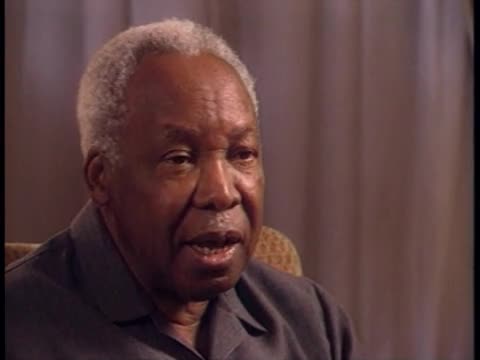
CHARLAYNE HUNTER-GAULT: Julius K. Nyerere, the 74-year-old former president of Tanzania and one of Africa's most respected elder statesmen, led his country to an independence in 1961 and presided over it until 1985. Searching for a development path for his dirt-poor country, he introduced a governing concept that was meant to meld socialism with traditional tribal government. He called it "Ujamaa," Swahili for familyhood. Through benign one- party rule and emphasizing racial and tribal harmony and moralistic self-sacrifice, Nyerere unified Tanzania from a far flung collection of tribes into a nation. But the country faltered. After Nyerere stepped down from power in 1985, the country was in shambles, and the socialist experiment was viewed as a failure. Nyerere resigned voluntarily after serving four terms. He handed over power to a constitutionally chosen successor, one of the few peaceful transitions in a region dominated by military governments and coup d'etats. Neighboring Burundi and Rwanda have not been so lucky. Since their independence in 1962, both have been torn by fighting between factions from the majority Hutu tribe and the minority Tutsis. Millions on both sides have been killed, most recently from the Hutu genocide against Tutsis in Rwanda in 1994. That produced waves of refugees also in the millions that spilled into Tanzania, Zaire, Uganda, and other border states. The minority Tutsis have now regained control of Rwanda and have called for reconciliation as thousands of Hutus have begun returning to the ravaged country. In Burundi, a military coup by Tutsi leader Pierre Boyoya is still in effect, despite a call by leaders from the region to return to democratic rule. Julius Nyerere has come out of retirement and at recent summits in Arusha, Tanzania, and elsewhere has been involved in mediating the conflicts in the Great Lakes region. Called "Mwalimu," the Swahili word for "teacher," Nyerere has devoted much of his time to African solutions to Africa's problems.
OLARA OTUNNU, International Peace Academy: Very few leaders understand as deeply the routes, the evolution, the nature of the conflict in the Great Lakes as he does. Very few leaders have ideas about what to do about it as he does, and very few leaders have the influence that he has within that sub-region.
CHARLAYNE HUNTER-GAULT: We met Nyerere during a recent visit to New York and asked first about Rwanda, and the prospects for reconciliation there.
JULIUS K. NYERERE, Former President, Tanzania: It's not going to be easy to prevent people who have lost members of their families to want revenge. This cannot be prevented. And so some revenge killings here and there might take place, but the government, itself, is going to work extremely hard to reconcile the people, and then my hope is that the international community will help them in two ways: one, that we do get hold of the perpetrators of the genocide and put them on trial, and the international tribunal in Arusha. I hope we do that. Some of these people are being harbored in the capital, in the capitals of a large number of our countries. We should have them over. Secondly, we should help the government with the resources. And that government is going to try and reconcile their country.
CHARLAYNE HUNTER-GAULT: Are African government in which--in countries where these militia people are hiding now prepared to hand them over?
JULIUS NYERERE: Well, so far, they're not handing them over. Some are in Africa. Some are not in Africa. Some are in Europe, and it's just possible some may be outside Europe. We all have a responsibility to hand over these people. This is an essential element in the reconciliation of the peoples of Rwanda. I hope that will happen.
CHARLAYNE HUNTER-GAULT: What is the main problem in Burundi? You've been most recently involved there, yourself.
JULIUS NYERERE: Well, the main problem is a problem of power. In Rwanda, you had a majority in power. You have these divisions called Tutsi, Hutu, and in Rwanda, you had the Hutu in power, and the minority Tutsi excluded. In Burundi, it was the other way around. You had the minority Tutsis in power, and the majority excluded. And this is--this is the problem we have to deal with, that power, really virtually since independence has been in the hands of the minority, supported by the army. And that is really basically the problem we are dealing with.
CHARLAYNE HUNTER-GAULT: What would the solution be?
JULIUS NYERERE: The solution will be reconciliation. We'll have- -we will have to negotiate a system under which both the majority and the minority feel reasonably happy.
CHARLAYNE HUNTER-GAULT: What's the biggest obstacle?
JULIUS NYERERE: Well, the biggest obstacle at present is that those who are in power, the minority--the minority is in power-- they are like one riding on the back of a tiger. And they really want almost a water-tight assurance before they get off the back of the tiger because they feel if they get off the back of the tiger--
CHARLAYNE HUNTER-GAULT: It will eat them.
JULIUS NYERERE: --it will eat them. So really, we have--I think we have to be patient and devise some method that gives the assurance to the minority that democracy does not mean that they're going to be wiped out by the majority, and really to give the majority--to get the minority, itself, to realize that clinging to that power is no answer.
CHARLAYNE HUNTER-GAULT: The African governments in the region, you've been working with the leaders there, and they have imposed sanctions on Burundi. Has this had any effect?
JULIUS NYERERE: Leaders of the region are absolutely united on this one, and the significance of this is sometimes lost in the outside world. The outside world regards Africa as military rule and--and dictatorships by single-party system. My system was single-party system. But they don't realize the significance of what has taken place in East Africa. These leaders who met in Arusha were really saying to the military regime in Burundi we can no longer accept military rule on our borders.
CHARLAYNE HUNTER-GAULT: And this is a major change.
JULIUS NYERERE: This is a major change on the continent, and I really hope that the significance will be the allies outside Africa.
CHARLAYNE HUNTER-GAULT: Does the history of this conflict, this Great Lakes region conflict, so many deaths, so many terrible things happening to the people, innocent people, in the region, does it yield any lessons for the future in terms of how you prevent future conflicts of this size and scope and nature?
JULIUS NYERERE: Well, I mean, thisis not simply in this region. It's everywhere.
CHARLAYNE HUNTER-GAULT: In the world.
JULIUS NYERERE: In the world. It's not simply us; it's everywhere.
CHARLAYNE HUNTER-GAULT: It's not ethnic.
JULIUS NYERERE: It's not ethnic. And I am ethnic. I keep saying I think it's matter of justice. It's a perception of the people feeling that they're not being treated justly. And ethnicity yes, but Singapore has ethnic groups, as Chinese, the dominant group, has Malays, has Indians, but Singapore has done well economically. Had Singapore not done well economically and you have these ethnic groups there, the economy is not doing well, you would be hearing about the ethnic divisions of Singapore, and I have a feeling that, oh, if Singapore was doing well that someone one ethnic group was dominating the others economically, we would hear that. And this problem is basically economic.
CHARLAYNE HUNTER-GAULT: You mentioned the one-party rule in your country where you were president for four terms during which time you promoted the principle of "Ujamaa," socialism, and you have acknowledged that it was a miserable failure. What lessons, in retrospect, do you draw from that and the kind of economies that African countries might more profitably pursue?
JULIUS NYERERE: Where did you get the idea that I thought "Ujamaa" was a miserable failure?
CHARLAYNE HUNTER-GAULT: Well, I read that you said socialism was failure; the country economically was in shambles at the end of the experiment.
JULIUS NYERERE: A bunch of countries were in economic shambles at the end of the 70's. They are not socialists. Now, today it needs so much courage to talk about socialism, therefore, perhaps we should change the phraseology, but you have to take in the values of socialism which we were trying to build in Tanzania in any society.
CHARLAYNE HUNTER-GAULT: And those values are what?
JULIUS NYERERE: And those values are values of justice, a respect for human beings, a development which is people-centered, development where you care about people you can say leave the development of a country to something called the market which has no heart at all since capitalism is completely ruthless, who is going to help the poor, and the majority of the people in our countries are poor. Who is going to stand for them? Not the market. So I'm not regretting that I tried to build a country based on those principles. You will have to--whether you call them socialism or not--do you realize that what made--what gave capitalism a human face was the kind of values I was trying to sell in my country.
CHARLAYNE HUNTER-GAULT: So what's the answer? Because, with all due respect, the economy of Tanzania did not thrive under the socialism that you practice. So what is the--what do you see as the answer for African countries which are still predominantly poor?
JULIUS NYERERE: The problem is not a question of socialism. You have to deal with the problem of poverty. You have to deal with the problem of poverty in your country, and your country is not socialist, or we're in trouble. People in rich countries don't realize the responsibility of handling poverty in countries like mine. But those countries will develop. Countries in Africa are poor, both capitalists and socialists, and today we don't have a single one with these socialists.
CHARLAYNE HUNTER-GAULT: Finally, you've been critical of some western countries and their roles in Africa. At the same time you've called on western nations to help--I think your phrase was clean up the mess in Rwanda and Burundi. Can you explain what at least sounds like a contradiction?
JULIUS NYERERE: Well, I'm saying some of the problems we are now handling in Africa, some of the mess we're trying to clean up in the continent we have inherited, the mess of the borders we have inherited.
CHARLAYNE HUNTER-GAULT: The colonials who--
JULIUS NYERERE: The colonial--
CHARLAYNE HUNTER-GAULT: The colonial powers drew the borders.
JULIUS NYERERE: Yes. The colonial powers and some not colonial powers in Africa have supported regimes which are very corrupt on that continent. I think now they should stop backing up these corrupt regimes and let Africans in their own way try and establish regimes which can care about people. Some of the governments of the West, and including the United States, has really been very bad on our continent. They have used the Cold War and all sorts of things to back up a bunch of corrupted leaders on our continent. I think they should stop now and let the people of Africa sort out their own, their own future.
CHARLAYNE HUNTER-GAULT: Does that include the leader of Zaire, Mobutu Seseseko?
JULIUS NYERERE: Well, I didn't say so.
CHARLAYNE HUNTER-GAULT: Many people say so.
JULIUS NYERERE: When we have African problems, we, ourselves, have a duty to solve our problems. I think we must accept that. When you have African problems, we should try on our own to solve those problems. We would prefer the outside world to keep out. If we want help, we can seek for help. But do you realize sometimes we ask for help, and it doesn't come. On the 5th of last month our leaders met in Nairobi, and if said need an external--we need a force to go into Zaire to help the refugees to come back. It's not happening. And we appealed to the United Nations to establish that force, and we said we would also be participating in that force. Well, quite frankly, this is not happening. What is happening is a kind of self-help within--within Eastern Zaire, itself. And the refugees are going back. I hope--I think the lesson which Africa should draw from that is that they should rely upon themselves to the maximum when it comes to dealing with African problems.
CHARLAYNE HUNTER-GAULT: Well, Mwalimu Nyerere, thank you.
ELIZABETH FARNSWORTH: Still to come on the NewsHour tonight, Shields & Gigot, and the national symphony in Montana. FOCUS - POLITICAL WRAP
ELIZABETH FARNSWORTH: Now end-of-the-week political analysis with Shields & Gigot. That's syndicated columnist Mark Shields and "Wall Street Journal" columnist Paul Gigot. Hello to both of you.
MARK SHIELDS, Syndicated Columnist: Merry Christmas.
ELIZABETH FARNSWORTH: Paul, last weekend, Newt Gingrich acknowledged that he had brought discredit on the House by violating House Ethics Rules. Is his position as speaker in jeopardy?
PAUL GIGOT, Wall Street Journal: I think that so far, despite a little erosion on the journalistic right, the political right, itself, the House members, themselves, seem to be holding quite, quite firm in support of the speaker, saying that he admitted--he admitted mistakes but that this is, in essence, a kind of speeding ticket or reckless driving ticket, and doesn't warrant the departure or censure from the speakership. But I think one-- frankly, one big ally that the speaker has right now is David Bonior, the Democratic Whip in the House from Michigan, his great tormentor, who couldn't resist when the news came out, couldn't resist going to the press room of the House and saying tax fraud and lying and must be gone, and that had the effect I think of saying, wait a minute, are we going to elect our speaker, the Republicans say, are we going to elect our speaker, or are we going to--might as well vote--let it be dictated by the Democrats, let's just vote for Dick Gephardt and cut out the middle man, if that's the case. And I think that has the effect, frankly, of uniting Republicans. He probably should have stayed out of it, Mr. Bonior should have.
ELIZABETH FARNSWORTH: How do you see it? Do you think that his- -there's a vote January 7th, and they will be voting for speaker in the House. Do you think that he'll be elected?
MARK SHIELDS: I honestly don't know. The speaker's had a bad week. Paul's right. He lost Bill Saphire, the conservative columnist, the "New York Times." The editorial--
ELIZABETH FARNSWORTH: Who called for him to step aside.
MARK SHIELDS: --called for him to step aside. The editorial comments have not been good, have not been helpful, the conservative newspapers across the country. And I think what the speaker--I think the speaker reached his high water mark last weekend. I thought they brilliantly organized this let's get behind the speaker, and the speaker used a defense which I haven't heard for about 25 years in politics, which is called--it's the Murray Chotner defense, which is you always deny what they never criticized before, so that's a way of attacking, in other words, the first reaction was, the speaker didn't make any money on this. Nobody had charged the speaker of making money on it, but that's--so you throw up that smoke screen. And then they came with what I think really will turn out to be the Achilles heel in the Gingrich defense. They said the speaker was naive. The speaker said he was naive. Now, Newt Gingrich is a lot of things. He is a superb organizer. He is a very, very cunning political strategist. He's brilliant. Naive is not a word that anybody who's been around the speaker for more than 10 minutes associates with him. Now today we learned in the "Atlanta Constitution" that he did, in fact, receive legal advice, tax advice, that this was not the proper thing to do, that what he was doing in mixing charitable educational funds, contributions with political was wrong. He said that he apologized for not seeking that advice. I think the longer it goes, the worse it looks for the speaker. He's now up to eight Republicans in the House who have publicly said that they're not ready to commit to him, and I think it's not--it's not been a good week for him, and the best thing that's happened for him, it's happened over Christmas, when people, this is a slow news time, there isn't the usual megaphone going on in Washington, but I don't think it's been good.
ELIZABETH FARNSWORTH: How long is it likely to go on? Tell us what happens next.
PAUL GIGOT: Absolutely as long as the Democrats can keep it going.
ELIZABETH FARNSWORTH: In other words, they want to prevent a vote before, they want to prevent a meeting which would decide on the penalty before January 7th.
PAUL GIGOT: Right, but because the speaker has essentially agreed to the--to the charges laid out in the subcommittee report and now you don't have a hearing about whether or not he was guilty, so you go to the penalty phase right away, and that means a full committee meeting of the Ethics Committee. But the same Democrats on the committee who spent all last year saying, you know, slow down, they're trying to put it off and put it off, now say, wait a minute, you're going too fast, because they understand if you can keep this up, it doesn't help the Republicans to have this be the story of the Congress. It diminishes Congress, hurts its records, so I think they'll try to put it off as long as they can. I don't know how long they can put it off since you really should settle this thing before too long, but they'll certainly mess up the first day and try to make life as difficult as possible for the Republicans. And then I think what you have is a vote where the Democrats push for censure, and the Republicans probably say let's go for a reprimand and probably a pretty close to party line vote would be my guess.
ELIZABETH FARNSWORTH: Do the Democrats believe they can prevent his election, or are they using this to raise the political stakes of his election?
PAUL GIGOT: Well, I think they feel that--I think they would like to push him from the speakership. I don't believe the stuff that says, oh, we want him to be there. I think they understand that he is somebody who has--still has appeal to the breadth of the Republican coalition in the House that nobody else who could take his place has and that he's a pretty good thinker about where the Republicans should go next. So I think they'd like to depose him, but, if they can't, they'll throw as many arrows as possible at him as long as they possibly can.
ELIZABETH FARNSWORTH: What do you think about the Democratic goals?
MARK SHIELDS: I think there are as many Democratic goals as there are Democrats at this point. I mean, I think there are a number of Democrats who sincerely believe that Newt Gingrich is a diminished voice right now. I think he is. I mean, he always-- the speaker was always able to deck his appeal in sort of these moral rhetoric. That's going to be very difficult for him to do now. I mean, he basically capitulated and admitted the charges against him. I mean, he--you know, he plea bargained last weekend and came up with saying essentially I agree with the charges. The problem the speaker has is he's used words like "grenades" I mean he's used them effectively to organize, to put together a political coalition, and he said eight years ago the House should apply to itself the same rules it applies to others. The Iran-Contra investigation was televised in public. The ethics investigation of the speaker should be public. He said that about Jim Wright. Now it's going to be certainly a strong case. I don't see how the speaker or his lieutenants can argue that that hearing should not be televised, should not be public, just as it was in the past, just as he argued in the past. In other words, he rode that tiger on the way in, and those words are going to come back to haunt him, and they're going to be used by Democrats against him. I don't have any question that there are some Democrats who would like to see him, you know, really suffer in torment and be tossed out, and I think there's a--I really do--I think as time passes, the chances for that prospect probably do increase.
ELIZABETH FARNSWORTH: Paul, if he is elected, is he mortally injured? I noticed that the Rocky Mountain News used--calling for him to step aside--used the word "hobble," that he'd be hobbled if he were elected.
PAUL GIGOT: Well, I don't think that he's hobbled. I think that he's diminished, there's no question about it. I don't think that he'll ever again have the stature that he had in his first two years, but you have to ask yourself what happens if he's not there. I mean--and the Republicans I talked to think, No. 1, we can't let the Democrats dictate to us who the speaker will be and really justify this campaign of vilification because it's not just the ethics charge we're dealing with here. It's alot of television ads that were ran against him. It was making him the focus of the election. And if you do that, do you really think the Democrats are going to say, oh, well, that's over, let's let bygones be--Dick Armey you have a free ride, you're an ethic--no, they're going to go after Armey, maybe not on the same charges, but they'll find other things to go after. So this political partisan warfare is not going to end here if that happens. And then the question is: All right. So assume Speaker Gingrich steps down, do you think you have a nice, normal ascension? No. There's going to be partisan war, in-fighting within the Republican coalition because Tom Delay would like to be speaker and Dick Armey would like to be speaker, and all right down the line, and they thought this was going to be two, four years out. So you could see a Congress that is hobbled for months, not just days.
ELIZABETH FARNSWORTH: Briefly, because I want to get in something else.
MARK SHIELDS: I just want to make one point, and that was that the subcommittee finding, which included two stalwart Republicans, Porter Goss and Steve Schiff, New Mexico and Florida, respectively, voted unanimously on this. I mean, it was not--it was not a partisan vendetta, you know, where the Democrats somehow rigged the vote. It was a four-zip vote on these charges against the speaker to which the speaker admitted.
ELIZABETH FARNSWORTH: Looking at the congressional White House relations over the past year, turning the corner now to look at the future a bit, what do you think the relations between Congress and the White House will be in the year that is to come?
MARK SHIELDS: Well, I think that the dominant figure on Capitol Hill is certainly Trent Lott, the Senate Republican leader, a rookie freshman Republican leader, just two years ago was a rookie speaker, and I think the relationship between him and Bill Clinton is a fascinating one. Dick Morris, the discredited political consultant, worked for both of them. I think they have a lot in common and very, very much different between them, so I--I think to a great degree it will be the Clinton-Lott relationship will shape the relations between the two institutions.
ELIZABETH FARNSWORTH: No matter what happens with Gingrich?
MARK SHIELDS: I think that Gingrich is a diminished figure. I can't imagine that the speaker would remain in the House if he lost his speakership.
PAUL GIGOT: I agree that Lott is--some of the power flows over to Lott in the Senate. They gained two seats. The House lost nine. That's a big effect. But I think the most--the fascinating thing I'm going to be looking for that you got some hints from this year is can Bill Clinton continue this incredible tightrope act, which is to run borrowing, as he did very successfully, conservative themes and rhetoric, balanced budget, signed the welfare reform bill, and maintain his Democratic coalition? Because you had a lot of Democrats this past year swallowed their disgust when the President signed the welfare bill. They did it for a practical reason; they wanted to win. But now the President has won, and they still didn't get the House, and they lost seats in the Senate. Will the President, if he does deals with Republicans in the balanced budget and elsewhere, be able to keep his left wing together? I think that's a big question.
ELIZABETH FARNSWORTH: What do you think about that?
MARK SHIELDS: I think that is a good question. I think there's no question either that you have to look at the scandals that are unraveling, be it story--our contribution that followed after a visit to the White House that had to be returned and all the rest of it. I don't think there's any question we're going to have a lot of this for the next year.
ELIZABETH FARNSWORTH: Well, Mark and Paul, thanks for being with us. And Happy New Year!
MARK SHIELDS: Happy New Year!
PAUL GIGOT: Same to you. SECOND LOOK - ROAD SHOW
ELIZABETH FARNSWORTH: Finally, we take a second look at last spring's visit to Montana by members of the National Symphony Orchestra. Betty Ann Bowser reports.
BETTY ANN BOWSER: D.J. Nelson is one of the best swimmers to ever attend Flathead High school in Kalispell, Montana. Jack Nickerson is a talented young actor and director currently featured in a school production of a Tom Stoppard play. Twice a week, Ryan Fenner practices with his intramural soccer team. His buddy, Seth Schmauss is also a player on the same team. And Sadie Swenson is an outstanding science student who one day hopes to be a biologist. These five teenagers seemingly lead separate lives in this tiny mountain town of 12,000 people. But they come together every day during the school year in Allen Slater's classroom. It isn't Mr. Slater's opus but the music coming from his classroom later is sounding more focused, some even say inspired. That could be because they've recently been visited by one of the nation's major symphony orchestras. The National Symphony Orchestra's usual home is the Kennedy Center in Washington, D.C.. Its audiences frequently include VIP's. But members of the symphony want to make classical music more accessible to more Americans, so each year, its musicians hit the road and take their talents to the people, to local musicians and local audiences in the American residency program which is co-sponsored by the Kennedy Center. It is so popular that states compete with each other to get it. This spring, the musicians spent a week in Montana. On the first day of the residency, they took part in a cultural exchange with members of the Seilish Kutinay tribe in Pablo. Then that evening, the sounds of a symphony trio filled a 19th century church in another remote area of the state. Some of these people had never heard live classical music before. But the core of the residency program is music education, so at stops along the way, some of the top musicians, like Luis Haza, coach the more serious students in master classes.
LUIS HAZA: Okay. When you play the triplet, when you do-- [playing]--enjoy.
MS. BOWSER: Sadie Swenson has no plans to become a professional violinist, yet music plays a big role in her life. It seems to run in her family. Her great grandfather was a Montana fiddler back in the 1930's.
LUIS HAZA: And don't hurry, because there is plenty of time-- [singing]--gorgeous--you know, this is very much--it's like Montana--this huge, expansive sky and beautiful big mountains.
MS. BOWSER: What did you learn?
SADIE SWENSON: Oh, I think it was mostly things that we would in the back of our heads that we don't really put our hearts into it because we're just playing in our high school orchestra and we're playing the Dvorjak edited for high school orchestra, and he just says, you know, this is music, someone, someone took this from their heart and created something for you to play, and you can't be sloppy with it, that's just rude.
MS. FARNSWORTH: Meanwhile, down the hall, in the Flathead High Auditorium, Ryan, Seth, Josh, and D.J. got some pointers from Milton Stevens, the symphony's principal trombonist. The four have been playing together for months. They say this Beethoven quartet is one of their best numbers, but Stevens, with a doctorate in music from Boston University, heard room for improvement in the series of sharp staccato notes near the top.
MILTON STEVENS, Trombonist, NSO: You just divide that air current into little segments. It sounds like this. [playing trombone]
[STUDENT PLAYING]
MILTON STEVENS: All right. Now yours probably could get a little shorter. Listen to this. [playing] Try it like that.
[STUDENT PLAYING]
MILTON STEVENS: Hmm-hmm. Let me simulate what I'm hearing. [playing] See, I've made the notes a little longer. They're not stopping quite as soon. Can you get it more like--[playing]--
[STUDENT PLAYING]
MILTON STEVENS: Uh-huh. Maybe, try a little bit more air behind the sound. It's a little weak.
[STUDENT PLAYING]
MILTON STEVENS: Okay. For the most part, that's on track now. All right. You give it a try.
MS. BOWSER: Stevens worked a bit more with Seth to keep his jaw from moving and with Josh to loosen his lips. When it was D.J.'s turn, he let the kids in the audience be the critics.
MILTON STEVENS: You be the judge. Shorter.
MILTON STEVENS: I developed a couple of ideas along the way as I was listening to them. And I thought, well, now here would be one feature that would be obvious to the audience as well.
MS. BOWSER: By the final run-through, it was a case of lesson learned.
[STUDENTS PLAYING TOGETHER]
RYAN FENNER: I think at the beginning, I don't know, we--each of us tended to look basically at our music at the whole big picture, and they were looking at, you know, this is just a song and all, but then he just basically, I think he really broke it down for us and he made us look at every single note and how every single note we played with somebody else, and how it all fits together.
JOSH NICKERSON: Working in a group like this, I think he showed us the importance of maybe tuning and, and listening to each other more, instead of just listening to ourselves.
ALLEN SLATER, Band Director, Flathead High School: They transfer that information and know that when they leave here and go to a business, that their business is successful if everyone in the business is working to the same goal. If they're into a corporation and they oversee it, they understand that I need to use some skills to build everyone working towards a common team understanding, because that's where our strength is.
MS. BOWSER: The National Symphony's associate director agrees that music education goes beyond the classroom.
BARRY JEKOWSKY, Associate Conductor, NSO: Basically, what we want to do is build new audiences, education, outreach, and cultural exchange. Music is the first thing to go in the schools when they cut the budgets, and we all understand the importance of music in people's lives. There are studies that have proven how just music appreciation classes improve the SAT scores and how a little bit of Mozart improves your IQ. I mean, we could go through all the studies that have been done, but the National Symphony believes in music education and is trying to do their part.
[MUSICIANS PLAYING]
MS. BOWSER: But the place it all came together was that night in the Flathead High School gymnasium. The kids were exposed to a new, more demanding level of playing than they'd ever seen before, and ordinary Montanans got to see a full 100-piece symphony play live.
[MUSICIANS PLAYING]
MS. BOWSER: It was just a high school gym, with less than perfect acoustics, but somebody said it was the biggest thing to happen here since the night the Harlem Globe Trotters came to town. But for Ryan and Seth, D.J., Josh, and Sadie, it was a chance to consider what they can do with their music in ways they'd never thought about before.
SETH SCHMAUSS: Music translates to every part of my life, like even when I'm running on the soccer field, like breathe in two steps, breathe out two steps, that kind of thing, and it's just-- it's something about being able to hear professional musicians play, you know, some of the hardest pieces ever written and being able to, you know, it seems like it's, you know, they do it so easily and it's something that you have to be able to feel. It's not something you can really talk about.
D.J. NELSON: I'm a long distance swimmer. I have to be able to hold a rhythm, a pace, and being able to know all forms of music allows me to have something running through my head at this time. Music just totally sets your mind somewhere else and allows you to get done what you need to get done.
MS. BOWSER: Early the next morning, the symphony moved on to another town. And Mr. Slater's movie class moved back to reality. But he thinks the whole experience has left a lasting impression.
ALLEN SLATER: Those kids that were there at the concert, they came in with a new sense of what they wanted to achieve. We all love beauty, but all of us being human beings, we want someone to help get us there, and whether that be a role model from a teacher or whether that be the National Symphony Orchestra coming here, that helps spark that wanting, that desire.
[MUSICIANS PLAYING]
SADIE SWENSON: We saw something that we don't usually get to see in such precision and such beauty, and people that really care about what they're doing. [MUSICIANS PLAYING] SADIE SWENSON: It's not just high society. It's people, human beings, playing music, and we got to see that. Wow! RECAP
ELIZABETH FARNSWORTH: Again, the major stories of this Friday, Peru's President Fujimori placed Lima under a state of emergency in response to the hostage standoff at the Japanese ambassador's residence. The hostages have been held by leftist guerrillas for 10 days. The head of the Organization of Security & Cooperation in Europe urged Serbia's President to accept opposition election victories in 13 Serb towns. And in South Korea, a million union workers went on strike to protest a new labor law. We'll see you online and again here Monday evening. I'm Elizabeth Farnsworth. Thank you and have a nice weekend.
- Series
- The NewsHour with Jim Lehrer
- Producing Organization
- NewsHour Productions
- Contributing Organization
- NewsHour Productions (Washington, District of Columbia)
- AAPB ID
- cpb-aacip/507-8911n7zb1p
If you have more information about this item than what is given here, or if you have concerns about this record, we want to know! Contact us, indicating the AAPB ID (cpb-aacip/507-8911n7zb1p).
- Description
- Episode Description
- This episode's headline: Holiday Shopping; Origins of crisis; Political Wrap; Road Show. ANCHOR: ELIZABETH FARNSWORTH; GUESTS: RICK GALLAGHER, National Retail Federation; DAVID WYSS, Economist; JULIUS K. NYERERE, Former President, Tanzania; MARK SHIELDS, Syndicated Columnist; PAUL GIGOT, Wall Street Journal; CORRESPONDENTS: CHARLES KRAUSE; CHARLAYNE HUNTER-GAULT; BETTY ANN BOWSER;
- Date
- 1996-12-27
- Asset type
- Episode
- Topics
- Music
- Economics
- Performing Arts
- Social Issues
- Global Affairs
- Film and Television
- Holiday
- Employment
- Military Forces and Armaments
- Politics and Government
- Rights
- Copyright NewsHour Productions, LLC. Licensed under a Creative Commons Attribution-NonCommercial-NoDerivatives 4.0 International Public License (https://creativecommons.org/licenses/by-nc-nd/4.0/legalcode)
- Media type
- Moving Image
- Duration
- 00:58:46
- Credits
-
-
Producing Organization:
NewsHour Productions
- AAPB Contributor Holdings
-
NewsHour Productions
Identifier: NH-5730 (NH Show Code)
Format: Betacam
Generation: Preservation
Duration: 01:00:00;00
If you have a copy of this asset and would like us to add it to our catalog, please contact us.
- Citations
- Chicago: “The NewsHour with Jim Lehrer,” 1996-12-27, NewsHour Productions, American Archive of Public Broadcasting (GBH and the Library of Congress), Boston, MA and Washington, DC, accessed June 15, 2026, http://americanarchive.org/catalog/cpb-aacip-507-8911n7zb1p.
- MLA: “The NewsHour with Jim Lehrer.” 1996-12-27. NewsHour Productions, American Archive of Public Broadcasting (GBH and the Library of Congress), Boston, MA and Washington, DC. Web. June 15, 2026. <http://americanarchive.org/catalog/cpb-aacip-507-8911n7zb1p>.
- APA: The NewsHour with Jim Lehrer. Boston, MA: NewsHour Productions, American Archive of Public Broadcasting (GBH and the Library of Congress), Boston, MA and Washington, DC. Retrieved from http://americanarchive.org/catalog/cpb-aacip-507-8911n7zb1p