The NewsHour with Jim Lehrer
- Transcript
JIM LEHRER: Good evening. I'm Jim Lehrer. On the NewsHour tonight: The news of this day; then, excerpts from the closing round of Condoleezza Rice's secretary of state confirmation hearing that ended with a favorable vote; a Newsmaker interview with Deputy Defense Secretary Paul Wolfowitz; a report on the high level of security for tomorrow's presidential inauguration; and some first-hand perspective on the challenges of presidential second terms.
NEWS SUMMARY
JIM LEHRER: A wave of car bombs rocked Baghdad today in the countdown to Iraq's elections on Jan. 30. The U.S. Military reported 26 killed. The Iraqi government put the figure at 12, all of them Iraqis. In the worst attack, at least six people died when a car bomb exploded at an Iraqi police station, and a truck bomb blew up outside the Australian embassy. Two Australian soldiers were among the wounded. British Prime Minister Blair today vowed not to tolerate mistreatment of Iraqi prisoners. He reacted to photos that show detainees in southern Iraq being beaten and humiliated in 2003. Three British soldiers are now on trial for the abuse. In the House of Commons today, Blair called the images "shocking and appalling," but he said justice will be done. .
TONY BLAIR: The difference between democracy and tyranny is not that in a democracy bad things don't happen but that in a democracy when they do happen, people are held and brought to account. And that is what is happening under our judicial system. The second thing is to say that the vast majority of those 65,000 British soldiers who have served out in Iraq have done so with distinction, with courage and with great honor to this country.
JIM LEHRER: The accused British soldiers have pleaded not guilty. The case came to light when one soldier returned home and had some film developed. The photo lab spotted the images of abuse and alerted police. The U.S. Senate Foreign Relations Committee endorsed Condoleezza Rice today to be secretary of state. The only "no" votes came from Democrats Barbara Boxer of California and former presidential candidate John Kerry of Massachusetts. Before the vote, Kerry sharply criticized the administration's handling of Iraq. He said: "The current policy is growing the insurgency and not diminishing it." Rice acknowledged some "bad decisions," but she insisted: "This was never going to be easy .There were going to be ups and downs." The nomination now goes to the full Senate. And we'll have more from today's hearing right after the News Summary. The outgoing secretary of state, Colin Powell, said his farewells today. He spoke to staffers in the State Department's main lobby, saying they created a diplomatic record to be proud of.
COLIN POWELL: I will never not be a soldier. You can't serve for 35 years and say I'm no longer a soldier. So the Army will always be dear and precious to me. But I want to say to you here today that after four years of being with you serving this Department, the relationship is the same. And even though I step down as your secretary, I will never leave you. I will always be part of this wonderful family. Thank you all and God bless you. (Applause)
JIM LEHRER: Powell will not leave office until Rice is formally sworn in. The health ministry in Indonesia sharply raised the tsunami toll today. A ministry official declared another 70,000 people dead. They had been listed as missing. That figure differed from those issued by other Indonesian ministries. But if confirmed, it would make a total of 166,000 killed in that one country. That would raise the toll for the entire Indian Ocean region to more than 221,000. The Palestinian security commander announced today his forces will deploy in Gaza to stop attacks on Israelis. That word came as Palestinian President Abbas met with militant leaders asking for a truce. In response, Israeli Prime Minister Sharon lifted a ban on contacts with Abbas. Sharon cut off contacts after an attack last week killed six Israelis. The annual Muslim pilgrimage to Mecca, Saudi Arabia, neared its climax today. More than two million Muslims made the 12-mile trip from Mecca to Mount Arafat. The prophet Mohammed delivered his last sermon there in 632 A.D. Saudi Arabia's top cleric used the occasion to condemn Muslim militants. He said they'd been "lured by the devil" and posed a great danger. Critically low water levels halted traffic today on 42 miles of the Ohio River. As a result, a number of industrial plants were cut off from coal shipments. The river was blocked from Belleville to Parkersburg in West Virginia. The wreckage of a barge accident had jammed a lock and dam there. Normal traffic might not resume until Sunday. In economic news, inflation at the retail level fell last month. The Labor Department reported today the Consumer Price Index was down .1 percent in December. For all of last year, prices were up 3.3 percent. On Wall Street today, the Dow Jones Industrial Average lost more than 88 points to close below 10,540. The NASDAQ fell 32 points to close at 2073. And that's it for the News Summary tonight. Now it's on to: The Condoleezza Rice hearing; Secretary Wolfowitz; inaugural security; and presidential second terms.
FOCUS - THE RICE HEARING
JIM LEHRER: Day two, closing day, of the Rice hearings. Kwame Holman has our report.
KWAME HOLMAN: Condoleezza Rice spent most of yesterday sitting before the Senate Foreign Relations Committee fielding questions posed by its 18 members.
SEN. RICHARD LUGAR: As has been mentioned, we had over nine hours of testimony, I think very good questions and very good answers.
CONDOLEEZZA RICE: I also thank the members of the committee for yesterday. I think it was an extensive-- some would say even exhaustive-- look at the questions that we face in American foreign policy, but I think it was an important day.
KWAME HOLMAN: So important that Committee Chairman Richard Lugar scheduled another session for this morning. He did so largely at the behest of committee Democrats, who wanted to press for answers they felt had eluded them yesterday, primarily concerning reasons for going to war in Iraq.
SEN. JOSEPH BIDEN: The questions we asked you in writing and then yesterday at the hearing I thought, gave you an opportunity to acknowledge some of the mistakes and misjudgments of the past four years. But instead of seizing the opportunity, it seems to me, Dr. Rice, you danced around it. You sort of stuck to the party line, which seems pretty consistent: You're always right. You all have never made any mistakes. You're never wrong. And it's almost like if I acknowledge any weakness, if I acknowledge any misjudgments on the part of me or the president or anybody in the team, it's a sign of weakness. But I don't... I personally don't think it is. I think it's a sign of some degree of maturation, strength.
CONDOLEEZZA RICE: I said yesterday, Senator, we've made a lot of decisions in this period of time. Some of them have been good. Some of them have not been good. Some of them have been bad decisions, I'm sure. I know enough about history to stand back and to recognize that you judge decisions not at the moment, but in how it all adds up. And that's just strongly the way that I feel about big historical changes. I'm being as straightforward with you as I possibly can.
KWAME HOLMAN: Next, Rice was challenged with a series of specific charges made by California's Barbara Boxer, all alleging Rice deliberately mislead the American public in selling the reasons for going to war. For example:
SEN. BARBARA BOXER: On Sept. 25, '02, you said in an interview with Margaret Warner on PBS, "We clearly know that there were in the past and have been contacts between senior Iraqi officials and members of Al-Qaida going back for actually quite a long time." And you went on to say, "And there are some Al-Qaida personnel who found refuge in Baghdad." Now that statement and others by administration officials assert there was a long-standing operational alliance between Iraq and Al-Qaida, but we know the truth is otherwise. We know it. And I'll show you again the State Department document signed off by President Bush in October 2001, one month after 9/11, showing absolutely no operational cells in Saddam Hussein-controlled Iraq.
CONDOLEEZZA RICE: I think we did say that there was never an issue of operational control, that Al-Qaida... that Saddam Hussein had nothing to do with 9/11, as far as we know or could tell. It wasn't a question of operational lines. It was a question of an attitude about terrorism that allowed Zarqawi to be in Baghdad and to operate out of Baghdad. There were contacts going back to the early '90s, and those are indeed detailed in the 9/11 report.
KWAME HOLMAN: Bill Nelson of Florida followed.
SEN. BILL NELSON: So, too, there was a difference of opinion within the intelligence community with regard to unmanned aerial vehicles that Saddam Hussein had. And indeed, what I and other senators were told that there was a plot that he was going to put them on ships off the eastern seaboard of the United States and launch them over eastern cities of the United States, dropping chemical or biological weapons. We were told that. But what we were not told is that there was a vigorous disagreement within the intelligence community, specifically the Air Force intelligence, which knows the most about UAV's.
CONDOLEEZZA RICE: Obviously, we need the very best intelligence. And obviously, there were problems with the intelligence concerning Iraq weapons of mass destruction I don't think because members of the intelligence community were trying to deceive or to do a bad job or any of those things. It's an incredibly difficult intelligence challenge when you're dealing with a closed society that is deliberately deceiving and where they're using dual-use equipment. And the question very often is, do you give Saddam Hussein the benefit of the doubt that these are really for weather monitoring or not?
KWAME HOLMAN: Illinois freshman Democrat Barack Obama picked up on questions about the training of Iraqi troops and an exit strategy.
SEN. BARACK OBAMA: And I recognize that you are hesitant in your current position to provide a timetable. On the other hand, constituents and families in small towns all across Illinois need some more satisfactory answer than that. And it strikes me that this whole issue of training troops, turning over security functions to the Iraqi government is critical to that. So my first question, I guess, is: Are you committed to setting up some mechanism whereby we can get some specific answers on that?
CONDOLEEZZA RICE: I-- and I will note that the police training is actually under the Defense Department and under the military-- but I will...
SEN. BARACK OBAMA: I understand this may require an additional commitment from Secretary Rumsfeld, but --
CONDOLEEZZA RICE: I will talk to Secretary Rumsfeld about it, and I'm certain that we can be responsive to the concern.
SEN. BARACK OBAMA: I guess the comment that I'd like to make is that in the activist proactive strategies that you pursue, it seems to me that this administration often asks that we simply go along and have faith that you're making the right decisions. But I think that from the perspective of my constituents in Illinois, at least, a number of people did vote for George Bush and do trust him. But my job as a senator is to make sure that we're basing these decisions on facts and that I probe and not simply take it on faith that good decisions are being made.
KWAME HOLMAN: Lincoln Chafee of Rhode Island, a Republican, returned with follow-up questions as well.
SEN. LINCOLN CHAFEE: Going back to our questions of finding... my questions from yesterday, finding common ground, and as I look back in history-- and you're a historian-- and the success we had with the thaw with the People's Republic of China had a lot to do with the exchange of ping-pong teams, of all things.
CONDOLEEZZA RICE: Obviously, we need to look for common ground. There is no reason that the United States needs to have permanent enemies. We have had circumstances in which there have been major changes in the world. And the Libyan experience shows that if there are countries that are prepared to forswear behavior that is dangerous to the international system that we can start down a different path. And I'm glad that you mentioned the ping-pong diplomacy because obviously in almost every circumstance, the exchange of people of civil society, of non- governmental actors, is often an important tool in thawing difficult relations. And so I don't want to leave the impression that I would be by any means opposed to looking for those opportunities and I will look for them.
SEN. LINCOLN CHAFEE: And with Iran? Can you... is there any potential for finding common ground with Iran?
CONDOLEEZZA RICE: This is just a regimethat has a really very different view of the Middle East and where the world is going than we do. It's really hard to find common ground with a government that thinks Israel should be extinguished. It's difficult to find common ground with a government that is supporting Hezbollah and terrorist organizations that are determined to undermine the Middle East peace that we seek. So I would hope that the nuclear issues will be resolved. It's extremely important to the world that Iran not acquire a nuclear weapon, and we are working closely with the European Union on that. I would hope that the Iranian government does something to make clear to the world that they're not going to support terrorists who are determined to undermine the two-state solution in the Palestinian -- in the holy land.
KWAME HOLMAN: Members wrapped up their questions by mid-morning and Chairman Lugar called for an immediate committee vote on Rice's nomination as secretary of state.
SPOKESPERSON: Mr. Martinez.
MARTINEZ: Aye.
SPOKESPERSON: Mr. Biden.
BIDEN: Aye.
KWAME HOLMAN: Even though several senators had expressed reservations, the vote in favor was overwhelming, sixteen to two. Only Democrats John Kerry and boxer voted against. The full Senate was expected to vote tomorrow but late this afternoon Democrats won a delay until next week to give members not on the Foreign Relations Committee a chance to speak on the Rice nomination.
NEWSMAKER
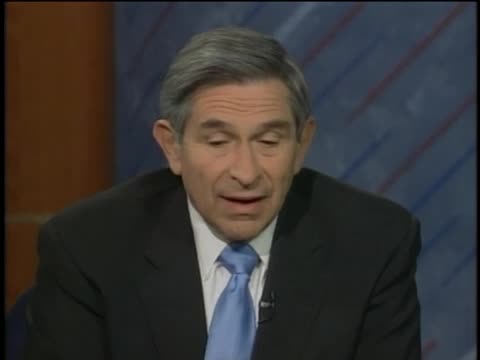
JIM LEHRER: Now to our Newsmaker interview with Deputy Defense Secretary Paul Wolfowitz. Margaret Warner spoke with the secretary earlier this evening.
MARGARET WARNER: Deputy Secretary Wolfowitz is just back from a five-day trip to the area devastated by last month's tsunami. He visited Thailand, Indonesia and Sri Lanka. Mr. Secretary, welcome.
PAUL WOLFOWITZ: Good to be here.
MARGARET WARNER: What is your assessment after being there of how the recovery is going, how much has really been accomplished?
PAUL WOLFOWITZ: An enormous amount has been accomplished everywhere and a lot of it is thanks to the ability of our military to get there quickly and to do things nobody else could do. I think it's probably not an exaggeration to say tens of thousands of lives have been saved because we were able to get food and water to people who otherwise would have starved or been dehydrated. But it's very different in different places. Thailand has already moved past the immediate relief and into recovery and, in fact, they're helping other countries in the region. That's at one end of the scale. India has got a huge problem, but they're largely self-sufficient. That's why we didn't go there. Indonesia, where I was ambassador, is also the one that's hardest hit in every possible respect. It's where the earth -- they had a record-breaking earthquake and then they were hit by the tsunami. The numbers are probably -- they're well over 150,000 dead or missing. And it's in a very remote part of the country, which is hard to get to in the first place and once you get there, it's hard to get to the people who need help. So they're still trying to provide immediate relief and the recovery operation is going to be a staggering task.
MARGARET WARNER: Now I gather the United States has, what, 16,000 troops in the region. How long do you think they'll be needed or wanted?
PAUL WOLFOWITZ: Well, they're starting to come down already in Sri Lanka. They're not going to be needed in Thailand much longer, except for coordinating a region-wide effort, which the Thais have been very helpful in. In Sri Lanka, we're, in some cases, doing things like delivering fruits and vegetables. That's -- They don't need us for that. In fact, we moved two of our big water purification units from Sri Lanka to the Maldives where they're more needed. But in Indonesia, there's a real need. And when you ask the question of are they wanted, it is stunning to me. I was ambassador there for three years and these are proud people, properly so. And they're people who are very suspicious of foreign militaries from any country, and yet they really open their arms to us. They've taken away all the restrictions that might have applied. They recognize that no country could have handled a task like this -- challenge like this on their own. And there was a little -- an indicator, I think, of Indonesian opinion when one politician came out and said our forces had to leave by March 26. That was sort of -- and the president himself, when he met with him and with many ministers, partly because it was the right thing to do, but I think also because they were reading. The Indonesian public was saying "Wait a minute. Don't ask the Americans to leave until we're ready to take over." They said "This is a timeline, it's not a deadline," and I think that's the attitude we've encountered.
MARGARET WARNER: Now while you were in Jakarta, you did say-- at least are reported to have said -- that you thought that the U.S. should ease up on some of the restrictions we've had between the U.S. Military and the Indonesian military, the ones that were imposed after basically the rampage in East Timor, what, in the early '90s. Why do you think it's time to change that?
PAUL WOLFOWITZ: Well, let me be clear. I also said those restrictions are there because of a real concern about abuses by the Indonesian military. And it's a concern now that -- not only our concern, but the newly-elected Democratic government of Indonesia shares that concern. And that's part of the context of my remarks is last September they had a remarkably successful free, fair presidential election. It was only the second in their history. This is a country that's moving in an impressive way, given the challenges they face, toward democracy, and they have a government committed to it. So I think it's important to help that government manage its own military. And now it's even more important to help that government manage this huge challenge of the humanitarian assistance. So I also said -- and I mean it -- this is something we want to consult with the Congress on because the views of the Congress on this are strongly felt, and for good reason.
MARGARET WARNER: Let me just ask you this. How would have -- and I should have explained what we're talking about in terms of a relationship - it's the supply of equipment and it's training -- how would resuming that help the Democratic transformation or help the government in Jakarta have more control over the Indonesian military? Could it have the opposite effect?
PAUL WOLFOWITZ: It could. That's why you need to calibrate these things carefully and why I wouldn't say we suddenly opened the door to unrestricted supply of lethal military assistance. No, but one of the things we've done is severely restricted the opportunities for Indonesian officers to train in the United States. And I think, in my view, and I care a lot about the human rights aspects of this, I can't say that every officer who is trained here becomes a human rights advocate. But the current president, for example, who is a Democratic reformer, was a military officer who was one of the last people trained here. I think we can have a more positive influence that way. I think there are certain things we can do and we're doing some of them now. The Congress doesn't prevent us from non-lethal assistance, and we've finally found a way to help them repair their transport aircraft so that they can get humanitarian assistance up to Aceh. That's a good thing, although it involves more contact with their military.
MARGARET WARNER: Do you think, as some observers in the region have said, though, that the Indonesian military is using this crisis as a way of actually tightening their control over the rebels in Aceh?
PAUL WOLFOWITZ: You know, this is the - if -- let's step back for a minute -- I think -- I mean, this is a tragedy, as people have said, of apocalyptic or biblical proportions. It's just enormous. We have a chance to give some meaning to that tragedy by moving to a better future, including particularly trying to move toward a political resolution of that problem in Aceh that you alluded to. If the military gets in the way of that, then the military should be pushed to get out of the way. But if the military can be brought on board and the Acehnese people, who are very distinctive people who occupy this one province in the extreme west of Indonesia, can see that their government and maybe even their military is able to deliver something good to them instead of just oppression, I think there's a chance to move to a new era that would benefit the whole region.
MARGARET WARNER: Let's change -- turn to Iraq now. Condoleezza Rice in her confirmation hearings has been grilled by some Democratic senators saying now that the search for WMD is over in Iraq and none were found, that she, they are saying, and other members of the administration really did mislead the Congress and the American public about the rationale for war. What is your response to that?
PAUL WOLFOWITZ: Part of me wants to say let's finish this war and the help the Iraqis build a new government before we get ourselves completely tied up in the past. But the past is important. Let me try to address that. Nobody was misleading the American public. If we were wrong, it was in no small measure because Saddam was misleading the whole world. This is a consensus. The view that Iraq had weapons of mass destruction was the consensus of the Clinton administration, it was the consensus of this administration; it was the consensus of many other countries in the world, including a number that opposed the war. But after Sept. 11 -- this is a little complicated, but I think it's important to understand -- prior to Sept. 11, the policy of the U.S. Government as established in a strong bipartisan resolution of both houses of Congress in 1998, seven years ago called the Iraq Liberation Act, was to support the Iraqi people in a potentially armed rebellion against Saddam. Sept. 11 came along, and suddenly we had to think about the possibility of weapons of mass destruction in the hands of terrorists with a completely different assessment of risks. And the president went to the United Nations; we discussed all the various things that were wrong with Iraqi behavior. It came down to saying, okay, in spite of all the suspicions in order to try to avoid a war, we will give Iraq one last chance. And the burden was on them to come clean, to declare everything they had and to not obstruct inspectors and they defied that resolution. At that point, the president faced a critical decision of how you weigh the risk.
MARGARET WARNER: But Mr. Secretary, people are familiar with that history. But the question is: Were you all moredefinitive about the existence of weapons than in fact the intelligence you were getting as it shows?
PAUL WOLFOWITZ: I don't believe so. No, the intelligence was very strong on all these points. And frankly, I think if I may say so, I think some of the critics now are a bit too definitive about what we've learned. They say there are no stockpiles found. Well, at least so far that's true. Let me finish, okay? So far, that's true, but does that mean no WMD? Look, the same report that they say has no stockpiles says that the Iraqi intelligence service was testing biological and chemical agents on live human beings. They didn't declare that to the United Nations. It's a clear violation and a serious violation of Resolution 1441. And from my point of view, it's more ominous in terms of Iraqi intelligence service working with terrorists than whether there were large stockpiles of chemical weapons. So I don't believe this discussion is helped by accusations of misleading. There was a very strong intelligence assessment which had to be taken seriously. If this -- turn around, Margaret. If we had been wrong the other way and if the threat had really been imminent and we had been hit with an anthrax attack here that was tied to Iraq and the president had done nothing about it, what would people then say? I mean, it would make the criticism of failure to prevent 9/11 just look like child's play.
MARGARET WARNER: All right. Let's talk about the Iraqi elections. Some of the Shiite politicians running in this election are saying they're going to press the U.S. if they win for a timetable for withdrawal. What would be the U.S. response if that happens?
PAUL WOLFOWITZ: Well, we've made it clear that if the Iraqi government wants us to leave, we will leave. But I think it is important to recognize that this is an issue that's got to be one of the most important ones being debated right now by Iraqis. And I don't think they fully know what their own mind is because I think all of them hope we will leave before too long. And I think a great majority of them don't want us to leave too soon. They don't want us to leave before they're able to take over. One of our generals told me about a mayor in a small town in western Iraq who said to him, "In my heart, I want you to leave tomorrow. In my head, I know I need you for a while longer." And I think that's the dilemma, and it's a dilemma that's going to be debated now in the way that democracies deal with these issues. And I think what they need to know is we are ready to stay as long as they need us, and we don't want to stay a day longer than they need us.
MARGARET WARNER: Finally on training Iraqi troops, Condoleezza Rice said today again that there are 120,000 Iraqi security forces. Sen. Joseph Biden, who has just been there, said he thinks of those, maybe 4,000 are essentially battle ready. How many of the 120,000 do you really think are ready to step into the place of U.S. forces when it comes to fighting the insurgency?
PAUL WOLFOWITZ: Well, that's a very high standard. I mean, although I would note that generally speaking their Arabic is better than ours, generally speaking their knowledge of neighborhoods is better than ours, and generally speaking if they go and search a house, they're probably less likely, at least inadvertently, to violate local customs than we will, so you can't do a one-for-one comparison. Are they going to be an equal match in a small-arms engagement to our troops? Probably never, but I think even if you take the very clear high end of those numbers, I mean, you can cut them in various different ways. And there's probably been a tendency sometimes to take the raw numbers a little too literally because the quality varies enormously. But they've put together, for example, something called the special police battalions, which have been doing some very effective counterinsurgency fighting in Mosul. We count in total around 120,000 now, but we're very aware that there are problems in the quality. One of the big problems is a tendency for soldiers to go AWOL and part of it's the problem that faces them.
MARGARET WARNER: It's a big problem.
PAUL WOLFOWITZ: It is a big problem, and it's one of the reasons why Secretary Rumsfeld asked Gen. Gary Luck, who has a got of experience, to go out there and look at what are the problems, how can those be addressed and how might we speed up the training.
MARGARET WARNER: So what do you think, if you had to give an assessment of when there will be sufficient, competent Iraqi forces that the U.S. can leave in large numbers?
PAUL WOLFOWITZ: That's a bit too high a bar to clear in terms of --. you're asking a prediction that, you know, it's a very wide range. What I think one can say with some real confidence though is that by the middle of this year or the end of this year, there will be a substantial increase in what Iraqis themselves can supply, and whether that's going to be enough to produce the result you're talking about; frankly from my point of view, what I care most about is that they can do the bulk of the fighting. I'm more concerned about bringing down our casualties than bringing down our numbers. And it is worth saying that since June 1, there have been more Iraqi police and military killed in action than Americans. They are fighting; they are dying, unfortunately, along with our people. But they continue to volunteer, they continue to fight. There's enormous bravery by civilians as well. I mean, people are voting, getting ready to vote in an election. When their children are threatened with death, when election workers are shot in the street, when people's heads are sawed off, I mean, imagine what we would do as Americans with that intimidation. Yet 7,000 people are candidates. I think it's tens of thousands the last time I remember, it's 80,000 who were working in election machinery. And millions are going to vote in the face of the brutality of this enemy. That's pretty impressive.
MARGARET WARNER: Mr. Secretary, thank you.
PAUL WOLFOWITZ: Thank you.
JIM LEHRER: Still to come on the NewsHour tonight: Tomorrow's inauguration; a security report; and second term-prospects.
FOCUS - CAUTIOUS CAPITAL
JIM LEHRER: Security is a huge priority and presence here in Washington for President Bush's inaugural ceremonies tomorrow. Kwame Holman has our report.
KWAME HOLMAN: On the eve of President Bush's second inauguration-- the first since the Sept. 11 attacks-- parts of downtown Washington have become almost fortress-like. Ten-foot high barriers line the park in front of the White House; 100 city blocks now are closed to traffic between the president's residence and the Capitol. Two heavily used subway stations have been shut down. Sharpshooters will be deployed on the roofs of all centrally- located buildings while bomb-sniffing dogs work the streets below. Police helicopters will hover overhead tomorrow, beaming live images from the scene. And anti-aircraft missile sites scattered around the city will be at the ready. In total, a 13,000-strong security force composed of 7,000 military and 6,000 police and Secret Service members will be on hand, some monitoring the site of the president's speech on the west front of the Capitol. They will stand by as an expected 11,000 people march in the inauguration parade from the Capitol Building, down Pennsylvania Avenue to the White House. Homeland Security Secretary Tom Ridge recently met with some of those security forces at an inspection arranged ahead of tomorrow's ceremonies. Ridge acknowledged that terrorist chatter is at a low point recently compared with the run-up to previous major events. But he pointed out that the nation still is at war. And with the high profile of a presidential inauguration, security would be the tightest in history.
TOM RIDGE: You can well imagine that the security for this occasion will be unprecedented. Protective measures will be seen. There will be quite a few that are not seen. Our goal is that any attempt on the part of anyone or any group to disrupt the inaugural will be repelled by multiple layers of security.
KWAME HOLMAN: Some half a million people are expected to participate in inauguration- related events. Most will be subjected to screening by metal detectors or security personnel on their way to the site of the president's speech or to a location along the parade route. The 250,000 passes for up-close spots along the route have been printed using special anti-counterfeiting features. Charged with keeping the crowds orderly is the United States Park Police. Chief Dwight Pettiford:
CHIEF DWIGHT PETTIFORD: We pride ourselves on being able to handle large crowds. That's something we've become very proficient at.
KWAME HOLMAN: Protesters also will be part of tomorrow's crowds. The National Park Service has given ANSWER, an anti-war group, an open space to gather along Pennsylvania Avenue a few blocks from the Capitol, and eight other locations have been set aside for registered protests. Unannounced groups also are expected, and authorities want to avoid incidents similar to one during the last inauguration when President Bush's limousine was hit by an egg. Watching over everything will be cutting edge surveillance cameras sending pictures to a specially-established joint command center in a secret location in northern Virginia. In addition to monitoring activities on the streets, officials at the center -- representing 40 federal agencies -- are tracking aerial surveillance data and checking sensors that test for biological or chemical agents. Coordinating the agencies for Thursday's inauguration and in charge of a response in the event of an emergency is the job of the United States Secret Service. Tom Mazur has been an agent there for 17 years.
TOM MAZUR: We have a wealth of knowledge. We've been doing this for years. And, of course, no matter where these events take place, we count very heavily upon our local, state, and federal law enforcement partners, the Department of Defense and all the other assets that are pulled in to make one of these scenes go by, to create this scene with a security plan that ensures a safe and secure environment for the president, our protectees, for the participants of the events as well as for the general public who may attend these events, and, quite honestly, the citizens of the affected area, like the citizens here of Washington, DC, in this case.
KWAME HOLMAN: Mazur acknowledged that creating a secure environment in a large swath of the downtown area has inconvenienced many Washingtonians and visitors here for the festivities. District of Columbia leaders agree. Its lone congressional delegate, Eleanor Holmes Norton, says the enhanced security measures have put both a physical and financial burden on the city. She points out that Mr. Bush's first inauguration cost the District $8 million, while tomorrow's will top $17 million.
DEL. ELEANOR HOLMES NORTON: This means we're paying, for example, the salaries and the lunch money for police who come from the surrounding area to help us keep the security what it should be during the parade and during the entire festivities. All of that is charged to the District of Columbia. All of it was always reimbursed in the past.
KWAME HOLMAN: The Bush administration did respond to the District's complaints. It told city officials that in order to pay for police overtime, security fences and parade route bleachers they should dip into their share of federal homeland security funds otherwise allocated for hospitals, fire-fighting equipment and transit command centers.
DEL. ELEANOR HOLMES NORTON: If we were asked to pay for the inauguration out of our Medicaid money or out of our money for mass transit, everyone would understand that that's quite inappropriate. It's worse to have to pay for the inauguration out of funds that have been designated for homeland security priorities to protect the nation's capital from terrorism.
KWAME HOLMAN: Looking ahead to tomorrow, the Secret Service's Tom Mazur said he hoped people would tolerate a few inconveniences for the sake of security.
TOM MAZUR: You know there will be inconveniences; we understand that. We've tried to minimize them as much as we can, and we hope for some understanding there and appreciation from the people who are out there. And, you know, their good common sense should come into play as well.
KWAME HOLMAN: And if people are forced to wait in long lines tomorrow or have trouble moving around town, Delegate Norton urged them to remember that the thousands of security personnel are simply doing their jobs.
DEL. ELEANOR HOLMES NORTON: They're taking orders from way on high. They are trained to be very polite. They're trained to answer your questions, and we're going to work harder and harder with them so that there's less and less inconvenience. And I think most people will be able to matriculate the system this time. I think the greatest problem is going to be not the security, but the cold.
KWAME HOLMAN: There were snow flurries in Washington today. The latest forecast for tomorrow calls for temperatures in low 30s during the president's speech.
FOCUS - SECOND TERM TEST
JIM LEHRER: And finally tonight, Gwen Ifill looks at the challenges that come with a second presidential term.
GWEN IFILL: It was a tough reelection fight for President Bush, but if history is any guide, the second term can be even tougher. As inauguration festivities got under way in the nation's capital today, we turn tonight to three former senior White House advisers to talk about the promises and perils of the second four years. Thomas "Mack" McLarty was President Clinton's chief of staff in his first term and was counselor to the president and special envoy to the Americas during the second term. Kenneth Duberstein was chief of staff in Ronald Reagan's second administration. And David Gergen served in the Clinton, George H.W. Bush, Reagan, Ford and Nixon White Houses.
And just because you've served in so many White Houses, David Gergen, I'm going to start with you. What is the biggest risk in the beginning of a second term for a president who has just won re-election and ought to be enjoying a honeymoon?
DAVID GERGEN: Hubris, arrogance. You can often fall into a trap as you enter your second term, Gwen. After your victory in the first term, people think you're sort of king of the mountain within the White House. But after your second term they think you're master of the universe. And it brings on a certain kind of quality of, you know, you can do anything you want; everybody is at your feet. And of course that's simply not true. History has made it abundantly clear that from the first days of the republic with George Washington who had a lousy second term and Thomas Jefferson, who had a very forgettable first - second term -- all the way through the 20th Century that second terms have proven to be - I can't remember any president whose reputation was as strong at the end of the second term as it was at the end of the first term.
GWEN IFILL: Mack McLarty, based on your experience working in the Clinton White House do you agree with what David Gergen just said?
THOMAS McLARTY: I absolutely do. Overconfidence in the second term can be such a detriment. And I would also say, Gwen, after agreeing with David fully on the first point, energy, renewal, getting momentum for a second term is also critically important. And sometimes those two emotions can work against each other.
GWEN IFILL: Give me an example of both of those cases where maybe overconfidence may have hobbled the Clinton administration in the second term and also where the energy may have helped.
THOMAS McLARTY: Well I think the energy in the Clinton administration was a continuation of a strong first term particularly from an economic standpoint with the deficit reduction, welfare to work and really having prosperity at home and peace around the world. It's different, it seems to me, with President Bush 43 in the sense that there's been such a focus after the tragedy of 9/11 on the war in Iraq and terrorism. So it's a different kind of dynamic. So that's one in terms of renewal. I think President Bush will broaden his agenda. And I think he should.
GWEN IFILL: Well, help me out with this. What was President Clinton's hubris in the second term?
THOMAS McLARTY: Well I think the hubris was perhaps the lack of discipline, a lack of focus in the second term and really building on the mandate really after the 1996 election and after the first Democrat to be re-elected since Franklin Roosevelt.
GWEN IFILL: Ken Duberstein, do you agree with the hubris point and can you cite examples from your experience?
KEN DUBERSTEIN: Well, I think the over confidence, the hubris is certainly the problem. You come into a second term and you almost feel like you're infallible, not just the president but more importantly the White House staff. And as David talked about Washington and Jefferson, let's just talk about since World War II, whether it was Eisenhower on the U-2 or Lyndon Johnson on Vietnam and Nixon on Watergate and Reagan on Iran-Contra and Clinton with Monica Lewinsky. You always had that first year, year-and-a-half where second- term presidents want in the ditch. But what I do reject is that second terms are inconsequential. I think they are very consequential. For example, in the second term of Reagan, we fundamentally ended the Cold War. We used the first term to build up so in a second term you could build down -- to do an INF Treaty, to do welfare reform, to do the Canada free trade agreement. So you have a momentum if you're bold but prudent. But you can't overreach. And I think that is one of the lessons that Bush has learned in a first term that I think will help him in his second term. You know, in the first term you're really campaigning for re-election. In a second term, you're campaigning for the history books. And I think that is a major sway on George W. Bush as he looks at Social Security, as he looks at tax simplification, as well as the problems internationally that he has to be bold but he has to act prudently as well.
GWEN IFILL: David Gergen, Ken Duberstein just mentioned Watergate, Iran-Contra, Monica Lewinsky. Is there an inordinate risk of scandal in a second term?
DAVID GERGEN: There is a risk of scandal in the second term. As Ken pointed out, it doesn't always come from the president and Iran-Contra, that was very much a matter of the staff going off the reservation, some cowboys, and Ken was one of the people brought in after that scandal, came in to help the president and I think rescued the Reagan administration in its second term. It was consequential in the end as he said. But a scandal often is a product of hubris. It is sort of the rules that don't apply to us. We're sort of above it. And that's what I think in part was Iran-Contra. But hubris can also reach as Ken suggested and Mack suggested to overreaching. And the most famous example of that in the 20th century came from the master of all presidents in the 20th century and that was Franklin Roosevelt who won this landslide for reelection for a second term and came in and tried to pack the Supreme Court in the first year of his second term and badly stumbled and had the rug pulled out from under him. Essentially the New Deal began coming to an end in '37 and '38, the first two years of his second term. I think part of this also, Gwen, is not simply what the response is within the White House staff and the dangers there but it's also a question -- you're a lame duck in the eyes of others, and so you know, even Lyndon Johnson, who had this massive landslide in '64, brought his team in and said, fellows, we've got 12 months because the power is going to start slipping away from us as our friends start running for re-election in the off-year election. And you've got this capital that's all built up in the second term but there are a lot of leaks in the bottom of the barrel in the second term and they come from surprising places.
GWEN IFILL: I want to ask you about that, Mr. McLarty, because if it's through that there's a 12- month to 18-month lame duck window, then how much does it matter that the president in his second term change the cabinet, change the staff? We've seen not a lot of change in White House staff but a pretty reasonable overhaul in President Bush's second-term cabinet.
THOMAS McLARTY: It's a natural rhythm, Gwen, I think for the cabinet to be renewed and changed. But I think most of the changes that President Bush made as with President Clinton and other presidents before President Clinton, they had been largely filled with people who had already been in the administration. So there is a certain level, I think, of continuity but I do think you have a beginning, kind of the middle years is what you're really in, in a second term if a president is fortunate enough to get that, and the end. This middle period is -- must be a productive one. And I think President Bush and his staff fully recognize that.
GWEN IFILL: You think this is the middle period right now.
THOMAS McLARTY: No question.
GWEN IFILL: Before true lame duck status sets in.
THOMAS McLARTY: Yes, although I would also say-- and I think Ken would agree-- lame ducks can still fly because President Clinton, for example, had the China accession to the WTO, a very important piece of legislation. Ken of course finished on a very strong note with President Reagan. So I wouldn't rule out that last 18 months but clearly from a history book standpoint this is a critical period.
DAVID GERGEN: You can do more internationally.
GWEN IFILL: Ken, I want you to follow up on something that Mack McLarty just said, which is if lame ducks can still fly, can they do it when Congress, now seeing that they don't have to worry about the president's re-election but do have to worry about their own re-election, can Congress be a hindrance to that?
KEN DUBERSTEIN: Well, of course Congress is an overhang and recognizing that they're on the ballot and the president is not. But I agree with both David and Mack. The first year, year-and-a-half of a second term can be consequential. Look at Reagan with tax reform -- the big domestic initiative of his second term. But also remember that a lame duck is not a dead duck. It's lame. What it means is that in the end those last two years, as the power is starting to drain out, you also rise above politics and you can get some things done that people would have questioned earlier in your administration, an INF Treaty. It was all the summit meetings with Mikhail Gorbachev. It was the Berlin Wall. It is fundamentally ending the Cold War. That was done when everybody acknowledged that Reagan was a real lame duck. But it also keeps the power in the presidency so that if, in fact, you're succeeding at the end of your second term, you can have some degree of help as far as electing a successor. At the beginning of Reagan's second term, everybody was dismissing that he could help re-elect or elect a Republican president. By the end, it became Reagan's third election when George Herbert Walker Bush was elected president, in large measure because of Reagan's last two years.
GWEN IFILL: David Gergen let's not take the duck metaphor any farther.
DAVID GERGEN: I agree with that. Drown the duck.
GWEN IFILL: But let me give you an example of something where Congress sometimes can be, even a Congress of the president's own party controlling both chambers, we saw the chairman of the House Ways and Means Committee say I don't know so much about this Social Security plan. We have other Republicans saying I don't know so much about the president's guesswork or immigration plan. Sometimes members of your own party can be the bigger problem even when you control both Houses.
DAVID GERGEN: That's what's really interesting, Gwen, about what's happened in the last few days. I think one of the two big surprises since the election; I think many of us felt there would be more healing in the country since the re-election of George W. Bush before this inauguration. And he comes in with a country that's still feeling raw wounds, emotional wounds from the election.
GWEN IFILL: And a 50 percent approval rating according to the Los Angeles Times.
DAVID GERGEN: And deep chasms between those who support the president and those who don't.
GWEN IFILL: Right.
DAVID GERGEN: At the same time the other surprise is there's a more restive Republican Party than one would have assumed. And Bill Thomas, the chairman of the House Ways & Means Committee, actually went farther yesterday in saying the president's Social Security plan as envisioned will a dead horse-- not duck-- dead horse.
GWEN IFILL: It's not a duck.
KEN DUBERSTEIN: Not quite, David.
DAVID GERGEN: And really said we have to move away from that. For the chairman of your own party of that Ways and Means Committee, this really powerful committee to say dead on arrival from a main initiative isreally -
GWEN IFILL: And Bill Clinton had a few more problems.
THOMAS McLARTY: In '93 when we first came to office we had control of both the House and the Senate. And clearly it was not a smooth road. Thank goodness for us and for the administration it was a successful road in terms of legislation but not a smooth one.
GWEN IFILL: Does that shrink the window then?
THOMAS McLARTY: It does. I think Gwen also you have an unusual situation. You mentioned the 50 percent approval. But also you have, I think, even perhaps more doubt or less certainty about the policies of President Bush. In our second term, I think there was a large agreement on the policies and direction in the country. I think that's another very important point as we begin this second term with President Bush.
GWEN IFILL: Ken Duberstein.
KEN DUBERSTEIN: I also think with this perpetual campaign people are already starting to focus on 2008. But in the Senate, in the Republican majority, people are already active in trying to figure out who is going to replace Bill Frist who has announced that he will not run for re-election as the majority leader of the United States Senate. So you have inside the Republican Conference itself the beginning of fissures as people start jockeying for position both in 2006 and 2008, let alone the Democratic jockeying that is also already taking place.
GWEN IFILL: Certainly.
KEN DUBERSTEIN: I think that complicates as an overlay on everything that President Bush is about to propose.
GWEN IFILL: Even though President Bush doesn't like to talk about the "l" word, that is, legacy. There is obviously some pressure on second-term presidents to worry about legacy or to position himself for legacy.
DAVID GERGEN: They don't talk about it, but there's no question that his team is dedicated to building a legacy. One of the differences between, I think, where George W. Bush is going and where some of his recent predecessors are going is he's not only trying to build a substantive legacy but clearly this is a party builder; he wants to leave his party stronger when he leaves. He and Karl Rove are trying to create a dominant Republican Party for the next twenty or thirty years in the McKinley model as we all know. And that's quite different. Actually, Democrats lost seats during the Clinton years and Republicans lost seats during the Reagan years. The Republicans have gained seats during the --
THOMAS McLARTY: The first time I believe in almost eight decades.
GWEN IFILL: How much time, Mack McLarty did you have to spend in the second term briefly worrying about legacy?
THOMAS McLARTY: It's not mentioned but I think you almost worry about it from day one of the second term because you see that's really the mandate of a second term of any president of what are you going to truly leave behind as your landmark.
GWEN IFILL: Mack McLarty, David Gergen, and Ken Duberstein, thank you all very much.
THOMAS McLARTY: Thank you so much.
DAVID GERGEN: Thank you.
KEN DUBERSTEIN: Thank you.
RECAP
JIM LEHRER: And again, the major developments of this day: A wave of car bombs in Baghdad killed at least 12 Iraqis. And the U.S. Senate Foreign Relations Committee endorsed Condoleezza Rice as secretary of state. The nomination now goes to the full Senate. We'll see you online and then tomorrow at 11 o'clock Eastern Time in the morning on many PBS stations with special live coverage of the presidential inauguration, and again here tomorrow evening on the NewsHour with full analysis of that event. For now, I'm Jim Lehrer. Thank you and good night.
- Series
- The NewsHour with Jim Lehrer
- Producing Organization
- NewsHour Productions
- Contributing Organization
- NewsHour Productions (Washington, District of Columbia)
- AAPB ID
- cpb-aacip/507-0v89g5gw3q
If you have more information about this item than what is given here, or if you have concerns about this record, we want to know! Contact us, indicating the AAPB ID (cpb-aacip/507-0v89g5gw3q).
- Description
- Episode Description
- This episode's headline: The Rice Hearing; Cautious Capital; Second Term Test. ANCHOR: JIM LEHRER; GUESTS: PAUL WOLFOWITZ; THOMAS McLARTY; KEN DUBERSTEIN; DAVID GERGEN; CORRESPONDENTS: KWAME HOLMAN; RAY SUAREZ; SPENCER MICHELS; MARGARET WARNER; GWEN IFILL; TERENCE SMITH; KWAME HOLMAN
- Date
- 2005-01-19
- Asset type
- Episode
- Rights
- Copyright NewsHour Productions, LLC. Licensed under a Creative Commons Attribution-NonCommercial-NoDerivatives 4.0 International Public License (https://creativecommons.org/licenses/by-nc-nd/4.0/legalcode)
- Media type
- Moving Image
- Duration
- 01:04:05
- Credits
-
-
Producing Organization:
NewsHour Productions
- AAPB Contributor Holdings
-
NewsHour Productions
Identifier: NH-8145 (NH Show Code)
Format: Betacam: SP
Generation: Preservation
Duration: 01:00:00;00
If you have a copy of this asset and would like us to add it to our catalog, please contact us.
- Citations
- Chicago: “The NewsHour with Jim Lehrer,” 2005-01-19, NewsHour Productions, American Archive of Public Broadcasting (GBH and the Library of Congress), Boston, MA and Washington, DC, accessed May 26, 2026, http://americanarchive.org/catalog/cpb-aacip-507-0v89g5gw3q.
- MLA: “The NewsHour with Jim Lehrer.” 2005-01-19. NewsHour Productions, American Archive of Public Broadcasting (GBH and the Library of Congress), Boston, MA and Washington, DC. Web. May 26, 2026. <http://americanarchive.org/catalog/cpb-aacip-507-0v89g5gw3q>.
- APA: The NewsHour with Jim Lehrer. Boston, MA: NewsHour Productions, American Archive of Public Broadcasting (GBH and the Library of Congress), Boston, MA and Washington, DC. Retrieved from http://americanarchive.org/catalog/cpb-aacip-507-0v89g5gw3q