Wall Street Week with Louis Rukeyser; 0330; A Trip to Your Neighborhood Brokerage House
- Transcript
Wall Street we produce LIVE Friday April 26. Your host for Wall Street Week is Louis Rukeyser. Our panelists are Frank Caprio Carter Randall and Julius Westheimer to light a Wall Street Week special. A trip to your friendly neighborhood brokerage house. Good evening. I'm Louis Rukeyser This is Wall Street Week. Welcome back. Well it's official now. President Nixon has told us that 1974 in retrospect will not be considered our all time favorite year and he certainly won't get any argument from the stock market. The markets sagged this week like a stretched sweater and the stretching was done by that sexy old time interest rate which keeps on growing at a pace that strongly suggests the presence of silicone injections. Up till recently the tape measure would never had to contend with a price. Rate the prime rate larger than 10 percent. That was the limit it reached in 1973. But now it burst right through that
boundary. And today one big New York bank laid claim to an 11 percent prime rate which does indeed raise serious questions of Buster Boone. The prime rate is of course the minimum charge to the most credit worthy corporations when they go to the bank to borrow. You and I will pay more and when the prime rate goes up stocks tend to go down as they did this week. First because more expensive borrowing normally means less borrowing and less business expansion and second because with interest rates this high the competition for money that might otherwise go into stocks is down right. Don't. And if that wasn't enough to discourage investors. There was another jolt on Tuesday when Con Edison New York's Power Company announced that it wouldn't be paying its dividend this time around. Utility stocks haven't had much attraction for high rollers for years but it was kind of comforting to think that at least they paid their nice dividends. Wasn't it elsewhere in the economic news the US reported its first quarterly
trade deficit in nine months. A report that could be spelled O R L. And some members of Congress presumably worried about inflation and announced that they thought it might be time for a tax cut and remedy that to many economists sounded like pouring kerosene on an inferno. Happier news. Well let's try to quicken the index of leading business indicators that the government assembles each month advance vigorously indicating that an upturn may indeed have begun. And the president while he was less than ecstatic about our current economic plight promised quick aid for housing and a year to make our forefathers proud in 1976 in the here and now though stick around for an unusual edition of Wall Street Week in which my special guest will be a brokerage house brought to you Through the miracle of electronic videotape. I think you'll find it interesting to see how it runs. First though let's see how they run on Wall Street in the week just past
the Dow Jones Industrial Average tells a story down every day but the last one a mild technical recovery occurred for the weekly index of 30 big corporations gave up more than 25 points to close at eight hundred thirty four point sixty four. And in case you have the feeling that the Dow is not doing a heck of a lot I might point out that it's been somewhere in the eight hundreds every day but one for the last five and a half months. It was the broader ravages that really got hit this week. The New York Stock Exchange composite index of all common stocks traded there closed at its lowest level since 1970 and even bigger declines for the week were posted by the American exchange an over-the-counter composite indexes. With so little interest in speculating to be seen it's not surprising to find our technical indicators turning very bullish. The Wall Street technical market index suggests one of two things a big market rally is about to begin or else the elves have been
hitting the brandy a little too hard. Meanwhile though we have a matter of justice to be done. A couple of weeks ago I read a letter from a viewer who claimed he had found a way to figure out the market lately. He did the opposite of whatever Frank Capra suggested. Now that I think that was slander. And we did promise Frank equal time and now I think he's entitled to have it. Frank what was your response. My response is some people are not going to like it and some people will. I'd like to give a special award to Philip fly out in San Francisco who wrote a very nice letter saying dump all the plastic and gold nuggets. This is not an index that your employer has taken to you. God I hope not. Frank you deal with the market every day. If we have an 11 percent prime rate how can stocks go up. They really can't low and the only reason that they would is the anticipation of buyers of stocks. Short term rates are going to peak out in here and go down and I think there was some anticipation
today that an 11 percent prime is close to the peak and that maybe we should start buying stocks. I personally think that 11 percent is the peak but you know author Burns has been showing a lot of steel in his comments lately and to ask him Is your mental disorders are he couldn't get influence these days. He certainly could buy the Fed's Open Market policy by what they allow in terms of rates and flow of funds to the banks. He reaffirmed his intensity in terms of fighting inflation. To me this week when they raise the discount rate the rate that the banks are charged by the Federal Reserve. But I think you suggested 11 percent maybe the peak we had very different predictions in the same days as John Buntin the Philadelphia banker said it would go to 12 percent. The First National City Bank in New York suggested that we might be down to 6 percent by late summer right. Do you think we may have that kind of descent. I think once it comes it could be quite precipitous. Do you visualize a 12 and 13 percent prime load. I think you've got to realize what the prime does to these small medium sized borrower the corporation that has 30 or 40 million
dollars in sales not the GM but the smaller corporation and to him he's borrowing based on pride but it's a couple points over and he has a compensating balance arrangement which the bank keeps a little bit of the money and loans out the rest so the effective rate to him an 11 percent prime is 15 percent and that no one can make that kind of interest payment make any money. CONAN And you're one of these nasty bankers who keep raising these interest rates do you agree with Frank that we are about at the peak. I think we're very much at the peak and you know we've been talking about problems so much in the last several weeks interest rates inflation political problems General Motors earnings down 85 percent in the first quarter eliminating the dividend. We're overlooking one thing I think. And that is the fundamentals of stock prices related to earnings. They're very low even on projected earnings and this will in due time correct. I believe we're hitting some kind of a
crescendo on the downside. It may last a little longer. But I think the Wall Street index is right for the wrong reason. I think that fundamentals will out and I think that prices will begin to reflect it. Remember one other thing it's understand it's not quite as a fundamental as when you agree with the technicians you say they're right for the wrong reasons is that they're right for the wrong place and I think one other thing for the first time in two and a half years corporate management has some control over his destiny. That is they can adjust prices to costs for the first time in two and a half years. This is a big item for the next 12 months. It was suggested by a panelist on this program last week that contrary to what you just said that in fact price earnings ratios will get lower because of inflation. Do you think that we have seen the picture that I disagree with that I think price earnings ratios will expand because people will once again realize that
stocks are really long term are a hedge against inflation. It's only in the bubble bursting of inflation such as we've been having recently that they're not a hedge. They are the only hedge available to every man woman and child. I'm sorry. Thank you very much. You know little problem with sound on this program. If the installation was done by CBS Joyce would do is west time as the only working broker on our program tonight. You have to deal with people every day. There was a little more volume in the stock market this week. Did you have a more volume and your office very little as I was telling Frank before the show there's not been enough volume in the last two or three weeks to keep the brokers busy at all. And I think one of the reasons for this as both of these men have just stated are these exorbitantly high interest rates. You go to parties now for church suppers or cocktails and people all of a sudden aren't talking about stocks anymore they were four or five years ago when
stocks were very high. But all of a sudden now that stocks are a good buy at least I happen to think they are. All you hear is Treasury bills and certificates of deposit when it might be just the wrong time to lock your money up in them forever. It might be a good time to buy stocks. I think what this shows is that the public like the rest of this is human and frequently likes to buy things when they're high and sell them when they're low. OK. Now usually at this point the program we pause to answer a few questions from our viewers. But since tonight's visit to a brokerage house is in a sense one long question and answer session we're going to skip our regular segment this week but we'll be back at the same stand next week so if there is something that's baffling you about the world of stocks and bonds please do send your questions along to Wall Street Week Owings Mills Maryland 2 1 1 1 7. That's Wall Street Week Owings Mills Maryland. 2 1 1 1 7. And next week we'll be answering them as usual. Tonight though it's time to turn to a special guest who has made not a flesh and blood but of hopes and dreams in mind
with just possibly a little green throwed in his well. We thought it would be interesting just the once to make a typical brokerage office our special guest of the evening to see how it operates who does what and why and how you could use that knowledge to help yourself understand more about what it takes to be a successful investor. And earlier this month we set out to do exactly that. There are about 4000 brokerage offices in America which is incidentally only about 20000 short of the number of hospitals the office we picked is reasonably typical of the big city brokerage operations. And besides it happens to employ two men who have appeared as Wall Street Week panelists Bob new Iraq and Bill waters. I first went to see Bob because as what used to be called a customer's man he represents the industry's front line to the public. Again I live here every night and I saying you you know how many executives are registered representatives or whatever you call yourselves.
I have what most people think of when they talk about my broker you have the right people but. The average person thinks of as representing the industry. How many customers isn't broken on the deal. Lou I think normally most established brokers probably have about 400 accounts I would say that I probably have about four to 500 accounts like the socialist in New York. Almost when I was should should point out I think that most of those accounts are not active and I probably have about 80 to 100 accounts that give me business saying that once every six months or so does that count as active. I would say so in other words a client who buys and sells a security at least one time within a six month period probably will keep my most active list. To most of those customers buy for cash. What percent of you said buy on margin of the active accounts about 80 percent I think would be on a cash basis about 20 percent on margin but once again those accounts that are in margin are usually more active than the other ones and consequently they represent a larger proportion of business. Right now the margin accounts which of the accounts where the firm is lonely and part of the
investment must be quite a lot of bookkeeping don't they do you do that yourself. Yes I try to keep accurate records as far as purchases and sales keep up to date with monthly statements. However we do have a margin department that. Has accurate records on a day to day basis as to the condition of the accounts such as the amount of money that they owe us their equity in the account and their buying powers. When people get these scary telegrams the brokers tell me to put up more money that comes from you if you click. The telegrams or the notices come through our accounting department but we as account executives are responsible for the collection of those funds. One of the complaints we get from a lot of viewers is that they almost never get a sell recommendation from a broker. Now do you ever tell your customers to sell. Lou I have to say that probably the most difficult job as a broker or even as an investor is related to making a sell decision I think one of the real problems is one of overcoming your own ego and sometimes admitting that you've made a mistake if a stock is going against you or admitting that you're not going to be greedy and look too much for a profit so
consequently making a decision to sell is much more difficult. How much interest do you really take in the financial condition of your average customer in the world if you have a hot stock tip but there are some people that you would give it to and not the others. Lou a lot of times the question of in most cases a question of suitability is a major factor. And that as a recommendation has to be suitable to the client's objectives. So you may not be what you want to make money. Yes everybody does but sometimes you may have a stock that looks very attractive but it entails substantially greater risk than other situations and you don't want to recommend something like that for a widow for example who cannot take. The financial risk involved. What should a customer do if he thinks he's not getting decent service from your broker. Well I think it's a very important thing that he received proper service and if he's unhappy with what he's doing he should speak to the manager or the managing partner of the firm with which he's doing business. And suppose somebody is thinking of investing but doesn't have a broker. What happens to them when they come to an office like this one. Well if they were to walk in the door most likely in this case they would go to our receptionist who would
then refer them to one of our younger brokers who are new in the business we're in a list of what we call the broker of the day she would call the broker of the day. Or there may be one or two of them called one of them on the phone and refer. The new potential client to that was the old joke in Wall Street's always been where are the customer's yachts. How wealthy does the average broker get what a match what's the incumbent average throughout the industry I would say that the average broker probably is making around 20 to $25000 a year. Some make a lot more than that. That's exactly right and I think it's very very deeply related to the length of time that you are in the business and your ability to establish yourself. Can anyone call themself a broker and start with a desk and a telephone what you have to do to be a problem. Well wouldn't first of all to sell securities over interstate lines you must be registered to the National Association of Securities Dealers for one thing. In addition if your firm is a member of the New York Stock Exchange you must be registered with the New York Stock Exchange to pass an
examination which qualifies you for this. While I was talking with Bob a customer called we got his permission to follow their conversation. I see American telephone as forty nine and a half less forty nine and three eighths bad offer that I have okayed by a hundred telephone in the market. Just a minute let me get your account page. Hold on a minute John. This is for the single account isn't it. OK that's fine. OK John that's. 100. American telephone. At the market. OK thanks a lot. Someone. You know about and you're going to send that order anyhow this gives us a good chance to watch a typical transaction and see what happens to an order like that in. The order of Bob rode out rides in a pneumatic tube to a back room. From there it will be
transmitted to the New York Exchange. But one of the company's floor brokers will buy 100 shares of American Telephone and Telegraph at the market. Which means as cheaply as it can be done. First though the time of receipt is stamped on the order by a clerk who then carries the order to a teletype and. The teletype this can send directly to one of the company's machines on the exchange floor which means that the entire transaction will normally be completed within a few minutes. Obviously accuracy is at a premium at every step along the way. However is that it has to make good can be costly to the company and so once he is prepared the teletype tape the transmission. The clerk first checks it against the original order slip to make sure no mistake has crept in. Only then does she send a message to New York. The formal notification that the order has been received and executed in telling it what price will eventually come back from New York on another teletype machine. In this case the customer got his 100 shares at 49 and a half. The
total price. Forty nine hundred and fifty dollars. Even earlier he would have had a clue when his transaction with reported on the broad take. And how much commission will a man have to pay on top of that commission would run around seventy two to seventy three dollars on a transaction of that size. How much of that commission would go to the individual broker brokers throughout the industry are probably paid in the range of twenty to twenty five 30 percent. Here I would get approximately 23 to 27 percent depending upon my total adjusted compensation at the end of the year. You penalized if a mistake occurs in an account. Yes that's another thing that we are responsible for and that is any errors that we might make such as substituting the wrong symbol for a stock it would cost us money were charged against our potential bonus as well. Who is your immediate supervisor you are my super supervisor is Joe Welch our sales manager in his office is right in here. Joe is a sales manager for the office what do you do. What I try to do is directly a sales record in the office to help my men handle the retail accounts and they are dealing with with their individual customers.
I also occasionally talk to a customer. And try to help with any problems. Many people complain that their urge to buy all the time including times on the market is falling. Is there pressure on the brokers to get people to buy even at times when perhaps they should be selling or staying out. We don't exert any pressure on our brokers and I think I can say that all our fellows realize that they are in this business for a long time and a way to be most successful and make the most money for themselves is you can keep the customer's best interest at heart and more money you make for the customers eventually the more you make for yourself. How much authority do you exercise over the individual transaction but between brokers and customers what do you how do you as a sales manager enter into that. Only very seldom do I get directly involved. What I try to do is point out the attractiveness of an offering to our men and then they have to generate their enthusiasm and deliver that Suzy
as into their customers enthusiasm of course is sometimes a hard commodity to come by in the stock market and not just among the so-called little men but among all the firms prospective clients. In recent years an ever larger share of the market trading has been done by institutions. And they rate a separate movement. And special attention. Bill in this room you deal only with institutional climes. What services do they get that you don't provide to the individual investor. Well the institution is a highly specialized thing and their needs are quite different from the individual investor. Institution in many cases is dealing in large blocks of stocks. Where the individual would not be an institution. Requires clock handling capabilities of the broker. They require specialized research help. And they require a number of things in order to better serve their clients many of whom are individuals and are well. Do you give your recommendations first to institutional customers who they don't have individual at the same time.
No it's our policy that we do not give recommendations to institutional clients prior to individuals they must go out of the same time. So what you're saying is that the basic problem of the prism from the individual is that they have more stock to buy and sell and you help in disposing of it or buying it without that's affecting one of the problems yes. One of the other problems well they're at their research names are quite different and if the individual does not have to delve into the situation to the to the same degree that the institution does. And while we put out their research report at the same time there a research report that goes to the institution will probably be much more detailed her research report that goes to the individual. Providing the balance between institution. And retail business and doing it in a way that will send the customer away man. Has been one of the industry's wadis challenges in recent years. It's like all such problems eventually comes under the jurisdiction of the manager of the branch office in this case Bill waters.
Bill we know that anyone can walk into this or any other brokerage office and asked the receptionist to refer him to the broker of the day in effect. But I often recommend to people if they don't have a broker that they asked to speak first to the office manager has an idea of what you would approve by all means Lou but the only way an investor can can let us help him help himself make money is to tell us what his objectives are. And it's better for me as the manager to sit down with the individual and try to establish these objectives because then I can select the right broker on my staff who is best whom to serve as this individual. So I encourage this very much so what should the customer expect of his or her broker professionalism in one word in several in terms of looking at the firm the individual should make sure he does business with a firm of sound capital and reputation. He should also do business with a firm that offers the services he needs he the individual to satisfy his invest injectors and then with respect to his individual broker he should look for a good listener someone who's interested in him and will be patiently interested in getting his objectives on the table
before he recommends the right investment. I'm going to customer judges brokerage office not the obvious way is making money but is there any other test. What else can the customer expect at this office. Well I think the most important thing aside from the making money which is is number one is does the brokerage office provide the services he needs to meet his objectives. And that's the key. Our job is to help the customer determine what his objectives are for his money and then we have to be in a position to have the resources available to tailor the right investments for his objectives. Well what advice would you give someone who had never dealt with a broker and was vaguely thinking about it. I assume the advice would not be don't you know it would not be don't in fact now it more than ever I think it would be due before a person comes in and buy securities Lou I think it's very important three things are squared away first in his own life. 1 Does he have adequate housing. Does he have an adequate insurance program to protect his family against anything to happen to him self in three. Does he have a cash reserve for emergencies.
And then he should put his discretionary dollars to work to encourage more people to do just that and do it successfully is the job of your friendly neighborhood brokerage office. Well that's the house and those are the goals but how well is the typical brokerage house meeting its responsibilities. What do you think Frank Cappiello. I think reasonably well Lou considering the state of the industry they can't do very much in forward modernization at this point without some amount of nations and without an increase in volume. We need a better business in order for them to do much better than the stock market. Yes and there are some ways you can do that and one of the ways is a tax break for the average investor that's for another show. OK that's interesting but that's a course that would be in the house would encourage that but it would be responsible for it right. What do you think. Lou I think the brokerage business is becoming much more responsible. I think it has sobered up if you will. There was very little speculative advice being given to investors nowadays when you know there were good research being
done for both individuals and institutions. I applaud the brokerage industry they have cleaned house they really have. You have often spoken on this program about suitability about people buying into investments making investments in a right for them. Yes you think that the average broker paid enough attention to this. No I think this is a failing and I think this is one place where really knowing the customer is a very important thing. What's a good investment for you. Julius is not a good investment for me for all sorts of reasons. Joyce I think we have to turn to you at that point. All I can say is that we in the industry do the very best we can. And my advice to our viewers would be to pick a broker with intelligence but above all integrity and then follow the brokers recommendations knowing that he puts his pants on one leg at a time just like everybody else. But he studies it day and night and the odds are with the broker. If the customer will give him his utmost support rich broker there was the best they make money.
The ones who make the most money. But you know when they put their pants on one leg at a time the rich brokers have better quality material maybe that's the answer always. But I want to thank you all for joining us tonight and I think we have to stop at that point there and live grateful for the appearance of people both live and on tape. And I'm especially happy that you joined us and I hope you'll be with us again next week when we turn to what's now the market's number one question what's going on with the utility stocks. My special guest will be William reviews a top Wall Street authority on the utility industry. It's a business that affects us all whether we crave its dividends or just pay its bills and we'll be trying to shed some light as to where the power lies. So switch is on. Meanwhile there's been Wall Street Week. I'm Louis Rukeyser good night and I. If you would like to obtain a written transcript of tonight's program send $1 to Wall
Street Week Owings Mills Maryland 2 1 1 0 1 7. That's one daughter to Wall Street Week. Owings Mills Maryland 2 1 1 1 7. Please allow 4 to 6 weeks for delivery. Residents of Maryland Please include four cents sales tax. Wall Street Week is produced live in the studios of the Maryland Center for Public Broadcasting.
- Episode Number
- 0330
- Producing Organization
- Maryland Public Television
- Contributing Organization
- Maryland Public Television (Owings Mills, Maryland)
- AAPB ID
- cpb-aacip/394-042rbvm5
If you have more information about this item than what is given here, or if you have concerns about this record, we want to know! Contact us, indicating the AAPB ID (cpb-aacip/394-042rbvm5).
- Description
- Episode Description
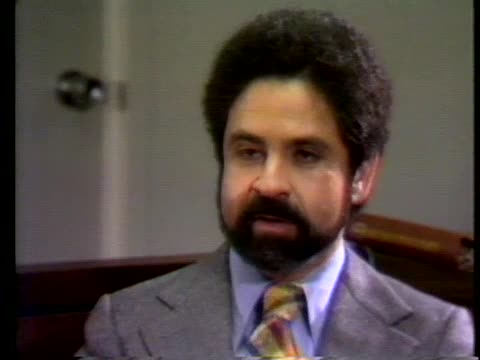
- Interviews with Robert Nurock, William Waters, Joseph Wetsh and William Knoblock. Frank Cappiello, Carter Randall, Julius Westheimer - Panelists (2 copies available)
- Series Description
- "Wall Street Week is an educational talk show hosted by Louis Rukeyser, who provides viewers with information on finances and the economy and conducts discussions with experts. "
- Broadcast Date
- 1974-04-26
- Asset type
- Episode
- Genres
- Talk Show
- Media type
- Moving Image
- Duration
- 00:28:26
- Credits
-
-
Copyright Holder: MPT
Producing Organization: Maryland Public Television
- AAPB Contributor Holdings
-
Maryland Public Television
Identifier: 45509.0 (MPT)
Format: Betacam: SP
Generation: Master
Duration: 00:26:46
If you have a copy of this asset and would like us to add it to our catalog, please contact us.
- Citations
- Chicago: “Wall Street Week with Louis Rukeyser; 0330; A Trip to Your Neighborhood Brokerage House,” 1974-04-26, Maryland Public Television, American Archive of Public Broadcasting (GBH and the Library of Congress), Boston, MA and Washington, DC, accessed April 1, 2026, http://americanarchive.org/catalog/cpb-aacip-394-042rbvm5.
- MLA: “Wall Street Week with Louis Rukeyser; 0330; A Trip to Your Neighborhood Brokerage House.” 1974-04-26. Maryland Public Television, American Archive of Public Broadcasting (GBH and the Library of Congress), Boston, MA and Washington, DC. Web. April 1, 2026. <http://americanarchive.org/catalog/cpb-aacip-394-042rbvm5>.
- APA: Wall Street Week with Louis Rukeyser; 0330; A Trip to Your Neighborhood Brokerage House. Boston, MA: Maryland Public Television, American Archive of Public Broadcasting (GBH and the Library of Congress), Boston, MA and Washington, DC. Retrieved from http://americanarchive.org/catalog/cpb-aacip-394-042rbvm5