New Mexico in Focus; 2021; Los Duranes Community Center
- Transcript
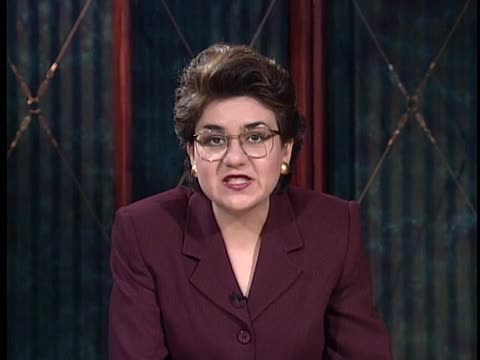
You Community centers like this one are helping people with few educational options find new career opportunities. Find out if lawmakers find their mission worth supporting. Next on Infocus. Hello and welcome to Infocus. I'm RC Choppa. The legislative session will be over in two weeks and still lawmakers are haggling over the state budget and school vouchers.
We'll have the latest from the roundhouse a little later in the program. But first lawmakers this week will also be deciding whether to fund community-based educational centers. Additional funding will help create education access rooms at 10 of these centers across the state. In a moment a discussion with Mayor Jim Baca, APS Superintendent Brad Allison and State Representative Dennis Peacrew. But first this background report. The tables are empty right now, but in an hour this room will be alive with activity as senior citizens from Los Duranas arrive for their daily meal. The mural in the background is an agrarian scene that depicts life in the North Valley more than 50 years ago. It is a stark contrast to the daily hustle and bustle that is the norm here at the Los Duranas Community Center.
It is a hub of activity where you can find people of all ages looking for educational opportunities to improve the quality of their lives. I think it's really very important because the center works with people that are around the community specifically, whether it be adults, seniors, kids, high schoolers, who remember, who have the opportunity to come over here rather than go through what the regular curriculum could be at high school or other places. Jose Griego is an AmeriCorps VISTA volunteer. He supervises the learning activities and recruits volunteer tutors. I'm my lab instructor, and I work with kids from ages, 17 to 14, as well as high schoolers that are sophomore, senior, high school, and adults that are trying to get their GED. Recently, the Los Duranas Center was selected as one of 10 community centers in New Mexico that could receive state funding for the purpose of enhancing its educational components.
Specifically, the creation of education access rooms. These rooms will include separate areas for computers, parent training workshops, and televised distance learning. The proposal will help to provide with the state of the art computer's internet access access through Channel 19, which is the telnet broadcast system. Also, the VISTA volunteer in itself is one of our things with the VISTAs. They're very good resource people, as far as doing referrals out, knowing where the services are, knowing where hidden money's grants, scholarships, things to help send people to schools, things to help people benefit with their education. APS will do its part by providing workshops that will teach parents how to get involved in the education of their children. I think it's about most important, and the research backs that up. We find that if parents are involved in any of the different levels, there are different levels of parent involvement that the children's success rate goes up exponentially. So, I really am an advocate.
I think we need to touch base with some of the people that have very little options or choices, and this is a great way to get in touch with them. Joining us from Santa Fe to talk more about this is Representative Dennis P. Crew, and here in Albuquerque, Mayor Jim Baca, and APS Superintendent Brett Allison. Thank you, everyone, for joining us. Let me ask, first of all, how important is it that this pilot project succeeded? It is a pilot project. Only 10 community centers are going to be involved at this point. Why is everybody supporting this? Well, I think once we get the money, if we get the money, and Dennis probably can tell us where it is right now, it's important that it succeed because I think as the gentleman just said, it gives one more option for education. And the more options you give, the more people are going to take advantage of them. To me, that's what's most important about it. Being a mayor, utilizing our community centers in another way is also very important. Those community centers, I think, in the past, have not been responsive enough to the things that really, really are important. We are needed in some of these areas of the community centers service. And so, we're expanding hours, we're doing all sorts of things during Christmas vacations and things like that. To better utilize them, this is one more way of doing it.
And part of the component is, of course, distance learning. There are computers there already. Why, how would this be any different? And anybody can answer that question. Representative P. Crew, if you could answer that question. Yes, thank you. And hello, Marcy. The differences here, we have almost a concept of community-based education. From our point of view, especially with distance learning, this is adults who either need to take some brush-up classes or take some pre-college classes and move into a TVI program or a UNM program can actually get those programs right there at the community center. So, what we're trying to do is make community-based education for people so they can really move on with their lives, get better jobs, better pay, and we will help provide with the money we fund folks to be there to help with the technology. In case your computer doesn't do what you expect it to do, to help if you don't understand something, to actually help with the subject matter, provide the child care. That's what a community center can offer.
You don't have to worry about going to a class three times a week at nine o'clock and then what you do with your child and what you do with your job. So, it supports services and it's technological training for an education that really adults will be using for their own jobs and their own lives. Where is the bill at this point? Well, right now it's in house appropriations and finance. It went through house education with a due pass. It's in appropriations because we have to finish the budget. First, we're doing the education budget, the general K through 12 budget and that should be through the legislature probably today and onto the governor and he will have three days from the time he receives it to sign or veto it. Then we'll be doing house bill two. This is a new program. We have to understand that and a new program means it's an add on after we make sure our agencies and our other ongoing programs are funded. So then we say how much money is available and what shall we fund. So I am pushing for a new program. I hope viewers out there who think it's a good idea will let their legislators know. But that's what it means. It comes after the existing programs.
I want to ask you, why did you think it was a good idea and what did you sign on for this? I signed on, I've been working actually in distance education for years doing it for colleges, doing it for the two year schools, putting the elements of it into all our libraries and now into the community centers. What I think is people learn when they need to and they want to, they're tremendously motivated, put the education into their community. Once you're an adult, you just can't say I'm going to be able to move my life all around to take that one course I need or to get that degree. And I think the education is the future. That's what we will have to be a really exciting community in place to live. Superintendent Allison, why is APS embracing the concept of educational access rooms? I think it's in part, it's the wave of the future. We're going to see more and more people learning and sites other than schools. And I think that we're looking at a world where education never stops. You don't get your degree and stop learning.
So to make it convenient for our customers is extremely important. But does this help APS also with your educational goals? I think it really does, it absolutely does. We have people who don't want to come to school but will come to community centers that they're more comfortable with. People who want to take courses, people who dropped out of school who are coming back to school to take courses through distance learning. I think those are all advantages for our system. Now your role in this partnership is to provide parent involvement, some workshops in that. Why is that important? Well I think if parents get involved in it, the community gets involved in it. If parents are involved, their children are involved. It's a three-legged stool, students, parents, and the school district or teachers. They all have to play a role in this. Mayor, what do you think about these community centers? Do you think that they could help with the educational outcomes in schools? Absolutely, especially something that Dr. Allison touched on and that's the dropouts. It gives them another option to get back into the educational mainstream. And maybe they'll start here and maybe they'll go back to traditional school but all the way around I think it's something that's really good.
And also it gives mentors a chance to get to work with some of these people. Mentors can make a big difference in people's lives and that's why I think it's a real positive thing. One of the things that we haven't talked much about is the distance learning component of this whole thing. How important is it that Albuquerque and also the rest of the state provide distance learning for individuals across state? Do we have a lot of people who need that service and who need to get their GED? I guess I could address it to Representative Peacrew. It's more than just the GED. It's really a chance to get your college courses over the internet. It's a chance to go to school where you live and where you work. Once you're outside of Albuquerque, you don't have colleges and universities clustered around you. So being able to go to a local library or a local community center, that gives you an opportunity to fit it into your life and from there you're on your way. Representative Peacrew, what are the chances this will become more than a pilot program? I think the chances are very great if we can get the funding this first year because I think it'll be successful and we will create actually the blueprint, the pilot, for how to put it together we'll deal with any pitfalls on a very small experimental basis.
And this can just go around the state and that's why we are using libraries and other facilities. We are actually equipping them so that they can receive these kinds of courses and through the various universities we can broadcast these courses. I think it'll be great. We just have to start off small and work it out. When will you know whether this has been approved? Well, I'll probably know in a few days if it goes into the budget, but then of course the governor could veto it. I see the concept of community centers good for the state. Absolutely. Community centers can be a big part of a person's life, especially the elderly and the young. And I think it's something that we should continue to do. You know it's an expensive thing to do, but it's well worth it because I think the payback comes in later years. And I would add that more of our schools need to be also community centers because we have them in neighborhoods and they're available after school hours and they need to be connected to what's going on.
Well, we'll have to wait and see what happens. Thank you everyone for joining us. Thank you. Thank you. Joining me now for our weekly roundhouse wrap-up is Steve Lawrence, editor of Crowd Swins Weekly and Max Bartlett, executive director of Revisioning New Mexico. Thank you for joining me today. Max, I want to start with you. Last week we were talking about vouchers and the governor going to stick to his guns. Now the Democratic Control House Education Committee voted nine to six along party lines to table it. Is it going to go anywhere from here at this point now? Well, my sense is that it probably will not go anywhere from here. I'm not sure that the governor is entirely willing at this point to give up on it yet. But as we've been talking about for some time, actually since the state of the state had addressed back in the middle of January, it just doesn't look like this really has a sufficient base of support to go anywhere. And it does represent such a dramatic change. It's important to know that no other state have done this.
There are in fact only two cities in the United States that have anything comparable to this. And to try to figure out how it would work in rural New Mexico is, I think, just to mind-boggling to consider. More than that, the governor was clearly talking to the wrong people and trying to drop support for this. He went tooling off to Las Cruces and around the state talking to people if he really wanted to drum up support. And he needed to talk to the men and women who were voting on his bill. Well, what I found interesting was that he was for it. He was pushing it very hard. And then he stepped back on it. And then he came back and said, no, I'm going to stump the state and promote vouchers. And I was reading earlier that this is a national Republican agenda to pass vouchers and charter schools and tax cuts. Do you think that that's why he's still maybe sticking to his guns with this? Well, he just came back from a governor's conference. I forget. Yeah, so this was a call actually. That was between the time in which it looked like he'd thrown in a towel. And then when he came back and announced he was going to... That's right. So maybe he got juiced up talking to all the other governors.
Well, what else is going on at the legislature this week? Who wants to date that one? Well, I want to talk for a minute. Crosses Weekly has got a cover story this week on Megan's Law and the glaring holes in it. Megan's Law is going to pass in this legislature and the governor has said he was going to sign it. And the leadership in the House and Senate have been really patting themselves on the back about this law. And I talked to Raymond Sanchez earlier this week and he said it's a strong law. But it's not a strong law. Explain Megan's Law for those who know. Megan's Law is the registration of sexual offenders and the dissemination of that information to the public. It's really giving the public the tools to be aware when sexual offenders move into their neighborhoods. And because this law is so weak, there's some evidence that there's a network of sexual offenders in this country. This is not confined to just children. Megan was a seven-year-old who was raped and murdered in New Jersey. And they passed a disclosure law by a man who was known to the police but not to the community. And the feeling was that if the community knew this, that it would have the weapons to help combat these kinds of crimes.
The Supreme Court ruled this is not double jeopardy that these laws can be retroactive. They can apply to people who committed offenses in the past and still not be unconstitutional. And we are the last state in the union to pass a Megan's Law. The federal government has issued guidelines for what they require of a Megan's Law in order to give states federal money for law enforcement assistance. Our law is not going to qualify. It doesn't look. It looks like. It's weak enough that it doesn't meet the federal guidelines. It doesn't include kidnapping and false imprisonment, which is what the feds want, which is generally part of a sexual abuse crime. And it's sometimes a plea bargain down from a straight sex abuse charge. That's one of the holes you found in your investing report. It's not retroactive. It applies to only people convicted after July 1999. So for all practical purposes, it exempts everyone who's convicted a sex crime in the 20th century. These cases take a while to go through the courts. People will not be convicted probably until they're charged in July.
They won't go to trial likely until the end of the year and be convicted until the year 2000. So it exempts that whole class of people. It does not apply to offenders under 18 who are a large percentage of offenders. There are a whole range of holes in this law that make it dramatically inferior to those in other states. So is it going to pass in this state? It's going to pass. It looks like it's going to pass with all the holes in it. And it means that we're liable to lose out on the $400,000 in federal money has been widely written about. But there's another $150,000 a year for hiring extra police under another section of federal law, which once that's gone, we can't get that back. There's no way to qualify for it. It just gets sent out to other states. And it looks like we're going to lose that too. This is according to Megan's father who I talked to yesterday. Max, let's move on to what's going on with the legislature. There are vouchers aren't going to move, but what is going to be moving?
Well, there are a number of bills that I think are very fascinating, that are in fact moving through the legislature that have passed already at least one house. And are having hearings and committees in the second house, but look like they will end up on the governor's desk. There is a bill that is called the Mental Health Parity Bill that would require insurance companies to treat mental illnesses the same way that they treat physiological illnesses. This is an issue that Senator Domenici has been a leader on nationally, and that has passed the Senate. There's a bill called Education Works, which would make it possible for people who are coming off of welfare to get a second year of education as they move into employment. That has also, sorry, misspoke, passed the house, which is what mental health care it is. There is a whistleblower act called the Healthcare Employees Protection Act that would enable people who are in the healthcare industry who see something going on that is not good for patients to come forth and have their job protected.
That's passed the house and is moving in the Senate. And then there's a bill that has passed the Senate that also relates to welfare reform. It's addressing a real serious problem that's been uncovered in the last year with women who want to come off welfare, want to enter the workforce, but don't have access to childcare. And you need to have childcare even as you're looking for a job, because quite clearly you can't take young children with you on job interviews. It's not a good way to get a job, and that bill has passed the Senate, the expedited childcare bill, and is now moving in the house. That may be the most important hole in welfare reform at the moment, I mean across the country and here too. Well, there's three or four really serious holes. Transportation is one, the education and the other one is addressing a lack of jobs to begin with the problem. The funny thing about childcare is that there was just commentary in the media in the last day or two over a study that's just come out on whether or not women working impacts children.
Are they better parents or worse parents? Well, the children better offer worse off, and the study indicated that it didn't make much difference. The studies being attacked law by people who say that we would be better off with women staying at home and raising their children. But apparently the social sanction for that doesn't include to women on welfare whom we say would be better off working and putting their children into day care. Speaking of jobs, anything that's been going on in this legislative session that fascinates me is the attempt by the legislature to force the economic development department, Gary Johnson, to take more money than it wants. The legislature wants to increase the $6 million operating budget of the department that allegedly is supposed to bring new jobs, new companies into this state. Arguably one of the most important efforts that this state can produce, especially since the economy is slowing down and this state had been growing dramatically. And then in the last couple of three years it's really been slowing down and it looks like the growth is just going to be simply going to be modest for the next several years.
With no outlook of large companies coming in here and the economic development department has been at pains to tell us all that it's got a new program for beefing this up. And I was in a briefing on Monday in Santa Fe and it's basically reorganizing the department. I mean it's sort of shuffling the deck chairs around. You're not implying that the department is a Titanic. Far be afraid to apply that. But I was pretty underwhelmed by what they were saying. And by their plans they were saying this department has been in disarray for all of these years the previous four years which have been the Johnson administration. He's just appointed John Garcia who used to be director of tourism to head this agency. So now they're going to go through and spend a year or so reorganizing it and giving people different jobs and changing their titles and that sort of thing. None of which attracts jobs to the state. I mean it's what they realize this department needs and what some of the legislators have been saying is you need recruiting expertise.
You need marketing expertise. You need a program where you target the states and the jobs that are likely candidates for this state. And you need money to do it. Here it is. Where did the discussion end? Well the bill is not going to go anywhere. The governor doesn't want to spend more money than is already appropriated. And John Garcia who is his appointee realizes that. So I guess he sort of feels like he's taking the high road. So don't give us all this money. Let us get organized and then we'll take it from you. So I think the legislature may pass it possibly to embarrass the governor maybe. But I would think it wouldn't go anywhere. One of the issues that I want to talk about is the collective bargaining. And I know that the Senate Democrats were trying to mesh the Johnson charter school plan and the collective bargaining bills together. And I think that the Republicans staged a walk out. Were you aware of that? They decided that. Well they were gone. The Senate took a couple other actions in their absence.
But the interesting thing is that my understanding actually is that folks at AFSCME and some of the other labor unions in the state are themselves would prefer not to see the collective bargaining bill attached to the charter schools. That they would prefer to have Senate bill 341 which has already passed the Senate and is over in the House. Which has collective bargaining treated along with boards and commissions that were also scheduled to sunset. The way it was originally reported out of the interim committees. That that's what they would like to see pass. And there's I think some expectation that the House will decouple the charter schools. Well I have to do I think with how much are they going to how much fighting is there going to be between the legislature and the fourth floor of the governor's office? Now there isn't. Now a couple of weeks ago RSC we talked about the importance of watching the funding bill for the legislative finance committee. Which the governor had vetoed and then the money was coming back.
Interestingly enough yesterday the governor signed that special appropriation. Not a word of it in the daily press. True there wasn't a word of it in the daily press. But the indication was if one was going to look for signs of cooperation and at least a de-escalation of the sort of warfare between the legislature and the governor's office. That this would be a good place to look and that the governor in fact did sign the legislation. Yes I mean this is the first olive leaf as you said and I've seen some evidence that the governor is really stepping toward the legislature. He took this very hard line approach and really got everybody ticked off about it. Well there's been a lot of partisan voting seems like in the last couple of weeks. You expect that to happen in the next week? Yes I'm talking with folks up there this week. I've been told by a number of different people that the extent of the partisanness, particularly on the Senate side. Compared to past years is really quite strong that if you come in as an expert witness you're coming in from an independent agency or something. If you're there for a Republican sponsored bill the democrats would grow you.
If you come in for a democratically sponsored bill the republicans would grow you in an extent to which is rather unprecedented in the state, particularly on the Senate. Is this sort of what's going on nationally? What's going on next week? The next couple of weeks I know the governor is going to be here next week. What do we expect to see and how do we see resolutions? Well by then we should see some indication of where we're going with the budget which is being fought out today as we speak up in Santa Fe. The interesting to see what he does with the US West bill. He sort of said maybe I'm not so much for this the legislature seems to be pushing it through. It would essentially deregulate US West and I think make them a deregulated monopoly as the attorney general keeps saying. Well that'll be a topic we'll have to discuss next time. Thanks so much. And that's our report for this week. Join us next week for a special Infocus Town Hall meeting with Governor Gary Johnson. Until then from all of us at KNME I'm RC Choppa. Thank you for joining us. If you would like to contact us here at Infocus you can reach us on our website at www.pbs.org slash KNME. Or at our email address at Infocus at KNME1.unm.edu.
Thank you.
- Series
- New Mexico in Focus
- Episode Number
- 2021
- Episode
- Los Duranes Community Center
- Producing Organization
- KNME-TV (Television station : Albuquerque, N.M.)
- Contributing Organization
- New Mexico PBS (Albuquerque, New Mexico)
- AAPB ID
- cpb-aacip-e02075b0f9d
If you have more information about this item than what is given here, or if you have concerns about this record, we want to know! Contact us, indicating the AAPB ID (cpb-aacip-e02075b0f9d).
- Description
- Episode Description
- Los Duranes is one of ten urban community centers in the state that could get help from the legislature to enhance its education access room. The report is followed by a discussion with Mayor Jim Baca, Brad Allison (Albuquerque Public Schools Superintendent), and Representative Danice Picreaux (Democratic Majority Whip). Additional guests: José Griego (Americorp Vista Volunteer), Deantha Gutierrez (Vista volunteer coordinator), and Pat Willis (Assistant principal, E.G. Ross). In a the weekly Roundhouse Wrap up, Max Bartlett (executive director, Re-Visioning New Mexico) and Steve Lawrence (editor, Crosswinds Weekly) discuss legislation on vouchers, Megan's Law, bill one mental health and a Whistleblower's Act. Host: Arcie Chapa.
- Broadcast Date
- 1999-03-06
- Created Date
- 1999-03-05
- Asset type
- Episode
- Genres
- Talk Show
- Media type
- Moving Image
- Duration
- 00:28:05.785
- Credits
-
-
Guest: Lawrence, Steve
Guest: Allison, Brad
Guest: Picreaux, Danice
Guest: Baca, Jim
Guest: Bartlett, Max
Producer: Sneddon, Matthew
Producer: Chapa, Arcie
Producing Organization: KNME-TV (Television station : Albuquerque, N.M.)
- AAPB Contributor Holdings
-
KNME
Identifier: cpb-aacip-506e04d15d3 (Filename)
Format: Betacam: SP
Generation: Dub
Duration: 00:26:15
If you have a copy of this asset and would like us to add it to our catalog, please contact us.
- Citations
- Chicago: “New Mexico in Focus; 2021; Los Duranes Community Center,” 1999-03-06, New Mexico PBS, American Archive of Public Broadcasting (GBH and the Library of Congress), Boston, MA and Washington, DC, accessed April 11, 2026, http://americanarchive.org/catalog/cpb-aacip-e02075b0f9d.
- MLA: “New Mexico in Focus; 2021; Los Duranes Community Center.” 1999-03-06. New Mexico PBS, American Archive of Public Broadcasting (GBH and the Library of Congress), Boston, MA and Washington, DC. Web. April 11, 2026. <http://americanarchive.org/catalog/cpb-aacip-e02075b0f9d>.
- APA: New Mexico in Focus; 2021; Los Duranes Community Center. Boston, MA: New Mexico PBS, American Archive of Public Broadcasting (GBH and the Library of Congress), Boston, MA and Washington, DC. Retrieved from http://americanarchive.org/catalog/cpb-aacip-e02075b0f9d