Report from Santa Fe; E. Shirley Baca
- Transcript
... ... ... ... ... ... ... ... ... ... ... ... ...
... ... ... ... ... Report from Santa Fe has made possible in part by grants from the members of the National Education Association of New Mexico, an organization of professionals who believe that investing in public education is an investment in our state's economic future. I'm already mills this is report from Santa Fe or guest today, E. Shirley Bakker, who is the Democrat candidate for the State Public Regulation Commission from District 5. Shirley, it's good to have you here.
I'm happy to be here too, and I'm glad to be here to visit with you again. It's like old times. You served in the legislature, but we like to do on these shows. We put together, we we single that some specific races. Okay. And the races, I think, are going to be hard work and they could be close, but I like to get the candidate also a little time to get their own background. Your education, your service and the legislature, and they will get into why you want to run for this office. Oh, okay. Well, that's good. Thank you. I don't know if you remember, not you and I have been around a long time. I'm not sure if I've been around as long as you have, but I started out as a legislative analyst right after I left law school. I graduated with a jurist doctorate degree from Antioch School of Law in Washington, DC, and the bug bit me as far as wanting to work in public policy and lawmaking and legislation. So I came and I worked as a legislative analyst. And then in 1991, I became the state representative from District 35, which is the downtown area of a heart of law scrucis. And I served for three terms. And then I also had two runs as the Democratic nominee in 1996 and in 1998.
I ran against the incumbent Joe Schien for the US House of Representatives and District 2. And so my background, I started out as an artist. I went on to be a head start teacher. I was the executive director of Community Action Agency for Southern New Mexico. I'm thinking it was all Southwest, but it was South Southern New Mexico. And I've been a public policy specialist. I've been a analyst, a lawmaker, a legislator, and now I want to be a regulator. Your background as far as education, you went to law school. Yes. Back in Washington, but you also did had some educational training as well, a public administration work in your degrees. Yes, I did. I have a masters in educational management and development from New Mexico State University. And at that time, they didn't have a public administration degree. And so they had different tracks. And we could go into educational administration or public administration.
And I went into public administration. Then after my law school and after having been involved as the executive director, I also went to the Jonathan Kennedy School of Government at Harvard University. And I became certified as it's called public executives in management. And so I also went to Harvard University. And let's take a look now at the office you're seeking. A lot of people forget that going back many years, that the agency itself, as far as the appointed part, was known as the Public Service Commission. Then it later changed to the Public Regulation Commission and then moved up now, where it's part of a joint venture, more or less, part of the Public Regulation Commission. The Corporation Commission was slightly different because that went back to all the time I remember. First, the office is there, one for office. There were only three in the old days and the good old days.
And in those days, the regulations were set so each person ran statewide for the office. There was no district thing. Then the legislature put together a measure which would leave it up to the public to determine if they wanted to combine the two. And so now you have five members from five separate districts and they pick up all the work from the Corporation Commission and from the Public Utility Commission and they handle it with one agency. What do you want to take on this, John? First of all, I believe that the Public Regulations Commission is the most important regulatory body in New Mexico. It deals with issues that affect and impact each and every one of us here in New Mexico in our daily lives. And I believe that I have the variety of skills that are necessary to deal with the complex issues that come before the PRC on a case-by-case basis.
And I think that my past record and my track record has shown that not only am I an analytical and reasonable person, but I have always been the voice of the consumer. And I feel like when you're dealing with applications and concerns particularly by major corporations, they come to the Commission with very high paid, very well-scaled attorneys and representatives, lobbies, analysts, whatever. And so I think it's important to have someone on that Commission that has the same type of skills, but that also represents a voice of the consumer as the decisions are being made. It will be interesting this time, because even though everyone runs from his or her own district, the makeup of the Commission will be two Republicans and two Democrats. And you're in your race and running in a county, you're running against Republican, Cheb Foreman, and your race down there will be the swing vote as far as politics go on the Commission. How do you look at it as far as, you know, once do you just shirt the fact that, you know, I'm a Democrat or Republican when you get on the Commission or representing your own district, or you keep the politics in mind?
Well, I think, first of all, I look at a Commissioner as kind of a quasi-judicial position, where they're almost like an administrative law or administrative hearing officer. So when the issues come before them, I think number one, the most important thing is to actually look at what is within that jurisdiction, that legal jurisdiction. So when an application is made, you have to see exactly what is the legal argument, the technical argument, the policy argument, or the regulatory argument. So for me, that would be the first thing I'd look at, because that's exactly what they have to do is make decisions on regulatory policy or law. And then, secondly, since we are district did, I think it's really, really important to be in touch with the constituents of the area. Now, as you know, I'm running in a 10 county area, and it's all of the southwest part of New Mexico.
It includes not only Danyan, all the way up to Valencia County, it's all the counties west, all the way over to Arizona border, and then it cuts over the Oregon Mountains and includes half of Otero County and half of Lincoln County. So it's a very diverse district. You have some urban area, Los Gruces and the Rio Grande Corridor, Silver City, Magordo, but a large percentage of it is very rural. So I think it's very important to understand and listen to and know the needs of the individuals that live in the area and how these issues are going to impact them on their daily lives. So then I think that listening to the constituents regardless of their party affiliation is important. And then third, I don't think that there is any bones about it that oftentimes Republicans side with Republicans in both that way and Democrats side with Democrats in both that way. But more than a party issue, sometimes it's because it's a philosophical belief within that party. And if there's an issue that comes up that philosophically is more democratically inclined, then obviously that might be more of my perception.
But I think legally, regulatory, that has to come first because we are an adjudicative hearing officer and then constituents definitely because they're the ones that put me there. And I always believe that even though I may be representing a certain district, the decisions we made impact all of New Mexico and all New Mexicans. So you have to look at the big picture and just because something might be good for Northern New Mexico, that doesn't mean it might be good for Southern New Mexico or vice versa. So you have to look at the whole state and its totality. Interesting point. I've known you a long time. And when people come to Santa Fe, and they come from outlying areas, and I look at usually Hobbes, Sober City, Las Cruces, Farmington, and the Northwest Clayton in the Northeast, they're mad at home. And it is much more difficult for people coming from those areas and expensive and time consuming. When you get in the car or airplane or however to come up to Santa Fe for meetings, it is very time consuming. Usually you can't come up the same day of the hearing.
When you come up the day before, time has spent in Santa Fe. I know the predecessor down there and Las Cruces talked about putting an office down there. What is your feeling about how you would like to stay close to your constituency in that area? I definitely would put an office. Whether I'd have to pay for it out of my own pocket or not, I would definitely put one. Maybe I have right now, and I've been looking at it, and I have spent a substantial amount of time already over at the PRC to look at budgets, to look at the organizational chart, to see what actually can happen, and what's within the purview of the PRC. The idea that I have is that each commissioner is allowed to staff, and I definitely would like to have one full-time staff here in Santa Fe all the time, and then have two part-time staff, one that would perhaps be either in the blend and so-called area, and then of course someone out of Las Cruces.
Any staff would also have to spend one day a week in another city, like let's say the Doniana County person would have to go one day to a week to Demi, or the next week to Silver City, and another day, the third week to Lordsburg, and the person in Blendwood, Gota, to Reserve, or to Magdalena, or whatever. I think that it's important to split those duties up, and the other thing that I think is important, and you're absolutely right about the time that it takes to get up here, there are a few commissioners that I understand are not up here all the time. Now, the Santa Fe Commissioner obviously lives here, and he's in his office five days a week from eight to five, and I would make every effort, and in fact I'm committed to spending, if I come up Monday, I'd spend at least till Thursday, and then going home on Friday, I would make a stop and try to have a town meeting, or some pre-established meeting where I could meet constituents and listen to them. Because that is something that's been told to me over and over and over again, is that the voters, or the constituents, have felt like they haven't been able to access their commissioner.
He didn't have a published telephone number, and he was not accessible, and that's something, whether I've been the Executive Director of Community Action Agency, or a state representative, or just a person community advocate. I've always been very accessible, and that's something that I would continue to do, and that I think is very, very important in a job like this. It was interesting, with the five member commission, two did not run again, and that would be Jerome Black and Herb Hughes, Jerome from up here. And I've said at many times that I've had people like Roman Mays, who was a state senator, and he has said, I don't think I could maintain my business if I had to run throughout this from Schoberg City, or one of the outlying districts. It's a lot easier to go down the street here in Santa Fe, and still very kind of time-consuming.
When the primary election was over this time, and it was interesting, there was a Democrat competition for Linda Lovejoy, and nobody-publican for that district, and that's in the northwest corner of this state. And we had Commissioner Mems, and there was a Republican competitive there, and that's David Kane, who had switched from me in a Democrat to a Republican, but the Democrats didn't put anyone up in that area. So you really had two areas not fighting, two already running, and then of course you've got the district that is really up for grabs. This is the swing vote in that district. I find a lot of confusion on the part of the public, and to just what makes up the commission itself now. You know, in the old days, public utility commission, they had public service commission, they took care of the utilities, gas, electricity, and then the corporation commission took care of it, and so forth.
And so pretend and insurance, it took care of telecommunications, where registering a vehicle is such, since you've been going over there now, do you think the agency is staffed well enough to handle the magnitude of jobs they have? I can't tell you that I feel that I'm that well informed to be able to say yes or no. What I have seen is that the staff that is there are very well qualified, are very competent. It appears that they have heavy case loads, and they're very busy meeting the deadlines and the mandates that they have to meet on behalf of the applicants that go before them. I would think that with the magnitude of the cases that go before them, and with the variety, as you've mentioned, because there's a multitude of issues that go before them, that they might need some other staff, but I don't know. What I have seen is that they're very hard working, and they are very interested and eager to be well researched, and to also represent the needs and the concerns of the public.
And so that's one thing that I found that I think is very important, is that they're very oriented to the public and to trying to meet the consumers' needs and the consumers' concerns. The agency also handles insurance. Correct. And that looks at Medicare, Medicaid. There are portions of it that they handle, but this again is very sensitive to the needs of the community as such, and how do you feel about the insurance part of that agency? Well, my understanding is that the insurance superintendent serves at the appointed pleasure of the commission, but as far as decisions that he makes, and it's Eric Serna, who also was a former State Corporation Commissioner at one time, but Mr. Serna has to make a lot of decisions relating to insurance issues that are very much within his own autonomy. I have met with the head of the actuaries and with the people that are involved with the different components, whether it's healthcare, as you mentioned, which also includes the HMOs and managed care, and all this other stuff that we're having to face in New Mexico, the housing insurance, auto insurance, and what have you.
So I think they have a certain amount of autonomy, of course, with the superintendent serving at the pleasure of the commissioners. Now, I remember when Eric was on the Corporation Commission, and there was almost a split. People, they tend to think that the commission here was the same as it was throughout the country. That's not so. Right. They have different makeups of the various agencies, and I remember at one time when they got into heavy telecommunications work, and the feds said, this is what we want to do. And our local Corporation Commission said, this is what we want to do, and at least take us into your knowledge up there and your plans before you drop something on it. But this is a constant problem yet, and trying to make sure that the local commission isn't frozen out by the feds itself.
Had another issue I wanted to bring up now, because there was some publicity about it, but I know you had strong views yourself, and this was on the seeking of campaign contributions. And I think it only fear to say, how you fear about it, and the explanation you had, because I know you're not dodging the issue at all. Oh, that's correct. Now, as probably the public is aware, when the primary election was on, I actually filed an investigative complaint against the incumbent chairman, who was Tony Schaefer, that's who I be in the primary. And I was alleging that he had accepted money, campaign contributions from lobbyists that were currently going before the commission for issues, for example, quest, or some of the utility companies or the transportation shuttle services. And at that time, I think that the way the law reads is that the commissioners may not receive funds from representatives of the company, of the companies that they're regulating.
Well, in the meantime, I have owned a political action committee. I've been the founder of a political action committee since 1999, and it's called Public Interesting Communities Political Action Committee. That's a pack. It's a pack. It's a federal pack, and the intent of the pack is to be able to raise money so that we can recruit and train what we call nontraditional candidates, mostly for the legislature, sometimes for local positions. And nontraditional is like women, minorities, gays, and lesbians, low, middle income people, handicapped people. And it's basically to bring different people to the table, different policy makers, decision makers to the table. Well, right in June, as I do every election year, I sent out a letter from my pack to every registered lobbyist in New Mexico asking for money. Well, I think that number one, my timing was off. And number two, I just didn't think in terms of it was the least of best of my best judgment in terms of asking for this money because it was for the pack.
One of the gentlemen who had been charged with giving money to Tony Schafer was the lobbyist by the name of Bob Barbarus, and he represents Quest, and he took issue with the fact that I had asked to have that investigated. And so when he got my pack request, he immediately went to the newspaper and said, look at what she's doing. And of course, it opened up the box of Pandora's to start looking at what is she doing is she less than ethical. I didn't do anything illegal. I didn't do anything unethical. I think I used less than best judgment. I think my timing was off. But it also made me wonder was Mr. Barbarus trying to dodge the fact that we had asked for this, was he trying to vilify me because he was actually the only lobbyist that actually made complaints. I have lobbied for the New Mexicans for campaign finance reform. I have carried legislation in the state of New Mexico for campaign finance reform more over public financing of campaigns because I really truly believe in leveling the plane field.
And that we're never going to truly do it until we make a systematic change as how we elect people to office. And as long as we have to go out and solicit money, people are either going to find loopholes or they're going to be soliciting money through whatever means and mechanisms that they can. And so obviously I've always, you know, the lobbyists for the campaign finance reform people didn't complain. The lobbyists for the children in youth or for the cancer society or for, you know, the CDAs conservation voters alliance. But this one individual who had taken issue with me to check into it complained about it. In the meantime, the attorney general did issue her opinion and she did say in the opinion that the commissioners could take money from lobbyists or representatives their own money. They just couldn't give money on behalf of the corporation. That is her opinion. It's a new law. There's no case law, whether it's within the jurisdiction or whether it's in New Mexico because the PRC is such a new commission.
So it's never been taken to case precedence. And so I still feel that we need to look into it. And as a newly elected commissioner next legislative session, I would be one of the first ones to come testify before the legislature and find out what is their intent? What do they want to do? I was in the legislature when we passed the joint memorial to let the public decide whether they wanted to combine the state corporation commission and the public utilities commission. And this issue really never came up to the point where it was hashed out. Does a lobbyist, does a lawyer, does a spokesperson on behalf of the of a company or a corporation coming before the PRC? Should they be able to give their personal money or should they not? I think as long as there's a public perception that a commissioner or any elected official is going to be bought off, then I think we need to make it very exact and specific so that we all can fall within that confines.
Now the other thing to keep in mind is the PRC is the only seat in Mexico that limits or caps the amount of money that we can receive. So a PRC candidate can only receive a maximum of $500 per campaign per primary or per general election from anyone individual. So we're looking at $500 per campaign, $500 nonetheless, but I do think that the law needs to be very clear and very specific. Either we're going to allow it to happen or we're not going to allow it to happen. And once we know that, once and for good, then at least the commissioners or any candidates following can fall within that confines. To me, the perfect solution would be a systematic change, public campaign financing, every candidate gets the same amount of money to run for the same office, it truly levels the claim field. We all seem to look for legislative intent and apparently they didn't look long enough when they put this law together.
Final note, we did this with your your competition down there, but I'd like to take the last minute and a half or so if we have the same ways that we try to find out the intent. Why do you think people should vote for East Shirley Baca for this District 5 seat? Well, I think that I come best equipped with the variety of skills that are necessary to deal with the complex issues that are going to come before the PRC. I have a public policy background, public administration background, I have a law degree, I have about 15 years experiences of being an executive director of a public agency, I've been a community advocate. And I feel like because I have worked in the community with the community, I'm very much in touch with the people of New Mexico and of District Number 5, and that I would be the best voice of reason, of logic, and of analytical solution for the complex issues that will come before the commission. It's not enough to be an engineer, it's not enough to be an accountant, it's not enough to be an educator, I think we have to have a complex combination of skills in order for us to deal with all of the different issues in the different regulations, federal, state, local regulations so that the people of New Mexico will be best served.
Surely, I want to thank you for being with us today, our guest, E. Shirley Baca, who is a Democratic candidate for the District 5 position on the State Public Regulation Commission. And I'm Ernie Mills, would like to thank you for being with us on report from Santa Fe. The report from Santa Fe is made possible in part by a grant from the members of the National Education Association of New Mexico, an organization of professionals who believe that investing in public education is an investment in our state's economic future.
- Series
- Report from Santa Fe
- Episode
- E. Shirley Baca
- Producing Organization
- KENW-TV, Eastern New Mexico University, Portales, New Mexico
- Contributing Organization
- KENW-TV (Portales, New Mexico)
- AAPB ID
- cpb-aacip-9b70d10f0f4
If you have more information about this item than what is given here, or if you have concerns about this record, we want to know! Contact us, indicating the AAPB ID (cpb-aacip-9b70d10f0f4).
- Description
- Episode Description
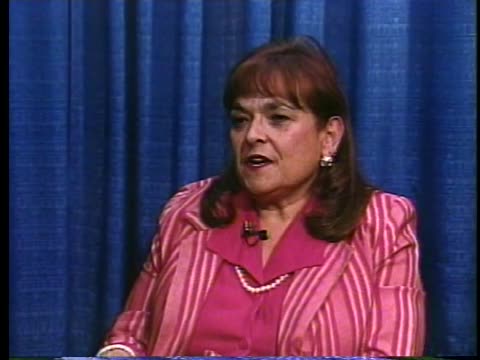
- E. Shirley Baca, Democrat candidate for New Mexico Public Regulation Commission from district five, talks to host Ernie Mills about her background, why she wants to be on the Public Regulation Commission, and her work founding the “Public Interest in Communities Political Action Committee” (PICPAC).
- Series Description
- Hosted by veteran journalist and interviewer, Ernie Mills, Report from Santa Fe brings the very best of the esteemed, beloved, controversial, famous, and emergent minds and voices of the day to a weekly audience that spans the state of New Mexico
- Broadcast Date
- 2002-08-24
- Asset type
- Episode
- Genres
- Interview
- Media type
- Moving Image
- Duration
- 00:29:51.678
- Credits
-
-
Guest: Baca, E. Shirley
Host: Mills, Ernie
Producer: Ryan, Duane W.
Producing Organization: KENW-TV, Eastern New Mexico University, Portales, New Mexico
- AAPB Contributor Holdings
-
KENW-TV
Identifier: cpb-aacip-f2de1006a7c (Filename)
Format: Betacam: SP
Generation: Master
Duration: 00:28:01
If you have a copy of this asset and would like us to add it to our catalog, please contact us.
- Citations
- Chicago: “Report from Santa Fe; E. Shirley Baca,” 2002-08-24, KENW-TV, American Archive of Public Broadcasting (GBH and the Library of Congress), Boston, MA and Washington, DC, accessed January 30, 2026, http://americanarchive.org/catalog/cpb-aacip-9b70d10f0f4.
- MLA: “Report from Santa Fe; E. Shirley Baca.” 2002-08-24. KENW-TV, American Archive of Public Broadcasting (GBH and the Library of Congress), Boston, MA and Washington, DC. Web. January 30, 2026. <http://americanarchive.org/catalog/cpb-aacip-9b70d10f0f4>.
- APA: Report from Santa Fe; E. Shirley Baca. Boston, MA: KENW-TV, American Archive of Public Broadcasting (GBH and the Library of Congress), Boston, MA and Washington, DC. Retrieved from http://americanarchive.org/catalog/cpb-aacip-9b70d10f0f4