Black Horizons; 3116; Recollection Rag
- Transcript
I'm not sure if I'm going to be able to do it, but I'm not sure if I'm going to be able to do it, but I'm not sure if I'm going to be able to do it, but I'm not sure if I'm going to be able to do it, but I'm not sure if I'm going to be able to do it, but I'm not sure if I'm going to be able to do it, but I'm not sure if I'm going to be able to do it, but I'm not sure if I'm going to be able to do it, but I'm not sure if I'm going to be able to do it, but I'm not sure if I'm going to be able to do it, but I'm not sure if I'm going to be able to do it, but I'm not sure if I'm going to be able to do it, but I'm not sure if I'm going to be able to do it, but I'm not sure if I'm going to be able to do it, but I'm not sure if I'm going to be able to do it, but I'm not sure if I'm going to be able to do it, but I'm not sure if I'm going to be able to do it, but I'm not sure if I'm going to be able to do it. I'm not sure if I'm going to be able to do it, but I'm not sure if I'm going to be able to do it guys, but I'm sure if I'm going to be able to do it. This is the final edition of our Black History Month specials and tonight's show is indeed
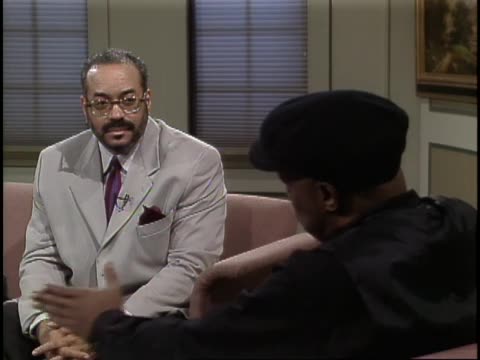
special. You're about to see a performance of Ernest McCarty's Recollection Rag. As you may know, Mr. McCarty is the artistic director of the Pittsburgh New Horizons Theatre, and he also wrote and directed tonight's presentation. Recollection Rag tells the story of two older women who find friendship at a time when each of them needs it most. I'm here with Ernest McCarty now to discuss his work and learn more about the artistic process. Welcome again, sir. Welcome, welcome, welcome. Yeah, it seems to be a regular thing. Welcome once, welcome twice, welcome three times. Welcome, welcome, welcome. That's what we sit up into. Yeah, that's what we sit down on the vernacular. Okay. So tell me a little bit about Recollection Rag first. Recollection Rag is about two retired women who retired, well, they were married in the 40s. To each other? Well, eventually that's going to happen later. Oh, okay. But no, they were married. And they were victimized by this male dominated world, by
husbands who lived in the time when the man is supposed to be the breadwinner. So this place takes place in Chicago in the 80s. But the Recollection part of it goes back to when they first got married. And it comes, and it comes forward. And it is about living on social security, how that fixed income has affected their lives, what they eat, where they go, their social lives, and their actual, actually, their souls are indigent. I mean, they're starving. Their souls are. Their souls are starving. And that's what this play addresses. It addresses a universal theme of friendship and love and not being perfect. That is not a prerequisite to having a... So almost anybody over the age of 30 or 40
might be able to identify with this, even though these are older women. Because by that time in our lives, we've experienced enough in life to know about friendship and all those other universal things. And social security is a universal theme that is on the minds of younger people today, as well as people who are here for a while. Because it may not be. It may not be. So therefore, this theme is a relevant theme to what's going on now. But it could be your mother. You know what I mean? No, man. I'm not talking about you, ma 'am. Although she does think she's cute with that process hair on the chest. But no, I'm not talking about you. I always marvel at your talent. Because you are a writer, a poet, a musician, and you're excellent in all fields. Where does all that come from? I cannot take credit for it. I was born this way.
And two, some people, especially in my hometown, who are used to it now. Chicago? Yeah, Chicago. And this is a freak. And there was even one that's a jack of all trades, and a master of all trades. But that's not true. It's just that the talent that I have been given, I have worked on it. And my mother told me that if I didn't, I would end up living on the street. So I'm actually running with terror in my heart. I do a lot of things because I'm afraid not to. And I think that the more you do things, you will become better at them. Even if you're doing them the wrong way, you at least get better than you were when you started. So I work a lot. And I think in the course of doing my work, certain repetitions grow from that. But it's not anything that I've done. Does it have anything to do with the kind of musicians you work with, the kind of poets that you've known in your life, the kind of artistic and talented people that you've known as a musician and a writer? Well,
yes, it does. I started out in the business with Oscar Brown, Jr. in 1960. And that taught me a lot about that level of things. It also taught me a lot about how difficult it is having talent and not having that talent intimidate people. I function on the need to know basis if I can play the piano. So people who only know me as a bass player can't relate to me as a piano player. So I don't tell people who know me as a piano player that I can play bass. It doesn't serve a purpose, you know. Also, it causes a problem because you can't be categorized. And that, I find, is a drawback. You mean you need to be categorized? In order for people to try to deal with you or work with you or something, they want to be able to call you one thing. You've been around the world. You've been to Europe. You've been
practicing with some very... Africa, some very famous musical groups you live in New York, your hometown in Chicago. Why Pittsburgh for you right now at this point in your life? It seems to be the place I'm supposed to be. This is the first time I've had a play done on television. It obviously couldn't have been done in any place but here. So I don't know why I'm in Pittsburgh except for the fact that we bought a house and I had to take care of it. But the work that I've done here, I've produced my first CD that is my material in Pittsburgh. And now the place being done on television here in Pittsburgh, that wasn't done in New York, it wasn't done in Chicago, it wasn't done in Europe. So Pittsburgh has fed my artistic life to the point where it is really fat. Well that's good. Now I know you're a head man so I brought my hat today and I want to get in the mood for the play here so I'm putting my hat on. Well see if you're wearing a hat. I should take my hat off. We got
to show some difference here. You know what I mean? We can't all be looking like it. You are a head man. No, I know you're a head man so I want my hat so I can get in the mood for the play. Now is there anything else that you would have anybody know about this play and where it opens and where it goes? Well I would like to say that it was first produced off Broadway in 1981 in New York at the Quake Theatre. And then New Horizons produced it here. And it was that production and which I discovered these two actresses that are going to perform the work today. And they are? And then the Hasten as Mrs. Ames and Brenda Marx as Mrs. Waldrop. Two very talented ladies and they have brought life to these words. When this play was first done it was done by two white ladies who were actually 79 and 82 years old in New York. And it was a very interesting thing to see a real old lady curse. Of
course we're not going to be cursing today. Not today. Not today. But the original thing to see her shaking with anger and can't stand up. Your words came a lot more. They were busing in senior citizens from Connecticut and New Jersey and Long Island to come and see this play because it actually gives... It actually shows pride in the senior citizenship area. Well I think that's a good thing and we're not going to bus anybody in. We're going to take the play to them so in their own living rooms they can enjoy it. Okay? This must be the big time. It's the big time. And we're ready to go. Okay. So without any further ado please enjoy Ernest McCarty's Recollection Ray. No. No. No.
No. No. No. No. No. No. No. No.
- Series
- Black Horizons
- Episode Number
- 3116
- Episode
- Recollection Rag
- Producing Organization
- WQED (Television station : Pittsburgh, Pa.)
- Contributing Organization
- WQED (Pittsburgh, Pennsylvania)
- AAPB ID
- cpb-aacip-98b52728d3e
If you have more information about this item than what is given here, or if you have concerns about this record, we want to know! Contact us, indicating the AAPB ID (cpb-aacip-98b52728d3e).
- Description
- Episode Description
- This segment from Black Horizons episode 3116 includes a discussion with Ernest McCarthy, playwright of "Recollection Rag."
- Series Description
- WQED’s Black Horizons was launched in 1968 and was designed to address the concerns of African American audiences. More than just a forum for the community, the series served as a training ground for Black talent in front of and behind the camera. Through the decades, the program featured various hosts and producers until Emmy winning journalist Chris Moore took over the program in the 1980s. He was later joined by Emmy winning producer Minette Seate before the program evolved into WQED’s Horizons in the 2000s.
- Broadcast Date
- 2001-02-25
- Asset type
- Segment
- Topics
- Public Affairs
- Media type
- Moving Image
- Duration
- 00:11:00;20
- Credits
-
-
Producing Organization: WQED (Television station : Pittsburgh, Pa.)
- AAPB Contributor Holdings
-
WQED-TV
Identifier: cpb-aacip-56f67e9a2a2 (Filename)
Format: Betacam: SP
Duration: 00:08:29
If you have a copy of this asset and would like us to add it to our catalog, please contact us.
- Citations
- Chicago: “Black Horizons; 3116; Recollection Rag,” 2001-02-25, WQED, American Archive of Public Broadcasting (GBH and the Library of Congress), Boston, MA and Washington, DC, accessed April 4, 2026, http://americanarchive.org/catalog/cpb-aacip-98b52728d3e.
- MLA: “Black Horizons; 3116; Recollection Rag.” 2001-02-25. WQED, American Archive of Public Broadcasting (GBH and the Library of Congress), Boston, MA and Washington, DC. Web. April 4, 2026. <http://americanarchive.org/catalog/cpb-aacip-98b52728d3e>.
- APA: Black Horizons; 3116; Recollection Rag. Boston, MA: WQED, American Archive of Public Broadcasting (GBH and the Library of Congress), Boston, MA and Washington, DC. Retrieved from http://americanarchive.org/catalog/cpb-aacip-98b52728d3e