Illustrated Daily; Illustrated Daily; Library Footage - Code Talkers
- Transcript
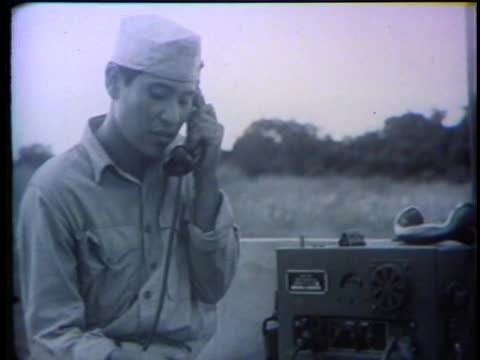
After the Japanese attack on Pearl Harbor, America was in a desperate situation. They were embroiled in a unique type of warfare that relied on more than just strength. It was a war of technology and secret codes by the vital role in coordinating massive land, sea, and air movements. America needed a code that the Japanese couldn't break. But the secret weapon lay hidden not within the walls of the Pentagon, but rather here in the southwest United States within the Navajo Nation. There was a message that came out. They wanted a third in Navajo for a special duty. And we said, gee, we probably did give us some of this Marine Corps blues, and we probably have office job. And that's the special duty we were thinking in those terms.
We never thought that we'd get right in the midst of the war. They sent recruiters out into this area and recruited a bunch of high school kids. And they were really kids. Some really, you know, 14, 15, 16 years old. And I joined the Marine in 1942, which was the day I graduated on May 5th at 10 o'clock in the morning I graduated. But two o'clock in the same afternoon I joined the Marine Corps. Well, we were childhood sweethearts in the school. Did you see him off when he left? Yes, I saw him off. What was that like? Said. We said, gee, the Japanese. They taught us, though, the Japanese were about to land in San Francisco or Los Angeles. Now, the less we consider this land are, see, Indian land. So we always say that we're fighting for our land.
It was Philip Johnston, the son of a missionary who grew up with the Navajoers and spoke their language, who convinced the Marine Corps that Navajo could be the code they were looking for. My understanding, the reason the United States Marine chose the Navajoers, the Navajo people were largely numbered number one. Number two, it was not a written language. Number three, very few people outside Navajo knew the Navajo language. Oh, yeah, chill. Oh, it's better. The coding machines in those days were quite primitive, and sometimes took as much as 25 hours to decode. A code was needed that could be instantaneously translated. When it comes back into the headquarters, back there, it's translated back into English. So you had to be good with English language as well as Navajo. They themselves then decided that just using the Navajo language
had its potential problems anyway. Because like any code, repetition is what eventually breaks it. And they sat down and came up with a code in Navajo. This means that even another Navajo listening in, if he was captured by the enemy and forced to listen in on these communications, that even he wouldn't know what they're saying. Well, they didn't have any meaning at all through an ordinary Navajo. Each individual had to at least memorize 400 words in order to be a member of the code column. Carl Gorman recall some of those code words. These are fighter planes. We call them the Hawk, Hawk and Navajo. We had a name for battleship. And they don't suffocate. That is the archie. That's the battleship. The bombs, we call them aches.
Japanese, they call them binatsu. Binatsu means narrow eyes. To my knowledge, and according to the record, there was never one transmission that was ever screwed up or messed up, either in transmission or in translation. That every message that they ever sent was sent perfectly and perfectly translated. And it worked. The Japanese never broke the code. And its use on Guadalcanal and Iwo Jima affirmed the United States stronghold in the South Pacific. The war was near its end. We never thought that we were making history. We just thought that we were part of the Marines. If I have known that we were making history, I would have cared a notebook and wrote everything that I did. It says Bogeville, Emeroo, Guam, Okinawa.
One Marine did keep a record. On the only thing available, his witness was his canteen cup. But when they returned, there were no flags, no parades, no heroes welcome. Without fanfare, they went quietly home. Their secrets still carefully guarded. And who's who on Navajo land today? The common denominator is that they were a code talker. They learned the necessity of getting along in both cultures. And I think by and large, they made a tremendous success of it. And this is the lesson that they are teaching today's generation. The United States isn't just another country, it's ours. And my father being a code talker is also a great inspiration to us. The Navajo Marines were finally given a place in history. The President of the United States officially proclaimed August 14, 1982, Navajo Code Talkers Day. 37 years after World War II ended.
But the Navajo is still marked proudly. And the Navajo Code of Honor, Pride, and Patriotism remains to this day unbroken. By the way, John has a hotline to the government, just in case something does decide to land. But so far he hasn't had to use it yet. Stay with us when PM continues.
We'll meet New Mexico's adopted son, country singer Charlie Pride. And by the way, John has a hotline to the government, just in case something decides to land in his backyard. But so far he hasn't had to use it yet. Stay with us when PM continues. We'll meet New Mexico's adopted son, country singer Charlie Pride. Here comes the car. Charlie Pride is living proof that the American dream is alive and well. We'll just go through it. Born a poor sharecropper son in Mississippi, Charlie is one of the most successful country and western singers America has ever produced. Tonight PM Agasin's Lynn Sittler meets Charlie as he receives a hero's welcome in his hometown. Well, here I'm in concert and find out how he made it big in the music business. Charlie is one of the most successful country and western singers America has ever produced.
Tonight PM Agasin's Lynn Sittler meets Charlie as he receives a hero's welcome in his hometown. Well, here I'm in concert and find out how he made it big in the music business. Charlie Pride is living proof that the American dream is alive and well. Born a poor sharecropper son in Mississippi, Charlie is one of the most successful country and western singers America has ever produced. Well, tonight PM Agasin's Lynn Sittler. Okay, here comes this kid. Charlie Pride is living proof that the American dream is alive and well. Born a poor sharecropper son in Mississippi, Charlie is one of the most successful country and western singers America has ever produced. Also, an IPM magazine's Lynn Sittler meets Charlie
as he receives a hero's welcome in his hometown and then we'll see him on concert and find out how he made it big in the music business. Charlie Pride is a, yeah. Charlie Pride is living proof that the American dream is alive and well. Born a poor sharecropper son and Mississippi, Charlie is one of the most successful country in Western singers America has ever produced. Well tonight, PM Magazine's Lynn Sittler meets Charlie as he receives a hero's welcome in his hometown. We'll see him on concert and find out how he made it big in the music business. Charlie's love of baseball has remained strong through the years, although he no longer thinks of playing major league ball. Instead, however, he thinks of maybe becoming an owner of a major league club.
We'll be back with more PM Magazine in just one moment, so please don't go away. Charlie's love of baseball has remained strong through the years, although now he doesn't think of playing major league ball instead, he thinks that someday he'd like to be the owner of a major league club. We'll be back with more PM Magazine in just one moment. We hope you'll stay tuned. Here he comes. Charlie's love of baseball has remained strong through the years, although he no longer thinks of playing major league ball. Instead, now he thinks of becoming maybe an owner of a major league club. We'll be back with more PM Magazine in just one moment. Please stay tuned. Charlie's love of baseball has remained strong
through the years, although he no longer thinks of playing major league ball. Instead, he would like to someday become an owner of a major league club. We'll be back with more PM Magazine in just one moment. Please stay tuned. Are we ready? Oh, oh, gosh, hold on. Well, before we go, we want to make sure that we thank the morally family out here and T- at T- at T. Wait, just, wait, wait, be the little buzzer. Before we go, we want to thank the morally family who own and operate TNT go-karts and video games and thank them for coming. I'm East Central, right. Thank you very much. Well, we've got a great PM Magazine show coming up tomorrow. I'm excited about this one. Here's what's coming up. You sounded real excited. My steering wheel's loose.
I'm gonna have a wreck. Before we go, we want to say thanks to the morally and Gonzalez families who own and operate TNT go-karts out here at Central and Tramway, which is right next to the freeway. You can't miss it, and it's a lot of fun. Oh, I'm enjoying the go-karts a lot. Aeration? Well, first we've got to tell about tomorrow's PM Magazine, and here's a preview. It's good. Ah, oh. Okay. Tomorrow we'll meet Strawberry Shortcake, the billion dollar baby doll. She's the hottest toy for kids since Snoopy. They will visit the Grand Canyon's real-life cowgirl. She came as a tourist and never went back home. Also, tomorrow, Joan Embry discovers a whole new world within a tied pool. And Chef Tell prepares scrumptious paprika chicken. Mm-mm. Mm-mm. Start.
Okay. Well, have a nice PM. Carl and I are going to hit the track, and we'll see you tomorrow. Bye-bye, everybody. Bye-bye. Racing. You. Oh. Help! You have enough? One more, okay. You need to change batteries.
I'm ready when you off. Best part of a MOOC? Here we go. You know, these days it seems the best parts of movies are the stunts that are performed in them. Believe me, the people that do those stunts are highly skilled professionals. Well, tonight on PM Magazine, you're going to meet the stuntman who other stuntmen voted the best automotive stuntman in all the world. And folks, fasten your seat belts. We're going to take you for a ride. Do it again. What? Okay. You know, these days, it seems like the best parts of movies
are the stunts that are performed in them. And believe me, the people who perform those stunts are highly skilled professionals. Well, tonight on PM Magazine, we're going to meet a guy who the stuntman voted the best automobile stuntman in all the world. So sit back and fasten your seat belts, folks. We're going to take you for a ride. Okay. You know, it seems that the best parts of movies nowadays are the stunts that are performed in them. And believe me, the people who perform those stunts are highly skilled professionals. Tonight on PM Magazine, you're going to meet a guy who the stuntman voted the best automobile stuntman in all the world. So, fasten your seat belts, folks. We're going to take you for a ride. We're going to take you for a ride. We're going to take you for some ride. You know, these days, it seems like the best parts of movies
are the stunts that are performed in them. And believe me, the people who do those stunts are highly skilled professionals. Well, tonight on PM Magazine, you're going to meet one of the best. The guy that the stuntman voted the best automobile stuntman in the world. So, fasten your seat belts, folks. And hold on. We're going to take you for a ride. Again, right here. You know, these days, it seems like the best parts of movies are the stunts that are performed in them. Well, believe me, the people who perform those stunts are highly skilled professionals. Tonight on PM Magazine, you're going to meet a guy who the stuntman voted the best automobile stuntman in the world. So, sit back and hang on to your seats. Walk it up, because PM Magazine is going to take you for a ride. It's about to work for him. Well,
now Tim has done a lot of stunt work for films and television. When he says it isn't any fun, he asks to sit around and wait too much. So, he's going to keep his lives show on the road. Don't go away because next up, Linda Harris discovers a beautiful river valley yard. Oregon's mountain hood. And will make country singing star Charlie Pride. Sir. Tim's done a great deal of stunt work for films and television movies. But he says that isn't any fun. He sits around a lot. Wait. So, he's going to keep his lives show together and on the road as long as he can. Don't go away because next up, Linda Harris discovers a beautiful river valley near Oregon's majestic mountain hood. And then we'll discover New Mexico's favorite country singer, Charlie Pride. Okay. Okey-dokey.
All for credit. Get some credit shots, yeah. Okay. Okay. You see left, see left. Are you going to do credit? No wonder who needs this. That's just that fun. Work boots and I'll be right down in there a hole digging all afternoon with them. And we do work together on a project. And if they've got something to add or something to do they think is better we incorporate it in it. You know, this isn't a one-man show by any stretch of the imagination.
What kind of reaction have you gotten from other people from other resorts who come here? You are the smallest place that has ever been awarded the five-star. The Greenbrier is the largest and we're the smallest five-star resorts. Having eight rentals, everybody always thinks that's a misprint. They think you've got 80 or 800 and they call and say well they've left a zero off the end. I think a lot of it, first reaction is we don't deserve the kind of a rating, the quality that we are. But once they get up here and see the place, I think then a lot of it turns into envy. This is the only single proprietorship, single ownership resort. All the other big resorts are either owned by large companies supported by foundations. So those guys are working for someone or they're doing a particular job but they don't own their property and they come up here and see that this and a lot of it is envy. I'm sure they won't admit it that you can see.
They walk around here and think, Jesus, I'd sack my job if I could come up here and have this. So what is it in a word or two? What is it that makes this all for you? What is so appealing about doing this up here where you are? Well I knew I couldn't work in an indoor situation, I couldn't sit behind a desk. And we're creating something, we have the opportunity to create something here, to take the dream, to take the idea, to take the things that you sit around and think about all the time and make the morality. We don't have to just always dream, we can take the dream and make it real. And every day we see a building go up and we see this happen and you see the guests sitting in the dining room and we love the compliments. You know they come in and say things are great, you know, the staff eats that up, they appreciate those kind of things. So I guess it's the accomplishment, we're doing something instead of just sitting around that makes it worthwhile.
- Series
- Illustrated Daily
- Producing Organization
- KNME-TV (Television station : Albuquerque, N.M.)
- Contributing Organization
- New Mexico PBS (Albuquerque, New Mexico)
- AAPB ID
- cpb-aacip-79148ebed60
If you have more information about this item than what is given here, or if you have concerns about this record, we want to know! Contact us, indicating the AAPB ID (cpb-aacip-79148ebed60).
- Description
- Raw Footage Description
- Code talkers/PM Magazine. 00:01 World War II footage. 00:24 mesa rock formations. 00:48 old indian man in office. 01:06 young code talkers. 03:44 WW II planes. 03:55 WW II battleship. 04:01 WWII bombs dropping. 04:38 Gaudacanal landing. 06:35 go-carts, go-cart truk, misc. PM Mag.; 23.
- Asset type
- Raw Footage
- Genres
- Unedited
- Media type
- Moving Image
- Duration
- 00:22:19.038
- Credits
-
Producing Organization: KNME-TV (Television station : Albuquerque, N.M.)
- AAPB Contributor Holdings
-
KNME
Identifier: cpb-aacip-0656307ce19 (Filename)
Format: U-matic
If you have a copy of this asset and would like us to add it to our catalog, please contact us.
- Citations
- Chicago: “Illustrated Daily; Illustrated Daily; Library Footage - Code Talkers,” New Mexico PBS, American Archive of Public Broadcasting (GBH and the Library of Congress), Boston, MA and Washington, DC, accessed April 16, 2026, http://americanarchive.org/catalog/cpb-aacip-79148ebed60.
- MLA: “Illustrated Daily; Illustrated Daily; Library Footage - Code Talkers.” New Mexico PBS, American Archive of Public Broadcasting (GBH and the Library of Congress), Boston, MA and Washington, DC. Web. April 16, 2026. <http://americanarchive.org/catalog/cpb-aacip-79148ebed60>.
- APA: Illustrated Daily; Illustrated Daily; Library Footage - Code Talkers. Boston, MA: New Mexico PBS, American Archive of Public Broadcasting (GBH and the Library of Congress), Boston, MA and Washington, DC. Retrieved from http://americanarchive.org/catalog/cpb-aacip-79148ebed60