Report from Santa Fe; Fred McCaffrey
- Transcript
You Report from Santa Fe is made possible in part by grants from New Mexico Tech on the frontier of science and engineering education. For bachelor's, master's and PhD degrees, New Mexico Tech is the college you've been looking for 1-800-428-TECH. I'm Ernie Mills. This is report from Santa Fe today, a special guest, Fred McCaffrey, noted journalist, radio personality, TV personality, and print media columnist.
Fred, good to see you. Don't forget, I used to draw cartoons for the kiddies on television, but that was the peak of my life. We're going to get into that, not today. I have asked you for a commitment to come back and discuss your own career in New Mexico, and before you came to New Mexico. But today, there's too much moving going on. On the day after, I should say the day before this show was taped, there was word that there might be a tornado sitting down in Portalus, New Mexico. One of our good friends over there said, we don't have tornado sat down. We start them, they sat down in Texas. Then someone else said, that's the governor coming through with his monorail, the whirling dovish, who is command promoting public school vouchers. Yes, indeed. That's the way he goes about the country side here in the state of New Mexico.
Right now, it strikes me or any of that, he might be able to do a little bit more of that promoting by staying home here in Santa Fe. He certainly, clearly, hasn't convinced the people in Santa Fe that we need vouchers in our public school system. And he hasn't convinced the people in Albuquerque either, and until he gets us, he can't make this bird fly. But he understands one thing. He's dealing with a media that's not nearly as aggressive or negative as he would find in the big Duke City. That's right. They do not confuse themselves with reporters from big city papers. And when you look around at the small market media, they do listen and they have an attention span that is longer than a can of beer. That's right. That's true. That not only is a good comparison, but it's a good choice for the comparison, because we have seen these very same reporters and their can of beer. Now, can we ignore the fact that there's only six months left until the start of the short session?
And the fact that this is not a single issue period. No, no means. But on the other hand, can we overlook the fact that the governor has put the word that number one priority is school vouchers? And is it foolish to go into that now at a time like this? I don't think I would feel very much ready to go into it if I were he after the dust up that he took on it during the special session. I mean, he called the special session and said, you must enact this. If you don't, I probably won't sign even the budget for the coming year. He changed his plans evidently when he saw the vote count on the bill having to do with education. But nothing has changed. I don't see why he would expect that in the six months we've got left here, legislators will move around to his position.
Over the years, you and I go back to the period of Leonard Delayow. Charlie Wood, when Charlie was with NEA. And remember, we still love the Tola stories where we had a marvelous lobbyist up here. So Charlie Wood went nice standing. But Charles would have a hand in both pockets. And he said, Charles, it's good to see you with your hands in your own pockets for a change. But we have heard these educators over the years say we've got to make changes to address the problems of education. They keep heaping restraints on them. But they give them more work, more work every year. I've never seen a session in which we didn't sign something to our public school system to take this over from now on and train our kids to do this. Charlie, we feed them. There's breakfast. We feed them. We are expected now to entertain them after school gets out because their parents aren't home.
And we will be expanding that in the coming years. You can look for that to get bigger and bigger. So we'll have practically full days of school because there are no parents at home to take care of their kids these days. You know, when I talk to the governor, he gets very excited about it. He doesn't dodge my question. You know, he'll say, shoot, give it your best shot. I'll take it. I'll take what you've got. On the other hand, one of the problems I find is that some of the questions we ask, like, how do you trace the money? How do you track the money? And I asked this at a press conference and he had to change it. I pointed to his advisor, legislative advisor and said, how does that work? Did I hear right on one of your recent shows? I detected that you have concerns about those people, I guess the governor would call them educational entrepreneurs. I think I've heard him use that term, yes. Am I right that you're concerned?
I am very concerned because I heard Raymond Sanchez, the speaker of the house, asked the governor one night on a program on television. Who are these people that you tell us are just standing by ready to come into New Mexico and open up new schools? That's his answer when people say, well, they're not parochial schools anymore. They're very few private schools in New Mexico. Where do kids going to use these vouchers? And he says, oh, there are plenty of people wanting to do that. Well, you know who is the biggest educational entrepreneur in the United States of America right now? No. It's a name you will recognize. His name is Michael Melkin. Remember Drexel Burnham Lambert, the big house that sold all the junk bonds? I remember Michael Melkin, a brilliant man. He pleaded guilty to some 42 charges of felonious fraud.
He was charged a fine of a half billion dollars. And he went off and served time in the Poke. And evidently, while he was in the Poke, he was thinking, that might be natural. You know, what am I going to do? I can't sell junk bonds anymore. And he thought, where is there a big need? And he said, education, all 50 states and all our possessions and territories overseas, big need. People are dissatisfied. And nobody is taking care of them. The public school system seemed to be so bogged down, I can't do it. So he came out and he formed a conglomerate company. And at one time, he gave the people working with him orders by every company you can find that has anything to do with education.
Book publishers, the makers of the Crayolas, you know, everything. I used to Crayolas yet. Yes, I know you do. I know that's why I mention that. You know, people who tape their surprisingly large number of suppliers to the school system. But also the schools. And his company now owns some 240 schools in the United States. And the governor has practically said, I've got people, don't worry about what happens to the public schools, the buildings. I've got people who come in here and buy them. You know, they do buy them. They buy the buildings and then operate a school there. There's always this little butt. It's for profit. It's not for the good of the students. It is for the good of the stockholders. And you know, milk and I know this because I served as MC at several functions when they had the milk and foundation.
Exactly. That's what the milk and foundation is for. And they had recognized teachers across the country and then in Mexico. Exactly. And they do good works like that. You know, helping to ingratiate themselves with the educational community. Have you specifically asked the governor about this? No, I haven't had a chance to ask him. I don't get out much anymore and I have not had contact with him. I would like to ask him and I suggest that those people who are either for or against the voucher system, when they get a chance to talk to the governor, might ask him that. Who are the educational entrypreneurs? Who are you in contact with? Who would like to come to New Mexico? The other, the other big system, the second biggest is the Sylvan Learning Centers. And we've already got them in New Mexico.
It's interesting now because you know the Catholic Church and you're certainly familiar with the Catholic Church. You've had them many of their publications. I know a bit about them. And my blood and bones. The Archbishop had initially said, this doesn't sound like a bad idea, but then the realization, which is a political realization, reality versus denial, that if you accept say $300,000 in a $3,100 per student per year voucher, that you're going to have to bring the school that you're in up to the standards that we request of all schools. So it probably costs putting out the money is going to say, you have to meet my requirements. You don't get the money. You're going to have strings attached. Exactly, inevitably. The other thing that is I find major when I talk to the school teachers, and this is interesting because we've talked to you and I have talked about it. If they have maintenance of automobiles in this quest for privatization, and remember under Carruthers they used to call it privatization.
Right, and they're in the British fellow where we're talking about it. But we said, what if they just privatized a maintenance of state vehicles? What's the first thing you would look for? The obvious answer was why I want to make sure River is going to handle it, maintain it, is going to be a licensed mechanic or qualified. And so why would you qualify the mechanic when you're looking at a system where you're not looking at certification of school teachers, which is more important to you, your automobile or your children? We say the children. We say the children, but with our mouth, but in the amount of fuss we raise it, it'd probably be the automobile. This is one of the questions I don't think has been answered. Do you have a feel now? My feeling is that the governor is reluctant to admit to the size of the defeat he took in the legislature. Yes, I feel that very much. I feel that he doesn't want to look at those numbers, and those around him who are petting him on the back and saying, don't worry, we'll do it again in six months, are doing him a disservice.
You have worked the national scene though, politically, you've been in public relations and advertising as well as your journalist career, and count that as part of it. But you also know that you get this kind of pressure nationally because New Mexico can be considered a Patsy state. Exactly. You and I know that very well, Ernie, and I don't think people always do, and I think it is perfectly clear that the Republican Party nationally has begun to consider us a Patsy state much more in the last five or ten years. You remember that old TV commercial when the kids are talking about trying some new thing, and they say, let's give it to Mikey, he'll eat anything. That's how the big Republican feel about New Mexico. They say hand it over to gentle John Dendall in giving him a lot of money. That's what they say.
And the milking thing, it's interesting because the concern I would have, you know, it was a young man, and the family is mother's a charming person, you know. Mothers are usually great. Yeah, they usually are. I don't know how they manage that. Yeah, mothers are sons that are miserable. But he had the problem. It was for starters, there was an ethical question about junk bonds as such, the ethics first, which as liberal arts majors, you worked my way. The ethics is important to us. And I would question whether or not that's what we're faced with in education. I think you would agree, and I listen to you religiously. I don't. You don't agree with me, but you know, I agree with you. I just don't admit that I listen to you. Oh, okay. But I gather that you are as excited as I would be about opening the door to discussions about education.
Very much to do. I think one of the great weaknesses of the educational system in the United States has been that we tried in effect to turn overall responsibility for our young people to what we say, the people who were in local parenthesis in the place of the parents. And we'd like the schools to handle all those nasty things that parents don't like to handle. But we can't make the school into the parent. It's not the parent. You can't give it the parent's responsibility. And we've tried to do that much too much. When you were back at Fordham University, I was back during the period of Rosie the Riveter. Yes indeed. And that's when the latchkey kids started.
That's when they started. Mother got a second job because dad was off fighting a war and not getting very much money for it. And for the first time the kids' mama would be on the night shift maybe, and the kid went out and he had a little key around it. He had a chain around his neck. So he could go in the house to use the bathroom until his mommy got all. That's right. And he certainly didn't want to be in there alone all the time. No. So he was out on the streets. And we didn't have television in those days. So the kids didn't run into the house and turn the set on. Or the computer. Or the computer. They had to entertain themselves a little bit more. Are they their own website? Yes. Yeah, they did not have their own website. Oh, that's beautiful, Ernie. But when we have, at a time like this, when you were back there then, you realized that there was a responsibility for parents. And there was a reason for them not to accept that responsibility. Mama has to work.
Yes, she has to. Now we haven't got the war. But we still have kids because of the economy and the divergence between the rich and the poor is growing. And there are so many families that have to work not one job, but two jobs. And three jobs, and I'm as a single parent. And I sympathize with them. I don't criticize them. I think they're in a terrible position. And I don't see how they can manage it. Now, you've never objected to putting me on the spot. I never vice versa. Is there a chance of having public school vouchers pass before this governor leaves office in your estimation? Yes. You think so? Because he's in office for a long time. Yes. Three years. It's because of the three years. I think there is going to be a continuing great national push. I notice when I'm watching the 24-hour-a-day television news programs that more and more of the people being questioned, particularly people from the House and the Senate, refer to the voucher program.
When it was first thought of, there was a big Roman Catholic parochial school system. And they tried to sell it to the Catholics as, hey, man, you want to solve the problems of your schools that have underfunded? Well, here's how we'll get them funded. And that was a slide. What happened was the parochial school system began to dissipate before the voucher system got passed. Now the voucher system is being pushed by religious extremists on the right end of the political spectrum, the extreme conservative, evangelical and fundamentalist Christians, who have formed large numbers of little church basement schools because they say my kids are not getting the moral education I want in the public schools. And they've now got this burden of maintaining their schools.
And they said, hey, let's pull out that old voucher system thing and let's sell after the public and they will pay the tuition. Now let's leave vouchers for a moment. The governor obviously is living up to his word. That's a number one priority with him. I counted 25 items. This is why we did a radio show together. And I thought, well, there are about 25 items like a tick off that are critical. One of the things we both mentioned came right off the top. Labor said there was going to be a suit filed which would contest the constitutionality of the governor vetoing to appropriations bill that would continue collective bargaining, public employee collective bargaining. That was filed before we came. Between the time we did these shows. Exactly. It's now a matter of record and it's moving forward. How can we get attention focused on these other issues that are hanging fire? We have two agencies.
We've gone through this or the wheel turning. Two agencies help and human services where the governor says we want one cabinet secretary. They have that now. You have worked with these agencies. You're familiar with people like Dick Heim and others who we go back through a period when they were back breaking jobs then. I worked for, I worked for health and human services for a while. I was an administrative aide to Fernando C. de Baca during Jerry Apidaca's governorship. And that is an agency which is so big and diverse that it's almost impossible to understand it. Much less to have one man run it while he's running the department of health as well. I've got a lot of respect for Alex Valdez who is the secretary in that position. Now I think he's one of the best men that Governor Johnson picked. But you can't ask a man to do more than human nature is capable of.
You have another agency, Highway Department. We have what we've produced creative financing. My favorite and I've always appreciated you not moving in on the big eye which is the goat I milked for 38 years. And very rightly. And so we keep funding throwing 20 million here, 20 million there after dressing up the big eye. There's an abortion down there. But here again, it seems an awful lot of this is in doubt. We're on in uncharted waters. Uncharted waters on unproved propositions. The notion of having brown and root come in here and finance the building of penitentiaries and then build the penitentiaries and then hire private companies. Those are all never have been accepted by the people and until you get them accepted by the people you shouldn't plan a program. If the governor wants to sell his voucher program, he ought to go out and convince all of us that it's a good thing.
And if he did that, it'll go through the legislature like shooting fish in the barrel. Now, you of course brought up and jumped this step ahead into the prison system. I still will get calls from inmates concerned about the training of those people at the privatized prisons. The way prisoners are moved about. But again, this is and also the number of inmates that are in the prisons and the question of how many of them are local compared to how many of them come in from out of state or federal prisoners. I've often thought if you asked the cabinet secretary to prepare a report, say a monthly report to go out with troubled areas, they could put in a couple of areas that look good. They could pass that on to the legislature and to the media.
It's very difficult for the media to get answers from privatized firms. It's almost impossible if the privatized firms decide to make it impossible. But you mentioned this on our radio interview. That the question now comes up that the governor may be subpoenaed, his administration subpoenaed to provide information on a number of the contracts that are outstanding in several governmental areas. This is critical too. Limited to corrections, we talked mostly about that. But there are contracts in a number of agencies that in essence transfer the major job of that agency to an outside company. You know, I just thought of something. We mentioned you worked for the department of health. You worked for the highway department too at one time. Were you responsible for the highway department and oh, does that bring back memories? That brings back great memories.
You know, Arnie, when a new governor is elected, I really am not so terribly much concerned with who's going to be on his cabinet. I mean, that's important. But I don't often don't know the people and don't know much about them. But I know that we're politicians and those very close to politicians can enrich themselves during the term of any governor is not by working for government, but by being the kind of company from which government must buy services. The highway department has a beautiful example of that. We don't even have the equipment to build our own highways in the state. We have to hire contractors. And contractors have to do things like having a bond to say they will complete the project.
And when I look at a man from Farmington who has been in the insurance business and who's boss up there is a state senator. And that man is put in charge of the highway department. I say to myself, Ernest, well, where are the road contractors all going to get their bonds? As long as those guys are in power, I know where they're going to get their bonds. And I know that company is going to get rich beyond your wildest imaginings. I know something too. People frequently say, when is Fred McCaffrey going to retire? Or Ernie Mills, when are you going to retire? When we look at these issues, we couldn't retire if we wanted to. I can't even think about it. I'm Ernie Mills. I'd like to thank our guest today.
Not just a gentleman with institutional memory. I don't like even the term curmudgeon because he goes far beyond that and is now a state government and a very dear friend for many years. And one of our shows very shortly, we're going to go back into the history in the Mexico of Fred McCaffrey. I want to thank you for being with us on report from Santa Fe. Report from Santa Fe is made possible in part by grants from New Mexico Tech, on the frontier of science and engineering education. For bachelors, masters and PhD degrees, New Mexico Tech is the college you've been looking for. 1-800-428-TECH. 1-800-429-TECH.
- Series
- Report from Santa Fe
- Episode
- Fred McCaffrey
- Producing Organization
- KENW-TV (Television station : Portales, N.M.)
- Contributing Organization
- KENW-TV (Portales, New Mexico)
- AAPB ID
- cpb-aacip-6a4e12fd902
If you have more information about this item than what is given here, or if you have concerns about this record, we want to know! Contact us, indicating the AAPB ID (cpb-aacip-6a4e12fd902).
- Description
- Episode Description
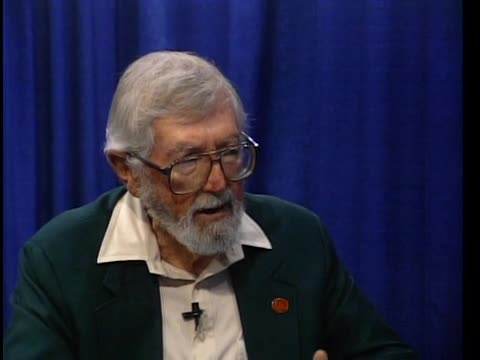
- On this episode of Report from Santa Fe, host Ernie Mills interviews journalist Fred McCaffrey. McCaffrey is back to discuss his personal career experiences and Governor Gary Johnson's push to create education vouchers. Guests: Ernie Mills (Host), Fred McCaffrey.
- Broadcast Date
- 1999-06-12
- Asset type
- Episode
- Genres
- Talk Show
- Media type
- Moving Image
- Duration
- 00:28:40.267
- Credits
-
-
Executive Producer: Mills, Ernie
Producer: Ryan, Duane W.
Producing Organization: KENW-TV (Television station : Portales, N.M.)
- AAPB Contributor Holdings
-
KENW-TV
Identifier: cpb-aacip-b2d47cee520 (Filename)
Format: DVD
If you have a copy of this asset and would like us to add it to our catalog, please contact us.
- Citations
- Chicago: “Report from Santa Fe; Fred McCaffrey,” 1999-06-12, KENW-TV, American Archive of Public Broadcasting (GBH and the Library of Congress), Boston, MA and Washington, DC, accessed April 4, 2026, http://americanarchive.org/catalog/cpb-aacip-6a4e12fd902.
- MLA: “Report from Santa Fe; Fred McCaffrey.” 1999-06-12. KENW-TV, American Archive of Public Broadcasting (GBH and the Library of Congress), Boston, MA and Washington, DC. Web. April 4, 2026. <http://americanarchive.org/catalog/cpb-aacip-6a4e12fd902>.
- APA: Report from Santa Fe; Fred McCaffrey. Boston, MA: KENW-TV, American Archive of Public Broadcasting (GBH and the Library of Congress), Boston, MA and Washington, DC. Retrieved from http://americanarchive.org/catalog/cpb-aacip-6a4e12fd902