¡Colores!; 1912; William Clift, Disc 1
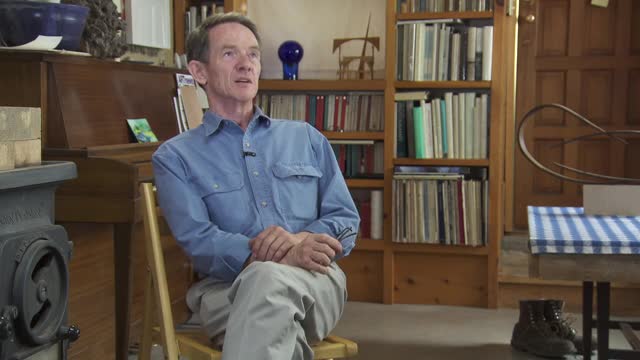
- Transcript
recording. Excellent. All right. So I'm just going to start out with simply if you can tell me your name and what your profession is. My name is William Cliffed. Do I have to say my name? Those words? I can just say William Cliffed and it seems that the general consensus is that I'm a photographer. Can you hear this clock at all? Anthony? Is it going fast? Yeah. They quiet after you finish a statement just to let a little room live. Yeah. Good. For editing but don't feel pressured to keep talking. If you're done talking, it's not talking. Just because I don't cut in doesn't mean that I need you to keep talking. So if you ever have awkward silence, just ignore it. Okay, sweet. All right. So what inspired you to study photography? I did not study photography. I did take a workshop when I was 15 but I had my own dark room at the age of 10 and it's really like any little kid who gets
interested in something. You know, a computer or a computer game or you know or collecting stones or you know that's where I got interested in and it became the only thing I really knew how to do and but so I had some of my grandmother gave me a little dark room kit from Kodak that was like 10 bucks and I had to put it out in the pantry and developed took pictures and developed pictures and I enjoyed it. I never thought I'd be a photographer but I liked it. I like doing it. I like the dark room. When did you realize any work at all before? When did that switch happen? I just recently. I'm not a talented photographer. I've had to work at things. I don't feel like I have dependable eye in terms of making good pictures and someone said to me that in a sense that's my saving grace because
I don't have a style that I impose on everything I look at but I did commercial photography as well as my own since 1963. I did seven years where I had a friend and I were in business and I quit college after a year. The workshop I took was once a week for six weeks with a man named Bulk Eiffony Grove who is well -known in photography, bike and white photography circles and there was something at the time that affected me. I was a junior in high school and I saw a picture of his in a little not a store window but a little entrance to a store on Beacon Hill in Boston and I called him up and said could I you give me a workshop and he said
great come but he what he said at some point looking at a few of my pictures was you have a spark in you and it wasn't you have talent it wasn't that you could be a good photographer it wasn't any nonsense it was there's something in your pictures that has a spark and that's inside of you it's not not that we're talking photography here that's not important and that that spark that I that he said that that word that he said gave me a certain trust that there was something worth pursuing in my life and that didn't have to do with profession didn't have to do with photography it happened that that was the medium that the activity that I that I worked on you know and it became something but it became something very very slowly at the same time I started with a polar
word camera I know I started with a browny camera you look everybody but then when I was 12 tender I think I was 11 I saw an advertisement for polar word cameras and that got my interest and I think I spent two summers uh cattying and stealing golf balls taking coke ball coke bottles to the store and getting five cents a piece or maybe it was two cents at the time and until I had that my memory and I'm sure it's wrong it wasn't the polar word camera was like $75 and that each picture was a dollar but theoretically my family was well well off but nothing was given to me in terms of you want something here you know I earned that and anyway there are pictures from
like 1956 and I can show you one at some point in the book and it makes you realize that intuition in a person is much more developed early on than you think in fact it's maybe it is that something to do with that spark but it's much more developed it's almost fully developed as a little kid and then other things like technique I mean professional technique whatever you are that you're learning that comes later but the intuition is at least it wasn't me very much there you recognize that's not looking back it was an activity that I don't didn't think about and I still don't think about it if I think if I start thinking about it that's dangerous what do you mean by that the mind gets in there too much you know you commodify it and it's you know it's like what people ask questions
sometimes what do you do with writers block I say I take my body and I put a camera on it and I go out and take pictures that's what I do with writers block with photo taking pictures block I don't worry about the intuition I just start working I think you have to but you also trust in work you can trust in work that's something will emerge by loving what you do it doesn't yeah by loving what you do actually do you hear anything with the glasses is that an issue no no really always fidgeting the idea of work that work will get you a card even if you're not you've mentioned that you were not told you were to be a photographer so you have spark and you have work and clearly
that's that's done something for you know it has can you talk to me about that explain that process to me I doubt it you know I mean as I said you know I go went was that more semi -shell for six months and 81 82 I mean I've been there many times but that period was a substantial period of time I only took 80 pictures and yet I was out there the place magnetized me I couldn't not be magnetized until I got on the plane to leave you know but I only took 80 pictures and it's not that I'm sitting around looking I'm walking I'm moving I'm not there every day but I'm walking I'm moving I'm climbing I've got 50 or 60 pounds of equipment just like you and you're going up 700 steps or three steps whatever but you're working you're digesting you digesting material that's in front of you you don't necessarily come to conclusions but you're digested by means of seeing what your responses
as a human being not as a photographer not what makes a good picture it's really different than that it eventually has to get defined as a picture but the whole process of digesting is is and then trying to put it together with actually making a picture may take years it sounds ridiculous but there's a digesting process that comes that works and you have to believe in it like I started photographing your your friend the Juan Hamilton I started photographing his sculpture and it was at O 'Keefe's house and this stuff was very foreign to me it's modern art no really it's modern art it's you know it's refined form and I didn't understand it at all and we'd take pull the range of the pictures that I took of his sculptures and O 'Keefe would
look at them and like that but I developed a relationship with those with those forms and started to understand them by means of taking pictures and relating to them in that way I don't know if that makes sense so it wasn't like I knew how I'm going to deal with this I don't know how I'm going to deal with this you know I start out by taking very plain documentary in a sense pictures but that process the guys we develop in its own in its own time not my time knows the time of the relationship there's a relationship that you develop between the three things the subject the photography as a medium and myself as a human being with eyes feelings and intellect no I'm just working and then if I have a picture that all
of a sudden has magic in it I'm delighted say oh wow where did that come from so when you're talking about adjusting you know I talked about thoughts that you try to keep at bay or or try not to be hampered by certain ideas or narratives you talked about not getting caught up in the area I'm not I'm just not that kind of photographer you know some people are and most people are I just don't happen to be I'm not telling a story kind of photographer are you look at the pictures I want to talk about New Mexico I want to talk about your relationship with Shake Rock because that spans a lot of time and a lot of your work yeah and as you mentioned you're very sparing with how many photos you take not intentionally that's that started by being hardwired with the Polaroid
camera tell me about that well Polaroid camera had like 10 pictures and it cost as I remember and I'm sure I'm wrong but with inflation it was like a bucket piece I was a little kid 10 years old 11 years old bucket piece you don't take many pictures and it's not it's not that you restrict yourself exactly but you don't take many pictures so then you get hardwired to that kind of a way of looking you don't do things quickly in salmon edit it later which is how we do it now you know really the emphasis is on something important at the same time not precious but something important does it make any sense precious is falling over something then the others it's important that means it's an process that is one develops one's one becomes more alive as a
result of the activity when bullet comes more alive inside of oneself as a result of the activity now that could happen in relationships for instance it doesn't have to be an art medium so -called an art medium that should be and that's not so easy for me should be in relationships that you also have that kind of a activity and process that constantly has to be worked with at the same time you don't know where it's going to go it shouldn't it shouldn't be any different because we have a medium of our body and our voice and our thoughts and feelings that's a medium just like a photography medium or a painting medium or whatever music or business that's just maybe quiet it sounds weird is it something it sounds weird just because it's hard if we're seeing through some photography yeah I'm asking a lot of questions that I know the answers to so I
know you're thinking she knows this but no I don't know I don't know what I don't know what it really so do you feel that relationship comes through your photos and there's something that they continue to relationship with it? Yeah I think so I think that's it's an interesting question because I don't have any message that isn't that I intend in pictures I'm not trying to tell anybody anything I'm only telling it to say look take a look see what you see and if you take a look I do believe that something will be given but I'm not saying what is there to give I don't have all I want you to do is be engaged in the looking and see well you have to do the work in a sense do you see what do you know what I mean it's not something where you should be told what to look for in my pictures like think recently about Van Gogh and I think everybody knows his story but if you really look at it to me that's the story is
not in those pictures those pictures are alive and they affect me because they're alive and it's not his story the story is always his suffering you know he didn't sell a painting he didn't do this he cut off his right ear or whatever he was tormented but basically he was alive and that shows in his paintings and you don't need the god damn story in fact it stands in the way in a certain way to looking at his pictures so there you go I don't know if that helps okay careful you're hitting the mic a little bit oh okay I don't want to try and I do did I do something here like that yeah I just want to tell me I didn't know it was there right and I don't want you to know it's there I don't want to beat her again but I just can't look too much it'll change the
light a lot in some way which is nice these are this great thing to me on the phone how do you take photos for yourself you know take them for the people it's true explain that to me well what would it be conversely it'd be taking out photos for the audience for people to know something about a place or have experienced something or convey something to others yeah I know landscape photography or landscape paintings back yes I did describe the landscape exaggerate it hyper contextualize it so there was an agenda there you don't have an agenda I don't think so I think if I was making pictures for other people for other people to like particularly for other people to like then I'll get into trouble with myself
because when that when what when you're working for what you expect somebody else wants now I did commercial work also so that was those were jobs and I felt that it was still honest because I could put my heart into what I was doing no matter what and so it was always an interest in me to satisfy also what somebody else needed that's interesting but I still it has to be for myself primarily I have to get something out of it for myself internally as an activity and I'm terrible if I if I if I if I try to go out to make a landscape that somebody would like it's better than a door now there's nothing nothing and I find that in in landscape photographers in general good luck you try to take a photo of a landscape you're trying to do a landscape
you get into trouble with I had I had a grant once I've had a few grants but I had a grant once when I was 21 no 31 and I was out photographing so -called sacred landscape into Mexico or just the landscape of New Mexico and I went to a place called capital reef in Utah everybody it says a wonderful place I didn't see a god damn thing to take a picture of I said what kind of a photographer I'm supposed to be a good photographer I got a Google line here and I didn't see anything I want to take a picture of and I was utterly self -critical on my way in I saw this thing out there this mountain that was kind of in the shape of more semi -shell and shabrock I don't don't know where that got fixed in me but so I was in
a stinking mood for three days and on my way back out I said well I got to take a god damn picture of something so I took a picture of this thing I was in a foul mood and it became a very iconic picture and even when I was developing the negative I put a scratch on it all the way across that I have to spend six hours spotting in with a brush so anyway that's what I would find myself with you know I don't I don't really have a talent to go out and make it just a good picture there has to be something that comes from inside and if that's not there then I see all too many landscape photographs that are you know have wonderful clouds have wonderful light you know all within the what we're accustomed to thinking it could be portraits it could be fashion pictures it could be landscape it's all it's all what's out there what's expected and it's not what you want to keep looking at after the pictures make it doesn't have that content now what is that a matter of I have no idea
I really don't know but what I see out there I'm actually very critical of I think they're wonderful pictures but they don't engage me and I feel very sad so you really attracted to the art because do you okay what is it to look what is it really mean to look at something I don't know you know I know when I take pictures and I print them and I put them up in the wall and I look at them and at some point I have to reverse the position from being the producer to being the receiver and when that takes place I'm less identified with the fact that something was produced by my hands and my eyes by me and then I have to see now I'm a human being like any human being and what is it doing to me and can I
still these are not questions I ask these are questions that are affected by glimpses you know you come in the door you look at something on the wall and you're thinking about something else what does it do to you as a receiver at that point rather than the producer it's different it's a different process and that's the kind of thing that is within that process of being something I do for myself you know it doesn't matter who likes it of course I'm interested because I'm interested in how much is itself expression and how much is it possibly potentially universal you know for everybody something doesn't matter how it's interpreted but still for everybody something you were talking to me earlier about how people say your photos are landscape photos but you don't think that they are that there's more they say why are the people you know and
my and it's a now a phrase in my head I don't like it that I get these what I call cliches of myself but in a certain way I say these pictures are more human it has more human content in these pictures than pictures of most pictures of people and then the other phrase I use this and I can't defend that statement but that's how I feel so I don't know what that means it's and it's kind of ridiculous statement but but I still think it's true and do you think that does that feeling come to you or is that ideal with you when you go out to take it no you're not thinking okay this is no man is not I don't even think about the humanity of it I don't think about any of that shit I just go out and work I'm a worker and I'm working for photographers very simple I'm not trying to take great pictures I'm just like a shoemaker
just trying to do a good good job in the sense that what I do doesn't mean I don't get excited or self -critical or whatever I guess I've used the word dousing you know photographing for me a little like dousing my job is to walk it's something else's job to tell me when to take a picture you know I walk with a dousing rod dousing stick you know it has three like that and then point like a upside down why I walk and when it goes down there's water but it goes down by itself I don't initiate that I don't say oh I think there's water there can you walk right through what it looks like for you parking they're walking the drudgery it's the same thing as I just said I walk I look I take in things I like I'm surprised by things I haven't seen before
sometimes I have kind of an idea well I really should have some close -ups of the ground or whatever they're you know I make stabs at this or that you know sometimes I have a little idea of an aspect like at Shiprock I well actually one of the first pictures I took in 73 was a close -up of the wall of one of the walls with a big V of light coming through so I got very interested and inspired by these walls because they're really something more than nature there's something primordial and at the same time utterly as if they were built by a great feeling architect no and even a novel fellow that looked at my book said I better
go back there I haven't seen this place and that was pretty interesting because he grew up there that's incredibly interesting yeah that aren't Indians that have seen and been attracted to that but um and this you know it's interesting is that part of what still excites you about about going out and taking programs what the ability to see it in a new way no no no it's just for myself and then when it goes into a book or something like I said about this book that we own our cap and eager and I just did and I said you know after 40 years that's not photographing all 40 years but it's it's going there when I could and at certain times being more energetic about it at different periods and really being more concentrated both at most I'm showing here um
it was like I just had a mess of pictures that I liked and someone didn't even know that I like but that I liked eventually you know negatives I took in the 70s that I never printed and then now with the that's that's a question of the intuition being way ahead of the of the mind in a certain way um it was like I had a bunch of pot shards and I picked off the ground that were beautiful they had lovely designs on them and then Eleanor came around and she made this into something that was digestible by people now she worried about the people not worried but she she was interested in how do we make this so it communicates both in book and exhibition yeah Eleanor Caponego is the ex -wife of the man I studied photography with when I was 15 and she they lived here for a while and now he lives in Maine and she lives here since 73 or 40 I've known her since really 60s
and we've done some projects together and she's it's curious because somebody said you're so lucky to have the best designer in the country or in the world I said no she's not the best because that would mean you can compare somebody else to her she's the only one that could put that stuff together and make it make some sense so that then she had to deal with how just people how do people read this and she was good at that I'm good at the one at a time I'm gonna change gears just a little bit and I want to talk yeah what is what is going into the dark room with the coat I mean is that power is of work it's doing it tons of different ways to see which one speaks fast but you have an intention during it I don't really have an intention and some people say oh I think it's Caponego that says
you've got to see what the picture is now its own so it's like if I take a portrait of you I don't want to impose myself too much on that portrait I want to have a poor I want you are a person I want to make something that fits what you are it's like the pots what I have to understand you so there is a process of understanding a negative and a picture and see what how is it best revealed sometimes it means making a very small print sometimes make a bigger one sometimes it's a matter of shifting the contrast or grays doing a little bit of manipulation but it's not really manipulation it's just you have all kinds of possibilities out there and also all kinds of limitations that's one thing that's kind of nice about silver printing is you know since digital gives me too many choices and I can't quite deal with that I have to have some fight
you know I have to fight with something I'm not a technician so I don't have a real method I'm always searching and trying to find the right way to express something so that it will touch me back so it sometimes it takes a lot of days of off and on or sometimes years before I understand something sometimes I stick a negative in the enlarger I guess the exposure comes out there it is so what is that what is that I'm explaining it's it's work and it's looking and it's being interested and it's loving and hated it's a mixed that part of it too all range no no emotion gets left out it's not that I'm a ranting person I don't mean that I'm just working just liking it liking it I do like the dark one I enjoy it sometimes people
say this is sort of quintessential in a way but why don't you have somebody else print your pictures and don't labor on it so much I said I don't know what I'm doing how should I think somebody else would know what I'm doing I like how you you stick with them until the very end even into the book and guide them into the positions that they're supposed to be excellent to some extent but the designer the designer is the was the sequencer in the book I've done two other books that I sequenced and then sequenced means one picture following another picture how do they what is the emotional experience or visual experience and there's definitely a sequence that either can draw you in or push you away and I remember talking to one curator who the book that I was doing and she said well is the book is the book sequenced date wise or is it sequenced
subject matter wise I said neither it sequenced emotionally and visually this pigeon holding things into dates and subject matter it can work but it doesn't have that it's not the only way to do things a book should be like a piece of music you put notes together and they have a sequence and the totality of it is an experience whereas most art books are not really thought of that way they are there as a catalog and they have a lot of writing on it to explain or it just titles but they don't have this sense of a piece of like music and I don't say my pictures are music or the books are like one but it's still similar to that it's an entity that is made and some other entity as a group of pictures could be made and it'll be completely different you mentioned to me ones that thoughts are not experienced did I say that
and you were talking about people looking at the photos and how you're not telling them what to see well in the show in Phoenix and some other shows have been this way for other people there are no labels very intentional museums love to put up silver print chromo genic print you know all kinds of descriptions so what am I going to put up shadow more semi shell and there are five of them you can see it's a goddamn shadow you know I mean why do you need these little white things on the wall I mean after all art is supposed to speak to you and if it doesn't speak to you then it's failed if it needs the mind to say this is a platinum print and that's a silver print and that's an inkjet print what's the point I mean I just don't see it I really don't see it and I think
it's really a goddamn shame it doesn't mean that some things aren't don't need to be explained because people don't understand it and they're intimidated but my pictures are not like that they're simple pictures they're not complex pictures they may have depth but they're not complex there's nothing that has to be explained people and just look and to the extent that they look perhaps they'll get more out of it perhaps they won't that's the humidity in your photos yeah I mean looking at the the shows up in Phoenix and what I'm most interested in is the fact that people actually walk slowly and look and they take something in and then maybe they go to the next but they don't go around some people go around and come back and look what if you look at people going to exhibits is for the fascinating it tells you a lot usually they just move around and out sometimes they stare but to go to each picture and 90 pictures is quite
fascinating and it's not because one picture is better than the other each picture has its own content and each picture is different what are you correct in saying that your pictures got in the conversation yeah it's probably my failure at having a relationship with people so I have to do with content pictures whatever it takes to connect I want to have a little more about why the year doesn't need context or explanation didn't I say it? You want to you want to me to explain it differently yeah yeah just if you could do it again for me we didn't say first of all what do you think we can just let's not off camera but what do you think about like looking at the pictures in the book what is your sense there were no explanations right um for me I felt like
it was a narrative of a human experience and that's not really a narrative that's just a but it's your human experience it brought you in as a human yeah it wasn't you weren't depersonalizing it like that no you were actually viewing it for yourself so as such yeah and did that need the fact that you had already talked to me or not no I think I think it did need more I didn't get the depth that I'm just looking at the but in the book you found it that's right so I think there's something to be said about the totality of the less what I met shards yeah yeah no I really like that idea um but there's more than just each other you're looking at this there's the the rhythm that you're talking about most of cadence yeah so if I can get that in your words because I'm not going to listen to
me but your words if you could talk to me more about that because I think there's something really beautiful in that idea no I lost it Samantha help me we can go back to it find it find a way to ask me another time I just work too practical for that I am too practical I'm very practical okay so we'll start with these two panels here yeah you can talk to me about these photos and maybe have what you did to get them and I'm thinking so we're thinking with questions what's that ridiculous um what I was right I walked I carried my camera on my shoulder and my suitcase in my hand and I walked and I looked and I said
better take a picture and then you did and then I did and then better take another picture another day I think I was with my middle daughter Karola my middle child I took both of those but I'm not sure if it's the same date at all I think it was different times um and the one on the on the right it's now on in your no that one with the rocks now that has a little bit of Juan Hamilton sculpture in it do you see that oh yeah yeah right so that is a little bit of an influence from something I was photographing I mean you just see little things coming in but that is very oceanic to me now when I say it's very oceanic it doesn't mean that that's what I that that was a thought that I had it was an experience that I had and it was not an experience
that I did not name I didn't say oh that looks oceanic I can say that now it has that kind of a sense of what's out there it's water or something of that nature the foreground is a shadow of shiprock and the distance it's shadow of clouds over over the water but it's really over the desert so I don't the one on the left I don't think I had and I still don't have any name for that there are a couple of little there's a stock tank in there and there's an oil tank in the distance they're little white spots you can't tell what they are and somebody said why don't you spot them out you know with a brush and ink I said no they're good irritators to the eye so there's a mechanical thing that the eye does it looks all by itself looks here there whatever and sometimes there's something that that irritates a little bit so it keeps you there
makes you wander what makes you choose to buy out something because it doesn't because it doesn't add to the experience it detracts that's when I take some things out it detracts from my intention those don't detract those two little things they bring me in because I want to know what the hell they are as opposed to buzzing me I want to talk about these two because they talk to the idea of monolithic structure of like the columns but it feels like hands of penalties I guess that's what I'm talking about these feel like they don't think yeah sculpted can you talk to me about well I think I did talk to about it before but it does have the it's sort of like the one
on the the one with a V it's very Gothic and it's very it's like Gothic before there were any architects you know saying that this is how we're going to do things it has primordial energy and it grew up naturally and yet there's an atmosphere that's very human there's something that we understand when we look at that so I don't know the one the the other picture is a picture that I must have seen in terms of my my feelings and how it influenced me at least for 20 years before it got formula before it got formulated by itself in a sense in an instant there it is and you know I didn't say that exactly but I knew that picture from experience even though I didn't have it formulated as an actual image and I tried to take it four or five times
and it was better than a do or nail but it doesn't matter at some at some moment it was there and it was total I don't crop my pictures generally because I think that what my experience is that if a picture is right it's usually right and there's no fuss in with it the in other words the mind and the feeling and the craft it's all there in an instant and one doesn't need to shift to take a picture from a different angle look at it over here look at it over there it's just it's there it's all together and that that says something to me you're getting a little profiler to me can you turn a little yeah no no no no that's not with feeling behind it by the way it's just with the feeling of humor
I get it I'm just trying to get you know you were pretty close with Albert yeah ice you know it's funny I see him all through you it's really fascinating in the mannerisms or yeah mannerisms quietness of his voice Albert's voice is very quiet it's quite smooth he's tall like you are at least you got your feet on the ground he starts to have now but you have your feet on the ground much more than he did yeah I was kind of scared for a while it was very scary I want to talk about this one because whenever anybody Googles you this is what's going to come up yeah I'd love to have your opinion on what you think of well I almost didn't want to put it in the book but Eleanor said yes it's got to go in and I like the picture for me it's like Bonnie and Clyde's car you know has bullet holes in it and I have bullet holes in my life and
Eleanor says it's sort of the temporal and the eternal is that the right way to say it should rock being the eternal and obviously the bullet bullet hole car now that's a narrative when I had a show in New York at some point there's kind of a lot of retrospective and of course that's one that New Yorkers liked because they live with those visual elements of violence and activity what the reason I like the picture actually is the sky the print of it is very purly it looks like something actually out of a out of an oyster and you know how the the light goes off the the membranes in the oyster shell or almost any shell so that's what I that's what draws me and I like the rest too but it's sort of like it's supporting the sky and yet it's not an exciting sky it's just a certain qualities
people like it you know it's easy it's an easy picture it hits you and I guess this in a sense because of the sky that still lasts for me I mean there's a lot of photography now that hits you hard right away it's either edgy you know we love the word edgy curators love it all this is really edgy that goes in you know and ultimately it's just what we're used to in our culture is one image bang bang bang bang one after another look look look look and what are you given I don't know what you're given by it you know it's like information we're just such an information society and what's the content what's the emotional content of it it doesn't help me to grow as a person it only helps me to fill up my my urn with stuff and I have a false sense of power because I have so much information
it's like having a website that has all your pictures on it and somebody looks at them and says now I know what Bill Clifters doing and yet I haven't done any work I haven't really even looked all I've done is click click click with the finger at least with a book you have something you open you go look from page to page and hopefully you don't flip but that's the designer and the photographers responsible anyway I don't have galleries for instance I don't deal with galleries because I don't I like galleries are fine I don't have any objection but they always want something and it's a commodity and these really aren't commodities they have all kinds of weird all kinds of weird stuff about limiting additions and photography
I have limited some additions but I don't limit them for the most part because I don't believe in creating an economy in a false way my the limit in this of my pictures is it takes me a long time to print you know and I don't make lots of prints of things I just because I have a hard time making two prints that are the same or that I like you know so what was the question what it was starting mumbling didn't matter I do note cards my answer to that the democratization in the sense because my prints are expensive so that's they're expensive because they take at some point I had a lot of big orders for pictures and I said there's not an equivalent pain
that people are taking out their wallet for the pain that it takes me to what I put into the pictures because I'm not very talented about technique and Kansas keep putting things out so I make note cards I've made note cards for 30 years and they're available you know wherever whoever will take the people write fewer letters but there are note cards that are very expensive to make I have to make 10 ,000 of each image in order to make it economically worthwhile and it probably isn't worthwhile because if I spend $60 ,000 in note cards it probably takes me six years to make it that back just you know but nonetheless it's democratic people buy them they put them on their refrigerator they look at them more than they do in a book I'll show some to you afterwards but they that to me is a very very nice way to do things and they're not glossy they're a matte paper and they go through the press five times each picture and the ink builds up and they go
through with different colors of ink colors of black and white ink anyways it's a fascinating process that's a way I make it accessible yeah the one of the little fetish shrine yeah yeah I don't think of it that way I just responded to the little fellow it's like a little fellow he has a little wink almost a smile and these how can you not respond to that and so you got to figure out a way to take a picture of it you know I took three or four over the years and that was the that was the best and it has that wall that I mentioned to you about being very tall and then the one on the other pictures must be a little shrine to somebody that had died it was a necklace and a dog tag you know which is what army
people where soldiers had so it isn't that somebody is buried there but I suspect not the hope put it up I don't but I don't know it was there in front of the rock and it's very tender and what's interesting in a certain way to me is that the rock itself is tender it's not a rock that's hard it feels because of how it's printed or because of how it is itself it feels like you could put your hand into it which is the same as putting your heart into it so it's not a rock that pushes you away it's a rock that pulls you in how do you feel about working in your life? Why are you here? What is my other sense you could be? yeah it magnetized me I loved it I always had a hard time here culturally it wasn't ever easy when I used to come and visit in the 60s because I'm a Boston
beacon hill wasp kind of a guy that always had a hard time in life and didn't didn't fit in and but anyways very in the Mexican psychology not one culture or the other is not so easy in a certain way and so it was always difficult and I moved here in 71 my wife got a job teaching at St. John's that kind of allowed me to make a transition it took me about three years to really get at home here because I need something to do as a person I need to be active and it took me a while to figure out how to do that you know there's time isn't there there's plenty of time we can stop and pause Sam does this interest you at all what interests you? I would
like to see the book and try to speak peaks yeah what is it? what the whole thing? the expression oh yeah that oh gosh I don't know no I'm not it's interesting if you could talk to me a bit about the lighting and the time of the day we did earlier for what? for that picture? yeah I like this but I like that a lot well you want to know exactly what's happening there? yeah okay it's it's not midday it's probably two two o 'clock three o 'clock something like that high high summer sun but obviously it's not hitting the rock so it must be above and slightly behind ship rock and the sun is blaring at the desert so it's almost blinding to look at if you were just looking at
all that light coming back at you so the sun is reflecting up on the vertical wall of ship rock and then the part that is gray or darker is called I believe a Taoos slope it basically means fragments from the rock that fall from the ship rock that fall and gradually create a what would you call an incline and that isn't receiving any light except ambient light is not receiving reflected light either so the only direct light in that picture is on the desert and I think the sense of it is either one interprets that as snow or one interprets it as a strong desert light you know is that enough? yeah thank you I got a question where
it had to be black and white yeah well I'll show you I'll show you another book which is color polaroids and I was telling Amber earlier that I really don't think oh I'm doing color oh I'm doing black and white it's so much inside of me that I don't think about it the color the color book that I did is Polaroids from Polaroid quick Polaroid like SX70 what it's called spectra and it's color and I love the palette but I never think about it that's color I'm drawn to it and I photograph it and what more is there than that I don't know white but not intellectually I have a lot of gray tones that I think have emotional content but also blacks and whites I don't know I
don't as I say I don't think black and white I don't think color they just they're in my experience I've been doing it since I was a kid so I don't have to analyze it at all do you think in terms of lines and shading or no I don't can you see that as a full statement I don't think in terms of graphics design or composition I never studied art when I took those that workshop which was one night a week for six weeks no one ever said compose your picture better or if I were there I would have composed it this way none of that bullshit you go out and you take pictures whatever's there you take a picture and that comes from you like that picture on your left of the court of the cloister that's a very awkward picture is distorted it looks it's the camera has distorted it you
know the it's not it's a rectangle but you know the line on the left is distinctly bigger than the one in the back it looks like a football stadium full of people but what's interesting about that picture it's one of the things that stimulated my comment about at most of Michelle almost all the pictures I took have been taken by a million other people standing in the same place now that was that's impossible in that picture because of where I'm standing but there were people who photographed that for books other books guide books of most of Michelle and they photograph what's mostly in the center back of the picture with a little bit of the of the cloister let's say the hedge or a little bit of the garden but because that's what they think they should take a picture of but in fact when you're there the experience is
you feel like you're going to fall into it because of that little angle at the bottom you know that little sharp angle you feel like you're going to fall I mean you're way the hell up you're 500 feet up above or no 200 feet above which below you on a little wall but at the same time that experience is defined in that picture but it's not what other people take the picture of because only because they think it should be of something else and they're not really photographing their experience and letting it be come out of a desire to define that experience that they have visually I don't know if that makes any sense but I think in that sense I'm not a self expressive photographer that you know what I do I'm not trying to do something different I'm trying to do something in a sense that what reflects what I believe is everybody's experience but perhaps better defined
so you don't get that by knowing something about composition or knowing something about design you can get awfully excited about design and graphics and how to make something lively and active if it comes naturally and it really belongs to the experience yes then you need something that's graphically precise and has shapes in organization but not everything needs that and maybe that actually speaks yeah that's a weird one because I have two pictures that I've done one of a landscape in New Mexico and one of that where I had to reverse the negative because for some reason or other I couldn't stand looking at it when it was the other the the real way you know there was in this picture what's on the left in realities on the right and so I flipped the negative when I printed it some of these exposures are half an hour long you know if it's if it's dark they're pretty long exposures and some are 8th of a
second or 20th of a second whatever and in this one you mentioned me feeling that this was oh it had a little bit of a yes it has this is an afterthought but looking down between those cloister columns there it's really like the the idea that one has to leave behind if one wants to go to spiritual heights one has to leave behind what is one's personality and what is everything I'm attached to and go towards going through the Ivan needle and the area on the right is has a and this is not thought of ahead of time it's just has a certain sense of the monks there are monks at most I'm showing it's a religious place and this as if there are is a row of monks on that wall and they're standing and on the left that's what is what their aim is is to
aspire to something higher yeah but will you scoot here left just a little bit a little bit of a meaning what time is that a little bit of a meaning but it's not that there's a message it's just sort of saying that once in a while about different things I think can still be helpful um after one has looked oneself what's the difference between meaning and message well meaning is experience and message is some kind of a I associate it with political sociological things that one wants to communicate and one disagrees with or agrees with and I want to rant about this and that injustice and or that there has to be something some guy that photographed sacred sites all over the place and they're really very boring pictures
but the message is a certain kind of spirituality is I think I mentioned this to you on the phone there's a lot of films about Tibetan Buddhism and shrines and temples and monks and this and that and I've seen a few recently and there's always this tone of voice in the in the narrator and there's always this sleepy music that goes with it and it drives me nuts because I think it's so opposite really it's what we think of as spiritual and I think spiritual is alive I think it's dangerous uh and it's it's certainly nothing that's easy and it makes you think that spiritual is nice and sweet and placating they kind of sell at the same spot
as a safe spot it's anything but because there's a conflict in myself between what a spiritual and what is me and that conflict is very alive how do you justify the two things having yourself and having spiritual? I think one gives the energy for the other this photo here on my left yeah the shadow yeah oh that happened in 77 my first trip to Moshe Michele was in 77 and it was there I took a picture of it and it was kind of a snow miss that was traveling extremely quickly so that's as close to a candid picture as one as I can take with my view camera and
there are several like that but you know two seconds later it's not there the mist isn't there it's flying across the sky at great speed well it's a very strong picture it's but the only I think maybe I had two or three pictures from that it was a six week time it took half of the six weeks just to get permission to have a tripod on Moshe Michele that's a five inch by seven inch negative whereas the one on the right on the other side is a 35 millimeter negative which is an inch by an inch and a half at most tiny little negative and what's interesting about where Eleanor put that is it's in a sense what's in the shadow is that that's the content of the shadow do you see what I mean this is building the shadow on this here is what's in here in behind it but therefore it's
in it it's it's the physicality it's part of the object that is being presented as a shadow now that don't put that as too much too uh it's yeah yeah no no don't put it yeah it's just interesting before we move on from this book is there anything you would like to specifically touch on and look at or have us pay attention to I don't know I think you have to pick if you're going to pick a few pictures to show you know we'll have to look at the um at my we're hoping to show some files and see if that's useful to you yeah my the scans that were done for the for the book and I'd like to have some in there that we haven't talked about at all yeah yeah yeah no because the most important thing is is to have some atmosphere yeah that will communicate and that's tricky have you had enough of me not yet do you need a breath to warm up all
right recording so you're talking about art and how uh we're visual we're sensory creatures and we lost all of our senses that's what I hear I've heard that I don't know that for a fact because I haven't died and I haven't read an article but somebody told me that once that if you are deprived of all your sensory perceptions you actually will can't survive and so that makes me realize in a certain way that what we see as visual material for auditory we need it as an organism to survive so somehow rather there's content in there and I don't know what that leap is you know it's it becomes important it's important material it's like what is what's music it sounds and what's what are photographs it's shapes and
tonalities of gray like music is tonalities of sound so um that's what affects us is the relationship of tonalities of music and in black and white photographs you have tonalities of black to white and that affects us we don't have to think about it but still it affects us and that's emotional relationship tonalities and relationship to each other convey emotional qualities it's not just what the subject is the subject is almost beside the point it's a subject in order to create to make to give you visual material to work with but the end product is not necessary not necessarily attached it can't be divorced from it but it's not necessarily that the
subject is utterly important and you guys are trying to just recapture that now I've lost it so I'm not going to hold you accountable if you've lost it as well um if you were talking about see you should start to do art yourself and see what it's made of for me it's made of color well you should start to do it start to make it not intentionally for any professional purpose just start to do it do something I mean you have it in your in what you're doing this art quality to it but you say it's of color do something with that to sketch do something spend a little time you know like somebody said to me I've had a heart I've always wanted to be able to play piano and I've never really been able to do it I've taken lessons
and lessons and Eleanor said just take a few bars and play and just listen just listen don't try to accomplish it you know what I mean don't try to accomplish the technical aspects of timing just do what you do and hear it and that's the same with making the pictures just do a little bit of this do a little bit of that and hear it look at it and I'm not really not trying to analogize my pictures to music because it's just that there are certain principles I think that exist out there and they probably are somewhat similar I think it's good to hear people context as well some people might think and and then begin to understand photography in a completely different way or people will understand photography and not understand music and being able to enter or wait the broadness of the perspectives I have no problem it sort of opens a window in another way yeah everyone you can still get to the
same idea just different paths everyone is different paths and so like if if you look at the book I think they're either four or five at most semi -shell shadow pictures and it sort of would be a way to look at how it's in a sense an interpretation but it's also communication some are very strong and some are utterly delicate so in your passages and music that are like that too powerful and then quiet you know so there's a lot that we need for to affect us as material sometimes a soft quiet note you know in your voice like I heard some music recently I think it's Bach maybe it's in the cello thing as we're there's a sound and then there's like an echo the echo that quiet echo is what affects you it's not the it's not the strong sound or it's the two against each other that affect you like a black against a white or a gray against a black those affect
you it's not so much contrast it's tonality I don't know if you'll have any to say on this one I'm going to ask it anyways is there a vision that you're crafting or is there something in the totality of your career that you want to part on people? No. Anything that ties about together is new? having the idea and nothing lasts anyway you know it's it's kind of entry I mean nothing lasts yeah museum in Iraq we go bomb the hell out of Iraq people go in and loot it everything disappears they go somewhere but who knows where the hell it goes what happens when there's a dirty bomb in New York
no one can go look at the van goes and things anywhere all have radiated you know and yet museums first of the show photographs so there's some concept by conservators that you can only put so much light on a picture without it damaged being damaged so you don't put the light on so then the person who looks at it can't see it but we're protecting protecting our property here you know it can only see the light of day for 10 days out of every 10 years because after all we've got to protect it and basically you're killing it when it not being shown so what the hell we don't last as people what are we going to do put us in a shoe box and not have any environmental influences on us or whatever you know it's just lunacy it has to be seen so why would you want to put this dim light on it when the picture can't be seen with that I just don't
understand it it's just nuts so what are your hopes with your photographs then I don't have any I don't trust museums what do you trust I don't know I just you know they exist I do it and they'll disappear or whatever you know I make you make I make photographs not in the context of photography but just in the context of my life I don't think much about the context of photography is a home and museums keeping it and having archives you know I figure I don't know what I don't know what you do with this kind of stuff oh I think it's wonderful I mean look at that sculpture there that picture of that figure that what is 3000 BC or something like that it's amazing it affects you it's very modern
I don't think you can it has things have their time you know that produced them like I don't show my pictures much I haven't had a show in 10 15 years it's not what I'm about you know when something is ready to put together and be shown like Eleanor says what does it cook do you know when it tastes right then you give it to your eater you know but only when it tastes right and then that's consumed and it goes what's the what the hell is the difference oh there's not much difference and then I'm getting ready to wrap up do you guys have any questions or any other questions oh come on saying anything that I feel you feel like let's get something from that I didn't talk about your poll rights at all I don't know if you want to touch on those a bit I think they're gorgeous
you know it could be done within the context of if you want to go that way and you may not want to go that way yeah you can be done within the context of some of the pictures that you show like what I'm going to do a little bit more of this, I'm going to do a little bit more of this and then a little bit more of this and then a little bit more of this and then a little bit more of this and then a little bit more of this and then a little bit more of this and then a little bit more of this and then a little bit more of this and then a little bit more of this and then a little bit more of this and then a little bit more of this and then a little bit more of this and then a little bit more of this and then a little bit more of this and then a little bit more of this and then a little bit more of this and then a little bit more of this and then a little bit more of this and then a little bit more of this and then a little bit more of this and then a little bit more of this and then a little bit more of this and then a little bit more of this and then a little bit more of this and then a little bit more of this and then a little bit more of this
and then a little bit more of this and then a little bit more of this and then a little bit more of this and then a little bit more of this and then a little bit more of this and then a little bit more of this and then a little bit more of this and then a little bit more of this and then a little bit more of this and then a little bit more of this and then a little bit more of this and then a little bit more of this and then a little bit more of this and then a little bit more of this and then a little bit more of this and then a little bit more of this and then a little bit more of this and then a little bit more of this and then a little bit more of this and then a little bit more of this and then a little bit more of this and then a little bit more of this and then a little bit more of this and then a little bit more of this and then a little bit more of this and then a little bit more of this and then a little bit more of this and then a little bit more of this and then a little bit it always changes things and yet having a audience
That's why I never have an assistant note yet, once I had an assistant, I never have an assistant note yet, once I had an assistant, for a year and a half and I made more money but I made bad pictures I feel like I should be picking off single details as we go, because I don't know. We can back up anywhere, all the way through this again. We can back up and do different things. Let's go back to that. Well, let's finish it. If you don't be a master and great. So are we backing up and starting over now? No, we're going to keep going. Keep going here. Oh, we are. Keep going forward. Yeah. Keep going forward. As long as you're willing to do
this again. Anything you want again. That's right. Okay. Okay. Are you having sound with this? Yes. Let's stop. We don't need to. So that the enlarger does this higher up. Let's see. Makes a bigger print. And that starts cropping. I pull these blades out. Use a different sized paper. Right? Re -focus it. You know, use a bigger piece of paper. Move these out. You've never been
in a darker. It's wonderful. So there's a bigger print. Now we can go to that except I don't. I'd have to have bigger trays and use a lot more chemical and things like that. So anyway, that's what happens. So everything that's black here. Everything that's white here becomes black in the picture. That's what a negative is. These are white clouds, a dark sky. So everything is reversed. And you know, when I developed a negative and I look at it and I live with a negative, I am looking at... Come over here and look. I pull it out of the chemicals and it's wet. And I'm looking at that. And I don't think
about what that's going to look like as a print. I look at it and for me, you know, opposite. I look at it and do I like what I'm seeing or not without ever thinking about interpretation. Or what it's going to be like as a print. I enjoy being able to hold this like that. And I can look at it often on for months. And then at some point I have to deal with it, you know. But that is my raw material. That's film. And compared to on a computer where you don't hold it, I like holding it. But that's of course because I grew up that way. So this is a negative carrier and that means that I put the negative in it. And the same way in a view camera, when I'm under a black cloth, a classic old style black cloth, the image that I see in what's called the ground glass is actually upside down. So I'm
photographing like that. And the same way when I put this in here. And when I was brushing it, that's to get dust off. But I put it in the larger that way. It's upside down. And then the same you've heard that your vision is actually tips things upside down on your brain. And your brain puts it straight up. You heard that? Yeah, so that's see, I put it in going that way. And now it's this way, right? So that's that's. So are you still photographing? Well, yeah. Yeah, why not? You go ahead. I'm just going to roll through it. I do want to back up and grab these as signals. Some detail shots. But I need a little more light. Yeah, we can do more light. But let me get this. No, it all works. It can work in the get the
exciting thing, of course, with dark from with dark from work is that it's done. Is that it you can see the image coming up gradually from nothing from a white piece of paper to an image. And it's really quite exciting because it's alive. You haven't seen it. You don't know about that at all. Isn't that wonderful? That's just right. So this is a there's grain made of silver like pixels in digital and this magnifies it. Amber, look through it. Now you're see there's a certain place where it's sharp. Okay. So that's what that does. It's on. You can't see with an naked eye or at least I can't.
I will have to do something again by myself, but this is at least. Oh, it's. No, we may need to. You need to turn it off for a second while I put one piece of paper in. As a matter of fact, I don't need to do use this. I can take this. And then I'm going to open wide and you'll. We just need. Okay, put the leave the light there. What we'll do is this will leave the light on. I will put this as if this is anyway the paper I'm going to use. And then then we'll do. Then we'll do something of this nature, which is just a little bit of nothing, but. It's part of
it. A longer exposure. Now you'll want to cut the light down a bit and then we'll do something like. Like this, which is giving more exposure up here because it's going to be too light. Now see what you can, how you can dim that to the extent that we can still read it. Is that. Okay. Yeah, that's going to work. It's good. Just have you do some. Okay. Yeah, we just do some of it right. Ready. Mm -hmm. And you can do something just a hole.
You're going to have more light for this cannula or not. Let's try that. But you don't have the image in back. Let's see. I can do that. Yeah, there we go. Let's try some of that. Just do the same thing for a couple. Yeah, for once. I don't think we have to do the burning. Let me do it again without my voice. I don't think we have to do the burning because I don't think it's going to be easy enough to. It won't be understandable. So in this, this is what you're seeing is a negative image. It's an image from a negative. But it's negative in the sense that what is white in the negative is going to
be black in the print. It's going to be hard to find in that. Freeze there, freeze. Again, again. Should I say that stuff again? No, just keep moving. Just you want to have some more shots of this basically. I was trying to have a hard time catching focus with that movement. I can move this down a bit. There we go. And what I'm doing here is I'm trying to make the sky, which is darker in the negative, but lighter on the print. I'm trying to make it more in keeping with the landscape itself. Can we get a little bit of this hand bobbing? Whoever you would normally do it would be fine. Well, how I normally do it is here. Let's do that then. No,
it's still on the right hand. And the movement is such that, so that if I stood still, it would be a dark, I mean it would be a square hole. But by moving it, I'm averaging. You get anything? Yeah, it's just so dark. I'm having a hard time focusing. Do that for me. Just a couple more times. Focus now. Focus with this one. I'm trying to go from your hand down to the... Okay, so let me do here. Let me hold here because there's nothing technically that says I have to be back here. You know, we can do this. So you can get the focus now. Can you? And then turn the light off and shoot it? Or is that not true? Yeah. Okay. Tell me when. Now. Ready.
How do you think? How do you think? That was a lot better. Do you have that light on and the beat when we started? Yes. No, is this isn't bad without the, without this cutoff or is it, is it hard to understand it? No, I think it works. You know what I mean? It delineates. In our master, you did go right up to the edges. Yeah, we did. Let's do the edges again then. We'll crop it. Yeah. Okay. So, but you need a context. So you have to photograph it from the same distance. Uh, small. As when I start to fill the space. Right. Okay. So I'm rolling. So if you want to go ahead and fill the space. Well, in other words, okay. Yeah, I'll crop it. Here. That's, yeah, that's all right. You can cut the sound out if you need to, right? Yeah. Yeah. We've got a master now, so we can... That light was already in the master. Was, do
we need... This light? We turn it on. Well, we lose it though. Yeah, we lose it. So, there's the small image and you can see it. Mm -hmm. Now, ready? Mm -hmm. Now, I'm going to go up with this. Now, you can focus on this as I'm going. Okay. No. Okay, sir. I want to get you, I want to be able to see you do on this. Get out
of focus, right? That's okay. Raise it higher than this. Mm -hmm. Just, I just want to see it move. So... Actually, do you want to lower it and then raise it again? Yeah. I'm going to sharpen it again here. That looks great. Okay. Ready? Ready. You want me to focus it? Okay, roll it. I'm going to go down first and then let's start down here. And you're basically not doing the image, right? No. Ready? Just focusing on the apparatus. We're going this move. It's a fine, it's called fine focus. Again? No. That's good. Left one, just
adjust it from out to out here. Maybe we need something like this so they know where I'm going. Is that true? I'm just on your hand. Okay. These help to just kind of get us out of bind to details. I'll do that one up there again. Hold on. Ready. Good. That's just fine. You want me taking the envelope, keep negative out of the envelope? Yes, please. Isn't it interesting because this stuff really is... Well, there are a lot of people that are coming to this kind of photography again. Surgeons? Yeah, but you know, it's never enough to make codec enough money. But materials are available. Ready. Okay.
This is a protective envelope for these negatives. So this is five by seven, five inches by seven inches negative, black and white, negative, made of silver and gelatin. Silver spread on gelatin. And this is a negative, what they call a negative carrier. It keeps the negative flat when light is being projected through it. And it's under a bright, bright light that's in the envelope. Okay, go. Got it. That's great. Yeah, because basically you're explaining something. Yeah, I'm sure that nuance is what it takes. Now, one might ask
why am I having this hand on here? It's because it does that by itself. But so it may be better if I don't do that so that people can... And then just find a place that feels good.
- Series
- ¡Colores!
- Episode Number
- 1912
- Raw Footage
- William Clift, Disc 1
- Producing Organization
- KNME-TV (Television station : Albuquerque, N.M.)
- Contributing Organization
- New Mexico PBS (Albuquerque, New Mexico)
- AAPB ID
- cpb-aacip-56aa3995857
If you have more information about this item than what is given here, or if you have concerns about this record, we want to know! Contact us, indicating the AAPB ID (cpb-aacip-56aa3995857).
- Description
- Raw Footage Description
- IThis is raw footage for ¡Colores! #1912 featuring an interview with photographer William Clift about his inspiration to pursue photography. He had his own darkroom when he was 10 years old and attended a photography workshop when he was 15. He discusses the lighting techniques and strategies in one of his photographs taken at Shiprock, New Mexico. He provides a demonstration of his darkroom techniques by developing negatives.
- Created Date
- 2013-02-19
- Asset type
- Raw Footage
- Genres
- Unedited
- Media type
- Moving Image
- Duration
- 01:36:55.632
- Credits
-
-
Executive Producer:
Kamins, Michael
Guest: Clift, William
Producer: Walch, Tara
Producing Organization: KNME-TV (Television station : Albuquerque, N.M.)
- AAPB Contributor Holdings
-
KNME
Identifier: cpb-aacip-3bdda5477b3 (Filename)
Format: XDCAM
If you have a copy of this asset and would like us to add it to our catalog, please contact us.
- Citations
- Chicago: “¡Colores!; 1912; William Clift, Disc 1,” 2013-02-19, New Mexico PBS, American Archive of Public Broadcasting (GBH and the Library of Congress), Boston, MA and Washington, DC, accessed August 20, 2026, http://americanarchive.org/catalog/cpb-aacip-56aa3995857.
- MLA: “¡Colores!; 1912; William Clift, Disc 1.” 2013-02-19. New Mexico PBS, American Archive of Public Broadcasting (GBH and the Library of Congress), Boston, MA and Washington, DC. Web. August 20, 2026. <http://americanarchive.org/catalog/cpb-aacip-56aa3995857>.
- APA: ¡Colores!; 1912; William Clift, Disc 1. Boston, MA: New Mexico PBS, American Archive of Public Broadcasting (GBH and the Library of Congress), Boston, MA and Washington, DC. Retrieved from http://americanarchive.org/catalog/cpb-aacip-56aa3995857