More Than Broken Glass: Memories of Kristallnacht
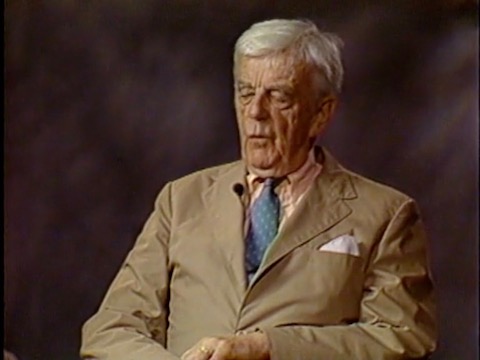
- Transcript
<v Narrator 1>Major funding for this program was provided by the Ivan L. <v Narrator 1>Tillem Foundation. <v Woman 1>Suddenly I realized that this light which I was seeing was fire inside the <v Woman 1>synagogue and just firemen was apparently protecting the other building. <v Woman 2>All of a sudden he turns around ?inaudible? I thought and now he's <v Woman 2>shooting me. Now I am finished. <v Woman 3>And I do remember faintly, he he tried to muster <v Woman 3>a faint smile and waved as if to say <v Woman 3>things will be all right. That was the last time that I ever saw my father. <v Man 1>The home and the synagogue, the two centers of our life <v Man 1>in Mannheim. <v Man 1>Being uh one burning the other one rancid where're we gonna go. <v Man 1>What what am I gonna do? What's gonna happen to me?
<v Man 1>[music plays] <v Narrator 2>Kristallnacht or Crystal Night, the Night of Broken Glass <v Narrator 2>was a brief period in November 1938 of unprecedented violence against <v Narrator 2>the Jews of the Third Reich. <v Narrator 2>Joseph Goebbels, the minister of propaganda who instigated the operation, claimed <v Narrator 2>it was a spontaneous outburst of the people's rage.
<v Narrator 2>It was an unforeseen but loosely organized step in the Nazi policy <v Narrator 2>to remove Jews from German life. [ominous music] <v Paula Klein>[piano music] We had a piano zu h- uh home and I <v Paula Klein>went for piano lessons to Kitzingen. This uh <v Paula Klein>little city near a half an hour from where I was born, <v Paula Klein>and I went every week for piano lessons and I played <v Paula Klein>good piano. <v Rabbi Karl Richter>In Germany, the higher education was separated between boys <v Rabbi Karl Richter>and girls. I went to a boys school. <v Rabbi Karl Richter>The girls had their own schools and the train never met. <v Rabbi Karl Richter>Didn't know where the girl was until I got in from high school. <v Rabbi Karl Richter>[laughs] <v Narrator 2>In the 20s, German Jews considered themselves more German than the Germans. <v Narrator 2>They lived and worked at every level of society.
<v Dr. Fred Grubel>For three years, I was in uh very interesting law office, law <v Dr. Fred Grubel>office of the president of the German Bar Association. <v Dr. Fred Grubel>And I worked also in the central office of the Bar Association. <v Dr. Fred Grubel>Everything looked wonderful. <v Rabbi Karl Richter>In those days in the late 19 hundred 20s, I graduated in <v Rabbi Karl Richter>1928. There was very little anti-semitism uh we lived like <v Rabbi Karl Richter>uh everybody else. <v Raul Hilberg>They did feel accepted and they thought of themselves <v Raul Hilberg>as Germans. <v Raul Hilberg>Uh the major validation for that thought was their participation <v Raul Hilberg>in the First World War. <v Raul Hilberg>In the course of which uh, the Jewish community of Germany, numbering a <v Raul Hilberg>little over 600,000, lost 12000 men killed in <v Raul Hilberg>action. <v Raul Hilberg>Uh that's a very important argument in Germany for equality. <v Ernest Michel>I remember visits to my grandfather's home in the northern part of Germany.
<v Ernest Michel>Uh he was a soldier in World War One. <v Ernest Michel>I remember picture of him hanging on the in the living room on a horse. <v Ernest Michel>He was a member of the German cavalry and very proud having received the <v Ernest Michel>Iron Cross. <v Paula Klein>So uh when I got married, my father said that's <v Paula Klein>?all we have?. I wouldn't let you. <v Paula Klein>I buy you a new one. We bought a new piano ?inaudible?. <v Paula Klein>And this was standing in my living room. <v Paula Klein>All new furniture. <v Paula Klein>Beautiful, beautiful. <v Frederick Oechsner>Berlin at that time was certainly one of the most <v Frederick Oechsner>exciting cities in the world, if not the most exciting. <v Frederick Oechsner>In every respect, it was probably one of the most
<v Frederick Oechsner>bitter sweet towns that you could think of. <v Frederick Oechsner>I say bitter and I will return to this uh with reference to the <v Frederick Oechsner>mood of the people, sweet in terms of creativity <v Frederick Oechsner>and the wonderful things that people were doing in the arts and the sciences. <v Frederick Oechsner>It really masked by the terrible underlay of <v Frederick Oechsner>uh d- depression and joblessness and uh absolute hopelessness, <v Frederick Oechsner>mostly as a result of the of the Treaty of Versailles, which imposed <v Frederick Oechsner>on Germany and this had been just a a t- decade before uh <v Frederick Oechsner>economic hardships, which are difficult to measure. <v Narrator 2>Germany was left bankrupt by the Treaty of Versailles. <v Narrator 2>The world leaders, while stripping Germany of its assets in land, had also redrawn the <v Narrator 2>map of Europe.
<v Jack Goldman>Even though I was born in Germany, my parents had come, especially my father <v Jack Goldman>had come from a part of of uh Europe, that before the <v Jack Goldman>war was Austria and with the war, the family moved <v Jack Goldman>to Western Germany. <v Jack Goldman>And when the end of World War One came about, <v Jack Goldman>that portion became uh Poland. <v Jack Goldman>So he had to have a Polish passport and we had to have a Polish passport. <v Frederick Oechsner>As far as the political situation is concerned. <v Frederick Oechsner>Uh there were 37 different political parties <v Frederick Oechsner>and they were knifing one another and and uh <v Frederick Oechsner>b- betraying one another and deceiving one another for advantage <v Frederick Oechsner>and the Reichstag, which was the parliament. <v Frederick Oechsner>And uh the uh top threat at that time <v Frederick Oechsner>and certainly recognized as such was the National Socialist <v Frederick Oechsner>German Worker's Party or Nazi Party under
<v Frederick Oechsner>Adolf Hitler. <v Raul Hilberg>Indeed, when the clouds of Nazism began to gather towards <v Raul Hilberg>the end of 1932, the Jewish community made an attempt <v Raul Hilberg>to list each soldier who was Jewish, who was killed <v Raul Hilberg>separately and make a book out of it. <v Raul Hilberg>Uh this book uh was presented to Germany's president, Field Marshal <v Raul Hilberg>von Hindenberg on his 85th birthday at the end of <v Raul Hilberg>1932. Now, that was uh the mentality of the German Jews. <v Siegfried Tischauer>My father was in German army. He died for the Germany in the first war. <v Siegfried Tischauer>He is buried in the German military cemetery in France. <v Siegfried Tischauer>My grandfather were in the German army. <v Siegfried Tischauer>It was my country, I was born there. <v Raul Hilberg>[ominous music] When Adolf Hitler came to power on January 30, 1933,
<v Raul Hilberg>uh the situation began to change fairly radically. <v Raul Hilberg>For one thing, it was quite evident during the first few months <v Raul Hilberg>of this new regime uh that the status of equality had ended. <v Raul Hilberg>Now the only question for the Jewish community was whether they could survive <v Raul Hilberg>economically as second class citizens. <v Dr. Fred Grubel>Uh they couldn't wait until the next morning. <v Dr. Fred Grubel>At 5:00 in the afternoon, a special messenger came to my home with a letter <v Dr. Fred Grubel>that since the Reverend Dr. Fred Gruber, <v Dr. Fred Grubel>according to his own indication, is of Jewish <v Dr. Fred Grubel>descent, he is immediately discharged from the judicial service, <v Dr. Fred Grubel>period. <v Dr. Fred Grubel>Next morning, I went back to court to get my books and so on, and I never will forget <v Dr. Fred Grubel>uh how crazy one was at that time. <v Dr. Fred Grubel>Uh a uh Gentile colleague of mine, a lady, was
<v Dr. Fred Grubel>quite upset and said this and what are you doing now? <v Dr. Fred Grubel>And er this terrible what happened since on. <v Dr. Fred Grubel>And I never will forget the crazy answer that I gave uh said colleague. <v Dr. Fred Grubel>Uh, don't worry. It happens to us every few hundred years, and we are still in this <v Dr. Fred Grubel>world. I think she thought me highly crazy. <v Karl Schleunes>The Nazis had promised that they would undo at the very minimum <v Karl Schleunes>their solution to the Jewish problem, as they called it, was to undo <v Karl Schleunes>that process of assimilation that began in the late <v Karl Schleunes>18th and early 19th century. <v Karl Schleunes>In other words, to once again separate Jews from Germans. <v Alfons Heck>It also had very personal implications because my kindergarten friend <v Alfons Heck>Heintz ?Erman? was Jewish and he was moved from <v Alfons Heck>our elementary school 6 weeks after we started school. <v Alfons Heck>I knew he was Jewish. In fact, I had gone to the synagogue with
<v Alfons Heck>him once for his parents' wedding. <v Alfons Heck>I spend a lot of time in their home. <v Alfons Heck>And you know, I was ?canceling? it didn't make any difference to us. <v Alfons Heck>Merely was a a concept that we didn't understand. <v Raul Hilberg>By and large, the first measures of what I would call ghettoisation <v Raul Hilberg>began. This is not a visible ghetto, but it did <v Raul Hilberg>consist of such measures at first as prohibition of <v Raul Hilberg>intermarriages, and later on the necessity to carry out around <v Raul Hilberg>the card with various markings on it. <v Raul Hilberg>Uh for example, Jews had to have the middle name for men, Israel, and for <v Raul Hilberg>women, Sara. <v Raul Hilberg>Uh their passports were marked with a J. <v Raul Hilberg>And there were still other ways of identifying Jews. <v Rabbi Manfred Fulda>Was an old Jewish custom that among the Orthodox on the <v Rabbi Manfred Fulda>Sabbath, every Jew, uh every male Jew would wear a top hat ?inaudible?. <v Rabbi Manfred Fulda>And of course, when that was done, when the Nazis were in power, that was simply a signal
<v Rabbi Manfred Fulda>for them to be beaten up and to be um um <v Rabbi Manfred Fulda>persecuted. So what was done, I have vivid memories of that. <v Rabbi Manfred Fulda>In the synagogue itself, the shul, which is the name for synagogue, they built <v Rabbi Manfred Fulda>like wooden uh cubicles where every male Jew was able <v Rabbi Manfred Fulda>to store his ?inaudible? his top hat. <v Rabbi Manfred Fulda>And therefore we uh wore regular clothing to the synagogue. <v Rabbi Manfred Fulda>But once in the synagogue, the men would then go to the cubicle, take out the top hat <v Rabbi Manfred Fulda>and wear the top hat only for services, at the end of services, they'd put it back into <v Rabbi Manfred Fulda>the cubicle. <v Raul Hilberg>Already in 1933, with some exceptions, those in public service which included <v Raul Hilberg>teachers, were to be dismissed. <v Peter Gay>The head of the Gymnasium was obviously an OK figure for the new regime. <v Peter Gay>Called up my father and asked him to come and see him. <v Peter Gay>Uh which was a rather astonishing thing. <v Peter Gay>I was doing well and he didn't know what the problem was. <v Peter Gay>Well, it wasn't a problem. There was an argument that he was going to give my father and <v Peter Gay>did that uh since I was a good student, I should go the classical route and learn
<v Peter Gay>Latin. Uh but anyway, I tell the story only to say that this was the atmosphere <v Peter Gay>even in 1935. Even in a completely, you know, <v Peter Gay>uh aryanized school, no Jewish teachers and uh and so on. <v Peter Gay>So that uh even the head of the school caring about which branch I would take, <v Peter Gay>assuming that I had some sort of future, uh it's characteristic of the uh <v Peter Gay>very mixed signals that I was getting. <v Peter Gay>Uh obviously with lots of negative ones too. <v Narrator 2>Children's books obviously are a very important uh means of communicating an <v Narrator 2>idea, propagandistic or otherwise, to a culture <v Narrator 2>and the folktale fairy tale <v Narrator 2>text books were widely circulated, illustrated, translated <v Narrator 2>into the anti Semitic idiom. <v Alfons Heck>Herr Becker, our elementary t- teacher was quite a patriarch <v Alfons Heck>and also a fanatic Nazi, uh- made sure that we understood
<v Alfons Heck>that these people were different? <v Alfons Heck>Now this was based on a textbook. <v Raul Hilberg>Little children are told to be aware of them and the way we tell <v Raul Hilberg>our children, y'know don't talk to strangers, uh that comes to be <v Raul Hilberg>translated very directly, into don't talk to <v Raul Hilberg>the Jew. Stay away from the Jew. <v Alfons Heck>I joined the Hitler Youth I- because I wanted to for the adventure, not because <v Alfons Heck>of the ideology. That was already a part of me. <v Alfons Heck>I would have never questioned it. <v Ernest Michel>I remember, I had two non-Jewish boy friends. <v Ernest Michel>Uh we were very close. <v Ernest Michel>In 33, 34, and then it changed. <v Ernest Michel>I remember even their names. <v Ernest Michel>Kurt Hess and Heinz Munz. <v Ernest Michel>Uh they were lived in my neighborhood. We were as close as can be. <v Ernest Michel>In 34, 1935, they became members of the Hitler Youth. <v Ernest Michel>And they didn't know me any more.
<v Narrator 2>Jewish emigration after Hitler came to power was slow and steady. <v Narrator 2>Approximately a hundred and fifty thousand over a five year period, but the majority <v Narrator 2>felt that the persecution they were suffering was temporary and that there was no need <v Narrator 2>for them to leave. <v Siegfried Tischauer>It would blow over. Sooner or later, it has to go. <v Siegfried Tischauer>And that was bigger heads than I. Much bigger head [chuckling] have had <v Siegfried Tischauer>the same opinion that will blow over and we're- won't last. <v Siegfried Tischauer>Uh it didn't last a thousand years, but it lasted 12 years. <v Narrator 2>[music plays] In those years, the nature of the Jewish communities changed. <v Narrator 2>As they were excluded from the services of the German state, they made their own. <v Narrator 2>They set up regular schools, welfare and loan organizations, as well as cultural <v Narrator 2>groups. They also set up special mechanical and agricultural schools. <v Narrator 2>To provide practical skills for the young prior to going overseas. <v Dr. Fred Grubel>But we were uh optimistic.
<v Dr. Fred Grubel>And uh therefore, the entire tendency was <v Dr. Fred Grubel>the young people should leave and the old people will stay here, one of these days <v Dr. Fred Grubel>this whole nonsense will be over. <v Dr. Fred Grubel>But the youngsters should not wait for it. <v Dr. Fred Grubel>The old people will stick it out. <v Dr. Fred Grubel>And, uh, somebody, some good journalist coined <v Dr. Fred Grubel>a very touching word in German aus Kindern werden Briefe. <v Dr. Fred Grubel>That is, children become letters from abroad. <v Dr. Ruth Westheimer>My favorite um thinking about my mother <v Dr. Ruth Westheimer>is that every evening I told you that I was a little spoiled, every evening <v Dr. Ruth Westheimer>but spoiled in a good sense. Maybe the same way that I spoiled my children. <v Dr. Ruth Westheimer>Uh every evening was laying down with me until I fell <v Dr. Ruth Westheimer>asleep. Now, from a pedagogical point of view, you know that I would say, hey, hold it, <v Dr. Ruth Westheimer>don't do that. But I do remember very vividly that
<v Dr. Ruth Westheimer>um either my father or my mother read me stories and that she actually held me in her <v Dr. Ruth Westheimer>arms until I fell asleep. <v Miriam Cohn>I loved the house in which we lived. It was like a large type Westchester <v Miriam Cohn>home, four stories high with a caretaker and a big garden. <v Miriam Cohn>And I really loved the house. <v Miriam Cohn>My mother and my father, who as a rabbi and <v Miriam Cohn>his spouse felt that we were extremely exposed <v Miriam Cohn>as the only Jewish couple in a few blocks. <v Miriam Cohn>And my mother literally did not feel safe there anymore. <v Miriam Cohn>And we took up residence in the apartment reserved <v Miriam Cohn>for rabbis in the synagogue itself. <v Narrator 2>[music plays] Hitler had always had expansionist aims. <v Narrator 2>In March 1938, the German army moved into Austria quickly, making <v Narrator 2>it part of the Third Reich. <v Narrator 2>The Nazis anti-Semitic policies were put into force with a vengeance by the occupiers
<v Narrator 2>as well as the native born. <v Narrator 2>Suddenly, Austrian Jews needed to emigrate, causing a refugee crisis. <v Narrator 2>Franklin Roosevelt convened a meeting to address the problem, which was held in Evian <v Narrator 2>in France. <v Karl Schleunes>You have your own conference, uh some 30 or more governments represented, <v Karl Schleunes>frankly, accomplished virtually nothing. <v C. Brooks Peters>Rabbi Leo Beck, who is the chief rabbi of Germany, told me afterwards <v C. Brooks Peters>we had talked before and we talked again after the conference that um, <v C. Brooks Peters>I remember I shall never forget the words he used. <v C. Brooks Peters>Uh uh he thought that Roosevelt must have had something up his sleeve <v C. Brooks Peters>or he wouldn't have had the conference convened. <v C. Brooks Peters>And when the conference turned out to be a total failure, <v C. Brooks Peters>uh I remember Rabbi Beck saying uh the future is <v C. Brooks Peters>dim. Nobody wants us. <v C. Brooks Peters>The important thing to me is the Nazis,
<v C. Brooks Peters>as every reporter in Berlin realized at the time, <v C. Brooks Peters>saw that nobody was willing to take these people and therefore <v C. Brooks Peters>anything that they would do in all probability would not meet with more than <v C. Brooks Peters>verbal remonstrance. <v Narrator 2>[ominous music plays] But Germany still wanted its Jews to emigrate. <v Narrator 2>The government closely monitored any changes in the world's policies towards Jews. <v Karl Schleunes>Polish government in uh early October of 1938 issued <v Karl Schleunes>a decree to the effect that uh <v Karl Schleunes>all Polish citizens, including the Polish Jews <v Karl Schleunes>living in Germany at the time, if they had lived <v Karl Schleunes>uh outside of the country for more than 5 consecutive years, would require a revalidation <v Karl Schleunes>of their passports and uh a consulate in order to allow them to return <v Karl Schleunes>to Poland.
<v Karl Schleunes>The Polish calculation being that the uh increased persecution <v Karl Schleunes>in Germany of Jews might in fact lead some of the 60 <v Karl Schleunes>or perhaps many or all of these 60 to 70 thousand Jews to attempt to <v Karl Schleunes>return to Poland. <v Karl Schleunes>This became very clear as soon as these people began <v Karl Schleunes>going to Polish consulates in Germany to get their Polish passports <v Karl Schleunes>revalidated, the stamp is refused. <v Karl Schleunes>The picture becomes clear. <v C. Brooks Peters>The Germans heard about this and they told the Poles, look, we don't <v C. Brooks Peters>want an additional 10 or 15 thousand <v C. Brooks Peters>uh Jews who are stateless when already we are <v C. Brooks Peters>interested only in getting rid of the Jews who are German Jews. <v C. Brooks Peters>If you persist in your policy, we will take <v C. Brooks Peters>countermeasures. <v Jack Goldman>And in October 1938 they
<v Jack Goldman>had a roundup of Jews with Polish passports. <v Jack Goldman>Uh in Mannheim, they only took the men over <v Jack Goldman>18 in Ludwig ?inaudible?, which was just across the uh <v Jack Goldman>River Rhine. The entire family was taken. <v Jack Goldman>My father had been among those who had been arrested that day. <v Jack Goldman>And then as we found out, he and all the others were shipped uh to <v Jack Goldman>Poland. And they were in ?Spunchen? that's right on a border, <v Jack Goldman>but on the Polish side. <v Narrator 2>The situation in Poland was bleak. <v Narrator 2>The Polish government refused to accept the people dumped across the border who were put <v Narrator 2>up in homes, old army barracks, and bombers. <v Zindel Grynszpan>[inaudible speaking]. <v Narrator 2>Zindel Grynszpan. Who had also been shipped to ?inaudible? <v Narrator 2>and gave testimony at the trial of Adolf Eichmann. <v Zindel Grynszpan's Translator>The rain was driving hard. <v Zindel Grynszpan's Translator>People were falling and fainting.
<v Zindel Grynszpan's Translator>Some were suffering heart attacks. On all <v Zindel Grynszpan's Translator>sides I saw old men and women <v Zindel Grynszpan's Translator>and our suffering was great. <v Zindel Grynszpan's Translator>There was no food. We did not ?inaudible? <v Zindel Grynszpan's Translator>from Thursday to eat any German bread. <v Zindel Grynszpan's Translator>[speaking Polish] Then I wrote a letter to German, no to friends, to my son. <v Zindel Grynszpan's Translator>Don't write any more letters to Germany. We are now in ?inaudible? <v Zindel Grynszpan's Translator>in Poland. [music plays] <v Narrator 2>His son, Hershel Grynszpan, had left Germany in 36 to try to find something <v Narrator 2>better for himself. He ended up living illegally in Paris. <v Ron Roizen>He was having trouble finding work and he was um um <v Ron Roizen>you know, his residency couldn't be regularised. <v Ron Roizen>His parents, uh he heard from a letter from his father had been deported <v Ron Roizen>and this expulsion late in in uh October. <v Ron Roizen>So he was very concerned over his family's welfare. <v Ron Roizen>I think he wanted- had his sights set on shooting the German ambassador as a symbolic
<v Ron Roizen>action. ?He? finally made his way into the embassy and said that <v Ron Roizen>he had an important package to deliver to someone, could he <v Ron Roizen>see a member of the location. And he was showing it to ?inaudible? <v Ron Roizen>Ernst vom Rath, vom Rath's office. <v Ron Roizen>Vom Rath was a third secretary. <v Ron Roizen>I think the lowest ranking officer at the uh, at the embassy and apparently <v Ron Roizen>rose to greet him. And Grynszpan wasted little time in in uh <v Ron Roizen>unloading his revolver. <v Narrator 2>Vom Rath was severely wounded and Grynszpan was quietly handed over to the French police. <v Ron Roizen>He was quoted uh after the assassination to make <v Ron Roizen>a rather eloquent uh uh three line comment about <v Ron Roizen>uh that everywhere he'd gone, he'd been chased like a dog and that being a Jew wasn't <v Ron Roizen>a crime an' the Jewish people uh had a right to exist on the earth somewhere, <v Ron Roizen>and that he uh really felt hunted uh <v Ron Roizen>everywhere he'd been in that no uh uh no place would accept him.
<v Narrator 2>Late on the afternoon of the 9th in Paris, Ernst vom Rath died. <v Ernest Michel>And the moment we heard it in the news, there was a bulletin. <v Ernest Michel>We knew, ah! This may lead to something. <v Narrator 2>[music plays] November the 9th was also the 15th anniversary of the Munich Beer Hall <v Narrator 2>Putsch, which was the Nazi's failed attempt to seize power by revolution. <v Narrator 2>Those who died were revered as heroes of the party. <v Narrator 2>This was celebrated annually by the Nazi old guard, in particular the storm troopers. <v Narrator 2>Munich was the center of celebrations. <v Karl Schleunes>On November 9th, Hitler and Goebbels and ?Himmler? <v Karl Schleunes>and ?Garing? and the entire Nazi hierarchy were gathered in <v Karl Schleunes>Munich to to commemorate this most sacred, sacred <v Karl Schleunes>of days. And it's uh I think it's about 7 o'clock. <v Karl Schleunes>News reaches Munich of vom Roth's death in <v Karl Schleunes>Paris. Um.
<v Karl Schleunes>We have some witnesses of people who sort of heard, certainly saw <v Karl Schleunes>and heard what was going on. <v Karl Schleunes>They recall uh Goebbels being in very close conversation <v Karl Schleunes>with Hitler, whispering for a time. <v Karl Schleunes>And one uh witness overhearing at least uh <v Karl Schleunes>the phrase that the SA, the Nazi storm troopers, should be allowed <v Karl Schleunes>perhaps to have a final fling. <v Karl Schleunes>[music plays] And Goebbels is left to make the speech. <v Karl Schleunes>Again an exact record of what he said uh, was not kept. <v Karl Schleunes>He spoke uh off the cuff, but enough witnesses suggest <v Karl Schleunes>that he did allude, of course, to the crime in Paris. <v Karl Schleunes>The Jewish crime in Paris, told the audience about the death vom <v Karl Schleunes>Roth and said that the party leadership <v Karl Schleunes>would uh have nothing against an expression
<v Karl Schleunes>of uh resentment on the part of the German people <v Karl Schleunes>against this Jewish crime. <v Raul Hilberg>The Nazi Party and its formations were not to <v Raul Hilberg>enter into any activities <v Raul Hilberg>of violence against the Jews in the streets or in their homes. <v Raul Hilberg>But on the other hand, they were not going to prevent, they <v Raul Hilberg>were not supposed to prevent any spontaneous <v Raul Hilberg>outburst of anger within the German population. <v Raul Hilberg>These orders went out in the late evening hours of the night <v Raul Hilberg>and were interpreted by party officials to mean that the party <v Raul Hilberg>should organize actions against the Jews, but <v Raul Hilberg>that it should not appear as the organizer of <v Raul Hilberg>these actions. [ominous music plays]
<v Narrator 2>Quickly, with little or no attempts at disguise, storm troopers throughout the country <v Narrator 2>began to take their revenge. <v C. Brooks Peters>But it almost uh precisely to wait in a motorcade <v C. Brooks Peters>came down the Friedrichstrasse, made a right turn <v C. Brooks Peters>into the Leipzigestrasse and after the entire <v C. Brooks Peters>motorcade, which consisted of a dozen plus or minus <v C. Brooks Peters>a couple Mercedes touring cars, open touring <v C. Brooks Peters>cars with the tops down. <v C. Brooks Peters>After the entire motorcade had turned in to the Leipzige Street <v C. Brooks Peters>uh at a signal from a man in the first the leading car in <v C. Brooks Peters>the motorcade, the entire motorcade came to a stop. <v C. Brooks Peters>At another signal from the man in the leading car 4 people <v C. Brooks Peters>of the 5 in each of these automobiles, alighted,
<v C. Brooks Peters>jumped from the cars and proceeded 2 in each <v C. Brooks Peters>car with an iron crowbar, the other 2 wearing gloves, <v C. Brooks Peters>presumably to prevent their getting cut, uh <v C. Brooks Peters>the men with the crowbars banged in the showcase windows <v C. Brooks Peters>of every Jewish owned shop. [ominous music] <v Peter Gay>Now, the first thing I saw was the kind of ?inaudible? <v Peter Gay>an enormous place, almost as large as Macy's <v Peter Gay>it occupies... occupied then, occupies now a large city block, <v Peter Gay>at about 6 stories. And what I saw was uh an <v Peter Gay>unbelievable mess of smashed windows, mannequins on the on on
<v Peter Gay>the street. <v Frederick Oechsner>This uh uh ?din? <v Frederick Oechsner>of of breaking glass took place in uh in um an an amazing <v Frederick Oechsner>silence otherwise. <v Frederick Oechsner>I didn't hear any shouts, noises. <v Frederick Oechsner>It was as quiet as an execution. <v Narrator 2>The smashed glass in the store windows of Berlin was just one part of the loosely <v Narrator 2>organized operation simultaneously occurring all over Germany. <v Helga Franks>When I came out, it was a beautiful sunny morning, uh but <v Helga Franks>I smelled something in the air and I said gee how come it's... <v Helga Franks>what's burning? I mean, it was too late for leaves and s- <v Helga Franks>and I turned uh to the right and I <v Helga Franks>s- saw the temp-, the synagogue, and I saw lights inside <v Helga Franks>the synagogue. I said, what's going on?
<v Helga Franks>In morning? What is it? A holiday? And I could figure out there was no holiday in <v Helga Franks>November. And then I suddenly looked and <v Helga Franks>I saw a decrepit fire truck standing in front of the temple, a <v Helga Franks>small one. I said, what's that fire truck doing? <v Helga Franks>And with that I see one fireman stands <v Helga Franks>standing on behind the synagogue and on top of another <v Helga Franks>building and having a hose in his hand. <v Helga Franks>And suddenly I realized that this light which I was seeing <v Helga Franks>was fire inside the synagogue. <v Helga Franks>And just firemen was apparently protecting the other building. <v Alfons Heck>I saw the destruction of the synagogue, which was less <v Alfons Heck>than uh 400 yards from our home. <v Alfons Heck>It wasn't burned, but it was destroyed totally on the inside by uh... <v Alfons Heck>SR troopers. Some civilians, some members of the SS and pretty <v Alfons Heck>soon there were perhaps 100 people standing outside watching the
<v Alfons Heck>destruction. <v Alfons Heck>And it was a strange feeling you sort of were stunned by the brutality <v Alfons Heck>of it. But there was also a certain amount of excitement in it. <v Alfons Heck>You thought, if the state can do this, it must be really powerful. <v Helga Franks>And I ran in crying and I was I remember I was crying. <v Helga Franks>I said, the synagogue is burning. <v Helga Franks>And uh my father, ya know got up and ran <v Helga Franks>on next to the window and looked out and said, well, why aren't they doing <v Helga Franks>anything? He was upset. There was this fire uh man. <v Helga Franks>And I don't know what possess- possessed me, but I said they don't want to do anything. <v Alfons Heck>And I must say, the destruction... <v Alfons Heck>it worked a certain amount of fascination, especially in us young. <v Alfons Heck>You almost wanted to smash things, too. <v Alfons Heck>I think that would be a correct description.
<v Alfons Heck>And many people seem to ?it does? <v Alfons Heck>seem to share that view because several others did go into the synagogue <v Alfons Heck>and help to smash things. <v Alfons Heck>It was in fact my uncle who had turned my friend and I around and chased us home. <v Narrator 2>[music plays] Over 1000 synagogues were destroyed in Germany through vandalism, through <v Narrator 2>fire and through explosives. <v Narrator 2>The fire and police departments had been ordered not to interfere with the attacks on <v Narrator 2>synagogues in stores, except the extent of protecting other Aryan property. <v Narrator 2>But the terror didn't stop there. <v Narrator 2>It extended into people's homes. <v Paula Klein>When they came in, but I ?hided? <v Paula Klein>my husband with my baby.
<v Paula Klein>My daughter was a little girl. <v Paula Klein>So my in-laws set my husband and this baby, <v Paula Klein>we hide it all up in the attic you know. <v Jack Goldman>My mother opened up the door and they just pushed her aside as they came <v Jack Goldman>in. There are a number of them. <v Jack Goldman>I don't remember how many of them came in, but there was a group, not just one or two. <v Jack Goldman>And as they were going through the apartment looking for items to uh to throw out the <v Jack Goldman>window and ask you for specific items such as prayer books. <v Jack Goldman>Uh I was dumbfounded. <v Paula Klein>Every house, every Jewish house. <v Paula Klein>You could see nothing in stores, stones and glass, some glasses, <v Paula Klein>some dishes on furniture lying there and <v Paula Klein>I can tell you everything broke, broke. <v Ernest Michel>I went to our apartment and a frightful sight was <v Ernest Michel>there. The apartment was ransacked.
<v Ernest Michel>My father had been arrested. <v Ernest Michel>My sister was not there. I didn't know where she was. <v Ernest Michel>My mother was beaten and the whole furniture, everything <v Ernest Michel>was in disarray. <v Paula Klein>The Kristallnacht came. <v Paula Klein>And he saw this piano standing there. <v Paula Klein>I think 50 went like crazy <v Paula Klein>of this piano. <v Paula Klein>Broke this piano, you can't believe it. <v Paula Klein>Left ?what little? wood. <v Paula Klein>I can't believe it. <v Miriam Cohn>My mother ran into the bedroom, which I shared with my <v Miriam Cohn>sister, and she said that we had to get up immediately <v Miriam Cohn>because the Nazis were coming into the building and were <v Miriam Cohn>already in the synagogue next door. <v Rabbi Manfred Fulda>So my two sisters, my brother and I, the 4 children, were alone <v Rabbi Manfred Fulda>in the apartment that night, which turned out to be Kristallnacht.
<v Rabbi Manfred Fulda>So we really didn't know exactly what was happening. <v Rabbi Manfred Fulda>We do remember the following. <v Rabbi Manfred Fulda>We got a call from a brother of my father, and he urged <v Rabbi Manfred Fulda>us immediately to try to close the doors to our house, to <v Rabbi Manfred Fulda>pull down the shutters and give the impression as if no one were home. <v Miriam Cohn>So when I left my bedroom, I was met by <v Miriam Cohn>a hulking Nazi with his usual black boots <v Miriam Cohn>that we are all familiar with. <v Miriam Cohn>And I became frightened. <v Miriam Cohn>It was a very big man. It seemed like a very big man. <v Miriam Cohn>And he seemed menacing. <v Rabbi Manfred Fulda>And just at that time, we heard a key turn in our door. <v Rabbi Manfred Fulda>And who walked in? It was the son of the uh Catholic family <v Rabbi Manfred Fulda>that lived on the second floor and this son who at that time was 17, his name <v Rabbi Manfred Fulda>was Felix. <v Rabbi Manfred Fulda>Uh when he saw me whimpering and he saw all of us like uh little scared rabbits, he said, <v Rabbi Manfred Fulda>what's going on? And we explained to him and he immediately said,
<v Rabbi Manfred Fulda>You have nothing to worry about,Felix is here. <v Miriam Cohn>And as I came to the first floor, I saw <v Miriam Cohn>the father of the caretaker of the building standing there <v Miriam Cohn>in a long night white shirt, which is what Europeans wore at that <v Miriam Cohn>time. Absolutely staring at and glued to <v Miriam Cohn>a spot which was to the right of me. <v Miriam Cohn>And as I looked at that spot, I literally saw the interior <v Miriam Cohn>of the synagogue in flames, and slowly the smoke <v Miriam Cohn>was enveloping our side of the building. <v Rabbi Manfred Fulda>And we thought, you know, it might be bravado of a 17 year old. <v Rabbi Manfred Fulda>What he did was he immediately changed to his Hitler Youth uniform and <v Rabbi Manfred Fulda>then he leaned out the window on the second floor. <v Rabbi Manfred Fulda>And when the mob came to our house, he said, this house has <v Rabbi Manfred Fulda>been sold to Aryans. <v Rabbi Manfred Fulda>Any damage you will do, you'll be responsible for there are no more Jews here.
<v Rabbi Manfred Fulda>And uh so in a sense uh, it was just a young, Catholic, <v Rabbi Manfred Fulda>?humane? individual, who saved our lives. <v Rabbi Karl Richter>Regardless, of course, we attended to everyone who came in, it was like a field <v Rabbi Karl Richter>hospital during a war. <v Rabbi Karl Richter>Uh doctors and nurses uh chasing around, trying to bind up wounds, to set <v Rabbi Karl Richter>uh broken bones and so forth. <v Rabbi Karl Richter>I remember one 90 year old woman whose ear had been smashed with an ax <v Rabbi Karl Richter>and uh, she died a few days later. <v Rabbi Karl Richter>But this was the kind of outrage that happened in the uh uh <v Rabbi Karl Richter>heat of this uh Kristallnacht. <v Frederick Oechsner>It was eerie. Of course, it was terrifying. <v Frederick Oechsner>It was just uh [stuttering] <v Frederick Oechsner>everything gone wild. I mean, it was what you ?inaudible? <v Frederick Oechsner>have nightmares about. <v Ernest Michel>[music plays] The home and the synagogue, the two centers of our life <v Ernest Michel>in Mannheim uh being uh one burning, the other
<v Ernest Michel>one ransacked. Where're we gonna go? What, what am I gonna do? <v Ernest Michel>What's gonna happen to me? <v Narrator 2>Late on the afternoon of the 10th, Goebbels ordered an end to the destruction. <v Narrator 2>The reaction of the general population was mixed. <v Alfons Heck>The next day in school, Herr Becker, our elementary school teacher, <v Alfons Heck>was a very straight laced Christian, very anti-Semitic <v Alfons Heck>explained to us that it's incredible that property is <v Alfons Heck>destroyed. But he said we have to show these people that they cannot get away <v Alfons Heck>with the murder of German diplomats. <v Rabbi Karl Richter>Uh but there were other people I remember that a pious Christian woman came to my mother <v Rabbi Karl Richter>the day after it happened and said after what they did to the synagogues, <v Rabbi Karl Richter>fire will fall from heaven and destroy our cities.
<v Rabbi Karl Richter>Now, she meant it in the biblical sense, but as we know, it happened in a real sense. <v Rabbi Karl Richter>When the German cities were destroyed by bombing in the Second World War. <v Narrator 2>[music plays] One part of the Kristallnacht continued. <v Narrator 2>The arrest of 20,000 Jewish males had been ordered by the SS. <v Narrator 2>They and in some cases, the local police, continued to arrest people, <v Narrator 2>process them through the local jails and ship them to the concentration camps of Dachau, <v Narrator 2>Sachsenhausen and Buchenwald. <v Paula Klein>?On the? next day, they came. <v Paula Klein>?inaudible? he said ?inaudible?, ya know? <v Paula Klein>And said, I'm very sorry to my husband. <v Paula Klein>I'm so sorry. I have to take you in. <v Dr. Ruth Westheimer>And I do remember looking out of the window to the street where my father <v Dr. Ruth Westheimer>or father boarded a truck. <v Dr. Ruth Westheimer>I do not remember any brutality there.
<v Dr. Ruth Westheimer>And no, there was no screaming. It was very quiet. <v Dr. Ruth Westheimer>My father was a short, slight man with a mustache and I do remember <v Dr. Ruth Westheimer>faintly, he he tried to muster a faint smile <v Dr. Ruth Westheimer>and waved as if to say things will be all right. <v Dr. Ruth Westheimer>That was the last time that I ever saw my father. <v Siegfried Tischauer>In the afternoosn [coughs] uh we were or <v Siegfried Tischauer>always ?inaudible? around 100, approximately 100 <v Siegfried Tischauer>men. We were marched uh four <v Siegfried Tischauer>abreast to the railway station, flanked on both sides <v Siegfried Tischauer>by police and SS. <v Dr. Fred Grubel>The next day we got all our stuff back. <v Dr. Fred Grubel>We are put on, uh uh, ?inaudible? <v Dr. Fred Grubel>and shipped off to the, uh, station. <v Dr. Fred Grubel>Destination Buchenwald.
<v Narrator 2>[music plays] The concentration camps had been set up just after Hitler came to power. <v Narrator 2>In 1938, they were still labor camps, the ovens and gas chambers <v Narrator 2>were still in the future. <v Siegfried Tischauer>As we arrived there, it is as I've seen it with my own eyes <v Siegfried Tischauer>an elderly man they held the foot there, so he fall and broke his neck. <v Siegfried Tischauer>But it didn't matter to them. <v Dr. Fred Grubel>They uh told us that the water <v Dr. Fred Grubel>is spoiled and the water is infected, <v Dr. Fred Grubel>and we only get sick if we drink water. <v Dr. Fred Grubel>So for three or four days, we didn't drink until it started <v Dr. Fred Grubel>raining, and I never my life would have thought that I happy that it rained so that <v Dr. Fred Grubel>I can drink rainwater because the rainwater we knew is clean. <v Siegfried Tischauer>I don't know why, but stuck his rifle right to my stomach and
<v Siegfried Tischauer>said, what would you say now, Jew, if I shoot you. <v Siegfried Tischauer>I have always been open, I have never beaten around the bush, I am very, <v Siegfried Tischauer>very open on this. <v Siegfried Tischauer>I speak up, but the good Lord protected me. <v Siegfried Tischauer>I kept my mouth shut because what I would have said would have been the wrong word. <v Siegfried Tischauer>Eh I would have said I ?inaudible? like it or because he would have probably gotten a <v Siegfried Tischauer>medal for shooting me. <v Dr. Fred Grubel>One thing was very touching. <v Dr. Fred Grubel>When the Orthodox rabbis went around and told <v Dr. Fred Grubel>the Orthodox people that they commit a sin <v Dr. Fred Grubel>if they don't eat this, certainly not kosher food, <v Dr. Fred Grubel>because the worst sin is to endanger your own life. <v Siegfried Tischauer>And uh had to watch the execution <v Siegfried Tischauer>of 4 or 5, I'm not quite sure the one uh the which of the two <v Siegfried Tischauer>uh prisoners on the gallows.
<v Siegfried Tischauer>First they would play music, ya know, waltzes, marches and <v Siegfried Tischauer>uh like this a Octoberfest ?inaudible? <v Siegfried Tischauer>almost say. <v Siegfried Tischauer>And uh we were forced, we had to cede. <v Siegfried Tischauer>That uh I think everybody did, what's that uh, we'll never <v Siegfried Tischauer>forget that. <v Narrator 2>Most who died in the camps died from the bad conditions. <v Rabbi Karl Richter>The sad times began when the first coffins arrived from <v Rabbi Karl Richter>the concentration camps of Dachau and Buchenwald. <v Rabbi Karl Richter>The coffins were closed, we were not permitted to open them. <v Rabbi Karl Richter>Uh we were told to proceed immediately to the cemetery for interment. <v Rabbi Karl Richter>There was always a secret policeman watching the procession <v Rabbi Karl Richter>and listening to it. <v Rabbi Karl Richter>We were strictly warned not to mention the cause of death, however it happened.
<v Narrator 2>Some of the men were released in a few weeks. <v Narrator 2>Some were held for months. <v Narrator 2>Usually their release was because their families had arranged for emigration. <v Paula Klein>So, he asked me, who do you want to see? <v Paula Klein>I said ?inaudible?. No, you Jew! <v Paula Klein>I said, oh, yes, I want to see him. <v Paula Klein>I want to speak to him. From one door to the other door. <v Paula Klein> I was shaking ya know. <v Paula Klein>So all of a sudden we- I came in and he was standing with the back, <v Paula Klein>he wouldn't look at me. <v Paula Klein>And his face on the table. <v Paula Klein>What do you want? <v Paula Klein>So I said I'm ?a Jude?. <v Paula Klein>And my husband is in Dachau. <v Paula Klein>And I want my husband. <v Paula Klein>And you won't listen to me. He listened to me. <v Paula Klein>All of a sudden he turns around. <v Paula Klein>?inaudible? I thought and now he's sho- shooting me.
<v Paula Klein>Now I am finished. I'm ?inaudible?. <v Paula Klein>Here, I said. Oh, no, I don't need money. <v Paula Klein>I want my husband. <v Paula Klein>?inaudible? I said or ?inaudible? <v Paula Klein>more, I don't know, he's in Dachau. <v Paula Klein>He's went on the telephone. I heard it speak. <v Paula Klein>And then he said, go home, you Jew. <v Paula Klein>I went home and I told my father and my in-laws. <v Paula Klein>What I did. You ?inaudible? <v Paula Klein>for nothing, we don't believe it, and ya know. <v Paula Klein>3, 4 days later my husband came. <v Paula Klein>[sighs] But you couldn't believe how he looked. <v Dr. Fred Grubel>We are told immediately after arrival we should report to the <v Dr. Fred Grubel>Gestapo. <v Dr. Fred Grubel>And some how or other I even was able to <v Dr. Fred Grubel>uh send a cable or a a telegram to my wife that with which train <v Dr. Fred Grubel>I would come and she picked me up and when I said, we know that was in the evening, I <v Dr. Fred Grubel>have to go to the Gestapo. She says, no, you feel safe to take it.
<v Dr. Fred Grubel>I have to take a bath and we go home. <v Dr. Fred Grubel>Tomorrow is time enough. <v Dr. Fred Grubel>She was right. [music plays] <v Narrator 2>In the meantime, the body of Ernst vom Rath was returned to Germany. <v Narrator 2>In the hours before he died he had been promoted and his funeral was a state event <v Narrator 2>attended by Hitler himself. <v Narrator 2>Hershel Grynszpan was never tried. <v Narrator 2>No one knows what happened to him. <v Narrator 2>He disappeared while being held by the Germans during World War 2. <v Narrator 2>On November 12th, meeting was chaired by Hermann Göring, Hitler's right hand man. <v Narrator 2>It evaluated what had happened and ended with several decrees. <v Raul Hilberg>It was a mess as far as Göring was concerned. <v Raul Hilberg>He said this is a terrible thing. It must never happen again. <v Karl Schleunes>Not because uh Jews have been hurt. <v Karl Schleunes>As a matter of fact, at one point he said, I rather that you would have killed 200 Jews,
<v Karl Schleunes>than destroyed all of this uh, destroyed all of this property. <v Karl Schleunes>It's going to take uh uh almost a year to replace <v Karl Schleunes>the glass, th- the glass alone. <v Raul Hilberg>In general, uh the voluntary Aryanisation program became compulsory <v Raul Hilberg>by the end of the year. <v Raul Hilberg>Liquidations of Jewish enterprises were not pursued. <v Raul Hilberg>Uh Jewish doctors and lawyers were virtually out of business except insofar <v Raul Hilberg>as they still had Jewish clients or patients. <v Raul Hilberg>In short, the Jewish economy was in a total shambles that had <v Raul Hilberg>begun to disappear and emigration was a dire <v Raul Hilberg>necessity. So that's why Jews began to go to Cuba. <v Raul Hilberg>They went to Shanghai. They went anywhere they could go. <v Dr. Ruth Westheimer>You see, what I do remember very vividly is my mother, my grandmother, <v Dr. Ruth Westheimer>because don't forget, my father already was taken away to a detention camp. <v Dr. Ruth Westheimer>My mother and my grandmother sitting me down and telling me that I'm
<v Dr. Ruth Westheimer>supposed to go to Switzerland with a group of children and my crying and saying, I don't <v Dr. Ruth Westheimer>wanna go. And I do remember vividly that they said, <v Dr. Ruth Westheimer>if you go, your father can come back home and then we'll try <v Dr. Ruth Westheimer>we'll pick you up in 6 months. <v Dr. Ruth Westheimer>Today, I know that they knew that that wasn't true because I remember the letters I got <v Dr. Ruth Westheimer>into Switzerland, which I still have. <v Dr. Ruth Westheimer>Uh where my grandmother said it's not going to be so bad and I'm not going to move and uh <v Dr. Ruth Westheimer>I won't go further than the cemetery. <v Dr. Ruth Westheimer>Was my grandmother's um uh saying because she believed in <v Dr. Ruth Westheimer>that things may not be so bad. It would be like a bad time that would pass over. <v Dr. Ruth Westheimer>[music plays] <v Edwin H. Hughes>A plee for the Jew is now a moral plee for our selves. <v Edwin H. Hughes>Humanity cannot afford to be silent. <v Narrator 2>The Western countries did little to help.
<v Narrator 2>The United States at that time had strict immigration quotas. <v Narrator 2>It didn't matter if one had money, visas or affidavits of support from American citizens. <v Ernest Michel>I was told by the American consulate and here, forgive me, I become <v Ernest Michel>very emotional about it. <v Ernest Michel>Because this not only affects me, this affected thousands of people. <v Ernest Michel>I was told that <v Ernest Michel>I would be able to come to the United States in 19 hundred and <v Ernest Michel>42. <v Ernest Michel>39, 40, 41. <v Ernest Michel>4 years later. <v Ernest Michel>I had an affidavit. I was 16 years old. <v Ernest Michel>I had an opportunity to get out, but the American government <v Ernest Michel>did not permit me to leave Germany and to get to the <v Ernest Michel>United States. <v Raul Hilberg>Whole idea of conducting violence in the streets
<v Raul Hilberg>had become dead. <v Raul Hilberg>Because what had happened was a lot of corruption. <v Raul Hilberg>People were now stuffing their pockets. <v Raul Hilberg>The very thing that the Nazis were afraid of had happened <v Raul Hilberg>and it is interesting to note that there never was a repetition <v Raul Hilberg>on German soil of a November 10 throughout <v Raul Hilberg>the Nazi regime. <v Karl Schleunes>In a sense, the solutions now sought for the Jewish <v Karl Schleunes>problem after Kristallnacht in 1938 are <v Karl Schleunes>of the more orderly variety. <v Karl Schleunes>Although one has to keep in mind that that order uh term orderly, <v Karl Schleunes>in fact, also suggests mass murder. <v Raul Hilberg>As either voluntary emigration or forced emigration had <v Raul Hilberg>become impossible. <v Raul Hilberg>The idea of a territorial solution, so-called, emerged. <v Raul Hilberg>That was the final solution of the Jewish question in Europe.
<v Raul Hilberg>It was in short the annihilation of the Jews. <v Raul Hilberg>[music plays] <v Rabbi Karl Richter>History is memory. <v Rabbi Karl Richter>Once you do not have a memory of past events, you have no history. <v Helga Franks>I think k- uh Kristallancht was for me sort <v Helga Franks>of the realization that uh, it <v Helga Franks>was the end of my life in Germany and <v Helga Franks>it was sort of li- the end of a life of childhood. <v Alfons Heck>I think it ended the feelings of illusion for both <v Alfons Heck>sides, the Jews and us Germans, or if you <v Alfons Heck>were Nazis, because from that moment on, nobody <v Alfons Heck>could be under any illusion what was going to happen at the very
<v Alfons Heck>least. And it was spelled out very clearly and daily. <v Alfons Heck>Germany was to be cleaned of Jews. <v Rabbi Karl Richter>I believe that the Kristallnacht really was the opening shot <v Rabbi Karl Richter>in the war, in Hitler's war against the Jews. <v Rabbi Karl Richter>And we knew that he aimed, after that time, at total destruction. <v Rabbi Karl Richter>We hadn't realized it before. <v Rabbi Karl Richter>But I think this was the turning point. <v Dr. Fred Grubel>There was no right, left. Absolutely nothing. <v Dr. Fred Grubel>This is the uh fantastic <v Dr. Fred Grubel>uh meaning of this pogrom. <v Dr. Fred Grubel>I like to call it pogrom and not Kristallnight. <v Dr. Fred Grubel>Kristallnight is uh an invention of the <v Dr. Fred Grubel>pretty flippant uh street language of ?inaudible? <v Dr. Fred Grubel>who called it Kristall because there was so much Kristall on the street and it then was <v Dr. Fred Grubel>picked up. It was this pogrom which <v Dr. Fred Grubel>for the first time showed that the Nazis are
<v Dr. Fred Grubel>unique in the uh complete disregard <v Dr. Fred Grubel>for any kind of humanity and for any kind of <v Dr. Fred Grubel>respect for pure life. <v Dr. Fred Grubel>Then we knew that was the end. <v Raul Hilberg>Nevertheless, uh there's a great irony in this whole situation. <v Raul Hilberg>This speedup of Jewish emigration as a consequence <v Raul Hilberg>of November 10, 1938, and we <v Raul Hilberg>cannot now say how many Jews would have stayed and been <v Raul Hilberg>trapped in Germany had it not been for November 1938. <v Raul Hilberg>But we can say that almost 100,000 thousand Jews left <v Raul Hilberg>Germany after November 10. <v Raul Hilberg>And Austria, uh in the case of Austria, we can say that <v Raul Hilberg>perhaps 60,000 or more left Austria after November
<v Raul Hilberg>10. This acceleration of emigration simply meant that <v Raul Hilberg>people who might have stayed would have died in Auschwitz. <v Raul Hilberg>Instead, perhaps they went to Cuba. <v Raul Hilberg>Perhaps they went to Shanghai. Perhaps they went to some other not <v Raul Hilberg>desirable place, but nevertheless, one which gave them safety. <v Paula Klein>When they came, everything was broke. <v Paula Klein>I was crying. I said to my husband, my piano my- he said, that's why <v Paula Klein>you cry? <v Paula Klein>This was not right. If you he said you cry about your piano. <v Paula Klein>They kill people, everybody. <v Paula Klein>A piano we can ?inaudible? buy again. <v Paula Klein>But, you know, that's nothing. <v Paula Klein>He was mad and we have ?inaudible?. <v Rabbi Manfred Fulda>There's a story in the Talmud which might sum up this whole thing that <v Rabbi Manfred Fulda>uh when the Romans were persecuting the Jews, way back when, <v Rabbi Manfred Fulda>they took a famous rabbi, and they took a scroll of the Torah and
<v Rabbi Manfred Fulda>wandered round about him and then they made a bonfire. <v Rabbi Manfred Fulda>And when they asked the rabbi while he was in deep agony, what do you see? <v Rabbi Manfred Fulda>His answer was, I see the parchment burning, but I see the letters <v Rabbi Manfred Fulda>soaring upward. <v Rabbi Manfred Fulda>And I guess what the Talmud is trying to say is that the spirit <v Rabbi Manfred Fulda>can never be destroyed. [music plays] <v Narrator 1>Funding for more than broken glass. Memories of Kristallnacht was provided by these and
<v Narrator 1>other contributors. <v Narrator 1>A complete list is available from PBS. <v Narrator 1>[PBS theme plays]
- Producing Organization
- WNYC-TV (Television station : New York, N.Y.)
- Contributing Organization
- The Walter J. Brown Media Archives & Peabody Awards Collection at the University of Georgia (Athens, Georgia)
- AAPB ID
- cpb-aacip-526-1v5bc3tv5d
If you have more information about this item than what is given here, or if you have concerns about this record, we want to know! Contact us, indicating the AAPB ID (cpb-aacip-526-1v5bc3tv5d).
- Description
- Program Description
- "On October 26, an inter-faith screening of WNYC-TV/31's documentary of MORE THAN BROKEN GLASS: MEMORIES OF KRISTALLNACHT was held at New York's Temple Emanu-El. Six hundred invited guests comprised of religious, educational, cultural and political leaders from New York, New Jersey and Connecticut listened and watched as Dr. Ruth Westheimer, Holocaust historian and former New York Times correspondent C. Brooks Peters among others relived the [tragic] events of November 9, 1938, Kristallnacht, the night of broken glass. The significance of the location struck a nerve with the audience. Fifty years earlier, on the night that was to become known as the night the Holocaust began, Jewish homes, business and synagogues were systematically destroyed in the first night of organized Nazi terror against German and Austrian Jews. "In commemoration of the 50th anniversary of Kristallnacht, WNYC produced the first American film completely devoted to this disturbing subject. The film written, produced, and directed by Chris Pelzer, a Christian, took a year to complete. Its funding was derived from individuals, families and foundations around the country. Through the use of stirring music, archival footage, personal snapshots and the words of witnesses MORE THAN BROKEN GLASS: MEMORIES OF KRISTALLNACHT magnifies the consequences that can occur when basic human rights are violated. "After its premier broadcast, WNYC received requests from school, universities, churches, synagogues and museums nationwide, in Canada, Mexico and Israel for the film to be included in permanent collections and libraries."--1988 Peabody Awards entry form.
- Broadcast Date
- 1988
- Asset type
- Program
- Media type
- Moving Image
- Duration
- 00:59:11.486
- Credits
-
-
Director:
Pelzer, Chris
Executive Producer: Kohlman, Peter
Producer: Pelzer, Chris
Producing Organization: WNYC-TV (Television station : New York, N.Y.)
Writer: Pelzer, Chris
- AAPB Contributor Holdings
-
The Walter J. Brown Media Archives & Peabody Awards Collection at the
University of Georgia
Identifier: cpb-aacip-1db7ef37cb4 (Filename)
Format: U-matic
Duration: 2:00:00
If you have a copy of this asset and would like us to add it to our catalog, please contact us.
- Citations
- Chicago: “More Than Broken Glass: Memories of Kristallnacht,” 1988, The Walter J. Brown Media Archives & Peabody Awards Collection at the University of Georgia, American Archive of Public Broadcasting (GBH and the Library of Congress), Boston, MA and Washington, DC, accessed June 18, 2026, http://americanarchive.org/catalog/cpb-aacip-526-1v5bc3tv5d.
- MLA: “More Than Broken Glass: Memories of Kristallnacht.” 1988. The Walter J. Brown Media Archives & Peabody Awards Collection at the University of Georgia, American Archive of Public Broadcasting (GBH and the Library of Congress), Boston, MA and Washington, DC. Web. June 18, 2026. <http://americanarchive.org/catalog/cpb-aacip-526-1v5bc3tv5d>.
- APA: More Than Broken Glass: Memories of Kristallnacht. Boston, MA: The Walter J. Brown Media Archives & Peabody Awards Collection at the University of Georgia, American Archive of Public Broadcasting (GBH and the Library of Congress), Boston, MA and Washington, DC. Retrieved from http://americanarchive.org/catalog/cpb-aacip-526-1v5bc3tv5d