The NewsHour with Jim Lehrer; September 27, 2007
- Transcript
. . . . . . . . . . . . . . . . . .
. . . . . . . . . . . . . . . . . . . . . . . . . . . . .
. . . . . . . . . . . . . . . . . . . . . . . . . . . . . . . . . . . . . . . . . . . . . . . .
. . . . . . . . . by the corporation for public broadcasting and by contributions to your PBS station from viewers like you. Thank you. The Bush administration convened its own summit on global warming today with a challenge. The two-day meeting at the State Department in Washington focused on finding voluntary ways to cut greenhouse gases without economic damage. Secretary of State Rice told the gathering, the current system is no longer sustainable. She said, we must cut the guardian knot of fossil fuels, carbon emissions, and economic activity. The U.S., China, and India oppose mandatory cuts in greenhouse gases, the UN, and most European states favor that approach. We'll have more on this story later in the program tonight. A bill to expand children's health coverage headed toward final approval today and a presidential veto. The showdown loomed as the Senate debated the S-ChIP program. Democrats wanted to cover 10 million children over five years.
President Bush and most Republicans disagreed. Minority Leader McConnell said it would take the program far beyond its original intent of helping the poor. The Democrats are counting down the hours so they can tee up the election ads saying Republicans don't like kids. Meanwhile, they're using S-ChIP as a Trojan horse to sneak government-run health care into the states. If Democrats want to expand government-run health care, they should do it in the light of day without seeking cover under a bill that was meant for poor children and without the politics. Democrats rejected that charge. They said too many families cannot afford private insurance, even if they're above the poverty line. Senator Sherrod Brown of Ohio said it's really a question of priorities. This is $35 billion over five years, $7 billion a year, but just make the contrast, Mr. President. We're spending two and a half billion dollars a week, two and a half billion a week on the war in Iraq. Yet the President doesn't want to spend $7 billion a year to ensure four million children. Still, the bill had enough Republican support to gain a veto-proof majority in the Senate.
The House fell short of that margin when it passed the bill earlier this week. Security forces in Myanmar opened fire again today on thousands of demonstrators. The military government said nine people were killed in the day's clashes. It was the second day of a crackdown on protesters who still call the country Burma. Troops fired automatic weapons at Buddhist monks and others who defied a ban on marching. Overnight soldiers also raided monasteries, beating monks and arresting more than 100. A crackdown fueled new diplomatic pressure today. The U.S. announced sanctions on 14 top officials in the Myanmar government. The Association of Southeast Asian Nations demanded the violence end. It said member states were appalled. And China, one of the government's main supporters, also voiced concern. China hopes that all parties in Myanmar exercise restraint and properly handle the current issue to ensure the situation there does not escalate and get complicated. And does not influence the stability of Myanmar and the peace and stability of the region.
We hope that Myanmar would be devoted to improving the people's welfare, maintaining national harmony, and properly dealing with its domestic social conflict to restore peace soon. Well, have more on this story later in the program. Iraq's Sunni Vice President met with the country's top Shiite cleric today for the first time. The goal was to unite feuding factions. Vice President Tarik Ahashimi talked with Gran Ayatollah Al-Sustani in the city of Najaf. Ahashimi wanted support for a new Sunni blueprint for political reform. After the meeting, he said Sustani gave his approval. The political reform initiative, which I submitted yesterday, I found that Gran Ayatollah Ali Al-Sustani has a copy of it. And he read it and analyzed it thoroughly and gave his remarks, which were in fact simple. He generally blesses the initiative. The Sunni plan caused for filling government jobs according to merit and keeping the army and police out of politics. It also includes a blanket pardon for insurgents if they lay down their arms.
The U.S. Army may speed up its growth plans after being stretched thin by Iraq and Afghanistan. Army Secretary Pete Garen said today he wants another $3 billion to expand the active duty force. Later, Defense Secretary Gates said he'd likely recommend that plan. I'm inclined to approve it. My questions have focused principally on whether they can do it in terms of recruitment and whether they can do so without lowering standards and, in fact, to begin to move back toward the high standards of not too many months ago. Last January, President Bush approved increasing the army's size by 74,000 troops over five years. This new plan would make that happen one year faster. The Senate today attached a new hate crimes measure to a major military bill.
It would expand a federal jurisdiction to include violence against homosexuals. Democratic supporters argued it's needed to stop acts of terror. Republican opponents said the matter is best left to the states. The bill already passed the House, but the President has threatened a veto. The U.S.A. Patriot Act faced new legal trouble today. On Wednesday, a federal judge in Portland, Oregon struck down provisions that allow secret wiretapping and searches. The case involved Brandon Mayfield. He was mistakenly linked to the train bombings in Madrid, Spain in 2004. Mayfield welcomed the ruling today. He said the government violated his constitutional guarantee against unreasonable search and seizure. This is a big decision. This is a momentous occasion and decision. I mean, today, as I'm speaking to you, the Fourth Amendment's been restored to its rightful place where it belongs. And now I do feel there's a sense of a balance between privacy and criminal investigations, liberty and security. Three weeks ago, a federal judge in New York rejected other parts of the Patriot Act.
A Justice Department spokesman said the latest ruling is being reviewed. President Bush signed two major pieces of legislation today. One gives the Food and Drug Administration greater power and funding to monitor drugs after they're approved. The other increases federal grants for college students. It also cuts interest rates for student loans in half. Major airlines objected today to paying more to fly during peak periods. The Federal Aviation Administration is considering the idea to ease record flight delays. At a Senate hearing, airline executives said congestion pricing would cut service to small cities and raise fares. They called for limiting private planes and using satellites to help control traffic. An economic news today, the Commerce Department reported new home sales fell more than 8 percent in August to the lowest level in seven years. And on Wall Street today, the Dow Jones Industrial Average gained more than 34 points to close at nearly 13,913. The Nasdaq rose 10 and a half points to close at 2709.
And that's it for the news summary tonight. Now, the Democratic Majority Leader of the House, vehicle protection in Iraq, an update from Myanmar or Burma, going after global warming, and last night with the Democrats. And to the third and last of our reports about military equipment priorities, economics correspondent Paul Sullivan looks at questions about a vehicle designed to protect soldiers and Marines. Before I start reading this, I just want to make clear that the views I express do not represent the views of the United States Marine Corps of the Department of Defense. Retired Marine Corps Major, current Pentagon Science Advisor, reluctant whistleblower Franz Gail. This culture has been criminally negligent in a way that has led directly to the unnecessary loss of hundreds of American and innocent Iraqi lives and countless serious injuries. The Gail wrote those words in May, trying to make the case that the Marine Procurement System was responding too slowly to urgent equipment requests from the front.
He'd recently been on a five-month fact-finding trip to Iraq had prepared a detailed presentation, but I was told by my superiors that I would not be allowed to give that presentation after all. And that was a sign that the corporate Marine Corps was reluctant to candidly discuss these issues, however difficult they are to solve, outside of its own family environment. So Gail went public, and what specifically is his beef, that the Marine bureaucracy ignored, in some cases for years, urgent equipment requests from Iraq, for, among other items, an automatic language translator, an unmanned aerial drone, a laser device to warn off oncoming drivers at checkpoints,
thereby preventing innocent people from entering a shoot to kill zone, and most important, the MRAP. The mind-resistant ambush-protected vehicle, whose V-shaped hull disperses the impact of an IED or landmine from below, the leading cause of American deaths in Iraq. The first urgent request for MRAPs was sent in February 2005, since then at least 1200 Americans have been killed by IEDs, and even the military agrees that MRAPs could have saved most of them. And the mind is, after many casualties, and many deaths, unfortunately, in a couple years, now it has become a moral imperative for the MRAP to be developed. Today, after escalating reprisals against Gail by the Marines, including a re-written job description and formal reprimand, and a flood of publicity about slow delivery of MRAPs, thousands are finally being rushed to the front, a full two and a half years after the first urgent needs request was officially filed.
And the reason for the delay, says Gail, is the snail's pace of the military bureaucracy, apparent when he himself went to Iraq last year. I realized that the people around me had a completely different sense of urgency than the people that I was dealing with back here, I was able to see that the warfighter was being hurt by directly, by decisions being made within the bureaucracy back in the rear. A shortage of equipment at the front, a common story in many wars, and certainly at the beginning of this one, Army Medic Patrick Campbell and former soldier Bill Ferguson, both now with the Washington office of the Iraq and Afghanistan veterans of America, or IA VA, served in Iraq in 2003. I had to call my senator to get body armor for my guys.
We all got issued lights, but then they only came with one battery, we couldn't get batteries for the rest of the tour. Not enough tourniquets, the Baltimore Sun, reported in 2005, quoting one infantry surgeon, there is no good reason why wounded soldiers are continuing to die on the battlefield from extremity bleeding. No hemostatic bandages that chemically cauterize wounds in an instant. I've never seen a hemostatic bandage, not once ever. We just had the old wounds, like a matter of fact, if you were, if this is going to sound, you use tampons, when it's tampons, if you get shot, or whatever, you stick it inside the hole, and all the swell and make it stop bleeding supposedly. And where do you get the tampons? You get them sent from your friends and family back home. To Winslow Wheeler, a staffer for three Republican senators and one Democrat over the years, such shortages are typical of the system that slowed the MRAP. Shortages that occurred despite the Pentagon's assurance to the Senate, just before the invasion of Iraq, that our troops had all they needed.
First question that the chairman of the committee, John Warner, from Virginia, asked of the general sitting at the table, General Myers, Chairman of Joint Chiefs of Staff. He said, if we had a war of Iraq, are the troops fully equipped? Myers responded with one word. It was absolutely. When we went to the Marines for a response, three-star General James Mattis assured us things have since changed dramatically. I believe we're fielding the most well-equipped Marines in the history of the Marine Corps. So our troops seem far better equipped than they were. He simply pops the tube out, bites it, and pulls the water in.
But as well as they should be, why are they only now getting MRAPs, for example? Considering that when they first appeared, they wowed the troops. Marine reserve is Todd Bowers, also with IAVA, served twice in Iraq. I remember in 2004, seeing a MRAP pull into my camp, and once the drooling stopped, and I actually got to look at the vehicle and see how safe it was, it was incredible. And so I said, why don't we have one of these? And I just gave them to look like you really think they're going to get rid of the humbies? Meaning, humbies have the contracts, the connections, are the product of least resistance to the bureaucracy. But there's another explanation, counters General Mattis. A current item like the Humvee was widely available. The MRAP was not. We had a very low industrial base that could produce these. We're talking about 12, maybe 18 a month. We were also having reliability problems because we did not have a long development program for this. As fast as they could build them, we were sending them out.
On the other hand, say Franz Gail and others, this is 40-year-old South African technology. And forced protection, the U.S. company now making many of the vehicles, told us a large contract would have prompted them to partner with other firms, make lots more MRAPs quickly. Archie Massacotti, who works for a rival company, says it took his firm only two months to get into production. Two months from the time that we got the initial order, until the time we actually had a deliberate test vehicles to everything. So we can take these through a production environment, almost in a semi-line effort, and produce these at a high rate. If DOD had come to you in 2003 and said we need something like this, would you be able to have the same turnaround time? Sure. Sure. But says Mattis industrial capacity wasn't the only problem. IED land mines, for which the MRAP is designed, weren't much of an issue at the start when he was leading troops into Iraq. Complex firefights were the norm. We were in a heck of a battle for Ramadi, for Fallujah. These names, I'm sure, ring bells for you.
Nobody in the infantry wants to be high off the ground when they're in the fight. These vehicles are designed to be high off the ground, because if their V-shaped hull, they have to clear the objects on the ground and still be high enough to permit the full use of this V-hole that does not work. People that deflects the underbody blast of an IED mine. Today, we do not face the same number of complex firefights, so you can have Marines higher off the ground without creating vulnerable to other weapons systems. But while I given the no nature of modern insurgency warfare in say Afghanistan, didn't we have armored vehicles in the first place? Well, we didn't expect the insurgency, began armoring Humvees once the enemy devised roadside side impact IEDs as Mattis. Then our armor led to their IED underbelly land mines. Welcome to my world called war. Every time we do something, they do something, every time they do something, we do something.
It's improvised, improvised, improvised, improvised. So what we had going into Iraq were zero armored Humvees. To France Gail, though, that's both a condemnation of our preparedness and all the more reason for urgent procurement. Speed is security. We regain the initiative just through our speed, which also has to be creative, and also has to produce surprise. Yet the military procurement system seems mired in bureaucracy, says Gail, resembling a giant corporation. With more and more to lose from change, because it causes great instability in large process-oriented systems that seek stability and are risk-averse. What threatens the programs back here sometimes is exactly what is needed to counter the threat over there if it's urgently deployed. And so you come up with, you appear to have a Marine Corps here and a Marine Corps over there.
There's not two Marine Corps, there's one Marine Corps. It could be that this is just reasonable people differ, huh? I appreciate anybody's impatience, that I will tell you that that includes the comment on the Marine Corps, who's the most impatient person I've ever seen on this. That includes the sergeants in the field who give me very candid advice on what they need and how fast they need it. And that certainly includes Deputy Secretary of Defense England, who daily chairs, meetings, and asks very penetrating questions about this. And he does not tolerate any kind of laziness on this system or any kind of delay on this system, whatsoever. In the end, Mattice says he's convinced his troops have what they need. And Franz Gail, he remains unswerving and unrepentant. It's a matter of life and death, the harm that's being done due to the slow pace and our inability to react to the realities, to respond to the realities of warfare is much bigger than me or anyone else.
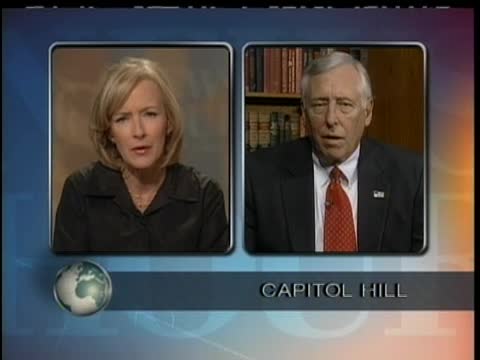
One last note about the MRabs. The Pentagon originally announced a goal of 3,500 to be delivered by years end. Then amended that to 3,500 to be produced, claiming a mix-up. In any case, there's no assurance that more than 1,500 MRabs will make it to Iraq by January 1. Now, Judy Woodruff has our interview with the House Majority Leader. House Democrats elected Steny Hoyer as their leader soon after the November elections put them back in the majority for the first time in 12 years. Mr. Hoyer now is in his 14th term, representing the 5th District of Maryland. And he joins us from the Capitol. Good to see you, Mr. Majority Leader. Good to be with you, Judy. To start off with, the Defense Secretary Gates yesterday went to the Congress and talked about needing an additional $42 billion to fight the wars in Iraq and Afghanistan, 15% increase. It would bring the total to something like $100 and $90 billion.
Is the administration going to get this from the House, from the Congress? Well, certainly the Congress is going to look at very carefully how they want this to spend this money, Judy. And this is an extraordinary sum of money. We and indicated last year that we thought that the war costs ought to be included in the regular budget. But the administration continues to send up supplementals in very, very large sums to fund this war. So it's very difficult to budget. I know that Mr. Mirtha, Mr. Obi, will be looking at this very carefully to see exactly what they want to spend this money on. And I think there's going to be great reluctance to approve that sum of money when the administration says we cannot invest sums in domestic issues, whether it's education, policemen, firemen, health care, those issues we think are very important as well. So there's going to be a real close look given to this. Well, Secretary Gates is saying, as I'm sure you know, that this money is needed not only for the troops to take care of the troops.
And he talks about those mind-resistant ambush protected vehicles and the MRAPs. We just heard a report about them. Can Congress really say no to protecting the troops? Judy, we certainly don't intend to say no. And the answer is we're not going to say no. As you know, we passed a continuing resolution that has funding for those MRAP vehicles in it. And we will certainly fund MRAP vehicles as long as our troops are there because we know that they are saving lives. And so we're not going to cut on investments in saving lives and keeping our troops safe. Mr. Gates and the president also, Mr. Hoyer, talk about the pacing of this money. They say it's important that they get the money quickly in order to bring the war to a successful place. Are they going to get it as quickly as they say they need it? Judy, this is now five years into this war. Of course, it was projected to be very short.
And of course, the president in 03 said that the fighting was over and we had succeeded. That was not the case. Frankly, the Defense Department is getting very, very substantial sums of money in the CR, in the continuing resolution that we expect to pass the Senate tonight and we expect the president to sign it. So first, let me say that we're going to make sure the troops have what they need as long as they are deployed in harm's way. But that does not mean we're going to take simply the rubber stamp approach that, frankly, previous Congressers have taken to the request for expenditures in Iraq and Afghanistan. In fact, we want to look at very carefully whether or not sufficient funds are being spent in Afghanistan, where we believe the war on terror is most pointedly engaged with the Taliban and we'll allocate them. So the president will get less, it sounds like you're saying you believe the president will end up getting less than what he and the administration is asking. I don't want to anticipate that at this point in time, but there is going to be a great interest on our side of the aisle.
And I would hope on both sides of the aisle to look at very carefully what the administration is asking for. We know that there have been billions and billions of dollars spent in Iraq that are unaccounted for. Billions of dollars in Iraq that have not accomplished the objective that we were promised they would accomplish. So what I'm saying, Judy, is there's going to be a very careful scrutiny of the Pentagon's request. And certainly, there's not going to be approval of sums that are felt not to be necessary, either now or perhaps in the future. But we're going to make sure that the troops have whatever equipment, including MRAPs, whatever resources they need for as long as they are deployed in arms way. That's our position. And I know that Mr. Bertha, Mr. Obi, and Speaker Pelosi share that position as well. You're aware the Democrats have been criticized before now for, in effect, not having their act together, not being together unified in an approach to this war in funding for this war. Are you now saying that Democrats are ready to be united and to have one approach?
Judy, I think that's a criticism that belies what has happened. We have passed a number of pieces of legislation through the House of Representatives, dealing with the surge, the skeleton bill which dealt with timelines and asking for redeployment in a new direction in Iraq. Those bills have enjoyed overwhelming Democratic supporters. They passed the House. And very frankly, in the Senate, the Democrats have been fairly united as well, getting very significant numbers of votes on almost all the pieces of legislation. The problem is not the Democrats. The problem is the Republicans, particularly in the United States Senate, have been unwilling to either allow legislation to move forward on the floor, or if it did, to not vote for a change in policy, a change in direction in Iraq. But I think the record will reflect that Democrats have, in fact, been unified. And yet, you have critics, in fact, even among in your own party, who are out there looking at what's going on and saying Democrats need to do more. You were voted into the majority last November by the American electorate, and they're looking to the Democratic Party now in the majority to turn things around.
And the question many of them are asking is, what's materially changed? Well, Judy, what's materially changed is, for one thing, there is very substantial oversight. The Republicans can't either the House or the Senate can't stop that. There has been very significant oversight of where we're moving. There was a report by General Petraeus and Ambassador Crocker. That would not have happened if the Democrats were not in charge. Now, some will argue, well, it wasn't a very meaningful report or it didn't change direction. However, Ambassador Crocker and General Petraeus both admitted that the dollars spent that the surge had not accomplished its objective. That is, it had not brought a political resolution, which is the only resolution that General Petraeus thinks is possible in Iraq and Admiral Crocker agrees on that. So while we have not yet changed the President's policies because we have not been able to override his vetoes, we have made a substantial difference, heightened the debate, heightened the oversight,
and we think are moving towards a change in direction in Iraq. We're not there yet. People are frustrated by that because the large majority of the American public wants a change in direction. The President does not agree with that, but we are still moving. We expect to move next week with additional legislation. We expect to move on the weeks thereafter on legislation. The Senate has moved on legislation. The Biden proposal apparently passed in the Senate today. I didn't see the vote, but passed pretty substantially in terms of a new direction. In this case, separating by, in three parts, Iraq into the Kurdish Sunni and Shia elements. So we are making movement. It's not as fast as people would like, but we are staying after the objective of changing the direction. Let me quickly ask you about another important domestic priority, at least an issue, a spending issue before the Congress. And that's the children's health care program, so-called S-chip. The President is saying if Congress does send him legislation that's more money than he wants to see spent,
he will veto it. Now we understand the Senate has the votes to override the President's veto. Does the House? We're certainly going to work on getting the votes to override the veto, because we think on its merits this bill ought to be signed into law. We would have liked to go on further, but this bill adds four million children to coverage for health care in this country, bringing to a total of 10 million children of limited means whose families will be able to access health care on behalf of their children. We think Americans believe that's the right thing to do. It's the morel thing to do. It's the practical thing to do to keep our children healthy. Let me say this to remind the Republican and Judy, you probably remember. On the floor of the convention, the Republican convention in 2004, the President pledged, if he were reelected, it was going to be one of his major objectives to add, and in his words, millions of children who are currently eligible for S-chip, but are not yet covered to the program.
This bill does exactly that. We are very hopeful that the President will listen to the American public, will listen to the significant majorities in both houses, 265 members of the House representatives, a very large number of Republicans voted to expand the chip program and add these four children, four million children, two coverage so that they can access health care. Frankly, I am very hopeful the President will change his mind and sign this bill. If he does not, however, then we will certainly try to override his veto because we believe it is a veto that the American public will not support and will want overwritten. And quickly to the President's argument that this is a mistake to move away from an emphasis on private health insurance? 75% of the children in the chip program are in private insurance, and it is interesting that although the President brings this up, the private insurers association has endorsed this bill. They believe it is the right way to go.
The American Medical Association thinks it is the right way to go. AARP, the American Association of Retired Persons thinks it is the right way to go. The American Hospital Association, I could go on and list many, many more organizations that believe the policy that is incorporated in the children's health insurance bill is a policy that America ought to adopt. I hope the President will listen to them. We are going to leave it there. The House Majority Leader, Sandy Hoyer, thank you for being with us. Thank you, Judy. And next, the confrontation in Myanmar, also known as Burma. We have a report from Jonathan Miller of Independent Television News. Burma remains on the brink today a military dictatorship lashing out. Tear gas and live rams that weren't warning shots, protesters scattering as gunfire rings out. Burmese State Television reporting tonight that nine protesters had in fact been killed and 11 wounded in Rangoon today.
As a riot policeman directs operations, a body lies motionless on the road. This appears to be that of a Japanese man, a photographer. His death was confirmed on State TV tonight. After setting up barbed wire barricades, troops cleared the streets. Loud halo is warning demonstrators to go home or be shot. You've got 10 minutes they shouted. Snatches of video coming out of the internet, showing civilians shouting, we want freedom. Others breaking up bricks to throw at soldiers and riot police near the Sulay Pagoda in downtown Rangoon. But, look closely at these pictures, the difference today is the conspicuous absence of monks. Until yesterday, Burma's revered maroon-robed clerical army had been on the march. This footage has been airing today on the Burmese Dissident Satellite Channel broadcast out of Norway into Burma.
A busload of Buddhist monk reinforcements arriving at yesterday's demonstrations. The highest moral authority in the land pitted in a battle of wills with the junta. The monk could spearheading political resistance to tyranny. This, though, the aftermath of a pre-dawn raid by the military on the way Chaiyan Monastery, Northern Rangoon. Blood stains on the concrete floor, shots had been fired, tear gas used, and around 100 monks dragged off into waiting trucks. Soldiers smashed their way into several other monasteries in Rangoon and in Burma's second city Mandalay, too. In 1988, the clergy responded to similar treatment by excommunicating the junta. Unusually, for Burmese state television, the demonstrations topped the news tonight, although they didn't run any pictures. It blamed the monks and students for what it called creating news.
They would write that. They followed a long report on a senior general, a government minister, who visited a textile factory, then a mattress factory, then an umbrella factory. Burma is a deeply superstitious country. But this Western superstition is clearly lost in translation. Towards the end of the bulletin, another news item reporting that 31 members of the security forces have been injured by stone-throwing mobs. The news reader then said nine protesters had also been killed. Exiled Burmese dissidents demonstrated today outside the Burmese embassy in neighboring Thailand. Neither Western sanctions nor Asian constructive engagement have pushed the generals to engage in dialogue. Now, one week, two international meetings on greenhouse gases, Jeffrey Brown has our story.
At the State Department today, representatives of the world's largest greenhouse gas emitting countries gathered for a conference called by President Bush. The Bush administration has long favored voluntary measures to address the problem with individual countries making their own decisions about how to act. Secretary of State Condoleezza Rice opened today's summit. Let me stress that this is not a one-size-fits-all effort. Every country will make its own decisions, reflecting its own needs and its own interests, its own sources of energy, and its own domestic environment. We must be committed to addressing climate change in a way that does not starve economies of the energy they need to grow. On Monday, the United Nations hosted a gathering on the same issue. Secretary General Ban Ki-moon presented a different approach based on global action and mandatory targets. National action alone is insufficient.
No nation can address this challenge on its own. No region can insulate itself from this climate change. That is why we need to confront climate change within a global framework. One that guarantees the highest level of international cooperation that is necessary. The international community meets again in December to begin talks on a new treaty to combat global warming. The first pack, the Kyoto Protocol, is set to expire in 2012. The Bush administration rejected U.S. participation in 2001. And now the views of negotiators passed and present about how the U.S. and world should tackle climate change. Harlan Watson is the senior climate negotiator for the U.S. at the State Department. Former Senator Timothy Worth is the president of the UN Foundation and Better World Fund. He represented the Clinton administration during UN climate negotiations in 1995. Harlan Watson, to start off just with the fact of these conferences,
a lot of people were wondering why the Bush administration wanted to have its own. Whether you were trying to create a separate path towards negotiations. No, absolutely not. As the president proposed this meeting in May 31st of this year, as a contribution to the United Nations framework on reaching the agreement on the United Nations, the current framework on climate change. This was endorsed by the group of eight leaders in June in the meeting in Germany. Secretary Rice also made very clear in her remarks, as to UN as well as today, that we expect an agreement to be reached under the United Nations. This meeting was not at all intended to distract from or to compete with the current U.S. process, but rather bring together a group of countries to reach a new framework agreement. Tim, we'll start there. How do you see these two separate conferences playing with or against one another? I think it's important to note that when she's spoken to New York,
Monday, Secretary Rice endorsed the fact that there had to be this continuing negotiation in December, a global negotiation, and that the U.S. will be part of it. That's a step in the right direction. The fact that the U.S. however continues to say that it's not going to be committed to a timetable, it's not going to be committed to caps, and it's not going to be committed to any kind of a joint process. A belies the fact that there is obviously a need for international negotiation, and you have to have international agreement, and you have to have international caps. The U.S. can't go off on its own. When you burn coal and deli or burn coal and Denver, we all get warm together, and the world demands absolutely essential, and is crying for U.S. leadership and U.S. engagement in this overall process. Mr. Watson, is the U.S. trying to go it alone through conferences and other approaches like this? No, absolutely not.
As the President emphasized in, as Secretary has restated, our intention is, again, in bringing together this group of countries, which is two-thirds of the world's economy, four-fifths of the world's energy and emissions, that we're really trying to reach a consensus on how to move forward. And that's what this is all about. It's to reach a consensus on how to address climate change after the Kyoto Protocol, binding provisions, expire in 2012. In what specific way, though, is the administration trying to do what Secretary Rice said today, we had on our new summary, cut the accordion knot that she sees there? Well, what specific approaches are you putting forward? Well, specifically, what we hope to come and agree out of it, that not only that it starts the process in this meeting, but through a series of meetings over the next year, is to, first of all, try to gain agreement on a long-term global goal, say a 2050-type goal to help guide actions, and also to send signals to investment community, because it's going to require tremendous amount of investment in clean energy technologies.
The second piece of that is to help urge countries, including United States, where a part of that, to establish mid-term targets towards reaching that long-term goal, through national programs and policies. Some of those elements are going to certainly be binding. United States already has a number of legally binding domestic programs that address climate change. We have, for example, our renewable fuel standards. We have mandatory standards on auto-fuel economy, et cetera. A whole series of mandatory programs as well as voluntary approaches, those are binding at the national level. And so we hope, again, to encourage all of our countries to do that. And third is really, we all know in the long-term we need advanced technology. We really need as Secretary Rice has put it in technology revolution. And we really want to work together on research and developments required to advance those technologies, and also join hand-in-hand with the private sector who will have the resources to bring those to the marketplace.
Mr. Worder, that can see you're trying to jump in here. Well, the world has changed since the old world of voluntary commitments with sciences in. We have dramatically changed constituencies in the United States. We have a business community demanding U.S. commitments. You have the developing world in these more recent discussions in New York. You have Mexico, South Africa, for example, Brazil making very, very different kinds of commitments. And everybody's asking, where is the United States? Why is the United States making these commitments? And they're really asking the United States to lead. Now, maybe there will be something that the President surprises us with when he speaks tomorrow. So far there's been no indication of this kind of U.S. leadership or this kind of U.S. commitment. We hope it's there. Maybe we will again be surprised, but the voluntary approach doesn't work. We're in a world where people are emitting all over the globe and sort of like a speeding problem. We're emitting much too much carbon.
We're going much too much too fast. And you don't set a speed limit through voluntary limits. You have to have collective government action that says we're going to cap this. We're going to get a price on carbon, and we're going to move ahead. Almost everybody in the world is asking for that. And I hope that the U.S. now decides to join up. Mr. Worth, how do you solve one of the big sticking points all along, which has been the role of some of the large developing countries? And the economic issue, Secretary Rice, again, raise this. How do you solve the dilemma of getting China and India and others to make cuts when they argue that they still need to grow their economy? This has been a sticking point for a long time. And it remains a sticking point. China had made it very clear on Monday at the session in New York that it's not taking the hard line that it took before. Indonesia, South Africa, Mexico have all said that they're willing to make commitments and start moving in that direction. Clearly, the U.S. has to lead.
The U.S. can no longer hide behind China and India. And India and China can no longer hide behind the U.S. That's why this international negotiation coming up the climate negotiation coming up in December in Indonesia is so terribly important. Everybody has to move. Everybody has to make commitments. And I think most of the world believes that the United States is going to have to show the flag. The United States is going to have to be out front as a leader, saying no is no longer an adequate policy. What's in hiding behind China and India? We're hardly hiding behind China and India. I just do want to make the point, however, that whatever commitments are made need to be realistic and achievable. I find it rather, I guess, ironic that the binding commitments that have been arrived to are being touted as key and essential, yet very few countries are meeting their commitments. And so we don't believe in making up numbers.
We believe that the targets or what we say we're going to achieve are achievable and are also not in a way that allows our economy to grow. That's the only way to make progress. Simply making up aspirational goals without a basis to achieve them, I think, is rather cynical politics. Do you see, we just have a couple of minutes. I want to ask you both briefly here, do you see with the growing consensus on the science a shift in the last few years politically and in the public that gives you some hope looking forward to these meetings we're talking about that there will be some consensus. Oh, certainly. I think the attention this week is on the issue, in fact the attention this year on the issue, is demonstrates that the science, we've had a major report, of course, in the Intergovernmental Panel on Climate Change, the science is getting solid. And again, this was one of the reasons where the present decided now is the time to act. I think there's also been a change in the conversation,
the realization that we just can't address climate change alone. We have to address it in a way that allows sustainable development, that allows economies to grow, that also allows, that really emphasizes the importance of developing the new technologies that we need. Mr. Worth, what are you looking forward? Well, I think we have to get a price on carbon, and we have to get a cap on carbon and one way or another. I think there were some very positive developments that came out of the Secretary General's session that he held all day on Monday. I think there's new political momentum around the world. I hope that the meeting that the U.S. government is holding at the State Department right now is part of that political momentum, and certainly the engagement of the United States of America in the leadership role to which it's been, you know, historically been involved, the leadership of the U.S. once again would be more than welcome. All right, Tim Worth, Harlan Watson, thank you both very much. Thank you. Finally tonight, the Democrats debate in New Hampshire.
NewsHour correspondent Kwame Holman has our report. It was the second time Democrats gathered to debate in the nation's first primary state. Last night's setting was the campus of Dartmouth College. Here is Tim Russell. We have some big issues to talk about tonight, so let's start right now. Moderator Tim Russell of NBC began by asking each candidate to pledge to have all U.S. troops out of Iraq by 2013. Ohio Congressman Dennis Guccinich readily agrees. I want everyone to know. I want the American people to know that I've been on this from the beginning, and I know that we can get out of there three months after I take office. But the three candidates leading in the opinion polls all said no. I don't want to make promises not knowing what the situation is going to be three or four years out. It is very difficult to know what we're going to be inheriting.
I cannot make that commitment. But New Mexico Governor Bill Richardson said he could. In fact, he wants all U.S. forces out of Iraq within one year. You cannot start the reconciliation of Iraq, a political settlement, an all-Muslim peacekeeping force to deal with security and boundaries, and possibly this issue of a separation, which is a plan that I do believe makes sense, until we get all our troops out because they have become targets. And Senator Joe Biden of Delaware said troops could leave under his plan to partition Iraq into three semi-autonomous states, a position the Senate endorsed earlier in the day. That will end the Civil War. That will allow us to bring our troops home. That is the thing that will allow us to come home without leaving chaos behind. With a new poll showing New York Senator Hillary Clinton holding a wide lead in New Hampshire, she became the target of others. Former North Carolina Senator John Edwards went first. I heard Senator Clinton say on Sunday that she wants to continue combat missions in Iraq. To me, that's a continuation of the war.
I do not think we should continue combat missions in Iraq. I said there may be a continuing counterterrorism mission, which, if it still exists, will be aimed at al-Qaeda in Iraq, it may require combat, special operations forces or some other form of that, but the vast majority of our combat troops should be out. Former Alaska Senator Mike Gravel took on Clinton for voting to name the Revolutionary Guard in Iran a terrorist organization. He said the vote was a first step toward war. My God, we're just starting a war right today. There was a vote in the Senate today. Joe Lieberman, who authored the Iraq resolution, has authored another resolution, and it is essentially a fig leaf to let George Bush go to war with Iran. And I'm ashamed of you, Hillary, for voting for it. You're not going to get another shot at this because what's happened if this war ensues? We invade and they're looking for the excuse to do it. My understanding of the Revolutionary Guard in Iran is that it is promoting terrorism
and in what we voted for today, we will have an opportunity to designate it as a terrorist organization which gives us the options to be able to impose sanctions on the primary leaders to try to begin to put some teeth into all this talk about dealing with Iran. And Connecticut Senator Chris Dodd challenged recently published comments by President Bush that he believes Hillary Clinton will be the Democratic nominee. This race is going to be won by voters here at this state in Iowa, another caucus in primary states, making predictions in September or August about who's going to win later on. I think it's proven to be rather faulty over the years. So I look very much forward to the kind of race that develops. As Clinton sought to deflect the criticism, moderator, russered, caught her in a conflict. Senator Clinton, this is the number three man in Al Qaeda. We know there's a bomb about the go-off and we have three days,
and we know this guy knows where it is. Should there be a presidential exception to allow torture in that kind of situation? As a matter of policy, it cannot be American policy period. You guessed who laid out this scenario for me with that proposed solution was William Jefferson Clinton last year. So he disagrees with you. Well, he's not standing here right now. So there is a disagreement. Well, I'll talk to him later. Russered also devoted considerable time to Clinton's newly announced healthcare plan in light of her attempt to win universal coverage during the early 1990s. Well, Tim, I'm proud that I tried to get universal healthcare back in 93 and 94. It was a tough fight. It was kind of a lonely fight, but it was worth trying. But I've come back with a different plan that I believe is much better reflective of what people want. However, Illinois Senator Barack Obama said the causes of Clinton's previous failure could not be overlooked. If it was lonely for Hillary, part of the reason it was lonely Hillary was because you closed the door
to a lot of potential allies in that process. At that time, 80% of Americans already wanted universal healthcare, but they didn't feel like they were led into the process. Senator Biden agreed. I think it's a reality that it's more difficult because there's a lot of very good things that come with all the great things that President Clinton did, but there's also a lot of the old stuff that comes back. It's kind of hard. When I say old stuff, I'm referring to policy policy. The eight Democratic presidential hopefuls won't debate again for a month while some, but not all of the Republican candidates have agreed to meet tonight in Baltimore. And again, the major developments of the day. The Bush administration convened a summit on voluntary ways to cut greenhouse gases. Security forces in Myanmar fired on demonstrators again. The military government said nine people were killed. And late today, Michael Bell was released from jail in Gina, Louisiana.
He was one of six black teenagers charged in the beating of a white teen, in a case that sparked mass protests. We'll see you online and again here tomorrow evening with Mark Shields and David Brooks. Among others, I'm Jim Lara. Thank you and good night. Major funding for the news hour with Jim Lara is provided by. Some say that by 2020, we'll have used up half the world's oil. Some say we already have. Making the other half last longer will take innovation, conservation, and collaboration. Will you join us? The new AT&T. Pacific Life.
The William and Flora Hewlett Foundation, working to solve social and environmental problems at home and around the world. And with the ongoing support of these institutions and foundations. And this program was made possible by the Corporation for Public Broadcasting, and by contributions to your PBS station from viewers like you. Thank you. To purchase video cassettes of the news hour with Jim Lara, call 1-866-678-News.
We are PBS. Thank you. Thank you.
Thank you. Thank you. Thank you.
Good evening, I'm Jim Lara. On the news hour tonight, the news of this Thursday, then a newsmaker interview with House Majority Leader Stinning Hoyer. Paul Solomon's final report on the military's equipment, tonight's is about a vehicle designed to protect troops from IEDs and other attacks.
The latest on the violent confrontations in Myanmar or Burma. Two views on finding solutions to global warming and excerpts from last night's Democratic presidential debate. Major funding for the news hour with Jim Lara is provided by. Now headquarters is wherever you are, with AT&T data, video voice, and now wireless, all working together to create a new world of mobility. Welcome to the new AT&T, the world delivered. Pacific Life
Chevron The National Science Foundation and with the ongoing support of these institutions and foundations. And this program was made possible by the Corporation for Public Broadcasting and by contributions to your PBS station from viewers like you. Thank you. The Bush Administration convened its own summit on global warming today with a challenge. The two-day meeting at the State Department in Washington focused on finding.
- Series
- The NewsHour with Jim Lehrer
- Episode
- September 27, 2007
- Producing Organization
- NewsHour Productions
- Contributing Organization
- NewsHour Productions (Washington, District of Columbia)
- AAPB ID
- cpb-aacip/507-ws8hd7pn18
If you have more information about this item than what is given here, or if you have concerns about this record, we want to know! Contact us, indicating the AAPB ID (cpb-aacip/507-ws8hd7pn18).
- Description
- Episode Description
- This episode of The NewsHour features segments including an interview with House Majority Leader Steny Hoyer; a Paul Solman report on military equipment, the final in his series; a report on the violence in Burma; two perspectives on finding solutions to global warming; and excerpts from the previous night's Democratic Presidential debate.
- Date
- 2007-09-27
- Asset type
- Episode
- Rights
- Copyright NewsHour Productions, LLC. Licensed under a Creative Commons Attribution-NonCommercial-NoDerivatives 4.0 International Public License (https://creativecommons.org/licenses/by-nc-nd/4.0/legalcode)
- Media type
- Moving Image
- Duration
- 01:04:03
- Credits
-
-
Producing Organization:
NewsHour Productions
- AAPB Contributor Holdings
-
NewsHour Productions
Identifier: NH-8964 (NH Show Code)
Format: Betacam: SP
Generation: Preservation
Duration: 01:00:00;00
If you have a copy of this asset and would like us to add it to our catalog, please contact us.
- Citations
- Chicago: “The NewsHour with Jim Lehrer; September 27, 2007,” 2007-09-27, NewsHour Productions, American Archive of Public Broadcasting (GBH and the Library of Congress), Boston, MA and Washington, DC, accessed September 10, 2026, http://americanarchive.org/catalog/cpb-aacip-507-ws8hd7pn18.
- MLA: “The NewsHour with Jim Lehrer; September 27, 2007.” 2007-09-27. NewsHour Productions, American Archive of Public Broadcasting (GBH and the Library of Congress), Boston, MA and Washington, DC. Web. September 10, 2026. <http://americanarchive.org/catalog/cpb-aacip-507-ws8hd7pn18>.
- APA: The NewsHour with Jim Lehrer; September 27, 2007. Boston, MA: NewsHour Productions, American Archive of Public Broadcasting (GBH and the Library of Congress), Boston, MA and Washington, DC. Retrieved from http://americanarchive.org/catalog/cpb-aacip-507-ws8hd7pn18