The NewsHour with Jim Lehrer; September 20, 2006
- Transcript
. . . . . . . I'm Jim Lara. Today's news, General Abizaid, the Canadian suspect, and control of the United States Senate. Tonight on the NewsHour. . . . . .
. . . . . . . . . . . .
. . . . . . . . . . . . . . .
. . . . . . . . . . . . . . . . . . . . . . . . Approach the future with confidence. Pacific Life, the power to help you succeed. And by BP, the Archer Daniels Midland Company, CIT, the Atlantic Philanthropies, and with the continuing support of these institutions and foundations. And this program was made possible by the Corporation for Public Broadcasting,
and by contributions to your PBS station from viewers like you. Thank you. The top US commander for the Middle East voiced optimism today about Iraq. Army General John Abizaid said trends have improved since August. Despite ongoing violence, he told the news hour, I think it'll start moving towards stability slowly, but surely. Abizaid also said he's gaining faith in Prime Minister Amalaki, and he is new government. The New York Times reported today US officials have growing doubts about Malaki. A White House spokesman said that's absolutely false. We'll have the interview with General Abizaid right after this news summary. In Iraq today, the US military announced the deaths of two more American soldiers. A spokesman, Army Major General William Caldwell, said attacks on US troops increased this month. That's after the al-Qaeda leader in Iraq called for a stepped-up campaign. Also today, a suicide car bomber in Samara killed 10 Iraqis more than a dozen others were killed elsewhere.
NATO nations have nearly met a call for 2,500 more troops in Southern Afghanistan. The alliance's top commander announced that today in Washington. US Marine General James Jones said the level of Taliban violence in the South surprised NATO. We have disturbed the hornets nest and the hornets are swarming. We need to make them understand that that nest is not going to be there for them anymore in that particular region. And this is why we've had this fight. The General said a recent NATO offensive in the South killed up to 1,500 Taliban, but he warned the region's opium business is booming, and he said drug lords are helping fund the Taliban. The Bush administration and House Republicans move closer to a deal today on wiretapping without warrants. A revised bill would let the National Security Agency conduct the surveillance if a terrorist attack seemed imminent. In exchange, the administration must share more details of the threat with House and Senate leaders.
An earlier bill gave legal status to the program only after an attack. Congresswoman Heather Wilson of New Mexico offered both versions. She said the new one is a more balanced approach. I think that that unlimited power or unchecked power in a single branch of government tends toward excess. And the best way to check that power is by dividing it between the three branches of government. At the same time, we want to be able, for our intelligence agencies, to use their very powerful tools to keep us safe. Democrats strongly criticized the new proposal. Congresswoman Jane Harmon of California said the public won't buy it. It should escape no one that the person who offered the legislation in our committee is in a very tough reelection race. She claims that she is independent of the White House, and yet the bill she offered today had a brand new section talking about imminent threats. A broader exemption than the other exemptions already in her bill, and that was drafted by the White House.
In another development, the House Judiciary Committee agreed to allow tougher interrogations of terrorist suspects. As the President wants, it passed by a single vote. Senate Republicans are still working on a possible compromise on that issue. Then, as weightland President Hugo Chavez lashed out at President Bush today before the UN General Assembly, Chavez accused the U.S. of domination, exploitation, and pillage of peoples of the world. He drew laughs and some applause as he compared Mr. Bush with Satan. Yesterday, the devil came here. Right here. And it smells of sulfur still today. The United States, the gentleman who were referred at the devil. He came here. Talking is if he owned the world.
Truly, as the owner of the world. The U.S. Ambassador John Bolton was not present in the UN Assembly Hall for the address. Afterward, he said serious people will reject what Chavez had to say. We're not going to address that sort of comic-script approach to international affairs. And, as I say, the real issue here is he knows he can exercise freedom of speech on that podium. And, as I say, he could exercise its central part, too, by giving the same freedom to the people of Venezuela. Last night, the president of Iran also denounced the United States and defended Iran's nuclear program. He said UN sanctions would be illegitimate because America and Britain dominate the Security Council. The African Union today extended its peacekeeping mission in Darfur through the end of the year. The government of Sudan had refused to let the UN take over that force. The African Union has been unable to stop the violence in Darfur. Today, it said the UN will then material and logistical support.
Military leaders in Thailand announced plans for an interim government today, a day after a bloodless coup. But the Army commander said new elections may not take place for another year. We have a report from Kylie Morris of Independent Television News. In the capital in the early morning, a sense of calm, despite the presence of soldiers on the roads, tanks at the intersections, ties quietly absorbed the news of the Yellow Ribbon Revolution. Without firing a shot, the Army tied ribbons around the barrels of their guns, declared their loyalty to the king, and forced from power the Prime Minister the people elected. The people watched on for updates from the generals who'd taken charge of the country and their television networks. Their announcements were preceded by jazz tracks, favoured by the king. We've seized authority, revoked the constitution, dismissed all senators, MPs, and the cabinet, and disbanded the constitutional court. The question now is how long the military will control Thailand for.
Our General Sonzi has told foreign ambassadors that there will be a new caretaker Prime Minister appointed within two weeks, but there's no timetable for elections. While there's widespread support here in Bangkok for what the military have done, they'll lose that support unless they move quickly to appoint a democratically elected government. For now Bangkok's middle class crowd around the gates and congratulate the generals. They were at the heart of the campaign to remove the Prime Minister and after months of trying, the Army has made it happen. It may not be democratic, but the man they love to hate, tax and chinawat is gone. The ousted Prime Minister arrived in London today on a private visit. Pope Benedict XVI insisted today he has deep respect for Islam. It was his latest attempt to call Muslim anger over a speech he gave last week. In it, he quoted a medieval ruler who said Islam was spread by holy war. Today, during his weekly audience at the Vatican, the pontiff conceded the quote lent itself to be misunderstood,
but he did not make a retraction. NASA cleared Space Shuttle Atlantis for a landing tomorrow. The return to Earth had been delayed a day over concerns about debris floating near the shuttle. Today, the crew used a robotic arm and cameras to make inspections. They found no damage. The Federal Reserve made no change today in a key short-term interest rate. The Federal funds rate was left at five and a quarter percent. It's used on overnight loans between banks. In turn, banks' prime lending rates will stay put at eight and a quarter percent. They set the pace for interest on consumer and business loans. The Fed paused in raising rates last month after more than two years of increases. Crude oil prices fell another dollar in 20 cents today after the government reported a surge in fuel supplies. In New York trading, oil closed below $60.50 a barrel. It's down more than 20 percent in two months.
On Wall Street today, the Dow Jones Industrial Average gained 72 points to close at 11,613, then as Dak rose 30 points to close well above 22. 52. And that's it for the news summary tonight. Now the top U.S. military commander for the Middle East, the Canadian man who wasn't a terrorist, and the leading races for the Senate. And now to our interview with Army General John Abazaid, commander of the Central Command, which includes all U.S. forces in Iraq and Afghanistan. I talked with him earlier today. General welcome. U.N. Secretary General Anon said the other day that if current trends continue, Iraq could break down into a full-scale civil war. Is he right? I think current trends today look certainly better than when I testified back in August. The situation isn't improving somewhat.
Certainly there's a lot of sectarian violence. I believe that we've got the military capacity and the Iraqis have the political will to get things under control. And I think it'll start moving towards stability, slowly but surely. Why can't the sectarian violence be stopped? The sectarian violence is very, very difficult to control because it involves very small, cellular groups of death squads that move about the city, that move into predesimated targets that they've already selected, that there's already been surveilled that have certainly been well-known to various people that are plotting to get these particular people. They go in and get them, and then when they can't get their designated targets, they go after a completely random target. So it's a very, very difficult military security problem that's tough to defend against. Is it? And you're saying that's getting better?
It seems in the last several weeks, at least on our program every day, we've been reporting more and more bodies found. People have been tortured. There seems to be on the increase, but you're saying he's getting better. It's certainly better in the areas where we've applied military forces. The overall numbers show a slight decrease. I wouldn't say it's substantial, but in the areas where we've been operating in the Dura District and the Amaria District and others. In Baghdad. In Baghdad. In Baghdad's really the key problem. In fact, 80% to 90% of the sectarian difficulties are taking place in Iraq, taking place within a 30-mile radius of Baghdad. In those areas that we've been operating with US forces and Iraqi forces, and we continue to operate, there is a decrease. But we're not everywhere. We're moving step-by-step section-by-section, and it will take some time. We will begin to really see whether or not we're being successful in a month or two. In a month or two.
That's right. And how will success be judged? Success will be judged by the level of sectarian violence, murders, in particular, in the areas where we're operating being less. And it's certainly, look, it's a program that involves not just putting military forces on the street, but it also requires that Iraqi and US special forces go after the death squads. We have to target them. We have to do the intelligence work necessary to know where they are. Then we've got to go after them and take them out of action, whether it's by direct military action or some other form. But it's very, very important that these death squads be put out of action. The militias have to be, over time, brought under governmental control, that still remains a problem. And then there has to be, most importantly, I think of all, a reconciliation program move forward that gives people and Baghdad reason to believe that things are going to get better. Now, I was in some of these neighborhoods. I went there after I testified last time. I talked to some of the folks in the Sunni neighborhoods that were having the most difficulty. They are more appreciative to have coalition forces in their neighborhoods
than they have been at any time since we've been there. And so that's a good sign. Is the answer to send more coalition forces in there? But the answer ultimately is to send more Iraqi forces in there. Ultimately, the answer is to have Iraqi police first, Iraqi military second, and U.S. forces playing an overwatch role. Right now in these areas and Baghdad, certain areas that we've selected, we have U.S. forces in the primary role in support with Iraqi forces. And we've got to change that equation over time. But we'll do what we need to do in order to bring the situation and do greater security. There are 147 U.S. troops there down, correct? 147,000 approximately. It's over 140,000. It fluctuates, goes up and down based on rotations. But it's over 140,000. And you said in the last couple of days, since you've been in Washington, that figure is going to remain pretty much that until spring, right? Next spring, 2007? Never say never in this business.
Okay, right. But it's my estimation. Based on the way the sectarian violence is continuing in the Baghdad area, based on the development of Iraqi security forces, based upon the conditions out in places like Elan Bar Province and up in the north and down in Basra, that the number of American forces is likely to remain about the same. We have other reserve forces in the region that we haven't committed yet. It's possible that we might have to commit them if it's necessary we'll do so. And it's also possible that with increased governmental action and increased reconciliation programs, that it would be possible to consider some reductions. But I think it's best to just say we are where we are and we'll evaluate constantly. On the Iraqi security forces of the 147 or 140,000-plus U.S., how many of them are actively involved in training the Iraqi army?
Well there's a large number of American forces that are dealing day to day with the Iraqis. And it's important for people to understand that in the majority of the country, Iraqi security forces are in the lead, not coalition forces. As a matter of fact, in most areas of the 10 Iraqi divisions, six of them are in the lead, in their particular battle spaces. One Iraqi division, the 8th division down in the south central portion of the country is in its area and is operating without U.S. forces. They have U.S. engagement teams with them that help them if they need to bring in additional combat power. But there's a substantial effort to work with the Iraqis. Bring the Iraqis on board. The Iraqi military continues to develop well. It still needs a lot of work. Iraqi police forces need a lot of work. And we're working very hard to correct some of the imbalances that exist. I'm sure you're aware, General, that there's been a lot of commentary back here that the U.S. hasn't put enough effort into the training of Iraqi forces.
We've, Jim, I really disagree with that. We have put an enormous effort into training and equipment in the Iraqi armed forces and security forces. But it's also an enormous effort. It is literally building an institution from the bottom up. We took the army completely down to zero. We have to not only build its units, train its soldiers, equip them. We have to develop logistics units. We have to have good command and control organizations. But more importantly, we've got to do the institutional work necessary to train the officer corps to be the officer corps of a modern nation that respects its people. And it's a generational level of work, not something that's going to be done overnight. And we're making good progress. The Ramadan, the month of Ramadan begins next week. Right. Do you expect more American troops to be targeted during Ramadan? I expect that there will be continued violence in Ramadan,
like there has been every year since we've been operating in the Middle East since 2001. But knowing that you still can't prevent it. You don't have the power to prevent it. The power to prevent violence is a power that no police force seems to have anywhere in the United States. So if the measure of action is the amount of violence, then we can't prevent violence. Can we provide an environment in which the majority of the country is able to go about its daily business? The answer is yes. But the key point is Baghdad in particular. Baghdad is the main effort. It's the point where we've got to get greater control of security stability, so that peace and prosperity can start moving in a good direction there. Since the very beginning, as you know, there's been all kinds of conversations, all kinds of debate about the proper size and an American force in Iraq. You say you're prepared to even bring in more troops than the 140,000 you have now.
Is that right? Certainly, if I know what the debate's been about enough troops, but we've been up as high as around 185,000, we've been down as low as 120,000. So the number of U.S. forces in Iraq at any given time has gone up and down quite a bit. People always forget about the 23,000 coalition troops that are in Iraq. People forget about the nearly 300,000 Iraqis that are underarms in the army and the police. An additional 100,000 working for various ministries that are underarms working for the ministries. It's important to understand that with that much force in the country, that we've got to ensure that first and foremost, people understand it's primarily an Iraqi job to maintain security. We use American forces where it really requires military effort. So if somebody says to you, General, if you had 247,000 troops, or 347,000 troops, would that do the job?
Could the country be made safe and the violence ended, sectarian violence as well as the insurgency? You know, Jim, I think I've tried to articulate over the past years, and General Casey's tried to do the same thing, that the tension in this mission has always been between how much we do and how much we ask the Iraqis to do. The longer we stay, the more we must ask the Iraqis to do. Putting another 100,000 American troops in Iraq is something that I don't think would be good for the mission overall, because it would certainly cause Americans to go to the front, Americans to take responsibility, and we're at the point in the mission where it's got to fall upon the Iraqis. They know that, they want responsibility. The key question is having the right balance, and I believe we're maintaining the right balance. But I understand the debate. Speaking of the debate, does your decisions on troop levels, is it affected at all by the decline in public and congressional support for the U.S. presence in Iraq? No, my overall theater responsibilities include Afghanistan, they include Iraq, and they include any sort of unforeseen military problem that might arise in the region.
You also know we have a small contingent down in the Horn of Africa operating, for example. The region is extremely volatile. It's a region where there's terrorism, and every one of the 27 countries, there's some form of insurgency, and nearly every one of the 27 countries where a country, such as Iran, sponsors, terrorist groups on the Shia Revolutionary side. And so the volatility in the region not only requires that we apply troops at the specific point to deal with the specific problem, such as Iraq, and also Afghanistan, but it also requires that we have the ability to reach back and bring forces in to deal with whatever problem might arise. And then the final thing, I'd say, is it's hugely important for us to keep in mind that the flow of oil and the flow of natural resources through the straits of hormones,
removes the bobbleman dub, and the suez canal, have got to continue. And that falls to the United States Armed Forces, which is why we currently have about 215,000 Americans serving in my region. Are you the least bit concerned about the drop in public support for what you're doing? Every American soldier wants as much public support as he can possibly have. That's the soldiers on duty in Iraq, and that's me as well. We fight better, knowing that our people back home support us, back us, and understand what we're doing. It's hugely important. Lee Hamilton, who's the co-chair of the study group on Iraq, this new thing co-chaired with Jim Baker, said yesterday that his reading of the thing is that Iraq, the Iraq situation in terms of the public mind in the United States only has about three more months to go. And when patience is going to completely wear out. Does that make sense to you?
No, it doesn't make sense to me. I think there's patience that I worry about the patience of the American people, but what I worry more about the orders of the President of the United States. Our orders are to stay up in the region, to stabilize the region, to make the region much less conducive to the extremist threats that exist throughout. And it's absolutely clear to me, the enemy has made Iraq the central front in the battle, not us, but the enemy. And because of that, we are fighting at the right place at the right time, and we need to get it under control. Finally, General Prime Minister Al Maliki, do you believe that he and his government have the ability, have the resources and the will to do what needs to be done along the lines that we've been talking about up till now? I've been associated with the Middle East for a long time. This is the hardest task I've ever seen a Middle Eastern government really be saddled with. It requires the maintenance of a difficult alliance with foreign forces. It requires dealing with an insurgency. It requires dealing with sectarian violence.
It requires a complete changeover of the political order and a complete changeover of the economic order. Can they do it? Yes, they can do it. They've been in office for four months. They're Iraqi patriots before they're anything else. The more I get to know them, the more faith I have in them. And I believe, just like our own forefathers that founded this country, that there was no choice but to go forward. They know that. They'll do that. We'll help them. And when they don't need our help any longer, we'll wish them the best. Generally, it's hard to find optimists in this country right now about the outcomes in Iraq. Are you an optimist? I'm an optimist about the outcome in Iraq. I'm an optimist about the outcome in Afghanistan. I believe that we've got a rare opportunity to be in front of the extremist ideology. We can deliver a very sharp blow that will not allow it to become mainstream anywhere. And first and foremost, that requires us to stabilize Iraq and Afghanistan.
But more importantly, to help the people in the region have the tools necessary to resist the extremist trends. The vast majority of the people in the region don't want the extremists to win. They want a better life just like we do. And they'll be able to resist it with our help. And as we give them the tools, we'll be able to reduce our presence more and more. General, I appreciate it. Thank you very much. Thank you, sir. Still ahead tonight, a choices O6 look at the Senate races and the Canadian wrongly targeted by his own and U.S. law enforcement agencies. Jeffrey Brown has that story. This week, Mahar Arar got what he wanted. I wanted to clear my name. Today, Justice O'Connor has cleared my name and restored my reputation.
On Monday, a Canadian Government Commission report concluded that Arar, a Syrian-born Canadian citizen, was wrongly accused of having ties to terrorism by Canadian officials, and improperly taken by U.S. authorities to the Middle East, where he was tortured. They beat me with the cable. They also, you know, kicked me and punched me. Arar, a 36-year-old computer software engineer and father of two, was returning to Canada from a vacation in Tunisia in September, 2002, when he was detained by U.S. authorities during a stopover at New York's Kennedy Airport, acting on information from Canadian intelligence that Arar had ties to al-Qaeda, U.S. officials questioned him, then flew him to Jordan. From there, he was driven to Syria, where Arar says he was held prisoner for some 10 months in a tiny cell. He was released in October 2003.
I had thoughts of committing suicide because, you know, the psychological torture in that cell was so awful to the point where, you know, it just, you know, it is really beyond human imagination. The Canadian investigation, led by Justice Dennis O'Connor, was sharply critical of the Royal Canadian Mounted Police for its role in gathering and passing on incorrect information on Arar. There is no evidence to indicate that Mr. Arar has committed any offense, or that his activities constitute a threat to the security of Canada. Arar is now seeking compensation and an apology from the Canadian government. In Washington yesterday, Attorney General Alberto Gonzalez was asked about the case. We were not responsible for his removal to Syria. I'm not aware that he was tortured, and I haven't read the Commission report. Mr. Arar was deported under our immigration laws. He was initially detained because his name appeared on a terrorist list, and he was deported according to our laws.
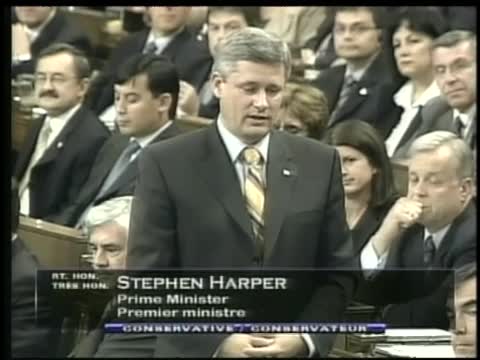
In Ottawa yesterday, Canada's Prime Minister Stephen Harper addressed the issue in the House of Commons. Mr. Arar has been done tremendous injustice. We all know this took place during the period of the previous government. Harper said he would respond to the report's recommendations within a few weeks. And late today, Canada's Parliament unanimously passed a motion that the government should apologize to Mr. Arar. The Inquiry Commission that issued its report Monday was appointed more than two years ago after Mr. Arar was released from prison, and after his case had attracted much attention in the Canadian media. Paul Cavilluso served as the Commission's lead counsel and joins us now from Toronto. Let's start if we could with your chief finding regarding Mr. Arar himself. The conclusion is that without any doubt he had no links to terrorism, correct? That's correct, and certainly for Mr. Arar's perspective, that was very, very important because for the last three or four years he has been under a cloud of suspicion that he was engaged in terrorist activity.
So it was a very important finding from his perspective. So how did he become a suspect? How did this series of bad information begin? Well, Jeffrey, it all started in October of 2001 when Mr. Arar was observed outside a coffee shop in Ottawa with a person who the RCMP suspected of terrorist activities. And at that point in time he came on the radar screen and they didn't investigation in which he was involved. How did your report conclude that Canadian intelligence got it all so wrong? Well, we reviewed all of the evidence. We had the opportunity to review all of the documents, and we discovered that there was a lot of information sharing with the Americans, some of which was inaccurate and imprecise relating to Mr. Arar, some of which exaggerated his importance to the investigation. And at the same time while he was detained in the United States, they also shared information which was inaccurate. And so you conclude that it was based on this inaccurate information that he was in fact detained in New York.
Certainly, the evidence points that way. Indeed, the Secretary of State Colin Powell at the time in December of 2003 said that Mr. Arar was placed on a terrorist watch was based on information received from Canadian authorities. Now, did Canadian officials or police understand or expect that Mr. Arar might then be taken out of the U.S. to Jordan and then Syria? No, that decision was made by the American agencies, and certainly they were less than candid with the Canadian officials. And the Canadian authorities were quite surprised when they discovered that he had been rendered to Syria. And when and how did Canadian officials learn about what had happened? Well, unfortunately, Mr. Arar was rendered on October the 8th or 3 o'clock in the morning. He was removed from the detention center in Brooklyn. And he was put on a jet and taken to Jordan and then to Syria, where he arrived probably around October 9th or 10th.
American authorities did not disclose formally to Canadian authorities where he was, and Canadian authorities only found out on October 20, 21st when the Syrian military intelligence advised our ambassador into Damascus that Mr. Arar was in detention in Syria. Now, one of your recommendations is that Canada file a formal objection to the Syrian and American governments. Regarding the American part of that, is that because of the lack of disclosure? Well, it's more than that. Certainly, we feel that the American government violated the Vienna Convention by not giving Mr. Arar consular access to the consulate office in New York when he was in detention shortly after September 26th, 2002. And also the manner in which he was rendered to a country, which the American should have known contained a very credible risk of torture. Canadian authorities were willing to accept Mr. Arar, and that was only 200 miles away at the American Authority Center to Syria.
Now, the greatest criticism and the brunt of your report is aimed at your own nation's intelligence and police work in this case. What are you recommending looking to the future to prevent this from happening? Well, certainly, we emphasize that information sharing with foreign agencies is absolutely vital in the global fight with terrorism. But at the same time, there have to be restrictions on how that information is shared. Obviously, the information given has to be accurate, has to be precise, has to be relevant, and has to respect the privacy interests of Canadian citizens. And that's, unfortunately, what did not happen in respect of Mr. Arar. What about within Canada's intelligence or police forces are you expecting some repercussions, punitive actions? Well, the amendment of the Commission was not to recommend penal actions. However, the Commissioner did say that the report speaks for itself, and each particular Canadian agency which was involved should look at as findings and take whatever actions they deem appropriate.
And what about compensation for Mr. Arar himself? What are you recommending there? Well, the Commissioner recommended that the federal government sit down with Mr. Arar and try to resolve this amicably. Mr. Arar has been through a lot in Syria and the United States. Has been through a long public inquiry. And certainly, it would be in his interest to have this matter resolved, ducks, bidetiously, so that he can turn a new page in his life and move on. As we saw in our setup report, Prime Minister Harper said that he was respond to this report shortly. Is he – how does this work? Is he under any obligation to respond or to act based upon the report? No. He – we have made recommendations to him, and we believe that he will seriously consider those recommendations and hopefully act appropriately. All right, Paul, Kavaloozo. Thank you very much for joining us.
You're welcome, Jeffrey. Finally tonight, a choice is 06 Report, the Battle for the Control of the United States Senate, and a Margaret Warner. To take control of the Senate, where Republicans now enjoy a ten-seat majority, Democrats would have to pick up six seats on Election Day. While the polls are constantly shifting, the ten races that appear to us right now to be most competitive are two in New England, Rhode Island, and Connecticut. Two Mid-Atlantic states, New Jersey and Pennsylvania, two in the South, Virginia, and Tennessee, two in the Midwest, Ohio, and Missouri, and two in the West, Montana, and Washington State. Tonight, we'll look at two of those in more detail, but first, for a national overview, we turned to Stuart Rothenberg, editor of the Rothenberg Political Report. And, Stuart, welcome back. When you were here two weeks ago, you said you saw a national wave developing that was affecting these Senate races that was beneficial to Democrats.
Has that continued as anything changed in the last two weeks? I don't see any evidence that there's been a dramatic change, Margaret. It's still about a mood for change. People dissatisfied with the direction of the country, the performance of Congress, and the performance of the president. Of course, there has been a survey within the last couple of days. So I say to a Gallup that suggested that there was a surge in Republican surge. We've had a lot of talk about a Republican surge. I have been cautioning for weeks, months, even years, it seems, for people not to overreact to a single survey. If we see further evidence, two or three other surveys suggesting the president's numbers are moving up, fine. But I just wouldn't overreact. I don't think that at this point we can say there's been a dramatic change. And so how are the Democrats going about trying to take advantage of this, say, dissatisfaction with the president? Does there seem to be a national playbook that these Senate candidates and these competitive races are following? In race after race, they are seeking to link the president with the Republican candidate, Republican senator in most cases.
They're doing it in ads with photographs of the picture of the president, arm and arm. When they can, if they can't, they simply talk about Senator Michael DeWine and the Bush agenda of a like. Over and over again, it's an attempt to make this election at referendum on George W Bush and unchanged. Right, and so what are the Republicans doing then to defend against that? Again, is there sort of a national playbook or is it race by race? Yeah, there is a national playbook, and I think it is localized or in crude terminology, beat the stuffing out of your opponent. And in this case, it is making the opponent the issue. So in Ohio again, for example, both the Duane campaign and the Republican Senate campaign committee and the Republican National Committee have been beating up Sherrod Brown arguing he's a liberal. He is too liberal for the state. So it's not a question so much of boy voters you got to love Mike DeWine. Some voters may indeed love Mike DeWine, but it's a choice that the Republicans are trying to force. And you may recall that Ken Melmond has been talking for a long time about a referendum versus a choice that if it's a referendum, the Republicans are in trouble.
If it's a choice, they do much better. They're trying to make it choices in individual races. Are the Republicans candidates going so far as to really run away from George Bush? Is it that overt? Well, they talk about their independence and awful lot. They emphasize how they have not always seen eye to eye with the President or their party. They're talking in some cases, Jim Talat, all the time, talks about how he works with Democrats, reaches across the aisle. This is a very common place. And certainly very different than say, you know, four or two. Oh, you know, if you do this long enough, it's like that the teams change jerseys, they change uniforms, but they run the same place. I've seen this over and over again, and often I've seen the Democrats trying to distance themselves from their incumbent President. It's the nature of the race. Look, these are professional campaign consultants and operatives who are running races. They've learned lessons from previous cycles, and they were trying to apply them now. All right. Now, money, usually Republicans have a huge money advantage. Well, the Democrats, I think, have done a very good job to cycle in cutting into that advantage.
And if you compare the campaign committees, the Democratic Senate campaign committee versus the Republican Senate campaign committee, the DSCC, has done a bang up job. Democrats, I think, are going to be better funded this time. There are 527 outside groups. The Republicans, you know, there are lots of ways to look at money. You can look at the candidates. You could look at the national party committees, the congressional party right now. The Republican standard. Right. So overall, there's more Republican dollars than Democratic dollars, but I think the Republican financial advantage has been eroded this cycle. The Democrats have done a good job raising money. And are advertising, are they spending this money heavily on advertising yet? Are voters already being delused with political ads? Yes, absolutely. I mean, in some places, Montana months ago, there were ads running. And now we're at the point where voters are seeing ads in virtually every state. We're seeing aggressive ads, not just the early name ideas. Absolutely. This is still about TV advertising. We hear a lot about the organization and knocking on doors.
And that's important. But most campaign money gets spent on TV advertising and it's happening around the country. All right. So thanks for trying to get back to you. But now a closer look at the two competitive Senate races in the South, first to the Commonwealth of Virginia. There, the Republican candidate is first term incumbent Senator George Allen. The Democrat is James Webb, former secretary of the Navy. And for the latest on this race, we turn to Mark Roselle, Professor of Public Policy at George Mason University. Mark Roselle, welcome. Thank you. All right. How does the race stack up right now between Allen and Webb? Well, the latest polling data show that it's a very, very tight race with George Allen, perhaps with a slight lead, but most of the polls show a statistical tie. Now that's a real big surprise because George Allen is a very popular senator, popular former governor, longstanding tenure in Virginia politics for many years and very few people expected this to be the close race that it has become today. But events, of course, changed a lot of that, particularly a campaign gap, the kind of thing that campaign consultants absolutely hate to see their candidate do. One of these spontaneous moments that the candidates should not have allowed to have happened.
Can you tell me about George Allen? George Allen, in this case, who was then in a pretty good position, had a substantial lead in the polls and a huge lead in money in this campaign as well. And now we have a very tightened up race in large part because of that one event. And you're talking about the one event where he called the campaign aid who worked for Jim Webb at his event, Makaka. Yes. That's right. And some have alleged that this is a racial slur. George Allen has said he didn't know what the word meant. This just kind of came out. He was referring to the young man's haircut, which looked like a Mohawk, but it came out in Makaka. Now, a lot of other people saying they don't really believe that explanation, but the problem for George Allen is he's been spending the past month explaining himself and explaining himself and constantly on the defensive. Give us a quick thumbnail sketch where people haven't watched the race practice closely. As we have in Washington, I'll be to these candidates. Okay. George Allen, the incumbent senator. A lot of people are talking about him as a potential presidential candidate in 2008, but now he's in the race for his political life. Jim Webb, the former secretary of the Navy for Ronald Reagan,
a former Republican, actually, who had endorsed George Allen for Senate in year 2000. And multi-decorated war hero, best-selling author, playwright, somewhat of a celebrity in his own right, but a first-time candidate for our public office. And what was interesting is a lot of people didn't know what kind of campaign this guy, Jim Webb, would run as a novice politician. And he's turned out to be a pretty good candidate. So we've ended up with a much closer race than anybody had expected going into this election. And George Allen has a little bit of a stardom in his background, too. His father was very well-known figure in the Middle East North and Virginia. Yes, that's right. Of course, he's the son of the famed former coach of the Washington Redskins. And so that certainly has brought him some very positive, repute in Virginia, given that background. Now, are there any other than the personal gaffes? Well, let's talk about Jim Webb, but it's also had something to explain in the last couple of weeks. Well, that's right. Some people have gone back and seen some of his past writings, and in particular, a 1979 article in which he had written that women should not be admitted to the Naval Academy where he had been teaching at the time.
And some women who were then students at the Academy have alleged that this created an environment of hostility toward women. And some of the things he wrote in the article are clearly over the top. And in this day and age would get a candidate booted out of an election campaign. But he said, well, this was the equivalent of a youthful indiscretion. It was almost 30 years ago. Now, you have one candidate, the Republican, the incumbent, who voted for the war. And as you said, you have, in Jim Webb, a decorated veteran and former secretary of the Navy. Virginia is also quite a big military stake, given the Pentagon, giving, given what all the bases down, and no put news. How is the Iraq war playing and to what degree is it dominating to the Greek any issues? Uh-huh. Well, it's been a big issue on this campaign as it is throughout the country. And if you've watched some of the debates, the candidates talked quite a good deal about the Iraq war. And their differences between one another, particularly the meat, the press debate last Sunday. In which George Allen was pretty much on the defense of trying to explain his support for the war, his support for President Bush, which is still is pointing out in this current environment of a Democratic surge,
not a very good place for a Republican incumbent to be. And then Jim Webb trying to explain how he thinks the war was a mistake, and how the United States should be trying to get involved some of the other major players in the Middle East to take over this role on the future. And finally, also, George Allen the last few days has been explaining something else, having to do with his mother's background. Well, this, yeah, this came up in the next debate that happened the following day, in which a reporter had asked George Allen a question about his possible Jewish heritage. And George Allen took offense to the question that this was somehow casting a version on his religiosity. That's the word he used. And the reporter really didn't intend it to be a casting of a version on this at all. But what ultimately happened in this particular case is it was revealed, and George Allen acknowledged, for the first time, that he does have Jewish roots in his background. And a lot of people are wondering why he didn't know that before. And I really don't think this is a big campaign issue. And very briefly, are they pretty equal in money, or does Allen have the advantages of an account? Well, as I understand it, the next campaign report comes out October 15th,
so we don't know what that says. But up until this point, George Allen has had a very substantial advantage in campaign fundraising. All right, Mark Crystal. So thank you now for the second competitive Southern Senate race, and it's in Tennessee. For an open seat due to the retirement of Senate Majority Leader Bill Frist, the Republican candidate is former Chattanooga Mayor Bob Corker. The Democrat is Harold Ford, a five-term congressman from Memphis. For a closer look at this race, we turn to Bruce Oppenheimer, Professor of Political Science at Vanderbilt University, and he joins us from Nashville. Bruce Oppenheimer, welcome. How does this race stack up right now? Well, I think to a surprise of a lot of people nationally, this race is now neck and neck. Polls done at the end of August and early in September, shows that it's within one or two points either way. And I think that surprises a lot of people. And give us the same kind of brief thumbnail sketch of each candidate, and what kind of candidate they are. Harold Ford is a five-term congressman from Memphis, who's 36 years old, he got elected to the House of Representatives at age 26,
replacing his father. He is a blue dog Democrat. He comes from a district which is a majority, minority district. He's an African-American candidate who takes a range of, I'd say, pragmatic views, and some of them quite socially conservative views. Nevertheless, the Republicans are trying to label him as a liberal. The Republican candidate, Bob Corker, most recently was Mayor of Chattanooga. He ran in the Senate primary against Bill Fris in 1994. He later served as in the finance department in the state administration, and his longer-term career is as a successful businessman who made money in the construction business. And he's very prosperous. Was able, late in the Republican contested Republican primary to dump two and a quarter million dollars of his own money into the campaign. Now, watching it from a distance, we read a lot about Harold Ford's charisma and how he's going into a lot of non-traditional areas for a Democrat to go to in Tennessee.
Is there a noticeable difference in their campaign styles? Yes, I think Harold Ford has a broader repertoire as a politician. He's more comfortable with it, more comfortable on the media. He has a presence when he walks into a room that I think serves him very well. It's not to say that Bob Corker is in a successful politician or without political skills, but Harold Ford is somewhat of the same old of a Barack Obama, actually comes on the political scene earlier than Barack Obama, and is not what you'd think of in sort of the very different than, let's say, the Jesse Jackson or Al Sharpton mold of a Democratic African-American candidate. And what about issues in this race? Is Iraq as big an issue as say it as in Virginia? I think it's not as big an issue as yet. If you go on Bob Corker's website, you cannot even find a mention of Iraq as far as I could tell. But on Iraq, he has basically supported administration position.
He says it is not a civil war yet. He says he would not fire the Secretary of Defense. On the other hand, Harold Ford, who is against a timetable for withdrawal, has said that he favors sort of a tripartite governing of Iraq. I think very similar to the position advocated by Senator Biden. But I did notice that Ford did have already one ad, I think, talking about the number of Americans killed in Iraq and being critical of the current prime minister of Iraq, is Ford trying to use the Iraq war to tie corker to the president and to a quote unquote failed policy? Is he making it that kind of centerpiece? I think it's part of an overall set of media advise he's done, which each emphasize a different set of issues, education, energy, homeland security, military sorts of issues. And on each of those issues, he's sort of emphasizing that he's of a new generation of leadership. So it is critical of the Bush administration without overtly often mentioning the Bush administration.
And I think that's his attack. I suspect in the debates, which are upcoming, there are going to be three debates that he's likely to go more directly at an effort to tie Bob Corker to the administration. On the other hand, Corker's strategy has been one which has largely with the exception of mentioning immigration recently and attacking Ford as a liberal, has been largely one which has deemphasized issues. His main commercial that he's had out in recent weeks shows him in front of a bridge, which he helped build when he was a young man in poured concrete and he talks about a successful businessman. It really is not very issue composed. All right, Bruce Oppenheimer, thank you. And Stuart Rothenberg, back to you. A cautionary note here, what does history tell us about how good a predictor the state of play in, say, tight Senate races in September is of what's going to happen on election day?
Tells us we better expect change or be prepared for change. Events could happen between now and November. The president's standing could rise or fall. It could be something happened internationally. And in the individual race that we don't know about. And in terms of these two races, just to give you an example, given what Mark said about the closest of Virginia, I agree. A month ago, six weeks ago, we had that as almost a safe Republican race. We then moved it to clear advantage. Now it's narrow advantage. Tennessee, we are expecting Corker to unload on Harold Ford and change the dynamics. But if it doesn't, this race could go down to the wire. Events really matter in these races. All right, and we'll be watching Stuart Rothenberg, Mark Proselin, Bruce Oppenheimer. Thank you all. Again, the major developments of this day. Army General John Abbasade said on the news hour, he thinks a rack will move towards stability, slowly, but surely. And the president and house Republicans move closer to a deal on wiretapping without warrants. And once again to our honor roll of American service personnel killed in Iraq and Afghanistan.
We add them as their deaths are made official and photographs become available. Here in silence are 12 more. Thank you. We'll see you online.
And again here tomorrow evening when we'll have interviews with House Minority Leader Nancy Pelosi and U.N. Ambassador John Bolton among other things. For now, I'm Jim Lara. Thank you and good night. Major funding for the news hour with Jim Lara is provided by CIT. We provide the financing to keep healthcare strong and healthy. We help energy companies find new resources. We work with communications companies to make the world smaller and life bigger.
We offer financial aid to make college possible for more students. At CIT, we help finance the future because that's the place to be. See it with CIT. Somewhere west of Topeka, someone's getting out for a breath of fresh air. Which is why a farmer is harvesting corn and why a train is transporting corn. And why ADM is turning corn into ethanol, a renewable, cleaner burning fuel. Somewhere west of Topeka, someone's getting out for a breath of fresh air. And lots of us are helping make sure that fresh air is naturally fresh. ADM, resourceful by nature. And by Pacific Life, BP, the Atlantic Philanthropies, and with the continuing support of these institutions and foundations. And this program was made possible by the Corporation for Public Broadcasting
and by contributions to your PBS station from viewers like you. Thank you. To purchase video cassettes of the news hour with Jim Lehrer. Call 1-866-678-News. I am PBS. Thank you.
Thank you. Thank you. Thank you. Thank you.
Thank you. Thank you. Good evening, I'm Jim Lehrer.
On the news hour tonight, the news of this Wednesday, then a newsmaker interview with the commander of U.S. forces in the Middle East, Army General John Abazay. The saga of the Canadian man sent by the U.S. to Syria where he was tortured. And the choices 06 look at key races for the United States Senate. Major funding for the news hour with Jim Lehrer is provided by. By navigating towards retirement, there are many courses you can take, and Pacific Life can help you reach your goals. With over 135 years of experience, Pacific Life offers a wide range of financial solutions. Approach the future with confidence.
Live the power to help you succeed. The Atlantic Philanthropies.
- Series
- The NewsHour with Jim Lehrer
- Episode
- September 20, 2006
- Producing Organization
- NewsHour Productions
- Contributing Organization
- NewsHour Productions (Washington, District of Columbia)
- AAPB ID
- cpb-aacip/507-v11vd6px2p
If you have more information about this item than what is given here, or if you have concerns about this record, we want to know! Contact us, indicating the AAPB ID (cpb-aacip/507-v11vd6px2p).
- Description
- Episode Description
- This episode features segments including an interview with Army General John Abzaid, a report on a Canadian man erroneously sent to Syria where he was tortured, and a discussion on the key Senate races in the 2006 election.
- Date
- 2006-09-20
- Asset type
- Episode
- Rights
- Copyright NewsHour Productions, LLC. Licensed under a Creative Commons Attribution-NonCommercial-NoDerivatives 4.0 International Public License (https://creativecommons.org/licenses/by-nc-nd/4.0/legalcode)
- Media type
- Moving Image
- Duration
- 01:04:05
- Credits
-
-
Producing Organization:
NewsHour Productions
- AAPB Contributor Holdings
-
NewsHour Productions
Identifier: NH-8619 (NH Show Code)
Format: Betacam: SP
Generation: Preservation
Duration: 01:00:00;00
If you have a copy of this asset and would like us to add it to our catalog, please contact us.
- Citations
- Chicago: “The NewsHour with Jim Lehrer; September 20, 2006,” 2006-09-20, NewsHour Productions, American Archive of Public Broadcasting (GBH and the Library of Congress), Boston, MA and Washington, DC, accessed September 13, 2026, http://americanarchive.org/catalog/cpb-aacip-507-v11vd6px2p.
- MLA: “The NewsHour with Jim Lehrer; September 20, 2006.” 2006-09-20. NewsHour Productions, American Archive of Public Broadcasting (GBH and the Library of Congress), Boston, MA and Washington, DC. Web. September 13, 2026. <http://americanarchive.org/catalog/cpb-aacip-507-v11vd6px2p>.
- APA: The NewsHour with Jim Lehrer; September 20, 2006. Boston, MA: NewsHour Productions, American Archive of Public Broadcasting (GBH and the Library of Congress), Boston, MA and Washington, DC. Retrieved from http://americanarchive.org/catalog/cpb-aacip-507-v11vd6px2p