The NewsHour with Jim Lehrer; October 4, 2007
- Transcript
Hey, on The New's Hour. You . .
. . . . . . . . . . . . . . . . . .
. . . . Good evening. I'm Judy Woodruff. On the news hour tonight, the news of this Thursday, Blackwater Military Contract Story, as reported by Alyssa Rubin of the New York Times in Baghdad. A debate over federal shield law legislation, which would regulate the relationship between reporters and their confidential sources. The latest on a possible permanent peace treaty between North and South Korea, another in our presidential candidate interviews tonight, Democratic Congressman Dennis Kucinich of Ohio, and a Richard Rodriguez essay on Mother Teresa's struggle with faith. . Major funding for the news hour with Jim Lehrer is provided by . Every day, it seems, talk of oil, energy, the environment. Where are the answers?
Right now, we're producing clean, renewable geothermal energy. Generating enough energy to power seven million homes. Imagine that. An oil company as part of the solution. This is the power of human energy. . The New Way T&T. Pacific Life. The William and Flora Hewlett Foundation, working to solve social and environmental problems at home and around the world. And with the ongoing support of these institutions and foundations. And this program was made possible by the Corporation for Public Broadcasting and by contributions to your PBS station from viewers like you. Thank you.
The U.S. House of Representatives voted today to make all U.S. security companies in Iraq subject to U.S. courts, both political parties back the bill. It would close a loophole that now leaves security contractors immune from prosecution. The vote followed a deadly shooting involving black water USA guards in Baghdad. Democratic leaders in the Senate plan to bring up similar legislation. There was word today of Iraqi findings in the Baghdad shootings. The Associated Press reported investigators recommended that the black water guards face trial there. They also found the guards opened fire first. Something black water has denied. And they said at least 13 civilians were killed two more than first reported. We'll have more on all of this right after the news summary. The Bush administration faced new claims today of severe interrogation methods used on terrorist suspects. The Justice Department publicly condemned any use of torture
in late 2004. But today's New York Times reported that the department issued another memo in secret two months later. It directly authorized head slapping simulated drownings and exposure to freezing cold. At the White House, Press Secretary Dana Perino denied there was any change in policy. The policy of the United States is not to torture. The President has not authorized it. He will not authorize it. But he has done everything within the corners of the law to make sure that we prevent another attack on this country, which is what we have done in this administration. I am not going to comment on any specific techniques. It is not appropriate for me to do so. And to do so would provide the enemy with more information for how to train against these techniques. The Times account set a second memo from 2005 found none of the CIA's interrogation methods violated a new anti-torture law. Both were issued after Alberto Gonzalez took over as attorney general.
Democrats demanded today that the department turned over the two secret memos. The leaders of North and South Korea vowed today to seek a peace treaty, formally ending the Korean War. South Korean President, No Moon Hyun and North Korean leader Kim Jong-il, made the pledge as they wrapped up a three-day summit in Pyongyang. A peace treaty would take the place of a cease fire declared in 1953. We'll have more on the story later in the program. The senior general in Myanmar offered today to meet with a jailed opposition leader. But state-run media said first that Aung San Su Chi must stop calling for action against the government. Her party quickly rejected the offer. The state media went on to say that foreign critics are trying to destroy the country. Also known as Burma, it singled out Radio Free Asia, the Voice of America, and the British Broadcasting Corporation. RFA, V-O-E-N-P-B-C-7-S. Watch your step.
The public be one of chaos in the airwaves RFA, V-O-E-N-P-C. Beware, don't be bought by those liquors. The regime also announced that some 2,100 people were arrested during last week's crackdown. It said nearly 700 have been released. The last of 3,200 gold miners were rescued today in South Africa. They have been trapped Wednesday at the site near Johannesburg more than a mile underground. The rescue operation lasted through the night after an air pipe broke and crippled an elevator. Rescuers used a second elevator shaft to bring up groups of 75 miners at a time. Senator Larry Craig announced today that he will serve out his firm after all. The Idaho Republican issued a statement saying, I have seen that it is possible for me to work here effectively. Last summer, Craig pleaded guilty to disorderly conduct
in a sex sting at an airport men's room in Minneapolis. Today, a judge refused to let him take back his plea. Craig said he now wants to clear his name in the Senate Ethics Committee. On Wall Street today, the Dow Jones industrial average gained 6 points to close at 13,974. The Nasdaq rose 4 points to close at 2733. And that's it for the news summary. Tonight, now updating the Blackwater story, debating the shield law, Korean peace, Democrat Dennis Kucinich, and Richard Rodriguez on Mother Teresa. The investigations and questions continue over the September 16th Baghdad shootings involving the private security firm, Blackwater, even the number of dead is still in dispute. We get an update from Baghdad from Alyssa Rubin of the New York Times.
Margaret Warner talked with her earlier this evening. Alyssa Rubin of the New York Times, thanks for being with us. It was the latest from Baghdad on this Blackwater incident. Have you been able to confirm, for instance, what the APs reporting today, that the Iraqi probe has ended and concluded with a recommendation that the Blackwater guards be tried in Iraqi courts? Our information is that that report is not complete and has not yet been sent to Prime Minister Maliki. I'm sure that they will conclude that the guards ought to be tried in Iraqi court. It's certainly what everyone has said almost from the beginning when there have been these incidents with PSCs where Iraqi civilians have been killed. And where do the other investigations stand? Well, it's quite a complicated picture because there are a number of investigations going on simultaneously and some are sort of overlapping. The State Department is conducting an investigation and it's recently been announced that the FBI is certainly going to take over at least the portion having to do with the September 16th incident
in which a number of Iraqi civilians were killed. The number we've been told by Iraqi officials is 17 earlier estimates were somewhat lower. And that's sort of the state and the FBI. And I think the idea of bringing the FBI in is that they have the forensic knowledge and background and experience. They know how to assemble evidence. They know how to preserve aspects of a crime scene if they need to. And then if there is a legal proceeding, everything would be in place. Now, meanwhile, you and your bureau chief did your own reconstruction of the events as they unfolded that day. Tell us about it. What was the precipitating incident? Well, the first thing that happened was that there was a bomb some ways from the event, but it caused a decision it seems for the people who were being guarded. We're so not sure who they were, whether they were diplomats or other U.S. officials.
It caused a decision to have them leave where they were and attempt to go back to the green zone or to the embassy. And at that point, a black water team came through presumably to clear the road as they usually do. And they came into the square, which has been written about a lot on the source square. It's sort of in the Yarmuk Munster area of Baghdad. It's a very busy square usually. And they positioned four vehicles in the square. And at that point, there was incoming traffic from many directions. And the black water's goal was to stop the traffic so that if that convoy came through, they would be able to go through and not be heard and go through quickly. But it seems that when they tried to stop the traffic, something happened that set off a first volley of bullets from black water.
We don't know if they were shot at. That's what they've said that they came under fire and responded appropriately. And that is not the report we've heard from Iraqis, but there's no way to reconcile the black water version with the Iraqi versions. In any case, at that point, so they fired a few bullets. And one of them hit and seems to have basically smashed the face of a man who was driving his mother in a car a little ways back from the square. And the police rushed over to try to help the man. The mother grabbed her son and began to cry. She's a doctor. And another police tried to go, is Iraqi police, tried to help her. And at that point, it seems there was the fear that the police might be pushing this car forward. Maybe it was a car bomb. And then black water guards began to fire an enormous barrage of bullets.
And people became terrified. People were trying to back up their cars. They were trying to turn their cars. Many bus, which had several people on it, they, as the bullets began to hit, they tried to get off the bus and take shelter behind a small cement bus stop. A young boy was killed as his mother was running away. It seems perhaps he was killed on the bus. It's not entirely clear. It was a scene of mayhem and terror, really, as people tried to run away. As best we can tell from all the witnesses we spoke to. And meanwhile, they were black water helicopters overhead. Just briefly, what role did they play? Well, they typically provide air cover for black water as they maneuver around the city. But it seems, according to the Iraqi police investigators, they were firing. And there were holes in the tops of some of the cars, which they believe could only have come from the helicopters. But that's not something that we know from black water yet.
Or, you know, whether that report is right, there were certainly so many bullets that it's hard to tell where they came from at any one moment. And what is black water status now? Is it, I mean, three weeks after the event? Is it still riding around Baghdad providing protection for these state department convoys? Yes, it's their back out there providing protection. I think the state department for several days was certainly reduced. It's traveled significantly, but our understanding is they're now traveling again, and black water is providing their security. And finally, Alyssa, is this as big a story in Iraq as it is here in the United States? Again, three weeks after the event in terms of ongoing fallout and coverage? Well, I think in a way it has become quite a big story here. In some ways at the very beginning it was one more incident in which civilians had been shot. Obviously, we've had those incidents from the American military in several cases, and then a number from private security company incidents as well, including those of black water. But I don't think that people ever felt that their government would listen.
And this time, for a variety of reasons, it has come together that the Iraqi government is listening. There is an effort to do something about it, and that has made people more adamant. And a lot of people are quite informed about it if you ask them. They're reading the newspaper, they're keeping up with it. They want an investigation. They'll tell you they want justice. And it's kind of unclear exactly what that is, but it certainly means that people should be held to account. And not just allowed to go off and vanish into the green zone after an event like this. Alyssa Rubin of The New York Times, thank you so much. Thank you. Now, a debate over a new shield for journalists. Jeffrey Brown has our media unit look. In a number of high-profile cases in recent years, journalists have been in the news, not just reporting it, subpoenaed by federal courts, and threatened with jail when they refused to name their confidential sources. That's led to new calls for a so-called shield law, which would offer protections to reporters from having to reveal their sources in federal cases.
Today, the Senate Judiciary Committee passed the Free Flow of Information Act of 2007, which would provide a limited privilege for reporters with certain exceptions involving national security cases. The proposed legislation must still be voted on by the entire Senate. The House is working on a similar bill. 33 states have shield laws on their books. A number of others have at least some written protections for journalists. The most prominent recent controversy involved public disclosure of CIA agent Valerie Plain. Rather than disclose her source, New York Times reported Judith Miller spent 85 days in jail. In other cases, two reporters face jail time for protecting a source in the so-called Balco case involving the use of steroids by major athletes. And when holy, the atomic scientist, once suspected of espionage, settled an invasion of privacy lawsuit against the government with five news organizations agreeing to pay a settlement to avoid contempt sanctions against their reporters. Late last year, the U.S. Supreme Court refused to stop a federal prosecutor from reviewing the telephone records of two reporters for the New York Times.
The records included confidential sources for a piece about how the government was planning to take action against two Islamic charities. And just this week, Stephen Hatfield, a former Army scientist and one-time suspect in the 2001 anthrax attacks, asked a federal judge to hold two reporters in contempt for refusing to name which government's sources had leaked details about an ongoing investigation. And we debate the issue now with Rachel Brand until July she was assistant attorney general for legal policy at the Department of Justice. She testified before the House Judiciary Committee on the Shield Law in June. And Lee Levine, a First Amendment lawyer in private practice, was defended journalists in several of the recent cases we just cited. He's also an adjunct professor at the Georgetown University Law Center. Lee Levine, starting with you, what is the problem that a shield law is needed to address? Well, as your piece just summarized in the last five years, the world has really changed from the perspective of working journalists.
Before that, federal courts on a pretty consistent basis recognized that journalists had a privilege to protect the identities of their confidential sources. As a result, by and large prosecutors and civil litigants never even really tried to get journalists to be compelled to divulge their sources. But about five years ago, that started to change and courts started to basically do it about face and say that they didn't have the power to extend that kind of privilege to reporters, that if there was going to be such a privilege it had to come from Congress. The result of that has literally been a deluge of subpoena's issue to reporters over the last five years, a unprecedented number of reporters being held and contempt by judges and federal courts around the country, and journalists being fined and even sent to jail for protecting their sources and keeping their promises. All right, let me stop you there. First of all, Rachel Brand, do you agree that the world changed a few years back with more cases like this? Well, I think Lee must be referring to civil cases. My perspective, my focus has been on criminal cases and national security cases in the Supreme Court held 35 years ago that reporters do not have a privilege that allows them to refuse to provide information to a grand jury and a criminal investigation.
Now, that holding has not resulted in a chilling of people coming forward to the press and disclosing information. You've seen just open the newspaper and you'll see leaks of classified information, other sorts of information all the time. So I don't think that a compelling need has been shown for this legislation, at least with respect to criminal investigations. From the law enforcement perspective, what is the problem that you see with the perspective she'll want? Well, there are two bills that are pending in Congress right now. The House bill is much worse in the Senate bill, but both bills would make it a lot harder to investigate certain types of national security cases, specifically cases involving leaks of classified information. It's difficult to investigate those types of cases and oftentimes the reporter to whom the leak was made is the only person who knows who leaked the information. These two bills would require the government to go through lots of hoops so they don't have to go through right now that would delay those investigations and in some cases make it impossible to pursue them altogether. So that's the problem.
Once on that, in my mind, the real issue that this shield the shield laws address is the question of who decides, who gets to make the decision whether or not in the national security context, there is in fact a compelling need to get this information from journalists to force them to break their promises. Whether it's the federal prosecution or the courts and as Rachel knows, the Department of Justice has long had guidelines that are very similar to the standards stated in this legislation that it has bound itself to follow. All this legislation does is say we're going to let the courts take a look and see whether the Department of Justice is following its own guidelines in these kinds of cases. And I think in a system of checks and balances like we're supposed to have when we're talking about reporting about matters of public concern that otherwise wouldn't be available, but for these promises that's a very reasonable measure to take. Not leave it to the courts to decide that these laws right in that the government would have to show there's no other ways to get the information. It have to show that there's certain national security issues at stake, but it lets the courts decide that. Why not?
As Lee said, the Department of Justice has bound itself to fairly stringent procedures for the last 35 years if the Department wants to ask a reporter for source information. But the number of criminals subpoenas to reporters has actually declined in recent years and DOJ has been quite, I think, disciplined and what it decides to pursue that kind of information. You know, where you have a bill that would make it harder for DOJ to investigate important national security cases, the burden is really on Congress to demonstrate why it needs to legislate there and there's just no need for it. It's been working quite well, at least in the criminal context. But again, why not just leave it to the courts to make that determination? One of the other issues that's been raised here is the issue of who is a journalist, who qualifies under this. Is that a problem in the shield law legislation?
The definitions in both the bills are very broad. And frankly, it's difficult to come up with the definition that isn't too narrow and that would cause constitutional problems and that isn't too broad and that it would allow pretty much anyone to be a journalist. So the Senate bill has an exception for people who are agents of foreign powers or people who are part of a designated foreign terrorist organization. But there are lots of other sorts of terrorists or spies who might set up a website and call themselves a journalist who would fit within the bill's definition of journalists. Do you think it's easy for the courts to decide? I think it's a false issue for two reasons. One is the legislation adopts a functional approach, both versions. They're slightly different, but they adopt a functional approach. It basically says people who are engaged in the regular act of journalism, the regular practice of gathering information and reporting it to the public about public matters. Courts have for decades, even centuries. I would say, in virtually identical legislation that has been passed in many, many states, wrestled with the issue of who's a journalist under the definitions supplied in those state statutes.
And they've had no difficulty drawing the line in a reasonable, intelligent way. I don't think it would come out any differently under this legislation. This is a limited shield, I think, by everybody's definition, attempt clear here to balance these two strong institutional values, correct? Do you see looking forward, even if it passes cases that were stories that might not be written or that still might be problematic in terms of whether the government can try to get the sources? Oh, yes. I think the journalists would like to see more, would like to see a more protective piece of legislation, but we can't let the perfect be the enemy of the good in this circumstance. We need reporters and the public need for reporters to have the kind of protection that this legislation advances.
As I said before, in most ways, this legislation simply mirrors and codifies the DOJ's own guidelines, so it would lead to a significant step forward from where we are right now. Of course, as Ms. Bran said before, this hasn't stopped many cases if you pick up your paper from many stories from still being written. Well, you never know what you don't see on your television screen and what you don't read in your newspaper. All I can tell you is that one of the unhappy consequences of the recent litigation over reporters and their sources have been a number of reporters who have had to testify under oath about why they were willing to go into contempt and why they were willing to go into jail. And if you read those that testimony, you will hear about stories that weren't written about sources that wouldn't come forward because they were afraid that their identities would be revealed. And that's a great loss.
And briefly, Ms. Bran? Well, there is, Lee says that the bill would just codify the DOJ procedures, but it would require the Department to go to court and provide the court with even more classified information to show why the leak was damaging. That is very different from what occurs now. Not only would it prevent us from being able to pursue classified leak cases, but it would make the leak even more damaging than it had been. All right, Rachel Bran and Lee Levine. Thank you very much. Thank you. Some moves toward reconciliation between North and South Korea, Lindsey Hill, some of independent television news, has this report on the Korean summit that ended today. Signed and sealed, but will it be delivered North Korea's dear leader and his South Korean counterpart today agreed a peace and economic cooperation pact. South Korea and North Korea agreed that there is a need to build a permanent peaceful system and move on beyond the current ceasefire agreement.
Both nations agreed to cooperate and hold a three-part suit or four-partie talk summit on the peninsula in order to officially declare the end of war. Toast's all round, but there could be less to this than meets the eye. The main point of the agreement was that both leaders would push for a summit with the U.S. and China, whose signatures are needed to close this chapter of history. The Korean War ended in 1953 that with a ceasefire not a proper peace treaty. It's the last frontier in the Cold War, still manned by nearly two million troops. But the Americans have made it clear they're signing nothing until North Korea abandons its nuclear program. That day may be closer. Yesterday, it was announced that North Korea has agreed to dismantle its nuclear reactor at young beyond by the end of this year. In exchange for fuel and other aid.
I think the U.S. would express some concerns about economic cooperation because if South Korea supports North Korea without certain conditions upon that, it will make North Korea lose their desire for nuclear disarmament. Last night, the South Korean President and his wife were entertained by mass games. Thankfully, their hosts admitted the bit of the performance where they showed North Korean soldiers symbolically bayoneting South Koreans to death. This morning, President Rowe was shown round a car factory producing vehicles called Whistle and Cuckoo. The South Korean company Hyundai produces as many cars in three hours as this plant does in a year. North Korea desperately needs aid, which is why it's agreed to the nuclear deal and the summit. More banqueting and more rhetoric. We confirmed that there is nothing we can't do if we work together based on shared wishes and efforts. Some are touting this as a historic day on the road to peace in the Korean peninsula.
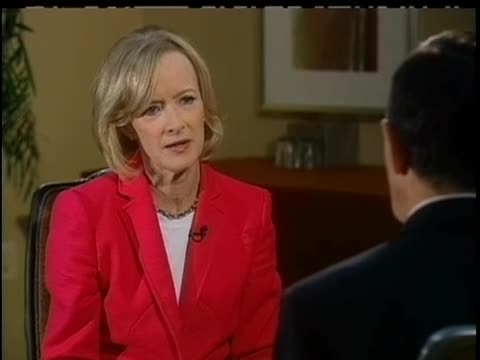
But the last summit seven years ago ended with similar hopes. And North Korea remains one of the most repressive and secretive places on Earth. Finally, in our ongoing series of conversations with Democratic and Republican presidential nomination candidates who are competing in the primary contest. Tonight, Ohio Democrat Dennis Kucinich, who is serving his sixth term in the U.S. House of Representatives. He is the former mayor of Cleveland, and he ran for the Democratic nomination for President in 2004. I spoke with Dennis Kucinich earlier today. Congressman Kucinich, thank you very much for talking with us. Thank you very much. Good to be here, Judy. You were the only 2008 presidential candidate who five years ago this week voted against giving the president the authorization to go to war in Iraq. Now Barack Obama was also against the war at that time right now.
It's also Bill Richardson and Mike Gravel, who want to get U.S. troops out of there right away just like you do. So how do you distinguish your position today from the other candidates? Well, it's very easy, Judy. I not only voted against it, but I did an analysis five years ago that totally debunked the Bush case for war. As a matter of fact, the analysis that I did was 100% spot on in asserting that there was no proof that Iraq had the intention or capability of attacking the United States, that they had anything to do with 9-11, or okay does roll in 9-11, and certainly there was no proof that Iraq had weapons of mass destruction. My analysis was chapter in verse and furthermore, to me it's not sufficient to say that you said something against the war, but when you get to the Senate, Senator Obama didn't vote at 100% of the time up until recently to fund the war, there's a contradiction there. But what about today? How is your position? But today what's different is this, that not only did I reflect the capacity for judgment and wisdom.
At the moment of crisis, when it really counts, but also today I have a plan that would bring our troops home and stabilize Iraq at the same time and also leave Iraq and control their oil. It's embodied in H.R. 1234, it's a plan to end the Iraq war. I submitted versions of that plan immediately after the invasion, but today there are many people who talk about ending the war, but I have the plan to do it, and a way to stabilize Iraq at the same time, there's no one else who really has presented that awareness or who is saying, look, the privatization of Iraq's oil or the partition of Iraq is a path to continued war. What do you think Iraq will look like after US troops are out of there? Well, you have to keep in mind that my plan calls for a parallel process. We end the occupation, close the bases, bring the troops home, in parallel with an international security and peacekeeping force that moves in as our troops leave. I mean, that's the way you bring an end to the US involvement in Iraq. Otherwise, you have the plans of senators Clinton, Obama and Edwards, all of which will leave a US presence in the region.
And frankly, we have to get out of there. We have to bring our troops home. So, you know, I've been consistent on this. And I've been the only one running for president who has been right from the start on this issue and has demonstrated a quality of judgment that people have a right to expect in a president of the United States about matters of international security. You have described yourself, I think, as a committed pacifist. Help us understand what that means. I mean, for example, after 9-11, the terrorist attack in the United States, if you had been president, what would you have done? Well, I think that we had a right to strike it, the training camps. As a matter of fact, I voted for the resolution and that gave the president the ability to do that. But, you know, the response has to be measured. What we've done in this search for top people in Al Qaeda, we've destroyed a lot of villages along the border of Pakistan. You know, these missile strikes in places like Damodola killed a lot of innocent villagers under the pretext that somehow we were getting top-ranking people in Al Qaeda.
You know, we have done this all wrong. This administration has been wrong with every aspect of their international policy, beginning with the response to 9-11, continuing with the war against Iraq, and up to this moment, planning for an attack on Iran. This administration's policy of peace through strength, the neo-conservative policy, which endorsed preemption unilaterals and first strike. I reject totally. I'm talking about strength through peace. No unilaterals, no preemption, no first strike, adherence to international law, and working with diplomacy, direct engagement, leader talking to leader in order to create security for our nation and for the world. I mean, that's the approach that a percentage presidency would bring. You're the only candidate I think who's talking about a Department of Peace. How would that work and what would it mean for the defense department? Well, first of all, the idea of a Department of Peace has both domestic and international criteria. On a domestic level, everyone watching this understands that American families are beset by a lot of problems that result in domestic violence,
spousal abuse, and child abuse. I'm talking about creating programs that would help families get out of that really a deep rut that creates a lot of emotional problems and strife inside families. But also, when you look at the issues of gang violence, violence in the schools, racial violence, violence against gays, the Department of Peace would also supply help to deal with that. On an international level, we'd look at those areas that help conflict percolate and get involved before they develop into something that requires troops. It's really a very wise approach that uses the principles of Gandhi, of Christ, of Dr. King, and others to try to lift us out of this idea that wars inevitable. War is not inevitable. Violence is learned, and nonviolence can be learned as well. So you'd still have the defense department. Of course you have the defense department. You've also said that you admire the foreign policies of Jimmy Carter, President Jimmy Carter. Tell us about why. What is it that you admire about him?
He's been the one president who has shown a real capacity to reach out and deeply into the Middle East to understand that America must take an even-handed approach. Look, I've been to Israel, and I've met with the Israelis, and I've met with the Palestinian people, and I met with people throughout the region. My wife and I have been to the region twice in the last year and two months. And there is a deep desire for peace in all sides, but the United States must take an even-handed approach. We have to do everything we can to help Israel survive, and Israelis perceive this existential threat. We must be attuned to that. At the same time, the Palestinians are crying for justice that they can't receive with walls and fences and losing their property. There has to be a United States presence that assures the survival of the Israelis and the rights of the Palestinians. And frankly, here again, I'm the only one running for President who's even talking about this. And this is really the door-to-peace in the Middle East, goes right through Jerusalem.
And anyone who would be President of the United States has to have the capacity to talk not only to the Israelis and the Palestinians, but the Syrians, the Iranians, the Iraqis, the Jordanians, and all of the others in the region. And I have that capacity. Let me turn you to a couple of domestic questions. The current subprime mortgage crisis. What do you think the cause of it is? And what would you do about it? Who would you go after or whom or what? Well, there's a number of different areas that needed to be looked at initially. The Fed has not had proper oversight of banks. The Securities and Exchange Commission has not had proper oversight of hedge funds. So you take those two conditions and you see what's birth forward now, which is hedge funds in trouble because of their investment in subprime mortgages. And you see millions of Americans losing their homes because there wasn't a cop on the beat. So what obviously what needs to happen is there needs to be a financial mechanism that basically creates a wraparound mortgage that would help protect the people in danger of losing their homes.
That's number one. But number two, we have to get to the underlying issue of predatory lending here. There are many areas in our cities that have basically been a red line cannot get access to credit. And that is a violation of the Community Reinvestment Act, Judy, during the Carter Administration. The Community Reinvestment Act was put forth so that inner city areas would have access to credit. And what's happened is that the credit for homes is dried up, minorities in particular, we're offered these subprime products, no document loans. As chairman of the Domestic Policy Subcommittee, I was the first one to put my finger on this and identify it and begin to ask the questions. But this is a broader issue that deals with, can Americans have a dream of home ownership? Can the government form a role in protecting that? Can we get these banks, to be honest, with their credit policies? Do they have a responsibility to provide a capital to people who are happening to be minorities? What about these adjusted prime rates that are going to start coming in and forcing people's mortgage,
mortgages is up on a monthly level? There's going to be more people losing their homes. This is a profound economic crisis and a moral crisis in this country. You mentioned the Federal Reserve. Do you think it should not be independent that it should be answerable? Of course it should be answerable. This idea of an independent Federal Reserve would actually happen from 1939 as a privatization of the money supply. Now, right now, we have to look at the Federal Reserve with two cuts in interest rates recently. They're creating winners and losers. People have to look at the implications of this for Wall Street. I think that the Federal Reserve, they have to be accountable. And I'm one of the few people who have been able to bring someone from the Federal Reserve to talk about the crisis in subprime loans, to ask about their responsibility. The Fed has a responsibility here and, frankly, another area that I'm the only one running for president who's raising this issue is what about our monetary policy? What about government's role here? Should it be a hands-off?
Should the Fed be a law unto itself? They're serious questions that need to be raised and I'm raising them. I'm going to tick off a couple of other issues that I know people are interested in. Income inequality seems to be growing in this country. The other candidates are talking about rolling back the Bush tax cuts doing away with those. Would you go further than that? Do you think taxes need to be raised on some Americans? To me, income inequality comes from a couple of things. First of all, the fact that there are many people don't have jobs. That creates inequality. Secondly, the people need a living wage. In many communities, people are not making the kind of money they should be making for the work they're doing. We need to raise the level of wages in our society. We also need to have more competition in our economy. You have more jobs when you have more competition. We need to break up the monopolies. Teddy Roosevelt understood this more than 100 years ago. We have too many monopolies governing our economy and that is creating less competition. Actually, it's shaking out a lot of jobs. In addition to that, one of the ways that you help lift up people's economic standing
is to have health care for all. I'm the only one running for president. It's pretty shocking, actually, that no other Democrat is ready to take a firm stand to say, it's time to end the for-profit health care system with a universal not-for-profit system, Medicare for all, and Judy, I'm the co-author of that bill. I've helped organize about 83 members of Congress in support of that bill. For most people, the single-payer health care system, most people, their image of that is what Great Britain has, what Canada has, wouldn't be something like what's in those countries. Yes, it would. We'd have the quality as well. The problem is that people are trapped into premiums, co-pays, and deductibles. Everyone watching this knows that there's no control over these insurance companies, that the insurance companies make money, not providing health care. They tell doctors what they can and cannot do. Under my plan, people have the doctor of their choice, and they're also able to get the care they need. They don't have to worry about losing their homes or going bankrupt.
That's, frankly, half the bankruptcies in America are connected directly to people not being able to pay their hospital bills. So my plan, which is Medicare for all, we recognize the money's already there to provide the care that's needed for people. Plus, vision care, dental care, mental health care, prescription drugs, and long-term care. See, what's happened is the Democratic Party, we're forgetting who we're supposed to be. We're supposed to be the party of the people. We become the party of the insurance companies. We become the party of the oil companies. We become the parties of the arms merchants. And somebody has to stand up and say, hey, where are the Democrats? Where are the real Democrats? And I'm a real Democrat running for president. You've also said you would have the United States pull out of NAFTA, the North American Free Trade Agreement, the World Trade Organization. You've been a vocal critic of globalization. How would you, how do you see the United States shifting if none of those trade agreements were in place? Well, I mean, actually, before and after, we had trade. Before and after, we weren't in the rut that we're in now, which was close to a 815-900 billion imbalance in our trade. What I envision is this, cancel NAFTA and the WTO, and have trade that's based on workers' rights, human rights, environmental quality principles.
You lift up the wage levels in the United States and in other countries. You assure that workers have the right to organize, the right to collect a bargaining, the right to strike, and all the other rights. No child labor, no prison labor, no slave labor, protection of the air and water. And this is much more desirable than the conditions we have right now. Judy, I've been all over this country, and I've seen grasp growing in parking lots, whether it used to make steel, whether it used to make cars and washing machines and bicycles. And now there's grasp growing in the parking lots, padlocks and the plant gates. I'm saying NAFTA is directly responsible for the decline of American manufacturing. I want to restore American manufacturing. Actually, have an American manufacturing policy where the maintenance of steel, automotive, aerospace, and shipping is seen as vital to our national economic security. This is a different subject area. Just this week, the Roman Catholic Archbishop of St. Louis said that he would deny communion to any presidential candidate who's Catholic,
who favors abortion rights as you do. Does this in any way make you rethink your position on abortion or rethink the Catholic Church? Well, no, and let me just tell you something, much of my public policy comes from what I've learned as a growing up Catholic. My economic policies were deeply informed by Leo XIII, Rayrom Novarum, by encyclicals of Pope Paul VI, popular and progressive. And so I have a deep respect for the Catholic Church. On the issue of abortion, I think that we need to do everything we can to make abortion less necessary. And I think you can do that through promoting birth control, through making sure that you have prenatal care, postnatal care, child care, universal health care, a living wage. I think I'm the one candidate for president who can help heal this nation and this intense divide over abortion by recognizing the concerns that people have, including in the Catholic Church, about abortions, but by creating circumstances where abortions are less likely to occur.
So I think it's time for president who brings a healing hand to this country on this issue. Four years ago, you changed your position. Is that right? Well, you know, it was long before I ran for president the first time that I came to an understanding of how this issue was tearing America apart and how it's possible to simultaneously stand for a woman's right to choose. And at the same time, work to make abortions less likely. I think it's possible to do both. We're called upon, those of us who run for president, to have a kind of wisdom, which comes from understanding what people go through, not that I'm smarter than anyone else. But I understand the kind of difficulties that people have, how complicated life can be for people. So when you come with the intention of not rejecting the teachings of the Church, but of trying to create a society where the concerns of the Church are given full effect.
And at the same time, make sure that women have this right to choose so that they can, and create a society where women can choose what is best, not only for themselves, but for the societies. Well, I think a president who takes that approach is someone who can heal this great divide, which the issue of abortion has created. I read that you once worked for the Wall Street Journal. Is that right? I was a copy editor at the Wall Street Journal in 1968. I was the person who helped to make sure that the page one, all the copy was in order, had to read it all, check the stock quotations, make sure the numbers are right, yeah? But you chose journalism. You thought journalism was the wrong way to go. Well, actually, it's an interesting story. I wanted to actually be a reporter at the Plain Dealer. And I was getting great grades at Cleveland State University at the time. I was going to school full-time and working full-time.
And the editors expressed some concern about somebody who would be working full-time and go to school full-time, so they wanted me to finish school. But also, after I ran for City Council in 1967, it was communicated by one of the editors assistants that Mr. Vale felt that politics and journalism do not mix. One other quick thing I read, commentary from, I guess it's the editorial page editor of your hometown paper, the Cleveland Plain Dealer. He says he's been covering you for 37 years. He says, Dennis Cucinich made his point in 2004. Now it's gotten a little bit old, and he said, people are embarrassed by you. Can you talk to him about this? Can you imagine what a burden he's had in trying having to cover me for 37 years? He ought to take a break. But that's, is that the view in your hometown?
No, of course. I was in the last time when I was reelected to Congress. You have to remember something. The people in Cleveland, they know me as someone who will stand up and speak out when no other person will. I saved a municipal electric system years ago in Cleveland. It saved the people of Cleveland hundreds of millions of dollars because I took a stand that no one else would. I'd help save a steel mill in Cleveland with close to 2000 jobs because I took a stand after the mill had already been closed. I made sure we saved the mill and saved a hospital. You know, I'm the one who takes a stand and on the war, all these other candidates were either quiet or they went the wrong way or if they spoke up, they voted to fund the war later. People know me as being someone who's not afraid. And it's because I come from Cleveland. That's what I represent, the kind of person who will stand up and speak out when others are quiet and who's not afraid to take on big challenges. I mean, frankly, that's the kind of spirit that the Cleveland Indians have. That's why they're in the playoffs.
You know, that's why I'm in this race for president because I have that kind of Cleveland spirit that's tough and at the same time informed. Dennis Guessenich, we thank you very much for talking with us. Thank you. Appreciate it. Appreciate it. Appreciate it. For more on Dennis Guessenich, you can visit our Vote 2008 website at pbs.org. All of our candidate interviews and campaign updates are available there. In addition, on our insider forum, Democratic and Republican strategists will answer your questions about the new fundraising numbers and the presidential campaign so far. Finally, tonight, essayist Richard Rodriguez, an editor at newamericanmedia.org on Mother Teresa's struggle with faith. Our world is bounded by religious certitude. Certitude sounding from the minaret, certitude proclaimed from the balcony of the Vatican, certitude sung in the evangelical super church, certitude chanted in the synagogue.
It came as a shock to many in the believing world to learn this summer that Mother Teresa, one of the most famous religious figures of the last century, lived much of her life tormented by doubt. In letters and private reflections recently published, she longs for God as for a husband who is indifferent to her. She writes, in my heart, there is no faith. I want God with all the powers of my soul, and yet between us, there is terrible separation. During her lifetime, Mother Teresa was criticized for begging for money from the corrupt of the world, for railing against abortion and contraception, for caring for the poor of Calcutta, but not fighting to alleviate the causes of poverty. Now, some of her critics gloat, and say that Mother Teresa has been exposed as a hypocrite. But within Christianity, doubt has often been part of a holy life.
Mistakes and saints admit to the dark night of the soul, even Christ on the cross cries out that he has been forsaken by God. The daughter of Albanian parents, Agnes Gonja Bojakshu, joins a teaching order of Irish nuns. Her first assignment is in the school for young women in India. On Sundays, she visits the slums, and she sees, and smells, and touches the lives of the poor. It is a seldomliness of the sick and the dying, connects to a loneliness within her. In 1947, she asks the bishop of Calcutta for permission to devote her life to the streets. After many petitions, Rome in 1950 grants her authority to begin her own order to missionary's a charity. Within four decades, her society of sisters and brothers, and volunteers are all over the world, caring for the old, the lepers, the addicted, the homeless, the dying.
In the chapel, she watches the other sisters in front of her very eyes, so wrapped in prayer. She writes, I see them love God, and I am just the lone, empty, excluded. The mother Teresa Center has decided to publish these private letters and journals against her wishes. The world needs the reminder in our dangerous age of religious certitude, not to fear doubt. Since September 11th, many Americans have been shocked by religious certitude in the world. It's aggression and maleness. And now we are at war in Iraq. I cannot think of a recent war about which it is more pertinent to note the strong support of some American religious communities. Not coincidentally, a new atheism is on the rise in America. An American television shows, and from atop the bestseller lists, there is open mockery of religion.
The so-called new atheists in America often bark with certitude, the equal of any fundamentalist. Mother Teresa wins the Nobel Prize. She meets the famous and the powerful. She visits men on death row at San Quentin Prison. There comes to Mother Teresa, the notion that if she ever becomes a saint, she will surely be a saint of darkness. An example to those who live in doubt, outside of heaven. The crowds grow. In crowds, she seeks out children, holds their faces in her hands, and stares into their eyes. And they match her on blinking recognition. She said that her life of service was only for God. And now we know the terrible irony. God was often hidden from her. With each face, she bathed. It was as if she were looking for God's face. And so often, all that stared back at her was the face of human suffering.
I'm Richard Rodriguez. Again, the major developments of the day the U.S. House voted to make U.S. security companies in Iraq subject to U.S. courts. Late today, Republican Senator Pete Domenci of New Mexico announced that he won't run for reelection. He said he has a degenerative brain disease. And the Washington Post reported that track star Marion Jones has admitted taking steroids before the 2000 Olympics. We'll see you online here and again tomorrow evening with Mark Shields and David Brooks, as well as a Republican presidential candidate. Mike Huckabee, among others. I'm Judy Woodruff. Thank you. And good night. Major funding for the news hour with Jim Lehrer is provided by.
Retirement. It may be a long way off or another adventure waiting just ahead. Pacific life can help provide income you can enjoy for the rest of your life. Because retirement could be a very long ride. Pacific life. The power to help you succeed. Chevron. The new AT&T. The Atlantic Philanthropies. And with the ongoing support of these institutions and foundations. And this program was made possible by the Corporation for Public Broadcasting and by contributions to your PBS station from viewers like you.
Thank you. To purchase video cassettes of the news hour with Jim Lehrer. Call 1-866-678-News. We are PBS. Thank you.
Thank you. Thank you. Thank you.
Thank you. Thank you. Thank you.
Good evening. I'm Judy Woodruff. On the news hour and update on the black water military contract story as reported by Elissa Rubin of the New York Times in Baghdad. A debate over federal shield law legislation which would regulate the relationship between reporters and their confidential sources. The latest on a possible permanent peace treaty between North and South Korea. And a Richard Rodriguez essay on Mother Teresa's struggle with faith. Every day it seems talk of oil, energy, the environment.
Where are the answers? Right now we're producing clean renewable geothermal energy. Generating enough energy to power seven million homes. Imagine that. An oil company as part of the solution. This is the power of human energy. The new AT&T. Pacific Life. The William and Flora Hewlett Foundation working to solve social and environmental problems at home and around the world. And with the ongoing support of these institutions and foundations.
- Series
- The NewsHour with Jim Lehrer
- Episode
- October 4, 2007
- Producing Organization
- NewsHour Productions
- Contributing Organization
- NewsHour Productions (Washington, District of Columbia)
- AAPB ID
- cpb-aacip/507-tb0xp6vv0v
If you have more information about this item than what is given here, or if you have concerns about this record, we want to know! Contact us, indicating the AAPB ID (cpb-aacip/507-tb0xp6vv0v).
- Description
- Episode Description
- This episode features segments including a report on the Blackwater military contract story, a debate over the federal shield law, a report on a possible peace treaty between North and South Korea, a presidential candidate interview with Dennis Kucinich, and a report on Mother Teresa.
- Date
- 2007-10-04
- Asset type
- Episode
- Rights
- Copyright NewsHour Productions, LLC. Licensed under a Creative Commons Attribution-NonCommercial-NoDerivatives 4.0 International Public License (https://creativecommons.org/licenses/by-nc-nd/4.0/legalcode)
- Media type
- Moving Image
- Duration
- 01:04:04
- Credits
-
-
Producing Organization:
NewsHour Productions
- AAPB Contributor Holdings
-
NewsHour Productions
Identifier: NH-8969 (NH Show Code)
Format: Betacam: SP
Generation: Preservation
Duration: 01:00:00;00
If you have a copy of this asset and would like us to add it to our catalog, please contact us.
- Citations
- Chicago: “The NewsHour with Jim Lehrer; October 4, 2007,” 2007-10-04, NewsHour Productions, American Archive of Public Broadcasting (GBH and the Library of Congress), Boston, MA and Washington, DC, accessed April 26, 2026, http://americanarchive.org/catalog/cpb-aacip-507-tb0xp6vv0v.
- MLA: “The NewsHour with Jim Lehrer; October 4, 2007.” 2007-10-04. NewsHour Productions, American Archive of Public Broadcasting (GBH and the Library of Congress), Boston, MA and Washington, DC. Web. April 26, 2026. <http://americanarchive.org/catalog/cpb-aacip-507-tb0xp6vv0v>.
- APA: The NewsHour with Jim Lehrer; October 4, 2007. Boston, MA: NewsHour Productions, American Archive of Public Broadcasting (GBH and the Library of Congress), Boston, MA and Washington, DC. Retrieved from http://americanarchive.org/catalog/cpb-aacip-507-tb0xp6vv0v