The NewsHour with Jim Lehrer; January 30, 2007
- Transcript
I'm Jim Lara. Today's news, the Iraq debate, Senators Durban and Corning, the Libby trial, and Vista of Microsoft, all tonight on the New Zealand. Good evening, I'm Jim Lara.
On the news hour tonight, the news of this Tuesday, then two takes on Iraq war policy developments, a wrap of today's happenings in Congress, and the differing views of Senators Dick Durban and John Corning. Plus an update on the Lewis scooter Libby perjury trial, and a look at the various meanings of Microsoft's new operating system. Major funding for the news hour with Jim Lara is provided by. Somewhere west of Topeka, someone's getting out for a breath of fresh air, which is why a farmer is harvesting Corning, and why a train is transporting Corning, and why AEM is turning Corning into ethanol, a renewable, cleaner burning fuel. Somewhere west of Topeka, someone's getting out for a breath of fresh air, and lots of us are hoping that sure that fresh air is naturally fresh. Idea, resourceful by nature. And by CIT, Pacific Life, the Atlantic Philanthropies, the National Science Foundation,
and with the continuing support of these institutions and foundations. This program was made possible by the Corporation for Public Broadcasting, and by contributions to your PBS station from viewers like you. Thank you. The next commander of U.S. Forces in the Middle East called today for a new direction in Iraq. Admiral William Fallon has been nominated to lead the U.S. Central Command. He told his Senate confirmation hearing what we have been doing has not been working, and we clearly have to do something different. He also said the U.S. may have to redefine the goals in Iraq, but he warned there isn't much time left to act. Senators in both parties maneuver today to build support for resolutions on the war,
Democrats pressed for a non-binding measure, opposing the president's call to send more U.S. troops to Iraq. Republicans said that would hinder the new U.S. commander in Iraq. There are many Republicans myself included who don't think any resolutions particularly helpful having just confirmed General Petraeus, anyone did nothing, and then passing something that indicates we think he's not got a great chance of success. It strikes me as not the best way to go, but if we're going to do a resolution, I think some benchmarks for the Iraqi government might well be helpful. Democrats and Republicans think what's going on there is wrong. And what I've heard from the other side is they're going to come up with a resolution calling for benchmarks. Now, where have you folks heard that before? You've heard it from us. So even the Republicans are very timid in their support for the president this day. Democratic leaders said they now expect the full Senate to begin debating Iraq
next week. House Democrats plan to take up their own resolution after that. We'll have more on the Iraq war debate, including extended excerpts of today's hearings right after this news summary. Fresh violence killed at least 58 Iraqis today, most of them Shiite pilgrims. The attacks came as more than 2 million Shiites in Iraq marked their most important religious holiday. The worst was northeast of Baghdad. The suicide bomber there killed 26 Iraqis wounded dozens more. But heavy security prevented major incidents in Najab, one of the Shiite holy cities. On Monday, Iraqi and U.S. forces killed scores of cult members there before they could attack Shiite leaders. We have a report on the aftermath of that raid narrated by Jonathan Miller of independent television news. The soldiers of heaven have come down to earth with a bump. Their doomsday cult deemed their self-styled Messiah dead, along with 263 of his
acolytes in a fearsome bloody battle that came out of the blue, more than 500 arrested, 200 wounded. Irrigation trenches where the obscure renegade group was holed up now filled with the dead. U.S. attack helicopters and F-16 bombers pummeled these positions, which also cover provided by British tornadoes. Pictures of aftermath finally emerging to dead bodies littering the wrecked village of Zarka. Reports of dead women and children. The whole area now sealed off by U.S. Marines and Iraqi troops amid a swirl of contradictory government statements, counterclaims by the cult, and questions about how a large and well-armed paramilitary unit have been able to set up such elaborate defenses and dig in right under the noses of the Iraqi security forces. The dead leader of the soldiers of heaven and Iraqi Arab
accused of plotting to kill Najav Sarani and dominated Shia hierarchy during Ashura, the holiest festival of the Shia Muslim calendar. So as sectarian violence rages between Sunni and Shia in Iraq, signs now of a civil war within a civil war insurrection by a sect within a sect. Also in Iraq today, the U.S. military reported the deaths of two more American troops. At the CIA leak trial today, the Vice President's former Chief of Staff, Louis Scooter Libby, faced a new challenge in his perjury obstruction case. Former New York Times reporter Judith Miller testified Libby discussed Valerie Plain in June of 2003. That contradicts Libby's account. Plain was a CIA officer whose name came out when her husband challenged pre-war claims on Iraq. Well, I have more on this story later in the program. A top house Democrat charged today.
The Bush administration has tried to mislead the public on global warming. Congressman Henry Waxman of California chaired a hearing on claims of political interference with scientists. He said he and Republican Tom Davis have asked repeatedly for White House documents. I would never want scientists to manipulate research so that they can tell me what they think I want to hear. I don't want politically correct science. I want the best science possible. In this instance, the committee isn't trying to obtain state secrets, or documents that could affect our immediate national security. We are simply seeking answers to whether the White House's political staff is inappropriately censoring impartial government scientists. No administration officials testified at the hearing, but Republican Congressman Darryl Isa of California came to their defense. The Hinterland watching this and even the people in the gallery here today understand
that global warming is not a secret hidden from the American people by the government. There have been huge amounts of money, huge amounts of awareness, as to global warming. There is a debate going on as to what part the human being plays in it and how much of it is simply us coming out of a mini ice age. And I believe good science should be used, employed, paid for, and deliver us answers so that we can make intelligence decisions. Two private advocacy groups presented a survey of government scientists to the committee, two in five, said their scientific papers on climate change have been edited to change their meaning. A truce between the Palestinian factions Hamas and Fatah held today for the most part. Gaza remained relatively calm after five days of fighting it killed at least 36 people. But Israeli planes bombed a tunnel Palestinian militants dug near the Gaza border. It was retaliation for the suicide bombing in Iraq on Monday. Three people were killed in that attack.
The African Union struggled today to build a peacekeeping force for Somalia. Leaders at a summit in Ethiopia tried to round up pledges of 4,000 more troops for a total force of 8,000. They'd replaced Ethiopian troops who helped crush Islamic militias. But a militia website released a video message today vowing to fight any outside force. A hooded gunman said peacekeepers would be considered invaders. The U.S. Food and Drug Administration announced today it will issue report cards on drug safety. They would list unexpected side effects from newly approved medicines. The agency also plans to restructure internal communications about drug issues. The FDA was heavily criticized over its handling of vioxx. The painkiller was pulled in 2004 after findings it raised the risk of heart attack and strokes. In economic news, consumer confidence ticked up slightly in January. The private research group, the conference board, reported that today.
On Wall Street today, the Dow Jones industrial average gained more than 32 points to close at 12,523. The Nasdaq rose seven and a half points to close at 2448. And that's it for the news summary tonight. Now, war policy debate in Congress, Senators Durbin and Cornyn, the Libby perjury trial, and the arrival of Vista. Congress and Iraq, news hour congressional correspondent Kwame Holman, begins. Debate over the Bush administration's Iraq policy spread across the Capitol today as members of Congress, top military officials and policy experts explored alternative approaches. Do you affirm that the testimony you are? At one Senate hearing, Republican Ireland Spectre challenged the President to reconsider his plan to send 21,500 more troops to Iraq. The President repeatedly makes reference to the fact that he is the
Senator. I would suggest and suggest respectfully to the President that he has not the sole decider. Good morning, everybody. At another hearing, the President's choice to head U.S. forces in the Middle East asserted the administration's proposed military buildup was just part of the solution. What we've been doing is not working. And we've got to be doing, it seems to me, something different. We begin the fourth and final week of the hearing. And at a third hearing, the chairman of the Iraq study group urged the President to include diplomatic talks with Iran and Syria, along with his military plan. Our policy of isolation is not working. We don't have a lot to lose, frankly. Former Secretary of State James Baker and former Congressman Lee Hamilton appeared on Capitol Hill together for the first time since the President proposed the troop increase for Iraq. And when foreign relations committee chairman Joe Biden focused on the centerpiece of the plan, more troops deployed to Baghdad and Western Iraq, a fisher developed between the
veteran statesmen. When we were in Baghdad, everybody told us, everybody told us that as Baghdad goes, so goes Iraq. And we believe that our forces are able to undertake both a surging Baghdad under the conditions we laid out short term and provided the commander on the ground authorizes it. And the training of Iraqi forces, our report, I think, makes that clear. And I need to say that. Because it doesn't sound like that. That's what Congressman Hamilton says. Well, there's another point here that's very important, Mr. Chairman. I'm sorry to go on. No, this is the key distinction. The training of the Iraqi forces must be the primary mission. By primary mission we mean we have to put the highest target on training the Iraqi forces. Nebraska Republican Chuck Hagel, a vocal opponent of the president's plan,
focused on the diplomatic track, asking why there was no administration engagement with Iran and Syria. He asked where that would lead American presence in the region and ended up taking issue with Secretary Baker's answers. I asked you, what you thought was the outcome of the reality of where we're going. But that isn't reality when you say, well, if we would do this, if we would do this. Well, the administration is, they are pursuing a diplomatic approach, not the one necessarily that we lay out in here perhaps. What's the use of time? The diplomatic approach. Yeah, they're lining up our historic allies in the region to enlist them in adopting the same policy toward Iran that we have, which is a policy of isolation. Baker did reiterate forcefully his view that there should be active engagement with Syria. If we could, and I believe we can, move them away from there again, their marriage of convenience with Iran.
That would do a lot more than I think we're able to do right now to marginalize Iran. During questioning from New Hampshire Republican John Sonunu, Hamilton and Baker again diverged on how best to force Iraqi Prime Minister Nuri al-Maliki to improve his security forces and foster national reconciliation. Lee wanted us to be to say that the President should lay it all out there publicly and, in fact, make a public statement or threat. And maybe it was because I was a former Secretary of State. I thought it might be better done privately. I'm sorry to have driven such a sharp wake up. Well, you didn't. You didn't know where she was there, but we worked it out. Quite frankly, I've lost my patience with Maliki. And I think we've got to put the screws on this fellow. Earlier in the day, testifying before the Senate Armed Services Committee was Admiral William Fallon, who, if confirmed, will be the first Navy man to lead the U.S. Central Command, a region comprising 27 countries,
stretching from Sudan in East Africa to Pakistan. The most daunting challenge will be Iraq. The Admiral received bipartisan admonitions to be candid with Congress. Do you agree to give your personal views when asked before this committee to do so, even if those views differ from the administration and power? I have to tell you this committee did not get candid assessments in the past. And I view that with deep regret because I think the American people and their representatives deserved better. Admiral Fallon assured the panel he would be straightforward with his views and went on to argue for a comprehensive counter-insurgency strategy in Iraq. Security is but one aspect of what must be a comprehensive effort to address not only this issue, but economic development and a reinvigorated participatory political process in Iraq by Iraqis. There's a body of evidence that indicates that to be successful in this endeavor, historically, you've had to get in amongst the population
to convince them that you really care about them that you are able to provide security on scene rather than just passing through an area. South Carolina Republican Lindsey Graham wanted Fallon to make clear that the current insurgency was stifling progress in Iraq. Could you envision a democracy emerging in Iraq with this level of violence at the current state? Clearly not much in a way a progress is going to occur with the current levels of violence and instability. But I think that we would probably be wise to temper our expectations here, that the likelihood that Iraq is suddenly going to turn into something that looks close to what we enjoy here in this country is going to be a long time coming here. Meanwhile, Democrats on the Senate Judiciary Committee examined the role of Congress in the war debate, something Illinois's Dick Durban defended. For those who argue that for the United States Congress
to engage in a bipartisan debate about our Constitution and our policy is somehow, quote, emboldening the enemy or undercutting our troops, they are wrong. This debate is evidence of what a democracy is all about. Members of both parties also are considering more definitive legislative options that would force the wars and ranging from capping the number of troops permitted in Iraq to cutting off funding for troop deployments beyond a certain date. Wisconsin Democrat Russ Feingold went as far as to say he would push for a bill that eventually would cut off funding for the deployment of forces in Iraq. The Constitution gives Congress the explicit power to declare war to raise and support armies, to provide and maintain a navy and to make rules for the government and regulation of the land and naval forces. Meanwhile, senators from both parties continue to debate the efficacy of passing non-binding resolutions opposed to the President's plan.
Senator Biden and Virginia Republican John Warner both have offered measures that do just that. But Warner's version includes differential language, acknowledging the President's constitutional powers as commander-in-chief and allows for some additional troop deployments. However, neither resolution may have the support needed to pass, which would please the White House and its Senate allies, such as Arizona Republicans John Kyle. The message that sent to our troops is perhaps the most devastating. Because it says, we've sent you on a mission, and yet we don't believe in the mission. We're putting you in harm's way. You may in fact die trying to complete your mission, but it's not a mission that we believe in. Think about the message that that sends to the troops and to the families. But debate on the various resolutions is expected to begin next week. And to Gwen Eiffel.
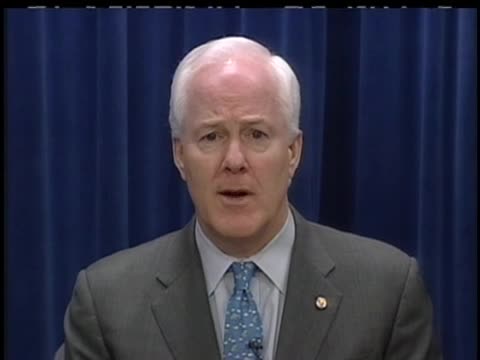
For more on the Iraq debate consuming Congress, we turn to Senate Majority Whip Dick Durban of Illinois and to Republican Senator John Cornyn of Texas, a member of the Armed Services Committee. Welcome, gentlemen. Senator Durban, it's clear that there is a war of a debate going on on Capitol Hill. We heard today James Baker say, give the President's plan a chance. We heard our inspectors say the President is not the sole decider. And we heard Admiral Fallon say that perhaps Americans and members of Congress should temper their expectations about what happens next in Iraq. Who's right? Well, I think quite honestly, put it in context. We are now engaged in the national debate that's long overdue about the war in Iraq. There are many different views and many different opinions. They'll come forward on the floor of the Senate in just a few days. We'll have a chance to debate resolutions. One offered by Senator John Warner of Virginia. And I think honestly, it says that the current policy in Iraq and the President's proposal to increase the number of troops are not the best course of action.
And I think that you're going to find a bipartisan group of senators voting in that direction. Senator Cornyn, is this a long overdue debate? Well, I've been here in Congress in the Senate in the last four years, and we've had a lot of debate about Iraq. But clearly, as we all know, what we have been doing has not been working, particularly with the rise in insurgent violence. But I don't think these resolutions, non-binding resolutions, are going to accomplish anything. Matter of fact, I think the only thing they are going to accomplish has already been accomplished. And that is to send a negative message to the folks who are out there on the front line on the mission that we've asked them to do in Iraq and Afghanistan. And I think it's demoralizing. And I wish we would, if we really have the courage of our convictions, if people said, you know what? This is an immoral task. We've asked our troops to do because we don't believe in the mission. We think they're going to fail. And they ought to cut off funds. But to have this sort of debate without any real consequence, I just don't think is the best use of our time.
Would you go as far as Secretary Gates did last week when he said that this kind of debate is emboldening the enemy? Well, that's what General Petraeus, of course, the new commander who has confirmed unanimously on Friday, has said during his confirmation hearing as well. And it's ironic, when they say we're going to confirm the commander who's the architect of this plan, and we're going to send him over there, you know, but we're going to undercut them in terms of their ability to accomplish the mission. I just think it's a mixed message, a bad message, and I wish we would reconsider. Senator Durban, is this a mixed message that you're sending not only to the new general on the ground, but also to the troops on the ground? Not at all. First, let's make it clear. We stand behind these troops. They've done everything we've asked them to do. They've risked their lives and continue to do it while we debate this in the safety of the Capitol. But the simple fact of the matter is that the policy of this country needs to be decided. That decision is made by the government, by the Congress, and by the President. This kind of deliberation and debate
is what America and democracy are all about, and those who want to quiet this debate and want us all to march in silent lockstep don't understand the noise of democracy is something that we shouldn't either ignore or criticize for our troops in the field will stand by them. And I might add, this administration wants to send 21,000 more soldiers into harm's way in Iraq, and this morning's newspaper says the Pentagon has reported we don't have the equipment that they need to be safe once they're sent to Iraq. So when we're talking about standing behind the soldiers, I believe this debate for democracy's sake is an effort to say that the soldiers are all about is the real. And secondly, if we're going to send them into battle, we should make sure that they're well-equipped. Senator Cornyn, it's clear we're you two and others disagree on this issue, but let's talk about an area of a great potential area of agreement. Today's Secretary Baker said an interesting thing at the hearing he said that maybe there should be a grand negotiation between the executive and the legislative branch, wouldn't that be better than what we have now?
So let's assume that you agree just on what should happen with training the Iraqis. How do you get to that? Well, I think the President, during the State of the Union message, did call for a bipartisan commission or committee of the legislature to try to work out a solution that we could all agree to without regard to partisanship. What I'm understanding is that his offer was turned down. And I really wonder the wisdom. I don't think our founding fathers really believed that 535 members of Congress could micromanage a war. That's why we have a single commander in chief. Obviously Congress has a role, primarily the power of the purse, we can cut off funds if we disagree. But what I'm hearing now is a lot of criticism and frankly no alternatives, if there was a constructive alternative being offered by the critics, I would welcome it because then I would at least believe that we're trying to find a solution to the problem and not just trying to score some points.
Senators one or Anne Spector, both in your own party, have said in fact Senator one or has sponsored one of these resolutions, they have said that they believe that Congress has a role as a co-equal branch of government. This is not for the President to decide on his own. Well, no doubt about it. The Congress does, but I'm talking about micromanaging the tactical decisions about how to make progress in a war. We're simply not equipped here in Washington to make those decisions. That's why we have the ability to vote on the confirmation of such experts, acknowledged experts. His David Petraeus, the new really architect of this counter insurgency plan and somebody who has just confirmed unanimously last Friday. Senator Durban, there must be what a dozen of these resolutions by now, including one, introduced that you are signed on to, one to Senator Cornus signed on to. Do any of them contain what Senator Cornus is talking about, which is an alternative? Yes, it is a matter of fact that alternative was spelled out long ago. By vote of 79 to 19 in the United States Senate for another resolution written by the Democrats, but sponsored by Senator
John Warner, we said the year 2006 would be a year of transition and begin to phase and redeploy our troops out of Iraq, so to suggest that Congress end the majority in the Senate have not come forward with an idea and a strategy is just not accurate. And I think we all understand at this point the obvious. If the Iraqis are going to stand up and defend their own country, it's with the knowledge that the American people are not going to keep sending their most precious commodity, the lives of our soldiers, into that country indefinitely. And the President's idea of escalating this force, another 21,000 at this moment in time, sends exactly the wrong message to the Iraqis. Isn't it ironic that Prime Minister Al Maliki, in meeting with President Bush last November, told him point blank, we don't want more troops. Give us the equipment so that our soldiers and police can do their work. And instead, the President is sending another 21,000 soldiers. But what about Senator Cornus at other point, which is the gauntlet that you keep hearing being thrown down by the President's supporters, which is if you really believe that
things are not being managed well, Congress did exercise its power of the purse. Senator Feingol had said that he will introduce legislation that would cut off funding for this enterprise. But why not do that? The day may come. The first resolution is a so-called non-binding resolution where Congress can express its feelings about the President's new plan to increase the number of soldiers that are being sent to Iraq. The President can choose to ignore that if he wishes. Maybe he will consider it in terms of his strategy. Then Congress has many options before it. One of them relates to funds for these additional soldiers. Another would cap the number of troops that could be in Iraq at any given time. Congressman Mirtha has said that the soldiers should have a certain level of readiness before they're sent. And there are even some that are proposing that we declare that the use of force resolution passed in October of 2002 is no longer operative. That what is happening in Iraq today is beyond the scope of the authority given by Congress. And we need to debate it again and decide what our future will be in that country.
What about that Senator Cornyn? Are these debates that we're about to see unfold on Capitol Hill? Are they just a beginning in a series of steps? And if not, if you oppose all of these efforts, what do you do? Well, I heard my colleague Senator Durban took off a list of options, but we're not talking about those at least now. We're talking about a non-binding resolution, which is of no force and effect other than as the commanding general who will take charge of our forces said to embolden our enemies and discourage our allies. And I think that I would feel better about it. And I would believe that actually people were sincere about trying to accomplish their goals if there was really some consequence to the vote that we were being asked to take because ultimately we are all responsible for our votes, but to have a non-binding resolution, which has no impact, which has the effect general Petraeus stated, I think is just not constructive.
You think there is no political impact at least from these votes? Well, I worry that it's only a design for political impact. But I would hope at a time of war we would try to rise above our partisan affiliation. We would try to figure out what is in the best interest of America's national security and work together. I worry that there's too much politics here and not enough really any substance. Senator Durban, Nancy Pelosi returned from Iraq today, and she said that everywhere she went, everyone said there is one last chance for this to work, and that may not work. And also, the others have said that, and we heard a Secretary Baker say today, let's give this a chance to work. How much time do you think has to be allowed to allow any of this to work? Very little, I think we have reached the end of our rope when it comes to Iraq. I think we understand that we're in the fourth year of a war that's lasted longer than World War II. 3,081 soldiers from America have died as of today. It's cost us almost $400 billion. No end in sight with this administration's policy.
That's why men like Senator John Warner, a decorated soldier, a sailor, I should say, who served as Secretary of the Navy, has come forward and led a bipartisan effort to send a message to this administration that it's time for real change. But what about Senator Cornyn's point? What's this about sending a message? Why not just cut to the trace and cut the funds? We will come to that point. If the president ignores this sense of the Senate resolution, if he ignores the will of the Senate, the majority of the Senate should have majority vote for either resolution, then we'll have no other alternative. Senator Cornyn, how much time do you think should be allowed to allow the surge to work if that works, or to take the next step and redeploy if that becomes the option? Well, I actually do agree with Senator Durbin on this point. I do think that the confidence the American people that we're able to make progress in Iraq is fast, fast waning. And I think this is one of the last clear chances we have to begin to turn things around.
That's why I believe that it deserves at least a chance. The alternative is the so-called phase redeployment, the redeployment of our troops to Okinawa that represented Mirth called for the idea that we're going to withdraw our troops now without regard to the consequences, likely to be a regional conflict in the area. And there are possibly a failed state, which would serve as a launching pad for future terrorist attacks. I would like to hear some of the critics who have not offered constructive alternatives to say how they're playing to deal with the devastating consequences of that regional conflict or failed state. I think that's an important part of this debate that we haven't heard a lot about. Do you trust Al Maliki to execute what the president has planned? I think we need to see him act on his commitments. I think we all share a skepticism in the Mr. Al Maliki's ability to do what he says he's going to do. I must tell you, though, the early signs,
as the last few days have been somewhat encouraging, that he does appear to be willing to take on people without regard to sectarian affiliation, without regard to the political power that the Shiite militias might otherwise exert. So I'm hopeful. But to me, as General Petraeus said, hard is not hopeless. And this is hard, but I don't think it's hopeless. Senator John Cornyn of Texas, Senator Dick Durbin of Illinois, thank you both very much. Thank you. Still coming tonight, an upgrade for Microsoft and the latest on the Libby trial. Jeffrey Brown has that story. During the summer of 2005, then New York Times reporter Judith Miller went to jail for 85 days for refusing to reveal who gave the name of CIA operative Valerie Klam. Miller eventually was freed when that source,
Louis Scooter Libby, then chief of staff to the vice president, released her from her pledge of confidentiality. I was a journalist doing my job, protecting my source until my source freed me to perform my civic duty to testify. During the lead up to the Iraq war, Miller frequently wrote about the search for weapons of mass destruction. Libby allegedly disclosed Valerie Klam's identity to Miller as part of a White House effort to discredit Klam's husband, former Ambassador Joe Wilson, who had publicly disputed a key part of the Bush administration's intelligence on WMD. Libby is charged with lying during a federal investigation into the leak. This afternoon, Miller, who left the Times more than a year ago, was called to testify about her conversations with Libby. And once again, today, Carol Lenig was in the courtroom for the Washington Post, and once again, she's with us to describe what happened. Carol, welcome back.
Thank you, Jeff. So what is the headline out of Judith Miller's testimony today? Well, it really is in two parts. Former New York Times reporter Judith Miller's testimony was very much anticipated because it was going to be this first time she came forward and told the entire public what kind of conversations she had with Scooter Libby in the spring in the summer of 2003. Now, this is not a surprise to most people covering this case. In the indictment, we learned that she said and testified that Scooter Libby and a secret meeting in June 2003 told her about Joseph Wilson and told her that this prominent critic of the war at that time that his wife worked at the CIA. She said, on the stand again today, she said that he and she met privately on July 8th, 2003, and he told her more details about the wife and her role in counter proliferation into CIA. What I think was the most interesting thing about her testimony today was one, it foreshadows or tells the
impressages the beginning of a sort of sad tale for journalists, which is many prominent reporters are going to be called for the first time in this criminal trial to testify for or against a government official. For many of them, that person was their confidential source. That's a pretty painful thing to see unfold in court for a lot of reporters. The other thing that was important about her testimony was that she went into great detail about how agitated Scooter Libby was when she met with him in June and also in July and how she never said to him anything about other reporters knowing about this. He was just really angry, complaining about the CIA, saying that the CIA was trying to blame the White House for using bad intelligence to justify the war in Iraq. And in that context is how she said he brought up blame, Valerie Blame, and her husband,
and Blame's role at the CIA. So what happened when the defense got its chance at her? Did they try to get at her credibility or her memory of these meetings? They sure did. They went really pretty hard at her. More than I have seen them go after the other witnesses, six witnesses before her, most of them government officials. She's the first journalist to testify. And defense attorney Bill Jeffress repeatedly said, how is it exactly Ms. Miller in a pretty dismissive tone? How is it Ms. Miller that you cannot remember or did not remember this June 2003 conversation when you testified before the Grand Jury? Judy Miller explained repeatedly that she refreshed her recollection when the special prosecutor in this case, special counsel, Patrick Fitzgerald, told her to go back to her notebooks. She said she found her notebooks and is shopping back under her desk. She looked at them. She saw the notes of her conversation with Libby, and it all came back to her. She said the thing that really stuck in her mind was that
scooter Libby had mentioned a bureau within the agency. At first she was confused. She wondered if it was the FBI. But then she realized it was a bureau within the CIA that worked on nonproliferation issues. And for her that was very memorable. And the defense I gather also asked her or tried to ask her about other anonymous sources that she had. Yes, an amazing irony unfolded today in the court when after there was much discussion about her memory or faultier not, Bill Jeffress asked Ms. Miller, exactly who else did you share this information with? Who else did you tell before Ms. Plains identity was revealed in Bob Novak's column on July 14? Remember, all these dates are important. June, conversation with Libby, July 8, conversation with Libby, July 14, Novak's column comes out and for the first time reveals her identity. Bill Jeffress then said, and who else could you have learned this from Ms. Miller? We'd like to know about other sources of yours.
This caused a big hubbub in the court this afternoon. Trial proceedings were halted temporarily while there was a discussion. The jury was excused. The judge wanted to talk to Judy Miller as attorney. The very respected Bennett about how do you feel about your client being asked some of these questions. It was very clear that what Judy Miller had almost gone to jail, what she had gone to jail for was this waiver that she said she hadn't received from scooter Libby. She finally did receive it. She came out of jail. She testified on the agreement that would only be about Libby. And then today, three years later after all this controversy has begun, she's asked to talk about other sources that she fought so hard not to discuss. So where does this leave the case for the prosecutor, Mr. Fitzgerald? We also heard today he also had Mr. Addington, who's now the chief of staff, Mr. Libby's former position as chief of staff to the vice president. And yesterday, the former press spokesman for the
president. How are you flying? Yes. And Addington's testimony. Remember, David Addington is kind of a mysterious figure. He's the person behind a lot of controversial administration, legal opinions. He's considered an incredibly smart person who's given the president of the vice president and his counsel about a lot of things that have to do with the war on terrorists. And so here's this rare opportunity for people to see what he's talking about. But mostly in this case, his testimony for the government was that he had had a conversation with scooter Libby. And in this conversation, it was after the criminal investigation of begun, scooter came to his office that I just want you to know I didn't do it. And then he asked him some information about what could be perceived as criminal in this information, information you provided to reporters. How would you know whether or not a CIA agent was covert,
what would it take to violate the Intelligence Identity's Protection Act? That was pretty interesting because you could, if you're a juror, perceive that as Libby already trying to figure out whether or not he had a criminal problem. On the other hand, for the defense, the defense repeatedly used Mr. Addington's presence to introduce testimony about documents he received at the vice president's office, subpoenas for documents. And in these subpoenas, the nature of the investigation was revealed to a degree. And the defense attorneys argued that these documents show that Libby didn't have a motive to lie. There was no reason for him to think based on what he knew about the investigation, no motive for him to think he should lie and conceal anything that he had committed any crime. And I guess briefly, Carol, I guess with Ari Fleischer, he also brought out some discrepancies with Mr. Libby's prior memory of the way things had happened. Yes, it was a very critical piece of evidence for the
government to have Ari Fleischer take the stand and say, I know exactly when this lunch took place. I flew off to Africa in the afternoon on July 7. But in midday, I had a lunch date with scooter Libby. He never had lunch with me before. He never really told me any other information before. And in this rare instance, he shared with me this information that Joe Wilson's wife works at the CIA. And Fleischer said he went on after hearing this also expressed by Dan Bartlett in an offhand remark. He went on to share some of that information with other reporters. All right, Carol Lenick, thanks again for the latest update. Thank you, Jeff. And finally tonight, here comes Microsoft again, Margaret Warner reports. After more than five years and six billion dollars in development, Microsoft's latest software system went on sale to the public today.
It's a new computer operating system called Windows Vista with a complimentary product, Office 2007. An operating system manages all of a computer's hardware and software programs where the 90% of the world's personal computers run on Microsoft systems. And they account for most of the company's $44 billion in annual revenues. The company says Vista is more secure and more user friendly than earlier Windows versions. The cost, if purchased independently, ranges from $100 to $400. In their announcement yesterday, Microsoft chairman Bill Gates and CEO Steve Walmer acknowledged that the technology landscape has changed dramatically since the first major update of Windows in 1995. You know, if you think back is built into the time of 1995, the PC was sort of solitary in the technology world. The internet wasn't really developed. People didn't own cell phones really very much or digital
cameras. Here we are 12 years later. And Windows Vista comes to market. There's many technology products. But at the center, the product brings it all together, the hardware, the cameras, the photo frames, the connectivity to other machines in the house, the new applications, connections to websites. It really is the PC running Windows and particularly Windows Vista that enables that next generation. For more now on Vista and Microsoft, we turn to David Pogue, technology writer for the New York Times, and Kevin Wurbach, professor at the Wharton Business School at the University of Pennsylvania. He studies the technology industry. Welcome, gentlemen. David Pogue, first, what is so new and different and special about Vista? How is it different from earlier Windows versions? Well, I'd say Microsoft spent most of its effort in two ways. Number one, the security, spyware and viruses and all the
other nasty stuff from the internet has been really giving Microsoft a black eye for years. And the second category is looks and elegance and smoothness. Most people think of Windows as something sort of utilitarian and corporate, but they've really made an effort to make it well more Mac-like in this version. And what market are they aiming at first? I mean, do they expect it just to go into new computers that are bought or are they really hoping and planning to have individuals or companies buy it and install it as an upgrade? Well, I don't think anyone is kidding themselves here. Everybody knows that upgrading an existing computer is a hassle. Your speakers won't work for two weeks and it takes all Saturday afternoon. So even Microsoft admits that 90 to 95 percent of the world will just get Windows Vista pre-installed on the next computer they buy. They don't expect a lot of people to upgrade existing PCs. And by the way, there's a good reason for that.
Windows Vista has much higher horsepower requirements than any previous version. So a computer older than about a year and a half old won't even be able to run it with all its features. And why did it take so long to develop this? They've been talking about this for over five years. That's a lifetime in the software universe. Well, it's extraordinary. Five years since... That's right. Go ahead, David Pogan. Professor, I'll turn to you just a second. Yeah. Well, halfway through the development process, there was what they call a reset. There were executive shufflings and a sober realization that they had perhaps bit off a little more than they could chew. They had designed something that was too ambitious and that would take too long to get out the door. So a couple of years ago, they literally stripped out a bunch of the features they had intended to come out. And what we're left with is a much more manageable piece of meat on the plate. Professor Wordbach, your thoughts on why this took so long. It's an extraordinary engineering challenge when you think about it, they have to make Windows work with every different kind
of hardware, every different kind of software, and every different kind of use. This is a fundamentally horizontal product. We're seeing today the release of the consumer version of Windows, but Windows gets used for servers, versions of Windows gets used in mobile devices, it gets used for all sorts of things. So from Microsoft to build these millions and millions of lines of code that run on so many devices with so many combinations is just a tremendous challenge. And even though they have the best software developers in the world, the best software project managers in the world, they barely got this thing out the door after five plus years. And so Professor, what does this do to Microsoft's position in the marketplace? We heard Steve Ballmer talk about all these other new technologies that are out there now. Well, Microsoft is still in an extraordinarily strong position. They're still the dominant player in the PC industry, their software still runs on virtually every piece and they're still at the center of the world to the extent that anyone is.
The challenge for Microsoft is that the world is shifting. The innovation, the energy and economic activity is moving online onto the web. So companies like Google and Yahoo and Amazon.com and eBay and so forth deliver their services over the network. And they don't depend on the PC as much. So if you as a user think about the PC is basically a way to get to the internet, you're not as concerned with what Microsoft lets you do or what it enables on the PC itself. It's just a tool to get to where the real action is. David Pope, you agree that really what's happening here is a shift to a new model that your access is no longer something you buy in a box and take home and install. Actually, I don't agree. I hear this a lot in headlines. It is very exciting to think that someday we might not need this computer that we have to keep upgraded and troubleshoot all the time. But in fact, you're always going to need, I think, for the near many years, you're going to need a hub.
You're going to need something that holds your pictures, your music, your videos, all your documents, and yes, gets you online. I've noticed that in the history of technology, new technologies tend to add on. They don't replace. So radio didn't kill off. I mean, TV didn't kill off radio. The DVD did not kill off going to the movies. And in the same way, yeah, you can access the internet from your cell phone now. And you can watch videos on your iPod. But those aren't great experiences. Those are make-do experiences when you're on the road. I think most people will still want a big screen and a real keyboard when they get home. What about that point, Professor? That's the point that Baltimore was making that still managing all of this will be your computer. That'll be the hub. Well, it's not about killing off. So think about the technology industry today. There's something like 8 or 900 million PCs around the world. Big, big market for Microsoft. There's something like 2.7 billion mobile phones. And the money that Microsoft makes on its PC operating system
on Windows dwarfs the money that anyone makes on mobile phone operating systems. It's a different economic arrangement. So the challenge for Microsoft. And I think David is absolutely right there. There certainly is still a lot of value for Microsoft. They're not going to be suddenly steamrolled or disintermediated or something. They still have a lot of value. But over the long haul, the question is, does the value that users get move away from the PC? And also, is Microsoft ultimately the best at that integration? They're certainly the best at integrating in the different software pieces for all the different kinds of hardware choices and so forth that a PC user has. But if the challenge is to integrate in software on a network of hundreds of thousands of computers running in data centers across the world, which is basically the challenge that Google is extremely good at addressing, then Microsoft's playing catch-up. They're very good there too, but it's not their core competency. David Poe. Do you think they're playing catch-up in some of these new fields? There's a good deal of catch-up going on in Windows Vista in
particular. I counted about 35 of the new features in Windows that actually have pretty prominent predecessors in Apple's Mac OS X. And Microsoft doesn't pretend otherwise. Steve Ballmer was asked about this in an interview and he said, we take good ideas wherever we find them, or something along those lines. It makes Mac fans very upset, but on the other hand, it makes Windows better. I mean, it was a successful strategy. Windows Vista is so much more elegant and smooth and silky than it ever has been before. And it's not just I candy. I mean, stuff like that means something. Think of how you feel when you use an iPod. It makes you feel good. It makes you satisfied with what's going on. And I think Windows Vista does more of that than any previous version. So, Professor, the success of Microsoft, I mean, financially, has been that they had this near monopoly without getting into the legal ramifications of that term. And it generated huge revenues, which then they were able to use to put into development of either new products or upgrading their existing
one. Are Vista and Windows 2007 strong enough in your view to continue providing that kind of a cash cow for them? For the near term, it's a great product. It's going to get used very widely. But ultimately, the challenge for Microsoft are these fundamental shifts in the industry. So, David's absolutely right. They've taken lots of great innovations and put it into this operating system, but in the time that it took Microsoft to get this version of Windows out, Apple released five versions of their Mac operating system. They're going to release another version in a few weeks or at least in the next couple of months. And Google companies that deliver services online can innovate and change their operating system every week if they want to, because it's something within their control, they're not selling this in a box that goes out to lots of users. So, certainly, Microsoft is still in a strong position. They're going to make billions of dollars on Windows Vista. This is, if you take into account, the value, not just to them in terms of their sales, but to the entire industry, probably a
hundred billion dollar product launch in terms of new revenue. So, no question. They're not going away. However, over the long haul, the fundamental foundation for their incredible economic success is insecure. And they understand that. All right. Kevin Warbach and David Polk, thank you both. Thank you. And again, the other major developments of the day, the next commander of U.S. forces in the Middle East, Admiral William Fallon called for a new direction in Iraq. And a House committee heard allegations the Bush administration pressured government scientists to play down global warming. Tonight's edition of Frontline World is about a homegrown terror cell accused of planning attacks in Atlanta and Toronto. Please check your local PBS listings for the time. And once again to our honor role of American service personnel
killed in Iraq and Afghanistan, we add them as their deaths are made special and photographs become available here in silence are 17 more. Thank you. Thank you.
We'll see you online and again here. All right. Good night.
Major funding for the news hour with Jim Lara is provided by XCIT. We provide the financing to keep health care strong and healthy. We help energy companies find new resources. We work with communications companies to make the world smaller and life bigger. We offer financial aid to make college possible for more students. XCIT, we help finance the future because that's a place to be. Let's see it. We see it. And by the Archer Daniels Midland Company. Pacific Life. The Atlantic Philanthropies. The National Science Foundation. And with the continuing support of these institutions and foundations. And this program was made possible by the Corporation for Public Broadcasting. And by contributions to your PBS station from viewers like you.
Thank you. Thank you. We are PBS. Thank you.
Thank you. Thank you. Thank you.
Thank you. Thank you. Thank you.
Thank you. Thank you. Thank you.
Thank you. Thank you. Thank you.
Thank you. Thank you.
- Series
- The NewsHour with Jim Lehrer
- Episode
- January 30, 2007
- Producing Organization
- NewsHour Productions
- Contributing Organization
- NewsHour Productions (Washington, District of Columbia)
- AAPB ID
- cpb-aacip/507-s756d5q669
If you have more information about this item than what is given here, or if you have concerns about this record, we want to know! Contact us, indicating the AAPB ID (cpb-aacip/507-s756d5q669).
- Description
- Episode Description
- This episode of The NewsHour features segments including a look at the Iraq War policy developments; conversations with Senators Dick Durbin and John Cornyn about the war; a report on the Scooter Libby perjury trial; and a report on Microsoft's new operating system and what it means.
- Date
- 2007-01-30
- Asset type
- Episode
- Rights
- Copyright NewsHour Productions, LLC. Licensed under a Creative Commons Attribution-NonCommercial-NoDerivatives 4.0 International Public License (https://creativecommons.org/licenses/by-nc-nd/4.0/legalcode)
- Media type
- Moving Image
- Duration
- 01:04:46
- Credits
-
-
Producing Organization: NewsHour Productions
- AAPB Contributor Holdings
-
NewsHour Productions
Identifier: NH-8752 (NH Show Code)
Format: Betacam: SP
Generation: Preservation
Duration: 01:00:00;00
If you have a copy of this asset and would like us to add it to our catalog, please contact us.
- Citations
- Chicago: “The NewsHour with Jim Lehrer; January 30, 2007,” 2007-01-30, NewsHour Productions, American Archive of Public Broadcasting (GBH and the Library of Congress), Boston, MA and Washington, DC, accessed January 23, 2026, http://americanarchive.org/catalog/cpb-aacip-507-s756d5q669.
- MLA: “The NewsHour with Jim Lehrer; January 30, 2007.” 2007-01-30. NewsHour Productions, American Archive of Public Broadcasting (GBH and the Library of Congress), Boston, MA and Washington, DC. Web. January 23, 2026. <http://americanarchive.org/catalog/cpb-aacip-507-s756d5q669>.
- APA: The NewsHour with Jim Lehrer; January 30, 2007. Boston, MA: NewsHour Productions, American Archive of Public Broadcasting (GBH and the Library of Congress), Boston, MA and Washington, DC. Retrieved from http://americanarchive.org/catalog/cpb-aacip-507-s756d5q669