The MacNeil/Lehrer NewsHour
- Transcript
MR. LEHRER: Good evening. Leading the news this Tuesday, the Federal Reserve Board lowered the discount interest rate by 1/2 percent. U.N. forces took a first step toward takeover of the Kurdish refugee camps, and a typhoon killed more than a thousand people in Bangladesh. We'll have the details in our News Summary in a moment. Robin.
MR. MacNeil: Our lead story tonight is the lower discount rate and whether it will give the economy a needed kick. We hear about the impact on banking, real estate, and the auto industry, and four economists debate whether it was the right medicine for the recession. Then Correspondent Lee Hochberg looks at the new trade- off to save the spotted owl from the lumber industry, and finally essayist Jack Perkins looks at a down East welcome home. NEWS SUMMARY
MR. LEHRER: The Federal Reserve Board lowered its important discount rate from 6 to 5 1/2 percent today. The discount rate is what the Fed charges member banks which often use it to set their own lending rates. It is the third time the Fed has lowered the discount since December in an effort to stimulate the economy out of recession. Pres. Bush welcomed the action during a photo opportunity with Congressional leaders at the White House this morning.
PRES. BUSH: This will stimulate our economy. I think it will help worldwide as well. It is very good news and I think it'll be well received in this country and I hope that it'll have a strong effect internationally. We are the largest economy in the world and if ours is robust and growing, that benefits everybody else, in my view.
REPORTER: Do you hope banks follow suit, Mr. President?
PRES. BUSH: Well, I'll leave that to the markets. I won't go into all of that, but I think clearly, traditionally that has happened. And I certainly expect it to happen. But this is a very strong leadership role by the Fed now that will be helpful I think around the world and certainly be helpful to our economy that needs a kick now, needs a boost.
MR. LEHRER: House Speaker Tom Foley also praised the Fed action. He spoke to reporters after meeting with the President.
SPEAKER FOLEY: I think it's a very, very positive step at a time when the recession seems to be holding on and actually unemployment figures are going up. I think that may well have been on the mind of the Federal Reserve Board in taking this action. But in any case, it is very welcome and I hope it'll have a positive effect in the very near future. Banks, of course, will have to make their own judgments on interest rates, but I hope that it will bring a downward pressure on interest rates, which would stimulate the economy.
MR. LEHRER: We'll have more on the discount rate story right after the News Summary. Also today two of the big three automakers reported big losses in the first quarter of 1991. Ford Motor Company lost a company record $884.4 million, General Motors $1.2 billion. Chrysler reports tomorrow. The Commerce Department said today factory orders fell for the fifth straight month. Orders in March were down 2.8 percent. Robin.
MR. MacNeil: The United Nations today raised its flag near the refugee camp for the Kurds in Northern Iraq. The action was a first step toward their eventual takeover of the camp. Kurdish guerrillas in the Turkish mountains told refugees it was now safe to return to Iraq. Thousands have begun descending to the allied camp at Zakho. Also headed for Zakho were convoys with equipment and supplies for the U.N. teams preparing to take over the camp. The United Nations Sanction Committee met today on Iraq's request that it be allowed to sell a billion dollars in oil and be given access to a billion dollars in frozen assets worldwide. The Committee, however, deferred action on the request. The Bush administration has said it opposed relaxing the sanctions against Iraq until it's convinced the money will be used for humanitarian purposes.
MR. LEHRER: More than 1,000 people were killed by a typhoon in Bangladesh today. The storm roared in from the Bay of Bengal and battered the nation's coast for more than eight hours. We have a report by Peter Sharp of Independent Television News.
MR. SHARP: Gathering speed as it swept up the Bay of Bengal, the cyclone slammed into the low lying Delta region along the Southeastern coast and triggered a tidal surge that left most of the area underwater. It was the worst storm in the country's history, with winds that topped 145 miles an hour. This morning the Port of Chitegon, the country's second largest city, was underwater. Thousands were stranded on the roofs of airport buildings -- the flooded runways further hindering the relief effort. At least 500 fishermen were thought to have been at sea when the cyclone struck. Their vessels were driven dozens of miles inland. The cyclone was considerably stronger than the 1970 stone which killed more than 100,000 villagers living along the vulnerable Ganges Delta. Last night, tens of thousands had managed to reach safety but most of the region's 7 million residents once again found themselves swamped by tidal waves and winds. Millions arealready reported homeless.
MR. LEHRER: The death toll rose to 80 in yesterday's earthquake in Soviet Georgia. At least 500 people were injured. Rescue workers continued to search the rubble in the hope of finding survivors. The republic's prime minister said the quake damaged 80 percent of the area's homes and left 80,000 people homeless.
MR. MacNeil: The South African government missed a deadline today to free all political prisoners. It did release 10 detainees from the Robin Island Prison off Cape Town, but hundreds more remained behind bars. That could jeopardize the already strained power sharing talks between the government and the African National Congress. Last fall the ANC made the release of all political prisoners a condition of its continued participation in those talks. In Washington, the House Foreign Affairs Committee heard testimony on whether the U.S. should lift sanctions against South Africa in light of recent moves by the Pretoria government to drop its apartheid laws and open talks with the black leadership. Asst. Sec. of State for African Affairs Herman Cohen said the sanctions should be lifted, but another member of the committee said the sanctions continued to serve a useful purpose. The DeKlerk government has met three of the five conditions set by the United States.
HERMAN COHEN: I am pleased to say that over the last 18 months South Africa has made unquestioned progress toward achieving these objectives. The remaining pillars of apartheid are tumbling down. Dialogue and negotiations are replacing persecution and repression. As President Bush has stated, we believe that this process of change in South Africa has become irreversible. All of us here from the administration and from Congress can be proud of our contribution to these positive developments.
MR. LEHRER: The main Yankee nuclear power plant was shut down after a fire last night. It is at Wiscawset on the Maine coast 45 miles Northeast of Portland. Officials said the fire started when a hydrogen line ruptured. The Nuclear Regulatory Commission said no radiation was released and only non-nuclear parts of the plant were damaged. There were no reports of injuries. One hundred and twenty thousand more Soviet citizens will be evacuated from areas near the Chernobyl nuclear plant. United Nations officials assisting the Soviet government said today the people will be moved by the end of the year. That would bring the number of evacuees to about 325,000 since the accident five years ago.
MR. MacNeil: Former Massachusetts Sen. Paul Tsongas today became the first Democrat officially to announce his candidacy for President in 1992. At a rally in Lowell, Massachusetts, he said he was committed to making the U.S. a thriving, triumphant competitor in the world marketplace. Tsongas called for a return to the values of our ancestors and an end to Washington mediocrity. That's our News Summary. Now the Fed's attempt to jump start the economy, the cost of saving the spotted owl and a Jack Perkins essay. FOCUS - A NEEDED KICK?
MR. LEHRER: The dropping of the discount rate is our lead story tonight. The Federal Reserve did it today just as President Bush had been urging for months on the theory that lower interest rates cause bankers to lend, consumers to spend, and the economy to take off again.
PRES. BUSH: Sound banks should be making sound loans now and interest rates should be lower now.
MR. LEHRER: And twice since December the Fed responded lowering its key lending rate from 7 percent to 6 and 1/2 and then to 6 percent and now today to 5 and 1/2. President Bush quickly praised the decision saying it would give the troubled economy a needed kick. Well get a kick possibilities assessment now from three important sectors of the economy Ann Knight is an Auto Analyst at Paine Webber, a New York Investment Firm. John Tuccillo is Senior Vice President and Chief Economist at the National Association of Realtors which represents nearly 800,000 realtors. And Robert Dugger is Chief Economist at the American Bankers Association, a trade group that represents 10,000 banks. Mr. Dugger will this give the banks a kick to lend more money?
MR. DUGGER: It will help, Jim, again there is now question about that. The question is how quickly the general schedule of interest rates will come down and that will make a larger percentage of the population able to qualify for loans ranging from automobile loans to mortgage loans and as they qualify as buyers they get the money and the economy goes.
MR. LEHRER: I can't help but notice that no banks lowered their prime rate or any other interest rates today. At least according to wire services none of them did.
MR. DUGGER: Jim as you know the prime rate is the rate that top business borrowers get. That business borrowing area is enormously competitive and banks are not the major players. General Electric, General Motors Acceptance Corporation, Westinghouse and a lot of other major lenders compete in that market. The question is why are business rates generally as high as they are and the answer is risk. In this uncertain economy there is still a lot of risk there and risk is reflected in interest rates.
MR. LEHRER: So the Fed can keep lowering the discount rate until it wants to and it might not necessarily cause the member banks in your organization to lower rates?
MR. DUGGER: Well it will as the rate schedule generally comes down and particularly the middle nd longer term ends are very important. But as the rate schedule comes down the ability of business to pay those interest rates improves, their earnings increase, their credit worthiness increases and then lending increases.
MR. LEHRER: That sounds to me that you are talking a very long prospect. If any body is expecting to get a loan at a lower rate tomorrow forget it right?
MR. DUGGER: Well it does take time for these things to work.
MR. LEHRER: How much time?
MR. DUGGER: Well in the short term in the short end interest rates have dropped even today. You saw today even a decline in long term interest rates as the Treasury Bond rates dropped which will mean immediate drops in mortgage rates. So even tomorrow people will begin to get mortgage rates at lower levels. More people will qualify to buy that new home and that will get the economy going.
MR. LEHRER: Do you agree with that Mr. Tuccillo that people who are interested in the real estate end of this will see an immediate effect?
MR. TUCCILLO: Well I think that is quite true. The mortgage market now is pretty much a general capital market. Most mortgages are sold in to the secondary market. They are packaged together, risk is spread so you can see the interest rate drop go through the mortgage market right away. I would expect to see this half point drop in the discount rate clearly reflected in the mortgage market in the next few weeks if not tomorrow.
MR. LEHRER: And this comes at a good time for your industry?
MR. TUCCILLO: Yes we have sort of a micro burst in all sorts of housing activity in February largely on good news from the Persian Gulf. The question was was there any scheme behind that and I think the dropping of the interest rate is just the right move to build that steam up and I think that we can now sustain the recovering housing market based on lower interest rates.
MR. LEHRER: Ms. Knight what is the reading as far as impact this might have on the auto industry? As we reported in the news summary just a moment ago both Ford and General Motors reported big losses this first quarter and we will hear from Chrysler tomorrow. What Effect could the Fed action have on the auto industry?
MS. KNIGHT: Well certainly the direction is positive. I mean there is no doubt in any ones mind about that. However when you started off you were asking whether this rate cut could provide a necessary kick to get things going. It certainly would not use that term with the auto industry. What has been happening really through this whole cycle since the early 80s is that big three finance subsidiaries lend money to consumers obviously to buy their cars. And they have been using their ability, their own low cost of capital to subsidize interest rates below market rates to act as a marketing incentive to get people to buy cars. So at the old direct connection between interest rates and car sales has been softened somewhat by the activity on the part of the big three financiers.
MR. LEHRER: You mean that it was an artificial setting. It didn't have anything to do with the market as far as interest rates themselves were concerned?
MS. KNIGHT: No it is not fair to say that it has no relationship to the general market for interest rates. I mean the general rate of interest rates at least directionally has been an influence on rates that the big three use but they have from time to time stepped in when interest rates are either volatile or sharply increasing, or have been in the consumer's mind high for some time. The Big Three have stepped in with very substantial discounts to the market interest rate in order to get people buying.
MR. LEHRER: The point being -- that was my point -- they're more interested in selling cars than they are making money on the interest rate, that's my point, right?
MS. KNIGHT: Yeah. I mean, I think in general that's fair. The Big Three finance subsidiaries are important marketing arms for the automotive operations in addition to being financial institutions in their own right, but don't lose sight of the fact that a general decline in the interest rates is an enabling factor for the recovery in car sales which we still think will take place later this year.
MR. LEHRER: In what way? Take me through a couple of steps of that.
MS. KNIGHT: The general effect on the economy from lower interest rates should be positive. If that's right, then as people begin to feel better about their economic future, all the confidence measures will go up and car sales should go up. But the key -- if I were to pick out one thing as key, it would be a stabilization of the employment picture. That is what has to be one of the intermediary results between lower interest rates and car sales. If we don't see a stabilization of the employment picture, I don't think we'll get the necessary up tick in consumer confidence that will make them feel good enough to go out and take on that sizeable monthly car payment.
MR. MacNeil: Mr. Dugger, is there any connection between consumer confidence that this act today is also designed today to help I'm sure and the banks' tendency or lack of tendency to loan money?
MR. DUGGER: It does, but you remember there's a demand side and a supply side to credit. If consumer confidence is down, it'll be reflected in areduced demand for credit by many households. We're seeing a remarkable circumstance in which the strongest creditworthy -- most creditworthy households are actually reducing their borrowing demands and because of the economic pressures of unemployment and reduced earnings weaker households are increasing their demand for credit, so we see --
MR. LEHRER: Now what's the impact of that?
MR. DUGGER: Well, the impact of that is from the banks' standpoint, they're not able to meet the credit needs of people who have not, are not able to make payments.
MR. LEHRER: They're not good credit risks.
MR. DUGGER: Well, they can't make the payments.
MR. LEHRER: They will not lend the money to the people who need it and the people who need it don't want it -- I mean, in other words, the people who could -- I'll get this right -- the people who need the money, the banks won't loan it to them.
MR. DUGGER: Well, they can't lend it to them.
MR. LEHRER: Can't lend it to them.
MR. DUGGER: Yes.
MR. LEHRER: The people who don't need it, the banks were willing to lend it to them?
MR. DUGGER: That's right.
MR. LEHRER: What are you going to do about that, Mr. Dugger?
MR. DUGGER: Well, we have to hope that as interest rates come down, employment picks up, households that were in trouble a bit with the recession get stronger, and get more creditworthy, and we can make loans to them.
MR. LEHRER: Yeah. And the housing, you're the one industry in this that really has a today-tomorrow kind of effect, right? I mean, consumers -- because the impact of an interest rate on a person's decision to buy a house is -- how important is that?
MR. TUCCILLO: I think it's extraordinarily important. People target monthly payments. They're trying to fit a monthly payment into their budget. A monthly payment is the combination of the mortgage interest rate and house price. Well, mortgage interest rates have been coming down, but the house prices have been holding steady. But as mortgage interest rates have come down, more and more folks have gotten into the market. What we're seeing across the country is that these are people who are first time buyers, people who are just kind of stretching a little bit to get in, and for them, the reduction in monthly payment that comes with a reduction in mortgage rates is extraordinarily important to get into that house.
MR. LEHRER: How do you react to what Mr. Dugger said about the bankers' dilemma on this?
MR. TUCCILLO: Well, I think there are really two sides to this market. This has been a very schizophrenic credit market. If you're a business, if you're a corporation, if you're looking to make an investment, then there is a lot of risk out there, and the economy is weak and banks are cutting back on that lending or being reluctant to lend. But if you're a home buyer, if you've got a steady job and if you're a home buyer and you're looking for a mortgage loan, all financial institutions have been quite willing to deal with you. It's the way the banks get a capital break for dealing with home mortgages as opposed to other loans. There's a whole lot of reasons why banks are very active in the mortgage market, in the owner occupied housing mortgage market, and less so in the business loan market.
MR. LEHRER: Ms. Knight, is there any connection between a consumer's willingness to buy a home and his or willingness to buy a car?
MS. KNIGHT: It seems so logical that there should be a connection. I've had a terribly tough time measuring anything, but common sense tells you that a house and a car are the two biggest items in a household budget. So I think it's intuitively obvious that those people who -- especially those who have adjustable rate mortgages and see their mortgage payments go down are going to feel like they have more money to spend on a car, so yeah, I think there is a connection in people's minds.
MR. LEHRER: Speaking of people's minds, is there not also a kind of depressing kind of negative impression left by the reports today of the losses of the two biggest auto companies in America?
MS. KNIGHT: I don't think so.
MR. LEHRER: You don't?
MS. KNIGHT: No. I don't. It may have a depressing effect and probably does have a depressing effect on those who work directly for the auto companies, but truly, these losses were expected, and I think in general by the workers at the auto companies as well as by Wall Street. I don't think, depressing though it was, there was anything surprising in today's report.
MR. LEHRER: Okay. Ms. Knight, gentlemen, thank you. Robin.
MR. MacNeil: Now we broaden out the discussion with four economists. David Jones is chief economist at Aubrey Lanston & Company, a New York securities firm which deals primarily in government bonds. Lawrence Kudlow was associate director for economics and planning in the Office of Management & Budget during Pres. Reagan's first term, he's now senior managing director and chief economist at Bear Sterns & Company, a New York investment banking firm. Julianne Malveaux is an economist and syndicated columnist. She teaches in the Afro-American Studies Department at the University of California at Berkeley and joins us from San Francisco. And Charles Schultze is director of economic studies at the Brookings Institution in Washington. He was chairman of the Counsel of Economic Advisers under Pres. Jimmy Carter and director of the U.S. Bureau of the Budget under Lyndon Johnson. David Jones, Pres. Bush said this is very good news, this cut in the discount rate today. Is it?
MR. JONES: It is, indeed, because we needed a boost to the economy. The only problem I have with it is that it looks as though the Federal Reserve is being brow beaten into easing by a Bush administration which has no other plan for getting out of the recession except to tell the Fed to ease further. I think eventually this easing and lower interest rates and lower cost of credit will stimulate spending. That's going to take a while and perception is very important here. If the Fed is perceived as caving in to the administration in a series of easing moves, there will be some dangers to the bond market down the road because bond investors will start to worry that the Fed's getting too political and perhaps potentially inflationary. That's a long way away though.
MR. MacNeil: I'll come back to you on that. Larry Kudlow, is this good news and is the Fed perceived to be being pushed politically on it?
MR. KUDLOW: I think it's great. No, I don't think the Fed's being pushed. I mean, after all, Pres. Bush has for many months repeatedly called for lower interest rates and he's a taxpayer, he's entitled to have his monetary views, but the Fed hasn't actually eased for about two months. They've taken their time and they've been very cautious. I want to raise an important point here. We've heard a discussion about the recession and the possibilities of recovery in the second half of the year. Bear in mind also the Fed is carefully watching inflation and prices to preserve their so-called "price stability" strategy, zero inflation. I think we've had a whiff of deflation in the last six months. I think if youinclude things like food and energy prices, which after all are what real people pay for, you've seen inflation come way down, almost falling off a cliff since last Autumn, and I also think you've seen some deflationary tendencies with lower gold prices, lower commodity prices, and most recently a rising dollar in the foreign exchange markets. So I think the Fed is acting not only to offset recession but also to prevent any additional deflation which could undermine the economy and I think they're doing a good job and I think they made exactly the right choice. I think they tried to internationalize it at the G-7 meeting, but regrettably it didn't quite come --
MR. MacNeil: Come back to that point too. Julianne Malveaux in San Francisco, was this good news to you today?
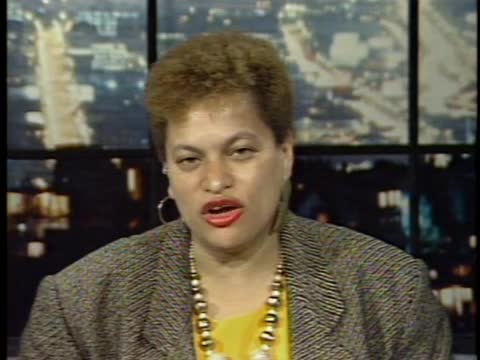
MS. MALVEAUX: It was good news, but I wonder whether it was too little and I think, indeed, it might have been too late. There are so many people who've lost jobs in the past six months, almost 2 million according to the Bureau of Labor Statistics reports, and I think it's very positive that the discount rate has gone down. It signals the Fed's and the President's concern about the economy, but this is the first recession where this is the only thing we've done. In other words, what should have been done is that we should be talking about employment policy, we should be talking about job creation, and I'm really disheartened that we haven't done any of that in this recession.
MR. LEHRER: Charlie Schultze, how did you feel about the Fed's move today?
MR. SCHULTZE: It was a good move. It's about time for it. It was not a great big move. You've got to remember the Fed since September -- let's say the recession more or less started them -- has in bits and pieces been pushing short-term interest rates down by it's now 2 1/2 percentage points. This is another step. It's a good step. It's a welcome step, but it's not going to work miracles. My guess is they may need some more in the future.
MR. MacNeil: Is this going to be the action which keeps the economy out of the recession?
MR. SCHULTZE: One action, no. As part of a series of actions, let me say it another way about this recession, what people don't quite realize maybe is that the increase in unemployment in this recession to date is 1/2 of the size of the average of all the recessions since World War II, and it's just about the smallest so far. The bad news isn't terribly bad, but there isn't much good news out there either, so I think the Fed is feeling its way to make sure it doesn't overdue it. It's going to take small steps and it's going to wait a little time between the steps. This is part of that series. It's probably not a bad idea. I think it's well done.
MR. MacNeil: David Jones, is this going to be enough to keep the recession on the course that the administration's predicting, that by mid summer, the economy will turn up again?
MR. JONES: I think it's unlikely that we'll see a quick kick up in the economy mainly for the reasons we heard in the previous panel, and that is that there's been some real tightening in bank loan terms that were somewhat unrelated to Federal Reserve policy.
MR. MacNeil: And that's not going to end you think.
MR. JONES: And that won't end right away. The Fed will have to do more easing, have to increase that spread between bank cost of funds and between bank lending rates and make it more profitable for banks to lend and it will take some time. It's a different recession because it came as a the result of a bank induced crunch on credit. It will take longer to get out of it, so we probably need some more action by the Fed later on down the road to get us going.
MR. MacNeil: Do you agree with that, we will need more Fed action, this won't do it?
MR. KUDLOW: Well, I don't think the Fed ought to measure its actions just on the basis of when the economy is going to recover because I think first of all the Fed's got to keep prices steady, inflation down. And second of all, there are limits to what the Fed can do. I was quite interested to hear one of the other people talking about the need for fiscal measures. And I think this is really the missing link in the discussion. I think you've got to add some incentives to the economy and I think in several key areas actions may well occur, even though people are writing off no action from Washington, no action from Congress, my guess is when unemployment crosses 7 percent on Friday, there's going to be action. I think, for example, if we want to help banks, if we want to help --
MR. MacNeil: Excuse me, was it 6.8 percent, the last figures - -
MR. KUDLOW: Yes. And I think it's going to run up to 7, if not higher, in the Friday report. If we want to help banks, if we want to help real estate values, if we want to help new start ups for businesses, if we want to help these states and cities and their bad fiscal condition, I continue to strongly believe two key tax measures ought to be taken. No. 1, we ought to increase or accelerate depreciation for business investment purposes. This would be a tremendous help for profits, which have been falling for two years, and also for both large and small businesses, and secondly, I think we've got to go back to the issue of the capital gains tax, either index it for inflation or cut the rates to provide incentives for capital formation. That's the kind -- these are the kinds of measures that would revive the animal spirits of the economy, get some risk taking going, and that would really I think jump start this recovery and it would be good for long-term economic performance.
MR. MacNeil: Ms. Malveaux, you have something quite different in mind I think.
MS. MALVEAUX: Quite different. I don't think that capital gains taxes will do anything more than give another gift to the rich. I think what we absolutely need to do is to look at what we've done in previous recessions, employment programs. I think we need to look at reinforcing our public infrastructure. We have put a freeze on what we'll do with the federal budget and I think that's a mistake. This not the time to talk about budget balancing. This is a time to talk about the people who are going to be affected by the fact that as a previous panelist has said we will go over 7 percent in the next unemployment report, but even more than that, only a third of our unemployed people are covered by unemployment insurance right now. In the last recession it was half. It's frightening that we have disenfranchised so many people at the same time that we're talking about capital gains taxes. And we can't continue to bifurcate our public policy.
MR. KUDLOW: I don't disagree that unemployment compensation and other stabilization measures are necessary. I actually agree with that. And I think this deficit hysteria is absolutely the wrong medicine --
MR. MacNeil: So you and Ms. Malveaux are agreed on the aim.
MR. KUDLOW: On that side I do. All I'm suggesting is ultimately to create the kinds of resources for these stability type programs, we've got to have economic growth. And that means we've got to create the necessary incentives, and particularly in this recession, profits have been depressed for two years.
MS. MALVEAUX: We've created incentives for Lockheed.
MR. KUDLOW: And we've got to look at that situation.
MR. MacNeil: You've created incentives for Lockheed with the new fighter contract.
MS. MALVEAUX: We've created incentives for the corporations that we want to create incentives for, and that's what frightens me, is that we get this discussion about creating incentives, but those incentives don't trickle down to people. We have created any kind of incentive that we want to create for corporations and now we have people arguing that we need to create even more incentives. What we need to do is look at people who want to work who can't find work and to find ways to plug them into an economy that's lagging.
MR. MacNeil: Charlie Schultze, do you believe the situation calls for more action of the kind these two guests are discussing from both ends of the spectrum?
MR. SCHULTZE: I think it's the last thing we need. No. 1, contrary to Larry Kudlow, I think in the longer-term one of the biggest problems this country has is the fact that it still has a huge budget deficit soaking up our saving. We shouldn't try to take measures right now in a recession that are going to haunt us one, two, three, four years down the road. That's exactly what we did with Ronald Reagan. We had a great big boost in the budget in 1982 that then lasted for eight or nine more years and still withered - - we don't need that. No. 2, the economy creating policy that Julie Malveaux talks about might be on line if you got good supervisors and everything else by about 1993 or something, if I can exaggerate. We don't need that either. We have the highest interest rates relative to inflation we've had almost since the Revolutionary War. Let's let the Fed do this. That's what we need. If we need more to stimulate the economy, let's get lower interest rates.
MR. MacNeil: Can we -- is lower interest rates enough, David Jones, or are we going to need some of the stimulating actions by the Congress and the administration the others are talking about?
MR. KUDLOW: This is the dilemma. There shouldn't be -- the full burden of recovery should not be placed on the shoulders of the Fed and the Fed should not be pushed by the policy --
MR. MacNeil: And is it now?
MR. KUDLOW: And it is now in part following up on Charlie's point because we've already put into effect very tough deficit cutting rules last year and you cannot violate them easily. If you raise spending in one category, you have to find another category to cut it back on. If you cut revenue in one category, you have to find revenue somewhere else, so, in effect, the administration's hands are tied. My view is ideally we should be able to work with both tools, monetary stimulus, easy credit and lower interest rates, but we can't work with a budget because it's already too big. And the final point is this, if we continue to borrow a lot of money internationally, we're going to end up keeping long-term rates higher than they otherwise would be because we need so much money to finance the deficit and it will postpone recovery even further.
MR. MacNeil: Let's come back to the international point for a moment. Apparently this week the administration went to the group of seven, of the seven leading economies, and asked the others whether they would lower their interest rates to help stimulate growth and everything and apparently they all said no, and now the U.S. is doing it. Is that a defeat? Is it going to induce the others to do it, as Pres. Bush said in that clip? What is it and how is today's thing connected with that?
MR. KUDLOW: My impression is they did not all say no, that it really was a mixed bag. It is true that Germany and Japan are adopting a very cautious attitude; they're still worried about inflation in their countries.
MR. MacNeil: May I just add another phrase to my question, why does this matter to American consumers, what the interest rates are in other countries?
MR. KUDLOW: Yes. Again, to pick up, I think Germany and Japan will probably move very cautiously though I feel before the summer's over they're going to have lower interest rates there. Other countries, however, have already moved to cut interest rates. England, Canada, and France, for example, all three of which are in recession and they are agitating for additional interest rate cuts, so I think it was a mixed bag. I think Bush's general overview is correct that the problem at the moment is not inflation, it's really recession, and I think he's positioned himself very, very well. And I think before too long we're going to see additional foreign interest rate cuts. As far as how it affects us back home, a lot of businesses in this country are now tied to the exporting area, that is a new development in the 1980s. America has become more competitive, better productivity, and I think we would like to see healthier foreign economic growth in order to sell exports which in turn would help create jobs here at home.
MR. MacNeil: How do you see the connection with this G-7 interest rate thing and its relevance?
MR. KUDLOW: Let's look at a long-term mortgage borrower. Since we have in the world now a shortage of capital, demand is pressing against supply. Demand from Europe, demand from the Middle East now to rebuild the Middle East is pressing against the availability of capital. It means we don't have control of our destiny totally since we borrow more than we save. It leaves us in a position where we have to compete internationally. So a mortgage borrower will end up paying 9 percent for long-term interest rates instead of 8 percent, which would be more consistent with where domestic conditions are because, in effect, we have to compete internationally for the funds as long as we tend to borrow too much, particularly at the budget or the federal level. So, in effect, we've lost control of our destiny. Long-term interest rates, including mortgage borrower rates, remain high, and it postpones the recovery.
MR. MacNeil: I'd like to bring our other guests back in here. Robert Dugger, do you feel, having listened to this discussion, do you feel and does your association feel that more action needs to be taken to kick the economy out of its recession, the phrase we've been using here, other than just the Federal Reserve Board lowering interest rates?
MR. DUGGER: If this present action doesn't yield over the coming weeks and say coming months the kind of economic response we hope to see, other actions are going to have to be taken. There's no question about it.
MR. MacNeil: How long can we wait to see that?
MR. DUGGER: I suspect that we have probably thirty to forty-five days would be a decision time to see whether the present rate reductions are having an effect that we talked about earlier to increase demand and get the economy going again.
MR. MacNeil: Yeah. Ms. Knight, what do you think regarding the auto industry? Does more need to happen than just lower interest rates?
MS. KNIGHT: Yes, definitely.
MR. MacNeil: Why?
MS. KNIGHT: As I said, the stabilization of the employment picture is one of the biggest issues to get car sales moving again. The other issue for the auto companies --
MR. MacNeil: Stabilization of the employment picture now, do you think now like Ms. Malveaux that you need job stimulating programs out of the Congress? Charlie Schultze says it would take till 1994 or so to get those going. What kinds of things do you mean by job stabilization?
MS. KNIGHT: I'm somewhat out of my league with all these economists around, but I think my own point of view and that of the people of the auto industry is that interest rates are a very big part of the employment issue. But the other thing that is a big issue not just for auto company profits but for jobs, for employment is the continuing issue of so-called "foreign competition," which has now become transplant competition, the share of foreign sponsored vehicles, if you take imports plus transplants, those that are built on these shores, is still going up, but what's happened as a result of that increasing foreign competition has been that everybody has gotten more productive. So even when the auto sale cycle begins to recover again, guess what, we're not going to need globally within the G-7 countries as many people to produce the same number of automobiles as we did the last time around. It's a real chicken and egg question, but certainly the immediate problems can be largely addressed we think through interest rates.
MR. MacNeil: Mr. Tuccillo, does the real estate industry think that what the Fed's doing is going to be enough, or it's going to need more measures not just in your industry but in the recession generally? How do you feel?
MR. TUCCILLO: Well, I think ultimately we do have to restore jobs. People who buy houses are people who are employed and you can't get away from that fact. And employment growth is a very good indicator of housing market strength. But government I don't think creates jobs. Entrepreneurs create jobs. I'd like to go back to what Larry Kudlow said about tax measures. I think very clearly certainly speaking just the viewpoint of investment real estate, return to the pre-1986 treatment of capital gains depreciation lies in passive losses would we think restore 10 to 15 percent to the value of investment real estate. That is going to induce people to produce and create jobs. I think it's extraordinarily important that we look at those kinds of measures. Right now the Fed has got a very good handle on what it needs to do and will probably continue on this path. But I think ultimately you're going to have to create those jobs and then create that income.
MR. MacNeil: Let me just go around again. Julianne Malveaux, when do you think the recession is going to end the way things look now? When is there going to be growth restored to the economy?
MS. MALVEAUX: If the government doesn't do anything, I see two or three years. I really feel that it will take government intervention to hit the very bottom. Right now 80 percent of all American families have incomes of below $50,000, and we need to look at those families, those families who've been affected by unemployment, to find out how we can better get them to participate in the economy.
MR. MacNeil: Okay.
MS. MALVEAUX: The Fed can't do all that. They're all not going to be participants in the loan market.
MR. MacNeil: I just want to go quickly. Charles Schultze, when do you think the recession's going to end?
MR. SCHULTZE: I wish I knew, but if you push me, I'll say it'll start gettin' better sometime this summer.
MR. MacNeil: Yeah. David Jones, do you have a view?
MR. JONES: I think it'll be next summer, not this summer, but 1992, probably a two year recession instead of the normal one year, mainly because of these credit problems.
MR. MacNeil: Larry Kudlow.
MR. KUDLOW: I think certain pieces are already in place and I think we're going to see some recovery signals this summer and this fall, but I think it's going to be a below par recovery, and that's why I want to go through the whole loop, including fiscal policies to make them do it right.
MR. MacNeil: Thank you all very much for joining us. UPDATE - SANCTUARY
MR. LEHRER: Next tonight another kind of economic debate. On one side the logging industry of the Pacific Northwest, on the other a tiny bird that is threatened with extinction. Lee Hochberg of public station of KCTS-Seattle reports.
MR. HOCHBERG: These are anything but happy days in hundreds of logging communities in the Pacific Northwest. Logger festivals like this one in Hokum, Washington, but the people here say the mandate to protect the Northern Spotted Owl has left them in the soup. It's been a year since the U.S. Fish & Wildlife Service granted "threaten species" status to the owl under the Endangered Species Act. That means the habitat for the estimated 4,000 remaining owls in Northwest old growth forests needs to be preserved. The question has been how much of the forest to set off limits to loggers and at what cost in logger jobs. The Fish & Wildlife Service has now released the government's first answer. It says logging needs to stop on some 11 million acres of Washington, Oregon, and California forest. Loggers say that could cost up to 40,000 logger jobs.
DARRELL PICKETT, Logger: Our industry's dyin' and when your industry dies, your towns die with it. You know, I'm mad. I'm damn mad, because it's costing me my life, my home.
MR. HOCHBERG: Loggers charge their industry has been unfairly attacked, but those who've studied the owl say decades of over logging in its habitat leave no choice. Last May, a blue ribbon government panel led by Biologist Jack Ward Thomas concluded that saving the owl would require at least a 50 percent reduction in logging on national forest lands.
JACK WARD THOMAS, Forest Service Biologist: There's no free lunch now. So many options are gone in terms of our forest management practice that we are not going to be able to come up with a solution that saves the owl and saves all the jobs and doesn't have any economic and social disruption.
MR. HOCHBERG: Thomas's recommendation would allow the owl population to drop another 2,000 before the species would begin to recover. The new plan goes even farther. It says allowing half of a threatened species to die violates the Endangered Species Act. It urges four times as much land be set off limits to loggers.
BILL PICKELL, Logger Association: Even with Jack Ward Thomas things were bad, but this is a disastrous situation.
MR. HOCHBERG: Industry leaders like Bill Pickell say they're astonished the government is calling for action that could lead to sweeping job losses.
MR. PICKELL: Is it really worth taking the towns of Forks and Morton, Randal, Cedra Wooley, and shutting them down for a bird that is supposedly threatened? There's no balance at all in that and I think as time goes on, we'll find that this has been one of the biggest hoaxes that's ever been pulled on the American public.
MELANIE ROWLAND, Environmentalist: You have to remember that 90 percent of the ancient forest has already been logged. We don't call it balance when the timber industry has already eaten 90 percent of the pie and they want to share equally in the last piece.
MR. HOCHBERG: Environmentalists like the Wilderness Society's Melanie Rowland are cautiously cheering the new policy while waiting for the other show to drop from an administration they've come to distrust.
MS. ROWLAND: From the word go the administration has fought against protecting the owl and the ancient forests. We haven't gotten anywhere without going to court and forcing the government to comply with the law.
MR. HOCHBERG: Indeed, even though the owl has been listed as threaten, stands of its old growth habitat, some more than 600 years old, continue to be sawed down. The owl protection proposal from the U.S. Fish & Wildlife Service comes almost a year after the listing and only after being ordered by a federal judge. And other lawsuits are still pending against the Forest Service and Bureau of Land Management for their alleged failures to protect the threatened bird. As if to underscore environmentalists' fears, Interior Secretary Manuel Lujan already is moving to undercut the proposal.
MANUEL LUJAN, Interior Secretary: [April 24] I do not have the economic information that I need and when I do, the plan might very well be much much different than it is now.
MR. HOCHBERG: At a speech in Portland, Oregon, Lujan signaled he'll try to radically alter the plan after evaluating its economic impact. He told reporters that owl populations and logging both could be sustained if owls are raised in captivity. "We can physically move them from one place to another," Lujan said. "We can have captive breeding."
MS. ROWLAND: That's not what the Endangered Species Act says about saving a species. You don't want to save a bunch of them in zoos so people can go around and look at 'em and say, oh, see, there's a spotted owl, that's what once covered the Northwest. You have to save habitat to save a species.
MR. HOCHBERG: Lujan has also suggested some species might not be worth preserving. Last year, he asked the Denver Post newspaper, "Do we have to save every subspecies?" He's publicly said, "The Endangered Species Act is just too tough. I think we've got to change it."
MS. ROWLAND: If the Act said, well, we have to protect species unless it really interferes with economic activity, you might as well throw away the Endangered Species Act completely.
MR. HOCHBERG: Critics also challenge the administration's failure to get behind this plan that might preserve owls without costing any jobs. The Forest Service wrote it last year after the Jack Ward Thomas report, but the administration suppressed it, saying it wasn't ready for distribution. The document says jobs lost to owl protection could be made up in other ways. At shipping docks across Washington and Oregon, for example, billions of logs, one out of every four logs cut in the Northwest, are loaded for shipment to lucrative Asian markets. If those logs were kept in the United States and processed domestically, the report says 15,000 mill jobs would be created here.
REP. PETER DeFAZIO, [D] Oregon: We're tree farms for the Pacific Rim and particularly for Japan. We grow the trees, the raw material, and we're buying back finished products. We're just nothing but a colony.
MR. HOCHBERG: Oregon Congressman Peter DeFazio introduced a bill to ban exports of logs off private land. Last year, Congress halted exports off public lands, but 80 percent of exports are private. The Weyerhaeuser Company, for example, sends 850 million board feet of logs overseas per year. DeFazio says that represents 3500 mill jobs alone.
REP. DeFAZIO: 850 million board feet of logs is a lot of logs and a lot of jobs somewhere other than the United States.
MR. HOCHBERG: Weyerhaeuser and other logging firms justify their practices, saying domestic demand for timber can't replace the demand from overseas and most Northwest mills aren't equipped to process the logs that are being exported anyway. Weyerhaeuser Vice President Charles Bingham.
CHARLES BINGHAM, Weyerhaeuser Company: We do not believe and we don't support a concept, the idea that we should reach, that our market should be interfered with by the government.
REP. DeFAZIO: There's a lot of excuses why Weyerhaeuser wants to keep exporting logs. The bottom line is very simple, profits and greed. George Bush went to school with George Weyerhaeuser. I don't think he wants to offend them.
MR. HOCHBERG: The Forest Service Report also advocates economic development grants and job training be directed to distressed logging communities, generating employment. And forestry experts wonder why the administration isn't pushing new methods of forestry that might save owls and jobs. University of Washington Forester Jerry Franklin says use of more conservative harvesting methods of new forestry might permit loggers to co-exist with owls.
JERRY FRANKLIN, Forester: It's possible, for example, to grow mixed structure stands in that way that provide habitat for things like the Northern Spotted Owl.
MR. HOCHBERG: The industry usually clear cuts forested land, leaving only the bare acreage of stumps that checker much of Pacific Northwest timber country. In experimental plots like this one though, new forestry is leaving up to 10 trees per acre standing in hopes of providing some habitat for forest denizens.
MR. FRANKLIN: To the degree we begin to practice new forestry on both old growth lands that we cut as well as other kinds of forest lands, then we can reduce the amount of preservation that we have to do.
MR. HOCHBERG: Industry leaders though aren't yet convinced. They argue leaving standing trees is dangerous for loggers and could reduce profits by as much as 10 percent. Environmentalists and scientists add that it may take too long for new forestry to begin restoring owl populations.
JACK WARD THOMAS: There's one nightmare that I do have and I do wake up with this nightmare, that we may compromise to the point that the worst of all possible things happens, that is, that we have significant economic and social disruption and lose the species too. And that would be the ultimate tragedy.
MR. HOCHBERG: The decision on how to avoid that tragedy is still months away. A comment period on the new plan begins shortly. The Interior Department promises a hard look at the economic costs of that plan before making a final decision in December. ESSAY - HOMECOMING
MR. MacNeil: Finally tonight Essayist Jack Perkins has the story of a special welcome home party, one that just goes on and on.
MR. PERKINS: March 8th, the first GIs return from the Gulf, a nation cheers. In the midst of the celebration at Bangor Airport, a sergeant, desert dust still on his boots, borrows a saxophone from the high school band and a cheering nation weeps. [GI PLAYING SAXOPHONE]
MR. PERKINS: That moment was reported across the country but that was weeks ago and as the columnist Walter Lipton once wrote, "The press is like a search light, illuminating first this event and then moving on to another." And public consciousness works much the same. What aroused passions yesterday may be disregarded today. That's how it usually is. [RADIO SHOW]
MR. PERKINS: But look at what's happening around Bangor these days. [RADIO SHOW]
MR. PERKINS: Weeks after the first flush of emotion each day's troops flight still attract hundreds of people. No one tells them to come, asks them to come, organizes them, but they come in numbers that have not diminished from the first day. It is a quirk of geography that makes Maine the nation's unofficial greeter. It is the Easternmost state astride the great circle route, so it's convenient for heavily laden aircraft from Dahran to put down here to refuel before hopping on to North Carolina or California or Texas. GIs alighting to stretch their legs don't realize what they're in for. [CHEERING CROWD]
MR. PERKINS: Strangers hugging strangers, the spontaneous heartfelt celebration that each day just happens. People come. Bands volunteer. Companies donate gifts. A firm in New Jersey sent 25,000 teddy bears. Why is this happening? Well, for one thing, there's a sense of a party going on, more than a party an emotional experience, even a bit of history, and people don't want to miss it. That's one reason. Don't believe the slander that it happens because there's nothing else to do in Maine. But some Mainers believe there's nothing more important to do these days. This is the celebration we never had after Vietnam but are having now. Few of the returning GIs are Mainers so people aren't here to greet anyone they know, though in a sense they know every one of these young men and women. These are our sons and daughters. We are their parents. We are profoundly relieved that they are home. We thank them. We express pride in them, as perhaps a way of expressing pride in ourselves, our technology, our compassion, our commitment. Celebrating these GIs, we celebrate us. The GIs, an airport manager said some of them when they first land don't seem quite ready for hugs, not yet. This stop, this greeting, he said, becomes an emotional debriefing. They sign autographs, are treated as heroes. When the PA come on to announce that this group's final flight home would be delayed for an additional four hours, they cheered. Mainers know that their little airport greetings don't have the star power of a Bob Hope law party or attract the numbers of the New York ticker tape parade, but maybe just that this is still happening each day, spontaneous and heartfelt, says a lot to the GIs and about us. I'm Jack Perkins.
MR. MacNeil: Three more flights from the Gulf area are scheduled to arrive in Bangor tomorrow. An airport spokeswoman said she expects 1500 people will be there to greet them. RECAP
MR. LEHRER: Again the major stories of this Tuesday, the Federal Reserve lowered the discount interest rate to 5 1/2 percent. The discount rate is what the Fed charges member banks. It is often used by the banks to set their own lending rates. United Nations forces raised their flag near the Kurdish refugee camp at Zakho in Iraq. It was a first step in the eventual take over of the camp from allied forces. And a typhoon killed more than a thousand people in Bangladesh. Millions were left homeless. Good night, Robin.
MR. MacNeil: Good night, Jim. That's the NewsHour tonight and we'll see you tomorrow night. I'm Robert MacNeil. Good night.
- Series
- The MacNeil/Lehrer NewsHour
- Producing Organization
- NewsHour Productions
- Contributing Organization
- NewsHour Productions (Washington, District of Columbia)
- AAPB ID
- cpb-aacip/507-s46h12w27b
If you have more information about this item than what is given here, or if you have concerns about this record, we want to know! Contact us, indicating the AAPB ID (cpb-aacip/507-s46h12w27b).
- Description
- Episode Description
- This episode's headline: A Needed Kock?; Sanctuary; Homecoming. The guests include JOHN TUCCILLO, National Association of Realtors; ANN KNIGHT, Auto Analyst; ROBERT DUGGER, American Bankers Association; LAWRENCE KUDLOW, Economist; DAVID JONES, Economist; CHARLES SCHULTZE, Economist; JULIANNE MALVEAUX, Economist; CORRESPONDENT: LEE HOCHBERG. Byline: In New York: ROBERT MacNeil; In Washington: JAMES LEHRER
- Description
- 7PM
- Date
- 1991-04-30
- Asset type
- Episode
- Topics
- Economics
- Social Issues
- Literature
- Global Affairs
- Environment
- Weather
- Employment
- Politics and Government
- Rights
- Copyright NewsHour Productions, LLC. Licensed under a Creative Commons Attribution-NonCommercial-NoDerivatives 4.0 International Public License (https://creativecommons.org/licenses/by-nc-nd/4.0/legalcode)
- Media type
- Moving Image
- Duration
- 00:59:52
- Credits
-
-
Producing Organization: NewsHour Productions
- AAPB Contributor Holdings
-
NewsHour Productions
Identifier: NH-2004-7P (NH Show Code)
Format: 1 inch videotape
Generation: Master
Duration: 01:00:00;00
If you have a copy of this asset and would like us to add it to our catalog, please contact us.
- Citations
- Chicago: “The MacNeil/Lehrer NewsHour,” 1991-04-30, NewsHour Productions, American Archive of Public Broadcasting (GBH and the Library of Congress), Boston, MA and Washington, DC, accessed April 5, 2026, http://americanarchive.org/catalog/cpb-aacip-507-s46h12w27b.
- MLA: “The MacNeil/Lehrer NewsHour.” 1991-04-30. NewsHour Productions, American Archive of Public Broadcasting (GBH and the Library of Congress), Boston, MA and Washington, DC. Web. April 5, 2026. <http://americanarchive.org/catalog/cpb-aacip-507-s46h12w27b>.
- APA: The MacNeil/Lehrer NewsHour. Boston, MA: NewsHour Productions, American Archive of Public Broadcasting (GBH and the Library of Congress), Boston, MA and Washington, DC. Retrieved from http://americanarchive.org/catalog/cpb-aacip-507-s46h12w27b