The NewsHour with Jim Lehrer; February 15, 2007
- Transcript
I'm Ray Suarez. Today's news, Christopher Hill on North Korea, wrangle and grassly on the minimum wage, DNA connections, and Calvin Trillins' new book, all tonight on the NewsHour. Good evening, I'm Ray Suarez.
Jim Lehrer is away. On the news hour tonight, the news of this Thursday, then a newsmaker interview with Christopher Hill, the lead negotiator for the U.S., on the North Korea nuclear deal, dueling views on the minimum wage, from Congressman Charles Wrangle and Senator Chuck Grassley, a science unit report about using DNA to reconnect parents and children separated by war decades ago, and writer Calvin Trillin remembers his wife, Alice, in his latest book. Major funding for the news hour with Jim Lehrer is provided by
Somewhere in Indiana, a farmer is getting to work, somewhere in California, and Connecticut, and everywhere in between, others like him are getting to work, which is why every morning, Monday through Friday, millions are able to work. The American farmer is essential to the economy, and that's why we work to be essential to him. ADM, Resource Board by Major. At CIT, we provide the financing to keep healthcare strong and healthy. We help energy companies find new resources. We work with communications companies to make the world smaller and life bigger. We offer financial aid to make college possible for more students. At CIT, we help finance the future, because that's the place to be, see it with CIT. And by Chevron, Pacific Life, the Atlantic Philanthropies, the National Science Foundation,
with the continuing support of these institutions and foundations. And this program was made possible by the Corporation for Public Broadcasting, and by contributions to your PBS station from viewers like you. Thank you. U.S. British and Iraqi troops made new moves today to halt the violence in Baghdad. It was the second day of a security crackdown. American and Iraqi troops entered the Dora neighborhood in the southern part of the city. It's a long time Sunni militant area. Insurgents, they are hit back, killing four Iraqis with two bombs at a busy intersection. Later another car bomb killed three people in Seder city. A senior Sunni politician complained today that the Shiite-led government has focused the
security operation on Sunni areas. We deemed that the new security plan should comprise all Iraqi districts without exception, and it should concentrate only on those inciting sedition, violence, and terrorism in all areas without exception. And it should not only target Sunni neighborhoods. In the south, Iraqi and British troops sealed the border with Iran. New border points were closed for the next 72 hours to help stop weapons smuggling. Also today, another U.S. Marine was killed in Western Iraq. Today was to have been the final day of the Iraq war debate in the U.S. House of Representatives. But as the speeches went on, that schedule was in doubt. At issue is a non-binding resolution against sending 21,000 more troops to Iraq. NewsHour congressional correspondent Kwame Holman has more. By late today, with dozens of members yet to speak, majority Democrats showed no sign
of ending the debate as scheduled. They argued the critical voices heard in the House this week had been stifled for far too long. Lloyd Doggett of Texas. This debate is late. Very late. Thousands of deaths too late. And this escalation scheme is an unmitigated disaster. Nearly a dozen Republicans joined the Democrats yesterday in criticizing Mr. Bush's Iraq policy, but today the GOP side of the aisle was united in its attack on the Democrats resolution. Steve Pearce of New Mexico was one of the many combat veterans to speak. He said Democrats advocate and end in Iraq, similar to Vietnam, where he served as an Air Force pilot. This is the way that we left Vietnam. I bring this up because I'm beginning to see the same thing today. Still, the resolution ultimately was expected to pass tomorrow or Saturday with the help of a few dozen Republicans.
Meanwhile, in the Senate, Majority Leader Harry Reid announced today he'd hold a test vote in his chamber to debate the same resolution that's before the House. The Republicans then will have an opportunity to determine if they're going to allow the Senate to vote up or down on this resolution and to allow the American people to see how the United States senators feel about the President's policy in Iraq. A partisan impasse has prevented the Senate from holding its own Iraq debate for the last two weeks. But late this afternoon, Minority Leader Mitch McConnell said Republicans would block the latest Democratic move unless his members are allowed to offer their own resolution as well. We are in a position to insist that there be at least one alternative of our choosing. And that alternative will involve funding for the troops. The Senate test vote is scheduled for Saturday afternoon. A leading Democratic critic of the war warned today he'll try to impose conditions on war funding.
Congressman John Mirtha said he'll demand troops have full training and equipment before they deploy. He also wants at least one year between combat assignments. Mirtha said those conditions would effectively block new deployments. President Bush also faced another challenge today on Iran. He's accused the Iranians of arming Shiite insurgents in Iraq to attack Americans. House Speaker Nancy Pelosi said today Congress would have to approve any invasion of Iran. But defense secretary Gates said it won't come to that. We are not, you know, for the umpteenth time. We are not looking for an excuse to go to war with Iran. We are not planning a war with Iran. What we are trying to do is inside Iraq, disrupt the networks that put these weapons in the hands of those who kill our troops. That's it. On Afghanistan, the President pressed America's NATO allies today to send more troops to date the U.S., Britain, Canada, and the Netherlands have done most of the fighting,
22 other allies have been asked to do more. The President spoke at the American Enterprise Institute in Washington. When our commanders on the ground say to our respective countries, we need an national help, our NATO countries must provide it in order to be successful in this mission. The alliance was founded on this principle and attack on one is an attack on all. That principle holds true whether the attack is on the home soil of a NATO nation or on allied forces deployed on a NATO mission abroad. Germany and other nations have sent troops to Afghanistan, but barred them from being used in the most dangerous areas. Today, Democratic Congressman Tom Lantos, chairman of the House Foreign Affairs Committee, called that situation an outrage. And he said, no longer should this administration stand passively by while our so-called allies take advantage of American generosity and courage.
White House officials tried today to ease a conservative backlash on the North Korea nuclear deal. A top national security aid, Elliot Abrams, charged one provision, would let North Korea get off a list of countries sponsoring terror. But White House spokesman Tony Snow said today, the North Koreans don't get it for free. Also today, diplomats from the two Koreas met in North Korea. They agreed to resume high-level talks later this month. We'll talk about all of this with Assistant Secretary of State Christopher Hill right after the news summary. Palestinian President Abbas asked Prime Minister Hania of Hamas to form a unity government today. Hania will have five weeks to do it under a new power-sharing deal with Abbas and his fata faction. AIDS to Abbas said the U.S. has decided to boycott the new government since it fails to recognize Israel. But in Washington, a State Department spokesman said there's been no final decision. Secretary of State Rice travels to the Middle East this weekend.
The Madrid-trained bombing trial began today in Spain. 39 suspects are charged in the attack on March 11th, 2004. We have a report now from Robert Moore of Independent Television News. It was mass murder in the morning rush hour, 191 commuters killed in the carnage, 2000 injured, and three years on, the wounds have yet to heal. But the healing process began this morning after a three-year investigation, as the terrorist suspects were finally brought to court. Of the 29 people accused, the key suspects sat behind bullet-proof glass. The first one to face the judges was Rabbi Osman, better known as Muhammad the Egyptian. He declared today he would not answer questions or even acknowledge the charges. And as that defiance was playing out in court, passengers on the very commuter line that was bombed were reading about the trial and expressing fear the terrorist threat was far
from over. The bombings were the worst al-Qaeda-inspired acts of terrorism ever to have taken place in Europe. The images from that day, Spaniards will never forget. The desperate phone calls also live on. This terrified woman was speaking on her mobile phone amid the detonations. Three years on from the attacks here, and today's court case might at first glance seem like a police triumph. But in reality, like in London on 7.7, it actually obscures major intelligence failures. Gonzalo Villamarine was given up for dead by some who saw him after the bombing. Today, he accused the police of a cover-on, saying those arrested and now being tried are no level operatives, not the key figures. It is a court case designed to bring terrorist to justice.
But it may prove to be much more controversial than that, reopening debate here about why Spain was the chosen battleground on that terrible morning. The indictment in the case runs more than 100,000 pages. Most ammonia could take more than five months, a verdict from the panel of judges is expected in late October. That massive snow and ice storm across the eastern US moved out to sea today, but had left highway nightmares in its wake. Snow and ice caused a 50-mile backup of cars and tractor trailers overnight in eastern Pennsylvania, and hundreds of drivers were still stranded today. Elsewhere, car wrecks littered the roads and dump trucks labored the clear deep snow. The storm was blamed for 15 deaths across 10 states. And on Wall Street today, the Dow Jones Industrial Average gained 23 points to close at 12,765, than as Dak rose more than 8 points to close at 24.97. That's it for the news summary tonight.
Now, the North Korea nuclear agreement, a minimum wage debate, reuniting parents and children, and a book about Alice. Some heat over the deal with North Korea, Judy Woodruff has that story. President Bush used his first news conference of the year yesterday to tout the agreement reached earlier this week to begin curving North Korea's nuclear program. This is good progress. It was a good first step. There's a lot of work to be done to make sure that the commitments made in this agreement become reality, but I believe it's an important step in the right direction. On Tuesday, North Korea agreed to shut down, seal, and eventually abandon its young beyond nuclear facility. In exchange, the communist country would receive fuel oil and short-term humanitarian aid. Further, it agreed to work toward the dismantling of its entire nuclear program in return for more fuel oil, aid, and better relations with the U.S. and Japan.
But even within, Mr. Bush's administration, the nuclear accord has already run into conservative criticism. Today's Washington Post reported that deputy national security adviser Elliot Abrams was sending emails to other administration officials criticizing aspects of the deal. Almost reported that the officials who shared those emails did so, quote, because they agreed with the concerns and wanted to make public the depth of disagreement within the administration. Abrams reportedly was upset with the provision of the accord that he said would allow North Korea to be removed from the list of state sponsors of terrorism before fully abandoning its nuclear program. White House spokesman Tony Snow told reporters today that Abrams' concerns had been addressed. Just as we have done with other states, you still have performance requirements before you get delisted.
And I talked with Elliot about that this morning, and he says this is, in fact, satisfied his concerns. He does support it. But the man who served last year as Mr. Bush's United Nations ambassador has been widely shown on television denouncing the agreement. I think the six-party talks failed. I think the only solution is the enhanced isolation of North Korea ultimately bringing the regime down and peacefully reuniting the peninsula. That's the course I would advocate, not the illusion that the North Koreans are actually going to follow through on these commitments that they've supposedly made. They have no history of that. Their entire history is to the contrary. To which the president responded? And strongly disagree, strongly disagree with his assessment. But such critiques have been echoed by conservative publications. A Wall Street Journal editorial blasted the accord for ignoring, quote, a couple of decades of broken promises, missile launches, and nuclear tests by the North Koreans. The online edition of the National Review magazine asserted, quote, there's no obvious
reason North Korean president Kim Jong-il will honor the latest agreement. And that the deal amounted to, quote, a promise from a liar. And with me is Christopher Hill, the Assistant Secretary of State for East Asian and Pacific Affairs, and the top U.S. negotiator on the North Korea nuclear issue. Secretary Hill, when this all came down on Tuesday, you were quoted as saying you were very pleased with the agreement. He said, this is a solid step forward. Do you still feel that way? Well, I also said we've got a long way to go. And to be sure, it's a step forward, but it's a 60-day increment of time. And during that 60 days, a few things have to happen, including shutting down the reactor and getting the IEA inspectors there, beginning to work with us to get a list of all of their nuclear programs, all of their nuclear programs, which will have to be abandoned, pursuant to the agreement in September of five. So yeah, it's a good step forward, but there's a lot of steps to go.
Were you concerned when the state run North Korean news agency called this a temporary suspension of their nuclear program? You know, life is too short to follow everything with the state run news agency does in Pyongyang. I mean, often they're way off base, and they do it for various domestic reasons. It has nothing to do with reporting the news. There's a lot that's been made about the role of China here. We know that a couple of days before the agreement was announced, the word was out, that it might not happen, then suddenly it did happen. What was the breakthrough or was there one breakthrough? Well, basically it was a conceptual breakthrough. That is, the North Koreans were looking for more fuel oil. And our answer was, if you want more fuel oil, we need more denuclearization. So in this 60-day period, during which they take out of commission the reactor, and then we have this additional discussion about their remaining programs, they get one shipment of fuel oil.
After that, they're going to get more shipments of fuel oil, contingent on them doing some other things. And those other things have to do with the task of really taking down these facilities. That is disabling these facilities. You know, it's important to remember that, as we speak tonight, this reactor is ongoing. And it's producing a substance called plutonium, which is used for bombs. In fact, North Korea already has about 50 kilos of it. And this plutonium, this stays around in this earth for some 700,000 years. So we thought it might be a good first step to stop the production of that. Eventually, we do want this reactor totally disabled and decommissioned and taken apart. But you've got to stop it first, and that's what we're doing. Tell us, in brief, what happens first? They are going to stop young, then they get the fuel oil. Is that what it is? The fuel oil, it's a heavy fuel oil. It can only be used in certain power plants that they have. North Korea is energy star, partly because their government has made such terrible decisions
in terms of where they allocate resources. They don't have enough fuel oil, so parts of the country are in black out. That's pretty standard in North Korea. They have problems heating various places. But I think one has to remember about North Koreans is a very high threshold of pain, alas. And so all of these things, which too many Americans would be intolerable to North Koreans are simply a matter of their daily lives. But what happens first? They stop young, then they get the fuel oil. The fuel oil comes at the end of the 60 days. So what comes first is in 30 days, there will be a number of working groups that are commissioned, including a working group, a bilateral working group to deal with the Japan North Korea problem. We will also have a bilateral working group, and we will also address our problems as well. But they don't get rewards. In other words, they don't get the fuel oil, the other aid, the food, until they've done what they've said they're going to do.
That's right. That comes at the end of the 60 days. They get a shipment of 50,000 tons of fuel oil. Do you think they're going to live up to their word? Clearly, I mean, we've just showed you, you're familiar with all the criticism out there, including inside your own administration, news media, news outlets calling Kim Jong-il a liar. What do you think? I mean, do you expect this is going to happen? Well, I think what's important is we're talking about a 60-day period. That is, this is a step for the North Koreans. If they don't want to make it, if they back out of it, we're into another situation. But I think something people ought to bear in mind is, as opposed to previous deals with North Korea, this is not a bilateral U.S. North Korean deal. This is a multilateral deal. And by the way, we took a lot of flack for keeping it as a multilateral deal, where there's a lot of pressure to just turn it into a bilateral deal. And one of the reasons we wanted to keep it multilateral, or one of the reasons the president worked very hard to keep it multilateral, Secretary Rice worked very hard, was that if the North Koreans walk away from this and just walking away from the United States, where they
invent some reason why they're going to leave the agreement because of something we've allegedly done, they'll have to walk away from all of their other neighbors, including China. And I must say, China has really worked very hard and worked very closely with us. And if nothing else, this whole six-party process has been very good for U.S.-China relations. U.S. had insisted on freezing these North Korean bank accounts in Macau, that they're apparently very important to the North Koreans. Now the U.S. administration has basically backed down on that. Why? Well, first of all, these accounts, or this bank was designated, our Treasury Department looked at this bank, and they saw a lot of funny things going on there. And so they issued a warning to American banks about dealing with this bank. And that was about 18 months ago, and in the meantime, our Treasury Department has been working with the Macau authorities, where the bank is, to determine how the Macau authorities are reacting to this concern about the quality of the bank.
In the meantime, the Macau authorities froze some bank accounts. So that's been going on for about 18 months. And what we're committed to doing is to try to resolve that in the next month. But at this point, are you satisfied no illegality is in the part of the North Koreans? Well, Treasury Department has to come forward with their decision on it, but certainly they've had a very good look at this. They've worked very closely with the Macau authorities. They've had access to tens of thousands, hundreds of thousands, of bank records there. So I think the Treasury feels it's in a position to make a decision here. You put a lot of effort into this Secretary Hill. You were over there in Beijing, five days of talks. You make the announcement. Presidents on board, the Secretary of State is on board. You come back. You pick up the newspaper this morning, and the Deputy National Security Advisor, Elliot Abrams, is saying, in essence, that this is a mistake, I mean, at best. He's saying that we just told the story that it's fatally flawed in so many words. Because it is taking North Korea off the so-called list of state sponsors of terrorism.
Well, actually, they're not being taken off anything. What we've agreed to do is sit down and discuss this. And we would like to see them taken off, but that's going to depend on how they cooperate with us. There were some rather well-known terrorist incidents in the 1980s. There was the North Korean bombing of the South Korean cabinet in Rangoon in 1983. That has to be addressed. There was the North Korean bombing of a South Korean airliner in 1987. That has to be addressed. So what we've done is to open up a process for dealing with this. We have not taken them off any list. But how do you feel about this criticism coming from inside your own administration? Look, there are a lot of people who are going to have a lot of opinions. North Korea is a very emotional issue for many people. Frankly, I do my job, I take my instructions from the Secretary of State, and it's just life in the big city.
What happens next here, specifically, what has to happen in the next few weeks? And when do you think you're going to have a sense that this is really going to work? Well, in the next few weeks, we need to get a few things done. We need to organize ourselves for some of these working groups. For example, there's a fuel and energy working group. So we have to see how that whole energy issue is going to proceed. There's also, most importantly, a denuclearization working group. So we need to see how these reactors can get closed down, sealed, how the IAEA will get back in. There's a lot of work. 60 days is not a lot of time. So I think it's important that we keep to every deadline. If we start missing deadlines, they'll miss deadlines and for you know what we won't have a deal. Basically, the value of all this aid to North Korea, if they go through it. Well, first of all, there's a second tranche of about a million tons of fuel oil. And that is sequenced with the North Koreans in terms of their disabling the reactors and giving a full list, full accounting of all their programs.
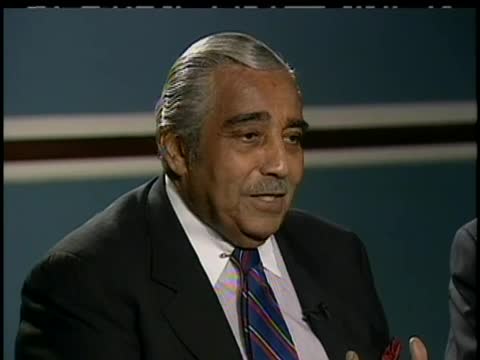
And that is on the order of about current market prices, about $230 million. Secretary Christopher Hill, we thank you very much for talking with us. Thank you. I appreciate it. Coming up, reuniting families using DNA and writing about Alice. But first, debating the minimum wage, two veterans of congressional tax battles agree to disagree. This committee can and intends to work in a bipartisan way. Monday evening, the House Ways and Means Committee under the leadership of Chairman Charlie Wrangel unanimously approved the modest package of small business tax breaks. Full House is expected to add those provisions to a bill calling for a $2.10 increase in the minimum wage over the next two years. On hand to congratulate Chairman Wrangel was an unusual visitor from the other side of
the Capitol. Senator Chuck Grassley of Iowa, the top Republican on the Senate Finance Committee. The Senate has also approved the minimum wage increase, but with tax breaks more than six times as large as those in the House bill. I sat down with Chairman Wrangel and Senator Grassley yesterday to find out if the differences between the rival bills can be worked out. Senator, Mr. Chairman, welcome to the program. I had to be way too good with you. Well, the House has passed the minimum wage increase. The Senate has passed an increase with a tax break package. Mr. Chairman, where do things stand in marrying those two? How are you going to bridge that divine? Well, I'm so glad, Ray, that you called this meeting because I have the slightest idea what they're thinking about on the other side of the Capitol. As you pointed out, the House overwhelmingly passed the bill to improve the minimum wage over 13 million people. When we sent it to the Senate with the understanding that it would have broad support over there, we sent it over Republicans and Democrats supported, and maybe the distinguished
Senator from Iowa can share with us, what do they have against increase in the minimum wage for 13 million Americans? Well, something tells me that he's more than ready to do that, Senator, where is the divide? Nothing against the increase in minimum wage, that's why there were only three votes against it. And beyond, we had a bipartisan agreement in the Senate that we would combine some changes for small business people in the tax code with the minimum wage. Just like we did in 1997 when President Clinton praised Senator Kennedy and others for helping small business at the same time he helped minimum wage people. Now, what Charlie didn't say to you, the esteemed chairman didn't say to you, is that they are now working on a small business tax package. And I assume the reason they're working on that is that somewhere's long line, they're willing to sit down and talk to us about a compromise between a very good but small package that the House put together with the larger package that we put together for small business.
Not only for small business, but we're also trying to do what both Republicans and Democrats said in the last election they wanted to do is close down tax loopholes and tax schemes and things of that nature where people are doing everything they can to avoid taxation to bring in revenue, which offsets. So there's no increase in the deficit, either in our bill or in Chairman Wrangel's bill. Well, is the package that the Senator was referring to that came out of the other body too large for the appetite in your committee? I think what the eloquent Senator said was that they've got a hold of minimum wage bill hostage unless we passed $8 billion tax cuts of business. Is that fair to say? It's not fair to say. See what Chairman Wrangel being in the House of Representatives, where a bipartisan majority or a Republican majority or a Democrat majority can get anything done, they want to get done.
We can't get anything done in the Senate unless it's bipartisan. So this is what we're trying to do is to help small business, close tax loopholes and raise the same amount of money so the deficit doesn't go up and help minimum wage people. It's a win, win, win for everybody. Well, I'll get to you a question. First respond to his point that at a time when your chamber is talking about pay as you go, that is, if anything gets cut, finding the money somewhere else, he says it's revenue neutral. Why not take a look at the package from the Senate? First of all, there's overwhelming support in the Senate for it without a tax cut, but because Republicans threatened to filibuster, they need 60 votes in order to stop the filibuster. If they would remove the threat of a filibuster, it would pass both houses without the $8 billion tax cut, right? Having said that, the reason that we have this difference of opinion is under the Constitution, very new raising bills have to originate in the House in order to attempt to accommodate the Senators.
We are prepared and I think we'll get the bill out by Friday to send a small bill over to the Senate so that you can attach your $8 billion tax cut for the business to it, which would at least afford us the opportunity to go into conference to try to work out our differences. I must say this, that if you want agreement as to what's going to happen in conference, when you obviously can't even say whether we can get into conference, then the House has to just be able to say, we have a bill, we can live with our tax cuts, it's going to improve the work opportunity bill for poor folks, the same of both folks, veterans, older people to get jobs, and we've prepared to do that to accommodate the Senate, but what we can say is evaluate the $8 billion tax cut that they got sitting over there. Now he makes this sound like a business tax package, it's a small business tax package, it's one that's only $8 billion compared to $20 billion, 10 years ago, seems to me to
be peanuts, he passes a smaller one that might be just a peanut shell, but it gives us the opportunity to get together. Well, Mr. Chairman, do you accept $8 billion, we come peanuts, I've been down here too low. Peanuts compared to $20 billion, 10 years ago, the accept the Senators principle that made that aid. We got 51. I haven't even said what it is yet, none of these principles that they're not holding the bill hostage is that they're saying that they're going to filibuster unless the Democrats cave in. Period. There has said on the floor that a wage increase for low wage workers is not a cost-free proposition for American employers. Do you accept that? Well, I tell you this, the overwhelming majority of House and Senate thought that we could get this passed without putting an $8 billion tax cut on business for it, so no, I don't agree with them, and neither do most of the Republicans and Democrats. That's why they're resorting to what we call a filibuster.
We don't do it in the House constitutionally, do it. If they removed the threat of a filibuster, that bill would pass the House at a minute without any tax cut. I mean, this happens for principle that $8 billion is just too big in the current fiscal state. If Charlie is thinking that the Senate is saying to Chairman Rango and Speaker Pelosi, it's the Senate's way or the highway, we're not saying that. We're saying in the spirit of compromise that we've got to do something for small business because there is a negative impact upon small business. We can do it in a revenue neutral way. We can do it in the way Democrats want to do it because you're always hearing Democrats say these tax scams and these tax loopholes have to be plugged. Republicans are even willing to plug them. We're going to be revenue neutral. And it seems to me that everybody has a win-win-win situation. So the art of compromise is to go to conference and see what we can work out. Now, Charlie is right.
There are some senators and they may be Republican, they may be Democrat. I don't know. But there is always a senator threatening a filibuster on something. But a lot of times, you know, they mail away those are threats. Well, I hope they mail away because I hate to get started off as Chairman and have any differences of opinion, my dear friend Chuck Grassley is a long time friend, distinguished leader in the Senate and the country and you're not going to stick us up. You are and you are a friend. It sounds to me, if you're one of those people working at 5.15, you're going to be working for 5.15 for at least a little while longer because there seems to be a difference that can't go quickly bridged. I would hope not. I think if he and I sit down and we can reach some compromises and we can get a minimum wage increase of $2.10, we can get a lot of tax loopholes filled, we can bring in more revenue and we can help small businesses sometimes are hurt by an increase in a minimum wage. So everybody wins, wins, wins. Gentlemen, we're going to have to leave it there, but thank you both for being with me.
Thank you. And how DNA testing is helping reunite children and families once separated by Civil War. NewsHour correspondent Spencer Michaels has our science unit report. In a tiny village in El Salvador recently, 21-year-old Angela Filingham met her biological mother for the first time. Angela had left El Salvador with adopted parents 21 years ago and it has taken DNA testing and the support of organizations and scientists in California and Central America to bring together mother and child. There's a really cute one where I'm painting my forehead. Born outside the capital of San Salvador, Angela was six months old when she was adopted by Jerry and Greta Filingham of Berkeley, California.
And they said a little girl was born yesterday and she's yours if you want her. The Filinghams were told only that Angela was the daughter of an unwed mother who couldn't afford to keep her during perilous times. At the time in 1985, El Salvador was in the midst of a decade-long civil war between a right-wing hunter supported by the United States and a coalition of leftist anti-government groups. The war left 75,000 dead and 8,000 missing. Their names are carved into this memorial wall in San Salvador. Thousands of children were kidnapped and some ended up in Europe and America. Angela was not kidnapped but her mother, fearing for the baby's safety in a dangerous area, put her up for adoption. Today, about to graduate from college, Angela says her own past was always a source of mystery and some confusion.
That's like a conflict I've had for a lot of my life has really had to identify because I mean, my heritage, yes, is Salvadorian but my upbringing was very white middle-class. She went to El Salvador in 2005 to look for her mother and contacted an agency, Probuscada, that a dozen years before had pioneered the use of DNA in trying to reunite families by matching samples. So, Father Cortina, you work closely with him? Yes, I did. Eric Stover, director of Berkeley's Human Rights Center, helped set up that first DNA testing along with the Catholic priest, Father Jan Cortina. Cortina had risked his life during the Civil War to protect villagers and later began trying to reunite families broken apart by the war. When I came up here to the village, we then went to the local radio station and we made an announcement asking families to come forward who had disappeared children and
the buses arrived and people came off and we went into the church and we started taking blood samples. Since then, Probuscada has taken DNA from hundreds of Salvadorans who are missing children. Many of them live in remote areas where the Civil War raged hardest, like cello tenango, in the mountains north of San Salvador. Margarita Zamora, an investigator for Probuscada, brings her kit of swabs and paperwork and her own history. I have four brothers who disappeared in 1982 in a military operation and my mother, who was with the children, was murdered. This is one of the main reasons I do the work I do. Zamora has been to this village countless times. On this visit, she met with Enma Oriana, who hasn't seen her daughter Milagro in 24 years. The baby with snatched from her arms by soldiers attacking her village and today she
has no clue to her whereabouts. We know that the soldiers took several children away. At the same time, they took mine. Some killed the children, some took them away, and donated them to some other countries. We think she was taken away and donated. To find Milagro, Oriana has already given a DNA sample. And now her surviving daughter, 25-year-old Florentina Navarro, gives one as well. Margarita explained the process and showed Florentina how to get the sample. The investigators like Zamora and groups like the Human Rights Center say their work would be easier if the government would release any records it has of what happened to those children and families during the Civil War. It's not political. It's simply to establish what happened to these children and that the families have a right to know that.
It can be dangerous for all of these groups who are trying to establish the truth because you're digging back into the past that a lot of governments would like to forget. The president of Probuscada has called on the government to provide names of commanders in areas where children were taken. The biggest obstacle we have is that the state, together with the army, harmed the families and hasn't been willing to help. We need these names to have justice served. The government denies those charges and says the guerrillas also kidnap children during the war. Rafael Cabello, the Salvadoran Consul General in San Francisco, says a special government commission has been established. The main objective is precisely looking and searching for missing children and missing parents and trying to bring them together. Meanwhile Margarita Zamora travels the hills and fields leading to small villages to get as many samples as possible.
Zamora sealed the samples immediately and shipped them to this California State DNA crime laboratory in Richmond, where on nights and weekends analysts, many who work here during the day, volunteer their time to process the swabs from El Salvador. Lance Gima is chief of forensic services. On the swab essentially is ourselves from the inner lining of the cheek. Now the cells have a nucleus and within the nucleus is the DNA. So our robotics will bust open the cell, bust open that nucleus and then remove and separate the DNA from all those other materials away from the cell and away from the nucleus. And then once we have the DNA then we can analyze that DNA and develop a DNA profile. The scientists here have created an El Salvador database with about 800 samples currently. They eventually hope to get three to five thousand using a software program, volunteers
like Nicole Ignacio look for and find matches. The database will run the search and the computer will let us know. We have a child that might belong to this potential family looking at their genetic profile. Out of 250 children from El Salvador who have located their birth parents, nearly 70 families have actually been reunited using DNA. Lance took my DNA and that was in what July and in December I got an email saying they had found possible while my mother that they had taken the DNA and found a match. Then Berkeley, Angela received photos of her mother and talked to her on the phone and that raised a few apprehensions. Every other word out of her mouth was think God think God think God and that's a little scary because growing up in Berkeley, religion is exactly a big family. In December Angela with the support of her adoptive parents and the human rights center
at the University of California traveled to San Salvador. The country she found is no longer at war but the left and the right still don't trust each other. The capital is a dangerous place with a high crime rate. So Angela, I know I'm guessing you're really excited for tomorrow. So what do you expect tomorrow for meeting your biological mother? I don't really know what to expect. Angela spent part of her first day talking with Probuscad as psychologist Marco Perez Navarete who counsels both children and parents before and after a reunion. The next day Angela and a friend helping her travel to San Rafael, a small poor village an hour from the capital for the reunion, held at the home of Angela's mother's parents. Her mother, Blanca Rodriguez,
and a brother she had never met were waiting as Angela walked up a dirt road. For two hours the long lost family members got to know each other. In the modest home where many of Angela's relatives live and work, Rodriguez said that she was advised by a lawyer and a doctor to give Angela up for adoption even though she didn't want to. Yes, it was difficult times for me. You didn't know if you were going to be back because you might be in the middle of shooting. Even in my family, a lot of the members of the family died and at that time I thought it was a good decision to give her to a family that nothing was going to happen to her. Was it hard to talk to her? Yeah, it was, it was kind of hard because it's one of those things where, and there's nobody explaining, it's like, oh, hi, I'm your mom, like, what do you say after that?
Angela concentrated on the simple, everyday things. And then I got to make sure tears is my grandmother, like, that was so cool. We all have this, this intense need to know and I, the most strongest human force on earth is a parent searching for their disappeared child. Recently, DNA is playing ever increasing roles in North and South Korea, Vietnam, Rwanda, Chile, and Argentina. Stover and scientists at the lab in California are hoping the El Salvador database will be a model to reconnect families. Finally tonight, a writer remembers his wife. And their life, Jeffrey Brown, has our book conversation. In 1963, Calvin Trillin met Alice Stewart at a party. They married two years later and had two daughters.
Alice Trillin was a wife, mother, college English instructor for a while, an arts producer for public TV. Calvin Trillin became a well-known writer for The New Yorker, taking on subjects serious and humorous, and many of his books and articles, especially about travel and food, featured his wife. In 2001, Alice died of heart failure. Her heart weakened from treatment for cancer she'd had 25 years earlier. Now Calvin Trillin has written about a marriage, about a family, about Alice. We talked recently at the Greenwich Village House. She was smart enough to convince him to purchase many years ago. You write early in the book that you writeings in which your wife was a character or something like sitcoms. When you were writing them, did you feel that way? Yeah, because I didn't really want to write about them. I mean, I think you could read everything that I wrote about Alice and the girls and before this book and not know anything about them really. You couldn't tell the girls apart.
So they just played roles really. They were pretty close to the roles they played in the house. Pretty close. I mean, Alice, who was the sort of wise mother of the sitcom, was definitely the most sensible grown up of the house. I won't deny that. You say that when she died, you got lots of letters of condolences from your readers and invariably they would begin, even though I didn't know Alice. Many years must have felt like they did know her from the writer. Well they'd say, even though I didn't really know her or something like that, I felt I knew her or something, but I say that I knew what Alice would have said to that. They're right. They don't know me. I mean, she always said that when people asked how she felt about her portrayal in those stories, she always said it made her sound like a dietitian in sensible shoes. And she wasn't a dietitian, although I did mention that she had a weird predilection for limiting our family to three meals a day.
And she definitely didn't wear sensible shoes. She'd wear a rather expensive shoes, it sounds like. She did. Yes. And once when she gave that answer, when I gave that answer when somebody asked me after a speech how she felt about the way she was portrayed, they asked her to stand and she stood and she didn't say anything. She just took off her shoes, one shoe and the shoes I described as looking, they cost about enough to tie to family for over for a year or two and waved it and sat down. We're talking about her as a character in your writing, but what was she for you as a writer? Well I guess she was literally the muse and that I wrote in a way, I wrote to impress her. To impress her. To impress her. And I showed her everything in rough draft, it was partly because she was really good at she was a good reader.
I mean she had taught English and college and she had done series on the writing process and other people asked her to read manuscripts and things. It was partly just because I had on hand sort of the equivalent of a high powered lawyer and I was the one pro bono case. So I was taking advantage of that, but also I wanted to impress her if I heard her laugh, if the piece was supposed to be funny. It was a big thing for me. If it wasn't supposed to be funny then you were in trouble. I was in trouble, and I also sometimes, because it was right next door often that she read it, I could hear a sigh, that wasn't a good sign either. Why, how do you write about death, especially about someone so close to you without being mottlin, without getting the tone wrong in so many ways you could go wrong? Well I think people write the way they write and I didn't think of it that way. I didn't think of avoiding certain things and certain types of writing everything because
I don't do that type of writing. So I didn't really have much choice of how to write things. There's sort of an imperative working which is writer's write. And so that's a way, eventually you respond to things that happen, so I might have written about her sooner or later, but I really didn't have any plans to, but I think I felt once I did start that if I waited longer there were things I'd forget, and I'm not sure I could have done it right away, so it worked out. Whatever you were intending, you've written a book about A marriage, but it's also about a marriage, and we hear so much about marriages that are crackups all the time, it's so much negative. Here's a story about a good marriage. Yeah, it's sort of embarrassing, I wrote once years ago that long-term marriage is now
intertwined in the public mind with the music of Lawrence Welk, so you really sort of have branded yourself a square if you've been married a long time and write about it in anything other than a list of atrocities or what various people did do each other in the marriage. But are you serious, you really feel embarrassed by it? Well, I don't feel embarrassed by having had a happy marriage, I feel a little bit embarrassed about the idea that I know something about it, because this is of course, I guess there are industries in this country based on the idea you can know something about it or you've been learned about it or something, but I think an awful lot of it is just luck. It's hard to read this book without thinking in personal terms, so my personal question, I'm in a long-lasting happy marriage, not gone, whatever your child's made out of it.
I want to assure you they're made out of what? Okay, if somebody would ask me, how did that happen? I wouldn't have a clue. I don't think you would have, and I don't in a way, and also the other thing is I didn't think I was writing about marriage, I thought I was writing about Alice, and obviously had to write about her in the context of our marriage, because we were married for 36 years and of our family, but nobody actually knows anything about anybody else's marriage, even if you live next door or maybe even in the same house. You really don't know anything about anybody else's marriage, so it's hard to tell about how your own marriage differs from the mysterious marriages of other people. She was your first reader, and the one who would tell you if it was good or not, when you finished this book, how did you know? I didn't, I really didn't, and I said to my daughters, I don't know if anybody's going to be interested in reading this or not, and my older daughter said, well, even if they
don't, it'll be good for the kids and my younger daughter, who is a clinical social worker who does psychotherapy, said probably a good idea for you to write in any way. Was that true? Did it work for you? Yeah, it was, it was a good idea for me, and the fact that other people are reading it, I think, is good. The dedication of the first book you wrote after she died was, I wrote this for Alice, actually, I wrote everything for Alice. Yeah, that was true, it's literally true, and this is literally for my grandchildren. Calvin Trill, and thanks for letting us come talk to you. Thank you, Jeff. Again, the major developments of this day, US and Iraqi troops moved into a Sunni part of Baghdad on the second day of a security crackdown, and the Madrid-trained bombing trial
began in Spain, more than 190 people died in the attack three years ago. We'll see you online and again here, tomorrow evening, with Mark Shields and David Brooks among others, I'm Ray Suarez. Thanks for joining us. Good night. Major funding for the new sour with Jim Lara is provided by... We've discovered the world's most powerful energy. You'll find it in everything we do, and cover it in all the places we work, and see it in our more than 55,000 employees. It's called human energy, and it's the drive and ingenuity that we'll never run out of, Chevron, human energy. Designed by the Archer Daniels Midland Company, Pacific Life, C-I-T, the Atlantic Philanthropies,
the National Science Foundation, and with the continuing support of these institutions and foundations. And this program was made possible by the Corporation for Public Broadcasting, and by contributions to your PBS station from viewers like you. Thank you. To purchase video cassettes of the new sour with Jim Lara, call 1-866-678-News.
We are PBS. Thank you.
Good evening, I'm Ray Suarez. Jim Lara is away. On the news hour tonight, the news of this Thursday, then a newsmaker interview with Christopher Hill, the lead negotiator for the U.S. on the North Korea nuclear deal. Dooming views on the minimum wage from Congressman Charles Wrangle and Senator Chuck Grassley. A science unit report about using DNA to reconnect parents and children separated by war decades ago, and writer Calvin Trillen remembers his wife Alice in his latest book. Major funding for the news hour with Jim Lara is provided by
Somewhere in Indiana, a farmer is getting to work, somewhere in California, and Connecticut, and everywhere in between, others like him are getting to work, which is why every morning, Monday through Friday, millions are able to work. The American farmer is essential to the economy, and that's why we work to be essential to him. ADM, Resource Group by Nature. At CIT, we provide the financing to keep health care strong and healthy. We help energy companies find new resources. We work with communications companies to make the world smaller and life bigger. We offer financial aid to make college possible for more students. At CIT, we help finance the future, because that's the place to be. See it with CIT. And by Chevron.
- Series
- The NewsHour with Jim Lehrer
- Episode
- February 15, 2007
- Producing Organization
- NewsHour Productions
- Contributing Organization
- NewsHour Productions (Washington, District of Columbia)
- AAPB ID
- cpb-aacip/507-qr4nk36w7m
If you have more information about this item than what is given here, or if you have concerns about this record, we want to know! Contact us, indicating the AAPB ID (cpb-aacip/507-qr4nk36w7m).
- Description
- Episode Description
- This episode of The NewsHour features segments including an interview with Christopher Hill, lead negotiator with North Korea on the nuclear issue; a conversation with Congressman Charles Rangel and Senator Chuck Grassley on the minimum wage; a report on using DNA to reunite parents and children after war; and a conversation with author Calvin Trillin about his book "About Alice" about his deceased wife.
- Date
- 2007-02-15
- Asset type
- Episode
- Rights
- Copyright NewsHour Productions, LLC. Licensed under a Creative Commons Attribution-NonCommercial-NoDerivatives 4.0 International Public License (https://creativecommons.org/licenses/by-nc-nd/4.0/legalcode)
- Media type
- Moving Image
- Duration
- 01:04:25
- Credits
-
-
Producing Organization: NewsHour Productions
- AAPB Contributor Holdings
-
NewsHour Productions
Identifier: NH-8764 (NH Show Code)
Format: Betacam: SP
Generation: Preservation
Duration: 01:00:00;00
If you have a copy of this asset and would like us to add it to our catalog, please contact us.
- Citations
- Chicago: “The NewsHour with Jim Lehrer; February 15, 2007,” 2007-02-15, NewsHour Productions, American Archive of Public Broadcasting (GBH and the Library of Congress), Boston, MA and Washington, DC, accessed April 3, 2026, http://americanarchive.org/catalog/cpb-aacip-507-qr4nk36w7m.
- MLA: “The NewsHour with Jim Lehrer; February 15, 2007.” 2007-02-15. NewsHour Productions, American Archive of Public Broadcasting (GBH and the Library of Congress), Boston, MA and Washington, DC. Web. April 3, 2026. <http://americanarchive.org/catalog/cpb-aacip-507-qr4nk36w7m>.
- APA: The NewsHour with Jim Lehrer; February 15, 2007. Boston, MA: NewsHour Productions, American Archive of Public Broadcasting (GBH and the Library of Congress), Boston, MA and Washington, DC. Retrieved from http://americanarchive.org/catalog/cpb-aacip-507-qr4nk36w7m