The MacNeil/Lehrer Report; The Third World and the Press
- Transcript
ROBERT MacNEIL: Good evening. American journalists in newspapers, wire services, magazines or broadcasting are used to taking the heat from critics in this country. Charges of bias, distortion and sensationalism are pretty routine. But now they`re getting the same criticism from another source: the third world. Many of. those countries complain that the world flow of news is dominated by Western agencies who present a distorted view of developing countries, concentrating on disasters, wars and trivia. These voices are being raised at a meeting in Paris of the United Nations Educational, Scientific and Cultural Organization, UNESCO. This week the conference is to debate a draft declaration on the media urging that third world news be handled by regional news agencies under government auspices ,better reflecting the values and views of those countries. Western journalists and their governments see that as a threat to press freedom and a move towards more government control of information. A similar effort almost broke up a UNESCO conference two years ago. Tonight: do our news organizations present a distorted view of the third world? Jim?
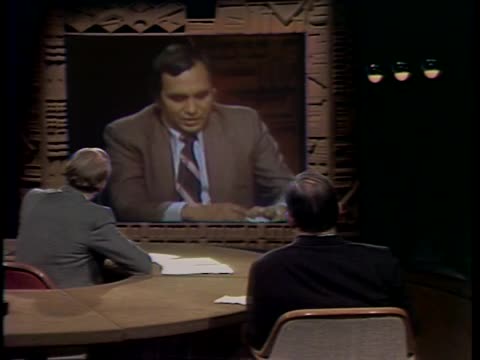
JIM LEHRER: Robin, there are reports from Paris today that things may be cooling off, that a compromise may be worked out to avoid a showdown over the UNESCO resolution. The main sticking points include a clause which calls on the international community to supervise news sources and the content of news dispatches from foreign correspondents; another which requires the press to disseminate "the version of the facts ,presented by the states" -- governments, in other words; and finally, one which speaks of the duty of governments to make sure its own press conforms to the precepts of the overall resolution. As I say, some or all of these may be watered down through negotiation before a vote is finally taken. But the issue of third world news coverage will remain for debate, and one of those in the middle of the debate is Indian journalist Narinder Aggarwala. He is now the Asia and Pacific Regional Information Officer for the United Nations Development Program, and has written extensively on the need for changing the way news from the third world is reported. He is here tonight speaking as an individual, not for that U.N. organization.
Is the news about and from the third world distorted?
NARINDER AGGARWALA: The distortion is not deliberate; but there are certain distortions, yes -- not in all the news but some of the news.
LEHRER: Distorted in what way?
AGGARWALA: Well, the distortion can be of three types. One is where the third world countries are complaining about quantity-wise, that what they`re saying is that although they constitute three fourths of the humanity, the news coming on the wires emanating from the third world constitutes only twenty-five percent of the news which goes on the wire. The second distortion is that of perspective, that the news which is prepared and distributed by the international wire services is written from the perspective of the developed countries. For example, last May there was this civil war in Zaire, and all the wire services and the news media in the Western world were talking about a white massacre. The number of whites killed in there was far, far less than that of the blacks.
LEHRER: One hundred whites and thousands of blacks...
AGGARWALA: About 100 whites and about 500 blacks, those are the figures which I heard about. But except for this passing reference, that the bodies were lying on the street corners sometimes by the blacks, the media focused primarily on a white massacre. And the reporting of that tragedy in Zaire at that time was so emotive that one sometimes started to wonder whether the media was serving as an extension of these foreign policy makers in these countries or not. And this has happened before, you know. For example, just around the time of the Zaire tragedy we had the tragic incident when the South African troops went to Angola, killed about a thousand persons, including old men, women, at the Cassinga camp, and children. But no newspaper or news agency thought about calling that a massacre. Similarly, you had at about the same time the Rhodesian security forces. They killed a hundred civilians, gathered them just for pointblank firing, killing them; no, it was not a massacre. But...
LEHRER: Well -- go ahead, yes.
AGGARWALA: Let me just round it up. That does give the feeling to the reader that do murders come in color tones, or did the agencies or the news media look at those tragedies and even see color tones?
LEHRER: All right. What`s your feeling about what`s the cause of this? Is it a conspiracy on the part of the Western news media to do this? Do you really believe that they`re an extension of their governments` foreign policy, or what?
AGGARWALA: No, I don`t think it`s a conspiracy, I don`t think it is deliberate. It`s just cultural biases; when a person is writing the news, in the heat of writing the news he thinks of a phrase, and he doesn`t have a chance, probably to look at it. I mean, the New York Times, around the same time, I think it was towards the end of May, they had an article, a news story, defending the use of the term "white massacre", why the West came to perceive the Zaire tragedy as a white massacre; and the only reason they gave was that the whites were the only people who were killed there in a group.But from my knowledge of the historical usage of the term "massacre", it is wrong, that whenever the number of civilians killed or slain is large, that becomes a massacre. In that sense it was both black and white massacre; it was a massacre of the whites as well as the blacks. What I`m saying is that the people who were covering the news were writing the news for a particular audience, and that was the Western audience, and they thought it would appeal to them, and they used the term there.
LEHRER: All right; thank you. Robin?
MacNEIL: The third world critics, as we`ve just heard, lay a lot of blame for dissemination of news they consider distorted on the four Western wire services which dominate basic coverage, the Agence France Press, based in Paris, Reuters in London, United Press International, and the Associated Press in this country. Stanley Swinton is vice president and director of world services for the Associated Press. He was a foreign correspondent for many years. Have the third world countries got a case, Mr. Swinton?
STANLEY SWINTON: There`s certainly some validity to it. However, there`s a great deal of rhetoric, and I think the junk food of this whole thing is the rhetoric. For instance, on the twenty-five percent news on the wires from the third world, I mean, international wires directly, stories from the third world and stories relating to the third world but with also first world connections come to slightly over fifty percent. On the question if it`s a story written with a Western bias, at least with the AP, seven eighths of our people overseas are not Americans; they`re from the third world, they`re from other nations. So I doubt whether...
MacNEIL: Is this a matter of policy that the AP has put into effect?
SWINTON: We have more now than we did a few years ago.
MacNEIL: Are those staffers or stringers?
SWINTON: They`re staffers. I`m talking completely about full-time people. But certainly -- take the case of the AP, we serve something over 1,200 newspapers in the United States; eighty percent of our revenue comes from the United States. So there is going to be a reporting aimed for an American audience, although we also circulate news in 110 other countries. But to answer his question, yes, I think there`s an unconscious oversimplification, perhaps. Not a bias, but to make it clear to the international reader, there is a point of criticism; however, not quantitatively. Perhaps qualitatively. You mentioned earlier violence and wars and excursions, I made a study on that. 6.3 percent of the stuff that goes on international wires deals with wars and violence and that sort of thing, and twenty-three percent deals with economic developments around the world. And sixteen percent in every country in the world is sports; everybody, whether it`s the Soviet Union or anybody, uses sixteen percent for sports.
MacNEIL: Do you have a response on Mr. Aggarwala`s specific complaint about the reporting of the so-called "white massacre" in Zaire?
SWINTON: I really would have to look into it. You could take any specific case or any number of them. What I`ve tried to do is study the overall problem and the areas -- an interesting thing on this, incidentally, on third world coverage, is that each third world area wants coverage of the third world but only surrounding countries. Africa prints almost nothing from Asia or from Latin America; Latin America prints very little from Africa or Asia. And so it`s not as simple as it seems, you don`t just cover the third world, because each area wants a different type of third world coverage.
MacNEIL: They are ethnocentric too,to use the phrase that is ...
SWINTON: Exactly.
MacNEIL: Has the AP modified its own practices in response to this criticism, which after all didn`t start this year but has been coming up for a number of years?
SWINTON: Well, Keith Fuller, the president of the Associated Press, has increased our African staffing very considerably. We have far more people in Africa than we did before. We send more people to the third world now. The focus in news is going from the traditional first world -- Rome, Paris, Berlin -- to the third world, to the Trans, to the Egypts, to the Brazils; and so there`s been a conscious effort to build that up, and also to send out people that have languages and have area studies so that they don`t go in as a police reporter just covering, as he said, a massacre or. something, but go in with an understanding of the background of the country and the culture of the country.
MacNEIL: Are you worried in the Associated Press that the result of this conference and the issues raised in Paris might be more difficulty for the Associated Press in the third world?
SWINTON: I would worry, not just for the Associated Press but for the American media and the Western media, that if the original version, the Soviet version prepared in 1970, was passed, that access could be denied. We`ve already had incidences of it. Tanzania, for instance, let only three people in to cover the meeting of Arab leaders. So that there are some very specific things that are happening -- and Nigeria`s very difficult to get in. This would provide a juridical basis, it`s not binding, but that any country could then say the consensus of UNESCO is that we do control foreign correspondence. So yes, it would be a danger.
MacNEIL: Mr. Aggarwala, how do you respond to Mr. Swinton`s point that you`re wrong on the quantity?
AGGARWALA: I disagree with him, because he himself once wrote to the Freedom House magazine saying the coverage from the third world countries is twenty-six-point-some percent, and he is including in that the coverage from the United Nations, which carries the United Nations dateline; and probably Stanley is including that because he thinks it is of interest to both the third world and the first world. But the fact is that recently there was a study done by the United Nations Association of the United States of America which came to the conclusion that the reports which are distributed or disseminated by AP on the United Nations portrayed no other viewpoint than the southern viewpoint; and that report was distributed by the Associated Press managing editors who participate in AP.
MacNEIL: Well, that`s getting into the question of attitude and the quality; just on the quantity....
SWINTON: On the quantity, I did write that letter, it was 26.5 percent from the third world only. But stories that relate both to the third world and to the first world but are primarily of third world interest raise it to slightly over fifty percent, Narinder.
AGGARWALA: Well, that`s not what you said in that letter, that`s what I`m saying, because in that letter the only thing you pointed out was that because the United Nations stories go under the dateline of United Nations and hence are of interest both to the third world, you thought it would be proper to include that percentage in the number of stories coming out from the third world.
SWINTON: Well, that would be less than half of one percent, anyway; they wouldn`t affect the total.
MacNEIL: And that is the amount of foreign news carried on the news wires, and whether editors in this country choose to use that news is another matter.
SWINTON: There is a major problem. We have very extensive coverage, including developmental stories, serious stories about the culture of the country. And because of space considerations and many other reasons, many of them don`t get used. Far more get used than used to get used; but the fact is that there is far more coverage of the third world available than any single paper can print or any single broadcaster broadcast.
MacNEIL: Mr. Aggarwala, a lot of this criticism does single out the wire services and their response is, as Mr. Swinton`s just given it, that they provide a lot more than is used by the sort of retailers of news, the newspapers and the magazines and the broadcasters. What`s your response to that? How do you cure that?
AGGARWALA: He`s right there, that the wire services do provide more news than the newspapers can use.
MacNEIL: Should they therefore be your prime targets?
AGGARWALA: The wire services are the prime target, because the third world countries depend on the wire services entirely, probably, to receive foreign news; and naturally they are the prime target at this time. In terms of why the newspapers here are not using the reports which are being distributed by the wire services, there could be two reasons. One of them is that maybe the kind of news which is being distributed by the wire services is not turning the newspaper editors or the readers on; they`re tired of hearing of the woes of the third world, and probably the fault lies not with the news from the third world but with the intermediary itself. And the second reason could be that the gatekeeper, the so-called telegraphic gatekeeper, is so isolated, that they do not know enough about the third world countries or the issues involved, and there is a problem of how to raise the consciousness of these gatekeepers, how to make them aware of the need for covering development processes, of development stories from the third world in the media.
MacNEIL: Who is this gatekeeper? Is he the one who decides, in your view, what goes on a particular wire?
AGGARWALA: No, the gatekeeper is who decides what goes in the daily newspaper.
MacNEIL: What is your response on the kind of news you are giving and the way you`re treating it, which may not be attractive to the newspapers and the readers?
SWINTON: Well, on the first point, I think that the coverage is readable, it`s well done. You do have an ethnic question here; that is that there are a lot of Polish-Americans, a lot of Italian-Americans, there are lots of Mexican-Americans, and there are very few people who are Togalese-Americans or Senegalese-Americans. And so the editor normally will go for a story more frequently that is of readership interest in his town. On the question of the telegraph editor, this has had a lot of attention, including getting groups of telegraph editors to go to Asia, to go to Africa, so that they can see it first hand. But take a very good journalist, a very good reporter, and they say, "Congratulations, you`re telegraph editor." That means you`re supposed to know everything about the state, the nation and the world. Well, it`s impossible. They do, within their limitations, the best job they can do. But most American papers don`t have a foreign editor, as most European papers do have, who only deals with foreign news; and so you`ve got the state legislature in session, the President of the United States is going to make a speech, and you`ve got 20,000 words of foreign news, and you`re a very busy man; so yes, there`ll be some errors in selection, but it`s not ill will, it`s simply a massive job.
MacNEIL: Okay; let`s move on. Jim?
LEHRER: The U.S. position at the Paris meeting is being argued by representatives of the State Department. They are under the overall policy supervision of the Assistant Secretary of State for International Organization Affairs, Charles William Maynes. Mr. Maynes, first of all, what`s the latest word from Paris? Is there going to be a compromise or a big fight?
C. WILLIAM MAYNES:I think it`s still uncertain. There are several drafts that are floating in Paris; one of the hopeful signs is that there is a Secretariat draft which does look as though it could be a compromise document, but we don`t know how many amendments there will be, we don`t know the direction they`re going to come from or how much support they will receive.
LEHRER: What`s the basic U.S. position right now on what it will or won`t accept?
MAYNES: The United States will not accept any declaration which seems to legitimize state control of the media, that would violate our own values and our own concept of what a media in a free society ought to be. We also feel that it would violate UNESCO`s own constitution.
LEHRER: Does the U.S. support even the need for a UNESCO document of any kind which speaks to the issue of third world news coverage?
MAYNES: Well, we think the main issue is communications in the developing countries, and not the media as such, the international media. And so we basically believe that UNESCO should be concentrating on that problem and not on this declaration. We would be delighted if there were no declaration or if there were a declaration which was a consensus document and got this issue out of the way.
LEHRER: You know, there are some within the news media here in the United States who have suggested that the United States should back off, period, they should not even try to compromise this, this is not some thing that can be compromised, and just say forget it, we`re not going to have anything to do with it. You`ve taken another road, is that right?
MAYNES: Well, we have consulted very closely with media representatives throughout the last two years, talked to them regularly about the problems in UNESCO that were being raised by the developing countries, the nature of this declaration. We have a prominent member of the American media on the declaration, he`s played a leading role...
LEHRER: Who`s that?
MAYNES: It`s William Attwood from Newsday, who also used to be an ambassador in Kenya. And so we feel that we are consulting closely with the media and we are attempting to deal with a problem which exists in the organization. We are hopeful that we can do it in a way that, as I say, meets our requirements and disposes of the question.
LEHRER: In a nutshell, are you afraid that if you did refuse to participate and to compromise that they might pass a resolution that would be much tougher, a compromise that nobody could live with?
MAYNES: Well, I think one danger is precisely the one that Mr. Swinton pointed out, which would be a declaration which appeared to legitimize restrictions against American journalists or foreign journalists who wanted to report on news in foreign countries, whether or not that has American support or opposition; that is a key issue in this whole debate.
LEHRER: What is the U.S. position on the general issue of third world news coverage, the argument we have just heard between Mr.. Aggarwala and Mr. Swinton?
MAYNES: Well, we do think that there is a communications issue that should be legitimately addressed by UNESCO. Their communications are vital to the evolution of a developed country; every country needs a solid communications system. And the developing countries do need help, and we are prepared to what we can, along with others, to assist them in this process.
LEHRER: Specifically, what are we prepared to do?
MAYNES: We have indicated in our speech in Paris that we are willing to assist regional centers for broadcasters and journalists, we are willing to send people from the United States; some of the private media representatives have said that their people would also be willing to participate in this effort. We`ve also indicated that we are willing to allow access to the Intelsat system, which would permit governments in developing countries to beam radio broadcasts to their own people in rural areas, now people who do not have access to the kind of information, basically in areas involving health and education, that would be helpful to that country in developing.
LEHRER: Finally, it`s been widely reported that if the wrong kind of resolution does in fact pass the UNESCO meeting in Paris the U.S. might consider pulling out of UNESCO. Was that a serious consideration, and is it still?
MAYNES: I think the issue is not whether someone pulls out of UNESCO, the issue is whether governments that want to help consider UNESCO the kind of institution that they ought to work through. I think if there is a tremendous controversy over this media declaration it`ll be much more difficult for countries to work together to solve the real communications problem, and that really is the issue.
LEHRER: Mr. Swinton, let me ask you, do you agree with the New York Times and others who say that Mr. Maynes and the State Department ought to back off and forget this whole thing, there should not be any compromise, the U.S. should not participate at all?
SWINTON: I`ve had many, many talks with people on all sides of this thing, and my own feeling is that the third world nations will pass a resolution unless there`s some sort of a compromise. Out of personal choice I`d say no resolution; we don`t need one. But if there`s going to be a resolution it`s much better to have it defused and, instead of getting a backlash against the United States for stonewalling it, if the teeth can be pulled and it comes out saying there should be better third world coverage but nothing about state control, nothing about restrictions on individual journalists, nothing about when the government issues a statement that you must carry the text of it. That, no, but I do think that some kind of a compromise is probably in the best interests of the media.
LEHRER: Mr. Aggarwala, let me ask you, what`s your position on what`s going on in UNESCO and the particular resolution that`s before the House? Is that the answer?
AGGARWALA: The answer to what Stan said just now, I think I agree with him that the resolution should be defused rather than having any restriction on the freedom of the press. I`m one of those who believe that a free press is a necessary, both for the developing countries as well as the developed countries.
LEHRER: What is the answer, then?
AGGARWALA: The answer probably is for professional journalists themselves to try to take measures to redress the situation or to take care of the complaints from the third world countries at the point involved. For example, one suggestion which the non-aligned countries have tried to do is to build up a news agency pool, but I don`t think that that will solve the problem, because it appears that that will become primarily an exchange mechanism for official news from one country to another.
LEHRER: Government handout to government handout.
AGGARWALA: Yes.
LEHRER: You have what solution, then?
AGGARWALA: I had, a year and a half ago, at the suggestion of the Fletcher School of Law and Diplomacy prepared a paper in which I had proposed the creation of an independent third world news agency. Stan just pointed out that AP has 1,200 plants in this country, it gets eighty percent of its revenues in this country, and naturally its reports are written with the reader in this country in mind. If we have a third world news agency, independent third world news agency...
LEHRER: Like AP or UPI, but which would concentrate on the third world.
AGGARWALA: Like AP or UPI, it could prepare news, distribute news with the third world media in mind.
LEHRER: Would the U.S. government help start something like that?
MAYNES: Our position is that as long as we`re creating more voices and not suppressing any that already exist, we would favor that.
LEHRER: I see. Mr. Swinton, what do you think of that idea? Does that hurt AP?
SWINTON: I think the more voices the better. We`ve always been in favor of the third world non-aligned news agency pool; the more sources of information, ideal. The main thing is, don`t cut sources off.
LEHRER: I see. So you would support Mr. Aggarwala`s idea, then.
SWINTON: Yes. I think the funding would be a substantial problem, but I think the idea of having additional voices is a good one.
LEHRER: Mr. Maynes is going to help on that, right? Okay.
(General laughter.)
LEHRER: Rob in?
MacNEIL: Finally, gentlemen, starting with you, Mr. Aggarwala, doesn`t this in one sense boil down to changing the news values of American editors, calling them telegraph editors or foreign editors or whatever, getting them to be more interested in news from the third world and printing more of it, and how do you do that? People in this country have been trying to get more news printed, for instance, from Latin America for as long as I`ve been in the business, which is about twenty, twenty-five years, and it`s never succeeded. Now, how do you do it?
AGGARWALA: Well, one of the solutions which Stan suggested just a few minutes ago was to sort of organize briefings and seminars and refresher courses for these telegraph editors, that is, trying to encourage them to visit the developing countries once in a while, to look at the world, what it is like. And I know that I`m not questioning the skill of the American journalists, because it is of a very high calibre; and given the challenge, the American journalist or the Western journalist can present the development processes which are going on in the third world and which is the most important news in the third world today, can be presented to the readers in the Western countries in an interesting fashion.
MacNEIL: Is there a practical solution here? For instance, using the example of Latin America, is there a practical way to get American broadcast editors or newspaper editors to publish more third world news simply because the third world thinks there should be more of it?
SWINTON: Well, of course southern Illinois never feels the Chicago papers cover them thoroughly enough, so you have the problem of everybody feeling there should be more coverage. But on the question of the telegraph editors or managing editors, we have arranged private groups -foundations, I was involved in a number of them, have sent groups of telegraph editors down. And then when they come back at their state meetings they`ll discuss what they saw with other editors.It`s not going to happen overnight, but I think that perhaps Nairobi had a salutary effect in that it focused on an issue...
MacNEIL: The UNESCO meeting two years ago.
SWINTON: Yes. It focused on an issue that had been growing up; and now the American press is very much more aware of it. And that, I think, is going to lead to even more attention being paid by American editors.
I can see it at AP M. E. meetings, at AP broadcaster meetings:now they always want something on the third world.
MacNEIL: Well, that`s interesting; thank you. Thank you, Mr. Aggarwala and Mr. Maynes. Good night, Jim.
LEHRER: Good night, Robin.
MacNEIL: Thanks, Mr. Swinton. That`s all for tonight. We`ll be back tomorrow night. I`m Robert MacNeil. Good night.
- Series
- The MacNeil/Lehrer Report
- Episode
- The Third World and the Press
- Producing Organization
- NewsHour Productions
- Contributing Organization
- National Records and Archives Administration (Washington, District of Columbia)
- AAPB ID
- cpb-aacip/507-pv6b27qm35
If you have more information about this item than what is given here, or if you have concerns about this record, we want to know! Contact us, indicating the AAPB ID (cpb-aacip/507-pv6b27qm35).
- Description
- Episode Description
- The main topic of this episode is the Third World and the Press. The guests are Stanley Swinton, Narinder Aggarwala, C.. William Maynes. Byline: Robert MacNeil, Jim Lehrer
- Created Date
- 1978-11-15
- Rights
- Copyright NewsHour Productions, LLC. Licensed under a Creative Commons Attribution-NonCommercial-NoDerivatives 4.0 International Public License (https://creativecommons.org/licenses/by-nc-nd/4.0/legalcode)
- Media type
- Moving Image
- Duration
- 00:31:08
- Credits
-
-
Producing Organization: NewsHour Productions
- AAPB Contributor Holdings
-
National Records and Archives Administration
Identifier: 96743 (NARA catalog identifier)
Format: 2 inch videotape
If you have a copy of this asset and would like us to add it to our catalog, please contact us.
- Citations
- Chicago: “The MacNeil/Lehrer Report; The Third World and the Press,” 1978-11-15, National Records and Archives Administration, American Archive of Public Broadcasting (GBH and the Library of Congress), Boston, MA and Washington, DC, accessed April 2, 2026, http://americanarchive.org/catalog/cpb-aacip-507-pv6b27qm35.
- MLA: “The MacNeil/Lehrer Report; The Third World and the Press.” 1978-11-15. National Records and Archives Administration, American Archive of Public Broadcasting (GBH and the Library of Congress), Boston, MA and Washington, DC. Web. April 2, 2026. <http://americanarchive.org/catalog/cpb-aacip-507-pv6b27qm35>.
- APA: The MacNeil/Lehrer Report; The Third World and the Press. Boston, MA: National Records and Archives Administration, American Archive of Public Broadcasting (GBH and the Library of Congress), Boston, MA and Washington, DC. Retrieved from http://americanarchive.org/catalog/cpb-aacip-507-pv6b27qm35