The NewsHour with Jim Lehrer; January 20, 1998
- Transcript
. .. .. .. .. ... ... ... ... ... ... .. .. .. .. .. .. .. .. .. ... ...
.. .. .. .. .. .. .. .. .. Good evening, I'm Jim Lehrer. On the news hour tonight, some perspective on the Oprah Winfrey Food Case in Texas, a Charles Krauss report on expectations about the Pope's trip to Cuba, a look at the continuing bloodshed in the North African nation of Algeria, and a David Gurgen dialogue about turning inner city boys into men. And all follows our summary of the news this Tuesday. Brought to you in part by ADM, feeding the world is the biggest challenge of the new
century, because by the time this baby is old enough to vote, the world will have nearly two billion new mouths to feed ADM supermarket to the world. And by New York Life, the company that was built with integrity, humanity, and strength. This is the values that have made New York Life the company you keep. And by the corporation for public broadcasting, and by the annual financial support from viewers like you. Unabomber suspect Theodore Kazinski is competent to stand trial, both sides accepted that conclusion today from a government psychiatrist who examined Kazinski last week. The federal judge in Sacramento then said he will decide Thursday if Kazinski must keep his lawyers or if he can represent himself. The trial could then begin, Kazinski is accused of mailing bombs that killed two and injured two others in California.
In Washington today, President Clinton held the first of two high level meetings this week aimed at restarting the Middle East peace talks. He met with Israeli Prime Minister Netanyahu for 90 minutes at the White House, Palestinian leader Yasser Arafat is coming Thursday. Mr. Clinton told reporters before today's session that he would discuss a credible withdrawal of Israeli troops from the West Bank, afterward Netanyahu who said the meeting had not been difficult, but that no agreement had been reached. What we have talked about, I think, is the attempt to achieve an overall package that in addition to the specific steps would be a package of goodwill. The goodwill is there. The pieces are there, we're trying to put them together, and we're making a real effort to do so. Israeli officials said Netanyahu and President Clinton would meet again tonight. Arafat was in Paris today, meeting with French President Jacques Chirac outside the presidential palace.
He said all he wants is the West Bank troop pullouts Israel already agreed to in the peace of cords. Iraq will not allow unrestricted access to suspected weapon sites that word came today from UN official Richard Butler in Baghdad. It followed a second day of talks with Iraq, Deputy Prime Minister Tariq Aziz, but would describe them as tough. He was to depart for UN headquarters in New York tomorrow. In Washington State Department spokesman James Rubens said there was growing impatience with Iraq's lack of cooperation. I think that Secretary Albright made clear that the frustration level on the part of Iraq's sometime advocates is growing, and that they are getting tired of trying to explain what is the unexplainable, which is Iraq's continuing attempt to deny inspectors the right to do their work and to block what the Security Council resolutions demand. There was more bloodshed in Algeria today, at least six people were killed, 50 injured
in two bombings. UN exploded on a bus in the capital of Algeria, the other went off in a village market outside of mosque 15 miles west of the city. There has been violence in Algeria since 1992 when the military back to government canceled elections and Islamic group was expected to win, while I am more on this story later in the program. Back in this country television talk show host Oprah Winfrey went to court today, and I am a Rillow, Texas, a jury was selected to hear a civil suit against her for allegedly defaming the American beef industry. Cattle producers are suing Winfrey to recover losses caused by a slump in beef prices two years ago. They blamed it on a discussion. She and a vegetarian activist had on her program about mad cow disease. We'll have more on this story later in the program. Jury selection also began today in another tobacco lawsuit. This one in Minneapolis, the state of Minnesota, is suing cigarette makers to recover taxpayer funds spent to treat six smokers, three other states have already settled similar
suits against the industry. There's been another animal cloning. A genetics expert said today he and a colleague had successfully cloned three male calves. They were born last week at a ranch in Texas. Five more clones will be born shortly. The Boston scientists said their experiment could lead to the mass production of drugs for humans in cow's milk. And that's it for the new summary tonight, now it's on to Defaming Food, the Pope and Cuba, terrorism and Algeria, and a David Gurgen dialogue. Elizabeth Farnsworth and San Francisco has the food story. I do not like broccoli, and I haven't liked it since I was a little kid, and my mother made me eat it, and I'm president of the United States, and I'm not going to eat any more broccoli now. Former President George Bush's public disparagement of broccoli did not go far enough
to bring on a lawsuit, but if he had said the vegetable and dangerous people and not had proof, then in some states, broccoli farmers could have sued. Since 1990, 13 states from Georgia to Idaho have adopted food defamation laws that in effect allow broccoli, it's day in court. Under these laws, individuals can be sued for questioning the safety of any food product without verifiable scientific proof, for ridiculing radishes or picking on pairs, for example, or as TV personality Oprah Winfrey discovered, belittling beef. Hey, show, may cause you to diet for all the wrong reasons we're talking about the hidden dangers in our food. Last year, in the first court test of these laws, Texas cattle ranchers filed a suit against Winfrey and one of her guests, a humane society official, for defaming beef during an April 1996 Oprah Show.
Here's what was said. Oprah Winfrey, you said mad cow disease could make AIDS look like the common cold, Lyman, absolutely. Winfrey, that's an extreme statement you know. Lyman, absolutely. 100,000 cows per year in the United States are fine at night, dead in the morning. The majority of those cows are rounded up, ground up, fed back to other cows. If only one of them had mad cow disease, it has the potential to infect thousands. Winfrey, it has just stopped me cold from eating another burger. After the broadcast, cattle prices drop to near 10-year lows, and ranchers blame their losses on the show, Winfrey and her lawyers cite other reasons behind the drop. The talk show host has relocated her show from Chicago to Amarillo, Texas, where the trial is being held until the jury reaches a decision. The cattle men are claiming more than $12 million in damages. The only other Texas food defamation lawsuit is before the same court in Amarillo, the case
of emu versus Honda. An emu is the smaller cousin of the ostrich, raised for feathers, skin, and most of all meat. In early 1990, the going price for a pair of emu was about $40,000. Today, that same pair would sell for between $100 and $400. And some Texas emu ranchers blamed the Honda Motor Company for the drop. These ranchers are suing Honda over a car commercial that pokes fun at a guy named Joe, who looks for a job in some odd places, including an emu ranch. The rancher's lawyer says the commercial defames emu meat and the emu industry. The message that most viewers get of this commercial is that any one associated with their emu industry is a flim-flammer scam artist. The case is expected to be heard later this year. The food libel laws currently on the books in Texas and other states were triggered
by a 1989-60-minute segment, A, is for Apple. It alleged that Al-R, a chemical used to lengthen the time that Apple's ripen on trees could cause cancer, especially in children. Washington state Apple growers sued for damages, but the suit was dismissed on the grounds that the product, not the producers, were defamed, and under the law at that time, food could not be defamed. In reaction, the American Feed Industry Association hired lawyers to draft a bill against the defamation of agricultural products. The bill was then dispersed among the states where some legislatures passed it. But whether the new food defamation laws or a limitation of free speech remains to be tested. Meanwhile, in 13 states, if you can't say anything nice about perishable products, it's safest not to say anything at all. Now two different perspectives on food defamation laws. John Bodhi was assistant secretary of agriculture for food and consumer services in the
Reagan and Bush administrations. He now practices law in Washington, D.C. And David Beaterman is a law professor at Emory University. Thank you both for being with us. John Bodhi, you're a rancher and also your law firm helped drop the statute on which some of this legislation was based. Why is this legislation important? What besides all are propelled it? Well, right now, generally, libel law exists so that if a knowing statement is made to falsely defame, act me brand hamburger, the act me company can sue. However, if a knowingly false statement is made disparaging hamburger generally and great damage is done, many courts will not allow that case to be brought because they feel historically the laws has held that the identification of the producers of that hamburger is not close enough. This law simply says that if farmers get hurt by someone knowingly making a false statement
about the safety of the food, the farmers can go to court and try to prove their case. And Mr. Beaterman, is that your understanding for how these laws came to be and also for what they are saying? Well, many of these laws were particularly advocated by agribusiness and food industry interest in this country precisely, I think, as John has said, to provide a cause of action in these cases. And also, I think, to send a message to media and food safety advocates to be quiet, to don't speak out. And moreover, I think in many of these laws, the question of whether it's requirement that you knowingly utter these false statements is quite uncertain. But even apart from that, I think the real question is, what do we mean by scientific certainty in these kinds of cases? OK, I'm going to come back to that for a minute, but first, Mr. Vote, do you agree that
this was partly, these laws were partly aimed at warning media organizations not to speak out? I don't. I think when you look at the standard that's adopted in these laws, it's a very high standard. That's why the Texas cattlemen have a tremendously difficult case to prove. They require that knowingly a false statement is knowingly made. That's the same standard we have for defamation of public figures. We do have a pretty robust debate in our country talking about our president and members of Congress. There's not a chilling effect on that speech. And we should have a robust debate about food safety. That's how we can keep making our food safer. OK, Mr. Vote, spell it out just for a minute. I could say something about a product. If it, even if it was false, if I didn't know it was false, is that the way it works? That's right. The first amendment clearly protects a very robust debate. It does not permit actions to be brought just because you were wrong. You could make a statement, you could be wrong, and you would still be protected.
It's when you knowingly make false statements, present false information, asserting that a food is unsafe, that it could be actionable under these statutes. So it will be very hard to prove, OK, so under these statutes. Mr. Beaterman, you said that there's some doubt about that. You think that it's not so clear? I'm afraid in many of the states, there's no wing element. It's knowingly making a false statement, is not in the letter of the statute. In many of the states, it seems to be that people will be held liable simply if they disseminate information that is later proven to be incorrect. And I think that's very problematic. Now in Texas, John is right. There is an element in the statute which says that a plaintiff, we thank, must show that the statement, was knowingly made to be false. The problem again is in Texas, what is the standard of falsity? The Texas statute refers to reasonable and reliable scientific facts, inquiry, or evidence. And the problem I see with that is it converts fundamentally a question of scientific
inquiry and a public policy debate into a legal question thrown into a court of law. And I think at the margin, that must have a chilling effect on speech. Mr. Bodie, what about that? Well, I think it's very clear that if a different standard, a lower standard, is used, then there is a, that is constitutionally suspect. Let's stay on Texas where we've got the specifics of the statute in front of us in a, in a case, at bar. There the, how this standard is applied will be very important, certainly a constitutional law can be applied in a way that is problematic. It is important, of course, that the courts permit speech that allows for the growth of science. We don't know all there is to know about any of the food safety issues and science will keep evolving and our, our public debate must allow for that and, and not have a chilling effect.
I believe that the Texas statute certainly is tolerant of that approach. Mr. Bederman? Well, my concern is I think, John's is that in the context of this trial in Texas, a large part of this is going to be about science, but a large part of this trial is also going to be about tabloid news and sensationalist journalism. I think the subtext of this case is really that public figures like Oprah Winfrey, who engage in this genre of, of talk shows, have people on who may make statements, who may be uttered an utmost good faith, but if it ultimately is proven, as, as John suggests that the statement was, was made without reasonable, reliable scientific facts that Oprah Winfrey is going to be liable. And again, while the process of scientific inquiry goes on, Oprah Winfrey may well be at the end of the day holding a judgment for millions of dollars. The effect on people around the country in disseminating information, including those
in the scientific community, I think is going to be felt pretty quickly. Yes. Mr. Bederman, do you think that's true and especially what about small nonprofit groups that may be researching some of these issues and don't have the resources that somebody like Oprah Winfrey has? Sure. First of all, it is very clear that the statement, the full statement must knowingly be made under the Texas statute, and that's why the statute is constitutional, and it would not have a chilling effect on free speech. As far as nonprofit groups are concerned, certainly this sort of statute applies to them, and I think we should realize that they, like everyone else, sometimes feel pressures. And one of the real concerns in the Al-R Apple case was that there was a group that was seeking to increase their visibility and perhaps contributions to their organization by hyping that story, and that is no small part of what motivated this standard so that someone could not knowingly misrepresent or lie to create a bogus food scare.
Mr. Bederman, do you think that a farmer or rancher should have some recourse if the product that they produce is wrongly spoken of as dangerous? Well, I believe ultimately that in this marketplace of ideas that we have in this country, that good quality information will drive out bad false information. Growers and agricultural interests in this country have wide access to the media and wide access to public information channels, and I think we ought to rely on the marketplace of ideas to have a robust public debate. The moment we have a lawsuit filed, and the moment we have one of these agricultural disparagement statutes on the books, we are basically converting a question of scientific inquiry and public policy into a legal question, convert it into questions, a burden of proof before lawyers and judges, and I think that is a lousy way to make public policy about the safety of our food supply, and also a bad way to promote scientific inquiry.
Mr. Bodey, are other states adopting these laws besides the 13 that already have them? Some other states are considering them. I would like to go back to the point he just made his message to the family farms that can be wiped out by a bogus food scare is basically to say tough luck if a farmer is, it's not uncommon for a farm to take a whole year's production to market on a single day, and if that's a day, a bogus food scare hits the market, they can be wiped out by it. These laws simply allow those farmers to go to court and say you damaged a commodity market by lying to the public about a food scare, and you should be accountable. Mr. Bodey, are there more cases like this coming up? I'm afraid there are. You mentioned the emu case, which in truth I think is really not an agricultural disparagement case at all. It's really more about parody and about a suggestion made in the Honda commercial that there's something shady about ranching emus.
Although it is being brought into the same law, right? Indeed, but I think it really is spurious. I think John and I agree about the use and application of these laws, but I've recently learned of the case in Ohio involving a firm called Agra General, now known as the Buckeye Egg Farms, in which an allegation was made that they were backdating the expiration date on eggs when a car and a bag that expired, they simply repackaged it in a car and showing a later expiration date. They were caught doing this, and when they were caught, their response was to file under Ohio's agricultural disparagement statute saying, well, you've implied that these eggs aren't good to eat, and that's bad for us, and we want you to pay. There's clearly a coercive element in these suits, almost of a nature of a slap suit, which is strategic litigation against public participation, and these suits are clearly intended to chill speech.
They're clearly intended to send a message to the public and to food safety advocates in the media, think twice, think twice about running these stories, think twice before doing these investigations, because we may hold you to account later. Okay, that's all the time we have. Thank you both very much. You're welcome. Still to come on the news hour tonight, the Pope in Cuba, the killing in and out of Algeria, and a David Gurgen dialogue. Pope John Paul II begins his visit to Fidel Castro's Cuba tomorrow, Charles Krause reports on where some Americans think it will lead. John Paul II has been poked for nearly 20 years, and during that time he's visited more than a hundred countries, from his native Poland to the United States and even Bangladesh, yet he's never before visited Cuba, profoundly conservative and fiercely anti-communist at least during the early years of his prophecy, John Paul II has not shied away from
confrontation or controversy. But as a result, the Catholic Church, its doctor and its politics, is now largely shaped in his image. Even in the twilight of his reign and of his life, John Paul is a commanding figure, almost larger than life, so it's with keen interest that much of the world will be watching tomorrow when the Pope arrives in Cuba. That's there who meet with Fidel Castro, the world's last ruling Marxist-revolutionary. He's a man who liked the Pope, has had a profound impact on the history of the 20th century, and who also liked the Pope, is used to getting his own way. Jorge Dominguez is a Cuban American who heads Harvard's prestigious Weatherhead Center for International Relations.
He says that whatever happens this week between Castro and the Pope, it will be a fascinating and historic encounter. These are two world class figures. They are savvy, they are intelligent, they are worldly. They have been in their jobs for a very long time. These are two veterans who are trying to think about the meaning of their lives, as well as the meaning of the peoples for whom they care. In Cuba itself, final preparations for the Pope's visit are well underway. He'll celebrate mass in four separate cities, culminating with what is expected to be the highlight of the trip. A mass attended by Fidel Castro and Havana's Revolution Square. Some 3,000 journalists from around the world will converge on Havana to cover the visit, and for what many expect to be a confrontation between God and Marxism, and maybe the beginning of the end of Castro's regime. The encounter in the coverage will be closely scrutinized everywhere, especially in Miami,
the capital of Cuba's devoutly Catholic and strongly anti-communist exile community. One of those who'll be watching the Pope's visit and listening to every word is Alfreda Dora. I hope that the Pope talks about human rights, individual rights, and the need to establish a dialogue amongst all Cuban to resolve the Cuban problem. That there is a need for a transition, peaceful transition towards the democracy in Cuba, and that this message will be felt and will be understood not only by the people of Cuba, but also by the Cuban government. Within the Cuban exile community, Doraan is considered a moderate, a veteran of the Bay of Pigs. He spent two years in Castro's jails in the early 60s before being repatriated. Today he's a Miami lawyer, former chairman of Florida's Democratic Party. This is the first time that a personality, a strong as Fidel Castro, has a center-staging Cuba, and they said that the impact of that, we don't know exactly what it's going to
be, but there's no doubt that it's going to start a new dynamic in the Cuban process. And many other Cubans in Miami do not agree with Doraan or share his optimism. At last week's Three Kings Day Parade on Chai Ocho in Little Havana, the prevailing sentiment seemed to be that almost no matter what the Pope says or does, his visit will have little impact on Castro's determination to remain in power. More repression, because the people are going to think that the Pope's visit means there is more freedom, then they will go into the streets and Fidel will arrest them. What the Pope is going to give in the short run is legitimacy that he doesn't have. Leading the parade last week in faithfully reflecting the views of her constituents was Miami's Republican Congresswoman, Liliana Ross Leighton. Born in Cuba in an outspoken opponent of the revolution, Ross Leighton and fears the Pope's
message. Indeed, his very presence in Cuba might help soften Castro's international image. That she says could undermine U.S. efforts to isolate and bring down the Castro regime. I think that for sure the Pope will blast the U.S. embargo against Castro. That is the normal pitch for the Catholic Church against any embargo, whether it's South Africa, whether it's Haiti, whether it was Bosnia or the Middle East, they're always anti-embargo, except that they happen to be quite vocal about the Cuba embargo more so than in other places. So we understand that that's what will happen. But we hope that carrying with that will be some sort of message saying that people should be free. Unfortunately, the Pope has gone to other countries where there have been similar dictatorships and has not preached that gospel. So it depends on which Pope shows up in Havana in a few days.
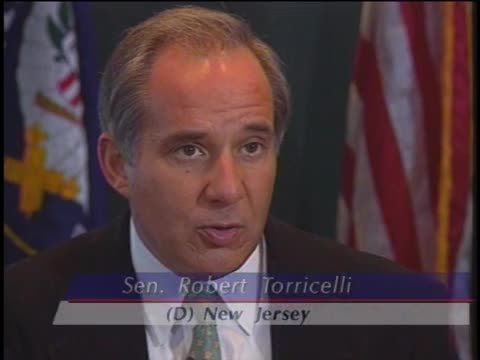
The good Pope or the status quo Pope. So we're worried about it because it's a great photo op for the dictator Fidel Castro. He gets to show to the international community that, hey, I'm not such a bad guy. After decades of repressing the church, Castro issued his surprise invitation for the Pope to visit Cuba during an extraordinary pilgrimage to the Vatican just over a year ago. Many Cuban Americans and their allies in Washington have been worried about it ever since. New Jersey's Democratic Senator Robert Torres-Sellie even saw a meeting with the Pope to express his concerns. My hope was to quote to him his own remarks against Polish communism, remind him of the experiences he knows all too well, and tell him with a hope and a prayer that he'll do the same thing for the Cuban people, that he and a visit can do what we've been unable to do for years, break down the veil and this nightmare for the Cuban people.
I wish I'd had that chance. Because the fact that he refused to meet with you a bad sign in your view. Pope's older, a lot of times passed, he isn't necessarily well. I don't know if he has that mission anymore in his fiber, even if he does in his heart. So it all troubles me. Well, Senator Oceli is welcome to his own point of view. William Murphy is the auxiliary bishop of Boston, and a key liaison between the Catholic Church in Cuba, the Catholic Church in the United States, and the Vatican. Holy Father is quite intelligent. He knows what's going on in the world. I don't really think he needs to have someone warn him of something about soil. He knows how to deal with people. And just as when President Castro came to Rome to see him last year, and he welcomed him. No President Castro, when the Pope arrives in Havana, is going to welcome him.
And that's going to be the basis of the discussion, of the conversation between them. It's not going to be a debate, I don't think. That's not the point. The point is not to score points. The end is to try to make sure that we can have immediate minds for the good of the life of the people, which includes the right to religious freedom. Like other trips, the Pope is taken. The Vatican is building the trip to Cuba as a pastoral visit, not a political one. According to Bishop Murphy and others, the goal is to rebuild the Church in Cuba institutionally. Not stir up opposition to cast Joe at a time when the aging revolutionary appears to want a better relationship with the Vatican. Already, the situation for the Church in Cuba is better now than it's been any time since 1961. And most of Cuba's priests and nuns were expelled from the island. In those heady days, immediately after the revolution, Castro also closed Cuba's Catholic schools and hospitals, while anyone who attended church was viewed as counter-revolutionary.
According to Jorge Dominguez, that kind of persecution has ended. The Pope's visit is expected to accelerate the rebuilding process. Some of the consequences of the visit are already in place. Part of the negotiations between Rome and Havana have been to allow the Cuban bishops even before the Pope's visits to hold open-air masses. To hope open-air religious events, these have been prohibited since the beginning of the revolutionary period. It has become much more possible for the Roman Catholic Church to publish magazines, newsletters, to print materials that are distributed in the churches, and to publish items that are not exclusive and religious, the magazine of the arch sizes of Havana, for example, in its most recent issue had a detailed discussion of why the Cuban economy was not working well. So it already has begun to open these circumstances. We need space to be able to teach catechism.
We need space in order to be able to visit prisons to be wonderful if we could have schools. It would be great if we could have more of a presence of priests and nuns in hospitals and caring for the sick. That kind of thing would be wonderful and everybody will benefit. Richard Nucho was President Clinton's special advisor for Cuba and was last in Cuba three years ago. Now, at Harvard, he agrees with Bishop Murphy and others who say that the Pope's visit could have enormous political consequences, even if John Paul does not confront Castro head on over political and human rise. No one believes in Castro and the revolution any longer in the sense of being the future of Cuba. But so far, people have only sought individual answers to what their futures will be, either through religion, increase in religious attendance for all the churches, Protestant Catholic as well as the Afro-Cuban traditions.
Some people are exploring business and profit. Some people are pursuing a hedonistic alternative. But the Pope's visit will raise questions about whether Cubans have a collective need to redefine themselves, to search for a meaning in their lives beyond their individual existence. And that could be dangerous for Castro. It could be wonderful for the future of a peaceful transition in Cuba. But if Miami's radio talk shows are an accurate barometer most victims in the United States don't believe that Castro is interested in a peaceful transition. The Pope is going to Cuba to meet the devil, according to Juan and caller. But Miami's exile community is deeply divided over how to respond to the Pope's presence in their homeland. Some of the exiles will fly to Havana later this week to show their support for the Pope and for religious freedom, while others vow never to return to Cuba until Castro is out
of power. Last month there were protests and demonstrations aimed at those planning to go, and there will be more in the days ahead. One of them, a prayer vigil tonight, will be led by Rafael Penal Ver. A lawyer and devout Catholic, Penal Ver whose father was Fidel Castro's personal physician. Remembers the day 37 years ago when his families hoped for a pluralistic revolution came to a bitter end. I'll never forget when I was a fourth waiter in Cuba, and the Castro's militiamen intervened the school that I attended. They came into the classroom, and they took the crucifix that stood at the front of the class that we had prayed to every day, and they told us, close your eyes and ask God for an ice cream. Of course, we all did, and when we opened our eyes, there was no ice cream. They took the crucifix, broke it, threw it in the floor, and then they replaced it with a picture of Fidel Castro, and they said, now ask Fidel for an ice cream.
We're all going to work together, and the British men came out and handed ice cream. That kind of message has been constant in Cuba. Yet despite the repression, the open-air masses that have proceeded the Pope's visit demonstrate that Castro never succeeded in wiping out religious faith in Cuba. Now at least for the moment, it appears he stopped trying. But why Castro changed his mind, and why invited the Pope to Cuba now remains a fascinating mystery, a mystery with both religious and political implications, for Cubans in Cuba, for Cuban exiles in Miami, for the Pope, for the Catholic Church, and not least for the policies and the government of the United States. Now the continuing killings in Algeria, Kwame Holman, begins our coverage.
In every year of the six-year Civil War in Algeria, attacks on civilians escalated during Ramadan, the Islamic Holy Month, this year was no exception. At least 1,100 people have been killed since Ramadan began December 30th, over the last three weeks, homes were ransacked, men, women, and children were murdered, many had their throats cut or were burned. Workers have been part of daily life in Algeria since the battle between Islamic militants and Algeria's secular government began in 1992, and estimated 75,000 people have lost their lives. The fight for political control of what once was one of North Africa's most prosperous countries started after Algeria's first free elections. The country's leading Muslim party, the Islamic Salvation Party, was on its way to victory when the military-backed government voided the election results and installed officials who prevented the religious party from taking power.
Islamic militants have been fighting the government ever since. Much of the violence reportedly has been initiated by a shadowy force called the Armed Islamic Group, one of several guerrilla groups operating in Algeria. The violence does not appear to be one-sided, reportedly government-sponsored militias also have retaliated, using air raids and torture as part of their campaign to crush the insurgency. And recently there have been allegations in Algeria and from abroad that the government has not done enough to protect civilians, allowing violence to occur uncontested near military bases. The amount of bloodshed spurred the European Union to ask for talks with the Algerian government, representatives of the EU were there today. They urged the government to allow United Nations observers to investigate the ongoing violence. The delegation left late today without any official reply. In the past, the Algerian government had rejected any form of international help. But today's discussions were marred by still more killings.
Two bombs set off in Algiers took at least six lives and injured 50. There were no claims of responsibility. Phil Ponce takes the story from there. From our we go to Mary Jane Deeb, editor of the Middle East Journal. She was in Algeria this past June, observing Algeria's parliamentary elections for the United Nations. Welcome, Ms. Deeb. How much clarity is there now regarding who's responsible for the killings? Well, there is more clarity than there was a while ago. We seem to see the Islamic group, the AIG, doing more of the killings. This is a separate group from the major Islamic opposition, the Feast, the Islamic Salvation Front. And this GIA is fragmented. It's fragmented into smaller factions with leaders of its own. There is no central control. There is no central distribution of reinforcement or of services or anything of the sort, the way we saw with the Islamic Salvation Front.
There are also militias, private militias, that are involved in the killings. There are individuals who are fighting over land, land grabs. So there's a whole set of groups that are involved. It's not one particular group that is responsible for the massacres. What you mentioned, too, Islamic groups, one, therefore is more moderate, one is more militant and it's the more militant of the two that's suspected as having some hand in the killings. What is their motivation? What do they want? Well, in the beginning, they really wanted to overthrow the government and to make turn Algeria into an Islamic Republic. Today what we're seeing is qualitatively different. There's not even a claim to being Islamic. There seems to be random violence, a feverie, banditism, revenge, and destruction of villagers. It's no longer even in the name of Islam that those groups are doing that, although they may claim that it is, although there are cries of Allahu Akbar that are sounded.
And basically, I think it has come down to the level of highway banditry. And when you say, Allah Akbar, the phrase means? Well, God is great. Why hasn't the government been able to stop these killings? The government has done a great deal. More than we think, for instance, all the major cities have been protected during Ramadan. Algeria and nothing else. Nothing has happened in Algeria, nothing has happened in Constantine or Anaba or Iran. All these urban centers where the population is concentrated are protected. What we're seeing now are isolated villagers, where it is very difficult to assume the protection of all the individuals there. So there has been an increase in security, but that is not possible all over the country. The country is quite large. So some of the attacks have taken place not very far from Al-Jears. That's correct.
That's correct. How about report? Some of the critics, some of the government's critics, even, go so far as to say that the government itself has had a hand in some of these abuses. What is there any credibility to that? The issue was brought up in conjunction with the arming of private militias. There have been civilians that have been armed, given arms to protect villagers. And those militias haven't turned committed some of the massacres themselves. Because there are civilians. They're not trained. There's no supervision. They're not accountable to anyone. And they have taken revenge on villagers who had some role in destroying their own villages or in robbing them or whatever. So people have taken the law into their own hand. And that's very dangerous. But they're linked to the government because the government has given them arms. The government strongly denied any involvement and today the ambassador from the envoy from Britain said that as far as the European Commission is concerned, the European
community is concerned that there was no evidence of government involvement. And yet there have been reports that some of the massacres have happened very close to army installations. That's true, and one of the explanations that have been given have been that those army barracks were manned by very young men who were 18, 19 years old conscripts who really do not have the training to go and deal with the type of attacks that have occurred. They're scared because their families belong to those villages in those areas. They're afraid of retaliation. They are not prepared for that sort of warfare. And so there's been a great deal of reluctance, in fact, for those young men to be involved. And there's also been a great deal of reluctance on the part of government to allow any investigation from the outside. Why has the Algerian government been so reluctant to allow people from the international community to come into trying to gather some information?
I think that basically it's a matter of national pride. The reason is that Algeria was occupied for 132 years, as you know, by France. It's very sensitive to external interference in its own affairs. It feels that it should be responsible for what occurs inside. And so it is rarely and cautious about Western interference in Algerian affairs. So it was a pretty big deal when the Algerian government allowed this delegation from the European community to visit. I think it's very significant. And it is significant because it's the start of a dialogue between the Europeans and the Algerians. A dialogue that has covered, as we've seen, a great many issues, including security issues, human rights, freedom of the press, terrorism, and a number of other issues. And I think that is important.
It is important to have a dialogue. And when Algerians open up, they see the rest of the world does care what happens to Algerians. And they're not there in order to interfere, they're there in order to help. And what is it that the European community would like to see Algeria do? Well, of course, everyone would like to see the government take more care of the villagers and prevent the violence. I think it is doing a great deal, perhaps not enough, but certainly it is doing a great deal. The Algerians would like to see the Europeans support them more, for instance. They would like the Europeans to clamp down a bit on some of these lemons networks and great Britain, for instance, are in France or in Belgium. So there is a discussion there. There is a drill in us in Europeans to do something about Islamist opposition groups in their own countries. And the Europeans ask the Algerians to do a little bit more to protect their inhabitants. Do the Algerian government have a point that the Europeans are not doing enough to clamp
down on suspected terrorist groups that are operating out of Europe and affecting Algeria, perhaps? Well, there certainly have a point, a number of leaders of some of those groups are in great Britain and are in France. They have so safe haven there. And they have operated certain networks, which among others have led to some of the terrorist activities in Paris a couple of years ago. Do you think that it is going to take outside pressure for the killings to stop? Perhaps, but I think it is an internal problem. And the outside could help in a number of ways. And some of the ways, for instance, would include more dialogue, more exchange of information, more transparency, if you want, through the press. And then something more significant, which is looking at Algeria as a country in which one
can invest, one can do business, one can create jobs. It is important that Algeria develops economically and creates jobs for all those young people who very often are then taken into the militias and are involved in crimes. If there were more economic opportunities, then perhaps the violence would be reduced in Algeria. Mary Jane Deeb, thank you very much. Thank you. Finally tonight, a Gurgen dialogue, David Gurgen, editor at large of US News and World Report, engages Jeffrey Canada, head of a New York City organization that runs after school programs for inner city youth and author of Reaching Up for Manhood, transforming the lives of boys in America. You're regarded as a social pioneer. Your first book, FIST Stick Knife Gun, is a minor classic today. And now you've written about young boys and trying to reach fatherhood and try to reach
manhood, tell us about the streets, what's going on out there today. Well, you know, when I began to really think about the challenges our children face and how difficult it is, I don't think people really grasp how hard it is to be a poor child, locked in an inner city, totally cut off from the rest of society, but surrounded by it, passing through it sort of anonymously with people sort of looking and feeling not connected to it at all, feeling that instead of having all of these opportunities, what you really have are barriers that you're not going to overcome. And I began to think about how much more difficult that is for young children today. And some of the reasons why, and in particular for boys, people have a sense that girls were really doing bad in its country and people began to focus on girls. We have to take your daughters to work and say, we have to do something for these girls, but I look at these boys. And the consequences of for boys when we don't do a good job is that they die, they go to prison and they are maimed in God for life. And so when we look around and we see a country with more than one million young men
under 18 who have been arrested, men leaving their families by the millions, boys growing up without any father. You say, how did this happen? It is because we are not doing a good job with these boys. And I'm telling you, these boys are in a lot of trouble in our country. They seem to be. Particularly in the inner cities. Tell me what do we do about it? How do we get to them? How do we stop that cycle? Well, I think that we've missed some real opportunities with these boys. We've sort of glossed over some things. And there's one of the things that I know that we need to do is get young boys reconnected to men. So many of these boys are going up without fathers. They don't have a role model. When I was growing up, the role model, you know, young boys, they said, listen, if you want to be a man, you have to learn how to take it, right? You could have to learn how to make sure that you've never cried and you didn't go to your mother and you were willing to fight, we thought that meant being a man. We thought being promiscuous meant that you were a man. We thought if you could drink a bottle of wine that you were a man, it is so much more dangerous for boys today because they don't have any role models around for them.
There's some 15-year-old telling the 12-year-old what it needs to be a man. And these children are really growing up under so much stress. They're growing up believing that they have to fulfill these sort of fantasies about maleness, which no one could fulfill and they're failing. And these children right now need to be connected to men. They need loving men and not just mentors and I talk about mentors and we need mentors. But mentors do not replace a responsible adult who loves you, who disciplines you, who's there when you're afraid at night, who's there to really talk to you about school and work. That's what young boys need. And we have to figure out a way to get uncles and cousins and other folks. We involve with these young people for long periods of time so these boys have role models on what it means to be a man. You say in your book, you have to change the message too, they're getting the wrong message. Young boys are getting messages constantly about sex, alcohol, tobacco, clothing, sneakers, stuff that means absolutely nothing when we really look at what it means to be a caring,
responsible father, a real responsible adult in today's society. All of the message of young people is get it now, do anything for it right now. You don't have to worry about later. So kids aren't learning how to work, they're not learning how to work hard and sacrifice. The kinds of things that I think when I talk to the folks who make it mostly all of us, we had jobs, we worked hard, we had to save our money. That's how we really grew up. All the messages young people suggest that you can get all of that stuff quick and easy. And there's a shortcut to it. And young boys need to really be taken by the hand and be told there are no shortcuts. This is about hard work and you have to do it for a long time to make it in life. Sounds like a message of tough love. I think it's partially tough love and also that we have to get re-involved. You know, some of these kids have no love in their life at all right now. And we need to make sure that we now only give them the good solid love and support they need, but the tough love that says to them that you're going to be healthy, responsible. But I'm going to help you. I'm going to hold your hand. I'm going to make sure that when you're crying as someone wiping those tears out of your eyes, picking you up and saying you can do it, try again.
Out there on the streets. When the country has a quote, this national dialogue about race, how much of a difference is it making on the streets? I will tell you, it's not making any difference on the streets at all. The young people I work with, they don't even notice debate is going on. They live in these segregated communities, which are, you know, they seem to be integrated when you begin to look. But when you really see what happens at Harlem, you have black kids going to black schools, connected totally to one another and not at all to the outside world. They feel like this is a hostile world to them. They feel like this is a racist world to them. They don't feel like anybody's talking about these issues of race. And I think this conversation's happening at a level that's not involving these young people at all. They're totally alienated right now to what's happening in America. What's the hope of rebuilding a family structure in these communities so that they do have a father? Well, I think that we've got to get the message to boys about fatherhood. And you know, we've been spending a lot of time telling boys not to get girls pregnant and doing, but we haven't taught boys how to be fathers. And if you're not involved with that child very early on, if you in that first three months
of that child's life, you're not directly supporting that child and with that child and making that bond, you don't feel a bond for that child six months later. And you're able to walk away feeling like you've done no great big thing. We've got to teach boys how to care and nurture children. And that needs to be done early. People are afraid if we do that, able to impact their masculine, they of course not. But let a boy play with a doll and everybody has a heart attack, right? But if anybody didn't do a masculinity at all, it teaches young people how to nurture. So it makes young people want to have children. No, it won't. It will just simply teach them the skills necessary for them to become good parents. Jeff, tell me about your own personal experiences. There must be a one by one saving a child. What has it been like for you? Tell me about some of the boys you've been working with. Well, you know, it really is one by one. Anyone who wants to do this work has to understand that with it goes love, but you know what the problem is, you love these kids and sometimes you can't save them. Just about maybe five weeks ago, one of my kids, I have a group of kids I call my own sons and daughters, I spend time with them, I do all of the good stuff.
He was just one of the best kids. He was saying on a church choir, he worked, he was going to school. They shot my son, killed him. And for nothing, a couple of kids with guns, we tried to figure out what happened. No one knew. I will tell you all of us, the whole group of us that consider ourselves a family. We felt so bad. It was just hard to deal with that pain. It was only 20, such a good boy, life wasted, tell you what happened. All of us tried to figure out what could we do to make a difference. This young man, his name was David Chen, Joseph, and my young, other young boys, his age at a part of this family, a kids I rate, they would devastate it. I mean, as a man, it calls out, you love this person, they're taken from your life. It calls out for revenge. What do you do when you feel like there's nothing you could do? You know, we could do, we could cry. That's all we could do. We could cry, and we could not give up, because you know what? What they said to me, he was a good boy. He played by the wounds. He did everything you told him to do.
He didn't pick fights. He went to school. He went to church and looked, he still died. Why should I do this? Why should I invest all of my energy in the trying, why not just take all of the chances and do all of the things and have a good life right now, because you can't. Calendar is going to last. The only with the fact that no, even though we've lost them, you still have to do these things. Really, I think a lesson that was really tough to really work on with my boys, but you know what? They're dealing with it, and you sort of do this day by day, and I pray for those kids every night. You think you can save a couple of them? We're going to save some. We're going to save some. I've seen some go off the college, and they come home from college, and I'm just so happy to see them, and I'm happy to see them go out of Harlem, back to college, and away in off those streets. I'll tell you, it's been real wonderful, working with the ones who've really made something out of their lives. Jeff Canada, thank you for joining us, and good luck. Thank you for having me. Again, the major stories of this Tuesday, a government psychiatrist at Unibomer Suspect Theodore Kaczynski was competent to stand trial, a White House meeting between President
Clinton and Israeli Prime Minister Netanyahu, produced no agreements. They were to meet again tonight. And Iraq denied a United Nations request to allow unrestricted access for weapons inspections. We'll see you online, and then again here tomorrow evening with a very special edition of the NewsHour. Most of the program will be devoted to an interview with President Clinton that we will record at the White House tomorrow afternoon. Until then, I'm Jim Lara, thank you, and good night. WikiVidi.com WikiVidi.com WikiVidi.com WikiVidi.com WikiVidi.com WikiVidi.com WikiVidi.com WikiVidi. WikiVidi.com WikiVidi. And by New York Life, the company that was built with integrity, humanity, and strength. These are the values that have made New York Life the company you keep. And by the corporation for public broadcasting and by the annual financial support from viewers
like you. This is PBS. . . .
- Series
- The NewsHour with Jim Lehrer
- Episode
- January 20, 1998
- Producing Organization
- NewsHour Productions
- Contributing Organization
- NewsHour Productions (Washington, District of Columbia)
- AAPB ID
- cpb-aacip/507-pc2t43jt6m
If you have more information about this item than what is given here, or if you have concerns about this record, we want to know! Contact us, indicating the AAPB ID (cpb-aacip/507-pc2t43jt6m).
- Description
- Episode Description
- This episode of The NewsHour features segments including a look at the Oprah Winfrey food case; a report on expectations of the Pope's upcoming trip to Cuba; the violence in Algeria; and a David Gergen dialogue with Geoffrey Canada about turning inner-city boys to men.
- Date
- 1998-01-20
- Asset type
- Episode
- Rights
- Copyright NewsHour Productions, LLC. Licensed under a Creative Commons Attribution-NonCommercial-NoDerivatives 4.0 International Public License (https://creativecommons.org/licenses/by-nc-nd/4.0/legalcode)
- Media type
- Moving Image
- Duration
- 00:59:06
- Credits
-
-
Producing Organization:
NewsHour Productions
- AAPB Contributor Holdings
-
NewsHour Productions
Identifier: NH-6046 (NH Show Code)
Format: Betacam
Generation: Preservation
Duration: 01:00:00;00
If you have a copy of this asset and would like us to add it to our catalog, please contact us.
- Citations
- Chicago: “The NewsHour with Jim Lehrer; January 20, 1998,” 1998-01-20, NewsHour Productions, American Archive of Public Broadcasting (GBH and the Library of Congress), Boston, MA and Washington, DC, accessed June 12, 2026, http://americanarchive.org/catalog/cpb-aacip-507-pc2t43jt6m.
- MLA: “The NewsHour with Jim Lehrer; January 20, 1998.” 1998-01-20. NewsHour Productions, American Archive of Public Broadcasting (GBH and the Library of Congress), Boston, MA and Washington, DC. Web. June 12, 2026. <http://americanarchive.org/catalog/cpb-aacip-507-pc2t43jt6m>.
- APA: The NewsHour with Jim Lehrer; January 20, 1998. Boston, MA: NewsHour Productions, American Archive of Public Broadcasting (GBH and the Library of Congress), Boston, MA and Washington, DC. Retrieved from http://americanarchive.org/catalog/cpb-aacip-507-pc2t43jt6m