The NewsHour with Jim Lehrer
- Transcript
JIM LEHRER: Good evening. I'm Jim Lehrer. On the NewsHour tonight, Ray Suarez looks at the political drama in Peru, Margaret Warner explores the presidential politics of the middle-class voter, and Terence Smith watches the tape delay approach to covering the Sydney Olympics. It all follows our summary of the news this Monday.
NEWS SUMMARY
JIM LEHRER: The United States today welcomed the political shakeup in Peru. Saturday night, President Fujimori called for new elections, and said he would not run. He acted after his intelligence chief was caught on videotape allegedly trying to bribe a legislator. Fujimori had just begun his third term in July, following a disputed election. In Washington, White House Spokesman Joe Lockhart said U.S. officials were pleased with the announcement.
JOE LOCKHART: This was an important step that we welcome from President Fujimori to return to full democratization. I think there's a lot of hard work that has been done. And we believe that this is a step in that direction, and we call on all parties involved in Peruvian society to work towards a peaceful transition and work towards a democratic election.
JIM LEHRER: The intelligence chief at the center of the shakeup was suspended, and today an independent radio station in Peru said he'd been detained by the military. We'll have more on this story right after the news summary. In the U.S. presidential race today, Governor Bush launched a fresh appeal to middle-class and women voters. He spoke at a women's and children's center in Little Rock, Arkansas, and he released a booklet titled "Blueprint for the Middle Class." It detailed his positions on education, taxes, health care, and other issues. Bush said his plan gives people options, not orders. We'll have more on the pursuit of middle-class voters later in the program tonight. Vice President Gore focused on managed care and women's health today. In Las Vegas, he said health maintenance organizations should do a better job of covering treatments for breast cancer. He said he'd put an end to penalties and incentives that encourage doctors to give women substandard care. In Los Angeles today, residents faced their first weekday commute since a transit strike began Saturday. It idled 2,000 buses, plus light rail and subway trains, and it forced 450,000 riders to find other transportation. As a result, highway traffic slowed and downtown streets were bumper to bumper. The transit workers' contract expired in June. At the Olympics in Sydney, Australia, today, the U.S. won gold in two swimming events. Video of those events was not available due to the games' television contract, but we do have photos of the winners. Lenny Krayzelburg took the men's 100-meter backstroke in Olympic- record time. And 16-year-old Megan Quann won the women's 100-meter breaststroke. The U.S. has won five golds in swimming thus far. We'll have more on the television coverage of the Olympics later in the program tonight. Also coming up: Political upheaval in Peru, and going for the middle-class voter.
UPDATE - PERU ELECTIONS
JIM LEHRER: Ray Suarez has the Peru story.
RAY SUAREZ: This is the video that rocked Peru. The surveillance allegedly shows President Alberto Fujimori's security adviser, Vladimiro Montesinos, bribing an opposition congressman to support the government. Montesinos has been Fujimori's right-hand man throughout the president's ten years of increasingly authoritarian rule. The military arrested Montesinos, according to Peruvian news reports this afternoon. During a televised address late Saturday, President Fujimori stunned Peruvians nationwide when he called for new elections and said he would not be a candidate.
ALBERTO FUJIMORI: (Translated) This is a grave accusation which has clearly undermined my position, and it can only be answered with a thorough investigation to determine responsibilities before the law. This above all is a political development, which obviously has had a strong impact on the stability of my government and of the country.
RAY SUAREZ: Immediately after the president spoke, hundreds of anti-Fujimori demonstrators flooded the streets outside the presidential palace to celebrate. Fujimori's announcement to step down was a shocking reversal from his iron-fisted approach to maintaining power. The former college dean was first elected in 1990. Early on, he got credit for holding down inflation, which once ranat 7,500% annually, boosting economic growth, and defeating guerrilla armies after civil strife. But Fujimori's actions often provoked criticism from human rights and opposition leaders in Peru and elsewhere. In 1997, he removed three judges from a constitutional court who said the president could not run for a legally forbidden third term in office. Fujimori eventually emerged victorious after a runoff vote in may. In the first round, he failed to garner a majority. In the runoff, he faced stiff opposition from Alejandro Toledo, a U.S.-trained economist. But Toledo pulled out a week before the balloting, and asked his supporters to boycott the election. He warmed of electoral fraud. Toledo returned to Peru Sunday. He officially declared his candidacy for president and praised Fujimori's decision to give up power and pave the way for a peaceful transition to a new government.
RAY SUAREZ: For more on President Fujimori's decision: Vladimir Kocerha is a correspondent for "El Gestion," a Peruvian financial newspaper and for CPN, Peru's second largest radio network. And Carol Graham is a senior fellow at the Brookings Institution, and has written extensively about Peru and Latin America.
Vladimir Kocerha, what have you been hearing from Peru today? What's going on?
VLADIMIR KOCERHA, El Gestion: Well, things are still confusing, but as we speak, things are still developing as we speak. The latest is that, while we're all asking where Vladimiro Montesinos is. Right now, the reports that our radio gave earlier today, this afternoon that Montesinos has been detained, still to be confirmed, corroborated. There are some congressmen, congresswomen standing in front of the headquarters of the intelligence service hoping to see Mr. Montesinos being detained so physically we know what his whereabouts are. That's the first question everybody's asking. And then of course the other questions that will be played out as we know the fate of Montesinos is what is going to be the fate of President Fujimori, whether he will be in charge of this transitional period. He had spoken about. There's growing consensus we're hearing that there should be another caretaker of the government for the next few months while the institutions are put in place to call for these new elections.
RAY SUAREZ: Was there shock that the president left office rather than staying and fighting? He's established a reputation as a pretty tough customer over the last ten years.
VLADIMIR KOCERHA: Well, he hasn't left office yet. He's still kind of running things. We can... we could say right now that there's still a power struggle going on. The key question there also is how the military is going to play this. We are still getting confusing reports on which side are the military falling on. But the decision by President Fujimori announced last Saturday, two days after the video that was aired on cable TV on Thursday, the independent cable TV that we have in Peru presently, really shocked everybody. Not even his closest advisers might have thought that President Fujimori would pull this decision or take this bold decision, to close government. We're talking about not only closing the presidency, the vice presidency, close congress. So this is like going to a different stage in Peruvian politics. There's no precedent to this, unless we had a coup d'etat in the past. But there's no constitutional precedent to close everything.
RAY SUAREZ: Let's talk quickly about the video. A lot of people are probably assuming that it was made by somebody trying to catch Mr. Montesinos. How is that video made?
VLADIMIR KOCERHA: The video, from what we know, is... there is the firm belief among most Peruvians that Montesinos caught many people on video, and this video is one of his own videos.
RAY SUAREZ: So he was making a video of himself bribing someone.
VLADIMIR KOCERHA: So he could blackmail this other... I mean, that's what everybody believes. The video was filmed in his own office. Now, how it got out, the different rumors. But from what we know, we have some sort of evidence that there's more than one video that managed to get only one out. Only one has been aired. There might be two others that have other congressmen taped, being bribed also. And this has been... Montesinos could be said that he has been paid with his own currency. And this, as we know now, has shocked everybody, seeing somebody actually bribing somebody else. Now, besides these three videos that we know that are in the open right now, there might be thousands of other videos that Montesinos has been piling up throughout the past six, seven years, with which he might have been blackmailing other people. What it should say is that the country started falling into a very deep moral crisis, in which these kind of actions were believed to be happening and be... and nobody could do nothing about it. So now everything points to a falling apart between Fujimori and Montesinos. Now one of them has to emerge victorious, and Fujimori has already taken a bold step in announcing his decision to call for elections.
RAY SUAREZ: Carol Graham, was the president of Peru already under a lot of pressure before these revelations came out in the past week?
CAROL GRAHAM, Brookings Institution: Absolutely. He was under a lot of pressure at the time of the elections, and widespread international pressure and discontent with how the electoral process ran. Here was a man whose legacy was saving Peru, integrating Peru into the international economy, and here he was seen to be ruining his own legacy by undermining the legitimacy of his own government. On top of that, there is and has been for a while quite an extreme fiscal crisis. The government overspent before these elections as they did in '95. There's a real need for economic adjustment to get the economy back on track - for all kinds of fairly difficult institutional reforms to make the growth process sustainable. All of these things are very difficult to do with a weak president and weak leadership. In addition, he was under international pressure -- both from donor agencies and from the U.S. Government. Some of the neighboring countries, although they've been less strong than the U.S. has been. So his position was very, very weak going into this scandal.
RAY SUAREZ: For all the public U.S. criticism of President Fujimori, had he been useful to American policy in South America, for instance in the war on drugs?
CAROL GRAHAM: Well, he's been tremendously useful, and that's why although there was a lot of public criticism, it's not clear that there ever was any concrete action behind the public criticism. He's been a very staunch ally in the war on drugs. Peru has been the best performer in terms of cooperating with the U.S. in the war on drugs. He's also been a star performer from the point of view of the international financial institutions up until this recent electoral process in terms of implementing dramatic and far-reaching market reform, in terms of them having an effect -- also in terms of redirecting public expenditures substantially towards the poorest Peruvians. His record on these things is very,very good. Lastly, a concern for the U.S. is clearly the stability of the Andean region as a whole where you have Ecuador in very precarious circumstances, Venezuela very precarious circumstances, and Colombia on the brink of civil war. Peru has been until now an island of relative political stability, continued economic growth and economic progress, and a country that's willing to cooperate with the U.S.. So I think the approach towards Fujimori has been public criticism, but not as much willingness to take concrete action, precisely for those reasons.
RAY SUAREZ: Well, a lot of speculation. Vladimir has started to circle around who takes the lead in the campaign to be the next president of Peru. You were with Alejandro Toledo when the news broke.
VLADIMIR KOCERHA: That's right. Well, three questions that all Peruvians are asking ourselves now, number one, the fate of Montesinos, second the fate of Fujimori, whether he's going to be the caretaker or if somebody is stepping down, having somebody like the ombudsman take over. And the third question is once all the institutions are put in place, because Peru cannot hold election right now, we need to have an independent electoral board, which we don't have. So once this interim process is spent and we have the institutions in place, who will run? Alejandro Toledo, yes, he was here in Washington as a matter of fact this past Saturday. When the news broke, I happened to be with him.
RAY SUAREZ: What was his reaction?
VLADIMIR KOCERHA: His reaction was first... most of us felt shock. It was very unbelievable. Then when we heard the voice of President Fujimori on the Internet saying, "look, this is what my decision is," by the way, his announcement had two steps to it. First, it was to disband or dismantle the intelligence service. Second was to call for new election. So that's a very interesting point there. But besides... well, once this announcement was made, then of course everybody was trying to understand what the reasons were behind this, and I think we still do not know exactly what has prompted this decision to be taken. And moreover, I don't think that everything has been played out yet. So we can see still events developing in the next few days.
RAY SUAREZ: So quickly, do you like his chances, Alejandro Toledo? Is he the front-runner?
CAROL GRAHAM: He's the front-runner at this moment because it's very early on in the process, and nobody else is immediately there. However, I must say that Toledo did damage his sort of start of the opposition status by pulling out of the second round right before the election. A lot of people, independent observers and Toledo supporters thought that was a very irresponsible thing to do and were very disappointed and felt that it was a demonstrated lack of leadership.
RAY SUAREZ: Carol Graham, Vladimir Kocerha, good to speak to you both.
FOCUS- COURTING IN THE MIDDLE
JIM LEHRER: Margaret Warner looks at the push for the middle-class vote.
MARGARET WARNER: Both major presidential candidates are-- no surprise-courting the middle-class vote but the emphasis this year is on middle-income families, that 45% of American households with a combined income of $ 30,000 to $ 70,000 a year. Today George W. Bush began a week-long appeal to those voters, releasing what he called a "blueprint for the middle class." He spoke in Little Rock this morning after touring a maternity ward.
GOV. GEORGE W. BUSH: One of the things you'll find here, in the spirit of my platform, is that I want to help people help themselves. I don't believe the role of government is to tell people how to run your lives. My plan is one that gives people options, not orders. It's one that trusts individuals to be responsible for decisions they make in life. I trust these good families to love their children. One thing government can do is help them to help themselves. Incredibly enough-- I want you to hear this statistic-- the average family now pays more taxes than they do in housing, food, and clothing combined. The best way to help families is to provide tax relief, is to let them have some more of their own money to provide flexibility in their lives, and so I want to talk about what my blueprint means for working families and middle-class families in America. First, I want to reduce the bottom rate of our tax code from 15% to 10%. That begins to address inequities, helps address inequities in the tax system. Secondly, I want to make sure that no middle-class family pays more than a quarter of their... of their income to the federal government. In other words, the middle class families will pay 25%, no more than 25%, to the federal government. Thirdly, in order to help families, we need to greatly reduce the burden of the marriage penalty on families. What kind of tax code is it... (Applause) And fourthly, we want to increase the child credit from $ 500 to $ 1,000 per child. As I was walking through the... I saw the cribs with the youngsters there. I was just thinking about how best... this plan frees people by increasing the child credit. It recognizes the value of children. It says to parents, we're going to give you more options with your own money. And I want you all to know, when you accumulate all the reforms I just mentioned, that accounts for 60% of the tax relief package that I've been describing all across America. 60% of the package goes to helping middle-class families help themselves. One of the things I intend to do is to expand the education savings accounts from $ 500 to $ 5,000 per taxpayer per year, to allow families to set aside money for future income, and then we draw on the money on a tax-free basis. We trust Americans to be responsible for loving their children. We trust American families, if given more freedom, more flexibility, more options, will make the right choices for the children they bring into this world. It's such a wonderful place to start this week, to be able to be where little babies are born, to see the beginnings of life, the beginnings of what I hope is the American dream for every child from every walk of life, from every background. It begins by strengthening our families. It begins by holding up that value that is so dear to America's future, that families are the backbone of this country, and it recognizes that government must free our families. Thank you for giving me this chance to come to this place of love and compassion. (Applause)
MARGARET WARNER: Al Gore has been appealing to this group for months, and two weeks ago laid out his plan for helping what he called hard- working middle-class families. Today he spoke at a women's health forum at the University of Nevada, Las Vegas.
VICE PRESIDENT AL GORE: Just seven weeks from tomorrow, Americans go to polls to choose a new future. Seven short weeks from tomorrow, we face a choice, not of politics or personality, but of priorities. What are we going to do with our nation's prosperity? What are we going to do with those budget surpluses that have been built up? What are we going to say is most important when we talk to our kids and follow up our words with our actions? Will we squander this chance on a huge tax cut for the wealthy at the expense of the middle class that hurts our prosperity and progress, or will we fight for middle class families and men and women who are paying the bills, making mortgage payments and house payments and car payments -- I mean, and doing right by their kids? I'll tell you, it makes a huge difference whether or not you have somebody who will fight for you, and I want to fight for you! That's why I am running. That's what this race is all about. (Applause) Together, let's make sure that our prosperity enriches not just the few, but all of our families. Let's support parents and strengthen families. Let's invest in education, middle-class tax cuts, health care, and a secure retirement. This election... this election isn't about me or my opponent. It's about you. It's about your future. It's about our country and what kind of nation we are and what kind of nation we wish to become. And so setting priorities in this election makes the stakes much higher than they've been at many times in the past. We need to make it a priority to cut taxes for working families and the middle class, not just to pay for college and job training, but for health insurance and child care and long-term care. That's very different from what the other side is proposing. The other side has proposed a giant tax cut mainly for the wealthy. 41% of all of their tax cut would go to the wealthiest 1%. For every $ 10 that goes to the top 1%, middle class families would get one dime and low- income families would get one penny. Let me say, I'll never go along with a big tax cut like that for the wealthy that hurts the middle class and stops our prosperity and progress. Are you with me? (Cheers and applause) I know one thing about the job of President: The presidency is the only position in the Constitution that's filled by someone who is given responsibility to fight not just for one state or one district, or for the wealthy and powerful, but for all of the people, especially those who have the hardest time fighting back against special interests who have the advantage over them. So having a President in the White House who will care about you and who will fight for you can make all the difference in balancing things out and giving you a chance to realize your dreams and do right by your family, because I will fight any interest that gets in your way and has an unfair approach to holding you back. (Applause)
MARGARET WARNER: This fight for middle class voters comes at a time of continued prosperity. The current economic expansion, now in its tenth year, is the longest in American history. The unemployment rate stands at just 4.1%, near a 30-year low. And the median family income, after sliding in early 1990's, has rebounded to an estimated $ 47,000 last year. Yet a new poll by the Pew Research Center for the People and the Press found considerable economic anxiety among voters, including those in the $ 30,000- $ 70,000 family income group. 79% of voters said they were concerned about not having enough money for retirement. 77% were concerned about not being able to put their children through college, and 82% were concerned about being unable to afford health care for a sick family member.
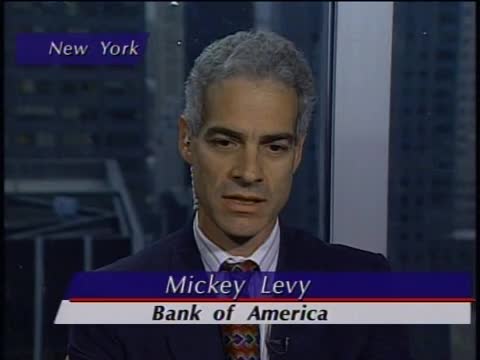
MARGARET WARNER: We explore the economics and politics of the middle class vote now with Jared Bernstein, an economist with the Economic Policy Institute and co-author of the recently published study, "The State of Working America"; Ruy Teixera, a senior fellow with the Century Foundation, and author of "America's Forgotten Majority: Why the White Working Class still Matters"; Mickey Levy, chief economist at the Bank of America; and David Frum, author and senior fellow at the Manhattan institute. Welcome, gentlemen. First of all, Jared Bernstein, starting with you, let's be clear about this group we're talking about. Other than the fact they're making roughly $ 30,000 to $ 70,000 a year, fill in the demographic picture for us. With who are these Americans that now make up this middle class?
JARED BERNSTEIN: Well, the conventional way that economists explore the question is to divide American families into five equally-sized groups, based on their income. So we have the lowest fifth, the middle fifth, the top fifth. As you've mentioned, the middle fifth covers a range roughly from $ 30,000, to $ 55,000, $ 60,000. Their median stands at around $ 47,000, probably now closer to $ 48,000 or $ 49,000. On an hourly base basis, the median wage is in the $ 12 to $ 13 an hour range. So these are families that depend on their paycheck in order to make ends meet, that is, they may hold a few stocks - a few shares of stock, but clearly it's their earnings that determine their well being. That's why much of what we're hearing discussed in this campaign is focused on working families.
MARGARET WARNER: And Mickey Levy, what else would you add to that picture? For instance, what's their education level? What do they do for a living? Do both parents work generally?
MICKEY LEVY: I don't think you can realize. Sometimes you have multiple-earning households. Many are single worker households. They come in all different age groups. One thing I would point out is that if the median household, their home ownership ratios have gone up in the last 10 years, more than owned stock and mutual funds. And so I don't think you can - I really don't think you can generalize. I think the concept of the middle class, particularly now, has more political meaning than economic meaning.
MARGARET WARNER: Which is, of course, while we're discussing it right now. Jared Bernstein, back to you. So even though their median income has been rising, even though they may own more stocks, still they're telling pollsters they're anxious. Why? Do they have reason to be?
JARED BERNSTEIN: I think one of the keys is something you mentioned a second ago - having to do with how much they're working. One of the things we know about middle income families is that, in fact, the vast majority have two earners, and if you look at the average number of hours that a middle income, married couple, family with children worked last year, it was about 3800 hours a year, that is, if you pool or combine the hours of all the family members together. Now, that's getting close to two full-time jobs. That leads to a kind of time crunch, a level of stress that I think is perhaps one of the less welcome characteristics of what we're calling the new economy. In terms, by the way, of demographics, many of these folks are non-college educated. We often forget 75% of the work force does not have a college degree. So we' talking about working families who depend on a couple of people working close to full time, often non-college educated workers, earning wages that are well below the target range of some of the tax cuts that have been discussed, particularly in the Bush plan.
MARGARET WARNER: Mickey Levy, do you think they have reason to feel anxious, stressed?
MICKEY LEVY: I don't think the middle class is any more anxious than they've ever been in the past, maybe even they're less anxious. As you've pointed out, we've had 10 years of expansion; we have an unemployment rate the lowest in over 30 years. In fact, if you look at the unemployed, those who have voluntarily left their jobs, it has risen a bit, suggesting they have more confidence in finding another job with the low unemployment rate. There's more job security, not less. If you look at the way they're spending money, the fact that the rate of personal income has come down suggests that households are comfortable spending their incomes and in fact if you team that up with home ownership and the appreciation of housing, you team that up with stock holdings, then people are feeling more comfortable spending their cash flow and enjoying appreciating... some appreciating wealth in stocks and in housing.
MARGARET WARNER: All right. Let me get our two guests in Washington here. Ruy Teixeira, in this same Pew poll, just following up on what Mickey Levy said, 64% of the voters or the respondents, and this was a large poll, said, "I'm generally satisfied with the way things are going for me financially." How do you square that with the anxiety they say they have?
RUY TEIXEIRA, The Century Foundation: Well, I think it's pretty simple. They have been doing better in terms of wages and incomes in the last few years, but the things that are really bothering them have to do with the kinds of things you mentioned from the Pew poll: health, education, retirement. Where's the money going to come from to cover all those? Problems that might arise, how am I going to get my kids through college? Do I really have enough money for retirement? What if something goes wrong. These are the anxieties people have. The new economy has been doing relatively little to solve on its own. Putting more dollars in your pocket as you go up the income scale a little bit, as people have been able to do in the last few years, doesn't deal with those fundamental underlying anxieties. Here we have the as-good-as-it-gets phenomenon. If people think, this is as good as it gets, I'm in some kind of trouble and I may need someone on my side to help me out. And that's exactly where Al Gore comes in with his targeted programs on health, on education, on retirement that are really aiming at those working families. So I think you know, this will be a tough thing for Bush to counter, and he's got to develop his own approach to it, which he's trying to do.
MARGARET WARNER: Before we get totally into the politics, let's stay with this group for a little more. David Frum, do you think this middle class today has more reason to feel anxious, has more to feel anxious about their counterparts did say in the 60's or 70's or even 80's?
DAVID FRUM, Manhattan Institute: Of course not, not from an economic point of view it should be said. They are better off. They are no less insecure. We tend to put a kind of golden gauze over the past and imagine it as a world in which people had jobs for life and stable pensions. But the jobs were unstable then for blue collar workers. They weren't as unstable for white collar workers. But, of course, there were many fewer white collar workers in those days. I mean, there is something a little bit artificial about the stoking of these anxieties. And that does have to do with politics. The Democrats in their years in the wilderness from 1968 to 1992 suffered from an image of being a conspiracy of the morally lax top and the welfare-dependent bottom against the virtuous middle. And Democrats have made a real effort over the last eight years to identify themselves with that middle. The problem is that they have a limited repertoire of things they want to do. And it is important because their philosophy is one in which you treat people as dependent; you have to stoke their anxieties or justify their anxieties in order to create opportunities to do things for them. And in many ways the argument about is the middle class stressed or is it okay, is in many ways an adjunct to the argument that actually comes first, which is, do you see them as essentially dependent people or do you see them as essentially independent or potentially independent people?
MARGARET WARNER: Ruy Teixeira, do you see this as stoked by politics?
RUY TEIXEIRA: I don't really. I mean, clearly politicians are going to try to take advantage of what the feelings of the public are on key issues. They're going to try to reach those voters. But Al Gore didn't create this level of economic anxiety. George Bush some of the sentiments he's trying to appeal to about how government sometimes screws things up. Politicians have to play with the hand they're dealt. And the hand their dealt today suggests that even though, again, the last few years have been pretty good, there are these underlying difficulties, anxieties, problems that they want politicians to help them solve. And that's what politicians need to target, and I think if they don't, they will be in some trouble.
MARGARET WARNER: Jared Bernstein, if we take the three things that the people in the Pew poll said they were most anxious about, their own long-term retirement, sending kids to college, or I think it was child care, are those problems that they wouldn't have necessarily felt say in the 70's as greatly?
JARED BERNSTEIN: They wouldn't have felt some of those problems as greatly, particularly let's start with child care. Child care... the need for child care is very much a function of the fact we now have more two-earner families, husbands and wives working many more hours than they have in the past, certainly than they did 20 years ago. In fact, the average hours of work of middle-income families with kids are up 500 hours since 1979. That's about three months of full-time work. That engenders a significant childcare burden that you hear some, particularly Al Gore speaking to in some of his policy ideas. Regarding retirement savings, obviously that is...
MARGARET WARNER: We're all living longer.
JARED BERNSTEIN: We're living longer, that's true. We have got more longevity. That's a very positive thing, but this has, of course, given rise to the contentious debate over the future of Social Security. Here again, I think the Gore plan, which focuses on increasing retirement savings, like IRA's for middle and low-income families, will be a boost in that regard.
MARGARET WARNER: And also, Mickey Levy, it strikes me that now I think 67% of high school seniors are going to college. Do a lot of middle class parents really now feel their... they have to get their kids to college, in a way that maybe they didn't feel in the 60's or 70's?
MICKEY LEVY: Well, look, they see the financial advantage of it. Most studies show that getting an education, getting specific skills pays off during one's working career. So there's a financial incentive to send your kids to college. Look, I think the issue goes way beyond economics. And it gets to the issue of the role of government. And you can conduct a survey and find out that people have a certain level of anxiety. Well, most people have a certain level of anxiety. What's the proper role of government? Should the government come in and calm people's nerves down, subsidize certain drugs that make people calmer? I mean, it gets to the issue of what's the role of government? How do we want to allocate national resources? And once you get outside of that box and get it into politics, then the politicians take over and try to twist things. It's almost as if the politicians, and here I'll point out Vice President Gore, it's almost as if he conducted a focus group, asked people what their most anxious moments were, and then designed public policies to almost buy votes. I know that's very, very cynical, but I don't think... I think what we really need is policies that address the long-term needs of the nation and not give into kind of the populist concerns about anxiety. And here I would add, the journalists above all feed into creating anxious moments.
MARGARET WARNER: So Ruy Teixeira, if you're a working, middle-class couple watching this show right now, and you're in that income group trying to decide who to vote for. Should you take the broad philosophical approach that Mickey Levy is talking about, or should you get out a sharpened pencil and try to figure out now, how many kids do I have and which break works for me?
RUY TEIXEIRA: I'm not sure what kind of broad philosophical perspective the typical American family has - this working family we're talking about -
MARGARET WARNER: Let me just explain briefly, so we don't get into the details of Bush and Gore, but Bush is essentially saying, as he just said in our tape, look, I'm going to give you some broad tax cuts and you decide how you want to spend it. I'll increase, you can put more money into education savings, but you don't have to come me to with a college bill to get your tax deduction. And, of course, he has a much broader tax cut and Gore's is more targeted. That's what I meant about broad philosophical differences.
RUY TEIXEIRA: Right. I think that the problem with that - that approach - if we're looking at how it plays politically - is at this point most of the voters that we're talking about in this key working family demographic have shifted from a view that might have characterized them in the 70's and 80's - maybe even early 90's - get government off my back, to a view that more accurately characterizes, how can I get government on my side - it's still a little bit suspicious, but they're really willing to listen to what politicians have to say, so - you know - for example - if you look at this issue of taking a tax cut, giving the money back to people, you decide how you spend it. The problem for the Republican - this question has been asked over and over again, would you rather get a big tax cut, or would you rather have the government take that money and put it into Social Security, Medicare, health care, education, and so on, and by an overwhelming majority, they continue to say they want the government to invest in these programs, so I think this is a very difficult problem for the Republicans. That philosophical approach that Mickey Levy is talking about isn't selling very well among these voters, who say let's not be populist, but the fact of the matter is populism is working, and Gore has the lead to show for it.
DAVID FRUM: It's a political problem for Democrats - for the Democrats - because they have to explain that, gee, I mean, the more horrific and dependent and stress-laden and anxious the condition of the middle class is said to be, the more it raises the question, well, what kind of appalling set of careless self-indulgent people have been in power for the past eight years, that have plunged the middle class into all of these terrible problems? I mean, Al Gore wants the benefits of incumbency, and these are good times, and he wants people to appreciate the party that brought them the good times. At the same time, he's trying to stoke an anti-... a feeling of discontent that ought to play against the incumbent. If... If I had a little money, the one poll I would like to see ask, is ask people, do you believe what happens to you is primarily the result of your own exertions or primarily the result of forces beyond your control? Maybe that's the crux of what this argument is about.
MARGARET WARNER: All right. And on that note we're leave it. Thank you gentlemen, four, very much.
FOCUS - DELAYED REACTION
JIM LEHRER: Finally tonight, the Olympics, late and on videotape, and to media correspondent Terence Smith.
ANNOUNCER: NBC's coverage of the games -- of the 27th Olympiad.
TERENCE SMITH: NBC's scheduled 440 hours of coverage of the Sydney games began Friday. Split between its network and cable outlets, MSNBC and CNBC, the coverage will continue through October 1st. NBC paid $ 705 million for the broadcast rights to the games, and will spend an additional $ 100 million in production costs. The network has a staff of 3,000 on the ground in Australia. Nonetheless, NBC expects to make a modest profit after selling some $ 900 million worth of advertising. The coverage, a mix of events and soft features on athletes and Australia itself, is being broadcast entirely on tape, due to the 15-hour time difference between Sydney and the East coast of the United States.
SPOKESMAN: ...The world record and Olympic gold!
TERENCE SMITH: The ratings for Saturday night's coverage proved disappointing, down 24% from the 1996 Atlanta games and well below the numbers promised advertisers. But network officials predict that the audience will grow as the games continue.
TERENCE SMITH: To discuss NBC's coverage of the Olympics, we are joined by Al Joyner, the gold medallist in the triple jump at the 1984 Los Angeles Olympics-- he is now coaching women jumpers at UCLA and is the brother of Olympic champion Jackie Joyner- Kersee, and was the husband of the late Olympic champion sprinter Florence Griffith-Joyner-and by Sandra Bailey, the editor of "Sports Illustrated for Women"; and by Prentis Rogers, the sports radio and television columnist for the "Atlanta Journal Constitution." Welcome to you all.
TERENCE SMITH: Al Joyner, let me ask you first. You know a thing or two about Olympics. What have you thought of the coverage so far?
AL JOYNER: Well, I just realized that this is really my first time sitting at home trying to watch the Olympic games, instead of being there, and I really felt that I wish they'd show them live, because I would stay up all night to watch them. And I think it's missing a little part. That's why they're losing some of the ratings at the beginning of the show.
TERENCE SMITH: Why? Do you find it flat, the fact it's taped and of course has occurred 15 and maybe even 20 hours before?
AL JOYNER: Yes, because I already know who won the event. That takes the excitement out of it for me, being personal, because I feel like people should watch it live and let it happen because I remember in 1988 that people... I remember more than anything else when people came up and said, "I stayed up all night to watch Flo-Jo run." I think they get a better feeling because the drama happens at the Olympic games naturally.
TERENCE SMITH: Sandra Bailey, that immediacy is obviously not there. It's on tape. Do you feel you're getting a good picture of the games?
SANDRA BAILEY: No, absolutely not. I'm with Al. And I tell you what, if the Olympics have lost Al Joyner and a sports writer as a spectator, they're in trouble. And I think they are. I think I know who won. I go on-line. It's not a matter of I want to stay away and not know and protect the drama. People aren't going to accept that in the year 2000. We live in real time. And we want to see our sports in an exciting format.
TERENCE SMITH: Prentis Rogers, what's your view of this, of the packaging of this?
PRENTIS ROGERS: I think as a sports writer, obviously I think the live is there. If I may, I kind of see where they're coming from, too. They have the belief that the Olympics is a family viewing event. They're of the belief that the audience is not necessarily result-oriented. The ratings would seem to suggest that maybe they need to revisit it. It's interesting because this is the first year the Olympics has had such a massive cable component. I should say the summer Olympics. I think what we're seeing here is an erosion of their audience. The soccer fans, they may go to MSNBC and see the soccer and not move to watch the rest of it. The boxing fans... so taken bit by bit by bit, I think what they're discovering is that their main audience is being chipped away, because if you watch soccer for a couple hours or boxing for a couple hours, you're not ready to make a five-hour commitment to a primetime telecast.
TERENCE SMITH: Al Joyner, another complaint that has been made by critics is that... some of the profiles and features that they do are crowding out the actual event coverage. What's your view of that?
AL JOYNER: Yes. I've been watching some of the programs. Like I said earlier, it's one thing about the Olympic games or any sports event, it's going to create drama. And I think right now that sometimes some of the stories they're trying to create are heroes for us, the people who we should cheer for. And I think they should let the story just unfold, just like the game. Nobody knows the outcome of the game. It ends up evolving around what actually happened at the end results.
TERENCE SMITH: Sandra Bailey, what do you think the argument for those profiles, is that it introduces the audience to the individual contestants and almost gives them a stake or a higher level of interest in it.
SANDRA BAILEY: I think that's true to a certain degree. As Prentis said, there certainly is a different crowd watching this. It's not necessarily the Monday night football Redskin fan who is watching the Olympics. But at the same time, I think it's kind of gone overboard now, and these sort of purple prose features are dominating the games. And like Al said, the game is the drama. They're exciting in and of themselves. And also with this tremendous cable component, can't we see something live on cable? I mean, we see nothing live. Can we package like a nice two-hour show? Can you tell us what to watch and then can we get on with it and actually see people competing the same day?
TERENCE SMITH: Is that realistic? I know actually next door in Canada they do have the coverage on live. But just how realistic is this for a network that has paid a great deal of money?
SANDRA BAILEY: I think maybe you could make the argument that they overpaid for the games. Certainly NBC is saying, "we have to show it in primetime because of what we paid for it." But - you know - at 10 o'clock at night, you know, it's 1 o'clock in the afternoon the next day in Sydney. That's prime time; there's plenty of stuff going on live then. They just want to package it all and show it. Iunderstand the quandary that they're in with the fact of the time difference. And certainly it requires some packaging, but it doesn't require 100% packaging.
TERENCE SMITH: Al Joyner, there's a great focus on U.S. athletes at the Olympics. Much of the coverage focuses on them. What's your thought about that?
AL JOYNER: Well, since it's been... When it's being taped, it's no problem if it was live and American athletes do well, but when it's being taped and most Americans know which athletes have already accomplished their goal, it's just like, all right, I know who won the backstroke for the guy I was rooting for anyway. But I think the sad part about that is that they should just really let the people and let the race evolve around themselves because I remember as a kid I got in trouble trying to watch the Olympic games. That's what made me want to go to the Olympics.
TERENCE SMITH: Prentis Rogers, what's your analysis of these ratings that you've seen so far? They are down sharply from Atlanta and below even what they promised their advertisers.
PRENTIS ROGERS: Well, yeah, I think right now they've got some calls for concern. The Friday night rating of 16, it could have gone on the family viewing thing. Then you've got people going to high school games and then Saturday night when they have the 13, but now I think they're concerned because I think Sunday night is supposed to be a high viewing night. A lot of people are home; they've got to go to work the next day; they're in their homes and they got a 14 - 5 or 14 - 6 -
TERENCE SMITH: Which translates, we should explain, into about 14, 15 million -
PRENTIS ROGERS: Homes. And they were projecting to have an average anywhere from 17 1/2 million to 18 1/2 million homes during prime time. The advertisers were willing to live with 16 million homes. And so now you have a situation where this is the night that should be one of your highest scoring nights and you - you know, you barely get 14. Now, in perspective, you know, they'll put the spin on and say, well, hey, it's better than anything than everybody else is doing, but that's to be expected, but that's not what people are paying their money for. So I think what they need to look at now is the live component. They've got an Internet component that can give you information, and perhaps they may have overstated how much knowing the results ahead of time would have impact. Now, in the past, the ratings did not seem to be impacted that much when it was in Seoul, when it was in Barcelona, they still did around 17. But now the information age has regressed to the point now that you just can't say, well, people are still going to watch even if they know the result, because they want to see it unfold. I think what we're seeing now is they've got the whole day to find out what the results are; they're not as inclined to watch.
TERENCE SMITH: Sandra Bailey, the Internet does change the horizon here, doesn't it?
SANDRA BAILEY: It totally had changed it and particularly for an event like the Olympics, which is bringing in the whole family, which is not reliant on the traditional sports ban, the 55-year-old man on his couch who is probably not Mr. Internet. This Olympics is relying on the family and, you know, all the kids are on the Internet anyway. And if they're interested in the Olympics, you know, they're finding out the results. I mean, in the morning I go on line, find out what happened, and I'm hard pressed to watch very much of it at night because I know when I turn it on everything I read at 9 o'clock that morning.
TERENCESMITH: Al Joyner, I bet you do the same thing. Do you?
AL JOYNER: Yes, I do. I do it every morning and it's kind of like -and if I miss that, I end up going to another network to hear the results, because I'm looking for it. Like Saturday morning, I got up looking for the Olympic games and it wasn't on and I ended up watching a football game, and I wanted really to see the Olympic games but they were staged for later on that day. I think the money that NBC paid for the Olympic games - they should have it on the station all day, all the time, and let people tune in, because if you have - like going to CNBC, having to break up - looking -- at this point they might as well go back and do the triple cast.
TERENCE SMITH: Al Joyner, this is also the year of the woman or being depicted that way in the Olympics - more women competing this year than ever before. Is that coming through?
AL JOYNER: Yes. That's definitely coming through. And I like that part because I think the Olympic games definitely need to show the other counterpart of how great these women athletes are, especially because I have a daughter, and my daughter ended up tuning in when she watched gymnastics.
TERENCE SMITH: Prentis Rogers, what's the impact of cable? It is on cable; it is on both MSNBC and some of those events are-are played in full - and on CNBC.
PRENTIS ROGERS: Yes. That kind of does scratch a point I mentioned. I do think that cable is probably having more of an impact than they thought. I don't mean in a major sense. But when you have this differing mix - so, in other words, all the soccer fans are going to the cable; the boxing fans are going to the cable; the ones interested in softball and individually those may not be particularly large audiences, but when they start to add up, all of a sudden you look, you're a couple of million short. And one other thing I wanted to inject into the viewership problem that we seem to be having - I don't think we can dismiss the fact that college football and NFL are two to three weeks deep into their season. You know, NBC says, well, you know, we did our research and 48 percent of your Olympic audience is women 17 percent, children and 35 percent are men, but what you have here are men who are now saying college football is going - it's much better - it's an exciting game. They watched a couple of double headers on the NFL Sunday. Well, I've got my sports fix for the day. I'm not going to sit down and watch a couple of hours of the Olympics. So I think what they're going to have to revisit if they're going to use the cable component, they need to use it wise; if they're going to do it because they use the tape, then I think once again when these little missed sporting events add up, all of a sudden they're losing two points.
TERENCE SMITH: Okay. Thank you all three very much.
RECAP
JIM LEHRER: Again, the major stories of this Monday: The U.S. welcomed the political shakeup in Peru. Over the weekend President Fujimori called new elections and said he would not run. And in the U.S. presidential race Governor Bush began a fresh appeal to middle class voters, and Vice President Gore focused on managed care and women's health. An editor's note before we go: As you may have heard over the weekend, I was asked to moderate the three upcoming presidential debates between Governor Bush and Vice President Gore. For the record, I was honored to asked and I'm delighted to do it. The debates are on October 3rd, 11th, and 17th, at 9 PM Eastern Time and will be broadcast here on PBS and the other broadcast and cable networks nationwide. Meanwhile, we'll see you on line and again here tomorrow evening. I'm Jim Lehrer. Thank you and good night.
- Series
- The NewsHour with Jim Lehrer
- Producing Organization
- NewsHour Productions
- Contributing Organization
- NewsHour Productions (Washington, District of Columbia)
- AAPB ID
- cpb-aacip/507-nv9959d26k
If you have more information about this item than what is given here, or if you have concerns about this record, we want to know! Contact us, indicating the AAPB ID (cpb-aacip/507-nv9959d26k).
- Description
- Episode Description
- This episode's headline: Peru Elections; Courting the Middle; Delayed Reaction. ANCHOR: JIM LEHRER; GUESTS: VLADIMIR KOCERHA, El Gestion; CAROL GRAHAM, Brookings Institution;- COURTING ARED BERNSTEIN, Economic Policy Institute; MICKEY LEVY, Bank of America; RUY TEIXEIRA, The Century Foundation; DAVID FRUM, Manhattan Institute; AL JOYNER, Gold Medallist, 1984 Summer Olympics; SANDRA BAILEY, Editor, Sports Illustrated for Women; PRENTIS ROGERS, Atlanta Journal-Constitution; CORRESPONDENTS: FRED DE SAM LAZARO; BETTY ANN BOWSER; SUSAN DENTZER; RAY SUAREZ; SPENCER MICHELS; MARGARET WARNER; GWEN IFILL; TERENCE SMITH; KWAME HOLMAN
- Date
- 2000-09-18
- Asset type
- Episode
- Topics
- Education
- Performing Arts
- Women
- Sports
- Health
- Employment
- Transportation
- Politics and Government
- Rights
- Copyright NewsHour Productions, LLC. Licensed under a Creative Commons Attribution-NonCommercial-NoDerivatives 4.0 International Public License (https://creativecommons.org/licenses/by-nc-nd/4.0/legalcode)
- Media type
- Moving Image
- Duration
- 00:58:56
- Credits
-
-
Producing Organization: NewsHour Productions
- AAPB Contributor Holdings
-
NewsHour Productions
Identifier: NH-6856 (NH Show Code)
Format: Betacam
Generation: Preservation
Duration: 01:00:00;00
If you have a copy of this asset and would like us to add it to our catalog, please contact us.
- Citations
- Chicago: “The NewsHour with Jim Lehrer,” 2000-09-18, NewsHour Productions, American Archive of Public Broadcasting (GBH and the Library of Congress), Boston, MA and Washington, DC, accessed April 2, 2026, http://americanarchive.org/catalog/cpb-aacip-507-nv9959d26k.
- MLA: “The NewsHour with Jim Lehrer.” 2000-09-18. NewsHour Productions, American Archive of Public Broadcasting (GBH and the Library of Congress), Boston, MA and Washington, DC. Web. April 2, 2026. <http://americanarchive.org/catalog/cpb-aacip-507-nv9959d26k>.
- APA: The NewsHour with Jim Lehrer. Boston, MA: NewsHour Productions, American Archive of Public Broadcasting (GBH and the Library of Congress), Boston, MA and Washington, DC. Retrieved from http://americanarchive.org/catalog/cpb-aacip-507-nv9959d26k