The NewsHour with Jim Lehrer; April 24, 2007
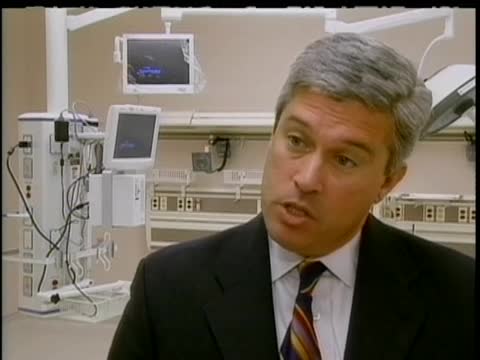
- Transcript
together for the way they're live welcome to the new AT&T your world delivered somewhere in the hard land a child is sitting down to breakfast which is why a farmer is rising for a 15-hour day and a trucker is beginning a five-day journey and ADM is turning corn and wheat soy and cocoa beans into your favorite foods somewhere in the hard land a child is sitting down to breakfast which is why so many work so long and take their job to hard ADM resourceful by nature and by Chevron Pacific Life the Atlantic Philanthropies the National Science Foundation and with the ongoing support of these institutions and foundations and this program was made possible by the corporation for public broadcasting and by contributions to your PBS station from viewers like
you thank you the US military today marked one of its heaviest losses in Iraq in the last two years nine American soldiers were killed in a single attack on Monday 20 were wounded two suicide truck bombers hit their base in Diala province insurgents linked to al Qaeda claimed responsibility all of the victims were from the 82nd Airborne Division based at Fort Bragg North Carolina today a spokesman there said the loss of so many all at once it's hard we're in mourning here but now it's time for us to rally around our families and you know squeeze each other tight and get through this the attack added to the increased pace of US deaths this month especially outside Baghdad 86 Americans have been killed so far in April more than 3330 have died since the war
began also the day more than 80 Iraqis were killed including 15 in a truck bombing in the west we'll have more on the violence especially in Diala province right after this news summary President Bush and Vice President Cheney went after Democrats today on Iraq war policy the Democrats fought back on the eve of action in the House their war funding bill ordered US combat troops to begin leaving Iraq on October 1st it sets a non-binding gold date completing the pullout by April 1st of next year today on the long outside the White House the President condemned the bill they know and will veto a bill containing these provisions and they know that my veto will be sustained but instead of fashioning a bill I could sign and democratic leaders chose to further delay funding our troops and they chose to make a political statement that's their right but it is wrong for our troops in the strong for our country
the president's words brought a swift response from House Speaker Pelosi she said the funding bill and the time tables are grounded in the realities of the war thought when the president accused us of politics in this very thoughtful bill that it was beneath the dignity of the issue that we're talking about here the war in Iraq is the biggest ethical issue facing our country I respect where the president is coming from on this I wish he would respect where we are coming from which is a reflection of where the American people are coming from surely after that Vice President Cheney joined the fray he met with Republican senators and then singled out comments by Senate Majority Leader Reid who said last week the war is already lost some democratic leaders seem to believe that blind opposition to the new strategy in Iraq is good politics senator Reid himself has said that the war in Iraq will bring his party more seats in the next election it is cynical to declare that the war is lost because you believe it
gives you political advantage in turn senator Reid dismissed the criticism and he said the war funding bill is a good piece of legislation this is not a time for name calling I think it's a time we're cinching up our belts and doing what's right for the troops that's what our supplemental appropriation bill is all about we do more money for Iraq and Afghanistan we do money for military medicine and veterans and so I'm not going to get into a name calling match with the administration chief attack dog the house is set to take up the final version of the funding bill tomorrow the Senate will do the same on Thursday a house hearing aired allegations today about the death of Pat Tillman in Afghanistan the pro football star turned army ranger was killed by friendly fire in 2004 but the u.s army initially said it was by enemy fire and former army private Jessica Lynch testified the army told elaborate lies about her ambush in
Iraq she was later rescued will have extended excerpts of the hearing later in the program tonight a presidential task force recommended ways today to cut backlogs and red tape for disabled veterans it followed reports of poor outpatient care at army and VA hospitals the group called for reducing paperwork that injured soldiers and veterans have to file it also called for increased screenings for brain injuries and it recommended the Pentagon and the VA set up a joint system for disability claims rebels in Ethiopia killed at least 74 people today at a Chinese run oil field had happened in a disputed region near the Somali border the official Chinese news agency said 200 gunmen stormed the installation nine of the dead were Chinese the attackers kidnapped seven other Chinese workers toyota has sold more vehicles worldwide than general motors for the first
time that japanese automaker reported today it's sales for the first quarter of the year total more than 2.3 million vehicles that's nearly 100,000 more than gm sold gm has been the world's top automaker for 76 years based on annual sales new economic reports today showed consumer confidence was down in april and sales of existing homes fell in march by the first by the most in 18 years but on wall street today stocks rose on word of strong corporate earnings the Dow Jones industrial average gained 34 points to close at nearly 12,954 the Nasdaq rose less than a point to close at 25 24 and that's it for the news summary tonight now a deadly province in iraq he row lies new orland's hospitals just back from darfur and the reporter named halberstam Judy Woodruff has our iraq story diala has become one of the deadliest
provinces in iraq for us troops it is home to about 1.4 million people and is mostly a mix of Sunni and Shiites the capital bakuba is about 35 miles north east of bagdad and it was near there that the leader of al Qaeda in iraq abu musab al zar kawi was killed by us forces last June since november 56 us service members have been killed in diala iraqis have not escaped the violence either on monday a car bomb killed seven iraqi policemen and wounded 13 the washington post reported today that the military is sending some two thousand additional us troops to diala to battle the insurgency the military declined to give out the total number of us troops serving in the province for more on the violence in the situation indiala we're joined by Frederick kegan a military historian former west point professor and now resident scholar at
the american enterprise institute a conservative think tank he visited diala province earlier this month and former army captain philip karter he was an operations officer for a task force that advised iraqi police in bakuba from october two thousand five to september two thousand six philip karter to you first you spent a year there describe diala province to us what does it look like who were the people who live there jitty we thought of diala is little iraq it's a microcosm of the country which has a mix of uh... soonies sheites and courage in the north and the east the geogrcy geography of the province is diverse it stretches from the fertile farmlands outside of bagdad to the desert to loan the iranian border all the way up into mountains in kurdistan and it is a volatile province it uh... has a little bit of the problems of bagdad it touches on the soonie triangle and it also has many of the lines of communication
leading from iran into bagdad and so it uh... is home to a number of the intrigues that involve iran and kurdistan as well for kegan what would you add to that how is it different diala from the rest of iraq well the mix that you have there i i i think uh... the captain is absolutely right it is a little iraq and you have kurdish infiltration in the north you have a majority soonie province you also have uh... provincial government and security forces that are dominated by shea because the soonie sat out the local elections um... and so you have some tensions there and because we have been um... had relatively few forces in diala through our two thousand six um... we've it that there's a significant al Qaeda uh... presence in diala uh... which has been causing a lot of problems and then you've had a flow into diala of soonies who were displaced in bagdad over the course of two thousand six as well so it's a very very rough uh... rough rough area probably one of the toughest in iraq right now feel quick yesterday suicide attack on the eighty second airborne it was a third brigade we know
nine paratroopers kill twenty injured since november were told fifty six us service members have been killed in diala why do we see the violence spiking there well it looks like this is the unintended consequence of the surge that is you you squeeze the bad guys out of bagdad and they pop like a uh... uh... water balloon up into the diala province which borders bagdad there's also a sense that uh... we drew down as professor kegan says too many of our forces in this province and so as we were squeezing in bagdad we were squeezing the insurgents and the militias into an area where there was not a sufficient u.s presence and the third problem in diala is that the provincial government and the security forces are both ineffective and corrupt and they are far more beholden to their own agendas than to any uh... mission or security in the province my apologies i said uh... captain coke of course it's captain philip carter freckagan we do you see it that way that this is an unintended
consequence in part of the surge in part but i also think we need to keep in mind that uh... colonel southerland and the forces of the first cab and now the eighty second uh... that are up there have been launching their own offenses against alkaira uh... first for for weeks now and they've been rooting alkaira out of their bases and what you're seeing in part is a significant alkaira counter attack against our own attack uh... where they're trying to reestablish themselves reestablish the footing the other thing that you're seeing going on is that alkaira have been fleeing from alan bar province where they've alienated the Sunni population by their attacks against sunny leaders and atrocities against uh... the Sunni people and some of them have also been uh... flowing up into deolah as well so i think there's a lot of things going on um... and it's not just about squeezing water out of the water balloon and back to add and of course the key thing is that we're following them and we're reinforcing the units in deolah continue to try to keep the pressure on why are they going to deolah rather than someplace out well they're going to a variety of different places and they've been moving around and we've
been following as alkaira has been trying to establish new bases they've been trying to do this in salah and as well um... but deolah offers uh... prospect for them because it is a mixed area and alkaira's methodology in deolah has been to attack the Shia uh... drive them away and then attack the Sunni to terrorize them that's been sort of their trademark out there and they've been hoping that that would work for them deolah's a province that that offers that prospect cap and carter again the worst attack on the eighty-second airborne they were saying today in almost forty years is there's something that makes uh... them particularly vulnerable in this location there is but but first it's important to note a couple of things first is that deolah has long been home to uh... bath party elements and others it was a favorite sort of retreat area for iraqis and Saddam Hussein's government so there's a fertile area for Sunni insurgents to go up there the second is that colonel southerlands brigade has really adopted a muscular approach to counterinsurgency up there and since when when we left it appears that they have almost
resumed major combat operations uh... it's possible that there is a spiral effect between the way that the u.s. is acting in the way that the insert interacting in the absence of reconstruction effort uh... on your question yes this is a deadly attack and it's because of the new way that the u.s. is postured no longer is the u.s. simply occupying these massive super bases outside the city but they're now pushing out into smaller outposts throughout the cities uh... the kind of things that might resemble a community policing substation in a housing area there were talking small bases with small sized units and they're much more vulnerable than the large bases outside of town do they have an alternative could they be doing it another way i don't think so you know countinsurgency is a contact sport it's the kind of thing that requires engagement and you get so much intelligence and so much uh... cultural and situational awareness by being in the city uh... my team lived in downtown bakuba and i don't think we could replace that experience if we lived outside of the city uh... frid kegan you were just there uh... what are
these these bases that we've just heard that captain Carter described what do they look like compared to the other bases uh... you took a look at well these are these are more rudimentary bases they are uh... bases that are surrounded by the population and they have they're not bases where we have control of everything that's all around there and so they are they allow our soldiers to uh... work more closely with the iraqis and there are rockies on these bases also and they are allow our soldiers to interact with the local population better so it is sort of countinsurgency 101 as captain Carter described that you really do have to get out among the population uh... in order to make any of this work you accept a certain degree of greater risk especially initially by doing that but over the long-term the hope is that the risk goes down because you get a lot more intelligence from the people when you're doing more than just sort of driving through neighborhoods where nobody knows you and doesn't expect you to uh... to stay there and we're actually seeing that and just recently we've had a number of local people come up to american forces in diana and tip them off that there were significant
caches of weapons and so forth which we then picked up so the this the effort is working in the sense that we're working with the locals and we're getting a lot more intelligence which is going to make us more effective in the long term um... but it does place our forces out where the enemy can get at them on the other hand is captain Carter said this is a contact sport and that's what that's the name of the game philip Carter did you see that uh... when you were there you were there up until late uh... last year did you see uh... iraqis providing more intelligence because they didn't like what they saw alkyta doing it was a mix of that and also of their own self interest you know the iraqis who worked with us did so because of a very complex series of factors but we did get a fair amount of intelligence by being in the city the the thing is to look at these bases and imagine them from the enemy's perspective you now have this essentially occupying army that's pushing deeper into your city you recognize that the clock is running out and that if you can increase the casualty toll you may be able to
reduce that that game clock that general patreus is playing with and bagged ed you may be able to affect the political calculus of domestic politics in washington and so i think the insurgents and the militias are very savvy about this and they see these bases as an opportunity if they can attack us forces whether more vulnerable and they can have an outsized impact on our politics then in their minds they went we're going to have to leave it there captain phillip carter friday kagan thank you both appreciate thank you jiddie now the u.s. army and two celebrated stories of combat congressional correspondent Kwame hollman reports on an investigation of both stories army private jessica lynch and army corporal patilman were perhaps the most famous casualties of the wars in iraq and afghanistan
american troops rescued lynch from captivity in an iraqi hospital in nazaria on april first two thousand three reports at the time said the badly injured lynch heroically had held off insurgents before her capture but later the army admitted lynch never fired her weapon in two thousand four corporal patilman a professional football star who went into the army rangers after 9-11 died from what the army said was fierce fire from taliban forces in eastern afghanistan tillman posthumously was awarded the silver star for bravery and combat but a month later tillman family was told he was failed by fire from members of his own platoon today the house oversight and government reform committee now under the control of california democrat henry waxman her testimony about the army's misstatements about both events for jessica lynch and patilman the government violated its most basic responsibility sensational details and stories
were invented in both cases many military officials sat in silence during a nationally televised memorial ceremony highlighting patilman's fight against the terrorists evidence was destroyed with witness statements were doctored the tillman family wants to know how all of all of this could have happened and they want to know whether these actions were all just accidents or whether they were deliberate virginia's tom davis is the committee's top republican the fog of war can be dense and mislincious story offers only a cautionary tale about waiting for the smoke to clear before accepting early battle damage assessments as fact the case of army ranger patilman is far more troubling rules and procedures put in place precisely for the purpose of providing timely and accurate information about combat deaths were ignored the truth about jessica lynch and patrick tillman is heroic enough there is no need to embellish or spin it
tillman's brother kevin was in the same platoon and was riding in a convoy in the afghan mountains on april 22nd 2004 when his brother was attacked he said amid bad news coming out of iraq at the time the army did not want to admit pat tillman's death was caused by friendly fire rather than by taliban fighters in the days leading up to past memorial service media accounts based on information provided by the army and and the white house were read in a patriotic glow and became more dramatic in tone a terrible tragedy that might have further undermined support for the war on iraq was transformed into an inspirational message that served instead to support the nation's foreign policy wars in iraq in afghanistan to further exploit pat's death he was awarded the silver star for valor jessica lynch told the committee the army should have corrected press accounts that cast her as a hero fighting off her
attackers i have repeatedly said when asked that if the stories about me helped inspire our troops and rally a nation then perhaps there was some good however i'm still confused as to why they chose to lie and tried to make me a legend when the real heroics of my fellow soldiers that day were legendary the bottom line is the american people are capable of determining their own hero ideals for heroes and they don't need to be told elaborate lies the truth of war is not always easy the truth is always more heroic than the hype though a pentagon memo reportedly warned president bush and defense secretary rumsfeld that tillman may have died from friendly fire family members said they still don't know how far up the chain of command the truth was known but withheld from the family it's a bit disingenuous to think that the administration did not know about what was going on something so politically
sensitive so that's kind of what we were hoping you guys could could get involved with and take a look i mean we only can go so far we don't have access to these people we don't have access to the unreacted information we're kind of landlocked pet tillman's mother Mary also was at the hearing it's not about our family our family will never be satisfied we'll never have pat back but what is so outrageous is this isn't about pat this is about what they did to pat and if they did to a nation and to write these glorious tales is really a disservice to the nation and the nation needs to realize this is an ugly war everyone should be part of it everyone should understand what's going on and we shouldn't be allowed to have smoke screens thrown in our face later the committee heard from army specialist Brian O'Neill he was with tillman when he was killed by friendly fire he said he was ordered to keep quiet within 72 hours at least
nine military officials knew or were informed that pat tillman's death was a fratricite including at least three generals given that so many people in the military were informed so quickly that this was fratricite does it trouble you that the tillman family was kept in the dark about this for another month yes sir does um i wanted right off the bat to let the family know what had happened especially Kevin because i worked with him in the platoon and i knew that him and the family both needed are all needed to know what had happened and i was quite appalled that uh when we were i was able to actually able to speak with Kevin i was ordered not to tell him what happens sir you were ordered not to tell them Roger that sir uh by home at that time it was by our battalion commander lieutenant colonel Bailey sir in march the department of defense concluded that nine army officers including four generals made critical errors in reporting corporal tillman's death none of those officers was called before the house committee today the army still is weighing
punishment for them now the second of two reports on providing basic health care in new Orleans the first was on temporary help for patients tonight the bigger problems throughout the health system both reports are the work of susan denser of our health unit a partnership with the Robert Wood Johnson Foundation before hurricane Katrina the only emergency trauma center in New Orleans was here at now shuttered charity hospital one of the concerns that we have is that uh that there's pervasive mold after the hurricane the trauma center was moved here to mesh tents inside the city's convention center their emergency physician peter w performed triage and we've had a whole slew of major trauma including knife wounds to the neck two stops later including a stint in a closed department store downtown the trauma center is now in new
temporary quarters again they're at the city's old university hospital which was also flooded and shuttered after the storm well this is the new trauma center just before the trauma center reopened Don Smithberg who heads Louisiana state universities health sciences division showed us the freshly renovated space we basically are starting from scratch with the exception of the the peers and the foundation and the studs everything is brand new and FEMA actually um has funded that so that we can provide first class trauma care the trauma center's long road from the old charity hospital to hear at the officially named LSU interim hospital exemplifies the long slow recovery of the greater New Orleans health care system recovery has been characterized by a few hard one improvements like this but has mostly left the overall system in a full blown state of crisis Sean Riley is a board member of the Louisiana Recovery Authority which leads post hurricane planning efforts at the local and state level
what we're talking about here is people American citizens who have lost a safety net and we are struggling to put it under them a new no one really knows how many people who need that safety net are living in New Orleans or the metro area what is known is that six out of 11 acute care hospitals in the city are still closed and fewer than a third of the area's health care professionals have returned in the now 19 months since the hurricane hit. Dr. Jamaican medical director of LSU's trauma unit says getting more providers back has been a tough sell. They're very aware of some of the other problems we have housing education and a crime rate that certainly has gotten national attention. These are all issues that we know every practitioner deliveries before he comes back. Meanwhile among other New Orleans residents who are back thousands are jobless without health insurance and often in need of medical care.
Are you feeling awake? Not really. No. That's why the interim LSU hospital has been a godsend to Debbie Weber. She ran a dog grooming business but hasn't worked in more than a year. She suffers from a debilitating intestinal condition called Crohn's. It's a costly pre-existing condition that has prevented her from being able to buy health insurance. Crohn's is like having ulcers in your intestines. That's the easiest way to describe it and they just sometimes will get out of remission, swell up, bust, causes blood. Whether told us that in the period leading up to Katrina she had not been experiencing these symptoms but after the storm she thinks stress brought about a reversal. Had at least five feet of water in my home. The home shifted from the foundation had to tear it down and probably all the stress and the not knowing probably added to it. Not knowing. Not knowing what was going on in the city, what's going on with your home,
your business, your friends. To top it off, Weber now carries $65,000 in unpayable deaths from her last hospital stay for Crohn's disease. Now she's being treated at no cost to her at the interim hospital. All right, so here's what we're going to do. We're going to start an IV. We're going to give you some fluid because we think you're somewhat dehydrated. Weber's doctor, emergency physician, Tracy Lagrode told us that the ranks of uninsured were actually growing in New Orleans, overflowing the ER at the interim hospital and elsewhere. It is a full-blown catastrophe. I could not imagine a worst scenario right now in the city. We have the people that never got back on the feet and still don't have health insurance. All of the contract labor that has come into help us try to rebuild this city. They're young and healthy but they fall off buildings and have construction type accidents. So the number of people that require our care has just gone through the roof. Before Hurricane Katrina, almost all the cities uninsured were cared for by state
funded charity hospital and its network of clinics. But with charity still closed and likely never to reopen, the area's other private hospitals have had to step in to provide care. Louisiana Recovery Authority board member Riley told us the hospitals had incurred large losses from treating thousands of uninsured patients. They can only do that for so long. Now the federal government has helped. We've probably been allocated a little over a hundred million dollars and the LRA has helped prioritize that and get it out to the community hospitals. Recently Health and Human Services Secretary Michael Levitt was in New Orleans to discuss the federal government's latest ideas for covering the uninsured. One key approach would redirect some federal dollars that now go to Louisiana's hospitals to support care of the uninsured. Instead, those funds would be used to enroll 319,000 uninsured adults in private health coverage. If they have insurance, they'll have access to a medical home. They'll have access to preventative care. They wouldn't have the long
waits that they currently experience and we believe that the quality would be better. But Riley told us state officials estimate the package would fall about one billion dollars short over a five-year period and leaves several hundred thousand people, many of them seriously ill, without health insurance. I think there is a disconnect on the resources necessary to make the new model a reality in Louisiana. I think the American people if they knew more and thought deeply about it, they would say, you know what? I think the federal government ordered it more and I don't mind my tax payer dollars going to that problem. But a spokeswoman for Health and Human Services Secretary Levitt told us more federal money would not be forthcoming, at least from the Bush administration. She said any other remaining uninsured could still be dealt with through other arrangements. Now under discussion with the state. The other large remaining challenges were placing charity hospital. The latest plan to do that is to build a roughly $900 million medical center.
It would be jointly run by LSU in the Veterans Administration, whose local hospital was also severely damaged by the floods. We really see the new medical center as a signature project for the recovery of new worlds. It will be a major university teaching hospital, a major research institution that will continue to fulfill the charity mission that we have fulfilled for decades. The target date for opening the new facility is 2011. But Smithburg told us the federal emergency management agency is only now conducting its fourth round of evaluations to determine what it will pay to the project. State lawmakers meanwhile are bickering over the state's share. Meanwhile, Dr. W is now out of the mash tents and working in the interim hospital's emergency room. We asked him if he thought he'd be around when the new medical center opened and what he'd think on that day. I'll think to myself what a long road. That's what I will think to myself. And I will think to
myself, if we don't have a stronger political voice, this is, this kind of behavior will continue. The new trauma center at the interim hospital officially opened just after Mardi Gras. What now? What next in Darfur? Gwen Eiffel has that story. More than 200,000 people have died and more than two million have been displaced. In the ongoing conflict and genocide in the Darfur region of Sudan. Last week in a speech at the U.S. Holocaust Museum, President Bush renewed the threat of sanctions against the Sudanese government. For an update on the political and diplomatic efforts on the ground, we turned to Deputy Secretary of State John Necroponte, who was just returning from a tour of the region. He joins us from the State Department. Mr. Ambassador, welcome. Thank you. You have just returned. It's been nearly a year since last
May's Broker Agreement with the Sudanese government and the rebel groups there. What has happened since then? Well, I think regrettably Gwen, the situation has not improved. In fact, I visited an internally displaced persons camp in Darfur, whose population had doubled since the signing of the peace accord last May. Security hasn't improved either. The government has not disarmed these Arab militias, which could not exist without government support and financing. And there's been little progress towards the acceptance by the government of Sudan of additional international peacekeeping forces, which are really urgently needed to help stabilize the situation in the Darfur region. The government of Sudan, of course, is headed by President Omar al-Bashir, who you met with. What did he tell you? You came back saying he
were discouraged after your meeting. What did he tell you when you asked him about these things? Well, I think the main thing that he indicated was that he felt that United Nations had only a minimal role to play in the Darfur situation, that basically this should be handled by the African Union and the United Nations should simply write a check to support the international union forces. Our position and the international community's position, on the other hand, is that the African Union forces in and of themselves are not adequate to the task, that a peacekeeping mission to be effective must be conducted according to United Nations practices and standards. And a much more robust force is needed there on an urgent basis. Right now there are 5,000 African Union forces in the Darfur region, military forces that is, and we believe that that number should
be somewhere between 17 and 20,000, not just 5,000. If President Bashar al-Assad tomorrow to go along with your suggestion, which it doesn't look like he's about to do, how do you know that he would keep any of the promises he's made since there have been so many made and broken people? Well that's an excellent question and so what he says would not be sufficient in and of itself. We have quite long experience with commitments of this kind undertaken in the past and then not fulfilled. So I think we would also want to insist on full and prompt implementation and for us the test is not the commitment in and of itself or the piece of paper that is signed but the fact of improvement in the situation on the ground and the full-fledged implementation of the undertakings that have been put forward. You have used some strong
language about this situation since you've been back. You said the government gives the impression of being guilty of a deliberate campaign of intimidation and you've also said time is running out. What do you say time? What do you mean? Days, weeks, months? Well, as the president said, he outlined a number of possible steps that he would take if the situation was not dramatically improved in the near future. I hesitate to put a specific timeline on this but I would say it's a matter of weeks. So when you say steps, you mean sanctions, you mean forbidding US companies from doing business with businesses controlled by the government of Sudan? It would be the president did outline a number of different sanctions of naming additional individuals who would be blacklisted, if you will, the possibility of preventing the Sudanese Air Force from carrying out its activities over the Darfur area and a whole
range of other possible steps. While you were traveling in Africa, you also went to Mauritania where you went with an assistant foreign secretary from China. Our part of these steps also to ask countries like China or to demand of countries like China which trade with Sudan, which do business with Sudan, to also for them to impose sanctions as well? Well, if it came to and the president did mention the fact that we would begin consulting with other members of the Security Council of the United Nations about the possibility of an additional UN Security Council resolution that would impose additional sanctions on Sudan. So that's one possibility. Also with respect to China, I would say that we have had an extensive dialogue with the officials from that country with respect to the situation in Darfur. The president has even spoken to the premier of China with
respect to our concern about Darfur and I think that we have an agreement with an understanding with China about the importance of impressing upon the authorities of the Sudan, the importance of them coming into compliance with the wishes and demands of both the international community and the people in Darfur themselves who are so tragically affected by this situation. Let me get that clear. You have an understanding with China that they too would impose sanctions? No, I didn't mean to imply that they've agreed to sanctions. What I meant to say is that they appreciate the importance of this situation and they, along with us, have worked hard to impress upon the government of Sudan the importance of Sudan accommodating the wishes and demands of the international community in regard to Darfur. And in regards to the United Nations, the new
Secretary-General Ban Ki-moon is the one who asked for a little bit of extra time to make a diplomatic solution work. Do you sense that there is any appetite that the United Nations for sanctions or for a new resolution? Well, I think we'll have to wait and see. I think that certainly the members of the Security Council and the Secretary-General have all agreed already that there should be this three-phase package with respect to international peacekeeping efforts in Darfur. That is to say a light support package, which is already in the process of being implemented, a heavy support package, which would be sort of enabling elements. It designs to buttress the African Union forces that are already there. And then the African Union United Nations hybrid group, which would be the 10 or 12,000, 10,000 or so additional peacekeepers who we would visualize sending to the Darfur area on an urgent basis. I think the important
point to stress here is that this is a package. It's a package that needs to be dealt with as a whole. And what we are seeking at the moment is for Sudan to agree not only to the first and second elements of the package, but to all three. Deputy Secretary of State John Negroponte, thank you very much for joining us. Thank you. Finally tonight, remembering David Halberstamp and a Jeffrey Brown. Over a 50-year career, David Halberstamp chronicled a broad array of American life from his early days and newspapers and later in more than 20 books. Born in New York in 1934, he graduated from Harvard in 1955. He reported on the civil rights movement for the Nashville, Tennessee, and in the late 50s. In 1962, he went to Vietnam as a correspondent for the New York Times and the assignment,
which would shape his career, win him a Pulitzer Prize, and later produced one of the seminal books about the war and the men who ran it, the best and the brightest, published in 1972. Among his other works, the powers that be, a portrait of the families that operated major media outlets, the 50s, a study of that decades upheaval, the summer of 49, which recounted an epic pennant race between the Yankees and Red Sox, playing for keeps, a portrait of Michael Jordan, the children about the leaders of the civil rights movement, and Firehouse, an intimate study of 13 firefighters from a company near his home in New York City, all but one of whom died on 911. His latest book entitled The Coldest Winter about the Korean War will be published this fall. In 2003, Halberstamp was interviewed for the documentary Reporting America at War. He described the slow realization among reporters in Vietnam that the official accounts
and the reality on the ground were entirely different matters. On the first went there, I thought we were probably on the right side. It was early on the American investment wasn't that big. And the essential legitimacy of the American government and of the American military post-World War II and post-career still held it, generals told the truth that we hadn't gotten to the word spin yet. By January of 63, the advisory commitment, the attempt to help a country to save itself had been an operation for about, I know, six, eight, ten months. And we kept picking up from our sources that it wasn't working. Something was wrong. We were finding out stuff. We didn't want to find out. We were going against our own grain. We wanted Americans to win. We wanted it to work. And then it didn't work. So we started saying it didn't work. And that's when they all started attacking us as just these are the guys who want us to lose.
David Halberstamp was killed in an auto accident yesterday outside San Francisco on his way to conduct an interview. He was 73 years old. Joining me now is Gay to Least, who first met David Halberstamp when they were young reporters at the New York Times. Mr. Taliesse himself of best-selling author of many books on a wide range of subjects, including most recently a memoir titled A Writer's Life. Well, Mr. Taliesse, take us back first to Vietnam. What was the importance of the reporting that David Halberstamp and a handful of others did there? Well, what made Halberstamp perhaps the greatest reporter of my generation was that he had a healthy skepticism. He was a man you could not spin. He went as he himself said earlier on your program in the recorded documentary, that he went over there hoping America would win. He comes from the family of people who believe in this country. His father was a doctor in the military. David Halberstamp had a belief in the righteousness of the
war, but that quickly changed when the facts that he perceived and the facts that were the official view of government clashed. Halberstamp was one of those who did not tolerate the falsity that was coming from official sources. He had the fortitude, the drive, the determination to correct the record, to tell the truth as he saw it. And when he saw it, it was true. He was one of those reporters, unique in our time here, but not so unique in the time when we were all young in the 1950s and 60s. Reporters who cared greatly about getting the facts right. He was more over, a man who could not only get the facts right, but could right clearly. He was a storyteller. Great reporter, as I said, yes, but also a man who wrote with great, great style and could communicate to a large audience. Whatever it was he was writing about, whether it was the war or time and peace, whether it was the life of Michael Jordan, whether it was the life of some automaker in his book about Detroit and Japan and the autoclashes of the 1980s.
That range of subjects that you that he covered that you were just referring to is quite remarkable. There's the very weighty subjects. And then what some might think of as less weighty, the sports books, did he make that distinction in his mind about what he was writing? And I do not agree with that determination of the difference. How was Sam could write about what seemed to be less weighty, but he brought to everything he wrote a sense of the historian. He was, among other things, he was a fine writer, a fine reporter, as already said, but he was a historian. And if he was writing about, let's say, the firehouse, in which 12 out of 13 died, he was really writing about the attacks of 9-11 as seen through the perceptions of and the small building that housed the firemen. So he's writing about something large, but telling the story from a minimum number of characters. A book you did not mention called The Teammates was, yes, it was a book about old ballplayers for the Boston Red Sox,
but he's really writing as he did with everything. He was writing about a section of America. Everything that Halberstam wrote, whether it was the big subject because you might put it, or the somewhat of a slider subject in terms of scope, it was a fullness of the American experience. You take all of his books together. They are a great, great, large-scale assemblage of the American experience during his lifetime, which is from the end of World War II, for the 1950s, that he chronicled one of these books you did mention right through the 21st century. One of the great regrets of my lifetime, and I think all Americans was that he didn't have a young Halberstam in covering the White House in the year 2002, 2003, to the lead up to the war and the war. I don't think you, if you had a Halberstam in covering the Defense Department, we would have had such a tolerance for deception. It's a great loss for America. You know, I no longer on the scene. You know, I noted that just before the crash yesterday, he was speaking at UC Berkeley on the subject to a group of journalism students about journalists
becoming historians, the move from the daily to the historian. How did he see himself? Did he see himself as a historian, as a journalist at some mix of both? No, he saw himself as a mixture of both. In the sense that to be a great historian is to, in his case, to be a great leg man, a great reporter. So many historians are people with academic credentials who gathered their information, perhaps in the library. Halberstam would do that but do more than that. He would go to the scene. He was a man who, from the beginning of his career, right through the age of 73, when he died. He was a man of action. He was a very careful reporter. He pride himself in being the historian. He had a great, an academic, a great intellectual sense of the democracy that we're part of and how it failed. And if it failed, a truth seeker, a person who wanted to set the record straight and tell it was Halberstam's view and his great talent, a great boss.
All right, Gatorley, son, his friend and fellow writer, David Halberstam. Thank you very much for joining us. Thank you so much. And again, the other major developments of the day. The US military marked the loss of nine-paired troopers and a single attack in Iraq. President Bush and Vice President Cheney had sharp exchanges with Democrats a day before a key housepot on Iraq wore policy and Toyota's worldwide sales top General Motors in the year's first quarter for the first time ever. Later tonight on PBS, Charlie Rose interviews President Bush. Please check your local listings for the time. And once again to our honor roll of American service personnel killed in Iraq and Afghanistan, we add them as their deaths are made official and photographs
become available. Here in silence are 23 more. We'll see you online and again here tomorrow evening. I'm Jim Lara. Thank you and good night.
Major funding for the news hour with Jim Lara is provided by We've discovered the world's most powerful energy. You'll find it in everything we do uncover it in all the places we work and see it in our more than 55,000 employees. It's called human energy and it's the drive and ingenuity that will never run out of chevron human energy. And by Pacific life, the Archer Daniels Midland Company, the new AT&T, the Atlantic Philanthropies, the National Science Foundation, and with the ongoing support of these institutions and foundations.
And this program was made possible by the corporation for public broadcasting and by contributions to your PBS station from viewers like you. Thank you. To purchase video cassettes of the news hour with Jim Lara, call 1-866-678-News. Good evening, I'm Jim Lara. On the news hour tonight, the news of this Tuesday.
Then a look at the deadly bombing in Iraq's Diyala province. The congressional hearing on charges the army invented heroism stories in Iraq and Afghanistan. A Health Unit report on the long road to recovery for hospitals in New Orleans and interview about the crisis in Darfur, the deputy secretary of state John Negroponte, and remembering author reporter David Halberstein. Major funding for the news hour with Jim Lara is provided by What will be their internet? How far will their network stretch? Will their whole world be
wireless? Wherever they lead us, we're building a company now where data, video, voice, and now wireless work together for the way they live. Welcome to the new AT&T, your world delivered. Somewhere in the Heartland, a child is sitting down to breakfast, which is why a farmer is rising for a 15-hour day, and a trucker is beginning a five-day journey. An ADM is turning corn and wheat, soy and cocoa beans into your favorite foods. Somewhere in the Heartland, a child is sitting down to breakfast, which is why so many work so long and take their job to heart, ADM, resourceful by nature. And by Chevron, Pacific Life, the Atlantic Philanthropies, the National Science Foundation,
and with the ongoing support of these institutions and foundations. And this program was made possible by the Corporation for Public Broadcasting, and by contributions to your PBS station from viewers like you. Thank you. The U.S. military today marked one of its heaviest losses in Iraq in the last two years. Nine American soldiers were killed in a single attack on Monday, 20 were wounded. Two suicide truck bombers hit their base in Diala Province, insurgents linked to al-Qaeda claimed responsibility. All of the victims were from the 82nd Airborne Division based at Fort Bragg, North Carolina. Today, a spokesman there said the loss of so many all at once gets hard. We're in mourning here, but now it's time for us to rally around our families, and squeeze each other tight and get through this.
The attack added to the increased pace of U.S. deaths this month, especially outside Baghdad, 86 Americans have been killed so far in April, more than 3330 have died since the war began. Also today, more than 80 Iraqis were killed, including 15 in a truck bombing in the west. We'll have more on the violence, especially in Diala Province right after this new summary. President Bush and Vice President Cheney went after Democrats today on Iraq war policy, the Democrats fought back on the eve of action in the House. Their war funding bill ordered U.S. combat troops to begin leaving Iraq on October 1st. It sets a non-binding gold date completing the pullout by April 1st of next year. Today, on the long outside of the White House, the President condemned the bill. They know them will veto a bill containing these provisions, and they know that my veto will be sustained.
But instead of fashioning a bill I could sign, and Democratic leaders chose to further delay funding our troops, and they chose to make a political statement. That's their right, but it is wrong for our troops in the strong for our country. The President's words brought a swift response from House Speaker Pelosi. She said the funding bill and the time tables are grounded in the realities of the war. Thought when the President accused us of politics in this very thoughtful bill, that it was beneath the dignity of the issue that we're talking about here. The war in Iraq is the biggest ethical issue facing our country. I respect where the President is coming from on this. I wish he would respect where we are coming from, which is a reflection of where the American people are coming from. Shortly after that, Vice President Cheney joined the fray. He met with Republican senators and then singled out comments by Senate Majority Leader Reed,
who said last week the war is...
- Series
- The NewsHour with Jim Lehrer
- Episode
- April 24, 2007
- Producing Organization
- NewsHour Productions
- Contributing Organization
- NewsHour Productions (Washington, District of Columbia)
- AAPB ID
- cpb-aacip/507-mw28912j8v
If you have more information about this item than what is given here, or if you have concerns about this record, we want to know! Contact us, indicating the AAPB ID (cpb-aacip/507-mw28912j8v).
- Description
- Episode Description
- This episode of The NewsHour features segments including a report on a bombing in Iraq's Diyala province; heroism stories from Iraq and Afghanistan; a look at the recovery process of hospitals in New Orleans after Hurricane Katrina; an interview with Deputy Secretary of State John Negroponte about the situation in Darfur; and a memorial of journalist John Halberstam.
- Date
- 2007-04-24
- Asset type
- Episode
- Rights
- Copyright NewsHour Productions, LLC. Licensed under a Creative Commons Attribution-NonCommercial-NoDerivatives 4.0 International Public License (https://creativecommons.org/licenses/by-nc-nd/4.0/legalcode)
- Media type
- Moving Image
- Duration
- 01:04:02
- Credits
-
-
Producing Organization:
NewsHour Productions
- AAPB Contributor Holdings
-
NewsHour Productions
Identifier: NH-8812 (NH Show Code)
Format: Betacam: SP
Generation: Preservation
Duration: 01:00:00;00
If you have a copy of this asset and would like us to add it to our catalog, please contact us.
- Citations
- Chicago: “The NewsHour with Jim Lehrer; April 24, 2007,” 2007-04-24, NewsHour Productions, American Archive of Public Broadcasting (GBH and the Library of Congress), Boston, MA and Washington, DC, accessed May 2, 2026, http://americanarchive.org/catalog/cpb-aacip-507-mw28912j8v.
- MLA: “The NewsHour with Jim Lehrer; April 24, 2007.” 2007-04-24. NewsHour Productions, American Archive of Public Broadcasting (GBH and the Library of Congress), Boston, MA and Washington, DC. Web. May 2, 2026. <http://americanarchive.org/catalog/cpb-aacip-507-mw28912j8v>.
- APA: The NewsHour with Jim Lehrer; April 24, 2007. Boston, MA: NewsHour Productions, American Archive of Public Broadcasting (GBH and the Library of Congress), Boston, MA and Washington, DC. Retrieved from http://americanarchive.org/catalog/cpb-aacip-507-mw28912j8v