The MacNeil/Lehrer Report; National Energy Policy
- Transcript
[Tease]
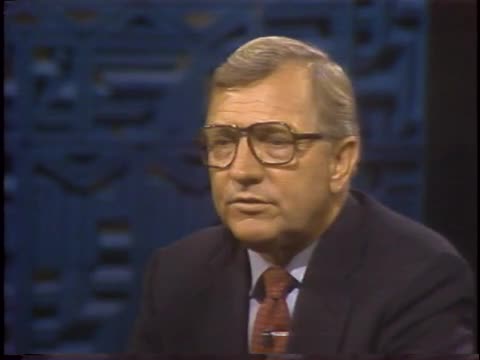
JIM LEHRER [voice-over]: The administration and Congress are not of one mind on national energy policy. Tonight, a look at how the two minds differ, with Energy Secretary James Edwards, and the key energy leader in the House, John Dingle.
[Titles]
LEHRER: Good evening. The House did today what the Senate did yesterday. It passed the final compromise tax cut bill President Reagan wanted so badly. It now goes to the White House for the President`s signature tomorrow or Thursday. The House action was delayed for awhile today as Democrats maneuvered unsuccessfully to get a separate vote on the $12 billion in tax breaks the bill gives the oil industry. A similar effort failed in the Senate yesterday. But the two attempts spotlight a growing conflict between the President and Democrats in Congress over the shape of energy policy. Tucked away in both the tax cut bill and the budget bill are bits and pieces of that struggle, ranging from broad questions over the respective roles of the government and the private sector, to specifics over conservation and nuclear power among many, many other things. The debate was given further focus with the release two weeks ago of what the administration called its national energy policy plan. With Secretary of Energy James Edwards and Congressman John Dingle, Democrat of Michigan,, chairman of the House Energy and Commerce Committee, we join that debate tonight. Robert MacNeil is off; Charlayne Hunter-Gault is in New York. Charlayne?
CHARLAYNE HUNTER-GAULT: Jim, the administration started out asking Congress for substantial cuts in DOE programs, but with one major exception, the Congress cut far less than the administration wanted. For conservation the administration wanted to cut from $865 million to $195 million. Congress gave $558 million. For solar and renewable energy programs, the administration wanted to pare down to $241 million. Congress okayed $365 million. And fossil fuel programs got $200 million more than the administration wanted, for a total of $614 million. The only exception, where Congress was less generous, was in the area of nuclear power; although it remains the area of greatest expenditure, the $1,649,000,000 Congress authorized was less than the administration requested. Jim?
LEHRER: To Secretary Edwards first. Mr. Secretary, are you happy or unhappy over the fact of Congress giving you more money than you wanted?
Sec. JAMES EDWARDS: To start with, Jim, I think this is rather unusual that we would-- it`s a different twist. Most of the time in years prior to this, the agencies have been going to Congress to justify their increases, and it`s rather unusual that we would be unhappy with less money than-- I mean, with more money than we asked for. But I think basically we got a good program and we can use those extra monies. We`ll use them efficiently and effectively, and we`ll look at what the Congress wanted us to do and we`ll try to spend it efficiently.
LEHRER: You are going to spend the money, though? I mean, you aren`t going to give it back at the end of the year?
Sec. EDWARDS: Now, Jim, I`m not going to say tonight that I`m going to spend all the money that has been given us. If we can`t spend it efficiently and effectively, certainly we are not going to do that. But we`re going to carry out the programs that are dictated by the Congress. We execute the wishes of Congress, within the frameworks that they give us money to work with. But! don`t think they mean for us to spend all the money just because they give it to us. If we feel like we can do a program more efficiently, more effectively, with somewhat less money, then certainly we`ll save as much money for the taxpayer as we can save. Now, we`re not talking about impounding funds or anything like that. But we will comply with the Congress`s wishes.
LEHRER: Let`s take one area, for instance, conservation. You`re going to get $360 and some million more than you asked for. How will you spend that? Have you given any thought to that?
Sec. EDWARDS: Well, I think that the Congress-- I`ll have to review the reconciliation package and see what Congress wanted us to spend it on, and we`ll spend it on those programs. But when we spend it we`ll do it efficiently as we can.
LEHRER: I see. Now, in the one area where they didn`t go along with you was, they gave you $100 million less than you wanted for nuclear power. Is that going to be a problem? Are you going to not be able to do something that you wanted to do?
Sec. EDWARDS: Well, certainly we will not be able to do some things, but we can-- I think we have enough money. We have a little over a billion dollars left in nuclear, and I think we can push nuclear and try to restore the country`s faith in nuclear energy. The last administration almost destroyed the nuclear industry, and I think that nuclear has a tremendous role to play in the future of this country. We`re dealing with a lot of resources - - finite resources. We don`t know how much we have, but what are we going to do when we run out of oil and gas and coal? What are future generations going to do? And I think it behooves us to move ahead and develop nuclear. We project that by the year 2000 we can furnish this country`s electricity supply -- about 20 to 30 percent of the electricity -- of the entire country with nuclear energy. I come from a state where the last year-- the last year that I was governor--
LEHRER: That state being South Carolina.
Sec. EDWARDS: South Carolina. The last year I was governor, we-- about 49 percent of the total energy that was sold that year was generated with nuclear energy. And as a result of having this source of energy, we were able to recruit industries because we could promise them a reliable source of energy at a reasonable price. And as a result of that, we had one of the biggest industrial development periods in South Carolina`s history. One year we had $1,235,000,000 worth of new or expanded industry. And we could not have done that without nuclear energy.
LEHRER: Mr. Secretary, generally, you asked -- you: the President, the administration -- asked Congress to do certain things in energy. Congress came back and said, "No, thanks." They changed it. One way on the cuts -- gave you more cuts than you wanted in another area, or less than you wanted in another area. What message do you think Congress is giving you?
Sec. EDWARDS: Well, I think Congress was saying we want more money spent on conservation, for example. They almost more than doubled our amount of money that we asked for, and this administration feels that the price of energy is going to force people to conserve. I don`t think, and the administration doesn`t think, that all the directives that come out of the Forrestal Building or all the laws that are passed in Congress are nearly so effective as that high cost of energy. And as a result of that, that`s what made me go into my attic on a hot day and put more insulation in it; made me move to a more conservative automobile, a smaller car that gave me better mileage. And it`s the price that has really brought about conservation, and it has worked. Because the first quarter this year we imported less gasoline, or less crude oil. than we have in about six or seven years. We were down about 1.5 million barrels less per day than previous periods.
LEHRER: But in a general way, Mr. Secretary, isn`t Congress saying, "Hey, Mr. Edwards, we don`t agree with you. We don`t think you`re on the right track; here`s what we want you to do. Do it our way." Now you`ve just said okay, we`re going to take the money and spend it. So you, in effect, are going to do what Congress is mandating, rather than what you want to do, right?
Sec. EDWARDS: Well, surely. Congress, you know, tells what they want and how much they want, but you know, when you look at the extra amounts that they gave us in relationship to the total budget -- our total budget`s about $13.7 billion. So it`s a minimum amount, the changes were minimum, and certainly we`ll reconcile those differences between the Congress and our department, and we`ll try to spend those funds in an efficient manner the way Congress wants us to spend them. We`re going to comply with the law, in other words, Jim.
LEHRER: All right, thank you. Charlayne?
HUNTER-GAULT: Now to a man whose eight years on the House Energy and Commerce Committee make him senior Democrat on energy policy in the House. He is Michigan Congressman John Dingle, chairman of the committee. Congressman, why didn`t Congress go along with the administration`s cuts in energy?
Rep. JOHN DINGLE: Well, there were a series of reasons. The basic reason was that we felt that the policy which we crafted was better. We spent more money on conservation. We felt that this would help us reduce both the cost, the amount of money spent, and the burden and the hazard of relying on imported oil. We also felt that additional funds with regard to programs like solar, renewables, fossil fuels, were very important in terms of reducing our-- again -- our dependency on imported oil. The last thing was that we felt that right at this particular minute we don`t need as much money being spent on nuclear programs as the administration had projected, and the reason being that at this particular minute there is a substantial backlog of nuclear plants that are having some trouble in terms of complying with licensing requirements and solving a number of technical problems which exist, and not the least of which is, of course, the political problems that flow from the Three Mile Island situation. So we suggested to the administration that they should have a slightly different budget than was suggested by the administration.
HUNTER-GAULT: So you don`t go along in, say, the area of conservation with the rationale just outlined by Secretary Edwards?
Rep. DINGLE: Well, I have a lot of respect for the secretary. I differ with him, as you can understand. A barrel of oil which is saved today, you`ll have tomorrow. A barrel of oil which is burnt today is gone forever. And that was in large part the thesis on which we functioned. We felt that the energy problem that this country has is less one of energy than it is of the kinds of energy which we have and our ability to utilize domestically produced energy. To get ourselves off of the imported energy, we felt it was necessary that we should move from imported oil to solar, to conservation, to domestically produced fossils, to domestically produced synthetics and things of that kind. And towards that end, we not only made available the additional funds that are required in that end, but we gave what we felt was an adequate expenditure in the area of nuclear.
HUNTER-GAULT: Do you expect specific programs such as solar and the conservation bank to continue even though the administration didn`t ask` for any money for them?
Rep. DINGLE: Well, they will continue. We intend to see to it that they shall continue, and we believe that they`re in the broad public interest. There is a basic difference here that goes beyond just the orientation as to the question of energy. And it`s a very basic difference that Democrats are beginning to stress. And that is our concern that the administration`s program goes far too much towards helping the oil companies and giving them what we regard as being, quite frankly, very much too large a cut in taxes and other benefits which we believe go far beyond those which are justified. In addition to that, we are troubled about the fact that the administration is not giving sufficient thought to matters other than the free market. We`re very much troubled, for example, that if a shut-off occurs, that the free market will not be able to assure that there will be fair treatment of all of our citizens, and not undue hardship on both segments of the economy and parts of the-- of the body politic -- particularly the poor. And one of the issues that the House addressed in this matter was the fact that we felt that if we`re going to give all the tax breaks that we`re going to give into the tax program to the well to do, we ought to see to it that we preserve programs which help the poor to meet the cost of rapidly rising energy.
HUNTER-GAULT: All right. We`ll pursue some of those points in a little more detail in a few moments, but overall, was the action that the Congress took on this really tantamount to using the budget process to set energy policy in this case-- the Congress`s energy policy?
Rep. DINGLE: Well, I, of course, do not favor the idea that the Congress should use the reconciliation process, or even the first budget resolution, to establish policy. But we not only did this in the area of energy, but we did it in all other budget areas. We did it in welfare; we did it in school lunch; we did it in social-- we`re going to do it in Social Security to an increasing level -- which I very strongly oppose. We did it with regard to conservation, national parks, fish and wildlife, natural resource programs, defense, and everything else. And when it was finally decided, over my protest and objection, that we should go forward and to use the budgetary process towards this end, then I proceeded to try and see to it that we did so to the best interests of the country.
HUNTER-GAULT: All right. Jim?
LEHRER: As Congressman Dingle said, the budget and the tax bills both fall in the context of how the administration sees the big energy picture, and that big picture was written down for all to see two weeks ago in its National Energy Policy Plan. The plan`s basic premise is that the government must play a much-reduced role in the development and production of all energy, with the major reliance being shifted to the free market system. And Mr. Secretary, you believe that national energy policy can be left to the private sector? Is that essentially what you`re saying?
Sec. EDWARDS: You know, Jim, national energy policy was left to the private sector for years and years, and we grew wealthy and grew rich and grew prosperous. And all of a sudden we find that government, particularly on the Chairman`s side of the aisle, feels that government should dictate all things. We should have regulations; we should have price controls, allocations controls; and that`s one of the things that brought on the lines back in the two very minor shortages that we had back in `73 and again in `79 with the oil embargo. And the allocations system didn`t work then, and the other countries where they didn`t have allocations systems, where they let the free market work, they didn`t have these lines. And we feel that the private sector, certainly, if allowed to operate, will answer America`s energy problems much better than the federal government and rules and regulations can, and directives out of Washington. And that-- I see my job as trying to remove the roadblocks to development of our own domestic energy programs. And it`s working. Today we have 4,000 oil rigs out in the field exploring new domestic sources of energy. And our energy production is going to go up in the next few years. You can almost bank on that. And I think that time will show that our policies do work, and time has shown that the policies on the other side of the aisle do not work because it`s created these shortages. The destiny of this nation when we came into office was being held in the hands of a few OPEC nations, and we`ve got to remove that out of their hands and put it in the hands of Americans, and that`s what this is all about.
LEHRER: Is that what it`s all about, Congressman?
Rep. DINGLE: No, it`s not. What the situation was -- and I have a rather keen recollection of the history -- was that, first of all, the government injection into the energy situation occurred in 1972, not as a result of Democratic policy, but as a result of national policy which was pushed by almost everybody -- business, industry, agriculture and so forth -- to try and have available a standby program to meet shortage if it occurred. And there was-- there were shortages, and there were gas lines in 1972 and `73 in major parts of this country long before the government interested itself in this question, and well in advance of the time that President Nixon laid in place the first price controls and allocations system. And he, by the way, was not a Democrat.
Sec. EDWARDS: It was a Democratic Congress, though.
Rep. DINGLE: No. He used-- he had full discretion to do this, and he did it on the basis of his own exercise of discretion, which the Congress gave him. He had a 17 percent shortfall when the Arabs shut off the oil. And that was enough to create lines all over the United States, and at that point, the president put in place an allocation system which was not really to protect the consumer -- although that was a part of it, and was a major benefit -- but it was to protect business and industry and agriculture, and to see to it that we had enough fuel for police, fire, public safety; to assure enough diesel oil and gasoline for the spring planting and the fall harvest; and also to assure to it that there was enough for transportation and so forth.
LEHRER: Do you think the government still has a role to play in those areas?
Rep. DINGLE: Well, let me just tell you this. I`ll be very comfortable to put my views against the secretary`s views and Mr. Reagan`s views in the event that we have a calamity of some kind in the Persian Gulf where we-- from which we now get a major part of our imported oil. At which event I`m satisfied that-- that anybody who has a different view will be-- will be leaving town, and perhaps leaving the country in great haste.
LEHRER: Why?
Rep. DINGLE: Because the people of this country are going to expect that there is something other than the price mechanism to assure fairness to the citizens of this country. Also, to assure that there is enough gasoline and fuel oil to move goods to market, including food; enough to assure police and fire and public safety, allocated properly; enough to assure that the energy resources of this country are allocated on the basis other than market hardship. And this has been proven time after time because we had truckers strikes, we had agricultural problems because the fanners couldn`t get the stuff that they required to engage in their spring planting. And you just can`t say we`re going to let that kind of situation obtain because the market will cure it. The answer is, the market has not, does not, and will not and cannot cure that.
LEHRER: Mr. Secretary?
Sec. EDWARDS: Well, I`ll just have to say that I think just about everybody admits that it was the failure of the government allocation plan that brought on the shortages and the distribution problems that occurred during these two shut-offs, and I think that the market has been proven to work heretofore, and I think it`ll work again.
LEHRER: In a calamity, though? In a crisis situation you think that--
Sec. EDWARDS: Well, we didn`t have a calamity; we didn`t have a crisis situation.
Rep. DINGLE: We had 17 percent shortfalls.
LEHRER: Seventy percent shortfall?
Rep. DINGLE: Seventeen.
Sec. EDWARD: Seventeen percent shortfall.
Rep. DINGLE: Sure.
Sec. EDWARDS: Well, there was about two million barrels a day -- two to three million barrels a day shut off.
Rep. DINGLE: And most of it -- interesting -- was in the Eastern United States, and you see, what happens, if we rely on the market and the price, the way my good friend the secretary wants, you`ll find that gasoline, instead of running about $1.36 today -- if you had a major shut-off in the Persian Gulf that occurred, you`d see $2 .50, $3, $4. $5 gasoline and diesel oil. You`d see fanners that wouldn`t be able to get enough fuel to plant. You`d see refiners that would be shut down. You`d see massive shortages of petroleum products in many parts of this country, which would not be related to government actions, but would be related simply to the fact that the market could not provide that.
LEHRER: Would you be in favor of that kind of scenario that he just laid out -- for the government to come in and--
Sec. EDWARDS: Jim, I don`t visualize that kind of scenario to start with because we`re building the strategic petroleum reserve at a rapid rate and the chairman is all in favor of that, as I am.
Rep. DINGLE: Right.
Sec. EDWARDS: I think if we build the strategic petroleum reserve, and if we open up the great might and majesty of America and let us produce, and let the private sector go out here and produce the energy --- both oil and gas and coal and nuclear energy -- and we can build a plan so this will not happen. What I look forward to is a time when shut-offs such as he describes will not affect us domestically.
Rep. DINGLE: We have three-- we have a three chance in 10 of a major shut- off. That`s-- that`s the statistical record of the last 10 years. In 10 years we`ve had three major shut-offs in crises in the Middle East, which is the area that oil is produced. It`s the most politically unstable area in the whole world, and the chances of a revolution or a war or a shut-off of the Straights of Hormuz -- which are only about two miles across--
LEHRER: Well, if that happens, though, Secretary Edwards is going to leave town, right?
Rep. DINGLE: He-- I`ll just tell you this: he`d better, and he`d probably better get out of the country. [laughter]
Sec. EDWARDS: I`m not worried about that happening under our policies because we`re going to have enough energy to solve this country`s problems without all that importation of oil.
Rep. DINGLE: Well, I have yet to see a nuclear-powered automobile.
LEHRER: Okay, gentlemen. Charlayne?
HUNTER-GAULT: Speaking of nuclear. If the market forces can regulate emergency allocations in solar, why have you excluded nuclear, which is getting about 42 percent of the DOE`s budget, Mr. Secretary?
Sec. EDWARDS: Well, you have to look at the historical facts about nuclear, and nuclear came up through the weapons program, and then we developed the weapon-- the Atoms for Peace program, and then we`ve moved into the commercialization. And the commercialization has been-- the research has been done by the government, and the commercialization has been carried out by the private sector. For example, all the generating plants around the country. And I think that we have to restore faith in the nuclear industry in this country if we`re going to get it moving again. The last administration, when they stopped the reprocessing of spent fuel rods, and when they did the things that they did, it almost destroyed the nuclear industry in America. And we`ve got to restore it, and that`s why I`ve put more emphasis on the nuclear industry than we have some other areas of endeavor in the Department of Energy.
HUNTER-GAULT: Congressman?
Rep. DINGLE: Well, the nuclear industry has an important place in our energy future. There are a lot of unanswered questions which I believe and hope can be resolved here. A lot of them are technical problems, are problems with regard to labor shortages, labor stoppages, are problems with regard to technical problems, supply problems, delivery problems, and a number of other questions. There`s also a major political crisis with regard to the nuclear industry which stems from Three Mile Island, and the fact that the public doesn`t really have confidence in this particular industry. There are some particularly difficult problems that have not yet been addressed, the back end of the fuel cycle, which is a very, very severe problem, which no one has yet been able to resolve. And there are some problems at the beginning of the process where the administration and others have tried to cut out the number of examiners and people who would engage in the scrutiny of-- of the application, so as to move them forward very rapidly. There also is a major problem in the fact that the industries themselves, now, which would utilize nuclear power, are beginning to withdraw from nuclear power, in part because of the problems I`ve men- tioned, but also in part due to the enormous costs that exist. For example, Washington State Public Power had five plants out there that they were ready to go forward with, that they are now pulling back from because of the enormous cost escalation that`s gone on. And those projects now are up to the -- any one of the projects is costing more than the projected cost of all five of them at the time they began.
HUNTER-GAULT: Mr. Secretary?
Sec. EDWARDS: Well, this is-- this is somewhat true, what he has said. There is no question about it; they have had their problems. But the utility companies, the electrical utility companies generally have a problem and that has to do with high inflation rates. And the high inflation rate is one of the things that have caused their problems, along with the regulatory problems that they`ve had trying to get permission to go from one step to the other. We used to build a nuclear plant in five to seven years, and today it takes 12 to 14 years, and that increases the cost. And no chairman of the board is going to invest $3 or $4 billion in a nuclear plant when it`s not going to start producing revenues for about 15 years, and he will have retired from the board by that lime, and he won`t even see the fruits of his labor come into being.
HUNTER-GAULT: What about the public confidence issue?
Sec. EDWARDS: Well, the public confidence issue is a problem because the last administration, once again, helped destroy the public confidence. But I`d like to say-
Rep. DINGLE: Well, I understood it was the Three Mile Island that did more than anybody else--
Sec. EDWARDS: Well, that was just a small part of it, Mr. Chairman, but basically, you know, everybody-- it`s the fear of the unknown, I guess. But I will say here tonight that nuclear energy is the cleanest, safest, cheapest form of thermoelectrically generated energy that we have today. And why do I say that? Number one is because the nuclear generating of the power plants in this country -- the large power plants -- have 400 years of reactor operating time without one death or one injury due to nuclear radiation. The United States Navy has 2,100 years of reactor operating time on all sorts of platforms -- under the ocean, on top of the ocean -- without one death or injury due to nuclear radiation. And I`ll put that safety record up against coal or oil or any of the fossil fuel industries.
LEHRER: We just have a couple of minutes left, gentlemen; let me make a couple of quick points. You heard what the Congressman said earlier about the $12 billion in tax breaks for the oil industry that are in this tax bill. Why are they there? Why are they needed?
Sec. EDWARDS: Well, Jim, I`m glad you came back to that. But-- he was trying to blame it on the Republicans, but the administration, to my knowledge, didn`t plan to get into this, but the Democrats started bidding for the votes of the southern Democrats and started offering these tax incentives to some of their Democrat colleagues, and the chairman of the Ways and Means Committee incorporated these into his program to try to get his budget passed versus ours. And it forced us to get into this situation where we started to see what we could do on our side to get this passed. And I`d like to remind you that this is a return on the windfalls profits tax. And the windfalls profits tax is an added tax; it confiscates about $20 billion a year of the companies` property that they own. So it`s a return of some of the windfall profits tax back to the oil companies so they can invest this money in more exploration and development.
LEHRER: You didn`t want it, but it`s basically a good thing. Is that what you`re saying?
Sec. EDWARDS: Certainly. I think it`s good because it`ll produce more oil and gas for America, and that`s what we`re interested in.
Rep. DINGLE: The interesting thing is that NEP III -- the National Energy Plan -- says that production is going to decline in both oil and gas. And that`s a prediction of everybody in the industry. One thing that`s pretty clear is that all of these monies that have been showered on the oil companies-- and if you take a look at their-- at their annual profit and loss statements, you`ll find they`re going up at about 130 percent a year, until last year when they ran into some minor problems. But with the tax adjustments that they`re getting, they`re going to be the principal beneficiaries under the tax law in terms of economic benefits.
LEHRER: But the secretary says that the Democrats are as much responsible for that as the administration.
Rep. DINGLE: Well, it is-- I opposed it then and I oppose it now, and I think that it is an excessive benefit. He`s in part right, but the harsh, ugly fact of the matter is that it is the administration`s program which was passed by the House and Senate -- as President Reagan has indicated with some enthusiasm.
LEHRER: I see.
Rep. DINGLE: And it is-- it is an excessive benefit that`s conferred on them, and I will wager that it will not be used for additional drilling and exploration, but on the contrary that it will be used to go out and buy Montgomery Wards, circuses, restaurants, and investments of that kind, or to plow money into the purchase of other corporations -- as Mobil is trying to do to Conoco.
LEHRER: When is the administration going to deregulate the price of natural gas, if at all? That`s not mentioned in the plan.
Sec. EDWARDS: Well, it`s not mentioned in the plan because we had to come up with the plan at a certain deadline and we had in the field a rather in- depth comprehensive study of the natural gas pricing situation. We have that study back now and it`s being considered by the cabinet council. Matter of fact, this week they`re going to consider that so we`ll have some positions on that very shortly, I hope.
LEHRER: Congress won`t go along with that?
Rep. DINGLE: In response, the deregulation will take place over my dead body. We`ve given a phased decontrol which will take place, I think, by 1985, and immediate decontrol at this time would increase the householders` gas bills by somewhere between 150 and 250 percent a month.
LEHRER: Well, on that note, gentlemen, we`ll leave you there.
Sec. EDWARDS: Our studies don`t show that.
LEHRER: Okay. On that we leave it. Thank you both very much, and good night, Charlayne.
HUNTER-GAULT: Good night, Jim.
LEHRER: And we`ll see you tomorrow night. I`m Jim Lehrer. Thank you and good night
- Series
- The MacNeil/Lehrer Report
- Episode
- National Energy Policy
- Producing Organization
- NewsHour Productions
- Contributing Organization
- NewsHour Productions (Washington, District of Columbia)
- AAPB ID
- cpb-aacip/507-kw57d2r412
If you have more information about this item than what is given here, or if you have concerns about this record, we want to know! Contact us, indicating the AAPB ID (cpb-aacip/507-kw57d2r412).
- Description
- Episode Description
- This episode features a discussion on National Energy Policy. The guests are Charlayne Hunter-Gault, James Edwards, John Dingle. Byline: Jim Lehrer
- Date
- 1981-08-04
- Asset type
- Episode
- Rights
- Copyright NewsHour Productions, LLC. Licensed under a Creative Commons Attribution-NonCommercial-NoDerivatives 4.0 International Public License (https://creativecommons.org/licenses/by-nc-nd/4.0/legalcode)
- Media type
- Moving Image
- Duration
- 00:29:07
- Credits
-
-
Producing Organization: NewsHour Productions
- AAPB Contributor Holdings
-
NewsHour Productions
Identifier: 7027ML (Show Code)
Format: Betacam: SP
Generation: Master
Duration: 0:00:30;00
If you have a copy of this asset and would like us to add it to our catalog, please contact us.
- Citations
- Chicago: “The MacNeil/Lehrer Report; National Energy Policy,” 1981-08-04, NewsHour Productions, American Archive of Public Broadcasting (GBH and the Library of Congress), Boston, MA and Washington, DC, accessed April 4, 2026, http://americanarchive.org/catalog/cpb-aacip-507-kw57d2r412.
- MLA: “The MacNeil/Lehrer Report; National Energy Policy.” 1981-08-04. NewsHour Productions, American Archive of Public Broadcasting (GBH and the Library of Congress), Boston, MA and Washington, DC. Web. April 4, 2026. <http://americanarchive.org/catalog/cpb-aacip-507-kw57d2r412>.
- APA: The MacNeil/Lehrer Report; National Energy Policy. Boston, MA: NewsHour Productions, American Archive of Public Broadcasting (GBH and the Library of Congress), Boston, MA and Washington, DC. Retrieved from http://americanarchive.org/catalog/cpb-aacip-507-kw57d2r412