The MacNeil/Lehrer NewsHour
- Transcript
MR. MAC NEIL: Good evening. I'm Robert MacNeil in New York.
MS. FARNSWORTH: And I'm Elizabeth Farnsworth in Washington. After tonight's News Summary, we focus on the debate over sending U.S. troops to Bosnia. Then a look at the farm bill with reports from Arkansas and Washington. Mark Shields and Paul Gigot analyze the week's politics, and Roger Rosenblatt takes a punch at boxing. NEWS SUMMARY
MR. MAC NEIL: President Clinton today consulted congressional leaders on sending U.S. troops to Bosnia as peacekeepers. A bipartisan group of lawmakers met with the President for more than an hour. Mr. Clinton has promised to send up to 25,000 U.S. troops to the beleaguered region once a peace agreement is final. He said prospects for a settlement were closer than they've been at any time in the last four years.
PRESIDENT CLINTON: If and when there is a peace agreement, as I have said since early 1993, I believe America must be a part of helping to implement that agreement because NATO will have to do it in order for it to work, and we are the leaders of NATO. I have consistently opposed the involvement of our troops in any combat and in this United Nations mission, but this is a very different thing. And I believe it's very, very important that we play a part of it. I just received an update from our team and the work they're doing, and I can tell you that we are now seeing some serious discussion of the possibility of a cease-fire, which I hope can be successfully concluded as a prelude to getting into the other details of the agreement.
MR. MAC NEIL: Congressional leaders leaving the meeting refused to talk to reporters. Senate Republican leader Bob Dole was heard to say he still had reservations about sending U.S. forces into the former Yugoslavia. Later, on the Senate floor, Dole complained the President had already made up his mind and that congressional consideration was a moot point. Elizabeth.
MS. FARNSWORTH: The President's optimism on Bosnia was buoyed by U.S. envoy Richard Holbrooke, who called today's talks with Bosnia and peace negotiators "the most productive so far." He is in Sarajevo to shore up the peace agreement hammered out earlier this week. Holbrooke said the talks focused mainly on territorial issues, but he said no cease-fire agreement had been reached. More talks were planned for tomorrow. PLO Chairman Yasser Arafat and Israeli Foreign Minister Shimon Peres met with Secretary of State Christopher today in Washington. They talked about projects to help the Israeli and Palestinian economies. The discussions followed yesterday's signing at the White House of an accord expanding Palestinian autonomy on the West Bank.
MR. MAC NEIL: The U.S. military handed over three servicemen to Japanese authorities in Okinawa today. The men were indicted this morning by Japanese prosecutors in the gang rape of a 12-year-old Japanese schoolgirl. They were stationed on the U.S. Marine base of Camp Butler on the Southern Japanese island when the rape occurred earlier this month. If convicted, the two Marines and a sailor could get life in prison. The incident has led to widespread protests against U.S. forces stationed in Japan.
MS. FARNSWORTH: The House of Representatives voted to kill a 243 billion dollar defense spending bill today. An unlikely coalition of liberal Democrats and anti-abortion conservatives opposed the bill which provided $7 billion more in new weapons spending than the Pentagon requested. Administration aides had recommended a veto. The legislation did not include a provision approved earlier by the House prohibiting abortions in military hospitals. CIA Director John Deutch announced today he fired two agency officials and disciplined eight others for misconduct and faulty reporting during their tenures in Guatemala. The announcement was a result of an investigation of the agency's operations there. Today's action came nearly six months after it was disclosed that the CIA had ties to Guatemalan military officers suspected of human rights abuses and murder.
MR. MAC NEIL: The Republican presidential race had its first dropout today. California Governor Pete Wilson, who formally entered the campaign August 28th, said today he will not run for financial and other reasons. Wilson's departure still leaves nine Republican candidates seeking the nomination.
MS. FARNSWORTH: In economic news, the Commerce Department reported the Gross Domestic Product grew at a revised 1.3 percent annual rate for the second quarter of this year. That's the slowest pace in more than two years, but it's slightly higher than original estimates. The Department also reported new home sales fell almost 10 percent in August. It was the largest drop in six months. Sales were off in every region, except the West.
MR. MAC NEIL: House Republicans officially released the long- awaited details of their Medicare reform plan today. They say it will save $270 billion over seven years. The Congressional Budget Office said the bulk of the savings would come from slowing reimbursements to doctors, hospitals, and other health care providers. On the capitol lawn, critics of the Republican plan paraded a 14-foot Trojan horse to symbolize the danger in hidden details. In reply, Republicans trotted out an ostrich. A spokesman accused the Democrats of sticking their heads in the sand on Medicare's financial crisis.
MS. FARNSWORTH: That's our summary of the news this Friday. Now it's on to American troops in Bosnia, farm subsidies, Friday night politics, and a hit on boxing. FOCUS - KEEPING THE PEACE
MR. MAC NEIL: We begin tonight with the debate over sending American troops to Bosnia. President Clinton today repeated his pledge to provide NATO with up to 25,000 U.S. ground troops to police a peace settlement in the region. So far, Republicans in Congress have expressed strong reservations. President Clinton called members of Congress to the White House today, and we have two of them with us. Senator Patrick Leahy is a Democrat from Vermont and a member of the Senate Appropriations Committee, and Republican Benjamin Gilman, Republican of New York, is the chairman of the House International Relations Committee. Sen. Leahy, I gather that the Senate is right now debating a resolution on this matter, is that the--the case?
SEN. PATRICK LEAHY, [D] Vermont: [Capitol Hill] We are, and sometime this evening, we will--we will vote on it. I expect that most Senators will vote to say the President should seek approval before sending troops to Bosnia.
MR. MAC NEIL: Tell us what the resolution says that you're debating right now.
SEN. LEAHY: It's--it has gone through a number of variants but it's basically saying if the President is going to send ground troops into the former Yugoslavia, they're going to be in harm's way, he is going to have to seek some form of approval from the Congress. It states the obvious. I think that's what most members of Congress want. Of course, as a practical matter, Congress could always cut off the funding for any such operation if the President acted without approval.
MR. MAC NEIL: Before we go into those technicalities, at the White House today, Senator, did the President make a good case for pursuing this commitment?
SEN. LEAHY: I think he made the beginnings of a, of a good case, and I think that he understands that his own hand would be strengthened considerably if he had some mark of approval from, from the Congress. The concern that many, many of us have is that this speaks to the whole direction of the United States, the whole leadership role of the United States, as well as the viability of NATO, itself. If NATO cannot respond to this, and if the United States as the principle member of NATO cannot lead that response, then as we go into the next century, we have a greatly weakened United States in its leadership, and we probably have an irrelevant NATO in its leadership. So the stakes are very significant, and I think the President still has to make a strong case to the country, but I believe he can.
MR. MAC NEIL: Do you think those are the stakes, Congressman Gilman?
REP. BENJAMIN GILMAN, [R] New York: [Capitol Hill] Yes, I think that's part of it. Most important, though, the President is going to have to make his case to the Congress first, and also to the people at the same time. This was the beginning of the consultative process. The Presidenthas a long way to go. It left a lot of ambiguities at the conference today. For example, just how he will request congressional approval will be through the consultative process, or whether he'll go for a full vote, just as President Bush did at the time of the Persian Gulf. I hope that he will ask for a congressional vote so that we'll have full bipartisan support for this initiative, an initiative that involves over 20,000 troops and over $400 million. It's anticipated that that would be the cost of this expedition.
MR. MAC NEIL: May I ask you, congressman, I know that Senator Dole had a lot of questions today. What are your questions, apart from the method of congressional approval, what questions do you have about this mission?
REP. GILMAN: Well, we want to know just how long this, the forces would be involved. We want to know what the total cost would be. We want to know too what the terms are going to be with regard to our troops, and the type of command they'll be involved in, and just how far they'll have to go. Sec. Perry, who was there with us today, said we won't be in any government building mission, we won't be in any humanitarian delivery mission, and that we would not--
MR. MAC NEIL: Meaning no Somalia, he was signalling, I guess.
REP. GILMAN: Right. And he was drawing a line between this issue and the Somalia issue.
MR. MAC NEIL: Are those reasonable questions, Senator, do you think?
SEN. LEAHY: Well, I think they are reasonable questions. I think we have to know what is the United States' stake in this, what is both our stake and our responsibility? But I believe the President could make that case. I would know one thing, however. It's not exactly analogous in asking for approval right now from the Congress to the Persian Gulf situation. The Persian Gulf or the Democratic-controlled Congress and the Republican President supported the build-up of troops in the Persian Gulf at the expenditure of far, far more money than we're talking about in Bosnia, far, far more troops than we're talking about in Bosnia before we ever had the debate on whether they could be involved in fighting or not. Here they're asking to--for the Congress to get involved a lot sooner than the Congress got involved under President Bush, but the facts still remain the same. The President, if he's going to make a strong case to the country, and I believe President Clinton can, should have the Congress solidly behind him, so that after the fact, when things- -when there are problems, and there will probably be casualties because of the millions of land mines that are strewn all over Bosnia, that Congress doesn't suddenly say, whoops, we changed our minds, it's a bad idea.
MR. MAC NEIL: So you're both acknowledging, I gather, that this probably would not be a casualty-free operation even in the best of circumstances?
SEN. LEAHY: No, it would not. There's no way this could be a casualty-free operation. We'd all pray that it would be. We have to assume it will have casualties.
MR. MAC NEIL: You're agreeing with that, Congressman?
REP. GILMAN: And there's a probability we'll be in harm's way. Bear in mind that we have leaned toward the Muslim population and we'll probably be targets of the Serbs when we go in because of our leaning initially in one direction.
MR. MAC NEIL: Do you agree with what Gen. Shalikashvili said, Congressman Gilman? He told the Congress last week--I don't know whether it was your committee--I don't remember--that the U.S.-- U.S. troops would not get pushed around like the U.N. troops were, they could look after themselves, and there needn't be that anxiety. Are you satisfied on that?
REP. GILMAN: Well, I don't know how fully satisfied, but Sec. Perry did indicate that we're going to need a robust force, a force that could deliver a decisive blow in the event there was any meddling with the peace agreement.
MR. MAC NEIL: What's your observation on that, Senator?
SEN. LEAHY: Well, I think it would be a vast mistake if we sent our troops in under a United Nations command, for example, or something where they could not respond. If American troops go in there, they should be in with a very, very clear mission. But it should also be clear to everybody else, if they are attacked, they will fight back, and they will fight back with overwhelming force.
MR. MAC NEIL: Congressman Gilman, how strongly are you and your Republican colleagues opposed to the idea of Russian troops being involved in some way, associated with a NATO thing or alongside them?
REP. GILMAN: Well, that's a question we haven't addressed yet in the Congress. I didn't hear any indication from the administration about the involvement of Russian troops, but that would be an issue that would have to be debated. I'm hoping that we can have a hearing at an early date on this issue. And as a matter of fact, our committee is going to call for a hearing when we return from our week-long recess that's about to take place.
MR. MAC NEIL: Do you think hearings are necessary in the Senate, Mr. Leahy?
SEN. LEAHY: Well, I think that--I think it would be appropriate, but I think that it would be a mistake to think that we're going to spend an enormous amount of time micromanaging. I think what is important is to have consultation by the President, and the appropriate committees could move very quickly to hear what is laid out. I think most members of Congress, if they watched those hearings or listened to the leadership that goes to the consultations, will know what the stakes are. But I also think it's extremely important that the President not just be speaking to us, although I think I do appreciate that, I appreciated being at the meeting today, but the President is going to have to go to the American people. And he knows that. He knows that. He's taken the first of what are going to have to be many steps for him.
MR. MAC NEIL: Just to settle this question of what kind of approval is necessary, Congressman, do you think actual congressional resolutions are necessary as in the case of the Gulf War in both Houses?
REP. GILMAN: Well, a President has some discretion, but bear in mind, we do have a War Powers Act out there lingering, and I think it's extremely important that the President take this issue to the Congress for a vote similar to what President Bush did in the Persian Gulf area in order to have the full support, bipartisan support of the Congress.
MR. MAC NEIL: Do you agree with that, Senator, that you need an actual vote and a resolution?
SEN. LEAHY: Well, I think we're going to have such a vote. I think that before they go into harm's way, Yes. Of course, like President Bush did, they're able to send all the troops first, do the build up first, and ask for the approval to go to the next step. In any event, in any event, President Clinton is making every effort to start the consultative process with the Congress--is going to have to go to the American people. He'll bring it to the American people. We in our debate will bring it to the American people. But the ultimate question is going to determine what kind of leadership role does the United States have as we go into the next century, what kind of leadership, in fact, what kind of relevancy does NATO have as we go into the next century, and lastly, of course, is there a way with a well-defined peace that we could stop the suffering of so many thousands and thousands of people in the former Yugoslavia?
MR. MAC NEIL: Gen. Shalikashvili told the Congress, Congressman Gilman, just as we've heard from Sen. Leahy, the U.S. presence is vital to the success of peacekeeping and to the future of NATO, itself.
REP. GILMAN: The President made that as a very strong part of his presentation, but I might add that when we asked the President specifically, do you intend to take this issue to the Congress for a vote, we got a very ambiguous answer that they have not yet decided on just how to handle this.
MR. MAC NEIL: He's not compelled constitutionally to do that. It is more in the sense of good politics, is it, to do it?
REP. GILMAN: He has discretion to avoid it, but bear in mind that if he's going to be there for any length of time, then the War Powers Resolution would go into effect.
MR. MAC NEIL: Yes. Congressman Leahy, would you guess that the Senate would this evening, later this evening, take a vote that would approve sending a force?
SEN. LEAHY: No. The Senate will vote--say the President's got to come to us first.
MR. MAC NEIL: I see.
SEN. LEAHY: But that would be a sense of the Senate vote. The fact is the President did not commit himself to a particular type of resolution, and I can understand all Presidents have objected to the constitutionality of the War Powers Act. But he made it very, very clear that he expected to seek approval of one form or another from the Congress, and he wanted the Congress to be together, as he should. And in fact, that's the same argument we've made with President Bush when originally he did not want to go to the Congress, that he was better off to have us with him.
MR. MAC NEIL: Right. Well, Sen. Leahy and Congressman Gilman, thank you both.
SEN. LEAHY: Thank you.
REP. GILMAN: Thank you, Robin.
MS. FARNSWORTH: Still ahead, the battle over the farm bill, Shields & Gigot, and a Roger Rosenblatt essay. FOCUS - GROWING CONCERNS
MS. FARNSWORTH: Next tonight, the politics and economics of farm subsidies. Republican-led efforts to find savings in major federal spending programs continued today even as Congress prepared to take a week-long recess. One piece of unfinished business is the $10 billion a year going to farm support programs, some of which date back to the Depression. As in the past, finding political support for such cuts is proving a difficult task. We have two reports, beginning with the view from the farm by Business Correspondent Paul Solman of WGBH-Boston.
PAUL SOLMAN: In Southeast Arkansas, a region's prosperity is riding on the federal farm debate, the key town Stuttgart, self- proclaimed rice and duck capital of the world. Now, Stuttgart, Arkansas, founded by German immigrants last Century, may call itself, among other things, the rice capital of the world, but we're here because you could also call it the rice subsidy capital of America. Farm subsidies are a huge source of controversy these days, and one of the largest recipients of farm subsidies are rice farmers. Among the largest recipients in the country, the rice farmers of Stuttgart, Arkansas. And so we came here to see if those farmers could make a convincing case for continuing farm subsidies in general and rice subsidies in particular.
SPOKESMAN: Thank you, Lord, for that rice seed that is pure. Thank you, Lord, for that tractor that doesn't break down, and for the combine that can lift up and harvest down rice.
MR. SOLMAN: Given that September, as you probably know, was national rice month, what better place to start than the annual rice luncheon. The farmers were mostly out in the fields, it being harvest time, the celebrants, the bankers, farm equipment dealers, and real estate agents who live off those, who live off the land.
BILL HAWKINS, Manager, John Deere: Rice means everything to Stuttgart. It's a good example of the lifeblood of an agricultural community.
GENE SULLIVAN, Irrigation Specialist: So it is the economy of Arkansas, like a lot of other states, agriculture is. It just makes good sense. What we're doing is good business.
MR. SOLMAN: Riceland, a cooperative that processes nearly quarter of the country's rice. It's run by the former Assistant Secretary of Agriculture under Presidents Nixon and Ford, Richard Bell, who thinks farmers deserve their subsidy money.
RICHARD BELL President, Riceland: It helps them have a lifestyle which would be more commensurate with the people who live in the suburbs, gives them a quality of life which would meet the people- -be even with people in many of the urban areas, and I--and it's enabling the rural children to go to college, to have homes, and even take vacations like other people do. So I would argue that it's being put to good use.
MR. SOLMAN: Sustaining rural America has long been an argument for subsidies, in times past to keep small farmers afloat. But today, the average farmer in this county alone works 800 acres and usually has other sources of income. So in Stuttgart, rice subsidies enable farmers to live the good life in the same neighborhood with doctors and corporate executives. This is the house Ray Vester built just outside town. Vester's family has been farming here since the turn of the century. Most of its wealth is in land and equipment. When his father died in a farming accident, Vester, then a college senior majoring in accounting, took over the farm.
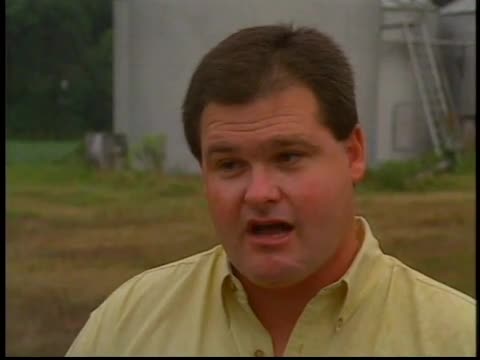
RAY VESTER, Farmer: If you take the subsidies away from the farmer, most farmers, that's their net income. That's the thing-- that's their safety net. That's the thing that holds 'em up in bad times, in bad weather conditions, when there's things they have no control over.
MR. SOLMAN: But could you live if you didn't have subsidies?
RAY VESTER: Farming? No.
MR. SOLMAN: Now, the basic subsidy works the same way for many crops. The government sets a target price: for rice, $4.82 a bushel. If the market price is below that--and last year the market price in Stuttgart was $3.11 for rice--the government makes up the difference, though only to a certain limit. So the rice farmers were subsidized to the tune of $1.71 a bushel last year, in this county, a total of $366 million over the past decade. To Ray Vester, it's been money well spent to preserve a uniquely American way of life.
RAY VESTER: My kids, when I go to work, when they were small and my wife was working, her sister, they went to work with me, and I mean not taking to work and leaving 'em at a day care at work, I mean, you know, Cody grew up riding in the combine. Cody used to take his naps in those tractors, sleep in the floor. You know, at three years old, at two years old, he was in 'em constantly.
MR. SOLMAN: And you think that's good?
RAY VESTER: That's good. That's family--hey, family values, that's what we talk about. That's the big buzzword today.
MR. SOLMAN: Now, most farmers may feel this way but not all. An hour's drive North in McCroy, Scott Everett's family has been rice farming for 50 years. He took over the farm out of high school when his father died of cancer, but Everett doesn't buy the uniqueness argument.
SCOTT EVERETT, Farmer: When you tell me that, I have to think of the guy that's coming out of the automotive factory in Detroit, and he walks out, and he carries a pail, and he goes to his house, and he sits down in his chair, and he pops off a brewskie, you know, and watches TV and watches your news report, I'm wondering, is he not saying, this is the American way of life too, and should I not be preserved? Everybody has a way of life. The farmer does; the guy in Detroit, you know, everybody has a way of life, and everybody's way needs to be preserved; ours is no better than his.
MR. SOLMAN: To Scott Everett, you can't preserve everybody's way of life through taxpayer subsidies. But even if you could, in Stuttgart, we couldn't help but notice not everybody's benefiting. The rice subsidy money, it seems, only trickles down so far.
UNIDENTIFIED MAN: You look around. It's not paying off on this side of town.
MR. SOLMAN: But at least there are jobs presumably, in the rice- -maybe they wouldn't--
UNIDENTIFIED MAN IN CAR: In rice, they have jobs, but it's not, you know, the pay is the problem, not payin' enough money.
MR. SOLMAN: Uh-huh.
UNIDENTIFIED MAN IN CAR: You know, $5 an hour or $5.25 an hour working, you know, you got a family, that's kind of hard to deal with, you know.
SELLERS HERRING: I think that we would benefit, us, all of us, especially as you put it, us here would benefit from other programs maybe.
MR. SOLMAN: Other kinds of government investment.
SELLERS HERRING: Other kinds of government investment. Maybe we could put a little more money into, into the rice mill, itself, better jobs, better-paying jobs for us, people who--
MARY JO PEOPLES: Schooling.
MR. SOLMAN: What?
MARY JO PEOPLES: Schooling, education, yeah, go that route.
MR. SOLMAN: As opposed to just subsidizing the rice farmers?
MARY JO PEOPLES: Mm-hmm, because if it was happening to us, we'd be drivin' cars like they drive, livin' in houses like they live. I mean, let's be honest about it--if it was happening to us.
MR. SOLMAN: Now in terms of the overall debate, it's important to point out that rural prosperity is only one of the pro-subsidy arguments. Another is cheap food.
KEITH GLOVER, President, Producers' Rice Mill: This is the bottom line of what farm programs are all about. They provide this--a plate of food--at the lowest cost in the entire world. That's the bottom line?
WOMAN: How is the food?
KEITH GLOVER: It's excellent. I mean, it's always excellent if it's got rice mixed in with it.
MR. SOLMAN: Amidst the beef on rice, rice salad, rice rolls, Congresswoman Blanche Lambert Lincoln put it a bit differently.
REP. BLANCHE LAMBERT LINCOLN, [D] Arkansas: Farm program spending is less than 1 percent of the total federal budget. That is a minuscule amount to pay for an insurance program that provides the world a safe and affordable and abundant food supply.
MR. SOLMAN: Out in the field, Ray Vester gave us another argument for subsidies which amounted to a lesson in farm economics.
RAY VESTER: When they first started developing the ideas of subsidized agriculture, we were in a period of boom and bust agriculture. You would have years when because of weather, which is still a big factor, you had poor crop yields. And the supply at the market was very low, and the price went up, and there was more demand for foodstuffs than there was to sell. Farmers were very successful. They made good money. Well, as they made money, a good farmer, a good businessman plows it back into his business, he raises more, as the price went up, it's straight supply and demand. Production would climb, and when we had a bulk of production, there was plenty for the American consumer to buy, prices went way low, farmers went out of business, and we had a steady run of that for years and years, and it goes back as far as you want to go in history, that happened. Okay. So yes, they put in subsidies to help the farmer, but at the same time, they wanted those subsidies to create a constant supply of high quality food at a reasonable price for the consumer.
MR. SOLMAN: So you'd even out those ups and downs?
RAY VESTER, Farmer: Levels out not only for the farmer but for the American consumer. And I think it's worked real well. You know, if it ain't broke, don't fix it.
SCOTT EVERETT: Let's take that scenario for just a moment. Let's say that there's too much production. What happens? Okay. Somebody's got to drop out because you've got too much production. Who's going to drop out? The strong or the weak? The weak--the weak--the one that cannot produce for that amount that the grain is being sold at, he's going to drop out. The strong will stay in. What'll happen next year? You won't have near as much production; the price will go up; you'll make profit. Government does not intervene.
MR. SOLMAN: Scott Everett says that he'd make a profit without subsidies. So then what about the farmers of Stuttgart? When Ray Vester showed us his numbers, subsidies were, indeed, the difference between profit and loss.
SCOTT EVERETT: The problem is with Stuttgart is right now that their--their high production cost, because they're pulling this water from 600 feet down in the ground. Let's just be truthful about it. And they've grown rice down there so much they've depleted the water supply. Now, they can't grow rice efficiently, and they're saying, oh, it's so bad, and it is. But maybe it's just God's way of telling 'em, listen guys, it's not-- no longer feasible to grow rice, I want you to do something else. You need to look for an alternative.
MR. SOLMAN: But, say the subsidy critics, as long as the government checks keep on coming, free market forces can't separate the grain from the chaff. In Arkansas alone, farmers have received $2.4 billion in rice subsidies in the last 10 years according to Washington's Environmental Working Group. And just about every farmer we met was a beneficiary. This farm family received $150,000 last year in subsidies. Gary Seebree, a farmer who made it to the rice luncheon, got $100,000. Even free-market Scott Everett took in $96,000 in subsidies last year. For our final question, we left the fields of rice and ventured back to more familiar turf, at least for us, the fields of academe, where we asked Ray Goldberg, a professor of agribusiness for the past 25 years, in the Scott Everett-Ray Vester debate, who's right?
RAY GOLDBERG, Harvard Business School: Both of them are right. They're right because in a way they represent what we all have to do. The private gentleman who believes that he can do it alone and react to the market, it's what everybody would like to do. The other gentleman who realizes that he needs government to do that in a world economy is equally right. They're going to have to learn how to work together with the government, make the government more market-oriented, make the other governments of our world economy more market-oriented, and learn how to compete in that environment.
MR. SOLMAN: But in any case, says Goldberg, while the agriculture subsidy argument is typically framed in terms of two options, the free market versus the government, it takes both farm. And so it's no surprise that America's farm policy is being argued out in the fields and in Washington, D.C..
MS. FARNSWORTH: In Washington this week, the power of the farm lobby was making itself felt, and Republican leaders pushing for cuts in subsidies were having trouble with fellow Republicans, as well as Democrats. Congressional Correspondent Kwame Holman has that part of the story.
KWAME HOLMAN: Eight-term Republican Pat Roberts seemed an unlikely leader of farm reform. Over the last 10 years, farmers in his Western Kansas district have received almost $5 1/2 billion in federal farm subsidies, mostly for wheat. But now, as chairman of the House Agriculture Committee, Roberts was directed by the budget committee to find nearly $13 1/2 billion in farm subsidy cuts to meet the Republicans' goal of a balanced budget by the year 2002.
REP. PAT ROBERTS, Chairman, House Agriculture Committee: That leaves the Republicans with the task of reaching a consensus on a new agriculture policy for the next seven years.
MR. HOLMAN: Committee Republicans like Steve Gunderson from the dairy state of Wisconsin were expected to help out.
REP. STEVE GUNDERSON, [R] Wisconsin: Getting a bill like this through the Agriculture is the most difficult. If you can get it through there, you can get it through anywhere. You know, let's understand that. Every one of us is on that committee because we were sent there with a parochial regional commodity concern, including Steve Gunderson.
MR. HOLMAN: Compared with proposed Republican cuts in Medicare at $270 billion, the $13 1/2 billion cut in agriculture is small. But the amount was substantial even that Roberts and the Republicans decided to rewrite the rules and regulations that have driven federal farm policy for the last 60 years.
REP. STEVE GUNDERSON: We came to the recognition that you simply could not continue viable farm programs with the kind of budget cuts we're going to have to take to balance the budget.
MR. HOLMAN: So Roberts wrote the Freedom to Farm Act which eliminates government subsidies for growers of rice, wheat, corn, and other commodities within seven years. Instead, farmers would receive cash payments of decreasing value over that period, no matter what their crops bring in, to help wean them off the old program. They would be free of current requirements that help regulate which crops farmers grow and how many acres they plant. The free market would determine crop prices and how much farmers earn.
REP. STEVE GUNDERSON: We just made a conclusion that we ought to eliminate the traditional programs, and free the farmer to plant whatever the market produces and whatever the market demands in terms of the right crop for that year.
MR. HOLMAN: On the Senate side, Agriculture Committee Chairman Richard Lugar of Indiana also was directed to find $13 1/2 billion in farm subsidy cuts.
SEN. RICHARD LUGAR, Chairman, Senate Agriculture Committee: The bill before the committee makes difficult choices and reduces spending in ways that are fair and reasonable.
MR. HOLMAN: He too got support from his committee Republicans.
SEN. ROBERT DOLE, Majority Leader: I'm prepared to say that farmers can't escape any more than anybody else. Maybe it's popular, as farmers say, everybody is going to be asked to contribute but you. But my farmers have children and grandchildren and they're worried about the future, and they're worried about the budget, and they're worried about interest rates, and they're worried about inflation. And they don't know how they're going to get there if we don't balance the budget.
MR. HOLMAN: Reaction from committee Democrats was similar to what's been heard throughout the capital in recent weeks, the charge that Republicans are gutting federal programs to finance the tax cut.
SEN. ROBERT KERREY, [D] Nebraska: I want a balanced budget, and I'm prepared to vote for all cuts, no tax increases over the next seven years, and to have the Agriculture Committee take its share of those cuts. And I repeat it, no tax increases, all spending cuts, balance the budget by the year 2002.
MR. HOLMAN: Iowa Democrat Tom Harkin argues the current farm program is too valuable to eliminate.
SEN. TOM HARKIN, [D] Iowa: We can make cuts in agriculture; no one's denying that. But we have to be very careful about it; we can't go to extremes. We have to keep our commitment to an adequate supply of food, good conservation to save our soil and clean water, and to make sure that we have a fair price to consumers, a stable price to consumers. You take the kind of cuts that the Republicans are talking about in our farm programs, basically you just won't have a farm program.
MR. HOLMAN: This week, while the two agriculture chairmen tried to hold together the fragile support of their committee Republicans, business interests on all sides of the debate lobbied intensely. Particularly hot was the battle to end government protection for domestically-grown sugar.
AD SPOKESMAN: This is a sugar baron. Know why he's smiling? He's getting a sweetheart deal from Congress. His family empire has contributed $2.5 million to politicians in Washington, and the politicians are cutting a deal to save the federal sugar program.
MR. HOLMAN: Nik Kominus is president of the Cane Sugar Refiners Association, one of those business interests that believes Americans should be allowed to buy cheap imported sugar, rather than domestic sugar at a price that the government helps keep substantially higher.
NICK KOMINUS, Cane Sugar Refiners: The problem we have is that we have a government-inflicted shortage of sugar, raw sugar, our raw material. By shorting the market, the Department forces up the price of raw sugar to benefit producers. And that has resulted in our paying more for raw sugar than we should, and it's impossible for us to compete when we have to pay so much for raw sugar.
MR. HOLMAN: Sugar producers battled back with ads of their own, claiming sugar is a very cheap commodity, a position supported by Iowa's Tom Harkin.
SEN. TOM HARKIN: You walk into any cafe. See those sugar packets? Guess how much they cost? They're free. You want to have a cup of coffee, you want to use one sugar packet, want to use two, want to use three, want to take some put 'em in your pocket, take it home, I wouldn't even care. I mean, how much cheaper can you get than that. The candy manufacturer and the refiners, obviously, they can knock the price of sugar down; they make more profits; but what I'm saying is you can't get sugar much cheaper than when you go into a cafe and you get it free.
MR. HOLMAN: Apparently, that is Chairman Lugar's position as well, so on Wednesday of this week when Lugar introduced his bill outlining all the changes in farm subsidies for most other crops, the current program protecting domestic sugar had been retained. That position was supported by all Republicans on the committee except one, Rick Santorum of Pennsylvania.
SEN. RICK SANTORUM, [R] Pennsylvania: [Wednesday] Regretfully at this point, given no changes in the current bill and what's anticipated with amendments to the bill, cannot support the bill.
MR. HOLMAN: Santorum's opposition was just enough to send the Senate Agriculture Bill down to an initial defeat.
SEN. RICHARD LUGAR: The vote is nine to nine, and, therefore, the motion does not carry.
MR. HOLMAN: But when the final vote was taken yesterday, Santorum backed off and voted "present," allowing the Agriculture Bill to move to the Senate floor, where he hopes changes will be made.
SEN. RICK SANTORUM: I reluctantly will, will step aside, but I, I do so with no expectation that--at least of what's come out of here--that we have made the kind of substantive changes to these programs that are going to result in the phasing out, elimination, or dramatic reform that is, I believe, necessary for the American consumer.
MR. HOLMAN: On the House side, however, Chairman Roberts was not as successful in getting his bill out of committee. Four Southern Republicans complained that their rice- and cotton-growing constituents could not survive the subsidy cuts contained in Robert's bill.
REP. PAT ROBERTS: The motion to favorably report the Committee on Agriculture's Reconciliation, having failed on a vote of 22 yeas to 27 nays, the business meeting on this matter is adjourned.
MR. HOLMAN: Cuts in farm subsidies now will have to be made by members of the Budget Committee, whose first priority generally is balancing the budget, not pleasing the farmers back home. FOCUS - POLITICAL WRAP
MS. FARNSWORTH: Next tonight, our weekly wrap-up of political news with Shields and Gigot. That's syndicated columnist Mark Shields, who joins us tonight from public station KCET in Los Angeles, and "Wall Street Journal" columnist Paul Gigot. While there have been some important developments in the presidential campaign this week, let's start with just a few hours ago Gov. Pete Wilson withdrew from the race. Paul, why do you think he did?
PAUL GIGOT, Wall Street Journal: Well, he did it I think because he never found a rationale for his campaign. This is the first candidate, the first governor in my memory who's run for President and who's actually lost support in his home state when he decided to run for President. He had said, of course, in the campaign last year that he was in a gubernatorial campaign, he wasn't going to run, then he turned around and did run, and I think that hurt him right in his home base, and it cost him with fund-raising, it cost him with his--what ought to have been his real solid support.
MS. FARNSWORTH: And Mark, what do you think the implications are for the rest of the candidates that the governor has dropped out?
MARK SHIELDS, Syndicated Columnist: [Los Angeles] Well, I think that's significant, Elizabeth, but first let me just add one thing to what Paul said. When Pete Wilson announced--he announced with high expectations, he came from California, a state that provides one out of five electoral voted needed to be elected, he was a successful politician, won the governorship twice, won two Senate races, a formidable fund-raiser, he pulled out today, and his withdrawal was almost a metaphor for his entire candidacy. He was eclipsed in the news. He was buried--the story was buried way back in the newspaper somewhere behind the "I will not be responsible" ads. A couple of things that happened to him. First of all, the immigration issue which he raised and ran on successfully against Kathleen Brown here last fall never had a real saliency in Cedar Rapids and at Sioux City. Iowans don't have the same experience or the same interest in that issue. And in addition, Paul's right about the money. In a gubernatorial campaign, Elizabeth, you can get major donors to write large checks in six figures. When you run for President, federal law limits a $1,000 contribution for any individual, so Pete Wilson who was expected to raise enormous amounts of money, really found it in that respect. I think he's also a casualty, quite frankly, to the punitive candidacy, the potential candidacy of Colin Powell. Colin Powell just exhausts the oxygen of all political coverage right now, and the people who suffer most are those who are trying to get attention and traction like Pete Wilson and Lamar Alexander and all the other candidates back in single digits.
MS. FARNSWORTH: Okay. I'm going to come back to Colin Powell in a few minutes, but I want to talk about Ross Perot for a minute, Paul. Ross Perot announced he's forming a third party. What do you think? What's your analysis of that? Do you think he can be successful where so many other third parties haven't been?
MR. GIGOT: Well, I think one of Mark's favorite economists, Karl Marx, once said, "History repeats itself as farce." And I think this has the potential not to be all that successful and could really--there's less here than meets the eye. First of all, the United We Stand organization, Ross Perot's organization, is not nearly as strong as it was before. There's a lot of disagreements in it. Second, Ross Perot, whose personality, who really drove a large part of that movement in 1992, is not nearly as strong as he was. I mean, he suffered from being in and out of the race, and he's just a little bit flaky, as a candidate, as a potential standard bearer. The third thing is the issues. I mean, third parties that are successful in America tend to have a big driving issue. Ross Perot's issue was a deficit. It was a balanced budget. And what happens--what has happened is that President Clinton to some extent and certainly the congressional Republicans have moved to coopt that big issue. And what's left is not really something that necessarily has the staying power of a third-party issue that can--that can compete with Democrats and Republicans.
MS. FARNSWORTH: But Mark, it makes him something of a power broker, doesn't it?
MR. SHIELDS: Well, I think, Elizabeth, those who underestimate Ross Perot do so at their peril. This is a man, after all, who went from zero in the public opinion polls of February '92 to lead both President Bush and President Bill Clinton, something unprecedented in American politics, in every major survey of public opinion and by June of 1992, then pulled out with one of the truly bizarre excuses, the Republicans are going to sabotage his wedding, his daughter's wedding, was one of the explanations offered, but he returned to the race adroitly and then--that was when he put the deficit on the national agenda. And he forced both parties to examine it, to come to grips with it, and the very fact that the Congress is dealing with that issue today, the country is consumed with it, or at least very interested in it, and that the Republican coalition of the House is probably coming unglued over it is testimony to Ross Perot. I would not underestimate him. I can't argue with the fact that he has acted erratically in the past, but this is a man who has about him a sense of mission and achievement that is really remarkable.
MS. FARNSWORTH: Well, let's move on to President Clinton, Mark. Has he put the funk flap to rest? As you know, in a speech or in a long plane ride last Friday talking to the press, he said that it's his job to get people out of--"out of their funk." He was talking about the tumult and the upheaval of all the economic and social dislocation that Americans are going through. What do you think about that?
MR. SHIELDS: Well, I think schoolchildren will not be studying several generations from now the eloquence of Bill Clinton saying the only thing we have to fear is funk, itself. I don't think that's a real chance. But there is a dangerous point on the political compass, not simply that the President was compared to President Carter and his identification, even though he never spoke the exact word of malaise in 1979. What this is reflective of is a sort of a blame-the-customer approach to politics. Things aren't going well either in the country or for the particular candidate, and there's a certain inclination in both parties to, to blame the voter for that. I think the President finally rescued himself, admitted he'd made a mistake, which people are always willing to accept. But it took him too long to admit, hey, I just blew this one.
MS. FARNSWORTH: Paul, what about his overall point that he--in the early days he did not look at the big picture enough and that people are worried in this country about what's happening in the economy and what's happening to their jobs?
MR. GIGOT: He's trying to map out a big picture, I think, which is a theme he can run on in 1996, which is that the country's going through a transition post Cold War to return to normalcy, if you will, domestic affairs, and second, kind of from the industrial age, the information age, sort of the way Gingrich, Newt Gingrich, likes to talk. It's not a bad theme, but when you start talking about funk and the way he talks about it, he talks about it not as a President, not as a leader with a plan and a vision to say how am I going to get us to the other side of this transition, he sounds like a national shrink, sounds like a psychoanalyst, and that's, I think, reinforces some of the doubts about his own constancy and his own leadership. And that's--that kind of rhetoric probably is something you're going to see played back to him by the Republicans in the convention speeches of 1996.
MS. FARNSWORTH: While we're on the President, what about Bosnia, the troops going to Bosnia? We just heard on this program a debate about the troops or a discussion about it. Is this something that's going to, to plague him in the months ahead, do you think?
MR. GIGOT: Well, we really don't know for sure, because we don't know the shape of the agreement. But I think that one of the ironies here is that the President has actually had a string of reasonable foreign policy successes. I mean, the Palestinian--
MS. FARNSWORTH: Middle East.
MR. GIGOT: Middle East agreement that he stood between Yitzhak Rabin and Yasser Arafat, trying to get in the picture, and so some of these successes are probably helping him a bit, but Bosnia overshadows all of them, because if he has to put 25,000 troops on the ground, American soldiers, that's going to be "the" biggest political domestic foreign policy issue of his first term. And if he has to do it for half of an uneasy peace, it's going to be a very risky political venture.
MS. FARNSWORTH: Mark, what do you think about the troops in Bosnia?
MR. SHIELDS: Well, I think--I would submit first of all the President has had rather than ironically success, he had a series of really emphatic successes, whether it's Ireland, or Haiti, the progress in Bosnia, I think that foreign policy, the credential for Bill Clinton which was a liability is no longer so, and may even be an asset. But today in the Congress, the House of Representatives, the Republican-controlled House of Congress, House of Representatives, lost the defense appropriations bill. And my old friend, Bruce Hershenson, who's a leading conservative in California, I think has a brilliant insight on the two parties in this post-Cold War period, and Bosnia's a perfect example of it. Bruce Hershenson said that the Republicans want a large defense budget and a large army and keep it home. The Democrats want an active involvement, almost interventionist, willingness to go everywhere in the planet and pursue the peace and human rights but they don't want to pay for it. And I really think that's being reflected. I mean, the Republicans just want to spend through the ceiling. But, boy, they don't want to go anywhere. And Democrats seem unwilling to come up with the necessary money to cover the expenses of a force that is active, is interventionist, and is directed toward achieving cease-fires and peace.
MS. FARNSWORTH: Okay. In the time we have left, the brief time we have left, Mark, you're in Los Angeles, and I understand you have some thoughts about the effect of the O.J. Simpson trial on the presidential campaign.
MR. SHIELDS: I think that the O.J. Simpson trial and what we've learned about various and respective attitudes of African-Americans and white Americans toward that trial is significant politically. Six times as many African-Americans believe that Mark Fuhrman, the racist LA police detective, actually planted the glove that has been so incriminating in the prosecution's case against O.J. Simpson as believe that he found it there. It's just the reverse for the--for white Americans. The same thing is true, Elizabeth, as far as guilt and innocence. Less than one out of five African- Americans believe that O.J. Simpson is guilty. Whatever happens in the verdict, I think, there will be disturbances; there will be either celebrations that break windows and do such things, which will be on TV, which will offend, I think, a lot of white Americans, and/or there will be a "guilty" verdict, and there will be riots or however you want to put it, window breakings or worse. My point is that there's only one figure who benefits from this, and that's Gen. Colin Powell. He is that combination who brings to it sort of the sense of order, of toughness, of direction, of no- nonsense from his military experience, and an empathy based upon the color of his skin. I don't think any other politician, in fact, bridging the racial gulf in 1996 becomes important to American voters, becomes something that American voters are looking for in their next leader, it helps Powell, probably Clinton's second, and Republicans third.
MS. FARNSWORTH: Very briefly, what do you think about that, Paul?
MR. GIGOT: If there is some big disturbance at the end of this trial and race becomes central in, in the next year, I think there's no question that Colin Powell would benefit. I think, though, that it's a leap right now to say that that's going to be the outcome of the O.J. Simpson trial. We certainly can all hope not. And right now, the Republicans, if anything, have kind of backed off of the affirmative action issue that Pete Wilson was going to use, and it didn't really work as well for Pete Wilson in the race, as he thought it would.
MS. FARNSWORTH: I'm sorry. We have to break it up. Paul, Mark, thank you very much. See you next week. ESSAY - NO MAS
MR. MAC NEIL: Finally tonight, essayist Roger Rosenblatt explains why he is not a fan of boxing.
ROGER ROSENBLATT: Boxing pretends to be a morality play, but it is really a cockfight, nothing better. If you wasted a few minutes of your life to watch the brief, preposterous Mike Tyson-Peter McNeeley sort of fight recently, you know what I mean. The fans inside the Los Vegas arena cheered Tyson at the beginning of his comeback as if they were cheering only a great heavyweight, not a man released from prison where he was sent for rape. The protesters outside the arena saw only the convicted rapist. Nobody acknowledged a person struggling to find his soul, which Tyson seems to be doing, but that is not the way of boxing. It is not boxing's business to make moral distinctions or discover moral nuances. One guy pounds another until he knocks him senseless. He raises his arms in victory; the crowd goes wild, as long as he keeps on knocking people senseless. That's about as moral as boxing gets. Of course, if you believe fiction, novels, movies, theater, every boxer is a miniature classic hero, a little Odysseus or Beowulf contending against forces of evil to prove or regain his honor. In "Requiem for a Heavyweight," the tired old pug would not forfeit his innate decency to the wicked gambler. ACTOR: I never took a dive for anybody. You know, I had 111 fights; I never took a single dive.
ROGER ROSENBLATT: In "Pulp Fiction," Bruce Willis refuses to take a dive in the same nobel spirit. The myth revives itself forever. All the "Rocky" movies are morality plays or morality playpens. "Rocky XXXV" should pit our champ against Gadhafi and Pol Pot. Yo, Adrian, I beat Pol Pot. The movie "Champion" came closest to the mark. Kirk Douglas was a low-life to the bone. The only place where he could find his empty little soul was in the ring. And still the beating goes on, and the old lie, that there is something noble in the act of two grown men doing physical battle. Boxing fans know better, no hypocrites they. Morality has never tainted their expressions of love. They adored Sonny Liston, the brutal ex-con, until he was knocked for a loop by Muhammad Ali, then Cassius Clay. Ali was sweetness and light, Liston a thug; they were equal in the eyes of the fans. Fans always forgive jailbirds--if they win. Once they even held a fight in a prison. Next to a gambling casino, it seems the perfect place to me. Preening beside Tyson in the Las Vegas bout was the remarkable figure of Don King. A known murderer, he is otherwise accused of stealing money from his fighters. The grand old man of boxing; everybody knows, nobody cares. Boxing draws crooks, creates crooks, exalts crooks. Those who succeed at it leave the game battered, often for life. Sugar Ray Leonard quit while he was rich but nearly blind. He got off easy. Those who fail die young, usually broke. Some, like Duk Koo Kim, who was hit too hard by Ray "Boom-Boom" Mancini, die directly from injuries. Some die in spirit. Who can erase the image of Joe Louis at the end of his life, desperate to pay off back taxes, working as a shill in a gambling casino? Give me professional wrestling every time. At least there are a few laughs in wrestling. And since everything is fake, nobody gets hurt. Boxing is different. Americans pay millions to watch two men, who are also paid millions, knock each other silly. There can be but one reason for this that people prize the easiest demonstrations of power above everything else: the sight of one man standing triumphant over another. Who could ask for anything more? So the fans yelled themselves hoarse as Mike Tyson began his heroic comeback against the hapless and ridiculous McNeeley. In fact, Tyson offers a rare opportunity for the fans to make moral distinctions. If they choose, they can cheer a winner, condemn a criminal, and feel for a man trying to reform himself, all at the same time. But of course, they won't. It would spoil the fun. My favorite fight was probably the boxing fan's least favorite. It took place in New Orleans between Sugar Ray Leonard and Roberto Duran. After a few rounds, Duran, reputed to be tough as nails, threw up his hands, stopped the fight, and said, "No mas!"--no more! Roberto, I'm with you. I'm Roger Rosenblatt. RECAP
MR. MAC NEIL: Again, the major stories of this Friday: the Senate has approved a non-binding resolution calling on the President to consult with Congress before sending American troops to Bosnia. The President today told congressional leaders it was essential to send up to 25,000 GI's once a peace agreement is final. Congress also approved a continuing budget resolution that will keep the federal government operating for the next six weeks. Good night, Elizabeth.
MS. FARNSWORTH: Good night, Robin. We'll be back Monday night. Have a nice weekend. I'm Elizabeth Farnsworth. Thank you and good night.
- Series
- The MacNeil/Lehrer NewsHour
- Producing Organization
- NewsHour Productions
- Contributing Organization
- NewsHour Productions (Washington, District of Columbia)
- AAPB ID
- cpb-aacip/507-k35m902w75
If you have more information about this item than what is given here, or if you have concerns about this record, we want to know! Contact us, indicating the AAPB ID (cpb-aacip/507-k35m902w75).
- Description
- Episode Description
- This episode's headline: Keeping the Peace; Growing Concerns; Political Wrap; No Mas. The guests include SEN. PATRICK LEAHY, [D] Vermont; REP. BENJAMIN GILMAN, [R] New York; MARK SHIELDS, Syndicated Columnist; PAUL GIGOT, Wall Street Journal; CORRESPONDENTS: KWAME HOLMAN; PAUL SOLMAN; ROGER ROSENBLATT. Byline: In New York: ROBERT MAC NEIL; In Washington: ELIZABETH FARNSWORTH
- Date
- 1995-09-29
- Asset type
- Episode
- Rights
- Copyright NewsHour Productions, LLC. Licensed under a Creative Commons Attribution-NonCommercial-NoDerivatives 4.0 International Public License (https://creativecommons.org/licenses/by-nc-nd/4.0/legalcode)
- Media type
- Moving Image
- Duration
- 00:58:47
- Credits
-
-
Producing Organization: NewsHour Productions
- AAPB Contributor Holdings
-
NewsHour Productions
Identifier: 5365 (Show Code)
Format: Betacam
Generation: Master
Duration: 1:00:00;00
If you have a copy of this asset and would like us to add it to our catalog, please contact us.
- Citations
- Chicago: “The MacNeil/Lehrer NewsHour,” 1995-09-29, NewsHour Productions, American Archive of Public Broadcasting (GBH and the Library of Congress), Boston, MA and Washington, DC, accessed April 2, 2026, http://americanarchive.org/catalog/cpb-aacip-507-k35m902w75.
- MLA: “The MacNeil/Lehrer NewsHour.” 1995-09-29. NewsHour Productions, American Archive of Public Broadcasting (GBH and the Library of Congress), Boston, MA and Washington, DC. Web. April 2, 2026. <http://americanarchive.org/catalog/cpb-aacip-507-k35m902w75>.
- APA: The MacNeil/Lehrer NewsHour. Boston, MA: NewsHour Productions, American Archive of Public Broadcasting (GBH and the Library of Congress), Boston, MA and Washington, DC. Retrieved from http://americanarchive.org/catalog/cpb-aacip-507-k35m902w75