The NewsHour with Jim Lehrer
- Transcript
JIM LEHRER: Good evening. I`m Jim Lehrer.
On the NewsHour tonight: the news of this Friday; then, excerpts of congressional testimony from Defense Secretary Gates and Joint Chiefs Chairman Pace about the new Iraq strategy; followed by two military views on whether a troop surge will work; and analysis by Mark Shields and David Brooks; plus, the Medicare drugs debate in the House; and a preview of Judy Woodruff`s Gen Next documentary that airs on PBS tonight.
(BREAK)
JIM LEHRER: President Bush`s plan for Iraq faced a second day of scrutiny today in Congress. The Senate Armed Services Committee questioned Defense Secretary Robert Gates and Marine General Peter Pace, the chairman of the Joint Chiefs of Staff.
The committee`s Democratic chairman, Carl Levin of Michigan, said adding troops is based on a flawed premise that there is a military solution. But Republican John McCain of Arizona said, "Democrats must tell us what they believe are the consequences of withdrawal." We`ll have more on this right after the news summary.
Overnight, the Iraq Study Group, led by Jim Baker and Lee Hamilton, warned against sending more troops, except on a temporary basis. But today, the president appealed for support in calls to the leaders of Jordan and Egypt. And spokesman Tony Snow said Mr. Bush is not surprised at the backlash in Congress.
TONY SNOW, White House Press Secretary: I expect there to be continued expressions of skepticism until people see some change. And the measures that we have outlined are not things that necessarily are going to happen overnight. Some of these are going to take weeks and months to get entrained.
JIM LEHRER: Snow also dismissed any talk the president now plans military action against Iran or Syria. He called it "rumor and urban legend."
In Iraq, the Shiite cleric, Muqtada al-Sadr, rejected the plan to send more U.S. troops to Iraq. A spokesman said it means more Americans will be going home in coffins.
Also today, Iraq`s Kurdish foreign minister criticized U.S. troops for detaining five Iranians yesterday in the Kurdish north. He said their building was in the process of being designated a consulate. U.S. officials disputed that account.
The American embassy in Athens, Greece, was hit by an anti-tank rocket today. No one was hurt in the attack, just before 6:00 a.m. It caused only minor damage to the glass-fronted building. Greek police said they suspected a domestic group, not al-Qaida. It was the first major attack on a U.S. target in Greece in more than 10 years.
The last stronghold of Islamic fighters in Somalia has fallen. The government said today it captured a key coastal town near the Kenyan border. The fighting there had lasted nearly a week. The Somali troops were supported by Ethiopian soldiers and fighter jets.
Pakistan denied today it is acting as a safe haven for the leaders of al-Qaida. John Negroponte, the U.S. national intelligence director, made that claim to Congress yesterday.
He said al-Qaida and the Taliban have a secure hideout in Pakistan`s tribal areas, along the Afghan border. He said they`re rebuilding and extending their network. But today, a Pakistani spokeswoman rejected both allegations.
TASNIM ASLAM, Spokeswoman, Foreign Ministry of Pakistan: There are no factual basis for this statement. If any country has been instrumental in breaking the back of al-Qaida, that country is Pakistan. We have done more than any other country in this war.
JIM LEHRER: Taliban attacks in Afghanistan rose sharply last year. NATO and the Afghan government have said the insurgents launch their operations from Pakistan.
The U.S. House voted today to make the government negotiate drug prices for Medicare patients. Democrats said it would mean cheaper drugs, but the president has warned he`ll veto the bill. He says private competition is already cutting prices.
Today`s vote was short of what`s needed to override a veto. We`ll have more on this story later in the program tonight.
The Senate voted today to deny federal pensions to lawmakers convicted of bribery and perjury. Currently, they lose retirement benefits for treason and espionage. At least 20 convicted former members of Congress are getting pensions of up to $125,000 a year. Today`s vote would affect only those convicted in the future.
Retailers had a better holiday season than expected. The Commerce Department reported today December sales rose nearly 1 percent, the most in five months.
On Wall Street today, the Dow Jones Industrial Average gained 41 points to close at 12,556. The Nasdaq rose nearly 18 points to close well above 2,502. For the week, the Dow gained 1 percent, the Nasdaq rose almost 3 percent.
And that`s it for the news summary tonight. Now: Secretary Gates and General Pace on Iraq; two other military views; Shields and Brooks; the Medicare drugs debate; and the Gen Next story.
(BREAK)
JIM LEHRER: The Iraq strategy follow-ups and fall-outs. We start with a report from NewsHour correspondent Kwame Holman.
KWAME HOLMAN: Defense Secretary Robert Gates and Joint Chiefs Chairman General Peter Pace returned to Capitol Hill today, to field questions from the Senate Armed Services Committee. The topic: the president`s proposed troop increase in Iraq that would bring the U.S. forces in the country to nearly 150,000.
Gates laid out a timeline for the military increase that would dispatch the first of the brigades soon.
ROBERT GATES, U.S. Defense Secretary: One brigade will go in the middle of this month. A second brigade won`t go until the middle of next month. And then they will flow at roughly monthly intervals.
So that, after we have sent in just two or three of the brigades, I think we will have -- before we have sent in very many additional American troops, we will have a pretty good idea whether, at least on the military side, the Iraqis have stepped up to the plate in terms of fulfilling their commitments.
KWAME HOLMAN: Even Arizona Republican John McCain, who supports the president`s plan, was skeptical about the Iraqi commitment.
SEN. JOHN MCCAIN (R), Arizona: We`ve got the first brigade, as you just mentioned, about the mid-January, another one mid-February, another one mid-March. We`ll know within a couple of months as to whether it will be effective or not when really the third of five brigades, as I understand it, isn`t even there until mid-March?
ROBERT GATES: I think what we`ll have some indication of, Senator, is whether the Iraqis are keeping their commitments, in terms of, not whether the operation itself necessarily has been effective, but whether the Iraqis have fulfilled their commitments to provide specific brigades by specific times, whether they are, in fact, allowing the operations to proceed without political interference, whether they are allowing the operations to go into all neighborhoods.
SEN. JOHN MCCAIN: Those are important distinctions. Do you have confidence that the present Iraqi government will carry out the commitments that they have made in recent days?
ROBERT GATES: As the chairman has indicated, the record of fulfilling the commitments is not an encouraging one. But I will say this: They really do seem to be eager to take control of this security situation. They will have control of all but one of their own divisions, military control of all their divisions by March.
KWAME HOLMAN: Alabama Republican Jeff Sessions insisted Iraqi performance be held to strict account.
SEN. JEFF SESSIONS (R), Alabama: We talked about, many of us, and you in the military, talk about benchmarks and metrics. One of the key things is Iraqi participation. This is a serious matter.
Mr. Secretary, do you have right now, and formally completed, the kind of criteria, benchmarks that we will be looking at to determine whether or not the Iraqis are participating adequately?
ROBERT GATES: Yes, sir. I think that the benchmarks that I will be looking at specifically in the early stages, are the Iraqis providing the troops that they promised to provide at the time that they promised to provide them?
Is there political interference at the senior governmental level in tactical decisions and of military operations? And are they allowing -- are the military forces of Iraq and the United States being allowed to go into all parts of the city of Baghdad?
KWAME HOLMAN: Gates also acknowledged senators` concerns about Iran`s role in Iraq.
ROBERT GATES: As the situation in Iraq has deteriorated, that mixed record of Iran, in terms of doing things that hurt us and doing a few things that were helpful, has become very one-sided, as they have gained confidence that we`re in trouble there and that, in effect, we`re on the defensive.
And there have been no positive things, and, in fact, they are now participating and supporting efforts to kill American troops.
KWAME HOLMAN: But some senators expressed concern the Bush plan might spread the war into Iran and Syria.
SEN. JOHN WARNER (R), Virginia: I remember Vietnam. I was in the building in those many years. I`m concerned about whether or not this would require U.S. forces to cross the borders into Iran and Syria to implement this program, or does this program envision just actions within the territorial area of Iraq?
GEN. PETER PACE, Chairman, Joint Chiefs of Staff: Sir, from a military standpoint, no need to cross the Iranian border. We can track down and are tracking down and have added resources to going after the networks in Iraq, regardless of where they`re coming from, that have been providing tools to kill our troops.
It is instructive that, in the last couple of weeks, we`ve found Iranians twice. They continue to raid, and they will continue to raid. I think one of the reasons you keep hearing about Iran is because we keep finding their stuff in Iraq.
KWAME HOLMAN: Massachusetts Democrat Edward Kennedy pressed a congressional vote on upping force levels in Iraq.
SEN. EDWARD KENNEDY (D), Massachusetts: Why not come back to the Congress? Why not come back and permit us to have a vote on this surge?
Let us have 10 days to try and make a judgment and a decision whether the American people are behind this. If they find out that they are, it`s going to at least enhance, from the administration`s point of view, your view. And if you found out at this time that they`re not, it`s going to be of value in terms of policymakers.
ROBERT GATES: I think, quite honestly, that he believes that sometimes a president has to take actions that contemporaneously don`t have broad support of the American people because he has a longer view.
There are times when a president has to take actions as he sees the long-term national interest, and sometimes he pays a political price for that.
KWAME HOLMAN: The defense secretary is expected to head to Afghanistan sometime next week.
(BREAK)
JIM LEHRER: Now, how two Iraq war veterans view the plan to increase the number of U.S. troops on the ground. Ray Suarez has that story.
RAY SUAREZ: We get those two views from retired Army Colonel Joel Armstrong. He was stationed in Iraq from February 2005 to February 2006. He served in Tal Afar as the deputy commander of the 3rd Armored Cavalry Regiment.
And former Army Captain Phillip Carter. He also served in Iraq. He was an operations officer for a task force that advised Iraqi police in Baqouba, from October 2005 to September 2006.
Gentlemen, welcome. Joel Armstrong, let me start with you. Earlier this week, when the president laid out his plan, did you come away from the television feeling that this was an outline that could work?
COL. JOEL ARMSTRONG (Ret.), U.S. Army: Yes, I agree that five more brigades into Baghdad and two more regimental combat teams of the equivalent into al-Anbar can set the conditions for success in Iraq.
RAY SUAREZ: Set the conditions how, do what that hasn`t already been done before?
COL. JOEL ARMSTRONG: Well, I think the key is protecting the population, specifically in Baghdad. And I believe that, with that amount of combat power, if we include -- and this is really key, that we include the enablers with those brigades -- it`s not just the brigades, but it`s the other enablers, such as interpreters, increased engineer support.
We need to make sure that our system to provide life support for the Iraqi soldiers that will be living in the neighborhoods, you know, go alongside of the American forces and are partnered with the American forces, we need to make sure that all those resources are available to those brigade combat team commanders, leaders and soldiers, to enable success in their mission. The success will be when they protect the population of Baghdad.
RAY SUAREZ: Phillip Carter, how about you? Did you come away from the speech thinking you had just heard a plan for success?
CAPTAIN PHILLIP CARTER (Ret.), U.S. Army: I came away thinking it was a good speech, but counterinsurgency is easier said than done. And I don`t think the president is putting the right amount of resources into this fight.
Hey, look, you know, 20,000 troops is important. And our commanders have been saying for quite some time they need more resources. But if you`ve got a platoon of 35 guys, and your company commander gives you five more, that`s not a meaningful increase in your capabilities.
What we really need right now on the ground are three more platoons, to stretch that analogy a little bit. And every estimate of what it will take to secure Baghdad alone, let alone the rest of the country, says we need orders of magnitude more troops here.
Even the Army`s new counterinsurgency manual says that. We would need at least 150,000 to 200,000 troops for Baghdad alone. And so I`m skeptical that this plan will work.
RAY SUAREZ: And, Phil Carter, you heard your colleague, Joel Armstrong, talk about other conditions that would have to be put in place. What besides a simple increase in the numbers is needed to change the outcome?
PHILLIP CARTER: Well, this really goes to the heart of Counterinsurgency 101. Military insurgencies alone aren`t going to win the day. We have to, as Secretary Rice has rightly said, surge civilians from the State Department, and the Justice Department, and the Agricultural Department into Iraq to help the government stand up and start serving the people.
We have to set the political conditions for success by getting Iraqi leaders to take responsibility for their own people. And so far that`s been very difficult. You know, this is not a majority-based government. This is a very tenuous government that we`re dealing with in Iraq, and I`m skeptical that the Maliki government can do what has to be done here, as well.
RAY SUAREZ: Joel Armstrong, maybe you could respond to Phillip Carter`s point that the 20,000, that adding the five brigades in Baghdad alone just isn`t enough?
COL. JOEL ARMSTRONG: Well, of course I agree with all of the statements on the political, economic, and the diplomatic lines of operations. And we have to have mass and surge on those, as well.
I think the premise of putting additional forces in Baghdad, given the mission to protect the population, reduces the violence enough to where that kind of progress can happen. I believe that the State Department does have to surge. I believe that we need to establish rule of law in Iraq.
We need to solve the detention and the detainee problem. We need to give police investigative capability where they can investigate a crime and where they have the system to try people and incarcerate ones that need to be. And it needs to be fair and it needs to be transparent. We need to make that happen.
But what I don`t think can happen is, in this security environment, with the sectarian violence and the insurgent violence, that none of that progress can happen. And I believe that that`s why we`re having so much trouble getting the power turned back on and the water.
It`s that we haven`t addressed the fundamental problem of protecting the population. And, once we do that, the rest of the progress can happen. But of course it`s not military solution. It`s every line of operation. The military will set the conditions for those other lines of operations to proceed.
RAY SUAREZ: Phillip Carter, you heard the points Joel Armstrong just made. And when the president was talking about those same aspects of the operation, one of the things he talked about was much closer coordination with Iraqi security forces. Now, you were training Iraqi police officers in Baqouba. What about those ideas, of having American forces operate out of the Iraqi police stations, being, as the president said, embedded in their formations?
PHILLIP CARTER: Well, as someone who lived and worked with the Iraqi police for a year, that certainty warmed my heart. I would like to see more folks doing that, because I think it`s one of the most effective things we`re doing in Iraq.
But I think that we should be careful not to be too optimistic here. The Iraqi police and the army have a long way to go, particularly the police, who we`ve largely neglected over the last few years.
And those police are essential to all of the things that Joel talked about, to restoring the rule of law and to providing security so people can go about their lives.
I think it`s going to take a very long time, much longer than this surge, to get the police to where they need to go. We`re talking five, ten years of sustained presence in these police stations, with advisers working closely, hand-in-hand with their Iraqi counterparts.
And that kind of realism was really missing from the president`s speech, and I think it needs to be there.
RAY SUAREZ: Joel Armstrong, did you find that there was a heavy reliance on the Iraqi forces and the Iraqi government in this plan? And given what you saw during your time there, are they ready to be relied upon in that way?
COL. JOEL ARMSTRONG: Yes, I think if we partner with them, and if we genuinely commit to it on an individual level, at the captain to captain, and lieutenant colonel to lieutenant colonel, and general officer to general officer, and develop relationships, I believe the Iraqi army has the capability to do it, but we need to partner with them, we need to embed with them, and train them, and advise them.
But we also need to partner units with Iraq units, and I believe that`s part of this plan. I believe that it would be important to co- locate headquarters, for example, develop systems and techniques to share intelligence, be around them as much as possible.
Sometimes that isn`t easy. It`s going to take a major effort. The police stations right now in Baghdad don`t have enough room for everybody to live in, and we need to start and we need to start right now developing barracks and places where soldiers, Iraqi soldiers, can operate from.
I think that`s a big problem in the country right now, and nobody is really talking about that. But there are some physical aspects of making the Iraqi army successful that I think our system could be made to produce better on.
RAY SUAREZ: Did it work in Tal Afar? You were involved heavily in that operation, and for a long time that was held up as one of the poster children of what the U.S. was trying to do there.
COL. JOEL ARMSTRONG: It did work in Tal Afar, but it was more than the partnership between the Iraqi army and the American Army. We also brought the police in, so there was a partnership to force the police and the army to work together. And there was reluctance with that at first.
But as we developed the relationships there, that improved. We also developed relationships with the local leaders. The squadron commanders that we had in Tal Afar were phenomenal, as were the troop commanders and the platoon leaders, that engage in the population and go in with the Iraqi army.
And at first, they did most of the talking. And by the end, the American forces weren`t doing any talking at the meeting. They were simply there listening, and the Iraqis were solving their own problems.
But we were there to bring them together, to force the issue initially to let that progress and that natural progression continue, and it does work.
RAY SUAREZ: Before we go, I`d like to hear quickly from you both. One of the complaints frequently reported in the press here in the United States from combat soldiers is that they`re not well-understood by people making policy in Washington, D.C., or by the upper reaches of the military. Phillip Carter, did you get a sense when hearing this plan that the people in charge understood what front-line soldiers are up against?
PHILLIP CARTER: No, I didn`t. And I think this Tal Afar example might be one case where they see something reported in the press, and they assume that it must be true or they assume that they can copy this model.
Look, Baghdad is not Tal Afar. We`re talking about scaling a solution from a town of 300,000 up to a massive, teeming, complex city of 6 million. And there`s not a linear relationship there.
I think much of the complexity of Iraq gets lost in the coverage, as do a lot of the difficulties and the frictions that we face. You know, people assume that, for example, with the police, you can give them modern evidentiary techniques, and you can give them modern systems for managing criminal justice, but if they don`t have electricity, it`s hard to use those computers. And if they`re not literate, it`s hard to use them, as well.
And so these are some of the sort of complex problems that you face on the ground level that add to what`s called the friction of war. And I don`t think those complexities are adequately reflected in this plan.
RAY SUAREZ: And Joel Armstrong, quickly on that last point?
COL. JOEL ARMSTRONG: Yes, I absolutely agree about the complexities and the difficulty. But the reason we can`t get electricity into the police stations is because insurgents continue to take down the towers, and we can`t get electricity going. As soon as we establish the security, I believe everything else is going to be easier to work. No doubt about it.
RAY SUAREZ: Joel Armstrong and Phillip Carter, gentlemen, thank you both.
PHILLIP CARTER: Thank you, Ray.
COL. JOEL ARMSTRONG: Thank you.
(BREAK)
JIM LEHRER: Still coming tonight: the Medicare drugs debate; the Gen Next documentary; and the weekly analysis of Shields and Brooks, syndicated columnist Mark Shields, New York Times columnist David Brooks.
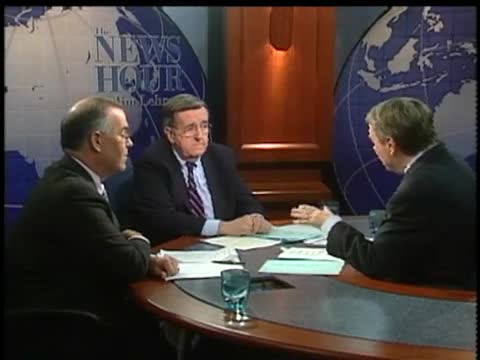
JIM LEHRER: Mark, Captain Carter, Colonel Armstrong were talking about complexities. And as I understood it, Captain Carter said it would take 150,000 to 200,000 troops, and it could take five to ten years to get this job done on the ground. Did I hear him correctly?
MARK SHIELDS, Syndicated Columnist: You did hear, and he said in Baghdad.
JIM LEHRER: In Baghdad alone?
MARK SHIELDS: That`s right.
JIM LEHRER: You heard the same way?
DAVID BROOKS, Columnist, New York Times: I heard the same thing, but I`m not qualified to judge who is right.
JIM LEHRER: Yes, yes, but what does that mean for a plan that is now 48 hours old?
DAVID BROOKS: Well, it means a couple of things. The first thing that it means is that there has always been a need for more boots on the ground. That has been evident for three years, and a lot of people have been saying that, and it`s finally now being done.
The question about whether it`s being done too much, for those of us who are not military experts, we rely on the various people who are. And a lot of people are saying it`s still not enough, this 20,000, it`s a drop in the bucket.
Others, however, are saying it is enough. And I think it`s roughly a doubling of what`s in Baghdad. And it will all come down, I believe, to David Petraeus, the man who`s running the show over there now, who wrote...
JIM LEHRER: The Army general, right?
DAVID BROOKS: ... the Army general, who wrote the counterinsurgency manual, who`s been successful so far in what he has done, both as a commander in the initial invasion, then in the training operations, and who has one of the best reputations in the military. When he finally testifies, that will be an important moment in this debate, because people can judge his expertise versus the others.
JIM LEHRER: Mark, the reaction from the members of Congress and the public thus far, as we`re 48 hours into this, does it have any effect, do you think, on what`s happening on the ground, what General Petraeus may want to do or what he testifies about? Or is everybody kind of just waiting to see what happens?
MARK SHIELDS: I do share David`s high regard for General Petraeus, whom I don`t know, but from everybody regards him. But I think they`re pinning an awful lot of hopes on him. He`s sort of the Ulysses Grant of this military operation.
Grant came in and took over an Army that was poised to win and had been badly led, against a foe that was depleted and enervated. And that`s not the historical parallel right now.
Jim, the president -- you talk about a bounce after a speech. This was a cement trampoline. I mean, it hit with a thud. And 48 hours after the speech, the president`s political position is weaker, and his policy position is weaker than it was before the speech.
The intensity and the ferocity of the reaction on Capitol Hill in particular, I think, reflects the Congress catching up with the popular feeling on the war, and particularly on the part of Republicans.
And you take somebody like Chuck Hagel, who is a measured, serious Nebraskan, not a grand stander, not a flamboyant guy or whatever, and the emotional intensity he brought to that debate yesterday in the Senate Foreign Relations Committee I think was alarming and almost liberating to many members of Congress and to Republicans, in particular.
JIM LEHRER: Did you see it alarming and liberating, as well?
DAVID BROOKS: I thought it was a huge event. I thought the Rice hearings were a big event, not because we were surprised that Chuck Hagel came out against, but, as Mark said, the intensity, the ferocity. It was a whirlwind directed at the secretary, showing contempt for the policy.
And so what that does -- I think it really sets up the potential of a sort of historic confrontation between the legislature and the White House. So far, as you look ahead to how this might evolve...
JIM LEHRER: Yes, that`s what I was going to ask.
DAVID BROOKS: Well, I think, so far, my guess is there are now 60 votes against the president. The Washington Times did a survey suggesting that seven Republican senators so far reject the president`s policies, nine are doubtful, 11 are conditional, and 21 are supporting.
So you have seven so far Republicans, and then nine or 15 or something like that floating around. Now, of Petraeus comes in there and testifies and says, "This is what we need. Do you guys think you know this better than I do?" Then he could solidify that support.
On the other hand, public opinion continues to crater. The psychology has been affected by the intensity, and that could continue to drain things away.
And then the final thing that could happen is that Democrats and some Republicans could get their act together, put together a bipartisan coalition in support of some alternative, with generals on their side. If that happens, then I do think...
JIM LEHRER: Take it away from the president?
DAVID BROOKS: Well, I think what would happen -- they would say, "Here`s what we believe." And then they would go to the White House and say, "Listen, we have a lot of Republicans on our team. You`ve got to re- think."
JIM LEHRER: And what about then Congress, with some Republican votes, passing some kind of resolution, not about de-funding, but saying, "We don`t approve of the plan, and we think it`s a mistake," or whatever. Is that a realistic possibility?
MARK SHIELDS: I think it`s a realistic possibility. I think a vote of no confidence...
JIM LEHRER: Vote of no confidence, that`s what I was trying to say..
MARK SHIELDS: ... in this particular initiative, I don`t think there`s any question...
JIM LEHRER: Would it mean anything?
MARK SHIELDS: It would, Jim. It would have enormous political significance, and especially the Republicans. I mean, the story here is the Republicans.
I mean, there`s a sense, not only of anxiety or concern about their own political next, but they`ve been supportive. I mean, George Voinovich, the Republican from Ohio, said, you know, I bought into the president`s dream. And I have supported his dream for the Middle East.
And it`s almost a sense that it may have been a noble concept, but it`s been totally unrealistic and impractical. And you hear members talking openly, including David Obey, Democrat from Wisconsin, chairman of the Appropriations Committee in the House, going on the record saying this is like 1974.
It`s going to take a group of Republicans, like Barry Goldwater went down to Richard Nixon and saying, "Hey, this policy is over," I mean, not the president leaving office, but to say to him that the political support for the policy has eroded to the point in Congress where you can`t act upon it.
DAVID BROOKS: The difference, though, is that we could get out of Vietnam, and consequents were not...
(CROSSTALK)
MARK SHIELDS: ... at the time of the resignation...
DAVID BROOKS: Right. But we can`t easily leave Iraq or else there could be a cataclysm, as the Baker-Hamilton report suggests. I think, if there wasn`t that prospect of the cataclysm, the Republican support would be gone.
So there has to be some reassurance there`s an alternate policy that won`t leave us for 30 years in some sort of maelstrom. And so that has to be addressed. And that`s why I say Democrats, if they want to prevail, have to get serious and realistically lay out what they think an earlier, quicker withdrawal would lead to.
The final thing -- and I think this may hold up Republican support -- I mentioned Petraeus, or Raymond Odierno, the other top general that`s over there, they get a whole series of those military people going to the Republicans and saying, "We can succeed. It may be tough, it may not be likely, but we can do it," I think that will firm up a lot of Republicans.
JIM LEHRER: It gives them some time at least, you`re saying?
DAVID BROOKS: Right, give us a chance.
JIM LEHRER: Right now, what does all of this do to the 2008 presidential race at this point, Mark? It`s Iraq, Iraq, Iraq, Iraq?
MARK SHIELDS: It is. I mean, what`s interesting is to watch the declared or undeclared candidates already.
JIM LEHRER: They`re everywhere.
MARK SHIELDS: They`re everywhere. And the Senate Foreign Relations Committee couldn`t have a quorum if they left in one day. I mean, there`s just...
JIM LEHRER: ... meaning the candidates?
MARK SHIELDS: Yes, the candidates who are on there. But I think what you`re seeing is a move, a sense that, among Democrats in particular, but the populous at large -- 70 percent, Jim, of southerners, according to the Associated Press poll, are against sending more troops.
JIM LEHRER: What kind of southerners? You mean southern voters?
MARK SHIELDS: Southern voters. Southern voters historically have been the most pro-nationalist and pro-military. The military is a respected and cherished institution in the South, as well as there has been overcompensation historically for the war between the states, the Civil War, and so there`s always been sort of a success support for any national military action.
When you get seven out of 10 southerners opposing it, it really becomes politically very difficult. I think what you`ll see on the Democratic side, and I think what the Democrats have to have some fear about, is there`s going to be a race to who`s going to be the most anti- Iraq.
JIM LEHRER: Anti-Iraq candidate. Now, the Republicans, of course, John McCain is the leading candidate. He is the pro-war candidate, is he not, like it or not at this stage of the game?
DAVID BROOKS: Well, he`s the pro-troops candidate.
JIM LEHRER: Pro-troops, OK.
DAVID BROOKS: I mean, first, on the Democrats, let me say, it`s a test of seriousness. It`s not enough to say, "I`m against, against, against." I`m looking for the candidate who actually has a policy. And that will be a true test of who`s qualified to be in the White House.
On the Republican side, there are a lot of people who think John McCain has really blown his chances, that he is now wedded into this surge idea that people will forget his earlier dissent from the Bush administration and, you know, say, Iraq, he was for it. That was a big mistake, I`m out of here.
I think that probably won`t hurt him in the Republican primary, because Republicans are where he is, basically, but the question will be, once he faces a Democrat. And there, I think, if he`s facing Hillary Clinton, they served together in the Armed Services Committee. Their votes have been almost identical.
JIM LEHRER: It`s only been recently...
(CROSSTALK)
DAVID BROOKS: Right, only recently. So I don`t think she in particular will be in a strong position to say, "Hey, you are wacky on this," because she was there with him.
JIM LEHRER: But on the Republican nomination race, Giuliani, he is kind of pro-surge at this point, is he not?
DAVID BROOKS: And the Republican bet will be, "Hey, we may have screwed up the last enemy, but we`re tough guys for the next enemy." And in 2008, the world is going to look pretty violent, and people might want a tough, hard person like Giuliani or McCain.
JIM LEHRER: What about Romney? How does he fit into that?
DAVID BROOKS: Well, he is the orthodox party candidate, and he just doesn`t have the foreign policy experience, and therefore he is less associated with the policy. And if there is such a tremendous taint, he benefits.
JIM LEHRER: Then there`s, of course, Chuck Hagel. Here he is, an anti-surge and very critical Republican, I mean, critical of the policy on Iraq. How does a Republican run a campaign for president on that kind of campaign?
MARK SHIELDS: Jim, the same way in 1968 that Gene McCarthy and Robert Kennedy ran campaigns. I mean, there`s no way that anybody is going to run on the Republican side in 2008 saying, "You know, I want to keep going." I think that the president`s...
JIM LEHRER: Stay the course?
MARK SHIELDS: "Oh, boy, he`s done a great job, and I want to keep the same folks in place and the same policies in place."
I`d just add one thing. Sam Brownback is a wild card here, too. Sam Brownback is a conservative. If he gets any kind of traction, you know, politically support -- I mean, he went to Baghdad and said he was against the increase -- and I don`t think the -- there are Democratic plans.
I mean, I think -- Jack Murtha has a plan to redeploy, to take it across the horizon. He`s had that for more than a year. Joe Biden has a plan, a federalization...
JIM LEHRER: Divide the country up and...
MARK SHIELDS: Carl Levin has a plan for staged withdrawal. I mean, historically, it`s not the -- I think there is a Democratic responsibility. I think it`s a serious matter that you have to address and you can`t just score political points. But there are Democratic plans.
JIM LEHRER: Where would you put Hagel into this?
DAVID BROOKS: Hagel is an incredibly brave man. I recall seeing him in, for him, the dark days, when the entire Republican Party hated him for what he was saying now. And I have an enormous amount of respect for him. Nonetheless, I do think the party will not forgive him his disloyalty. He may have been right, but he wasn`t a good party man.
JIM LEHRER: What about those, when you think about running as an independent candidate?
DAVID BROOKS: Yes, I have trouble seeing an independent candidacy involving Chuck Hagel. People may respect him, but people want a loyal party person. That`s the way politics seems to work these days.
First on the Democrats, they do have plans. They have not been developed -- the surge didn`t just emerge out of nowhere. There were generals, there were all these guys from Tal Afar -- we probably just saw one of them -- supporting it. There were think-tankers. They had press conferences. They had thick booklets. They had meetings.
This thing was organized, and it was substantive. The Democrats have ideas, and I think a lot of them are good ideas. I think the Joe Biden-Les Gelb idea is a tremendously good idea. It has not been developed and embraced by a wedge of senators and politicians the way it needs to be.
JIM LEHRER: OK, two seconds.
MARK SHIELDS: OK. The problem is, it took two months to come up with this plan...
JIM LEHRER: The president`s plan?
MARK SHIELDS: ... which is going nowhere, ignoring the Iraq Study Group, and all those deliberations you talk about. And what really politicians express is they`re upset that the president has just totally ignored the political results. Republicans know they lost in November because of Iraq, because of the president`s policy.
JIM LEHRER: All right. We have to leave it there. Thank you both.
(BREAK)
JIM LEHRER: Now, how best to lower drug prices for seniors. Once again, congressional correspondent Kwame Holman begins with a report on today`s House action.
KWAME HOLMAN: The Medicare prescription drug program signed into law in 2003 includes a provision barring the federal government from negotiating with pharmaceutical companies for lower drug prices.
During congressional debate on that measure, House Democrats railed against that restriction, but they fell one vote short of defeating the bill.
CLERK OF THE HOUSE: The bill is passed without objection, and the motion to reconsider is laid upon the table.
KWAME HOLMAN: Today, California Democrat Anna Eshoo said the American public, too, realized that the Republicans were wrong.
REP. ANNA ESHOO (D), California: They saw through it, and we are here today to correct that provision.
KWAME HOLMAN: Now in control of Congress, Democrats have made rewriting the drug negotiation language a top legislative priority. Their bill would require the secretary of health and human services to negotiate with drug companies on behalf of the 23 million beneficiaries enrolled in Medicare drug plans.
REP. CLIFF STEARNS (R), Florida: Why would you want to change something that`s working so fabulously?
KWAME HOLMAN: But like three years ago, Republicans adamantly opposed the idea. They argued the prescription drug program Republicans pushed through has lowered costs and that it now enjoys the support of most of the nation`s seniors.
Texas` Joe Barton helped draft the original bill, which provided seniors with $30 billion in drug coverage last year.
REP. JOE BARTON (R), Texas: It is working. As they say in many parts of our country, if it ain`t broke, don`t fix it.
KWAME HOLMAN: And President Bush agrees. In fact, he`s threatened to veto the Democrats` bill if it ever gets to his desk.
Republicans long have maintained that drug prices should be negotiated in the competitive marketplace, not by the government. Mike Conaway of Texas.
REP. MIKE CONAWAY (R), Texas: For my money, I will trust the private enterprise employee who works for that prescription drug plan, who is negotiating with the drug companies to get the lowest price, in order to be able to lower premiums to the Medicare beneficiary that is going to be paying those premiums.
KWAME HOLMAN: But Democrats pointed out that the Department of Veterans Affairs consistently negotiates lower drug prices than Medicare for its 4 million members. And California`s Henry Waxman argued the free market approach clearly has not worked.
REP. HENRY WAXMAN (D), California: There`s no market there, but it`s not working. People can go to Canada right now and get a lower price for their drugs than they can in the Medicare drug plan as it exists today. People can go to Costco and get a better price. They can search around and get a better price, but when government negotiates, we get the best price.
KWAME HOLMAN: In today`s vote on the drug negotiation ban, Democrats won with the support of two dozen Republicans, but still by less than the two- thirds majority required to override a presidential veto.
The measure now goes to the Senate where support for overturning the restriction on government-negotiated drug prices is uncertain.
JIM LEHRER: Margaret Warner takes the story from there.
MARGARET WARNER: And for more on this, whether we`re joined by Ron Pollack, executive director of Families USA, a consumer health advocacy group. And Gail Wilensky, a former administrator of Medicare under the first President Bush, she`s now a senior fellow at Project Hope, a foundation for international health education.
Welcome to you both.
Ron Pollack, you heard Congressman Barton say, if it ain`t broke, don`t fix it. Why should the government get into negotiating drug prices when the insurance companies are already doing that?
RON POLLACK, Families USA: Well, the problem is the insurance companies are getting lousy prices. And the pharmaceutical companies never wanted the government to bargain, because these insurance companies don`t have the bargaining clout that Medicare does.
And if you take a look at what the V.A. gets, the V.A. does bargaining, and we looked at the prices for all of the top drugs prescribed for seniors. And for every one of those drugs, the V.A. gets a much better price. And, mind you, the median price difference is an astounding 58 percent.
I could give you examples. For example, Plavix, which is the most popular drug prescribed for seniors -- it`s used to prevent strokes -- the price that the V.A. gets for an annual supply is less than $1,000. The price that the lowest plan that Medicare gets is over $1,300. It`s 34 percent higher.
One other drug, Fosamax, third-most-popular drug for seniors -- it`s used for osteoporosis -- the V.A. for an annual supply gets it for $250. The lowest price of any of these plans in Medicare is more than three times as high.
So this is not good for seniors, who have to pay more out of pocket, and it`s horrible for the taxpayer who actually foots the bill for three- quarters of the program.
MARGARET WARNER: All right, Gail Wilensky, let me turn it around. It would look like a no-brainer. Why not use the huge bulk purchasing power of the government, of Medicare, to bargain with these drug companies?
GAIL WILENSKY, International Health Education: Three quick points. The first is spending on Part D, the prescription drugs, is way down over what had been estimated at the time the program was started. Premiums have been dropping, the department has just said 10 percent lower yet than what we thought last summer. You`re beginning to see really strong effects of what private sector negotiating can do.
The second point. The main way that the Veterans Administration gets such low prices, it has a very restrictive list of what`s covered. So if what you`re using is on that list, you get a chance to have a low price.
Lipitor, most widely prescribed drug, it`s not on there. Nexium, very common, the purple pill, it`s not on there. It`s OK for veterans, a million of whom are also on Part D, who happen to be Medicare eligible. Medicare becomes a safety valve. It`s different if that`s your only plan.
MARGARET WARNER: Explain exactly how the system works simply right now. Does each insurance company that offers a Medicare prescription drug plan, say, UnitedHealthcare or Humana, negotiate independently with every single drug company over every single drug?
GAIL WILENSKY: Generally, yes, although many of them are, of course, negotiating in the private sector already with these drugs companies as part of the offerings that they make for the under 65 population. So it`s not that there isn`t a lot of experience in terms of bargaining.
MARGARET WARNER: So you may now have the same drug offered at different prices to Medicare beneficiaries, and certainly to the insurance companies that run the health plan?
GAIL WILENSKY: Absolutely, as exists in most other places.
MARGARET WARNER: So how would it work if the secretary of HHS was suddenly given this not only authority, but requirement? Would he be negotiating on behalf of all of the insurance companies at the same time?
RON POLLACK: Yes, the secretary would. Now, exactly how the secretary goes about doing this is going to be left to his discretion. But we know that the secretary -- when the secretary bargains for cheaper prices, that is actually very effective.
Take for example what happened after 9/11. We had the scare about anthrax, and we wanted to get Cipro. And this is a company that`s in Germany. And the secretary was able to bargain to get prices lower. The same is true with flu.
There`s one comment, though, that Gail said that I really have to touch upon. She would have us believe that the V.A. really restricts what kinds of drugs you get. Well, the V.A., and all of these private plans in Medicare, have a formulary. They all restrict...
MARGARET WARNER: A formulary being a list of approved drugs?
RON POLLACK: That`s right. And if you really take a look at how the V.A. system works, it`s much more flexible getting drugs that are not on the list than it is for any of these private plans. And so people get the worst of all words. They have a more rigid formula, or list of drugs, under Medicare, and the prices are much higher.
GAIL WILENSKY: But there`s a fundamental difference: In Medicare, you don`t like one formula, you get to choose another plan.
MARGARET WARNER: In other words, you can go to just another plan that offers this drug?
GAIL WILENSKY: Exactly, so that you can look at the plan to see what it covers and what the coverage is. That`s the message that you`ve been hearing. Seniors should look to see what`s on there.
With the V.A., it`s a take it or leave it. That`s the fundamental difference.
The notion of negotiating prices is really foreign. As you mentioned, I ran Medicare. Medicare sets the price, and physicians and hospitals can take it or leave it. Presumably, if that`s the direction that we go in here, that`s what the secretary will do.
But the bargaining clout comes from restrictions. That`s why, when the Congressional Budget Office estimated the savings associated with the bill that was just introduced in the House, in terms of what kind of savings would happen, there was no savings if there were no formulary restrictions. That`s the key.
MARGARET WARNER: Why did the CBO find that, in fact, there really would be no savings under this bill?
RON POLLACK: Well, I think they were saying, theoretically, bargaining might work. But, you know, the greatest proof of the pudding here...
MARGARET WARNER: Might not work.
RON POLLACK: Might not work as effectively as some of us think it would. But the greatest proof of the pudding is, take a look at what the drug companies are doing.
The drug companies are spending millions upon millions of dollars in advertising and in lobbying, because they`re afraid of having Medicare bargain for cheaper prices. They know that the prices will come down if you give the secretary this authority.
MARGARET WARNER: Let me just quickly make sure I understand it. So what you`re saying is -- are you acknowledging, Gail Wilensky, that, in fact, if you had a single negotiator, like the government, they might be able to get a price on a given drug lower, but only if they had the power to say, "And we won`t cover"...
GAIL WILENSKY: You`ve got to be able to walk away. If the secretary is able to say, "We`re excluding all these drugs that we don`t think are absolutely necessary," Medicare is half of the market, half the drug market. Absolutely. They could get a very low price.
MARGARET WARNER: So is that really the choice? It`s cost versus choice?
RON POLLACK: No, it`s not. There`s another thing that the secretary can do. The secretary can say, "When I get a good price from a company, I`m going to put that on a list in which somebody gets a lower co-payment. If I get a bad price, there will be a high co-payment." And so that doesn`t preclude somebody from getting the drug, but it creates a very important cost incentive for the plans that actually give a good price.
MARGARET WARNER: OK, very quickly, is this ever going to become law with the president threatening to veto?
GAIL WILENSKY: I assume, if the president says he won`t let it through, it doesn`t have support in the House to override a veto. I`m not sure what the Senate will do, whether it will pass it at all. I think they are more sensitive to the issues that have been raised. It`s a question of restricting access, and then you get a lower price. Seniors have indicated they really don`t want that.
MARGARET WARNER: What`s your prediction?
RON POLLACK: Well, this is good policy and good politics. If the president decides to be Dr. No, I think that`s bad politics. I think this will pass.
MARGARET WARNER: All right, Ron Pollack, Gail Wilensky, thank you both.
GAIL WILENSKY: Thank you.
(BREAK)
JIM LEHRER: Finally tonight, the economic facts of life for young people aged 16 to 25. Judy Woodruff has been interviewing them all over the country for a PBS documentary called "Generation Next." This excerpt begins with the story of Chaz Hillmon, a community center worker in Columbus, Ohio.
JUDY WOODRUFF, NewsHour Special Correspondent: Raised by his mother and grandfather, Chaz grew up in this tough Columbus neighborhood, staying clear of trouble while many of his friends did not. Now 20 years old, he tried college a couple of times but never finished.
CHAZ HILLMON, Community Center Worker: And since I needed a job to pretty much help in the household, I pretty much had to put school on hold for a while. But since working at Community House, they are able to pay for me to go back to school, as long as I go for my early childhood development degree.
JUDY WOODRUFF: Chaz loves his work at the community center, but still struggles to get by.
CHAZ HILLMON: I have college loan from when I went to OSU. I have credit card bills. I have cell phone bills. I`m about to have the utilities of my house put in my name.
There`s just so much financial burden, it`s stressful, that I`m trying to balance the needs and my wants. And I`m trying to take care of the bills, but also trying to make sure that I have enough money where I can get groceries and have enough money to maintain my car, make sure that it`s up and running, make sure I have gas in it. It`s just hard to just think about it.
JUDY WOODRUFF: Not long ago, people with just a high school diploma or even without one could count on a well-paying, usually blue-collar job, most protected by labor unions with benefits and pensions. Not anymore.
Although the economy has continued to grow, many new jobs today are in the low-paying service sector, frequently with no benefits at all. This lack of opportunity for those with less education is a grim reality for this generation, one that only promises to grow worse, especially in the face of expanding global competition.
The urban environment of Manhattan`s Lower East Side, where Anya Kamenetz now lives, stands in sharp contrast to Baton Rouge and New Orleans, Louisiana, where she grew up.
ANYA KAMENETZ, Author, "Generation Debt": We`ve been living here for about a year-and-a-half. And we picked the neighborhood because people said it was the last bargain downtown.
JUDY WOODRUFF: With the help of scholarships and the generosity of her grandparents, Anya graduated from Yale without any student debt of her own. An expert on the topic since writing "Generation Debt," Anya first reported on her generation`s finances as a freelance writer for a series in the Village Voice newspaper.
ANYA KAMENETZ: Immediately, I discovered that, you know, this was the story of my friends, this was the story of people that I met, what was happening to young people around the country was part of a bigger pattern.
Student loan debts, the credit card debt, the changes in the job market, the fact that the old middle-class bargain was no longer working the way it was supposed to work for people my age.
Statistics show that people these days in their 20s are holding about 10 jobs in their first 10 or 12 years in the workforce. And sp with all of that leaping around, it becomes a lot harder to pursue, you know, a simple kind of plan, a one-point plan or a five-point plan.
JUDY WOODRUFF: Is your interest in the entire generation or is it principally in those who are students, who are continuing their education in college?
ANYA KAMENETZ: No, my interest is absolutely in the entire generation. You know, you have about half of all students who are going to college, getting some experience, but only less than a third come out with a degree.
And so there`s this large gray area of people, dropouts. And that is an incredibly interesting group to me, because they`re people that took that chance, made that investment, and for some reason or another, it didn`t come through. And that`s who I think we really need to be focusing on right now.
JUDY WOODRUFF: What do you think -- or do you think there`s something particularly remarkable about your generation?
ANYA KAMENETZ: You know, generations are defined in hindsight, and they`re defined by history. And it`s going to be history that`s going to write the book on this generation.
I think that the history that`s going to be written about my generation is going to talk about how we responded to unbelievable challenges, challenges like no other generation for at least a century, I think.
I mean, when you`re talking about America`s place in the world, when you`re talking about global warming, when you`re talking about just dealing with inequality, within the country and within the world, the question is going to be, how did young people respond? How did my generation stand up and respond to those? And I think that that has yet to be written.
JIM LEHRER: "Generation Next" airs tonight on many PBS stations. Please check your local listings for the time.
(BREAK)
JIM LEHRER: And, again, the major developments of this day.
President Bush`s plan for Iraq faced a second day of scrutiny in Congress.
The American embassy in Athens, Greece, was hit by an anti-tank rocket. No one was hurt.
And the House voted to make Medicare negotiate drug prices.
"Washington Week" can be seen later this evening on most PBS stations. We`ll see you online and again here Monday evening. Have a nice weekend. I`m Jim Lehrer. Thank you, and good night.
- Series
- The NewsHour with Jim Lehrer
- Producing Organization
- NewsHour Productions
- Contributing Organization
- NewsHour Productions (Washington, District of Columbia)
- AAPB ID
- cpb-aacip/507-ft8df6kt3q
If you have more information about this item than what is given here, or if you have concerns about this record, we want to know! Contact us, indicating the AAPB ID (cpb-aacip/507-ft8df6kt3q).
- Description
- Episode Description
- Two Iraq war veterans share their military views on the plans to increase U.S. troops on the ground. Mark Shields and David Brooks provide discussion and analysis of this week's news including President Bush's speech and his new Iraq strategy plan. The guests this episode are Joel Armstrong, Phillip Carter, Mark Shields, David Brooks, Ron Pollack, Gail Wilensky. Byline: Jim Lehrer, Kwame Holman, Ray Suarez, Margaret Warner, Judy Woodruff
- Date
- 2007-01-12
- Asset type
- Episode
- Topics
- Global Affairs
- Film and Television
- War and Conflict
- Health
- Religion
- Military Forces and Armaments
- Politics and Government
- Rights
- Copyright NewsHour Productions, LLC. Licensed under a Creative Commons Attribution-NonCommercial-NoDerivatives 4.0 International Public License (https://creativecommons.org/licenses/by-nc-nd/4.0/legalcode)
- Media type
- Moving Image
- Duration
- 01:04:03
- Credits
-
-
Producing Organization: NewsHour Productions
- AAPB Contributor Holdings
-
NewsHour Productions
Identifier: NH-8740 (NH Show Code)
Format: Betacam: SP
Generation: Preservation
Duration: 01:00:00;00
If you have a copy of this asset and would like us to add it to our catalog, please contact us.
- Citations
- Chicago: “The NewsHour with Jim Lehrer,” 2007-01-12, NewsHour Productions, American Archive of Public Broadcasting (GBH and the Library of Congress), Boston, MA and Washington, DC, accessed April 3, 2026, http://americanarchive.org/catalog/cpb-aacip-507-ft8df6kt3q.
- MLA: “The NewsHour with Jim Lehrer.” 2007-01-12. NewsHour Productions, American Archive of Public Broadcasting (GBH and the Library of Congress), Boston, MA and Washington, DC. Web. April 3, 2026. <http://americanarchive.org/catalog/cpb-aacip-507-ft8df6kt3q>.
- APA: The NewsHour with Jim Lehrer. Boston, MA: NewsHour Productions, American Archive of Public Broadcasting (GBH and the Library of Congress), Boston, MA and Washington, DC. Retrieved from http://americanarchive.org/catalog/cpb-aacip-507-ft8df6kt3q