The NewsHour with Jim Lehrer
- Transcript
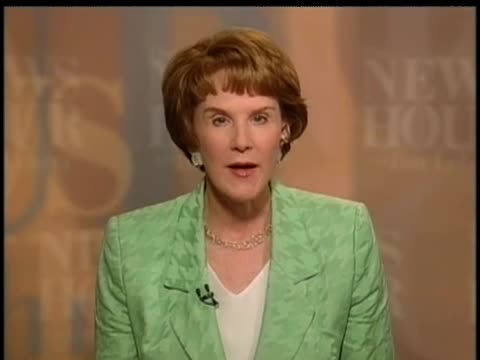
GWEN IFILL: Good evening. I`m Gwen Ifill. Jim Lehrer is away.
On the NewsHour tonight: the news of this Tuesday, from the Middle East and elsewhere; then, a massive Alaska oil field shutdown; we look at how it happened, why it happened, and what it will cost you at the gas pump; and we have a NewsHour report from Miami on how Fidel Castro`s illness has Cuban-Americans preparing for the possibility of a post-Castro Cuba.
(BREAK)
GWEN IFILL: The war between Israel and Hezbollah raged on today, after four weeks of fierce fighting across south Lebanon and northern Israel, while at the United Nations diplomats struggled to end the conflict.
On the ground, Israeli tanks and artillery pounded Hezbollah targets along a string of border towns. The Israelis said four soldiers and at least 25 Hezbollah fighters were killed. Israeli jets also carried out a series of raids from Tyre on the coast, as far inland as the Bekaa Valley in the east, near Syria.
One strike hit near a funeral procession, scattering the mourners. Lebanese officials said 13 people were killed in buildings that collapsed. And in Beirut, search teams pulled 20 bodies from the rubble of two buildings hit by an air strike late Monday.
Amid the fighting, Lebanon`s humanitarian crisis deepened today. Officials said the region south of the Litani River was a virtual "no go" area after Israel banned vehicle traffic. International Red Cross President Jakob Kellenberger reached the south today by crossing the remains of a bombed-out bridge. Later, he said there are two critical priorities.
JAKOB KELLENBERGER, President, International Committee of the Red Cross: We must have access to evacuate the wounded civilians in villages we could not reach so far. I have told you we have made progress this afternoon, but I need more access. We need also access so that dead persons under the rubble can be evacuated.
GWEN IFILL: Also today, the Lebanese health minister warned hospitals may stop functioning in two or three days when they run out of fuel. Two tanker ships loaded with fuel oil were sitting offshore, but they refused to dock without written guarantees of safety.
On the Israeli side today, border towns came under yet another barrage. Hezbollah fired at least 145 rockets, wounding two people. The Israeli government announced it will pay for thousands of people to leave the region.
Lebanese Prime Minister Fouad Siniora praised Hezbollah`s military effort today, but he also said it`s time for his government to take control of south Lebanon. He said, "There will be no authority, no weapons other than those of the Lebanese state."
On Monday, Siniora`s government offered to send up to 15,000 troops to southern Lebanon if the Israeli forces withdraw. Today, Israeli Prime Minister Ehud Olmert said of the Lebanese plan, "It looks interesting. We will examine it closely." Up to now, Israel has insisted on having a strong, international force in place before pulling out.
At the United Nations today, Arab League delegates warned a joint U.S.-French resolution would only make things worse. It calls for a cease- fire, but not an Israeli pullout. A second resolution could authorize an international force to take over from Israelis.
The ambassadors from Lebanon and Israel traded arguments at a meeting of the Security Council.
TAREK MITRI, Special Envoy, Lebanon: The draft resolution not only falls short of meeting many of our legitimate requests, but it also may not bring about the results that the international community hopes it would achieve. We requested an immediate cease-fire. What has taken so much time is still not an immediate cease-fire, neither immediate nor cease- fire.
DAN GILLERMAN, U.N. Ambassador, Israel: Israel is ready to cease hostilities and to withdraw its forces if these effective measures will come in its place so that the terrorist threat on its citizens will finally be brought to an end. We want a cease-fire, but a cease-fire that sows the seeds of future peace, not of future conflict. The test of any resolution or proposal must be whether it will effectively bring about these practical changes on the ground.
GWEN IFILL: The U.S. and France waited to hear the Arab envoys before formally introducing their resolution. No vote was expected until Thursday.
In Iraq today, at least 20 people were killed in attacks around Baghdad. The worst was in the center of the city. Three bombs exploded near the interior ministry, killing 10 people. Hours later, a pair of bombs killed 10 more Iraqis at a market.
U.S. and Iraqi forces opened a new phase today in efforts to halt the violence in Baghdad. But Prime Minister Nouri al-Maliki denounced Monday`s raid on a Shiite militia stronghold. He said U.S. and Iraqi troops used excessive force.
Energy Secretary Samuel Bodman sought to ease concerns about crude oil supplies today. On Monday, British Petroleum began shutting down production at Prudhoe Bay, Alaska, to replace corroded pipelines. But Bodman said today inventories are high enough to compensate.
In response, oil prices fell 67 cents in New York trading to $76.31 a barrel. We`ll have more on the B.P. story right after this news summary.
Voters in five states turned out today to cast ballots in primary elections. The race of the day was in Connecticut. Democratic Senator Joe Lieberman faced a stiff challenge from businessman Ned Lamont, a strong critic of the Iraq war. The two men assessed their chances after voting this morning.
SEN. JOSEPH LIEBERMAN (D), Connecticut: I believe there`s going to be a great uprising in Connecticut today. There`s going to be big turnout, in my opinion. And when it`s all over, I`m going to be honored to be the Democratic nominee for the U.S. Senate.
NED LAMONT (D), Candidate for U.S. Senate: I started out this race as an asterisk. Here we are, seven or eight months later, and we`re leading the senator. You know, we`re going to win today because I think the people of Connecticut want a real change, and I offer that real change.
GWEN IFILL: Primaries were also being held today in Colorado, Missouri, Michigan and Georgia.
Wal-Mart will increase wages at a third of its stores. America`s largest employer announced Monday it`s boosting pay an average of 6 percent at 1,200 stores. It also imposed salary caps to stay competitive with other retailers. Last month, Chicago became the largest city yet to mandate higher pay for so-called "big box" retailers like Wal-Mart.
The Federal Reserve decided against raising a key short-term interest rate today. It was the first time that had happened in more than two years. The federal funds rate was left at 5.25 percent. It influences banks` prime lending rates and various consumer loans. The Fed warned there`s still a risk of inflation, meaning it could raise rates again down the road.
Concerns about inflation pushed stocks lower on Wall Street. The Dow Jones Industrial Average lost more than 45 points to close at 11,173. The Nasdaq fell more than 11 points to close below 2,061.
That`s it for the news summary tonight. Now, the Prudhoe Bay closing; and post-Castro Cuba.
(BREAK)
GWEN IFILL: Now, to questions about what went wrong at the Prudhoe Bay oil field in Alaska and its possible impact. For the record, the operator of the oil field, B.P., is a NewsHour underwriter. Ray Suarez begins our coverage with some background.
RAY SUAREZ: With B.P.`s announcement that it was shutting down the nation`s single-biggest source of domestic crude oil came official apologies.
BOB MALONE, Chairman and President, B.P. North America: B.P. deeply regrets that it`s been necessary for us to take this drastic action.
RAY SUAREZ: Speaking at a news conference yesterday, Bob Malone, chairman of B.P. America, said the world`s second-largest oil company was beginning to turn off the taps at its Prudhoe Bay production site after severe corrosion was discovered in most of its 22 miles of transit pipeline.
BOB MALONE: B.P. will commit the necessary human and financial resources to complete this job safely and as quickly as possible.
RAY SUAREZ: Prudhoe Bay is the largest oil field in North America. Located 650 miles north of Anchorage, it spreads over more than 200,000 acres.
The B.P. facility was producing about 2.6 percent of the nation`s daily supply of oil, or about 400,000 barrels a day. Malone said it could take weeks or months to replace the pipelines, and the company will shore up infrastructure, evaluate maintenance and safety, and, if possible, keep some parts operational.
BOB MALONE: We want to focus on four priorities. The first is to assure the safety and integrity of our operating infrastructure. Secondly, to minimize any impact to the environment. Third, to continue to cooperate and work closely with the agencies, both state and federal. And to restore production as soon as it is safely -- and I want to reinforce "safely" -- possible.
RAY SUAREZ: B.P. operates the Prudhoe Bay field for itself and nine other companies, including Conoco-Phillips and ExxonMobil. B.P. officials said the aging pipeline system, built in the 1960s and `70s, had not been cleaned properly over the years.
STEVE MARSHALL, President, B.P. Exploration Alaska: Clearly, in hindsight, that program was insufficient and will be rectified going forward.
RAY SUAREZ: The corrosion problem was only detected after government- ordered inspections following a pipeline rupture in March that caused the biggest oil spill ever recorded on Alaska`s North Slope, up to 270,000 gallons. The spill is also the subject of a criminal investigation of B.P.`s Alaskan operations.
Now, concerns about oversight and environmental risks at Prudhoe Bay. For that, we turn to Lois Epstein, senior engineer and oil industry specialist at Cook Inlet Keeper, a not-for-profit conservation and watchdog group based in Alaska. She`s also a member of the federal government`s Pipeline Safety Oil Advisory Committee.
Lois Epstein, in your view, why did this happen in Prudhoe Bay?
LOIS EPSTEIN, Senior Engineer, Cook Inlet Keeper: I`m actually not 100 percent sure why it happened. Corrosion is a very complicated business. There are lots of reasons why it could have happened. And if you trust the media reports from B.P., they`re not 100 percent sure why it happened and why the corrosion got this far before they were feeling the obligation to actually shut down their operations.
I can tell you, however, that the federal government`s pipeline safety rules do not apply to this type of pipeline, and that has to at least have contributed to the problem.
RAY SUAREZ: Well, explain that. Is there no either Alaska or federal government oversight of whether those pipelines are being maintained properly over the long haul?
LOIS EPSTEIN: This is a low-pressure pipeline located in a rural area that`s not near commercially navigable waters. That`s the exemption. If it were a higher pressure pipeline or if it were located where there were people more around, it have been regulated for corrosion, for its design, for operations and maintenance.
If it was in a particular type of environmentally sensitive area, which I believe this pipeline is, it would have had to use smart pigs, which is a device that goes through pipelines, looks for wall thinning. Those devices are now being used only because the federal government came in after the large March spill and said that B.P. needs to look and use those devices and see what the wall continue is, and that resulted in the decision to shut down.
At the state level...
RAY SUAREZ: So the federal government is, in a sense, in a reactive role, only after a spill like last March`s would it come in and tell B.P. what to do on the line?
LOIS EPSTEIN: That`s right, and that`s unfortunate. For this type of pipeline where there is an exemption, the federal government is now considering removing it, and Congress is absolutely considering looking at removing this exemption because of what happened and its enormous economic consequences, both to the country and certainly to consumers and to small businesses.
At the state level, there are some requirements. However, the state also was not doing its job. It wasn`t out in the field. It wasn`t fining B.P. when there was a spill. There was another spill at a B.P. pipeline on the North Slope that was very serious in May of 2003. Once again, no fines.
It`s a troubling situation when the government feels that they are so close to the industry, they`re negotiating with them on a very big project that would bring natural gas to the lower 48, there`s a conflict of interest. So at the state level, there`s a problem, as well. There`s no federal regulation, and the state rules and enforcement are not working well.
RAY SUAREZ: Well, does an incident of this kind put pressure on the state to tighten up its regulatory regime?
LOIS EPSTEIN: It does, but I think it`s important for your viewers to remember this is Alaska. We`re a resource development state. We depend on the oil industry for close to 90 percent of the government`s revenue. This is not a place where you`re going to get very tough environmental enforcement.
We had some good regulations in place. There are some gaps. The corrosion requirements at the state level are nowhere near as stiff as the federal requirements, so we are really counting on the federal requirements to take up the slack when the state doesn`t do its job.
RAY SUAREZ: Well, given what you said about the reasons why there were no regulations on this particular transport line -- because it`s low pressure, because it was away from water -- are there a lot of other pipelines in your state that might be in the same condition that this one was in?
LOIS EPSTEIN: There are definitely some other pipelines. We know we have other operators on the slope, on the North Slope. We have operators in Cook Inlet. That`s near Anchorage. There are operators around the country that are going to be kept out of the federal regulatory framework because of this particular exemption.
It`s up to the federal government to put in place a regulatory regime that makes sense and prevents this type of serious problem. And of course, they have to be out there inspecting and enforcing, as well.
RAY SUAREZ: Well, the company has responded by shutting down the line, starting to do more inspections on remaining lines. In your view, have they made a good-faith effort to what they`ve discovered, as far as the condition of their operations?
LOIS EPSTEIN: I`m glad B.P. has taken that pro-active step to shut down, but I think it`s important to remember that there was enormous wall thinning of this series of pipes, over 80 percent in some places. That means only 20 percent of the pipe was remaining.
And from an engineering standpoint, looking at the industry standards, they were pretty much forced to do this shutdown because there are liability issues. And that`s the fallback position. If you don`t have the government regulations and you don`t have the industry doing what it needs to do in the first place, then you have the court system and the industry standards that will kick in.
So, you know, there are several levels of attention here, but I think it`s a fair question about whether they did this to ensure safety or because they really felt they had to. But either way, I`m glad that they are shut down right now to get some new pipe in place.
RAY SUAREZ: Well, given the state of play, can oil be extracted in safety to the environment from a place like Prudhoe Bay?
LOIS EPSTEIN: Well, B.P., with all its resources, all its access to experts, corrosion experts on staff and outside, it`s really troubling to me as an engineer, as an Alaskan, as an American, that they were not able to prevent this kind of corrosion and even now don`t know what the exact cause was.
I think it sends an important message to those who are deciding about whether we should be drilling in new areas when we don`t even do as good a job as we should be doing in existing areas. And that includes areas like the arctic refuge, opening up new areas offshore.
It`s an important question. We`re at an engineer crossroads in this country, and we really need to make some decisions: Do we continue with older technologies that are known to be dirty and have problems? Or do we move to newer, renewable, and other types of energy that are less dependent and less likely to cause environmental problems, less likely to cause global warming, and these kinds of unfortunate spill situations and disruptions?
RAY SUAREZ: Lois Epstein, thanks for being with us.
LOIS EPSTEIN: Thank you.
RAY SUAREZ: Now a response from B.P. Steve Marshall is president of B.P. Exploration Alaska. He oversees company operations at all of Alaska`s oil fields, including Prudhoe Bay for the company.
Mr. Marshall, you heard what Lois Epstein just said about a sort of re-examination of whether oil can be extracted with safety to the environment from that area. What`s your response?
STEVE MARSHALL, President, B.P. Exploration Alaska: Ray, before I answer that question, I`d like to just add my apology to your viewers and to the nation for the actions we`ve undertaken to disrupt the supply of oil. And I pledge my commitment and that of my team to do everything we can to get the production of crude oil from Prudhoe Bay back to the nation as quickly and as safely as we possibly can. That`s the job we`re committed to do.
I certainly regret the leaks that have occurred, and certainly it has revealed a gap in our corrosion management system, one which is very comprehensive, which relied on a lot of inspections, but clearly that wasn`t enough. And one thing I`m proud to say is I work for a company that is committed to learn from incidents and mistakes, and we are pledged and committed to do things far, far better in the future going forwards.
RAY SUAREZ: Ms. Epstein noted that, because this was a low-pressure line and because it was not near large bodies of water, there was a fairly loose regulatory standard applied to that pipeline. Without government looking over your shoulder, what did B.P.`s own internal standards require as far as inspection and maintenance of that line?
STEVE MARSHALL: For me, the regulation -- we`ll always abide by whatever regulations. And as those change, we will clearly adopt, and adapt, and meet those.
For me, what we`re about is about doing good business, and good business is about producing energy safely, without harm to people, without damage to the environment. And whenever we find a gap in our systems and something like this occurs, we take it very seriously, whether it`s a low- pressure system or a high-pressure system.
What we relied on was a series of ultrasonic tests and did not rely on maintenance pigging, which is something that`s used commonly across the industry. But we do over 100,000 inspections every year of our systems.
We thought that was sufficient; clearly, it wasn`t. Going forward, we need to put in place systems, including pigging, and ultrasonic testing, and whatever technology we need to bring to bear to make sure an incident like this does not happen again.
RAY SUAREZ: As I understand, a pig is something that moves through the line and breaks up congestion and breaks up sludge. What`s a smart pig, though?
STEVE MARSHALL: You`re absolutely right. The pigging that we do is what we call a cleaning pig which removes the solids and the sediments in the waters. A smart pig is a device that`s put through the line, an oil line or a gas line, and it measures across the circumference of a pipe, the wall thickness, the entirety of the line. That data is processed.
We analyze that, and then it allows us to precisely pinpoint where there may be wall thickness losses. We can then go back and use other techniques, such as ultrasonic testing, to confirm or verify or corroborate that information. And in fact, that`s what we were doing this weekend when we found the most recent leak on the transit line.
RAY SUAREZ: Well, when was the last time a smart pig had been run through that line?
STEVE MARSHALL: A smart pig had not been run through this line in its history.
RAY SUAREZ: Which is how long?
STEVE MARSHALL: This line has been in operation since 1977. And typically, this is dry crude oil. The gas, the water, and the sands have been removed in the upstream facilities. And we generally consider this to be a low-risk fluid, a dry fluid.
There was some scale in the line in the `90s which precluded being able to pig. And because of that, we increased the level of ultrasonic testing of these lines on a frequent basis. And where we found and where we do find that either the wall thickness loss is too high or the corrosion rate is too high, we increase the frequency of testing and take the appropriate actions, whether it`s repairs, adding sleeves or whatever we need to do to get that line into shape.
What we found in this incidence is small pitting, very discreet and localized pitting that our techniques were inadequate to detect, and that`s clearly something we need to correct going forwards.
RAY SUAREZ: It`s reported that some of the linings of the pipe lines themselves had thinned from a third of an inch down to 4/100th of an inch in thickness. What contributes to that kind of thinning? And might there be a problem with the materials used in the production of the line itself?
STEVE MARSHALL: The Prudhoe Bay fluid is a highly corrosive environment. We rely very much on chemicals, corrosion inhibitors, to protect all of our equipment, not just pipelines, but many of our vessels and pumps and compressors. Typically, that is what`s used in the industry to offset what could otherwise result in about a quarter of an inch per year of wall loss otherwise.
What may have contributed in this case to the corrosion is the accumulation of solids and the inability to protect some of the pipe itself from microbial corrosion. That is the belief; it`s by no means proven. So the investigations that are ongoing right now will try and determine precisely the exact mechanism and allow us to modify our programs going forwards.
RAY SUAREZ: And finally, Mr. Marshall, word came from B.P. this afternoon that the company may be able to salvage part of the production from that area while repairs are being made. How long do you think it`s going to be until you`re up and running again?
STEVE MARSHALL: It`s very difficult to say precisely, Ray. We are working right now amongst ourselves with our commercial partners, with the state and federal agencies, to look at what we can do to increase inspection, to give confidence in the remaining lines that have not leaked.
And only if we`re satisfied -- and more importantly if the agencies are satisfied jointly -- that we can say it is safe to operate will we do so. We`re proceeding with that work around the clock, and hopefully over the next few days we`ll be able to come up with a plan of action that we can move forward on.
RAY SUAREZ: Steve Marshall from B.P., thanks for being with us.
STEVE MARSHALL: Thank you.
GWEN IFILL: Now, the potential impact of the shutdown on oil and gasoline prices. Margaret Warner has that part of the story.
MARGARET WARNER: Oil prices have seesawed in the last two days on the B.P. news. Yesterday, oil jumped more than two dollars a barrel. This morning, it soared even higher after an Energy Department report forecast that the affected field wouldn`t resume full production until next February.
But shortly after that, Energy Secretary Bodman and the company made comments about B.P. continuing partial production. That eased prices. And oil prices ended the day slightly lower than yesterday, but still $1.55 higher than the day before.
So where are oil supplies and prices going? For that, we turn to David Pursell, a partner at Pickering Energy Partners in Houston. It`s a research firm that advises mutual funds and other large investors in the energy sector.
Mr. Pursell, welcome. Thank you for joining us.
What is your assessment? What is your take on the economic consequences of this disruption on both oil supply and price?
DAVID PURSELL, Pickering Energy Partners: Based on what we know, our assessment is B.P.`s likely not to have Prudhoe Bay back up and running until at least the end of the year. That`s 400,000 barrels a day offline until let`s just call it January 2007.
Maybe they can do some partial production during that time, but the assessment right now says we`re assuming it`s offline until the end of the year. That takes 2 percent of U.S. consumption offline, 8 percent of U.S. supply.
We can go through all the numbers, but at the end of the day the global oil market is fairly balanced. We have global demand growth that non-OPEC supply is having a tough time meeting. That puts more and more pressure on OPEC. I think it`s pretty clear OPEC doesn`t have a lot of excess production capacity waiting to turn on.
So that when you lose a relatively small amount of oil, like 400,000 barrels a day from Prudhoe Bay, you see the energy market take the oil price up $$2 a barrel. Now, this is no different than if you lost half a million barrels a day from Nigeria or Iraq or some of the other areas of the world that we tend to focus on.
MARGARET WARNER: So, in other words, oil really is fungible in a world market sense?
DAVID PURSELL: Absolutely fungible, and it`s a commodity that tends to be pressed on the margins, such that a small supply disruption in a market that`s perceived to be very tight is going to take prices higher, and that`s exactly what we`ve seen with disruptions in Nigeria earlier this year. It`s exactly what we saw with the Alaska shutdown.
MARGARET WARNER: Now, as I understand it, it`s really refineries on the West Coast that depend on this Alaska crude. How dependent are they? How much of a hit will West Coast refineries take?
DAVID PURSELL: The biggest economic hits on the West Coast, all of the million barrels a day of Alaska production goes to the West Coast. They have refineries in Washington State and in California.
The West Coast, and if you think about the U.S., the Rocky Mountains create a physical dividing line such that it`s hard to move crude oil from the Gulf Coast across the Rockies, so the West Coast is -- to a great degree, it`s an isolated region.
They consume about 15 percent of U.S. consumption, so it`s a meaningful amount. So I think, if you think about where the price impacts are going to be, California drivers are going to pay a lot more for gasoline and you`ll see a bigger increase in gasoline prices than we will in Houston or people will see on the East Coast.
MARGARET WARNER: And just another question about the refineries, though. Where are they going to make it up? Are you saying we`re going to see great shortages on the West Coast refineries or can they get it elsewhere?
DAVID PURSELL: Great question. I don`t think we`ll see shortages. The market is very efficient, and you mentioned earlier crude oil is fungible. Those refineries will source crude from other areas, particularly near the Pacific Rim you`ll see oil cargoes coming in from Asia. Other Middle Eastern cargoes, instead of coming to the U.S. Gulf Coast, will move to the other direction and supply Asia, as well.
So you`ll see crude oil being moved farther on tankers. It`s going to cost more because people are scrambling to supply the system. What you`ve had is the same number of -- the same amount of demand looking for a little bit less supply. So the logistical system kind of resets itself, and prices move to a higher level.
MARGARET WARNER: All right. So if oil, though, is fungible, and in fact you`re saying the system will somehow find a way to move oil, crude, to the West Coast, then why will California drivers be paying more for their gasoline, for one of the products of these refineries, than, say, in Houston or the East Coast?
DAVID PURSELL: Because the West Coast, in essence, is now crude short. There`s not enough crude oil given the demand. Those refineries are going to have to pay more to get crude into the West Coast. And a barrel of oil, once it`s refined, 50 percent of a barrel of oil becomes gasoline. So the crude oil is the raw material for gasoline, and if the raw material cost goes up, that`s quickly passed onto the end user.
MARGARET WARNER: Now, the energy secretary, Samuel Bodman, said today: Well, I think we`re actually in pretty good shape. He said that the inventories were higher than they had been last year. He talked about getting some more from Saudi Arabia, from Mexico. Do you agree?
DAVID PURSELL: Well, I think it`s his job to kind of wave the flag and say, "Remain calm; all is well." And I don`t think we`re going to run out, but I don`t think -- I think you have to look at a market that`s pretty tight. I don`t think we`re going to get more oil from Mexico. Mexico`s production is on a well-understood decline.
You know, Saudi Arabia might be able to put more crude oil on the market, and that`s probably the last place in the world that has a significant amount of excess capacity. So I don`t think it`s time to panic and go fill your tank, but I also think you have to be very careful we`re one more supply or two more small supply disruptions away from maybe being net short.
MARGARET WARNER: So take your forecasting crystal ball and tell me, how much more will gasoline cost on the West Coast than it did two days ago?
DAVID PURSELL: I think, if Prudhoe Bay is offline for the end of the year and there isn`t a mechanism to have a partial production while they`re fixing the pipelines, I think you could easily pay 15 to 20 cents a gallon more for gasoline.
MARGARET WARNER: And how about elsewhere in the country?
DAVID PURSELL: That`s probably 10 to 15 cents a gallon. That`s my crystal ball.
MARGARET WARNER: We`ll come back and check with you on that. And then what about other products, home heating oil, jet fuel, propane?
DAVID PURSELL: Yes, I think, if you`re in the East Coast, don`t worry about your heating oil bill. There`s not very much heating oil produced in West Coast refineries that makes it over to the East Coast, and the heating oil market is predominantly a northeastern-based market. It will have an impact on some of the other products, like diesel fuel and jet fuel.
MARGARET WARNER: All right. Mr. Pursell from Houston, thank you so much.
DAVID PURSELL: Thank you.
(BREAK)
GWEN IFILL: Still to come on the NewsHour tonight, Cuban-Americans consider a post-Castro Cuba. But first, this is Pledge Week on public television. We`re taking a short break now so your public television station can ask for your support. That support helps keep programs like ours on the air.
(BREAK)
GWEN IFILL: Eight days ago, Cuba`s aging leader, Fidel Castro, handed over temporary power to his brother, Raul. Neither man has been seen in public since, stirring worry in some quarters and optimism in others. NewsHour correspondent Jeffrey Kaye of KCET-Los Angeles reports now from Miami on the preparations for a post-Castro Cuba.
JEFFREY KAYE, Reporter, KCET: What began as a spontaneous celebration has turned into a nightly street party along one block of Miami`s Little Havana neighborhood. Cuban-Americans are cheering what they hope is the imminent death of Cuban President Fidel Castro and showing their support for political change on the island nation.
Beyond this rally, talk of Castro`s health and Cuba`s future has been the hot topic among South Florida`s Cuban-Americans. One place to hear some of the discussion is Miami`s Maximo Gomez Park, where older Cuban exiles go for dominoes and camaraderie.
HENRY DIAZ, Cuban-American: Everybody is getting excited. Everybody want to see that guy dead, but nothing happened yet. That`s the problem, all right?
JEFFREY KAYE: A younger generation of Cuban-Americans is also caught up in the enthusiasm for a post-Castro era. Pedro Gonzalez wears his national pride on his shoulder, even though he`s American-born and has never stepped foot in Cuba.
So Castro dies, and then what do you?
PEDRO GONZALES, Cuban-American: I sell the house, the cars, the boat, everything, and go back.
JEFFREY KAYE: To what?
PEDRO GONZALES: To what? To great adventure, to great -- I mean, my land, you know what I mean? I mean, my country, you know what I mean?
JEFFREY KAYE: Miami, home to an estimated one million Cuban- Americans, has long been a city whose culture and politics have moved to a Cuban beat, ever since the first wave of exiles arrived in 1959 following the Cuban revolution. It`s a community that has long dreamed about and planned for a Cuba after Fidel Castro; that planning has generally assumed that a post-Castro Cuba would see significant change.
JORGE MAS SANTOS, Cuban-American National Foundation: I think it`ll provide an opening to all of us whom are looking for a course of freedom and democracy for the Cuban people to take place. This is a great opportunity.
JEFFREY KAYE: Jorge Mas Santos is chairman of the 25-year-old Cuban- American National Foundation. The group`s hard-line anti-Castro stance has long influenced U.S. policy towards Cuba.
JORGE MAS SANTOS: For the first time in 47 years, you have a transfer of power in Cuba. That symbol of the all everything who was Fidel Castro, I think that era is over. Irrespective of he`s alive or he`s dead or he`s incapacitated, you know, Fidel Castro is the past.
And when you put that in the context of the Cuban exile community, it gives us an opportunity to be able to lend support to those brave men and women, not only of the opposition, but those who want to take Cuba on a course towards democracy for us to help them.
JEFFREY KAYE: Toppling Castro has been an obsession among Miami`s many Cuban exile groups. On hearing the news that Fidel Castro had temporarily handed power to his brother, Raul, members of Alpha 66, one old-time paramilitary group, prepared anti-Castro propaganda tapes for intended broadcast into Cuba.
Another exile movement, the Democracy Movement, is preparing a boat to leave for Cuba if the political winds turn their way. Ramon Saul Sanchez is the group`s leader.
RAMON SAUL SANCHEZ, Democracy Movement: If Fidel Castro is indeed dead, if the dissident movement calls out the people to demonstrate or the people come out to demonstrate, and conditions begin to be like in that direction, we will immediately organize here and conduct a flotilla, planes and vessels, to go into Cuba and land there peacefully with humanitarian aid to join the movement inside of Cuba.
JEFFREY KAYE: Other Cuban-Americans, such as attorney Nicolas Gutierrez, Jr., are planning legal strategies to reclaim properties and holdings seized by the Cuban government.
NICOLAS GUTIERREZ, Lawyer: My family owned two sugar mills, 15 cattle ranches, a rice mill, a coffee plantation and mill, a wholesale food distribution company, oil interests, hardware, a bank.
JEFFREY KAYE: Gutierrez says his father was one of the wealthiest men in Cuba. When political change comes to the island, he hopes to go there to recover his and his clients` properties or to receive compensation.
NICOLAS GUTIERREZ: For my own family, I plan to do whatever I can do to recover the assets that were stolen from us. I think I owe that to my dad and to my grandparents and great-grandparents. For my clients, professionally I will be involved in the same thing, because I represent well over 100 families and companies that lost significant properties in Cuba.
JEFFREY KAYE: But the Cuban-American community is diverse, and not all have been caught up in celebrations or post-Castro planning.
Miami`s Tinta y Cafe coffee shop has become a gathering place for a group of liberal Cuban-Americans who believe the U.S. should lift its economic embargo and normalize ties with Cuba. The coffee shop`s owner, businesswoman Neli Santamarina, says too many Cuban-Americans are arrogant in their drive to bring change to the island.
NELI SANTAMARINA, Businesswoman: I think that change in Cuban cannot come from Miami. It cannot. It has to come from within, and all that I think Miami can and should do is to stand by, OK, and say, "Tell us what you need from us; how can we help you?"
JEFFREY KAYE: In Miami, thinking about what happens after Castro isn`t confined to the Cuban-Americans. Local officials are concerned that political upheaval in Cuba will lead to a wave of refugees setting sail towards Florida, as they already do in small numbers. Officials also worry that, at the same time, Floridians will put their own boats into the water to pick up and rescue Cubans.
What`s your worst fear?
ROBERT PALESTRANT, Office of Emergency Management: Worst fear is that something occurs -- here we are in hurricane season -- and that you actually have hundreds or thousands of people on the open seas or in the straits of Florida and a storm is coming. That would be a worst-case scenario.
JEFFREY KAYE: And people on the seas going in both directions, I presume?
ROBERT PALESTRANT: There would be tremendous loss of life.
JEFFREY KAYE: Robert Palestrant is the acting director of the Office of Emergency Management in Miami-Dade County. He says, just as they do when a hurricane is barreling down on south Florida, local officials plan to activate their emergency operations center in the event of political unrest in Cuba. The activation would be part of a secret multi-agency strategy known as "The Change in Caribbean Government Contingency Plan." Palestrant discussed the plan`s outlines.
ROBERT PALESTRANT: We have to ramp up our hospitals. We have to ramp up the possibility of sheltering or maybe bringing more people in that maybe evacuated certain areas.
JEFFREY KAYE: Miami officials are not the only ones preparing for a change of government in Cuba.
JAIME SUCHLICKI, Cuba Transition Project: Business-wise, many Cuban- Americans, as well as American companies, are dusting off plans for investment in Cuba, trading with Cuba.
JEFFREY KAYE: Jaime Suchlicki`s Cuban Transition Project at the University of Miami is preparing for what he calls the reconstruction of Cuba after Castro. His center has received $3 million from the Bush administration.
JAIME SUCHLICKI: We`ve done some work with major multinational companies, American companies that want to get ready for the future of Cuba. And they`ve done marketing strategy, entrance strategy, and so on, vis-a-vis Cuba.
JEFFREY KAYE: But Suchlicki doesn`t expect any immediate, dramatic change in Cuba, even with the death of Fidel Castro, and says that companies hoping to do business there will need to be cautious.
JAIME SUCHLICKI: Most of them will look initially to trading with Cuba rather than investing. Before they invest in Cuba, there`s got to be a legal system, a currency that is convertible, all kinds of issues before people are going to take their money and put it in the island.
JEFFREY KAYE: The Bush administration`s post-Castro plan is called "Assistance to a Free Cuba." The administration would send experts and advisers to assist a transitional government in Cuba. Last month, the president authorized $80 million to support dissidents there.
Even as the U.S. government and policy experts draft plans for the return of capitalism to Cuba and anti-Castro demonstrators wave flags and signs in Miami, Cuban officials claim Fidel Castro is recovering and communism on the island is not in jeopardy.
(BREAK)
GWEN IFILL: Again, the major developments of the day. The war between Israel and Hezbollah raged on. Four Israeli soldiers were killed, and Lebanese officials said air strikes killed 13 people in south Lebanon. Arab League delegates warned a U.N. Security Council cease-fire resolution would only make things worse because it does not call for Israeli forces to withdraw.
The U.S. energy secretary said crude oil supplies are high enough to make up for the shutdown of B.P. facilities in Alaska. And the Federal Reserve decided against raising a key short-term interest rate for the first time in more than two years.
(BREAK)
GWEN IFILL: And, again, to our honor roll of American service personnel killed in Iraq and Afghanistan. We add them as their deaths are made official and photographs become available. Here, in silence, are nine more.
We`ll see you online and again here tomorrow evening. I`m Gwen Ifill. Thank you, and good night.
- Series
- The NewsHour with Jim Lehrer
- Producing Organization
- NewsHour Productions
- Contributing Organization
- NewsHour Productions (Washington, District of Columbia)
- AAPB ID
- cpb-aacip/507-db7vm43j1n
If you have more information about this item than what is given here, or if you have concerns about this record, we want to know! Contact us, indicating the AAPB ID (cpb-aacip/507-db7vm43j1n).
- Description
- Description
- No description available
- Date
- 2006-08-08
- Asset type
- Episode
- Rights
- Copyright NewsHour Productions, LLC. Licensed under a Creative Commons Attribution-NonCommercial-NoDerivatives 4.0 International Public License (https://creativecommons.org/licenses/by-nc-nd/4.0/legalcode)
- Media type
- Moving Image
- Duration
- 00:59:03
- Credits
-
-
Producing Organization:
NewsHour Productions
- AAPB Contributor Holdings
-
NewsHour Productions
Identifier: NH-8588 (NH Show Code)
Format: Betacam: SP
Generation: Preservation
Duration: 01:00:00;00
If you have a copy of this asset and would like us to add it to our catalog, please contact us.
- Citations
- Chicago: “The NewsHour with Jim Lehrer,” 2006-08-08, NewsHour Productions, American Archive of Public Broadcasting (GBH and the Library of Congress), Boston, MA and Washington, DC, accessed May 31, 2026, http://americanarchive.org/catalog/cpb-aacip-507-db7vm43j1n.
- MLA: “The NewsHour with Jim Lehrer.” 2006-08-08. NewsHour Productions, American Archive of Public Broadcasting (GBH and the Library of Congress), Boston, MA and Washington, DC. Web. May 31, 2026. <http://americanarchive.org/catalog/cpb-aacip-507-db7vm43j1n>.
- APA: The NewsHour with Jim Lehrer. Boston, MA: NewsHour Productions, American Archive of Public Broadcasting (GBH and the Library of Congress), Boston, MA and Washington, DC. Retrieved from http://americanarchive.org/catalog/cpb-aacip-507-db7vm43j1n