The Robert MacNeil Report; Reagan and Richard Schweiker
- Transcript
ROBERT MacNEIL: Good evening. Republican politicians are still dazed today from the bombshell Ronald Reagan loosed on the party yesterday his totally unexpected choice of liberal Senator Richard Schweiker of Pennsylvania as a running mate. They are still trying to figure out whether it was the smartest thing he could have done or the dumbest a brilliant political improvisation to rescue his campaign or a boomerang that will kill it. Reagan forces said it would strengthen the campaign. Ford supporters thought gleefully that it demonstrated such inconsistency and betrayal of ideology that Reagan would suffer more with Southern conservative delegates than he would gain with Northeast liberals. A few delegates in both categories automatically echoed those views. But given Reagan`s consistent ability not only to surprise but to confound his opponents this year, many political analysts prefer to wait until the seismic tremors he has sent through the party die down.
One of the curious things about Reagan`s move is that it came just as many people thought the liberal wing of the Republican party had all but disappeared that the GOP was rapidly becoming a club for conservatives only.
Tonight we consider what Reagan`s sudden lurch to the left means for his chances of being nominated, for the general election and for the identity of the Republican party.
In a political year, few are as attuned to the varying public moods as public opinion analysts such as Daniel Yankelovich, whose firm Yankelovich, Skelly and White regularly surveys for TIME magazine.
Mr. Yankelovich, has Reagan made a brilliant move or a blunder?
DANIEL YANKELOVICH: I think that he had nothing to lose by the move that he made and in that sense it was certainly a bright move from his point of view.
MacNEIL: Why did he have nothing to lose?
YANKELOVICH: The tide seemed to be going against him, and the worst liability that he`s had is the feeling on the part of many delegates that he is a loser, that he can`t win and that comes, at least in part, from the Goldwater syndrome the idea that somebody at the extreme right of the party can`t get a broad base of support. So as long as he had that image and as long as Ford was creeping close to the mark of getting enough delegates to put him over the top, then he had to do something dramatic, and this seemed like a good thing to do.
MacNEIL: So you believe it was a desperation move; you didn`t put any credence in the claims by John Sears, his delegate hunter, that there were 50 or more hidden delegates who were going to vote for him at the convention.
YANKELOVICH: It`s very difficult to get an accurate count but I wouldn`t characterize it as a move of desperation, just a move where the risk on the down side was much less than what he had to win.
MacNEIL: From your studies, and I don`t know, in fact, how much you`ve looked into the Republican delegates headed for this convention, do you think they will look beyond ideology and find something positive in this, for instance, that this might make Reagan look more electable?
YANKELOVICH: I really think they`re caught in the conflict between ideology on the one hand and electability on the other; the pragmatic consideration of electability is really the crucial one, and from that point of view, this is a move to increase his chances of electability.
MacNEIL: But are the delegates to the convention this year such as to look beyond ideology towards the pragmatic thing, do you find?
YANKELOVICH: There always are delegates in the center who will look. Some of the delegates are locked into their own ideological presupposition, but I would imagine that the majority of them are concerned with winning.
MacNEIL: Does the fact that in the latest Harris poll Reagan shows almost no difference with Ford when matched with Carter show that Reagan is gaining in the struggle to look electable?
YANKELOVICH: Or the converse, that both of them look a little bit pale right now against Carter. Our own studies don`t show Reagan catching up, as it were; they show a gap, and they show a feeling that he can`t be-elected and a feeling that Ford can be.
MacNEIL: Thank you. Senator Richard Schweiker was one of two Republican Senators on Nixon`s enemies list the other was Charles Mathias of Maryland. For more than five years, Senator Mathias has been warning his party that its base of support was dwindling and that the GOP must move to attract the mass of independent voters. Senator Mathias is with us in Washington. Senator, as someone close, at least ideologically, to Senator Schweiker, why did he say yes to Mr. Reagan?
CHARLES MATHIAS: We have only his own testimony on that subject he said that he wanted to build a kind of coalition within the Republican party between moderates and progressives and the conservative wing of the party.
MacNEIL: Would you have said yes if similarly invited?
MATHIAS: I think I would have wanted to know a great deal about what the policies of that ticket were going to be and a great deal about the kind of platform that would be acceptable to the ticket. Perhaps Senator Schweiker did ask all those questions and did get satisfactory answers, but certainly I could not have said yes without very exhaustive agreements on those subjects.
MacNEIL: What do you think President Ford should do now?
MATHIAS: I think that Governor Reagan has at least given public evidence that he is concerned about the fact that a ticket based solely on one corner of the Republican party is going to have trouble in November, and I hope that, President Ford is reading the same tea leaves because this is the thing that I have been warning about for a long time, and that if we are going to recover the Republicans who have strayed away from the party and there are very many of them and if we are going to arouse those Republicans who are really dormant today, and if we are to attract independents who are vital to a Republican victory and some disillusioned Democrats who are equally vital to a Republican victory, then I think there is going to have to be a broad-based ticket; and that`s the message that I hope.` President Ford is reading.
MacNEIL: Former Governor Connally of Texas, who has been sitting on the fence so far this year, went to the White House and announced today that he was now endorsing Mr. Ford and he`s been mentioned frequently as a possible Vice Presidential choice would he fulfill the role you see necessary?
MATHIAS: Number one, I don`t think Governor Connally has been really sitting on the fence. He`s been very hospitable to the Ford campaign but when it ran into rough going in Texas I think he held his fire I can understand that. I believe that we need a candidate for vice President who will really give breadth to the Ford ticket, greater breadth than Governor Connally would give.
MacNEIL: Like you?
MATHIAS: There are a lot of people who would fill that role. But people who are going to be associated with issues that the public is going to be interested in in November issues like the questions of jobs, questions of inflation, foreign policy questions I think the public continues to be vitally interested in foreign policy, in what`s happening to the initiatives that we have undertaken in the past towards lowering the danger of nuclear disaster in the world. These are all gut issues that have to be recognized and simply adding a name to a ticket or juggling around labels isn`t going to do it; I think it`s going to have to be clear identification, ultimately, with things that concern people.
MacNEIL: Since Mr. Carter has now a very liberal Senator as a running mate, and now Mr. Reagan proposes to do the same, suppose Mr. Ford did decide to go to you, would you have any trouble accepting, ideologically, with him?
MATHIAS: I would ask the same questions that I suggested that Senator Schwieker may have asked of Reagan. I think there would have to be a very clear understanding as to what policies were going to be adopted and supported and the kind of tone that the ticket would have. I think it would obviously be much easier for me to go to that kind of question with President Ford, with whom I served in the Congress for many years than it would where the wide differences of opinion have been created with Governor Reagan.
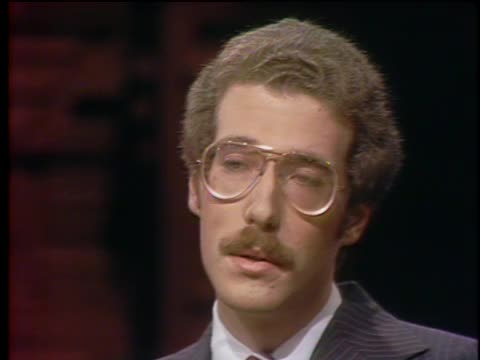
MacNEIL: Thank you. Glenn Gerstell is president of the Ripon Society, an organization of liberal Republicans. Mr. Gerstell has worked for two Republican governors of New York, Rockefeller and Wilson. At age 24, he is the youngest president in the history of the Ripon Society. Mr. Gerstell, how do you think GOP delegates will respond to the Schweiker choice?
GLENN GERSTELL: I think in general it will have an adverse impact on Reagan`s campaign. I suspect that perhaps Reagan will pick up a few delegates in Pennsylvania as a result of the Senator`s appeal in his home state, but I think Reagan runs a very substantial risk of losing a fair number of delegates in the southern states and in the western states probably Mississippi would be the best example where he runs the significant risk of losing the delegates and I think overall that it might hurt his chances at the nomination.
MacNEIL: Mr. Schweiker is apparently going to come into some other states, including New York, to see if he can milk a few delegates for Mr. Reagan. Do you think he`ll have any chance, outside Pennsylvania, of doing that?
GERSTELL: I think it very unlikely. I think Senator Schwieker`s chief appeal would lie primarily in his own home state and I suspect that would not have a significant impact, at least, in pulling Ford delegates away just because of the Senator`s position.
MacNEIL: What do you and Republican liberals in the Ripon Society think the Ford response should be?
GERSTELL: Obviously the first thing for Ford to do is make sure that he obtains the nomination. The second thing, I think, that most moderates are concerned about...
MacNEIL: You regard him as more liberal than Reagan definitely; it`s no choice for you, is that it?
GERSTELL: The Ripon Society has endorsed President Ford, and we think he is definitely preferable to Governor Reagan. We have our qualms with the President, and disagree over certain issues, but we have endorsed him and support him. I would say in general that Ripon could support both President Ford and a moderate running with him on the trice Presidential ticket and I think it`s absolutely critical that the progressives and moderates within.. the party make sure that President Ford recognizes that he must pick a candidate who could appeal to the northern and industrial states for the general election in November.
MacNEIL: But of course he, if he doesn`t follow Reagan`s suit, would only have to do that after he has extorted the nomination himself, and he wouldn`t run the risk of offending conservative delegates like Mr. Reagan.
GERSTELL: I think it`s highly unlikely that he would announce at this stage that he would be picking a moderate or liberal for fear of offending people, and also we do have a Vice President right now and President Ford is not in a position to pick another one.
MacNEIL: Right. As a liberal yourself, does it alter your view of Reagan at all that he should have chosen Senator Schweiker? Does it make you think differently about Governor Reagan?
GERSTELL: Not at all. I don`t think the moderate-progressive opinion of Governor Reagan has changed as a result of this move. I think it was a rather last-minute attempt on the part of Governor Reagan to make one last grab at the nomination and that`s what it is seen as by most moderates, and that does not change their opinion of his policies.
MacNEIL: Okay, let`s just go round on this once more and then move on, just see where we are. On balance, do you think Reagan has hurt himself or helped himself, would you like to guess or is it too early to say?
YANKELOVICH: I think it`s a little bit early to say; my guess would be that he would not have helped himself materially.
MacNEIL: Senator, I didn`t actually ask you that directly; do you think on balance he had hurt or helped himself?
MATHIAS: I suspect that he hasn`t changed the convention picture very much one way or another. Should he survive the convention there might be some favorable aspects to it, but I don`t think in the short term it has changed things very much.
YANKELOVICH: There`s one point of irony, I think that the Republican strategy that`s been shaping up has been to attack Carter for the choice of Mondale as a liberal, and should Reagan win on this basis he will have eliminated that as a Republican tactic.
MATHIAS: There`s a still greater irony, and that is that the early Reagan attacks on President Ford centered around the presence of Vice President Rockefeller, who was too liberal.
MacNEIL: Let`s move on to talk about the liberals in the party, that apparently dwindling band. Can I ask you as the man with figures in your head, Mr. Yankelovich, first: in general are we right in thinking that liberals are in serious decline, that the party is increasingly becoming a conservative one and are there any figures to support that?
YANKELOVICH: There have been figures for a number of years that show a steady drawing from both parties to the independent camp and there have been more liberals draining from the Republican side than from the Democratic side,, with Republicans representing about 18 percent of the electorate. The former Republican liberals have not switched so much to the Democratic side but they`ve gone into this very large pool of about 40 percent independent.
MacNEIL: Senator, you obviously feel that this decline has been taking place. Do you feel that you liberals have been forced out of the party not you personally, but many liberals have been forced out of the party or they`ve chosen to go away?
MATHIAS: Clearly there has been a little of both; there are some who have felt that the atmosphere was oppressive and that they were forded out; and I think it`s been a very serious loss to the Republican party, not only the fact that we are reduced to 18 or 20 percent of the total electorate but a lot of the creativity that people like Ronny Reid, Edward Bennett Williams, for example -good former Republicans who are now Democrats have brought to the party ...I think it`s a very unhappy development
MacNEIL: But if you`ve lost Edward Bennett Williams, you`ve gained John Connally another lawyer. What do you date this from, Senator, was the incident of Nelson Rockefeller being howled down in that scene at the Republican convention in San Francisco in `64, was that the kind of dying gasp of the liberals as a force in the party did it all date from there?
MATHIAS: I think the seeds were planted even before that, but certainly that was one of the really critical times, when a distinguished Republican, regardless of what his ideological position was, could not address. the Republican National Convention; that we had then, at that moment, crossed a kind of a threshold which was a very dangerous one.
MacNEIL: Why didn`t the liberals then take over the party after the Goldwater debacle later that year, when conservatism was in such disgrace, so to speak? Why didn`t you move in then, and take it over?
MATZHIAS: There was a considerable amount of interest. The Ripon Society is one of the evidences of that, and a lot of activity. The tide simply did not rise high enough at that particular point, unfortunately, and this, I think, has to be recorded as one of the failures of the Republicans that that opportunity, if it was a real opportunity, was missed.
MacNEIL: Where do you think that the Republicans have gone - do you agree with Mr. Yankelovich that the liberal Republicans have moved into the independent category or do you think a lot of them have moved into the Democratic party?
MATHIAS: No, very clearly a lot of them have gone into the independent categoryand of course it`s very difficult to say exactly because some states don`t register voters by party which may now be the biggest political party in America. There are also a lot of Democrats who have drifted off into that independent group and I think the attracting of these people back to active political life is one of the most important things that can be done for America ...not only getting back these people who have drifted out of political life, but look at the low turnouts of voters in elections. These people people who don`t even vote or register need to be awakened to the opportunities of political participation. This is the great challenge of American leadership, and I must confess, I see very little evidence that that particular challenge is being met in this campaign to
MacNEIL: Let`s ask Mr. Gerstell of his experience in the Ripon Society. I read in the New York Times today that one Pennsylvania delegate, an uncommitted delegate, said that he was "shocked, hurt and confused by the Schweiker choice" and then he added, "Ile don`t need liberal Republicans." Do you encounter that in the Ripon Society?
GERSTELL: Obviously we encounter it, but I don`t think that represents the views of the majority of Republicans and I guess the best proof of that is the fact that a conservative such as Governor Reagan himself felt the need to select a moderate Republican to be his Vice Presidential running mate. So I couldn`t think of a better proof-positive that there`s a role for the progressives within the party.
MacNEIL: What`s happened to your membership over the last eight years or so during the Nixon years symbolizing liberalism in the party as you do, what`s happened to it?
GERSTELL: If you use the Ripon membership as an indicator, I think we suffered a downturn during the Watergate problem, and in the past few months and the past year in general it`s been increasing.
Part of that you have to ascribe to the increased interest in a political election year, but part of it is, I think, also is the recognition that there is a definite role for moderates to play within the party.
MacNEIL: Do you feel at all that paradoxically Governor Reagan, the arch- conservative, has brought liberal Republicans back into the limelight by choosing Schweiker has he made you more respectable?
GERSTELL: I think we were always respectable; I think the only question is whether Governor Reagan`s positions were very respectable. But it has obviously brought the role of the moderate Republicans into the limelight in the sense that they`re in the news for a few days but they`ve been quite strong. There are a number of candidates running for Senate and Governor around the country this year, which was not the case in `74, who are fairly moderate and progressive; and I think were Ford tc win, or be the running mate, these people might be able to be elected, and as a result there would be an even greater number of moderates in the party.
MacNEIL: Senator, how much was Richard Nixon responsible -and the people who surrounded him for reading liberals out of the party? One of the examples that comes to my mind is the hostility to Senator Goodell`s campaign.
MATHIAS: Of course that had an effect; it mobilized some feeling against progressives in the Republican party and it not only mobilized some party opinion against progressives, but it confused people they didn`t understand it when the President of their party was attacking members of Congress of their party, and it had a divisive effect. In the long run, hostility washed out in all the tragedy of Watergate.
MacNEIL: Why is it when I keep using the term "liberal" you two Republicans here keep using the term "moderates" or "progressive"? What is wrong with the word "liberal", Senator?
MATHIAS: I don`t find anything wrong with the word "liberal" but I think we are talking about the progressive wing of the Republican party; we`re talking about the people who stood with Theodore Roosevelt when the rest of the party left him in the great Bull Moose year of 1912. That is a word of art among Republicans. I think progressive Republicans do have some particular opportunities too. They are trying to bring about a reconciliation within this country; they want to bring a reconciliation among different groups within the country income groups among different ethnic groups, white and black and others. They want to bring about a better coordination between business and government, for example, and I believe progressive Republicans can do this better than any other force in the country today. They don`t bear the burden oœ mistakes of the past that the Democratic administrations do and it`s a real opportunity if we can seize it.
MacNEIL: Has this pre-convention struggle confined, as it seemed to us looking at it from the outside, to conservative arguments, has that reflected the reality of the party; for instance, in delegates to the convention or is it just an appearance on the surface because it`s Ford and Reagan who are doing the competing?
GERSTELL: I think a substantial portion of Reagan`s strength is illusory because in the way in which the delegates are apportioned to the Republican National Convention Reagan in general has the support of southern and western states. These states get far more than their fair share of delegates to the national convention; as a result, if the delegations were apportioned fairly, both on the basis of population and on the basis of party vote, Reagan would not be posing such a substantial threat to Ford.
MacNEIL: But talking about the decline of liberalism in the party, that was a battle you liberals lost in the convention in 1972, when the rules were being debated; there was a long battle over that and you significantly lost it.
GERSTELL: There was a long battle over it, but one .of the points that we like to point out is that in a way we won, because the delegate allocation formula was changed in 1972. The moderates and the Ripon-Society had proposed a formula which we thought was warfare; another formula was proposed by the conservatives, but that formula, which won, was still an improvement over the old formula, which favored the smaller states and the western and southern states even to a much greater extent...so there was a victory and in part that was a result of litigation commenced by the Ripon Society.
MacNEIL: Do you detect, in the delegates to the Republican convention this year, a significant liberal spirit or is it overwhelmingly conservative?
YANKELOVICH: I detect no significant liberal spirit. I think that the coloration is conservative it does reflect the fact that both the candidates are somewhat conservative, and -I think I would agree with the point of view that that doesn`t necessarily reflect either the country or the Republican party in the country. But I think that the delegates are mole conservative than the party.
MacNEIL: Do you have any regrets, Senator Mathias, in conclusion, that you didn`t pursue your idea of running yourself this year for President? MATHIAS: No, I think the decision I made was a sound one. I will continue to work, at least for the time being, within the Republican pasty to try to restore that breadth of representation in the party, and I hope that the results in November will justify that.
MacNEIL: How would a liberal like Senator Mathias have fared had he run this year, considering that Ford and Reagan were occupying so much of one corner of the argument?
GERSTELL: I think probably within the Republican party any liberal would have a fair amount of problem within the party itself just because of the nature of the party structure, but I think at the election in November, which is what counts, a liberal Republican would stand a significantly greater chance of election than a conservative one.
MacNEIL: Do you think it would have been impossible if Ford and Reagan had fought each other off, that a liberal might have slipped in?
YANKELOVICH.S think it`s unlikely,-given the complexion of the delegation.
MacNEIL: So you think Senator Mathias, decision was wise.
YANKELOVICH: It`s too bad that he wasn`t in there; he could have had a good chance if he had been able to be nominated.
MacNEIL: Well, thank you all very much. Thank you, Senator, for joining us. Thank you, Mr. Gerstell, Mr. Yankelovich. I`ll be back tomorrow night, I`m Robert MacNeil. Good night.
- Series
- The Robert MacNeil Report
- Episode
- Reagan and Richard Schweiker
- Producing Organization
- NewsHour Productions
- Contributing Organization
- National Records and Archives Administration (Washington, District of Columbia)
- AAPB ID
- cpb-aacip/507-d21rf5m40d
If you have more information about this item than what is given here, or if you have concerns about this record, we want to know! Contact us, indicating the AAPB ID (cpb-aacip/507-d21rf5m40d).
- Description
- Episode Description
- This episode features a discussion of Reagan's selection of Richard Schweiker as running mate. The guests are Daniel Yankelovich, Glenn Gerstell, Charles Mathias. Byline: Robert MacNeil
- Created Date
- 1976-07-27
- Topics
- Politics and Government
- Rights
- Copyright NewsHour Productions, LLC. Licensed under a Creative Commons Attribution-NonCommercial-NoDerivatives 4.0 International Public License (https://creativecommons.org/licenses/by-nc-nd/4.0/legalcode)
- Media type
- Moving Image
- Duration
- 00:31:03
- Credits
-
-
Producing Organization: NewsHour Productions
- AAPB Contributor Holdings
-
National Records and Archives Administration
Identifier: 96230 (NARA catalog identifier)
Format: 2 inch videotape
If you have a copy of this asset and would like us to add it to our catalog, please contact us.
- Citations
- Chicago: “The Robert MacNeil Report; Reagan and Richard Schweiker,” 1976-07-27, National Records and Archives Administration, American Archive of Public Broadcasting (GBH and the Library of Congress), Boston, MA and Washington, DC, accessed April 1, 2026, http://americanarchive.org/catalog/cpb-aacip-507-d21rf5m40d.
- MLA: “The Robert MacNeil Report; Reagan and Richard Schweiker.” 1976-07-27. National Records and Archives Administration, American Archive of Public Broadcasting (GBH and the Library of Congress), Boston, MA and Washington, DC. Web. April 1, 2026. <http://americanarchive.org/catalog/cpb-aacip-507-d21rf5m40d>.
- APA: The Robert MacNeil Report; Reagan and Richard Schweiker. Boston, MA: National Records and Archives Administration, American Archive of Public Broadcasting (GBH and the Library of Congress), Boston, MA and Washington, DC. Retrieved from http://americanarchive.org/catalog/cpb-aacip-507-d21rf5m40d