The NewsHour with Jim Lehrer
- Transcript
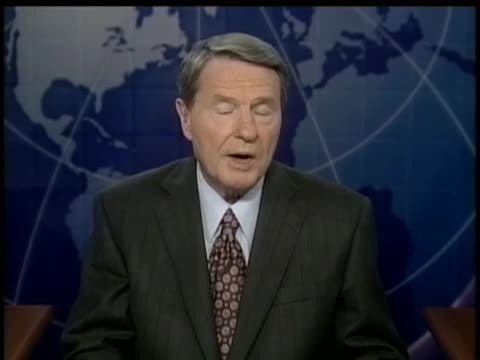
JIM LEHRER: Good evening. I`m Jim Lehrer.
On the NewsHour tonight: the news of this Monday; then, full coverage of North Korea`s announcement of a nuclear test, how to confirm it, and what the world should do about it; a pair of Media Unit conversations about the perils of reporting in Russia and Chechnya and in Darfur; an update on the move to ban abortions in South Dakota; and a remembrance of baseball legend Buck O`Neil.
(BREAK)
JIM LEHRER: North Korea announced today it carried out its first nuclear test. South Korean officials confirmed an underground blast. They estimated it was much smaller than the atomic bombs dropped on Japan in World War II. Russia said the explosion was far more powerful than that, and definitely nuclear.
In Washington, President Bush said the U.S. was trying to confirm the North Korean claim, but he said the claim itself was "unacceptable."
China, Russia, and Japan also condemned the announcement. The U.N. Security Council did the same. U.S. Ambassador John Bolton said he was pleased by the unified response.
JOHN BOLTON, U.S. Ambassador to the United Nations: That`s remarkable in the Security Council, as some of you may know, to have a unanimous condemnation of the North Korean test. No one defended it; no one even came close to defending it. Admittedly, these are preliminary responses, but the unanimity of the council on the need for a strong and swift answer to what everyone agreed amounted to a threat to international peace and security.
JIM LEHRER: The Associated Press reported the U.S. wanted a U.N. ban on military trade with North Korea and other steps. North Korea`s ambassador said the Security Council should congratulate his country, which is officially known as the Democratic People`s Republic of Korea.
PAK GIL YON, U.N. Ambassador, North Korea: The nuclear test in the DPRK will greatly contribute in increasing the war deterrence of the DPRK, as well as it will be contributable for the maintenance and guarantee in peace and security in the Peninsula and the region.
JIM LEHRER: We`ll have more on this story right after the news summary.
Amid the focus on North Korea, the U.N. Security Council officially nominated South Korean Foreign Minister Ban Ki-Moon to be secretary- general. He pledged to work to resolve the crisis over North Korea`s nuclear program. Ban`s nomination goes to the General Assembly for final confirmation; the term of the current secretary-general, Kofi Annan, expires at the end of this year.
The brother of Iraq`s Sunni vice president was killed by gunmen today in Baghdad. He`s the third of the vice president`s siblings killed this year.
Elsewhere in Baghdad, at least 12 more Iraqis died in a car bombing, and 11 Iraqi soldiers were kidnapped. To the south, there was heavy fighting Sunday as U.S. and Iraqi troops searched for Shiite gunmen who killed 11 Iraqi soldiers in August.
And the U.S. military said four more Americans died in the last 24 hours.
The page scandal in the United States House took another twist today. It turned out Republican Congressman Jim Kolbe learned of contacts between then-Congressman Mark Foley and a former page back in 2000. That`s several years before Republican leaders say they found out.
The Washington Post reported Kolbe confronted Foley over Internet messages he sent to the teenager. It was unclear if anything more was done.
The Internet search engine Google agreed today to buy the video- sharing site YouTube. The deal was worth more than $1.6 billion in stock. It joins two of the most popular Internet brands, and it gives Google a major new role in online video.
American Edmund Phelps won the Nobel Prize in Economics today. He`s a professor at Columbia University in New York. In the 1960s, his work re- examined the relationship between inflation and unemployment. He advanced new understanding of tradeoffs between full employment, stable pricing, and rapid growth.
On Wall Street today, the Dow Jones Industrial Average gained seven points to close well above 11,857. The Nasdaq rose more than 11 points to close at 2,311.
And that`s it for the news summary tonight. Now: the North Korea nuclear crisis; two reporting danger stories; an abortion vote; and farewell, Buck O`Neil.
(BREAK)
JIM LEHRER: That North Korean nuclear test. We begin with a report narrated by NewsHour correspondent Kwame Holman.
KWAME HOLMAN: North Korea used state television today to tell the world it conducted its first nuclear test. Reading a government statement, the announcer called it a "historic event" and a "great leap forward" in the building of a "great, prosperous, powerful socialist nation."
Several world geological agencies confirmed that a tremor originated about 240 miles northeast of the capital, Pyongyang. Condemnation was swift from world leaders.
In Washington, President Bush was warned the test was imminent moments before it went forward late last night. This morning, he spoke to reporters at the White House.
GEORGE W. BUSH, President of the United States: The United States condemns this provocative act. Once again, North Korea has defied the will of the international community. And the international community will respond.
The North Korean regime remains one of the world`s leading proliferator of missile technology, including transfers to Iran and Syria. The transfer of nuclear weapons or material by North Korea to states or non-state entities would be considered a grave threat to the United States, and we would hold North Korea fully accountable the consequences of such action.
KWAME HOLMAN: Russian President Vladimir Putin also denounced North Korea`s action and appealed for an international response.
VLADIMIR PUTIN, President of Russia (through translator): It doesn`t just concern North Korea. Enormous damage has been done to the process of non-proliferation of weapons of mass destruction in the world. I hope North Korea will return to the negotiating process.
KWAME HOLMAN: The North`s neighbors, including South Korea, China and Japan, expressed worry the regional balance of power would be disrupted by a new nuclear state. China, a long-time ally of North Korea, called their test a "brazen act" and said the North "defied the universal opposition of international society."
South Korea immediately increased military readiness along the heavily armed border, and its president, Roh Moo-Hyun, appealed for immediate action by the U.N. Security Council.
ROH MOO-HYUN, President, South Korea (through translator): It is better for the government to face this crisis full-on and share opinions internally and externally, rather than cope with it urgently and arbitrarily. South Korea will seek a stern yet calm and strategically coordinated measure to deal with the nuclear crisis.
KWAME HOLMAN: Roh also said the development would make it more difficult for the South to pursue reconciliation talks with the North.
In Seoul, protesters gathered this evening for a candlelight vigil. They also burned pictures of North Korean leader Kim Jong Il.
Japanese Prime Minister Shinzo Abe, who was in South Korea for a summit, said the test marked a new era in Asia.
SHINZO ABE, Prime Minister, Japan (through translator): The development and possession of nuclear weapons by North Korea will in a major way transform the security environment in North Asia, and we will be entering a new, dangerous age.
KWAME HOLMAN: North Korea long has claimed it had the capability to produce a nuclear bomb. In 2003, it withdrew from the non-proliferation treaty after expelling international inspectors. The North also has refused to return to six-party talks with the U.S., Russia, China, South Korea and Japan on its weapons program. It abandoned them last year.
Instead, North Korea demanded bilateral talks with the U.S. And last July, it again defied international pressure and tested seven missiles, similar to this one launched in 1998. In New York, members of the U.N. Security Council met in a closed emergency session to consider efforts to bring North Korea back to six-party talks.
U.S. Ambassador to the U.N. John Bolton said the U.S. is seeking sanctions to curb North Korea`s import and export of weapons components.
JIM LEHRER: And to Margaret Warner for more on what the North Koreans actually tested today.
MARGARET WARNER: And for that, we go to Sigfried Hecker. He`s the former director of the Los Alamos National Laboratory. He`s twice been to North Korea. And he joins us now from Stanford University, where he is a visiting fellow at its Center for International Security and Cooperation.
Mr. Hecker, thank you for joining us.
How persuasive do you find the evidence or the signs that, in fact, this explosion was nuclear?
SIGFRIED HECKER, Former Director, Los Alamos National Laboratory: Good evening, Margaret. Thank you for having me.
At this point, it`s still very early to tell. Until we get a full analysis of the seismic signals, it`s difficult to tell. But what we know at this time is that the estimates from the scientific stations close to North Korea would peg this at perhaps half-a-kiloton to one-kiloton yield, in which case would certainly put it into the realm of a real nuclear explosion, although quite of low yield.
MARGARET WARNER: Now, if we say it`s a nuclear explosion, what does that really mean? Does that mean they have a nuclear bomb, or is it some other sort of device?
SIGFRIED HECKER: Well, one sometimes differentiates between a device and a bomb of the bomb being deliverable, and that is it`s actually made to a delivery vehicle, in other words, being able to be put into a plane or put on a missile. But the bottom line is, at one kiloton, it would be a bomb. One kiloton set off in Manhattan would be a catastrophe.
MARGARET WARNER: And when you say "deliverable," would something of the nature that -- let`s say it`s one kiloton, for the purposes of argument. Is that deliverable in some way that is less sophisticated than a missiles, for example, on a tanker?
SIGFRIED HECKER: Well, it`s not at all clear, you know, how sophisticated their device is. One would have expected them to test something that`s quite primitive on the order of, let`s say, the plutonium bomb used in Nagasaki. There we`re talking about 10,000 pounds. Perhaps they`ve made it somewhat smaller than that, but nevertheless that`s more for deliverable on a tanker or perhaps a big plane, not on a missile.
MARGARET WARNER: Now, explain to us how there can be such a disagreement about even the size of this explosion. As you said, I think the South Koreans are saying, it`s about a kiloton. I think the Australians, that was their estimate. The Russians were saying five to 15. What are these different seismologists looking at? And how can they come up with such different analyses?
SIGFRIED HECKER: I haven`t seen any of the actual data, but some of the scientific networks, one has heard half a kiloton from South Korea, one kiloton or so from Australia, and one kiloton from France. The Russian message was delivered by a politician and not by a scientist. I`m not quite sure how authoritative that is.
At the half- to one-kiloton, that would not be that unusual a variation. And, of course, since what we`re talking about in a seismic signal is we`re listening, and that means the closest listening point would have the best opportunity to pick up the signal, and that would be South Korea. But in all fairness, we still need to wait a few days until all the data can be analyzed.
MARGARET WARNER: Now, that`s what U.S. officials have been saying, that it will take intelligence analysts several days to figure out what really happened. What will they be looking at? What evidence will they have that they don`t have now?
SIGFRIED HECKER: Well, it`s just matter of doing the analysis of the seismic signal itself to make sure that one understands the seismic signal and whether one can tell where there`s some specific indication as to whether this might have been, indeed, a nuclear test. So analyzing the signal would be the first important aspect.
The second one is, you have to translate the seismic signal into what the energy of the explosion was -- in other words, what the yield was --and that takes a good understanding of the geology of where the test was actually conducted.
And so it would not be surprising that scientists would differ, and so I would expect scientists to compare their notes, analyze the seismic signal, use their models to make a yield prediction.
MARGARET WARNER: Now, if it were one kiloton, is it feasible, is it possible that that could be done by just thousands of tons of conventional explosives?
SIGFRIED HECKER: That gets on the high side, but it still would be possible to do.
MARGARET WARNER: It would?
SIGFRIED HECKER: Yes.
MARGARET WARNER: Now...
SIGFRIED HECKER: But at one kiloton, we would be looking at something that really looks more like a nuclear explosion than a conventional. Of course, the other aspects, what one could look for is whatever evidence we may have had ahead of time as to what actually went into the areas where the nuclear explosion took place.
MARGARET WARNER: Now, finally, how good, how developed is their missile technology now?
SIGFRIED HECKER: I`m sorry. Could you repeat that?
MARGARET WARNER: How well-developed is the North Koreans` missiles technology? Their last test was in July.
SIGFRIED HECKER: Right. Of course, the missile tests are a very different issue. The question is, you know, could they have developed a device that actually fits on a missile? My own opinion of that is that, whereas they could have some reasonable confidence in a primitive device, and that is a big device of the order of Nagasaki, it would be very difficult to have confidence in a small device that you can fit on a missile.
I would also find it surprising, if they tested such a small, you know, miniaturized advanced design first. And so in most likelihood, at least what one does in mirror imaging, is that it was a primitive device at low yield. There`s no indication at this point whether they`ve done anything with an advanced design.
MARGARET WARNER: All right. Sigfried Hecker, thank you so much.
JIM LEHRER: Now, what the rest of the world can do about what North Korea has done. Edward Luck is director of the Center on International Organization at Columbia University. He`s the former president of the United Nations Association of the U.S.
Don Oberdorfer is chairman of the U.S.-Korea Institute at the Johns Hopkins School of Advanced International Studies. He has written frequently about Korea as an author and earlier as diplomatic correspondent for the Washington Post.
Don Oberdorfer, what`s your best analysis of why North Korea did this right now? What are they up to?
DON OBERDORFER, U.S.-Korea Institute, Johns Hopkins: North Korea has wanted nuclear weapons for a very long time, really been working on it since the 1960s. They feel surrounded.
If you look at the Korean peninsula, this is a little thing coming down from the mainland of Asia, a little peninsula, surrounded by Japan, China and Russia, three of the great powers of the world. South Korea has turned its eyes outward to deal with the rest of the world. North Korea did the opposite and tried to shut up the country, turned inward.
But they feel threatened. And when somebody feels threatened, if you keep pushing them, and pushing them, and pushing them, as some of their colleagues in some the other countries do, they want to get the best weaponry, the most powerful weaponry. It`s now a military-first state. Shortly before the United States...
JIM LEHRER: Military-first state, meaning what?
DON OBERDORFER: Meaning that the military has more authority there than anybody else. Of course, they`re the guys with the guns.
JIM LEHRER: Sure.
DON OBERDORFER: But they have been proclaimed -- Kim Jong Il has proclaimed a military-first policy.
Shortly before the United States invaded Iraq, I was in North Korea. And a North Korean general said to me, "We see what you`re getting ready to do with Iraq, and you are not going to do it to us." And I think his message was: We`re going to get weapons that are going to make you pause if you think about coming after North Korea.
JIM LEHRER: Mr. Luck, what would you add to that?
EDWARD LUCK, Center on International Organization: Well, I think we have to see the contrasts between South Korea today with its foreign...
(CROSSTALK)
JIM LEHRER: No, I mean, excuse me -- I`m sorry, to the specific question of why North Korea did this today. What are they up to? The same question I asked Don to begin with.
EDWARD LUCK: Right. Well, I mean, I was saying that I think there`s a great contrast between their view of the world and that of South Korea. North Korea really doesn`t seem to have anything else going for it.
And I think he`s right: They want a deterrent. They want to be able to stop any kind of military intervention there with this. But at the same time one has to ask: What else is going on in that society?
JIM LEHRER: Sure.
EDWARD LUCK: It`s one thing to have a military-first policy, but if your economy is falling apart, you`re repressing your people, then really you`re not having any other choices.
So I think it`s a question maybe not of threatening North Korea, but of convincing them that the cost of going this direction, of developing nuclear weapons, is, in fact, not worth paying and there may be some inducements to try to make peace with the rest of the world, change their direction, and give up on this nuclear quest.
JIM LEHRER: Well, moving onto that, at the United Nations Security Council today, the U.S. ambassador -- we heard him say it in our news summary -- that this was an unusual, extraordinary event today, where everybody in the Security Council agreed. Nobody spoke up on behalf of North Korea. First of all, do you agree that`s an extraordinary event? And how important is it?
EDWARD LUCK: Well, it`s certainly a very important event. We`ve noticed, though, in the last few years there has been a lot of agreement in the Security Council on a number of important issues, not all of them, but a lot of resolutions that have passed by very large majorities, very often by consensus.
And I think this is a kind of issue that unites countries, by and large. It`s also the kind of issue on which no one is going to take the North`s side of this. And we should remember that, in the six-party talks with the North, you`ve had the U.S., you`ve had China, Russia, three permanent members, and you`ve had Japan, which happens to be the president of the Security Council this month. So all the big players, I think, are on the same side.
JIM LEHRER: Don Oberdorfer, as a practical matter, what can the U.N. Security Council do now that might, might be effective?
DON OBERDORFER: Well, of course, they`re going to pass a resolution, but that`s not going to solve anything in itself. As I understand it, the United States is asking the Security Council for the authority to stop and inspect all shipping going in and out of North Korea, which sounds like a pretty draconian, ineffective thing, except that most of what goes into North Korea does not go by water. It goes from China overland -- there`s a huge, long border between China and North Korea -- or it comes from South Korea, which, of course, goes right across the demilitarized zone.
On this issue about the unanimity of the Security Council, let us not forget that, last July, after North Korea fired these ballistic missiles test on July 4th, our time, July 5th their time, the Security Council passed a unanimous resolution that the Chinese actually wrote which condemned North Korea.
Now, this is something new: China is their main backer. They`re also the main supplier of food and energy from the outside. And for the Chinese to begin to take a different attitude toward North Korea may be an extremely important thing, and they voted for that. In fact, they wrote the resolution.
So, to me, the most interesting thing here is: What are the Chinese going to do in these circumstances?
JIM LEHRER: What do you think, Mr. Luck, that the Chinese will do? And do you agree with Don Oberdorfer that they`re the important player right now?
EDWARD LUCK: Well, they certainly are. I think Don is right about that. China is critical to all of this, not only because of its position on the Security Council, but also obviously its position and the aid it`s been giving to North Korea.
I hope that China will at least abstain on a resolution invoking sanctions. Occasionally, China has voted for those kinds of resolutions, but they`re very sensitive about sanctions for fear that some day they might be aimed towards them.
So I would hope that China would, in fact, be policing its border, watching the things coming out of Korea, and would agree to a multilateral sanction, in terms of an embargo on any kinds of military technology going in and out of North Korea that in any way could assist this effort.
I don`t think it`s such a bad thing that so much of the traffic goes through China. It`s time now for the Chinese to stand up. If they`re serious about this -- after all, North Korea has embarrassed Chinese diplomacy very much -- then they have a chance to crack down right on their border and put some real pressure.
I think the North Koreans, among other things, don`t believe all the words that they`re hearing from the international leaders and from the Security Council. This has to be backed up.
We`re seeing the same problem with Iran. If we don`t want to go to a world with many nuclear powers, are we going to have to put our acts in order here and not just talk about these things, but actually have our deeds follow our words?
JIM LEHRER: Well, what do you think would be the most effective thing that the international community could do to get the message to North Korea that it needs to hear?
EDWARD LUCK: Well, first of all, I think it has to be united. That`s very important. So the fact that the condemnation of the tests made by the council on Friday was absolutely united, the fact, I think, that they`re going to have, if not a united resolution, something very, very close to it, saying that, in fact, this is a threat to international peace and security.
That`s the main thing. North Korea has to realize that it can`t play splitting tactics with the major powers, that we`re all in this together, we all basically have the basic position. While you have to, at the same time, I think, offer some carrots -- and the U.N. can do that. I mean, the World Food Program has had a major role in the past in providing food.
If you go to any kind of inspections eventually on the North Korean nuclear program, it`s probably going to be through the International Atomic Energy Agency. The secretary-general can offer a mediation service over time. It would be very odd if this happens after January, with the former foreign minister...
JIM LEHRER: Former minister of South -- yes.
(CROSSTALK)
EDWARD LUCK: ... of South Korea, but there`s many things the U.N. can do to be helpful.
JIM LEHRER: Do you see a hopeful scenario, Don Oberdorfer?
DON OBERDORFER: Not much, I have to say. The U.S. and its allies and friends in Asia are all united in condemning the tests, but they`re not united about what to do about it.
The Chinese are very worried about anything that seems like it`s going to bring down the North Korean regime; that would mean millions of poverty- stricken North Koreans flooding into China. Moreover, it would mean, if they were united with South Korea, a border with a country that is an ally of the United States. China does not want that.
South Korea is very cautious. They`re the same people, South Koreans and North Koreans, and they want to get along with North Korea.
So U.S. and Japan are pushing for very tough sanctions, but the Chinese and the South Koreans are going to be very weary of anything that they think is going to bring down the North Korean government or in some way greatly impede the process of government in North Korea. And how you attack their nuclear ambitions without causing a big upset within the country, that would be a very difficult thing to do.
JIM LEHRER: Do you agree with that, Mr. Luck, that there`s an awful lot of downside here that, as well as the scenario you outlined, this could happen, this could happen, and this could happen? But what do you think of what Don just said?
EDWARD LUCK: Well, I think basically he`s on the right track. I mean, there`s a balancing act here. We`re not trying to starve the people any more than they already are in North Korea. Whatever kinds of sanctions should have major exemptions for food, for medical, for these kinds of things, certainly all the humanitarian kinds of exemptions.
But you can crackdown on technology related to the military. It seems to me that`s absolutely critical, and you can make that differentiation. You know, we`ve tried it in the past. Sometimes it`s worked; sometimes it hasn`t. In Iraq, it was a fairly mixed case.
But this case, the fact that North Korea has very few outlets, the fact that China is so critical to its exports, the fact that you can, in fact, if you have an international sanction, you can block ships going in and out, inspect them. Obviously, South Korea is not going to help the North build its nuclear capability.
And I think Don`s comment about South Korea being such an ally of the U.S. I think is an interesting point, but I`d be a little more nuanced. When it comes to dealing with North Korea, the South has taken a rather different and somewhat softer view than Washington has, certainly encouraging dialogue. Its Sunshine Policy towards the North has not been particularly welcome with the Bush administration.
The fact that China agreed that the foreign trade minister of South Korea was the right person to head the U.N. is quite striking. If China thought that he was simply in the U.S. back pocket, I don`t think they`d take that position.
So I think Korea has grown up, at least South Korea has. It`s a country now that can stand on its own feet. It`s been extremely successful. And I think it can talk back to the U.S., to China, and some of the others, and have quite an independent foreign policy. And someday the North might recognize this, as well.
JIM LEHRER: What do you say to that?
DON OBERDORFER: Well, I don`t want to be misunderstood about South Korea. I said the Chinese are wary of having a united Korea on their border allied to the United States, because they don`t want the U.S. or U.S. troops on their border.
You know, what the U.N. is trying to do or talking about is trying to isolate the already most isolated countries, probably, in the world, as a major country. They have isolated themselves. And so to try to exert pressure against North Korea, which is already so isolated, by isolating them more, it`s not in my mind a recipe for great success.
I don`t know how the world community can operate with this. I think Mr. Luck is entirely right that there needs to be an effort to get everybody together on the same page, not just to condemn -- of course, we can all do that...
JIM LEHRER: Sure.
DON OBERDORFER: ... but to decide what to do next about North Korea. And I`m not sure that will happen. I hope it will happen, because I think it`s the only way to deal with what is a major new problem for the world.
JIM LEHRER: All right, gentlemen, thank you both.
EDWARD LUCK: Can I make a comment on that?
JIM LEHRER: Yes. One sec. Do you agree it`s a major new problem for the world?
EDWARD LUCK: It`s a major problem. I wish it was (inaudible) but it certainly more than crosses the threshold. It`s a very, very serious threat.
But just one thing: I don`t think the effort of the U.N. is to try to isolate North Korea. It seems to me the U.N. is one of the few places where it actually sits as a full-fledge member, with the same vote as the U.S. and the General Assembly.
JIM LEHRER: All right.
EDWARD LUCK: The fact that the U.S. and North have had meetings, they`ve been at their missions at the U.N., because it`s a place where they all can meet even if you don`t recognize each other.
JIM LEHRER: We take your point, and we thank you both very much.
(BREAK)
JIM LEHRER: Coming up on the NewsHour tonight: an abortion vote in South Dakota. They follow -- whoops. There`s also another story coming up. There`s a -- but they follow two stories, from two different countries, of journalists and the dangers of reporting. Jeffrey Brown has our Media Unit report.
JEFFREY BROWN: Mourners continued today to lay flowers outside the apartment of a prominent journalist shot to death in Moscow Saturday. Anna Politkovskaya, known for her critical coverage of the war in Chechnya, was found dead in her apartment building. The 48-year-old special correspondent for the independent newspaper, Novaya Gazeta, died from gunshot wounds, one to the head.
The death was the most high-profile slaying of a journalist in Russia since the July 2004 assassination of Paul Klebnikov, the U.S.-born editor of the Russian edition of Forbes magazine.
The Committee to Protect Journalists reports that Russia is the third- deadliest country in the world for journalists over the past 15 years, behind only the conflict-ridden countries of Iraq and Algeria. A new report found that 42 journalists had been killed in Russia since 1992, many of them slain in contract-style executions, and the vast majority unsolved by Russian authorities.
In Moscow this weekend, there was public outrage.
RUSSIAN CITIZEN (through translator): If we don`t defend ourselves and the people don`t defend journalists, more journalists will be killed. This is for sure, because the unlawful government in power is corrupt and thieves are always afraid of the truth.
RUSSIAN CITIZEN (through translator): She did a lot for Russia. If there were more journalists like her, the country would become more democratic, more prosperous, and more fair.
JEFFREY BROWN: Today, Russian President Putin, in a phone conversation with President Bush, said, quote, "All necessary efforts will be made for an objective investigation into the tragic death of the journalist," according to the Kremlin.
More on this now from Nina Ognianova, program coordinator for Europe and Central Asia for the Committee to Protect Journalists, an independent organization that works on press freedom issues worldwide.
What more, if anything, is known at this point about who might have been behind this killing?
NINA OGNIANOVA, Committee to Protect Journalists: What we know is that Anna Politkovskaya was just about to release a report this Monday about alleged torture in Chechnya by the military services under the command of the Kremlin-appointed prime minister, Ramzan Kadyrov. Several reports in the Russian media said that Anna Politkovskaya was ready to release the material and was actually in possession of two photographs of the alleged torturers, but after her tragic death, the two photographs actually disappeared.
JEFFREY BROWN: Tell us a little bit about her work over the years in Chechnya. What did she write about? How did she go about doing it?
NINA OGNIANOVA: She was very unique for Russia, and she is irreplaceable. Her loss is going to be a great loss, not only for her country, but for the people of Chechnya, in particular, whom she covered with great concern.
She was one of the very few who made frequent trips to the conflict- ridden Chechnya and, for seven years, had covered the Second Chechen War. She concentrated on human rights abuses by the Russian military there on civilians, but also wrote about the dismal conditions in which Russian federal officers, Russian federal soldiers had to operate there.
So her reporting was very compassionate and uncompromising in portraying the human story behind the war.
JEFFREY BROWN: And she had been a very strong critical voice of President Putin.
NINA OGNIANOVA: Yes.
JEFFREY BROWN: She had clearly lived with a lot of danger herself. I understand there had been previously threats on her life.
NINA OGNIANOVA: Yes, Anna Politkovskaya was threatened. She was jailed. She was forced into exile. And she was poisoned en route to her trying to cover the hostage crisis in Beslan in 2004.
In 2001, she wrote a very touching story about missing persons in Chechnya. Following that story, she received death threats by a Russian military officer who pledged that he will go to Moscow, and find her, and kill her. Following that, these threats, Novaya Gazeta insisted that she flee the country, and she fled to Austria for several months.
Afterwards, she continued pursuing this lost story, and I say a lost story for the Russian media, because there were only a couple of -- a handful of media that report on the war on Chechnya in Russia. And she continued talking about the human rights abuses that were committed there, that are being committed there, and not only writing about them, but also making presentations, giving radio and television interviews.
So she was really unique in her position in her visibility to get the story about Chechnya out there, not only for Russians, but also for the international media.
JEFFREY BROWN: And just to place her within the Russian media, she was somewhat unique in working for one of the few independent newspapers, I gather?
NINA OGNIANOVA: Yes. Novaya Gazeta, indeed, is one of the very few news media that cover the war on Chechnya. The broadcast system is entirely controlled by the Kremlin. There are only, as I said, a handful of publications that do independent and balanced reporting and critical reporting of the Kremlin.
Something somewhat ironic is that Anna Politkovskaya was actually gunned down in Moscow on Vladimir Putin`s birthday on Saturday. So she was really unique, and she will definitely be very, very missed.
JEFFREY BROWN: And finally, we reported that President Putin had told President Bush that this would be investigated, but the fact is that most of these recent killings of journalists, as I understand, have not been solved?
NINA OGNIANOVA: Yes, well, one clarification is that Putin actually never made a public statement to condemn the murder; that was a conversation that was between the president on an unrelated topic, and he just interjected. That was interjected within the conversation.
But today, as of 6:00, there was no public statement released by the president to either condemn the murder or to offer condolences to the family. And, yes, none of the 13 now contract-style killings of journalists that were committed in Russian under President Putin`s tenure have produced any convictions, and definitely none of these cases has the mastermind been identified and prosecuted.
JEFFREY BROWN: All right. We`ll have to leave it there, Nina Ognianova. Thank you very much.
NINA OGNIANOVA: Thank you.
JEFFREY BROWN: Now to our second story. In early August, reporter Paul Salopek, his translator and driver were stopped while traveling in the Darfur region of western Sudan. For the next 34 days, they were held in a variety of jails, first by members of the militia, later by the Sudanese government.
Salopek and his colleagues were charged with spying, spreading false news, and entering Darfur without a visa. They endured beatings, long interrogations, solitary confinement, and threats with long imprisonment and death before an international outcry led to a pardon on September 9th.
Salopek, a two-time Pulitzer Prize-winner, was on a freelance assignment for National Geographic when he was arrested. Yesterday, for the first time, he wrote the story of his ordeal and of the worsening situation in Darfur in his own newspaper, the Chicago Tribune. He joins us now.
Welcome to you.
PAUL SALOPEK, Reporter, Chicago Tribune: Thank you.
JEFFREY BROWN: The only one of these charges that was true was that you entered Darfur without a visa. Give us a little sense of what it`s like to report in this region.
PAUL SALOPEK: In a chaotic region such as the Chad-Sudan border, there basically isn`t a border. It`s open desert area where you have at least six different armed factions roaming around, including bandits. So the notion that there is control of any kind there is nominal at best, and the only way to get the story is to go there.
JEFFREY BROWN: You saw firsthand, through your arrest and then handover, the kind of complexities on the ground, the shifting alliances through what you called a keyhole view, unwanted. Tell us what you saw.
PAUL SALOPEK: Well, we were captured two hours after crossing into the border by a pro-government militia. They held us for three days, separated us immediately. My colleague, Idriss Abdulrahman Anu, my driver, and my translator, Suleiman Abakar Moussa, we were held in separate huts, were not allowed to talk to each other.
And basically we were bargained away, is the sense that I get. After the third day, we were handed over to Sudanese military intelligence for a box of new uniforms.
JEFFREY BROWN: One of the places you were held then was called the "ghost house," kind of clandestine jail. Tell us what those are like? Who was usually held there?
PAUL SALOPEK: After we were transferred to the Sudanese authorities, they flew us by helicopter to a garrison town called El Fasher. And we were taken in a vehicle with tinted vehicles to what was basically a walled compound inside of a military base.
These ghost house, that`s the colloquial term that Sudanese use for clandestine jails where political prisoners are held, interrogated and sometime disappeared. We had no way to get any word out to our embassies or to our families, and we were held there for 10 days incommunicado.
JEFFREY BROWN: Now, you have written now that your real crime was reporting on this humanitarian crisis. Did you feel that the Sudanese ever really believed that you were spying or was this all about intimidation?
PAUL SALOPEK: I picked up from the interrogations, almost from the very beginning, the crude nature of the questioning that went on for day after days that even they did not believe, these spying charges against me. Therefore, I was convinced it was going to be a show trial, a political trial whose purpose was to scare off international reporters from crossing that border again to report on that side of the war.
JEFFREY BROWN: That was the message, "Nobody should tell this story anymore"?
PAUL SALOPEK: That was never explicitly stated, but after 10 days of interrogation, I have no doubt.
JEFFREY BROWN: Based on what you saw, you now write that you see a situation poised to turn worse even within the next few weeks, is that right?
PAUL SALOPEK: That`s correct. Again, a keyhole view, but a unique one in the sense that it was from inside the belly of these security agencies that are prosecuting the government`s war in Darfur. And what I saw, hearing from my interrogators -- interrogations are, after all, two- way streets -- and our jailers that the government is gearing up for a dry- season offensive.
The very jailers who are holding us, the guards who were holding us, were being mobilized and were very frightened. They had no desire to go to war themselves. So I think it`s going to be a very ugly new phase in Darfur, because the rebel factions have atomized.
JEFFREY BROWN: This is after the May peace deal.
PAUL SALOPEK: After the May peace deal.
JEFFREY BROWN: And all of this has fallen apart.
PAUL SALOPEK: You know, they never were completely united. They fought each other before. But now the old alliances have broken up, and they`re shifting. So there`s a lot of confusion on the ground. And some of these groups, unfortunately, have turned into ethnic militias that don`t represent ordinary Darfurian, or certainly not a broad spectrum, and others have devolved into banditry. So it`s a very dangerous time to be in Darfur now.
JEFFREY BROWN: You also wrote in your piece in the Tribune yesterday that paradoxically some on the ground now think that the well-intentioned human rights campaign may have locked things into place in a negative way, unfortunately.
PAUL SALOPEK: Yes. That was a counterintuitive bit of information that I got from two sources, not surprisingly, the Sudanese. The military sources complained bitterly of their treatment at the hands of the western media and felt that they were, having been painted as the devil, had nothing to lose to act like the devil.
You know, on the other hand, certain officials affiliated with AMIS, the African Union peacekeeping force whose job is to broker a cease-fire, were also complaining that right now what they needed was a couple weeks of quiet in order to engage Khartoum, to bring it back to the table before the bloodshed begins.
JEFFREY BROWN: How do you define your role, the reporter`s role, in a crisis like this? Is there a sense of bearing witness to the world?
PAUL SALOPEK: I think that`s a good way of putting it. I certainly don`t consider myself an activist. I`m a reporter. And what I do is go to these places and hopefully portray -- my specialty, anyway, is a grassroots level of reporting -- about what ordinary people are feeling, in this case, what millions of Darfurians are feeling, living in a place that`s a perpetual war zone.
So, yes, it is to go and bear witness and to bring back what people see and tell you.
JEFFREY BROWN: And you`re saying that things may get worse very soon. Will the world have a way of knowing?
PAUL SALOPEK: Well, I certainly think we`re hearing it already. There was a mini-offensive launched in August. Word is starting to percolate out now. We heard aircraft coming in every night over our prison after curfew that our jailers told us were laden with Sudanese troops. And it`s no secret that Sudan is reinforcing its forces in Darfur in contravention of the cease-fire agreement.
The hope, I think, was that they`re hoping a quick knockout blow to the remaining anti-peace rebels would bring them a military advantage before U.N. troops arrive and lock in territorial gains. The rebels feel the same. Whether or not, though, Jeff, this offensive goes ahead or not in this dry season, I think the suffering is going to grow anyway because of the confusion and the violence.
JEFFREY BROWN: All right. Thanks for telling us your story. Paul Salopek of the Chicago Tribune, thanks.
PAUL SALOPEK: Thank you for having me.
(BREAK)
JIM LEHRER: Now, the attempt to repeal an anti-abortion law in South Dakota. We have a report from NewsHour correspondent Fred de Sam Lazaro of Twin Cities Public Television.
FRED DE SAM LAZARO, Correspondent, Twin Cities Public Television: Messages against abortion abound across the prairies and towns of South Dakota. There are displays like these 826 crosses in a fake cemetery representing the number of abortions each year in the state.
Last March, there was a move to reduce that number to almost zero. And on November 7th, voters will be asked to weigh in.
CAMPAIGNER: Hi, how are you today? Good. My name is Mandy. I`m with the South Dakota Campaign for Healthy Families. I`m just going door- to-door tonight talking with folks about our state`s abortion ban.
FRED DE SAM LAZARO: That abortion ban was approved by South Dakota lawmakers earlier this year. It would make the procedure illegal in all cases, except when pregnancy threatens a woman`s life. Sponsors hoped it would be challenged legally and give a newly reconstituted Supreme Court the chance to use it to overturn the 1973 Roe v. Wade ruling that legalized abortion.
State Senator Julie Bartling.
STATE SENATOR JULIE BARTLING (D), South Dakota: There is a movement across this country on the wishes to save and protect the lives of unborn children. As you know, Justice Roberts and Justice Alito were just favorably placed on that bench.
FRED DE SAM LAZARO: Opponents of the new law did indeed plan a legal challenge, but more immediately they petitioned successfully to put the new law on the ballot as a referendum. That means voters would have the chance to vote "yes" if they want it to stand, "no" to throw it out.
CAMPAIGNER: We`ve got it on the ballot. We just need "no" votes. Thank you.
SOUTH DAKOTA RESIDENT: All right. Thanks.
FRED DE SAM LAZARO: According to the most recent polls, 60 percent of South Dakota voters say they oppose abortion, but support for South Dakota`s new antiabortion law drops to 39 percent, many people saying they`re concerned that there are no exceptions for places where the woman`s health is endangered or in cases of rape or incest.
Opponents of the new law have emphasized its lack of exceptions in their campaign.
ADVERTISEMENT NARRATOR: South Dakotans agree: Honor and protect human life. Reduce the number of abortions. But should a woman who`s the victim of rape or incest be left with no option? What about the mother whose health would be seriously threatened?
DR. MARIA BELL, Gynecologic Oncology: This restrictive law only allows an abortion to prevent the death of a pregnant woman, not protect her health.
FRED DE SAM LAZARO: Gynecologist Maria Bell says the new law makes doctors afraid they`ll be prosecuted for treating pregnant women with serious illnesses if that treatment leads to an abortion. She cited one of her recent cancer cases.
DR. MARIA BELL: The first case was a 32-year-old single mother of three who presented for her first prenatal visit at 12 weeks gestation. At the time of her first prenatal visit, she was diagnosed with a large cervical cancer. Unfortunately, by giving her radiation, that would cause an abortion. What does the physician recommend? You can see that this is a dilemma that is gut-wrenching.
FRED DE SAM LAZARO: But Sioux Fall`s family physician Glenn Ridder, who supports the law, says that dilemma is exaggerated.
DR. GLENN RIDDER, Family Physician: We can delay the aggressive treatment, and it`s done all the time. You know, Maria Bell makes it sound like it`s not done at all. And then, when the baby can be delivered, then you can get as aggressive as you want.
FRED DE SAM LAZARO: Are you, in essence, recommending that, in cases in which a mother`s health is endangered by cancer, for example, are you asking her to settle for a less-than-fully aggressive treatment for her cancer until her pregnancy goes to term?
DR. GLENN RIDDER: That is the ethical thing to do, to determine what`s best for both individuals. And that is where the rubber meets the road for the physician.
FRED DE SAM LAZARO: Supporters of South Dakota`s new law argue such cases are very rare and they say only a fraction of abortions result from medical emergencies, incest or rape. And those few women have other options, according to Leslie Unruh, who runs a center that steers women away from having abortions. Unruh leads the "Yes for Life" campaign.
LESLIE UNRUH, Anti-Abortion Activist: So many of the women that have come in here that have talked to me about making the choice of -- if you conceive the child in rape, and then they feel shamed by society that now they`re supposed to have an abortion on top of that. And I just think that`s wrong, and I think that women should deserve more than that.
RAPE VICTIM: I woke up the next day, and I was, like, in my aunt and uncle`s bedroom. And I didn`t have any of my clothes on, and I just kind of panicked. I kind of suspected that there was a date rate drug.
FRED DE SAM LAZARO: In this "Yes for Life" video usually shown at campaign rallies, a young woman says she chose to keep a daughter conceived through rape.
RAPE VICTIM: We went to the emergency room. They offered me the morning-after pill. They asked me if I wanted it, and I told them no.
FRED DE SAM LAZARO: The video notes that the rape victim had the option of emergency contraception, often called the morning-after pill, or Plan B. And even though the new law says life begins at fertilization, its supporters say that option will still be available. In other words, they argue the law doesn`t have to make exceptions for rape or incest because of the availability of the morning-after pill.
LESLIE UNRUH: There`s Plan B, and there is medicine -- it says right in the bill that there`s -- in Section 3 of the bill -- that women can go immediately to their doctor or up to 14 days and they can seek medical care. So that`s not going to change.
FRED DE SAM LAZARO: Opponents of the pill say Plan B is far from effective medically. It`s also not widely available because of restrictive state laws. Bob Burns is a political scientist at South Dakota State University.
BOB BURNS, Professor, South Dakota State University: It`s being argued this is no exception at all, in part because a number of pharmacists refuse to market it and law protects them from not marketing it. Emergency medical personnel are not obligated to counsel rape victims or incest victims of the availability of the morning-after pill. So it`s not readily available.
CAMPAIGNER: I`m going to just leave this here for you, if you don`t mind. It`s got a lot of information that could help you in making your decision.
FRED DE SAM LAZARO: Polls show a pivotal 14 percent of voters are undecided. If the new law is repealed, its supporters vow to return to the legislature again. If it`s upheld, opponents vow an immediate legal challenge, led by Planned Parenthood, which flies in a doctor from Minnesota each week to operate the only clinic in the entire state that offers abortions.
(BREAK)
JIM LEHRER: Finally tonight, remembering baseball great Buck O`Neil. NewsHour correspondent Spencer Michels tells the story.
ANNOUNCER: The man, the living legend, Buck O`Neil!
(APPLAUSE)
SPENCER MICHELS, NewsHour Correspondent: He was born John Jordan O`Neil in 1911. But to legions of baseball fans and players, he was known as "Buck."
O`Neil barnstormed in the Negro Leagues as a solid hitting first baseman for the Kansas City Monarchs in 1940s and won a batting title in `46. He went on to manage the club to five pennants and two Negro League World Series.
O`Neil never played in the majors but broke down color barriers in baseball. In 1956, he became the first black scout signing future Hall-of- Famers Ernie Banks and Lou Brock for the Chicago Cubs. In 1962, the Cubs made O`Neil the first black coach ever hired by a Major League Baseball team.
This past February, O`Neil fell one vote short of election to the National Baseball Hall of Fame, but he spoke on behalf of the Negro Leagues at the induction ceremony this summer.
BUCK O`NEIL, Former Baseball Player and Coach: I`ve done a lot things I like doing, but I`d rather be right here right now representing them, these people that helped build a bridge across the chasm of prejudice.
SPENCER MICHELS: Buck O`Neil died last Friday night at the age of 94.
(BREAK)
JIM LEHRER: Again, the major developments of this day. North Korea announced it carried out its first nuclear test. And the U.N. Security Council condemned the announcement and began considering possible sanctions.
We`ll see you online and again here tomorrow evening. I`m Jim Lehrer. Thank you, and good night.
- Series
- The NewsHour with Jim Lehrer
- Producing Organization
- NewsHour Productions
- Contributing Organization
- NewsHour Productions (Washington, District of Columbia)
- AAPB ID
- cpb-aacip/507-cz3222rw04
If you have more information about this item than what is given here, or if you have concerns about this record, we want to know! Contact us, indicating the AAPB ID (cpb-aacip/507-cz3222rw04).
- Description
- Description
- No description available
- Date
- 2006-10-09
- Asset type
- Episode
- Rights
- Copyright NewsHour Productions, LLC. Licensed under a Creative Commons Attribution-NonCommercial-NoDerivatives 4.0 International Public License (https://creativecommons.org/licenses/by-nc-nd/4.0/legalcode)
- Media type
- Moving Image
- Duration
- 01:04:43
- Credits
-
-
Producing Organization: NewsHour Productions
- AAPB Contributor Holdings
-
NewsHour Productions
Identifier: NH-8632 (NH Show Code)
Format: Betacam: SP
Generation: Preservation
Duration: 01:00:00;00
If you have a copy of this asset and would like us to add it to our catalog, please contact us.
- Citations
- Chicago: “The NewsHour with Jim Lehrer,” 2006-10-09, NewsHour Productions, American Archive of Public Broadcasting (GBH and the Library of Congress), Boston, MA and Washington, DC, accessed January 29, 2026, http://americanarchive.org/catalog/cpb-aacip-507-cz3222rw04.
- MLA: “The NewsHour with Jim Lehrer.” 2006-10-09. NewsHour Productions, American Archive of Public Broadcasting (GBH and the Library of Congress), Boston, MA and Washington, DC. Web. January 29, 2026. <http://americanarchive.org/catalog/cpb-aacip-507-cz3222rw04>.
- APA: The NewsHour with Jim Lehrer. Boston, MA: NewsHour Productions, American Archive of Public Broadcasting (GBH and the Library of Congress), Boston, MA and Washington, DC. Retrieved from http://americanarchive.org/catalog/cpb-aacip-507-cz3222rw04