The NewsHour with Jim Lehrer; November 2, 2007
- Transcript
I'm Ray Suarez. Today's news, an economic update, the embattled Consumer Product Safety Commission, a proposed smokers' tax in Oregon and shields in Lowry, all tonight on the news hour. Good evening, I'm Ray Suarez.
On the news hour tonight, the news of this Friday, then analysis of the latest in economic news. A face-off over the Consumer Product Safety Commission between Democratic Congresswoman Diana DeJette and Nancy Nor, the Commission's Acting Chairman. A news hour report on an Oregon proposal to tax smokers to fund children's health care, and the weekly analysis of Mark Shields and Rich Lowry substituting for David Brooks. Change your funding for the news hour with Jim Lehrer is provided by. Every day, it seems, talk of oil, energy, the environment.
Where are the answers? Right now, we're producing clean, renewable, geothermal energy, generating enough energy to power seven million homes. Imagine that, an oil company as part of the solution. This is the power of human energy. The new AT&T, Pacific Life, the William and Flora Hewlett Foundation, working to solve social and environmental problems at home and around the world. And with the ongoing support of these institutions and foundations. And this program was made possible by the Corporation for Public Broadcasting, and by contributions to your PBS station from viewers like you, thank you.
The U.S. economy turned in a surprising showing today in new jobs numbers. The Labor Department reported employers added 166,000 workers. That was double what was expected, and the most in five months. The new positions were mostly in public sector and service industries, factories, construction, and mortgage firms all cut back on their labor force. The unemployment rate stayed unchanged at 4.7% because more people began looking for work. The employment news raised hope of stronger growth and send oil prices and stocks higher in New York, crude oil jumped nearly two and a half dollars to close at nearly $96 a barrel. On Wall Street, the Dow Jones industrial average rose 27 points to close at 13,595. The Nasdaq rose 15 points to close at 28.10. And for the week, the Dow lost 1.5%, the Nasdaq rose a fraction of a percent.
Several Democrats pressed the Bush administration today to stem the tide of mortgage foreclosures. Democrats at a house hearing said time is of the essence. That's because 2 million subprime loans will reset to higher interest rates in the coming months. Officials from the Treasury and Housing Department said they've stepped up, mailings, and advertising to help homeowners. The nominee for Attorney General, Michael Mukasey, moved a major step closer to confirmation today. They faced opposition for refusing to say waterboarding was torture. But today, two key Democrats on the Judiciary Committee, Senator Chuck Schumer of New York, and Senator Dianne Feinstein of California announced they will vote yes. That all but guarantees committee approval for Mukasey, he's believed to have strong support in the full Senate. Secretary of State Condoleezza Rice traveled to Turkey today and promised U.S. support against Kurdish rebels.
She met in Ankara with Prime Minister Erdogan and other Turkish officials. She said the rebels, based in northern Iraq, are a common threat. No one should doubt the commitment of the United States to this issue, because as I've underscored, this is not just a problem for Turkey. This is a problem for Iraq, this is a problem for the United States. And so we have a common enemy and we need a common approach to dealing with the problem that we find ourselves with the problem with which we find ourselves. Rice also said again, the U.S. opposes any Turkish attack inside northern Iraq. In turn, the Turkish foreign minister said the U.S. must understand his country's anger at the rebels, known as the PKK. Our expectations from the United States are high. The U.S. will play the key role in the struggle against the PKK. We need to work on effective methods that will bring results and that will involve action. We are at the stage where the wars are over and where the actions have started.
The Turks have delayed deciding on military action until Prime Minister Erdogan meets with President Bush in Washington on Monday. In the meantime, the Prime Minister of Iraq's Kurdish region, Neshivon Barzani, condemned the rebels today. That came as an international conference began an Istanbul dominated by the border tensions. The U.S. military today announced the deaths of three American airmen in Iraq. They were killed yesterday during combat operations north of Baghdad near Balad Airbase. There were no other details. Today police found the bodies of six Iraqis nationwide and there were no bombings or shootings. According to the Associated Press, it was only the second day this year that the death count fell below 10. Severe flooding in Mexico left hundreds of thousands of people stranded and trying to get to safety today. A week of heavy rain as inundated, most of the Gulf Coast state of Tabasco, thousands of homes and dozens of hospitals are flooded.
We have a report narrated by Tim Uart of independent television news. They have been escaping the flood waters in any way they can. And jet skis have been used to rescue people one at a time. Some have simply been forced to swim to safety in areas where the water is too deep to wave through. The military have been called in to help with the rescue operation that has become increasingly desperate and estimated 700,000 people have had their homes flooded, 300,000 are still trapped. It's horrible, we didn't rescue anything, says this woman, we have lost it all. The Mexican government is appealing for anyone who can help to join rescue teams. It's the worst flooding to hit the area for 50 years, 70 percent of the state of Tabasco is underwater and officials say all the crops there have been destroyed, with devastating
economic consequences. The water is still rising in many areas and more storms are forecast. So far, there's only been one confirmed death in the flooding, but Mexican authorities warn today there would be outbreaks of cholera and other waterborne diseases. The head of the Consumer Product Safety Commission, Nancy Nord, faced new criticism today for accepting free trips from business. The Washington Post reported Nord and her predecessor took nearly 30 such trips since 2002, both here in a broad. They traveled at the expense of the toy, appliance, and children's furniture industries among others. In a statement, Nord said the agency's General Counsel approved all the trips, Democrats called for borrowing regulators from letting industry pay their travel bills. We'll have more on this story later in the program tonight. President Bush vetoed a bill today authorizing hundreds of popular water projects, but Republicans and Democrats were expected to join in overriding the veto for the first time in the
Bush presidency. The projects included hurricane repairs, wetlands restoration, and flood protection, the total cost would be $23 billion, that's $9 billion more than Mr. Bush wanted. That's it for the news summary tonight. Now, an economic update, the Consumer Product Safety Commission, a smokers tax in Oregon, and shields in Lowry. Margaret Warner has the economy story. Today's new job growth report adds another layer to this week's mixed economic picture. The closely watched barometer of economic health showed a surprisingly strong gain of 166,000 new jobs last month. It followed Wednesday's Commerce Department report that the economy expanded in the third quarter at an annual rate of 3.9 percent, faster than expected. Yet despite a mid-week federal reserve interest rate cut, the stock market after dropping
nearly 370 points yesterday didn't regain much today. And the price of oil closed today at another near-record high of nearly $96 a barrel. To help us understand all this, we turn to Narriman Baravish, Chief Economist with Global Insight, an economic forecasting firm in Boston, and Nick Perna, Managing Director of Perna Associates, an economic analysis consulting firm in Stanford, Connecticut. And welcome, gentlemen, to both of you. So Nick Perna, what do these two pieces of good economic news in jobs and in economic growth mean about where we really are right now? Well, Margaret, it says that we're doing a bit better or considerably better than many of us thought at this juncture. It's hard to dismiss the job numbers. They look pretty good. The GDP was considerably larger than most forecasters were expecting. But I think the real question at this point is, where are we headed? We come from a little firmer footing, but you mentioned $96 a barrel oil.
We've got all kinds of issues in the financial sector. And I think that while this makes us a little more confident and a little more upbeat, we still have a lot of issues that are ahead of us that could slow the economy significant life. Derm and Barry, first explain why these numbers were surprising. Is it because of the subprime housing and credit crunch? Well, it's clear that the U.S. housing sector, and it's worse recession in about 30 years. And there have been worries that it's been spreading to other parts of the economy. So the worry here is that, in fact, we are headed into a minimum, a weak patch, a soft patch, if you will, and in a worst case scenario into a recession. So the good news is Nick was saying is that, in fact, the economy does have a lot of momentum. But I agree with him that this kind of may be the last hurrah of the economy before we enter into a period in which growth could be only one and a half percent or something like that.
And I think this may be sort of the momentum that we've seen, but it's going to be slowing down. And as I said, heading into a period of at best, maybe one and a half percent growth. So Nick, Perna, just to try to nail this down, it doesn't sound like you agree with many economists who are quoted today saying, all right, these two pieces of good news mean that we are going to get out of this subprime crunch without slipping into a recession. Do you think that's still a possibility that we could? Oh, yeah, I think the way to look at this market though is not saying that this is going to happen or that's going to happen, but to try to put odds on the probabilities because there's so much up in the air at this point. So what I would say is that at this juncture, even with the good numbers we had today, that the odds of a recession are probably over the next 12 months are probably something like one in three or 35 percent, maybe double where they were a year ago, and that the odds of getting through it the way Naram and described it was one and a half percent GDP growth, which I would describe as sort of a bumpy soft landing, maybe those are, that's a little
bit better than even money. So I think when you've got odds that are that tight, it pays to look over your shoulder, to look back and to look forward to make sure that you don't make poor decisions. So Naram and Bevish, bring in now the markets, despite the federal interest rate cut, they were, they took a big tumble yesterday and were essentially flat today. Is that, are they reflecting the, the sentiment to you all are expressing or something else? Well, a couple of things to be said. First of all, the markets got way ahead of themselves in the sense that an economy that's slowing down all this problem with the subprime sectors, and you have to wonder why the markets are where they are, you know, a 13, 500 or 14,000 Dow just seems kind of ridiculous almost. However, I think the markets yesterday were reacting to the financial news, they were reacting to the fact that those bad numbers out of many banks, especially Citibank, and they essentially were ignoring the economic numbers, which have been very positive, as we've been saying.
So it is really a reaction to the reports yesterday from the financial sector and the worries that in fact the subprime problem, this credit crunch, is going to keep going for a while, that we haven't seen the end of it. So staying with you, Mr. Bearvish, what does this mean for ordinary Americans, for the ordinary American and his or her life, what he's going through now or she's going through now and can expect in the months ahead? Well, it's a very mixed picture, because on the one hand you've got a good job situation, jobs are plentiful, if you want a new job, you got it, basically. The weight situation is also decent, wages have been finally outpacing inflation. That's the positive side. On the negative side, you've got this subprime problem, a lot of people who'd like to buy homes, can't buy homes, a lot of people who bought homes have to foreclose, so that's a problem. Separately you've got the fact that home prices are dropping, so this whole equity with draw that a supported consumer spending is not there anymore.
And then finally something we haven't talked about yet, which is gasoline prices, gasoline prices are high, oil prices are high, this is creating quite a squeeze on consumer budget. So the money's there, the jobs are there, but then you've got all these other pressures on consumer budgets. So Mr. Perna, do you agree this is a blinking yellow light for ordinary Americans so that we aren't, we are going to see a change in behavior? Yeah, I think to follow up on what Narrowman was just mentioning, we have yet to see the full effects of $96 or $95 a barrel oil. It hasn't been shown reflected at the pump, it hasn't been reflected in home heating oil prices. So it's yet to be paid and that's a problem. Secondly, we've yet to see the full amount of foreclosures that are going to come about because of the chaos in the housing market. So the word we've seen, the full extent of declines in house prices. So this is ahead of us and I think that these will retard consumer spending growth and then in turn keep corporate profits in check, retard the stock market.
So again, the reiterate what I was saying before, that the slowness is more ahead of us than it is with us right now. And Mr. Perna, let me ask you about something in the GDP growth, quite a bit of it or a good chunk of it was at export related. Fuelled in good part or in part by the weak dollar, but isn't that a double-edged sword? Yeah, it is. To the extent that number one, if you were traveling overseas, then the weak dollar is not your friend. It cost you a lot more to go to Rome or to Paris than it did a couple of years ago. The real problem though is if the dollar gets too weak, too fast, that it spooks the international financial markets, in which case what could happen is that we get a big spike in interest rates in the United States. That happened in the late 1980s, it could lead to a large enough increase in interest rates to make the housing situation even worse and some of the problems on Wall Street even worse.
So, it is good news, bad news, depending on how fast it falls, if we continue to have an orderly decline in the dollar, it's one of the things that keeps the economies head above water. And Mr. Barabesh, your thoughts on that point that whether this export surge is really a good news story? Well, I think it's at this point nothing but good news. I mean, I think Nick pointed out a potential threat from higher inflation and higher interest rates. I've seen that. You know, the dollar has been coming down a number of years. And in fact, inflation has drifted downward, so far all the news has been good in terms of a weaker dollar. I think in this environment where growth is weak, where this really not serious inflationary pressures outside of oil, I think a weak dollar is not a problem. So I think the net here is a positive, so I'm terribly worried about a weak dollar. Well, I'm not sure whether the two of you have an essentially upbeat assessment now or a down-beat assessment going forward, but then you're both economists. So thank you both very much for being with us.
Our pleasure. Now protecting consumers from faulty products, Jeffrey Brown has that. The spate of product recalls in recent months, many on items made in China, has increased scrutiny on the agency charge with protecting consumers, the Consumer Product Safety Commission. This week, a Senate panel approved measures to give the commission more resources and new power, the House is working on similar legislation. But the commission is saying thanks, but no thanks, rejecting many of the new proposals. In a separate development, the Washington Post reported today that industries regulated by the commission have paid for travel, nearly 30 trips in all, by current commission chair Nancy Nord and her predecessor, Hal Stratton. We explore all this now, beginning with Representative Diana DeGet, Democrat from Colorado, and Vice Chair of the House Energy and Commerce Committee. Well, Congresswoman DeGet first defined the problem that you see at the commission.
Well, the problem with the Consumer Product Safety Commission, they were formed in the 1970s. They had 800 employees in a robust budget. And in the years since then, our economy has changed drastically, so we have toys coming in from China. Many, many more imports, and many of those imports, like children's toys, are contaminated with lead. At the same time, the Consumer Product Safety Commission's number of employees has dropped almost by 50 percent, and in real dollars, their budget has shrunk too, for example. Even though toy recalls mostly due to lead increased dramatically in the last five years, the CPSC has only one toy inspector for the entire agency. And so, many of us, Senator Pryor, Congresswoman Rosa de laurya and myself, have introduced legislation, both beeping up the powers of the Consumer Product Safety Commission, and also giving them more funding, the funding they desperately need, given the shifting market.
Are you suggesting that it is a question of resources, or is there also the implication that the will is not there? Well, clearly, in the statements of Chairman Nord, this last couple of weeks, we are deeply disturbed by the fact that she has said that she doesn't think her agency needs any more resources. You've got more products coming in from overseas, you've got a huge spike in recalls, which is very concerning because, of course, only a fraction of those people who bought the products will return them. And you have the head of the agency saying, well, this is no big deal, and we don't want the money. So a number of us, starting with Speaker Pelosi, have called for her resignation. Do you believe, generally, that products are less safe today? And if so, why? What's the culprit? Well, I think that there is a greater risk, for example, lead in children's toys than
there may have been because of shifts in the market. In the 1970s, when the Consumer Product Safety Commission was formed, the most of the toys were produced domestically. Now they're coming in from China and other places in the world, and they have unacceptable high lead levels. Just this last week, we had a recall for Halloween vampire teeth, which children were using. This is one thing, the parents of America really think that the federal government should be keeping their children safe from these contaminated products. I think a large culprit is the nature of the markets and where we're getting our products from. And also, the fact that we have, certainly in the last five or six years, really reduced our diligence in overseeing the manufacturers and what they're doing. One view of this, though, because we've discussed this on our program before with some
of these recalls, is that the fact that the recalls are taking place suggests that the system in a sense is working. Actually, that's not true, because you hate to have a recall. When these toys are recalled, what that's showing is the manufacturer has found contamination after the toys were disseminated on the market. Once you have a recall like this, a very small percentage of the products actually come back. I think it's less than 10%. So for example, the vampire teeth, which have been contaminated by lead, there are still millions of sets of those teeth out there. What you really want to do is have robust enforcement and tracking systems so that the contamination is found before the product gets on the market and has to be recalled. So you mentioned some of the changes that you'd like to push forward. Tell us more.
What specific changes do you think need to be made that you're pushing in Congress right now? Well, the bill that Congresswoman Deloro and I have sponsored the Safe Act has a number of provisions, including banning lead in children's toys, giving mandatory recall authority to the Consumer Product Safety Commission, direct mandatory recall authority. We believe that would not only help get the products back, but it would also cause the manufacturers to pay a lot more attention before it comes out. We establish a tracking system so you can track where these products go. And we beef up the civil and criminal penalties. And we also increased resources to the Consumer Product Safety Commission. And let me just to move to the other side, the other thing we reported in the Washington Post reporting today that we cited was this story of the travel. What is your response to that? I am appalled by these revelations of travel. And I should note that that Commissioner Nord's predecessor and Brown never traveled on these gift travel trips by the industry.
That is a blatant conflict of interest to have the Commissioner traveling on really the doll of the manufacturers. And at the same time, the recalls have gone up so much. The Commissioner herself has taken 30 trips. In Congress, we've banned this kind of thing because it's an apparent and a real conflict of interest. I think that's even more reason why she should step down, frankly. And finally, let me just ask you, looking forward here, do you see any, what are the prospects of getting some legislation passed? I think given the recent disturbing spike in recalls, I think the prospects for legislation are good. Last week, the Senate committee passed, Senator Pryor's bill. Next week, my committee, the Energy and Commerce Committee, is taking up legislation introduced yesterday by the committee, and we will also be considering some of the provisions in Congresswoman Delorrows in my bill.
Of note, I do intend to introduce an amendment next week in our committee markup to ban this kind of privately funded travel by the agency. All right, Congresswoman Diana, to get. Thank you very much. It's great being with you. And now we have a response. I'm joined by Nancy Nord of the Acting Chair of the Consumer Products Safety Commission. Welcome. And then I start with the most dramatic, what she had to say, the call for resignation. What's your response? Well, I have no intention of resigning. Apparently, my sin, if you will, was writing a letter to senators in a way and prior outlining what I liked in the bill that was before the Senate this week and what concerns I had about the legislation. Frankly, if a public official cannot speak openly, candidly, and honestly to Congress about the impact of legislation, then that's a really, really troubling situation. I've got to have the ability to talk honestly to members of Congress about the impact of
the legislation on the agency, and that's what I did. So what is wrong? I mean, on the face of it, you have many more recalls. Congress says, okay, we want to give you more money, we want to give you more staff, we want to give you more power, and on the face of it, it looks like you're saying, no. Well, I welcome change. And indeed, I've proposed changes to our statute. I sent up no less than 40 statutory changes this past summer, and I'd like the Congress to move on them. But the change that we've got to have is change that is going to be constructive, workable, and is going to help the agency do its job. My concerns with the Senate bill is that it includes a number of requirements for undertaking activities that are really outside our core mission. For example, it has us mediating employer and employee disputes and whistleblower cases. It has us implementing or enforcing intellectual property rights violations in some instances.
It has us certifying laboratories. I want to make sure that we are focusing on our core mission. I want to make sure that we've got the authorities in the enforcement tools that we need to protect consumers. The other concern I have is this legislation puts a number of new requirements on us. Jeffrey, it doesn't fund those new requirements. We are to undertake no less than 10 new rule-makings, immediately upon passage of this legislation, and show me the money. It isn't there. Well, but do you say that, okay, give us more money? I mean, just a very simple thing, Stephen, my understanding from reading is that this agency has less than half the number of staff than it had in 1973 when it was founded. That's right. Do you have enough people or not? Do you welcome more staff or not?
I have said repeatedly that I would welcome more resources. Please, I would love to have more resources. And I've said that in a number of occasions, I've said it to Congress and I've said it in another forum. Do you feel that you, as you are now, are you currently able to police the marketplace adequately? CPSC does a very good job with the resources it has. We are a very small agency, we're tough, we're tenacious. But the way Congress set us up was to write safety standards and then enforce them. And the way we enforce them is through recalls and through imposing monetary penalties on the violators. Those are the tools that Congress gave us. I think it is time for Congress to look at our statutes and to modernize our statutes. And I have said that repeatedly. I've made suggestions as to authorities that would be very useful for us to have. And I look forward to working with Congress to make sure that our statutes made the challenges
that we have in today's world. Well, for example, if you heard the Congresswoman talk about a mandatory recall power. Well, we do have mandatory authority to impose recalls. She's saying you're not using it enough, so she's trying to write in ways where you would use it more. Well, she is also complaining about the number of recalls we're doing. Recalls are a sign that the agency is doing its job. Recalls are one of our enforcement tools. And we do recalls every day. When we see a problem in the marketplace, we take steps to correct it. And the recall authority is one of the tools we have. Why don't I ask you the same question I asked her about how you see the world. Do the recall suggest that the system is working or that we have a big problem on our hands? And a growing problem. Well, again, we do not have the authority to put fences up at our borders and inspect and police and pre-market certify the billions of products that come into this country.
Instead, the way Congress created our authorities is to tell us to write safety standards, which we do, and then enforce those standards by recalling products that do not comply with those standards. So the recall tool is just a very, very critical tool for us to use to police the marketplace. And finally, what is your response on the subject of the report of the gift truffle? Does it not look as though you are too close to these industries that you're regulating if you are flying on their tap? Well, again, first of all, the Congressman was in Congresswoman, who was incorrect when she said I took 30 trips. That's not what the Washington Post story said, and that's never been alleged, but nevertheless, we have got a travel policy in place that's been in place for the last 14 years, and it is adhered to scrupulously.
We look to see that there's no conflict of interest, and we look to see that there is no appearance of conflict of interest. Every travel request is run through our General Counsel's Office, but at the end of the day, our small agency with its limited budget needs to go out and talk to our constituencies to make sure that they understand their obligations. I've been criticized for going up to New York for a day to make speeches at the toy industry meeting. That was a wonderful forum to talk to toy importers about their obligations under the statute. That is a meeting that CPSC officials have been going to since the agency was started. So my trip to Toy Fair was in the normal course of business. It was reviewed by the agency General Counsel. It was signed off on. However, having said all that, I take allegations of unethical behavior incredibly serious. I want to make sure that our travel regulations are adequate.
I've asked the Office of Government Ethics to take a look at what we're doing and come back to me and tell me if they've got any problems. If we've got problems, we'll correct them. But at this point, our agency needs to be talking to our constituencies to make sure that they understand their obligations under the law. And so briefly looking forward here, are you going to continue this practice? Are you going to wait for this ruling from the ethics of this? Well, I would hope that they would look at this very, very quickly. OK. Nancy, North. Now, raising tobacco taxes to pay for children's health care. As Congress and the White House spar over the issue, Oregon residents are voting on a similar plan in their state, correspondent Lee Hupberg of Oregon Public Broadcasting reports. Five-year-old Ethan Russell wasn't letting his asthma ruin a perfect autumn day.
I can go to the fraiche with these long waits. But his parents, Lisa and David, watched him wear only. For two years, the Salem couple has been unable to afford, and David's truck driver salary, the $700 per month needed to pay for health insurance for Ethan and his brother. Ethan's asthma makes that especially risky. What if he has an asthma attack and so bad that we can't keep him home? We don't want to think about it. I mean, it's scary to think about when he goes to the hospital for his asthma, it's days on end. I mean, we would be talking about thousands and thousands of dollars. The family spent $5,000 of their $40,000 annual income last year on treatments to prevent any attacks. I feel something in the back of my lungs and then it go to a way, but makes me cough and I cough a lot.
Ethan Russell has asthma, his lungs close up, and he struggles to breathe. But his family has let Ethan be used as the poster child for statewide ballot measure 50, which would increase the tobacco tax to fund health care for 114,000 uninsured Oregon children, supporters unveiled a new commercial last week. Join over 80 groups in helping Ethan and all of Oregon's kids, yes, on 15. Oregon Medical, Child, Business, and Labor advocates all are campaigning for the statewide measure. There's got to be a middle ground where it's affordable because Ethan needs it. Oregon's measure would assess a new 85 cent per pack tax on cigarettes, raising $152 million in the next two years for children's health insurance. To qualify, families would have to earn under 200% of the federal poverty level, about $41,000 for a family of four.
It would also fund health care for 10,000 low income adults. Portland physician, Dr. Allison Mitchell, says for children, access to health care is crucial. You see children with developmental delay because it's not picked up early and they don't get the treatment that they need. You see children with chronic cough where it turns out, and it's asthma, something fairly simple to treat if they had insurance to cover their medications and for regular medical visits. You see children who are not getting their vaccinations because their families are limited as to access and they can't come in. Do you vote again? No, I'm going to vote for it, but I don't know all the details actually. Fewer than 20% of Oregonians are smokers, but the election appears tight, so supporters are aggressively working Portland neighborhoods. At least 15 other states tax tobacco to pay for health care, but ballot measures in California and Missouri last year were defeated.
In California, the tobacco industry poured $60 million into the fight against the measure. Measure 50 to increase Oregon's tobacco tax sounds like a good idea, but is it? This time North Carolina-based RJ Reynolds and Philip Morris have launched an $11 million under media blitz in Oregon, or money to fight a ballot measure than any in Oregon history. Those who back the tax have raised only a quarter of that. Voting in Oregon is by mail and has already begun. At Rich's cigar store in Portland, smokers we talked to were split on the issue, but a surprising number didn't object to attacks. I'm voting to tax tobacco. If you've got a substance that causes people to get sick, then that substance I either tobacco company should have to pay for the carnage that they're creating, but it's an attack so I absolutely. Voters like Shannon Tupper are more conflicted. Tupper smokes, but her diabetic son had to be hospitalized, and she faces thousands of dollars in ongoing medical costs.
Right there alone was $6,000. Just for that. This here, these are about $30 a pop. And every three days, it's over $700 a month, just to maintain its diabetes. It adds up so fast, it's incredible. The Tupper can afford an insulin problem, another equipment, only because they qualify for Oregon's health plan for the low income. If Shannon Tupper goes back to work, her family would lose that coverage, but still be unable to afford private insurance. They would seem to be the prototype family, measure 50 is designed to help, but Tupper is lukewarm about it. I don't think it should just be the cigarettes they're going after, it's not the only bad thing out there, and there's lots of people that do other bad things, too, that can help pay, it's not because we smoke that the kids get sick, keep it and get diabetes because we smoke cigarettes. Her argument was echoed at a recent debate in Salem. So now what are we doing? We're taxing a convenient minority who has a habit that's unpopular, they're easy to
pick on, industry lobbyists, J. L. Wilson, contended that since smokers didn't cause the uninsurance problem, they shouldn't have to pay to fix it. What does an Oregon smoke or have to do with the problem of uninsurance with kids today? Can you make a logical argument that because somebody lights up and smoke, they're somehow responsible for 117,000 kids being uninsured? He acknowledged that the tax could discourage 30,000 Oregon children from ever starting to smoke. But he argues it's an unwise way to fund health care, the same argument that's been pushed at the federal level. The logic of using a smoking tax to fund health care is you people quit smoking, you have no health care. And so you're rooting for one behavior, which is for people to quit. But on the back of that, you're trying to fund a program with money that you hope disappears and it makes no sense. So it's not free health care, they will be... We know that exposure to secondhand smoke causes tens of thousands of hospital admissions every year for children and it is one of the driving leading causes of physician visits
for cough and respiratory infection and infants and toddlers. She doubts the funding source will ever dry up. No matter how hard we might try, we cannot get everyone to quit smoking and they won't. So we know that into the foreseeable future this is going to be unfortunately a very stable revenue source. In a state with a relatively small number of smokers to fight the tax, the tobacco industry's media campaign is focusing on the fact that legislators submitted the tax as a constitutional amendment. They did that because they didn't have enough votes to put it on the ballot as just a statute. After 50, did you know what a man's our constitution? Oh wait a minute. I thought it was a tobacco tax. Yeah, in our constitution. Tax is on specific products left in the Oregon constitution. That's the way the politicians wrote it. So these taxes can never be changed without another constitutional amendment. Oregon has never done that before.
The Oregon constitution actually has been amended many times in the last 20 years. Nonetheless, the TV campaign's concern about amending it is being repeated often on Oregon streets. Even David Russell, Ethan Russell's father, says he might vote against amending it. It's something that has been started our country. It's something that has started the law, that was our basis of our law. The years ago when things were a lot different. And it still works pretty good. After 50 supporters bristle at the industry tactic, noting Big Tobacco argued the exact opposite way last year in Ohio when it pushed for a constitutional amendment to make smoke-free ordinances illegal. A campaign is trying to get that word out in the last days before ballots are due in Oregon Tuesday. Back here in Washington, President Bush vowed yesterday to veto for the second time a federal Children's Health Insurance Program, legislation cleared Congress yesterday, but without
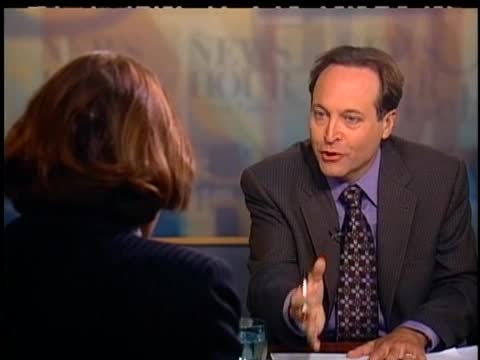
a veto-proof majority in the House of Representatives. And to the analysis of shields in Lowry, syndicated columnist Mark Shields and National Review editor Rich Lowry, David Brooks is off this evening. And in just the last few hours, Mark, three notable names stepping forward on the Mucacy nomination, Chairman Patrick Leahy of Vermont, a no, Senator Dianne Feinstein of California and Chuck Schumer of New York, I yes. Does he get to 10 and get out of committee? I think he does. I think that the Feinstein and Schumer support are key to it, right? What's fascinating is, I think there was a calculation made, obviously Chuck Schumer New York and Minister Mucacy's original sponsor, so he was in somewhat of an awkward position. But because of the bruhaha, the unresolved answers on waterboarding, waterboarding sort
of became, and I hate the term waterboarding because it sounds like surfboarding, a skiing or something. It's forced simulated drowning, where the prisoner experiences the same sensation of drowning. That became central to the debate. I think the calculation was that Mucacy was the best they're going to get, that the Justice Department isn't just in deplorable shape, that the morale is very low, and that the President Bush had denied Mucacy would come up with somebody, quite frankly, who was be acting attorney general and far less acceptable to the majority of the Senate. First off, Rich, you agree, generally, that he's going to get out of committee. Yeah, he'll definitely get out of committee, and the rumor was all week that Schumer was going to support him, but didn't want to be the only Democrat on that committee to support him. He wanted someone to hold his hand for the vote, and he got Dianne Feinstein to do that. Was this an important enough issue?
And if it only ends up having cast the nomination into doubt? Was it an important enough issue for everybody to pause and have a scuffle over this? I don't think so. I don't think on the merits, but symbolically it became kind of a referendum on the Bush administration's war on terror, which the Democrats obviously are not fond of. I think waterboarding is extremely complex issue, and it would have been irresponsible of the KZ to pronounce on it before he's fully read into the program and know what it entails. And what's the reasoning of the program he wouldn't have been allowed to talk about it? Well, yeah. That's part of the paradox here. But basically, if Mckazy wasn't qualified and Democrats weren't going to confirm him, there would be no attorney general Bush could have, because the Bush administration has CIA officials have conducted waterboarding, and if you have an AG going in saying this is illegal, this is torture, you're going to expose those people potentially, you know, to war crime prosecutions in theory, and just no Bush attorney general nominee is going to do that.
So it's either Mckazy or no one, basically, and in that choice, Mckazy wins. Now, if it gets out of committee and goes to the whole floor where presumably he has more support and a better sale ahead. Is this over? The fight over waterboarding and more broadly over use of interrogation techniques? I don't think it is, and I think I've probably bet in favor of his confirmation right now, Ray. But I mean, John McCain, Republican candidate for president from Arizona, is he worried about it? It's not a complicated procedure. It is torture. Lindsey Graham, Republican from South Carolina, 25 years in military lawyer says it violates the Geneva Convention. I mean, this has been prohibited by American generals in Vietnam 40 years ago. We have tried an American soldier for it in Vietnam for a waterboarding, a North Vietnamese soldier, who was then dishonorably discharged and sentenced after World War II. We tried Japanese officers who had used waterboarding against Americans, and sentenced
in the 15 years of heart labor. It goes all the way back to the Spanish American words. Nothing new about this, other than the fact that for the first time something that's prohibited explicitly by the United States Army, feel manual, and no military personnel is allowed under any circumstances to use it, has been brought back to by Dick Cheney and George Bush to say it's a no-brainer, the vice president, of course you can do this, you can dunk people in water. Now, it's interesting, Rich, because there's been a lot of back and forth over whether this should be explicitly condemned or not, and a lot of people said, no, no, you've got to leave it on the table, because people who were picked up as terrorist suspects by the United States shouldn't have some expectation of what's going to happen to them and what's not going to happen to them. In response to that, one retired military man said, well, now it's going to happen to Americans who are ever picked up on the battlefield, because there will be a reasonable expectation on behalf of the enemy that it's happening to their men.
Well, it's just an unfortunate fact the way the world is, our guys are tortured, pretty routinely by the kind of, whether it's the North Koreans, the North Vietnamese, or whether it's al-Qaeda, so banning waterboarding, unfortunately, I don't think it's really going to afford our guys much protection when they're caught by those sort of regimes or those sort of terrorists. I think waterboarding, look, reasonable people can conclude it's torture, but I sort of apply a common-sense standard here. Journalists are volunteering to be waterboard, to see what it's like. You would not do that with any infamous, obvious torture techniques. Journalists wouldn't volunteer, please pull out my fingernail. I'm really curious how that feels. And they're only volunteering because it's two minutes of panic, it's a horrifying procedure, but then you walk away. And we use it in our own training for the Army and the Navy, the training for survival and resistance. If it's torture, that training itself is illegal and wrong and shouldn't be happening. So look, it's obviously, it's right up there, right to the line, I think it's a technique
that should be used in reserve, that we should have in reserve, extremely limited circumstances in cases where you have very high-level, al-Qaeda officials who might have knowledge of ongoing plots. So you don't have time to deal with them over a period of months and you want to break them quickly. But exactly what happened with Khalid, Sheikh Mohammed. Not mistaken, the Navy SEALs have abandoned it as a training procedure. But I would add this, that volunteering for a trial for two minutes is not the same thing as being a prisoner subjected in the total control of somebody who's using it. You don't know if it's going to be two minutes, you don't know if it's going to be for the rest of your life. And I just end by quoting the United States' counter-insurgency manual, it says, those who lose moral legitimacy, lose the war. And we lose moral legitimacy, according to the manual, when we use torture. Rich this week, the president hinted that if the Miquetzi nomination went down, he wasn't going to nominate a successor.
We would just go with an acting attorney general for the rest of the way. Also, intimations of moving more presidential priorities by executive directive rather than through legislation. Does this signal a new relationship between the Bush White House and an admittedly more hostile Congress? Well, sure. I think it's a product of circumstances, right? You're in administration now and it's waning months, and you saw the same thing with the Clinton administration. When time is beginning to run out, you turn more to executive orders. I just, I don't think waterboarding just to go back to that issue. I don't think it's torture. And the thing is, you've had people like Chuck Schumer on the record, a 2004 hearing, endorsing torture in a ticking time bomb, sort of scenario, Bill Clinton's endorsed torture in a ticking time bomb, so is John McCain. And the fact is, torture is always wrong. You never should do it in any circumstances. But the closest you're going to get to a ticking time bomb type scenario, real life isn't like the TV show 24, is when you have a high level al-Qaeda operative with knowledge of
things that might be happening. And it doesn't shock my conscience. And I don't think most people, the American public, it shocks their conscience to subject someone like KSM to two minutes of panic. College shit, sort of information. Mark, yes, we were talking about the president and his relationship with Congress before Rich took us back to torture. The president has no relationship with Congress. I mean, it's that bad. I mean, this is an administration. You know, I put it in a cool shorthand this week that came out for torture and against children's health care. And that's a tough road, going to 2008 election with, for any party. And I just, I think that the president has given up any hopes of a positive agenda in Congress. I mean, the sense of cooperation, collegiality that was originally spoken of has obviously dissipated. I don't say all responsibility is his, but he's decided he's going to run on an agenda
that's going to attack the Congress. And that's, that's his answer to his party's plight right now. Before we go, let's take a look at the Democratic Party presidential debate this week. Hillary Clinton, the subject of a lot of politicians answers that night. What did make of that? Well, I was caught on the wrong side of the pundit wave on this because I thought she won. I thought she had a withering assault from all sides, including the moderators. And she was persuasive for most of the evening. She was calm. Well, she's collected. But she did straddle a lot. And that's been a key part of her strategy throughout this whole campaign is to maintain her viability in the general election by not saying anything that's going to hurt her in the general election. And it served her well all year long. And now finally she's getting called on it because she took it a little too far. And the, the question, of course, that was the tipping point was the, the question about the driver's license for illegal aliens where everyone jumped on her.
I thought Senator Clinton had a very good debate. I thought she was, as she has been confident. I thought she handled the criticisms of raised by the panelists, her colleagues and, and the interrogators very, very well with great equanimity. She didn't appear to be strident or defensive, and I agree with Rich. She did stumble on that last one, appearing to try to have it in answer both ways. And that became sort of the narrative, the post debate narrative, it's become the narrative of the non-clinton people, both in and out of the Democratic Party. I think her campaign made a serious wonder in the post-mortem, right? And that was by, by somehow casting it that all the guys were piling up on Hillary. And that the, the, the, the boys were after the girl. And I, I don't think that is a successful strategy. Americans don't want to victim as, as president. They want someone who's strong and decisive.
She has been that up until now. You can't play the gender card more than once in an election. If I were she, I would have saved it until November or October of 2008, if she's not going to be. Well, that is a theme I can guarantee that we are going to get back to before this thing is over. Good to see you both. Again, the major developments of this day, the U.S. economy added 166,000 jobs in October that was twice as many as expected and the most in five months. The nominee for attorney general, Michael Mukazi, moved a major step closer to confirmation. Two key Democrats on the Senate Judiciary Committee, Chuck Schumer and Diane Feinstein said they would vote for him. And in Turkey, Secretary of State Condoleezza Rice promised U.S. support against Kurdish rebels. Washington Week can be seen later this evening on most PBS stations. We'll see you online and again here Monday evening.
Have a great weekend. I'm Ray Suarez. Thanks for joining us. Good night. Major funding for the news hour with Jim Lehrer is provided by... Now headquarters is wherever you are, with AT&T Data, Video Voice, and now wireless, all working together to create a new world of mobility. Welcome to the new AT&T, the world delivered. Pacific Life, Chevron, the Atlantic Philanthropies, and with the ongoing support of these institutions and foundations.
This program was made possible by the Corporation for Public Broadcasting and by contributions to your PBS station from viewers like you. To purchase video of the news hour with Jim Lehrer, call 1-866-678-News. Our PBS.
Thank you. . . . . .
. . . . . . . . . . . . . . . . . . . . .
. . . . . . . . . . . . . .
. . . . . . . . . . . . . . . . . . . . . . . . . . . . . . . . . . . . . . . . . . . . . .
. . . . . . . . . . . . The new AT&T, the specific life, the way I am in-
- Series
- The NewsHour with Jim Lehrer
- Episode
- November 2, 2007
- Producing Organization
- NewsHour Productions
- Contributing Organization
- NewsHour Productions (Washington, District of Columbia)
- AAPB ID
- cpb-aacip/507-930ns0mg5v
If you have more information about this item than what is given here, or if you have concerns about this record, we want to know! Contact us, indicating the AAPB ID (cpb-aacip/507-930ns0mg5v).
- Description
- Episode Description
- This episode of The NewsHour features segments including analysis of the day's economic news; a look at the Consumer Product Safety Commission with Congresswoman Diana DeGette and Nancy Nord, Commissioner of the Commission; a look at a proposed Oregon tax on smokers to pay for children's healthcare, and analysis by Mark Shields and Rich Lowry.
- Date
- 2007-11-02
- Asset type
- Episode
- Rights
- Copyright NewsHour Productions, LLC. Licensed under a Creative Commons Attribution-NonCommercial-NoDerivatives 4.0 International Public License (https://creativecommons.org/licenses/by-nc-nd/4.0/legalcode)
- Media type
- Moving Image
- Duration
- 01:04:04
- Credits
-
-
Producing Organization:
NewsHour Productions
- AAPB Contributor Holdings
-
NewsHour Productions
Identifier: NH-8990 (NH Show Code)
Format: Betacam: SP
Generation: Preservation
Duration: 01:00:00;00
If you have a copy of this asset and would like us to add it to our catalog, please contact us.
- Citations
- Chicago: “The NewsHour with Jim Lehrer; November 2, 2007,” 2007-11-02, NewsHour Productions, American Archive of Public Broadcasting (GBH and the Library of Congress), Boston, MA and Washington, DC, accessed April 26, 2026, http://americanarchive.org/catalog/cpb-aacip-507-930ns0mg5v.
- MLA: “The NewsHour with Jim Lehrer; November 2, 2007.” 2007-11-02. NewsHour Productions, American Archive of Public Broadcasting (GBH and the Library of Congress), Boston, MA and Washington, DC. Web. April 26, 2026. <http://americanarchive.org/catalog/cpb-aacip-507-930ns0mg5v>.
- APA: The NewsHour with Jim Lehrer; November 2, 2007. Boston, MA: NewsHour Productions, American Archive of Public Broadcasting (GBH and the Library of Congress), Boston, MA and Washington, DC. Retrieved from http://americanarchive.org/catalog/cpb-aacip-507-930ns0mg5v