The MacNeil/Lehrer NewsHour
- Transcript
Intro ROBERT MacNEIL: Good evening. Leading the news this Friday, forecasters see no quick end to the drought, as crop damage intensified and low water levels stalled river barges. The Pentagon bribery scandal was called ''beyond imagination, the most serious case in history. '' Housing starts showed a sharp decline in May. We'll have details in our news summary in a moment. Judy Woodruff is in Washington tonight. Judy? JUDY WOODRUFF: After the news summary, we devote most of tonight's program to the future of the AIDS crisis. A panel of distinguished experts and thinkers join us. then Charles Krause has a documentary look at what U. S. policy has done to Panama. And we close with a Bob Maynard essay on the packaging of the presidential candidates. News Summary WOODRUFF: Showers and thunderstorms moved throughout the Midwest and other drought stricken parts of the nation today, but they were too scattered to provide much relief from the worst dry spell in half a century. And forecasters offer little hope on their horizon. Hundreds of barges were stranded on the Mississippi River because water levels are down. Engineers began dredging at different locations in Mississippi and Illinois, to make the channels deep enough for river traffic to move through. Here in Washington, members of Congress met to assess the problem. Senate Agriculture Committee chairman Patrick Leahy said the Reagan Administration plans for help may be too late in coming.
Sen. PATRICK LEAHY, Senate Agriculture Committee Chairman: I know the President established a White House task force in this drought. I read about that in the paper. And I understand his task force was given two weeks to come up with suggestions and recommendations. But there's some decisions that have to be made in the next few days, not the next two weeks. We know we need rain, we know that in two weeks a lot of people are going to be bankrupt. And we know that steps are going to have to be taken now. WOODRUFF: Leahy said a third of the U. S. spring wheat crop could already be destroyed, and if it is, he said it would be a virtually unprecedented disaster. Robin? MacNEIL: The White House welcomed some provisions of the Senate Welfare Reform Bill passed last night, but said a veto was still possible because of elements in the House version. The bill passed the Senate as it did the House by a majority large enough to override a presidential veto. The Senate vote was 93 to 3. Presidential spokesman Marlin Fitzwater said the Administration thought the Senate requirement for work in association with welfare, was a very important concept to establish in law. Both House and Senate bills are designed to turn the depression era welfare system into a jobs program, with education and training provisions. The Senate version would cost $2. 8 billion over five years. The House bill $7 billion. WOODRUFF: Top ranking Republicans went to great lengths today to express their amazement at the Pentagon fraud and bribery investigation. Iowa Republican Senator Charles Grassley said the dimensions of the probe are, in his words, ''beyond the wildest imagination. '' And his Republican colleague, Virginia Senator John Warner, called it the most serious case in the history of the Department of Defense. Vice President George Bush jumped into the issue today, too. He had these comments about the allegations.
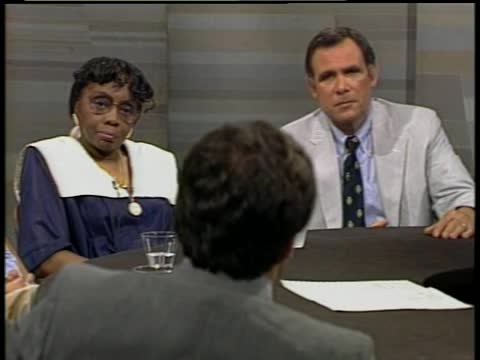
GEORGE BUSH, Vice President: I'm offended and shocked. And I say like all Americans, at the abuse of public trust that these allegations represent, corruption anywhere in government is bad enough, but these people, should the allegations prove true, were not just stealing money from the treasury, they were stealing from our national defense and undermining our national security. WOODRUFF: President Reagan commented on the scandal today in an interview with Cable News Network. He said that it was against the law of averages for all people in government to be heroes. He said, ''I think anyone in a top position in government goes to bed every night with the knowledge that some place down in the ranks there could be someone that is not playing fair. And you do your best to stay on top of it and to prevent that sort of thing. '' MacNEIL: Construction of new homes declined sharply in May, a drop of 12. 2%. It was the steepest drop since the fall of 15. 8% last December. It surprised analysts, who'd been expecting the rising interest rates on mortgages might slow down construction modestly. Economists watch housing activities closely because it's often a sign of the direction of the economy as a whole. But they cautioned against overreacting to one month's decline. WOODRUFF: Three developments in the Soviet Union's Eastern Bloc countries today. In Poland, the Parliament unanimously adopted a new national military oath that removes a reference to serving in an alliance with the Soviet Union. A government spokesman said it would not affect relations with the Soviets. WOODRUFF: In Hungary, police using clubs beat and arrested 25 people who gathered yesterday to memorialize activists who were executed for leading a 1956 anti communist revolt. The ceremony itself had gone peacefully, a quiet morning vigil at the unmarked graves where leaders of the revolt are believed to be buried. But a dissident told the Associated Press by telephone that afterwards police took demonstrators away and beat them. And in Yugoslavia, at least 4000 people demonstrated angrily outside the Parliament Building in Belgrad today, shouting they wanted bread, and calling on the government to resign. It was triggered by pay cuts and other austerity measures ordered recently by the government. MacNEIL: In Peru, workers on American aid projects are being pulled out of the Huancayo region east of Lima following the murder of an American on Monday. Witnesses said 25 year old Constantine Orson Gregori was shot with a Peruvian colleague by guerillas of the Shining Path group. But the State Department said the U. S. was still not sure who killed them. While a security situation is being assessed, U. S. workers are being asked to leave. WOODRUFF: There was new fallout late today from the Manuel Noriega drug probe. A U. S. Attorney in Lafayette, Louisiana, unsealed drug indictments against 170 people, in what he said may be the biggest narcotics ever uncovered in the United States. U. S. Attorney Joe Cage said the suspects were accused of trafficking in more than a billion dollars worth of marijuana and cocaine. He said today's charges stemmed from the same federal investigation that led to the indictment of Panama's General Noriega. That ends our summary of the day's top stories. Just ahead on the NewsHour, a look at the AIDS epidemic from now to the year 2000; Charles Krause reports on events in Panama; and essayist Bob Maynard looks at presidential packages. Plaguing Thoughts MacNEIL: The largest ever international conference on AIDs ended yesterday in Stockholm. It concluded with scientists offering no hope for an immediate cure or protective vaccine. With that sobering prospect, and with the number of AIDS cases steadily growing, we look to the future tonight. Over the next ten years or so, what will be the effect of AIDS on our society. We ask that question of six people particularly qualified to answer it. Dr. Stephen Joseph is Health Commissioner of New York City, where the largest number of AIDS cases have been reported. Richard Goldstein is a senior editor of the Village Voice. Dr. Lorraine Hale is Director of Hale House, a Harlem residence for infants of drug addicted women. Hale House also works to find homes for AIDS babies and their mothers. Michael Fumento is an AIDS analyst for the U. S. Commission onCivil Rights in Washington. Dr. Hacib Aoun is a cardiologist who was infected with AIDS in his work at Johns Hopkins University and was featured on this program last year. And joining us in Boston is John Platt, retired professor of biophysics at the University of Chicago, and a frequent contributor to the Futurist Magazine. Dr. Joseph, is AIDS going to change the society in a marked way over the next decade? And if so, how? And if so, when? Dr. STEPHEN JOSEPH, New York City Health Commissioner: It will change it profoundly. In the year 2000, I think we'll be just emerging from a long, dark tunnel. I think we'll have in the year 2000 if not a cure, effective therapy. We may be close to the licensure of a vaccine, we'll have paid an enormous cost, and our health care financing and delivery systems will be transformed. We will look at and treat drug addiction in a totally new way. On the plus side, there will be technologic spinoffs in medicine and science we can't even conceive of yet. And we will emerge from some very difficult trials as a more just and tolerant society. MacNEIL: But not until the year 2000, do you think? Dr. JOSEPH: I think the switch, the end of the tunnel, or the beginning of the end of the tunnel is that far away. MacNEIL: Do you agree with that, Mr. Fumento? MICHAEL FUMENTO, AIDS analyst: No, I really don't. There'll be no dramatic change, there'll be no wholesale quarantining of people, no wholesale denial of human rights. There'll be no meat wagons going through the main street in our major cities. We're not going to see that. MacNEIL: What marked changes in society, Richard Goldstein, do you see? RICHARD GOLDSTEIN, Village Voice: I think it'll point out -- MacNEIL: -- as a journalist who spent a lot of time thinking about it -- Mr. GOLDSTEIN: Yes, I think it'll point out, it'll point up the enormous failure to provide health care, especially in the inner cities, and to provide social services generally -- MacNEIL: You mean not just health care for AIDS, but health care generally? Mr. GOLDSTEIN: This makes the chronic failure acute. And the same with social services like housing and heat, things like that. When you deal with AIDS, you deal with an acute manifestation of those failings. I also think that we will see a disaster because of society's ignorance about sex and sexuality. We'll see many, many, many more cases than we would otherwise have. Because of the failure of education and prevention, especially among young people. And on the other hand, I think we will see the emergence of communities around this disease, and community activism. It may be the single greatest, maybe the only virtue I can think of in a conservative government is its encouragement of reliance on communities. And I think in the AIDS crisis we'll see these play a major role in stemming the epidemic when the system cannot. MacNEIL: How do you think the AIDS crisis is going to change society, Dr. Hale? Dr. LORRAINE HALE, Hale House: Oh, I certainly agree with Mr. Goldstein. But I think there's something else there, and it seems to me that we need to look very carefully at the external environment, and that is the religious right. I am very interested in their sense of the AIDS -- what it means, who gets it, why they get it. And I think as they become stronger and stronger and stronger as they are becoming, and because there is no leadership, no direct leadership in the whole area of this particular health care need, somebody's going to fill that void, and I suspect itmay be them with their ideologies. And I suspect that's going to be where we'll see a great difference, where there'll be a lot of moralizing. A great deal of denunciation of people who have the virus. And all of those negatives that we hate to think about. MacNEIL: Dr. Aoun, from your particular perspective, what do you think the effect is going to be? Dr. HACIB AOUN, Johns Hopkins: I think that the next few years will be totally difficult, as the numbers increase, and as -- mainly as we begin to learn what the real numbers are. And they are going to be difficult for people, because for the first time, for many people they're going to have somebody close by that is infected by illness. Uncle Joe, who had a coronary bypass a few years ago, now because of transfusions has this illness. And it's not just the homosexual, it's not just the IV drug abuser, it's not the isolated health worker. Now it's going to begin to touch society. For those people who have ignored the problem of other small groups, it will be beginning to become a reality. No doubt. And they will not be able any more to turn their head around and ignore it and -- until the quilt becomes so big that it covers them all. As they will not be able to ignore it, and society will have to become more humane. But that will happen little by little. Still we're facing a few more years or several more years of discrimination, and disrespect for the rights of people. MacNEIL: We'll come back to the discrimination question in a moment. Let's go to -- several of you mentioned the impact on the health system. How is it going to affect, Mr. Fumento, how is it going to affect the health care system in this country? I mean, are the facilities there -- is it going to make a huge and profound dent in the health -- there're already facilities overstrained, how do you see it impact? Mr. FUMENTO: It will have an impact, but it won't have a disastrous impact, as some people have predicted. We can compare perhaps even to cancer. Cancer kills almost a million people a year in this country. It heavily taxes the system. We spend tremendous amounts of money fighting cancer, tremendous amounts of money for the last years of care for people dying of cancer. We all know people who have died of cancer, probably a couple of people sitting on this panel will die of cancer. And yet the system has been able to cope with that. And nobody's predicting that we're going to have the kind of carnage from AIDS that we're having from cancer. MacNEIL: So no more impact on the health system -- Dr. Platt? Yes? Dr. JOSEPH PLATT, futurist: It seems to me that one should distinguish here, though, between the hot spots in the other parts of the country. For example, one of the estimates last year was that one man in 30 under the age of 50 was probably infected. And New York City is supposed to have ten times the rate of the rest of the country, which may mean that there are areas of New York City where one in three is infected. Now in those areas the health problem will be stupendous. And at the same time, there'd be other areas of the country where there'd be almost none. And we can't really expect these areas with none to support the areas where it's stupendous without going through political process, probably through the federal government. Dr. JOSEPH: You see, it's not just New York City -- I agree with your hypothesis. It's not just New York City. This virus is now focusing in specific geographic and demographic areas down at the neighborhood level. So if you look, for example,at certain parts of New York City, within individual boroughs, the rates are much higher than in other parts of New York City. And that's where the stresses on the health care system will come. We have now this morning over 1500 people in hospital beds in New York City with AIDS and AIDS related illness. But those 1500 people are unequally distributed towards the public hospital system. And the crisis in acute bed care in our public hospital system in New York City means not only is there pressure on the AIDS side, but your aunt who's broken her hip, or the psychiatric admission, or the drug toxicity admission is going to be pressed harder and harder, particularly in the resource short areas of the public sector and the poverty neighborhoods of the city. MacNEIL: But what about Richard Goldstein's point that this is going to reveal what he saw as weaknesses generally in the availability of health care in the poorer areas? Is the AIDS crisis going to be the catalyst for real changes in the health delivery system as a whole? Across the nation? Dr. JOSEPH: Yes, I think Richard Goldstein -- I think he's perfectly right. And I happen to believe that AIDS will be the thing that pushes this country into a system of national health insurance. MacNEIL: Why? Dr. JOSEPH: Why? Because the burdens will be so great to bear, no matter how they're distributed within the country, and the resource restraints will be so great that relief first of all is going to have to come at the federal level. MacNEIL: You mean because municipalities, just in counties, will not be able to afford from their tax base to care for all these people? Dr. JOSEPH: We're spending today in New York City $398 million on AIDS, which $100 million is city tax levy. And in our hospital system this year, we have $36 million of uncompensated clinical care costs. That's got to come in the form of health -- MacNEIL: There you have an impact on the health system, suggests quite a lot larger than I think you were. I mean, cancer hasn't pushed the country towards a national health care system. Mr. FUMENTO: No, we will still have cancer, we will still have heart disease, we will still have other medical problems. And now we will have AIDS laid on top of that. It will -- I'm not saying it won't burden the system much more than the system's burdened. It will -- and I think people will take advantage of this. They already are (tape interference) National Health Insurance, and I think probably they will succeed. MacNEIL: Let me ask Dr. Aoun this. Because you actually have the virus yourself, and the effects of it, and have suffered some discrimination as we showed last year in your thing, professionally, is -- what's going to happen as more AIDS patients come into the health care system? Are enough doctors and nurses going to be willing to look after them? Are young doctors coming into the system going to be willing to do that? Are they going to avoid it? Try and go to parts of the country or to hospitals where they don't -- what is going to happen there? Dr. AOUN: Well, initially the logical occurrence, what's going to happen is that doctors are going to migrate from the big cities, trying to avoid illness. Which is ridiculous, because you are not going to avoid the illness by just going to small town in Georgia, or whatever. And the illness is probably spreading at a rate that will allow you to continue to see patients wherever you go. So, but that will happen. And that is happening. Physicians who were training in infectious disease, who are trained to cure diseases, they were trained to give an antibiotic and psst, in a moment it's cured. With this illness, they cannot do that. So there will probably be less physicians going into infectious disease specialty type. And there will be less physicians willing to practice in the big cities. But that will be a temporary move, because as education progresses, as discrimination decreases, as the myths about the disease decreases also, then people will become more tolerant and more willing to take care. But for a while, as I was saying before, for the next few years, we're going to face problems. There are going to be less physicians willing to take care of these patients. And I can see it. But I can also see a change. I don't want to be overly pessimistic. I also see a change from the time that I became sick, or from the time that I was practicing as a resident, and now. And there are many more people, many more residents and nurses willing to treat patients with AIDS than even a few years ago when I was a resident. Dr. PLATT: May I come in? MacNEIL: Yeah, just a moment, Dr. Platt, coming to you in a second. Mr. GOLDSTEIN: I think there's a subtle but important point to be made about class in this, as opposed to just provision of services. I mean, in my neighborhood, which is Greenwich Village, we've lost about 800 people so far in that one neighborhood to AIDS. But the medical services are provided, and it's true that the system is not strained noticeably. In the South Bronx, when I go up there as a reporter, it's like witnessing a different disease with a different prognosis. The hospitalization comes later, it's much more acute, the cases are in the short run much more hopeless. And the whole social environment surrounding people who are ill with AIDS is different. Much less supportive. And this is more than just what a government policy can do, it's the whole question of how things are organized around class and race in this country. MacNEIL: Dr. Hale? Dr. HALE: I think that's absolutely true. We certainly find that at Harlem. There was always a lack of service that became quite acute within the last five or six years. And now we find that with the AIDS virus, people are reluctant to go into the hospitals they're treated so badly. They don't want to go. They don't go. And when they finally get there, they're terminal. And -- but I think the statistics will bear that out. I think there's going to be incredible discrimination. I think it already exists, but I think there's going to be more. And fear a very real push to making it first a gay disease, and now not so much a gay disease, but now a black and Hispanic disease. And -- MacNEIL: Because the number of IV drug abusers is so relatively speaking proportionately concentrated in -- Dr. HALE: Concentrated, right. And when you look at the statistics, they don't talk about IV drug users, they talk about blacks, or Hispanics. And they forget that we're talking about the IV drug user. So you begin to see a lot of the very slow signs of this kind of discrimination. And I think it's going to grow. And if we can compare it at all to the drug epidemic in Harlem in the 1930s -- I always manage to say we would not be sitting here today had we taken care of that back in the thirties, forties and fifties, but we didn't because it was a black condition, and it was permitted to fester and now we have all of these other problems as a result of drug addiction. MacNEIL: You wanted to make a point? Dr. JOSEPH: I just wanted to make a point. I think I agree with what the three previous statements have said. But I think in the longer run I have to remain more optimistic. And I deliberately said at the beginning that I think by the year 2000 we will see a positive trend emerging out of this. MacNEIL: What's the political basis for that? Why won't people in the rest of the country who may according to Dr. Platt be relatively immune from the disease -- relatively immune from the disease -- want their taxes increased in order to support the kind of health system you talk about -- which the country politically has resisted for so long? It doesn't want -- so many people say, socialized medicine, or government run medicine and so on. Dr. JOSEPH: Well, I think Dr. Aoun is correct. Nobody is immune. And that realization is beginning to penetrate certainly this city, and I would expect the country. And I think the way we see the virus moving in black and Hispanic New Yorkers, I think is going to lead, after a very difficult period, where we will have difficulties around calls for isolation and around increasing discrimination and the rest, I think it's going to bring us out the other end more tolerant. Perhaps that is wishful optimism, but I -- it makes innate sense to me. MacNEIL: Let's pursue the idea of discrimination -- yes, Dr. Platt? Dr. PLATT: I'd like to make a double point once more, of a different kind. And that is that one might have both fear and flight from the cities. And at the same time one might have a pulling together of groups. One might have a pulling together like the gay community in San Francisco, or hospices, network of care. One might have both religious and nonreligious workers devoting themselves to care, out of love and compassion. And at the same time, one might have great other sections of the population fleeing, and trying to avoid any discussion or contact of any sort. And I think this double aspect of the disease is typical also of many other epidemics that we've had in the past. MacNEIL: Can I ask you, are you saying literally that urban people who might not be in the highest risk of getting AIDS themselves, will actually move themselves and their families and their jobs out of cities because of AIDS? Dr. PLATT: I think you're seeing it already. There have been stories about San Francisco with the numbers of the gay community moving back into the suburbs, going back home to the Midwest sometimes, and I think this is going to affect the economy of cities, it's going to affect businesses moving their headquarters to cities, it's going to affect the occupancy rate of hotels, tourism. When the level is five or six times what it is today, say in 1992, or 1993, according to the Centers for Disease Control and the National Academy estimates, the level of fear will not be merely five or six times, but 20 times what it is today. MacNEIL: You're nodding your head, Richard Goldstein? Mr. GOLDSTEIN: Well, because I've had to change my dry cleaner, because he left the neighborhood because he didn't want to handle clothing of people in my neighborhood. And because there are so many vacant stores on my -- as you walk down my street, and because the rents are going down in the Village now. Even though I can't support this with any hard evidence, I think the epidemic has something to do with that. And that's just on a miniature scale. MacNEIL: Let's pick up the point of discrimination that's been raised a number of times. As the fear, as the numbers increase, as Dr. Platt says, is the fear going to increase and is that going to call -- for instance, somebody mentioned a moment ago, quarantining patients. Is there going to be a realistic movement to quarantine AIDS patients, to put them in a different place, as used to be done with other diseases like tuberculosis and so on? Dr. HALE: Dr. Joseph is shaking his head no, but I think yes. MacNEIL: You think yes? Dr. HALE: I think that there definitely will be -- MacNEIL: They're going to be put away in special hospitals -- Dr. HALE: -- a movement. (tape and video interrupted) Seaview. That was a hospital for patients with tuberculosis many, many years ago. And I think it was on Ward's Island, or one of the islands. And it's since been closed. But it occurred to me that there is reason to believe that same kind of thing will happen again. MacNEIL: Do you think that's a good idea yourself? Dr. HALE: I'm not sure. Let me just tell you a very short scenario. Monday will be the funeral for one of the mothers of one of the children we had at Hale House. Our concern about her was that five years ago she knew she had the virus. It did not stop in any way her sexual practices. And I wonder how many people she infected over a five year period when we first had her daughter. So I do get -- I personally get very concerned about the welfare of other people. I would not want to see folks isolated. MacNEIL: But you think it may be the only way to stop them continuing to have risky sexual behavior? Dr. HALE: I think it's not going to have very much to do with what I think -- I think it's going to happen because there are -- people are frightened, and when people are frightened, they do terrible things to other people. MacNEIL: I mean, that's the way Fidel Castro copes with AIDS in Cuba, by opening a -- Dr. AOUN: I think that this country will come in more subtle ways. The attempt to put people out in separate hospitals will come with the excuse or reason that it would be better to study the disease. To say, We will be able to do better research if we have them all in one place. You see, that will be a subtle way of doing it, but not correct and not public -- MacNEIL: But it will happen you think? Or there would -- people attempt -- How does that strike you from the U. S. Civil Rights Commission -- Dr. HALE: I would be -- yes in the sense of civil rights, I would be especially concerned if I thought there was a realistic possibility that there would be wholesale quarantine. When I say wholesale quarantine, I mean as opposed to perhaps a male prostitute who simply will not get off the streets. It's one thing to put him behind bars, it's another thing to round up everybody who's IV positive, who has the AIDS virus. I don't think you'll see that widescale quarantine. And the reason is because they're subtly -- there's no logic behind it, it doesn't make sense. This virus is so hard to transmit, you cannot get this virus unless you engage in very few limited activities. And while there will always be a certain percentage of the American public who refuses to believe that, no matter what everybody with this panel might tell them, about 33% of the American public insists on thinking these people are casually contagious. You've got the other 67% who are going to put their foot down and say, I won't allow you to -- MacNEIL: Do you agree with that? Dr. JOSEPH: Well, we have some data. I think there will be calls for quarantine. There will be very disturbing incidents in various places. We may have single purpose hospitals in some cities as the pressures of numbers mount. But look at the data. In New York City, with the greatest intensity, with the greatest experience, with the greatest exposure to all the anxieties and fears that surround this disease, people are the most able to cope with the kinds of issues that have been raised. We don't have the last three school entrances in September in this city. We don't have the kind of public reaction that we had when the first child with HIV infection went into school four school entries ago. Dr. HALE: My sense is that the children who are going to school are going to school in the very areas where people feel so powerless. And who feel if I say anything, if I do anything, no one's going to listen anyway. So it's simply an added burden to folks who are already overburdened. Dr. JOSEPH: But if you compare what happens when there's a newspaper headline of Martians landing with AIDS in New York City, as compared with the same headline when it strikes some small town in the Midwest, the reaction is much more sober and measured in New York City. I think people will come to terms with the anxiety and -- MacNEIL: What about the -- I'd like to just move on so we can cover some of these other things -- is the treatment of drug addicts and drug addiction going to change as a result of AIDS, since they are one of the two highest risk groups? Do you think -- is that going to change? Dr. JOSEPH: I think it will. I think you see the reflections already -- MacNEIL: How? Dr. JOSEPH: Well, first of all, I think the society, particularly the next administration, is going to realize that it must deal with the primary problem of substance abuse on its own and as the really the channel for the future of the AIDS epidemic. And two, I think there's going to be a more enlightened view of the need for credible prevention, and widely accessible treatment, as well as appropriate enforcement on -- MacNEIL: Dr. Platt, what's your view on that? Dr. PLATT: It seems to me that the drug people are being targeted, and partly because it's us and them, and they're the invisible group, they're the tiny group. And it's easier to talk about changing drug habits than it is about he total problem of AIDS, which is very much larger than the drug problem itself. And so I think that what may happen is we'll make a lot of noise about the drug problem, and maybe do a few things, but we won't really make any effective legislative decision on AIDS either about quarantining or about condoms, or about any of the other aspects that are now debated, because we have a kind of political stalemate. People -- different opposing groups won't be able to agree well enough to do anything except too little and too late. MacNEIL: Anybody want to comment? Mr. GOLDSTEIN: Yeah. I think that is a really significant problem. If we take for example the idea of locking up a prostitute or a hustler, a recalcitrant, a sexual recalcitrant. I think that is repugnant to me, because I think what is going on with that is that you lock the person up for an indefinite period of time, there's no sentence, it's an indefinite confinement, it's different from the rest of the judicial system. MacNEIL: Yes, but the U. S. -- various civil rights groups would challenge such a thing, it would go through the courts -- Mr. GOLDSTEIN: It's happening in Florida now, so there's a model for it that's already there. But on the other hand, I don't think that somebody who willfully spreads the AIDS virus is, should be allowed to go unpunished. AndI think it is a criminal act. And I think there's a need to somehow transcend these kinds of reflexes and come up with a policy that actually has the single purpose of stopping the disease. MacNEIL: But it isn't a criminal act in terms of statutes. Mr. GOLDSTEIN: No, I think there is a statute in New York that makes it criminal to spread a venereal disease. Dr. JOSEPH: You could invoke criminal negligence. It has not been tested in New York City. We feel in New York City, as the Health commissioner of New York State does, that you can use the existing public health authorities to isolate or detain an individual with the specific circumstances. Dr. PLATT: May I say something about locking people up? It seems to me that locking up is putting people in one of the highest AIDS areas there is. The New York area jails have rates of AIDS in prison, AIDS death rates which are 100 times those of the general population. And the infection rate must be stupendous, it must be comparable to the South Bronx. And the result is that people who are locked up are essentially going into a population which is already -- MacNEIL: (unintelligible) Who thinks it's going to make some real change in the behavior of this country. Mr. GOLDSTEIN: I don't think that sex is as rational as we like to think it is, and I think that it will create a bifurcation in which people are publicly discreet and cautious and restrained and privately not restrained. It will in fact lead to a kind of a Gothic sort of expression of sexuality in the country. Very much like what we had in the fifties, I think. And I don't think that -- unless there's a kind of aboveboard addressing of the ways in which AIDS can be prevented while people continue to have sex -- MacNEIL: Have there been that? Mr. GOLDSTEIN: I don't think there has been. Especially among young people. I think it is in the New York City Schools for example, impossible to get candid education to those people because of the resistance from religious organizations. MacNEIL: What do you think? Is it going to change the way people behave, the way young people date and have sexual relations? Or that matter not so young people? Dr. HALE: It seems to me that you now have to look at class. I think that within the underclass, it's not going to change tremendously. MacNEIL: Why? Dr. HALE: Because if there's no real great need -- I mean, we're talking about people who are very poor, who have to be concerned with putting food on the table, paying rent, getting clothing. The fundamentals of life. In addition to that, they have a lot of private illnesses. And then someone comes and begins to talk about AIDS, with a suggestion that in 1991 this might happen, you might have an epidemic. We're talking about people who live from day to day. And who have to make ends meet on a daily basis. And I feel very strongly, and certainly people that I've talked with, are saying no, no, no. I don't think it's going to happen. There are too many other social problems that we have. We don't have good health care in the Harlem community. MacNEIL: Let me ask Dr. Platt. Do you think a recognizable change in the sexual morality in this nation because of AIDS? Dr. PLATT: Yes. I think that there'll be more family closeness by that group that isn't very much threatened by AIDS. And then at the same time I think that there'll probably be an eat, drink and be merry philosophy among a large number of people who feel it's hopeless to try to fight against it. MacNEIL: I see. I'd love to pursue this with all of you, but I'm afraid our time is up. Dr. Platt, thank you for joining us in Boston. Dr. Joseph, Richard Goldstein, Mr. Fumento, Dr. Aoun, Dr. Hale, thank you. WOODRUFF: Coming up, a documentary look at what the U. S. has done to Panama, and packaging the presidency. Punishing Panama WOODRUFF: Our next focus tonight is a look at the Reagan Administration campaign of economic pressure to oust General Manuel Antonio Noriega from power in Panama. And the devastating effect it has had on that tiny country. The four months of sanctions has sent Panama's economy into a tailspin. Our correspondent Charles Krause has followed this story and his report begins in the city of Colon.
CHARLES KRAUSE [voice over]: Colon is located at one of the world's key commercial and strategic crossroads, the Atlantic gateway to the Panama Canal. Like Panama itself, Colon's economy and its history have long been closely tied to the Canal and to the United States. The Hotel Washington, for example, was built for Teddy Roosevelt when he first came to Colon more than 75 years ago. Today, there's still a fine view of the harbor, where ships from around the world wait to transit the historic waterway. Normally, many of them would also unload cargo in Colon. But three months after the United States imposed economic sanctions, the docks are virtually empty. At the Colon free zone, a vast duty free port, not far from the canal, some $4 billion worth of merchandise is normally bought and sold each year. But because of the sanctions, business activity is down by at least 20%. And many firms have begun to lay off their employees. Many businessmen fear the sanctions, meant to oust Panama's strong man General Manuel Antonio Noriega, may instead destroy Panama's economy. Alfredo Maduro owns an import/export business in the free zone and is an outspoken opponent of the Noriega regime. He says he's worried about the future if the sanctions continue. ALFREDO MADURO, opposition leader: I see a lot of unemployment. We'll be reaching maybe 30% unemployment in the next three to four to five months. I see a lot of violence in the streets, not political violence, because in general we're very nonviolent people, as we've shown up to now. But violence that's going to come is because of hunger, because of medicines not available, because in general there's no work.
KRAUSE [voice over]: The U. S. sanctions have probably had their greatest impact and caused the greatest hardship in Colon's slums, in neighborhoods like this one, called Vietnam. Many of the poor are descendants of Jamaicans brought to Panama at the turn of the century to dig the canal. Even before the current crisis, unemployment here ran upwards of 30%. Since the sanctions conditions have gotten dramatically worse. Father John McGillivray is an American priest who's lived in Colon for almost two years. Soup kitchens he runs are now feeding upwards of 3000 people a day. That compares to about 100 a day before the crisis began. KRAUSE: Do you think it was a mistake for the United States to use economic sanctions to try and get rid of Noriega? Father JOHN McGILLIVRAY: I think it was a mistake because it obviously hasn't resulted -- it's not hurt General Noriega, it hasn't hurt the armed forces, it hasn't really hurt the government. It's hurt these people that are in line to get their soup for the day.
KRAUSE: Pablo Thalassinos looks at what's happened in Panama from a different perspective. He's managing director of the Colon Free Zone, and a close political associate of General Noriega's. PABLO THALASSINOS, Director, Free Zone: You see, this is the first time I think -- I might be wrong -- but this is the first time in the history of the United States that a government of the United States is helping to destroy a capitalist country.
KRAUSE: Rafael Arosemana is a businessman and opposition leader in Colon who says he expected the U. S. economic pressure would work. RAFAEL AROSEMANA, opposition leader: The United States did not finish the job. Right now the situation is that they have left the political and economical problems in Panama in limbo.
KRAUSE: As it's turned out, the Reagan Administration's failure to oust Noriega is a textbook case of plot analysis and inadequate intelligence. From the very beginning the U. S. strategy was also undermined by competing interests and fundamental contradictions. As a result, with one hand the administration imposed economic sanctions to try to force Noriega out. But with the other, it undercut its own policy, continuing to spend money in Panama as usual. [voice over]: The Panama Canal, for example. When the crisis began the White House ordered the Canal payments, worth $7 million a month, be withheld from the Panamanian government. But since March the Panama Canal Commission, controlled by the U. S. Government, has flown in an estimated $12 million in cash to pay its employees. That money has gone directly into the Panamanian economy, and has also indirectly, through taxes, helped finance and run the Noriega regime. At Ft. Davis and other U. S. military bases in Panama, 12,000 G. I. s have continued to receive cash for their paychecks. Throughout the crisis, as usual, the soldiers have been allowed to spend their money off base, while the army has continued to buy food and other supplies on the local economy. Meanwhile, Noriega has found ways of his own to get around the sanctions. The regime, for example, has issued tens of millions of dollars worth of government checks. For the most part, they're paychecks issued in small denominations. Since the crisis began, they've become a kind of unofficial currency. The checks can be used to pay telephone and electric bills, buy food and pay taxes. Still, there's a fair amount of grumbling, even among government employees, because the checks are not easily exchanged for cash. What Noriega has managed to do is outmaneuver the United States by substituting what are essentially worthless government checks for U. S. dollars. In fact, Noriega's ability to pay government workers and the military has insured their loyalty. And so far his survival. Meanwhile, many of those who opposed the regime have lost their jobs and ironically the sanctions have hurt the opposition more than the government itself. Mr. THALASSINOS: How many people the government has laid out, how many? KRAUSE: How many? Mr. THALASSINOS: None. I haven't fired anyone from here. Anyone. Look, how many of the private businesses have fired? Who are the people who are hurt with these sanctions? And it's a shame that these things happen.
KRAUSE: Alfredo Maduro vows to continue his active opposition to Noriega. But he acknowledges the cost to his business, to himself and to his employees is high. Mr. MADURO: The month of April, the employees took 15 days off without pay. So we worked on a 50% basis. We had 50% of them coming in for two weeks, and 50% another group. The month of May we had to close down the entire operation.
KRAUSE: The layoffs have had a ripple effect throughout the economy. Shops on Bolivar Street are empty. But despite growing unemployment among the middle class and in the slums, there's no evidence Noriega has been able to convert the economic hardship caused by the sanctions to his own political advantage. KRAUSE: Do you think all of the people like Noriega, most people? MAN: Most people don't like him. KRAUSE: Why is that? MAN: Because he (unintelligible). Everything in the country is not goo (unintelligible).
KRAUSE [voice over]: Wilma James lost her job caring for the children of a middle class family when the crisis began. Now without an income, she depends on food from the Catholic Church to feed her five young children. They live in a one room tenement that's been condemned. It was at Wilma James' apartment that we learned first hand how Noriega deals with those who disagree with him. Just as we were about to begin an interview the apartment was surrounded by the secret police, who demanded our credentials. Even though our papers were in order we were led away at gunpoint, detained at police headquarters for over an hour, and probably followed during the rest of our time in Colon. What happened to us is not unusual. Noriega has been more than willing to use intimidation when necessary to keep himself in power. One of the first to be arrested in Colon, Dr. Alfredo Ehlers, a prominent physician and opposition leader: KRAUSE: Was there a specific charge? Dr. ALFREDO EHLERS: No, they don't -- at any moment they make any kind of charge. They only put me in jail because they say that I tried to put out the government. And they don't tell me nothing, and they only put me in jail, and they don't respect any of my political rights. And I asked for a lawyer and a phone call, and they said to me that I don't have any kind of right. Mr. AROSEMANA: Every time there is any kind of demonstration the leaders are picked up the day before the demonstrations appear, just to intimidate the rest of the population. They are put in jail for a few days, they're intimidated, they're families have been intimidated.
KRAUSE [voice over]: Opposition to Noriega remains strong. But the organized opposition movement to Noriega, called the Civilian Crusade, has all but been destroyed in Colon and throughout Panama. Shattered with it, long held beliefs about U. S. power. After almost a century of U. S. domination, most Panamanians thought that when the President of the United States said Noriega had to go, by now Noriega would be gone. Today what's striking is the extent to which Panamanians at both ends of the political spectrum have been embittered by that failure, and as a result have begun to reassess their views of the United States. Father McGILLIVRAY: (unintelligible) definitely disillusioned about the power of the United States is concerned. They're in a real quandary right now. What are they going to do? They can't -- it looks obvious that the United States economically at least can't force the general out. So they'll have to look for other ways to do it. Mr. THALASSINOS: The way the government of the United States is acting in handling the Panama situation, and trying to give it a solution, has been backfiring, and has been backfiring for 11 months. It's not now, not this last round of conversation, it's been 11 months of strikes and more strikes, and President Reagan has struck out maybe for nine innings, and his time is over. Mr. MADURO: I think that all of us, even those who have been close to the United States and sympathetic to the United States, we will always look on our generations and our children, we will always look with some kind of, some kind of doubt, or resentment to the United States. We won't trust, 100% our relationship any more. KRAUSE: What would it take to get rid of Noriega? Mr. AROSEMANA: Well, it really -- it's out of our hands. I think it's a decision that the United States government now -- really remove this from the hands of the Panamanian opposition -- has to decide what they're going to do, and -- but personally I think I'm so discouraged I think what their attitude would be to ignore it and see if it goes away. KRAUSE: So you're suggesting if the United States attempts to ignore it, and what you've said about the opposition being discouraged and intimidated, then you seem to be suggesting that Noriega will probably remain for some time to come? Mr. AROSEMANA: This is, this is (unintelligible) KRAUSE: That's what you believe? Mr. AROSEMANA: Yes, that's what I believe. WOODRUFF: Today in Washington, the State Department took a small step backwards in its sanctions campaign against Panama. It announced that for humanitarian reasons it would allow U. S. companies to go ahead with social security payments to Panamanian employees. Political Packaging MacNEIL: Over the past few years we've heard a lot about the packaging of political candidates. Our regular essayist Bob Maynard, editor of the Oakland Tribune, has some thoughts about two of this year's most popular political packages.
BOB MAYNARD: This is the year, or so the poll takers tell us, when Americans will vote more with their heads than their hearts. It's a good thing! The combined charisma of the two most likely candidates could not together raise a goose pimple on a flea. There they are, straight, clean and plain. Marching right down the center line of the American highway of life. Remarkable. It has been a long time since the two parties put forth presidential candidates with so little ideological distinction between. Or personality distinction. It's not exactly that they're Tweedle Dee Dee and ah, what his name? I'm sure the Republican is that tall fellow over there. And the Democrat is the one in the neat gray suit. Always that neat gray suit. By election day I'm sure even the most absent minded of voters will be able to tell them apart. I think. It didn't used to be that way. Back before TV and high tech brought us the modern candidate of the executive age, the CEO as long distance runner, way back, we had William Jennings Bryan on the stump, boviating his way among the populous. And Teddy Roosevelt. Fascinating characters with leather lungs and voices that could fill the largest hall with no apparent difficulty. Before television, candidates were entertainment, campaigns often the forum for debate on issues of great moral moment: evolution, social welfare, isolationism. And citizens would fill great halls, even on stinking hot nights, to hear the great men go at it. And don't forget Harry Truman giving the do nothing Congress hell from the back of a train. Politics was great theatre, the American theatre of democracy, until the little screen put a small frame around it. That was first prominent in 1960, Nixon vs. Kennedy. Experience vs. Style. And style won. A new era was born. TV Politics. Give me some men and women to match my small screen. Forget the big boviators of the past. The irregular sort with a passionate cause and fire in his belly. If there was to be one more of those, one last hurrah to the self made individualist, then it was to be Ronald Reagan, once universally revered as the Great Communicator. Now unmasked by some of his own inventors as no more than a pleasant actor, in, way, way, over his head. The Wizard of Pennsylvania Avenue, little more. As the Reagan myth unraveled, the age of television politics has triumphed in earnest. Television has brought forth the new, small screen, bitesize presidential candidates. They fit right in with breakfast food commercials. More energy for Special K, the best medicines these days do or don't contain ibuprofen, the candidates don't jar the products on the screen. Or shouldn't I say the other products? That, after all, is what the triumph of medium over message has achieved. Politics is about as spicy as that old world sounding spaghetti sauce. But then isn't that what the battle was all about? In the package goods industry, it's called product parity. That's why this year and from now on, we will have to look ever so much more carefully to be sure of what we are buying. Recap WOODRUFF: Once again the main stories of this Friday, forecasters said there was little chance of quick relief from record drought conditions in America's farm belt states. Leading Republicans called the defense scandal ''beyond imagination, and the most serious in history. '' The government reported housing starts down sharply in May. Good night, Robin. MacNEIL: Good night, Judy. That's the NewsHour tonight. Have a nice weekend, and we'll see you on Monday night. I'm Robert MacNeil. Good night.
- Series
- The MacNeil/Lehrer NewsHour
- Producing Organization
- NewsHour Productions
- Contributing Organization
- NewsHour Productions (Washington, District of Columbia)
- AAPB ID
- cpb-aacip/507-8s4jm24224
If you have more information about this item than what is given here, or if you have concerns about this record, we want to know! Contact us, indicating the AAPB ID (cpb-aacip/507-8s4jm24224).
- Description
- Episode Description
- This episode's headline: Plaguing Thoughts; Punishing Panama; Political Packaging. The guests include In New York: Dr. STEPHEN JOSEPH, New York City Health Commissioner; Dr. LORRAINE HALE, Hale House; Dr. HACIB AOUN, Johns Hopkins; MICHAEL FUMENTO, AIDS Analyst; RICHARD GOLDSTEIN, Village Voice; In Boston: Dr. JOSEPH PLATT, Futurist; REPORTS FROM NEWSHOUR CORRESPONDENTS: CHARLES KRAUSE; BOB MAYNARD. Byline: In New York: ROBERT MacNEIL, Executive Editor; In Washington: JUDY WOODRUFF, Chief Washington Correspondent
- Date
- 1988-06-17
- Asset type
- Episode
- Rights
- Copyright NewsHour Productions, LLC. Licensed under a Creative Commons Attribution-NonCommercial-NoDerivatives 4.0 International Public License (https://creativecommons.org/licenses/by-nc-nd/4.0/legalcode)
- Media type
- Moving Image
- Duration
- 00:59:56
- Credits
-
-
Producing Organization:
NewsHour Productions
- AAPB Contributor Holdings
-
NewsHour Productions
Identifier: NH-1234 (NH Show Code)
Format: 1 inch videotape
Generation: Master
Duration: 01:00:00;00
-
NewsHour Productions
Identifier: NH-3155 (NH Show Code)
Format: U-matic
Generation: Preservation
Duration: 01:00:00;00
If you have a copy of this asset and would like us to add it to our catalog, please contact us.
- Citations
- Chicago: “The MacNeil/Lehrer NewsHour,” 1988-06-17, NewsHour Productions, American Archive of Public Broadcasting (GBH and the Library of Congress), Boston, MA and Washington, DC, accessed May 28, 2026, http://americanarchive.org/catalog/cpb-aacip-507-8s4jm24224.
- MLA: “The MacNeil/Lehrer NewsHour.” 1988-06-17. NewsHour Productions, American Archive of Public Broadcasting (GBH and the Library of Congress), Boston, MA and Washington, DC. Web. May 28, 2026. <http://americanarchive.org/catalog/cpb-aacip-507-8s4jm24224>.
- APA: The MacNeil/Lehrer NewsHour. Boston, MA: NewsHour Productions, American Archive of Public Broadcasting (GBH and the Library of Congress), Boston, MA and Washington, DC. Retrieved from http://americanarchive.org/catalog/cpb-aacip-507-8s4jm24224