The NewsHour with Jim Lehrer; July 9, 2007
- Transcript
I'm Gwen Eiffel, today's news, a Baghdad update exit plans for Iraq, the West on fire, staffing at the Department of Homeland Security and Poet Paul Hunter, tonight on the news hour. Good evening, I'm Gwen Eiffel. On the news hour tonight, the news of this Monday, then two Iraq stories,
an update on the deadly weekend and the U.S. offensive from Michael Gordon of the New York Times in Baghdad. And the views of Senators Jack Reed and Olympia Snow on how to get out of Iraq, plus the latest on the wildfires in several western states, a report on the empty desks in the upper ranks of the Department of Homeland Security. And from our occasional series on poetry, we hear from Seattle writer Paul Hunter. Major funding for the news hour with Jim Lehrer is provided by. Now headquarters is wherever you are, with AT&T data, video voice and now wireless, all working together to create a new world of mobility. Welcome to the new AT&T, the world delivered.
The Archer Daniels Midland Company, Pacific Life, Chevron, the National Science Foundation, and with the ongoing support of these institutions and foundations. And this program was made possible by the Corporation for Public Broadcasting and by contributions to your PBS station from viewers like you. Thank you. White House officials tried today to tap down speculation about troop reductions in Iraq. The question consumed official Washington amid eroding support among Senate Republicans. The New York Times reported discussions are underway about alternatives, including a gradual pullback from the worst areas. spokesman Tony Snow insisted today there is no such debate.
He was asked at a White House briefing what will happen if lawmakers are unwilling to wait for the president's promised September progress report. The president is not asking anybody to wait for anything, what the president is trying to do is to acknowledge the reality, which is to set a timetable at this juncture. But even having a full chance to evaluate what we're doing is an exercise in political rhetoric. It is not one in fact responding to the strategic realities on the ground. Snow said it is unrealistic to expect much from an interim report due this weekend. Still, another Republican senator, Susan Collins of Maine, warned high U.S. casualties are undercutting the president and Senate Democrats return to work with proposals to reduce combat forces in Iraq. Majority leader Reid pledged bipartisan cooperation. Of course, we're willing to work with Republicans, but we want there to be change. We do not want this to be a fig leaf. We want it to be real change, not some feel good thing to give the presidency. President, the opportunity to say, well, I kind of agree with what they're trying to do and if they're trying to do nothing, that's not much.
From Baghdad today, the Iraqi Foreign Minister warned any quick U.S. pull-out would lead to a security vacuum. Ho-share of Zabari said, the dangers could be a civil war dividing the country, regional wars, and the collapse of the state. The clash over war policy followed a deadly weekend on the ground with more than 220 Iraqis killed. On Saturday, a suicide truck bomb tore through a marketplace 100 miles north of Baghdad. More than 150 people were killed and much of the Shiite farming town was flattened. In addition, 11 U.S. soldiers were killed over the weekend. The total for the war is now more than 3600. We'll have more on Iraq right after this new summary. The U.S. Army has missed its recruiting goal for the second month in a row. New enlistments felt 15% short of the June goal of 8400 recruits. In May, the service missed its goal of 5100 recruits by 7%. A spokesman said the Army exceeded targets earlier this year, so is still on pace for its fiscal year goal. While fires kept burning across the western United States today, fueled by dry weather and record heat. Since last week, crews have fought dozens of blazes in 10 states.
One in Utah now covers more than 300,000 acres, the largest in the state's history. The fires were blamed for at least six deaths. We'll have more on this story later in the program tonight. A jury in Britain convicted for a man today in a failed attack on London's transit system two years ago. We have a report on how the plot unfolded from Juliet Gremner of Independent Television News. The ringleader, Muktarside Ibrahim, took the tube to bank, before going above ground and getting a bus to East London. 29-year-old Ibrahim takes a seat at the back of the bus, just as it approaches a busy junction as shoreditch, he sets off the bomb. Yes, in Omar's set off his bomb just before he reached Warren Street, but hidden by other passengers he makes his escape. He's picked up in the ticket hall where he leaps over the barrier and runs out of the station. Ramzi Muhammad chose to stand next to a woman with a child and a push chair, ignoring them he detonates his device as the tube pulls into oval station.
Off duty farm and Angus Campbell tries to shield the woman and baby who are both screaming in terror. Mr Campbell heroically stands his ground, shouting at Muhammad demanding to know what he's doing, certain that he must be facing a bomb but refusing to leave. Hussain Osman went to Westbourne Park with his bomb on his back, when the device detonated he clambered out of the train and escaped across the track. As the men made their getaway, Omar dressed in a burker, please trace their base in North London. When police arrived here on the 9th floor of Curtis House, they thought they were coming to check out one of the flats belonging to a suspect, yes, in Omar, what they hadn't expected to find behind this door was a complete bomb-making factory. Here were the pans used to boil down 90 litres of hydrogen peroxide, Ibrahim mixed it with chapati flour as he'd been shown at the terror training camps in Pakistan. But only when scientists carried out these experiments did it become clear how close to catastrophe London had come again.
Two weeks earlier, 52 people died. The mixture only had to be slightly more concentrated to explode with equally devastating force. The verdicts came just over one week after attempts to set off car bombs in London and Glasgow's Scotland. Pakistani President Musharraf gave Muslim leaders more time today to end a standoff at a mosque. Islamist militants have been holed up for a week at the mosque in Islamabad, so far they've kept thousands of government troops at bay. Yesterday officials issued a final warning to the militants to surrender. A confrontation over executive privilege escalated today in Washington. President Bush formally invoked it to block two former aides from testifying under oath on the firings of U.S. attorneys. Congress has subpoenaed Harriet Myers, the former White House Council, and Sarah Taylor, former political director. Both are scheduled to appear at hearings this week.
It was unclear if they would heed the president's directive not to testify. A congressional report today found nearly a quarter of the top jobs at the Department of Homeland Security are vacant. The vacancies, it said, have created a gaping hole in readiness for terror attacks and natural disasters. A department spokesman said the figures were skewed because a number of positions were added last spring. We'll have more on this story later in the program. On Wall Street today, the Dow Jones Industrial Average gained 38 points to close at nearly 13,650. The Nasdaq rose three points to close at 2670. But for the news summary tonight, now, the violent weekend in Iraq. What's next for U.S. involvement there? Putting out the fires in the West, the empty desk set the Department of Homeland Security, and the poems of Paul Hunter. The Iraq story, the military offensive there, and the U.S. Senate debate here. We get the military story from New York Times correspondent Michael Gordon. He has been embedded with a third striker brigade in Bakuba.
Ray Suarez spoke with him earlier this evening from Baghdad. Michael Gordon, welcome back to the program. You've spent much of the last several weeks embedded with American troops in Iraq. Tell us where you've been and what kind of action the units you've been embedded with have seen. Well, several weeks ago, the United States military began an operation in the area outside of Baghdad and what they call the Baghdad belts. And this was an operation that is pretty much intended to improve the security in Baghdad by going after the sanctuary outside the city for the al-Qaeda of Mesopotamia group. And I was with a striker brigade, three-two, which went up to Bakuba and trying to clear out the western half of that city, which had become a sanctuary over the past several months for the insurgents. This was said by the Bush administration to be one of the major objectives of the troop buildup in Iraq. Were they successful in routing out al-Qaeda units in killing the enemy?
Well, this is really an operation that's going on throughout the summer. I mean, what happened was the surge was announced in January by President Bush. And I know they like to call it a surge, but in terms of the rate at which the forces were deployed, it was really a trickle. And it took until June for all five of the additional brigade combat teams to arrive here in Iraq. And then the question was what to do with these five brigades. And the generals decided that about half of this force should be allocated to the area contiguous to Baghdad, which was a sanctuary for the insurgents. And they put together an operation which really struck out in a number of different directions simultaneously. There was the piece that went up to Bakuba, which is the provincial capital, the Diala province, which has really been a haven for insurgents for the past year. There was part that went southeast of the city in an area called Arab-Jabor. There was a marine expeditionary unit, the 13th mute, and then up toward Lake Arthur.
There was an element actually inside the city in the Rashid area. It was a strikeout in all these different directions simultaneously, to hit it a number of different al-Qaeda, Mesopotamia, or al-Qaeda-Iraq sanctuaries, or presumed sanctuaries. And these are the places where the car bombs are manufactured, where a lot of the insurgents are holed up. And the real purpose of this was to try to break the back of this organization, push them away from Baghdad, because this group has been one of the principal and surgeon organizations that's been fueling the sectarian violence. Now, as far as Bakuba is concerned, the particular operation I was on, what happened was this striker brigade literally encircled this western part of the city, drew a cordon around it. And then the troops got off, the infantry got off, and began to methodically clear all the houses in this part of the city. The main threat really was a lot of what they call IEDs, buried bombs, deep buried bombs, and a lot of house bombs.
It's not a new threat house bombs, but they were used more providently in Bakuba than I think they have been used elsewhere in Iraq today. Part of the idea was to reduce the violence against civilians by putting pressure both in the Baghdad belts and increasing the emphasis on Baghdad and Enbar has that worked. Well, you know, it's really early days in terms of the operation of the Baghdad belts. And, you know, you have to clear the houses, you have to rouse the insurgents, you have to capture some. And then there's a very important phase that's going on now, you have to consolidate your gains, put in Iraqi security forces. One of the interesting elements of this operation is the United States military has begun to work with former insurgents. And while I was in the Bakuba city, really in the Buritz neighborhood, the American military is literally working with former insurgents from the 1920 revolutionary brigades. And this is a group that's really formed a kind of marriage of convenience with the American forces, which is largely aimed at al-Qaeda of Iraq, an organization most of the residents found overbearing, imposed a very draconian form of Islamic law,
the residents really wanted it out. So this is a whole thing that's unfolding over the summer. Now, if you ask what the immediate effect of the so-called surge has been in Baghdad over the past several months to date, the effect has been to reduce the attacks against civilians measurably. The overall attacks are still constant. They're more attacks against the American forces, but they're fewer attacks against the civilians, which was one of the principal purposes of the operation. Yet some of those attacks have been extremely lethal, like the ones over the past 72 hours, haven't they? They're just not enough American forces to stop the violence in all parts of the country, so what happened was after the Americans and Iraqi security forces and the former insurgents who are allied now with the Americans in this allied alliance of convenience against the al-Qaeda forces moved into Bakuba. They've been a number of very horrific bombing attacks and small villages in North Baghdad, and this is probably, no one can say for sure, but this is probably a way for the militants to strike back to show they're still a force to be reckoned with, but it was never the purpose of the surge to stop violence in all of Iraq.
That's impossible. We need four or five hundred thousand troops, and that was a goal. The goal was to restore some modicum of stability and security in Baghdad. To do that by putting a portion of the force inside the city, by making population security, the principal objective, by establishing a combat outpost and joint security stations, and key parts of the city, and then by going in the periphery of the city and the outlying areas, to look for the insurgent sanctuaries. Baghdad security is really what the name of the game is, and so far it's somewhat improved, although this is still a very dangerous place to be. An interim report on the effectiveness of the surge is due soon from the officers you've spoken to, from the people who are taking the fight to the enemy that you've been riding with, and that striker brigade, how do they think it's going?
Well, I mean it's important to realize that this strategy is really a political military strategy. Everybody understands from General Petraeus on down that you can't achieve a military victory per se here in Iraq, and the purpose of this elevated force levels is not to achieve a clear cut of victory, but it's to set the conditions that would facilitate some form of political reconciliation. And what we've seen so far is that the military side of the operation has been generally successful. The area where the American forces are, the violence is somewhat less. They've had some success going against al-Qaeda for Iraq that have been able to work more successfully with tribal elements, and with former insurgents, the military piece is going pretty well. The unfortunate part so far is that the political reconciliation that the military strategy is supposed to enable is simply not happened today.
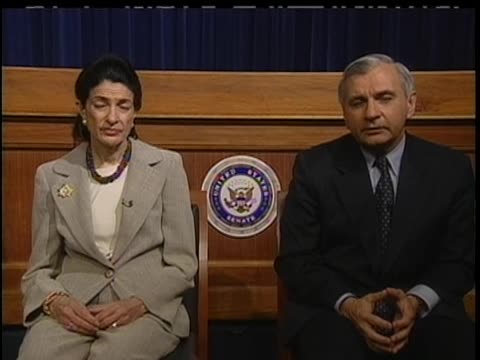
I mean the idea was that by introducing stability in Baghdad, the Shiite dominated government would adopt a kind of a reconciliation program towards the Sunnis and other groups that would become more of a unity government. They would pass key elements of legislation that would bring more groups into the fold so to speak, and that really hasn't happened so far. Michael Gordon of the New York Times joining us from Baghdad. Good to talk to you, Michael. Thank you. In Washington, the United States Senate is preparing for another week of debate on Iraq policy. This time they are talking about exit strategy. Two key senators who will be involved in that debate join us now. Republican Olympia Snow of Maine supports adopting the recommendations of the Iraq study group. She made her second visit to Iraq this May, and Democrat Jack Reid of Rhode Island, who just returned from his 10th trip to Iraq, is a member of the Senate Armed Services Committee.
Senator Snow, is the debate in Congress that we are now seeing unfold that we just heard. We just heard Michael Gordon talk a lot about the violence on the ground. Is the debate that we're now seeing unfold in Congress representing a sea change of some kind? I think absolutely, and it's something that needs to happen. I think everybody's beginning to recognize the realities that exist, both politically and militarily. But primarily because the Iraqi government has failed to achieve its political objectives that they themselves had established, even their own deadlines almost a year ago. They have failed to accomplish, and it clearly demonstrates their inability to reconcile those differences that are absolutely critical to engender the confidence of the Iraqi people. And hence, I think you're seeing the kind of sectarian warfare that continues to pervade much of Iraq, and ultimately putting our men and women a continued risk, and as we've seen a high loss of life over the last three months. Senator Reid, that high loss of life, is just this past week, and at least 200 people more than that.
And you're just returned from Iraq, so I wonder if you have a sense, Senator Reid, whether this is an issue which is something that's going to change a state of the debate now on the floor in the Senate. Well, I think, definitely, I think, that our snow is right on target in the sense that there are several factors that are prompting this change dynamic. The first is that increasing concern of the American public about the direction of policy in Iraq, and increasing demands that we change that policy. Second, there is a reality that operationally on the ground, we cannot sustain 160,000 troops indefinitely. In fact, by next spring, the size of our military forces will require reduction in any case. And third, as Michael Gordon pointed out in his report, the tactical momentum of the additional troops is not translated into political momentum. We're not seeing the kind of reconciliation, we're not seeing the kind of institutional governance capacity that's necessary. And for all these reasons, we have to change the strategy, and I think that requires defining the missions much more precisely.
Counterterrorism, force protection, and training of the Iraqi military forces, and in doing that we can begin, and I hope he can begin soon to reduce the overall number of personnel we have in Iraq. Senator Snow, President Bush has asked you and other senators, especially in the Republican Party, to wait until General Petraeus gives a report in September. We're hearing a lot of people saying they're not willing to wait, are you one of them? Yes, I am, primarily because we have not seen the Iraqi government take the steps essential to achieving that national reconciliation. In fact, they're not even close. Secondly, even General Petraeus and our ambassador have indicated that it's going to take much longer than September. And we gave breathing room not only to the President to implement his strategy, the surge, which I didn't agree with initially, because I didn't think it was going to work. But secondly, also to the Iraqi government, the surge as soon as Reid indicated, was designed primarily to give the breathing room. And as a final wind of opportunity for the Iraqi government to achieve its political goals and as yet to accomplish those goals.
And I think for those reasons, I don't think that we can waste precious time, and I think we have to move in a different direction. Is that different direction? What does that mean? Does that mean redeployment? Does that mean withdrawal? Does that mean cutting off funding? There are amendments, as you know, on the Senate floor, that call for all those things. Well, a couple of things. One that Senator Reid indicated, and I think it's a redeployment of the surge troops, a change of mission for the remaining troops, for the objectives that were laid out in Iraq's strategy group. But I also think we should move from a non-binding position to a binding to send a very strong message by the United States Congress. On behalf of the American people, that the current strategy is unacceptable, that we have to move in a different course. So it is doing both of those, I think, goals that are going to be critical. I think it outlining a change of course that is binding on the President. Senator Reid, you are the author of one of the co-author, one of the amendments, which are now about to hit the Senate floor. I believe calling for a turnaround in 120 days.
Why is your proposal a better solution than just saying, let's cut off the money and get out tomorrow? Well, I think first operationally, we have to recognize that to redeploy American forces safely in a way that provides not only for their protection, but for some certainty, and operations will require some time. That also, I think we have to focus on specific missions, different missions, and the open-ended one, the President is engaged in now. So I think for these reasons and others, a phase redeploy that begins within 120 days is a sensible approach, and that will culminate. We hope, by next spring, in a very much reduced force with very tight missions for counterterrorism, force protection, and training of Iraqi Security Forces. To me, as the best way for it, Senator Levin and I talked about that over a year ago, we continue to press that issue, and I hope that we can get increased support by my colleagues. Well, maybe you can explain what's different now.
It wasn't that many weeks ago that the Senate not only would not go along with anything like that, but they didn't want anything binding, like Senator Snow is suggesting. What is different this time? I think there's two major factors. First, the realization, not just among my colleagues, but in the administration, that come next spring, the ability to maintain this large force that Iraq becomes virtually impossible because of the overall size of the army, because of the policies that they would have to institute. And as they start working backwards and planning backwards, they're recognizing that at some point this surge has to end, and I think they're asking themselves quite rightly. Well, if it is, why are we prolonging it? What are we engaging by more effort and more troops? Receive the course, which is significant. And the second issue, and I think perhaps most compelling, is the growing unease concern of the American public about our presence, our direction in Iraq. Without public support, and without the resources, the strategy won't work, I think the realization is dawning not only on my colleagues and myself, I would hope within the White House. Senator Snow, same question to you.
What do you see that is different, and have you expressed your misgivings personally to the President or to senior members of the staff? Well, I certainly have in the past directly to the President, as far back as January, when I was involved in a meeting at the White House, and expressed my concern over the proposed surge. And also, I thought the lack of will in the part of the government to initiate the political agenda. And at that point, they had already bypassed several deadlines that they had established in the cells as of last September. So I think that there is growing reality, as Senate Reid indicated. Certainly, I think here in the United States Congress, one that has already been recognized by the American people, and one that must be accepted, frankly, by the President as well. And the reality is, the circumstances have not changed on the ground. In fact, it is that they have gotten progressively worse. When I was there in May, I thought the circumstances were infinitely worse, and it's gotten much worse since that time. And I said, recognizing that, I think that we just have to shift course.
And that's the reality that the President has to accept, and one, I think, that members of Congress are ultimately conveying to him at this point. And hopefully more so that we can do similar to what Senator Reid is indicating, similar to what I have offered in the past in terms of legislation, is that as we have to move towards redeployment troops and a change mission for the remainder. But we have Senator Reid, and also I'll come back to you, Senator Snow on this, which is the President in the White House, and even the Iraqis say that if there is anything that they interpret as a precipitous pullout, that this is going to lead to full-on chaos in Iraq if the United States tries to pull out and leave this behind. What do you say to that? Well, the proposal that I've made, and I believe Senator Snow is also made, is not a precipitous withdrawal. It's a phase redeployment of forces. And I think the other point that it should be stressed is not only what we do, but how we do it is critical. And Pell-Mel withdrawal is by definition, I think, a problem. So I think part of this process of phase redeployment is making sure that we do it in a way that minimizes as best we can, and perhaps we can't totally eliminate the uncertainty, but as best we can, the uncertainty, both militarily and politically within Iraq and in the region.
I think that can be done. I think it requires careful planning, and it also requires something more than just a military response. It requires the diplomatic and political response, which, to date, the administration has been not as effective, frankly. Senator Snow, what do you think about that? Is there any danger at all in pulling out too quickly or even sending signals that by the end of the year you want to pull out? Well, I think, frankly, no one's talking about a precipitous withdrawal immediate all the troops. It would be phased, and there would be those troops remaining to achieve the objectives that were outlined by Senator Reed. But in addition to that, it also sends an important signal to the Iraqi government, perhaps it'll give impetus to do what they need to do in terms of unifying their country and integrating the minority population. Secondly, it's engaging the region. I think that there has to be an aggressive diplomatic offensive as recommended by the Iraq study group that has failed to happen, and all of the stakeholders within Iraq itself.
I think that finally they have to assume responsibilities and obligations for the direction of the future of their country. What the American people are seeing is that Iraqis are fighting amongst themselves rather than for themselves. And now I think it's time for them to step up to the play, but no one's suggesting that we would leave tomorrow, whether it would be phased, but ultimately it would be troops remaining so that it would not invite chaos. I ask you to briefly and finally the President, there's talk of the President giving an address on this subject later in the week. Senator Snow starting with you. What would you like to hear from him? Well, I would first and foremost, I would hope that you accept the realities of the circumstances, not move the bar, and I think move in a direction that's consistent, I think, with what has been expressed by members on both sides of the political aisle. This has to be a bipartisan strategy, so ultimately I would certainly prefer the President to reach out to both sides of the political aisle and to affect a strategy that is consistent with some of the goals that we have issued here tonight, and that we have to recognize that reality, and hopefully he does, to move towards a phase redeployment of the surge troops in a change mission for the remainder. To read, I think he has to evidence a sincere desire to work with the Congress, both parties and the Congress, and also to, I think, communicate to the American public a change in direction, because without their support, any policy will not work over the longer term, and I think that change of direction encompasses very much redefine missions that focus more specifically on those major threats to us, counterterrorism, and those major opportunities to train the Iraqi forces and protect our troops.
And then I think also he has to indicate that this is going to be part of a larger regional attempt to politically and diplomatically address issues in the region, and I think if he does that, he will be able, I think, to work towards a policy that can be supported. My fear is that if it's an adamant, do it my way, or don't do anything at all, the American public will not be particularly tolerant, and at some point the ability to maintain any presence in Iraq will be very, very difficult. Senator Jack Reed, Senator Olympia Snow, thank you both very much.
Thank you. Next, wildfires and drought in the West, Jeffrey Brown has our science unit story. A combustible mix of epic drought-searing heat plus tinder-dry forests and grasslands has produced an early and raging fire season, much of the western United States is affected. The latest fire burned a stretch of the black hills of South Dakota, a blaze raised out of a canyon yesterday near hot springs, killing one local homeowner. It quickly scorched 11 square miles, cooler temperatures and a rare rainfall have helped quell the blaze today. The largest fire in Utah history rages across more than 460 square miles in the center of the state. The fire is so intense in the smoke is so intense that we've not been able to fly our helicopters or airplanes, and with the winds, it's made it even worse. It's really grown, it's really moved, it's become a dangerous fire.
60 miles of Interstate 15 in Utah also a main north-south corridor through six western states were closed Sunday because of fire. Casey Hodges had hoped that I-15 would act as a firebreak of sorts, but the road provided no relief. One much of a barrier for us, man, he jumped in and figured, you know what, this ain't worth it. We need to get out of here, because his hot felt like somebody's holding the blow up dryer to the back of your head. So he's gotten the car and we got out of here as fast as we could. Real lines in a power plant were threatened by the blaze. Five deaths have been blamed on the fires there. Utah's shopkeeper, Michael Rutherford, barely escaped harm. His store did not. We didn't realize until we were gone how bad it really was. We only had about a minute to get out of here. I grabbed my change box on this hand and one handful of things and went out the door and that was it. And it was- it came over that hill and burned this down to the ground. Many of the western blazes were sparked by lightning strikes, which ignited landscapes parched by years of drought and were further fueled by recent triple-digit temperatures. Since Friday, two dozen lightning fires have raced across northern Nevada, burning 250 square miles.
1500 evacuees were allowed to return to Winamaka today after fire destroyed an electrical substation, shut down roads, and killed livestock. Additionally, fires burned across both northern and southern California. 58 square miles of the Inyo National Forest in the eastern Sierra's burned over the weekend. That fire is now 55 percent contained. 6,500 acres of the Las Padres National Forest in the rural reaches of Southern California, Santa Barbara County, burned on Sunday. A firefighting helicopter crashed, only minor injuries to the crew were reported. And we take a closer look now at the conditions that set the stage for all of these wildfires with Lisa Gromlich, director of the School of Natural Resources at the University of Arizona. She's a paleo ecologist who studies the way environments and weather patterns change over time. She joins us from Tucson.
While Professor Gromlich start by telling us where things stand this summer compared to recent years in terms of drought and fires. Well, this is actually starting to become a bit of a norm. The drought that we're currently in actually started in 1999 and has persisted. And it's been a drought that's not only been severe, but it's been very pervasive. We're dry here in Tucson, here in the southernmost part of the western U.S., and that drought extends up not only to northern Utah, but into Montana as well. This is what's interesting about this, though, is that in previous years we'd have perhaps wet areas in the northern part of the U.S. and dry areas in the south or vice versa. But what we're seeing here, and for the last several years, is this west-wide pattern of drought. Is there a reason why the fire season started earlier this year? We think we're starting to unravel that, and it has to do with what has been a relatively subtle change in the climate of the west. You've probably heard in climate change reports that over the 20th century we have about a one-degree Celsius or about a two-and-a-half-degree Fahrenheit warming here in the western states.
Frankly, that can sound like a lot of, you know, sort of a yawn to many of your viewers, but it turns out that difference makes a huge difference in the snowpack of the west, which is so critical to governing processes like fire in our western mountains. So what we're seeing is a reduced snowpack related to no rains coming, but also anywhere from a week to almost four weeks earlier melting off of that snow. So what happens then is that these forested lands start to dry out earlier in the spring. What are we at here, you know, July 9th? And it's essentially as if we were in sort of early August in terms of the amount of time that these forested landscapes have been dry and prone to the kind of circumstances, you know, whether it's a lightning strike or a human ignition that could create wildfire.
And of course the big question, I guess, is why? Why is this drought? What's our current understanding of why this thing happens? Oh, you know, that is the big question. You know, among my colleagues, we always say that's that, you know, sort of $65 million question, and I'm not quite sure why that number comes maybe the amount of money that we need to actually figure this out. But here's some information that we're starting to glean. A couple of months ago, Richard Seager from Columbia University and his colleagues published in Science, a peer review publication, a very interesting study that indicated that what we might be seeing here in the southwest and in the western general is an expansion of what we call the Hadley Cell Circulation. So as the entire climate system warms, the movement of the jet stream that brings, you know, moisture to us here in the west from the Pacific Ocean has started to migrate north. And arguably is sort of going to sort of continue to move north and create a permanent dust bolt type situation here in the southwest.
Those are sobering, you know, thoughts. These are results that will continue to be examined and tested with data and with models. But it could mean that we're seeing a very fundamental shift here in western climate. And is this connected to all the concern and talk about global warming or is this a different kind of climate variability that you're looking at? It's potentially related to global warming, but recall that I'm somebody that studies the past and we know that very long and severe and pervasive droughts have occurred in the past. Since we know from treering records that in the mid-1100s and sort of medieval times, we had a drought in the Colorado basin that lasted six decades. So we know that the climate system can move into these very dry states and there's every reason to believe that this kind of drought may persist. I think sometimes we kind of have a coin tossing mentality towards drought that surely if it was dry this year it will be wet next year.
And that's not the way the climate system works. It tends to lock into these patterns and to lock in for a decade or more at a time. So tell us here, there you are in Arizona. What kind of impact does this have on people's lives or on what local governments are doing? We hear a lot about population explosion there, the demands of on water, how is all this play out given the drought? Well, it plays out in a couple of ways. First of all, we in Arizona are acutely aware of this drought and have been for several years. For example, the fires that you were talking about now are almost becoming a way of life for us. In the last five years, almost 20% of the forested land in Arizona has burned. We're also seeing massive mortality of the pinion pine, the sort of beautiful pine forest that cover much of the northern part of New Mexico and Arizona. We are sort of feeling the drought and feeling the drought impacts. It has huge implications for those of us that live in the cities of the West because we can exist in these cities largely because of the water from the Colorado river that is piped into Phoenix, Las Vegas, Los Angeles.
And we know that as populations are increasing in this rapidly growing part of the country, we're starting to potentially run into some limits. We in Arizona are particularly sensitive to that. In the legal terms, we have junior water rights compared to California. So if the drought deepens and if Colorado river water needs to be divided, we're going to find ourselves in a pretty sticky situation in terms of negotiating our way into some sort of sustainable system here. All right, Lisa Gromlich of the University of Arizona, thank you very much. Thank you. Now, high-level job vacancies at the Department of Homeland Security, Judy Woodruff has the story. The report released today by the Homeland Security Committee of the U.S. House of Representatives revealed that almost one quarter of the top positions at the Department of Homeland Security are now vacant.
Among the findings, 36 percent of the leadership positions in intelligence are not filled. 34 percent are empty at U.S. citizenship and immigration services. And 31 percent are vacant at FEMA, the Federal Emergency Management Agency. The report raises a new concern about management at the agency, which in 2003, at the instigation of President Bush merged 22 existing federal organizations into one. Here to tell us more is reporter Spencer Schu of the Washington Post. Spencer Schu, thanks for being with us. You wrote a story, a front page story for the post. Today 138 vacancies, what are these jobs? Well, Judy, these are the top category of jobs at the Department of Homeland Security. That includes presidential appointments, top level of senior executive service of top civil servants, and also a tear below that of top scientific, technical, and executive positions. And to put it into layperson's terms, Spencer, what work that should be being done is not being done as a result of this?
Well, these are the kinds of jobs that are in charge of programs and agencies. When you hear people talk about creating an integrated culture of information sharing, for instance, these are the people whose job it is to merge those 22 agencies and make sure that information gets in the right hand. When you hear about people talking about changing computer systems and making sure that one hand of the government knows what another hand of the government is doing, these are the folks who decide what these data bases, one information they should include, how they should work and whether the costs are worth the benefits. Finally, if you hear people talk about priorities of setting scientific research for new ways of detecting airport explosives, for example, or people who talk about overhauling the immigration system, or folks who talk about screening cargo containers, this is the work done by the people at the very top levels, no matter how good the line officer is until you set policy and dictate the rules, the work won't be done. So, does this raise concerns about security, about safety in this country?
You know, this is the latest twist on an old story and that is where the management problems at the Department of Homeland Security are continuing to create gaps or holes or heightened vulnerability to a terrorist attack or a natural disaster. We saw this after Hurricane Katrina when charges were raised that FEMA had been led by political cronies of the President that there were too many vacancies and that there were people without enough experience. You know, in despite several consecutive reorganizations, I think the concern that this report raises is that the Department is not yet on top of these concerns. And is it possible to answer whether there are real safety gaps as a result of all these positions being unfilled? You know, I guess it goes back to this old issue of you get what you pay for. People have conflicting demands of government. They want it to be small, they want it to be cheap. But when it comes to security, there's already a lot of money being spent, so the question might better be framed if are you getting the effective government that you're paying for? And I think it can't be answered, but certainly probably not good that there are these number of vacancies. You might look at it another way. Republicans like to make the political argument that Democrats are focused too much on fighting terrorism as a law enforcement operation and not like a war.
Democrats say that the Republicans focus too much on Iraq to the detriment of homeland security. The lesson from these reports is that there is a real cost of politicizing homeland security. There is a real job that needs to be done and that job has comes down to execution. It comes down to having the right leadership and it comes down to priorities. And we know that every agency of the federal government has vacancies at any given time, especially as you grow, you get closer to the end of a president's second term. How do the vacancies at homeland security compare to vacancies at other department? The Department of Homeland Security has somewhere over 200 presidential appointees compared to the two bigger departments in government. The Veterans Affairs has perhaps 60. The Pentagon, which has 10 times the workers, has about 280. When it comes to the next transition, one great concern of outside analysts, as well as the department's leaders, is that who are they going to hand over the keys to is the department ready for the transition in 18 months, January 2009, regardless of which party takes power. Beyond that, the Homeland Security Department is also a test case for a lot of laboratory for a lot of other disturbing trends. This is the increasing reliance on contractors while there is a diminishing contract or management workforce.
It's got increasing competition for its top jobs from the private sector. The Secret Service Directors used to have a tenure of 10 years on average in the 20th century, that's down now to three years. Many of them are going off to the private sector, and there's this general brain drain in government as people age in place. The issue here is homeland security is sort of the tip of the iceberg, but it's a higher priority given the focus on terrorism and domestic security. What is the department itself saying about this? I know they put out what they call a fact sheet late this afternoon. They also say the numbers were inflated because this spring they got permission from the administration to add about 73 new top jobs. So they don't differ with the overall thrust, but they say that the numbers look worse because of recent changes. I think the department also grants that is focusing hard on the transition issue, but they say that there are other folks who may be to blame if the issue is politicization. They say Congress and outside analysts and even the media of course may sometimes focus too much on personalities,
may focus too much on criticizing agencies and leaders instead of supporting them and providing them with the consensus that they need to do their jobs. So quickly, do they give a reason why it's taking so long? There's a couple of reasons. One, that government is hard. The federal hiring procedures are focused on process and fairness, not necessarily speed. Security clearances are hard to get. These jobs are hard, hard jobs, and there's a lot of criticism that comes attached, and it's difficult to compete with the private sector. All right, Spencer Shoe with The Washington Post. Thank you very much. Finally, tonight, another in our occasional series on poets and poetry. Tonight, Paul Huntress of Seattle, his latest collection of poems, is called ripening. I'm Paul Hunter, and I'm a Light of Press publisher, poet, writer, and an explorer in various ways, and I'm also making musical instruments, repair, repair them.
All of those are modes of expression, contacts with the world. I mean, for most of my adult life now, I've been finding broken instruments, or people give me broken instruments, and I fix them and they get another life. There's a part of me that is so cheered by that, and it may be part of the same thing that happens with words, with language, that you take a phrase, you take a phrase, you take a set of phrases that are shop-worn that people have had around them and not recognized, and take them and put them into a context that gives them a sharpened meaning of freshness. For the miracle. In the shop, it's bench, work scarred, long planks run under the window where grease meets paint, meets sawtooth chisel, where an engine would be heaved to take a part, and at one end, vice-jaws parted, having said the final word, let go.
And on shelves under foot, rows of coffee cans to sort by size wingnut from locknut from wood screw, machine screw, bent nail fence, steeple, hose clamp, and beyond, all around broken things brought here for the miracle. Alongside things in their rude beginnings that may yet be finished and praised, amid things in the way once too often, that may become raw materials and out of their great beyond serve in turn as patch or knife blade or chair wrong to be of use once again. My father grew up on a chicken farm in Sri Lanka, Kentucky. As a kid, we spent a few weeks in the summer on my uncle Edwin's farm, and then I started working on farms myself.
Most of my adult life has not been spent on farms, but it's the lens through which I see the world. The farm too I was in a very immediate and real way. And I think my father let me do it because he thought I would learn a lesson about staying away from effortful drudgery. And I learned exactly the opposite lesson that most of those people led modest lives, virtuous lives. Those people were substantial and modest in ways that I try to emulate. This failure, say spring too wet for plowing, runs axled deep into July, or the August oven never quite fires up before an early killing frost.
Say it rains the whole summer, or you catch root mold or blight, go a perching year without a drop. There you stand in the field, one with all the others, frail, tottering, headless, at a loss. Those still would work to be done, to clear away, or turn under, mow, rake, or burn off this failure. If there is to be another crop. The way that I tell, if it's a poem, is when I've finished, is it still mysterious? Does it remain mysterious? Has it exhausted its subject, or in some way is its subject perennial and fresh? To see more of Paul Hunter's poetry and to learn more about our poetry series, please visit our website at pbs.org.
Again, the major developments of the day, White House officials tried to tempt down speculation about possible troop reductions in Iraq. Across 10 states in the western United States, fueled by dry weather and record heat, and President Bush formally invoked executive privilege to block two former aides from testifying under oath on the U.S. Attorney firings. And again to our honor roll of American service personnel, killed in Iraq and Afghanistan. We add the measure deaths are made official, and photographs become available. Here in silence are eight more.
That last photograph showed Army Specialist Daryl Linder, and a Marine Uniform Specialist Linder served in the United States Marine Corps prior to joining the Army in January 2007. We'll see you online, and again here tomorrow evening. I'm Gwen Eiffel. Thank you, and good night.
Major funding for the news hour with Jim Lehrer is provided by. Some say that by 2020, we'll have used up half the world's oil. Some say we already have, making the other half last longer will take innovation, conservation, and collaboration. Will you join us? The new AT&T. Pacific Life. The Archer Daniels Midland Company.
The William and Flora Hewlett Foundation. And with the ongoing support of these institutions and foundations. This program was made possible by the Corporation for Public Broadcasting, and by contributions to your PBS station from viewers like you. Thank you. Thank you. Thank you.
Thank you. Thank you. Thank you.
Thank you. Thank you. Thank you.
Thank you. Thank you. Good evening. I'm Gwen Eiffel.
On the news hour tonight, the news of this Monday, then two Iraq stories, an update on the deadly weekend and the U.S. offensive from Michael Gordon of the New York Times in Baghdad. In several Western states, a report on the empty desks in the upper ranks of the Department of Homeland Security, and from our occasional series on poetry, we hear from Seattle writer Paul Hunter. Major funding for the news hour with Jim Lehrer is provided by. Now headquarters is wherever you are, with AT&T data, video voice, and now wireless, all working together to create a new world of mobility.
Welcome to the new AT&T, the world delivered. Daniel's Midland Company, Pacific Life, Chevron, the National Science Foundation, and with the ongoing support of these institutions and foundations. And this program was made possible by the Corporation for Public Broadcasting, and by contributions to your PBS.
- Series
- The NewsHour with Jim Lehrer
- Episode
- July 9, 2007
- Producing Organization
- NewsHour Productions
- Contributing Organization
- NewsHour Productions (Washington, District of Columbia)
- AAPB ID
- cpb-aacip/507-862b85452n
If you have more information about this item than what is given here, or if you have concerns about this record, we want to know! Contact us, indicating the AAPB ID (cpb-aacip/507-862b85452n).
- Description
- Episode Description
- This episode of The NewsHour features segments including an update on the deadly weekend in Iraq with Michael Gordon of the New York Times; a conversation with Senators Jack Reed and Olympia Snowe on leaving Iraq; a report on the wildfires in the western states; a look at the Department of Homeland Security; and a visit to Seattle writer and poet Paul Hunter.
- Date
- 2007-07-09
- Asset type
- Episode
- Rights
- Copyright NewsHour Productions, LLC. Licensed under a Creative Commons Attribution-NonCommercial-NoDerivatives 4.0 International Public License (https://creativecommons.org/licenses/by-nc-nd/4.0/legalcode)
- Media type
- Moving Image
- Duration
- 01:03:54
- Credits
-
-
Producing Organization:
NewsHour Productions
- AAPB Contributor Holdings
-
NewsHour Productions
Identifier: NH-8906 (NH Show Code)
Format: Betacam: SP
Generation: Preservation
Duration: 01:00:00;00
If you have a copy of this asset and would like us to add it to our catalog, please contact us.
- Citations
- Chicago: “The NewsHour with Jim Lehrer; July 9, 2007,” 2007-07-09, NewsHour Productions, American Archive of Public Broadcasting (GBH and the Library of Congress), Boston, MA and Washington, DC, accessed April 26, 2026, http://americanarchive.org/catalog/cpb-aacip-507-862b85452n.
- MLA: “The NewsHour with Jim Lehrer; July 9, 2007.” 2007-07-09. NewsHour Productions, American Archive of Public Broadcasting (GBH and the Library of Congress), Boston, MA and Washington, DC. Web. April 26, 2026. <http://americanarchive.org/catalog/cpb-aacip-507-862b85452n>.
- APA: The NewsHour with Jim Lehrer; July 9, 2007. Boston, MA: NewsHour Productions, American Archive of Public Broadcasting (GBH and the Library of Congress), Boston, MA and Washington, DC. Retrieved from http://americanarchive.org/catalog/cpb-aacip-507-862b85452n