The MacNeil/Lehrer NewsHour
- Transcript
MR. MAC NEIL: Good evening. I'm Robert MacNeil in New York.
MS. HUNTER-GAULT: And I'm Charlayne Hunter-Gault in Washington. After our summary of the news this Monday, we examine the diplomatic furor building over the International Women's Conference in China. Then Charles Krause reports on the latest tests for democracy in Mexico, and finally Time Magazine's Richard Ostling profiles the promise keepers, a religious movement for men only. NEWS SUMMARY
MR. MAC NEIL: The bodies of three U.S. diplomats who lost their lives in Bosnia over the weekend arrived at Andrews Air Force Base near Washington today. Robert Frasure, Joseph Kruzel, and Samuel Nelson Drew were members of a negotiating team sent to Sarajevo for talks aimed at bringing peace to the former Yugoslavia. They were killed when their vehicle slid off a mountain road and fell 400 yards down a ravine. Assistant Secretary of State Richard Holbrooke headed the peace mission. He accompanied the bodies home. Secretary of State Warren Christopher, Defense Secretary William Perry, and National Security Adviser Anthony Lake were there for the arrival.
WARREN CHRISTOPHER, Secretary of State: The loss of Bob and Joe and Nelson is a terrible blow, but the effort to bring peace to Bosnia will continue, and with a renewed sense of commitment, we will honor their sacrifice by striving to complete their work. One day, the shells will stop falling in Bosnia, the mine fields will be cleared, and the terrible cycle of needless violence and death in Bosnia will finally come to an end. When it does, it will be due to devoted peacemakers like Bob and Joe and Nelson and to their colleagues who survive, especially Dick Holbrooke and Gen. Wes Clark. It will be due to their spirit ofservice.
MR. MAC NEIL: President Clinton will interrupt his vacation in Jackson Hole, Wyoming, to attend a memorial service for the diplomats at Arlington National Cemetery on Wednesday. Charlayne.
MS. HUNTER-GAULT: Five people were killed and more than one hundred injured today by a suicide bomber in East Jerusalem. The Islamic group Hamas has claimed responsibility for the blast. We have more in this report from Liz Donnelly of Independent Television News.
LIZ DONNELLY, ITN: It happened at five minutes to eight this morning, right at the height of the rush hour. A bomb exploded, tearing through one commuter bus and hitting another bus passing it. As rescuers rushed to pull the wounded from the wreckage, the Israeli prime minister immediately announced that peace talks with the PLO will be put on "hold." Today's horrifying scenes followed the pattern of previous suicide bombs, all timed to cause the maximum number of casualties. There were angry scenes as protesters jeered the police minister, Moshe Shahal, who arrived at the scene shortly after the explosion. Some waved the yellow flag of the Israeli ultra right. Others shouted angry slogans in protest at the peace protest and the Israeli Prime Minister, Yitzhak Rabin, who many blamed for the spate of bombing. Israel Radio announced that a caller from the militant Muslim group Hamas, which is opposed to the peace process, said it was responsible for the attack. The caller said the operation was carried out by the students of Yakhiar Ayesh. He's known to his admirers as a man with seven souls because of his many close escapes. Ayesh is thought to be behind a whole series of bombings. He's top of Mossad's list of wanted men considered so dangerous that military orders are to shoot him on sight. There was, however, an immediate condemnation of the attack by the PLO leader, Yasser Arafat.
YASSER ARAFAT, Chairman, PLO: I condemn it completely, and we can't accept these terrorist activities.
LIZ DONNELLY: Later, Mr. Arafat's spokesman said the PLO hopes the suspension of peace talks would be brief, as it thought the only solution was a speedy implementation of the accord. Israel's prime minister, Yitzhak Rabin, committed his government to fighting terrorism and said the peace talks must continue.
MS. HUNTER-GAULT: Among those killed in the bombing was American Joan Devanney of Woodbridge, Connecticut. The Hebrew schoolteacher was beginning a year-long sabbatical in Israel.
MR. MAC NEIL: U.S. soldiers, sailors, and Marines began shipping out today for the Persian Gulf. They will participate in a joint exercise with Kuwait, known as Operation Intrinsic Action. About three hundred Marines and sailors are already en route from Camp Pendleton, California. About 1400 soldiers are set to go from Fort Hood, Texas. The four- to six-week operation had been scheduled for October but was moved up because of U.S. suspicions that Iraq might be planning military action against Kuwait or Saudi Arabia.
MS. HUNTER-GAULT: A twin-engine commuter plane crashed this afternoon near Atlanta, Georgia, killing two people and injuring all twenty-seven others on board. The Atlantic Southeast Airlines flight was en route from Atlanta to Gulfport, Mississippi. The pilot reported engine trouble about 15 minutes into the flight. It crashed soon afterwards in an open field near the West Georgia Regional Airport in Carrollton. The National Transportation Safety Board is looking into the cause of the crash.
MR. MAC NEIL: The death toll in India's worst train wreck rose to 320 today. The accident occurredwhen an express train slammed into another train stopped on the tracks in Northern India yesterday. At least 500 passengers are hospitalized. Hundreds more have been treated and released. India's prime minister ordered an inquiry into the crash, but he said the cause appeared to have been human error.
MS. HUNTER-GAULT: Zaire forcibly repatriated an estimated 3,500 refugees to Rwanda today, a United Nations official said. Twenty- six thousand more abandoned camps in Southern Zaire and escaped to the hills to avoid deportation. Zairian officials said they will continue to expel the refugees until the UN takes responsibility for their return to Rwanda. Nearly one million Rawandans fled to Zaire last year after their government was defeated in a civil war.
MR. MAC NEIL: That's our summary of the news this Monday. Now it's on to the International Conference for Women, trouble in Mexico, and a religious movement just for men. FOCUS - COMPETING INTERESTS
MS. HUNTER-GAULT: First tonight, the controversy surrounding the upcoming International Women's Conference and its VIP guest list. The conference is the largest in United Nations history and the first devoted specifically to women's issues since the last one in Nairobi, Kenya, a decade ago. We start with some background.
UNIDENTIFIED WOMAN: This is going to be a very challenging conference, as you all know.
MS. HUNTER-GAULT: This meeting last week of a group of American women was typical of meetings going on all over the world. The women were preparing for the fourth United Nations-sponsored World Conference on Women that opens next month in Beijing, China. The conference is expected to discuss issues like women's roles in politics, economic development, human rights abuses, and family violence. The official U.S. delegation is being headed by Amb. Madeleine Albright, the U.S. representative to the United Nations. First Lady Hillary Clinton has been named honorary chairwoman, but there is much hand-wringing and debate over whether she should go. White House officials said last week that Mrs. Clinton had a passionate desire to attend the conference but some members of President Clinton's National Security team reportedly have strong reservations about her attendance at a time when U.S.-Chinese relations have been strained by both economic and political issues. The United States is particularly upset about China's continued incarceration of Harry Wu, an American citizen born in China who has been openly critical of China's human rights abuses. Wu was arrested when he returned to China in June, and repeated U.S. efforts to have him released have failed. Both Mrs. Clinton's participation and the choice of China, itself, as a conference site have exacerbated arguments over China's human rights record, especially over its forced abortion and sterilization policies. Among the critics are Republican presidential hopeful Sen. Richard Lugar and Senate Majority Leader Robert Dole, who spoke about the issue yesterday.
SEN. ROBERT DOLE, Majority Leader: [CBS - "Face the Nation"] In my view, it seems to me as long as they're retaining an American prisoner there, Harry Wu, and as long as there's other human rights abuses, we're talking about starving children now in China, I think it would be a mistake for the First Lady to go.
SEN. RICHARD LUGAR, [R] Indiana: [NBC - "Meet the Press"] My own view is that probably Mrs. Clinton should not go. I think it simply countenances and makes another ambiguity out of a very difficult situation.
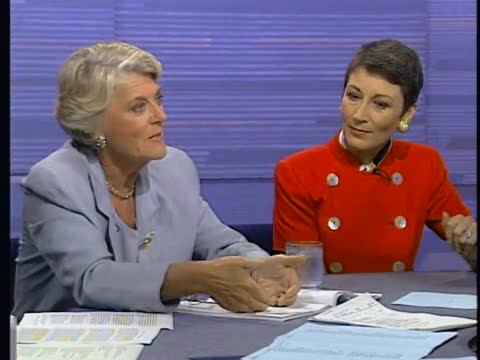
MS. HUNTER-GAULT: The official conference opens Labor Day Weekend, but a decision about Mrs. Clinton's attendance is expected in days. Women's grassroots organizations will be holding a parallel meeting outside Beijing, but there have been many complaints that the Chinese are trying to limit their numbers and their access to the press. We get four views now on the women's conference and whether Mrs. Clinton should attend. Geraldine Ferraro, a former Democratic congresswoman and vice presidential candidate, is vice chairwoman of the official U.S. government delegation to the conference. Bella Abzug, also a former Democratic congresswoman, is co-chair of the Women's Environment & Development Organization, an international women's rights advocacy group. She will participate in the Non- Governmental Forum Conference. Nina Shea is president of the Puebla Institute, a human rights organization which focuses on religious rights. She's been monitoring human rights conditions in China since 1989. And Anita Blair is executive vice president and general counsel of the Independent Women's Forum, a public policy group promoting limited government and individual responsibility. And thank you all for joining us. Starting with you, Gerry Ferraro, should Hillary Clinton go to Beijing?
GERALDINE FERRARO, Vice Chair, U.S. Delegation: I think there are two separate issues. One is: Should the delegation go? And that is a definite thing. The delegation should go, because we're focusing on a human rights document that will come out of this conference, and the United States has been a leader in virtually every conference that has dealt with this particular issue. Further than that, I'm rather inclined--this is a personal feeling, not my view as vice chair of the delegation--is that if Harry Wu remains in prison that Hillary should not, but if Harry Wu is released, I think she should go, and she should speak up. If we stayed away from every country that abuses women and children, none of us would ever travel anywhere.
MS. HUNTER-GAULT: Nina Shea, what do you think about Mrs. Clinton going?
NINA SHEA, Puebla Institute: I think it's totally inappropriate for the First Lady to travel to Beijing at a time when that country is so flagrantly violating the rights of an American citizen, one of the world's greatest human rights heroes, Harry Wu, and Harry Wu is being kept in prison without virtually any due process. We don't know where exactly he is or what he's being formally charged with. He--from all appearances of the film they released, he may have been tortured or under at least severe coercion. He's facing a possible death sentence, so I think it would be totally inappropriate.
MS. HUNTER-GAULT: And if Harry Wu were released prior to the time for Mrs. Clinton to go, would that change your mind about her going?
MS. SHEA: Certainly it would. I think this is an important lever we can use. We have a range of options that we could use to sanction China for this unacceptable behavior. China is testing us to see what it can get away with in human rights.
MS. HUNTER-GAULT: Bella Abzug, do you think the First Lady should go?
BELLA ABZUG, Co-Chair, Non-Governmental Organization: Well, we're all concerned about the release of Harry Wu, and I think that the presence of 50,000 women may have a lot to do with that happening. In any case, the site of the forum, which happens to be in China, doesn't create the policies. This is not a conference about China. It happens to be the place where the UN has designated the conference to participate in, but the women who are coming to China are the issue, and their human rights are also involved. There are millions of women and children and men across the world whose human rights are violated, as our own State Department report indicates. We're there to discuss how we can find a place for women, find the right place for women. I think it's the time and place for Hillary, because she has shown tremendous commitment to the concerns of women and children, not only in this country but in Copenhagen, when she attended the social summit and in her travels to Southeast Asia with her daughter. She has felt the pain of the women all over this world, in Chicago, in the South side, in the shadows of the White House, and in Asia, and she has an independent role to play. She has shown us that she has redefined the role of First Lady. She's a woman in her own right. She cares about these issues, and she should be joining the 50,000 rest of us who are going there.
MS. HUNTER-GAULT: So you would say that whether Harry Wu is released or not, she should go?
MS. ABZUG: That is correct, as we continue to work for his release.
MS. HUNTER-GAULT: Fine. Anita Blair, what's your view on whether or not Mrs. Clinton should go?
ANITA BLAIR, Independent Women's Forum: Well, as much as I would like to see Mr. Wu get released, and if there is some way to use leverage to achieve that, I'd be all for it, I believe that Mrs. Clinton should not go because we are talking about more than simply the human rights personified by Harry Wu here, but the egregious violations of women's human rights that take place in China in terms of female infanticide and forced sterilizations, forced abortions. It is after all a women's conference. We're not there to talk about telecommunications and leaving these issues to decide, and so, therefore, we think it's a very bad idea for Mrs. Clinton to go, for the conference to be held in China, and, indeed, for the conference to be held at all.
MS. HUNTER-GAULT: Whether or not Harry Wu is released?
MS. BLAIR: Correct.
MS. HUNTER-GAULT: So in other words, your position is that no matter what happens, no matter what the Chinese do, Mrs. Clinton should stay at home?
MS. BLAIR: Yes.
MS. HUNTER-GAULT: Do you think also the delegation should stay at home?
MS. BLAIR: Yes. I think the delegation should stay at home. I think that this exercise took a turn to the radical fringe elements of United States gender feminism, which is simply not going to be helpful to women in the rest of the world. It is cultural imperialism of a very awful kind.
MS. HUNTER-GAULT: So you have two objections to, to this delegation going, one, that there are more abuses than just Harry Wu, but also that there are other things going on that we can--
MS. BLAIR: The platform for action which is to come out of the conference would embody a lot of actions that are going to prove to be bad for the women and children and families of the world.
MS. HUNTER-GAULT: All right. I want to pursue those in a minute, but this is going to get real complicated unless I ask Gerry Ferraro to respond just to your concerns that it's not just Harry Wu, it's a lot of other things, and the U.S. just doesn't have any business there.
MS. FERRARO: The problem--I would bet Anita has not read the document. This is the document. It's 147 pages. There are three hundred and some odd paragraphs. I spent a lot of time working on this document in the last couple of months. I was not intending to go to the conference but had been asked to do it, because I was in Vienna, where so many, so many abuses to women had been addressed, and--
MS. HUNTER-GAULT: That's the Human Rights Conference in Vienna two years ago.
MS. FERRARO: That's the Human Rights Conference, the world conference, and what had happened at that conference was at long last, we were talking about violence against women and what has to be done. At the social summit, they talked about education. They've talked at all of these international conferences about rights for women. If you read this document, there are pieces in here that deal with illiteracy and what should be available to them. I'll read from one of these. "Ensure that health and nutritional information, training form an integral part of all adult literacy programs." How insane and wild is that? "Pursue social human development, education employment opportunities to eliminate--"
MS. HUNTER-GAULT: But to her--
MS. BLAIR: It's a big document. It has plenty of other much more controversial items.
MS. HUNTER-GAULT: Let me just ask you, though, in terms of her specific thing about the abuse of women generally, women's human rights in China, that was one of her points.
MS. FERRARO: This is all over the world, Charlayne. We are talking here, for instance, about refugees--you had a piece on the news right now--that Zaire is sending these women back to Rwanda. We talk about what happens to refugee women. That's happening in Zaire. It's happening all over the world. There are all different types of abuses, and what this document does is it calls on governments to make commitments to correct these abuses.
MS. HUNTER-GAULT: What's wrong with that?
MS. BLAIR: But China, in particular, is simply known for these kind of things. We don't hear about dying rooms in Zaire, where people take unwanted female infants--and we're not talking about fetuses but infants--and simply strap them to a board and leave them to die. That is what makes China the worst possible--
MS. FERRARO: And this addressed it here.
MS. BLAIR: --venue in the universe for this, this conference.
MS. FERRARO: Those crimes, violations, are addressed in this document. What better place than to be in China and point to female infanticide and forced pregnancies and forced abortions as being absolutely wrong and not tolerable by the world community! Those are human rights abuses, and that's the perfect place to do it.
MS. HUNTER-GAULT: The perfect place to do it, Ms. Shea?
MS. SHEA: No, absolutely not. I think to go to Beijing at this time when our citizen, a human rights hero, is in prison, is equivalent to going to South Africa under apartheid for a conference on race relations when Dr. Martin Luther King, Jr., our citizen, is in prison there.
MS. HUNTER-GAULT: I don't want to diminish Harry Wu, because that is a huge--you know--cause and an important one, but what about the other things that Anita Blair raised, and having raised them, she says that there are other things beyond Harry Wu that argue against this being the site of this conference and Americans participating?
MS. SHEA: There's no doubt about it. The State Department--all the human rights concur that China is a gross violator of human rights. Freedom House calls China one of the most repressive places on earth in its latest survey.
MS. HUNTER-GAULT: But Geraldine Ferraro says that that's precisely why the conference should be in China.
MS. FERRARO: That isn't why it was chosen. I mean, it was chosen because it was--the UN had chosen China because it was the time for it to be in the Asian region, and China was the only one that bid for the conference. I would prefer it to be someplace else and be able to criticize China from someplace else, but if we're there and this document criticized them--I mean, it's still making a statement on human rights abuses.
MS. HUNTER-GAULT: She's right about that, isn't she?
MS. FERRARO: We have 5,000 Chinese women who are going to be participating in this conference who will then have an opportunity to go back to their villages and their towns and say, look what went on, look what they were talking about.
MS. SHEA: I think China is too big an important a country for us to send the wrong signals on human rights in China, and that our delegation will have to go with moral blinders on to go into China at this time, when our citizen is in prison, and he's a hero.
MS. HUNTER-GAULT: Bella Abzug, you go with moral blinders on?
MS. ABZUG: [laughing] I think there's something very serious here that's being overlooked. This is a conference of 184 nations. There will be 50,000 women from NGO's, from delegations, and journalists, who are all coming together in order to find a way in which to improve conditions of women in China, as well as in the United States, as well as all over the world. The document you refer to is a document that has been prepared in regions, has had a thorough process in every region of the world, and in preparatory conferences which nations have largely agreed. There are issues which are still in dispute, but I believe that the question of violence against women, the question of their literacy, their education, their health, their reproductive rights, their environment, the question of war and peace, these are all issues which will really make a difference in the lives of women and men, and people are coming to China in order to deal with the United Nations International Conference. As was pointed out, that forum was selected by the United Nations. It's not a condemnation of their policies. In fact, their policies are on the line in the platform of action, and I think it's very interesting that suddenly when there's a women's conference, as has happened to us in the past by the way during the decade of women, we want to hold the conference of women hostage to international policies which are in dispute historically and will go on until we can help to solve them. The women in China, themselves, have asked for us to come, thousands of women in China will be at that place and we'll help their human rights, and we're there for that purpose as well.
MS. HUNTER-GAULT: What about that, Ms. Blair? Both Ms. Ferraro and Ms. Abzug make the point that this will--that this will help Chinese women and their oppression and that they have asked that the--the Chinese women themselves have asked that the conference- -
MS. BLAIR: It's hard to believe that 35,000 NGO's or 50,000 women are going to make much of a dent in China, a country of hundreds of millions, if not billions, of people. However, what might make a dent on things would be if Mrs. Clinton did go and draped herself with human rights activists from the United States, if she were to take, for example, Mrs. Harry Wu along with her to send them the strongest possible signal.
MS. HUNTER-GAULT: But Mrs. Wu has asked her not to go.
MS. BLAIR: Well, sure, but if we were to use it in that fashion, then there might be some effect for the Chinese and upon the Chinese, but I cannot believe that merely having a conference, especially one that has been relegated to the boondocks of outermost Beijing--
MS. FERRARO: No, no, the conference is in Beijing.
MS. BLAIR: Well, the NGO's at least.
MS. HUNTER-GAULT: Well, the official meeting is in Beijing, but let me just ask you, Bella Abzug, because the NGO's have complained about being isolated, many of the NGO's can't find housing, and they believe that's deliberate on the part of the Chinese, and many of them are saying they're not coming.
MS. ABZUG: Well, actually there has been a tremendous delay in getting confirmations, but they seem to be catching up. There may be some people--and we regret that deeply--that may not get there, but largely, the 35,000 or close to that will be getting there. It's true that the site is not the one we're happiest with, but we're going to have a conference. There cannot be a conference about women held by an international organization such as the United Nations without women, themselves, being present. In fact, according to what we're interested in, women have to be present not only at every international conference but at every peace table, at every trade table, and all the places where decisions are made that affect women's lives.
MS. HUNTER-GAULT: All right. Let me just go back and ask Ms. Blair--you referred earlier to your problem with the agenda of the conference--something about the cultural imperialism. Could you just briefly tell us what your problem is with the substance of the meeting.
MS. BLAIR: There are international issues that affect women that an international conference like this would be very useful for such as sex slavery, trafficking in women across--
MS. HUNTER-GAULT: Borders.
MS. BLAIR: --borders. One thing that I would have liked to see in this document would be some reference to the use of rape, systematic rape in warfare as a war crime.
MS. FERRARO: It's here--it's back here--
MS. ABZUG: Can I interrupt.
MS. HUNTER-GAULT: I'm just trying to clarify what the problem Ms. Blair has with the document.
MS. BLAIR: The bulk of the document, the vast bulk of the document, refers to policies that are essentially domestic in nature, and it is--it's our cultural imperialism, primarily the United States, going to tell other countries that we want you to go ahead and try out the social policies that we've been using.
MS. HUNTER-GAULT: Like what, for example?
MS. BLAIR: Such as encouraging women to be able to live without men, telling women that rather than trying to improve economies so that men can have a good job, families can stay together, the document goes on for page after page about women being independent economically, and essentially consigning men to fall off the face of the earth. A lot of people believe that there should be a more family orientation to the document, that we ought to be talking about keeping families together, as we're finally starting to do in the United States.
MS. HUNTER-GAULT: Okay, let me just get briefly--
MS. ABZUG: Could I address myself to the document? I've been working on it for several years, and I'd like to answer it.
MS. HUNTER-GAULT: All right. Very briefly then. I wanted to get the official response, but go ahead, and we'll get--
MS. ABZUG: The fact is that this is a document which has not been prepared by western folks; it's been prepared by many nations, developed and developing. The fact is it does deal with trafficking. It does deal with slavery. It does deal with issues that you're concerned with, and it deals with the question of the families. In fact, it says, women are a key part of the family which is the basic unit of society, and it's--it's a shocking thing to hear mis-statements made about this document, and it does deal with the actual lives of women and with the lives of children, and with men, and the role that women have as parents and the role that men have as parents, and the role that is important for women to be able to have in order to have the education to earn a livelihood.
MS. HUNTER-GAULT: All right.
MS. ABZUG: It deals with their economic conditions, in fact, as some previous conferences have, so to suggest otherwise is just to make things up.
MS. HUNTER-GAULT: To make things up, Ms. Blair?
MS. BLAIR: To make things up, no. As a matter of fact, throughout the document, they don't use the term "family," they use the term "household." Family, where it does occur, is in a very negative context such as the element of the family in creating violence against women, domestic violence, and so on, women are--are referred--householders--women's role as mothers is deliberately downplayed throughout the document, and actually our Senate has instructed our delegation to go in and try and make these corrections so that the document reflects the principles and ideals of America.
MS. HUNTER-GAULT: Ms. Ferraro, we can't respond to everything she just stated, but let me just ask you, because we only have a few seconds left, how is this going to come off? Is it going to be successful with all of the concerns--
MS. FERRARO: It's going to be successful.
MS. HUNTER-GAULT: --that everybody has raised?
MS. FERRARO: But let me just say, Bella is absolutely right about the whole length and breadth of this document, but she's so-- Anita's so wrong on this issue of the family. This document quotes the Declaration of Human Rights, which says the family is the basic unit of society. It's right in this document, so it doesn't put down family, that is a myth. It doesn't put down motherhood, but it recognizes other roles in the family besides mother. It's the role of provider; it's the role of care giver. I have had an African woman say to me, "I can't go along with this language because I'm taking care of five nieces and nephews, and it doesn't provide for me." That's why we now have provider and care giver in there along with mother.
MS. HUNTER-GAULT: All right. Well, I don't think we're going to be able to resolve all this, but since we have some more time on the agenda--
MS. ABZUG: Could I just refer you to Section 30.
MS. HUNTER-GAULT: I'm afraid, Ms. Abzug, we've run out of time, but thank you for being with us, Ms. Blair, Ms. Ferraro, and Ms. Shea.
MR. MAC NEIL: Still ahead, Charles Krause on the Guerrero killings, and a religion for men only. FOCUS - TROUBLE IN PARADISE
MR. MAC NEIL: Next tonight, a report from Mexico, where President Ernesto Zedillo's commitment to greater democracy and reform is again being put to the test. This time the issue is the recent killing by police of 17 peasant farmers on their way to a political demonstration in the Mexican state of Guerrero. Correspondent Charles Krause has our report.
CHARLES KRAUSE: Guerrero is best known for Acapulco's luxurious hotels and spectacular bay, reminiscent of the French Riviera, but despite the stunning beauty of its coast, Guerrero remains one of Mexico's poorest states, with a long tradition of poverty and political violence. Just 50 miles from the beaches and sophistication of Acapulco, dirt roads lead to villages like Paso Real, which might as well be in another world or on another planet. No telephones here, no doctors, no hospital, no discos or tourists, not even running water. Paso Real is the other Mexico foreigners rarely see, rural Mexico where subsistence farming, drug trafficking, corruption, and political violence mix in whatis often an explosive combination. It was here in the 1960's and 70's that Mexico's first guerrilla insurgency forced the Mexican army to occupy Guerrero for nearly a decade, and it was here, just a few miles from Paso Real, that the latest chapter in Mexico's bloody history took place on the morning of June 28th. It was videotaped by the police, themselves. Two truckloads of campesinos, many of them from Paso Real, were stopped on an isolated stretch of road. A shot was fired, then the killings began. Within seconds, 17 farmers were dead and more than 20 wounded, gunned down by units of Guerrero's state police known throughout Mexico for being particularly corrupt and repressive. State authorities released a videotape of the incident, apparently believing it would support their version of what happened. Instead, the images have focused attention on Guerrero's near futile political system, as well as economic and social conditions that many observers fear could lead to another guerrilla insurgency, like the one that erupted last year in the Southern Mexican state of Chiapas. Sergio Sarmiento is one of Mexico's leading political commentators.
SERGIO SARMIENTO, Political Analyst: Armed revolutions take place and at unthinkable times very unexpected, very unexpected places. The conditions are there, the conditions are similar. Guerrero is almost as poor as Chiapas, and it's a highly politicized state, so I wouldn't be surprised if an armed rebellion like, like the one that we have seen in Chiapas takes place.
MR. KRAUSE: Tension in rural Guerrero has been building for at least the past several years, especially in the region around Paso Real. But until the killings in June, no one was paying much attention. Now because of the killings, Guerrero is under scrutiny as never before. The police video shows that dozens of state troopers were sent to Paso Real on the morning of June 28th, sent there, according to the official version of what happened, to set up a checkpoint for illegal weapons. Antonio Alcocer Salazar, until last week Guerrero's attorney general, says it was a routine operation to combat the common crime.
ANTONIO ALCOCER SALAZAR, Former Attorney General: [speaking through interpreter] Seven kidnappings were reported there last year alone. As a result, checkpoints are routinely set up to search for and confiscate weapons. On the morning of June 28th, approximately three platoons of the state police were in the area. The moment they attempted to carry out the search the first shot was fired by one of the persons in the blue pickup truck, and as the video shows, the police react. That's when the shoot-out took place, with the result that 17 persons lost their lives in this unfortunate incident.
MR. KRAUSE: Shortly after the incident, eight of the state troopers and two of the officers involved in the shooting were detained and charged with use of excessive force and abuse of power. But the arrests have not quieted the storm of protest that's continued to build over the killings. Led by Porfirio Munoz Ledo, president of Mexico's center left Democratic Revolutionary Party, the opposition has staged a series of protests, demanding the resignation of Guerrero's governor, Ruben Figueroa. A traditional cacique, or strongman, Figueroa is a hard-line leader of the PRI, the Institutional Revolutionary Party that's governed Mexico and Guerrero with an iron hand for more than 65 years. Munoz Ledo has had little trouble convincing his followers that the government is lying, that there was nothing routine about the checkpoint set upthe morning of June 28th. Instead, Munoz Ledo charges the killings took place because Figueroa was determined to stop an anti- government protest scheduled that afternoon.
PORFIRIO MUNOZ LEDO, Opposition Leader: It is a classic, a cacique attitude. He didn't like this kind of campesino movement, and then he prepared the--the massacre, the killings, and he send the judiciary police to kill them like that.
MR. KRAUSE: It's a view increasingly shared by the Mexican press and most independent observers, among them political science professor Denise Dresser.
DENISE DRESSER, Political Scientist: It's a state that's been ruled for over 40 years by the Figueroa family, and they've ruled it as their personal thiefdom. In this case, I believe that Ruben Figueroa probably tried to keep peasant organizations under control and his way of doing that was resorting to oppression, violence, clamping down on independent organizations so that they wouldn't create trouble for him.
MR. KRAUSE: But if that was the case, Figueroa's strategy seems to have backfired. Munoz Ledo and the left continue to protest the killings in Acapulco and Mexico City. Meanwhile, relatives of those killed and their sympathizers have seized the town hall in Coyuca De Benitez, the administrative capital of the region where the killings took place. Jorge Luis Salas told us that before the incident in June, there was growing tension due to a political vendetta on the part of the local mayor. An ally of Figueroa's, the mayor was withholding essential fertilizer from campesinos he believed to be sympathetic to the left. As a result, an indigenous group, called the Campesino Organization of the Southern Sierra, or OCSS, had planned a protest for the afternoon of June 28th, and many of those shown in the police video were on their way to take part in the protest when they were killed. Not much is known about the OCSS, but Sarmiento says that he's been told by intelligence sources that so far, the OCSS appears to be committed to peaceful political change.
SERGIO SARMIENTO: They're not involved in guerrilla, in guerrilla actions, for example, but they do have links--some of their people have links to very small armed groups that are operating in Guerrero at this--at this point. The OCSS is an organization that stems from other leftist organizations and others, more guerrilla groups that operated in the 1970's in Guerrero, but it is not an armed organization so far as I can see.
MR. KRAUSE: But there are some armed organizations in Guerrero.
SERGIO SARMIENTO: My information indicates that, that there are.
MR. KRAUSE: Given the police video and other evidence of growing tension in Guerrero, even the governor's supporters suspect there was a connection between the planned protest and the killings, but Ron Lavender, an American real estate broker in Acapulco, says he believes it's the OCSS leadership that's to blame for the violence, not the governor.
RON LAVENDER, Real Estate Broker: We have to accept the fact that these people apparently were headed toward the village of Coyuca De Benitez, where they had the intention of, of taking over the city hall. That, as far as I'm concerned, is simple anarchy, and, and something has to be done to stop that. Now, why the measures were as drastic as they were, I really haven't any idea. But I think that certainly the majority of the people in Acapulco certainly from the business community and so forth support the governor and support the government in this. And it's not that we sanction or condone killing great numbers of peasants,but if I were placing any blame on it, I would place it on the leaders who bring all this about.
MR. KRAUSE: Lavender heads a charitable group called Friends of Acapulco, which provides money for a health clinic, an orphanage, and other activities to help the city's poor. But despite his good works, Lavender's support for Gov. Figueroa and his views about keeping Guerrero's campesinos in their place appear to be in a distinct minority. Even the quasi-official Mexican Human Rights Commission recently called for an investigation of senior state officials for attempting to cover up evidence related to what it called "the massacre." The report stopped short of directly implicating the governor, but last week, he was forced to dismiss eight state officials, including Attorney General Alcocer. As evidence against the state government has grown, the incident has become a national issue in Mexico, because it seems to be an example of the kind of political repression which Mexico's new president, Ernesto Zedillo, has promised to end. Yet, so far, Zedillo has refused to order a criminal investigation of the incident, much less remove his friend and political ally, Gov. Figueroa, from office. Denise Dresser and many others interpret Zedillo's failure to act as a sign of political weakness.
DENISE DRESSER: On the one hand, Zedillo has said that he wants to modernize the Mexican presidency, that he wants to stop intervening in local politics. But the perception in Guerrero, I think, from the perspective of Ruben Figueroa, is that he doesn't need to be accountable to the president, because the president is weak, he's isolated, he doesn't have a coalition of support, and that, therefore, regional caciques will govern in the traditional way that they always have been able to do so.
MR. KRAUSE: Political scientist Sergio Aguayo heads Mexico's most broadly based citizens group, the Civic Alliance.
SERGIO AGUAYO, Political Scientist: It is like if in Kent State you had not had a clear, credible explanation of what happened that day when the National Guard assassinated a few students. We have had no words. We want acts. We want actions. We want a proved demonstration that President Zedillo and his government are on the side of justice and not on the side of the powerful, as has been the case in our history.
MR. KRAUSE: For his part, Munoz Ledo warns that if Figueroa is not removed and if those responsible for the killings are not punished, Guerrero will fester and one day explode.
PORFIRIO MUNOZ LEDO: In any moment there could be a rebellion, and we are living the worst of the political moments in 50 years of Mexican history. Zedillo has to change. He has to punish. He has to punish the responsible for the political crimes. That's the essential problem.
MR. KRAUSE: Sensing that outrage over the killings could continue to grow, Figueroa's government has moved quickly to try to pacify the area around Paso Real. An elaborate tomb has already been built for those killed, while we were told their families have been offered the equivalent of nearly $10,000 and a new home to keep silent. We were also told there have been death threats against those who continue to speak out. Called plomo or plata, the use of rewards and punishments is a tactic that many Mexican academics and politicians say has been used for decades to keep the government and the PRI in power.
SERGIO SARMIENTO: When you protest, you are offered goods or you are offered punishments, and you are in the middle of trying to reject or refuse corruption, but also being very careful not to provoke the authority to use repression or both.
MR. KRAUSE: But throughout Mexican history, most recently in Chiapas, there have been times when neither the bribes nor the repression is enough to overcome the sadness and anger now so evident in Paso Real and elsewhere in Guerrero. FINALLY - PROMISE KEEPERS
MS. HUNTER-GAULT: Next, we look at a religious movement that's drawing tens of thousands to its meetings across the country this summer. Richard Ostling, religion correspondent for Time Magazine, has our report.
RICHARD OSTLING, Time Magazine: It was as loud and raucous as a religious meeting ever gets. [cheering]
SPOKESMAN: We love you guys! We need you, and you're not alone anymore!
MR. OSTLING: In the Seattle Kingdome, 63,000 men cheered to show their support for local pastors. [cheering] Leading the cheers was Bill McCartney, founder of Promise Keepers. This evangelical Christian organization, for men only, seeks to bring participants into a vital relationship with Jesus Christ and more responsible involvement with their families. At a time when many church organizations for men are in decline, Promise Keepers is holding mass rallies across the nation. [cheering] McCartney was formerly a top-ranking football coach at the University of Colorado. He says it was partly his own failures that gave him the idea to use men kindled with the spirit of God to restore the family.
BILL McCARTNEY, Promise Keeper: I'd been a selfish guy. I'd been a guy who's been career-oriented and drive-oriented, goal-seeking, ambitious, and I regret a lot of that because while we're living out my dreams, sometimes at the expense of those that were closest to me.
MR. OSTLING: His idea has stuck a nerve in a society engaged in intense public and political debate over the breakdown of the family and the failures of fathers. President Clinton has noted the Promise Keeper's response to these problems.
PRESIDENT CLINTON: [July 6] The phenomenal success of this Promise Keeper's organization can fill any football stadium in America. It's an astonishing thing, because people want to do the right thing, and they want to get their families and their lives back together, and that's encouraging.
MR. OSTLING: Promise Keepers first came to national attention with a rally two years ago that filled this University of Colorado football stadium. Since then, it's become one of the fastest- growing phenomena in American religion. Last year, rallies in seven cities drew 280,000 men. The turnout in 13 cities this year will be double that, and it's expected to double yet again in 1996, totalling at least one million men.
BILL McCARTNEY: And I'm going to ask you, men, to walk down here, give your life to Jesus Christ, right now.
MR. OSTLING: For the men who come to these rallies, the first step to becoming a Promise Keeper is to commit to Jesus Christ. [music in background]
SPOKESMAN: Promise No. 1, a Promise Keeper is committed to--
MR. OSTLING: Next, the men make seven promises on such matters as moral and sexual purity and building strong marriages and families through biblical values.
MAN SPEAKING TO CROWD: How many of you are willing to make a promise today to God, in front of your peers, to increase honor for your wife? On your mark, get set, go! [cheering]
MR. OSTLING: The most controversial aspect of the Promise Keepers' message is the teaching that men should be spiritual leaders over their wives in line with the movement's strict conservative interpretation of the Bible. Seattle businessman Martin Brazier, who belongs to a Pentecostal church, is an active Promise Keeper. He respects his wife's abilities and opinions but believes he has a special role.
MARTIN BRAZIER, Promise Keeper: She is a co-partner with me, but whatever else happens, we understand that as men of God that ultimately we have the responsibility, ultimately, but that's a fact of life that we live out, because we're going by the word of God.
BILL McCARTNEY: Isaiah 38:19 says, "A father to the children shall make known the truth." Almighty God has mandated that the man take the spiritual lead in the home. That's not at the expense of anyone, but he takes responsibility to make sure that Jesus Christ is introduced to his children.
MR. OSTLING: Seattle minister Marie Fortune, who works with churches nationwide on domestic violence issues, thinks the times require a different understanding of the Bible.
MARIE FORTUNE, Domestic Violence Counselor: What concerns me is in terms of the--what I'm hearing here in the distribution of power in that relationship--for me as a Christian, when I read Ephesians 5:21, what is the bedrock of that relationship is be subject to one another out of reverence for Christ. We're not talking there about one person in charge and another person who does whatever the person in charge says. I hear us being called to a new way of relationship, to be co-creators on God's earth.
MR. OSTLING: Critics have been provoked by the words of Dallas pastor Tony Evans included in the movement's guidebook. "Sit down with your wife and say something like this: 'Honey, I've made a terrible mistake. I've given you my role. I gave up leading this family, and I forced you to take my place. Now I must reclaim that role.' I'm not suggesting that you ask for your role back, I'm urging you to take it back. Treat the lady gently and loving. But lead!" Author Robert Bly is a leader in the so-called "men's movement" which encourages men to be more sensitive and emotionally expressive. He's concerned that Promise Keepers represents a rollback to an outmoded definition of the man as patriarch of the family.
ROBERT BLY, Author: If this movement is born out of fear, fear of change, fear of women's new power, fear of the children turning against the parents, if it's born out of that fear, then it's not going to help us, because one doesn't make good decisions when one is in fear.
MR. OSTLING: Liberal activists are also concerned that founder McCartney's outspoken opposition to abortion and gays might shape the Promise Keepers' movement.
BILL McCARTNEY: We encourage all men to come to these conferences. I don't think that they're going to hear anything there that'll violate them or offend them, and that's really the thrust of Promise Keepers. It doesn't have anything to do with any personal statements that I may have made in the past. It's--the organization is much bigger than me and my opinions. We have no political agenda. We have no candidates to endorse. We have no policies to suggest. We're strictly after God's heart for what he would do to rescue our nation from this downward spiral of morality and restore Jesus Christ to his rightful position as the head of every home.
MR. OSTLING: But Bly fears the organization which shares a conservative belief in the Bible with the religious right will inevitably have a political impact.
ROBERT BLY: This group of enthusiastic men is bound to go politically toward the Christian right wing. There's no other place it can go in American culture. They plan to bring a million men to Washington sooner or later, and so next year, they will probably, whether they intend it or not, influence the election on the side of the Christian right wing. Pat Robertson is waiting.
MR. OSTLING: There's one aspect of McCartney's personal crusade that even his critics wish would spread like wildfire, his stand against racism.
UNIDENTIFIED MAN: I want every man here to say, "Pastor, I have now or at one time used the color of a man's skin to make my decision." I want you to stand. I want you to repent.
MR. OSTLING: At each Promise Keepers' rally, men are asked to rid themselves of racism and to cultivate close friendships across racial lines. That's a highly unusual message at a conservative evangelical gathering.
UNIDENTIFIED MAN: Let's say no more, no more, no more!
MR. OSTLING: The Promise Keepers organization believes one way to fight against racism is to bring together men of different races in small groups.
SPOKESMAN: That we be mindful of the families represented here in our group, Lord.
MR. OSTLING: Martin Brazier meets regularly with four other men.
MARTIN BRAZIER: The only affirmative action that's going to work in this country is when men's hearts are changed. When men's hearts are changed in relationship, the country will change. You cannot legislate change in a guy's heart. That can only be done invoking it to God.
MR. OSTLING: The weekly meetings are designed to break down not only barriers of race but also the walls that have traditionally kept men isolated from each other.
JACK McMILLAN, Promise Keeper: I guess my prayer that I'd like you guys to join me in is, is for us to be reconciled as a family and for us to be able to forgive each other.
MR. OSTLING: Jack McMillan, a Catholic and a top retail executive, says that the groups are a place to fulfill McCartney's message.
JACK McMILLAN: He said, "The thing that I want you to do is to share your pain with each other--p-a-i-n." And it just reverberated in my mind that that's what men don't do. First of all, you need to know that you have pain, rather than the macho thing is to swallow pain. Being in the word together, the Bible, praying together, and sharing our lives with each other, that's a tremendous combination that'll bring you closer to other men, and get you away from the isolation that so many American men experience in their homes and in their careers.
MR. OSTLING: Many see the small groups with their mingling of the personal, the social, and the religious, as an important reason for Promise Keepers' great success, but the "men only" atmosphere makes Marie Fortune a little nervous.
MARIE FORTUNE: I just think that when men come together without women's experience being a part of the discussion, that sometimes their actions or their choices and decisions can be somewhat distorted and not always in the best interest of women and children.
MAN ADDRESSING CROWD: Are you committed to Promise No. 1? Yes, Jesus!
MR. OSTLING: Bly, who would argue that there's a very good reason for men to meet separately, is nervous as well. As a liberal Protestant, he worries that as long as Promise Keepers practices what he sees as a heavy-handed missionary style of Christianity, it will erect barriers, rather than break them down.
ROBERT BLY: And the nub of it lies in excluding all other ways of approaching God, and saying, this Christian way is "the" only way. That means that you have the correct way, and if someone doesn't believe as you do, it's very easy then to make them an enemy, because if there's only one right way, then the other way must be the wrong way.
MR. OSTLING: But what Bly seesas the basic problem, McCartney sees as the basic solution, indeed, the very foundation of Promise Keepers.
BILL McCARTNEY: There's two very simple things that declare whether you're a Promise Keeper or not. One is: Do you love Jesus Christ? No. 2: Have you been born again of the spirit of God? If you don't love Jesus Christ and you're not born of the spirit of God, this isn't going to make a lot of sense to you, and you're not going to get a lot out of it. [singing in background]
MR. OSTLING: While skeptics consider Promise Keepers a throwback to out-of-date theology and concepts of the family, the enthusiasts claim they're at the center of a spiritual and moral revival that will sweep the country. That may seem overdrawn, but there's no doubt the movement is offering a practical response to deeply felt needs in American society.
MAN SINGING: We will serve the Lord! [cheers] RECAP
MR. MAC NEIL: Again, the major stories of this Monday, the bodies of three U.S. diplomats who lost their lives in Bosnia over the weekend were returned to Washington. Five people were killed and more than a hundred injured by a suicide bomber in East Jerusalem. The Islamic group Hamas claimed responsibility for the blast. Good night, Charlayne.
MS. HUNTER-GAULT: Good night, Robin. That's the NewsHour this Monday. We'll be back tomorrow evening. I'm Charlayne Hunter-Gault. Good night.
- Series
- The MacNeil/Lehrer NewsHour
- Producing Organization
- NewsHour Productions
- Contributing Organization
- NewsHour Productions (Washington, District of Columbia)
- AAPB ID
- cpb-aacip/507-7h1dj5961z
If you have more information about this item than what is given here, or if you have concerns about this record, we want to know! Contact us, indicating the AAPB ID (cpb-aacip/507-7h1dj5961z).
- Description
- Episode Description
- This episode's headline: Competing Interests; Trouble in Paradise; Promise Keepers. The guests include GERALDINE FERRARO, Vice Chair, U.S. Delegation; NINA SHEA, Puebla Institute; BELLA ABZUG, Co-Chair, Non-Governmental Organization; ANITA BLAIR, Independent Women's Forum; CORRESPONDENTS: CHARLES KRAUSE; RICHARD OSTLING. Byline: In New York: ROBERT MAC NEIL; In Washington: CHARLAYNE HUNTER- GAULT
- Date
- 1995-08-21
- Asset type
- Episode
- Topics
- Women
- Global Affairs
- Film and Television
- War and Conflict
- Religion
- Transportation
- Military Forces and Armaments
- Politics and Government
- Rights
- Copyright NewsHour Productions, LLC. Licensed under a Creative Commons Attribution-NonCommercial-NoDerivatives 4.0 International Public License (https://creativecommons.org/licenses/by-nc-nd/4.0/legalcode)
- Media type
- Moving Image
- Duration
- 00:58:27
- Credits
-
-
Producing Organization:
NewsHour Productions
- AAPB Contributor Holdings
-
NewsHour Productions
Identifier: 5297 (Show Code)
Format: Betacam
Generation: Master
Duration: 1:00:00;00
If you have a copy of this asset and would like us to add it to our catalog, please contact us.
- Citations
- Chicago: “The MacNeil/Lehrer NewsHour,” 1995-08-21, NewsHour Productions, American Archive of Public Broadcasting (GBH and the Library of Congress), Boston, MA and Washington, DC, accessed April 21, 2026, http://americanarchive.org/catalog/cpb-aacip-507-7h1dj5961z.
- MLA: “The MacNeil/Lehrer NewsHour.” 1995-08-21. NewsHour Productions, American Archive of Public Broadcasting (GBH and the Library of Congress), Boston, MA and Washington, DC. Web. April 21, 2026. <http://americanarchive.org/catalog/cpb-aacip-507-7h1dj5961z>.
- APA: The MacNeil/Lehrer NewsHour. Boston, MA: NewsHour Productions, American Archive of Public Broadcasting (GBH and the Library of Congress), Boston, MA and Washington, DC. Retrieved from http://americanarchive.org/catalog/cpb-aacip-507-7h1dj5961z