The NewsHour with Jim Lehrer
- Transcript
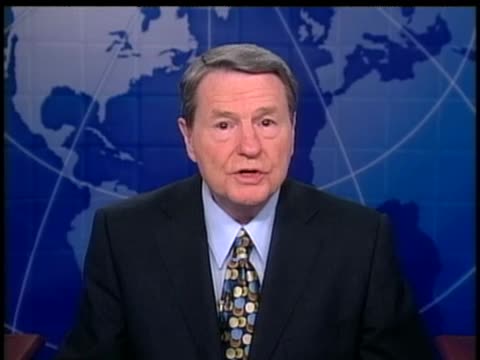
JIM LEHRER: Good evening, I'm Jim Lehrer. On the NewsHour tonight, the news of this Wednesday, then: Two takes on Iraq, the latest on the violence and the politics as reported by Jeffrey Gettleman of the New York Times and a media unit report on the good news/bad news reporting debate; a NewsHour story about illegal immigrants in an unlikely place, Minnesota; an update on the conflict in Darfur with NATO's general secretary; and a young Marine's essay on waiting for Iraq.
NEWS SUMMARY
JIM LEHRER: General Motors offered a buyout deal to nearly all of its hourly workers today. The deal also included Delphi, now in federal bankruptcy protection. The former GM subsidiary is the country's largest auto parts supplier. In all, some 125,000 employees from the two companies will be offered early retirement. Buyouts would range from $35,000 to $140,000 depending on years of service. GM said the plan will help it cut 30,000 hourly jobs by 2008. Last year, the automaker lost $10.6 billion.
Insurgents in Iraq attacked a police station today, the second in two days. This time, most of them were caught. About 60 gunmen staged the attack, just south of Baghdad. U.S. and Iraqi troops captured 50. Four policemen were killed. In Baghdad, gunmen killed six Shiite pilgrims and wounded 50. They were on their way back from celebrating a religious holiday. We'll have more on Iraq right after this News Summary. A U.S. Army dog handler got six months behind bars today for abusing Iraqi prisoners. Sergeant Michael Smith could have gotten eight and a half years. He was photographed letting his dog lunge and bark at inmates at Abu Ghraib Prison.
In Spain today, the Basque separatist movement ETA declared a permanent cease-fire. The group terrorized the country in a quest for independence for the Basque region, starting in the 1960s. We have a report narrated by Lindsey Hilsum of Independent Television News.
LINDSEY HILSUM: Still masked, still undercover, still in a secret location, but today the Basque separatist movement ETA released this video declaring a permanent cease-fire starting Friday.
ANONYMOUS ETA SPOKESWOMAN (Translated): ETA also calls on the Spanish and French authorities to respond positively to this new situation, leaving their repressive ways behind. Finally, we call on the Basque citizens to get involved in this process and to fight for the rights we deserve as a nation.
LINDSEY HILSUM: Speaking in parliament in Madrid, the Spanish prime minister indicated that this could signal the start of a peace process to end nearly 40 years of violence.
JOSE LUIS RODRIGUEZ ZAPATERO, Prime Minister, Spain (Translated): The government position is of caution and prudence. As I have said before and today I reiterate before this chamber, this, like all peace processes after so many years of horror and terror is going to be long and difficult.
LINDSEY HILSUM: He called on the conservative opposition to back the government. The Popular Party has always opposed what it calls talking to terrorists, but Prime Minister Zapatero's socialists are expected to start negotiations with ETA soon.
MARIANO RAJOY, Leader, Popular Party (Translated): It is not possible to negotiate politically or to pay a political price to a terrorist organization because in that case, terrorism could become an political instrument, and terrorists would win the battle.
LINDSEY HILSUM: It's been a long and bitter conflict. ETA attacks have killed more than 800 people in Spain-- this bomb in Fuengirola in 2002. In the 1970s and '80s, hundreds of ETA suspects were killed by government-backed forces. In recent months, ETA's been weakened as many in the leadership have been arrested. But massive anti-ETA demonstrations in Bilbao in recent years indicate that many Basques have had enough of this conflict, and want a deal on further autonomy to be decided by talking, not violence.
JIM LEHRER: ETA has announced cease-fires in the past, but it has never called for a permanent halt to violence. The U.S. Justice Department announced the indictment today of 50 rebels in Colombia for cocaine trafficking. It said their group, known as FARC, supplies most of the cocaine for the world and the United States. Attorney General Gonzales acknowledged nearly all the suspects are at large. But he said it's clear they're worried.
ALBERTO GONZALES: You can see the reaction to -- by the members of the FARC to the notion that this indictment might be coming, that there might be action by the U.S. Government in concert with the Colombian government in terms of threats, retaliation, and reprisals. I think that members of the FARC do not want to face American justice.
JIM LEHRER: The indictment said FARC has kidnapped and killed Americans and shot down U.S. planes trying to eradicate coca plants. The attorney general would not say if the indictment clears the way for U.S. troops to go after the rebel leaders, but he did not rule it out.
On Wall Street today, the Dow Jones Industrial Average gained nearly 82 points to close at 11,317. The NASDAQ rose nine points to close at 2303. And that's it for the News Summary tonight, now: Today in Iraq; media messages on Iraq; the migrants of Minnesota; NATO and Darfur; and a going to war' essay.
FOCUS PERILOUS PLACE
JIM LEHRER: Our Iraq update comes from Jeffrey Gettleman of the New York Times. Ray Suarez talked with him earlier this evening.
RAY SUAREZ: Jeffrey Gettleman, welcome.
Let's start with this latest insurgent attack on a police station. Where was it this time?
JEFFREY GETTLEMAN: This time it was south of Baghdad. There was a handful of insurgents that fired a lot of mortars and RPGs, rocket-propelled grenades, at this police station. I think they killed one police officer. Our casualty counts often aren't accurate right away, but they didn't free any prisoners, and that's what we saw yesterday. We had seen this major attack that involved over 200 insurgents surrounding a police station north of Baghdad in a pretty volatile area, and they stormed the police station, killed, I think it was over 15 police officers, and then escaped with 30 prisoners who were pretty high profile in searching suspects. And both of these attacks are kind of a throwback to what we saw two years ago in the insurgency with these organized attacks on police stations. We haven't seen that so often, and that's -- that's why it was kind of unusual to have these two attacks back to back.
RAY SUAREZ: Well, does it provide some evidence that there's a larger strategy at work that these groups talk to each other?
JEFFREY GETTLEMAN: It's hard to tell. It's really hard to tell. I mean, the fact that they didn't free any prisoners today, it's not clear if there were even any insurgent suspects at the police station they attacked today shows it might have been a totally different operation. What's unusual is we just -- we haven't seen these attacks on government installations like this for a while. It's been more of the sectarian violence theme, attacking civilians in areas where, let's say, there's a large amount of Shiites. This week we've seen a number of Shiite pilgrims who are going to Karbala in southern Iraq to celebrate a big Shiite festival. They've been gunned down and killed, targeted because they're wearing all black. They're obviously headed to Karbala, and they're Shiite, so that's been sort of the theme of the violence the last couple of days, and that's why this sort of came out of the blue.
RAY SUAREZ: Along with those--
JEFFREY GETTLEMAN: Let me add one point.
RAY SUAREZ: Yeah, sure.
JEFFREY GETTLEMAN: The authorities I spoke with about these attacks at these two police stations told me they have been bracing for attacks against Shiite pilgrims, and that's where all their energies were being spent was to protect the Shiite civilians who were going to Karbala and southern Iraq. So I think at least for the attack yesterday they were a bit blind-sided by it because they had been preparing for a totally different threat and then encountered one they didn't expect.
RAY SUAREZ: Along with the attacks on life and limb, are you also starting to see large numbers of people being rousted from their homes, made refugees inside their own country?
JEFFREY GETTLEMAN: That's a really big issue. I don't know if enough can be said about that. What we're seeing is we're seeing assassinations and, you know, collective assassinations or group killings where you'll have one militia go into a neighborhood, usually a mixed Sunni-Arab and Shiite neighborhood, and kill people of a certain sect and that's done to send a signal for that whole group to get out of neighborhood. And that's exactly what happens.
I talked to some people today who told me gripping stories about how a young man that they were related to was working in a pet shop, had no involvement with the insurgency, he was a Sunni-Arab, wasn't -- it didn't sound like he was militant at all, and one day a week ago, a number of cars pulled up in front of his pet shop, grabbed him, took him away, and the next day his body was found horribly tortured on the street not far away. As soon as that happened, his family left the neighborhood, and they were asking me if I could help them go back to get things from their house because they're too scared to make that journey themselves, and needless to say, I'm not going back there, either.
RAY SUAREZ: You were in Iraq for a long stretch earlier in the war. Now you've been away for a good period of time. Now that you're back, do you see any big changes in the country?
JEFFREY GETTLEMAN: It's hard. I mean, that's a tough question. I got back about a week ago, and my first -- my first instinct was that it was quieter. There were less attacks. Before, when I was here, we would get woken up almost on a daily basis by a loud explosion, which is really frightening when you're sleeping to get jarred awake like that. That doesn't really happen much anymore. We're near the green zone, and that used to be the target of many mortar attacks. You don't see that as much. You don't see the American troops on the street as much.
So in many ways, it almost feels quieter. But if you poke a little beneath the surface, I think you realize that tensions are higher than they've been, and that's a sense of -- there really is a sense of hopelessness. I mean, I can't tell you how many people I've talked to that say they want to leave. They don't think it's going to get better. It's only going to get worse. I mean, before at least there was this hope that elections, the political process, these dates in the future might mean something to the people.
But now they've come and gone and things are just getting worse, and I think this attack on the Samarra mosque last month really lifted the lid on a lot of things that had been simmering under the surface.
RAY SUAREZ: And how has the day-to-day job of covering Iraq as a foreign reporter changed?
JEFFREY GETTLEMAN: You know, it's hard to get -- it's hard to get a sense of how dangerous it is because you can go out, you can observe, you can talk to people, and nothing -- nothing will happen. And I think in a way the fact that there's so much focus on these sectarian issues might make our job -- and, you know, I hope I'm not totally jinxing myself -- a little easier because there are less people that are venting about the American occupation, less people that are focused on, you know, what they perceived was the wrongness of foreign troops their country. It's more inward-looking, and we're less of a factor. The foreign journalist, the foreign person in Iraq is less of a factor.
So in that way I think things have opened up a little bit. I haven't had any problem meeting with people, talking with them, having them share their stories, but you have to be very careful where you go. There's only certain neighborhoods in Baghdad we go; there's only certain areas in the country that we'll go. If you leave Baghdad, it basically has to be on a military flight because it's too dangerous to go by road.
RAY SUAREZ: You mention having to be careful when you move around the country. Let's take the example of this latest police station attack. Is that something that you're able to go to yourself or do you use stringers? How does an organization like the Times find out what it needs to know?
JEFFREY GETTLEMAN: Well, there are a few different ways to do it. If it's in a place like Baghdad, we may be able to go if it's in a safe neighborhood and it's a big enough story. Then we have a pretty competent Iraqi staff that knows the country very well, has a lot of experience going to different places, and we often use them to drive to places outside of Baghdad that we can't get to.
Sometimes, though, that's even dangerous for them, and we have stringers in different cities all across Baghdad who we can call and get news from. We have stringers in Najaf, from Karbala, and Basra, in Kirkuk, all over the country, even in places like Fallujah and Ramadi.
RAY SUAREZ: Jeffrey Gettleman of the New York Times, thanks for being with us.
JEFFREY GETTLEMAN: Thank you.
FOCUS THE MEDIA & THE MESSAGE
JIM LEHRER: And now the media, and the message of what's going on in Iraq. Jeffrey Brown has our media unit report.
JEFFREY BROWN: As polls show the public increasingly turning against the war in Iraq, President Bush was on the road again today making the case for perseverance. One issue often cited by the president and his aides: Whether press coverage of the ongoing violence has become an obstacle to the U.S. enterprise in Iraq, and a driver of American public opinion. The administration has said news organizations under-report progress in Iraq. At the president's appearance today in West Virginia, one woman had the media in her sights.
UNIDENTIFIED WOMAN: It seems that our major media networks don't want to portray the good.
PRESIDENT GEORGE W. BUSH: One of the things that we've got to value is the fact that we do have a media, a free media that's able to do what they want to do. If you're concerned, I would suggest that you reach out to some of the groups that are supporting the troops, that have got Internet sites, and, and just keep the word, keep the word moving. It's-- and that's one way to deal with an issue without suppressing a free press. And, obviously, I know you're frustrated with what you're seeing.
JEFFREY BROWN: The president expressed his own frustration yesterday at his press conference.
PRESIDENT GEORGE W. BUSH: I'm not suggesting you shouldn't talk about it. I'm certainly not being you know -- please don't take that as criticism. But it also is a realistic assessment of the enemy's capability to affect the debate, and they know that. They're capable of blowing up innocent life so it ends up on your TV show.
JEFFREY BROWN: On CBS Sunday, Vice President Cheney was even more pointed.
VICE PRESIDENT DICK CHENEY: There's a constant sort of perception, if you will, that's created because what's newsworthy is the car bomb in Baghdad. It's not all the work that went on that day in 15 other provinces in terms of making progress towards rebuilding Iraq.
JEFFREY BROWN: At times, the White House press corps has been criticized by opponents of the war for not challenging the administration during the run-up to the invasion. But of late, the relationship has been contentious.
Yesterday veteran correspondent Helen Thomas questioned the president.
HELEN THOMAS: Why did you really want to go to war? From the moment you stepped into the White House, from your cabinet-- your cabinet officers, intelligence people, and so forth-- what was your real reason? You have said it wasn't oil -- quest for oil, it hasn't been Israel, or anything else. What was it?
PRESIDENT GEORGE W. BUSH: I think your premise-- in all due respect to your question and to you as a lifelong journalist- - is that, you know -- I didn't want war. To assume I wanted war is just flat wrong, Helen, in all due respect...
HELEN THOMAS: Everything--
PRESIDENT GEORGE W. BUSH: Hold on for a second, please.
HELEN THOMAS: Everything I've heard --
PRESIDENT GEORGE W. BUSH: Excuse me, excuse me. No president wants war.
JEFFREY BROWN: In Iraq itself, the war has been the most dangerous conflict for journalists since Vietnam, as reporters have become principle targets of violence and harassment. The fate of kidnapped American reporter Jill Carroll remains in doubt. And ABC News anchor Bob Woodruff is still undergoing treatment for wounds suffered in an attack last January. Yesterday at the State Department, Spokesman Sean McCormack was asked whether he agreed that it was hard for reporters to do their jobs given the security situation.
SEAN McCORMACK, State Department Spokesman: I think it is important for everyone to understand that there are these -- there are those two realities in Iraq at the moment. You see -- you see a lot of the very difficult -- difficult stuff. You see the results of terrorist acts, the IEDs, the bombings, the killing of innocent civilians. But there is also another story to tell as well, and we see many reporters on the ground telling that story.
JEFFREY BROWN: Telling that story has exacted a heavy toll. According to the Committee to Protect Journalists, 67 reporters and 24 support personnel, the majority Iraqis, have been killed since the invasion.
JEFFREY BROWN: And we discuss some of the issues raised now with Robert Lichter, president of the Center for Media and Public Affairs, a nonpartisan research organization that studies the news and entertainment media. He's also a professor of journalism at George Mason University. And Michael Massing, a frequent contributor to the New York Review of Books, and the former executive editor of the Columbia Journalism Review; his book, "Now They Tell Us," is a collection of essays about press coverage of the war in Iraq.
And welcome to both of you.
Mr. Lichter, starting with you, we just heard the State Department spokesman refer to the two realities in Iraq. In what ways is the president and his aides correct when they complain part of that reality is not being seen in the American media?
ROBERT LICHTER: Well, it's a harder question to answer than you'd think because, of course, our reality is also the media's reality. Will Rogers said, "All I know is what I see in the newspapers." But that said, studies of the coverage -- certainly the network coverage -- shows that there's two to one or three to one negative tilt in coverage of Bush's foreign policy, coverage of Iraq. So the coverage is negative and critical.
The question is whether that's appropriate or whether journalists are pushing to one side. So the question really is: How should journalists define the news? Are there things that are going on that should be used to balance out the most obvious headlines which are all these people being killed? Are journalists trying hard enough, if that is out there, are they trying to hard enough to communicate that to the American public?
JEFFREY BROWN: All right. Before we answer some of those, let me ask you, Mr. Massing, do you see a full picture or just half of the reality being shown?
MICHAEL MASSING: Well, I would -- there are things that I would like to know more about. For instance, what's going on in the south of Iraq, places like Karbala, Najaf, I think that things are better there, for instance, than they are in Baghdad. But, you know, when you have a country in which sixty or seventy people are being killed every day, bodies showing up in roadsides, death squads operating out of the interior ministry, abductions, people afraid to send their children to school because of something that might happen, I mean, just in the nature of the news business, that is going to take precedent.
JEFFREY BROWN: But is that, Mr. Lichter -- you raised that question, too. We have the maxim, if it bleeds it leads. That's the famous local news maxim. Is that the right way to look at what's happening now.
ROBERT LICHTER: Well, one would hope when you get to the national level of news there would be a greater sensitivity to the problem. In other words, journalists see this -- like Michael says, that's the news business, but the question is whether they do anything about it if it's a disservice to the American public to using the traditional criteria for news to miss other things that are happening. I can't be sure they are happening because I don't see them in the media.
JEFFREY BROWN: What do you wonder about? What do you think we might be missing?
ROBERT LICHTER: Oh, well, you know, obviously, there are questions of whether rebuilding Iraq, rebuilding the infrastructure, good relations between the troops and Iraqis, support for the Americans, whether that's out there and not being reported. One thing there's clearly not reported that was reported in previous years, even in Vietnam, is stories on courageous American heroes who win medals, that kind of thing. You hardly ever see a medal being pinned on someone and his story being told. That's a kind of thing that on an individual level really connects with Americans, and I haven't seen much of that.
JEFFREY BROWN: Mr. Massing, do you see -- there's often a question of bias by the media. Do you see a bias against either President Bush himself or against the war?
MICHAEL MASSING: Well, you know, things go in cycles. Before the war, as you mentioned in your report, journalists were very much acquiescent in what the administration did. I think there's a broad recognition now that the press did not ask the right questions about the reasons for going to war. I think that with the Abu Ghraib scandal in April 2004, you began to see for the first time a more general shift where the press began realizing they've got to start asking more questions.
More recently, like when the -- remember the elections last year, three elections in Iraq. The coverage was very positive. I was actually frustrated that the press seemed to not be asking then the hard questions about, well, we had an election a few months ago in Iraq. It didn't make much difference. What -- what is happening in the country with the democratic process? I would like to see the press sort of be a little more skeptical on those situations. Right now, I do think the press is being tough, and I think the situation has really deteriorated, and that's why they are.
JEFFREY BROWN: Do you see a bias, Mr. Lichter?
ROBERT LICHTER: Well, certainly, first, it's a myth that Bush's foreign policy got negative -- got positive coverage before the war. Certainly since the war it's gotten highly negative coverage, but I think what -- I think I agree with Michael in saying journalists tend to criticize, but that's not the same as raising the right issues. Charlie Peter, a great Washington journalist, one said the message of Watergate was dig, dig, dig, but journalists thought the message was act tough. And so I think you're getting negative coverage that may be kind of compensatory criticism. They're compensating for not--
JEFFREY BROWN: Compensating for what?
ROBERT LICHTER: Compensating for feeling they hadn't done their job before the war, not asking the right questions. And the question is, is it appropriate then to make it even more negative now because they feel it wasn't negative enough before?
JEFFREY BROWN: And what's the answer?
ROBERT LICHTER: I think the answer is you follow the news. You try to get inside your head and say, wait a second. I'm not the news. I report the news, whatever I think. You start with a blank slate every day and report what's out there and watch to make sure that you don't report in a way that reflects your own feelings of being manipulated.
JEFFREY BROWN: What do you see, Mr. Massing? Do you accept this notion of compensatory negativity -- is that the way you expressed it, Mr. Massing?
MICHAEL MASSING: Well, I think that the -- in Washington, I think the press often acts as a pack. So before the war, I think that there was a -- I might disagree with Bob a little bit. I think the press basically was very much behind the president, subscribed to the conventional wisdom. When the president gets weak, when his poll numbers go down, the press sees an opening and sometimes they pile on too much. I mean, some of these press conference where you find reporters trying to show how tough they are in front of the cameras, I do think they go a bit overboard at times. I think in Iraq, though, you're finding less of that. I think that the press really is pretty much shocked at how things are declining there, and the level of sectarian hatred and violence. I think that that is really driving the coverage, rather than any compensatory inclination they might have.
JEFFREY BROWN: Let me ask you about the other question hanging out here is the impact of the coverage on public opinion. Which comes first? Which shifts first? Do you see what's happening in the coverage affecting the public polls?
ROBERT LICHTER: The public is the chicken and the media is the egg. Of course that's the problem, which is which. But studies have shown, number one, media coverage does affect public opinion, and critical coverage can turn public opinion more negative over time. We also know from studies of past wars that the support for a war -- Korea, Vietnam, you name it -- support for a war tends to fall as American casualties rise. So that's natural. That's going to happen. But I think what the administration was trying to say is it's not just whether you're reporting on the casualties. They're there, sure. But we're trying to make a case that these deaths are meaningful, that there is a good reason for doing what we are and for people paying the ultimate sacrifice and the media isn't communicating that. I'm not saying I'm saying that, but I think that's the argument. And I think it's something that journalists should address head on.
JEFFREY BROWN: Mr. Massing, what do you think about the chicken and egg proposition?
MICHAEL MASSING: Well, I think the press is not all that intrepid when it comes to challenging the wisdom out there when the public is against it. I feel the press is willing to be courageous, as long as it knows it's going to be applauded for it. So when the president's weak, and the public is open to it -- the public is now, because of all the casualties, because of all the problems there, there is a political space for the press to fill. And, of course, once they do that it then feeds back into the loop and it accentuates the sort of negative public opinion that's out there. So it's a self-feeding loop, I think.
JEFFREY BROWN: Mr. Massing, one final question, I just was thinking of it listening to Jeffrey Gettleman before describing what it's like being there as a reporter. Does the press do a good enough job of explanation itself, what its limitations are, what it -- which part or how much of the story you can actually tell us?
MICHAEL MASSING: It's a -- I'm really glad you asked that. It's a big concern of mine. I think our major media are locked into traditional ways of telling the story: Number of people that died, attacks, and so on. And all of that is, of course, important. But the texture of what's there I mean, just what Jeffrey Gettleman was describing, you don't get that so much in our papers. They're boxed into traditional ways of telling the stories.
I would like to see somebody like Jeff Gettleman or another reporter do an actual regular column from Iraq. What's it like? What are you hearing on the street? You can often communicate much more that way than in the traditional political type of story.
JEFFREY BROWN: We have time for a brief response, Mr. Lichter.
ROBERT LICHTER: As we've seen at the New York Times, CBS, and elsewhere, the irony is the media preaches transparency and openness to other institutions, but when they are the target, they tend to circle the wagons. And I think that actually hurts them. They do themselves a disservice.
JEFFREY BROWN: All right, Robert Lichter, Michael Massing, thank you both very much.
JIM LEHRER: Still to come on the NewsHour tonight: Minnesota's immigration issue; NATO's Darfur role; and a young Marine's essay.
FOCUS MINNESOTA'S MIGRANTS
JIM LEHRER: Next, the immigration debate goes to Minnesota.
NewsHour correspondent Fred de Sam Lazaro of Twin Cities Public Television reports.
FRED DE SAM LAZARO: Worthington, Minnesota, is 200 miles from the nearest big city.
NANCY ANTONINE, School Principal (speaking to students): Good morning. How are you?
FRED DE SAM LAZARO: But the students at its newest school, Prairie Elementary, come from around the world.
NANCY ANTOINE: We have got about 150 kindergartners this year, so we have got eight sections of kindergarten. Obviously, we have English and Spanish, and Lao; we've got a small population that speaks Amharic. And then we have got just a small handful that speak Vietnamese and Chinese.
FRED DE SAM LAZARO: Not since the first settlers in the late 1800s have so many immigrants come to this small town. In those days they came from Europe to farm. Today, the magnet is meatpacking. And factories here depend almost entirely on immigrants. In Worthington, it's the Swift plant, says Mayor Al Oberloh.
MAYOR AL OBERLOH, Worthington: They had 100 openings just recently, 100 interviews. And of the one hundred, they had one Caucasian, two blacks, one Asian and 96 Hispanics.
FRED DE SAM LAZARO: Most of the new immigrants, who make up about one quarter of the town's 11,000 people, are here legally. But some are illegal, using forged documents to hide their status or get jobs. Stolen or forged identity is one of the biggest immigrant-related crimes, according to Police Chief Mike Cumisky.
MIKE CUMISKY, Chief of Police, Worthington: We've had somebody that's been in our jail before and then all of a sudden the records clerk says, oh, that's not the same name that this person had the last time. A great number of the people that we deal with that are from Latin America and Mexico, Central America, a lot of the people that we deal with, there's always a question on identity.
FRED DE SAM LAZARO: Fake IDs increase medical risks and financial losses at Worthington's Hospital, says administrator Melvin Platt.
MELVIN PLATT, Hospital Administrator: Too often, the patients come in using someone else's identification. There's a real chance that that patient could be given the wrong medication. We've gone from about $250,000 a year for bad debt write-off up to -- I think this year we're projecting about $550,000 a year write-off. And those are for bills that we just can't collect.
FRED DE SAM LAZARO: Worthington officials took their concerns to state political leaders to ask for tougher laws. Currently, it's not a crime in Minnesota to possess a fake ID. The officials got an especially sympathetic ear from Republican Governor Tim Pawlenty, who faces reelection this year.
GOV. TIM PAWLENTY, (R) Minnesota: If you look at the effect it's having on criminal justice, on health care, on social services, on employment, as I said, you really have to have your head under a rock to not see that illegal immigration is a concern in this country and even in places like Minnesota
FRED DE SAM LAZARO: Governor Pawlenty called for tougher penalties for anyone creating, selling or even holding fake identity documents. He proposed bigger fines for businesses hiring illegal immigrants. The governor also wants to set up a team of ten state immigrant officers to crack down on ID crimes, human trafficking, drugs and terrorism and Pawlenty asked legislators to overrule laws in the state's two major cities that critics say provide safe haven to undocumented people.
In Minneapolis and St. Paul police are not allowed to ask for someone's immigration documents unless it directly relates to their investigation. A police officer on a routine traffic stop, for example, can't ask questions about the driver's citizenship.
Governor Pawlenty says such laws hinder police.
GOV. TIM PAWLENTY: For example, a year or two ago there was an individual filming sensitive assets and infrastructure in North or South Carolina. He wasn't doing anything illegal but they were able to detain him because his immigration status was in violation of the law. It turns out he was a person of interest with respect to terrorism issues. So I don't think we want to require law enforcement to go out and ask about immigration status, but I don't think we should prohibit them from asking if the circumstances warrant.
FRED DE SAM LAZARO: But many law enforcement officials-including those in Worthington and the twin cities say they already have the ability to question people acting suspiciously. St. Paul Chief John Harrington says bringing immigration matters into a local cop's routine would stir alarm among immigrants who are key partners in reducing crime.
JOHN HARRINGTON, Chief of Police, St. Paul: Who knows the answers, who knows the secrets to criminal behavior, whether its terrorism, drugs, gangs or other acts of violence within a community like that? It's the people that live in that community. We know from practical experience that if we begin knocking on doors and asking people about their immigration status, we will dry up all the sources of information we have in immigrant communities.
FRED DE SAM LAZARO: Immigrant communities have grown at record levels in Minneapolis and St. Paul in recent years, drawn by a strong economy and the presence of church-based refugee agencies. They include perhaps the largest Somali population outside Somalia, other Africans, Southeast Asians and Central Americans. A majority of students in the two cities' public school systems come from non-white backgrounds. And together, they speak at least 55 different languages.
TEACHER (speaking to student): What color do you think that is?
STUDENT: White.
TEACHER: White.
FRED DE SAM LAZARO: A study released by Governor Pawlenty shows that educating the children of undocumented immigrants costs the state about $150 million a year, with another $30 million going to provide health and social services. But Bruce Corrie, an economist at Concordia University in St. Paul, says that estimates doesn't include the income and sales taxes paid by undocumented immigrants or the fact that there's strong demand for their labor.
BRUCE CORRIE, Economist: There is a database maintained by the Center for Immigration Studies of all the firms in the United States that were sanctioned by the old INS for using illegal workers. There were 1,000 Minnesota firms in over 69 counties, so a huge section of Minnesota. There is a demand for this kind of work and we've got to acknowledge that fact.
FRED DE SAM LAZARO: Governor Pawlenty doesn't deny illegal immigration has benefits. He says it's beside the point.
GOV. TIM PAWLENTY: Having something be cheap, or economically beneficial doesn't justify illegal behavior. And so, it's a distraction to the debate. You can't say, hey, you know, this is really beneficial economically so it's okay to do things illegally.
FRED DE SAM LAZARO: The governor drew charges that he was anti-immigrant. He insists he is not and days after his proposed crackdown on illegal immigration, he proposed measures to help legal newcomers become citizens and start businesses. Despite that effort, columnist Nick Coleman says the issue has become muddied.
NICK COLEMAN, Minneapolis Star Tribune: Minnesota has far less than the average number of illegal immigrants. It has-- half of the foreign-born people in this state are actually refugees or asylum seekers, and I think that there is some, on the street level sometimes there's confusion between asylum seekers and illegals and naturalized citizens and the rest.
FRED DE SAM LAZARO: It's that confusion between legal and illegal immigrants that worries many in the immigrant communities, including Professor Corrie, himself an immigrant from India.
BRUCE CORRIE: Because of the nature of immigration, most of the immigrants that come to this country are from Asia or Latin America but clearly true to Minnesota, so how are you going to find out who is legal and who is illegal? And so someone like me who might be walking down the street is painted in the perception of the public eye as an illegal person.
FRED DE SAM LAZARO: As state lawmakers debate the issues, Worthington's mayor and police chief seem a bit taken aback by the attention the governor's proposals on illegal immigration have drawn.
MIKE CUMISKY: People keep calling us and asking us questions. We didn't do anything -- I said -- we're just the two knuckleheads that told the emperor he didn't have any clothes on. Our immigration policy is not keeping up with the economical needs of this country.
FRED DE SAM LAZARO: They also insist that immigrants should not be fearful. Mayor Oberloh says immigrant- run businesses have been key to Worthington's revitalization.
MAYOR AL OBERLOH: I think last count 25 and they're thriving and they're frequented by people that have been longtime citizens of Worthington. So I think as far as that goes, there's an acceptance. I don't think there's any rationale, at least I've never heard, "let's move 'em all out." That's not the case.
FRED DE SAM LAZARO: Reporter: Worthington may be reconciled to changes brought by immigration. But there are indications that illegal immigration is becoming a concern. For example, school officials called this meeting recently to ask the public's help to balance their budget because voters last November rejected a ballot measure to raise property taxes. One factor, the school superintendent said, is a perception the money would be educating children not legally entitled to be in this country.
FOCUS NATO'S ROLE
JIM LEHRER: Now, finding a role for NATO in the Darfur crisis. Margaret Warner has that story.
MARGARET WARNER: The North Atlantic Treaty Organization, or NATO, has expanded in membership and mission since the end of the Cold War. In Afghanistan, for example, it's in the process of assuming the lead security role. NATO is also assisting African Union peacekeepers in Sudan's Darfur region, where local militia have killed some 200,000 people and displaced two million more. But NATO's role there is small, primarily airlifting the African peacekeepers.
Last month, President Bush said NATO should play a larger role in Darfur and he discussed the subject this week in a meeting with NATO's secretary-general, Jaap de Hoop Scheffer. Secretary De Hoop Scheffer joins me now.
Welcome.
JAAP DE HOOP SCHEFFER: Thank you.
MARGARET WARNER: Thanks for being with us.
President Bush said that in his meeting this week with you, he discussed "a strategy that would enable NATO to take the lead in Darfur." What was he referring to? What was he suggesting NATO do?
JAAP DE HOOP SCHEFFER: What we discussed was that if the African Union -- which, as you know, is leading the mission at the moment -- would transfer that mission to the United Nations, for which we would need the Security Council mandate and Security Council resolution and on that basis the African Union or the UN, which is, of course, very possible, would ask NATO to do what we are doing at the moment and possibly to do more in the enabling sphere, enabling a United Nations mission, what would then NATO what would NATO's answer then be? And my answer was that if those conditions would be fulfilled, African Union agreeing, United Nations setting up a mission in Darfur, asking NATO to do more, not bringing forces on the ground, but enabling the mission, that the allies would certainly take a very positive attitude.
MARGARET WARNER: But you did reiterate what you said in -- earlier this month that you do not see NATO putting how you describe boots on the ground.
JAAP DE HOOP SCHEFFER: If the core of the mission is African Union added on by other U.N. members who would be willing and able and ready to make up the U.N. mission, then I think NATO could do a very useful thing in enabling that mission: giving logistical support, going on with transporting troops in and out, training, and those kind of things.
MARGARET WARNER: So are you saying, though, that you cannot imagine that NATO would provide any troops on the ground, even in a transitional phase, which is what a lot of people are talking about, between the current African Union force, which clearly is outgunned and outmanned, and this U.N. force which hasn't even been fully authorized and could be as much as ten or twelve months away.
JAAP DE HOOP SCHEFFER: I do not see this as a possibility at the moment because I come back to the point I was making. It's the African Union which has a mission. It's the African Union which has decided on this mission. It is the African Union who has said that at a later stage there might be a U.N. mission. It would not be wise, I think, for NATO without a request by the AU by the Africans themselves and without the U.N. request to go in.
MARGARET WARNER: No, that's not my question. My question is you seem to be saying under no circumstances would NATO provide any troops on the ground. Is that what you're saying?
JAAP DE HOOP SCHEFFER: What I'm saying is that I do not see a NATO force on the ground. What I could see is that NATO allies, individual allies, would participate in a possible U.N. mission. I don't exclude that at all, but NATO as such, NATO as an organization will not put a force on the ground in Darfur. It will be a U.N. force led by the U.N. as the present force is led by the African Union.
MARGARET WARNER: The U.N. Senate a couple of weeks ago passed a resolution calling on President Bush to urge NATO to start planning for a NATO role on the ground and for at least planning a -- establishing a no-fly zone. Did he raise that with you? Did he ask that you start that planning?
JAAP DE HOOP SCHEFFER: The president raised Darfur. We talked about Darfur in the terms I have just mentioned. We did not go -- neither the president nor I myself, go into these specifics, and the reason again is the same. What we do need is a United Nations Security Council mandate. It would create all kinds wrong impressions if NATO would just go in as such.
MARGARET WARNER: But what I'm really asking here is: Did President Bush press as a leading NATO member for NATO to at least begin the planning for this, even though I fully understand that the U.N. and the African Union haven't fulfilled their prerequisites?
JAAP DE HOOP SCHEFFER: What we are doing in NATO at the moment is giving support in the enabling elements. If it comes to a NATO role, it will stay in the enabling. There President Bush and I do fully agree, and for that, of course, we are doing planning. And we are ready, if called upon to do that, to continue to do that, and if possible, to do that in a more substantial way, a more substantial form.
MARGARET WARNER: You said that some NATO members individually might contribute to the U.N. force. Did the president or anybody else you've met with -- say, Secretary Rumsfeld -- say that the United States would be willing to contribute forces to such an operation?
JAAP DE HOOP SCHEFFER: I think, as we speak, given the present situation, there is not yet the need for declaring a willingness to participate. I do not know. It was not specifically discussed between the president and myself or Secretary Rumsfeld and myself. What kind of decision the United States administration will make, the moment that there will be a U.N. force, I do not know, but I say again, it would be the United States, as U.S., of course participating in the NATO mission, the enabling mission, and possibly, but I do not know, bringing U.S. forces into the U.N. fold by participating in the mission. But we did not discuss it, and it t wasn't raised today.
MARGARET WARNER: What is it about the potential mission in Darfur that makes NATO or in your view NATO should not participate as an organization?
JAAP DE HOOP SCHEFFER: If I look at the present situation, if I look at the fact this is Africa, and it's the African Union leading the mission, and it's the African Union making a success out of this mission, NATO supporting the African Union, where the opinion should be that as much as possible, the Africans themselves, that's what they think, and that's what they feel very strongly, should be responsible for events on their own continent. I think you should be careful by imposing yourself on them and without them asking, deciding or doing more than they are asking. And that is not only a position taken by the African Union itself; it is also certainly the position taken by the United Nations, and from a moral point of view, from a moral standpoint. Again, I feel the same as everybody else: that the raping and the pillage and the burning of villages and the murder should stop. But we have to find the most effective way to do that, and where NATO can contribute, NATO will contribute.
MARGARET WARNER: The special U.N. envoy to Darfur says that the Sudanese government basically said to him you send in a white western force here, and al-Qaida will go after any government that participates. In addition, many NATO members in Europe have problems, tensions with their own Muslim population. Are either of those factors contributing to the reluctance of NATO to get involved in what is essentially Muslim-on-Muslim violence that happens to be in Darfur?
JAAP DE HOOP SCHEFFER: Certainly not as far as NATO is concerned because I can tell I that if you look at NATO's operations and missions today -- let me take Afghanistan as a Muslim country, let me take Kosovo, there's a Muslim majority -- NATO is reaching out to the Muslim world. We have a dialogue with the Muslim world, with the Arab world. So that will never be and can never be an argument. I have taken good notes of what the U.N. representative said. But NATO as such will not have itself deterred by al-Qaida as we do not have and see ourselves deterred in Afghanistan by Taliban and al-Qaida. That can never be the argument. The central argument is: Will the United Nations be able, and it comes down to the permanent numbers of the Security Council, will they be willing with the support of the Africans themselves to lay the groundwork and foundation for a U.N. mission in Darfur? That's the key.
MARGARET WARNER: But how would you explain to a layperson who sees what's going on, the killings continuing, the raping, the pillaging, people made homeless that -- I mean, are you head of the most powerful multination military organization on the planet. How would you explain why the West has not done more to stop the killing?
JAAP DE HOOP SCHEFFER: Well, the West, I would amend your West by the international community, NATO has done and is doing what it has been asked to do by the African Union itself. That was when I became secretary of NATO in the beginning of '04, I would not have considered it possible that NATO would assist the
African Union, that NATO would have a presence in Africa. NATO has done within the reign of the possible, and is doing what it is doing, and I think we need the foundation for doing more, and I share everybody's, be it the Senate's or Capitol Hill or anybody's great frustration on Darfur, because, indeed the murdering goes on. But for NATO to be able to play a role, we need that foundation, and I do not see, unfortunately, that foundation yet.
MARGARET WARNER: Mr. Secretary-General, thank you.
JAAP DE HOOP SCHEFFER: Thank you very much.
ESSAY WAITING FOR WAR
JIM LEHRER: Finally tonight, an Iraq war essay by a young Marine Corps reservist. He's David Botti, currently a desk assistant here at the NewsHour. He has written about his Marine experiences for the New York Times and the Village Voice.
DAVID BOTTI: The day the Iraq War began we watched it on the nightly news. My platoon of Reserve Marines, stationed in North Carolina, cheered as rockets were fired, and bombs fell.
As U.S. troops moved into Iraq, we watched the Marines' faces on the television to see if there were any we knew. Living stateside at the start of a war seemed to be the worst place a Marine could possibly be. Many listlessly carried out their duties, harboring that inherent warrior's guilt of missing battle.
SPOKESMAN: For four days now --
DAVID BOTTI: As the days passed, I could no longer bear to watch the news. The unit whose barracks we now occupied was battling the Fedayeen guerrillas. We were missing the war and didn't know if we would even be deployed. Marines were fighting and dying while our days were filled with repetitive courses of training and nightly trips to the movies.
SPOKESMAN: The frustrating war in Vietnam --
DAVID BOTTI: A base general told us the war would be like Vietnam because people would watch the fighting every night at the dinner tables. None of us had ever associated this new war with Vietnam.
The quick success of Desert Storm was the only major American conflict we lived through, while the bloody specter of Vietnam was long relegated to history. Suddenly, our apprehensions began to grow.
When a Marine in my squad sprained his ankle on a run, our squad leader appeared visibly shaken. He stayed by the Marine's side and worried that he pushed the Marine too hard. If he couldn't take care of his men on a simple run, how would he get them through combat?
The call to deploy finally came. The gunnery sergeant asked if I was scared. I wasn't, but I knew I would be. Kind of,' I replied. With a subdued tone, the gunny said that he was. If this hard-nosed jarhead was scared, I should be, too.
One of my friends was having trouble sleeping. Another wished he'd been able to pick up a girl during our only night of off-base liberty. Still, another was worried about killing someone and going to hell.
I made the final call to my parents. I listened as my mother's voice deteriorated from brave words of encouragement to uncontrollable sobs. I still can't remember if my father got on the phone. Later, he said it was at that moment when he finally understood what his parents had gone through as he left home for the Korean War more than 50 years earlier.
In Kuwait, lying on the sand floor of our crowded tent, I composed a letter by flashlight to my parents, telling them of the fighting we were expected to encounter. I never mailed it. I wrote another, less-revealing letter, and kept the original sealed in its envelope. It's still unopened.
The night we flew into Iraq, we were treated to a large meal. As we stuffed ourselves with ice cream and fried chicken, a television chronicled the day's fighting.
SPOKESMAN: That was the firing of the anti-aircraft system at this aircraft that's conducting the attack --
DAVID BOTTI: We were only a short plane-ride away, but the war still seemed far away -- nothing more than an abstract collage of sound bites and video clips. Four hours later, we landed on an unlit runway in southern Iraq and boarded a convoy towards our new base camp, our weapons loaded for the first time.
U.S. forces had almost reached Baghdad. And I couldn't help feeling disappointed that even though we were finally in Iraq, the war was already as good as over. I was wrong. I'm David Botti.
JIM LEHRER: Dave Botti served in Iraq for four months in 2003. He is now in the inactive reserves.
RECAP
JIM LEHRER: And, again, the major developments of the day: General Motors offered a buyout deal to nearly all of its hourly workers. Insurgents in Iraq attacked a police station, the second in two days. Most of the 60 gunmen were caught. And in Spain, the Basque separatist movement ETA declared a permanent cease-fire. It ended a terror campaign that lasted nearly 40 years. We'll see you online and again here tomorrow evening. I'm Jim Lehrer. Thank you, and good night.
- Series
- The NewsHour with Jim Lehrer
- Producing Organization
- NewsHour Productions
- Contributing Organization
- NewsHour Productions (Washington, District of Columbia)
- AAPB ID
- cpb-aacip/507-6688g8g45n
If you have more information about this item than what is given here, or if you have concerns about this record, we want to know! Contact us, indicating the AAPB ID (cpb-aacip/507-6688g8g45n).
- Description
- Description
- No description available
- Date
- 2006-03-22
- Asset type
- Episode
- Rights
- Copyright NewsHour Productions, LLC. Licensed under a Creative Commons Attribution-NonCommercial-NoDerivatives 4.0 International Public License (https://creativecommons.org/licenses/by-nc-nd/4.0/legalcode)
- Media type
- Moving Image
- Duration
- 01:04:48
- Credits
-
-
Producing Organization:
NewsHour Productions
- AAPB Contributor Holdings
-
NewsHour Productions
Identifier: NH-8489 (NH Show Code)
Format: Betacam: SP
Generation: Preservation
Duration: 01:00:00;00
If you have a copy of this asset and would like us to add it to our catalog, please contact us.
- Citations
- Chicago: “The NewsHour with Jim Lehrer,” 2006-03-22, NewsHour Productions, American Archive of Public Broadcasting (GBH and the Library of Congress), Boston, MA and Washington, DC, accessed May 9, 2026, http://americanarchive.org/catalog/cpb-aacip-507-6688g8g45n.
- MLA: “The NewsHour with Jim Lehrer.” 2006-03-22. NewsHour Productions, American Archive of Public Broadcasting (GBH and the Library of Congress), Boston, MA and Washington, DC. Web. May 9, 2026. <http://americanarchive.org/catalog/cpb-aacip-507-6688g8g45n>.
- APA: The NewsHour with Jim Lehrer. Boston, MA: NewsHour Productions, American Archive of Public Broadcasting (GBH and the Library of Congress), Boston, MA and Washington, DC. Retrieved from http://americanarchive.org/catalog/cpb-aacip-507-6688g8g45n