The NewsHour with Jim Lehrer; December 18, 2007
- Transcript
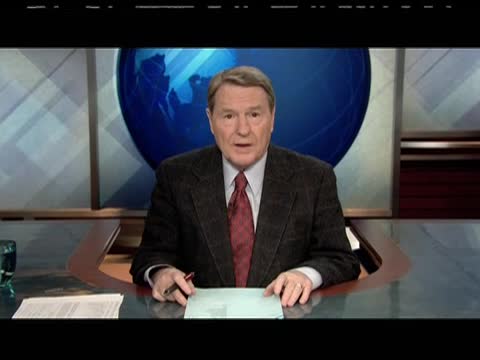
Good evening, I'm Jim Lera. On the news out tonight, the news of this Tuesday, then the latest on efforts to protect people from risky home mortgages. The details of what's in the energy bill passed by the House today. I report from Oregon about science, politics, and the spotted owl, and a look at the raids by Turkey into Northern Iraq. Major funding for the news hour with Jim Lera is provided by. Now headquarters is wherever you are. With AT&T Data, video voice, and now wireless,
all working together to create a new world of mobility. Welcome to the new AT&T, the world delivered. Pacific Life. Chevron. The William and Flora Hewlett Foundation, working to solve social and environmental problems at home and around the world. And with the ongoing support of these institutions and foundations. And this program was made possible by the Corporation for Public Broadcasting and by contributions to your PBS station from viewers like you. Thank you. The Federal Reserve endorsed new rules today to stop shady home lending practices. The goal was to protect borrowers in the riskiest category, the subprime mortgage. Among other
things, the plan would stop banks and brokers from making loans to people without verifying their incomes. It would also forbid penalizing borrowers who pay off their loans early. The rules could take effect next year after public comment and revisions. Former Federal Reserve Chairman Alan Greenspan said today the Fed was not to blame for the subprime mortgage meltdown. That followed reports. The Fed ignored warnings about subprime lenders seven years ago. The New York Times quoted a former Fed governor who died in September. It said Edward Gramlich privately urged investigations of risky practices. The report said he was rebuffed by Greenspan, then the chairman. We will have more on the mortgage story right after this news summary. The Federal Budget Fight turned back to war funding today. It was part of a huge spending bill, $515 billion to fund the government through next September. The President and Democratic leaders largely resolved their differences on domestic spending, but the fight on Iraq remained.
NewsHour congressional correspondent Kwame Holman reports. This afternoon, Democrats in the Senate planned one last attempt to force a troop withdrawal from Iraq by linking it to an additional $70 billion in funding for the wars there and in Afghanistan. But Republicans were sure they would prevent that. And given the fact that the Petraeus plan has had such great success in bringing violence down and bringing control of the country, much more along the lines that the United States would like to see in our allies there, it is a way to say to the troops we appreciate what you've done, and we're not going to pull the rug out from under it. Last night, Democrats in the House agreed to provide $33 billion, but all for Afghanistan. It was part of a catch-all spending measure that also restored administration cuts in heating aid, housing, and other domestic programs, partly by shifting funds from defense and foreign aid. The White House signaled it would accept that if it got the war funding,
but many Republicans still objected. Wisconsin's Paul Ryan, $550 billion in spending, 3500 pages long, 9200 earmarks. Many we've never seen before, and we're going to vote on this in about 10 minutes, and we will have had less than one hour debate on the entire measure. All appropriations committee chairman David Obie countered. The gentleman complains about the fact that we are passing an omnibus appropriation bill containing hundreds of pages and billions of dollars. Let me come, I'll hold that in this ad. I'm holding in my right hand all of the pages from the domestic budget that the Republican Congress passed when they were in power. You know how many pages there were? None. Because they never got the job done on a single appropriation bill. But if the Senate adds Iraq war money to the spending bill, the House would have to vote again, and anti-war Democrats, including Speaker Nancy Pelosi, have vowed to oppose it.
Congress gave final approval today to mandate better fuel efficiency for autos. It was the first change in the standard in 32 years. The House passed it as part of an energy bill that cleared the Senate last week. President Bush is expected to sign the bill tomorrow. We'll have more on the story later in the program tonight. Turkey made a military incursion into northern Iraq today. Some 300 troops moved more than a mile across the border to attack Kurdish rebels. They withdrew after 15 hours. The Iraqi government called the action unacceptable. It came as U.S. Secretary of State Rice was visiting Iraq. She said the U.S. Iraq and Turkey have a common interest in stopping the rebels, but she urged caution. This is a circumstance in which the United States is constantly counseled that we need an overall comprehensive approach to this problem, that we should do nothing and no one should do anything that threatens to destabilize the North.
The leader of Iraq's Kurdish region, Masood Barzani, refused to meet with Rice today in a protest. American officials have said Turkey received U.S. intelligence before launching air raids against the Kurdish rebels last Sunday. We'll have more on this later in the program tonight. A suicide bomber killed 16 Iraqis north of Baghdad today. The target was a coffee shop. 28 Iraqis were wounded, including children who were near the shop. There's earlier a top Iraqi general in Baghdad predicted 2008 will be a year of stability. The leader of the Taliban called today for foreigners to pull out of Afghanistan. The message from Mula Omar came in an email sent through a spokesman. He also dismissed NATO's recapture of Musakkala. Fighting is still taking place on the outskirts of that town. Israeli airstrikes killed at least a dozen Palestinian militants in Gaza today, including the overall commander of Islamic Jihad. It was part of stepped up efforts to stop rocket
attacks on southern Israel. The violence came as U.S. officials announced President Bush will visit Israel and the West Bank next month for the first time. He's making a nine-day trip to the region. South Africa's ruling African National Congress chose a new leader today. We have a report narrated by Jonathan Ruggman of Independent Television News. It's the big tent of South African politics, but the ANC leadership contest between Tabo Mbeki and Jacob Zuma has left their party faithful bitterly divided. Even though tonight a winner emerged, Jacob Zuma, the new president of the most revered liberation movement in Africa, and hot favourite to be South Africa's next president. The number of votes received by comrade Jacob Zuma, 2329. It was a humiliating defeat for Mbeki. For loss of the party presidency also spells loss of influence over who succeeds
him to run the country. Under Mbeki, South Africa's economy has grown by five percent a year, spawning a new black middle class and placating the white business elite, which was worried that this land of plenty would turn into the next Zimbabwe. But in the townships, it's another story. Unemployment is around 40 percent, Mbeki is widely viewed here as out of touch, Zuma is promising better. Just what the so-called Zuma Festo holds for Africa's biggest economy is something of an unknown. The greatest fear of all though that discord between these two will paralyze decision-making. Mbeki remains the president till 2009, yet as party president, Zuma is insisting on a sane government before then. Zuma may yet face corruption charges forcing him to step down as party president. A U.S.
federal judge in Washington ordered the CIA today to explain its destruction of interrogation videos that Justice Department had argued the courts had no authority in the matter. Instead, the judge scheduled a hearing for Friday. Two weeks ago, the CIA announced it destroyed tapes of terrorist suspects in 2005 to protect the safety of agents. The Federal Communications Commission voted today to let broadcasters own newspapers in major cities. The vote overturns a 32-year-old ban against cross-ownership in the 20 largest media markets. Democrats and some Republicans in Congress have threatened legislation to keep the ban in place. On Wall Street today, the Dow Jones industrial average gained 65 points to close at 13,232. The Nasdaq rose 21 points to close at 2596. And that's it for the news summary tonight. Now the Federal Reserve and the mortgage crisis, what's in the new energy bill, the still
in trouble spotted owl, and the Turkish raids in Iraq. The mortgage crisis and today's action by the Federal Reserve, Greg Ip covers the Fed for the Wall Street Journal. Greg, welcome. Hi Jim. The Fed's rules today, they're designed to stop some what had been called shady practices. Correct? Yes. What were those practices that they are now designed to do away? Well, let's touch on a few of these, Jim. It was very common in the heyday of the subprime mortgage market that a person would take out a mortgage at say 7 percent. And that seemed like a good rate except that it was going to adjust higher to say 11 percent a few years later. And when that time came for adjustment, they actually would have to pay a very large penalty in order to get out of that mortgage. The new rules say no penalties for getting out of that mortgage before the rate goes up. It was also very common for brokers who
are very anxious just to generate a lot of volume to give mortgages to people who really couldn't afford them out of the income they were earning. And the reason, well, if they have trouble repaying the loan, they'll just refinance because after all home prices always go up. Well, since then, we've learned that in fact home prices also go down. And we want to, or I should say, the Fed wants to make sure that people can pay the whole mortgage out of their income. And before there was no real restriction on anybody's income. In other words, they didn't match persons income with what their payments were going to be right. I was quite common, yes, to issue mortgages that would consume 60 percent of a person's income, which is far higher than would normally be a permitted phrase, say, for example, a prime customer. And not only that, Jim, but it was also common to not even require the borrower to provide any documentation like a W2 proving what income they earn. These were so-called no-dog or low-dog loans. So somebody said, hey, I make 75,000 dollars a year, they just took their word for it. That's right. The broker said, no problem. If you're lying, not my problem. That's
the problem of the person who ends up owning the mortgage. No, no. And that will no longer be wrong. That won't know what will happen now to these rules. Well, anybody essentially, all lenders, that includes banks, finance companies, mortgage brokers, will be held to these new rules. They are too adhere to them. And also one other thing I'll add. It also is common. Most prime customers, when they take out a mortgage, their payment is also included in that payment is their property tax and their homeowners insurance. And that can often add a few hundred dollars to your monthly payment. And it's important to take that into account when you're deciding from a mortgage is affordable. It became quite common not to include those payments in the subprime world. And in fact, that was one reason people found that they were having trouble making their payments. From now on, lenders will have to escrows the word we use for it, the property and insurance. So in other words, it was permissible for people to borrow money and not be told by the lender that this year your payment is going to be more than what we say the payment is
going to be a hundred dollars a month. It's actually going to be a hundred and twenty-five dollars a month because it doesn't include insurance or whatever figures make sense. That's right, Jim. It was very possible to not only lend money that was very difficult for the borrower to repay under normal circumstances, but to be not very upfront about all these terms. Now, there were many reputable lenders who were upfront about this and people still got into trouble, perhaps because they were too ambitious or too enthusiastic. But they were also, in many cases, about right fraud, where the broker in the lender was simply motivated to generate a lot of fees, generate a lot of loans, and then sell that loan in the capital markets as somebody else might have been a pension fund in Germany or a hedge fund in Australia when, if the loan eventually defaulted, that was somebody else's problem. But for the most part, the things we're talking about here that made up this so-called subprime mortgage crisis were permissible and legal. That is correct. That is correct. And in fact, for many years, Jim, in this country, we encouraged the extension of credit to low-income people, people who didn't normally qualify for prime loans, because we thought it was a good thing that they had access to credit. This would permit them to buy homes
for the first time. And so there was, if you will, a sense on the part of regulators that they did not want to do too much to impair this market, because it was doing some good things. And that was the room, one of the reasons given by then Chairman Greenspan. That's Chairman Greenspan, and what? Now, he is now, he would tell us the story here about the ground like who was there now to cease to as a federal, one of the members of the governors of the Fed seven years ago, and warned about this or warned about some part of it. Now, Mr. Greenspan says, hey, wait a minute. It wasn't the Fed's fault. Tell us the story. Well, the Fed, Jim, has two broad responsibilities in this area. One is the one we're most familiar with, which is to move interest rates up and down as the economy needs. And the other is to basically enforce this network of protections that Congress has given it the authority to do so, to protect consumers and to, from unscrupulous practices. On the first front, the accusations is that Greenspan, in the early part of this decade, kept interest rates way too low for too long. This made homes seem artificially cheap, and that
got the bubble started. Greenspan's response to that is, yes, we held interest rates low, and yes, that's stimulated the housing market, but it was necessary at the time because we were facing a potentially deflationary downturn as consequence of the collapse of the tech boom. Now, the second accusation is that the Fed at all these powers to address, basically, deceptive and irresponsible practices in the underwriting world. The very things that we were talking about, they could have said, they could have, they had charges that could have stopped it earlier, right? And they did not use these powers. Now, I think that in fairness, one should look at what was available to them at the time. They did use some of their powers to address other areas. For example, issues with respect to discriminating against women or minorities in the extension, both of mortgage credit and other types of loans. The Fed did, under Greenspan, moved to strengthen those rules, partly at the behest of Ned Graham book, who was a governor at the time. Now, in 2000, Graham looked at a very brief conversation with Greenspan saying, you know, there's a lot of really sort of like shady operators out there in the mortgage
market. You know, three quarters of mortgage loans, subprime, mortgage loans, do not come out of the federally regulated banks that we at the Fed or some of the other federal regulators actually oversee. They come out of small brokers that have no oversight or very little oversight. Why don't we come up with a way to extend the Fed's oversight to those smaller operations? And Greenspan's response was essentially no. The problem that you're talking about is fraud, and the best examiners cannot find fraud. You know, reputable companies will make reputable loans, and the fraudulent ones will make fraudulent loans no matter who's examining them. And he added, you could actually make matters worse, because these fraudulent operators will put in their window examined by the federal reserve and give borrowers perhaps a false sense of security. Is it correct to say, as we sit here now, Greg, that most of these practices, that these new rules, will prohibit, have the marketplaces already taken care of, the subprime business has pretty much gone away? That's pretty much the case, Jim. There are very few subprime
loans being made these days, primarily, because the last few years turned out to be an anomaly. It was very easy to refinance a lot of those loans, because there was a house price bubble. House prices are now going down. A lot of those loans are going back. Nobody wants to own them. Banks are, through their own self-interest, being much more careful about what they're underwriting. Now, these rules, they go into effect automatically. Do they not? I mean, they're some waiting period. No, they do not. There is a comment period. Yes. And all interested people can write to the federal reserve and say, these are changes we would like. Moreover, there is some feeling in Congress, both on the Senate side and the House side that the Fed has not gone far enough. And it is possible that Congress will enact legislation that overrides some of these rules. But essentially, some is going to happen sooner, sooner rather than later, right? That seems likely, yes. All right. Greg, thank you very much. Thanks for having me, Jim. Next the new energy bill that's about to become law. Ray Suarez has that story.
The bill the president will sign tomorrow has some big changes in store for the auto industry and other sectors of the economy. For the first time in more than three decades, auto makers must increase their average fuel economy for new cars and trucks to 35 miles a gallon by 2020. Congress also will require a sixfold increase in the production of ethanol and other biofuels not made from corn up to 36 billion gallons a year by 2022. And the law requires new energy efficiency standards for building construction and appliances. And it phases out incandescent light bulbs by 2020. For a closer look, we turn to Jason Groome, executive director of the National Commission on Energy Policy, a bipartisan group made up of industry labor and consumer leaders and Jeremy Simons, the executive director of global warming programs at the National Wildlife Federation. He served as a climate policy adviser at the EPA during the Clinton administration.
And Jason Groome is this a significant upturn in the required mileage for automobiles. Yeah, Ray, this is a pretty big deal. You know, every president since Nixon, every Congress since Nixon has made these bold calls for energy independence and real expressions of concern about our dependence upon foreign oil. And this is the first time in 30 years we've actually done something about it. We're going to be increasing the fuel economy of passenger cars by 40 percent from 25 miles a gallon to 35 miles per gallon by 2020. The law also requires that car makers and the automakers in general start to regulate medium duty vehicles and heavy duty trucks. And presently, those vehicles have no fuel economy requirements at all. So this is a real significant. Do you agree that it's an ambitious change and a strong requirement for the industry? It is. It's important. I mean, you need to look at this in terms of the fact that it's really the start of a new direction, direction for America's clean energy future. For years we've been fighting energy policies that really are focused on actually technologies that increase pollution and technologies that increase our dependency on fossil fuels including
oil. This is really the first major step, as Jason says, in 30 years. Really, since they are of the eight track tape player that we've taken a bold step to deal with dependency on foreign oil and tackle global warming pollution at the same time. Is this a tougher fleet average requirement though? Will SUVs and like trucks be included in a way that they weren't before? One of the things that spurred the creation of the SUV as an American consumer phenomenon was the fact that they didn't get counted in those averages. Absolutely. And when you look at that, you have to realize that today, the average fuel economy of SUVs in cars combined is actually worse than it was 20 years ago. We've actually gone down at a time when technology has been advancing. But today, and this law that we're seeing in the present will sign tomorrow after the leadership we've seen from both the House and the Senate, this actually increases to 35 miles per gallon, combined average for SUVs, cars, and light trucks. It allows flexibility so that different vehicles with different attributes can meet different standards. But overall, they've got to add up
to 35 miles per gallon. So it's a very strong standard from that perspective. There's a context point internationally I think. And this is a very big deal. It takes us from kind of being a D student to now about a B student. So in 2020, when we hit 35 miles per gallon, Japan and the European Union will be 10 to 15 miles ahead of us. This lines us up with Canada and in fact with China. So it brings us back and real progress. But I don't think we should convince ourselves that we've fixed the job. By 2020, we'll be using about the same amount of oil as we're using today. But we won't be in such a significant situation of worsening this problem. Jeremy, the auto industry and prominent members of Congress closely aligned to the auto industry have been fighting a strong increase in the fleet average standards. Did they just drop the battle and go along with this? How did this happen? Well, it all started with really the change in attitudes of the American public demanding action and really the leadership of Speaker Pelosi and Majority Leader Reid and Congressman Markey really pushing this issue forward into the point where it was clear that something
had to be done in Congress on this. But at the end of the day, getting the deal done did require looking at a balance between what's needed in terms of the environment, in terms of oil savings, but also what workers are going to need. And there were some specific measures that we're agreed to in this to make sure that this is going to help workers, that this is going to help families at the pump and that this is going to help the environment at the same time. So there was a balance in this and I agree with Jason. We can probably go further in this. We can definitely go further in this down the road. What this is really turning around was been a bad energy policy in the right direction and we have some other steps to go. Well, Jeremy just talked about political leadership. How did industry respond to this final set of proposals? Well, right. You know, there was a new coalition that came together that really changed this debate. You know, it was not the traditional fight between the environmental community and the car companies that had been so kind of locked up for so long. We had a strong voice coming from the national security community, former military leaders. We had a number of prominent CEOs coming together and saying, this is not just about a particular industry
or a particular congressional district. It's really broadly about our national interest. And when the car companies, I think, realized that something was going to change, they got involved. So, you know, it was clearly leadership coming from Speaker Pelosi, but Chairman Dingle, who has been long understood to be there fighting for the interests of the auto companies, you know, rolled up his sleeves with Speaker Pelosi and they really worked out, I think, a pretty meaningful compromise. What it did was essentially take the stricter standards that the Senate had been proposing and a number of the provisions that provided some competitive benefit to the U.S. companies. And they put those together. So the industry came together around the deal. Now, they have been, you know, fighting the successfully for 30 years, but with $90 a barrel oil, I think there was a recognition that something was going to change and they wanted to be part of the design. Well, $90 a barrel oil brings up my next point. We've been talking a lot about the vehicles themselves. Let's talk about what goes into them. What requirements have been put in place for fuel? So, you know, the way we're going to deal with oil security is we're going to buy time with fuel economy increases while we diversify. Right now, 97% of our transportation
is fueled by petroleum. And fundamentally, we don't have a lot of petroleum. So as long as we're using oil, we're going to be depending upon other countries. The answer is to have a diversity of fuels. And what this legislation does is it requires 36 billion gallons of biofuels. To give you some context, we use about 150 billion gallons of gasoline. So this is not going to, you know, in and of itself fundamentally change the dynamic. But it's the first time that we will have a reliance upon a fuel beyond petroleum at a really massive commercial scale. The importance of 36 billion gallons, I think, is two fold. One, you run out of corn at about 15 billion gallons. So this will force the creation of biofuels from the cellulosic feed stocks, from wood chips and rice straw and switchgrass. And a number of things that are much better for the environment also far more sustainable. It will also require us to develop a fueling infrastructure. You can't move 36 billion gallons of ethanol around in tanker trucks and rail cars. We're going to have to create the pipelines and the infrastructure to make this a real part of our fuel system. So it's a big deal.
And it is going to require, I think, a lot of attention to make sure that we get the environmental benefits as well as the fuel diversity benefits. Well, Jeremy, the industry itself, the petroleum industry, complained during the debate that they didn't think they could make these kinds of targets. So there'll be new players in there, besides the giant oil companies vying for a place in that 36 billion of new, alternative, renewable fuels. Well, absolutely. I mean, the good news on any clean energy policy is it's going to open up opportunities for investors, for new businesses, for anyone. Every time on the environment or other issues that the government has set a clear goal, but given industry, the flexibility to figure out how to get there new entrance into the market. And, of course, the old players, the old guard, are going to complain and try to stop it. But you're really looking at some great opportunities for homegrown, clean fuels that are going to produce pollution and create new business opportunities. So this passed by a massive margin in the United States Senate. But in its original version, there were some things in there that were widely commented on as just poison pills. What
didn't make it in the final version of this deal? So right, there were four big issues in front of the Congress. There were the two that passed fuel economy and biofuel standard. Then there were the two that failed. One was a requirement to force power companies to sell a larger amount of renewable electricity, wind and solar and geothermal. The second was a provision, kind of a Robinhood provision that would have taken tax incentives away from the petroleum industry and used that money to provide incentives for clean energy and for clean coal. And that also was defeated. So, I think of the four, the two most important actually are going to become law tomorrow. But the other two are significant provisions and I think they'll be back on the agenda. And very quickly before we go, is this going to make enough of a dent in the emissions problem in the United States? It's a down payment on stopping global warming, but we're not done fighting. We need those provisions and we need a comprehensive bill to reduce global warming pollution. And we need to get that done next year. Jeremy Simons, Jason Groome, thank you both. Thank you very much.
Now the battle over the still endangered spotted owl, news hour correspondently, Hockberg of Oregon Public Broadcasting as our science unit report. When biologists David Wiens took us out to a forest near Eugene, Oregon recently to photograph spotted owls, it was a frustrating experience. The threatened birds have been fitted with radio tags, but Wiens wasn't picking up many signals. That's been the experience of biologists across the Pacific Northwest, where the northern spotted owl has been on the endangered species list for 17 years. It had been hoped a Clinton administration agreement to stop logging in the remaining 7 million acres of Northwest Old Grove Forest would save the bird's habitat and thus the species. Today the forest has been saved, but the spotted owl still is in trouble, an unwelcome
relative called the barred owl moved into the forest instead. Right now we estimate the barred owl's currently outnumbered spotted owls in this area by about three to one. It's actually pretty amazing. Their populations have really exploded, particularly in Washington and Oregon at this point. In the areas where the spotted owls were supposed to come back, right? Exactly. The barred owls, which migrated from the eastern US, basically out muscled the spotted owls for food and space. Today there are fewer than 5,000 pairs left, down 62%. Since they went on the endangered species list, we found one finally 60 feet up, sheltered behind branches. The owl's setback has sent a chill through the scientific community. Its health is thought
to reflect the health of Old Grove Forest themselves, but the timber industry argues if stopping logging didn't save the spotted owl, then it's time to start cutting trees again. The timber towns like Oak Ridge, Oregon, many support that. We spoke with loggers at John Weddell's Sportsman Cafe. The government has got to say to itself, hey, we made a mistake. This was not the answer. If we're still going to save the spotted owl, then it was obvious that approach didn't work. Weddell's restaurants served a boisterous clientele 24 hours a day during the logging heyday of the 1980s, when two mills operated and 5,000 people lived in the town. But owl protections, together with over logging and industry automation, led to the shutdown of mills and the loss of jobs. Today Oak Ridge's downtown has empty storefronts with peeling paint. 40% of its residents have moved away.
More logger, Gene Altamus. If it isn't recovering, where is it going to recover? This timber should come down and be logged and provide industry so people can work. 83-year-old Ed Roberts says there's a limit to what man can do to recover the owl. The large and charged of his creation, believe me, man isn't. He's just pulling around here. Biologists, though, say man created the problem by clear-cutting all but 15% of the birds habitat, and the invasion of the barred owl makes it more important than ever to protect that 15%. The more habitat you protect, the more you're going to alleviate the competitive pressure between the species rather than reducing it and increasing the competitive pressure between these two species. We need to provide as much habitat as possible for them. In fact, the owl's rate of decline inside the protected area is only half of the decline
outside of that area. In the government's most recent status review of the spotted owl, scientists conclude, without the forest protection, the situation of northern spotted owls would be far bleaker. But despite that, the timber industry has filed several suits against the government, trying to reopen the forest to logging. It argues it has localized studies that show each spotted owl doesn't always require 3,000 acres of old-growth forests as many biologists claim, so forest managers should be allowed to decide on a case-by-case basis which forests need to be protected. Industry spokesman Chris West. If we want to continue to do from on high, with a big magic marker lines on maps and say, this is spotted owl habitat, this is what we need. That's not going to deal with the site-specific decisions that need to be made on a given piece of real estate. What
we need to do is have a recovery plan that will be flexible enough to deal with the actual situation on the ground. In a settlement of one lawsuit in 2003, the US Fish and Wildlife Service agreed to assemble a recovery team and re-examine critical habitat for the owl. West wanted a plan that would focus on the threat of the bard owl rather than the decline in old-growth forests. Again, we truly as a society continue to vest all this land and resource into a situation that isn't working, not because of timber harvesting, but because of other issues. Late last year, the recovery team released a draft recovery plan for the owl. It recommended continuing the approach of setting aside large chunks of habitat, known as managed owl conservation areas for the bird. But in October, a high-level Bush administration oversight committee asked for a second option. It told the recovery team to create an
approach less focused on habitat preservation and to identify as priority number one for owl recovery, the bard owl threat, not habitat loss. Most ecologists and recovery team member Dominic Delafsala was furious. We were directed by a team of officials from the Bush administration to ignore the science, to ignore the body of evidence that the spotted owl survival depends on old-growth forest. The bard owl is being used as a shell game. If the administration can point to another threat, then it can blog the last of what remains of the old-growth forest at the owl and the whole ecosystem depends on. The recovery team did draw a second option. That option eliminated the large managed owl conservation areas, and it left land managers to decide on a case-by-case basis which for us to protect and which ones to open for possible harvest. The plan could reduce preserved owl habitat by 23 to 33%. It also, called for luring
bard owls into close range with decoys and recorded calls and then shooting them. It's not based on the best available science. Instead, we've got a recovery plan that was politically motivated. Delafsala testified before a House Natural Resources Committee in May, alleging political interference in the recovery team's work. At the same hearing, Washington State Democrat Jay Inslee asked Deputy Interior Secretary Lynn Scarlett, a top figure on the administration's oversight team, if the requested second option ignores the science. The science was absolutely unaltered and remained the same in both of them. Let me ask you, did the option to eliminate the mapped owl recovery areas? Washington told me, did an option to does is to present using the exact same science and adaptive management approach? You'll excuse me, but I will ask the questions, and you'll be answering them. That's right, and my question is, did option to eliminate the mapped
owl recovery areas, yes or no? Option two presents an adaptive management approach to addressing the recovery of the spotted owl. I'm going to ask the question until I get an answer. Did the option to eliminate the mapped owl recovery areas? Let's get this over, it did, didn't it? The option to is an adaptive management approach. It eliminated the mapped owl recovery areas, didn't it? It's an adaptive management plan. And your answer is yes, isn't that correct? Other these are management options, they are not about science. But the administration's science advisor, Jim Tate, wrote, the draft recovery plan fails to address the basic biology of the listed species and the threats to its survival or recovery. The head of the owl recovery committee, Fish and Wildlife Service Deputy Regional Director David Wesley, says, as a biologist, he believes the first option is a better recovery plan. But science only informs policy, it doesn't dictate it.
I redid it because as a good manager, I also have to look at what the folks above me asked me to do. I think that they were probably looking for other ways that could ameliorate some of the other factions that are present whenever we're dealing with an natural resource issue like commodities. Certainly, I think that's probably in the mix here, the timber industry. Sure. The political reality is that that's the way the system works. 113 scientists and 23 democratic members of Congress have called on the Interior Department to start from scratch and create a new plan. The administration hasn't gone that far, but today the Fish and Wildlife Service asked a panel of scientists to review option two. Their assignment is to establish an independent record of the best available science on spotted owl issues. And finally tonight, Turkish troops in northern Iraq with the United States in the middle,
when I've all has our story. Secretary of State Condoleezza Rice was in the oil-rich Kurdish city of Kirikuk this morning on an unannounced visit just hours after Turkish troops conducted cross-border raids into Kurdish northern Iraq. I very much enjoyed my opportunity to be here. But Marzud Barzani, the president of the semi-autonomous Kurdish region, refused to meet with Ms. Rice, citing unhappiness that the U.S. provided the Turks with intelligence that aided the attacks today and air raids on Sunday. Rice did not deny that. Rice was a Turkish decision, and we have made clear to the Turkish government that we continue to be concerned about anything that could lead to innocent civilian casualties or to a destabilization of the North Sea. Over night, several hundred Turkish troops crossed about a mile and a half into a rocky Kurdish territory. In pursuit of fighters from the Kurdish workers party, known by its acronym, PKK.
The PKK is considered a terrorist organization by Turkey and by the United States. Turkish President Abdullah Gull said today, the target was the alleged terrorists, not the Iraqi Kurds. Everybody should know that there is only one target for Turkey, which is terror. There are no other goals or targets. Iraq is a brother country, a friendly neighbor for Turkey. Iraq's stability is very important for us, too. Therefore, from now on, whatever is necessary in the struggle against terrorism, it is being done. The Turkish incursion followed weekend bombing runs by the Turkish Air Force, air strikes flattened the village in the Tandil Mountains of northern Iraq near the Turkish border. Those sorties angered the central government in Baghdad, who said they had not been informed of the impending flights. On Sunday, a Kurdish government spokesman warned the Turks to tread lightly. We call on the Turkish military army to differentiate between the PKK rebels and ordinary civilians.
We don't want the conflict between the Turkish troops and the PKK to be diverted into a conflict between the Turkish forces and the people of Kurdistan. The Kurds of northern Iraq have long sought autonomy. The Turks have a sizable Kurdish population in their southeastern region. Tensions have been building for months. In October, the Turkish parliament voted overwhelmingly to authorize military action against the PKK and Turkish troops masked on the border. They were primed to strike after the PKK killed a dozen Turkish troops in a cross-border ambush. The attack was a prime subject of conversation when President Bush met with Turkish Prime Minister Erdogan last month. For more on U.S. Turkish military cooperation, we turn now to Ann Scott Tyson, military reporter for the Washington Post. Thanks for joining us, Ann. What can you tell us about the extent of U.S. cooperation in terms of providing intelligence for these cross-border raids? Well, I think it's been quite extensive. After the meeting between President Bush and the Turkish Prime Minister, they agreed to
share more intelligence, partly by setting up a fusion cell. That draws intelligence from many different sources. It could be airborne imagery from unmanned aerial vehicles or signals intelligence or human intelligence gathered on the ground. It goes into an intelligence center set up in Ankara that would essentially create targeting packages that the Turkish military could then use against these PKK rebels. So this is a setup which has been used before. They did not have the intelligence cell in Ankara, while there may have been some intelligence sharing going on between the United States and Turkey, which is a NATO ally. This is clearly a stepped-up effort, and they took unmanned aerial drones and other assets that are in great demand in Iraq, and turned them to these areas where the PKK is operating in order to gain that real-time intelligence for the military attacks by Turkey. Is there any evidence, Ann, that the PKK, as targeted, that any real damage was done? I think there were reports by the PKK that they lost some fighters.
There was another incursion in December, also based on intelligence provided by the U.S. in which several scores of suspected PKK fighters were in an open area and were targeted and presumably several of those were killed also. And what is the U.S. military's interest in this region, you know, nuts and bolts? I mean, we're not. We don't have troops on the ground necessarily in that part of northern Iraq. Well, there are a couple of things. I mean, clearly in October, there was a real concern of a large-scale Turkish incursion into northern Iraq, one of the more stable parts of the country, which would open up a third front in the war. The U.S. military wanted to avoid that. We also have 70 percent of our air cargo, 30 percent of our fuel flowing into Iraq from Turkey. Finally, this gives the U.S. military some degree of control over this process. They also set up greater dialogue between the U.S. Commander in Iraq General Petraeus and the Turkish General Staff. And this provision of intelligence is a way for the U.S. military to have an influence
over what the Turks do, perhaps prevent a more large-scale attack and have instead limited attacks. And meanwhile, they're encouraging the Turkish military to take a more comprehensive approach to this as a counterinsurgency to adopt political and financial and economic measures in addition to the military strikes. The politics aside, is there – there's the U.S. and tell – there's the U.S. intelligence community to possess evidence that the PKK is a real terrorist threat. Well, it's been determined that by the State Department based on U.S. intelligence, yes. And Scott Tyson, thank you very much. Now, the consequences of U.S. cooperation with Turkish action against the Kurdish rebels were joined by Henri Barkey, a professor of international relations at Lehigh University. He served in the State Department from 1998 to 2000, working on Turkey and the Middle East. We want Al-Ariza, a senior associate and director of Turkish Studies at the Center for Strategic and International Studies.
Welcome to you both. Mr. Barkey, how surprising is it to you that the U.S. cooperated in these attacks in any way? Oh, no. This was not surprising. This was definitely decided when the Turkish Prime Minister Erdogan was visiting the White House on November 5th, and clearly at that time the President decided to give the Turks a limited – and I emphasize – the limited green light in terms of doing operations in northern Iraq. This is because the Turks were under enormous pressure at home, and Turkish American relations had taken a real dive precisely over this issue, because the Turks thought that the United States had come 10,000 miles to fight terrorism, presumably in Afghanistan and Iraq, and the Turks would not go across the border. So there was a great deal of tension between the two governments and the population. So the President Bush decided to give a limited okay to the Turks. Mr. Ali, does this raise a question or any concerns at all that the United States is in fact cooperating with an ally and in violating the sovereignty of another ally, as the Iraqis were saying today?
Well, it's very complicated. The Turks are allies, and the Turks are allies who have – mean the victims of PKK terrorism from northern Iraq, which is a country on the part of a country which is on the U.S. control. So the Turks have been complaining for some time that the PKK terrorism, which he was revived after the overthrow of Saddam Hussein, was a problem that the U.S. and Turkey ought to address together as part of their efforts against terrorism. And having ignored effectively the Turkish peace for support, President Bush promised action on intelligence, knowing full well that at some stage that would be used by the Turks, and having seen the Turks use it, now the U.S. is intent on making sure that the Kurds don't overreact and make the situation even worse. Let's walk through the dipole speak of this a little bit today. We heard Secretary Rice say, no one should do anything to destabilize the North. That was the closest she would come to admitting that the United States had played any kind of role in these attacks.
To find for us what she was saying there. Well, northern Iraq is the only part of Iraq which is stable at the moment. I mean, this has been the success, the only success story of the Iraq policy of the Bush administration. So the last thing the administration wants is for northern Iraq to be destabilized. And how would northern Iraq be destabilized? That is, if the Turks were to come in large numbers into northern Iraq, then you would have a fight between Turkish troops and Iraqi Kurds. So the administration has always been concerned about this possibility and has done, has been tying now to do something about it. The problem is that this was a crisis that could have been avoided. For the last three years we have known that there was going to be a crisis over northern Iraq. Unfortunately, the administration did not pay any attention to it. What it should have done was to do something diplomatic in order to preserve that stability night so concerned about. And what Secretary Rice was saying to do today was also to signal to the Turks, okay, you've done your little, your operation, not call it quits, not call it victory. And that's all go home, the weather is anyway going to be changing, it's going to be snowing
and it's going to be much more difficult to conduct operations and we should always stand down. Well, now, helping with the other piece of this, we saw Marzou Barzani refuse to meet with her today with Secretary Rice and express outrage. Is that true? Andrew did the Iraqis have reason to know this was being worked out? Well, the Iraqi Secretary government has complained about the Turkish action and the Iraqi Kurds could have left it at that, but by refusing to meet with the Secretary of State, Marzou Barzani is underlining the Kurdish unhappiness with what was done, the U.S. role in this process. And frankly, signaling to the U.S. government that as tactical allies in Iraq and perhaps the most reliable allies the U.S. has in the Iraqi equation, they wanted protection against the Turks. And the other side of the equation is that the Turks are also allies and allies who permit as the reporter from the Washington Post said 70% of the material going into Iraq to come
through the basin injury. They have lots of cards to play and they want the U.S. to support them in this war. The U.S. is in a very difficult position and frankly, it's going to be very difficult for the U.S. to balance the interests that they have on both sides of the water. As the U.S. have interests and the fact that also this region is so oil-rich that there are so many resources though. Oh, absolutely. In fact, in your segment before the discussion, you refer to Kirkuk as a Kurdish city. Now, there are lots of cards living there, but it's beyond the Kurdish region authorities control. And the referendum that was supposed to be held there by the end of the year has been delayed by six months and who controls Kirkuk and only on the oil riches is very much part of the regional equation. It's the PKK, the same kind of threat, Mr. Barkey, that we have come to accept that al-Qaeda is, for instance, when we say they are at the State Department and the U.S. government considers them to be terrorists. It's the PKK that kind of threat.
Yes, yes and no, certainly the Turks always equate al-Qaeda and the PKK, but the PKK is a much weaker organization than what it used to be. In the early 1990s, it was a form of the blood organization with many more fighters and a large gate view of support. The real problem in Turkey is not just the PKK, I mean, the PKK, yes, is a threat. It does things that Turks don't apply, it blows up sometimes buses, certain attack soldiers in the Southeast, but there is also a Kurdish problem in Turkey. And the Turks have tried to associate the two, but in reality, these are two very different things. One manifestation of that problem, but until the Turks are dealing with a Kurdish problem at home, they won't be able to do anything about the PKK, because everybody knows that and the government Turkish government as well knows that these raids that the Turks have just conducted is not going to sap the sample of the PKK, will not do any serious damage to the PKK, because 2,500 to 3,000 PKK fighters are in Turkey and then maybe an equal
number in Iraq. So it doesn't, a few bombs is not going to solve the problem. If a few bombs are not going to solve the problem, Mr. Ali Risa, how much of a threat is the PKK? It is a threat. I mean, clearly, it's attacks in Turkey, in October. Both of the Turkish public and the Turkish government and the Turkish parliament at the point that the resolution that you referred to in your report was passed overwhelmingly, leading to the authorization of military action beyond Turkish, through the border in northern Iraq. And Turkey is now taking on that threat. Now is that going to solve the Kurdish problem, which successive Turkish governments have ignored, but this government has acknowledged, no, but nonetheless Turkey is committed to responding to the terrorist threat and it's doing so. And will it perhaps at least calm Turkey down, the concern that President Erdogan and President Bush discussed in last month, was that the Turkish troops were massing on the
border and they might do something unilateral? Does this take that off the table? Well, the first priority for President Bush at the meeting with Prime Minister Erdogan was to prevent a large-scale incursion into eating northern Iraq for all the reasons that we talked about. But having prevented that, I think the President was unwilling or unable to prevent the Turks from responding and one-former and other, what we will now have to see is whether this is actually going to lead to an escalation of the problem or things will quiet down until the spring. What do you think, an escalation or is this going to calm it down? I think this is going to calm it down. I mean, the Turks needed to do this and the Turkish government and the Turkish military needed to do this to show its own public that it can do something. Even though, as I said earlier, it will not solve the problem. The truth is that the Turkish government is actually far more sensitive, as we then said, to the Kurdish problem than previous Turkish governments. So this may help provide an opening for the Turkish government to finally start doing – take certain steps to alleviate some of the problems in Turkey, but also between – ironically,
between Turkey and the Iraqi Kurds. Part of the problem is between those two. The Turkish government refuses to recognize the Kurdish regional government, a body that everybody, including the Iraqi government, recognizes. So that angers the Kurds and reduces the Kurds' willingness to cooperate with the Turks. So what United States needs to do now is to get the two sides of the Turks and the Iraqi Kurds quietly at the table and start discussing what are some of the measures that can be taken to alleviate the problem. On Re-Barchy, and we want to arrow Riza, thank you both very much. Thank you. And again, the other major developments of this day, the Federal Reserve endorsed new rules to stop shady home lending practices, and Congress gave final approval to an energy bill that raised gas mileage standards for the first time in 32 years. We'll see you online and again here tomorrow evening.
I'm Jim Lara, thank you and goodnight. Major funding for the news hour with Jim Lara is provided by every day, it seems, talk of oil, energy, the environment. Where are the answers? Right now, we're producing clean, renewable, geothermal energy, generating enough energy to power seven million homes. Imagine that, an oil company as part of the solution. This is the power of human energy. The new AT&T, Pacific Life, the Atlantic Philanthropies, and with the ongoing support of these institutions and foundations.
And this program was made possible by the Corporation for Public Broadcasting, and by contributions to your PBS station from viewers like you, thank you. To purchase video of the news hour with Jim Lara, call 1-866-678-News. E-R-P-B-S.
- Series
- The NewsHour with Jim Lehrer
- Episode
- December 18, 2007
- Producing Organization
- NewsHour Productions
- Contributing Organization
- NewsHour Productions (Washington, District of Columbia)
- AAPB ID
- cpb-aacip/507-5q4rj4998s
If you have more information about this item than what is given here, or if you have concerns about this record, we want to know! Contact us, indicating the AAPB ID (cpb-aacip/507-5q4rj4998s).
- Description
- Episode Description
- This episode features segments including a look at efforts to protect people from risky home mortgages, the energy bill passed by the House, a story about conservation and the spotted owl, and Turkey's raids into Northern Iraq.
- Date
- 2007-12-18
- Asset type
- Episode
- Rights
- Copyright NewsHour Productions, LLC. Licensed under a Creative Commons Attribution-NonCommercial-NoDerivatives 4.0 International Public License (https://creativecommons.org/licenses/by-nc-nd/4.0/legalcode)
- Media type
- Moving Image
- Duration
- 00:56:49
- Credits
-
-
Producing Organization:
NewsHour Productions
- AAPB Contributor Holdings
-
NewsHour Productions
Identifier: NH-9022 (NH Show Code)
Format: Betacam SX
Generation: Preservation
Duration: 01:00:00;00
If you have a copy of this asset and would like us to add it to our catalog, please contact us.
- Citations
- Chicago: “The NewsHour with Jim Lehrer; December 18, 2007,” 2007-12-18, NewsHour Productions, American Archive of Public Broadcasting (GBH and the Library of Congress), Boston, MA and Washington, DC, accessed September 10, 2026, http://americanarchive.org/catalog/cpb-aacip-507-5q4rj4998s.
- MLA: “The NewsHour with Jim Lehrer; December 18, 2007.” 2007-12-18. NewsHour Productions, American Archive of Public Broadcasting (GBH and the Library of Congress), Boston, MA and Washington, DC. Web. September 10, 2026. <http://americanarchive.org/catalog/cpb-aacip-507-5q4rj4998s>.
- APA: The NewsHour with Jim Lehrer; December 18, 2007. Boston, MA: NewsHour Productions, American Archive of Public Broadcasting (GBH and the Library of Congress), Boston, MA and Washington, DC. Retrieved from http://americanarchive.org/catalog/cpb-aacip-507-5q4rj4998s