The NewsHour with Jim Lehrer
- Transcript
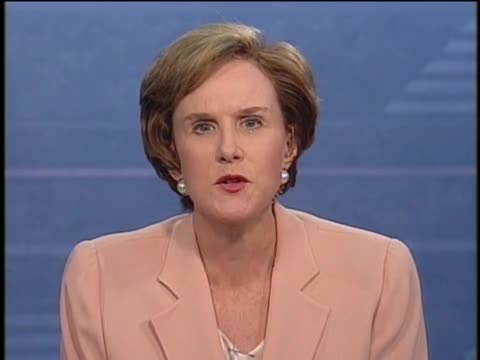
ELIZABETH FARNSWORTH: Good evening. I'm Elizabeth Farnsworth. Jim Lehrer is on vacation. On the NewsHour tonight chief weapons inspector Richard Butler details the new stand-off with Iraq; pollster Andrew Kohut and our regional commentators discuss how the public views Monica Lewinsky and the investigation she triggered; a House committee cites the attorney general for contempt of Congress; and essayist Anne Taylor Fleming considers a children's shelter. It all follows our summary of the news this Thursday.% ? NEWS SUMMARY
ELIZABETH FARNSWORTH: Monica Lewinsky testified for about seven hours today before a federal grand jury in Washington. She walked into a side entrance of the U.S. District courthouse early this morning, avoiding a large media encampment. It was her first grand jury testimony in the investigation that has swirled around her for months. At issue, whether she had a sexual relationship with President Clinton and conspired with him and others to cover it up. The two have denied in sworn statements they had such a relationship. At the White House Spokesman Barry Toiv was asked what Mr. Clinton thought about Lewinsky testifying.
BARRY TOIV, White House Spokesman: The president has not expressed any views to us on this, except we know that he does agree with us and probably all Americans that if this means-that if this means that we're coming to the end of this, this four-year over $40 million investigation, then that would be a good thing.
ELIZABETH FARNSWORTH: We'll have more on this story later in the program. The United Nations Security Council today declared Iraq's refusal to cooperate with weapons inspectors "totally unacceptable." Secretary-General Kofi Annan urged Iraq to resume talks with inspectors immediately. He did so after Chief Inspector Richard Butler reported to the Security Council on his failed disarmament talks in Baghdad this week. Iraqi officials today said observers could only visit sites previously monitored, and surprise inspections of suspected nuclear facilities were banned. We'll have more on this story right after the News Summary. A House committee voted today to cite attorney general Reno for contempt of Congress. She has refused to turn over memos from two of her deputies recommending an independent counsel look into alleged abuses by the Clinton-Gore re-election campaign. Republicans accused Reno of defying a congressional subpoena. Democrats said Reno was only doing her job when she said she needed more time to review the recommendations. After the vote, Reno said she had met with Committee Chairman Dan Burton earlier in the day.
JANET RENO, Attorney General: I explained to Chairman Burton that I had made no decision on these recommendations yet. I still have an open mind. I will make my decision, and I will explain it. But to ask for a document I am reviewing, while I have still not made a decision, is a form of political tampering that no prosecutor in America can accept.
ELIZABETH FARNSWORTH: The contempt citation would have to be endorsed by the full House of Representatives and sent to federal court, where a judge could impose a fine or a prison term. We'll have extended excerpts from today's contempt hearing later in the program. The House gave final approval today to a bill that would overhaul campaign finance laws. The vote was 252 to 179. The Shays-Meehan bill would ban unregulated soft money donations that go to political parties and not individual candidates. It would also restrict the use of issue advocacy ads within 60 days of an election. The Shays-Meehan bill won more votes than several other proposals also being considered. The bill now goes to the Senate, where a similar proposal was killed earlier this year. President Clinton called on Congress today to extend the Brady gun law. He said the current five-day waiting period to buy a handgun should be permanent. It is now due to expire in November, when a new system of instant background checks begins. At a Rose Garden event the President was flanked by Jim Brady, for whom the legislation is named, and by uniformed police officers. Mr. Clinton vowed to reject any bills weakening gun regulations. He said the waiting period curbed violence.
PRESIDENT CLINTON: Too many crimes are committed within hours of a handgun purchase. The waiting period gives tempers time to cool. It gives potential criminals the time to consider the consequences. It gives local law enforcement officials time to check all relevant records, even those not computerized, and stop every last prohibited person who can be found from walking home with a gun in hand and violence in mind.
ELIZABETH FARNSWORTH: Stocks kept fighting back today. On Wall Street, the Dow Jones Industrial Average closed up nearly 31 points at 8577.68. it lost nearly 300 points Tuesday, before regaining some ground yesterday. Congo President Laurent Kabila threatened today to go to war against neighboring Rwanda. He blamed it for sponsoring a mutiny in the eastern part of the democratic republic of the Congo, formerly known as Zaire. The Congolese foreign minister, who left his post and joined the rebellion earlier this week, called on Kabila to resign or face a full-scale war. Rwanda denied it was involved in the uprising. That's it for the News Summary tonight. Now it's on to another stand-off with Iraq, the Starr investigation, Janet Reno under fire, and an Anne Taylor Fleming essay.% ? FOCUS - INSPECTIONS STANDOFF
ELIZABETH FARNSWORTH: The latest standoff between Iraq and the United Nations is first tonight. We begin with some background from Tom Bearden.
TOM BEARDEN: In Iraq on Monday, Ambassador Richard Butler, the chief UN Weapons Inspector, laid out what he called the road map for concluding inspections of Iraq's chemical and biological weapons and missile programs. But Iraq's Deputy Prime Minister Tariq Aziz rejected that plan and demanded the immediate end of both the UN inspection program and economic sanctions.
TARIQ AZIZ, Deputy Prime Minister,Iraq: UNSCOM is back to its old games, to its old tricks, games of confusing the major issues and the minor issues, since this is the wish of the American administration to perpetuate the situation, to prolong the current situation, to keep the sanctions on the people of Iraq. As long as this is the American wish, you are serving the American policy.
TOM BEARDEN: Butler promptly left Baghdad. Talking to reporters at the London airport, on his way back to New York, Butler said he was mystified by the latest developments.
AMBASSADOR RICHARD BUTLER: It's a slightly weird thing, because, as I said, we're doing quite well in missile and chemical. I mean, we were getting there. If this was a five-lap race, you know, we were halfway into the fifth lap. Why stop the race when you're getting towards the finishing line? I don't know.
TOM BEARDEN: There and elsewhere Butler said the major sticking point has been over biological weapons inspections. Another issue exacerbating tensions between Iraq and the inspectors was the recent detection of weapons fragments contaminated with VX, a deadly nerve agent. After Butler's departure, Iraqi leader Saddam Hussein issued a statement demanding Butler's dismissal. He said Iraq would end all cooperation with UN weapons inspectors, a team of about a hundred arms experts and scientists working in Iraq. Saddam's statement followed a resolution from the Iraqi parliament demanding an end to both the inspections and UN economic sanctions that have been in effect since Iraq invaded Kuwait eight years ago. UN resolutions after the 1991 Gulf War link the end of sanctions to full Iraqi compliance on weapons inspections. US officials immediately responded to Iraq's statement.
P. J. CROWLEY: The sanctions that are currently in place that Saddam says he wants lifted are costing Iraq $15 billion a year if Iraq thinks that this is the way to get sanctions relief, once again, they are sadly mistaken.
TOM BEARDEN: The latest stand-off went to the UN Security Council this morning. No decisions were made, but the Iraqi moves drew sharp criticism.
BILL RICHARDSON: Iraq is in clear violation of Security Council resolutions and the memorandum of understanding with the Secretary-General. The Security Council has deemed the Iraqi action totally unacceptable. We believe that a strong Security Council response is needed. We'll be consulting in the days ahead on what that might be. We, the United States, feel very strongly that Iraq is playing games, defying the international community, and making sure that sanctions last in perpetuity.
TOM BEARDEN: UN Secretary General Kofi Anan, who brokered a deal in February averting a U.S. and British military strike against Iraq, said some of the latest Iraqi demands were unacceptable but urged more diplomacy.
KOFI ANNAN: I also had a chance to talk to Mr. Tariq Aziz this morning and to make it clear to him that the Iraqi suggestion that UNSCOM should be restructured and possibly moved from New York is something that was not acceptable. It is in the purview of the Security Council and only the Security Council and the United Nations can make such decisions. No individual member state can tell the UN how to structure itself to carry out tasks or mandates given to it and also indicated that a decision that they have taken was in violation with Security Council resolutions and the MOU. I made certain suggestions to the Council that I thought maybe that the time has come for all of us to stand back and take-make a comprehensive reassessment of where we are, where we are going, and how to get there.
TOM BEARDEN: UN Security Council deliberations are expected to continue for the next several days.
ELIZABETH FARNSWORTH: Late today, President Clinton issued a statement calling Iraq's actions unacceptable and said the U.S. will stop any move to these sanctions unless Iraq reverses course.
ELIZABETH FARNSWORTH: And now to our Newsmaker interview with Ambassador Richard Butler, executive chairman of the UN's Special Commission on Iraq. Thank you for being with us, Mr. Ambassador.
AMBASSADOR RICHARD BUTLER, UN Chief Weapons Inspector: A pleasure.
ELIZABETH FARNSWORTH: What happened today in Iraq? Were your inspectors prevented from doing your work?
AMBASSADOR RICHARD BUTLER: In part, yes. The decision by the Iraqi government is basically to slice off our disarmament inspections, because, you see, they say they're disarmed, which, of course, is not the case, but to allow us to continue the inspections we do to monitor certain industrial and other places to be sure that they're not recreating the weapons. So our monitors point out today and without blockage-but I kept our disarmament people at home in conformity with what Iraq has said are the new rules, pending the beginning of Security Council consideration of what Iraq has done.
ELIZABETH FARNSWORTH: Are there any threats to throw out the inspectors?
AMBASSADOR RICHARD BUTLER: No, not at this stage.
ELIZABETH FARNSWORTH: And what are you telling them to do tomorrow?
AMBASSADOR RICHARD BUTLER: To go ahead with the monitoring work. I won't be instructing the disarmament people to go out tomorrow. The international Atomic Energy Agency held back a disarmament team today for the same reason. So we've started a debate on these really rather grave issues in the Security Council today-a four-hour debate. That's a beginning of a process. And I think we'll just hold things steady, while that process unfolds.
ELIZABETH FARNSWORTH: What did you tell the Security Council today?
AMBASSADOR RICHARD BUTLER: Oh, I gave them a count of what happened a few nights ago, a few days ago in Baghdad. Quite simply, after a day of talking with Mr. Aziz and his team, where we had intended to have two days, he made a demand of me in the evening where he said, look, you must go back to the Security Council and say we are disarmed. Missile, chemical, biological, the lot-go tell them that truth. If you don't, you'll have it on your conscience, he said, and that's my demand. I said, well, I can't do what you've asked me to do, because, you see, I don't have a magic wand. I can't just wave it over these weapons. I can't do disarmament by declaration. I have to do it on the basis of evidence. That's what we've been sitting here talking about, our need for more evidence. We'd love to be able to do it, but we need the evidence. So I can't do what you asked me to do. And he said, well, if you can't do that, then we've got nothing more to talk about. In short, that's what happened, and so I brought my team home to report to those who are in charge here, the people for whom we work, namely the Security Council.
ELIZABETH FARNSWORTH: The Secretary-General said today in his press conference he believes that the Iraqi position is not closed. That was the word he used. Do you agree with that?
AMBASSADOR RICHARD BUTLER: I was very interested to hear the Secretary-General say that in our council meeting. He had just been on the telephone with Mr. Aziz, and that was, I guess, encouraging news, and certainly I think it helps the council chart the next steps to try to bring Iraq back under the law and into cooperation. The Secretary-General also did say that what Iraq has done in these last few days is in violation of the law. He didn't mince words about that but pointed out that maybe their position isn't absolutely closed and that we should think creatively about how to get this back on track--Iraq obeying the law, get our disarmament work moving forward again, and that's the task the council now has.
ELIZABETH FARNSWORTH: The Secretary-General also used the word "desperation" to express what the Iraqis are feeling about their attempts to comply. Could you expand on that.
AMBASSADOR RICHARD BUTLER: Well, I think, as I recall, what he said was frustration about the inability-the inability they think they've suffered from to have their disarmament case adequately heard. That's my line of country, and I'll have something to say about that in a moment. Desperation, he was referring to the fact that sanctions have been on the Iraqi people for some seven years. That isn't my line of country. So I won't be commenting on that. But as far as the disarmament is concerned, obviously, I hear with interest when Iraq expresses frustration about the disarmament work not having come to an end, but let's face it. There's only one reason why that's the case, and it's because they have made it so. This-the key to this is in their hands. I said to them recently, look, what we need-what remains is really rather small-materials and documents both. We need some physical materials and we need some evidentiary documents. They do exist; they are in a position of the government of Iraq. For God's sake, give them to us. The sooner you do that, the sooner we'll verify and get out of here and tell the council that you are disarmed. That's what we have to do, not what Tariq Aziz asked on Monday, which is pass some kind of magic wand over this-can't do that.
ELIZABETH FARNSWORTH: Do you think that this breakdown has happened because those particular documents are documents they are particularly sensitive about?
AMBASSADOR RICHARD BUTLER: Oh, it's not very easy to know exactly what motivates these decisions. It's a complex polity in Baghdad. It's a complex part of the world. But from my perspective, I find it very hard to draw a division between what they decided in these last few days and the fact that in the last few weeks we discovered a rather incriminating document, which they've now withheld from me, and a few weeks before that, we discovered the presence of VX nerve agent in weapons fragments where they swore blind for seven years they'd never weaponized that stuff. Now that was just not true. And that points to a possible unraveling of other parts of their story, so you know, if you follow the principle of looking at what people do, rather than what they say, the evidence of the behavior here is that they may be a bit concerned that we were starting to home in on some really serious disarmament objectives, and they didn't want us to proceed.
ELIZABETH FARNSWORTH: Can you tell us anything more about that document?
AMBASSADOR RICHARD BUTLER: Well, it's under-well, sorry, we didn't get it in the end, but our-
ELIZABETH FARNSWORTH: The one you're looking for.
AMBASSADOR RICHARD BUTLER: Our chief inspector did see it before it was seized away from her, and it has got some disturbing discrepancies in it between what Iraq says was its use of chemical weapons in the past and what this document on actual use describes. I can't go further than that in public, but I did say to the council today that there is a discrepancy revealed by this document that is potentially disturbing.
ELIZABETH FARNSWORTH: In his letter to the President of the Security Council on all this, the Iraqi deputy prime minister, Tariq Aziz says essentially that you're upping the ante all the time, that they answer one set of questions and then Iraq gets another set of questions, and he actually gave a list of those questions. I don't know if they're the right questions or not, but he-for example-said that you wanted to know about a certain matter the size of the blade in the excavator used to destroy some missile heads, warheads.
AMBASSADOR RICHARD BUTLER: Yes.
ELIZABETH FARNSWORTH: Now what's your answer to that? I mean, it's a fairly long document, but that is the gist of his complaint.
AMBASSADOR RICHARD BUTLER: Well, sadly, I find it really rather pathetic that recourse has been taken to this kind of trivialization of what we do. Weapons of mass destruction are hardly a laughing or trivial matter. Now, he presented us with that list of questions on Monday, and I could see what was happening. It was trivialization and a smoke screen to draw attention away from the fact that Iraq has simply not told us the truth about key aspects of its weapons programs, and nothing will alter that. There can be no substitute for the truth in this deadly serious game. Those questions look bad on paper, but I want to tell you this. I checked with our experts, and the fact is that those apparently trivial questions that they asked in interview were asked because Iraq had presented to us the materials involved that led to those questions. They had said that they'd moved missiles with a bulldozer and a certain blade and so on, and in order to verify what they were claiming was the truth of the matter, we were asking questions like, well, which bulldozer, what date, how many people were there? We were just trying to prove their truth, so, as I said, it's rather silly and rather pathetic, and it should not allow-be allowed to divert anyone's attention from the fundamental course here, which is weapons.
ELIZABETH FARNSWORTH: How serious is this current impasse?
AMBASSADOR RICHARD BUTLER: I'm not sure. It's at a beginning now. The council's become seasoned of it straight away today, and I would-I think what the Secretary-General, Kofi Annan, proposed was creative and constructive, and I think people are going to put their heads together and try to find a way to solve this problem-bringing Iraq back under the law without recourse to force and I-and break this syndrome of repeated crises with Iraq every six months. And I think a lot of good people are going to be working quite hard on getting that done.
ELIZABETH FARNSWORTH: Well, Ambassador Richard Butler, thank you very much for being with us.
AMBASSADOR RICHARD BUTLER: Thank you.% ? UPDATE - STARR INVESTIGATION
ELIZABETH FARNSWORTH: Still to come on the NewsHour tonight, a Starr investigation update, Janet Reno under fire, and an Anne Taylor Fleming essay. Margaret Warner has the update on the Starr investigation.
MARGARET WARNER: Today was the day official Washington has anxiously awaited for more than six months, the day Monica Lewinsky would go before a grand jury to testify about her relationship with the President. Lewinsky's appearance at the federal courthouse here in Washington precipitated a media crush. Some journalists camped out all night to protect their positions. Late today, after her appearance, Monica Lewinsky spokeswoman Judy Smith read a brief statement on her behalf.
JUDY SMITH, Lewinsky Spokeswoman: Monica Lewinsky testified before the grand jury today.She answered each question truthfully, completely, and honestly, that was posed to her by the Office of Independent Counsel and also questions that were posed to her by members of the grand jury. Monica and her family are relieved that this ordeal finally appears to be coming to an end. Thank you very much.
MARGARET WARNER: How is all this playing outside the capitol? We begin our look at that with pollster Andy Kohut, director of the Pew Research Center for the People and the Press. Welcome, Andy. You went out into the field immediately after the news was broken that both Monica Lewinsky and the president would testify. How did that affect public interest in this story?
ANDREW KOHUT, Pew Research Center: It didn't. And that's the most surprising thing. The level of interest in this story last weekend, what it was in June, 29 percent said they were following it very closely, which is what it was in June, about what it was in March, and what it was through much of the spring, and not nearly as high as it was in January. It was really no spurt in reaction. The story may have advanced but public interest didn't, surprisingly.
MARGARET WARNER: Do people express a view as to how important this is for the country, even if they're not interested in it?
ANDREW KOHUT: Well, the percentage-this is a story that's lost its punch basically-the percentage of people who say today that it's greatly important to the country is 22 percent. When the story first broke, it was 40 percent. 22 percent is at the Whitewater level. 40 percent is at the Watergate level. This is now back at the level that Watergate-Whitewater has been throughout the long investigation. People have discounted the importance of this, are not taking it as seriously as they initially did.
MARGARET WARNER: How have their feelings evolved, if at all, about the possible or potential truth of the allegations against the president, in other words, their own beliefs about whether these allegations are true?
ANDREW KOHUT: Well, the irony of public opinion here-and public opinion has been surprising all along-as it is, it seems less important. The public has come more to the view that probably something happened between President Clinton and Monica Lewinsky. It's now at about 70 percent saying that he probably had sex with Monica Lewinsky or definitely had sex, and it's mostly probably, not definitely.
MARGARET WARNER: And that's an increase?
ANDREW KOHUT: And that's a significant increase over what was the case in January, and it's been going up throughout this-the cycle of the scandal, if you will.
MARGARET WARNER: And how about the other allegation, the other serious one about obstruction of justice, did he encourage her to lie about it?
ANDREW KOHUT: Well, only about half believe that, but that's a larger percentage than felt that very serious charge back in January. So the public is more believing that there may be some wrongdoing here, but less interested in taking it less seriously.
MARGARET WARNER: And so what does that say-what do they say about whether they consider these offenses, if they're true, to be impeachable?
ANDREW KOHUT: Pretty consistently in our poll and almost all polls, the public is saying these are not of sufficient gravity to see the president go. They don't want to see him impeached if these allegations are true. They think that they're just not import enough and serious enough to end the Clinton presidency.
MARGARET WARNER: But now we've had this graphic up to show that number's actually gone down. In other words, more people consider these impeachable offenses, if true, two months-or six months ago.
ANDREW KOHUT: That's right. As more people have come to think he perhaps did these things, fewer people have come to also think that they justify his leaving office.
MARGARET WARNER: Did you find partisan differences on this impeachability issue?
ANDREW KOHUT: Well, sure, Republicans are more inclined to support impeachment and take a dimmer view of this than Democrats. Democrats rally to his side--and independents are pretty much like the nation. But you know, when we asked people should-what would your reaction be if members of Congress recommended impeachment, 57 percent said they would have an unfavorable view of members, and even 36 percent of Republicans, who are certainly not fans of the president, said they would have an unfavorable view of members who recommended impeachment. The country doesn't want to go through this for what-through an impeachment for this-this particular controversy.
MARGARET WARNER: What did you find about how forgiving the country would be if the president were to admit it was all true, or most of it was true?
ANDREW KOHUT: Most people said in our poll when we posed that question-if he said he did do this and he lied to protect his family, would that be sufficient to end the matter, in your opinion, or do you think it should continue to impeachment, and 60 percent said, yes, that would be sufficient. Even Republicans were divided on whether that would be enough, so clearly the public is bending over backwards. It's trying everything it can to make this go away and not make it the end of the Clinton presidency for a variety of reasons.
MARGARET WARNER: And so the bottom line here, the approval rating that you always take of presidents, has that budged?
ANDREW KOHUT: Actually, it went up four points last weekend over what it was in June. The public is very strongly supportive of President Clinton's job performance. They are very critical of him as a person. His personal ratings are far lower than any president in history. He's not seen as trustworthy. He's not seen as a nice person to many Americans, but they don't want to see impeachment, and they don't want to see this end his presidency.
MARGARET WARNER: And finally, Andy, at least in this segment of our discussion, as a pollster, when you look at these numbers, particularly on this impeachability and believability, how firm do you think they are?
ANDREW KOHUT: Well, the numbers are firm, but we're in uncharted ground. We never asked questions about our president like this before, and we judged, we came to some conclusions that the president would be condemned by the public at early stages. We should not do the reverse and say, well, there's absolutely nothing that can change these opinions if some new facts come out, because we really don't know. We've never been in a case where a president has been under this kind of fire and under this kind of personal scrutiny, so let's not make the same mistake twice and take public reaction for granted.
MARGARET WARNER: All right. Stick with us, but let's widen this out now with our regional commentators: Cynthia Tucker of the Atlanta Constitution; Patrick McGuigan of the Daily Oklahoman; Lee Cullum of the Dallas Morning News; and Robert Kittle of the San Diego Union-Tribune. Joining them tonight is Jim Boyd of the Minneapolis Star-Tribune.And Jim Boyd, how do you explain the public's apparent disinterest in this story?
JIM BOYD: I'd explain it exactly the way your pollster did. Bill Clinton's our president. He's been elected for a second term. He'snot going to run for reelection. He's not going to be impeached for this. And so please let's get off this. Let's pay attention to the economy. Let's pay attention to what's happening in Asia. Let's pay attention to the stock market, but let's not worry about dresses and stains and things that probably shouldn't ever have been as big a deal as they are right now anyway.
MARGARET WARNER: Lee Cullum, how do you explain-do see this lack of public interest, and how do you explain it?
LEE CULLUM: Well, Margaret, I think that Jim's point is well taken. The people I talked to are fed up with the story. I think that they are willing to overlook the President possibly allegedly having lied about this relationship, because perhaps they think the questions were inappropriate in the first place, questions about his personal life. I think it's actually an age of private life, not public life. People are not interested in politics, and for that reason they're willing to let politicians do whatever they want to do as long as they'll just leave everybody else alone.
MARGARET WARNER: And leave us alone with the story. Bob Kittle, how do you explain the public lack of interest in this?
ROBERT KITTLE: Well, perhaps, Margaret, the American people are simply waiting for all the facts, and at this stage, I think it's certainly true that the sentiment is not to impeach the President if all that is here is that he lied about a sexual relationship with Monica Lewinsky. But as Andy Kohut suggested, if the facts come out that there was more to this, that there was a conspiracy to obstruct justice, for example, if those facts emerge from this investigation, and I think it's very likely that the American people may take a much stronger view of this, not that they necessarily will be calling for the President's impeachment, but if there's more to it, than certainly Americans will not be so inclined, as Jim seems to be right now, to say let's forget about this and get on with it.
MARGARET WARNER: Cynthia, go back though to this question about the public's lack of interest. I mean, why was the public so fascinated by the O. J. Simpson case, which went on and on and on, and they don't seem very interested in this one?
CYNTHIA TUCKER: Well, O. J. Simpson was not the President of the United States. I don't think the public is interested in hearing sordid details, sordid allegations about the sexual life of the President of the United States. I also think that the American public is being very pragmatic about this. They have separated the President's public performance from his private conduct, and they're clearly-they clearly don't approve of his private conduct if the allegations turn out to be true. They don't find that behavior admirable. But they also know something about the history of other presidents of this country and something about human history in general. Franklin Roosevelt, who is still believed to be one of the best presidents in U.S. history, died in the arms of his mistress. So I think that the American public are taking the pragmatic view that if you run presidents out of office over their sex lives, if there is no illegal conduct here, then we would have very few people who could survive the scrutiny that it takes to become president.
MARGARET WARNER: Pat McGuigan, your view on the disinterest and what it stems from.
PATRICK McGUIGAN: Well, I think everything that's been said already has some validity to it. I do believe that the way polls are put together and the kinds of questions asked can sometimes lead to your results, and I'd be interested in asking Mr. Kohut what the refusal rate was, for example, because a lot of pollsters have been expressing a worry about a substantial portion of people, particularly in telephone polling, refusing to answer questions, and the reason might be to play off some of the earlier comments, that people might be tired of the scandal, but I think some people are kind of tired of polls. They think we're over-polled in the American electorate, and also-
MARGARET WARNER: Let me get Andy to reply on that, Pat. Just a minute. Go ahead, Andy.
ANDREW KOHUT: I don't have time for a lecture on polling methodology, but we did do a big experiment last year to show that the refusal rate has no political or ideological bias to it, as some conservatives and Republicans charged after the election. We spend a lot of time in the field doing a very rigorous job, and all of the polls-this is a consensus of what the polls are showing-this is not something methodological aberration.
MARGARET WARNER: Okay, Pat. I'm sorry, I interrupted you. Go ahead.
PATRICK McGUIGAN: Okay. The other thing-
MARGARET WARNER: Address now the question of the gap between the fact that more and more people believe the allegations are true, yet, fewer of them are saying they think they're impeachable.
PATRICK McGUIGAN: Well, I think Americans--like each one of us on this panel-sometimes hold mutually contradictory positions--[a] does not necessarily lead to [b], because not all of us are philosophers or live in ivory towers. We live in the real world, so I think there's a tolerance that people have referred to. I also think, though, that this hasn't played itself out, and Mr. Kohut was wise to point that out. And you remember 24 years ago this month we had something very significant happen in American history and it was not an impeachment; it was a resignation. And I would be curious to pick up on any intelligence Mr. Kohut or other pollsters might have on that option. The Daily Oklahoman has encouraged the president to resign so that the country can get on with substantive policy debates. That's not been included, and if voters, the electorate had that option, the polls might be a little different.
ANDREW KOHUT: I doubt that. I think that the public basically doesn't want to see the Clinton administration end over this particular affair for a variety of reasons.
MARGARET WARNER: We talked about-Cynthia, you addressed the gap between people believing the allegations may well be true but not wanting to see the president impeached, but just talk a little bit more about that. Do you think-they say-is it a personal tolerance, or is it more maybe what Andy was saying, that things are going well, they like this presidency, and they just don't want to rock the boat?
CYNTHIA TUCKER: I don't think that Americans or certainly I don't think a majority of Americans approve of that kind of behavior, although many of them may know a very similar behavior in their own marriages, among their friends, and acquaintances. It is a real life circumstance. It's not something that we admire. It's not something that we-the kind of behavior that we want to see our children engage in, but adultery, unfortunately, is fairly commonplace in this culture, and again, as far as I can tell, in many cultures throughout the world, so I think that Americans are perfectly willing to understand that they have elected a president and not a priest.
MARGARET WARNER: Bob Kittle, your view of that.
ROBERT KITTLE: Well, I think there's something to that, but, again, there's more to the presidency than simplybehaving the way everyone else does, and I think the president, while he probably will not face impeachment over this, will have squandered a great deal of his moral authority as president if the facts show that he had a sexual relationship with Monica Lewinsky and lied to the American people about it. So I think there's a terrible price that he will pay short of impeachment if the facts here are established that, indeed, he did lie to the American people. This is not really about adultery. This is about character. This is about the president's public performance. And when he looks-looks the American people in the eye and wags his finger and says, I did not have sex with that woman, and then it turns out that the facts show that he lied to us, there will be a price to be paid for that, I'm afraid.
MARGARET WARNER: Do you agree, Lee Cullum, that if through whatever means it turns out these are true, that these numbers could change, that the public could become more dissatisfied with this president?
LEE CULLUM: Margaret, I don't know. Possibly so. I think that we in journalism certainly imagine that that would be the case but not necessarily. If you read Andy's poll and look at those figures carefully, you have to ask yourself if we're seeing a shift in ethical thinking in this country. It is perfectly possible. I think those poll figures are telling us that it's okay to lie under oath if the subject is sex. Now the question is: is it okay to lie under oath about other subjects? We don't know. I'd like very much to see an intelligent and sensitive poll taken about ethical thinking in the country today. We don't know exactly what it is. We're about to find out.
MARGARET WARNER: Jim Boyd, do you think these numbers could change if the proof changed, if the situation changed in that sense?
JIM BOYD: Well, obviously you can't really answer that question convincingly right now. Of course, you can't imagine what might change. I can-I can say that if it just develops that he had a sexual relationship and lied about it, I don't think the numbers will change, but I don't think that means what Bob Kittle thinks it means, which is that people want to forget about it. I think they are making a distinction between impeachable offenses and non-impeachable offenses. And they are thinking about-someone mentioned going through the resignation of Richard Nixon 24 years ago. I remember that. I remember polling a week's worth of Doonesbury cartoons because I didn't think it appropriate to be laughing at the White House and Watergate at that somber moment. And I don't think people are sanguine about resignations as they are in Oklahoma City apparently. It-this is serious business and while I can agree with what these folks have been saying about it, I would like some agreement on the other side that Dan Burton's out of control and that the Republicans have been after this president for two terms unmercifully, and that a lot of what has happened to this president and this presidency is not his own doing at all.
MARGARET WARNER: All right. I would like to get to one other topic briefly, which is the woman at the center of this, and starting with you, Andy Kohut. She, of course, hasn't said anything publicly. What does your data show the public thinks of her? Does she have a public image-Monica Lewinsky?
ANDREW KOHUT: She has a terrible public image, and I think she's critical to the amount of cloth the public cuts the president, because she's not seen as a victim. 14 percent of the public see her as a victim. She's not seen as the victim of a powerful man. If the president was seen as using his power over this hapless young woman, I think reaction on the part of a lot of people, particularly women, who are important to his constituency, it would be entirely different. I think her view is critical. I think the view of Mrs. Clinton supporting the president are critical. If anything can possibly change, it's the image of Monica Lewinsky through this testimony. If that changes, perhaps, perhaps opinion about the gravity of this situation might change.
MARGARET WARNER: Lee Cullum, what's your sense of what kind of an image Monica Lewinsky has? What has she become? Other than her legal importance to the case, has she become any kind of figure in a cultural sense?
LEE CULLUM: Oh, Margaret, I think that she is seen as a very unwise young woman who has a lot of growing up to do. I would imagine that mothers of daughters who are 18, 19, and 20 point to Monica Lewinsky and say you better watch out, you don't want to get into this kind of trouble. I can see her as a cautionary tale. I can also see her 20 years from now, though, living on one coast or the other, worrying about her teen-age children, and determined they will not work as interns in the White House.
MARGARET WARNER: Cynthia, what about you, what do you think her image is, as you perceived?
CYNTHIA TUCKER: I think her public image is at the moment unfair to her because we really don't know her. She hasn't had the chance to speak for herself, but I also think that the way many people think of her as a groupie, a groupie for politicians, particularly very powerful politicians. Rock stars have groupies; athletes have groupies; and I think that we think of Monica Lewinsky as, as Lee said, a very unwise young woman, a little bit of a space cadet, who very much enjoyed the idea of being very close to the president in enjoying a very special relationship.
MARGARET WARNER: And, Pat, your view, briefly. Does she have an image-does she have a lasting--
PATRICK McGUIGAN: I think that the key question is what she has to offer in this legal proceeding, and we really don't know that, we really don't even know, we see a lot of leaks, we see a lot of things come out. We don't know how good a witness she's going to be, and that's really the key question legally. On the cultural question I think she's proof yet again, which we've had many times in the last 30 years, that the free love or 1960's culture sort of values-although that might be unfair to the 1960's-that those don't work in the lives of real human beings, those kinds of values. People need intimate and personal relationships that are stable and moral.
MARGARET WARNER: All right.
PATRICK McGUIGAN: They don't need this kind of behavior.
MARGARET WARNER: Thank you. On that provocative note we're going to have to end it. Thank you all very much.% ? UPDATE - CONTEMPT?
ELIZABETH FARNSWORTH: Kwame Holman has the Janet Reno story.
KWAME HOLMAN: True to his threat, Dan Burton, the Republican chairman of the House Government Reform & Oversight Committee, today proceeded with contempt of Congress action against Attorney General Janet Reno.
REP. DAN BURTON, Chairman, Government Reform Committee: I regret very much that we've had to come to this point.
KWAME HOLMAN: On Tuesday, Burton gave Reno until today to turn over to his committee two subpoenaed Justice Department memos that conflict with her decision thus far not to request an independent counsel to investigate allegations of fund-raising abuses in the 1996 presidential campaign.
REP. DAN BURTON: Our purpose has never been to hold the attorney general in contempt. Our purpose has been to get the information that the committee needs and to which it is entitled.
KWAME HOLMAN: The authors of the memos, FBI Director Louie Freeh and Charles LaBella, until recently head of the Justice Department's investigation, confirmed at Tuesday's hearing that they disagreed with Reno's decision not to seek an independent counsel. But under questioning, both men supported Reno's contention that releasing their memos could jeopardize pending criminal investigation.
CHARLES LA BELLA, Former Chief, Justice Department Task Force: I don't think it should ever see the light of day, because this-in my judgment-would be devastating to the investigation that the men and women of the task force are working on right now, and that I put my blood, sweat, and tears into. And I don't want to see that jeopardized.
KWAME HOLMAN: This morning at her weekly meeting with reporters, Attorney General Reno had little to say about the matter, other than that she was trying to work out some agreement with Chairman Burton.
JANET RENO, Attorney General: I feel that it's very important that the two branches of government talk in the best of good faith, because I'm convinced that people who want to do their job-Congress in its oversight function-the executive and its prosecution function can reach an accommodation.
KWAME HOLMAN: But on Capitol Hill, Chairman Burton gave a detailed account of his conversation with the attorney general.
REP. DAN BURTON: In this situation we're faced with today we have made no progress whatsoever. The attorney general has not budged an inch from the position she took last week. She wants to do a partial briefing for only two members of the committee, myself and Mr. Waxman, a month from now. She wants to deny any information whatsoever to the other 42 members of the committee, given the serious nature of what we're looking into, and that's unacceptable. This morning, she made another offer, which was also unacceptable, which I presented to our committee members, and that was that we would wait until we came back in September and in an open forum she would express some of the reasons why Mr. LaBella and Mr. Freeh said there should be an independent counsel. But in an open forum there's no doubt in any of our minds that the guts of the reasons would not be able to be made available to us, therefore, that was a non-starter. We told the Justice Department that any secret grand jury material could be deleted. The subpoena specifically says that. The attorney general has refused to comply with the committee's subpoena, and that's why we're here today.
KWAME HOLMAN: But Henry Waxman, the top Democrat on the committee, said it was Chairman Burton who was responsible for the impasse with Attorney General Reno.
REP. HENRY WAXMAN, [D] California: The chairman rejected that offer and has today said that she has not even tried to find a middle ground. Well, what offers have been made by the chairman to the attorney general? Give us that memo, or you'll be held in contempt. I want to remind my colleagues that the penalty for contempt can be a year in jail and a $10,000 fine. Is that what we've come to? We threaten the attorney general with jail time if she doesn't make the decision that the chairman wants? Now, there are some countries that do throw people in jail for exercising their independence. Powerful dictators punish disobedience with jail. But America has never been that way. Americans have never tolerated raw abuses of power, and I know that they won't tolerate this committee's attempt to intimidate Attorney General Reno.
KWAME HOLMAN: The action to hold the attorney general in contempt is by far the most serious step taken by a committee that has been plagued with partisanship since it began its investigation a year ago. Again today Republicans and Democrats were at opposite ends on the issue of forcing disclosure of the Justice Department memo.
REP. JOHN MICA, [R] Florida: If Ms. Reno does not comply, she has made a mockery of the law, a sham of the legal process, and destroyed both the spirit and intent of our system of checks and balances. To sum it up, I've never seen a more compelling situation that demands that we hold an executive officer of our government in contempt of a congressional request for information.
REP. CAROLYN MALONEY, [D] New York: In attempting to hold Attorney General Reno in contempt, as usual, Mr. Chairman, you are way out of line and way over the top. We do not know what the attorney general's decision will be in two weeks from now. She may well appoint another special investigator. She's appointed seven. And if we go forward with this action, releasing these documents would hinder the investigation of the special prosecutor that you say you want.
KWAME HOLMAN: Indeed, this morning Reno said she leaves open the possibility of requesting an independent counsel.
JANET RENO: And if they want me to do the right thing, they certainly don't want me to rush into a judgment after reviewing a memorandum; they want me to do it in the right way, and that's what I'm going to do.
SPOKESMAN: The clerk will call the roll.
CLERK: Mr. Burton.
REP. DAN BURTON: Aye.
KWAME HOLMAN: But committee Republicans charge Reno simply is trying to delay taking any action until after the congressional elections in the fall. And when the vote came, the contempt citation carried on strict party lines, with all Republicans voting in favor, all Democrats voting against.
CLERK: Mr. Waxman.
REP. HENRY WAXMAN: No.
CLERK: Mr. Waxman votes no.
KWAME HOLMAN: The vote moves action on the contempt citation to the full House. That will wait, however, until at least September, when Congress reconvenes after its August recess.% ? ESSAY - ALL OUR CHILDREN
ELIZABETH FARNSWORTH: Finally tonight, essayist Anne Taylor Fleming considers a California children's shelter.
ANNE TAYLOR FLEMING: This facility in the heart of Orange County, California is really quite appealing-eight and a half acres of low-slung Spanish buildings with cheery d,cor. There's a pool and a large equipped gymnasium--a motel, a rehab facility? No, it's a children's home, a shelter on any given day, on any given night, for up to 300 children, newborns to 18-year-olds, who are plucked by police or social workers out of abusive or neglectful homes and brought here. They come 24 hours a day every day of the year, including holidays-America's bruised and neglected children. We read about children like this every day now-often horror stories of children who were not taken from parents, despite signs of abuse, and ended up dead. Reports of child abuse and neglect have quadrupled nationally since the late 1970's, with 969,000 confirmed cases in 1996. Violent crime may be down and teen-age pregnancy may be down, yet, we are hurting our children in record numbers. So what can we say then about the kids here, that they are the lucky ones? What a thing to say. In a way, of course, that's what they are. There are beds and food and kind hands. But their tenure here is brief. Within 30 days most of the children will be moved again. 40 percent will be reunited with their families or taken by relatives. 60 percent will move on into foster care situations, individual homes or group homes. There are now 1/2 million American children in foster care and too many of them are also being abused and neglected, tortured even, in their new homes. Finally, there's been a change. Due to new national legislation, a lot of these children will now be available for adoption. They won't be held in limbo, waiting for some illusive recovery of a drug-using or abusive parent. In short, what we're seeing here is the ever so tentative beginning of a revolution, a shift in emphasis. But nobody knows how or whether it will work. Michael Reilly is the director of Children & Family Services for Orange County.
MICHAEL REILLY, Children & Family Services, Orange County: The pendulum had swung too far the other way with the emphasis on family reunification and family preservation, is what it was typically called. Now, with the new laws, we're going to look at a much shorter time period to keep the kid in not-I should say get the kid out of the system, placed in a more permanent environment for the kid's safety, and obviously, so the healing can begin at a much sooner period if they are put in a permanent position.
ANNE TAYLOR FLEMING: These are, as they say, high risk children, damaged babies, broken-hearted toddlers separated from other siblings, angry teens. Some act out and are medicated, too medicated, or incorrectly medicated in some cases, to keep them manageable, or so it has been charged. The county says the problem has been fixed, but all the controversy points out is the urgency of getting these kids into good homes. That's what adopting parents need to know, that they don't half to fly halfway around the world to get children anymore-to China or Russia or Peru-where the children are often as damaged as these, just in a different language. In fact, Orange County has established a new partnership with Sharon Kaplan Rozia and family social worker and program manager here at the Kinship Center in Tustin to try to make these new adoptions work, to put an ongoing safety net under them of counseling and care.
SHARON KAPLAN ROZIA, Social Worker: I see families in the community every day, and we see families here at the center who are coming in for post adoption services, who had no skill-based education and very little support, and really didn't have a clue what they were getting themselves into, and they have been struggling in a great deal of pain and certainly have affected the other children in the family who were there even before a fost-adopt scenario was a part of this clan. So our belief is that this is absolutely necessary for success. It's rare to run into families who did it all on their own, with no education and no support.
ANNE TAYLOR FLEMING: I look through these books at these impish and angelic faces. Some were exposed to drugs from their mothers; some were sexually abused by their fathers. They are three, four, eight years old. Some are plenty bright, do well in school, despite it all. Some are sullen and scared, wounded to their toes. They and their new families will need plenty of support, or they won't make it together. Kids will be returned and bounced from place to place and end up never finding a home or family to call their own. I'm Anne Taylor Fleming.% ? RECAP
ELIZABETH FARNSWORTH: Again, the major stories of this Thursday, former White House intern Monica Lewinsky testified before a federal grand jury about an alleged sexual relationship with President Clinton. A Housecommittee voted to cite Attorney General Reno for contempt of Congress for refusing to turn over memos subpoenaed by the panel. And on the NewsHour tonight UN Chief Weapons Inspector Richard Butler said there were still disturbing discrepancies between what Iraq was saying and doing about UN-ordered disarmament. Before we go, an editor's note: Mike Barnicle, columnist for the Boston Globe, did not join our regional newspaper commentators tonight because his status with the Globe is in question. Yesterday he was asked by his editor to resign because of a column that contained unattributed items from a best-selling book by George Carlin. Mike refused to resign. He says the material was given to him by a friend but that the source should have been verified. Mike will meet with the paper's publisher tomorrow. We'll be with you on-line and again here tomorrow evening. I'm Elizabeth Farnsworth. Thank you and good night.
- Series
- The NewsHour with Jim Lehrer
- Producing Organization
- NewsHour Productions
- Contributing Organization
- NewsHour Productions (Washington, District of Columbia)
- AAPB ID
- cpb-aacip/507-599z02zq6d
If you have more information about this item than what is given here, or if you have concerns about this record, we want to know! Contact us, indicating the AAPB ID (cpb-aacip/507-599z02zq6d).
- Description
- Episode Description
- This episode's headline: Inspections Standoff; Starr Investigation Contempt?; All Our Children?. ANCHOR: ELIZABETH FARNSWORTH; GUESTS: AMBASSADOR RICHARD BUTLER, UN Chief Weapons Inspector; ANDREW KOHUT, Pew Research Center; JIM BOYD, Minneapolis Star Tribune; LEE CULLUM, Dallas Morning News; ROBERT KITTLE, San Diego Union Tribune; PATRICK McGUIGAN, Daily Oklahoman; CYNTHIA TUCKER, Atlanta Constitution; CORRESPONDENTS: TOM BEARDEN; PHIL PONCE; CHARLES KRAUSE; KWAME HOLMAN; MARGARET WARNER; ANNE TAYLOR FLEMING
- Date
- 1998-08-06
- Asset type
- Episode
- Rights
- Copyright NewsHour Productions, LLC. Licensed under a Creative Commons Attribution-NonCommercial-NoDerivatives 4.0 International Public License (https://creativecommons.org/licenses/by-nc-nd/4.0/legalcode)
- Media type
- Moving Image
- Duration
- 01:01:36
- Credits
-
-
Producing Organization: NewsHour Productions
- AAPB Contributor Holdings
-
NewsHour Productions
Identifier: NH-6227 (NH Show Code)
Format: Betacam
Generation: Preservation
Duration: 01:00:00;00
If you have a copy of this asset and would like us to add it to our catalog, please contact us.
- Citations
- Chicago: “The NewsHour with Jim Lehrer,” 1998-08-06, NewsHour Productions, American Archive of Public Broadcasting (GBH and the Library of Congress), Boston, MA and Washington, DC, accessed April 4, 2026, http://americanarchive.org/catalog/cpb-aacip-507-599z02zq6d.
- MLA: “The NewsHour with Jim Lehrer.” 1998-08-06. NewsHour Productions, American Archive of Public Broadcasting (GBH and the Library of Congress), Boston, MA and Washington, DC. Web. April 4, 2026. <http://americanarchive.org/catalog/cpb-aacip-507-599z02zq6d>.
- APA: The NewsHour with Jim Lehrer. Boston, MA: NewsHour Productions, American Archive of Public Broadcasting (GBH and the Library of Congress), Boston, MA and Washington, DC. Retrieved from http://americanarchive.org/catalog/cpb-aacip-507-599z02zq6d