The NewsHour with Jim Lehrer
- Transcript
JIM LEHRER: Good evening. I`m Jim Lehrer.
On the NewsHour tonight: the news of this Friday; then, a round-up report on the war funding bill passed by Congress; the latest on the Hillary Clinton presidential campaign from Chris Cillizza of WashingtonPost.com; the weekly analysis of Mark Shields and David Brooks; a NewsHour report from Chicago about rising electricity rates; and a look at finding millions of military records online.
(BREAK)
JIM LEHRER: The legislation to keep funding U.S. troops in Iraq and Afghanistan went to President Bush today. The bill cleared Congress late last night. Democrats conceded the point on setting pull-out timetables in Iraq. Republicans accepted billions of dollars in domestic spending. Both sides supported benchmarks for the Iraqi government.
Today, the president welcomed the result.
GEORGE W. BUSH, President of the United States: You know, this effort shows what can happen when people work together. We set a good bill that didn`t have timetables or tell the military how to do its job, but also send a clear signal to the Iraqis that there`s expectations here in America, expectations that we expect -- about how to move forward.
JIM LEHRER: On the Democratic side, Speaker of the House Pelosi vowed the debate on Iraq will go on. She said Democrats will keep pressing to end the war.
REP. NANCY PELOSI (D-CA), Speaker of the House: Yesterday was an important day. It was a recognition on the part of the Republicans that some accountability had to be in order.
I don`t think it was enough, but it was a recognition that the American people were demanding it. It also, as we said yesterday, was the start of a whole new direction in Iraq. I think that the president`s policy is going to begin to unravel now.
JIM LEHRER: The Republican leader in the Senate, Mitch McConnell, joined in predicting change is coming. He said, "The handwriting is on the wall," and the president will lead the way in a policy shift this autumn.
A report is due in September from General David Petraeus, the top commander in Iraq. He`ll assess the ongoing security crackdown and make recommendations for the future. We`ll have more on this story right after the news summary.
The U.S. military announced six more American troop deaths today. They were killed in a series of bombings and firefights. So far in May, 90 U.S. troops have died in Iraq. The total was 104 in April, the deadliest month this year.
An al-Qaida group in Iraq warned today American troops will face even tougher days to come. A message on the Internet said the new funding will not help win the war.
A powerful Shiite cleric, Muqtada al-Sadr, reappeared in Iraq today after a four-month absence. It`s believed he`s been in Iran since the Baghdad security crackdown began. Al-Sadr addressed thousands of followers in Kufa. He urged Sunnis to join Shiites and force the U.S. to leave Iraq.
MUQTADA AL-SADR, Shia Cleric (through translator): We reiterate our demand for the withdrawal of the occupation forces or the creation of a timetable for such a withdrawal. I call upon the Iraqi government not to extend the occupation even for a single day; the government is not authorized by the people to do that.
JIM LEHRER: Sadr cautioned his militia to turn to peaceful protests, including demonstrations and sit-ins. But in Basra today, one of his militia`s top commanders was killed in a gun battle with British soldiers.
Planeloads of military aid arrived in Lebanon today from the United States and Arab allies. The supplies were for government troops who`ve been battling militants linked to al-Qaida.
More army units took up positions today around a Palestinian refugee camp. The militants have been under siege there for more than a week. Thousands of refugees are still trapped inside the camp, while thousands more have already left.
A new Pentagon report warned today of China`s growing military strength. The annual review said China has improved its ability to launch surprise preemptive attacks along its borders. It also said the recent test of a satellite-killer missile poses a threat to space flight. China tested the missile last January, destroying one of its old weather satellites.
On Wall Street today, the Dow Jones Industrial Average gained 66 points to close at 13,507. The Nasdaq rose 19 points to close at 2,557. For the week, both the Dow and Nasdaq lost a fraction of a percent.
And that`s it for the news summary tonight. Now: funding the war; the Clinton campaign; Shields and Brooks; the electric bill; and war records.
(BREAK)
JIM LEHRER: The war funding war. NewsHour congressional correspondent Kwame Holman has our report.
KWAME HOLMAN: House Democratic leaders said today their failure to keep a troop withdrawal timeline in the war funding bill would not stop them from relentlessly pressuring President Bush to bring the war to a close. The party`s caucus chair, Rahm Emanuel of Illinois, said Democrats expect the result to be a dramatic change of course by early fall.
REP. RAHM EMANUEL (D), Illinois: ... September will be the time of truth. This summer will be very important here in Washington, as the Republicans will be consistently asked to take a vote on bringing an end to the current course in Iraq...
SEN. MITCH MCCONNELL (R-KY), Senate Minority Leader: I think it`s just saying the obvious that the Iraq war is not popular.
KWAME HOLMAN: The Senate`s top Republican, Mitch McConnell of Kentucky, made it clear he, too, sees a course correction in September. That`s the same month Army General David Petraeus is expected to brief the president on the progress of his troop surge plan. McConnell implied today the president may be forced to change current policy either way.
SEN. MITCH MCCONNELL: I think that the handwriting is on the wall that we are going in a different direction in the fall, and I expect the president to lead it. In other words, I think he, himself, has certainly indicated he`s not happy with where we are.
KWAME HOLMAN: In passing the $120 billion war funding bill last night, an overwhelming majority of the Senate agreed the Iraqi government must meet certain benchmarks or risk future U.S. involvement. The legislation requires President Bush to report to Congress in mid-July as to whether the Iraqis are making progress in disarming militias, amending the country`s constitution, and dividing oil revenue among the country`s ethnic and sectarian groups.
SEN. PATTY MURRAY (D), Washington: I am not satisfied with the Iraq language in this bill.
KWAME HOLMAN: Many Democrats were unhappy the bill did not call for a mandatory drawdown of U.S. troops, but acknowledged that funding the forces took precedence. Majority Whip Dick Durbin...
SEN. DICK DURBIN (D), Illinois: I will not take my feelings out on the troops that are in the field. I will continue to provide the resources they need to be trained and equipped and rested and ready, to go into battle and to come home safely.
KWAME HOLMAN: Republicans, almost all of whom voted for the bill, argued Democrats` efforts to put stronger language into the legislation had wasted several months and actually jeopardized the troops on the ground.
SEN. JEFF SESSIONS (R), Alabama: I`m glad that this long and unfortunate, really, political process has apparently come to an end so that we can now provide the funding for our troops that has been needed for some time. And the failure to do so has created uncertainty, ambiguity, has, I believe, undermined our policies in Iraq in a number of different ways.
KWAME HOLMAN: Of the 14 votes against the bill in the Senate, three were Democrats running for their party`s presidential nomination, Senators Clinton, Obama and Dodd.
REP. DAVID OBEY (D), Chair, Committee on Appropriations: I hate this agreement.
KWAME HOLMAN: Democrats in the House were far more split on the bill. The anti-war members who promised their constituents to end the conflict were unwilling to vote for a package without mandatory withdrawal timelines.
California`s Barbara Lee was one of 140 Democratic no votes.
REP. BARBARA LEE (D), California: The president has dug us deep in a hole in Iraq, and it boggles my mind -- boggles my mind -- that Congress wants to give him another blank check to buy more shovels.
KWAME HOLMAN: Speaker Nancy Pelosi, herself a harsh critic of the war, also voted no, but her deputy, Majority Leader Steny Hoyer, joined 86 Democrats and a majority of Republicans in passing the bill.
REP. STENY HOYER (D-MD), House Majority Leader: Today, with this amendment, which includes 18 strong new benchmarks on political security, and economic progress, and other reporting requirements, I believe this Congress has moved the ball forward and begun to hold the administration accountable. Is it as far as we`re going to go? It is not. Should we go further? We must.
KWAME HOLMAN: Minority Leader John Boehner became emotional as he pleaded with members to support what he said may be a prolonged fight against the terrorists within Iraq.
REP. JOHN BOEHNER (R-OH), House Minority Leader: When are we going to stand up and take them on? When are we going to defeat them? Ladies and gentleman, let me tell you, if we don`t do it now, and if we don`t have the courage to defeat this enemy, we will long, long regret it.
KWAME HOLMAN: The bill, expected to be signed by the president this evening, also contains $17 billion in domestic spending, including a $2.10 increase in the minimum wage. Democrats attached it to the war spending bill to ensure its passage.
JIM LEHRER: And to the analysis of Shields and Brooks, syndicated columnist Mark Shields, New York Times columnist David Brooks.
Mark, so, after it`s all been said and done, what was accomplished by the debate and now the vote on this war funding bill?
MARK SHIELDS, Syndicated Columnist: Well, I think first of all, Jim, I think anybody who pretends to be surprised at the outcome, frankly, does not understand the United States` political system. I mean, we don`t have a parliamentary system. If we had a parliamentary system, the Bush administration would have fallen last November, because there was a vote of no confidence in that election, both in Iraq and in the president.
But we have a presidential system. He`s elected for a term. The Democrats had a majority. They did not have enough votes to overturn. Without any change in the administration`s policy, the president was going to prevail in a showdown over funding troops.
But I think the debate is there. I think Republicans now have made it pretty clear that September becomes the crucial moment for them. They`re not going to go much further in continuing this unanimous, loyal support to the president and to his policy in Iraq. And I think that`s where we are. And September reality becomes big casino.
JIM LEHRER: Mitch McConnell said handwriting is on the wall. How do you interpret that, David?
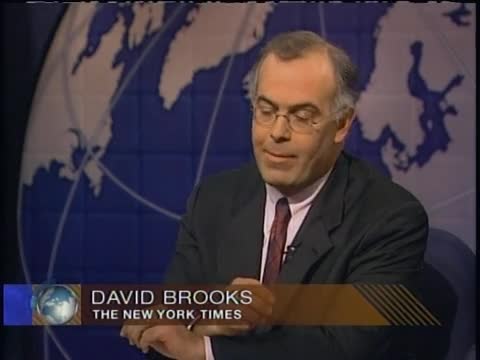
DAVID BROOKS, Columnist, New York Times: Well, I guess he`s right, and September is the crucial date. Listen, what`s happened this week is the Democrats are in control, and with power comes responsibility.
They didn`t have -- as Mark says, the Constitution wasn`t organized for them to be able withdraw quickly because of the power the president has, but neither is the country. The country wants to get out of Iraq, but they don`t want to get out precipitously. They want a managed withdrawal. The majority just isn`t there.
So the majority in the Congress had to accede to those two realities. And so they`re facing tremendous heat on the left for the stand Pelosi has taken, just as, by the way, the Republicans in the House and Senate are now facing tremendous heat on the right for immigration. And what you`re seeing this week is this ferocious uproar on these two separate issues against the people who are actually running the Congress. And I think, in both cases, the people who are actually in power are behaving reasonably responsibly.
MARK SHIELDS: Could I just pick on one point David makes? I think it`s a good point, and that is that -- the New York Times-CBS poll yesterday showed three out of four Americans believe the war is going badly. One out of two believe it`s going very badly. Now, three out of five say we never should have gone there.
Yet when they asked, "Should we pull out right now?" One out of eight says, yes, cut off funding. So, I mean, what you`re really talking about is, you know, a very small percentage of people who are quite vocal, who are, I`m sure, sincere, but they are not anywhere near a plurality, let alone a majority.
JIM LEHRER: A lot of people said, including the two of you, many times over the last several months, got to have a real debate on Iraq. We`ve got to have a real debate on Iraq. We haven`t had a debate on Iraq. Have we had one now?
DAVID BROOKS: I think we`ve had a debate all along.
JIM LEHRER: All along?
DAVID BROOKS: Yes, I think we`ve had -- I think before the war we had a big debate about Iraq. I recall reading tons of speeches, everybody talking about Iraq. And now the question is, do people have a plan forward? Do people have a postwar, post-surge plan?
And there we don`t -- we actually haven`t had a debate about that, because so far there`s really one or two plans floating out there. Most people just think we can somehow end the war by getting out. We can`t end the war by getting out. We`ll end maybe our participation in the war, but the war will go on.
JIM LEHRER: But you agree, do you not, Mark, that September has now become the benchmark?
MARK SHIELDS: September has.
JIM LEHRER: I don`t think it is because -- wrong word.
MARK SHIELDS: No, benchmark is not...
JIM LEHRER: Calendar point.
MARK SHIELDS: It`s the defining point.
JIM LEHRER: Defining point.
MARK SHIELDS: It really is. And that`s when the full appropriation comes up.
One place I would disagree with David is, we did not have a debate before this war. I contrast it with the first Persian Gulf War in 1991, when we had a very serious, thoughtful debate, where members sat. The Democrats were craven going to the war in Iraq this time. They were scared of being accused of being soft on terrorism, with rare exceptions.
And the Republicans were mindless in their support. I mean, they really were unquestioning. We never got to a question about, what happens when, what happens then, what happens after, in that debate. And, certainly, we never debated 300,000 troops, which now is the answer that many administration has for the solution.
JIM LEHRER: Now, speaking of the question, what happens when, and where, and what, we now have Iran now in a confrontation with the United States. Does the fact that we have this situation in Iraq mean that any kind of action by the United States, similar to what we did in Iraq, is completely off the table because of what we did in Iraq?
DAVID BROOKS: Yes.
JIM LEHRER: Convoluted question, my apologies.
DAVID BROOKS: I understand. But we`re not going to go to war in Iraq...
JIM LEHRER: No matter what?
DAVID BROOKS: In Iran. You know, I hear this stuff that Bush is planning another war in Iran. Cheney has got the plans on his desk. Forget about it. The people in the administration have no interest, and we have no capability to do so.
So what`s happened to American foreign policy generally, by the way, in the past year, it`s shifted 180 degrees. And the next president, Democrat or Republican, their foreign policy will look very much like the one Condi Rice is enacting today, and that includes an Iran stepping up the pressure on sanctions.
And it`s having some effect, not so much the sanctions, which are weak, but people are afraid to invest in Iran. And that is putting some bite on the Iranians. It hasn`t caused them to cut their nuclear program, but the hope is that you can ratchet up that pressure.
JIM LEHRER: What do you think about Iran and what we could do?
MARK SHIELDS: The horse is out of the barn. I mean, they`ve learned how to enrich uranium. And ElBaradei -- I mean, it has to be particularly painful for the administration, the man who was absolutely right about Saddam Hussein not reinvigorating or restoring any nuclear program in 2003, the administration didn`t want to hear it, went on to win the Nobel Peace Prize, he now says, I mean, that they have the 1,400 centrifuges, the stuff that they found.
I mean, there`s no way -- we don`t have any options. It`s an American problem in the world, but there`s not an American solution. And we can talk about censures and all sorts of provisions and everything else, but China and Russia are not...
JIM LEHRER: They`re going to have to take care of this one?
MARK SHIELDS: Yes, they`re paying lip service to the ones that were passed in March.
JIM LEHRER: You agree, though, that there`s no American solution to this?
DAVID BROOKS: No, I actually think they do.
JIM LEHRER: Oh, you do?
DAVID BROOKS: You create a series of costs and benefits. And they have the centrifuges, but this is the beginning of a long process. And these are delicate machines, like my garage door opener or something. And it will just take a long time to which you can actually pressure them.
JIM LEHRER: Mark mentioned immigration, David. There`s a new poll out. Three-quarters of the people polled said, hey, they support this compromise reform bill. If Congress is all over the place and having gone like this, what`s going on? Why do they do that?
DAVID BROOKS: The silent majority. I ran into a Republican senator yesterday who told me that the mail coming into that office was, I think, she said 1,300 to 35 in a day...
MARK SHIELDS: Against?
DAVID BROOKS: ... against.
JIM LEHRER: Oh, against?
DAVID BROOKS: Against, so the people against are furious, organized and knowledgeable. The people for are ambivalent, not that activist. And so...
JIM LEHRER: But there`s a majority.
DAVID BROOKS: But, right, but what the members are hearing, both Republicans and Democrats, is this ferocious wall of opposition. They`re not hearing anything else. And so they can read the poll results in the paper, but they`re going to respond next week when they go home.
JIM LEHRER: What do you think?
MARK SHIELDS: A militant minority will always, in a legislative setting, prevail over an undisciplined or...
JIM LEHRER: Particularly in the world of e-mail now.
MARK SHIELDS: In the world of e-mail. And there`s a lot of moving parts in this, Jim. I mean, you know, we talked last week about it being bipartisan, but, you know, you`ve got labor, who are upset about depressing wages with the guest workers, organized labor, who might be expected to be part of the Democratic coalition here in supporting it.
You`ve got liberals, including the Latino caucus, who are upset about the part that David likes so much, the point system for coming in, and without the emphasis upon family reunification. They feel that that`s very important to any immigrant group or any group to have family support, parents, grandparents, and a family unit that brings stability.
You`ve got business that thinks it`s got always onerous restrictions and enforcement it has to do, and it`s not getting enough workers at this point. So, I mean, you`ve really got a lot of people who are not -- and then you`ve got the Republican crazies, who amnesty has become for them 54- 40 or fight. I mean, this is Fort Sumter. They use the word "amnesty," and it`s like a swear.
DAVID BROOKS: I think it doesn`t make sense. I don`t think they`re crazies. I mean, we`ve had bad immigration bills. They`re right to be cautious. You know, we too early scorn the opposition, because they have legitimate points.
Nonetheless, despite all the pressures that Mark has been talking about, which are real, there are people who are -- the majority, the Democrats and Republicans in this coalition, are hanging tough. There have been a series of amendments trying to destroy it, and the majority has hung tough on each one of them.
JIM LEHRER: And what`s bringing them together, just the fact that they think it`s a serious problem?
DAVID BROOKS: They think it`s a good bill. They think they get something out of it, the situation will be improved. There is no political advantage. The opponents hope that, as the senators go home next week and spend a week in their districts or in their states, they`re just going to get slaughtered, and they`ll come back and change their mind, but so far they haven`t.
MARK SHIELDS: One vote yesterday, the guest-worker program to terminate after five years, an amendment offered by Byron Dorgan, a Democrat from North Dakota, and Barbara Boxer of California, one vote it survive by, and that was only when Ted Kennedy, the sponsor, went over and spoke to Senator Akaka of Hawaii and got him to change his vote. So the majority that`s prevailing is paper thin.
JIM LEHRER: Speaking of votes, lobby reform passed. Big reform? Major thing happen here?
DAVID BROOKS: I wouldn`t say a major thing, but a good thing. I think, in general, the more transparency you can get, but you`re really chasing a system. We passed a law. They get around it, and they get around it now with bundling, putting all these contributions together, so we passed another law to address that problem. Somehow the lobbyists or the people who want to give money will get around it, and we`ll have to pass another law.
JIM LEHRER: Do you agree?
MARK SHIELDS: Good thing.
JIM LEHRER: Good thing to do?
MARK SHIELDS: Anything that makes it more transparent. Sunshine is the greatest disinfectant. And to bring that out in the open, you`re going to find out who`s bringing in all that money to the members or the candidates. And they`re going to be a lot more sheepish.
What really was the test, Jim, the reluctance to support it when it was in conference in the respective caucuses of the two parties. Once it got to the floor, they were scared stiff to vote against it, and Chris Van Hollen and Marty Meehan deserve a lot of credit for it.
JIM LEHRER: Speaking of staying stiff, stay right where you are, because we`re now going to talk about developments in the presidential campaign of Hillary Clinton and come back and talk to you all again. That will follow an update on the Clinton campaign with Judy Woodruff.
Judy?
JUDY WOODRUFF: This week, Hillary Clinton delivered her first major policy address of the campaign on health care, denied reports that she ever considered skipping the Iowa caucuses, and awaited the release of two new biographies focused heavily on both her personal life and political ambitions. For a report on how Senator Clinton is handling all of this, we turn to Chris Cillizza of WashingtonPost.com.
Chris, the two biographies. First, a report out today in your newspaper, the Washington Post, what`s in the book?
CHRIS CILLIZZA, The Washington Post: Well, I would describe it as there are a lot of pebbles hitting the Clinton campaign. There is no boulder falling on it in these two books.
There are some revelations that we didn`t know about, and some more information about things that we did know about. Bill Clinton`s infidelities in the `80s while he was governor of Arkansas are more detailed. We find out that he was in love with a woman, contemplated leaving his wife, Senator Clinton, for that woman.
We find out some more, that she contemplated running for governor. This was something I had never heard of, contemplated for running governor, because she was so angry and hurt that she thought about running for governor in Arkansas. Dick Morris, not usually the voice of reason, the Clinton`s pollster, came, conducted a few polls, said, "This doesn`t make sense."
So there are things like that. Again, there is no silver bullet. These are small things that we didn`t know as much about, a little bit more revelation. But when you see two big biographies coming out, you think there might be more in them.
JUDY WOODRUFF: So some new things, but, what, the thinking is not enough to do damage or what?
CHRIS CILLIZZA: You know, I hesitate to make predictions until they hit the newsstands. The Post got some pre-published copies of these things, so I don`t want to -- until they hit the newsstands in June -- say, no, there`s nothing here, and then people react in a major way.
But, no, again, there`s not a silver bullet. There`s not something that jumped out at me that said this is going to be something that`s really going to be a problem for him going forward. The Clinton campaign, as they have done before with books written about Senator Clinton, sought to diffuse it, largely saying, "Old news. Nothing new in here. These three people spent, you know, a decade writing a book, and they didn`t come up with anything new."
That`s been their strategy. They`re trying to act as though they`re not at all concerned. Of course they`re a little bit concerned. When you have Carl Bernstein, half of the Bernstein and Woodward pair at our newspaper, and you have two investigative reporters at the New York Times on this...
JUDY WOODRUFF: Jeff Gerth and Don Van Natta...
CHRIS CILLIZZA: Right, these are not insignificant reporters. These are not people rabid, zealous partisans of one side or the other with an agenda. These are reporters with a long record and standing. So if they do come out with things that are damaging to the Clintons, it`s much harder to dismiss.
JUDY WOODRUFF: What about just the renewed focus on President Clinton, his life, their personal relationship? What does that do to her campaign?
CHRIS CILLIZZA: What`s happened with President Clinton thus far is he`s been, I believe, almost entirely for the good for her. Who`s paying attention right now in these races? The base of the party. The base loves Bill Clinton. He`s a hero among the base.
I think what this will do is it may broaden out the number of people paying attention to, "Oh, wait a minute, if we elect Senator Clinton, we also get the former president with the package." I think that may broaden it out a bit and create a little bit more problem for her.
To the moment, he`s really been almost entirely effective. There`s going to be some controversy; not everyone feels as positive toward him as the base does.
JUDY WOODRUFF: But for now, you`re saying the campaign is, what, relieved? They`re waiting to see...
CHRIS CILLIZZA: They would never say they`re relieved but, yes, they`re relieved.
JUDY WOODRUFF: Let`s turn to the speech. She gave a major speech on health care costs. This is just one piece of what she`s going to be talking about. What was the idea behind her doing that?
CHRIS CILLIZZA: Well, look, Senator Clinton recognizes she is a pragmatic politician. She knows that she went through a very difficult period in the early 1990s when she tried to wholesale reform health care, Hillarycare, call it what you will.
In her speech that she gave, she mentioned that. She said, "I still have the scars to prove trying to reform health care." What you`re seeing here, I think, is a series of -- I don`t want to say small bore, but not sweeping proposals.
What Senator Clinton has focused on, in health care, in the war in Iraq, in a number of these major issues, is she is the pragmatist in this race. John Edwards, for example, a former senator from North Carolina, has proposed universal coverage by 2012. And how is he going to do that? Roll back the tax breaks given to the wealthy.
Senator Clinton is not doing things like that. She`s focusing on governing, not political pronouncements, and we saw that again with health care.
JUDY WOODRUFF: The thinking being, you start out with the easier -- not that any of it`s easy, but not as controversial?
CHRIS CILLIZZA: Right, exactly. You start out and show, I think -- I think she`s willing to take a hit here or there to show that she`s the one most ready to hit the ground running, that she`s not just throwing rhetorical bombs during the campaign, that she understands what it`s like to govern. She`s been in the Senate. She`s been in the White House. She`s not new to this. Issues aren`t black and white when they`re as complex as Iraq or health care.
JUDY WOODRUFF: Now, the memo. A couple of days ago, memos surfaced written by her deputy campaign manager saying, in essence, "Skip Iowa." This is the first in the nation caucuses. It caused a big stir in the political community. Is this something the campaign was seriously considering?
CHRIS CILLIZZA: They insist not, but, frankly, the fact that Mike Henry, as you mentioned, the deputy campaign manager, put pen to paper or keyboard to fingers and wrote this memo up says something about what we`re looking at, in terms of the next year in this race.
Everyone has talked about February 5th with these big states moving up, California, Texas, New York. What`s the impact going to be? I think that this idea that they might skip Iowa is a direct result of that February 5th.
These are big, expensive states. And even a candidate like Senator Clinton, who clearly is going to raise the money to run a Rolls-Royce campaign, is making a calculation, or at least considering that she may not have enough money to run in all these places and that skipping Iowa may make some sense to her.
JUDY WOODRUFF: Even with the millions and millions...
CHRIS CILLIZZA: Right.
JUDY WOODRUFF: ... that she`s raising. So the effect on her campaign, she`s already in Iowa this weekend saying, "I`m not skipping."
CHRIS CILLIZZA: I think it`s a short-term effect. They were lucky in one way, is that she`s spending part of the next three weekends, including this weekend, in Iowa.
Now, she`s going to get questions on it. It was widely covered by the Des Moines Register, the big newspaper in Iowa. It was widely covered by Iowa television stations. So people are going to be aware of it.
I think she`s going to get questions about it, and she`s going to have to find a way to say, "No, absolutely, I`m committed to this." She`ll do that. I think this is probably a shorter term rather than a longer-term story, but it`s certainly not something the Clinton campaign wanted to deal with this week.
JUDY WOODRUFF: But you`re saying it`s part of a bigger picture question here about the calendar and what it means?
CHRIS CILLIZZA: Absolutely right.
JUDY WOODRUFF: All right, Chris Cillizza, WashingtonPost.com, thanks very much.
CHRIS CILLIZZA: Thanks, Judy.
JUDY WOODRUFF: Jim?
JIM LEHRER: Thank you, Judy.
And back now with Mark Shields and David Brooks.
And speaking of the bigger picture here, David, how do you see the big picture of the Clinton campaign, and her prospects at this point, and whether they`ve changed any in just these last few days?
DAVID BROOKS, Columnist, New York Times: Well, as Chris said, there`s no scandal in these books, but there is a sense, which is the underlying sense with a lot of people have about her, that she`s overly manipulative, overly secretive, demands total loyalty, decisions are made in a small circle. I doubt we`re going to want a president who makes decisions in a small circle again.
So I think it`s those character issues. And then the second thing -- and this is the big issue -- the percentage of Americans who think the country is headed in the wrong direction has not gone up. It`s gone down. We`re at incredible historic lows, with the Democratic Congress with the Republican White House, so people want something new. And Hillary Clinton is not exactly something new, and that`s why Barack Obama is hanging around there.
JIM LEHRER: Do you agree with that, that -- if somebody is looking over her shoulder now, who is it? Is it Barack Obama? Is he the number- one threat to her winning the Democratic nomination, Mark?
MARK SHIELDS, Syndicated Columnist: As of today, yes. I mean, Barack Obama has the greatest potential for growth.
I was at a focus group on Monday in Towson, Maryland, 12 voters, two hours of work, conducted by Peter Hart. And it was fascinating the number of people who said they liked Hillary Clinton. Her positions, for example -- one voter said, "I agree with her virtually every issue, but there`s no way I could vote for her. I just find her cold and calculating."
These are all personality problems. We have elected polarizing candidates before. I mean, Richard Nixon was a polarizing candidate. Ronald Reagan was a polarizing candidate. George Bush was a polarizing candidate. I mean, we`ve re-elected polarizing candidates.
So that`s not the problem. The problem I think she has -- and I agree with David, the book didn`t hurt her in this sense, because it`s not a killer -- it reinforces the negatives. But there isn`t anything new. It`s not like the Swift Boats` attack upon John Kerry went right at his character and went at his heroism. It raised questions about what had been the central biography.
It`s not a pretty picture. I think the most potentially damaging thing to her is that whole psychodrama of Bill Clinton and Hillary Clinton, and do you want to go back to it again?
JIM LEHRER: Do you agree that`s a factor, going to become a factor, if it hasn`t already?
DAVID BROOKS: We`ve now got a stereotype for each candidate and a weakness, which every media story plays into. For Clinton, it`s coldly ambitious. For Obama, it`s lightweight, inexperienced. For Edwards, it`s overly ambitious and superficial. And every time there`s a hair flip or anything that plays into one of those three stereotypes, it`s tremendously damaging for that particular candidate.
MARK SHIELDS: Are there stereotypes for Republicans, too?
DAVID BROOKS: No, they defy all stereotypes.
(CROSSTALK)
MARK SHIELDS: I think Rudy is even...
DAVID BROOKS: No, but each candidate -- and Walter Lippman wrote about this 70 years ago.
JIM LEHRER: Well, also, before we go, everybody should know this is Mark Shield`s birthday, and David and I had planned to join and sing "Happy Birthday" to you, but we`re out of time. And thank you both very much.
MARK SHIELDS: Thank you.
(BREAK)
JIM LEHRER: Now, rising electricity rates. NewsHour correspondent Elizabeth Brackett of WTTW-Chicago reports.
ELIZABETH BRACKETT, NewsHour Correspondent: Sherrill Lausmann of Decatur, Illinois, was shocked by the size of her electricity bill last January. That`s when the Illinois legislature`s freeze on energy prices was lifted. Laussman`s bill had doubled to $110 a month. It meant she had to cut back on other expenses like groceries, and she had to use electricity sparingly.
SHERRILL LAUSMANN, Illinois Resident: I just didn`t turn the heat on when there was sun coming through the windows. Now, there were some days, of course, when I had to turn it on, but I only turned it on when I had to.
ELIZABETH BRACKETT: The freeze had been put on 10 years ago to protect customers against sharp rate hikes when the industry was first deregulated. But now that the freeze has been lifted, rates have risen 30 percent to 60 percent to even 100 percent.
It`s affecting small businesses, as well. It takes a lot of electricity to maintain the ice at the Heartland Ice Arena in suburban Chicago. Owner Russ Naumenko was not prepared when his bill soared.
RUSS NAUMENKO, Illinois Businessman: I couldn`t believe it. It was unbelievable. I mean, it was a big hit. I mean, it`s $3,000 more than I thought it was going to be. It`s tough.
ELIZABETH BRACKETT: When legislators deregulated electricity in 1997, they wanted to break the monopoly hold on the sale of power that local utilities had. They thought if they split off the producers of power from the suppliers of power and got rid of some of the government regulations, that a lot of new suppliers would want to jump into the market, that competition would lower the price of electricity.
But new companies didn`t come into Illinois, and consumer advocate David Kolata says nearly all the states that have deregulated have run into the same problem.
DAVID KOLATA, Citizens Utility Board: The problem is, is that the law presupposes that it`s going to be competition that protects consumers, and competition simply hasn`t developed. So that, if you go forward, what are you doing? You`re basically ending up with a deregulated monopoly, and that`s the worst of all possible worlds.
ELIZABETH BRACKETT: Speaker of the Illinois House, Michael Madigan, looks back on that 1997 decision to deregulate with regret.
MICHAEL MADIGAN, Speaker, Illinois House of Representatives: I think that people in Illinois legislature in 1997, including myself, were sold a bill of goods by the power companies.
And please remember that the main advocate for deregulation in Illinois, 1997, was the Enron Company from Texas. People from that company were here; they were arguing and persuading us that we should move toward deregulation of electric energy. Clearly, it was a big mistake.
ELIZABETH BRACKETT: Today, rates in deregulated states average 30 percent higher than in states that remained regulated. Seven states have repealed deregulation. Now, only 15 states, plus the District of Columbia, are deregulated.
Speaker Madigan says it`s easy to see why deregulating electricity hasn`t worked as promised.
MICHAEL MADIGAN: Because it`s a necessity of life, because there`s only one place to go to get it, because the history of power producers and power suppliers in this country is real bad. They don`t think about the ultimate consumer; they think about making money.
ELIZABETH BRACKETT: Barry Mitchell says that`s not true. President of Commonwealth Edison, one of the two utilities distributing electricity to the residential market in Illinois, he says rates have gone up because natural gas prices have risen so much. But he says, in spite of that, ComEd customers are still getting a pretty good deal.
BARRY MITCHELL, President, Commonwealth Edison: The rates have gone up because market prices of energy have increased, and our customers have benefited from the fact that the rates have been frozen for almost 10 years after a 20 percent rate cut, so that, even taking into account the average annual increase for a residential customer, those customers are still paying no more than they paid in 1995.
ELIZABETH BRACKETT: The jump in electricity rates has brought consumers and lobbyists to the state capitol to urge legislators to do something. AARP members were particularly angry that Exelon, Commonwealth Edison`s parent company which generates power, saw a 73 percent increase in profits in the first quarter. They swarmed around State Senator Gary Forby, the sponsor of a bill to "re-freeze" rates.
GARY FORBY, State Senator: They made a lot of profit last year. They can afford it; my people cannot afford it. You know, they come into a room, negotiations come in with $2,000 suits on. They live in great, big homes. They get over $20 million in bonuses. This is wrong. And these people back here get $500, $700, $1,200 a month. Now, is this right or is this wrong? I think it`s wrong.
ELIZABETH BRACKETT: Although fellow Democratic State Senator James Clayborne has seen his own electricity rates go up by nearly 200 percent, he`s opposed to re-freezing rates. He recently met with representatives from a half-a-dozen power companies who said they won`t come into the Illinois market as long as there is talk of reinstating the freeze.
JAMES CLAYBORNE, State Senator: The whole purpose of deregulating is to create more competition and create more choice, in terms of suppliers coming into the residential market, as well as industry, creating industry where they will -- they do nothing but produce power. And as a result, that should cause rates to go down, should cause more competition.
But because we kept the rates low for so long, that the competition was never generated. So if we extend the rate freeze, then what happens at the end of the rate freeze? There`s still no competition.
ELIZABETH BRACKETT: ComEd`s Mitchell says, if a freeze is reinstated, his company could go bankrupt because of the high costs they themselves have to pay for power.
BARRY MITCHELL: The financial impact would be, is that we would lose $4 million a day -- or, annually, about $1.4 billion -- specifically because our costs have gone up, due to the fact that we need to buy power on behalf of our customers. Because we no longer generate that power, we need to buy it on their behalf.
We entered into contracts based upon the result of the procurement process, and our rates were increased commensurate with that increase in cost.
LYNNE KIESLING, Northwestern University: ... the opportunities we have with retail competition is the innovative bundling of services...
ELIZABETH BRACKETT: Economist Lynn Kiesling says, because of the freeze, true deregulation has not been allowed to happen in Illinois yet, which is why prices are so high. The only way to get prices down, she says, is to enable competitors to emerge.
LYNNE KIESLING: My vision of the future for electric power would be to have a variety of competing retailers offering differentiated products and services to residential, commercial and industrial consumers, so that customers have a lot of retail choice, and are empowered to choose, and to take control of and manage their own energy use.
ELIZABETH BRACKETT: Kiesling thinks that, rather than looking to the legislature to solve the electricity crisis, consumers and businesses should be looking to new technologies to deliver energy more efficiently.
JEFF BALCH, Illinois Resident: The energy is fairly expensive right now, so we`re trying not to use too much of it.
ELIZABETH BRACKETT: Evanston resident Jeff Balch has been part of a pilot program offered by ComEd called real-time pricing. He has a high- tech device which glows red when energy is at peak demand and most expensive. It`s a signal to his family to change their behavior so they can lower their bills.
It means, for instance, they should hang their wash on the clothesline or delay using the dryer until the middle of the night when the price of energy is cheaper.
JEFF BALCH: It`s a valuable education for our kids, and for us. There`s also a cost savings.
ELIZABETH BRACKETT: The utilities say new technologies and energy sources like wind and solar are part of a long-term solution to the energy crisis.
COMMONWEALTH EDISON AD ANNOUNCER: After a nearly 10-year freeze, electric rates have gone up due to rising energy costs.
ELIZABETH BRACKETT: In the short term, the utility companies are offering a rate relief program, if the legislature does not roll back prices and re-impose a freeze. But Sherrill Lausmann doesn`t buy it. She thinks the companies are only concerned about making higher profits.
SHERRILL LAUSMANN: I don`t know how they sleep nights. I really don`t. It`s greed; it`s corporate greed. I know it`s rampant, but it shouldn`t be.
ELIZABETH BRACKETT: The state legislature is expected to decide whether to re-impose a rate freeze within the next few weeks.
(BREAK)
JIM LEHRER: And finally tonight, as we begin this Memorial Day weekend, searching for military records and family histories online. Margaret Warner has our story.
MARGARET WARNER: Just in time for Memorial Day, a commercial Web site, Ancestry.com, last night unveiled a special collection of war records containing tens of millions of names of Americans who served.
HARRY TRUMAN, Former President of the United States: This is a solemn but glorious hour.
MARGARET WARNER: Spanning hundreds of years and six major wars, the online database includes draft registration cards, unit rosters, enlistment records, photographs and newsreel film...
FILM NARRATOR: ... victory ships they call them now...
MARGARET WARNER: ... and much more.
FILM NARRATOR: And there they go!
MARGARET WARNER: Ancestry.com says it spent $3 million to digitize military records it culled from the National Archives and other public sources. The collection is by no means exhaustive, and records from some wars are more comprehensive than from others, but users can search for data on a relative by simply logging on and entering the name.
They can also turn up some intriguing documents of famous people. George Herman Ruth`s World War II draft card can be found here. He`s better known as "The Babe." And one of America`s most celebrated magicians signed his name as Harry "Handcuff" Houdini on his 1918 World War I draft card.
The Web site is touting free access to the database between now and the D-Day anniversary, June 6th, though if you want to see more than the most basic information, you must register and submit your e-mail address. Ancestry.com, which already boasts almost a million subscribers, will require users to sign up for its basic $155-a-year membership after that.
And for more about this military database and how it fits into the growing interest in genealogy, we turn to Tim Sullivan, the CEO of Ancestry.com, in Utah. He previously was CEO of the online dating service Match.com. And Craig Scott, a certified genealogist who specializes in military records, among others, he is president and CEO of Heritage Books, a genealogical publishing firm in Maryland.
Welcome to you both.
So, Mr. Sullivan, how vast, how comprehensive is this database that you`ve compiled?
TIM SULLIVAN, CEO, Ancestry.com: It`s pretty big. We`ve gathered over 700 different database and collections. You know, it`s a very broad collection, 90 million names, hundreds of millions of images. It was very exciting to put it online. It`s probably the broadest collection we`ve ever put online at one time.
MARGARET WARNER: So who`s in it, who served, and who isn`t? Are they just people who served during wartime or all military? And how detailed is the information about the people who are in the database?
TIM SULLIVAN: Well, some of the information is very detailed. It is focused on military veterans, not just from times of war. The military, as we all know, is an incredibly organized institution and took very good records, so some of the information is very detailed.
Some of the information tells us a little bit about our ancestors, what they looked like and physical descriptions, even signatures on some of these documents. So, you know, in terms of who`s in it, you have to search and find out. Sometimes there are multiple records for some people and, for some people, it takes a little more digging.
MARGARET WARNER: And who do you think your users will be? Who`s the audience for this kind of somewhat specialized information?
TIM SULLIVAN: Well, it`s a great question. We have a passionate audience of, you know, almost a million subscribers worldwide to our online services. And we`re broadening the appeal and broadening the reach of the category.
So one of the things about military history is it touches all families, and we look to this as something that can bring new people into online history and online family history.
MARGARET WARNER: So, Craig Scott, you`re a professional genealogist. How useful is a database like this?
CRAIG SCOTT, Genealogist: A database like this is absolutely fantastic because it allows you quick access. They`ve done a very good job of indexing a lot of things. So something that would have taken me a few hours to find in the past I can find in a few seconds.
MARGARET WARNER: Give me an example.
CRAIG SCOTT: This afternoon I searched for my grandfather`s World War II draft registration card and his World War I draft registration card. I never touched the World War II one before, and the World War I took me at least an hour to find, once upon a time.
MARGARET WARNER: And today?
CRAIG SCOTT: About five seconds.
MARGARET WARNER: Now, is there new information on this database or are these, from your experience, are these things you could have always found, just more laboriously?
CRAIG SCOTT: There a lot of things that have been on ancestry for some time that are now brought together. There are some new things, especially those relating to World War II. And then there are some pieces that have been in book form for a very long time, and they`ve digitized it and indexed it and made it more accessible.
MARGARET WARNER: And when you say book form, what do you mean?
CRAIG SCOTT: Well, some things existed in -- their database were originally books, and they digitized them and made them available.
MARGARET WARNER: Now, Mr. Sullivan, how did you go about, quote, "digitizing" all this information? Some the images we just showed were handwritten draft registration cards, for example.
TIM SULLIVAN: We have three process. We digitize and take actual images, photographs of these documents. Sometimes, if they`re typeset, we can use some technology we call "optical character recognition" to create digital indices.
But a lot of the times, most of the time, since these are handwritten records, we actually have to go through and transcribe, in rather laborious fashion, name by name, date by date, and place by place. And that`s the key part of this, because, as Craig says, many of these records have been available for decades or centuries. But you had to travel to an archive or find the needle in the haystack. By creating searchable digital indices, it`s all available in one place, through one search engine, at one time.
MARGARET WARNER: And did all the government agencies -- first of all, does all this come from some kind of government source? In that sense it`s, quote, "official." And did you ever have difficulty getting the information?
TIM SULLIVAN: No, we have wonderfully cooperative relationships with all kinds of holders of historical archival information. These are groups that have a great mission, to preserve American or state or even international history, and also a goal of making it more accessible. And so this is where the commercial sector and Ancestry.com comes in, that we can actually digitize these materials that, you know, they may not be justified for taxpayers to pay for the digitization.
We can fund a pretty interesting business model, by investing the millions of dollars to put these online. So we have great relationships and great cooperation with institutions like the National Archives and Library of Congress and all kinds of archival holders of archival information.
MARGARET WARNER: Now, Craig Scott, is genealogy, is genealogical information like this of historical significance? Does it add to an historian`s understanding of a period?
CRAIG SCOTT: Absolutely. Historians look at the big picture generally, and genealogists tend to look at the little picture and focus on the person. Personally, I like to walk the ground where my ancestors were, and I feel good about that. It puts me in touch with them. And there`s no better feeling than standing where an ancestor fought at the Battle of New Orleans and got wounded.
MARGARET WARNER: But an historian -- I mean, do historians engage services of genealogists or do they go and do a lot of genealogical research themselves?
CRAIG SCOTT: The marriage between genealogists and historians is sometimes tenuous, and sometimes it`s very useful to both sides of the coin. Many historians don`t realize how much genealogical material is available, whereas genealogists are sometimes frustrated because they think historians ignore the resources that have been created that are of absolute value to them.
MARGARET WARNER: So, Mr. Sullivan, we`ve read a lot about the growing interest in genealogy on the part of everyday people and, indeed, your Web site is proof of that. What do you think is fueling it?
TIM SULLIVAN: I think the Internet is fueling it. For, as I said, decades and longer, a lot of this information has been available, but it was tedious and difficult to find. Folks like Craig did a fantastic job of making information available to people, putting it online, making it searchable, and building technologies and user interfaces that are kind of friendly and, dare I say, fun, is fueling a lot more of the mainstream interest in family history.
MARGARET WARNER: What would you add to that?
CRAIG SCOTT: I`d add that because it`s on the Internet doesn`t necessarily make it right, and genealogists are interested in verifying whatever they find, on the Internet or not.
MARGARET WARNER: So you mean, you would still say trust but verify, even with this information?
CRAIG SCOTT: Even with this information.
MARGARET WARNER: If you possibly could?
CRAIG SCOTT: Well, our ancestors lied, too.
MARGARET WARNER: Well, that`s true, and things they filled out themselves. But do you think that individuals who go on the Internet, again, ordinary Americans, is it just they want to sort of know who they came from, if they`re curious about their ancestry? What really drives that, for someone to sit at a computer screen for hours and hours?
CRAIG SCOTT: Do you like putting a puzzle together? It`s a big puzzle. And there are people who do it because it`s a puzzle. There are people who do it because they want to understand the context of where they came from and what their ancestors were involved in. There are many reasons. I mean, there are actually too many reasons. It just depends on who you talk to.
MARGARET WARNER: Well, thank you for talking to us, Craig Scott, Tim Sullivan, thank you both.
CRAIG SCOTT: My pleasure.
TIM SULLIVAN: Thank you, Margaret.
(BREAK)
JIM LEHRER: And, again, the major developments of this day.
The legislation to keep funding U.S. troops in Iraq and Afghanistan went to President Bush. Late today, the U.S. military announced three more troops had died in Iraq, in addition to the six announced earlier. That made 93 U.S. deaths so far in the month of May.
And planeloads of military aid arrived in Lebanon from the United States and Arab allies. The supplies were for government troops battling militants linked to al-Qaida.
(BREAK)
JIM LEHRER: And, once again, to our honor roll of American service personnel killed in Iraq and Afghanistan. We add them as their deaths are made official and photographs become available. Here, in silence, are 10 more.
"Washington Week" can be seen later this evening on most PBS stations. We`ll see you online and again here Monday evening. Have a nice Memorial Day weekend. I`m Jim Lehrer. Thank you, and good night.
- Series
- The NewsHour with Jim Lehrer
- Producing Organization
- NewsHour Productions
- Contributing Organization
- NewsHour Productions (Washington, District of Columbia)
- AAPB ID
- cpb-aacip/507-542j679j45
If you have more information about this item than what is given here, or if you have concerns about this record, we want to know! Contact us, indicating the AAPB ID (cpb-aacip/507-542j679j45).
- Description
- Episode Description
- President Bush signed the legislation Friday to keep funding U.S. troops in Iraq and Afghanistan. Mark Shields and David Brooks provide discussion and analysis of this week's news including the Iraq war funding debate, Iran, lobbying reform, and immigration. The guests this episode are Mark Shields, David Brooks, Chris Cillizza, Tim Sullivan, Craig Scott. Byline: Jim Lehrer, Kwame Holman, Judy Woodruff, Elizabeth Brackett, Margaret Warner
- Date
- 2007-05-25
- Asset type
- Episode
- Topics
- Social Issues
- Technology
- War and Conflict
- Energy
- Religion
- Military Forces and Armaments
- Politics and Government
- Rights
- Copyright NewsHour Productions, LLC. Licensed under a Creative Commons Attribution-NonCommercial-NoDerivatives 4.0 International Public License (https://creativecommons.org/licenses/by-nc-nd/4.0/legalcode)
- Media type
- Moving Image
- Duration
- 01:04:09
- Credits
-
-
Producing Organization:
NewsHour Productions
- AAPB Contributor Holdings
-
NewsHour Productions
Identifier: 8835 (Show Code)
Format: Betacam
Generation: Master
Duration: 1:00:00;00
If you have a copy of this asset and would like us to add it to our catalog, please contact us.
- Citations
- Chicago: “The NewsHour with Jim Lehrer,” 2007-05-25, NewsHour Productions, American Archive of Public Broadcasting (GBH and the Library of Congress), Boston, MA and Washington, DC, accessed May 18, 2026, http://americanarchive.org/catalog/cpb-aacip-507-542j679j45.
- MLA: “The NewsHour with Jim Lehrer.” 2007-05-25. NewsHour Productions, American Archive of Public Broadcasting (GBH and the Library of Congress), Boston, MA and Washington, DC. Web. May 18, 2026. <http://americanarchive.org/catalog/cpb-aacip-507-542j679j45>.
- APA: The NewsHour with Jim Lehrer. Boston, MA: NewsHour Productions, American Archive of Public Broadcasting (GBH and the Library of Congress), Boston, MA and Washington, DC. Retrieved from http://americanarchive.org/catalog/cpb-aacip-507-542j679j45