The NewsHour with Jim Lehrer
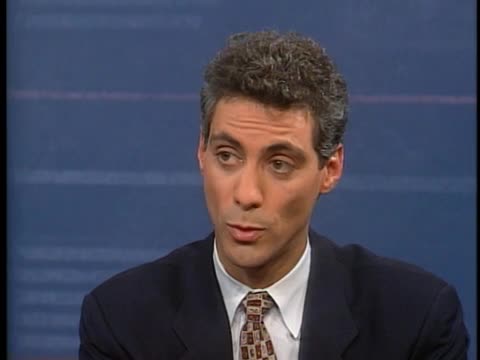
- Transcript
MR. LEHRER: Good evening. I'm Jim Lehrer on the NewsHour tonight, a report on the clash between Israeli soldiers and Palestinian police on the West Bank, a campaign 96 issue and debate on drugs policy with Dole and Clinton campaign representatives, and a group of young people in Denver, and a Lee Hochberg look at community policing in Portland, Oregon. It all follows our summary of the news this Wednesday.NEWS SUMMARY
MR. LEHRER: A gun battle erupted today between Palestinian police and Israeli soldiers in the West Bank town of Ramallah. At least four people were killed, more than 350 injured there and at another protest in Bethlehem. The clashes came after Israeli soldiers fired rubber bullets to disperse demonstrators offended by the opening of an archaeological tunnel near Jerusalem's Temple Mount. The site is considered holy to Muslims, Jews, and Christians. We'll have more on this story right after the News Summary. A U.S. Naval Intelligence employee was charged in federal court today with spying for South Korea. Prosecutors said naturalized American Robert Kim passed on at least 50 secret documents to a South Korean embassy attache. Kim was a civilian analyst at the Office of Naval Intelligence near Washington. He was born in South Korea. FBI agents said they discovered his spying by videotaping him at work, reading his mail, and listening to his telephone conversations. Frequent drug use among teenagers is on the increase according to a report issued today. It was based on a survey by an Atlanta-based group called PRIDE, the Parents Resource Institute for Drug Education. The executive director said the use of most drugs was at the highest levels in nine years.
DOUG HALL, Executive Director, PRIDE: A high school classroom with 30 students--our studies show that 3.5 percent of the 12th grade tried heroin last year. That means that in every 12th grade class in America, every single classroom, one student, a seventeen or eighteen year old, had already tried heroin. Two had tried cocaine; three had tried amphetamines; and nearly four had tried LSD, PCP, or some other hallucinogen.
MR. LEHRER: The report also said that seven out of ten kids surveyed said their parents are not talking to them about drugs. We'll have a campaign issue and debate on drug policy later in the program. In the presidential campaign today, President Clinton unveiled a new inflation proof government bond. The value of the security will be tied to the Consumer Price Index. He told a business college group in Pittsburgh the new bonds will help families save for college tuition and other long-range needs.
PRESIDENT CLINTON: Today we announced a new way to save, an inflation protection bond. It will allow middle class families to protect their savings from inflation no matter what. These bonds will first be issued on January 15th. They will be available in denominations as low as $1,000. The value of the principal will increase as necessary over the years to keep up with inflation. And they will pay interest on the principal, adjusted for inflation. Not a penny of value will ever be lost to anyone who buys them because of inflation at whatever rate inflation occurs. For investors who choose these bonds, there will not be paper gains, there will be real gains, and this is a real incentive for families to save for their own future and for their children's.
MR. LEHRER: Bob Dole was in St. Louis today. He told an audience at St. Louis University he would come from behind to beat President Clinton in the November election. He emphasized his economic message.
SEN. BOB DOLE, Republican Presidential Candidate: We have one big plan. It starts with a 15 percent across-the-board tax cut for every American taxpayer. [applause and cheers] It's simple. It's simple, and it's straightforward. We're going to expand Individual Retirement Accounts, so you can save some money and use it later. It's all based on one simple belief. It is your money. It is your money. It is your money.
MR. LEHRER: Dole said he looked forward to meeting President Clinton in the presidential debates. The first debate is scheduled for October 6th, in Hartford, Connecticut. The House today passed the immigration reform bill. The vote was 305 to 123. It would speed deportation procedures and make money available to hire more Border Patrol officers. The Senate is expected to vote on the bill later this week. In a separate vote, the House approved a bill allowing states to deny public school education to illegal immigrant children. That measure was removed from the larger bill yesterday because President Clinton had threatened to veto if it was included. Doctors in Russia today said they will proceed with President Yeltsin's heart bypass operation but not for a while. We have more in this report from Julian Manyon of Independent Television News.
JULIAN MANYON, ITN: The start of one of the most extraordinary consultations in medical history. The 88-year-old American heart surgeon, Dr. Michael DeBakey, with his patient, the president of Russia. Three hours later, DeBakey and a team of Russian doctors emerge with an upbeat message: A heart bypass operation can and will take place.
DR. MICHAEL DE BAKEY, Heart Specialist: It should provide an excellent result, and in my experience with patients having this type of problem, there is no reason why the president should be restored to full normal activity.
JULIAN MANYON: But it will still be six to ten weeks before Boris Yeltsin is ready to face the surgeon's knife. His doctors today confirmed that he did have another heart attack this summer but did not have a stroke. One main reason for the delay is that the president has recently lost blood from internal bleeding, and the doctors need to know why.
MR. LEHRER: And that's it for the News Summary tonight. Now it's on to the Israeli-Palestinian clash on the West Bank, the drugs issue, and community policing. FOCUS - FRAGILE PEACE
MR. LEHRER: First tonight that new outbreak of violence on the Israeli-occupied West Bank. This time it involved armed Palestinian police as well as stone-throwing youth versus Israeli soldiers. We have a report from Sirah Shaw of Independent Television News.
MS. SHAW: Scenes like these at a roadblock outside the West Bank town of Ramallah have not been seen since the end of the Palestinian uprising or Intifada. Palestinian sources claim over 160 people were wounded and 4 killed. The unrest spread across the Gaza Strip to Jerusalem and the West Bank, spoked by Arab fury at Israel's building of a tunnel in Jerusalem's old city. Israel's prime minister, Benjamin Netanyahu, in Paris for talks with President Chirac, found himself accused by France of stoking tensions. He said the Palestinian leaders were using the tunnel as a pretext.
BENJAMIN NETANYAHU, Prime Minister, Israel: I think that there's a combination here of misinformation and deliberate disinformation that is an attempt to whip up passions without any ground of fact. I think this is something that is irresponsible and should not be countenanced. What we would like to do is resume calm and resume negotiations.
MS. SHAW: Israel says the tunnel and the Temple Mount compound is simply to enable more tourists of all faiths to visit the city's holy sites but the belief quickly spread among Arabs that the Temple Mount compound containing some of the holiest sites in Islam could be damaged by the tunnel; sites including the Dome of the Rock and the Alexa mosque are also used to lend political weight to Palestinian claims that Jerusalem should be their capital. The Palestinian leader, Yasser Arafat, said the principal concern-- Jewish encroachment.
YASSER ARAFAT: The most important thing that we can't accept, Judaization of Jerusalem. Jerusalem is our capital, and this has been occupied since 67, so no one can accept what is going on.
MS. SHAW: Palestinian MP's, like the cabinet minister, Hannan Ashrawi, led protest marches in Jerusalem. They were beaten back by Israeli forces but promised to return.
HANNAN ASHRAWI, Education Minister, Palestine National Authority: This is the first step. We have done many steps, we have taken many appropriate steps. This is part of it. It's part of an overall strategy, and we will persist.
MS. SHAW: The Arab protests have raised the temperature for Mr. Netanyahu's government which has taken a tough stance on implementing the peace process and has forged ahead with building Jewish settlements. If the violence looks far from ending, the international storm may still be gathering. The PLO has called for a UN Security Council meeting. The Arab League will hold a special session tomorrow to discuss the unrest. FOCUS - ISSUE & DEBATE
MR. LEHRER: Now a campaign 96 issue and debate discussion. The issue tonight is drug policy. Elizabeth Farnsworth is in charge.
MS. FARNSWORTH: Today more fuel was added to this year's political firestorm over drug policy. This afternoon, as Jim reported in the News Summary, the Parents Resource Institute for Drug Education, a non-partisan drug prevention organization, released a new study. It found the use of illicit drugs by 6th through 12th graders has reached the highest level in nine years. It's a trend also found in other surveys in recent months. We'll talk to spokesmen for the Clinton and Dole campaigns, and we'll hear from some teenagers, but first this report from Kwame Holman.
SEN. BOB DOLE, Republican Presidential Candidate: Just don't do it, just don't do it, that'll be our slogan.
MR. HOLMAN: Bob Dole's anti-drug message was a relatively late edition to his presidential campaign developed right after drug use in America suddenly became a hot political issue in August. The Department of Health & Human Services had just released a report showing drug use among young people ages twelve to seventeen doubled between 1992 and 1995, ending a ten-year decline. Bob Dole used the issue immediately.
SEN. BOB DOLE: The drug abuse among young Americans has more than doubled in the last four years under President Clinton, a 105 percent increase in marijuana use. That is a national tragedy. And it's enough to cause every single American to ask the people in the White House, where have you been the last four years, Mr. President, where have you been the last four years, Mr. President?
MR. HOLMAN: And at almost every campaign stop since, Dole has continued to blame the President for the rise in teen drug use.
SEN. BOB DOLE: It began almost the day this administration was sworn in, when they cut the drug czar's office, the drug policy office, control office by 83 percent, 83 percent. Then the cut by more than half the Defense Department's budget for planes and troops to help keep drugs from ever crossing our border. Then they proposed cutting the number of drug enforcement agents by more than 600 in the United States.
MR. HOLMAN: And Dole has followed up his stump speech attacks with a series of television ads. One of the most recent uses the President's own words.
AD SPOKESPERSON: We send them off to school and we worry. Teenage drug use has doubled since 1992. And Bill Clinton, he cut the White House drug office 83 percent. His own surgeon general even considered legalizing drugs, and in front of our children on MTV, the President, himself--
INTERVIEWER: If you had it to do over again, would you inhale?
BILL CLINTON: Sure, if I could. I tried before.
AD SPOKESPERSON: Bill Clinton, he just doesn't get it--but we do.
BARBARA WALTERS: Did you really say you were sorry you didn't inhale?
PRESIDENT CLINTON: What I said--what I said was--
MR. HOLMAN: President Clinton was asked to explain his MTV quote last Friday on ABC's "20/20".
PRESIDENT CLINTON: I was trying to say that I actually tried. I was not trying to exonerate myself when I said I didn't inhale, that I had an allergy and couldn't do it, and so--but I still believe that the important message is that these, these things are dangerous. I wish I'd never done any of it, although I did such a little bit. But it was wrong.
MR. HOLMAN: But the Dole campaign then took those comments and produced a new ad.
AD SPOKESPERSON: Under Clinton's liberal policies, teen drug use has doubled. But now Clinton admits he was wrong.
PRESIDENT CLINTON: I wish I had never done any of that, although I did such a little bit, but it was wrong.
AD SPOKESPERSON: For the thousands of young Americans who became hooked on drugs under Clinton, his apology is too little, too late. America deserves better.
MR. HOLMAN: But President Clinton doesn't concede that the increase in teen drug use began on his watch.
PRESIDENT CLINTON: Going way back to 1990, young people began to get the idea again that this was not dangerous.
MR. HOLMAN: And he's responded to the attacks by telling voters along the campaign trail that he has made efforts to combat drug use. He begins with his appointment of Army General Barry McCaffrey as drug czar in January, which drew applause from both Democrats and Republicans.
PRESIDENT CLINTON: General Barry McCaffrey, a four-star general, was appointed to lead our war on drugs after he led our troops South of the border and did so much to keep drugs from coming into America. His strategy is targeted at doing those things which will keep drugs away from our children. We proposed the largest anti- drug effort in history, and I hope Congress will give us the extra $700 million we asked for so that we can do everything possible to really effectively turn these trends around and make sure that we have drug use going down, not just among adults, which it is--it's dropped--cocaine use has dropped by a third among adults in the last four years--we have got to get drug use going down among our children. We can't have these kids out there believing they are not in danger, when they are. [applause] And you have to help.
MR. HOLMAN: And President Clinton also is attacking Bob Dole's record on combating drug use. One of the Clinton campaign's most recent television ads mocks Dole's new anti-drug message.
AD SPOKESPERSON: To fight drugs, all Bob Dole offers are slogans.
SEN. BOB DOLE: Just don't do it.
AD SPOKESPERSON: But look at what he's done--voted to cut the President's school anti-drug efforts by 50 percent, against creating the drug czar, against creating student loans, against the President's plan to limit cigarette ads that target our kids. Joined with Newt Gingrich to cut vaccines for children--that's the real Bob Dole record.
SEN. BOB DOLE: Just don't do it.
AD SPOKESPERSON: One slogans can't hide. President Clinton protecting our values.
MR. HOLMAN: Dole, however, now touts an anti-drug plan to go along with his slogan.
SEN. BOB DOLE: And as President, I will encourage the movie, television, and music industries to embrace a no-use, zero tolerance message in the products they market to America's youth. And I will invite parents groups and educators and members of the entertainment industry to the White House for a conference to establish a voluntary strategy to end the glamorization of drugs. [applause] And as President, I will ensure that the Justice Department and federal prosecutors throughout the United States take a hard line against drug dealers. When it comes to fighting drug crime, our nation will keep its word.
MR. HOLMAN: And yesterday at the United Nations, President Clinton called for a war against drugs on a global scale.
PRESIDENT CLINTON: The United States will do its part. Next week, I will target more than $100 million worth of defense equipment, services, and training to Mexico, Colombia, and other South American and Caribbean countries. These resources will help our friends stop the flow of drugs at the source. Now I ask every nation that exports the chemicals needed to make illicit drugs to create an informal group whose members will work to deny these chemicals to drug producers. We must not let more drugs darken the dawn of the next century.
MR. HOLMAN: With the release of another report today showing higher teenage drug use, it's almost assured the problem of teenagers and drugs will remain a top political issue right through the election.
MS. FARNSWORTH: Now the perspectives of the two campaigns. John Walters was deputy director for supply reduction at the Office of National Drug Control Policy during the Bush administration. He's now the President of the New Citizenship Project, a non-profit conservative policy group. Rahm Emanuel is a senior adviser to President Clinton. His portfolio includes crime and drugs. Thank you both for being with us. Mr. Walters, in your view, to what extent is the Clinton administration responsible for the rise in teen drug use?
JOHN WALTERS, Dole Adviser: Well, I think by leaving comments that mock doing the right thing by young people, you certainly discourage young people from doing the right thing, but more equally to the point, policies that have been--have been promulgated that de-emphasize cutting the supply through cutting interdiction, the failure to follow through on improving a treatment system, the failure to follow through on resources in law enforcement, and I think even prevention, the President's request for the Department of Education is $83 million below the last year of the Bush administration in terms of money. But it prevails--the failure to provide leadership and direction to these things means that the supply of drugs are up, the number of people that are addicts showing up in emergency rooms are up, and, of course, as we've seen repeated over and over again in the last month, shocking increases, unprecedented increases is in drug use among youth. So it's not just leadership, although moral leadership is important in this because it's an issue of right and wrong for young people. It's also policies and the current drug strategy of the Clinton administration still has. I don't believe anyone can demonstrate. I've been testifying on the Hill, and even Democrats won't defend it as offering to turn this situation around.
MS. FARNSWORTH: Defend the President's drug strategy. What is it, and why isn't what Mr. Walters says true?
RAHM EMANUEL, Clinton Senior Adviser: Let's put a couple of facts on the table. One is that drug use is actually overall going down, 30 percent down in cocaine use among adults. Second is the start in drug use among teens going down occurred under the last year of the Bush administration, and the "Washington Post" reported at that time that the Michigan study that was done in 1991 noted that, in fact, that drug use was going up among teens then. As the President has always said, the best drug interdiction, the best drug prevention, and the best drug enforcement strategy are parents teaching children right from wrong. And no government program will ever replace that. And parents should have the confidence that their children are getting the same message at school that they get at home. And that's why the President fought any attempt--which is what Congress did--to try to cut the safe and drug free school initiative which teaches kids in school, like at home, that drugs are dangerous, drugs are wrong, and drugs are illegal. And I think that's the most important thing because this battle is a battle that's going to be won at the kitchen table, in the family room, and in the classroom. That's the front line and the last line of defense.
MS. FARNSWORTH: So are you saying that, uh, the fact that the administration cut the number of people in the Office of Drug Control Policy from what was it, a hundred and sixty-seven or something to twenty-five, and cut back some of the other policies, that that is not responsible for the rise in teen drug use?
MR. EMANUEL: What I am saying is first of all those weren't exactly the right numbers, but more important is that the cuts have been restored. But I'll tell you one cut we won't let happen, and that's the cut in the safe and drug free school initiative. The Dole-Gingrich Congress tried to cut it by 50 percent. It was the first cut, and that was President Clinton's first veto. I'll tell you another thing--
MS. FARNSWORTH: So you think that's the area that really affects the teens.
MR. EMANUEL: It does. I'll tell you--I do think--let me say why I think all areas--because John made one point I actually want to draw a contrast with--and that is this either/or choice that continues to paralyze Washington's debate between interdiction versus demand, prevention versus supply. It's not an either/or choice. You've got to bring down the Cali Cartel like we did, and you got to make sure you have full funding for safe and drug free school. You got to make sure you have laser strike, which is what General McCaffrey did down in Latin American, and you got to wage this war against tobacco, which President Clinton did. It's not an either/or choice. It's a false choice that way.
MS. FARNSWORTH: But you're denying that the cutbacks made a difference. You're saying these were not important cuts.
MR. EMANUEL: We have the largest drug budget ever in the history of this country, 15.3 billion dollars, and every year we've set a record with the largest budget.
MS. FARNSWORTH: Okay. Mr. Walters.
MR. WALTERS: Well, I think first there isn't an either/or choice but the fact is interdiction resources have been cut by more than 50 percent, studies the Clinton administration commission said that if they restored less than the cuts, they would be able to interrupt over 130 metric tons of cocaine alone. It's not either/or, and I do think that people in their homes around the kitchen table need the support of the federal government and their national leaders. It has been off the radar screen. What's happened in the last two weeks is Bob Dole has made this one of the top three issues in the country. The surveys and the evidence help provide that, but that evidence has been growing over the last several years; well, people didn't about it while there wasn't leadership. No matter who gets elected president, what's happened by the--making--putting the Clinton administration in a reactive mode is whoever is president after this, they're going to take drugs more seriously. The actions you've seen from the administration trying to move ahead are the product--you know, people think politics is somehow--muddles all this. Politics is the vehicle by which we're getting better policies today, we're getting scrutiny, we're getting attention, and I think we're going to have more leadership. But the fact is the legacy of more drugs on our streets, diminishment in foreign policy, diminishment in managing the federal treatment system which is not performing and there's nothing in the Clinton administration policy to handle the federal responsibility, and diminishment in talking about the direction of the drug free schools program, over $2 billion in the last four years as youthful drug use has skyrocketed; that program needs some support or buttressing, and not just more money dumped down a system that isn't working right now. And the issue is not simply how much money can you spend; it's where's the leadership, where's the policy, where's the accountability in the system.
MR. EMANUEL: Well, I think we'll agree on one thing, drugs is at the center, as it has always been at the center for this President, as has--let me make note--the fight against tobacco, the fight against guns in school, the fight against violence on TV, the fight against teen pregnancy. This is all of a pattern, and to tell you the truth, we welcome the contributions on the fight against tobacco. We're not the only voice here because the silence sometimes in this town is deafening. The fight to keep guns out of school, which Sen. Dole opposed, President Clinton made the law of the land, we'd also welcome that continual effort to fight teen violence. The fight against drugs in our school, when it came to expanding safe and drug free school programs, Sen. Dole opposed it, when it came to cutting it, he--the President fought him and won on that. And I'll tell you, on all those host issues that interrelate for teenagers, that's a fight that the President has had, Sen. Dole's been on the other side, and we're more than willing to make that a discussion now and for the future.
MS. FARNSWORTH: Specifically, Mr. Emanuel, the teenage drug use is more about marijuana than, than interdicting cocaine from Peru. 50 percent of marijuana is grown in this country.
MR. EMANUEL: That's probably a question for John.
MS. FARNSWORTH: I'm going to ask both of you. What does the Clinton administration say about that? What's your plan?
MR. EMANUEL: On the marijuana?
MS. FARNSWORTH: Yeah.
MR. EMANUEL: Well, I think, you know, say it as the President said at his acceptance speech in Chicago, as he has said in his State of the Union, as he has said throughout his administration, that the first fight in this battle will be with parents who talk to their kids. As you saw in this report, a lot of children--and Joe Califano will report from the other--they're not hearing from their parents, and no government program--there's a role for government--but no government program will ever replace what a parent can do in teaching a child right from wrong. And that's the first line of defense, and that's the last line of defense. And I want to add one thought, it goes to John's comment about Sen. Dole raising this issue. I watched Sen. Dole's farewell speech to the Senate. I was touched. I thought that was a great speech. He talked about bipartisanship and his accomplishments. What I found ironic was in his 35 years he didn't find one time he can recognize in that speech once mentioned the word crime or drugs because it's not part of his record. And in those 35 years until this election, it's actually been--his fingerprints are more in the tax code than they've ever been in fighting crime and drugs.
MS. FARNSWORTH: Isn't it true that it wasn't exactly on the top of his agenda?
MR. WALTERS: Well, look, I think that we're not giving credit where credit's due. Sen. Dole sent a letter to President Clinton saying, uh, he was now focusing on Mexico and the Mexico transit problem on the issue of certification. Don't certify Mexico as cooperating--the President did.
MS. FARNSWORTH: You're talking about Mexico serving as a transit- - JOHN WALTERS: That's right.
MS. FARNSWORTH: For drugs coming up in the Senate-- JOHN WALTERS: The Senate is the place that started pressure on Colombia when the administration was looking the other way and not providing it. Uh--let me finish. I let you finish. Thirdly, it was Sen. Dole that started an alternative strategy finally, after giving the administration, as I think Republicans thought the President deserves a chance to set his own strategy, it was Sen. Dole who got together with Speaker Gingrich to create an alternative strategy to begin, uh, stopping the abandonment of leadership and this policy that's happened at the Executive Branch. And on marijuana--and I agree, that's a serious issue--it's important to remember that marijuana prices have dropped dramatically from the end of the Bush administration, and during the Clinton administration--
MS. FARNSWORTH: Why is that?
MR. WALTERS: Domestic marijuana eradication has been cut and not restored. Interdiction, because 50 percent of the marijuana comes from abroad, has been cut, over 64 percent decline in the effectiveness of this. We are--yes, Americans--
MS. FARNSWORTH: Sen. Dole--just specifically, what would Sen. Dole do about that?
MR. WALTERS: He's talked about a systematic plan to provide additional manpower using the National Guard immediately, not waiting to hire Border Patrol agents, but use them immediately because of the alarming increase in here to stop the flow and to use National Guard for eradication. Americans--
MS. FARNSWORTH: Even eradication--
MR. WALTERS: --need to talk to their kids around the table, but the parents need the support. If we say don't use drugs but they're cheap and they're widely available, institutions of government are teaching, we don't care, we're not following through.
MS. FARNSWORTH: Mr. Emanuel.
MR. EMANUEL: John brings up some good points, and I think actually where we agree is there's a role for the government like there's a role for the government to add more police on the street. Sen. Dole fought that, but that's where the battle is going to be. There's a role for DARE officers in the schools teaching kids right from wrong when it comes to drugs. Sen. Dole opposed the President. The President was for that. And when it comes to the issue of marijuana use, very specifically it was a homegrown issue here, if the drug is grown here, it's really not one that's imported. The fact is what you've got to do to beat that is galvanize and motivate parents on this issue, motivate peer pressure. You know, there's close to about 90 percent of the kids in this country do right when it comes to drugs, do right when it comes to study, meaning they don't do it. And we've got to motivate those kids to talk to their friends, and we got to motivate parents to take the time to talk openly and firmly to their children.
MS. FARNSWORTH: Okay. Gentlemen, stay with us now. We're going to hear from some of the kids, some of these kids that we've been indirectly talking about. Correspondent Betty Ann Bowser recently discussed the rise in drug use with a group of young people in Denver.
MS. BOWSER: What is the reason that there's been this increase? Why do teenagers take drugs?
TRACY ORTEGA: It's always in your face, no matter where you got. It's always there. You are walking through a park and you smell it, and you're like, mm, well, I smell someone's smoking butt or marijuana. It's just always there. It's--you see it all the time, so you think, well, I might as well try it in my face.
ABBY OLSEN: A lot of kids are, umm, I've seen who just come into high school, maybe it's the first time they really meet people who actually do drugs. And they'll experiment, not necessarily peer pressure, just they're curious, but they don't always start using them regularly. It's like two different things.
ALYSSA ROTER: I know a lot of people that at least tried drugs the first time out boredom. At parties they're like this isn't fun doing nothing, smoke a joint, and then people get hooked because they like it.
MS. BOWSER: What do you like about it?
AARON CROSS: A different experience.
ALYSSA ROTER: It makes you feel different.
MS. BOWSER: Aaron what do you like about it?
AARON CROSS: The different experience you have every time you take it, like, it's like an adventure every time you, umm, smoke it, you do something different.
SETH FORD: Do you expect us to rebel by playing tennis? [laughter among group of teens]
FELIX ABRAM: I don't even think it's a thing all of such rebellion because most of--it ain't like I'd rather, you know, disobey my parents, you know, on purpose. It's the thing that I like to do.
AMBER ROTER: Drugs are so accessible you can choose to do them or not to do em, and a lot of people think they're fun, so they choose to do em, and they get into it, and they like being high better than being sober, so why be sober?
TRACY ORTEGA: It's just individual. If you want to take drugs, that's your own self. You have your own right to say yes or no.
AMBER ROTER: It happens for an infinite number of reasons, for each individual person, but as I think a collective group, it has to deal with stress in our environment, in the world that we're living in. It does have to do with peer pressure and what people think is cool, or you know, hip to do, and, umm, I would just think mostly stress.
MS. BOWSER: What is so stressful about being a kid?
FELIX ABRAM: That's the worst thing--you are a kid. You are held to being a kid. That is--that is your limit. You can't do anything but be a kid, and it's so aggravating. Being 16, being a teenager, that's when you find out who you are. You're moving out of being a kid, but you're going into what, as a grown-up, you would like to do. That's, that's very stressful, turning into yourself.
ALYSSA ROTER: Whatisn't stressful, is the question. I think everything is stressful. Home is stressful. School is stressful, meeting new people is stressful.
ABBY OLSEN: I think we have a lot more stress than adults in the fact that sometimes we have to act like adults; other times we have to act like kids, and we don't know when those times are.
MS. BOWSER: Another study that's been releases recently put the blame of drug increase, the increase in use of drugs by teenagers, on parents because parents, themselves, perhaps experimented with drugs, and, therefore, they as parents are somewhat ambivalent as to what to say to their kids. Do you agree with that, Aaron, what about you?
AARON CROSS: No, not really, cause, um, some of the parents never experimented with drugs or anything but, um, the kids get it from their friends that pressure em into taking them, or they just want to try something new.
BRENDAN CONNOLLY: I think it's drug education. Like a lot of--
MS. BOWSER: You mean drug education promotes it?
BRENDAN CONNOLLY: Kind of. A lot of people are like learning more about drugs, and it used to be that you learned about drugs and you're like whoa, drugs are bad, but now it's like drugs, wow, that seems kind of interesting, maybe I should go try some of this.
SETH FORD: I think that yeah, that's part of it. We're getting the information through, through all this stuff, and, but we're also getting outside information from our peers, uh, from older people, uh, even, and umm, all of it says that drugs might be okay.
FELIX ABRAM: I tend to think that drug education classes tend to help, you know, help us out because, you know, we--then we know what to do and what not to do.
MS. BOWSER: Brendan, do you ever see pot or any of the other drugs that kids in your peer group are using, do you ever see them as something that's dangerous, something that down the road could cause a problem for any of your friends?
BRENDAN CONNOLLY: No, not really pot. I mean, it can sort of affect short-term memory and long-term memory, but, uh, I don't look at it as a dangerous drug.
ABBY OLSEN: I disagree.
MS. BOWSER: You disagree?
ABBY OLSEN: I disagree.
MS. BOWSER: Abby, why do you disagree?
ABBY OLSEN: Because, umm, people won't go to class, because they want to go smoke a joint; people will show up late to work, lose their job because they had to take one last hit, you know, or do whatever. I think pot distracts people from things that they need to do.
MS. BOWSER: Alyssa, do you agree with her?
ALYSSA ROTER: I think it makes you sit around and make a great plan of what you're going to do with your life but four hours later, or however long, you're sober and you're still sitting there, doing nothing. And I think it's kind of--it's a lazy drug.
MS. BOWSER: How much danger do you see in this increase in drug use as potentially being an addiction problem for people your age down the road?
TRACY ORTEGA: A lot of people don't understand the consequences. They think, wow, I'm going to get high today and it won't bother me tomorrow, and they won't see the effects until ten years later, they can't remember, or their lungs are all black. It's just that we don't--a lot of kids aren't educated. If they're going to show us about drugs, they have to have a creative, really input in our life about drugs because they're like, oh, don't do drugs, it's bad for you. So what?
MS. BOWSER: Aaron, do you see any danger in the use of drugs?
AARON CROSS: Umm, some of them I do, like heroin and cocaine--I- -it's just not what I would like to do because it just destroys everything.
MS. BOWSER: You're saying that kids can draw a line between where to stop and what not to do?
SETH FORD: I mean, most of them don't want to die. I mean, they, they want to rebel, they want to have a good time doing it, but they don't want to die, and, um, I've heard of a lot of kids trying cocaine once and, um, a lot of them loved it, but it was kind of a reality check, you know, I'm not going to--I can't go past that point, I'm never going to do that again.
FELIX ABRAM: I can't even take it to the extent of just going out and smoking some crack because I want to get high or no--I don't never want to get to the point to where I have to-- where I can lose control of what I want to do with myself.
MS. BOWSER: But how do you draw the line?
UNIDENTIFIED FEMALE: It's the person.
FELIX ABRAM: Self-respect basically.
ABBY OLSEN: The individual. You see what you hear and what you know.
MS. BOWSER: What do you mean?
ABBY OLSEN: I know I have a lot of friends who've been in and out of rehab through, umm, have had a lot of different problems with a lot of different drugs and from hearing their problems, it keeps me away from a lot of drugs, and--
MS. BOWSER: Like what?
ABBY OLSEN: Um--
MS. BOWSER: Where do you draw the line?
ABBY OLSEN: I draw the line at chemicals like marijuana and shrooms, I don't consider chemicals.
MS. BOWSER: Shrooms being mushrooms?
ABBY OLSEN: Mushrooms, and everything other than that has a short of chemical in them which I think of as messing with your body a lot more because it's an unnatural chemical in your body.
MS. BOWSER: Is there anything that you think any organization, whether it's government, church, any organization could do that would stop kids from doing drugs?
TRACY ORTEGA: No.
MS. BOWSER: Tracy, go ahead.
TRACY ORTEGA: Even if you took all the drugs away, people would still find a way to get high. That's just a part of being human, that you want to go somewhere else besides your regular mind. You want to escape from your realities. People are going to find-- they're going to sniff Lysol or Drano or something--they're going to find a way, so it doesn't matter if you take the drugs away. People will spin around till they get sick so they have some kind of highs just so they escape reality.
MS. BOWSER: What do you think--what goes through your mind--what goes across your radar screen when you see all these anti-drug messages--
TRACY ORTEGA: Change the channel.
BRENDAN CONNOLLY: I laugh at the messages a lot--especially seeing the ones like, uh, that one on TV with that kid in his room and his dad comes in with his box of drugs and he says, well, where did you learn this son, and the kid says, I learned it by watching you, Dad.
FELIX ABRAM: I think stuff like that is corny. It doesn't apply to me, man.
ABBY OLSEN: It scares the little kids.
BRENDAN CONNOLLY: But once they get older, they're just going to laugh at them too.
MS. BOWSER: What do you think can be done to make kids not want to do any drugs?
ALYSSA ROTER: Give them something to do. I know people that are going to do drugs anyway, regardless of what there is to do, but there's a lot of people out there, especially first users, that don't have anything better to do.
MS. BOWSER: Is there any institution that you think effectively could get kids not to do drugs?
ABBY OLSEN: Schools.
MS. BOWSER: You think schools could?
ABBY OLSEN: If the kids, umm, were told about drugs, were talking to their teachers, you know, not just having a speaker come in and say this is what drugs do, if they were--if their teachers actually talked to em because every kid has a relationship with their teachers, whether it's good or bad, and if your teachers talk to you like they actually care about you, you know, then I think that would have a bigger effect, it would keep kids in school. They might think about drugs a second time.
MS. BOWSER: In the end is it, is it really come down to making choices, Amber?
AMBER ROTER: Of course. It always comes down to making the choice, the choice to do it or not to do it, and--
MS. BOWSER: Is that hard? Is that a hard choice to make?
AMBER ROTER: I think it depends on how well you're educated about drugs, umm, the consequences, your awareness, the accessibility. That all plays into it of whether it is easy or hard to say yes or not.
MS. BOWSER: Okay. Thank you very much for being with us tonight.
MS. FARNSWORTH: Now, back to John Walters, deputy director of the Office of National Drug Control Policy during the Bush administration and Rahm Emanuel, a senior adviser to President Clinton. Mr. Emanuel, what in the Clinton administration's current policies or future plans would be relevant to anything you heard there?
MR. EMANUEL: Well, you know, I heard a lot there like I heard when the President convened the first White House Conference on Juvenile Violence and Drug Use, which we did in Maryland, with General Barry McCaffrey. I think, John, you also attended or were invited to it. And what you heard here I think in this tape I think is very relevant to the discussion. One, kids' views of the dangers of drug use is down. That's what the University of Michigan study picked up in 1990, and then the pattern of behavior started to change in 91. We've got to motivate kids to understand the dangers of drug use. And I think that's why the President has always talked in a very personal way about what happened to his brother, Roger, and why he saw what happened, the drug and what it can do to somebody in the sense of their potential loss of life as a motivating factor, do people understand [a] the dangers of drug abuse, why it's a personal decision, and you've got to understand it has consequences, it's illegal, it's dangerous, and most importantly, it's wrong. And if we motivate children to understand the danger, we're well on our way to getting there, and that's the example the President has always drawn in talking about his brother, Roger, and the consequences of what nearly happened to Roger.
MS. FARNSWORTH: Mr. Walters, what about the--the Dole--if there were a Dole administration, its plans and policies, how would they be relevant to what you heard there?
MR. WALTERS: I think we have to be--I think that's a good reminder--the interview of the children--that we are on our way to re-legitimizing drug use, of normalizing it. These kids think it's a normal part of, of youthful behavior. They think that drug use is something that is inevitable. It should be pointed out that tobac--cigarette use, alcohol use by young people, they all go down together with drug use when it goes down, then they go up together. So if you don't like cigarette smoking, that's been going up in the last few years too. Um, we have to de-normalize this. We have to make it a moral imperative as well as an imperative for the well- being of young people, and we need--and we need to be more serious. We need leadership beyond talking about simply, uh, federal budgets. We need a national leader who is willing to re-stigmatize the denial of self-respect, the harm to young people, the joking around about drug use, the question of the legitimacy by a surgeon general about the illegalization of drugs--
MS. FARNSWORTH: What would you say if these kids--if you were in front of these kids, what would you say to em?
MR. WALTERS: I would say I think it's important to remember it's your responsibility. I think that the ridicule by liberals, frankly, of just say no by Nancy Reagan, which now is looked back on fondly, put it very succinctly. One, it's your responsibility not to do these things to yourself, and the consequences it has to society as well as your own well-being. Two, it's important that the institutions of adults, parents, and schools reinforce that and support it and don't giggle about it and don't look the other way. Three, it's important that the responsibilities of government enforce that by saying this is a serious national threat, we need to be serious about people who produce drugs abroad and ship em here, we need to have a serious law enforcement effort, it's declined, it's not effective, it's not making any difference in any serious way, and more importantly, look, we have a history. We can turn this around. It's not gloom and doom. Strong Presidents on this issue--Nixon, Reagan, and Bush- -presided over a 50 percent overall reduction in drug use, and almost 80 percent in cocaine use. It's when Presidents say we kind of can't do it, or it's not my responsibility, or we let it drift, and this is something when we push, it recedes. When we stop pushing, it wells up, but it's also--it's our children who are the victims here.
MS. FARNSWORTH: The President made such a--has used the bully pulpit in the White House to, to fight smoking and to take on the tobacco companies. Is this something he might do with drugs too?
MR. EMANUEL: Yeah. And we'll continue to do it and draw--we'll continue the fight on tobacco and, John, we welcome anybody's help in supporting us since we've taken that fight on alone. Second, we'll continue to fight guns in school, uh, and that was a lonely fight, and we'll continue to do that to make sure there's a penalty and a consequence for that. We'll continue that on teen pregnancy, and also on drugs, because I think the President has drawn from a personal experience what happened to his brother, Roger, and I think that's a very poignant message that people need to appreciate in the sense of the dangers of drugs, and I would add one point to what John said here in the sense that of--umm, re-igniting what parents can do, what children can do, and also what law enforcement can do, and I wouldn't leave out the fact is what the clergy can do, and I think the biggest mistake that's happened here is the finger pointing, because I think one of the things those kids showed us is if we'd stop pointing fingers politically and start pointing to a solution, these kids will hear our message. And the problem they hear is when there's a tactical decision of trying to raise the issue of drugs when it's really not part of your record, and the fact is it's a calculating decision and by politicizing the issue, in fact, you turn kids off from hearing the dangers about drug use.
MS. FARNSWORTH: Why do you think that--I mean, we know that the clergy's been talking about drugs. We've been hearing the message, even though it may not have been as strong. Why do you think that these kids seem to accept that it's a normal part of the kids' culture?
MR. EMANUEL: Well, I think the key thing is and what happened is we as a nation, as General Barry McCaffrey said, as the President said, have taken our eye off the ball, and that started in 1990. The "Washington Post" indicated that and wrote a story about it.
MS. FARNSWORTH: Because it was going fairly well, is that your analysis of it, and so people took their eye off the ball?
MR. EMANUEL: No. I figure actually if we wanted to take--I don't know how much time we have here, Elizabeth, but, in fact--
MS. FARNSWORTH: Just one minute.
MR. EMANUEL: I appreciate the last minute. It's, in fact, the media dropped off covering about it. It wasn't a part of what General--of what President Bush followed through on. It wasn't something that parents took the time to address the kids. In every point, this President said, regardless of party, regardless of partisanship, make sure that parents take the time to sit their kids down and explain to em about the dangers and hazards of drug use. And that has been the example he has said, and parents have to do that, and they have to have the confidence, then the kids are going to get the same message at home that they get in school, and that's why he fought any attempt to cut the safe and drug free school program.
MS. FARNSWORTH: And just briefly. We have about 20 seconds left.
MR. WALTERS: Well, look, this is--and the reason the Clinton administration is on the defensive is the most naked failure of Presidential leadership on the national issue of major importance, especially to children, in recent history, and, um, no matter how you want to cut it, the trough was 1992. It's gone up. And leave that aside. What's the plan to make a difference? Foreign policy, supply--those kids said they use because it's everywhere. It's normalizing and re-legitimizing de facto the sale and use of drugs. That has to be turned around. There isn't a credible plan on the table.
MS. FARNSWORTH: That's all the time we have, gentlemen. Thank you very much for being with us.
MR. EMANUEL: Thank you very much. FINALLY - POLICING THE COMMUNITY
MR. LEHRER: Finally tonight, community policing, a way to break down barriers between police and the public. Police in Portland, Oregon, have given the phrase new meaning. Lee Hochberg of Oregon Public Television reports.
LEE HOCHBERG: When Portland police chief Charles Moose takes his morning jog, it isn't past picket fences and fine-trimmed lawns. Moose's neighborhood is one of Portland's toughest. Called the king neighborhood, it's long been plagued by gang violence and prostitution. Moose sees the problems on his 6 AM run.
CHIEF CHARLES MOOSE, Portland Police: I see things that I've never seen before because for some reason in an automobile, um, the visual, the impact is not the same. It's much noisier than most neighborhoods, be it boom boxes or car horns or people yelling. And it's much dirtier, the trash. It's just not like that in other parts of the city.
MR. HOCHBERG: As police chief of the nation's 30th largest city, Moose earns a salary of almost $100,000 a year. He can afford to live in a more up-scale area, but he and his wife moved into a neighborhood with twice the crime rate of the city at large. It was part of his unusual spin on community policing.
CHIEF CHARLES MOOSE: You know, I'm able to be in touch with some things. I have some information that perhaps my peers, other police chiefs, might not have.
MR. HOCHBERG: Trying to get closer to the people isn't new. As many as 70 cities, Portland included, offer incentives to police officers who purchase homes in high crime neighborhoods, but Moose is the first big city police chief to buy into such an area. Crime figures have not changed much since he did. In August, 11people were wounded in three drive-by shootings. The real difference might be a subtle awareness that he's there, as in this hand-scrawled warning to potential burglars at a warehouse across his street. His young neighbors seem glad he's there.
NIKIEA PANKUR: I know there's not going to be a lot of violence over here because everybody knows the chief lives right there, so they wouldn't really want to bring a lot of violence over here, so- -
CHIEF CHARLES MOOSE: The most basic piece is that this house is not a drug house, uh, and there's not a house around me that's a drug house. Certainly I think the neighbors will talk about the fact that they feel like there's more patrol in the area. Is there? I don't really know. I certainly haven't ordered any, but I also know that I have friends on the police department that, you know, they may turn here, whereas in the past, they would stay on the major street. They want to check and make sure the boss's house is okay.
MR. HOCHBERG: Officers patrolling Moose's neighborhood, like Pat Bender, say by moving there, Moose emphasized he wants his force to take community policing seriously.
OFFICER PAT BENDER, Police Department: Just being in there, the community, they're around the police. There's a lot more police cars, a lot more presence, and, uh, we're just not some aliens that comes into the neighborhood, scoops people up and takes em away.
MR. HOCHBERG: Bender says more citizens than ever approach him. Moose seems to have acquired a sort of Pied Piper status with neighborhood kids who often gather around his yard.
CHIEF CHARLES MOOSE: They now who the police chief is, where the police chief lives, and they're able to talk about that. Prior to that, I'm afraid the only thing they could ever talk about is I know what a drug house looks like, I know someone that got shot, umm, very negative images about their community.
MR. HOCHBERG: The chief may be serving as a Pied Piper for investors as well. Since he came in 1993, public and private investors have put more than $600,000 into 28 neighborhood businesses and built 50 new homes. A Boys and Girls Club, and a new community policing station have also been built. Jaki Walker heads the local Community Development Agency.
JAKI WALKER, Community Development Agency: You know, people have now looked at this saying, wow, well, you know, why did he move, you know, maybe it is safe? You see what I'm saying--maybe it is a safe place to invest or to relocate a business, or to think about investing in--and so it's significant for them; it really is. You know, it's a sign of good faith.
MR. HOCHBERG: Political leaders and academics nationwide are watching Moose's example. Attorney General Janet Reno came to his neighborhood for a walking tour.
JANET RENO, Attorney General: [June 13, 1994] When the community sees somebody like the chief become involved and care enough to come to a community, they think, well, maybe we can do it, do it working together.
MR. HOCHBERG: But some are leery of the chief's move. A few neighbors fear the area could develop a prison mentality.
JAMES BAYLOCK: To me, it's like Fort Apache, and I don't know-- travel the roads at right. You know, I don't feel like I'm being protected. I feel like I got to watch what I do.
MR. HOCHBERG: Professor Helena Carlson of Portland's Lewis & Clark College has studied neighborhood-based policing. She says the chief's experiment is only a first step.
HELEN CARLSON, Psychologist: The chief moving is not enough. It's a--it's a symbolic action. I think it's very reassuring. I think it's very valuable to the community, particularly poverty areas. I think we need more than that. We need systems of further cooperation between police and community.
MR. HOCHBERG: Portland police are seeking that cooperation, and not just in Moose's neighborhood. In an effort to reach out to another neglected community, Moose and other police leaders marched in this summer's Portland Gay Pride Parade to the enthusiastic applause of thousands.
CHIEF CHARLES MOOSE: [marching in parade] Hello. How you doing? Hi? How are you all doing?
CHIEF CHARLES MOOSE: Participating in the Gay Pride Parade, there's another whole community that for a number of years very isolated from the police. It's just part of that ongoing message of community policing that we're going to be accessible, we're going to be part of the community, we're not just going to come in, be that invading army, do what we do on patrol, and then leave.
MR. HOCHBERG: That outreach also includes Portland's program to get street cops to move into high crime neighborhoods. Five local banks reward officers like Leslie Snuggerud with discounts on their home mortgages if they purchase a home. Snuggerud says she saved $450 in closing costs and didn't have to put money down on her home. A dozen officers are taking advantage of the program. Police in other towns credit such programs for helping to cut crime by 16 percent. Snuggerud says she's been kept busy quelling neighborhood disturbances.
OFFICER LESLIE SNUGGERUD, Police Department: You know, when I hear em back there screamin' and hollerin' and fightin' with each other, I'll make that phone call, whereas somebody who's--doesn't want to get involved doesn't make that call.
OFFICER LESLIE SNUGGERUD: So your friends have a lot more into it than me?
MR. HOCHBERG: Police unions across the country have challenged programs like Portland's for, in effect, putting officers on duty 24 hours a day, and Snuggerud says she's been shot at and otherwise targeted by anti-police neighbors, but she says her presence is showing some a more human side of Portland's police.
OFFICER LESLIE SNUGGERUD: I had a kid the other day that, umm, is a known gang member, and I went down, I talked to him about his speeding up and down the street. And he's very well known for putting his car in reverse and driving about 50 miles an hour up the street, and I went and had a conversation with him with a group of kids around him, and they started talking crap to me, and he goes, no, no, she's all right, she's all right, you know.
MR. HOCHBERG: Other cities are copying the Portland example. Tacoma, Washington, recently considered applicants for its vacant police chief position to live in a high-crime area. Experts say it's not clear that it would work in all cities. Portland, a metro area of 1 million, has pockets of poverty but not the extreme ghettos of some larger cities like Chicago, with its massive housing projects.
PROFESSOR HELEN CARLSON: We always will have trouble with places like Cabrini Green. They're designed almost as instant slums, so I don't think that's going to be solved by police moving in there. I don't think there's a darn thing they can do about it.
MR. HOCHBERG: But Professor Carlson notes that Portland is more typical of American communities, so its community policing package could be a good model for most cities. Chief Moose says he'll stay in the King neighborhood at least through his stint as police chief. Attorney General Reno offered him a job with the Clinton administration but he turned it down. He says he wants to stay in Portland long enough to see an end result of his unusual experiment in community policing. RECAP
MR. LEHRER: Again, the major stories of this Wednesday, seven Palestinians are now reportedly dead, hundreds injured, in a gun battle between Palestinian police and Israeli soldiers in the West Bank. A new report said more teens are using illegal drugs more frequently than before, and Russian President Yeltsin was given the go-ahead for heart surgery but only after a wait of at least six weeks. We'll see you on-line and again here tomorrow evening. I'm Jim Lehrer. Thank you and good night.
- Series
- The NewsHour with Jim Lehrer
- Producing Organization
- NewsHour Productions
- Contributing Organization
- NewsHour Productions (Washington, District of Columbia)
- AAPB ID
- cpb-aacip/507-4b2x34n80w
If you have more information about this item than what is given here, or if you have concerns about this record, we want to know! Contact us, indicating the AAPB ID (cpb-aacip/507-4b2x34n80w).
- Description
- Episode Description
- This episode's headline: Fragile Peace; Issue & Debate; Policing the Community. ANCHOR: JIM LEHRER; GUESTS: JOHN WALTERS, Dole Adviser; RAHM EMANUEL, Clinton Senior Adviser; CORRESPONDENTS: SIRAH SHAW; KWAME HOLMAN; BETTY ANN BOWSER; ELIZABETH FARNSWORTH; LEE HOCHBERG;
- Date
- 1996-09-25
- Asset type
- Episode
- Topics
- Economics
- Education
- Social Issues
- History
- Global Affairs
- Business
- Health
- Religion
- Consumer Affairs and Advocacy
- Parenting
- Military Forces and Armaments
- Politics and Government
- Rights
- Copyright NewsHour Productions, LLC. Licensed under a Creative Commons Attribution-NonCommercial-NoDerivatives 4.0 International Public License (https://creativecommons.org/licenses/by-nc-nd/4.0/legalcode)
- Media type
- Moving Image
- Duration
- 00:58:31
- Credits
-
-
Producing Organization: NewsHour Productions
- AAPB Contributor Holdings
-
NewsHour Productions
Identifier: NH-5663 (NH Show Code)
Format: Betacam
Generation: Preservation
Duration: 01:00:00;00
If you have a copy of this asset and would like us to add it to our catalog, please contact us.
- Citations
- Chicago: “The NewsHour with Jim Lehrer,” 1996-09-25, NewsHour Productions, American Archive of Public Broadcasting (GBH and the Library of Congress), Boston, MA and Washington, DC, accessed April 2, 2026, http://americanarchive.org/catalog/cpb-aacip-507-4b2x34n80w.
- MLA: “The NewsHour with Jim Lehrer.” 1996-09-25. NewsHour Productions, American Archive of Public Broadcasting (GBH and the Library of Congress), Boston, MA and Washington, DC. Web. April 2, 2026. <http://americanarchive.org/catalog/cpb-aacip-507-4b2x34n80w>.
- APA: The NewsHour with Jim Lehrer. Boston, MA: NewsHour Productions, American Archive of Public Broadcasting (GBH and the Library of Congress), Boston, MA and Washington, DC. Retrieved from http://americanarchive.org/catalog/cpb-aacip-507-4b2x34n80w