The MacNeil/Lehrer NewsHour
- Transcript
MR. LEHRER: Good evening. I'm Jim Lehrer in Washington.
MR. MacNeil: And I'm Robert MacNeil in New York. After tonight's News Summary, we debate the medical ethical issues in the decision by Philadelphia Children's Hospital to separate the Lakeberg Siamese twins. Next, a report on what happens to Muslim refugees who leave war torn Bosnia. Two experts on Japan evaluate the new prime minister, and essayist Clarence Page remembers newspaper man Bob Maynard. NEWS SUMMARY
MR. MacNeil: Two former Detroit police officers were convicted of second degree murder today in the beating death of a black motorist, Malice Green. Separate juries found Larry Nevers and Walter Budzan guilty of using aluminum flashlights to beat Green after stopping his car last November. They could receive life sentences. Both are free on bond until their sentencing October 12th. A third officer, Robert Lesnow, was acquitted of assault charges. The three were fired after police investigated the incident. Jim.
MR. LEHRER: Croats in Bosnia continued today to block United Nations aid to Muslims in the southern city of Mostar. Tens of thousands of people are believed to be in danger of starvation in that embattled city. We have a report narrated by Richard Vaughan of Worldwide Television News.
RICHARD VAUGHAN, WTN: Few people dare to venture out onto the streets of Mostar except the rival Bosnian government and rebel Croat forces fighting for control of the city. Until recently, they'd been allies opposed to the Serbs' territorial ambitions. But as U.N. officials discovered when they delivered a shipment of medicines, three months of fighting have left the city devastated and many of its inhabitants close to starvation. The government held West Bank of the Nretva River has been reduced to rubble in the bitter clashes. Most Muslims have moved to the East Bank, joining residents in crowded buildings, more than half of which are uninhabitable. In a city where 30 percent of marriages are ethnically mixed, 2/3 of the population has been displaced. Communal kitchens in the Muslim quarter only have food for a few days left, and hospital conditions are desperate. But these are only the most obvious casualties of the fighting. Despite the U.N.'s warning that Muslims trapped in the city may begin to die of hunger if food is not delivered in a week, an aid convoy was held up by Bosnia and Croat forces.
MR. LEHRER: A fourth State Department official resigned today over U.S. policy in Bosnia. Thirty-year-old Steven Walker was a desk officer in the East European Affairs section. He said in a letter to Sec. of State Christopher he could no longer accept what he called U.S. support of genocide and aggression in Bosnia. He criticized the latest peace proposal, saying it was being forced on the Bosnian Muslims.
MR. MacNeil: More than 800,000 pages of secret government documents relating the assassination of President John F. Kennedy were made public today. The documents were put on display at the National Archives in Washington. They included files from the Warren Commission, the CIA, the FBI, and other government agencies. Among the new information was a memo from a Soviet defector speculating the KGB could have been behind the assassination. The memo provided no factual basis for the speculation. The Warren Commission concluded in 1964 that Lee Harvey Oswald acting alone killed President Kennedy with a single rifle shot.
MR. LEHRER: A political hostage standoff continued in Nicaragua today. Right wing former Contra rebels set new demands for the release of 18 hostages they are holding in the north of the country. Yesterday they freed about 20 others and promised to let the rest go soon. They took the prisoners last Thursday to protest government policy. Left wing pro-Sandinistas retaliated, taking hostage a group of conservative politicians, including the country's vice president. They released two of their hostages today.
MR. MacNeil: Japanese Prime Minister Morihiro Hosokawa vowed today to slash his country's huge trade surplus with the U.S. and other nations. He made the comments in his first major policy speech since he took office earlier this month. Hosokawa made no mention of any specific proposals aimed at reducing Japan's 134 billion dollar global trade surplus. He also used the speech to offer an unusually direct apology for suffering caused by Japan's aggression in World War II. Hosokawa heads a coalition government that ended 40 years of single party rule by Japan's Liberal Democrats. We'll have more on Hosokawa later in the program.
MR. LEHRER: Barges started moving up and down the Mississippi River today. It was the first time since floods closed the river to commercial traffic more than a month ago. The shutdown cost the barge industry an estimated $3 million a day. A few restrictions remain on some parts of the river. The Missouri River also reopened to commercial traffic on Saturday, but the Illinois River remains closed.
MR. MacNeil: That's our summary of the news. Now it's on to separating Siamese twins, refugees from Bosnia, Japan's new prime minister, and Clarence Page. FOCUS - SOLOMON'S CHOICE
MR. MacNeil: First tonight the debate that has sprung up around the operation to separate the Lakeberg Siamese twins. One of the seven-week-old girls, Amy, died in the operation on Friday so that her sister, Angela, might survive. Today, Angela was reported in critical but stable condition at Children's hospital in Philadelphia. But many questions have been raised about the ethics of an operation that cost so much when odds of success were so small and when so many other medical needs in this country are unmet. We'll debate those questions after a little background. When Amy and Angela Lakeberg entered the world seven weeks ago their chances for survival were already slim. The twins, who were joined at the chest, shared a single liver and a single, imperfect heart between them. Without surgery, they were certain to die. Even with surgery, chances for long-term survival were so small that Loyola University Medical Center in Illinois, where the twins were born, recommended against it. The parents refused to accept that advice, and early last week, Amy and Angela were flown to Children's Hospital in Philadelphia, which had done similar operations in the past. The longest survivor of those operations lived three months.
DR. JAMES O'NEILL, Chief Surgeon, Children's Hospital: We feel that it is better to go ahead now because of the delicate condition of the babies.
KENNETH LAKEBERG, Father: This way in surgery we're taking the chance that we've got, and if they die during surgery, they'll die peacefully.
REITHA LAKEBERG, Mother: There's been a lot of miracles here at this hospital, and I hope my children are one.
MR. MacNeil: A normal heart pumps blood through four chambers. The twins' abnormal heart had six chambers, in effect, two hearts fused together with some parts missing. Despite the defects, doctors felt that it might be strong enough to function for one of the twins once they were separated. That meant that the other twin, lacking a heart, would lose her life as part of the operation. The difficult choice of which twin would retain the heart and the chance at life was finally made in favor of Angela. She was believed to have a greater chance of survival because her other organs were more fully developed. The operation last Friday went smoothly and swiftly. Amy died after doctors cut off her blood supply while rebuilding what would become Angela's heart. After the operation, Angela was pronounced in critical but stable condition. Her long-term prognosis was still chancy, but improved as long as she remained alive.
DR. JAMES O'NEILL: You might liken this, although it's not an identical situation, but you might liken it to an individual who has had a heart attack recovering well. And you're happy about, but you always say, well, we want to make sure that this comes along in a continuing fashion.
KENNETH LAKEBERG: [Saturday] I feel great. I mean, as far as, you know, the doctor gave us this little chance, this less than 1 percent chance, and here we are with this little baby, you know, with her eyes open.
REPORTER: If Angela happens to die, what do you think will have been gained through this?
REITHA LAKEBERG: Technology for the doctors.
KENNETH LAKEBERG: Knowledge for the doctors and that we tried. That's the main thing here, that we tried to save our children.
MR. MacNeil: To discuss the issues around the Lakeberg twins, we have four views. Dr. Thomas Myers is director of neonatology at Loyola University Medical Center where the twins were born. Dr. Arthur Kohrman is chairman of the committee on bioethics for the American Academy of Pediatrics and president of LaRabeda Children's Hospital in Chicago, where both gentlemen join us. Richard Lamm is a former three-term governor of Colorado and a board member of the Hastings Center on Biomedical Ethics. He's a professor of public policy at the University of Denver and joins us from our Denver studio. Dr. Alan Fleischman is the director of neonatology at Montefiore Medical Center in the Bronx, New York, and a professor at the Albert Einstein School of Medicine. Dr. Kohrman, the Lakebergs were told they had a 1 percent chance to succeed. Is it ethical for medicine to hold out hope that slim?
DR. KOHRMAN: Well, I think that part of our, our tenets are always to try and tell people in as much accuracy as we can what the situation is. I don't know whether 1 percent or .1 percent makes a difference. If it was felt by one of the people who were involved in the rescue effort that there was even a chance of survival, I suppose 1 percent is kind of a metaphor for very, very little. This was a situation in which one couldn't actually say that there was absolutely no chance, though all the previous history of similar attempts would indicate that they've been unsuccessful.
MR. MacNeil: Well, is it in that sense being kind and compassionate to the parents, or is it holding out hope that is unrealistic hope?
DR. KOHRMAN: Well, I think this is a very difficult issue. Looked at from the purely medical and interventional side of things, one could argue that if we don't try it, we'll never know if we could do it. Looked at from the humane and compassionate side, which you have brought up, it does feed the fact that all of us as parents will cling to the thinnest string of hope when we know that we have a decision in our hands that will affect the lives of our children. So in a sense, if we know that there's that desire to seek any hope, then one could argue that it is not in the best interests of the family or the child to hold out such slim hopes. But the -- we have a society now which has become so, so attuned to the idea of medical miracles, in fact, that language is being used a great deal around this particular episode, that each of us would like to believe that we may be the beneficiary of that miracle and, therefore, one could argue on both sides of this issue. As a parent, if I were clinging to that hope for my one child, even knowing, as in this tragic situation, that I was going to lose another, that might be enough to let me go forward if, in fact, the capabilities were there and those who wanted to go forward chose to do so. On the other hand, we make a lot of clinical judgments in medicine negatively on the other side, based on odds which are this slim and say, look, the odds are so small. I guess one of the questions I would ask, and I hope that does get asked, will we make the same judgment for a major surgical intervention for an elderly person in whom one said, well, there's a 1 percent chance of prolonging their life for a few days or weeks or months. I think the answer would probably be no. And I suspect that part of this situation is colored by the particular importance we attach to the preservation of life in the young as opposed to that in the old.
MR. MacNeil: Let me ask Dr. Myers, who's sitting there beside you. You at Loyola made the decision that it was not medically feasible or ethical to recommend surgery. Can you explain why you did that?
DR. MYERS: Well, we gathered all the facts about similar cases that we could find and also the particulars about the Lakebergs. And as I looked at those facts and projected what I thought was the best case scenario, should we do surgery, I came to the conclusion that the best case scenario was that one twin would definitely die, one twin may survive for some period of time, likely require life support that entire time, and probably never leave the hospital. At that point, I put on my hat as a parent and looked at those medical facts and said if I were in your shoes, I would not choose surgery, and so our recommendation was against surgery in this case.
MR. MacNeil: Dr. Fleischman, you do high risk operations on newborn infants a lot, on hearts particularly, I believe. How do you see the ethics of this particular decision?
DR. FLEISCHMAN: Well, I actually assisted the surgeons in doing the surgery. I too am a neonatologist. But I think the --
MR. MacNeil: What does that mean, a neonatologist?
DR. FLEISCHMAN: It's an expert in newborn medicine, in the care of the newborn, itself. I think it's the job of the doctors to set out the technical facts. And I have no problem, and I am not critical of any doctor who would not recommend surgery to the Lakebergs because of the very high risk here. And we would not be critical of the Lakebergs if they had said, let our children die. On the other hand, they didn't say that. They said, if there is a chance and if the doctors believe there can be a reasonable quality of future life for one of the children, then they'd like to give it a chance. And I think we have an obligation to give them that chance.
MR. MacNeil: But is there a reasonable quality of life in this case?
DR. FLEISCHMAN: Oh, I think so. And today we even have more optimism than we did on Friday. If the heart will pump -- and the doctors seemingly have created a functioning heart -- the liver seems to be working, the brain of Angela has not been negatively impacted upon. She may, in fact, need some other orthopedic kind of work to help her in terms of positioning, but there's no reason to believe that her quality of life in the long-term future won't be quite good.
MR. MacNeil: That isn't quite what you just said, Dr. Myers.
DR. MYERS: Well, I'm waiting to see whether Angela is able to get off the respirator and go home. And to me, when we talked about a 1 percent chance, our definition of successful surgery was just that. So it may be that she will succeed in all those areas, and I hope and pray that she will, but I'm waiting to see how that will turn out.
MR. MacNeil: Well, we've heard from three doctors. Let's go to Gov. Lamm, former Gov. Lamm. You have quite a different view of this, don't you, Governor? What is your view?
GOV. LAMM: I do, Robin. I have -- let me make three points: No. 1 is that we simply are not wealthy enough as a society to pay a million dollars for a one in a hundred chance. We may do it in this one, but we have all kinds of one in a hundred chances facing us every day in America. Second of all, is every dollar we spend in health care has an opportunity cost. And we have to ask ourselves, how do we spend our money to buy the most health? Why is it in no statistic America is as healthy as they are in Europe or in England or in Canada or in Japan? Well, there's lots of reasons, but one of them is we do things like this, and don't give women prenatal care. We don't vaccinate our kids. This is a reckless use of money, considering that right there in Philadelphia 40 percent of the kids haven't been vaccinated and about a million and a half people in Pennsylvania don't have even regular health insurance.
MR. MacNeil: A reckless use of money, Dr. Kohrman?
DR. KOHRMAN: Well, looked at in terms of social justice, which Gov. Lamm has been a very vociferous and I think important advocate for, one would have to argue that this money might be better spent in improving the basic health of many hundreds of thousands of children. Unfortunately, we don't have a society that accommodates for that transfer. There's no guarantee that the money saved on the care of these children would appear anywhere else, except maybe in the, in the roads or other, other kinds of public affairs. We do not have a rationalized society that allows us to capture in one place that which we save in another. The second point I would make is it's only reckless if, in fact, it is a national consensus this should not be done. I would feel very comfortable denying this and other kinds of high risk, expensive procedures to patients if we, in fact, lived in a society that said that nobody would get them. But we live in a society in which equity does not exist in that regard and if anybody can get it in this society, then they should have the right to seek it. I would agree entirely with the governor -- I am an admirer of his forthrightness -- that we have a very, very bolixed up system in which we get detracted by these very expensive high-tech kinds of things and forget the less, the less dramatic sorts of things.
MR. MacNeil: Let's go back to -- excuse me interrupting -- I just want to go back to Gov. Lamm here and to pursue his point and just to elaborate on it a minute. The family, the Lakebergs, were not insured. The Philadelphia hospital will bear the costs. You said a million dollars. Other estimates are 300,000 so far and up. And those costs will be shifted, presumably, as they are in this kind of situation. As we begin to reform the health care system, should the use of -- such use of resources be prevented?
GOV. LAMM: Well, I think that the previous doctor was very thoughtful about this, and I do agree that we have to have used this as a dialogue. There is not a perfect system. But I think America has to start asking ourselves what strategies, what way do we spend money to save the most lives, to save the most children. We have to ask ourselves, why is that 21 developed countries -- 21 countries have better infant mortality statistics than we do, they keep healthier children? Why is it that Ireland and Spain have healthier children than we do, or have less infant mortality? I think that the reason is, and the strategy should be, is to ask ourselves that question. Now, I don't have all the answers to this, and it is a problem of, how do we get our whole society to stop focusing on somebody that we can point a television camera at, but forgetting all kinds of other people who are dying every day for lack of resources? So this needs to be a national debate, but I would suggest we first start off by getting every woman prenatal care in America before we do operations like this one.
MR. MacNeil: In reforming the health care system, Dr. Fleischman, and to make better uses of the resources and control costs, should expenditures like this be prevented?
DR. FLEISCHMAN: No, absolutely not. We must become more efficient. We must use the health care dollar in a better way. We must do prevention. But Americans will not stop focusing on the child who falls in the well. And Angela is the child who fell in the well, who needs to be cared for, and I believe America can care for those children who need that kind of rescue surgery, if there's a reasonable chance that the quality of future life is reasonable. America can and should find the dollars to both take care of the prenatal care, take care of the immunization and take care of the high technology for our newborns.
MR. MacNeil: Dr. Myers, how do you -- I'll come back to you, Governor, in a moment -- Dr. Myers, how do you respond to the Governor's point?
DR. MYERS: I think the governor's points are all excellent. I think the physician caring for an individual patient is in a very poor position to try to weigh that along with the care of his patient, and at the present time our responsibility has to be to that patient. And until such time as we have the structure to be able to deal with this properly, we, we have to focus our attention on the individual patient.
MR. MacNeil: Governor, you wanted to come back.
GOV. LAMM: I do, because Dr. Myers, you can tell how he's agonizing over this. I think as a good human being, he's saying, what is the right, and as a father, what is the right thing to do, but as a matter of public policy, what Dr. Fleischman said is just not true. We simply have invented more health care than we can afford to deliver to everyone. I think almost all physicians will now agree with that. And once we admit that, then we have to start prioritizing. We have to start asking, how do we spend [a] because what we spend on [a] is not available for [z]. And I just think we simply have to say that this is a society that doesn't do all kinds of things for other people in the society. We should ask, how do we save the most children in our society?
MR. MacNeil: Dr. Fleischman.
DR. FLEISCHMAN: It's not just a matter of sacrificing children. If we're going to talk about the health care dollar, let's talk about the whole society. The children in neonatal intensive care units are spending a small fraction of the dollars that are being squandered on the health of people at the end of the last few months of their lives inappropriately. I'm happy to sit down at the table and look at the whole health care expenditure and see if we can be more efficient and more appropriate.
DR. KOHRMAN: It's a point that I wanted to make as well. We, we estimate that somewhere between 30 and 60 percent of all the health care dollars in this country are spent in the last year of life, the vast majority on the elderly. And if we're going to be denying care, then we must do it across the board, in a manner that has some rationality and not pick on kids. I, I think though that I would like to throw some questions back to, to our inquisitors here. And that is, what is the role of the media in raising the public demand for this kind of a rescue mentality? You didn't have any program today about the four or five kids in Chicago's south side who got in drive-by shootings today. Nor does the rest of society really seem to care a lot about them. How can - - if we're talking about the national debate, I think the media has a very important role in shaping that debate.
MR. MacNeil: Yeah. Well, I thought I was here to ask the questions tonight. You raised very good points. Governor, Gov. Lamm, would the whole country have to go to something like an Oregon system, where they've made a list of medical procedures based on whether they work or don't work and how much they're required and then below that list they say they're not going to finance them and do them, is that where a procedure like this would fall in the kind of rational use and the justice, the system of better justice you envision?
GOV. LAMM: Yes. I think that there's a lot of misunderstanding about the Oregon plan, but I think that, yeah, Oregon asked its people what, what should our priorities be? They had town meetings. They got all of the public figures and the business leaders and unions and consumer groups and people together. And they really came up with a sent of priorities. And they said, look, we can't do everything, but we can do a lot, and then they set a series of priorities. And as the other doctors pointed out, I think it's very important. We're not only talking about children here. I'm talking about long shot medicine, whether it's 95 or 95, hours we're not wealthy enough to spend a million dollars on a one in a hundred chance. And that's also what Oregon found. I think that Oregon is the model.
MR. MacNeil: Dr. Myers, isn't it long shot medicine, to use the governor's term, that risky medicine that has given American medicine some of its worldwide reputation for innovation and leadership and technological advance?
DR. MYERS: Certainly. I think present day advances are mainly occurring in the area of molecular biology, however, we do have to keep in mind that advances in surgery are only made by doing surgery. And so a system which comes up with a list of procedures without making provision forsome advances in surgical procedures is not going to stand the test of time.
MR. MacNeil: Do you think that's what the Oregon system does?
DR. MYERS: I haven't studied that carefully enough. But I think there needs to be separate funding for further development of procedures that perhaps are not efficacious yet, but are showing promise. And perhaps that needs to be in the area of research funding or some other mechanism. But we need to keep advancing the edge and not be content with practicing 1993 medicine forever.
MR. MacNeil: How do you -- how do you rationalize the long shot? How do you think the country should rationalize provision for long shot medicine as Gov. Lamm calls it? Long shot surgery.
DR. MYERS: Well, I think, first of all, we have to realize the Oregon plan is only for the poor. People who have insurance can get everything everybody else can in the United States in Oregon, and that's just not fair, so if we're going to have societal decisions, it has to be equal across the board for those who can pay and those who cannot pay in terms of insurance. I think in rationalizing what we do and what we don't do, it is very important that we allow innovative treatment, that we allow physicians to be creative in their work as the people in Philadelphia were. I think Dr. Myers is being quite modest. In the last five years in neonatal intensive care units, medical treatments have saved scores of small premature babies with good quality of future life based on new treatments of lung problems without the surgeons. So I think these kinds of creative, innovative approaches are absolutely critical.
MR. MacNeil: Dr. Kohrman, just to conclude this, how would you feel, how will you feel about this ethical dilemma if this little girl, Angela Lakeberg, makes a recovery and survives with a decent quality of life?
DR. KOHRMAN: I'll be exceptionally happy for her and for her family and grateful to be at least part of the enterprise which made this happen. I will be also particularly pleased that regardless of the outcome, that it has stimulated this sort of a discussion. I think this does bring into focus issues of social equity, and the fact that we cannot make trade-offs at bedside without looking at the whole question of how we distribute resources throughout our society to all of our citizens, and as Dr. Fleischman has said, with equity for all, regardless of age.
MR. MacNeil: Well, Dr. Kohrman, Dr. Myers, Dr. Fleischman, and Gov. Lamm, thank you all for joining us. Jim.
MR. LEHRER: Still to come on the NewsHour tonight, the Muslims of Bosnia, a look at the new prime minister of Japan, and a remembrance of Bob Maynard. FOCUS - NO REFUGE?
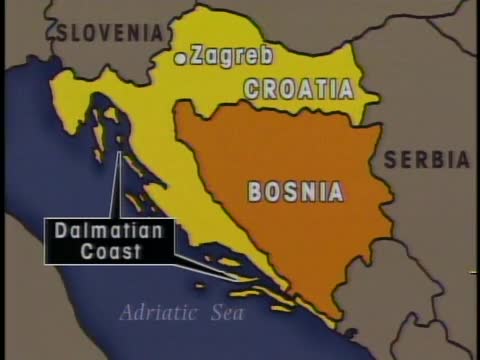
MR. LEHRER: Next, the story of Muslim refugees have fled from the fighting in Bosnia. Thousands have gone to nearby Croatia. But now the Croatian government is considering a policy that would keep them out. Special Correspondent Paul Martin reports from Zagreb.
MR. MARTIN: A van load of Muslim refugees arrives in the Croatian capital Zagreb from Bosnia. They're joining their families who've already fled into Croatia. But this may be the last group who can. Croatia intends to ban any more Muslims coming in. The Croatian authorities now plan to set up what they call "chance attempts," only letting Muslims cross into Croatia once third countries agree to find room for them, and they're seeking to find ways of getting many of the existing refugees to leave. It's a tough, new policy that even some of Croatian President Tudjman's political associates find difficult to justify.
ZVONIMIR SEPAROVIC, Former Foreign Minister: It's not easy for the Croatian government and population to have hundred thousands of people, of Croats, Croatian parties and Croats from central Bosnia, to be removed, expelled, many of them to be killed, and at the same time to take full care of 300,000 of Muslims, so it's conflicting situation. International Community should support Croatian government, the republics, and everybody in this situation not to take any premature measure.
MR. MARTIN: Many Zagreb citizens are uneasy with the government hard line on Muslim refugees.
ZAGREB CITIZEN: No. I don't think that we should torture the people more than they are refugees. It's enough they are refugees. We should not torture the common people that are living like us. I think we should not use them as a political, a political point, to just stick them in another country or try to put them in another place. They should stay here in Croatia and maybe in some refugee camp or something like that.
SECOND ZAGREB CITIZEN: It's revenge, just revenge to let them out, to send them out, to get them out.
THIRD ZAGREB CITIZEN: I think we have to think about it. We have to cooperate with Muslims, because our general enemy are Serbs.
FOURTH ZAGREB CITIZEN: But on the other hand, Croatia cannot the whole time tolerate the killings of Croats in Bosnia-Herzegovina from the side of the Muslims, so the situation is difficult, but we must not send the Muslims out of Croatia I think.
MR. MARTIN: Muslim refugees have been fleeing into Croatia since the war in Bosnia began last year, joining Croat refugees who escaped from areas overrun by Serbs in Croatia. Many refugees were housed along the Dalmatian Coast. Kramina Refugee Center is just one of many. The Adriatic Sea, blue and inviting, but this is no longer a holiday resort. Fourteen year old Amir is a Muslim refugee child who endured a Serb concentration camp. His father's still missing. Zoran, 12, is also a refugee, but from a Croat area now controlled by Serbs. Here, Muslim refugee children play happily with Croat refugees, unable to comprehend the ethnic divisions that have torn their country and peoples apart.
MR. MARTIN: [talking to children] Who are the Croats? Who is Muslim? Are you good friends?
CHILD: Yes, we are.
MR. MARTIN: Your fathers in central Bosnia are shooting each other. I mean, why?
CHILD: It is stupid.
MR. MARTIN: The refugees occupy wooden bungalows in the grounds of a former hospital. But many refugees living on Croatia's once populated coast line stay in former hotel rooms or leisure facilities. Mainly through United Nations aid money and partly through the Croatian government, refugees get a simple but sufficient supply of food. Now though they've been told they must leave this place, a decision that has alarmed and inflamed the refugees here.
WOMAN: [speaking through interpreter] What can happen no one knows. We're frightened, and we don't know what might happen. Maybe nothing, or maybe something terrible could happen.
MR. MARTIN: The official reason for the order to leave is to vacate hotels and bungalows for tourism, a claim that aid officials dismiss in an area so close to the battlefield. The refugees are bewildered. They were nearly removed two days before we found them when buses and armed special police arrived. But the Bosnian ambassador managed to intervene temporarily with the Croatia presidency.
OTHER WOMAN: I have been warned that it is the fighting going on in Bosnia-Herzegovina, which provoked them according to his statement, to issue to the Bosnian embassy [one] last warning: That all Bosnian Muslims are going to be expelled from the Republic of Croatia. And he said that as a first step the only offer I received is for them to go to one isolated island close to Sibenik, and shelling is going on in Sibenik.
MR. MARTIN: To reach the island that the Muslim refugees have been ordered to go to takes an hour by boat. The tents are spartan. It'll be cold in the coming winter. At least though, they'll have good mattresses supplied by the European Community. The big problem is water, brought in now by boat. The 370 refugees already here have to wash in sea water. The refugees, many of whom who have been tortured or imprisoned, come from the open spaces of Bosnia's rolling hills and find being cooped up on an Island hard to cope with, let alone having to hear shelling at a distance.
WOMAN: When you hear these shellings and it's reminiscent of past experience from one or six or tens months ago as many of these people have been coming in those time frames, it renews in you the psychological effects of your previous trauma.
MR. MARTIN: Further south, at Kramina, the refugees are going, but not to Ovinion Island, instead Pakistan has offered to take them. But they're very nervous of this exodus to a strange and unknown land.
MR. MARTIN: Are you going to Pakistan or not?
OLDER MAN: I go, yeah.
MR. MARTIN: Why?
OLDER MAN: [speaking through interpreter] I'm taking a risk, and I think it's a better solution to go than to stay here. Of course, the best would have been to go back to Bosnia.
MR. MARTIN: To the girls the idea of covering their faces is still just a joke. They don't think anyone will force them to do it. They may have been misled.
REFUGEE WOMAN: [speaking through interpreter] There were two men from Pakistan who came here. They said living conditions there would be beautiful. I still can't believe what I've just heard from those two Pakistanis, especially about the clothing. I heard that women must be covered, and I don't like that. I like to go around like this. I have two daughters, and I wouldn't allow anybody to make them cover themselves. I've also heard that women there don't have any rights.
MR. MARTIN: The refugees are almost all secular and European in outlook. Some families are simply refusing to go to Pakistan with its strong Islamic structure. They're also refusing to leave the camp. Children like Amir say they know nothing about what to expect if they go. But he is going, leaving his Croat friend, Zoren, unhappy and unable to understand. The United Nations Refugee Commission's field officer admits he's not pleased with the pressure that people are being put under.
HAKAM SHAWAN, UNHCR Field Officer: It's a different language. It's a different country for them. It's far away from their home in Bosnia, and our policy is to make people stay as close as possible to their home land.
MR. MARTIN: Altogether nearly 400 have now gone to Pakistan. Thousands more may follow as the Croatians step up their pressure on the Muslims. Amir is suffering the pain of yet another separation, a refugee for the second time. For everyone, it's a deeply disturbing journey. FOCUS - A NEW ERA?
MR. LEHRER: Now some analysis of the new man in Japan, Prime Minister Morihiro Hosokawa. In office for less than a month, he has already made some waves, and he made more today in a speech to parliament, apologizing for Japan's actions in World War II, promising to reduce Japan's trade deficit, reform Japanese politics, and make life better for ordinary Japanese people. The 55-year-old Hosokawa leads a coalition of seven parties that turned out the Liberal Democratic Party which had run Japan for nearly 40 years. Hosokawa symbolizes the old and new in Japan. He's the youngest prime minister in 20 years, and he enjoys such hobbies as skiing and western music. But he also descends from an ancient family of warlords. One of his grandfathers was prime minister when Japan invaded China early in World War II. For more on Prime Minister Morihiro we go to Ayako Doi, editor of the daily Japan Digest, and James Fallows, a former correspondent based in Japan. He's now Washington editor of the Atlantic Monthly and he's the author of a soon-to-be-published book about Asia. Does Hosokawa mean real change for Japan?
MS. DOI: I think so. I think it's not -- you may be mistaken to focus on Hosokawa, himself, because he represents the whole generation that's different from the post war generation, and he just became prime minister I wouldn't say by accident but by coincidence, certainly. It could have been either of several leaders of reform movement. And they would have had the same different attitude from the old leaders of the post war generation.
MR. LEHRER: Is it a reflection of just simply age, or is it a reflection of political belief that makes them different?
MS. DOI: I think that the generational difference means a lot in, in present Japan, all of post war Japan. The people who grew up with the war and the poverty after the war when Japan was a poor, little country trying to make it in the world is very different, have very different views of the world and Japan from the people of my generation --
MR. LEHRER: Sure.
MS. DOI: -- who don't know anything about the war, who learned about the war in history books, and --
MR. LEHRER: And Japan was a powerful nation from the moment they were born.
MS. DOI: That's right, and who have always been frustrated by what the old leaders said that we couldn't do.
MR. LEHRER: What's your overview?
MR. FALLOWS: In a strange sense, I have more appreciation for what Mr. Hosokawa has, has done than Ms. Doi does, and many other people of his generation sound much more traditional, much more old line among Japanese political leadership. So the fact that he challenged the LDP a year and a half ago and first broke away and that he's saying things now that a lot of others of his vintage aren't saying, that is impressive and is heartening. As for whether this does mean real change for Japan, I think that's an open issue. We'll have to see. It's like when the U.S. elects a President and says, yes, we're going to deal with the federal budget deficit. That might mean we're going to deal with the federal budget deficit, but it doesn't automatically mean that.
MR. LEHRER: Not necessarily, right, right. Well, but do you disagree with her about the generational change involved?
MR. FALLOWS: I think that in one level that's certainly true, that people who remember just the desperate years after the war of course have a whole different perspective from those who grew up in affluence, however, it's been a chronic tendency, especially in the U.S., to overestimate how much difference his generational change makes. I remember looking through an issue of Life Magazine published in 1964 about how the young people were going to transform Japan, so we have overestimated this so often I think we should be careful about doing it now.
MR. LEHRER: Let's go through the four big things that were in his speech today. He apologized for what Japan did in World War II. Is that a big thing?
MS. DOI: Well, none of the old political leaders have done. I - -
MR. LEHRER: Because they're simply not capable of doing it, does that make your point in other words?
MS. DOI: Well, I think the consensus among the old generation, people who fought the war, is that they were driven into the war. They were cornered by the, by the America and other western powers to fight for their life. And, you know, there's always, there's this bottom line feeling about this, which I believe that our generation do not have. I think if I were Hosokawa, I would, I would go a step forward to say that this, that it's not sufficient for just the government to apologize but for the whole Japanese people to think that it was, it was their country who did this, it was partly their fault as well to have let the political leaders go into the war.
MR. FALLOWS: To my mind, this was clearly the most significant thing that the prime minister said in his speech, and the one that historically will be the most significant, because in the rest of Asia, which economically is being increasingly integrated with Japan, and there's an emerging strategic sense in all of Asia, the great sticking point to any kind of dealings with Japan has been this pig-headed reluctance by the old leaders to say anything forthcoming about the war. It's been a very different situation from Germany, which has had to come to terms with its relations with the rest of Europe, its relations with Israel. Japanese leadership has not done that at all, and so the fact that, that there's this opening for the rest of Asia, I think it gives some strategic possibilities for Japan in the future that weren't there a week ago or a month ago, because we've made this offer.
MR. LEHRER: Would you agree with Ms. Doi that it should go another step though, or do you feel that when he speaks now he's speaking for the Japanese people? How should that be read?
MR. FALLOWS: I think that whether or not he speaks for the soul of the nation, the fact that the leader of the government is willing to say to the Korean and Chinese, look, we have some bad feelings about this here, we know we did something wrong, that is a big step in itself.
MR. LEHRER: Well, now, the other thing that of course gets the big attention here that he mentioned today that was in one of his four pillars was that he was going to reduce the Japanese trade deficit. That's a big deal here in the United States. Is it a big deal in Japan?
MS. DOI: Well, it certainly is, and the dollar -- the yen is going -- is skyrocketing and hurting the Japanese industries in the middle of the recession. I think good thinking Japanese all understand that Japan cannot live with this kind of a huge trade and, and current account surplus against the world. And I believe that the new leadership believes that too. Listen to the new trade minister who came in, and in the first day in office he said, Japan is -- Japanese market is closed, no wonder the Americans and Europeans complain about is, because it's so difficult for foreigners to do business here, our industry is collusive and the bureaucrats in the same sack with the big industries, and then we have to change, we have to live in the International Community. I mean, this is, this is a hell of a thing to say for, for the trade minister.
MR. LEHRER: Sure.
MR. FALLOWS: But this is I think a real contrast to the foreign affairs, because when it comes to making an apology to China, the prime minister can do that, himself. When it comes to reducing the trade deficit, or his trade surplus, he has amillion --
MR. LEHRER: I used trade deficit, but it's actually, it's a surplus, for Japan it's a deficit --
MR. FALLOWS: And it's not just with the U.S., but with the whole world.
MR. LEHRER: With the whole world, exactly.
MR. FALLOWS: And so then he has to deal with the rice farmers and the big industries and the carmakers and all the other power holders in Japan who have a stake in things being where they are, so his intentions seem good, but the execution I think is still open.
MR. LEHRER: Yeah. Well, the other thing was he was going to reform politics. That's not going to be easy, is it?
MR. FALLOWS: No. But I think it's a more immediate life and death issue for this coalition, because the way the LDP has stayed in power since 1957 --
MR. LEHRER: That's the Liberal Democrats.
MR. FALLOWS: Sorry, yes.
MR. LEHRER: The people who were there for --
MR. FALLOWS: The conservatives, known as the Liberal Democrats, they've stayed in power through a gerrymandered system that, that maximizes the power of, of political contributions from their supporters, and so they have to change the election rules to have a chance of, of winning larger majority.
MR. LEHRER: How bad are the politics in Japan?
MS. DOI: How bad?
MR. LEHRER: You're here in the United States. Compare 'em to the badness of American politics.
MS. DOI: Well, the problem of Japanese politics has been that since they adopted the, the multi-seat districting where from one district there are several politicians that are elected, it's not one, one person, one district, and, therefore, what happened was that the LDP, since the LDP was the biggest and very powerful party, they would stand three or four candidates and two or three of them will win seats from the same districts, and since they are from the same party and don't have any political issue differences, the only difference they could make was money, how much money they could distribute in the district. And that made politics very corrupt and the new people are trying to change that system into one seat/one district.
MR. LEHRER: Is that going to be hard to do? Is that something the prime minister can get done in other words?
MS. DOI: I think it has the best chance as ever. He has said in the first day in office that he will stake his political life to that, to make it done by the end of the year.
MR. LEHRER: But essentially wasn't that what got him elected, was that he ran against the corrupted political system?
MR. FALLOWS: With the old way. And the problem is that many of his crucial allies in this coalition are people who until about three months ago were standard bearers of the old way too, and so it's a very difficult negotiation he has to carry out to try to get them to change a system that's kept him in power for a long time.
MR. LEHRER: Now, the tough one, which is to make life better for the average Japanese citizen, how's he going to deliver on that?
MS. DOI: Well, I think he's talking about deregulation, getting rid of all the regulations and the administrative guidances that government has which are generally geared to benefit the industries and the Japanese industries rather than foreign. People are complaining that despite the fact that the yen has risen in value 20 or 30 percent since the beginning of the year. Their old LDP government refused to do anything about it when the electric power companies refused to cut rates, because they're buying cheaper, cheaper oil by more --
MR. LEHRER: There's no cause and effect. There's no --
MS. DOI: That's one of the first things that the new government said. They're going to pressure the electrical power companies to lower rates.
MR. FALLOWS: And here's a strange dilemma they face, that when Americans look at the Japanese economy, I think, well, in some ways it's so successful and in other ways it's kind of a failure, because people live badly. There is a direct connection between those two things. The exporters are successful largely because average people have so kind of modest a life where Japanese workers get less of a national income than American workers.
MR. LEHRER: So water did not raise the boat, in other words.
MR. FALLOWS: Yes. The water, the water was sort of funneled into the industries, and where it made a lot of productive investment. If he's going to change that, there's going to be a lot of resistance from those same industries, which are very powerful.
MR. LEHRER: Has he got the power to do it?
MR. FALLOWS: My bet would be no. I certainly wish him well. The world will be better off if he can change things there, but it will take a real revolution in power politics to have the strongest interest in that country lose ground.
MR. LEHRER: Is a revolution in power politics on the horizon? Is that what this is all about, or it could be a temporary figure?
MS. DOI: I think it is already a beginning of the revolution.
MR. LEHRER: And is that serious, is what Jim is talking about?
MS. DOI: Yes. And I think -- I agree with Jim in saying that it's going to be a difficult change, and it's going to take a long time. But --
MR. LEHRER: How long? Well, I mean, give me ball park. We're not talking -- I mean, how long would this movement that you think is moving in the right direction and has got some power behind it, how long would it take if they were successful all the way? How long would it take to do all of this?
MS. DOI: Well, the election system will probably change this year, and then the trade deficit, I mean, trade surplus will start coming down in two years, three years, and but what's more important is that Japan's structure of the economy and structure of the way people think, the way businesses operate will change.
MR. LEHRER: Right away?
MS. DOI: And it's already changing.
MR. FALLOWS: I'd say there's a different standard for what is the crucial change, which is whether elected politicians can control the very powerful government in Japan, which is mainly run by bureaucrats. That, there's only a little beginning of that now. If that really happened and people thought that their vote affected the national policy, that would be the real change. And that's the test we should watch for.
MR. LEHRER: All right. Well, thank you all both very much. ESSAY - PIONEERING VOICE
MR. MacNeil: We close tonight with some final words about journalist Bob Maynard, an occasional essayist on this program, who died last week. He was remembered today at a memorial service in Washington's National Cathedral. Our words come from essayist Clarence Page, a columnist with the Chicago Tribune.
CLARENCE PAGE: In a turbulent sea of tabloid television and sensational journalism, Bob Maynard's voice gave us an island of reason and calm, he made us proud to be journalists. Here at the Washington Post they still talk about how cool Bob could remain under fire even during the '68 riots. Martin Luther King had just been assassinated, the inner city was in flames, and off went Bob Maynard, one of the first black reporters to be hired by the downtown media. Like a Jupiter probe, he sent back remarkably detailed dispatches in a voice so deep and theatrical, he had the entire newsroom hanging on every word. Calmly and precisely he described the flames reaching up six, eight, now fifteen feet high, he said. An entire store was being engulfed, while looters, mostly children, raced in and out of the burning buildings, strangely unaware of the danger. "My car is now being surrounded by four gentlemen," Bob announced, "all of them apparently hostile. Now there are eight of them bouncing the car up and down. I shall leave the air momentarily until things settle down."
BOB MAYNARD: This sounds very much like the Democrats through much of the '70s and the '80s.
CLARENCE PAGE: Years later, on TV talk shows like "This Week with David Brinkley," the world would be hanging on Bob Maynard's authoritative, theatrical tones as he pontificated in the pantheon of punditry.
BOB MAYNARD: Those of us who came of age in the '50s remember a decade dominated --
CLARENCE PAGE: Or as a regular essayist for this program. For us younger journalists still in school when Bob was covering riots, Bob Maynard was a hero, a Jackie Robinson, blazing trails and taking leadership in a business that when he got started was still downright hostile to the idea of hiring blacks, even as reporters. But Bob didn't stop there. He broke another glass ceiling when he and his wife, Nancy Hicks Maynard, bought the Oakland Tribune, becoming the first black publishers of a major, big city newspaper.
BOB MAYNARD: We are a new company, with a new mission to be an outstanding institution of journalism for our communities.
CLARENCE PAGE: Breaking through ceilings, always testing the limits, was the story of Bob's life. Look down at the bottom of his lengthy award-filled resume, and you find the story Americans like to think can only happen in America, a boy from Brooklyn, the son of hard working immigrants from Barbados, a high school drop-out who learned reporting on the streets at 19 for a small black weekly, the New York Age. The high school drop-out later went to Harvard on a Newman fellowship, then the Washington Post, rising to national prominence as ombudsman and editorial writer.
BOB MAYNARD: A very wise man who is an observer of journalism once said, "All editorial writers ever do is come down from the hills after the battles and shoot the wounded."
CLARENCE PAGE: He helped initiate a boot camp to train other promising young journalists, mostly women and minorities, to be reporters, copy editors, and managers. I once heard him tell one group of young managers to remember this: "Though you will have problems in life, problems are only opportunities in disguise." He said it with remarkable conviction. I think he really believed it. He made me believe it. I'm told that when Bob died he was planning an essay for this program on the value of entrepreneurship. That sounds like Bob. I recall him saying his father's proudest possession was his truck, because it enabled him to have a business of his own. A true optimist, the mark of entrepreneurs of pioneers, Bob Maynard believed free enterprise works; it just hasn't been working for enough Americans. It was a problem, but also an opportunity. Bob didn't say much about his biggest problem, his cancer, until he thought he had beat it. But it came back and beat him. He died in his Oakland home last week. He was 56 -- too young. We'll miss him. Out of the ashes of America at its worst, he showed us America at best, keeping his cool, while others were losing theirs. He has set some high standards for us to follow in this business. I hope we do him justice. I'm Clarence Page. RECAP
MR. LEHRER: Again, the major stories of this Monday, two former Detroit police officers were convicted of murder in the beating death of a black man, and Croats in Bosnia continued to block United Nations aid shipments to Muslims in the southern city of Mostar. More than 50,000 people are believed to be in danger of starving there. Good night, Robin.
MR. MacNeil: Good night, Jim. That's the NewsHour for tonight. We'll see you again tomorrow night. I'm Robert MacNeil. Good night.
- Series
- The MacNeil/Lehrer NewsHour
- Producing Organization
- NewsHour Productions
- Contributing Organization
- NewsHour Productions (Washington, District of Columbia)
- AAPB ID
- cpb-aacip/507-2n4zg6gr2c
If you have more information about this item than what is given here, or if you have concerns about this record, we want to know! Contact us, indicating the AAPB ID (cpb-aacip/507-2n4zg6gr2c).
- Description
- Episode Description
- This episode's headline: Solomon's Choice; No Refuge?; A New Era?; Pioneering Voice. The guests include DR. ARTHUR KOHRMAN, American Academy of Pediatrics; DR. THOMAS MYERS, Loyola University Medical Center; DR. ALAN FLEISCHMAN, Montefiore Medical Center; RICHARD LAMM, Former Governor of Colorado; AYAKO DOI, The Japan Digest; JAMES FALLOWS, Atlantic Monthly; CORRESPONDENTS: PAUL MARTIN; CLARENCE PAGE. Byline: In New York: ROBERT MacNeil; In Washington: JAMES LEHRER
- Date
- 1993-08-23
- Asset type
- Episode
- Topics
- Economics
- Social Issues
- Literature
- Global Affairs
- Race and Ethnicity
- War and Conflict
- Health
- Religion
- Politics and Government
- Rights
- Copyright NewsHour Productions, LLC. Licensed under a Creative Commons Attribution-NonCommercial-NoDerivatives 4.0 International Public License (https://creativecommons.org/licenses/by-nc-nd/4.0/legalcode)
- Media type
- Moving Image
- Duration
- 00:57:57
- Credits
-
-
Producing Organization: NewsHour Productions
- AAPB Contributor Holdings
-
NewsHour Productions
Identifier: 4738 (Show Code)
Format: Betacam
Generation: Master
Duration: 1:00:00;00
If you have a copy of this asset and would like us to add it to our catalog, please contact us.
- Citations
- Chicago: “The MacNeil/Lehrer NewsHour,” 1993-08-23, NewsHour Productions, American Archive of Public Broadcasting (GBH and the Library of Congress), Boston, MA and Washington, DC, accessed April 2, 2026, http://americanarchive.org/catalog/cpb-aacip-507-2n4zg6gr2c.
- MLA: “The MacNeil/Lehrer NewsHour.” 1993-08-23. NewsHour Productions, American Archive of Public Broadcasting (GBH and the Library of Congress), Boston, MA and Washington, DC. Web. April 2, 2026. <http://americanarchive.org/catalog/cpb-aacip-507-2n4zg6gr2c>.
- APA: The MacNeil/Lehrer NewsHour. Boston, MA: NewsHour Productions, American Archive of Public Broadcasting (GBH and the Library of Congress), Boston, MA and Washington, DC. Retrieved from http://americanarchive.org/catalog/cpb-aacip-507-2n4zg6gr2c