The NewsHour with Jim Lehrer; January 23, 2007
- Transcript
I'm Jim Laera. Today's news, the Patreas hearings, Senator Warner, state of the Union speech rating, and pollution in China all tonight on the news hour. Good evening, I'm Jim Laera.
On the news hour tonight, the news of this Tuesday, then excerpts from today's confirmation hearings for Lieutenant General David Patreas, the man in charge of carrying out the President's troop buildup in Iraq. A conversation with Virginia Republican John Warner, the sponsor of a Senate resolution, opposing more troops, two takes on how to craft a state of the Union address, from two presidential speech writers, and an ITN report from China on pollution and the price of progress. Major funding for the news hour with Jim Laera is provided by. What Susie and I retire will be taking trips like this whenever we want, so good thing
would have been planned. At Pacific Life, giving you the right tools to help you meet your financial goals is what we're all about as you look to the future, look to Pacific Life. Pacific Life, the power to help you succeed, and by CIT, the Archer Daniels Midland Company, the Atlantic Philanthropies, the National Science Foundation, and with the continuing support of these institutions and foundations. This program was made possible by the Corporation for Public Broadcasting, and by contributions to your PBS station from viewers like you, thank you. President Bush will try to rally the nation tonight in his State of the Union address. He'll face that challenge when he speaks to a Democratic Congress for the first time, and with poll ratings at new record lows.
Mr. Bush is expected to urge support for his Iraq plan. He'll also call for cutting gasoline consumption up to 20 percent over 10 years, and he'll lay out ideas on making health care more affordable. White House spokesman Tony Snow told ABC News today the president is looking for consensus. President Scott, two years left in office, and he wants to get important business done, and he understands that there are problems that will not go away. Democrats came to Washington a couple of weeks ago saying, we want to demonstrate we can get something done. We're going to give them an opportunity, and we're going to give them an opportunity to do so in a way that doesn't explode the budget, but instead gives people better options for their future when it comes to these things. Democratic leaders also talked of consensus today. House Speaker Pelosi spoke this afternoon. Tonight, I hope to hear what all Americans want to hear, a message of optimism and hope of working together in a bipartisan way to defend our country, to care for our children, to grow our economy, and to preserve our planet.
I look forward to initiatives that the president may present that we can work together on. Democratic Senator Jim Webb of Virginia will give the response to the president tonight. We'll have more on this story later in the program. We'll also have complete coverage of the State of the Union Address and the Democratic Response starting at 9 p.m. Eastern Time on most PBS stations. The U.S. Commander tapped to take over in Iraq acknowledged today the situation is dire. Army Lieutenant General David Petraeus spoke at his Senate confirmation hearing. He said, there are no easy choices. The way ahead will be very hard. Well, I've extended excerpts of the hearing right after this news summary. The U.S. Army and the Marine Corps acknowledged today Iraq has strained their ability to respond to another crisis. The service leaders appeared at a house hearing. The U.S. Marine Commandant General James Conway was asked directly what happens if there's a new emergency.
Sir, we feel that there is risk. We feel like that we would be able to respond with those forces that are not committed to Iraq or Afghanistan, that the response would be slower than we might like, would not have all of the equipment sets that ordinarily would be the case, and there is certainly risk associated with that. The Army also estimated today will cost $70 billion to increase its overall size. Defense Secretary Gates has recommended adding 65,000 soldiers over five years. He also wants to add 27,000 Marines. But there was no cost figured today for that part of the plan. A helicopter owned by a U.S. security firm crashed today in central Baghdad, five civilians on board were killed. An Iraqi defense official said it was shot down over the Fadil section, a heavily Sunni area, but a U.S. military official said there was no indication of hostile fire. Elsewhere, a pair of bombs exploded in separate Shiite districts of Baghdad.
Five Iraqis were killed, and the deaths of three more American troops were announced to soldiers in one U.S. Marine. A suicide attack in Afghanistan killed as many as 10 people today. It happened outside a U.S. military base in the city of coast near the Pakistani border. The bomber blew himself up and a crowd of Afghan workers waiting to enter the base. There was no word of any U.S. casualties. It was the worst attack in Afghanistan in four months. Mass protests in Lebanon turned violent today and paralyzed the capital city of Beirut. Hezbollah supporters burned tires and cars to enforce a general strike. They fought with supporters of Prime Minister Sinara, who is backed by the United States. A member of Hezbollah's political bureau said the protests sent a clear message. A member of Hezbollah will not be able to continue, and the Lebanese people will not allow them to monopolize the authorities.
They should comply to the will of the Lebanese people, and not rely only on foreign support. Three people died in the violence and dozens were hurt. In response, the Prime Minister vowed he would stand firm against the protesters and Hezbollah. The strike today exceeded all limits, and turned into a provocative action, similar to that displayed during sedition and foreign controls. The pro-Syrian Hezbollah and its allies have demanded a new coalition government that gives them more power. Ethiopian forces began to withdraw from Somalia today, military trucks and tanks were seen leaving the capital city of Mogadishu. They had helped Somali government troops drive out Islamic fighters. The African Union has agreed to send 8,000 peacekeepers to replace the Ethiopians. The first units are to arrive within a week.
The trial of Louis Scooter Libby got underway in Washington today, with opening statements. Vice President Cheney's former chief of staff went to Federal Court in Washington, accused of perjury and obstruction. The charges grew out of the CIA leak case. Libby's defense said White House officials blamed him for leaking a CIA officer's name to cover for presidential adviser Karl Rove. He has not been charged. Special prosecutor Patrick Fitzgerald said the truth is Libby disclosed the officer's name and then lied about it. State farm insurance will settle hundreds of lawsuits filed by victims of Hurricane Katrina and Mississippi. The company confirmed today it reached a settlement. It would not discuss terms of the deal. The suits involved state farms refusal to cover damage from Katrina's storm surge. On Wall Street today, the Dow Jones Industrial Average gained more than 56 points to close above 12,533 than Aztec rose a fraction of a point that closed at 2431.
Watergate figure E. Howard Hunt died today in Miami. He had been ill with pneumonia. Hunt went to prison for helping to organize the break-in at Democratic National Headquarters in 1972. It grew into a scandal that forced President Nixon to resign two years later. E. Howard Hunt was 88 years old. And that's it for the news summary tonight. Now the new general in charge, Senator Warner, writing state of the Union speeches, and China's pollution problem. The man who will command American forces in Iraq, news hour congressional correspondent Kwame Holman, begins our coverage. Lieutenant General David Petraeus went before a mostly skeptical Senate Armed Services Committee this morning and acknowledged that the plan to send more American troops to Iraq
may not bring quick success. None of this will be rapid. In fact, the way ahead will be neither quick nor easy and their undoubtedly will be tough days. We face a determined, adaptable barbaric enemy. He will try to wait us out. In fact, any such endeavor is a test of wills, and there are no guarantees. Once confirmed by the Senate, Petraeus would begin serving his third tour in Iraq since 2003. He led the 101st Airborne Division and won praise in Congress and the media for the occupation of Mosul and for his efforts to train Iraqi security forces. In 2005, he returned to the U.S. and helped author the Army's counter-insurgency manual. Today, Armed Services Chairman Carl Levin repeated concerns the Iraqis won't live up to their end of the bargain in the President's plan. It's critically important that that pressure be felt by the Iraqi government. They have not complied with previous commitments that they've made.
I'm very doubtful as one senator that it's likely they're going to carry out the other commitments that they have made. I just think history should make as very dubious about the likelihood that they are going to carry out these critically important commitments in the political area as well as the military and economic area. Several senators voiced worries about who would be in charge of the joint U.S.-Iraqi patrols and whether the addition of 21,500 troops would be enough. Your numbers by any estimate or formula that you use that you're receiving are either inadequate or bare minimum, does that concern you? It does, sir. If you look at the counter-insurgency manual, for example, and you have the one-to-fifty ratio of counter-insurgence to citizens, you'd say that, well, for Baghdad's population, you should have somewhere around 20,000 security forces. If you add all of the U.S. forces that will be on the ground when we have the full increase
in forces, including special operations forces, all the Iraqi forces, military and police, you get to about 85,000. Not all of those are as effective as we might want them to be, particularly on the police side. As you know, however, there are tens of thousands of contract security forces and ministerial security forces that do, in fact, guard facilities and secure institutions and so forth, that our forces or coalition or Iraqi forces would otherwise have to guard and secure, and so that does give me the reason to believe that we can accomplish the mission in Baghdad with the additional forces. Independent Democrat Joe Lieberman said impending congressional resolutions opposing the president's plan could be a setback for the American troops fighting on the front lines. I want to make a plea to my colleagues in the Senate. I understand that the trains are on the legislative track and they're heading toward a collision,
but I want to urge my colleagues to consider your testimony this morning and to put the brakes on. In my opinion, receive unanimous or near unanimous support, and you should, you deserve it from this committee and from the Senate. But I fear that the resolution of disapproval will send you over there with us saying you're a good and great general, but we don't agree with what you believe we need to do in Iraq. And so I want to appeal to my colleagues to consider with regard to the resolutions of disapproval or the caps on troops or the cut off of funds, to step back for a moment and give you a chance and the 160,000 American soldiers you will be commanding a chance, perhaps a last chance, to succeed in Iraq. If God forbid you are unable to succeed, then there will be plenty of time for the resolutions of disapproval or the other alternatives that have been contemplated.
Main Republican Susan Collins is a co-sponsor of one such resolution filed yesterday with Republican John Warner of Virginia and Democrat Ben Nelson of Nebraska. General, the American people are not divided in support of our troops. The American people are not divided in wishing you all the success in the world despite our disagreement with the strategy. And I must say that the resolution that I've been working on with Senator Ben Nelson and Senator Warner is very clear in expressing support for our troops. And I don't think it's going to come as any surprise to the enemy that the American people are in fact deeply divided over this strategy. Pressed on whether the Iraqis were ready, Petraeus offered a cautious response. Do you have confidence that the Iraqi military can step up and do finally what we've
been anticipating and hoping that they would do for the entire period of time that we have been inside of Iraq? Sir, in response to those questions, having not been in Iraq for some 16 months, and although I do know and have worked with a number of the Iraqi leaders in this government, I do not know Prime Minister Maliki personally, and I will have to determine for myself. We will obviously have to have a number of close meetings and relate developer relationship, and that support from the Iraqi government is absolutely critical. As you mentioned, military force is necessary but not sufficient. The sufficient piece is the additional political component, and again, that is something that I'll have to determine the presence of as I get on the ground. The same, frankly, with the Iraqi security forces, again, having been out of Iraq for 16 months, one of the tasks I will have to undertake is, in fact, to assess their state
at this point in time. The fact is that they've received reasonable training and they've received reasonable equipping. Both of those can always be improved and the equipment does need to get more robust over time, although they have received thousands of armored Humvees to my understanding as an example. But what I will have to do, again, is to determine the will component of this. Military forces, as you know, to be effective, have skill and will, and what we will have to determine is the presence of both, but the will component will be the most important. Patreus' promotion to the Iraq job and the rank of four-star general is expected to get quick confirmation by the full Senate. The general said he will head to Iraq promptly afterward. Margaret Warner has more. For more on General Patreus, the man, the soldier, and the mission he confronts, we hear now from two Army officers who've known and worked with him. Retired Army Major General William Nash, he's now a senior fellow at the Council on Foreign
Relations and retired Army Colonel Douglas McGregor, author of two books on Army Transformation. He's now an independent businessman. Welcome to you both. General Nash is General Patreus the right man for this incredibly tough job. Well, I don't think we, on paper anyway, can come up with anybody any better. He's well-qualified in terms of experience and education, both in terms of operations in Iraq, and the opportunities had in the last 16 months to think through all the issues, especially of evolving around the writing of this manual that so many people have talked about. Can't think of anyone better? Well, General Patreus is the latest in a series of officers selected by the retired four-stars and presented to the administration as the ideal candidate. A couple of years ago, Senator McCain made the statement that General Sanchez and Abazade were probably the two best generals we've ever had.
I don't think Senator McCain would make that assertion today. They've presided over a disaster. General Casey is now left, and Senator McCain is actually talking about blocking his nomination to be chief of staff of the Army. This leaves us with General Patreus. What do we know about him? Well, I would say he comes with this job with three strikes against him. And let's set the effusive praise aside that we've heard before with General Abazade. Number one, he commanded the 101st Air Mobile Division on the way to Baghdad. It was a singularly-undistinguished command. He is Assistant Division Commander at the end of the operation, was so disappointed in the failure of the 101st to contribute much to the outcome that he said, the fifth corps had fought the war essentially with one hand tied behind its back. The third Infantry Division had carried the fight. Secondly, he goes to Mosul, and he worked very hard to demonstrate his sensitivity to the cultural differences, to work on a whole range of issues. But we also know that some people would say, within hours of the 101st departure, the area reverted to insurgent control, actually speaking it, the insurgents simply took it over.
And then finally, you have the training of the Iraqi Army. The Iraqi Army today is by anyone's definition, a disaster, and it is substantially his creation. That's quite a litany, that sounds like a litany of failure. How do you see his experience in Iraq? Well, I think if we just take him in order, the fighting of the war, if you look at the operations of the 101st Airborne Division, it complied with the orders it was given, and the corps fought the battle, his bosses fought the battle they wanted to fight. And I know they were somewhat frustrated, the 101st thing it is that they didn't get into more of a scrap. But I don't think you lay that on General Petraeus. That's other folks that need to account for the operations that took place in the war. My view of Mosul is considerably different when General Petraeus was up there, and I visited with him in September of 2003 in SAWS operations. I thought they were very mindful of many of the things that he has since written in the
manual. He was working the politics, he was working the economics, and he was working it without a lot of help from above, because he had his piece of territory, and he was doing his thing. And I think he was extremely successful. There's no doubt that as he departed, the insurgency, which was growing in the south, moved north. And his 20,000-man division was replaced by a brigade-sized organization of about 6 to 7,000 folks. So a considerable change in American strength, and I would attribute that, and it certainly didn't happen the next morning after he left. The charges about the training of the Iraqi army are of deep concern. But the lay that on the shoulders of one man, I think, would not be to not understand much larger issues, a lack of resourcing from the United States government, and a lack of a political environment, or the conditions within Iraq that would allow a soldier
to build an army. He shares in the difficulties there, but then again, it has been 16 months since he left. Let's look at Mosul more deeply here, because there he really, he had his man going into the neighborhoods, did he not, trying to use less force, more persuasion. He had, as I understand it, little precinct bases, much like it sounds like what they're hoping to do in Baghdad. One, do you think, at least, that the, I take your point that after it ended, Colonel McGregor, it didn't last, but do you think that the strategy and approach itself worked and can it be applied in Baghdad? No. First of all, in Mosul, when he arrived with order and first, there was no insurgency. That area was fairly Pacific. I spoke with some soldiers and order and first, who'd been on patrol, and they talked about patrolling there for over 30 days without any incident until finally they were approached
and someone at a marketplace walked up and it perfectly said, do you see a problem here and they said, no, and they said, well, then why are you here? The next day they had their first RPG attack on the patrol. Soldiers said, we were not attacked. We did not patrol because we were attacked. We were attacked because we patrolled. Take that to Baghdad, now, because that's a good way to go to Baghdad. And now you have an absolutely hardened population against you. We are hated in that country. The Sunni Muslim population has good reason to hate us based upon how we've treated them over the last couple of years. But the Shiite population has joined that particular throng. We have no friends, if you will, sending men with rifles and small numbers to go into these neighborhoods, to stay in these neighborhoods is a very, very dangerous thing to do in my estimation. We could end up taking very serious casualties. We don't know.
We can't predict the future. But this is not the environment that General Petraeus found when he got to Mosul. How applicable do you think it is, General? Well, I think, doctrinally, it is very applicable. Now the story of Mosul changed over time. While I was there, it was after the bombing of the UN headquarters, the insurgency had begun. And there was, in fact, security issues in the area. But frankly, the best way to defeat an insurgency is not to allow it to start. And that was the process that General Petraeus was going through. But Colonel McGregor's points on the challenges in Baghdad are certainly true. This is going to be much more difficult, because the insurgency has begun. The civil war is going on, and it's going to be a terribly difficult task. He also mentioned that even according to his own doctrine, he would require a lot more forces than he's going to have. Absolutely. And this is a high-risk operation. There is no doubt about that.
And it is problematic whether any person, General Petraeus or anyone, could be successful or would be successful in these circumstances. Let me ask you both about the political component, because a big part of this will obviously be getting Prime Minister Malachi to commit the forces necessary and so forth. How good is he at that? Well, first of all, let's be frank, what is the situation that we are in today? We are a political football for the Sunni Muslims and the Shiites. We were welcome as long as we helped to establish a Shiite dictatorship. But do you think we need? If we don't do that now, we're going to find ourselves in conflict with the Shiites. But do you think that he has the skills to do, if it can be done, to be persuasive with the Iraqi leadership, to get them to do what needs to be done? Well, he's very charming, but I don't think that's going to make much difference at this point, because there are other more profound interests at stake in that country. Well, I think Doug brings up the key point, no matter how good he is, and to answer your question, Margaret, he has great political skills.
We saw a lot of it today. The fact that he was able to stand back and allow that political dialogue to take place in front of him and not engage in it was a sign of wisdom that will be very useful in Baghdad. And he does know a lot of the players. He said he doesn't know Maliki, but he knows a lot of the soldiers. He comes back with a reputation, I think, mostly positive. One of my Iraqi students at Georgetown today was going through the website for me, looking at what the Sunni groups and the Shia groups were saying about it. And overall, they're very interested in a little bit apprehensive on what he will bring here. That's not the lesson, the challenge, and the United States is in a strategic position that is most difficult in no one man with a mere 21,000 more soldiers is necessarily going to make the very secret questions he was asked repeatedly today. If you think it's not working, if you think you don't have what you need, will you have the courage or will you have the honesty to come and tell us?
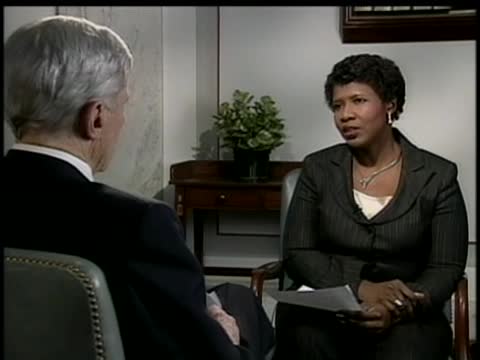
Do you think he will? Well, if he runs through the course, I think he will probably once he encounters serious resistance as for more troops. I think he'll speak up. There'll be no doubt about it. He will stay focused on the mission and try to work the problem, but he'll speak up. General Nash, Colonel McGregor, thank you. So coming tonight, two former speech writers look at State of the Union addresses, and there's a report on China's pollution problem. And this interview with Republican Senator John Warner of Virginia, one of the advocates of a congressional resolution on Iraq. When I spoke with him, this afternoon at the Capitol. Senator Warner, thank you for joining us. My privilege. The resolution of disapproval that you are sponsoring, you said it was not meant to be a confrontation with the president, but it is a rejection of the president's policy.
Is it not? No, no. Let's read the four corners. First, the president, when he laid down his plan on January the 10th, explicitly invited any members of Congress who so desired to make recommendations, our resolution is not a confrontational document. Secondly, we do not call for any reduction in the current level of troops. Nor do we suggest that there's any timetable. We don't even use the word of withdrawal. We simply say, Mr. President, we disagree with that high level that you suggest, the 20,500. And Mr. President, we urge you to go back and look at all the options whereby you can possibly employ fewer troops. And further, Mr. President, as you undertake nine different geographic areas of Baghdad, you'll start with one or two, and then sequentially in a period of time with additional troops, go to the next and next.
Let's take a look at the action in the first instance and determine if the Iraqi government and the Iraqi troops did the job that Prime Minister Maliki promised, one, they all arrived. It didn't arrive, as you know, in the previous Baghdad search operation in the summer, certainly not in the numbers they committed. Secondly, once those troops are in action under the joint command of an American with the American troops and an Iraqi with their Iraqi troops, the political arm of the Maliki government doesn't reach in and say, stop this or don't do that or release this prisoner, that's over and gone as we understand it. And lastly, I'm concerned about the American GI, man or woman, being injected into the sectarian violence of Sunni firing on Shia, Shia firing on Sunni and trying to kill each other.
We gave them their nation. It is a sovereign nation now. We're there to try and make that government succeed or whatever successive government may come on. But not the GI to get into religious controversies, the hatred, the animosity that has grown up between these two factions, two cultural parts of the Muslim world. That's the current government, is it capable of doing the kinds of things you would like it to see in the next, but 60 days? You know, just an hour ago, I was before a panel in open session of the Congress in the Senate. If the intelligence team, the top team, I asked them precisely, give us your best estimate as to the viability of the Maliki government to carry forth and fulfill its commitments. It hasn't been fully answered yet to my satisfaction. I am concerned that he has made a lot of promises which haven't been fulfilled. He has failed to take such enormous dollar benefits that we have given to Iraq and improve
the daily life of its citizens, be it medical care, education, clean up the streets, and bubble security. So there's not been a record of success. And this is what concerns me because we're putting a big bet on the Maliki government being able to deliver with this new plan to the President. As a matter of fact, much of the plan we're told was to arrive from Maliki's suggestions to the President. Now, all we've had by Maliki is words. We want to see deeds, and that's why our resolution says, let's look at the first military operation, the first section of Baghdad, and if they have not met their benchmarks and commitments, then Mr. President, we better sit down and rethink whether we go to the second or third, and the fourth, and the fifth, and sixth, and seventh, and the ninth. You think the United States should be imposing benchmarks, time tables?
We're committing our young men and women. It seems to me it's essential. We're committing our... The President has said otherwise. What do you mean? He has said he doesn't believe that time tables were benchmarks. I didn't say time tables. You used the word benchmark. I feel very strongly that should be benchmarked. benchmarks, which are specified, so we know beforehand what they are, and benchmarks that they must meet in this senator's judgment, if we're going to continue successive operations in Baghdad. Tonight, the President delivers the state of the Union's speech, and today there are a raft of polls out which show that Americans believe the President may be inflexible on this, and perhaps it's not listening to people. Do you think the President's listening? I went to three or four meetings with the President prior to he's laying down the plan. I think he listened very carefully, not just to this senator, but to all of us in the realm. So I think he listens, but you come back to the American public. I'm very responsive.
I'm not one that's guided by polls, but I listen carefully, and I think it's essential. We have the public. They support the troops, and that's the difference between Vietnam. They somehow lost support for the troops when those young men and women came back. I was Secretary of the Navy then. I saw that. We do not want to repeat it that. Unfortunately, we have the strongest support in the American public for the troops today. But for the strategy, I think it's also essential to have the American public understand what other risks associated with this new plan, and to manifest their own support in it. Likewise, we should have the highest level of bipartisanship here in the Congress to support the President's program. This is one of the reasons that I put that resolution in, to point the need out for that type of support. Americans watching this action this week on the Senate say there are a million different ideas about how to respond to the President's plan. Are you telling me that you're all trying to come to some sort of common conclusion
agreement? I don't think it's a million, but there are several plans out there. And I say they should be considered. I think it's important that we have a debate and conduct that debate in such a way that it's not injurious to that fighting man or woman, whether it be in Iraq or Afghanistan or wherever it might be, but it is constructive showing the role of the Congress concerned about their welfare and putting them into such situations as sectarian violence. I think the Iraqis ought to take that mission on. Take our brigades and put them out where the Iraqis in Iraq are now stationed, bring their troops from other areas, and bring them to Baghdad. We trained over 188,000 of these individuals. Certainly they got to be 20 and 25 or 30,000 that can be moved from one area. They are moving some, but they should move more and let our troops take over where they were while they come and take on this sectarian violence.
How significant is it at this stage of the President's term? Is it that senior Republicans, such as yourself, are raising major questions about his policy in Iraq? That's our duty. We're co-equal branches of government. We're not a parliamentary system like Great Britain where everybody is of the party, of the Prime Minister, with the opposition party on the other side. We're a separate branch. We're proud. I've been supportive of the President through these many years, tough decisions, but I think he's been right in many instances where he hasn't been right. I've spoken out on it. Look, I came back from Iraq in the opposite October of last year, and I said quite frankly, in a press conference, this situation is not improving, it's worsening. It's moving sideways, it's directionless. And that caused quite a stir around here. As did others, I'm not just taking claim for it. And the President quite correctly and responsibly said, every section of his government stayed defense.
Chairman of the Joint Chiefs, his own staff, let's go and re-examine this strategy to see if a new one should be put in place. And he has done that, and I commend him for the procedures he went through. I simply say now, Mr. President, with all due respect, here are heartfelt ideas for possible modification. Senator Warner, thank you very much. Thank you. Now, state of the Union addresses and array swar as. President Bush heads into his sixth state of the Union address this evening with a stiff political wind in his face, his job approval rating is the lowest it's been for any of his previous speeches, 33 percent approval in today's Washington Post-ABC poll. This plan to increase troop levels in Iraq has been met with skepticism by the public and criticism from the majority Democrats and a growing number of Republicans in Congress.
So tonight, Mr. Bush will also try to turn the spotlight on domestic issues like health care, energy efficiency, and fiscal restraint. But the President's aid say the public wants action on these issues and so should Democrats. His White House spokesman Tony Snow. George W. Bush is a President and it's not somebody who is going to cease to be bold because right now people are concerned about the progress of the war. Thank you very much. This evening will be a far cry from the atmosphere surrounding the President's first state of the Union in January 2002, just four months after the 9-11 attacks. Then President Bush had a majority of the Congress and the American people behind him. As we gather tonight, our nation is at war, our economy is in recession, and the civilized world faces unprecedented dangers, yet the state of our Union has never been stronger. However, by last year's address, the political environment had changed dramatically.
The Iraq insurgency was raging, and the majority of Americans were demanding a change in military strategy while Republicans support for the most part remains loyal and polite. As we make progress on the ground and Iraqi forces increasingly take the lead, we should be able to further decrease our troop levels. But those decisions will be made by our military commanders, not by politicians in Washington D.C. Tonight when the President's discussing health care, immigration, or energy, it will be interesting to watch how often one side, the other side, or both sides of the chamber, stands to signal its approval. So how does the President craft an effective message for this evening? For that, we're joined by Clark Judge, former speech writer for both the President and Vice President during the Reagan administration. He's now the Managing Director of the White House Writers Group Consulting Firm. And Michael Waldman, he served as director of speech writing for President Clinton, and
currently as the Executive Director of the Brennan Center for Justice at the NYU School of Law. Clark Judge, let's go back to your White House, we're a couple of hours before the State of the Union addressed. Are you done? Are you finished? Finished several days earlier. The President's been rehearsing, he may have tweaked things himself, made some minor modifications, but at this point it's rehearsal, get it right, relax, and get ready to put on a good show. And as the speech writer, you're not part of that part of it. You may or may not be, it depends on the year, it depends on the President, but the important thing is for him to get in the zone and be ready to put on a good show to be as good as his text. Michael Waldman, here we are, on two and a half hours before the Sergeant in Arms, welcomes the President to the chamber, are you done? Well, under President Clinton, it might be a somewhat different rhythm. He would be working on the speech, rehearsing, and rewriting from the podium up until the
day of, and asking questions, and as most Presidents do, using these speeches to probe his own government and find out the political direction and try to set a stamp, so he was working till the last minute. So you're working pretty much until he gets up to that lecture. Pretty close. Well, Michael Waldman, depending on the prevailing political environment, what's happening in the world outside that congressional chamber, is there more or less pressure on the speech writer to turn the speech itself into an event, perhaps, a momentum-changing event? Well, these speeches have taken on a very great significance, because they are in this day and age just about the only time that a President gets to talk directly to the country at any length about policy, and there is a thirst that citizens have to hear directly from their leader, their leaders, and not just hear it all sliced and diced by the media. Now, Bill Clinton had a Congress controlled by the other party for most of his presidency.
There was often a great deal of tension and drama, but I can't remember too many times where there was such a sharp split between the Congress and Bill Clinton, the President on an issue as big as Iraq. How about you, Clark Judge? Did it feel different? Was the job and the assignment different in years when things were perhaps going tough, maybe Reagan's speech right after Iran, Contra broke, or that kind of thing? Well, yeah, sure. After Iran's contract was a difficult state of the union address, the next year it was much easier. But to look at tonight's address in that context, the having a Congress of the other party in a time when public opinion is questioning the President, both President Clinton after the Lewinsky Affair broke and President Reagan after the Iran Contra Affair broke faced those kinds of difficult state of the union addresses, just as President Bush does now.
In each case, in President Reagan's case, and in President Clinton's case, they overcame those challenges. They worked with the Congress once that was behind them, and they had successful final years to their presidency. The same opportunity is present for President Bush. Things go well in Iraq, that's going to count obviously very big. Also the programs that the White House has put out are all areas where you can imagine the Republicans and the Democrats and the White House working together in some combinations and putting through legislation. And if we got anything besides Iraq out of the 2006 election, it was that the public is fed up with partisanship. They want the various branches of government and the parties to work together to address serious issues.
The Democratic leadership in Congress has got that message. The Republican leadership in Congress has got that message. So we're in a position where just as with President Clinton and President Reagan, we could see a very productive final two years for President Bush. Michael Wollman was setting those themes in place in the last couple of Clinton speeches. Part of the assignment for the speech writer? Oh, sure. You really work for months at a time and you try to find some overarching themes and some broad public arguments that will both prevail with the public and try to prevail, as Clark said, with the Congress and find ways to work with the Congress. And I do agree that there will be times we'll hear tonight about, say, immigration, an issue where President Bush and the Democrats in Congress have more in common in many respects than the President and the Republicans. But I differ with Clark in one significant degree. Neither President Reagan nor President Clinton had an issue as divisive as Iraq is right now. This past election, I would say, was a mandate among other things, but most prominently
on the war and on the President's conduct of it. And you don't hear a cry from the public as clear as that in our system. You've got a Congress taking one view. You've got the foreign policy establishment now in the form of the Baker Hamilton Commission sharing that view, the public shares that view. And normally, the way Bill Clinton and Ronald Reagan and other Presidents dealt with a newly elected opposition Congress was they found a way to sort of tack toward that Congress. And with the speech last week calling for an escalation in Iraq, President Bush in effect went the other way. And I can't imagine that our friends who are now the White House speechwriters in this administration expected the President's political support to crumble the way it has since their first speech. So they have a real challenge ahead of them. John Warner and an audience of John Warner's don't make it any easier for President Bush. Michael mentioned just now that he was working on it for months.
How is the content assembled? Who says what's in that speech, Clark Johnson? Well it starts with an identification of key areas that a President and his senior advisors want to hit. Then the speechwriters interview senior staff, the interview, support staff within the White House on each of those areas may even speak to members of the cabinet and members of the sub cabinet. And then produce a draft. Sometimes it's one writer, sometimes it's the whole staff working on different parts. Then it goes into staffing, which where the differences among staff have to be worked out. One of the roles of speechwriting, one of the roles not often appreciated, is as mediator and negotiator among all these factions in the government that sometimes will edit in absolutely diametrically opposed ways. When all of that's worked out, those things that can't get worked out get appealed to the
senior staff, to the president really, and who is responsible for the final draft. Michael mentioned that President Clinton was often rewriting right up till the end. Each White House does things differently. President Reagan was more disciplined and had a more of a process in place. So that wasn't part of our routine. President Bush does a lot of editing himself, but is also more in the Reagan mold in terms of discipline versus the Clinton mold in terms of a lot of last minute work by the president himself. But the one thing I'd like to say is just that the president has right now a period of six to nine months to prove himself. That's what he got from the last speech, and that's what I believe he'll confirm tonight.
Senator Warner, other senators, are skeptical, but they're ready to give him that time. How he performs in that time will have everything to do with the success ultimately as we look back of this speech as well as of this administration. Michael Wollman in recent decades, the speeches have been shot through with passages that brings one audience or another, some subset of the crowd in that room to its feet. Do you know what those are when you're riding them or have there been moments where people jump to their feet and you're watching on TV thinking, gee, I didn't think they were going to do that. Oh, sure. It's quite something to watch the president play the audience in a way like a giant whirlitzer organ. You know which parts are going to appeal to Democrats, which will appeal to Republicans, which will be things that appeal to both parties, and I wouldn't be surprised if you hear a lot of those, especially early on, to try to bring people together in a note of solidarity. One of the things that happens is people watch the Speaker of the House.
She is now the face of the Democratic Party, and just as Newt Gingrich was standing behind President Clinton or Tip O'Neill was standing behind President Reagan. She will register her party's views by whether she applauds or not or whether she smiles or not. And you'll see a lot of Democrats in Congress watching her for the cues. And when in 1998, one of the speeches I had the chance to work on, President Clinton in the middle of the Monica Lewinsky scandal one weekend to it. There was the brand new budget surplus in the Congress, the Republicans in Congress wanted in effect, we believe, to spend it on a tax cut. President Clinton said, well, let's have a simple forward answer. We should save Social Security first. And when both parties stood up to applaud, at that moment, a trillion dollars shifted in the budget from the column marked tax cuts to the column marked Social Security. Michael Wollman, we're going to have to fight with the others. Thank you very much. Judge, thank you. Finding tonight the environmental cost of progress in China, Lindsey Hill, some of Independent
Television News reports from two cities, each about 100 miles from Beijing. Guess they are pastoral scene, coke smelters and steel plants where they used to be grazing land. The government environmental watchdog in Beijing has told the Tang Shan local authorities to stop building, but new factories are going up all the time. The people are getting desperate, their crops die, they say. And in this community of three thousand, seventy people, including many under forty, have had strokes, medical studies show a correlation between stroke and air pollution. Way when Zhang was thirty-seven when he suddenly blacked out while driving his taxi. Seven years on, he can manage a few household chores, provided he takes it slowly. He can't work, so his wife has to provide for the two children.
His brother, his also had a stroke. We drink the water that's polluted by the factory, there are test reports on that water. Also whenever we work in the field outside of the factory, we come home, covered in coldness. The factory is dumped their garbage out in the open, Lee's world Jewish showed us around. He's turned from farmer into campaigner, filing endless reports and petitions, but to no avail. Environmental inspectors came from Beijing, he said, but went away and did nothing. Factory owners frequently bribe local officials or go into business with them. Whenever environmental directives come down from Beijing, it seems that here in Tangshang, they take no notice. Local officials carry on approving factories, even though they've been told specifically that they may not build any more.
And as for those who are sick, apparently because of the pollution caused by those factories, they're just seen as necessary sacrifices, the unfortunate casualties of progress. The 2006 Green China Championships, a TV extravaganza sponsored by the State Environmental Protection Agency, and introduced by three tennis singing, I Dream of a Green China, we will build a paradise on the debris. They're growing into images of an idealised ancient China, you're in nature. The government is using events like this to try to spread the environmental message and make it popular. One of the awards went to a well-known campaigner on water pollution, but the new message doesn't seem to reach the village of Xi Jinping, where paints and chemical factories discharge effluent directly into the river Yong Bing.
Some of the worst polluters have closed, the villagers say others just hide their waste pipes underground. Mr Zhao works as a mechanic. He never earns enough to pay off the medical bills he incurred after his wife was diagnosed with a brain tumor. The official figures say the cancer rate in Xi Jinping is 30 times the national average. Filming districting, we weren't looking for the village chief, who owns the Hong Guinad don't factory, but he wasn't there. So we tried the party and government headquarters, the chief said he needed permission from the propaganda secretary, other officials gathered. A new central government agent says local officials should talk to visiting journalists but the village chief retreated to the corridor, he took a little persuading to his colleagues. As we pinned on the microphone, someone said, you're famous now.
Yes, he said, so he was set in the same official cancer figures. The fact that people get sick has nothing to do with the environment, people get cancer in other places too. How do you explain that, right? Those cancer rates are impossible anyway, I don't know how they get those figures. The water isn't unsafe, we'll grow up with it, look how well I am, we'll go home. Across China, villages are becoming aware of new environmental laws, but they're usually too poor and powerless to stand up to local officials, party coders and chiefs may give occasional interviews now, but no one's really calling them to account. The government in Beijing says it's serious about improving the environment, but those
whose health has been destroyed have yet to see the proof. Again the major development of the day, President Bush was set to defend his Iraq and domestic policies in his State of the Union address tonight. We'll see you online and again here at 9 p.m. Eastern Time for the President's address and the Democratic response with analysis by Mark Shields and David Brooks and then tomorrow on The NewsHour. For now, I'm Jim Lara, thank you and good night. Major funding for The NewsHour with Jim Lara is provided by Somewhere west of Topeka, someone's getting out for a breath of fresh air, which is why a farmer is harvesting corn, and why a train is transporting corn, and why ADM is turning corn into ethanol, a renewable, cleaner burning fuel. Somewhere west of Topeka, someone's getting out for a breath of fresh air, and lots of
us are helping make sure that fresh air is actually fresh, an idea, resourceful by nature, and by CIT, Pacific Life, the Atlantic Philanthropies, the National Science Foundation, and with the continuing support of these institutions and foundations. And this program was made possible by the Corporation for Public Broadcasting and by contributions to your PBS station from viewers like you. Thank you. To purchase video cassettes of The NewsHour with Jim Lara, call 1-866-678-News.
- Series
- The NewsHour with Jim Lehrer
- Episode
- January 23, 2007
- Producing Organization
- NewsHour Productions
- Contributing Organization
- NewsHour Productions (Washington, District of Columbia)
- AAPB ID
- cpb-aacip/507-2b8v98066r
If you have more information about this item than what is given here, or if you have concerns about this record, we want to know! Contact us, indicating the AAPB ID (cpb-aacip/507-2b8v98066r).
- Description
- Episode Description
- 9PM State of the Union
- Episode Description
- This episode features segments including David Petraeus' testimony about the war in the Middle East, an interview with John Warner, a piece about crafting a presidential address, and an ITN report on pollution in China.
- Date
- 2007-01-23
- Asset type
- Episode
- Rights
- Copyright NewsHour Productions, LLC. Licensed under a Creative Commons Attribution-NonCommercial-NoDerivatives 4.0 International Public License (https://creativecommons.org/licenses/by-nc-nd/4.0/legalcode)
- Media type
- Moving Image
- Duration
- 00:59:34
- Credits
-
-
Producing Organization: NewsHour Productions
- AAPB Contributor Holdings
-
NewsHour Productions
Identifier: NH-8747-9P (NH Show Code)
Format: Betacam: SP
Generation: Preservation
Duration: 01:00:00;00
If you have a copy of this asset and would like us to add it to our catalog, please contact us.
- Citations
- Chicago: “The NewsHour with Jim Lehrer; January 23, 2007,” 2007-01-23, NewsHour Productions, American Archive of Public Broadcasting (GBH and the Library of Congress), Boston, MA and Washington, DC, accessed January 23, 2026, http://americanarchive.org/catalog/cpb-aacip-507-2b8v98066r.
- MLA: “The NewsHour with Jim Lehrer; January 23, 2007.” 2007-01-23. NewsHour Productions, American Archive of Public Broadcasting (GBH and the Library of Congress), Boston, MA and Washington, DC. Web. January 23, 2026. <http://americanarchive.org/catalog/cpb-aacip-507-2b8v98066r>.
- APA: The NewsHour with Jim Lehrer; January 23, 2007. Boston, MA: NewsHour Productions, American Archive of Public Broadcasting (GBH and the Library of Congress), Boston, MA and Washington, DC. Retrieved from http://americanarchive.org/catalog/cpb-aacip-507-2b8v98066r