The MacNeil/Lehrer Report; Organizing Houston
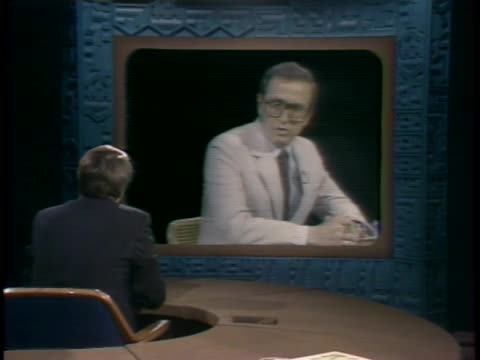
- Transcript
[Tease]
ROBERT MacNEIL [voice-over]: Convinced that the best defense is a strong offense, big labor is mounting the biggest organizing drive in a generation, despite the recession. The target is Houston, Texas, industrial capital of the sun belt.
[Titles]
MacNEIL: Good evening. Unemployment took another lurch upward in April. Today's government figures show the highest rate of Americans without jobs since the Great Depression -- 9.4%. That means that 10,300,000 people were estimated to be looking for jobs. The White House said the figures were disappointing, but added, "we're looking for signs of economic recovery by late spring, early summer." Among many Democrats blaming the new figures on Reagan economic policies, Senator Edward Kennedy said the President had only delivered "pink slip after pink slip after pink slip" to millions of decent men and women. Across the border, the Canadian government today blamed U.S. policy for a jobless rate there of 9.6%, also the highest since the 1930s. The Canadian finance minister, Allan MacEachen, said only a change in U.S. monetary policy would end the recession affecting Canada and all the Western countries. High unemployment and the recession have put American labor on the defensive recently, accepting givebacks and other concessions, but that climate hasn't stopped the AFL-CIO from staging its biggest organizing drive in two decades in Houston, Texas. Tonight, labor on the counterattack. Jim?
JIM LEHRER: Robin, right now both the city of Houston and the state of Texas are hotbeds of non-unionism. Organized labor historically simply has not been a major part of either the Texas economy or culture. It ranks 48th among the 50 states, for instance, in the percentage of its work force belonging to unions -- roughly one out of 10, compared to three out of 10 who hold union cards in its industrial state counterparts in the Northeast and Midwest. And there's all that growth, in Houston, particularly: 700,000 new jobs were added in Houston in the last 10 years as the result of its becoming the energy-based industrial capital of the sun belt, ranking now as the nation's fifth largest city with the third largest port and the largest housing growth of all U.S. cities. It was among the last of the big cities to feel the recession. Today's figures for Texas show a 6.5% unemployment rate. That's up from 5.9% in March and 4,8% a year ago, but it's still way below the national figure, and way, way below the big-city states of the North. All of it makes Houston a logical, if hard nut for organized labor to crack. At a rally in Houston yesterday, AFL-CIO President Lane Kirkland summed up that logic this way.
LANE KIRKLAND, AFL-CIO president: Brothers and sisters, it's a great pleasure to be with you today in the front lines of labor's greatest and its permanent challenge -- to organize the unorganized. It is in Houston and other sun belt areas where the new industries have developed; companies have been started here, and many older firms have expanded or relocated here. Many of these companies have had what is, in effect, a free ride on the backs of workers. [applause] They have paid inferior wages and benefits; they have cut corners on safety and job security provisions; and taken advantage of a political climate that all too often has made the bosses sanctified figures who can do no wrong. Well, part of our message is the same one that the greatest of boxing champions, at least of my generation, Joe Louis, said of one of his opponents who was known to be agile and fast on his feet. Asked about that before entering the ring, Joe Louis said, "He can run, but he can't hide."
MacNEIL: The national AFL-CIO has committed 20 full-time organizers to the Houston effort to work with local union officials. The head of the team is Robert Comeaux, a native Texan and former supermarket worker. He is with us tonight at public television station KUHT in Houston. Mr. Comeaux, what's your goal in Houston?
ROBERT COMEAUX: Our goal is to organize workers in all fields here in Houston, from building trades to manufacturing, retail-wholesale-service division, and in the public sector.
MacNEIL: What do you tell workers when you talk to them about why they need unions?
Mr. COMEAUX: Basically the issues that workers organize around today are the same that they have always organized around: first of all, job security. You mentioned the unemployment figures a while ago. That is obviously a concern on the part of working people. The facts are that without a union, workers have no job security. You mentioned the Houston unemployment figure. We've had this mystique about Houston, that Houston is boom town, oil town, and that the recession would not hit Houston. Well, the recession is hitting Houston, and workers are being impacted. Recently Texas Instruments, for example, the epitome of non-union, corporate America, laid off workers. These workers were not laid off based upon seniority. These workers do not have recall rights, and these workers do not have the benefits that collective bargaining brings. Some of the workers were just a few months short of being vested in their retirement program. These are the types of issues that we're trying to bring to the workers.
MacNEIL: Are you getting a sympathetic response?
Mr. COMEAUX: We are getting -- this issue is on the minds of the workers in the campaigns that we're currently engaged in. Another major issue is the issue of safety. Texas has a very poor record regarding the rights of working people regarding safety. We lead the nation in number of workers killed on a job. One out of every seven workers in this country is killed in Texas. That's three times the national average. Yet at the same time --
MacNEIL: That is one out of every seven workers who is killed on the job is killed in Texas?
Mr. COMEAUX: Is killed in Texas, right. And yet we rank with Mississippi, North Carolina, Tennessee in the least amount of money we pay to these workers who are killed on the job or who are injured on the job -- through the Workmen's Compensation program. This is another issue. Dignity is an issue. Especially with the great numbers of women in the workplace, the issue of sexual harassment. To give workers the right, the voice in their jobs. This is what unionism has always been about, and this is what we're about here in Houston.
MacNEIL: Don't you encounter a lot of suspicion about labor unions in Texas, which, after all, as Jim just said, ranks 48th in union membership in the country?
Mr. COMEAUX: Quite obviously that's a fact. However, we have here in Harris County 125,000 union members. We have strong unions in Texas -- 500,000 members of the AFL-CIO. There are fair employers in Houston. We have no problem with fair employers. We have never run away from a fight. We like the employers to fight fair and fight by the law. One of the problems that we have here involves selection of textbooks, for example. I recently addressed a group of students at a high school where there is a free enterprise textbook that not once mentioned the role of working people in our free enterprise system. I think this is a fault of our system because it does not portray workers in their rightful role in our society.
MacNEIL: Well, thank you. Jim?
LEHRER: Obviously, Houston business and industry is not keen on the AFL-CIO's organizing their workers, and they've hired skilled experts to counter the effort. The expert with a reputation for being among the most skilled is Frank Parker, a Dallas attorney and a former union organizer who now advises management on how to avoid unionization. He has been retained by several Houston firms to do just that. He is also with us tonight from KUHT in Houston. Mr. Parker, how do you advise your clients to counter this basic labor pitch that Mr. Comeaux just laid out?
FRANK PARKER: Basical employer who would avoid the clutches of a union can do so by managing his business in the most efficient, productive manner that he knows -- the best way that he knows how to do that. Pay attention to employees and employee needs and they won't have -- and they won't have, then, the need to join Mr. Comeaux's union or any other union.
LEHRER: Well, what about some of the points he made -- the points that he and the other organizers are making? For instance, the issue of job security. How important is that, do you think, from the management standpoint, countering that concern?
Mr. PARKER: Well, it certainly is a concern for all employees and all managers, but frankly, there are a higher percent of union members laid off in this country than there are non-union workers. There are hundreds of thousands laid off in the automobile, the steel, the airline industry, the trucking industry -- all of which are highly unionized. Which might be a real factor in job security. It is probably one of the factors that has hurt job security among these workers.
LEHRER: So in other words, if job security is what the worker in Houston wants, joining a union isn't going to guarantee it, in fact, might even facilitate it, right?
Mr. PARKER: It certainly has in certain industries. The high wages that industry used to pass through to consumers no longer is possible. These industries that were once monopolistic and could pass through exorbitant wage increases and make consumers who were not in such fortunate positions buy those products -- in many instances those days are past. There is now foreign competition that has wage rates that are less than half what the automobile workers are paid -- however much very close to the national average in this country. The deregulation and the competition and the free enterprise in the trucking industry and the airline industry is going to fix -- it's fixing a situation whereby that workers there are once again going to be paid on a par with what they're worth as compared to their fellow workers in the country who do not work for monopolistic industries.
LEHRER: What about his point about safety, where he said of all the workers killed on the job in this country, one out of seven of them are killed in Texas? How do you counter that?
Mr. PARKER: I'm not really familiar with that particular statistic.However, I'll say this, that OSHA, the Occupational Health and Safety Administration, has done a much better job and has been more aggressive in the areas of safety than unions ever were in my own personal experience. And that's one of the reasons that the union membership has been declining in the country for many years, is much of the legislation that is now on the books -- the Equal Employment Opportunity Act, sections of which cover sexual harassment, and things of that nature -- are now covered by federal law, and has eliminated the need for a union in many instances.
LEHRER: How do you advise your clients to counter the dignity argument that Mr. Comeaux laid out, that you have more dignity as a worker if you're a member of a labor union?
Mr. PARKER: I don't understand that argument; particularly, I can't understand how that a worker can have more dignity when he not only has a boss or superior within the company when he also has such a superior within the union itself. If the employer can't give the worker dignity then he probably should be organized, but he should give that employee individual attention and appreciate him, and pay him the kind of wages that that employee deserves, provide competitive benefits, and do all of the other things that should make his business the most productive and profitable that he can possibly make it.
LEHRER: Finally, Mr. Parker, let me ask you this. How successful do you think the efforts of Mr. Comeaux and his colleagues are going to be in organizing Houston?
Mr. PARKER: Well, I think it depends on what measure of success you wish to use. If you mean, maybe, organizing a quarter of a million or half a million workers, if that would be considered successful, over the next 10 years, I think he may very well do that. On the other hand, if it means that organized labor will be a dominant force in Texas as a result of that by the 1990s, I doubt it's going to be successful. The labor force will grow at a rate so that if they organize half a million people, they'll represent the same percent of the workforce in Texas as they did in 1960.
LEHRER: All right, thank you. Robin?
MacNEIL: One of the national union figures on the scene to launch the drive is Tom Donahue, AFL-CIO secretary-treasurer and the number-two man in big labor. He is also with us in Houston. Mr. Donahue, what do you say about that? You heard Mr. Parker say he doubted unions would be a dominant force in Texas labor 10 years from now.
TOM DONAHUE: I don't know whether we'll be dominant or whether we won't. The important question is whether or not we'll be serving the members who affiliate with unions. I'm confident we'll be doing that. I'm confident only that it's our role to offer to the unorganized worker the opportunity to form or join a union, and that's what we're doing in Houston. That's our historic role that Lane Kirkland referred to in that speech you showed earlier. That's the permanent challenge of the labor movement, is to offer to the unorganized worker the opportunity to form and join a union.
MacNEIL: What do you say to some of Mr. Parker's counter-arguments? For instance, that union members on a percentage basis have no better -- and may have worse -- job security these days than non-union members?
Mr. DONAHUE: Oh, I think that's a fiction. Mr. Parker, you know, leaves out of that equation an analysis of what kind of industries have been historically organized. The strength of the labor movement, created years ago, has been in the construction industry and basic manufacturing, and those are the industries that have been most seriously hurt in the change of employment in this country and in the current recessionary conditions. That's why a fair percentage of people in those industries have lost their jobs -- because the recession has affected them, not because they were organized or unorganized. That's sheer nonsense. In recent years there has been much growth in the service industries and in public employment. What Mr. Parker says is that if you leave everything alone the boss will take good care of their people. Well, that's just simply not factually correct. It hasn't been correct in this country up to now; it's not going to be correct in the future. He said, "They're going to be paid what they're worth." What the boss decides what they're worth. We propose that there ought to be a measure of democracy in that process, and the people ought to be able to talk to the boss about what they're worth, and ought to be able to negotiate with him the conditions of their hire. That's all we talk about -- dignity on the job and a degree of industrial democracy.
MacNEIL: What about his point that OSHA regulations have covered the safety of workers and you don't need unions to do that?
Mr. DONAHUE: Well, but you see, that argument kind of gets circular there, that the boss will take care of the workers, the workers don't need a union. Well, they don't anymore since the government has stepped in and taken care of OSHA and EEOC and so forth. That must mean that before the government stepped in the boss wasn't doing what Mr. Parker says he'll do on his own initiative. I don't -- I mean, there's a circular logic there that's self-defeating.
MacNEIL: But if they are doing it now on the government initiative, are unions necessary for those purposes?
Mr. DONAHUE: Well, you're going to draw me into a discussion of the Reagan administration, and I don't know if you want to do that, but this administration is slashing away at governmental programs, cutting back on OSHA enforcement to a truly horrendous degree. You well know, and your listeners know, what this government is doing in terms of EEOC enforcement and affirmative action programs and everything else.The government is not going to carry that burden so long as the Reagan administration is in office. People have to do that for themselves through their unions, and that's what they've always done, that's what they'll continue to do.
MacNEIL: Why are you doing all this in the middle of a recession with unemployment very high?
Mr. DONAHUE: I don't think, Robert, that that changes our responsibility or our approach to the problem. It's not a question -- it's not really a question that this organizing drive or any other is a defense against unemployment; that's not true. We organize year-in, year-out. The labor movement is suffering now as the country is suffering now. You know, we are a piece of this nation, and so when the nation is affected by unemployment, we're affected by unemployment. But we organize year-in, year-out, rain or shine.
MacNEIL: Well, thank you. Jim?
LEHRER: A very different view of it now from Richard McKenzie, professor of economics at Clemson University in South Carolina, a senior fellow at the Heritage Foundation here in Washington, and the author of a new book, Born to be free, a conservative perspective on economics. Mr. McKenzie, is the sum belt ripe territory for labor to organize?
RICHARD McKENZIE: I don't think it is. I think the arguments that were presented by Mr. Donahue and Mr. Kirkland are really empty. I mean, if they were concerned about job security, they would perhaps concentrate on other, northeastern states where unemployment is far more cyclical -- employment is far more cyclical, where the unemployment rate is 20% or even higher in some areas. If they're concerned about low wages, that seems to be an empty issue. Texas has an average wage that's on par with that in New York, and that's lower than Michigan, but still, New York is a heavily unionized area, Texas isn't.
Now, as to why they may be concentrating on Houston, it seems to me that labor is most effective in tight labor markets. The unions know that they're going to be highly ineffective in Michigan where the unemployment is not only high but is growing. They're going to Houston where the action is. And I think also they feel as though they can build on this low-wage argument that many people have made about the South. The South is assumed to be a low-wage area. In the case of Texas that's not the case. In the case of Texas the average wages in manufacturing is rising two and three times as fast as it is in northern states. If in fact somehow the market system is exploiting workers, one must wonder whether they are exploiting them in Texas.
LEHRER: Well, then you don't think it's going to go anywhere, right? You don't think the AFL-CIO thing is going to make it?
Mr. McKENZIE: I think as one of the other discussants suggested, they're going to enlist some workers. When you're spending several million dollars, that's bound to happen. The question is, will they enlist more workers than they would have otherwise without all the hoopla about this particular drive? As far as the South is concerned, I see the percentage of the labor force belonging to unions continuing to fall in spite of the influx of union people from the North. The reason is that the unions are going to have to confront highly competitive industries in the South, and there is very little that unions can offer their membership in conpetitive industries because if they try to raise wages and those wages are passed on in the form of higher prices, those companies will simply fold.And other industries will emerge that are non-union.
LEHRER: What is your reading as to why the South has been so traditionally non-union?
Mr. McKENZIE: Well, I think it's in part cultural; that is, southerners, by history, grew up on farms and so forth, and there's an independence there; there's a hostility toward organization and collective activity.But in the main, the southerners have been working in highly competitive industries like textiles. Again, there is very little that unions can offer employees in terms of higher wages in highly competitive labor markets. If the textile prices are raised, you simply will find those jobs being moved out of North and South Carolina to Taiwan or wherever else.
LEHRER: Let me ask you this. Let's say that your guess is wrong and that the AFL-CIO is successful in its drive. What effect do you think that would have on Houston, the economy, and, if it spread into the sun belt elsewhere, what effect do you think it would have there as well?
Mr. McKENZIE: Well, I think it will have pretty much the same effect it's had in the North, and that's choke off the growth of employment opportunities in those areas that are union. It will tend to make employment more cyclical because wages are less flexible and more geared to long-term contracts. I see the prosperity in the South being tamed by such activity if it is successful, and I see also northerners losing by that prospect simply because of the fact that northerners are benefitting to the extent that southerners are producing more and producing them at lower prices than can be produced up North.
LEHRER: Thank you. Robin?
MacNEIL: Mr. Comeaux in Houston, you just heard Professor McKenzie say that you don't need unions down your way because wages are plenty high in Texas.
Mr. COMEAUX: Well, he obviously doesn't address the public sector employees; he obviously doesn't talk about the retail or the service workers here in Houston. It is true that in some of the manufacturing jobs the wages are relatively high. They're far below union scale. And also in the building-construction trades they also are below union scale.I'd like to address one other issue and that is, just recently here in Houston, or in Bay City, where the South Texas Nuclear Project is under construction, Brown and Root, which is the epitome of the non-union contractor, was kicked off the job because of shoddy workmanship, and the slogan down here is, "Build better, build union." I think a Harvard study showed that in manufacturing plants the productivity of the unionized sector is greater than the productivity of the non-union sector in the same industry.
MacNEIL: Let's go back to --
Mr. COMEAUX: And I think that you --
MacNEIL: I'm sorry. I didn't mean to interrupt you. Go ahead.
Mr. COMEAUX: I think it is a myth that workers and worker organizations are not concerned about productivity. We know where the wages come from, and all we're asking is a fair day's pay for a fair day's work, our fair share of the pie that we help to bake.
MacNEIL: Mr. McKenzie, what about Mr. Comeaux's point on the wages in industries he mentioned?
Mr. McKENZIE: Well, the real question is whether or not the unions can actually offer the employees in the retailing industry anything of value that will more than compensate them for the union dues.
MacNEIL: Let's ask Mr. Comeaux. Con you?
Mr. COMEAUX: I came out of a union grocery store here in Houston, and the wages in a union grocery store are far in excess of the wages in the non-union store, despite the fact that the prices charged by the employer are basically the same. Not only that, but in retail there are a great number of part-time workers, and the part-time workers basically are without benefits such as hospitalization, health care; without paid holidays, paid vacations. And so these part-time workers are helping to subsidize the profits. Now, we are not anti-profit, as I mentioned awhile ago. We know where our wages come from. And we're here to serve the public. We serve the public in Texas daily in whatever field of endeavor that we're employed. And all we ask is our fair share of the pie that we help to bake.
MacNEIL: Mr. Parker, let me ask you about Mr. Donahue's point. He says it's a fiction, your remark that there is a higher percentage of unemployment -- laid-off workers -- among union workers than in non-union workers.
Mr. PARKER: All he needs to do is to check the Bureau of Labor Statistics figures to find out that there is a much higher percent of the work force laid off in the highly unionized industries. It is a fiction, however, to say that unions do not affect productivity. Mr. Comeaux and the AFL-CIO unions and the other unions to justify their existence in a workplace have to constantly undermine the company and the boss, and when you do that you lower morale, and whenever morale is lower, productivity is lower. And inevitably, in any industry that is highly organized eventually productivity will go down. The studies that he cites are those run by unions themselves, and are not in my opinion at all credible. There are many companies and other independent research people who have looked into this matter, and generally it is felt that unions increase labor costs, given set wages and benefit levels, anywhere from 25 to 40 percent.
MacNEIL: Mr. Donahue?
Mr. DONAHUE: You know, if Mr. Parker represents the employers of this country as the wonderful people that they are, you would think that there would be no reason for unions anywhere in the world. I wonder why the 22-23 million people in this country who belong to unions do so. That's just sheer nonsense. The fact is that the boss, the employer, just hasn't been willing to treat workers well and workers have joined unions out of response to that fact. They don't join unions because they want company on the bowling team or something like that. They join unions because they want to have their dignity on the job recognized, because they want decent wages. And they aren't obstructions to productivity. If that were true there would simply be no quality-of-work life experimentation in this country. I don't know what the result of Mr. Parker's suppositions would be in the major manufacturing industry. I just think that's nonsense.Unions have proven themselves effective partners in industry.
MacNEIL: Mr. McKenzie, do you want to have a final comment? We have a few seconds left.
Mr. McKENZIE: About the wages in the grocery store. It's easy to show that perhaps unionized wages are a little higher than non-unionized sectors, but what they don't factor in is the wages of the people who are unemployed because of the wages of those who have retained their jobs.
MacNEIL: Well, I'd like to be able to pursue this further, but that's our time. In Houston, Mr. Comeaux, Mr. Donahue and Mr. Parker, thank you for joining us; Professor McKenzie in Washington. Good night, Jim.
LEHRER: Good night, Robin.
MacNEIL: That's all for tonight. We will be back on Monday night. I'm Robert MacNeil. Good night.
- Series
- The MacNeil/Lehrer Report
- Episode
- Organizing Houston
- Producing Organization
- NewsHour Productions
- Contributing Organization
- National Records and Archives Administration (Washington, District of Columbia)
- AAPB ID
- cpb-aacip/507-1r6n010b0r
If you have more information about this item than what is given here, or if you have concerns about this record, we want to know! Contact us, indicating the AAPB ID (cpb-aacip/507-1r6n010b0r).
- Description
- Episode Description
- This episode's headline: Organizing Houston. The guests include RICHARD McKENZIE, Heritage Foundation; In Houston (Facilities -- KUHT-TV): ROBERT COMEAUX, Union Organizer; FRANK PARKER, Anti-Union Consultant; TOM DONAHUE, Secretary-Treasurer, AFL-CIO. Byline: In New York: ROBERT MacNEIL, Executive Editor; In Washington: JIM LEHRER, Associate Editor; KENNETH WITTY, Producer; JOE QUINLAN, Reporter; Video Segment: PAUL WILLIAMS, Camera; NORVIS NANCE, Sound; GLENNP. JORDAN, Editor
- Created Date
- 1982-05-07
- Rights
- Copyright NewsHour Productions, LLC. Licensed under a Creative Commons Attribution-NonCommercial-NoDerivatives 4.0 International Public License (https://creativecommons.org/licenses/by-nc-nd/4.0/legalcode)
- Media type
- Moving Image
- Duration
- 00:31:16
- Credits
-
-
Producing Organization: NewsHour Productions
- AAPB Contributor Holdings
-
National Records and Archives Administration
Identifier: 96932 (NARA catalog identifier)
Format: 1 inch videotape
If you have a copy of this asset and would like us to add it to our catalog, please contact us.
- Citations
- Chicago: “The MacNeil/Lehrer Report; Organizing Houston,” 1982-05-07, National Records and Archives Administration, American Archive of Public Broadcasting (GBH and the Library of Congress), Boston, MA and Washington, DC, accessed April 2, 2026, http://americanarchive.org/catalog/cpb-aacip-507-1r6n010b0r.
- MLA: “The MacNeil/Lehrer Report; Organizing Houston.” 1982-05-07. National Records and Archives Administration, American Archive of Public Broadcasting (GBH and the Library of Congress), Boston, MA and Washington, DC. Web. April 2, 2026. <http://americanarchive.org/catalog/cpb-aacip-507-1r6n010b0r>.
- APA: The MacNeil/Lehrer Report; Organizing Houston. Boston, MA: National Records and Archives Administration, American Archive of Public Broadcasting (GBH and the Library of Congress), Boston, MA and Washington, DC. Retrieved from http://americanarchive.org/catalog/cpb-aacip-507-1r6n010b0r