The MacNeil/Lehrer NewsHour
- Transcript
MR. MAC NEIL: Good evening. I'm Robert MacNeil in New York.
MR. LEHRER: And I'm Jim Lehrer in Washington. After our summary of the news this Wednesday, Senate Minority Leader Robert Dole explained the Republican health care reform proposal, we have full coverage of today's Whitewater hearings, and Charlayne Hunter-Gault has another conversation about stopping youth violence. NEWS SUMMARY
MR. MAC NEIL: President Clinton goes before the nation in a prime time news conference this evening. He's expected to field questions about health care, Haiti, and Whitewater. Treasury Sec. Lloyd Bentsen answered Whitewater questions on Capitol Hill this morning. He told the Senate Banking Committee no laws were broken in the contacts between administration officials and regulators investigating a failed Arkansas savings & loan.
LLOYD BENTSEN, Secretary of the Treasury: Clearly in retrospect it might have been better if some of these meetings or contacts had not taken place, or had occurred in a different context. But when you boil it down, no criminal law was broken, and the people who work at Treasury did not violate the ethical standards, and no one at Treasury intervened in any way or interfered in any RTC action.
MR. MAC NEIL: Meanwhile, Bentsen's Deputy, Roger Altman, faced another grilling about his role in the matter. Altman told the House Banking Committee he had no intention of resigning. Altman came under blistering criticism yesterday during a marathon session before the Senate Banking Committee. A number of Senators have called for his resignation. We'll have more on the story later in the program. Jim.
MR. LEHRER: President and Mrs. Clinton welcomed the Health Security Express to Washington today. The Express was a cross country bus caravan of health reform supporters. The President talked to the group on the White House lawn about the reform proposals now before Congress. [wrong tape clip shown] Republicans have criticized the reform bills -- obviously that was the wrong tape we just ran -- on health care reform. The Republicans have criticized the President and the Democratic bills, including the one proposed by Senate Majority Leader George Mitchell. Today they continued to voice their opposition at a news conference on Capitol Hill.
SEN. PHIL GRAMM, [R] Texas: The Clinton-Mitchell health care bill is a one-way ticket to more taxes, more deficits, and more bureaucracy. The American people don't want those things, and if they get an opportunity to look at this bill in the light of day, if they can understand it so they can communicate with their representatives in the House and Senate, this bill, like all of the other Clinton bills before, will fail. I believe that the Clinton- Mitchell plan is bad for your health and it's bad for the health of the American economy. And if those people on those buses want socialized medicine, I'm willing to let them have it.
MR. LEHRER: We'll have a Newsmaker interview with Senate Minority Leader Dole right after this News Summary. This afternoon, the Senate unanimously passed a Haiti resolution proposed by Sen. Dole. It would require President Clinton to get congressional approval before ordering an invasion of Haiti. The measure is non-binding. White House Spokeswoman Dee Dee Myers said the President had no plans to seek such approval.
MR. MAC NEIL: An Amtrak train derailed in upstate New York this morning. A hundred thirty-three people were injured when fourteen passenger cars jumped the tracks. There were about 360 people on board the train traveling from New York City to Chicago. The National Transportation Safety Board is investigating the cause of the accident. In economic news, the government reported the Index of Leading Indicators rose .2 of 1 percent in June. The Index measures future economic activity. In a separate report, factory orders rose .8 percent in June, the fourth straight gain. The Senate today approved $2.1 billion for the space station. The vote was 64 to 36. The House approved funds last month. The space station is expected to go into orbit by the year 2002.
MR. LEHRER: On the Rwanda story today, the American embassy in the capital of Rwanda, Kigali, reopened after four months, and U.N. officials said refugees in camps in Zaire remain reluctant to return home. Mark Austin of Independent Television News reports on the difficult journey for those who are returning.
MARK AUSTIN, ITN: Tiny feet on the long road home, and for some, it's the last journey they'll ever make. These are the people who've been persuaded to leave the cholera-ridden camps of Goma and head back to Rwanda. But for weak, war-weary women and children, it's an eight-day walk to Kigali, and there's little on offer on the way. Sixty miles along the road the one makeshift medical center is overwhelmed. Predictably, it's the very young and the very old who suffer most, dysentery, cholera, and exhaustion. A father carries in his infant girl clearly close to death. Doctors from the French charity Medecins San Frontieres do what they can to save her but they tell us she won't survive.
DR. REX HENDRIKSON: They just die in your hands. We pick them up from the roads, and they die before they reach the truck.
MARK AUSTIN: Today for the first time, two lorries are on the route bringing in the weakest refugees, but two lorries for thousands of people are nowhere near enough. More vehicles are planned, but it'll be next week at the earliest before they arrive.
MR. MAC NEIL: Fighting escalated throughout Bosnia today. It was especially heavy in the capital, Sarajevo, where Serb snipers fired at pedestrians and passing street cars. At least three people were wounded. U.N. forces in the area returned fire. Troops of the Muslim-led army launched a new offensive against Serbs Northwest of the city. And fighting happened as the Bosnian Serb Assembly today again rejected an international peace plan. Five French nationals were killed in Algiers today. The three military guards and two consular workers were shot by gunmen attempting to plant a car bomb. The attack is being blamed on Muslim militants. Since September, 56 foreigners have been killed in a campaign of violence designed to overthrow the country's military-backed government.
MR. LEHRER: And that's it for the News Summary tonight. Now it's on to Sen. Dole, Whitewater hearings, and teenage violence. NEWSMAKER
MR. MAC NEIL: We lead again tonight with the battle over health care reform now finally being joined in the Congress. In recent days, we've spoken with both the Democratic majority leaders in the House and Senate about the health reform bills they've put forward for debate starting next week. Tonight we hear the Republican alternative introduced by the Senate Majority Leader Bob Dole who joins us now from Capitol Hill. Senator, welcome. Thank you for joining us.
SEN. DOLE: Thank you very much.
MR. MAC NEIL: First, as I understand it, your plan is still a proposal. Are you going to formally introduce it as a bill for debate?
SEN. DOLE: Oh, yes. In fact, we hope to have the bill drafted. We're sort of -- since we're in the minority, we're at the end of the drafting law, and so when they draft, after they draft all the Democrats' plans, they'll be drafting our plan. We hope to have it done this week, but it may not come till next week. But it probably won't be as big as -- this is the Kennedy bill that passed -- it's about 1100 pages -- and we don't even have Sen. Mitchell's plan yet. We're supposed to start working on it next Tuesday. So I think the American people are going to want us to take a little time to look over this eleven or twelve hundred page document.
MR. MAC NEIL: The Democratic bills promise universal coverage. What does your plan promise?
SEN. DOLE: Well, we think we can achieve about 92 percent at the same time Sen. Mitchell says he can achieve 95 percent. So, you know, we're arguing about how do you get from 92 to 95 or 95 to 100, and it seems to me that we can do ours without the mandates and without some of the other sort of government-run provisions that Sen. Mitchell has, and Congressman Gephardt have. I, you know, I still -- I hope the President in his press conference says, wait a minute, maybe we ought to back off and take care of some of these things that we can take care of. I know he's meeting -- he and Mrs. Clinton are meeting some of the people on the bus. They had a tragic case today which could have been taken care of by taking care of the pre-existing condition, a problem which everybody agrees we ought to do. There are probably twenty- five or thirty things where a hundred Senators and all the House members would agree that we ought to do this year. It's when we get into mandates and in Sen. Mitchell's bill it's about a trillion dollar bill over the next ten years. Who pays for it? Subsidies, that's where we start losing support.
MR. MAC NEIL: How would people now without insurance get access to coverage or health care under your plan?
SEN. DOLE: Well, under one provision, we have subsidies in our plan for low income -- about a hundred billion dollars over five years -- 150 percent of poverty -- that would be a family of four for about $22,000. If you have a small business of 50 or less, you can buy into the federal employee plans that have the same kind of options and the same choices that members of Congress have, the President has. If you're self-employed, you can buy into the federal system, also if you're self-employed under our plan and under Sen. Mitchell's plan also, we're going to let you deduct 100 percent of your costs rather than 25 percent. So there are a number -- you know, there are just a number of areas that really aren't in disagreement. And Senator -- and I applaud Sen. Mitchell for getting a bill put together. But I think it's going to be difficult to pass that bill because it still has the threat of mandates in the year 2000, and I think that's going to be a hard sell.
MR. MAC NEIL: What happens to people who make more than $22,000 a year like twenty-three or twenty-four thousand dollars, when I read that the annual family premium this year is about $5800?
SEN. DOLE: Well, you know, you have to figure out somewhere to draw the line. We have a fail safe provision in our bill that we don't spend more money than we anticipate. It -- obviously if we save money, we're going to provide more coverage. We could move the 150 percent up to higher figures. In fact, in the Mitchell plan it goes way up to 300 percent of poverty, which is $44,000. And it seems to me that in his bill he's going to be subsidizing about 110 million Americans for health care. Somebody has to pay these bills. And you know, it's a tragic case. We hope we can maybe find enough money to maybe raise ours slightly, but somewhere you have to draw the line as far as the federal government's concerned. There are still Medicaid programs. There are still Medicare programs. We don't -- we leave those pretty much intact. We save some of our money in Medicare and Medicaid, but it doesn't come from beneficiaries.
MR. MAC NEIL: I see an estimate by a conservative economist he's called at the University of Pennsylvania, Mark Holly, that your plan would leave nineteen to twenty-six million Americans still uncovered, i.e., those above the $22,000 income level.
SEN. DOLE: Right.
MR. MAC NEIL: Do you agree with those figures?
SEN. DOLE: I haven't seen those figures. We hope to get our figures from the Congressional Budget Office. Again, we're waiting for them to cost our plan. You know, ours may have some problems too. When you start subsidizing, you start making -- we have long- term care. We changed some of the long-term care provisions of ours. But, you know, we want to do everything we can. And our view is that let's do what we can do this year. Congress meets every year. We're well-intentioned. The Finance Committee, I'm a member of that committee. We've been supporting health care bills for the last 20 years on a non-partisan basis. If we get up to 91, 92, 93, 94 percent in three or four years, because that's the way the Mitchell bill is phased in, it won't be any sooner, then how do we cover the other 6? And they haven't covered only up to 94 percent in Hawaii, where they've had employer mandates for 20 years. So you're not going to get there just with mandates, because some people aren't going to work for it, some people don't -- some people are homeless. We never reach some of the people, some because of religious beliefs do not want coverage. Some people frankly with a great deal of money don't need to buy insurance coverage. So you're never going to get 100 percent. I think when the President said that initially, I think it was in error.
MR. MAC NEIL: One of the features of the Democratic bills in both sides of the Congress was that they guaranteed packages of benefits. For instance, Mitchell's includes preventive care, prescription drugs, mental health, substance abuse, long-term care. Do you offer a package of benefits say to those people whose coverage you would subsidize?
SEN. DOLE: The coverage we subsidize, yes. There we offer a benefit package based on an actuarial number so you can choose what you want. Others we offer opportunities. We get into all these technical things like community rating under the Mitchell bill, for example, in I think four or five years. Young people are going to be paying about four times what they normally would for insurance because he goes to what we call pure community rating, where everybody, young people are going to be paying for seniors because their costs are greater. Younger people pay about four times as much as they should for insurance. There's no fairness involved. We wouldn't let a young person, twenty, twenty-one-years-old, no family obligations, maybe all that person needs is some catastrophic kind of policy in case of serious illness. We have medical savings accounts where if your employer wants to put a couple of thousand dollars into your account, if you don't use it at the end of the year you get to keep the balance. It's taxable but you get to keep it. So we try to provide some incentives in the program where you'd have some individual responsibility.
MR. MAC NEIL: So, in other words, insurance companies could still under your plan -- I'm going to come to the reforms you suggest in a moment -- but in the case of age, for example, they could still charge older people more for insurance than younger people under your plan, is that right?
SEN. DOLE: Well, yeah, we have what we call banded rating. We try to protect seniors to some extent, but we also try to protect younger people. You look at the New York experience where they have what we call pure community rating, and about 25,000 young people have dropped out of the system. Why did they drop out of the system? Because they're paying maybe two, three, four times what they should be paying for insurance. It's not fair to younger people, and I just don't think that issue has been focused on by the younger generation.
MR. MAC NEIL: Let's talk about the way your plan changes for people who have insurance now. For instance, those who fear to lose it if they change jobs but have a pre-existing condition, how -- do you forbid insurance companies to drop them?
SEN. DOLE: That's right. To take care of that just as I think every other plan does, and it's a guaranteed issue. We have open enrollment so you don't have to wait for a certain time each year to get into a plan. So there are a whole host of areas where --
MR. MAC NEIL: If a family member develops a serious illness, the family doesn't lose insurance or get its rate greatly raised?
SEN. DOLE: That's correct. I mean, those are basic things, Robin, I think we ought to change very quickly.
MR. MAC NEIL: Will insurance companies still be able to cherry pick, as it's called? One of the big criticisms is that they can pick and choose whom they insure and at what rates.
SEN. DOLE: No. In fact, we've had -- you know, we've had some companies indicate to us that they didn't particularly care for our provision because it does eliminate cherry picking. It does -- you get into the pre-existing condition and the so-called affordability, the job lock, there were other provisions I think some insurance companies would have liked to have had in our bill, we said no. I mean, if we're going to go out and tell people we're going to take care of your problem if you have a pre-existing condition, you can't be denied insurance, then we can't write in some provision that would, in effect, make that impossible to achieve.
MR. MAC NEIL: The Democratic plans say they will control the rapidly rising health care costs. Does your do that?
SEN. DOLE: Well, we think costs are coming down. We look at what's happening in the state of California. We've had a drop -- if you look at Minnesota -- where costs are coming down. We think technology may bring the cost down. Cost containment in the so- called Clinton-Mitchell bill is a 25 percent tax on high cost plans. I don't think that provision is going to survive in the Senate. We're all going to be pretty much the same. Cost containment is going to be -- trying to be more efficient. I must - - I would support a tax cap, which would say you could only deduct up to a certain amount of your -- if you have say $5,000, maybe you could get up to $4,000 a year. We don't have the votes for that. So and I think ours -- without saying we have cost containment -- may be just about as accurate as the others who say they have.
MR. MAC NEIL: Last year, many times, you said you wanted universal coverage. Why did you drop that goal? Was it because you discovered that many people think the only way to get there is through some kind of mandate?
SEN. DOLE: Well, I don't have any problem now. If that's the goal, everybody to be covered, you know, we have universal care in America. Everybody can get -- receive treatment. It doesn't bother me. I mean, I think everybody ought to -- that ought to be a goal - - universal coverage. But we've got to figure out how we get there, what do we have to do to get there, how much is it going to cost, and who's going to pay the bill. And I think once -- I think President Clinton understands that it's not 100 percent. We don't have 100 percent in Medicare. We don't have 100 percent coverage in Social Security. They don't have 100 percent in Hawaii, as I said. But certainly I don't object to a goal of universal coverage. But you're never going to get 100 percent. I think there may have been an impression out there that that's what's going to happen. But I guess where we differ is -- we -- you know, well, we differ with some of my colleagues. We think Congress, just as they did Social Security, we didn't cover everybody when Social Security first passed. We had to come back and add to it. We had to add to Medicare. Why can't we come back and add provisions to health care in two years, four years, or five years, so that we can provide this -- help provide this goal of universal coverage?
MR. MAC NEIL: Sen. Mitchell says he's reached out to Republicans in coming up with this bill which he says is a compromise. You -- you said flatly this morning that bill is not going to fly. Why?
SEN. DOLE: Well, I don't think he's had much success in reaching out to Republicans. I think some of these so-called mainstream group, Sen. Chafee, Sen. Durenberger, Sen. Danforth, Sen. Jeffords. I think -- I know they're all opposed to mandates, whether they're triggered mandates or just say plain old mandates. We're reaching out to Democrats. We call our bill the American option. And we've had contact with about 14 Democratic Senators. So I think everybody's reaching out. I hope the President's still reaching out, but nobody has the votes right now. The House is talking about taking the bill up in September. And if the House is going to do that, it seems to me we ought to have the same right to go home, explain this very complicated bill to the people of my state of Kansas or anywhere else in America, and then come back in September and take up health care.
MR. MAC NEIL: Do you feel so strongly about the deferred mandates in the Mitchell bill that you will filibuster to defeat it?
SEN. DOLE: Filibuster is not part of anybody's strategy. We've had almost -- well, I don't how many meetings that we've had on health care -- and I must say the word filibuster rarely comes up unless it's in an interview. And I'm not saying that there never would be a time if the bill got so bad, but my view is if it gets that bad, you could defeat it on the Senate floor with bipartisan votes. You wouldn't need to filibuster. But there's more to -- there's more problems with the Mitchell bill certainly than mandates. There's 17 new or increased taxes in the Mitchell bill. It's a trillion dollar subsidy over 10 years. It has price controls. It has everything that we felt was pretty bad -- wrong with the Clinton bill. I think there was a real effort by Sen. Mitchell -- I congratulated him -- but I don't really believe his bill will have the votes.
MR. MAC NEIL: Do you think employers should -- leaving mandates aside -- do you think employers should provide coverage for their workers?
SEN. DOLE: I think wherever possible, they certainly -- they should provide coverage, and I think most employers do. But take my state for example. We're a small business state, small businessmen, small business women. About 90 percent of our employers have 10 or fewer employees. Most have five or six or seven. And we're talking about small business in small towns where you're lucky to have a job in some cases. We have a lot of industry in our state that has a lot of -- have a lot of part-time employees. And if they start covering all of those, then it's going to be a problem. What we don't want is a big job loss anywhere estimated between, what, a million point seven and three million if we had mandates. A lot of people would be out of work. But the answer is yes. I urge employers to provide coverage for their employees. Employees ought to have that opportunity.
MR. MAC NEIL: Well, Sen. Dole, thank you very much for joining us.
SEN. DOLE: Thank you very much.
MR. LEHRER: Still to come on the NewsHour tonight, Whitewater hearings, and teenage violence. FOCUS - Q&A
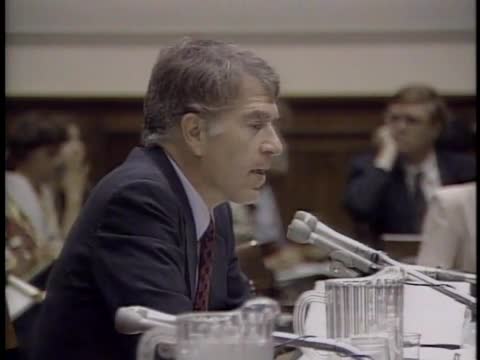
MR. LEHRER: This was another busy day on the Whitewater front. Both House and Senate Banking Committees continued their hearings about contacts among officials of the White House, Treasury Department, and the Resolution Trust Corporation. Here are extended excerpts from both of the committees as reported by Kwame Holman.
MR. HOLMAN: Deputy Treasury Sec. Roger Altman had only a few hours to prepare for his appearance before the House Banking Committee this morning. Altman spent more than 10 hours before the Senate Banking Committee yesterday and didn't finish until after 2 o'clock this morning.
REP. HENRY GONZALEZ, Chairman, House Banking Committee: It seems almost sadistic to do this to you.
MR. HOLMAN: But despite his short turnaround, some House members didn't hesitate to challenge Altman's recollection of events that occurred while he doubled as acting head of the Resolution Trust Corporation. It was during that time last fall and winter that the White House was alerted to possible criminal proceedings against Madison Savings & Loan, the failed Arkansas thrift with connections to the Clintons. But this morning, Republican Bill McCollum produced a White House memorandum sent to Hillary Clinton that analyzed legal issues surrounding the Madison case.
REP. BILL McCOLLUM, [R] Florida: It gives a pretty detailed explanation as it was passed on to the First Lady about what was going on with regard to the Rose Law Firm, with regard to your recusal, and with regard to a number of other matters related to the subject we're talking about here today.
ROGER ALTMAN, Deputy Treasury Secretary: First, I heard about this late last evening. This is the first time I've seen it. I don't recall ever being advised by anyone about conversations with the First Lady on these subjects.
REP. BILL McCOLLUM: Mr. Altman, your diary entry says on January 4, 1994, "On Whitewater, Maggie" -- I presume that's Maggie Williams -- "told me HRC" -- I presume that's Mrs. Clinton -- "was paralyzed by it. If we don't solve this within the next two days, you don't have to worry about her schedule on health care." Did you enter that in your diary? Is that an accurate reflection of something that Mrs. Clinton's chief of staff, Maggie Williams, said to you?
ROGER ALTMAN: I did enter it into that scrap book. Those were just the thoughts that passed through my mind based on that aside that occurred during the course of another meeting I think on health care. I don't know whether that's precisely what she said or not. She may not. That's just what my impression was.
REP. BILL McCOLLUM: When you said your impression was that Maggie Williams said that Mrs. Clinton was paralyzed by it, what was it?
ROGER ALTMAN: Well, first of all, Mr. McCollum, I think the salient point is that this is no different than Mrs. Clinton, herself, has said in her own press conference. She said she was upset by this, and that's all that this means.
REP. BILL McCOLLUM: Isn't that what really shows it in this memorandum that I gave you, Mrs. Clinton was very concerned about it, it seems to me, or we wouldn't have been getting memorandums from the White House chief of staff, assistant deputy chief of staff, going up to her, explaining all this, as well as your diary entry, is that not true?
ROGER ALTMAN: As I said, Mr. McCollum, this is nothing different than what Mrs. Clinton has said, herself, and anybody in her shoes, let me say, and she's been pretty steadfast, anybody in her shoes would have felt the same way she did. And I'm sure you would have too, Mr. McCollum. All this says --
REP. BILL McCOLLUM: When you look at the overall picture, you come down to your recusal, you wrestle with so much, and I've heard a lot of your comments yesterday about that in the other body. You indicated to Sen. Kerry last night, as I recall, that you were very, very concerned. I guess the real bottom line question is: Were you trying to wrestle with this so long, instead of going ahead and carrying it out and just doing it when he first knew that it was the right thing to do, because you knew you were the political contact, you knew you were the friend, you knew that if you were gone that they were going to be pained by that because they weren't comfortable with Mrs. Kulka and Mr. Ryan heading up this, who were not appointees of the President, and that you were wrestling with this in large measure because you knew of Mrs. Clinton's knowledge and interest in this as well as the President's, and you really wanted to please them, you didn't want to recuse yourself even though you knew you should, and that's why it took you so long, is that what Sen. Kerry was driving at last night that was never answered?
REP. BILL McCOLLUM: The point is that I did recuse myself. I recused myself three weeks after the subject came up in my own mind. I said last night -- I've already said today -- I wish I'd done it as soon as it occurred to me. But I waited three weeks, that's all. During that period no matter came to me for decision that had any relationship to Madison, nor did any matter ever come to me for decision that any relation to Madison. As I said in my statement, recusal is a false issue. Whether I remained removed from the case, as I was, and as Ms. Kulka testified yesterday under oath that I was, or whether I executed a formal recusal made no difference. I was to have no role, did have no role whatsoever in the RTC investigation of Madison. It's a false issue.
MR. HOLMAN: A few Republicans pointedly asked Altman whether his troubles over Madison had convinced him to resign.
REP. MARGE ROUKEMA, [R] New Jersey: In light of the fact that you've now testified that you deferred too long on the recusal question, are you now -- what is your current thinking on the question of resignation in an effort to re-establish credibility?
ROGER ALTMAN: I do not intend to do that.
REP. MARGE ROUKEMA: Well, will you answer the first question as to how you attempted to re-establish credibility.
ROGER ALTMAN: Well, I'm trying to do that right here with this committee.
MR. HOLMAN: While Altman appeared headed for another long day, his boss, Treasury Sec. Lloyd Bentsen, went before the Senate Banking Committee and was finished before lunch. Bentsen told the committee he was not aware of those now famous 1993 discussions between members of his department and the White House concerning Madison until those meetings were made public last March.
SEN. JIM SASSER, [D] Tennessee: But as you're probably aware, the general counsel of the Treasury Department, Jean Hanson, wrote a note saying that you had heard about the substance of the meetings that took place in autumn of 1993 dealing with the information regarding the criminal referrals. Was she in error in that note?
LLOYD BENTSEN, Secretary of the Treasury: Well, I certainly think she was.
MR. HOLMAN: Committee Chairman Donald Riegle asked Bentsen about the propriety of reported pressure then White House Counsel Bernard Nussbaum put on Roger Altman not to recuse himself from the Madison case.
SEN. DONALD RIEGLE, Chairman, Senate Banking Committee: Why is it Mr. Nussbaum's obligation to weigh in on that? What vests him with the authority to step into Mr. Altman's decision on that?
SEC. LLOYD BENTSEN: I assume because he was representing the White House in that situation.
SEN. DONALD RIEGLE: But didn't he have a conflict there, because this involved a case that touched the White House? Should he have done that?
SEC. LLOYD BENTSEN: Well, I looked at the Office of Government Ethics report, and they say that there was neither -- that there was no violation of ethical standards. And they're the experts on that type of thing.
SEN. DONALD RIEGLE: Well, I hear that. Are you comfortable with that?
SEC. LLOYD BENTSEN: They live and work at that, and I'm not going to question their judgment.
SEN. DONALD RIEGLE: I've got to tell you I'm troubled about it.
SEC. LLOYD BENTSEN: Okay.
MR. HOLMAN: Ranking Republican Alfonse D'Amato asked Bentsen why he hadn't urged Altman to recuse himself?
SEN. ALFONSE D'AMATO, [R] New York: As painful as this may be, and I've said it a short time ago, I think you had an obligation there to give him counsel to step aside. I think the matter is so - -
SEC. LLOYD BENTSEN: Senator, I don't agree, when I didn't know the facts in the case.
SEN. ALFONSE D'AMATO: There -- this is not a question --
SEC. LLOYD BENTSEN: I am not about to try to counsel someone --
SEN. ALFONSE D'AMATO: Senator --
SEC. LLOYD BENTSEN: -- on something that is important as that to that person without --
SEN. ALFONSE D'AMATO: Mr. Secretary --
SEC. LLOYD BENTSEN: -- knowing the facts.
MR. HOLMAN: This phase of the Senate Whitewater hearings will end on Friday.
MR. LEHRER: Now two members of the Senate Banking Committee, Sen. Christopher Dodd, Democrat of Connecticut, Sen. Christopher Bond, Republican of Missouri. They join us from Capitol Hill. Sen. Bond, on the specific case of Roger Altman, do you believe his version of events to begin with?
SEN. BOND: No, I don't. Unfortunately, we've had testimony from other witnesses that is directly contradictory to his testimony, about eight different witnesses. There have been contemporaneous documents. Mr. Altman does a very good job of running around the issue. He's very difficult to pin down. Unfortunately, he did not tell us the truth. And I asked him the question: Who told the White House about the criminal referral on February 24th? I couldn't even get him to give me a straight answer when he testified before the Senate last night.
MR. LEHRER: And how serious an issue is that in and of itself? We'll go to the, to the substance of the charges against him, what he did or did not do, but just the facts -- your lack of believing him, what does that mean to you and what do you think should be done, he should do at this point?
SEN. BOND: Well, I think it's time for him to go. I think the bigger picture, something that we're trying to get out in the Whitewater hearings, is: Was the White House improperly trying to influence the proceedings of a federal regulatory investigative agency with respect to financial transactions in Arkansas which affected the First Family? And there have been lots of different areas where very strong suspicions have been raised. That's why the special prosecutor is looking at it. And Mr. Altman, if he answered this truthfully, would raise the real question which is: As the - - as a friend of the First Family, close political appointee, why did he send Jean Hanson to tip them off of a criminal referral that would affect the President?
MR. LEHRER: Is it your position, Senator, after listening to him for 10 hours and all the other witnesses up to this point, that, that if he did, in fact, shade the truth, as you allege he did, did he do it to protect himself or to protect the President and Mrs. Clinton?
SEN. BOND: I think clearly he was trying to protect the President and Mrs. Clinton, because he has gotten himself in trouble. There have been lots of questions about his veracity. There's too much evidence, testimony from other people saying things that directly contradicted what he said. And I think that he has jeopardized his position and perhaps gone beyond into the criminal area. I won't make a judgment on that.
MR. LEHRER: You mean perjury? You think he's committed perjury?
SEN. BOND: Lying to Congress is something that we'll have to consider. We cannot -- we could ask for an investigation of it. We'll want to go back and look at all the testimony.
MR. LEHRER: Sen. Dodd, let's start there and work back. Do you think Roger Altman has committed perjury?
SEN. DODD: Well, maybe I come from the old fashioned school. I may not be terribly popular on Capitol Hill, but I don't see my role here as a prosecutor or defense attorney for that matter, but someone who sits in a hearing and listens to all the evidence. We're taking a break right now for votes. We've got a panel of witnesses. We've got more tonight, more tomorrow, more on Friday. I think to make a decision ultimately about Mr. Altman based solely on his testimony and others, where there is a conflict, and decide that he's the liar is to run directly contrary to the oldest principle of juris prudence in this country, that people ought to be given a chance to hear all the evidence before making any final determinations about it.
MR. LEHRER: So you have not -- you, Sen. Dodd, have made no determination about -- do you believe Roger Altman's version of events?
SEN. DODD: Well, it hasn't convinced me that he's wrong. You have some conflicting testimony, memories. I'm always envious of people who can reach back eight or nine months in time and tell you exactly what was said to whom and where it was said, so we've got some key people that disagree with each other about some events. There's an awful lot of agreement and substantiating evidence that supports Mr. Altman's testimony. So I haven't reached a determination as to whether or not he's guilty of ethics or criminal violations. And let me add, very quickly, if I may, this is one group of people who are looking at this case. We've had the Office of Governmental Ethics, an independent federal agency under Mr. Potts, a Republican appointee, depose dozens of people, most of whom we're talking to. They said no ethical violations. Mr. Fiske, who was heralded by the Republicans for his expertise as a prosecutor, has looked at this case, has looked at his testimony before the Congress, and drawn the conclusion there is no criminal liability here whatsoever. Now I'm not suggesting that we should rely totally on that, but I think it's worthwhile to note that two other groups of people doing significant amount of work with no ax to grind, not out to necessarily protect this White House, have reached entirely different conclusions after listening to all the evidence than my colleague from Missouri.
MR. LEHRER: Well, what about -- that issue aside -- that's going to come out in the wash -- what about Sen. Bond's basic concept here, theory here, that whatever Roger Altman did, he was doing it -- he and others were doing it to protect President and Mrs. Clinton? Do you read into what you have -- the testimony and the evidence thus far that that's what was going on?
SEN. DODD: No, not at all. I don't see that. You have to look at the overall actions of the White House in a lot of areas. And I see a White House that has appointed or nominated a Republican to be head of the -- the Resolution Trust Corporation. That nominee eventually pulled himself out for personal reasons, but, nonetheless, you don't nominate a Republican if you're interested in trying to avoid difficulties. We know from uncontroverted testimony that Mr. Altman asked Ms. Kulka, is not the favorite person of Mr. Nussbaum, to take over these cases and have exclusion decision making authority in that area, and she testifies that there's no problem with a February 28th deadline. There's a lot of evidence that supports that Mr. Altman was determined to try and see this done properly. And, again, Mr. Fiske and the Office of Governmental Ethics have made the same conclusion.
MR. LEHRER: Sen. Bond, how do you respond to that?
SEN. BOND: Let me -- I'm not going to argue all the evidence with my good friend from Connecticut, but No. 1, we have done I think a much more thorough job than Mr. Fiske did. If we find -- and we are not making that conclusion -- that there should be some criminal prosecution considered or reconsidered, we would just refer that. But what I'm saying is we have heard enough testimony, we have seen enough evidence that I do not believe that Mr. Altman was telling the truth. I asked the question in the first place. I believe that it has been adequately confirmed, and I believe that there are a lot of factors that go into the mix that suggest that he was urged by the White House not to recuse himself on February 2nd when they were facing a February 28th deadline. That was before the statute of limitations was extended. They were going to have to make a decision by February 28th. The White House very much wanted him in there. And the White House in their internal memos said that ultimately the decision maker would be Mr. Altman when the statute was extended so there would be more time to consider it, and Mr. Altman's appointment was going to be up, then and only then was he allowed by the White House to pull the plug and recuse himself. So there's a different way of looking at that.
MR. LEHRER: Sen. Dodd, what about that? I mean, if the people at the White House and Roger Altman -- include him in this group -- were not acting out of a motivation to, to protect the President and Mrs. Clinton, what was driving them?
SEN. DODD: Well, I think you had -- it seems to me, based on evidence we have, including the opening testimony by Mr. Cutler before the House of Representatives, that one, that February 2nd meeting never should have happened. Mr. Altman has said he should have recused himself immediately and not gone through the agony back and forth on this issue. Mr. Nussbaum was by all testimony here out of place to make the case, whatever motivations. And he's gone. He's resigned. The question of what Mr. Altman's motivations or that responsibility I think everyone agrees, including him, he eventually does recuse himself, and on February 1st, the day before that meeting, in fact, gave the authority to Ms. Kulka, who is not, as I said a moment ago, the favorite person of Mr. Nussbaum, the total authority in this case.
MR. LEHRER: Senator Dodd, let me ask you the same question that - - another point that Sen. Bond just made, that the criminality aside and the other things that Sen. Bond suggested earlier, do you think Roger Altman should resign on his own? Should he go now based on what you've heard?
SEN. DODD: I don't think so at this point. You know, Washington loves to have a head roll. I mean, we're not satisfied until someone either is thrown out or resigns or quits, and then we somehow feel we've done our job. Mr. Altman has been confirmed twice by the United States Senate, served in two administrations, has testified dozens of times before Congress, has a lot of support, done a terrific job in the years past. I think someone of that quality and good service, I don't see a sinister individual, a corrupt individual here. He admits he made some terrible mistakes, I think they did. This was a sloppy operation. The statutes almost invited the kind of sloppiness. We have forced him to become the CEO of the RTC. I don't think on the basis of that you ought to ask this man to quit. Let's wait until his hearings are over, take a good look at it. Then I'm sure either he or others will advise him regarding that, but I'm not going to sit here tonight and engage in typical Washington work and call for somebody's head. Allegations are here, but an allegation doesn't amount to guilt. And in my view, he deserves some time.
MR. LEHRER: Sen. Bond, why are you not giving him any more time?
SEN. BOND: We've listened to the information. We have read the depositions, heard his testimony. He was in my mind the one who told the Treasury counsel to go to the White House last September 29th and tip off the White House that the President and Mrs. Clinton and the governor of Arkansas were mentioned in a criminal referral that came up from Little Rock. That gives people who are under suspicion and the subject, object, target of a criminal referral the time to change their stories, destroy evidence. That is unacceptable, and I think that's what he did.
MR. LEHRER: All right. Gentlemen, thank you both very much.
SEN. DODD: Thank you.
SEN. BOND: Thank you. SERIES - BREAKING THE CYCLE
MR. MAC NEIL: Next tonight, another in our series of conversations how to break the cycle of violence among young people. Charlayne Hunter-Gault has been reporting on various programs that help reduce teenage violence. Tonight she focuses on a program in San Antonio, Texas.
MS. HUNTER-GAULT: Marissa Chapas spends a lot of her time knocking on the doors of strangers. She's hoping to convince young parents that she's their friend and get those who need help involved in Avance.
MARISSA CHAPAS: [talking to woman at house] My name is Marissa and I'm from Avance. I was coming to introduce my program to you. Do you have a few minutes?
WOMAN: yes.
MS. HUNTER-GAULT: In Spanish, the word means "to advance." Applied to the program, it means to get beyond the cycle of violence that is plaguing communities like this one. Edgewood is a poor, predominantly Hispanic neighborhood. Here in the Mirasol Housing Project, the overall crime rate has gone down in recent years, but gang violence in San Antonio is still a major problem, with police reporting 1200 drive-by shootings last year, mostly by teen gang members and five gang-related deaths reported to Avance in one housing project in one week. Avance attempts to curb this kind of violence by launching preemptive strikes, coopting parents of young children, and trying to change the way they relate to each other. Avance offers day care and free transportation to special parenting classes meeting three times a week for nine months.
SPOKESPERSON: We've got to teach the children all the words that you've said. Throw that ball up.
MS. HUNTER-GAULT: Sharri Rodriguez came to Avance almost five years ago because her twelve-year-old daughter was pregnant. Rodriguez wanted to give her grandchild a better upbringing than she had given her daughter.
SHARRI RODRIGUEZ: I didn't want kids at the first place. I would always get mad at 'em, and I would always be hitting on 'em, and I would even give 'em alcohol to drink and things like that, and Avance stepped in, and they told me how to be, you know, a better mother in ways that now I'm teaching my granddaughter that, you know, because alcohol is bad for you and drugs are bad for you, because I realized out of what I did with my older kids that I got 'em involved in all of that, because I used to do it myself. And now I don't want my granddaughter to go through that and getting in gangs and things. So it's helped out a lot.
MS. HUNTER-GAULT: Rodriguez volunteered at the Avance office and still takes classes there. Her daughter has been involved in street gangs, so Rodriguez takes care of her granddaughter, Margaret, full-time. Rodriguez studied for her high school equivalency exam at Avance and received it at the same time as her son received his. Now she is in college, working towards a degree in social work. She credits Avance with helping her and helping her family. Rodriguez's daughter is still struggling and is eager to have Margaret adopted by her grandmother, the grandmother who is hopeful that she can help her granddaughter find a better way.
SHARRI RODRIGUEZ: I want her to see me as an individual. Like I'm getting my college education right now and everything. I would like her to see that you don't need to be dependent on welfare, she can go ahead and go for it at a young age.
MS. HUNTER-GAULT: Avance has served some 5,000 people through the 50 centers it runs throughout Texas. Avance's president and CEO is Dr. Gloria Rodriguez, who founded the program in 1973. I spoke with her recently during a visit to New York.
MS. HUNTER-GAULT: Gloria Rodriguez, thank you for joining us.
GLORIA RODRIGUEZ, President, "Avance": Thank you.
MS. HUNTER-GAULT: Tell me why, in your view, violence among young people is rising so dramatically.
GLORIA RODRIGUEZ: There are many reasons why violence is rising among the youth. I feel that children are not getting what they need, and they're just experiencing through their actions how they're feeling inside. There's a lot of emptiness, a lot of anger that children are displaying through their behavior. And much of it is basically because families are not getting what they need. Parents are not getting the assistance and support they need so that they can give their children the needs during the critical formative years, the need of love, nurturance, guidance, helping them set those basic fundamental values that all children need.
MS. HUNTER-GAULT: Tell me some of the specific things you've encountered from young people involved in violence.
GLORIA RODRIGUEZ: Our focus is on helping the parent help their child, strengthening the marriage, because we work both with women and men, so we help them in better communication and strengthening that marriage, and then helping each parent help themselves, go back to school, get their GED, get their college education, get some kind of job training skills, and then getting a job. It's a very comprehensive approach to attacking the problem.
MS. HUNTER-GAULT: But there are those who argue that one of the greatest contributors to the increase in youth violence is the rise in illegitimate births.
GLORIA RODRIGUEZ: The majority of our parents are single parents. They're on welfare and they drop out of school during the ninth grade. So this is the population that I'm talking about. The fact is that what we do is we have a philosophy that anybody can change, that given the right opportunities, people can grow and develop well and become productive members of society.
MS. HUNTER-GAULT: I've heard that young people who get involved in violence are -- tend to be, you know, victims of violence.
GLORIA RODRIGUEZ: Violence is learned. This is -- this does not come naturally. It's learned, a behavior. So if children experience violence, whether it's a father striking out at the mother, or children being abused as young children, they are programmed to, in fact, exhibit the same kinds of behaviors. Even though the majority of our parents have been victims of child abuse and many of them victims of domestic violence, we have seen even that trend turn. Parents will only parent the way they were parented, so we need to give them the appropriate ways of disciplining their children, that kind of effective disciplining techniques that all parents need to learn. But we need to go out to the parents. We have found from our research that 60 percent of the parents are experiencing depression for many, many reasons, isolation, lack of support, lack of knowledge. There are many reasons why people are depressed, and so we have to do things in a very different way. The old system has not worked. The new approach, which involves comprehensive community-based approaches do work. We also hire graduates of our program. They're the ones that knock on the doors and say, I live in this community, I was where you're at, and if I can change, you can change as well. And so this has been a very, very effective approach.
MS. HUNTER-GAULT: Do they immediately respond to this, or is there a sort of get out of my life, who are you, busy body? I mean, what kind of reaction do you get?
GLORIA RODRIGUEZ: Some of them respond immediately. Others do not. But we constantly continue to knock on that door until they're ready. As we get them into the center, we -- so that they can learn the things that we have to offer -- we also refer them to the different specialists in the area of mental health. 50 percent of our children have not been immunized, so we refer them to the health officials, not only health, mental health. It's housing. It's getting their literacy skills improved, getting jobs. All of these factors are so important so that parents can be strong.
MS. HUNTER-GAULT: But what if there aren't any jobs?
GLORIA RODRIGUEZ: We concentrate on improving their skills, whether it's going back to school and getting their GED, about 60 percent of our parents are going back to school and getting their GED, and even going on to college. In our children we are seeing that while 91 percent of the mothers from our first group had dropped out of school, 94 percent of their children were graduating. In essence, we reversed a generation within a 17-year span, and 43 percent of those children were attending college. So conditions can change given the right atmosphere and the right approach.
MS. HUNTER-GAULT: Do you have anything that addresses those who perhaps didn't have the kind of nurturing support that you provide and you found them somewhere farther down the line when they've already gotten involved in what many people refer to as the culture of violence?
GLORIA RODRIGUEZ: It's much more difficult as a child gets older. One can see that the personality and the values are really taking shape by the age of three. Pro-social behaviors, such as sharing, cooperation, all of those positive social values are learned before the child enters school. They're going to be harder and more expensive and maybe sometimes not possible to change as they get older.
MS. HUNTER-GAULT: If you don't affect the environment, can the kinds of things you're doing succeed? I mean, if society, itself, doesn't change, can the prescription that you're offering be permanent?
GLORIA RODRIGUEZ: When children have to deal with violence in the media, with easy access to guns, with the pressures of belonging to gangs, feeling insecure and not protected, it's very, very hard to place these children out there in that kind of environment if their parents can't get jobs. So we've got to start in the home and make those parents strong so that they can affect the outer environment and impact the things that are coming out in the media and the guns and the drugs.
MS. HUNTER-GAULT: Why are you so confident that this will work?
GLORIA RODRIGUEZ: I am confident because I've seen what -- the transformation from one generation to the next. People can change, and we have seen that glimmer of hope come along. We also have seen parents who have been lost in the cracks go back to school and get jobs, and when I -- when I see those parents and those children walk across the stage at our graduation ceremony and see the glimmer in their eyes and how their heads are held up because of pride, I see that they now have hope for a better future. And that graduation ceremony is what keeps me going year after year because I know it works.
MS. HUNTER-GAULT: Can this work elsewhere, other than in your community? I mean, can this be adopted nationally and is it very expensive to do?
GLORIA RODRIGUEZ: It absolutely can work everywhere, and it's a lot less costly than having to pay for the problem later on.
MS. HUNTER-GAULT: Well, Gloria Rodriguez, thank you very much.
GLORIA RODRIGUEZ: Thank you so much for having me.
MR. MAC NEIL: Tomorrow night, Charlayne will talk with Hope Hill, the director of a violence prevention project in Washington, D.C. RECAP
MR. LEHRER: Again, the major stories of this Wednesday, President Clinton will hold a prime time news conference later this evening. He's expected to answer questions on a number of issues, including health care and Whitewater. Earlier today, Treasury Sec. Lloyd Bentsen defended the administration's handling of the Whitewater investigation, and an Amtrak train derailed in New York State, injuring 133 people. Good night, Robin.
MR. MAC NEIL: Good night, Jim. That's the NewsHour for tonight. We'll see you tomorrow night. I'm Robert MacNeil. Good night.
- Series
- The MacNeil/Lehrer NewsHour
- Producing Organization
- NewsHour Productions
- Contributing Organization
- NewsHour Productions (Washington, District of Columbia)
- AAPB ID
- cpb-aacip/507-0r9m32nv7h
If you have more information about this item than what is given here, or if you have concerns about this record, we want to know! Contact us, indicating the AAPB ID (cpb-aacip/507-0r9m32nv7h).
- Description
- Episode Description
- This episode's headline: NewsMaker; Q&A; Breaking the Cycle. The guests include SEN. ROBERT DOLE, Minority Leader; SEN. CHRISTOPHER DODD, [D] Connecticut; SEN. CHRISTOPHER BOND, [R] Missouri; GLORIA RODRIGUEZ, President, ""Avance""; CORRESPONDENTS: CHARLAYNE HUNTER- GAULT; KWAME HOLMAN;. Byline: In New York: ROBERT MAC NEIL; In Washington: JAMES LEHRER
- Date
- 1994-08-03
- Asset type
- Episode
- Rights
- Copyright NewsHour Productions, LLC. Licensed under a Creative Commons Attribution-NonCommercial-NoDerivatives 4.0 International Public License (https://creativecommons.org/licenses/by-nc-nd/4.0/legalcode)
- Media type
- Moving Image
- Duration
- 00:59:17
- Credits
-
-
Producing Organization: NewsHour Productions
- AAPB Contributor Holdings
-
NewsHour Productions
Identifier: 5024 (Show Code)
Format: Betacam
Generation: Master
Duration: 1:00:00;00
If you have a copy of this asset and would like us to add it to our catalog, please contact us.
- Citations
- Chicago: “The MacNeil/Lehrer NewsHour,” 1994-08-03, NewsHour Productions, American Archive of Public Broadcasting (GBH and the Library of Congress), Boston, MA and Washington, DC, accessed April 4, 2026, http://americanarchive.org/catalog/cpb-aacip-507-0r9m32nv7h.
- MLA: “The MacNeil/Lehrer NewsHour.” 1994-08-03. NewsHour Productions, American Archive of Public Broadcasting (GBH and the Library of Congress), Boston, MA and Washington, DC. Web. April 4, 2026. <http://americanarchive.org/catalog/cpb-aacip-507-0r9m32nv7h>.
- APA: The MacNeil/Lehrer NewsHour. Boston, MA: NewsHour Productions, American Archive of Public Broadcasting (GBH and the Library of Congress), Boston, MA and Washington, DC. Retrieved from http://americanarchive.org/catalog/cpb-aacip-507-0r9m32nv7h