The MacNeil/Lehrer NewsHour
- Transcript
Intro ROBERT MacNEIL: Good evening. Leading the news this Friday, the U. S. backed ousted President Delvalle of Panama against General Noriega, but President Reagan ruled out use of force. Four Palestinians were killed and dozens wounded in the West Bank and Gaza Strip. We'll have details in our news summary in a moment. Jim? JIM LEHRER: After the news summary, we get four views of the crisis in Panama, and we explore why the United States is doing so poorly in the Winter Olympics. News Summary LEHRER: The situation in Panama remains fluid and uncertain tonight. The country's president, Eric Delvalle, says he remains President despite his ouster this morning by the Panamanian General Assembly and the appointment of a successor. Delvalle triggered the immediate crisis yesterday by firing General Manuel Noriega, Panama's military leader. Noriega and the other military officers said they would ignore the order. The developments led to talk of possible U. S. military intervention. At the White House, reporters asked President Reagan about that option.
REPORTER: Would we use military force, sir? Pres. RONALD REAGAN: No, I don't think that's an answer. REPORTER: What is your alternative? Pres. REAGAN: Well, we're not prepared to come up with any answers as yet, for something that just -- REPORTER: Have you talked with him, told him to step down? Pres. REAGAN: No. REPORTER: Do you think our troops now are endangered in Panama? Pres. REAGAN: No, I do not. I don't think there's any appetite on the part of anyone there, including Mr. Noriega, to take on our troops. LEHRER: Vice President Bush, speaking this morning in South Carolina, gave a somewhat different answer.
GEORGE BUSH, Vice President: This is the bottom line. We will do whatever is necessary to protect American interests. We have treaty interests on the Canal, and that does give the President the obligation to stand up and protect U. S. interests with whatever it takes. I don't want to rattle any sabers, but we would obviously as the United States, and I would, reserve the right to do whatever is necessary, including military force, to protect Americans' sacred interest in that part of the world. LEHRER: Some members of Congress were even more outspoken in talking about the possible need for U. S. armed intervention. Republican Senator Alfonse D'Amato of New York said the U. S. must be prepared to protect American citizens and interests, as was done in Grenada. Here are some other comments.
Sen. JOHN KERRY, (D) Massachusetts: Nothing speaks louder than the grinding to a halt of the economy of the country. And nothing will send more of a message to General Noriega and his cronies about their inability to govern. You can't govern a country that's not functioning. There's nothing to govern. Sen. DAVID DURENBERGER, (R) Minnesota: Even though economic sanctions, which can work their way up as high as a trade embargo, are always painful to the people involved, if that is the only way that the legitimate authority in that country believes that Noriega will be convinced that he cannot last, no matter how hard he tries, that that is the kind of action the United States can take the leadership in. LEHRER: Juan Sosa, the Panamanian Ambassador to the United States, is an ally of President Delvalle. He told a Washington news conference he planned to continue in that post, despite a phone call from Noriega requesting his resignation. He was asked whether President Delvalle wanted U. S. military intervention.
JUAN SOSA, Panamanian Ambassador: We will not support military intervention. This is the problem of and between Panamanians. We feel we can solve the problem and we will solve it without intervention. We are a (unintelligible) country, we are also a nationalistic country, and we certainly don't like to see third parties getting involved into our internal (unintelligible). LEHRER: State Department spokeswoman Phyllis Oakley told reporters the United States still officially recognizes Sosa as Ambassador and Delvalle as President. Robin? MacNEIL: In Israel, Secretary of State George Shultz presented his peace plan to Israeli leaders, as more violence flared between Palestinians and security forces. Shultz met separately with Foreign Minister Shimon Peres and Prime Minister Yitzhak Shamir. A Shamir spokesman said the Prime Minister rejected one reported element in the Shultz proposal, an international Middle East peace conference. After meeting Shamir, Shultz had this to say to reporters.
GEORGE SHULTZ, Secretary of State: Palestinian participation is essential to success in the peace process. Palestinians and Israelis must deal differently with one another. Palestinians must achieve control over political and economic decisions that affect their lives. Palestinians must be active participants in negotiations to determine their future. MacNEIL: Shultz's call for more Palestinian involvement came as four more Arab protestors died today in disturbances on the West Bank and the Gaza Strip. A wave of violence swept the occupied areas after Friday Muslim prayers, despite heavy security. In South Korea, newly installed president Roh Tae Woo granted amnesty to more than 1700 political prisoners of labor activists. The gesture to demonstrate his commitment to democracy will free 131 actual political prisoners and restore voting rights to 1581 already paroled. LEHRER: Back in this country, the Republicans won the big filibuster showdown in the U. S. Senate. The Democrats failed today to get the two thirds votes needed to kill the Republican filibuster of a financing bill that would set limits on congressional campaign spending. The bill was then withdrawn, thus ending the filibuster that featured 53 hours of straight talking and much partisan scrapping. Both sides said afterward the issue and the fight would be back.
Sen. DAVID BOREN, (D) Oklahoma: I am disappointed, but I'm not downhearted. This is not the end of the fight for campaign finance reform, this is just the beginning. It is not over, we're not going to quit until we get meaningful limits on campaign spending, until we stop the tidal wave of money that is pouring in. Sen. ALAN CRANSTON, (D) California: I don't look upon it as a win/lose situation. I look upon it as a protection of the minority, and we'll get campaign reform -- there isn't a single one of us that don't want to do that, but let's do it sensibly. MacNEIL: In economic news, the government reported that consumer prices rose . 3% in January, indicating an annual inflation rate of 4. 2% this year, or about the same as last year's 4. 4%. In January, higher housing and medical care costs were offset by declining energy prices. LEHRER: And that's it for the news summary. Now, the crisis in Panama, and why Americans are doing so poorly in the Winter Olympics. Panama Crisis LEHRER: The Panama story is the lead tonight. Yesterday, the President of Panama fired the country's military leader, General Manuel Noriega. But General Noriega and the army and the National Assembly refused to accept that order and issued one of their own replacing the President. We have four different views of what is going on and what the United States should do to help resolve it, and we go first to Juan Sosa, the current Panamanian ambassador to the United States. Mr. Ambassador, welcome. You do remain the ambassador tonight, is that correct? JUAN SOSA, Panamanian Ambassador: Of course. I'm the ambassador to President Delvalle, and President Delvalle's the constitutional president of Panama. So I am his ambassador, I am the ambassador of Panama. And although another replacement has been named, I have the keys of the office and of the residence, and I'm not giving them back. LEHRER: Did General Noriega call you and ask you to resign? Amb. SOSA: General Noriega called me this morning and asked me what my position was, and I told him that my position was with my president, and I was going to support my president. And he said then I would have to resign, and I said that I didn't have to resign because my president was to me still the president of Panama. LEHRER: You say he's still the president of Panama, and yet the National Assembly this morning removed him from office and appointed another man president. Amb. SOSA: The removal is unconstitutional, President Delvalle has not dismissed, is not intending to dismiss; on the contrary, he's organizing support among the people to carry out the fight. LEHRER: Fight? What do you mean fight? Amb. SOSA: Panama's a peaceful country. We feel, we know we can win this battle through peaceful activities, such as calling a general strike, paralyzing the country, and getting support from our friends in the hemisphere that one democracy and one Panama to get back into prosperity. And we feel that with those tools, and we have the right, and reason is on our side, and we're going to win. LEHRER: You and President Delvalle served in this government of General Noriega for two years now. Why suddenly now have you decided that he's no good anymore? Amb. SOSA: Well, first of all, this was the government of President Delvalle. Not the government of General Noriega. General Noriega's the head of the defense forces, who traditionally have a large role in Panamanian politics. President Delvalle had a commitment that he was going to work to strengthen the democratic system, and that meant reducing the influence of the National Defense forces. And he's worked very hard for 2 l/2 years. His courageous move of yesterday was because he felt that he wasn't succeeding anymore in that effort, and he felt that for the good of Panama, he had to remove General Noriega. LEHRER: The reports I read today said that General Delvalle has no political base of his own in Panama, is that true? I mean, President Delvalle. Amb. SOSA: President Delvalle is the president of the Republican Party, who is a small party. We were the fifth largest party in 14 parties who participated in the 1984 elections. However, the people of Panama want democracy. The people of Panama want to see a civilian president rule the country. And that is his political base. People are rallying, are going to rally, and we're going to win this fight. LEHRER: But the army says no way. The army says they are still behind General Noriega, they're the ones with the guns. What does that mean, sir? Amb. SOSA: The army is also Panamanians, and I doubt very much that the army will have the courage and the responsibility to fire Panamanians. We in the past have had problems, and we have always solved them through peaceful means. So we know we can win this fight using the methods that are acceptable to our heritage and to our society. LEHRER: Winning this fights means General Noriega steps aside, leaves the country, the army does what? What constitutes winning? Amb. SOSA: It's really finding the role that the National Defense Forces have to play in our society. Realizing the role so civilians and the political system based on electoral democracy takes over and rules the country. That's what it means. LEHRER: What would you like for the United States to do now to help this process along? Amb. SOSA: Well, first of all, the United States has given a tremendous backing in people and money backing in recognizing the president, the government of President Delvalle. And secondly, I think that the United States together with the Western democracies should consider a trade embargo that although the trade embargo is something very painful for any country to undergo, we feel that at this time in history, our country merits that drastic measures are taken so we can get Panama back to the democratic road, that is perceived by the Panamanians in our country. LEHRER: Mr. Ambassador, stay with us. Robin? MacNEIL: One of the key sectors in the latest drama, the civilian opposition, has yet to make its presence felt. We hear now from one of their leading spokesmen, Roberto Eisenmann, editor and publisher of the opposition newspaper La Prensa, which was again closed down yesterday. He joins us from a studio in Miami. Mr. Eisenmann, what's the latest you hear from Panama tonight? ROBERTO EISENMANN, publisher La Prensa: Well, the latest we have is that the civilian crusade has called for paralyzation of the country, and the major institutions, the major private institutions of that crusade, the industrialists, the Chamber of Commerce, the construction industry, the bank employees, the medical profession, have already called for work stoppages to start as of this moment. I expect it to go evolving into a situation of total paralysis, and I say evolving because as of last night, all independent media is shut down, so there is a very difficult problem of communication. And it takes some time to communicate with their people. MacNEIL: Do you agree with the Ambassador that if it came to civilian uprising against Noriega, through peaceful means, that the Panamanian Army would not shoot at fellow Panamanians? Mr. EISENMANN: I am not sure that that will be the case, although I do agree with Ambassador Sosa that the tradition of our country is one of nonviolence. And that they would do well to respect the tradition and heritage of our country. But up to now, of course, they have shown that they can be very violent, and I have more confidence in our people of not responding with violence and of continuing their nonviolent protests until they make the country ungovernable for Noriega and his henchmen. MacNEIL: But you are not certain whether Noriega would not suppress and use the troops to suppress whatever demonstrations or strikes or so on, the people you represent put on? Mr. EISENMANN: No, I would not agree with that point. And I'm sorry, I didn't listen to Ambassador Sosa because of an audio problem here completely. But I do think that Noriega forces will be, will be using repression against the people, but I think the people have learned how to handle that repression by just paralyzing the country indefinitely. MacNEIL: Do you consider President Delvalle the legitimate leader, the legitimate president of the country now? Mr. EISENMANN: I think that President Delvalle in his act of firing Noriega yesterday legitimized his mandate to a degree. He actually did what the will of the people was asking for. So I do think that in the confusing situation we have now our people will be responding to the Delvalle government. MacNEIL: Did you regard him as a Noriega man before this? Mr. EISENMANN: Quite definitely he was the visible head of the Noriega government until he took this final step. MacNEIL: What do you think precipitated this step last night? Mr. EISENMANN: I think it was a combination of things. I think the outcry of the people over these eight months has been weighing heavily on him. I also think that the Miami indictments must have had a very important part of his decision making process. And I -- from what I understand, family pressures of late have been very important ingredient in his decision making process. His family did not want the Delvalle name to go down in history as supportive of a criminal such as Noriega. MacNEIL: The Ambassador suggests that the United States could consider imposing a trade embargo on Panama to bring pressure on Noriega. What do you think the U. S. should do? Mr. EISENMANN: Well, I think the United States should continue its policy of total isolation of the Noriega government. Isolation should be both political and economic, and a trade embargo most certainly would have a very devastating effect, and bring that government to its knees. MacNEIL: Thank you. Jim? LEHRER: Yes, back to you, Mr. Ambassador, for a moment. Do you agree with Mr. Eisenmann's idea as to why President Delvalle moved when he did? Amb. SOSA: I think President Delvalle for many months has been trying to solve the political crisis. And yes, I found that he realized that the country was facing a complete economic collapse, that the political crisis could not solve the economic problems and he felt that General Noriega was a strong factor in that crisis, that finally, and once he felt that he had used up all of his weapons to try to persuade General Noriega to leave, he decided in a courageous step that he took. LEHRER: He did try to getNoriega to leave? Amb. SOSA: He's been discussing this with General Noriega for some time, trying to convince him that the best way for Panama to solve the problem that he was facing was as a first step -- because that's not the only problem -- was the exit of General Noriega. He did try for several -- LEHRER: Several weeks? Mr. Eisenmann, does that jibe with your information? Mr. EISENMANN: Yes, that does coincide with our information. President Delvalle has been considering this move for some months now. So I do think that Ambassador Sosa is right on that. LEHRER: What about -- Mr. Ambassador, what about the influence that the U. S. indictments in Miami of Noriega -- how much, how important were they in this mix of what caused -- -- as far as a cause that culminated in what happened yesterday? Amb. SOSA: Probably that was the tip of the iceberg, but I think the main reason is that Panama needs a political solution to solve economic problems. And while General Noriega was in office, it made difficult to reach resolution. LEHRER: Well, many Americans, as I'm sure you know, didn't understand why the people of Panama and the government officials like you and President Delvalle put up with Noriega as long as they did. Why was that? Amb. SOSA: We had a commitment to democracy. We felt that we could work hard enough and long enough to bring about change through evolution, and not through revolution. And because of our heritage of solving problems through a peaceful way, President Delvalle tried his best through peaceful means to have the problems resolved. LEHRER: Mr. Eisenmann, do you agree? Mr. EISENMANN: Not -- well, I agree that that was probably the intent of the Delvalle government when it started. But obviously, I have a different opinion. I think that the only way to solve a problem such as the problem we have with Noriega and his gang was through confrontation. And not through working with the government. Obviously, we had different opinions on that, and I think that maybe I could say I told you so. But that's not the case right now. We don't want to look backwards, we want to look forwards. We have a problem, which is very unique for the hemisphere. We have a problem that Ricardo Arias Calderone yesterday called Narco Militarism. It's a new phenomenon in the hemisphere, and although we the Panamanian people will solve our own problem internally, we do need the solidarity of all the democracies of this hemisphere, because it no longer is a Panamanian problem. It is a transnational narco militaristic problem which affects every country in this hemisphere and requires the attention of each one. LEHRER: Narco -- by narco you mean narcotics? Mr. EISENMANN: That's right. LEHRER: Yes, sir. All right, gentlemen, thank you. We're going to talk now about the U. S. options in this crisis now, as seen by Republican Senator Alfonse D'Amato of New York, who's been a leading congressional critic of General Noriega, and by Richard Millett, professor of American Military History and Latin American History at the University of Southern Illinois. He joins us from a studio in St. Louis. Senator, Mr. Eisenmann and the ambassador have both said the United States should impose economic sanctions of some kind against Panama. Do you agree with that as a good first step? Sen. ALFONSE D'AMATO, (D) New York: Absolutely. I spoke to President Delvalle today on two occasions. I commended him for his courageous step. I asked him how we could be a responsible ally in seeking democracy, and hesaid, Senator, as much as I understand the pain that might take place as a result of an economic boycott, the people of Panama, he said, I believe are willing to endure it in order to rid ourselves of a far greater menace, and that is the tyrant that we have in now, the dictator, Noriega. And he said this -- he made this decision, it was a difficult one, but he believed it was necessary. So I think when they have the Panamanian people and leaders -- and this is something I've heard for many months now -- a difficult decision. The Ambassador and I have spoken very recently, and up until recently he has been reluctant to endorse that. You finally have to reach a point and time when you say, My gosh, when the very people who are risking their lives are there saying Yes, we're willing to stand, would you join with us? Cut off economic aid, bring about an economic boycott, bring it in, demonstrate that you are committed to democracy. And we have done that. Why, I think that will bring about a peaceful -- if there's going to be a peaceful end to it, that's one of the ways to hasten the day of his departure, of Noriega's departure. LEHRER: Do you share the belief that this thing is going to end peacefully? Sen. D'AMATO: Well, let me say the potential -- I would hope that I could be as optimistic as the ambassador, but I think that Mr. Eisenmann correctly analyzes the Noriega are a desperate lot, and they might resort to some violence. I don't think it will ever be on the scale with some of the violence we've seen in the revolutions, and I'll tell you why. They have no support. Other than that small cadre of military, they're not so powerful. The people overwhelmingly, from all of the different political parties, from the left and the right and the center, from the wealthy to the impoverished, really recognize once and for all how terrible the situation is. How their country has been taken over by the Narco terrorists. And they really are, the military have become indeed, and we talk about the top leadership, the terrorists. LEHRER: Professor Millett, you've spent some time studying the military and that political situation down there. Do you agree with the Senator that Noriega and the army have no popular support? RICHARD MILLETT, University of Southern Illinois: Well, they have very limited popular support. Evidently, the official ruling party, the PRD, is continuing by and large to back Noriega. Probably largely because they have little option. I think if Noriega goes, the system which has produced Noriega collapses, then the PRD itself may collapse. But they're more than just the military. We have to remember they're also the entire police force in the country. This is one of those classic examples that when you combine the military and the police, if you don't clean up the police you dirty up the military. So they have extensive ties and network throughout the country. It's more than must a few hundred or thousand soldiers and barracks. LEHRER: What's your reading of what they will do now if cornered, as it appears they're going to be in the next few days and weeks? Prof. MILLETT: Well, I think that they will try to use the minimum force. I think they're very unlikely to directly go after American institutions, for example, because they know that would give the U. S. an open excuse for more direct measures against them. But a lot of this is going to depend upon the Panamanian opposition itself. How well it can get organized. Since its headquarters have been seized it's been deprived of the entire media. How large the demonstrations will be. I think the military will try to use as little force as it has to. But it will go a ways up the escalating ladder. As you go higher up the ladder, you have potential for problems between the more junior officers, who might have a higher component of nationalism, and who can see a future beyond Noriega, and the more senior commanders, the six colonels especially, who have little future without General Noriega. LEHRER: Mr. Ambassador, does the opposition, is there any opposition force in Panama under arms? Amb. SOSA: No. No. The opposition has waged for 8 months a campaign of civil disobedience and using peaceful means. And -- LEHRER: All the guns do belong to the army and to the police -- Amb. SOSA: Yes, sir. LEHRER: -- that's your understanding too, as well, right, senator? Sen. D'AMATO: Yes, that's true. That's the only reason that they hold power, it's by dint of their military position, by having guns. But you know, the -- I agree with the professor. I really do. The opposition is so united, and they're such an infinitesimal group -- even the ruling party for so many years has tolerated and worked and helped to change this system by evolution, I think has basically given up. You're not talking about one person and just one president, you're talking about the president who was deposed before, Nick Barletta. And that's why he was deposed. And you're talking about a great Panamanian -- LEHRER: Why was he deposed? Sen. D'AMATO: Well, of course, because he couldn't go along with some of the requirements of Noriega, and then Delvalle attempted to find a way out, and he couldn't. And entrusted lieutenants such as the counsel general from New York who people questioned, and we had somebody in the administration who said, Well, Blandon is a communist -- LEHRER: Jose Blandon who testified a week or so ago before your subcommittee -- Sen. D'AMATO: That's right. And then you had the former ambassador to the United States, a great Panamanian, Gabriel Lewis. Talk about substantial people -- Bobby Eisenmann, people from different parties and people from within. And the problem was, and I think the indictment was so very important, that they were getting mixed signals, the Panamanian people, the various elements within society saying my gosh on one hand you were dealing with the fellow Noriega, as if he's your best friend, and on the other hand, you're talking about democracy. And so when that indictment came down, it sent the clear message that indeed we were not going to just do anything that Noriega went, and I think it kind of sent the signal to people who for a long time were vacillating, yes we'll support you in your fight for democracy. LEHRER: Professor Millett, what is your feeling about what the proper action should be now by the United States? Prof. MILLETT: Well, I think the decision to continue recognizing Delvalle is an important decision. I think economic sanctions could be a useful tool. I'd like to see us do as much as we can to coordinate it with the other nations in the region. Notably Costa Rica, Colombia and Venezuela. The most effective part of economic sanctions, of course, could be if we could find a way to cut off the oil supplies. But we are not the oil supplier, principal oil supplier to Panama. Selling to Panama, this has a double edge sword. Not only does it cut off the country's oil supplies, but Panama earns some of its foreign currency by selling oil to the ships going through the canal. And if you could do this, you would certainly increase the pressures very rapidly. Doing things though strictly unilaterally is very dangerous in this case, because of Noriega's desperate campaign to portray this not as a struggle between himself and the Panamanian people, which it is, but a struggle between himself and the United States. LEHRER: Speaking of the United States, Senator, you mentioned today that the U. S. should be prepared to act as we did in Grenada. Now, what does that mean? Sen. D'AMATO: Well, I think that we have to send a very clear signal to Noriega that we're not going to tolerate some of the threats he's made, the harassment to citizens that he started, the implied threats as it relates to the safety of the canal -- just as recently as today, I've had the concerns expressed to me by top people in the administration. By God, I think that they had better do a little introspection. We're not going to allow that canal to be up for grabs, or allow to be terrorized ourselves or our position. And I think the professor is right, as well. We don't want to bring about military action, but we've got to say that we will protect a legitimate interest of the United States, which are the safety of our citizens and the canal. And secondly, right now as we're talking, the Organization of American States is meeting. I think it is so imperative and important that they come out conclusively with two things -- at least number one that they recognized President Delvalle. That is absolutely crucial. And secondly, the question of economic sanctions becomes really important because that can bring Noriega to his knees within a matter of hours. LEHRER: That would be that joint action that -- Sen. D'AMATO: That's correct. And I would hope that the OAS in the fullness of time, and I hope it's not too much time, will recognize that they have an obligation to bring this about. LEHRER: Professor Millett, if it should come to a military situation, give us the balance sheet there. The U. S. troops that are there, the Panamanian army and the police, the comparable strings, what it might take if the U. S. were to get involved. Prof. MILLETT: Well, the U. S. has what used to be designated as a combat brigade, which now is called U. S. Army South there. Certainly in a military sense, the U. S. could take over Panama City. I think the resistance from the Panamanian military will be limited at most. But there are an awful lot of dangers in this kind of approach. One of the problems that we face, and it's a problem that we face with any effort to really increase pressures, is that as a result of the treaties, we have a much smaller amount of territory under U. S. control. And therefore thousands of Americans, military and civilian, are forced to live in Panama, to commute through Panamanian territory every day to work. These people are peculiarly vulnerable in this situation. I think we have to keep that in mind. That's another reason for proceeding cautiously, steadily, certainly making it clear that there is no prospect for this government or any other government installed by General Noriega. The Panamanian military has overthrown four presidents of its own since Ronald Reagan became president of the United States. That there's no prospect that we'll recognize a government such as this. But we should be not too anxious to move too quickly or to make it appear again that this is a U. S. fight rather than a Panamanian internal struggle. LEHRER: How many people does Noriega have under arms? Prof. MILLETT: Well, it depends again upon whether you count the police along with the military or not. There are about 15,000 people in the Panamanian defense forces. But at least half of these are essentially police units. There's really one somewhat decent combat unit. It's called the Gaion Dos Mil -- the Battalion 2000, for the year in which Panama will be responsible for the control and defense of the Canal. That's the only real combat unit in any test of this sort, which I certainly hope doesn't happen. It would not be able to offer effective resistance to the U. S. Brigade. LEHRER: Mr. Ambassador, do you see a military role for the United States in this? Amb. SOSA: No, I certainly don't. I think that would be a mistake. I think that it would hurt the image of U. S. , especially among Panamanians. And I think that that option would not be a viable one. I think the economic sanctions of the diplomatic initiatives, and the support of the people of Panama would be enough to make the change. LEHRER: Well, how long is it going to take? How long do you think this crisis is going to remain in this kind of fluid state before it's resolved? Amb. SOSA: Well, we go back to June of last year, the crisis is already eight months old. We are talking about days, we're talking about weeks, but certainly I think we are getting very close to the end, because the country cannot take the pounding that it has taken for eight months any more. LEHRER: How long would it take for the United States to take some significant economic sanction actions, senator? Sen. D'AMATO: Oh, I think within a matter of weeks you would find a very significant step. I don't even think you would have to see that unfold to its fullest. But let me say I think an awful lot depends upon the Panamanian people and the opposition, and of course getting the message out. I think the Church is going to have to play an awful important part. What takes place Sunday at the various masses throughout the country in carrying the message that the people have a right to have a government and is not run by a group of thugs and narco terrorists. And then that will be followed by Monday in the shutdown and maybe the coming together of the people. They really have the ability to change, because as the professor's indicated, you're talking about no more than 15,000 people who've got guns and they're not just going to go out and shoot everybody. And so you've got a situation that the people have got a tremendous ability to change the course of destiny. And I think we also have got to aid in that. There are things we can do, and it might be somewhat controversial, but you know, we answer the call of a legitimate government when asked for help. And if specifically President Delvalle needs some help -- and it might even be of a military nature -- to get him someplace to do something, etc. , it might not be beyond the realm of possibility for us to proceed in that manner. We did it in Lebanon. President Eisenhower did, and I'm just suggesting that we should not preclude coming to the aid of those people who seek democracy. LEHRER: Senator, Ambassador, Professor Millett, thank you very much for being with us. Frozen Out MacNEIL: Next tonight, we examine why America's athletes aren't performing better in winter sports. And we start with a look at how they're faring at this year's Winter Olympics in Calgary. Last night, millions of Americans gathered around their television sets, rooting for American figure skater Debi Thomas. She is now in first place after last night's event, and hopes to win a gold Saturday on the final evening of competition. This evening, the nation will be rooting for Bonnie Blair, the speed skater from Champagne, Illinois, to duplicate her gold medal effort of last Monday. But all in all there's been little for Americans to cheer about this year at Calgary. The hockey team went down in flames, not even making it to the medal round. In skiing, the Europeans are dominating. So far, both the Men and Women's Ski Teams are medalists. They brought home three medals in 1984. The only bright lights have been in figure and speed skating, with the golds won by Bryan Botano and Blair's Gold. To date, the total number of U. S. medals comes to four, two golds, a silver and a bronze. That puts the U. S. in 10th place. In first is the Soviet Union, with 25 medals, in second East Germany with 17. Although winter sports have never been a strong suit for Americans, with the average number of medals won in past Olympics coming to only eight, there's growing concern that matters are getting worse. Earlier this week, the U. S. Olympic Committee named a special commission to look into why the U. S. is doing so poorly, and what can be done to improve the situation. The person named to head up the commission is George Steinbrenner, owner of the New York Yankees, and a man famed for his attitude of winning at any cost.
GEORGE STEINBRENNER: We're going to have to compete, and when Americans go out, they go out to run the perfect race, to skate the perfect event, and to ski the perfect event. And we want the young people -- I think have to have every opportunity given to them. MacNEIL: To discuss the task of that commission and the performance of American athletes, we talk to four people intimately involved with amateur athletes and the Olympics. Robert Helmick is president of the United States Olympic Committee. Joining him in Calgary is Bonny Warner, a member of the U. S. Olympic Luge Team. She finished sixth in that event at Calgary. We also have Frank Heffron, dean of the Fordham University Business School, and a member of the Special Olympic Commission. And Peter Carry, Executive Editor of Sports Illustrated. Starting with you, Bonny Warner in Calgary, I'd like to ask each of you for a general comment on why you think it's so bad this year. BONNY WARNER, U. S. Olympic Luge Team: Well, of course, that question is based on the premise if you don't win a medal you aren't any good, which of course is like saying that if you don't go to the most prestigious college in the country and graduate Phi Beta Kappa then you aren't any good. Well, you know, I think that of course that is rather a false premise. I finished sixth, which is the best we've ever done. And it's very, very close to a medal, and I'm very proud of my performance. And I think that it's quite a depressing thought that people say that if you don't win a medal you aren't any good. MacNEIL: So you think you did well? Ms. WARNER: I think I did great! It's the best we've ever done, and it's an improvement of my performance from 15th in Sarajebo to 6th here, which is nine places. And I don't really care what U. S. A. Today and what Sports Illustrated and what everyone says that we have a chance for a medal -- it's true I did have a chance for a medal, but it comes down to if the East Germans messed up this time then I had a chance. I think that my goal going into these games was to finish in the top six, which was a very realistic goal, and I did it, I finished sixth. So I'm actually very, very proud of what I did, regardless of what anyone else says. Actually, a lot of people have been coming to me and congratulating me for finishing sixth, so they're actually -- here in Calgary there's quite a bit of sentiment that as long as you finish what you think is your best that day, then you have done well. MacNEIL: Well, Frank Helmick, have the expectations been too high for the American athletes these games? ROBERT HELMICK, U. S. Olympic Committee: Yes, I think the media gave false expectation to the American people. Actually what's happening here was in the realm of what we thought would happen. And I frankly think that the question should really be reframed as How can we help our athletes do better. MacNEIL: Well, we'll come back to that in a moment. I'd just like to go through why each of you think they are doing either as well or as badly as they are doing, and why it doesn't for one of the largest countries in the world, with a great many athletes, produce more medals? Why do you think? Mr. HELMICK: Well, I think that we need to give them more support with facilities, with training methods, with trips, with subsidation. Frankly, I think Bonny Warner here is a good example of someone that went out and bought her own luge. We need to do more. We need to have better facilities for her. We only have one facility here in the United States. Also, remember, these are sports which are not traditional United States sports. But indeed, we can do much better with the proper program and proper funding. MacNEIL: Why do you think, Frank Heffron, the U. S. wins so few medals, particularly this year in winter sports? FRANK HEFFRON, U. S. Olympic Committee: I'd like to just start by saying congratulations to Bonny. She's a dear friend, and God bless you, Bonny. I think the Americans have to understand that essentially we're competing in sports that are not the predominant sports here in the United States. With some exceptions. I think it's wonderful when we can catch lightning in the bottle the way we did in Lake Placid in 1980, and win the hockey matches. I think if you wanted to discover the relative success measured in terms of progress towards, by improving the program, or lack of success, sport by sport, you'd have to do it and examine the kinds of things Bob is talking about. How much support do they need? How much support are they getting? And how can we help them? I think that in most of the venues at Calgary, we've shown great improvement. And somewhere we had some expectations, we felt slightly short. But basically I think our athletes are out there doing the very best they can in sports that are not the predominant sports here in the United States. MacNEIL: Are the media, Peter Carry, as Bonny Warner suggested, and as Frank Helmick suggested, raising expectations too high? Unrealistic expectations? For instance, television wanting to gain viewers, wanting to attract advertisers? PETER CARRY, Sports Illustrated: Certainly from ABC's position, they had high hopes. Perhaps they persuaded themselves that the hockey team would do better because it was so central to their commercial success. I think more levelheaded members of the media understand that what Bonny's saying is correct. MacNEIL: Is that true? You actually get fewer viewers if Americans are not winning? Is that -- Mr. CARRY: Oh, absolutely true. You have fewer American games to put on, just for starters. And when you -- MacNEIL: And if you get fewer viewers, that shows up in your advertising -- Mr. CARRY: Sure, sure. You -- they have to deliver certain levels of audience, and they're not going to be able to do it, they're going to lose a lot of money on the Olympics. The estimates are now running I think in the $40 million range. And these sorts of expectations I think tend to build on themselves and some people at ABC I think probably began to let their hopes get in the way of the realities. MacNEIL: Well, is it fair to blame it only on ABC? Mr. CARRY: Probably not entirely, but I think mostly. And I was just going to say that I think the real test of whether we're doing well for our Olympic athletes is not the winter olympics, because I don't think we're a winter olympic country. And it's unrealistic to expect us to catch lightning in the bottle on the hockey rink, or on the alpine slopes as we have occasionally in the past. I think the real test is going to come in the summer time, and quite to the contrary of what other people here have said about what the media expects, I think the media at least this person in the media, expects us to have a very difficult time at Seoul. And we're going to find out what this commission is all about when we see the results from Seoul, not the results from Calgary. MacNEIL: Let's come back to the commission in a moment. But just to ask a few more general questions -- have we still got you, Mr. Helmick? Can you hear us? I think we've lost Calgary for the moment. Frank Heffron, if there aren't millions of people who do downhill skiing in this country -- you say a lot of these are sports that Americans aren't that interested in. If there're not millions, there must be hundreds of thousands who do downhill skiing. And some of them are very, very good indeed. Why don't American skiers, for instance, place anywhere near anymore the top ranks of world skiing? Mr. HEFFRON: Well, I think you have to stop and go back. In Sarajebo, we won the downhill, we won first and second in the giant slalom, and that's the extent of my recollection of the medals won in Sarajebo. And so as recently as four years ago, we were doing quite well in downhill. I think that what I meant before was that we have millions of skiers, but for the most part in the United States, they're recreational skiers. Young American athletes don't grow up skiing the way young Swiss or French or German athletes do. I also want to be clear. I don't say that -- it's clear to me that you will never win a medal or give yourself an adequate chance to win a medal unless you have a good program. MacNEIL: Training program -- Mr. HEFFRON: A good training program, a good set of resources, good opportunity for our athletes to have the best kind of equipment, to have the best opportunity to compete. MacNEIL: Let me ask Mr. Helmick about that. Did you hear that Frank Heffron just said -- our young skiers who are skiers aren't -- the athletes don't go into skiing. Is that the fact? That you have to be an athlete as a skier, not just a good skier, but you have to be as talented an athlete as goes into basketball or football or something, or running or something that good? Is that the case? Mr. HELMICK: Absolutely. To be a world class skier as in any sport, you have to be a world class athlete. MacNEIL: An American who qualified for that as athletes, world class athletes, go into other sports, is that the case? Mr. HELMICK: I think that might be an oversimplification. I'd like to call it an analogy to swimming. We started having tremendous success in swimming when we started to have athletic swimming as well as recreational swimming. MacNEIL: I see. What's your observation on that, Bonny Warner? As -- for instance in the skiing area, between recreational skiing and athletes going into skiing, why if there are hundreds of thousands, or millions, of American downhill skiers, don't you get them more consistently in the top ranks of world skiing? Ms. WARNER: Well, I think that a lot of it has to do with the feeder system. I think that there is here in the U. S. athletes -- young athletes might look to something like basketball or perhaps swimming. They might look at it and say that is a little bit more accessible for me than to do skiing. And competitive skiing at the early stages, before you make a national team, it does cost a lot of money. I was a competitive skier, and I had before I got involved in luge, I had dreams of making the Olympic team in skiing. But at 14 years old, to get in my first race, it cost me several hundred dollars to get the racing (unintelligible) and to get the right skis, and that's kind of tough for somebody coming from not a high income family. So I think that that kind of grass roots effort in getting the competitive skiers and bringing those little kids who -- I love skiing from the time I was three years old. But if somebody had said to me Gee, you could be a world class skier, here's some training, here's the path that you can go by, I think that that might help out. Not to say that there aren't, I think there just has to be more focus on that middle level. I think we do put a lot of energy into our lead skiers, and I think that there is some grass roots programs going in terms of just recreational skiing, but there might be a bit of a gap, and again, I think that we're picking one sport, and there are differences in a lot of different sports. MacNEIL: Sure. I just mention that as an example. Now, to come back to you, Peter Carry. Is it important for the United States if it's going to compete in these games, with the expectations the people have, and the press has, and everything else, is it important to start undertaking that kind of feeder program, or doesn't that matter that much? Mr. CARRY: Oh, it's absolutely essential. And the questions we have to deal with in this country, where we tend to run things on a rather volunteer basis, although it's gotten more and more serious and organized, I think it's safe to say in recent years, is how far we're willing to go. Are we willing to have fulltime professional people in all positions in these organizations, not just the U. S. O. C. , but in the governing bodies of the individual sports. And are we willing to take some of the government's money -- MacNEIL: Is the government willing to give the money? Mr. CARRY: Well, that's something our society will have to decide, is it worthwhile? Because not only do you need to have a Julius Irving, let's say, of skiing in this country to evoke the kind of interest that we've just been talking about, but as Julius had many playgrounds around the country to practice his basketball in, and high school teams, you have to present the same thing for the skier. Difficult to do, because a lot of the places in the country don't have slopes, snow and what have you. But beyond that, even in places where they do exist, the costs are excessive, as Bonny pointed out. MacNEIL: Let's move on to this commission. Mr. Helmick, I know your commission was not set up specifically to deal with the performance at these games. But you planned it for some months back. But what can this special commission do to improve whatever's necessaryto be improved to sort of maximize the American performance in future games? Mr. HELMICK: I think some of the things that we have been discussing here -- first of all, one thing that is of vital interest to us is to know what does the public really think, what do they expect? And I think that one of the things the commission will undoubtedly be suggesting is to capture the mood of the people and how far they're willing to go? Do we need governmental support? Are they willing to support that type of thing? MacNEIL: Do you feel that a poor performance in these games, poor in terms only of medals gained, relative to the other countries, so much commented on by the media, could turn the American public off a lot of these games, or the importance, the need to do anything important about them? Mr. HELMICK: No, I think quite to the contrary, these games are bringing a focus of the public's attention on where we really stand in international competition. What we're seeing from our sponsors is willingness to ask the question what do we have to do and let's get behind it and do it. MacNEIL: Do you sense that, Mr. Heffron? Mr. HEFFRON: Absolutely. I think that if anything, what we're getting from the American public, what I'm sensing from people I've talked to, is a kind of impatience to get on with the proper program to give our athletes an opportunity to compete on an even footing, and more than ever it seems to me a desire to participate in that program, whether it's by putting up their money, by voting in the right direction, by giving their opinions. I think there's a groundswell of support. I mean, everybody who has seen our athletes compete has seen our athletes try their very, very best. And I think sensing that, they want to make sure that the next time out in any sport at any time that our athletes are given what they thing they need to win. MacNEIL: Do you agree with that, Bonny Warner? Do you -- what do you feel the reaction as? Ms. WARNER: Well, I think that people -- it does focus the attention on the fact that maybe we don't have all the resources at hand to win the medals or to put in the best performance possible. I think that if I -- right now it costs me roughly $30,000 to $35,000 a year to be at the international level. And it's only been in the last two years that I've received that money. The first seven years of my career was penny pinching here and there. And so in a way my first seven years were almost bush league. And when I look back at the people following behind me, and they're still in that bush league stage. So what we're seeing is we need -- it's -- the funding isn't quite there yet. It's almost the best analogy I can think of if you need a full tank of gas to get home and you only fill it 9/10 of the way, you're still not going to get home no matter that you paid for 9/10 of that gas tank. And so I don't think that we're putting all the gas into our system that we need to make it all the way home. MacNEIL: Peter Carry, how much money problem is it? Mr. CARRY: Well, I think it's more of a money problem than what has been said here. I think Bonny's right -- is that the 9/10 is all we've got now, or the 7/10. What I fear is we've become so dependent on corporate sponsors that although in the full flush of the Olympics they may evince a certain willingness to continue their sponsorship, people don't want their corporations and their products hooked up with organizations that don't do very well when they appear on television night after night during the competition against the Soviet Union and other large countries. So that I don't think the -- MacNEIL: So the corporations may be friends of winners, but not friends of losers -- Mr. CARRY: Exactly. Corporate sponsorship has become the guts of this organization. And its many affiliated organizations. MacNEIL: Is that right, Mr. Helmick? Mr. HELMICK: Corporate sponsorships are very important to us. But I think our corporate sponsors know that it's not just once every four year type of event. They have a great deal of exposure at our Olympic Festival that happens every year. And there's a much broader menu of olympic related events that are occurring. MacNEIL: Let me ask each of you just to conclude this. Bonny Warner, does it harm the United States not to win in competitions like these? Ms. WARNER: Well, over the last few days I haven't been exactly depressed, and I didn't win the medal. I think what harms an athlete perhaps is if they cannot do as best as they think they can do. I think I did the best I can, but I know that to win a medal -- I am going to keep competing, I have another four to six years in the -- and in order to move up and by '92, I certainly hope to be in that middle range -- I need a little bit more. And so I think that it hurts the athletes if they don't think that's forthcoming. I'm a little bit worried about next year, which is a non Olympic year. I think that for me funding has kind of gone in cycles. And if I'm going to get better, I can't have a dip. And so we need to look at some kind of constant level and increasing constant level. MacNEIL: Frank Heffron, does not winning medals harm the United States? Mr. HEFFRON: Well, I can only say that I've been involved here and associated with the Olympic Committee for many years because I like the idea that the Olympic Committee has an opportunity to create heroes and heroines that can be emulated by thousands and thousands of the young men and women in the United States. And as Bonny said, I think that the fact that an athlete is performing at an ever better pace, improving their performance is wonderful. But there' nothing that substitutes for a new American heroine. When Bonny wins the gold in the next Olympics on the luge, I fully expect that most young American women will buy luges the next day. MacNEIL: Okay. We'll be watching for that. Bonny Warner and Frank Helmick, thank you for joining us from Calgary. Frank Heffron, Peter Carry in New York. Thank you. Recap LEHRER: Again, the major stories of this Friday. President Reagan ruled out U. S. military intervention in Panama's still unresolved crisis. It was triggered by the Panamanian President's firing of military leader General Manuel Noriega. Noriega and the military refused to obey the order, and the national assembly replaced the president. And in Israel, Israeli Prime Minister Yitzhak Shamir urged Secretary of State Shultz to go slowly toward advocating Palestinian self rule in the occupied territories, as Israeli troops kill four more Arab protestors on the West Bank and Gaza. Good night, Robin. MacNEIL: Good night, Jim. And I apologize to Robert Helmick for getting his name wrong. That's the NewsHour. We'll be back tomorrow night. I'm Robert MacNeil. Good night.
- Series
- The MacNeil/Lehrer NewsHour
- Producing Organization
- NewsHour Productions
- Contributing Organization
- NewsHour Productions (Washington, District of Columbia)
- AAPB ID
- cpb-aacip/507-0k26970f0s
If you have more information about this item than what is given here, or if you have concerns about this record, we want to know! Contact us, indicating the AAPB ID (cpb-aacip/507-0k26970f0s).
- Description
- Episode Description
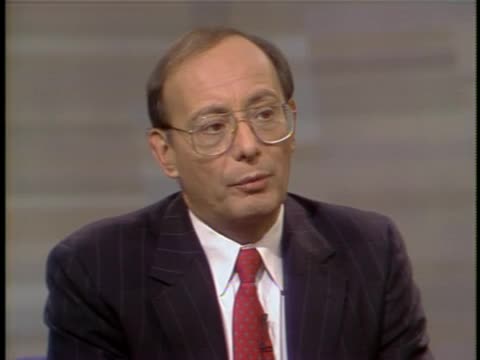
- This episode's headline: Panama Crisis; Frozen Out. The guests include In Washington: Sen. ALFONSE D'AMATO, (R) New York; Amb. JUAN SOSA, Panamanian Ambassador; In New York: FRANK HEFFRON, U.S. Olympic Committee; PETER CARRY, Sports Illustrated; In Miami: ROBERTO EISENMANN, Editor, La Prensa; In St. Louis: RICHARD MILLETT, U. of Southern Illinois; In Calgary: BONNY WARNER, U.S. Olympic Luge Team; ROBERT HELMICK, U.S. Olympic CommitteeNDENTS::. Byline: In New York: ROBERT MACNEIL, Executive Editor; In Washington: JIM LEHRER, Associate Editor
- Date
- 1988-02-26
- Asset type
- Episode
- Rights
- Copyright NewsHour Productions, LLC. Licensed under a Creative Commons Attribution-NonCommercial-NoDerivatives 4.0 International Public License (https://creativecommons.org/licenses/by-nc-nd/4.0/legalcode)
- Media type
- Moving Image
- Duration
- 00:59:29
- Credits
-
-
Producing Organization: NewsHour Productions
- AAPB Contributor Holdings
-
NewsHour Productions
Identifier: NH-1154 (NH Show Code)
Format: 1 inch videotape
Generation: Master
Duration: 01:00:00;00
-
NewsHour Productions
Identifier: NH-3025 (NH Show Code)
Format: U-matic
Generation: Preservation
Duration: 01:00:00;00
If you have a copy of this asset and would like us to add it to our catalog, please contact us.
- Citations
- Chicago: “The MacNeil/Lehrer NewsHour,” 1988-02-26, NewsHour Productions, American Archive of Public Broadcasting (GBH and the Library of Congress), Boston, MA and Washington, DC, accessed April 2, 2026, http://americanarchive.org/catalog/cpb-aacip-507-0k26970f0s.
- MLA: “The MacNeil/Lehrer NewsHour.” 1988-02-26. NewsHour Productions, American Archive of Public Broadcasting (GBH and the Library of Congress), Boston, MA and Washington, DC. Web. April 2, 2026. <http://americanarchive.org/catalog/cpb-aacip-507-0k26970f0s>.
- APA: The MacNeil/Lehrer NewsHour. Boston, MA: NewsHour Productions, American Archive of Public Broadcasting (GBH and the Library of Congress), Boston, MA and Washington, DC. Retrieved from http://americanarchive.org/catalog/cpb-aacip-507-0k26970f0s