The NewsHour with Jim Lehrer
- Transcript
RAY SUAREZ: Good evening. I'm Ray Suarez. Jim Lehrer is off. On the NewsHour tonight: The news of this Friday; then, the war of words over the Iraq war; hammering out an agreement over border crossings in Gaza; the sound of music in New Orleans; crunching the numbers in Washington; and weekly political analysis from Brooks and Oliphant.
NEWS SUMMARY
RAY SUAREZ: Suicide bombers in Iraq killed at least 74 people today at two Shiite mosques; 75 others were wounded. The bombings took place near the Iranian border, about 90 miles from Baghdad. And in the capital itself, car bombers killed another eight Iraqis near a major hotel. We have a report on the day's events from julian manyon of Independent Television News.
JULIAN MANYON: Seen on a security camera, a white van packed with explosives and driven by a suicide bomber. The apparent purpose of this first explosion was to blast a whole in the security wall around the El Hamra Hotel where many foreign journalists stay.
Moments later, there was a second blast as another suicide vehicle tried to drive in but was halted by the wreckage of the first. The force of the two explosions hit Iraqi apartment buildings nearby: One collapsed, another was wrecked. At least two children were among the dead, and a number were trapped among the rubble. The bomb attacks took place near a previously secret Iraqi government bunker where it was revealed this week that suspected insurgents have been beaten, starved and tortured. But Iraqi officials say today's was the journalists' hotel, the second time that hotels used by the media have been attacked in the last month.
To the east of the country, an even more shocking pair of suicide bombings targeted two Shiite Muslim mosques in the town of Jhanaqin. The bombers apparently mingled with worshippers as they assembled for Friday prayers. The explosions caused massive damage to the two structures and left scores of dead and wounded. Once again, many were trapped beneath the rubble making a final casualty toll difficult to establish.
RAY SUAREZ: In western Iraq, the U.S. military said U.S. and Iraqi troops killed more than 30 insurgents in a series of gun battles. One U.S. Marine was wounded. Nineteen Americans have been killed in Iraq this week, all but three in combat. That makes 56 U.S. deaths so far in November. More than 2,080 Americans have died in Iraq since the war began.
The top U.N. human rights official called today for an international probe into Iraq's handling of detainees. Louise Arbour made the appeal amid claims of torture at a Baghdad prison. Iraq's government has said the reports are exaggerated.
There were more political fireworks today on keeping U.S. troops in Iraq. Republicans criticized House Democrat John Murtha of Pennsylvania for demanding a pullout within six months. And national security adviser Stephen Hadley, traveling with the president, had this to say about Murtha.
STEPHEN HADLEY: We think it's the wrong position. We do not see how an immediate pullout contributes to winning the war on terror, bringing stability to Iraq, how it makes America and the United States more secure. It doesn't seem to achieve any of the objectives that we have. And so we simply believe that the Congressman is wrong on this issue.
RAY SUAREZ: A separate White House statement was far more critical of the Pennsylvania Congressman. But Democrats fought back, including Rep. John Tierney of Massachusetts.
REP. JOHN TIERNEY: This is a group of people who either have nonexistent military service or questionable military service. Some have got multiple deferments who would go and attack an individual who is decorated, who has been wounded, who served his 37 years in the military, who is probably the best friend our military personnel have in Congress. And their answer is not to debate the issue about how and when we should have a strategy of getting out of Iraq, is to attack the messenger.
RAY SUAREZ: We'll have more on the political war over Iraq right after this News Summary. South Korea's defense ministry proposed today to pull 1,000 troops from Iraq early next year. That's one-third of the South Korean force in Iraq. That statement came just a day after President Bush met with South Korea's president and praised his country's commitment. The foreign minister of Korea said today there's been no final decision made yet.
Thousands of free-trade protesters greeted President Bush and other leaders today at the Asia-Pacific summit in South Korea. They hurled rocks at riot police, who used high-powered water hoses to keep them back. Some of the police were beaten with bamboo sticks. Inside the summit, President Bush met with Russian president Vladimir Putin and endorsed a Russian proposal to stop Iran from making nuclear weapons.
The U.N. Nuclear Agency raised new questions about Iran's nuclear effort. An agency report detailed documents Iran got from a black-market Pakistani network. The Associated Press reported some documents appeared to show how to make a nuclear weapon core. The U.N. agency meets next week on whether to seek sanctions against Iran.
Al-Qaida in Iraq threatened today to bomb more hotels in Jordan. The threat was in an audiotaped message said to be from Abu Musab al-Zarqawi. He also said last week's hotel bombers did not mean to kill 30 people at a wedding party. Thousands of Jordanians marched in Amman again today to protest the attacks. They carried banners that denounced al-Zarqawi, who was born and raised in Jordan.
In Afghanistan today, a Portuguese solder was killed just east of Kabul; three others were wounded. All were members of the NATO-led peacekeeping force. Earlier this week, suicide bombers killed a German peacekeeper in Kabul.
The U.S. Congress moved early today on tax and spending cuts. House Republicans narrowly passed a deficit reduction bill 217-215. It would save $50 billion over five years in key entitlement programs. Among other things, the bill limits eligibility for food stamps, requires that many Medicaid recipients pay more for health care and raises the costs of student loans for students and lenders. Democrats said the bill will hurt those most in need and will actually increase the deficit. But Republicans called it a responsible plan.
REP. NANCY PELOSI: This is not a values-based budget. This is not worthy of our support. I urge my colleagues to reject this resolution that will increase our swollen budget deficit by another $20 billion, hurt our most vulnerable citizens and the middle class.
REP. DENNY HASTERT: The American people don't want all this platitudes of -- of moral indignity. They want us to go to work. They want us to do our job. They want us to provide a better life for themselves and their children. And this majority will do it. It is our responsibility.
RAY SUAREZ: The House bill still has to be reconciled with a smaller Senate measure. The House did not take up a tax cut bill today, but the Senate voted to extend a number of tax cuts another five years, past 2008, at a cost of $60 billion. White House officials opposed a provision to raise taxes on oil companies by $4.3 billion. We'll have more on the tax and spending cut bills later in the program.
The CIA leak investigation will continue with a new grand jury. Special prosecutor Patrick Fitzgerald made that known today in federal court filings in Washington. The original grand jury indicted the vice president's then-chief of staff, Lewis Libby, on perjury and other charges. The case focuses on the leak of a CIA officer's name in 2003.
Federal prosecutors in Washington charged a high- powered lobbyist today in a fraud scandal. Michael Scanlon was accused with conspiracy to bilk Indian tribes of millions of dollars. Court filings have indicated he may have a plea deal. His partner, Jack Abramoff, is under federal indictment in Florida and still faces a Senate investigation.
On Wall Street today, the Dow Jones Industrial Average gained 46 points to close at 10,766. The nasdaq rose more than six points to close at 2,227. For the week, the Dow gained 0.7 percent; the nasdaq rose 1 percent. That's it for the News Summary tonight. Now it's on to: Fighting words in Iraq; deal-making in Gaza; bringing back the bands; slicing the budget and taxes; and Brooks and Oliphant.
FOCUS - WAR OF WORDS
RAY SUAREZ: The debate that won't end. Did the administration mislead the country into war in Iraq? Kwame Holman has this week's installment.
KWAME HOLMAN: As President Bush left for Asia Monday, Massachusetts Democrat John Kerry was on the Senate floor charging the administration used faulty intelligence to justify ousting Saddam Hussein.
SEN. JOHN KERRY: The war in Iraq was and remains one of the great acts of misleading and deception in American history.
KWAME HOLMAN: At a stop in Alaska, President Bush rebutted that charge.
PRESIDENT GEORGE W. BUSH: Some Democrats who voted to authorize the use of force are now rewriting the past. They are playing politics with this issue. And they are sending mixed signals to our troops and the enemy. And that is irresponsible.
KWAME HOLMAN: Back in Washington Senate Democratic Whip Dick Durbin responded to the president.
SEN. RICHARD DURBIN: Why is this president striking out trying to attack his critics -- because frankly he's vulnerable.
KWAME HOLMAN: The next day Vice President Cheney weighed in.
VICE PRESIDENT CHENEY: A suggestion that has been made by some U.S. senators that the President of the United States or any member of this administration purposefully mislead the American people on prewar intelligence is one of the most dishonest and reprehensible charges ever aired in the city.
KWAME HOLMAN: But Republican Sen. Chuck Hagel argued the administration should be more respectful of criticism over its use of intelligence.
SEN. CHUCK HAGEL: To question your government is not unpatriotic. To not question your government is unpatriotic.
KWAME HOLMAN: The president responded to Hagel's remarks during a press conference in Korea.
PRESIDENT GEORGE W. BUSH: Listen, patriotic is apt to disagree with the president, it doesn't bother me. What bothers me is when people are irresponsibly using their positions and playing politics.
KWAME HOLMAN: Meanwhile, a parallel debate developed over the issue of getting out of Iraq. Senate Democrats call for President Bush to provide dates for troop withdrawal was rejected by Republicans who argued establishing a time line would have negative consequences
SEN. BILL FRIST: Some have referred to this as the cut and run provision; that is, pick an arbitrary time line and get out of Iraq regardless of what is happening on the ground.
KWAME HOLMAN: Still, senators from both parties by a vote of 79-19 agreed on a resolution calling for regular progress reports on the war from the administration, and for a speedier handoff to Iraqi security forces. Democrats claimed victory.
SEN. HARRY REID: It is an important day because the American people have seen United States Senate with a vote of no confidence for the "stay the course" policy in Iraq.
KWAME HOLMAN: But President Bush at a press conference in Japan said his approach would not change.
PRESIDENT GEORGE W. BUSH: As I have consistently said, as the -- as the Iraqis stand up we will stand down.
KWAME HOLMAN: Yesterday Pennsylvania Democrat John Murtha, a twice wounded Marine Corps Vietnam veteran and a longtime supporter of the military, said the U.S. should withdraw its troops from Iraq immediately.
REP. JOHN MURTHA: I have concluded the presence of U.S. troops in Iraq is impeding this progress. Our troops have become the primary target of the insurgency; they are united against U.S. forces. And we have become a catalyst for violence.
KWAME HOLMAN: White House Spokesman Scott McClellan responded to Murtha's remarks saying it is baffling that he is endorsing the policy positions of Michael Moore. Nowhere does he explain how retreating from Iraq makes America safer.
Late this afternoon House Republicans brought a troop withdrawal resolution to the floor in an attempt to force their Democratic colleagues to go on record in support of or opposed to John Murtha's call.
RAY SUAREZ: And to the analysis of Brooks and Oliphant: New York Times columnist David Brooks and Boston Globe columnist Tom Oliphant. Mark Shields is off tonight.
Well, did the shape of the Iraq war debate change this week?
DAVID BROOKS: Yeah, it moved. There is no question that home front is George Bush's biggest problem right now. Things in Iraq are pretty much steady state. But things at home are moving -- moving away from the president.
And I would say the Murtha thing will move it significantly because he is a very pro-defense Democrat. And I would say his speech would have some merit if the main problem in Iraq, the main incitement to violence was the U.S. presence.
It is true the U.S. presence is an incitement to violence. A lot of people hate us so much they are committing violence but the main incitement to violence is the Sunni-Shia split. It's the insipient civil war.
Every single expert I have spoken to, Democrat or Republican says that if we get out of there, we will have a full bore civil war. We are a hated authority figure keeping that complete civil war from breaking out.
So as a policy statement, I think what Murtha did was shallow, incomprehensible. I understand his anguish. That is shared by everybody. And that's why the home front is moving so much away from the president. But as a policy, it just doesn't hold up.
RAY SUAREZ: Shallow and incomprehensible, Tom?
TOM OLIPHANT: Not Jack Murtha, no. One of the things that makes him such a significant member of Congress, apart from his long record of military service, is his deep connections, not only inside the Pentagon and way below the level of the big shot suits, but his connections into the military structure itself: Staff officers, reserves, military, families, particularly where some politicians have noticed some shifting sentiment, a kind of fed-upism, if you will.
The judgment that Americans are magnets for insurgency and for violence in Iraq is something one hears in the political debate more and more from military people themselves. Even Rumsfeld from time to time will say he's concerned about the size, because he's worried about this.
So I agree with David, at least, that Murtha has really changed the equation in terms of the home front. But his recommendation is actually front and center as a policy question over the next six months or so, because I don't think this involvement is sustainable beyondthat unless the situation changes.
RAY SUAREZ: Does Murtha's statement provide cover for other wavering members of the House and Senate to come out?
TOM OLIPHANT: Well, I think it already has. And you know, it's not -- what's not at issue is whether Congress votes to end the war. That wasn't going to happen in Vietnam. It won't happen here.
The question is: What direction has the debate moving and what impact does the home front have on the war front and President Bush's policies? And the impact is going to be significant, especially if the situation in Iraq does not change for the better soon.
RAY SUAREZ: David, given what Tom just said about Jack Murtha, does it make any sense for Republicans to say that he has waved the white flag of surrender to the terrorists, opened a policy of retreat and defeatism, or as Scott McClellan did, associate him with Michael Moore?
DAVID BROOKS: No, that is ridiculous. And everyone I spoke to today was infuriated by the White House response and can't understand, by the way, why the White House can't explain their policy.
You know, I had somebody who was on the ground there risking his life saying: Why are they AWOL on the home front; why can't they have a realistic explanation of what is going on here? Why instead are they attacking bitterly the people that are raising legitimate criticisms?
Nobody should be questioning Jack Murtha as a person, as a figure of integrity. The problem with Murtha's speech is that nowhere in the speech does he actually consider what the consequences of withdrawal would be. There is no discussion of what Iraq would look like. There is no discussion of what the Middle East would look like, or what Zarqawi would look like.
So as a policy matter, you can have disagreements. But the way the administration is trying to justify this policy is infuriating people who agree with it.
RAY SUAREZ: Well, Tom, our time is brief. On a separate but parallel track is the debate over prewar intelligence; is this a totally separate matter or did they move in each other's slip stream this week?
TOM OLIPHANT: It's linked as are the White House comments about Murtha. And what's going on is that the White House in the last couple of weeks has noticed a significant erosion in its support among Republicans in general and conservatives in particular. And by pressing hot buttons, the hope is that the numbers among the base will come up. The problem is that also means that the erosion in the center is likely to continue.
RAY SUAREZ: Let's talk about the debate over prewar intelligence. It flared up in a big way again this week.
DAVID BROOKS: I think it's a way for the Democrats to try to undermine the president. Again, my problem with it is that you can fault the administration on many things in Iraq. But there is no evidence they consciously lied about intelligence. Maybe they didn't tell the whole story. But they have been cleared by commission after commission. The Democrats have produced no evidence of willful misrepresentation.
And so to charge this, which is a heinous charge, is to me just an absurdity, an insult. And on this, I think the administration is completely correct. The Democrats are often, you know, conspiracy.
RAY SUAREZ: So in the months before the invasion, when the president said it was still possible to stop the war and that war was a last resort, do you think that was true?
DAVID BROOKS: Well, I think what he said about the war was very consistent with what the Clinton administration said. They believe that Saddam was five years away from a nuclearweapon. The German intelligence thought three years.
That is more or less consistent with what the Bush administration said, what the national intelligence estimate said, which the Bush administration released. You looked at that. You thought Saddam was a real problem with WMD.
And so the idea that they made this up, the idea that they exaggerated, they were lying, no one has ever actually shown evidence that they were misrepresenting in any way.
RAY SUAREZ: Very quickly.
TOM OLIPHANT: All the more reason to have phase two of the investigation of what happened, so that specific statements can be examined in terms of whether there is any support for them.
RAY SUAREZ: I will talk to you fellows later in the hour, thanks a lot.
FOCUS - TURNING POINT?
RAY SUAREZ: Still to come on the NewsHour tonight: Making a deal in Gaza; making music in New Orleans; cutting the budget and taxes in Washington; and more analysis from Brooks and Oliphant.
RAY SUAREZ: Margaret Warner has the Gaza story.
MARGARET WARNER: It's been three months since Israel's withdrawal from the Gaza Strip, leaving the Palestinians in charge of that desperately poor territory for the first time in nearly 40 years.
But withdrawal brought little improvement for Gaza's 1.3 million people because there was no provision to let them travel to or trade with the rest of the world through borders still controlled by Israel.
That changed on Tuesday with an agreement hammered out at an all-night session Jerusalem, mediated by Secretary of State Condoleezza Rice and Special Envoy James Wolfensohn.
CONDOLEEZZA RICE: This is agreement is intended to give the Palestinian people freedom to move, to trade to live ordinary lives. For the first time since 1967 Palestinians will gain control over entry and exit from their territory.
MARGARET WARNER: The deal followed months of painstaking negotiations between top Israeli and Palestinian leaders brokered by former World Bank President Wolfensohn. He's the U.N. Special Envoy to help Gaza revive economically.
At one point he and some wealthy friends put up $14 million of their own money to buy money-making Gaza greenhouses from Israelis and give them to Palestinians.
But Wolfensohn quickly hit a logjam between the Palestinians demands for free movement of their workers and export crops and the Israelis' demand for security from Gaza-based terrorists.
The result was that post disengagement, Gaza's three main border crossings into Egypt at Rafah, and into Israel through Karni and Erez, were closed more often than they were open.
Last month Wolfensohn sent a bleak assessment of his progress to Kofi Annan, conceding the Palestinians hadn't done enough on security, but criticizing the Israelis forestalling talks, and quote, almost acting as though there has been no withdrawal. Now with two states' agreement, the first of the border openings is due to take place next week.
MARGARET WARNER: For more on the Gaza deal and Gaza's future, we're joined now by Special Envoy James Wolfensohn. Mr. Wolfensohn, welcome.
JAMES WOLFENSOHN: Thank you.
MARGARET WARNER: Congratulations.
JAMES WOLFENSOHN: Thank you so much.
MARGARET WARNER: Why was it so important to get this deal for Gazans to be able to travel and trade?
JAMES WOLFENSOHN: Well, as you know, Prime Minister Sharon withdrew Israeli presentation from Gaza. But if it were left without access or egress, it would be like a prison. And so what was important was to create an environment and the physical possibilities of people and goods moving in and out of Gaza. Andthat is what we achieved -- plus a linkage between Gaza and the West Bank.
So crucial to the future of the Gazan people is a sense of hope, a sense that they are able to earn money, that they can trade. And that is the sequence that was followed. And that's why we were very happy to have the agreement just two or three days ago.
MARGARET WARNER: So how much -- what agreement -- or how much will it do to ease Gazans' isolation?
JAMES WOLFENSOHN: Well, when it is carried forward, it will have a number of parts. First it will have a border with Egypt which is the so-called Rafah Crossing.
Then there will be a tripartheid border with Israel, Egypt and the Palestinian territory of Gaza, which is Karin Shalom.
And then there will be a series of others that are opened to access and egress from Israel to Gaza. There will then be a linkage between Gaza and the West Bank that will be carried out with trucks and with buses. There will also be access in the West Bank.
We're also discussing a port which will be approved in the next 14 days -- work to go on the airport. And so these things together bring about possibility for the Palestinians to lead a more normal life.
MARGARET WARNER: Now what did the Israelis get out of this on their security concerns?
JAMES WOLFENSOHN: Well, the balance is always between Israeli security and freedom and hope for the Palestinians. And so the reason that it took so long was to try and bring about a secure situation for the Israelis because they were unused to seeing the Palestinians have open doors -- and at the same time, to not inhibit the Palestinians from having a sense of freedom.
We've come to that balance with the introduction also of the Europeans who have agreed to come in and act as a monitor in the Rafah Crossing. And that's the first time that the Europeans have been in an official capacity for a very long time. And so that was another extremely important aspect of these negotiations.
MARGARET WARNER: This does put a lot of responsibility on the Palestinians. What happens the first time, and there probably will be a first time, that a terrorist gets himself or his bomb material through one of these crossings?
JAMES WOLFENSOHN: Well, I think you know that on each side there is a majority of people -- the Palestinians and Israelis -- who want to bring about peace -- who want to have a centrist view, if you like.
But at the extremities of the Palestinians and Israelis, there are people that don't want to see this happen. Now what we don't want to do is to be hostage to the extremes. And what I was delighted to see in the ten days I was in Israel, that the Israeli chief of staff said for the first time that --.
MARGARET WARNER: The military.
JAMES WOLFENSOHN: Yes, the military chief of staff, would -- made a statement that in the event of a terrorist problem, that there should not be immediately the reaction to close the borders because that in a way empowers the terrorist.
So I anticipate that unless there is an immediate threat, you will have a strong military reaction, but you will have a continuity of trade. And that's going to be the first time that that sort of setup exists.
MARGARET WARNER: That letter you wrote to Kofi Annan a month ago expressed a lot of frustration. And then Monday night you were quoted as having said in Israel, you know, you have to decide what you want to do. If you want to blow each other up, I have a very nice house -- you named where your houses were -- and I will watch with sadness as you do it. Were you ready to quit if this didn't happen?
JAMES WOLFENSOHN: Well, I was frustrated because I had been working on the same points for seven months. And there is a limit to anyone on the outside of the negotiation being able to make a decision for people on the inside of the negotiation.
So I was concerned particularly because there are two elections coming up. The Palestinian election on the one hand, Jan. 25, and rumors and subsequently the reality that there is likely to be an election for the Israelis sometime in the next three, four five months; and I was concerned that unless we finalize these negotiations, we would go into a period of drift.
MARGARET WARNER: How important was it to get Secretary of State Rice's personal involvement? She even delayed her trip to South Korea to stay on this.
JAMES WOLFENSOHN: I think it was very important. I think the role of an envoy can set things up. But at the last minute when you are really trying to get people to decide, there is no doubt that the secretary of state of the United States has more clout than any envoy.
And so I was extremely happy that she came in. And she did her job very, very well. We worked very closely together. We stayed up all night, which is traditional in these sorts of things. And she was able to announce an agreement just before she took off for Korea.
MARGARET WARNER: And do you think her personal involvement is a model for what it is going to take to get any larger agreement?
JAMES WOLFENSOHN: Probably. I think when you have two people -- two peoples, the Palestinians and the Israelis, that lack a sense of trust for each other, it's really important to have a person in the person of the secretary of state who comes in and essentially blesses the deal and gives assurances to each side.
Now I think we can make a lot of progress if there is an implementation of the agreements that we have now undertaken taken by each side. But the crucial element is to build mutual confidence and then back it up, frankly, with the United States and now the Europeans to have the participants know that this thing is going to work.
You are finally -- you are really to be the economic tsar of this Gaza operation. And you did get the G-8 countries to pledge $3 billion this past summer for economic development. But this is such a poor region, maybe the poorest in the Arab world. What needs to happen next to really kick-start, get the Gazans a chance at some kind of real economic life?
JAMES WOLFENSOHN: Well, that is because the G-8 promised to be part of the $3 billion. We have to get money from the Middle East and the United States as part of that.
What needs to be done, I think, is to first of all open up the possibility of trading. There is no sense with one million, three hundred thousand people in Gaza to have them trade with each other. The largest trade is already with Israel.
But the possibility of trade with the outside world, with Egypt now that you have the Rafah Crossing, to go through the West Bank to Jordan, these are all the things that are necessary. And I think possible. You need to create an environment for trading.
MARGARET WARNER: Special envoy James Wolfensohn, thank you.
JAMES WOLFENSOHN: Thank you so much.
FOCUS - BANDING TOGETHER
RAY SUAREZ: Now, hearing the music in New Orleans' past and future. Jeffrey Brown looks at one part of the city's attempt at recovery.
JEFFREY BROWN: For anyone who loves New Orleans and its music, this was a sight and sound to savor: One of the city's leading ensembles, the Rebirth Brass Band, at one of its leading clubs, Tipitina's, open for the first time since Hurricane Katrina hit.
SPOKESMAN: Today it's our first day back, y'all, rebuilding New Orleans!
JEFFREY BROWN: The appropriately named band has been a New Orleans fixture since 1983, but all of its members have been displaced by the storm. Most lost their homes and their instruments. Derek Shezbie literally had to swim to safety and now lives in Baltimore. Shamar Allen's home in the lower Ninth Ward was completely demolished; he now lives in Atlanta. For the band and for an overflow crowd, this was an evening of hope for the rebirth of a city and the musical tradition so tied to it.
But earlier that day, on a once beautiful tree-lined street in the Gentilly neighborhood of the city, we saw firsthand how culture and lives have been upended.
MICHAEL WHITE: So you can see where the water line was at the top of the door.
JEFFREY BROWN: You mean the line right there?
MICHAEL WHITE: Yeah. That's the highest point, and that was at least nine feet.
JEFFREY BROWN: Michael White is one of New Orleans' most prominent musicians, and, as a professor at Xavier University, a scholar of the city's musical history and culture.
MICHAEL WHITE: Music is a way of life in New Orleans, but it was a way of life for me. It's a great thing to have that tradition, and so much of it was in that house.
JEFFREY BROWN: Joined by White's friend, filmmaker Michael Murphy, we donned masks and gloves to cope with the intense smell and the slime of mold everywhere.
MICHAEL WHITE: This was my piano. I used to have rehearsals in here.
JEFFREY BROWN: Thirty years of collected artifacts, photos, manuscripts, books, pieces of music history, all soggy under our feet.
MICHAEL WHITE: Somewhere in there I had a lot of music, original transcriptions of music of Jelly Roll Morton, Sydney Bechet, King Oliver. And then there were a lot of original pieces that I wrote I never had a chance to really record or play.
JEFFREY BROWN: Perhaps most painful: White's collection of clarinets.
MICHAEL WHITE: These were my vintage instruments from the 1890s into the early '30s, and most of them were in the cases. A lot of them were rare, handmade, and, you know, I would play different ones. I would put them in rotation.
JEFFREY BROWN: You would use them?
MICHAEL WHITE: Oh, yes.
JEFFREY BROWN: Wow. Different sounds?
MICHAEL WHITE: Each instrument is like its own person. It has its own sound, its own personality and moods almost. I couldn't bare to open those cases because to me those are bodies inside.
JEFFREY BROWN: White is now living in Houston and unsure of the future, his own and the cultural life of the city.
MICHAEL WHITE: We don't know how many people are on the death lists are people that we know-- maybe musicians, maybe people that came out to hear the music. You know, it's very difficult. Everyone is trying to deal with just basic survival, you know-- finding money to eat, places to stay, dealing with whatever illnesses or emotional trauma that remains.
But it's tough, so we don't know when, how or if... how much of the musical fabric that really makes New Orleans is going to return.
JEFFREY BROWN: New Orleans has one of the great cultural traditions of any city, anywhere. Louis Armstrong, Jelly Roll Morton and Fats Domino, the Neville and Marsalis families-- New Orleans has an honor roll of influential musicians hard to match.
Here, perhaps like no other place, the music comes directly from the streets, passed down from generation to generation most famously in the jazz funerals, which begin with the slow dirge of sorrow and give way to the raucous joy of the so-called "second line" street parade.
Like so much about New Orleans in the past and now, death and life side by side. The rhythms here are a gumbo of African, Caribbean, European, mixed together for hundreds of years, rising from places like Congo Square.
DAVID FREEDMAN: So this is where slaves on Sunday afternoons were allowed to sing and dance and play the wonderful African rhythms that they brought with them, became the basis for jazz and for all the other great music to come out of New Orleans.
JEFFREY BROWN: David Freedman runs one of the pillars of the city's musical culture, the small public radio station WWOZ, which was flooded and damaged.
SPOKESMAN: This is the New Orleans show.
JEFFREY BROWN: The operation was moved to a makeshift quarters in Baton Rouge where many of the station's volunteer DJ's are living in exile. Freedman says those DJ's, like the musicians they play, are part of a "living culture" of New Orleans music.
DAVID FREEDMAN: The music doesn't come from CD's. It doesn't come from radio. It comes from the people. It's an expression of their way of life and the way they live their life. As a kid, jazz funerals used to go by my house just down the block. I mean, that's what the city means to me. I grew up here, and I think that is what it means to everybody.
JEFFREY BROWN: With all the city has to deal with now, there is an awareness that helping its culture come back to life is a big part of bringing the entire city back, and that means helping the musicians themselves and getting them home.
Bill Taylor heads the Tipitina's Foundation. Affiliated with the music club, it has located and offered aid to musicians displaced by Katrina.
BILL TAYLOR: You know, we called all the people that play the club regularly and just said, "Where is everybody? What do they need?" I mean, they need a place to live. They need food for their kids. "What do you all need? What can we do to help, you know, to give you some hope right now?"
JEFFREY BROWN: Amid talk that the football Saints and others might leave, Taylor says his club must step up.
BILL TAYLOR: If we don't stand up and say, "we're here, we're not going anywhere," then who will?
JEFFREY BROWN: Halloween weekend, there were signs of musical life everywhere. Kermit Ruffins, a local legend and trumpet-playing, singing heir to Louis Armstrong, performed for an overflow crowd at Fat Harry's, a neighborhood bar. (Scat singing)
KERMIT RUFFINS: We're like the last cats doing that old New Orleans tradition of music with those old words to those old beautiful tunes. We're doing a lot of our own stuff at the same time. New Orleans is famous for its musicians, and I can't wait till everybody gets back and has a big party.
JEFFREY BROWN: You think it's going to survive?
KERMIT RUFFINS: I know it will survive. We will swing again, that's for sure.
JEFFREY BROWN: The Soul Rebels Brass Band and costumed revelers marched through the French Quarter, which escaped much of Katrina's wrath. And the city also went forward with a smaller version of its annual Voodoo Festival, a mix of rock and traditional music. Thousands turned out, and the theme of rising from Katrina was everywhere.
SPOKESMAN: Baton Rouge is nice. Atlanta is okay. I got nothing against Texas, but New Orleans is the greatest place in the world. (Cheers and applause)
JEFFREY BROWN: Mayor Ray Nagin was there and took a spin to the music. Talking with us, the mayor was cautious but upbeat.
MAYOR RAY NAGIN: New Orleans is on a long road to recovery, but we have transitioned from the rhythm and sounds of New Orleans being military helicopters and, you know, humvee vehicles, to now, the music is back. And when the music is back, New Orleans is alive.
JEFFREY BROWN: Scenes of normal life juxtaposed against enormous devastation, especially in the neighborhoods where many of the city's musicians once lived. What happens now to New Orleans' culture, and, by extension, to the city itself? Michael White, like so many others, invokes the spirit of the jazz funeral.
MICHAEL WHITE: I think one of the lessons of the jazz funeral for all these years is that that is what we have to do now. We have to be optimistic and say, "We have transitioned into something else, but that something else is an opportunity for it to come back and be great."
JEFFREY BROWN: That's a little hard when you walk in your house the way we just did.
MICHAEL WHITE: It's tough, but it's all i have to hold on to. You have to continue, hold your head up, be proud, look for the good part, express the pain and sorrow through the music and keep going.
(Music)
JEFFREY BROWN: The Rebirth Brass Band was certainly doing its part, playing four separate concerts in a single day. But the next morning, the musicians were to fly out of New Orleans back to their temporary lives, unsure of when they could return to their homes. (Applause)
RAY SUAREZ: You can hear more of the work of these musicians and learn about the groups trying to help them by visiting our web site at www.pbs.org.
FOCUS - MAKING THE CUTS
RAY SUAREZ: Now, the other battle on Capitol Hill this week: Fights over spending and taxes. Early today, the House narrowly passed its version of a deficit-reduction bill; its version differences from the Senate, particularly on spending for social programs.
The Senate, meanwhile, approved a bill extending tax cuts, but it, too, has some big differences from what the president and House Republicans want.
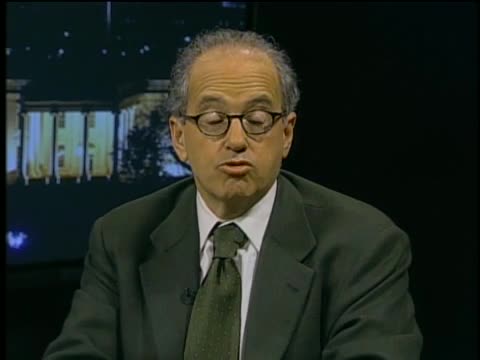
To help us understand the latest developments and what's at stake, I'm joined by Norman Ornstein, who watches Congress for the American Enterprise Institute.
Well, Norm, for the last five years, tax cuts seem to pass pretty easily. What's different about this season?
NORMAN ORNSTEIN: We're in a very different crunch point right now, Ray. And it's basically because post Katrina with a huge increase in spending on the horizon, a combination of conservatives uneasy about the excess spending, moderates who don't like to see some of the budget cuts being put forward, and nervousness about the deficits that will ensue down the road have combined to create a different climate in both the House and Senate for spending and taxes, all coming at a very bad time because of the larger political environment.
RAY SUAREZ: The president has been steadfast about his desire to move ahead and make permanent cuts that had sunset provisions in them. Where does -- where is the state of play now on making those tax cuts permanent?
NORMAN ORNSTEIN: Well, in the Senate the -- one of the setbacks that the Republicans had was in the Finance Committee which handles all of these tax issues. We have a $70 billion tax cut that was promised in the budget earlier in the year. And that included extending very popular tax breaks, popular with businesses and well-to-do individuals on capital gains cuts and on dividends.
And a Republican Olympia Snowe of Maine balked at those tax cuts going out to the year 2010, 11 and 12 in this time of austerity otherwise. They were forced to bring a tax bill to the floor that took those provisions out and also added in some revenues from oil companies, ended up with a $60 billion version, not the $70 billion that they wanted, and without the most popular provision. They got that through, but of course the House of Representatives has yet to act and is insisting on putting those tax cuts back in.
RAY SUAREZ: The leadership in the White House, House and Senate said that some of these budget woes could be answered not by turning your back on the tax cuts, but by making decreases in spending. What is happening on that front?
NORMAN ORNSTEIN: That's an even bleaker picture in many ways with tensions that boiled over. Last week before Congress went away for the Veteran's Day recess the leadership suffered a rare problem. They simply couldn't come up with the votes for what is called a budget reconciliation matter, that folds together budget changes and enforces them.
They had pledged over $50 billion, $54 billion, actually, included within it a large number of other provisions, for example, drilling in the Arctic National Wildlife Refuge that they had not been able to get through on an energy bill because under the rules of the Senate, you can make these things happen without a filibuster being allowed by just 50 votes, also offshore oil drilling in places like Florida.
Republicans balked at those changes as well as changes in food stamps, Medicaid and many other areas. Unable to get the votes, they scrambled through the entire week and finally in the wee hours of the morning, leading into today, they managed to make it work by two votes but not before suffering another very embarrassing setback on the largest appropriations bill, Labor, Health, Human Services, which failed on the floor by a pretty substantial 15-vote margin, the first time that they have had that failure in ten years.
RAY SUAREZ: Well, you referred several times to unable to get the votes, unable to bring things to the floor. Isn't this an all Republican game at this point? Is there any role for the Democrats in passing a final spending plan for 2006 and in the reconciliation between House and Senate?
NORMAN ORNSTEIN: The role the Democrats have played at this point is as a united minority party with not a single vote going for the tax plan, tax cut plan in the Finance Committee in the Senate and not a single vote for the reconciliation budget cut plan on the House floor. That is forced Republicans to get all their votes from within their own ranks. They expressed a great deal of resentment about the Democrats refusing to come forward on the floor of the House, had difficulty because the unity that was there through the first four and a half years is starting to fade a little bit.
Some of this, of course, is second term blues, a president who whose standing is down, a party growing nervous about the midterm elections ahead, traditionally bad ones for the president's party, and also some resentment over the strong-arm ago tactics that their leaders have used with some of these bills in the past: conservative resentment over tactics used to expand spending in areas like Medicare prescription drugs, moderates over plans to cut some of these very popular and difficult programs.
The appropriations bill that went down, for example, would have cut some of the funding going to the Centers for Disease Control just at the point that we were discussing the need for increasing spending for the coming possible pandemic.
RAY SUAREZ: Now with all these matters that we've discussed so far, still unresolved, aren't there still some big appropriations looming that haven't been touched yet?
NORMAN ORNSTEIN: Well, we had major controversy over the defense appropriations, which passed the Senate, of course, with a provision banning the use of torture by American military or other agencies, the McCain amendment. The House has vowed not to approve that in their appropriations bill. That is a big one. They want to get out of here around Thanksgiving. They hope to get out for the year.
Leaders in Congress are not going to be able to do that. And even though they finally succeeded in getting that budget reconciliation bill through the House, it is a dramatically bill than the one that passed the Senate, huge gaps in terms of Medicaid and children's health, in terms of student loans. Reconciling those will be difficult, the tax bill, very difficult to reconcile, all of these appropriations bills now six weeks into the new fiscal year undone. It's a mess for them. They can breathe just slightly easier having passed a couple of bills to move the process along. But they have big migraine headaches ahead.
RAY SUAREZ: Norm Ornstein, thanks for joining us.
NORMAN ORNSTEIN: Sure, thank you.
FOCUS - BROOKS & OLIPHANT
RAY SUAREZ: And again to David Brooks and Tom Oliphant.
Well, Tom, you heard Norman Ornstein refer to the difficulties of a majority party. Now, I was always told that running everything is actually easier than being in the minority. What is going on?
TOM OLIPHANT: Bill Clinton could tell you from 1993 that it isn't easy. And the experience this year has been pretty horrendous. And I think it tracks rather easily with the falloff in the support for President Bush as his troubles have mounted.
This is a border-line dysfunctional Congress. And i think i can sum it up with basically three numbers. I mean you have Katrina happens. And up it all goes by about $60 billion. This hits some conservatives the wrong way, demanding action to reduce expenditures and they sort of cut by 50.
But then coming up behind it is this strange tax cut, primarily geared toward investment income that is at least at this point another $60 billion. So by my calculation, the minority leader in the House, Nancy Pelosi, is off by quite a bit. The deficit is going way up. This concern about spending is almost belied by the focus on the tax cut that is coming in right behind it. Dysfunctional is the right word.
RAY SUAREZ: David?
DAVID BROOKS: I don't totally disagree with that. Yeah, i think what strikes me is that the budget deficit has gone up. The big budget items are off limits. Some of them are the tax cuts. Some of them with the prescription drug plan, things like Medicare where the real money is. I mean, one of the things that struck me is, is watching the Congress, it is like watching two people in New Orleans debate about whether their fishbowl is overflowing when the Mississippi River is coming down on them.
And a lot of these cuts, these cuts are like a few billion here and a few billion there, while you have this massive tax cut, massive Medicare spending plan, and then the normal entitlement problems that have been our permanent problems all coming down.
So there is a great deal of angst about the deficit and the long-term entitlement problems. But because so many things in the budget are off limits that we with can't even talk about, there is really no addressing the real issue, and dysfunctional is not a bad word for that.
RAY SUAREZ: Well, how much of this is an appearance problem, not wanting to be seen continuing to cut the taxes on the profits on investments while you are cutting food stamp eligibility, not wanting to make tough choices about entitlement programs while you are giving a couple of 100 million bucks to build bridges to tiny islands in Alaska?
DAVID BROOKS: There's a lot of that. There's also - to be fair, the Republicans believe that the tax cut for captain gains help economic growth and are good for the country.
But, you know, the fundamental thing driving this is the moderate Republicans who are flaking off, and who are just tired of towing the line.
Somebody said that when moderate Republicans revolt, it's like Indian summer, it's nice while it lasts but you no know it's not going to last forever. But I'm not sure about that. I have been spending a lot of time with moderate Republicans and when they talk about the president's reputation in their districts, they use words like poisonous, radioactive, hated, loathed. They're in districts often in the Midwest and the Northeast, these moderate Republicans where they have to be against the president. They just have to. And so you are beginning to see that on issue after issue.
RAY SUAREZ: So if you are running, Tom, in the Chicago suburbs or upstate New York, the president's woes become your own?
TOM OLIPHANT: It almost becomes a substitute. President Bush was re-elected a year ago. He's never going to be on any ballot again. If you are frustrated at the way things are, you really have no alternative to taking it out on your local Republican Congressman or senator or governor or school board member or what.
Now the way the system has trumped these problems in the past, is when you put everything on the table, not merely the expenditure side that David mentioned but with presidents like Reagan and Clinton, you put taxes there too, or the first President Bush. But as long as this thing is off limits in large part where taxes are concerned, but are you trying to do it all on the spending side, you will by definition fail because the cuts are too severe to have broad political support.
And some of the advocates of not cutting entitlement spending out point out the burden of those cuts land on many of the people that you are trying to help in the Gulf Coast so the money comes out of one pocket and into another.
DAVID BROOKS: And as more money gets sucked up by entitlement programs, which are untouchable, the rest of the money really tends to be the money that's focusing on helping the poor; and when you make these cuts on the year-to-year program, the non-entitlement programs, you are cutting the poor.
TOM OLIPHANT: I mean, just in the last couple days to show, it even goes further than that, the money to fund the speech that the president just made about bird flu disappeared this week. There are really severe crimps being put in the National Institutes of Health, the Centers for Disease Control. There is no money for the much higher heating bills that people who experience cold weather will have this year particularly because natural gas prices have gone through the roof, not just oil prices, dysfunctional in terms of doing its work, dysfunctional in not being able to address the issues that are on kitchen tables in America.
DAVID BROOKS: I do feel compelled to add that federal domestic spending has increased faster under Bush than under LBJ. I mean, we are coming off a bunch of years of incredibly high spending increases, the Department of Education is up 50 percent, roughly in that, so if they don't get an increase, it is not like you are cutting into bone in a lot of these programs but, nonetheless, it is not a rational way to do budget.
RAY SUAREZ: Well, can they solve what is bedeviling them this week and get this all done before the end of the year?
DAVID BROOKS: Well, I think the lesson of these appropriations is that they can win off enough folks to get to both majorities, maybe. But, you know, this is not a Congress where the Republican leadership can run rough shod any more, that's for sure.
RAY SUAREZ: Well, when you are relying on the absence of a Democrat from Brooklyn to win your majority, your vote, you are already skating on pretty thin ice. Thanks, fellows.
RECAP
RAY SUAREZ: Again, the major developments of the day: Suicide bombers in Iraq killed at least 74 people at two Shiite mosques; 75 others were wounded. And a White House statement sharply criticized House Democrat John Murtha for demanding U.S. troops leave Iraq within six months. Democrats defended Murtha. Washington Week can be seen on most PBS stations later this evening. We'll see you online and again here Monday evening. Have a great weekend. I'm Ray Suarez. Thanks for joining us; good night.
- Series
- The NewsHour with Jim Lehrer
- Producing Organization
- NewsHour Productions
- Contributing Organization
- NewsHour Productions (Washington, District of Columbia)
- AAPB ID
- cpb-aacip/507-0g3gx4595x
If you have more information about this item than what is given here, or if you have concerns about this record, we want to know! Contact us, indicating the AAPB ID (cpb-aacip/507-0g3gx4595x).
- Description
- Episode Description
- This episode's headline: War of Words: Turning Point; Banding Together; Making the Cuts; Brooks & Oliphant. ANCHOR: JIM LEHRER; GUESTS: TOM OLIPHANT; DAVID BROOKS; JAMES WOLFENSOHN; NORMAN ORNSTEIN; TOM OLIPHANT; DAVID BROOKS; CORRESPONDENTS: KWAME HOLMAN; RAY SUAREZ; SPENCER MICHELS; MARGARET WARNER; GWEN IFILL; TERENCE SMITH; KWAME HOLMAN
- Date
- 2005-11-18
- Asset type
- Episode
- Topics
- Social Issues
- Global Affairs
- Film and Television
- War and Conflict
- Health
- Religion
- Journalism
- Military Forces and Armaments
- Politics and Government
- Rights
- Copyright NewsHour Productions, LLC. Licensed under a Creative Commons Attribution-NonCommercial-NoDerivatives 4.0 International Public License (https://creativecommons.org/licenses/by-nc-nd/4.0/legalcode)
- Media type
- Moving Image
- Duration
- 01:34:45
- Credits
-
-
Producing Organization:
NewsHour Productions
- AAPB Contributor Holdings
-
NewsHour Productions
Identifier: NH-8362 (NH Show Code)
Format: Betacam: SP
Generation: Preservation
Duration: 01:00:00;00
If you have a copy of this asset and would like us to add it to our catalog, please contact us.
- Citations
- Chicago: “The NewsHour with Jim Lehrer,” 2005-11-18, NewsHour Productions, American Archive of Public Broadcasting (GBH and the Library of Congress), Boston, MA and Washington, DC, accessed June 7, 2026, http://americanarchive.org/catalog/cpb-aacip-507-0g3gx4595x.
- MLA: “The NewsHour with Jim Lehrer.” 2005-11-18. NewsHour Productions, American Archive of Public Broadcasting (GBH and the Library of Congress), Boston, MA and Washington, DC. Web. June 7, 2026. <http://americanarchive.org/catalog/cpb-aacip-507-0g3gx4595x>.
- APA: The NewsHour with Jim Lehrer. Boston, MA: NewsHour Productions, American Archive of Public Broadcasting (GBH and the Library of Congress), Boston, MA and Washington, DC. Retrieved from http://americanarchive.org/catalog/cpb-aacip-507-0g3gx4595x