Wall Street Week with Louis Rukeyser; 1517; The View from the Fed
- Transcript
Oh. World. Record. Wall Street Week With Louis Rukeyser
brought to you by this and other public television stations and by grants from the Hilton Hotels Corporation America's business address and a Conrad international hotels a subsidiary of Hilton USA competition makes American business except Prudential based security and investment firm with rock solid resources that's leading the way to the Future for Investors. And the Sperry corporation providing high technology computer based system solutions to the complex. Problems of business industry government and national defense. Produce Friday October 25. Our panelists are Howard P. Cole hoodlum Robert Stovall and Julius Westheimer. Tonight's special guest is Preston Martin vice chairman Federal Reserve Board did.
That event on Louis Rukeyser as of last week week. Welcome back. It was that salty Texan John Nance Garner who said of the vice presidency of the United States more or less that it was not worth a pitcher of warm spit. Imagine how indelicate gone it would have been if he had been asked to assess the vice chairman ship of the Federal Reserve Board. In ordinary times there's been no surer ticket to Washington obscurity being named vice chairman of the Federal Reserve Board with roughly equivalent in American terms to being designated in the Soviet Union as an official non-person why until recent years the average American neither knew nor cared who the chairman of the Federal Reserve happened to be or what in the world he ever did. That of course has changed. And Paul Volcker has been widely indeed almost ritualistically described as the second most powerful man in the U.S. government. But the vice chairman come on now. This isn't supposed to be trivial pursuit the vice chairmanship was a
comfortable way to recognize some colorless but loyal economist a banker for whom no minor ambassadorship was readily available. But the fellow was certainly not expected to E-Myth a controversial peep in or out of the presence of the chairman or heaven forfend actually ever to get his own name in the papers. And that's why my guest tonight has truly and brashly made history this year. It's not just that the White House repeatedly makes it clear that Preston Martin's and not Paul Volcker's is the voice of its own preferred monetary policy. It's not just that had the financial markets not got themselves in such a stew at the prospect of losing invoker in 1903 the administration plainly would have liked to name Martin Chairman then. It's not even that Martin. Astoundingly in a city where naked ambition is universal but never admitted makes no secret of the fact that he actively lusts for the chairmanship. The very next time it becomes available it's that Preston Martin has committed the
unspeakable sin of breaching the formal show of unanimity that normally shrouds the deliberations of the Fed and is even dared to challenge his chairman in public. And let me tell you it's been a heck of a lot better fight than Spinks versus Holmes. The most unprecedented out in the open run in of all came last June when Martin urged more study of some ideas for dealing with third world debt problems. The vocoder had already denounced as unrealistic. The next thing you knew from halfway across the world in Tokyo poker was giving a pretty good example of what passes in monetary circles for spontaneous combustion castigating his colleagues reported remarks as in comprehensible. And while the temperature gauge has been turned down a bit since then the two top monetary officials of the US have not exactly become Darby and Joan. Tonight we'll meet the first vice chairman of the Federal Reserve Board that anybody ever heard of and
find out what he really thinks and where he thinks we're heading. But first let's check out the more routine squabbling in Wall Street. And after four straight weeks of going up the Dow Jones Industrial Average was looking a little tired backing down from its recent record heights to close with a loss of about 12 points at thirteen fifty six point five too. But despite a Friday slump the broader market indexes on pace the blue chips in the Dow and managed to chalk up another week of gains a notch more encouraged to wear our elves whose technical market index improved to a mildly bullish plus two. Gold silver in the dollar with little change this week. But one item definitely will make it into the history books. The U.S. government's budget deficit for the fiscal year that ended last month. The top two hundred billion dollars for the first time since George Washington reportedly stood on the banks of the Potomac River picked up a half dollar
and tried out his revolutionary slider. Bob Stovall what's the next pitch on Wall Street like the big the stock market and the investors are looking at earnings and earnings really have been a disappointment to most analysts and most investors. What drives markets. Earnings dividends and the environment of interest rates and inflation. And unless we see some sign of a pick up in the forward pace in earnings and less analysts stop cutting their earnings estimates much more frequently than raising them. I think we're going to see more of the same takeover speculation some of it real Some of it imagined. I do advise people to start cashing in some profits if they have I've been doing that right along i. I still think that the stock market has a chance of getting up to 14:00 by the end of the year if not too many weeks off and but it's not too many points away either. You just have a few explosive days and be there but I do think that if you've got a good profit it's not a bad time to take it.
That will come I'm sure as words of cheer to Julius Westheimer has been telling us that for the last 40 points that we start taking profits if you take all your profits now and I love some of you thank you very much separation. I mean what are you telling your clients. I'm telling him the same thing that I've been telling him right along and since I've been doing out the market really hasn't moved up at all. The Dow Jones has moved up just a little bit because of some takeovers but the S&P in the new New York Stock Exchange composite have barely budged. LEWIS I think to get some enthusiasm in the market you're going to have to see as Bob said some earnings increases. What we've had in the last couple of years is a rise in stock prices but very skinny earnings increases. The result is the price earnings ratio has the dollar amount that investors will pay for a dollar for earnings that has skyrocketed. Neal you know Bob as mentioned Washington do they have any role in reviving this market. Yes. If the White House would take some interest in reducing the deficit and keeping interest rates down because real adjust inflation adjusted interest rates are still
quite high then I think you might see some headway in earnings and possibly some headway in Wall Street but not until that happens. If you go home do you agree with us. I'll take off on the theme about where Washington is I think that the key thing to remember is that when the current administration came in their number one goal was to get inflation down they got interest rates down. Your guest is going to talk about that and the market rose with those right. Declining interest rates. I think the focus is completely shifted now on the number one objective of the Fed and the administration is to get the dollar down. That will mean I think rising interest rates I think that will mean a toppings equity stock market. And I have a cautious equity view. We are told that to get the dollar down you bring interest rates lower. You're saying there go higher. You never really don't know. Yes I think that you're going to have to provide an attractive opportunity for foreigners to come to the U.S. to buy our deficit dollars. As long as we have the debt
as big as it is you're going to have to provide a real interest rate return that's going to make them want to come here instead of go somewhere else. This week Japan it raised its Federal Discount rate because we have it. Someone listening to this review might conclude that your unanimity was highly bullish and is dangerous when we're all together I think but I certainly am and I guess they were all together in a very cautious can't live on equities. OK it's never bad to be cautious specially about your own money. Now this is the point in the program when we usually pause to answer a round of viewer questions tonight though we're going to be using that time to ask perhaps the most important economic question of all what's happening to the nation's money. But next week we'll be back to our usual tricks and treats. So keep those cards and letters coming to us here at Wall Street Week Owings Mills Maryland 2 1 1 1 7. That's Wall Street Week Owings Mills Maryland. 2 1 1 1 7. Now before we meet tonight's special guest let's see what much of the arguing is about the question of whether the country is getting what for an individual would be no problem at all.
Namely too much money. There are a couple ways to defeat the targets that the Federal Reserve Board set for the nation's money supply this year. But since we're nice guys we'll look at the broader more generous representation which not surprisingly the Fed itself now prefers the Fed's original target for M1 which includes private checking accounts and cash called for 4 to 7 percent growth in 1995 by mid-year However the Fed in effect confessed failure picked a new base and gave itself a new higher target. But M1 has outraised even that range in the first three quarters of 1995. Rising at a heady annual rate of twelve point six percent on the other hand into a broader money measuring Compazine M1 as well as savings accounts and personal money market mutual funds has expanded more moderately although it's nine point three percent annual rate of growth through September puts it to above the upper band of the Fed's target range. In fact M3 has been the only money measure to stay
within the Fed's announced targets this gauge comprising M2 large time deposits and institutional money market funds was up eight point two percent at the end of this year's third quarter just about where the Fed said it would be. Why does the Fed so often miss its own targets. Does it really matter anyhow. For some thoughts on that let's go over now and meet tonight's special guest Preston Martin. Press welcome when the WHY that you could be with us tonight thank you Lou nice to be here. Preston Martin has been Ronald Reagan's favorite monetary economists for a long time as governor of California in 1967 Reagan appointed Martin the state's commissioner of savings and loans two years later President Nixon day Martin Chairman of the Federal Home Loan Bank board which regulates SNL as nationally and in January 1982. Now President Reagan tapped his old friend to be vice chairman of the Federal Reserve Board press if you had been chairman not vice chairman but chairman of the fed these last four years how would policy have been different.
Lou I think policy would have been generally the same. I think the Fed has accommodated vastly changing need out there by consumers and by business furred by government for that matter. There are times when I would have been a little more accommodative in the markets. But but generally speaking I subscribe to the last three to four years. Maybe some of your supporters are tuning fork that one of your more enthusiastic supporters Jack Kemp said the other day speaking of the two new nominations of the president of the Boyd man manual Johnson and Wayne and Joe said when you add Johnson this I'm quoting Jack Kemp when you add Johnson and Angel depressed and Martin and Martha seeker you have a combination he means for the seven members of the board that I believe will give us a steady reduction in interest rates. Is he right. It's very hard to say what any Federal Reserve Board could do to
bring down interest rates. The discussion that has just gone on with with your panelists I think appointed to the to the difficulty there and that is they were living beyond our means as a country. We're running a government deficit that is that is unheard of in magnitude and and it's roll over and we must continue to attract the foreign investor. You're saying that the monetary job is impossible because we're not doing the job of the budget. I'm saying the monetary job is very much more difficult with these mega deficits going on. What would your prescription be for them. Well we simply have to continue to be encouraged every time the Congress either House or the Congress or conference committee makes further progress in multi-year deficit control and monetary press when the White House was
saying nice things about you in 1983. Three of four officials use the same phrase to me and I think to others around the country they said you were a team player. What does that mean. Well it means Lou that that you work within a collegial body like the Fed that that when you get the chance to work with Mandy Johnson from the treasury on a specific issue or with Wayne Angell out on one of our boards of directors or one of our Fed banks that you try to develop a consensus as to what should be done and and work together to what extent does the chairman make that policy. Well the chairman is by right and by law of the of the consensus enunciator and communicators. He's also the consensus builder. So whoever sits in the chairman's chair is the prime mover in first developing the consensus and then communicating it out to the financial
community. It will come as no surprise to you that one of the few is in the financial markets. Here and abroad justified or not has been that if someone of your persuasion would have succeeded Paul Volcker it would give new policy a bias toward inflation. Would you address that there. Well I certainly would address that fear Lou disinflation is the number one goal of every central bank in every country all over the world. We all can remember so well they the damage inflation did to us all in the 1970s and so attention to oncoming inflation is always the number one job no matter who the central banker is. Our interest rates in this country are too high. Yes interest rates in this country are too high from the point of view of adequate economic growth. As you know so well we are so far below any kind of reasonable tree
and for growth in this country that it is significant and part of the reason is high discounted inflation. Real interest rates. History tells us that the Fed no anybody else can have much long term influence on long term interest rates if we don't beat inflation. But the Fed has much power in the short term area. A few months ago we were told that the Federal Reserve Board was about to lower the discount rate again. The markets got excited a lot of business people got excited. It never happened. Why not. Will it didn't happen at that time because any move by us to lower the discount rate accompanied by the other ways that we do our business would have undoubtedly made the money supply grow faster. And as you nicely pointed out in your graphics it's growing pretty fast already and was at that time growing quite fast. Do you feel it is now growing too fast. Annoying do not. I think the money supply
growth is about right. We find over and over again that the public wants to hold more money and more liquid assets and that there are changes in the ways in which business firms and people are operating right now. So the old measures in a longer good measure if you believe we're all learning about this public at this level of inflation and disinflation at these interest rates and how the public is going to behave with regard to their bank balances and their other liquid assets none of us have the full answer yet. There are many schools of monetary economics if you as a Ph.D. in that area know so well the pure monitress of whom you are clearly not one believe we should set a target and stick to it through reasonable thinking that others believe we should target interest rates in this country and concentrate on that. You have suggested that you have a third approach. What is your money approach to Lu is to take into account a number of measures of economic activity domestic and
international. Certainly foreign exchange rates and the value of the dollar is one certainly the indicators of future inflation coming coming at us is another commodity prices precious metal going wage and salary settlements like the Chrysler settlement. And of course the monetary aggregates. Anyone who ignores the monetary aggregates is throwing away good information. There was a perception in both the stock and bond markets late this week that the Fed not only is not easy but may in fact be tightening at this point. Is that perception correct. That's the one question that that your viewers are going to hate me for and that's the one question I can't answer. I don't come as shocked and stunned to hear that it wouldn't give me that inside information. I was really expecting you to do that. I'm just so flabbergasted at this silence I'll turn you over to the panel starting with bunched overall.
Press let's address money from a currency standpoint you say that people like to hold more currency. And the latest figures I saw show that forty two or three percent of the value of all currency in circulation is in the form of hundred dollar bills. And I know the Fed is considering all of the Treasury changing. Money in circulation from a qualitative standpoint making the money harder to counterfeit perhaps or putting metallic threads in the paper to discourage photocopying and get at the underground economy but what can you tell us about the status of that program. Well I can't tell you much about it but certainly every major country is reviewing its currency is concerned about the rather minor Barbera rather minor danger of counterfeiting. It is looking at the thread as an whole Grahams in Koehler's and in and in all sorts of devices it would toward counterfeiters. So we're we're among those countries we're working with other countries in that area.
Press Congress is now fiddling around with something called the balanced budget bill and the White House seems to be for it. I happen to think myself that it's political trickery and economic nonsense. But I'd like to hear your views on this thing. I think my view is that for the agenda of this Congress to include an even feature multi-year look at deficits and at the at the spiraling government spending is very encouraging. Whatever device they come up with I'm sure we'll have it. It's a fissures in it. But thank God they are considering and working on it has a high priority multi-year budget deficit. Press given the significance the Fed has in affecting everybody in the country it seems to have as many critics say as there are banks in the country. Let me ask you how hard it is to do your job that is you have the board when you look back at the mistakes the Fed has
made with the benefit of hindsight or those mistakes because they wasn't good information coming to the Fed. They didn't know what to do or they knew what to do but couldn't implement it with the tools they had. Well I think as you're suggesting it's a combination of these factors. We have to affect financial markets in the near future. Therefore we're looking ahead all the time at what is inflation going to be what the market's going to need and the information isn't isn't as good as we'd like or we need. Secondly of course. We're looking at a society that's changed so your viewers of this program have all kinds of financial instruments that didn't exist five years ago and we have a memory of inflation now that haunts of Sabet all of us. So what changed institutions with information not all that perfect. And then we
occasionally frankly don't do our jobs perfectly. Present you satisfied with the current growth rate of the U.S. economy. No I am not alone I think we are way under trend. This is dangerous for the whole global economy. The Germans are not growing fast enough the Japanese aren't. There just isn't the locomotive of economic growth around the world. OK given the assessment if US announced given the fact that the government announced this week that we had had the lowest inflation rate in any fiscal year in many years. Doesn't this suggest the Fed ought to be stimulating a little more welly. It may present us with an opportunity to be a bit more accommodative in the markets and of course the advantage of the Federal Open Market Committee meeting every five or six weeks is when when there are turns like that we can and do take them into it. How are your relations with Paul vocal these days. Well relations with Chairman Paul are very good indeed. He's a good colleague with
which to work. I worked with him when I was chair of the Federal Home Loan Bank board he was a fellow in Treasury that always turned me down when I want to do issue a new financial instrument over there so we go way back. Can you describe for us briefly what this disagreement on Third World debt was of all about. Well lo my my effort in June was to deal with business Min who were operating across the national boundaries at the same time the chairman was in Tokyo dealing with the central bankers in the treasury secretaries and finance ministers and so for the various countries we were addressing two different groups. In my case I was stressing growth and phase two after the crisis management in his case he was dealing with the crisis management directly in Tokyo. We only have about a minute left. The status of the dollar has become a central international concern. What's your view on what should happen to the dollar and what the role of monetary policy in that should be. Well I think that we in the Central Bank have to take a very careful
account of where the dollar is and where it looks as though it's going that has to be one of our major targets these days if not a target at least information soars. So far the dollar decline since the group of five met six or seven percent is reasonable it's happened in a gradual way and it will be good for this country. How much further down would you be pleased to see the dollar though. I don't think anybody knows that we have to see at what level the dollar reaches when or when our exporters equate to having to close their plants and laying off their workforce. That will be the test. What we have going to pull out of this trade deficit. I think it will be many many years before we lose you as you've asked to pull out of it. There's no reason why we can't reduce the trade deficit in and reduce our dependence on other economies. Thank you very much best Martin a man who's told us almost everything except when the going got the desk out right.
Thanks to my panelists and I hope you'll be back with us again next week when I'll be talking with one of the top performing money managers in the Big Apple. My guess will be Lulu won and she'll be telling us which stocks are the apple of her eye right now. And how do you think you can polish up your portfolio in 1986 to be a fruitful evening. Meanwhile this has been Wall Street Week. I'm with the guys are good night. Wall Street Week With Louis Rukeyser has been brought to you by this and other public television stations and by grants from the Hill. The Hotels Corporation Americas business address and a Conrad International Hotel is a subsidiary of Hilton USA. Competition makes American business Excel. Prudential bayed securities and investment firm with rock solid resources that's leading the way to the Future for Investors and this very corporation providing high
technology computer based system solutions to the complex problems of business industry government and national defense. For her the transcript of this program will send two dollars to transparency Wall Street which owns Mills Maryland 2 1 1 1 7. Banks $2 to transgressions. Wall Street Week Boeing's Mills Maryland 2 1 1 1 7. Maryland residents please add 10 cents sales status. Quo Street Week transcripts are also available to subscribers of the Dow Jones news retrieval service on. Wall Street which is produced by Maryland Public Television which is soley responsible for its content. LAURA.
- Episode Number
- 1517
- Episode
- The View from the Fed
- Producing Organization
- Maryland Public Television
- Contributing Organization
- Maryland Public Television (Owings Mills, Maryland)
- AAPB ID
- cpb-aacip/394-784j1cq2
If you have more information about this item than what is given here, or if you have concerns about this record, we want to know! Contact us, indicating the AAPB ID (cpb-aacip/394-784j1cq2).
- Description
- Episode Description
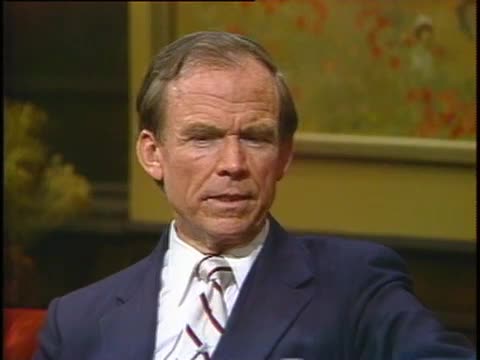
- The vice chairman of the Federal Reserve tells us what's ahead from the Fed. Preston Martin, Federal Reserve Board - Guest; Howard P. Colhoun, Julius Westheimer, Robert Stovall - Panelists
- Series Description
- "Wall Street Week is an educational talk show hosted by Louis Rukeyser, who provides viewers with information on finances and the economy and conducts discussions with experts. "
- Broadcast Date
- 1985-10-25
- Asset type
- Episode
- Genres
- Talk Show
- Media type
- Moving Image
- Duration
- 00:28:28
- Credits
-
-
Copyright Holder: MPT
Producing Organization: Maryland Public Television
- AAPB Contributor Holdings
-
Maryland Public Television
Identifier: 45580.0 (MPT)
Format: Betacam
Generation: Master
Duration: 00:26:46
If you have a copy of this asset and would like us to add it to our catalog, please contact us.
- Citations
- Chicago: “Wall Street Week with Louis Rukeyser; 1517; The View from the Fed,” 1985-10-25, Maryland Public Television, American Archive of Public Broadcasting (GBH and the Library of Congress), Boston, MA and Washington, DC, accessed April 1, 2026, http://americanarchive.org/catalog/cpb-aacip-394-784j1cq2.
- MLA: “Wall Street Week with Louis Rukeyser; 1517; The View from the Fed.” 1985-10-25. Maryland Public Television, American Archive of Public Broadcasting (GBH and the Library of Congress), Boston, MA and Washington, DC. Web. April 1, 2026. <http://americanarchive.org/catalog/cpb-aacip-394-784j1cq2>.
- APA: Wall Street Week with Louis Rukeyser; 1517; The View from the Fed. Boston, MA: Maryland Public Television, American Archive of Public Broadcasting (GBH and the Library of Congress), Boston, MA and Washington, DC. Retrieved from http://americanarchive.org/catalog/cpb-aacip-394-784j1cq2